
Back to Journals » International Journal of Nanomedicine » Volume 21
Peptide-Based Nanocarriers for Targeted Drug Delivery: Recent Advances, Strategies, and Therapeutic Frontiers
Authors Adnan SB, Lim F, Ahmad H  , Maarof M, Fauzi MB , Md Fadilah NI
Received 13 December 2025
Accepted for publication 25 February 2026
Published 27 March 2026 Volume 2026:21 588558
DOI https://doi.org/10.2147/IJN.S588558
Checked for plagiarism Yes
Review by Single anonymous peer review
Peer reviewer comments 2
Editor who approved publication: Prof. Dr. RDK Misra
Siti Balqis Adnan,1 Fang Lim,1 Haslina Ahmad,2,3 Manira Maarof,1,4,5 Mh Busra Fauzi,1,4,6 Nur Izzah Md Fadilah1,4
1Department of Tissue Engineering and Regenerative Medicine (DTERM), Faculty of Medicine, Universiti Kebangsaan Malaysia, Cheras, Kuala Lumpur, 56000, Malaysia; 2Department of Chemistry, Faculty of Science, Universiti Putra Malaysia, Serdang, Selangor, 43400, Malaysia; 3Integrated Chemical Biophysics Research, Universiti Putra Malaysia, Serdang, Selangor, 43400, Malaysia; 4Advance Bioactive Materials-Cells UKM Research Group, Universiti Kebangsaan Malaysia, Bangi, Selangor, 43600, Malaysia; 5Ageing and Degenerative Disease UKM Research Group, Universiti Kebangsaan Malaysia, Bangi, Selangor, 43600, Malaysia; 6Pharmaceuticals and Pharmacy Practice UKM Research Group, Universiti Kebangsaan Malaysia, Bangi, Selangor, 43600, Malaysia
Correspondence: Nur Izzah Md Fadilah, Email [email protected]
Abstract: The advancement of nanomedicine has significantly reshaped drug delivery strategies by overcoming key limitations of conventional pharmacotherapy, such as off-target toxicity, poor bioavailability, and adverse drug reactions (ADRs). Among emerging delivery platforms, peptide-based nanocarriers offer high biocompatibility, molecular specificity, and structural versatility for precision targeting. This review presents a comprehensive synthesis of current progress in the design, fabrication, and therapeutic application of peptide-functionalized nanocarriers for targeted drug delivery. Literature published between 2016 and 2025 was examined, with particular focus on strategies for peptide incorporation, including physical encapsulation, chemical conjugation, and self-assembly. Diverse nanocarrier platforms are discussed, including liposomes, solid lipid nanoparticles (SLNs), dendrimers, polymeric micelles, mesoporous silica nanoparticles (MSNs), and hybrid systems. Recent innovations in biodegradable polymers, co-delivery platforms, multifunctional assemblies, and stimuli-responsive formulations are highlighted. Advances in peptide design, particularly the use of cyclic and stapled peptides, have improved structural stability, target affinity, and bioavailability. Mechanistic insights into peptide-mediated targeting and physicochemical optimization are reviewed across various therapeutic contexts, including cancer, neurological disorders, infectious diseases, and inflammatory diseases. Their role in gene delivery applications, such as siRNA, mRNA, and CRISPR-Cas9 cargo delivery, is also highlighted, emphasizing the potential of peptide-functionalized systems in enabling safe and targeted nucleic acid therapeutics. Looking ahead, the development of intelligent nanocarriers capable of responding to physiological stimuli, such as pH shifts, enzymatic activity, and redox gradients, will enable spatiotemporal control of drug release. Progress in peptidomimetics and synthetic analogues, including D-amino acids, is expanding the chemical toolkit to overcome limitations of native peptides. In parallel, the integration of artificial intelligence, machine learning, and predictive modeling tools is accelerating the rational design and optimization of peptide sequences and nanocarrier architectures. Nonetheless, clinical translation remains limited by peptide instability, potential immunogenicity, off-target effects, and the complexities of manufacturing and regulatory approval. Together, these advances establish peptide-based nanocarriers as a critical component in the next generation of personalized and precision nanomedicine.
Keywords: peptide-based nanocarriers, targeted drug delivery, peptide-mediated targeting, stimuli-responsive nanomedicine, gene delivery, nucleic acid therapeutics
Introduction
Despite remarkable progress in modern medicine, adverse drug reactions (ADRs) remain a persistent and serious challenge, contributing substantially to patient morbidity, mortality, and global healthcare costs.1–8 These unintended effects often arise from a combination of patient-specific traits and drug-related factors, including dosage, metabolism, and drug–drug interactions.9,10 Conventional drug delivery systems (DDSs) frequently exacerbate these issues due to poor tissue specificity, uncontrolled release profiles, and their inability to account for interindividual variability, resulting in systemic toxicity and suboptimal therapeutic outcomes.11–14
To address these limitations, targeted DDSs have been developed to enable site-specific delivery and controlled drug release, thereby improving efficacy while minimizing off-target effects. Innovative approaches such as nanocarriers, liposomes, microneedles, 3D-printed dosage forms, and smart hydrogels have expanded the possibilities for precise drug transport, enhancing pharmacokinetics, patient compliance, and overall treatment safety.11,13,15–22 Among these, nanotechnology has emerged as one of the most promising solutions, with nanocarriers offering tunable physicochemical properties that support precise targeting, controlled release, and improved pharmacokinetic behavior. Their small size, modifiable surface chemistry, and ability to encapsulate diverse therapeutic agents enable the selective delivery of therapeutic agents to diseased tissues while minimizing damage to healthy ones. As versatile platforms, nanocarriers are increasingly significant in both research and clinical contexts, enhancing therapeutic efficacy, reducing toxicity, and enabling the delivery of advanced modalities such as RNA therapeutics and gene-editing tools.23,24
In parallel, peptide-based DDSs have gained attention as complementary approaches to targeted therapy. Peptides, composed of 2–50 amino acids, offer high biological specificity, efficient cellular penetration, and controllable pharmacokinetics.25 They can mimic endogenous molecules such as hormones, ligands, and growth factors, enabling precise interaction with cellular receptors. Their biocompatibility, ease of synthesis, chemical versatility, and stability further support their pharmaceutical potential. While peptide-drug conjugates (PDCs) exemplify how peptides enhance targeting and reduce off-target toxicity, these small covalent constructs typically lack nanoscale carrier components and are therefore distinct from nanocarrier-based systems.26–30
The term peptide-mediated drug delivery is often used broadly to encompass PDCs, self-assembling peptide carriers, and peptide-functionalized nanocarriers. However, these strategies differ in design and mechanism. Peptide-based nanocarriers refer specifically to nanoscale delivery platforms, such as liposomes, polymeric nanoparticles, micelles, dendrimers, or self-assembled peptide nanostructures that incorporate peptides as targeting ligands, structural elements, or stimuli-responsive components. This review focuses on this category, emphasizing how peptides can be strategically integrated into nanocarrier architectures to enhance delivery specificity, tissue penetration, and therapeutic efficacy.26–30 A conceptual overview of how peptide-based nanocarriers overcome the limitations of conventional DDSs, as well as their distinct roles within the broader landscape of peptide-mediated therapeutics, is illustrated in Figure 1.
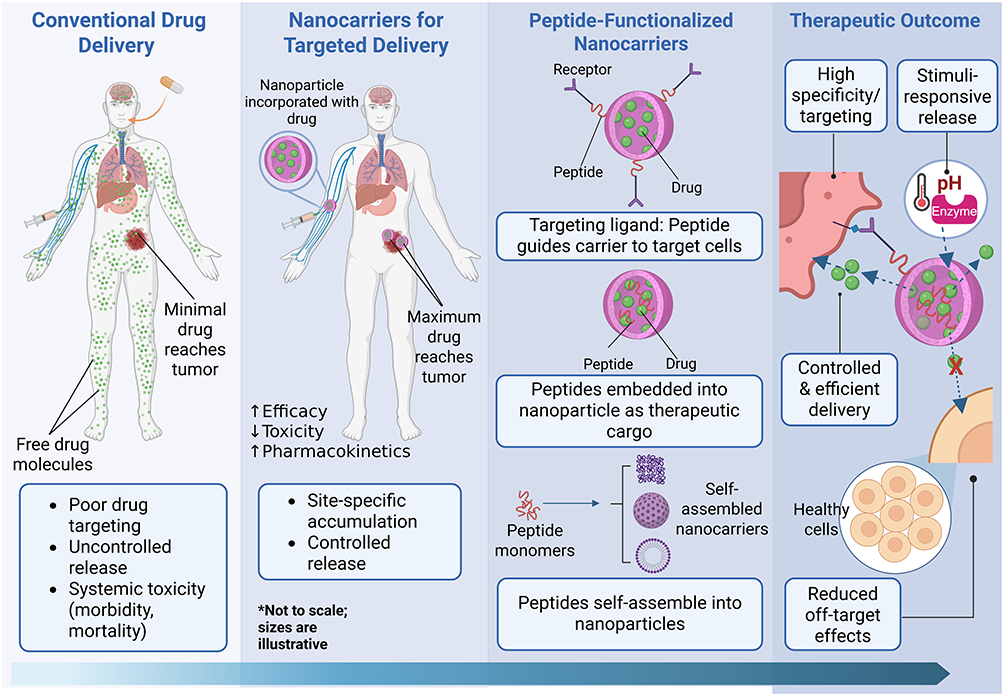 |
Figure 1 Conceptual Overview of Peptide-Based Nanocarriers for Targeted Drug Delivery. Conventional drug delivery systems are often limited by poor specificity, uncontrolled release, and systemic toxicity. Nanocarriers offer enhanced targeting, controlled release, and improved pharmacokinetics. Peptides, with their high specificity and biological activity, can be integrated into nanocarriers as targeting ligands, structural components, or stimuli-responsive motifs, thereby enhancing the precision of delivery and therapeutic efficacy. Peptide-based nanocarriers encompass a diverse range of platforms, including self-assembled peptide nanostructures and peptide-functionalized nanoparticles, and hold significant promise in applications such as oncology, inflammation, and nucleic acid therapeutics. Upward arrows (↑) indicate an increase, downward arrows (↓) indicate a decrease; dashed blue arrows represent active targeting or functional interactions with diseased cells, while the red cross denotes the absence of interaction with healthy cells. |
Incorporating peptides into nanocarriers significantly improves targeting precision and biological interactions. Peptides can be grafted onto carrier surfaces to mediate receptor-specific binding, embedded within carrier matrices to tune release kinetics, or used as stimuli-responsive motifs for triggered release. These strategies offer important therapeutic benefits, including enhanced efficacy, reduced systemic toxicity, and improved outcomes in disease-specific applications.28 Consequently, peptide-based nanocarriers represent a powerful and versatile platform for next-generation therapeutics, particularly in oncology, inflammation, and nucleic acid delivery.31–37
Notably, a small number of nanocarrier systems incorporating peptide components have achieved clinical translation. The peptide-containing liposomal formulation mifamurtide (Mepact®) has been approved in Europe for osteosarcoma, representing a clinically validated peptide-based nanocarrier.38,39 In addition, glutathione-decorated PEGylated liposomal doxorubicin (2B3-101), which uses the tripeptide glutathione as a targeting ligand to enhance blood–brain barrier delivery, has been evaluated in early-phase clinical trials for brain tumors, demonstrating safety and preliminary central nervous system (CNS) delivery.40,41 Although these examples highlight the feasibility of peptide-functionalized nanocarriers in humans, the overall clinical translation remains limited, with most systems still in preclinical development.
Key challenges include optimizing carrier design, achieving stable and efficient peptide incorporation, understanding complex biological interactions, and ensuring safety and reproducibility.42 Addressing these challenges is crucial for realizing their full therapeutic potential. While several reviews have focused on self-assembled carriers or surface-functionalized systems, relatively few have examined peptide incorporation strategies across diverse nanocarriers, particularly for stimuli-responsive and gene delivery platforms. This review addresses this gap by linking peptide design, carrier engineering, and translational considerations. It surveys major nanocarrier classes and incorporation strategies, examines targeting mechanisms, highlights recent design advances, evaluates therapeutic applications, and focuses on studies from 2016 to 2025, reflecting the shift toward rational peptide engineering and translationally oriented nanomedicine.
Data Extraction Management
A literature search was conducted for studies published between 2016 and 2025 using PubMed, Web of Science (WoS), Scopus, and Google Scholar, reflecting a period of rapid advancement in peptide-based nanocarrier design and application. The search strategy employed the following keywords: “peptide-based nanocarriers”, “targeted drug delivery”, “peptide-mediated targeting”, “stimuli-responsive nanomedicine”, “gene delivery”, “nucleic acid therapeutics”.
Nanocarrier Platforms for Peptide Encapsulation
Therapeutic agents can be encapsulated inside, entrapped within, chemically linked to, or adsorbed onto the surface of nanoparticles, enabling delivery of a wide range of payloads, including both hydrophilic and hydrophobic compounds of varying molecular sizes.43 Nanomedicine supports advancements in treatment, prevention, and diagnosis across numerous diseases. Nanocarriers are typically below 500 nm in size, with a high surface area-to-volume ratio that enhances drug solubility, stability, and preservation of bioactivity. These features also support controlled and targeted delivery, reducing systemic toxicity and off-target effects. Moreover, nanocarriers help circumvent biological barriers, including the blood-brain barrier, and facilitate the delivery of novel therapeutics such as RNA-based drugs and gene-editing technologies. Collectively, these advantages underscore the pivotal role of nanocarriers in overcoming limitations of conventional pharmacotherapy and improving the efficacy and safety of both current and next-generation therapeutics.24
To address the specific challenges associated with peptide delivery, a diverse range of nanocarrier platforms has been developed. These can be broadly classified according to their composition, structure, and functional attributes. Lipid-based nanocarriers, such as liposomes and solid lipid nanoparticles, are extensively studied due to their high biocompatibility, structural versatility, and capacity to protect peptides while enabling controlled and targeted delivery. Polymeric nanocarriers, including dendrimers and polymeric micelles, offer precise control over size, architecture, and surface functionality, facilitating efficient peptide encapsulation or conjugation, enhanced cellular uptake, and tunable release profiles. Inorganic nanocarriers, exemplified by mesoporous silica nanoparticles, provide high loading capacity, exceptional structural stability, and stimuli-responsive release capabilities, making them attractive for delivering sensitive peptide cargos. To overcome the limitations of single-material systems, hybrid nanocarriers integrate organic and inorganic components, combining biocompatibility with mechanical robustness and improved release control. In parallel, stimuli-responsive nanocarriers represent an advanced class of delivery systems capable of releasing peptides in response to specific physiological or external triggers, thereby enhancing site-specific delivery and minimizing off-target effects.24,40,41 These major classes of nanoparticles are illustrated in Figure 2, and their key structural features, advantages, representative applications, and clinical status in peptide delivery are summarized in Table 1.
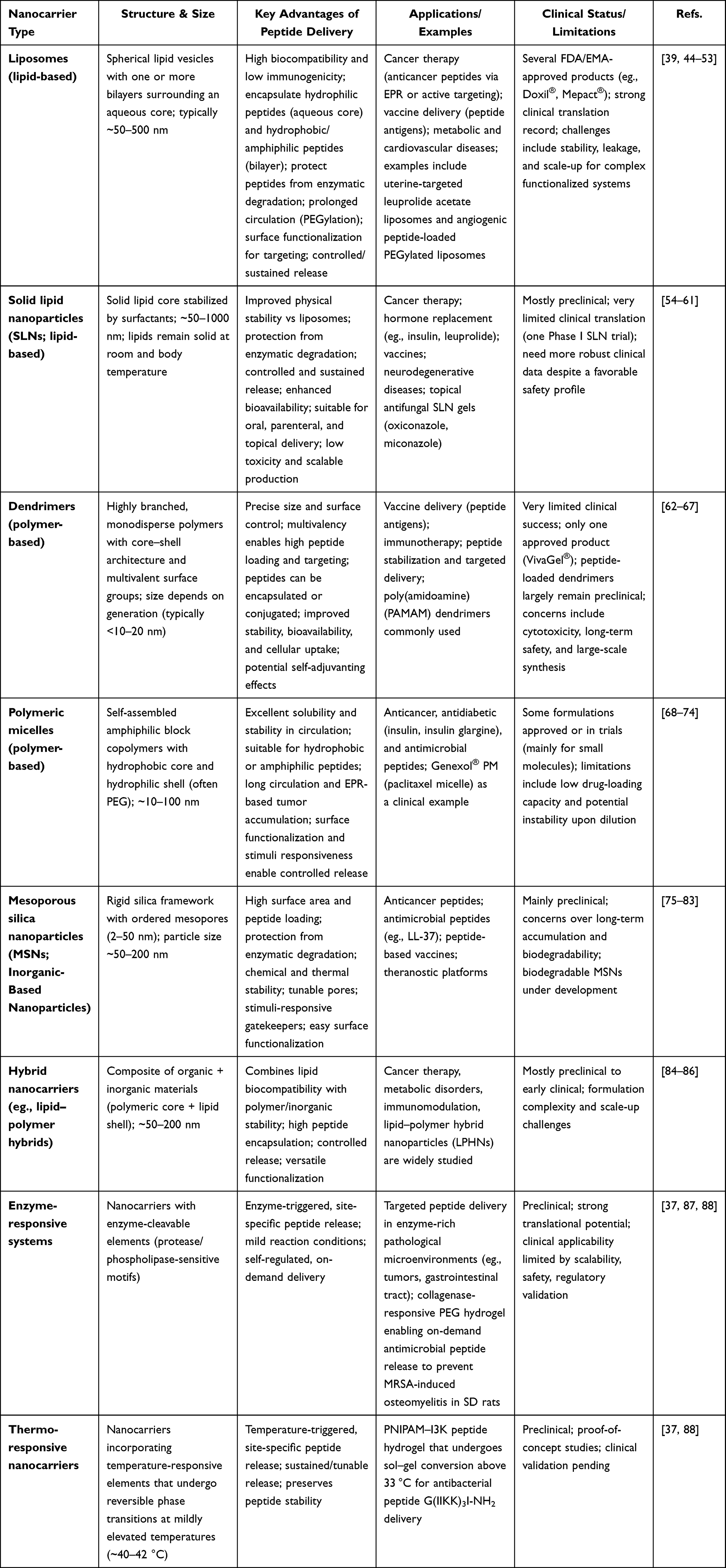 |
Table 1 Summary of Major Nanocarrier Types for Peptide Delivery, Including Structural Characteristics, Key Advantages, Representative Applications, and Clinical Status or Limitations |
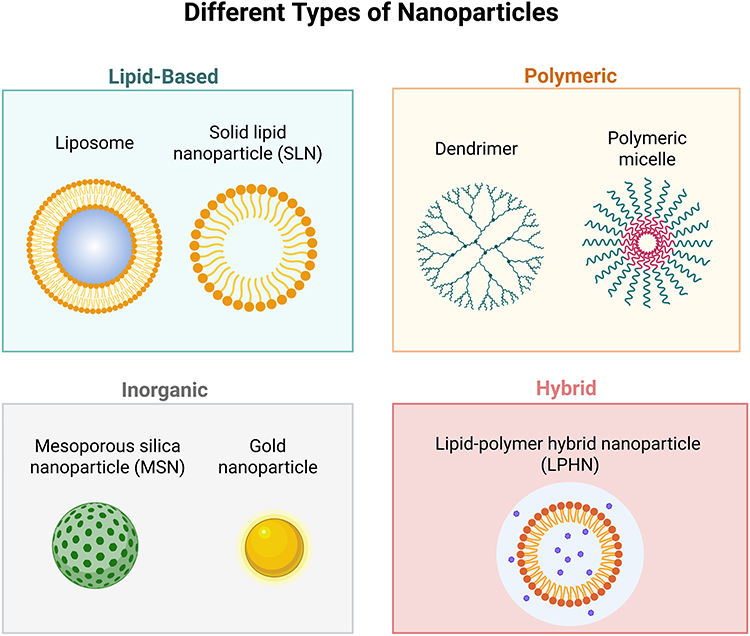 |
Figure 2 Overview of nanoparticles as drug delivery systems. Four major types of nanoparticles are shown: 1) lipid-based, including liposomes and solid lipid nanoparticles (SLN); 2) polymeric, including dendrimers and polymeric micelles; 3) inorganic, including mesoporous silica nanoparticles (MSN) and gold nanoparticles; and 4) hybrid systems such as lipid–polymer hybrid nanoparticles (LPHN). |
Lipid-Based Nanoparticles
Liposomes
Liposomes remain one of the most clinically successful nanocarriers for peptide delivery, with multiple approved formulations and several liposome-based vaccines already on the market, although most approved products are not peptide-functionalized systems.44 As summarized in Table 1, their bilayered structure enables versatile peptide loading, allowing hydrophilic peptides to be encapsulated within the aqueous core while amphiphilic or hydrophobic peptides are incorporated into the lipid bilayer. This structural flexibility, combined with high biocompatibility and low immunogenicity, makes liposomes particularly effective at protecting peptides from enzymatic degradation and improving systemic stability.45–47,53
Beyond passive encapsulation, liposomal performance is strongly influenced by rational design parameters, including particle size, surface chemistry, and functionalization. For example, PEGylation (ie., coating with polyethylene glycol) is widely employed to prolong circulation time by reducing opsonization and reticuloendothelial clearance, while ligand- or peptide-functionalized surfaces enable enhanced tissue specificity through active targeting mechanisms.48,49 Preclinical studies have demonstrated that such design features can markedly affect biodistribution and therapeutic outcomes, as illustrated by uterus-targeted leuprolide acetate liposomes and angiogenic peptide-loaded PEGylated liposomes optimized for myocardial uptake.50–52
Clinically, the success of formulations such as Doxil®, a PEGylated liposomal doxorubicin that improves pharmacokinetics and reduces cardiotoxicity, and Mepact® (mifamurtide), a liposomal delivery system for the peptide-based immunomodulator muramyl tripeptide phosphatidyl-ethanolamine (MTP-PE), underscores the translational viability of liposomes as peptide carriers.39 However, despite their maturity, challenges remain, particularly in maintaining formulation stability, minimizing peptide leakage, and achieving scalable manufacturing for increasingly complex, multifunctional systems. Ongoing clinical trials evaluating peptide-functionalized liposomes highlight continued efforts to address these limitations and further enhance specificity and therapeutic efficacy.
Solid Lipid Nanoparticles
Solid lipid nanoparticles (SLNs) represent a distinct class of lipid-based nanocarriers in which the lipid matrix remains solid at physiological temperatures, conferring enhanced physical stability and sustained drug release compared with vesicular systems such as liposomes (Table 1). This solid-core architecture is particularly advantageous for peptide delivery, as it improves protection against enzymatic degradation and enables prolonged maintenance of therapeutic concentrations.54,55
From a design perspective, the key differentiating feature of SLNs lies in their solid lipid matrix, which favors controlled release and formulation robustness, albeit with less flexibility for loading highly hydrophilic peptides compared with liposomes.56 Consequently, SLNs have been most extensively explored in applications where stability, scalability, and low toxicity are prioritized, including cancer therapy, hormone replacement, vaccine delivery, and topical administration.54,55,57,58
Despite a substantial volume of preclinical research demonstrating favorable pharmacokinetics and safety profiles, clinical translation of classical SLNs remains limited. Analysis of registered clinical studies reveals that, although nanoparticle-based lipid systems have expanded considerably in recent years, only one conventional SLN formulation has progressed to a Phase I clinical trial (NCT03823040). In this study, oxiconazole-loaded SLNs incorporated into a carbopol gel showed improved patient satisfaction and reduced side effects compared with a marketed topical formulation, likely due to enhanced skin deposition and sustained drug release.54,59 These findings are consistent with earlier reports demonstrating improved transdermal permeation and prolonged skin localization using miconazole-loaded SLNs.60
Collectively, these results highlight the promise of SLNs as safe and scalable peptide delivery platforms, particularly for topical and sustained-release applications. However, the limited number of clinical studies underscores the need for further translational research, standardized manufacturing strategies, and sustained investment to bridge the gap between preclinical success and clinical adoption.
Polymer-Based Nanoparticles
Dendrimers
Dendrimers are highly branched, monodisperse polymeric nanocarriers characterized by precise control over size, surface functionality, and architecture (Table 1). Their defining feature for peptide delivery is multivalency, which enables the simultaneous attachment or encapsulation of multiple peptide molecules, targeting ligands, or stabilizing moieties within a single nanostructure. This architectural precision allows dendrimers to address key challenges associated with peptide therapeutics, including poor stability, limited bioavailability, and inefficient cellular uptake.62,63
Among polymer-based nanocarriers, dendrimers are particularly attractive for vaccine delivery and immunotherapy, where the spatial presentation of peptide antigens plays a critical role in immune activation.62 Preclinical studies, especially those involving poly(amidoamine) (PAMAM) dendrimers, have demonstrated enhanced peptide stability, improved immunogenicity,64 and, in some cases, self-adjuvanting effects that eliminate the need for conventional adjuvants.65 These features highlight the potential of dendrimers as modular platforms for peptide antigen delivery and immune modulation.
Despite these promising attributes, clinical translation of peptide-loaded dendrimers remains highly limited. To date, only a small number of dendrimer-based systems have entered clinical evaluation, largely focusing on safety and pharmacokinetics rather than peptide therapeutics.66 Currently, VivaGel® (SPL7013) remains the sole approved dendrimer-based product, underscoring the significant translational gap between preclinical success and regulatory approval.67 This gap is primarily attributed to persistent concerns regarding cytotoxicity, long-term biocompatibility, and the complexity of large-scale, reproducible synthesis.63
Ongoing advances in dendrimer engineering, including surface modification, PEGylation, and generation optimization, aim to mitigate these limitations and improve clinical feasibility.63 Nevertheless, further systematic studies and translational investment are required before dendrimers can be widely adopted as clinically viable platforms for peptide delivery.
Polymeric Micelle
Polymeric micelles are self-assembled nanocarriers formed from amphiphilic block copolymers, featuring a hydrophobic core and a hydrophilic shell (Table 1). This core–shell architecture makes them particularly well-suited for the delivery of hydrophobic or amphiphilic peptides, while the hydrophilic corona, commonly composed of PEG, enhances colloidal stability, circulation time, and biocompatibility.68
A major advantage of polymeric micelles lies in their structural tunability, which enables surface functionalization with targeting ligands and the incorporation of stimuli-responsive polymers for controlled, site-specific peptide release. This design flexibility has been widely implemented in oncology and metabolic disease models, where micelles can capitalize on the enhanced permeability and retention (EPR) effect while minimizing premature peptide degradation or clearance.69
Preclinical studies have demonstrated improved pharmacokinetics and cellular uptake for peptide therapeutics, including anticancer, antidiabetic, and antimicrobial peptides.70–72 Despite these promising attributes, clinical translation of peptide-loaded polymeric micelles remains limited, with most approved or late-stage micellar formulations developed for small-molecule drugs rather than peptides. Limitations such as relatively low peptide-loading capacity and potential instability upon dilution in vivo continue to pose challenges for systemic peptide delivery. Nevertheless, ongoing advances in polymer design, including core cross-linking and co-delivery strategies, are actively addressing these constraints and may improve the robustness of peptide-based micellar systems.69,71,73
The clinical success of small-molecule micelle formulations, such as Genexol® PM, a polymeric nanoparticle micelle formulation of paclitaxel, highlights the translational potential of this platform and suggests that further optimization could support the broader application of polymeric micelles for peptide therapeutics.74
Inorganic-Based Nanoparticles
Mesoporous Silica Nanoparticles
Mesoporous silica nanoparticles (MSNs) are inorganic nanocarriers with tunable pore structures that allow high peptide loading and controlled release.75 Peptides can be physically adsorbed into the mesopores or chemically conjugated to the silica surface, while the rigid framework protects cargo from enzymatic degradation and environmental stress.76,77 Functionalization with PEG, targeting ligands, or stimuli-responsive gatekeepers enables site-specific release in response to internal (pH, redox, enzymes) or external (light, temperature) triggers, supporting both therapeutic and theranostic applications.78,79
MSNs have been investigated for delivering anticancer peptides, antimicrobial peptides (eg., LL-37), and peptide-based vaccines.80–82 For example, LL-37-loaded MSNs improve direct bactericidal activity and promote macrophage polarization toward the pro-inflammatory M1 phenotype, demonstrating synergistic antimicrobial and immunomodulatory effects.81 Preclinical studies also show enhanced bioavailability, sustained release, precise targeting, and reduced off-target toxicity for peptide cargos.80–82
While MSNs generally exhibit favorable biocompatibility, their non-biodegradable nature raises concerns about long-term accumulation and toxicity. Ongoing work on biodegradable silica formulations and surface engineering aims to address these issues, positioning MSNs as a versatile platform for peptide-based nanomedicine.83
Hybrid and Stimuli-Responsive Nanocarriers
Hybrid Nanocarriers
Hybrid nanocarriers integrate complementary features of different materials to overcome the limitations of individual organic or inorganic nanoparticles. Organic carriers, such as liposomes and polymeric micelles, may suffer from limited structural stability and premature drug leakage, whereas inorganic systems can face challenges with biocompatibility, biodegradability, or immune recognition. By combining organic (eg., lipids, polymers) and inorganic (eg., silica, gold) components, hybrid nanocarriers enhance peptide protection, loading capacity, and controlled release. They also allow targeted delivery through surface functionalization with ligands or peptides, improving therapeutic efficacy while minimizing systemic toxicity. Examples include lipid–polymer hybrid nanoparticles (LPHNs), inorganic-based hybrid systems, metal–organic frameworks (MOFs), and carbon-based hybrid nanostructures.37,84
LPHNs feature a polymeric core providing mechanical strength and controlled drug release, encapsulated by a lipid shell that enhances biocompatibility and stability. This structure improves peptide encapsulation, protects peptides from enzymatic degradation, facilitates controlled and sustained release, and allows surface functionalization for site-specific targeting. LPHNs have been explored for peptide delivery in cancer therapy, metabolic disorders, and immunomodulation.84,85
Stimuli-Responsive Nanocarriers
Stimuli-responsive nanocarriers release therapeutic agents in response to physiological or externally applied triggers such as pH, enzymes, redox conditions, or temperature. They improve site-specific peptide release, reduce systemic toxicity, and protect peptides from degradation.37
Enzyme-responsive systems use overexpressed enzymes in specific environments, such as tumors, to trigger peptide release. Peptides are incorporated via covalent or physical methods and released when the target enzyme degrades the carrier.37 For example, collagenase-responsive PEG hydrogels release antimicrobial peptides on demand at infection sites, preventing methicillin-resistant Staphylococcus aureus (MRSA)-induced osteomyelitis in SD rats.87
Thermo-responsive systems release peptides in response to elevated temperatures, slightly above physiological levels (~40–42 °C). Polymers or lipids undergo reversible phase transitions, enabling controlled, site-specific delivery.37 Cao et al88 developed a thermoresponsive hydrogel by combining poly(N-isopropylacrylamide) (PNIPAM) with the self-assembling peptide I3K, which forms nanofibrils and undergoes reversible sol–gel transition above 33 °C, enabling sustained, linear release of the antibacterial peptide G(IIKK)3I-NH2 for injectable, minimally invasive applications.
Peptide Selection and Incorporation Strategies
The incorporation of peptides into nanocarrier-based delivery systems has emerged as a pivotal strategy to enhance the clinical applicability of therapeutic peptides. While peptides exhibit high specificity, potent bioactivity, and favorable safety profiles, their utility is often compromised by poor stability, rapid enzymatic degradation, and short systemic half-life.26–30 Careful selection of peptide candidates is therefore essential to ensure their suitability for delivery and therapeutic effectiveness.86,89 Depending on the intended application, peptides can be physically encapsulated within nanocarriers, chemically conjugated to their surfaces, or co-designed as functional building blocks in self-assembled nanosystems. The combination of appropriate peptide selection and incorporation method critically determines the pharmacokinetics, targeting efficiency, and therapeutic performance of the nanocarrier system. Therefore, a comprehensive understanding of both peptide selection and incorporation strategies is essential for the rational design and optimization of peptide-based nanotherapeutics.90
Selection Criteria for Peptides
Before incorporating peptides into nanocarrier systems, the successful design of peptide-based nanocarriers begins with the careful selection or engineering of peptides that fulfill the functional and physicochemical requirements of the intended delivery system. This process forms part of a broader developmental trajectory that includes the discovery of therapeutic peptides from diverse biological or synthetic sources, followed by scalable production and systematic optimization. These steps are essential to generate peptides with properties suitable for clinical and pharmaceutical applications. Optimization strategies often rely on structure–activity relationship (SAR) studies to identify functionally critical residues, enabling the substitution of non-essential ones to enhance bioactivity and physicochemical performance. Additionally, chemical modifications, such as cyclization or D-amino acid substitution, can be employed to stabilize peptide secondary structures like helices, turns, and β-sheets, thereby improving metabolic stability and target affinity.91,92
Throughout this development, several key criteria must be carefully evaluated, including stability, specificity, and immunogenicity. Stability ensures that peptides resist proteolytic degradation and remain active during formulation and in vivo circulation. Specificity is critical for achieving selective interactions with the intended molecular or cellular targets, thereby minimizing off-target effects and enhancing therapeutic efficacy. This can be achieved by designing peptides that recognize disease-specific receptors, antigens, or microenvironments through high-affinity binding motifs or ligand–receptor pairing. Meanwhile, immunogenicity is an important aspect of biopharmaceutical safety, determining whether a peptide will trigger an unwanted immune response. Therefore, to address immunogenicity, de-immunization techniques such as epitope mapping with targeted residue substitutions, sequence humanization, or incorporation of D-amino acids are employed to reduce MHC binding and T-cell activation. Together, these strategies ensure that peptides incorporated into nanocarriers are not only functionally effective but also stable, target-specific, and safe for in vivo applications.91,92 The key selection criteria and representative optimization strategies are summarized in Table 2.
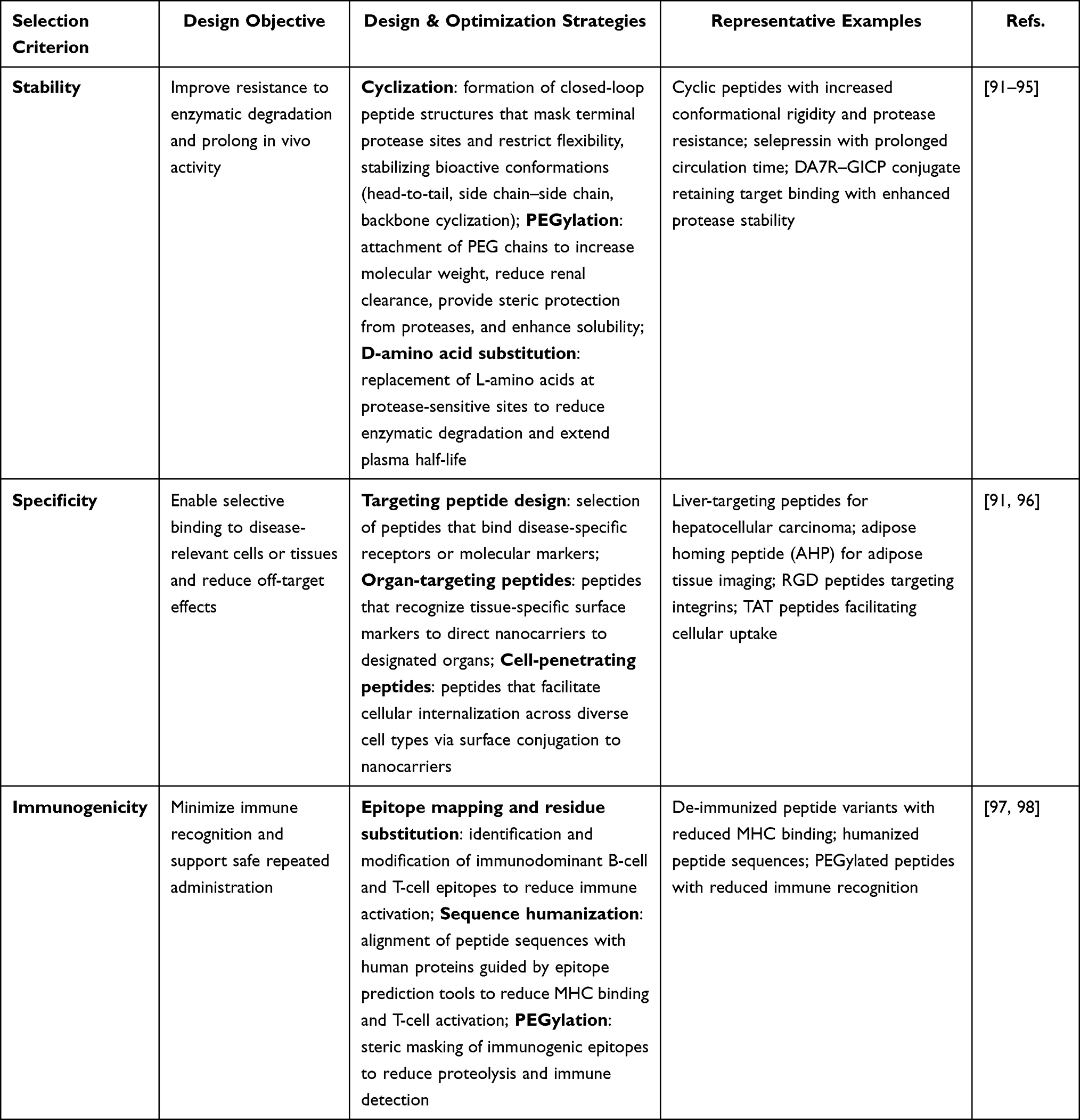 |
Table 2 Key Selection Criteria for Peptides in Peptide-Based Nanocarrier Systems |
Methods of Peptide Incorporation
Peptides can be incorporated into nanocarriers using several well-established strategies, including physical encapsulation, chemical conjugation, and self-assembly. Each strategy influences the overall performance of the delivery system, including stability, release profile, and targeting precision. Within these strategies, a variety of common fabrication approaches, such as emulsification, nanoprecipitation, microfluidics, spray drying, and ionic gelation, can be used to create carrier structures that enable effective peptide loading and delivery. The choice of fabrication method depends on the type of nanocarrier, the physicochemical properties of the peptide, and the intended therapeutic application.99 This overview provides context for the subsequent discussion of each incorporation strategy and its compatibility with specific nanocarrier platforms.
Physical encapsulation involves entrapping peptides within the core or matrix of nanocarriers such as liposomes, polymeric nanoparticles, or hydrogels, protecting them from degradation and enabling sustained release. Chemical conjugation covalently links peptides to nanocarrier surfaces or structures via functional groups, enhancing stability and site-specific targeting.100 A specific form of this is surface grafting, in which peptides are tethered to the external surface of nanocarriers to present bioactive ligands or targeting motifs. Additionally, self-assembly enables peptides, either alone or in combination with other amphiphilic molecules, to form nanostructures such as micelles or nanofibers, serving as either delivery vehicles or structural components. Each strategy offers unique advantages depending on the desired release profile, targeting precision, and application.101 Figure 3 provides an overview of these incorporation mechanisms. The compatibility between peptide incorporation strategies and specific nanocarrier platforms is closely linked to the carrier architecture and surface chemistry discussed in Nanocarrier Platforms for Peptide Encapsulation Section. These relationships are highlighted for each method below.
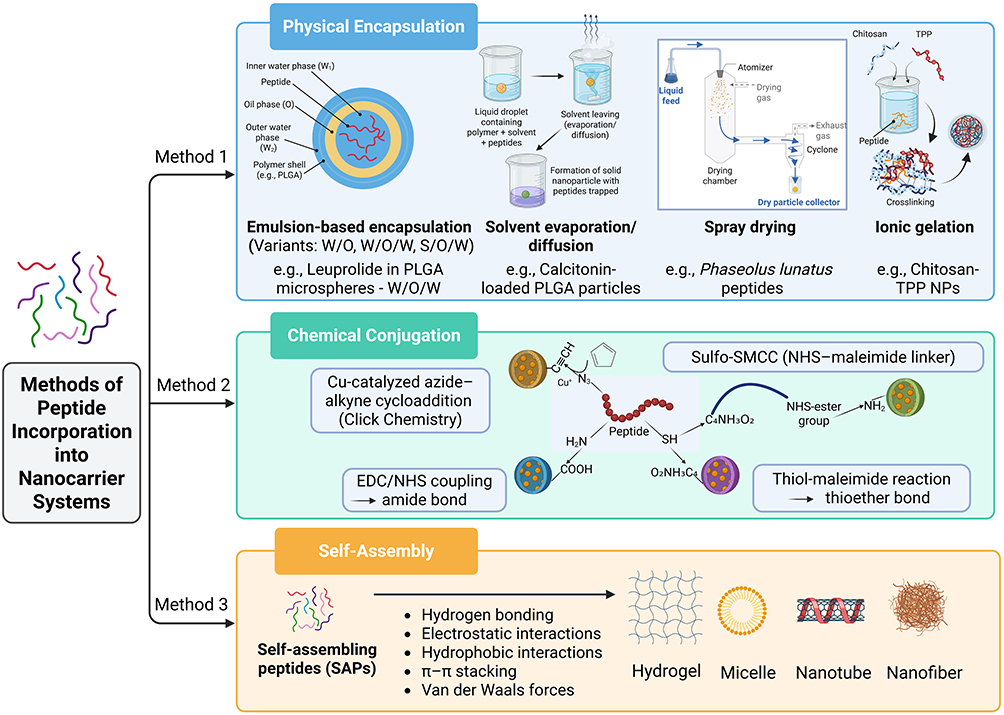 |
Figure 3 Peptides can be incorporated into nanocarrier systems through three major strategies: (1) physical encapsulation, including emulsion-based methods, solvent evaporation or diffusion, spray drying, and ionic gelation; (2) chemical conjugation, using reactions such as EDC/NHS coupling, thiol–maleimide chemistry, sulfo-SMCC linkers, or copper-catalyzed azide–alkyne cycloaddition (CuAAC); and (3) self-assembly of peptides into nanostructures such as hydrogels, micelles, nanotubes, or nanofibers. |
Physical Encapsulation
Over the past decade, there has been substantial progress in the development and evaluation of carrier delivery systems for the encapsulation of bioactive agents35,36,102–108 (Table 3). This approach involves the non-covalent incorporation of peptides into carrier matrices to protect them from degradation, enhance solubility, and enable controlled release, all while preserving their structural integrity and biological activity. Such encapsulation relies on fundamental interactions, including hydrophobic forces, van der Waals forces, hydrogen bonding, and electrostatic interactions, that allow peptides to be stably loaded without chemical modification.35,36 A wide range of nanocarriers has been employed, such as emulsions, solid lipid nanoparticles (SLNs), liposomes, and biopolymer microgels. Selection is guided by the peptide’s physicochemical properties (hydrophilicity, charge, molecular weight) and the desired release profile, which together influence loading capacity and encapsulation efficiency.35
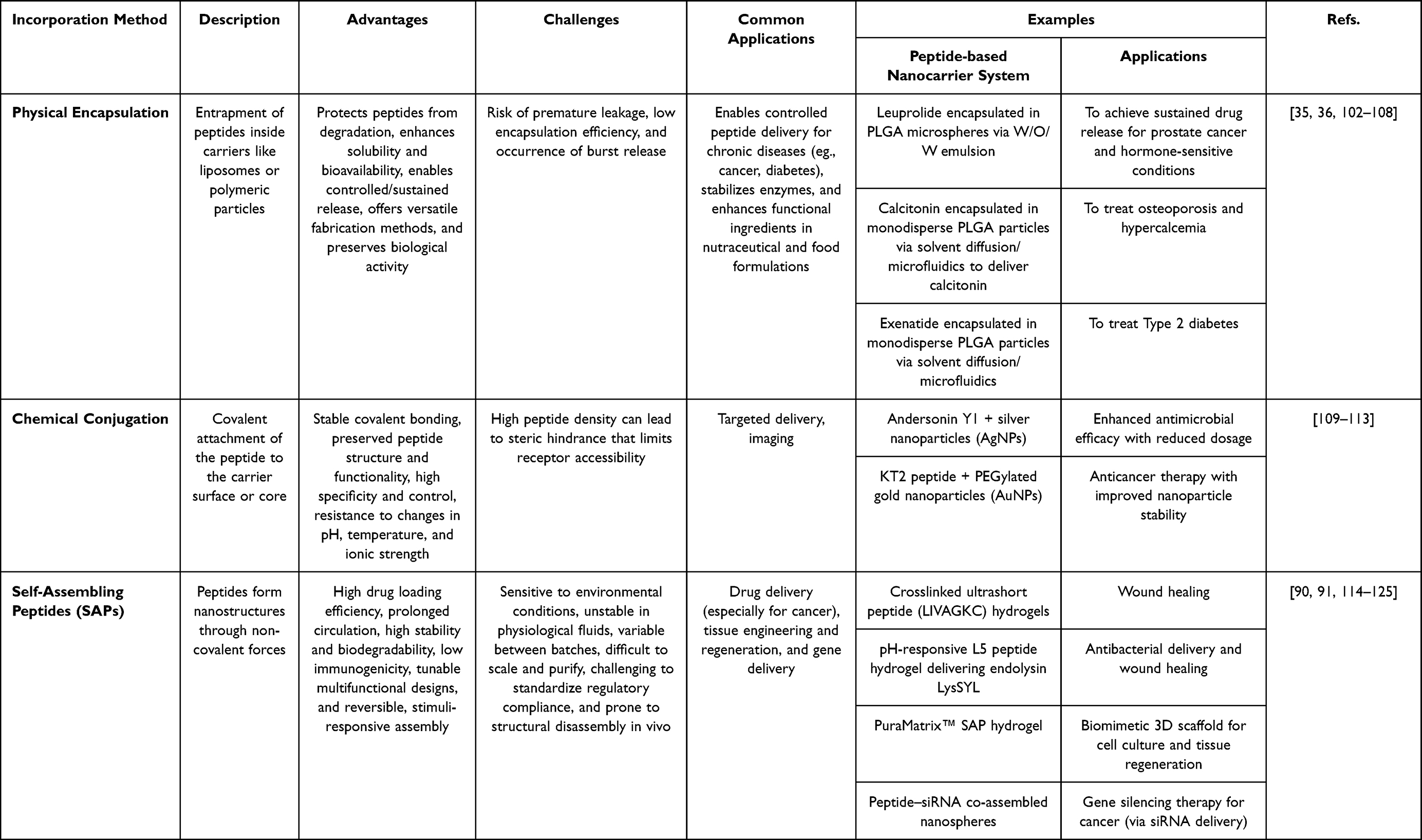 |
Table 3 Strategies of Peptide Incorporation into Nanocarrier Systems: Methods, Features, and Applications |
Multiple fabrication techniques are available, each offering distinct advantages. Emulsion-based methods (including single water-in-oil (W/O), double water-in-oil-in-water (W/O/W), and solid-in-oil-in-water (S/O/W) emulsions) are widely used to entrap peptides within polymeric matrices. For instance, W/O/W double emulsions enable the sustained release of hydrophilic peptides such as leuprolide from PLGA microspheres,103 while S/O/W techniques improve encapsulation efficiency for peptides with low aqueous solubility.35 Advanced variants like solvent diffusion and microfluidic emulsification further allow precise control of particle size and morphology, as demonstrated with calcitonin and exenatide.35,104 Solvent evaporation builds on emulsion methods by solidifying particles through organic phase removal.35,105
Other techniques include spray drying, a scalable and cost-effective process that converts peptide-containing solutions into stable dry powders.105 For example, Cian et al126 showed that spray-dried Phaseolus lunatus peptides retained or enhanced bioactivity after simulated digestion, demonstrating improved stability and potential bioavailability. Ionic gelation offers a mild, aqueous-based alternative, forming peptide-loaded nanoparticles through electrostatic interactions between oppositely charged polymers such as chitosan and tripolyphosphate.35,105
Although challenges such as premature leakage, low encapsulation efficiency, and burst release remain, they can often be mitigated through formulation optimization, including adjustments to carrier composition, particle size, surface charge, and loading technique. Overall, physical encapsulation remains a versatile, non-invasive strategy for peptide delivery, offering enhanced protection, stability, and controlled release.35 Physical encapsulation is most compatible with liposomes, SLNs, dendrimers, polymeric micelles, and hybrid nanocarriers (see Table 1 and Nanocarrier Platforms for Peptide Encapsulation Section). These platforms provide internal domains or cores that allow peptides to be loaded non-covalently, protecting them from degradation and enabling controlled or sustained release.
Chemical Conjugation
Chemical conjugation is a robust and widely used method for assembling peptide–nanoparticle conjugates (PNCs), enabling stable covalent attachment, which is critical for targeted delivery, imaging, and therapeutic applications. Reactive functional groups on peptides, such as amine (–NH2), carboxyl (–COOH), hydroxyl (–OH), and thiol (–SH), can be covalently linked to functionalized nanoparticle surfaces, with the choice of chemistry guided by the physicochemical properties of both components.109–111 Common bioconjugation reactions include carbodiimide-mediated coupling using 1-ethyl-3-(3-dimethylaminopropyl) carbodiimide (EDC) and N-hydroxysuccinimide (NHS) to form stable amide bonds. Thiol-specific reactions using maleimide or iodoacetamide reagents generate thioether linkages with high specificity and low cross-reactivity. Heterobifunctional cross-linkers such as sulfosuccinimidyl-4-(N-maleimidomethyl) cyclohexane-1-carboxylate (sulfo-SMCC) enable controlled, sequential attachment with minimal side reactions. Click chemistry, particularly copper-catalyzed azide–alkyne cycloaddition (CuAAC), offers a bio-orthogonal alternative that preserves peptide structure and activity. Reaction efficiency is further enhanced when copper catalysts are incorporated into nanoparticle systems.111
Surface grafting further enables precise control of peptide presentation. In the “grafting-to” approach, pre-synthesized peptides react directly with surface groups but may face steric limitations. The “grafting-from” strategy initiates peptide growth from reactive sites, enhancing spatial control and surface coverage. Incorporating flexible linkers or spacers can also improve ligand accessibility and receptor recognition.29,30 Peptide–nanoparticle conjugates have shown enhanced therapeutic performance. For example, Pal et al112 linked the antimicrobial peptide Andersonin Y1 to silver nanoparticles via thiol–silver bonds, increasing potency and reducing dosage requirements. Maraming et al113 conjugated KT2 peptides to PEGylated gold nanoparticles using thiol–gold chemistry, improving colloidal stability and maintaining anticancer activity.
Challenges remain, including steric hindrance from high peptide density, which can reduce receptor accessibility, and potential bond instability during circulation or storage. These can be addressed through linker design, reaction condition optimization, and careful tuning of peptide multivalency. Ultimately, successful conjugation requires balancing efficiency, specificity, and structural integrity to produce stable, functional PNCs.109–111 Overall, covalent attachment of peptides to nanoparticles allows precise control over peptide orientation, surface density, and binding strength. In targeted drug delivery, this precision is critical, as peptides act as ligands that guide nanoparticles to specific cells or tissues by recognizing overexpressed receptors, thereby enhancing therapeutic accumulation at disease sites while minimizing off-target effects. Chemical conjugation thus plays a key role in improving the specificity, bioavailability, and systemic stability of nanoparticle-based delivery platforms used in cancer therapy, inflammatory diseases, and other precision medicine applications (Table 3). Chemical conjugation is particularly well suited to liposomes, SLNs, dendrimers, polymeric micelles, and MSNs, which offer accessible surface chemistries for covalent peptide attachment and precise control over peptide orientation, surface density, and targeting (see Table 1 and Nanocarrier Platforms for Peptide Encapsulation Section).
Self-Assembly & Peptide Nanocarrier Co-Design
Self-assembling peptides (SAPs) are short sequences that spontaneously form ordered nanostructures through non-covalent interactions. Incorporating peptides through self-assembly or co-design offers a distinct strategy compared to encapsulation or surface conjugation, as peptides directly form or stabilize the nanocarrier. SAPs can assemble into micelles, nanotubes, nanofibers, or hydrogels to encapsulate therapeutic agents, with structures driven by hydrogen bonding, electrostatic forces, π–π stacking, and hydrophobic interactions.90,91,114
SAPs may act as standalone carriers or co-assemble with polymers, lipids, or inorganic nanoparticles to introduce properties such as stimuli responsiveness, targeting capability, and enhanced biocompatibility.90,114 Through co-design strategies, nanocarrier characteristics, including size, surface charge, rigidity, and release kinetics, can be precisely tuned by modifying peptide sequence, amphiphilicity, or conjugation motifs. Chemical modifications further expand structural diversity and functional complexity, enabling multifunctional systems capable of co-delivering therapeutics, responding to environmental cues (eg., pH, enzymes), and promoting selective cellular uptake.90,91,114
Recent studies highlight the therapeutic versatility of SAP-based systems.127,128 For example, Seow et al,115 developed crosslinked ultrashort peptide (LIVAGKC) hydrogels that accelerated re-epithelialization in full-thickness wound models. Liu et al116 designed a pH-responsive hydrogel using the peptide L5 for the sustained release of the phage-derived enzyme endolysin LysSYL, which demonstrated potent antibacterial activity against MRSA and significantly improved wound healing outcomes. Clinically, SAP technologies are advancing toward translation, as exemplified by PuraMatrix™, a commercially approved SAP hydrogel that mimics the extracellular matrix for 3D cell culture, tissue engineering, and regenerative medicine.117
Self-assembled peptide nanocarriers typically exhibit high stability and biodegradability, as well as low immunogenicity, which are features essential for clinical application.91,114 They offer unique advantages over conventional polymers, including stimuli-responsive behavior, structural tunability, reversible assembly, and precise bottom-up fabrication. The convergence of self-assembly and co-design continues to enhance the performance of peptide-based delivery systems and is expected to advance further with innovations in computational modeling, peptide synthesis, and high-throughput screening.114,118,119
Despite their advantages, SAP-based nanocarriers face several challenges, including sensitivity to environmental conditions, instability in physiological fluids, batch-to-batch variability, difficulties in scaling peptide synthesis and ensuring purity, regulatory standardization issues, and susceptibility to structural disassembly in vivo.120–122 Addressing these challenges is essential for the successful translation of SAP-based nanocarriers from the laboratory to clinical applications (Table 3). Self-assembly and co-design strategies align with polymeric micelles, hybrid nanocarriers, and stimuli-responsive systems, where peptides function as structural or functional components, enabling bottom-up fabrication and precise tuning of nanocarrier properties (see Table 1 and Nanocarrier Platforms for Peptide Encapsulation Section).
Table 3 summarizes the major strategies for peptide incorporation into nanocarrier systems, including physical encapsulation, chemical conjugation, and self-assembling peptides. The table compares their mechanisms, advantages, challenges, common applications, representative examples, and relevant references.
Mechanisms of Precision Targeting
A key objective in nanomedicine research is the targeted delivery of drugs to specific organs, cells, or organelles to enhance therapeutic efficacy while minimizing dosage and toxic side effects. Incorporating peptides into nanoparticle-based drug delivery systems provides an advanced way to achieve this. Peptides offer high specificity, tunable functions, and good biocompatibility, enabling nanoparticles to cross biological barriers, recognize disease-related molecular markers, respond to local microenvironments, and release therapeutic agents directly at diseased sites or inside target cells. These combined capabilities enhance biodistribution, cellular uptake, and overall therapeutic performance while limiting off-target effects. Peptide-mediated targeting typically works through several complementary mechanisms: passive accumulation due to physiological differences between healthy and diseased tissues,91,129 active targeting via ligand–receptor interactions, and stimuli-responsive release triggered by pathological conditions.91 Together, these strategies enable the development of intelligent nanocarrier systems that offer improved pharmacokinetics, reduced systemic toxicity, and enhanced treatment outcomes, particularly in oncology, infectious diseases, and regenerative medicine.91,129 These targeting mechanisms are summarized in Figure 4, and are discussed in detail below.
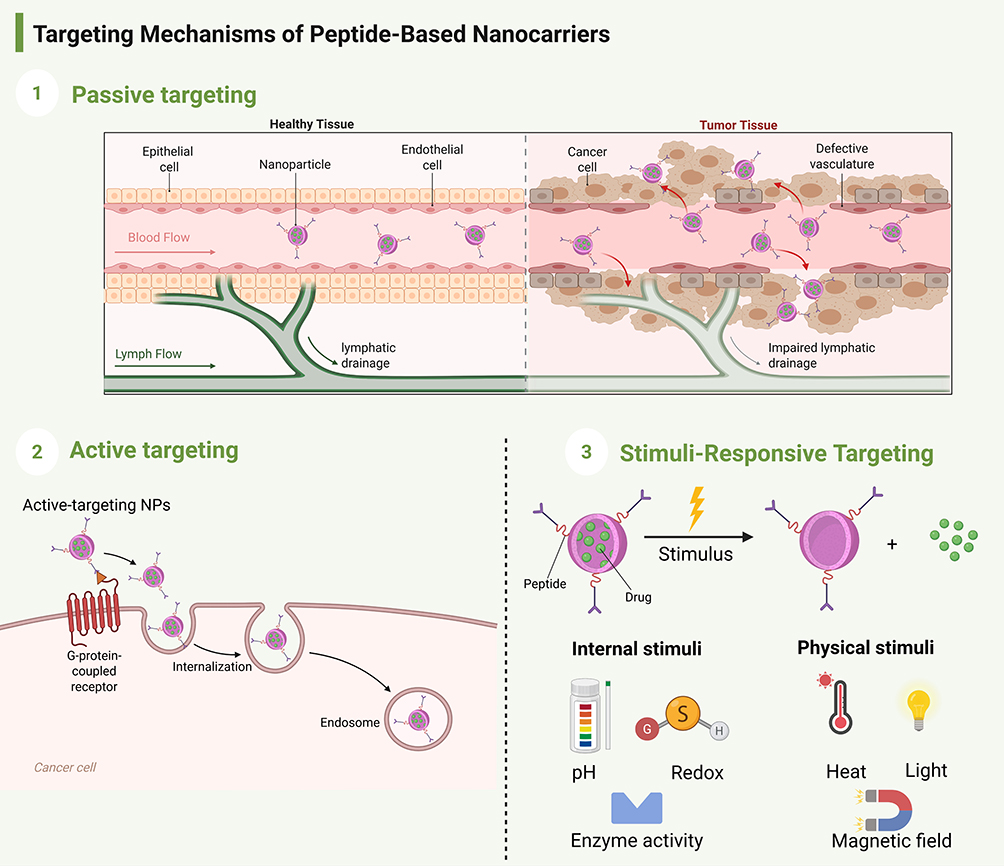 |
Figure 4 Targeting mechanisms of peptide-based nanocarriers: 1) passive targeting, illustrating preferential accumulation in tumor versus healthy tissue, 2) active targeting via ligand–receptor interactions, and 3) stimuli-responsive targeting triggered by chemical (pH, enzymes, redox) or physical (heat, light, magnetic field) cues. |
Passive Targeting & Enhanced Permeability Retention (EPR) Effect
Passive targeting is a drug delivery strategy that relies on the body’s inherent physiological characteristics, particularly systemic circulation, to guide therapeutics toward diseased tissues. Central to this mechanism is the enhanced permeability and retention (EPR) effect, a phenomenon wherein macromolecules or nanoparticles preferentially accumulate in tumor tissues due to the abnormal features of tumor vasculature, namely, increased permeability and defective lymphatic drainage. This pathophysiological hallmark serves as the foundational principle behind passive tumor targeting in nanomedicine. Tumor angiogenesis, driven by rapid tumor growth, leads to abnormal blood vessels with incomplete endothelial linings and large pores (0.1–3 μm), resulting in high vascular permeability and hydraulic conductivity. Nanoparticles, liposomes, and macromolecular drugs smaller than these pores can penetrate tumor tissue via the EPR effect. Optimal delivery requires nanocarriers to be larger than 6–8 nm or 40 kDa to prevent renal clearance and ensure effective tumor accumulation. Nanoparticles engineered within the optimal size range of approximately 10–200 nm can effectively take advantage of the EPR effect, promoting preferential accumulation at tumor sites while minimizing distribution to healthy tissues.129,130
However, while passive targeting enhances initial localization within the tumor microenvironment, it does not inherently guarantee efficient cellular uptake or precise intracellular delivery, which may be attributed to the complex tumor microenvironment. To address this, the integration of peptides into nanoparticle systems introduces additional functional advantages. Peptide-based nanoparticles combine the structural benefits of nanocarriers, such as improved stability and extended circulation time, with the inherent bioactivity of peptides, which can facilitate tumor targeting, membrane penetration, receptor-mediated uptake, or even exert direct therapeutic effects. This synergistic design improves both the biodistribution profile and therapeutic precision, making peptide-based nanocarriers a promising platform for enhancing the efficacy of cancer treatments.91,114,129,131
Owing to the tumor selectivity offered by the EPR effect, numerous nanomedicines employing this mechanism have been extensively explored for cancer treatment. For instance, Bian et al developed a novel nanocarrier composed of paclitaxel (PTX)-loaded silk fibroin nanoparticles conjugated with an iRGD-EGFR nanobody recombinant protein (anti-EGFR-iRGD) for the treatment of cervical cancer. These nanoparticles, termed A-PTX-SF-NPs, demonstrated efficient tumor penetration and enhanced cytotoxicity against cancer cells. In HeLa tumor-bearing nude mice, the A-PTX-SF-NPs showed superior tumor accumulation and antitumor efficacy in vivo, driven by the EPR effect. This study highlights how peptide-functionalized nanoparticles utilize the EPR effect for passive tumor accumulation, while the peptide component facilitates active targeting to improve therapeutic efficiency.131
Active Targeting via Ligand-Receptor Interactions
Active targeting involves the use of specific ligand–receptor interactions to direct therapeutic agents to diseased or abnormal cells with high precision. In this strategy, ligands such as peptides, antibodies, or small molecules are designed to selectively bind to receptors that are overexpressed or uniquely expressed on target cells, such as those in tumors or sites of inflammation. This targeted binding facilitates cellular uptake through receptor-mediated mechanisms, enhancing the accumulation of therapeutics at the desired site while minimizing effects on healthy tissues. By recognizing disease-specific molecular markers, active targeting significantly improves the efficacy and specificity of various drug delivery approaches.132,133
In nanomedicine, active targeting through ligand–receptor interactions is a powerful strategy to improve the specificity and therapeutic index of drug-loaded nanocarriers. This approach involves modifying the surface of nanocarriers, such as liposomes, polymeric nanoparticles, or micelles, with ligands that have a high binding affinity for receptors overexpressed on target cells. These ligands may include monoclonal antibodies, aptamers, or, more commonly, peptides due to their favorable biocompatibility, small size, low immunogenicity, and ease of synthesis. Upon systemic administration, the ligand-functionalized nanocarriers circulate through the body and selectively bind to target cells through specific receptor–ligand recognition, such as integrin–RGD, EGFR–GE11, or transferrin–TfR interactions.132,134 This binding promotes receptor-mediated endocytosis, enabling internalization of the nanocarrier and efficient intracellular release of its therapeutic payload, thereby enhancing treatment efficacy while minimizing damage to healthy tissues.96,132,135
One promising approach within this framework is the use of peptide-encapsulated nanocarrier systems. These systems combine the therapeutic potential of bioactive peptides with the precision of targeted delivery. By encapsulating therapeutic peptides within a nanocarrier and functionalizing its surface with targeting ligands, such systems can protect peptides from enzymatic degradation, prolong circulation time, and ensure site-specific delivery.90 For example, tumor-homing peptides such as iRGD or liver-targeting peptides can be conjugated to the nanocarrier surface, guiding the encapsulated peptides to their intended cellular targets, enhancing specificity and improving treatment outcomes. This dual-function design, therapeutic payload plus targeting capability, makes peptide-encapsulated nanocarriers an attractive platform for precision therapy, especially in cancer and inflammatory diseases.135–138
Environment-Responsive Release Strategies
Peptides can be engineered to respond to specific internal or external stimuli within the pathological microenvironment, enabling spatiotemporally controlled drug release. This is particularly important for the treatment of diseases such as malignancy, as the stimuli-responsive DDSs can react to endogenous cues within the tumor microenvironment eg., acidic pH, elevated enzyme levels, and redox imbalances, or external triggers like heat, light, or temperature. In response, these systems may transform, including changes in surface charge or particle size reduction, which enhance cellular uptake and internalization by cancer cells. This dynamic behavior promotes more effective targeted delivery and deeper tumor penetration, while also enabling controlled drug release at the diseased site.26
Enzyme-Stimulated Responsive Peptide DDSs
Elevated levels of extracellular enzymes, such as matrix metalloproteinases (MMPs) and proteolytic hydrolases, within tumor tissues can trigger peptide-based DDSs to regulate the release of anticancer agents. For instance, cathepsin B (CTSB), a histone protease abundantly expressed in the cytosol of bladder cancer cells, specifically targets the GFLG peptide sequence and cleaves it at the bond between the phenylalanine (F) and leucine (L) residues.26 Song and Choi139 developed enzyme-responsive nanoparticles, RH-(GFLG)3, featuring a cathepsin B-sensitive GFLG oligopeptide core. As a novel drug delivery platform, these nanoparticles demonstrated excellent biocompatibility, biodegradability, and enzyme-triggered controlled drug release. Comprising arginine, histidine, and the enzyme-sensitive peptide core, RH-(GFLG)3 formed stable nanoscale structures with strong enzyme-responsive behavior. Compared to non-responsive controls, the nanoparticles exhibited significantly enhanced cellular uptake. Furthermore, cytotoxicity assays, including MTT, LDH, and hemolysis, confirmed their minimal toxicity in HeLa cells. When loaded with doxorubicin (LL-Dox), the nanoparticles showed potent anticancer activity. LL-Dox achieved superior therapeutic outcomes compared to isomer-containing control groups, attributed to its improved enzyme-triggered release profile. Notably, LL-Dox also demonstrated strong anticancer efficacy in both 3D tumor spheroid models and zebrafish cancer models.139 These findings highlight the potential of enzyme-responsive peptide-based nanocarriers as efficient and biocompatible DDSs for biomedical applications.
pH-Stimulated Responsive Peptide DDSs
In most cancerous tissues, acidic conditions (lower pH) arise due to the buildup of lactic acid and a decrease in oxidative phosphorylation. This pH gradient between cancerous and healthy tissues can be exploited to develop DDSs that release medication in response to the acidic environment of tumors. Tumor tissues and inflamed sites typically exhibit a slightly acidic extracellular pH (~6.5–6.8) compared to normal physiological pH (~7.4), while endosomes (~pH 6.0–6.8) and lysosomes within cells are even more acidic (~pH 4.5). Peptide-based nanocarriers are engineered with pH-sensitive motifs that undergo conformational changes, charge reversal, or cleavage under acidic conditions, triggering drug release at the target site. The pH responsiveness can be achieved through the incorporation of acid-labile linkers, such as hydrazone, cis-aconityl, or acetal bonds, or through the use of ionizable amino acids like histidine, which respond to protonation under acidic conditions. These mechanisms enable nanoparticles to remain stable in the bloodstream but rapidly release their therapeutic payloads upon exposure to the acidic tumor microenvironment or intracellular organelles.140–142
Additionally, some pH-responsive peptides facilitate endosomal escape by adopting membrane-disruptive conformations under acidic conditions, enhancing cytosolic delivery of drugs or biomacromolecules. This pH-triggered delivery strategy improves spatial precision, minimizes premature drug release, and enhances intracellular delivery efficiency, offering significant potential for improving the safety and efficacy of cancer therapeutics and other disease treatments characterized by acidic microenvironments.140–142 Wang et al143 designed an ultra pH-responsive peptide nanocarrier engineered for targeted gene therapy in cancer. The system is constructed from self-assembling peptides that maintain stable nanostructures at physiological pH (7.4) but undergo progressive assembly–disassembly transitions in response to moderately acidic tumor environments (pH 6.5–6.8) and more acidic lysosomal interiors (pH 5.0–6.0). This dynamic pH-triggered behavior enables highly efficient delivery of nucleic acids, eg., siRNA, pDNA, and mRNA, with transfection efficiencies reaching 87.1% for pDNA and 74.9% for mRNA, surpassing previously reported peptide carriers. Moreover, cancer cell-targeting motifs on the nanocarrier surface facilitate uptake, causing up to 96% cancer cell death in vitro. The system also demonstrates excellent biocompatibility and low toxicity, positioning it as a promising platform for precision cancer gene and immunotherapy.143
Redox Stimuli-Responsive Peptide DDSs
Redox-responsive peptide DDSs are emerging as promising tools in biomedicine due to their ability to release drugs in response to changes in the cellular redox environment, particularly the concentration of glutathione (GSH). These systems offer targeted drug delivery, enhanced efficacy, and reduced side effects, making them attractive for treating diseases like cancer and inflammation, where redox imbalances are often present. In the context of cancer pharmacotherapy, redox-responsive peptides are designed to sense the redox potential within the tumor microenvironment, primarily influenced by elevated levels of reactive oxygen species (ROS) and GSH. These peptides often incorporate disulfide bonds that remain stable in the bloodstream but are cleaved in the reductive, GSH-rich environment of tumor cells. This cleavage triggers drug release or nanoparticle disassembly specifically at the tumor site while maintaining colloidal stability during circulation.26,142 Xiao et al144 created a redox-responsive peptide-based nanocarrier system designed for targeted and synergistic cancer therapy. The nanocarrier comprises a mesoporous silica nanoparticle (MSN) core loaded with chemotherapeutic drugs, encapsulated by a disulfide-linked therapeutic peptide shell ((RGDWWW)2KC). The RGD motif facilitates active tumor targeting by binding to integrin receptors, while the peptide shell acts as a gatekeeper, preventing premature drug release during circulation. Upon entering the tumor microenvironment, elevated intracellular GSH levels trigger the cleavage of disulfide bonds, disassembling the peptide shell and enabling controlled drug release. Simultaneously, the released tryptophan-rich peptide fragments contribute additional cytotoxicity by damaging DNA. Notably, this dual-functional system integrates active targeting, redox-responsive release, and synergistic therapeutic effects, offering a promising strategy for enhancing the efficacy and precision of cancer nanomedicine.144
Overall, the combination of these targeting strategies, ie., passive targeting, active targeting, and stimuli-responsive DDSs, enables peptide-functionalized nanoparticles to function as highly intelligent, precision-guided delivery systems. This multi-layered targeting approach addresses the key challenges in nanomedicine, including poor bioavailability, non-specific distribution, and off-target toxicity, ultimately enhancing treatment efficacy and safety in a range of diseases.26,91,129
Applications of Peptide-Based Nanocarriers for Targeted Delivery
Cancer Therapy
Conventional chemotherapy, including agents such as cisplatin, carboplatin, paclitaxel, and docetaxel, targets rapidly dividing cells but is inherently non-specific, damaging healthy tissues such as bone marrow, gastrointestinal tract, and hair follicles. These off-target effects lead to immunosuppression, gastrointestinal distress, and hair loss, often requiring dose reductions that compromise efficacy. Additionally, the development of drug resistance through mechanisms such as enhanced DNA repair, drug efflux, or altered cell death further limits long-term effectiveness. Overall, conventional therapies suffer from poor selectivity, systemic toxicity, and inadequate tumor accumulation.15,145
Peptide-based nanocarriers address these limitations by integrating the physicochemical advantages of nanoparticles with the molecular specificity of peptides. Nanoparticles can be engineered to fall within optimal size ranges to promote prolonged circulation and preferential accumulation in tumors, while peptide functionalization enables active targeting via ligand–receptor interactions. Tumor-homing peptides such as RGD (integrin-targeting), GE11 (EGFR-targeting), and transferrin-mimetic peptides facilitate receptor-mediated endocytosis, enhancing cellular uptake and intratumoral drug retention while minimizing off-target exposure.135–138 These effects directly arise from the passive accumulation and active targeting mechanisms discussed in Mechanisms of Precision Targeting Section, which together improve biodistribution and therapeutic precision.15,145
In addition to improving targeting specificity, peptide-encapsulated nanocarriers offer effective strategies for overcoming multidrug resistance (MDR), a major obstacle in cancer treatment. These systems enable the co-delivery of chemotherapeutic agents alongside functional peptides, such as siRNA-conjugated peptides or cell-penetrating sequences, that inhibit drug efflux pumps or sensitize tumor cells to therapy. Peptide-mediated targeting further promotes preferential accumulation of therapeutic payloads in resistant tumor tissues, reducing premature drug clearance and enhancing intracellular drug availability. By combining tumor-specific targeting with mechanisms that bypass resistance pathways, peptide-based nanocarriers significantly improve therapeutic efficacy and show strong potential for treating aggressive and treatment-resistant cancers.145,146
Despite these advances, challenges remain for clinical translation, including heterogeneity of the tumor microenvironment, variability in receptor expression, and inconsistent exploitation of the EPR effect across tumor types. Addressing these factors will be critical for maximizing the clinical impact of peptide-based nanocarrier systems in oncology.
Neurological Disorders
The effective treatment of neurological disorders is severely constrained by the blood–brain barrier (BBB), a highly selective physiological barrier that restricts the transport of most systemically administered therapeutics into the CNS. As a result, many conventional drugs fail to achieve therapeutic concentrations in the brain, limiting treatment options for neurodegenerative diseases, brain tumors, and other CNS disorders.147,148 Peptide-functionalized nanocarriers provide a promising strategy to overcome BBB-associated delivery limitations by exploiting receptor-mediated transport mechanisms. BBB-penetrating peptides, such as transferrin-derived peptides, TAT, and angiopep-2, can be conjugated to nanocarrier surfaces to facilitate transcytosis across brain endothelial cells. These strategies directly expand upon the active targeting mechanisms discussed in Mechanisms of Precision Targeting Section, allowing selective interaction with BBB transport receptors and enhanced CNS delivery.149 Encapsulation within nanocarriers further protects peptide and small-molecule therapeutics from enzymatic degradation and allows controlled release once within the brain parenchyma.147,148
While these systems substantially improve brain delivery, challenges remain, including limited targeting specificity within heterogeneous brain tissues, potential neurotoxicity, and the need for precise control over intracellular release. Continued optimization of peptide selection and carrier design will be essential to translate these approaches into effective neurological therapies.
Infectious Diseases
The treatment of infectious diseases is increasingly complicated by poor tissue penetration of conventional antibiotics, rapid drug degradation, non-specific distribution, and the emergence of antimicrobial resistance. These limitations reduce therapeutic efficacy and contribute to systemic toxicity and treatment failure. Peptide-based nanocarriers offer a multifunctional platform to address these challenges by improving drug stability, prolonging circulation time, and enabling targeted delivery to infection sites.150,151
Encapsulation of antimicrobial peptides (AMPs), either alone or in combination with antibiotics, enhances their bioavailability and protects them from proteolytic degradation. By co-delivering AMPs with conventional antibiotics within nanocarriers, these systems further improve drug stability, prolong circulation time, and reduce toxicity to healthy cells. In addition, functionalization with targeting peptides that recognize bacterial surface proteins, biofilm-associated components, or infection-specific microenvironments promotes selective accumulation at sites of infection.150,151 These advantages arise from active targeting and environment-responsive release mechanisms, as outlined in Mechanisms of Precision Targeting Section, enabling spatiotemporally controlled drug release in response to pathological cues such as acidic pH, elevated enzyme activity, oxidative stress, or temperature changes.
Beyond their intrinsic membrane-disrupting and immune-modulatory activities, AMPs benefit significantly from nanocarrier-based delivery. Encapsulation improves AMP stability, enhances bioavailability, and facilitates targeted delivery to infection sites, collectively enhancing antimicrobial efficacy while reducing off-target damage to healthy host tissues.150,152 The ability to engineer nanocarriers with stimuli-responsive properties further allows precise, on-demand therapeutic action within complex and dynamic infectious environments.152
Representative studies highlight the therapeutic potential of AMP-incorporating nanocarriers. Van der Weide et al encapsulated the AMP AA139 into polymeric nanoparticles and lipid-core micelles, demonstrating potent in vitro activity and effective biodistribution following aerosol delivery in models of multidrug-resistant Klebsiella pneumoniae pneumonia and septicemia.153 In another study, a porous silicon-based nanocarrier co-loaded with silver nanoparticles and the AMP Tet-213 enabled pH- and ROS-responsive, on-demand release under infection-like conditions, resulting in synergistic antibacterial activity against Escherichia coli and Staphylococcus aureus. In vivo evaluation in an infected rat wound model demonstrated efficient bacterial clearance, accelerated healing, and minimal toxicity, highlighting the potential of this platform for targeted, antibiotic-free antimicrobial therapy and wound treatment.154
Overall, peptide-based nanocarriers represent a highly adaptable and promising platform for precision antimicrobial therapy, particularly in addressing drug-resistant pathogens and biofilm-associated infections. Despite these encouraging outcomes, challenges such as potential immunogenicity of AMPs, scalability of large-scale manufacturing, and long-term safety evaluation remain to be addressed to facilitate clinical translation.
Inflammatory and Autoimmune Diseases
Peptide-encapsulated nanocarrier systems have shown growing potential in the treatment of inflammatory and autoimmune diseases due to their ability to enable precision targeting of dysregulated immune responses. Autoimmune conditions such as rheumatoid arthritis (RA), inflammatory bowel disease (IBD),155,156 multiple sclerosis (MS), and systemic lupus erythematosus (SLE)156 have been widely investigated using this approach. Compared with conventional anti-inflammatory therapies, peptide-functionalized nanocarriers offer significant advantages by enabling targeted drug delivery to inflamed tissues, thereby reducing off-target effects and systemic toxicity.
Unlike traditional therapies that act broadly and are often associated with serious side effects, peptide-based nanocarriers can be engineered for site-specific binding and stimuli-responsive release, ensuring precise and sustained therapeutic action. These systems also enhance tissue penetration, prolong circulation time, and allow the co-delivery of multiple therapeutic agents for synergistic or theranostic applications, collectively improving efficacy, safety, and adaptability in managing inflammatory and autoimmune diseases.155,157
Peptide-functionalized nanocarriers can be designed to selectively deliver immunomodulatory agents, including AMPs, cytokine inhibitors, or siRNA, directly to inflamed tissues or to overexpressed immune cell receptors such as VCAM-1.156,158 For example, nanocarriers functionalized with targeting peptides that recognize activated endothelium in inflamed joints have demonstrated enhanced drug accumulation and improved therapeutic outcomes in both in vitro and in vivo models of rheumatoid arthritis.159,160 Similarly, in IBD, colon-targeting peptides have been employed to direct therapeutic payloads to the inflamed intestinal mucosa.161 By improving site-specific delivery while minimizing systemic exposure, peptide-encapsulated nanocarriers offer a promising strategy for modulating immune dysfunction with greater efficacy and fewer side effects in autoimmune disorders.
Gene Delivery
Gene delivery represents a rapidly advancing therapeutic strategy for modulating gene expression in a wide range of diseases, including cancer, genetic disorders, and inflammatory conditions. Approaches such as siRNA-mediated gene silencing, mRNA-based protein replacement, and CRISPR-mediated gene editing require delivery systems that are both safe and efficient. Peptide-functionalized nanocarriers provide a versatile platform for gene delivery by protecting nucleic acid cargo from degradation, enhancing cellular uptake, and enabling receptor-mediated targeting to diseased tissues.162,163
Certain peptides further enhance intracellular delivery by facilitating endosomal escape and nuclear localization, which are critical steps for successful transfection. By enabling nucleic acids to avoid endosomal degradation and reach the nucleus, these peptides significantly improve transfection efficiency.163,164
A representative example is provided by Wang et al,165 who developed a nanocarrier based on a cationic amphiphilic peptide ((CR3)3C) for targeted, stimulus-responsive delivery of CRISPR/Cas9 ribonucleoprotein (RNP) complexes in cancer models. This system exploited multiple cellular uptake pathways, including caveolae-mediated endocytosis and lipid raft-associated internalization, while endosomal escape was facilitated by the proton sponge effect and nuclear localization was driven by the intrinsic nuclear localization signal of Cas9. In HeLa-EGFP cells, the nanocarrier achieved a gene editing efficiency of 33.8% at 100 nM RNP while maintaining over 90% cell viability. These findings underscore the critical role of peptide-based nanocarriers in overcoming key barriers to gene therapy, including cellular uptake, endosomal escape, and nuclear delivery, while enabling precise, tumor-targeted genome editing through environmentally responsive design.165 Figure 5 summarizes the therapeutic applications of peptide-based nanocarriers, highlighting their potential for achieving targeted delivery with reduced systemic toxicity.
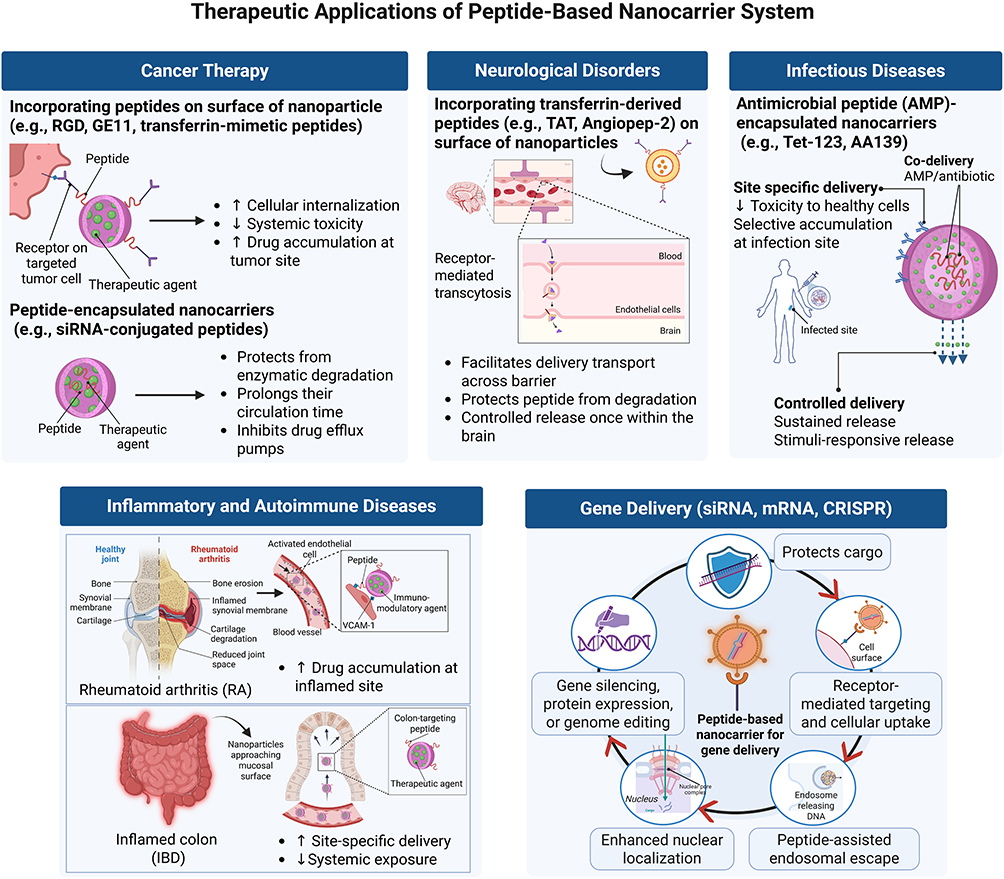 |
Figure 5 Therapeutic applications of peptide-based nanocarriers: Peptide-functionalized nanocarriers enable precision drug delivery in various biomedical contexts, including cancer, neurological, infectious, inflammatory, and gene-based therapies. They facilitate receptor-mediated targeting, protect therapeutic payloads, enhance cellular uptake, and allow stimuli-responsive or site-specific release. Their adaptability to small molecules, peptides, and nucleic acids highlights their potential as versatile next-generation delivery platforms. Upward arrows (↑) indicate an increase, downward arrows (↓) indicate a decrease. |
Challenges and Limitations
Despite encouraging preclinical outcomes and growing interest, the clinical translation of peptide-based nanocarriers as DDSs remains a major challenge, with only a limited number advancing successfully through clinical trials and into routine clinical use. Peptide-based nanocarriers face significant stability challenges in vivo. Peptides are inherently susceptible to enzymatic degradation and rapid clearance, which can undermine their therapeutic efficacy.90 Although strategies such as chemical modification, encapsulation, or the use of peptidomimetics can enhance peptide stability, they may also affect bioactivity or introduce formulation complexities. Changes to the peptide’s structure can affect its ability to bind to a target, its stability in solution, and its pharmacokinetic properties. This can be both beneficial, allowing for optimization of drug candidates, or detrimental, potentially leading to loss of activity or unexpected side effects. For instance, substituting D-amino acids can greatly enhance a peptide’s resistance to enzymatic degradation, but may also reduce its biological effectiveness. Nevertheless, the strategic integration of various chemical modifications alongside suitable delivery platforms may lead to the development of peptides with markedly improved performance.166 Additionally, while nanoparticle encapsulation offers protection for therapeutic payloads, maintaining the long-term structural integrity of the nanocarrier and preventing premature drug release within the body remain formidable challenges.167 Following administration, these systems must also evade rapid renal clearance and recognition by the reticuloendothelial system (RES), both of which can significantly reduce circulation time and limit target site accumulation.90 Thus, careful optimization of nanoparticle design, such as size, surface characteristics, and the incorporation of stealth features, is essential to ensure stability, prolong circulation, and enhance therapeutic outcomes.90
Another major concern is the potential immunogenicity and toxicity associated with both the peptides and the nanocarriers. Repeated administration of exogenous peptides may elicit immune responses, while certain nanocarrier materials may induce cytotoxic or pro-inflammatory effects. Ensuring biocompatibility and minimizing unintended immune activation remain key hurdles in clinical translation.90,96 Biodistribution and off-target effects remain persistent limitations, particularly in complex biological environments. Even with targeting ligands, non-specific accumulation in organs such as the liver or spleen can reduce therapeutic efficiency and increase systemic toxicity. Comprehensive in vivo profiling is necessary to optimize distribution and minimize unintended interactions.90 The manufacturing and scale-up of peptide-based nanocarriers also present considerable challenges. The need for precise control over particle size, peptide loading, and batch-to-batch consistency poses technical barriers to large-scale production. Moreover, incorporating multiple functional components, such as targeting ligands and stimuli-responsive linkers, not only increases the structural and formulation complexity but also substantially elevates manufacturing costs. From a regulatory perspective, peptide-based nanocarriers fall into a grey area between biologics and nanomedicines, complicating the approval pathway. Current regulatory frameworks are not fully adapted to address the unique pharmacokinetics, multifunctionality, and long-term effects of these hybrid systems. This leads to extended evaluation timelines and inconsistent global standards.28,90,96 The current status of clinical trials involving peptide-functionalized nanocarriers remains limited, with most efforts still in preclinical or early-phase testing. Challenges in demonstrating clear therapeutic superiority, scalability, and safety at the clinical level have slowed progress toward market approval.90,96 In summary, while peptide-based nanocarriers offer remarkable therapeutic potential, their translation into clinical and commercial success will depend on overcoming these critical scientific, technical, and regulatory challenges.
Future Perspectives
The advancement of peptide-based nanocarriers is increasingly driven by the emergence of smart delivery systems that integrate molecular specificity, structural stability, and responsiveness to biological stimuli. Advances in rational peptide design, informed by structural and functional analysis, allow precise modulation of binding affinity, biodegradation rates, and controlled release kinetics, thereby optimizing delivery efficacy and minimizing off-target effects. In particular, stimuli-responsive systems that react to environmental cues such as pH variations, redox potential, or enzymatic activity are gaining momentum as they offer precise spatiotemporal control over therapeutic release.91 Moreover, progress in peptidomimetic engineering and synthetic peptide analogues has addressed key limitations associated with native peptides, such as enzymatic degradation and poor pharmacokinetics. The incorporation of D-amino acids and backbone-modified constructs not only enhances proteolytic resistance and in vivo stability but also enables fine-tuning of physicochemical and functional attributes without compromising biological activity.168 Collectively, these innovations offer a promising avenue for the realization of robust, functionally versatile peptide-based nanocarriers, capable of meeting the stringent demands of modern targeted therapeutics.
One of the emerging technologies with great potential to revolutionize peptide-based nanocarrier development is microfluidics. Traditional fabrication methods for nanodrug delivery systems (NDDSs), such as homogenization, self-assembly, and nanoprecipitation, often result in a broad particle size distribution, poor dispersion, and high batch-to-batch variability due to inefficient mixing and mass transfer. These limitations hinder clinical translation. Microfluidics offers a promising alternative, enabling precise control over fluid dynamics at the microscale. This approach enables rapid mixing, reduced reagent consumption, and the consistent production of nanocarriers with well-defined properties. For peptide-based nanocarriers, microfluidics enhances formulation precision, facilitates the integration of targeting ligands or responsive linkers, and supports scalable, reproducible manufacturing, making it a key direction for advancing targeted drug delivery.91,169
The emergence of multifunctional and personalized nanocarriers marks a major shift toward precision medicine. Future platforms are envisioned to integrate multiple therapeutic and diagnostic functions (“theranostics”) while being tailored to patient-specific molecular profiles. Personalized peptide ligands, engineered for individual biomarkers or genetic signatures, could significantly improve targeting accuracy and therapeutic outcomes.109,170 Finally, the integration of artificial intelligence and predictive design tools is poised to revolutionize the discovery and optimization of peptide-nanocarrier systems. Machine learning algorithms can analyze vast datasets to predict peptide-receptor interactions, optimize nanocarrier formulations, and simulate in vivo behavior. This data-driven approach will accelerate the development of next-generation peptide-based therapeutics with improved efficacy, safety, and translational potential.
Conclusion
Nanomedicine has emerged as a transformative approach for treating a wide range of diseases, including cancer,53,80,113,134,143 infectious diseases,153,154 inflammatory disorders,156,159–161 and neurological conditions.147–149 Its advantages, such as enhanced pharmacokinetics, controlled release, and precision targeting, have helped overcome many limitations of conventional therapies, with cancer therapy remaining the most widely explored application. Beyond oncology, nanomedicines are being increasingly investigated for tackling bacterial infections, as well as other complex conditions.171 Within this evolving landscape, peptide-based nanocarriers stand out as a promising platform due to their biocompatibility,45,46,54,56,71,83,172 molecular specificity,37,39,91,92,96,145,173 ease of functionalization,63,84,85,172 and responsiveness to biological stimuli.26,37,69,78,90,114 These features make them particularly well-suited for targeted drug and gene delivery, enabling high selectivity, reduced systemic toxicity, and improved therapeutic efficacy.90
This review highlights that progress in peptide-based nanocarriers depends on their rational integration, where thoughtful peptide selection and incorporation strategies are aligned with nanocarrier design, forming rational design frameworks that remain an unmet need this review seeks to address. Challenges related to peptide instability and immunogenicity are being actively addressed through strategies such as D-amino acid substitution, backbone modification, cyclization, and protective nanocarrier encapsulation, which collectively enhance proteolytic resistance, circulation stability, and in vivo performance. Similarly, advances in nanocarrier design and controlled fabrication approaches are helping to mitigate issues related to premature drug release, biodistribution, and scalability.
Emerging technologies such as artificial intelligence, machine learning, high-throughput screening, and computational modeling are further accelerating the design, optimization, and prediction of peptide–nanocarrier behavior in biological systems. A particularly promising direction is the convergence of rational peptide engineering with stimuli-responsive nanocarriers and controlled fabrication technologies, offering a cohesive strategy to improve targeting precision, stability, and translational robustness. Realizing the full clinical potential of these systems will require sustained interdisciplinary collaboration to bridge the gap between laboratory innovation and clinical application, ultimately paving the way for more precise, effective, and personalized treatments. The scarcity of clinically approved peptide-functionalized nanocarriers highlights not a lack of promise, but a need for deeper mechanistic understanding and rational design frameworks.
Acknowledgments
The authors would like to acknowledge the research team in the Department of Tissue Engineering and Regenerative Medicine (DTERM), Faculty of Medicine, Universiti Kebangsaan Malaysia for the technical support throughout this review.
Author Contributions
All authors made a significant contribution to the work reported, whether that is in the conception, study design, execution, acquisition of data, analysis and interpretation, or in all these areas; took part in drafting, revising or critically reviewing the article; gave final approval of the version to be published; have agreed on the journal to which the article has been submitted; and agree to be accountable for all aspects of the work.
Funding
This study was supported by Geran Fundamental Fakulti Perubatan (GFFP), Universiti Kebangsaan Malaysia with a code project (Grant Code: FF-2025-201).
Disclosure
The authors hereby declare that they have no conflict of interest.
References
1. Zazzara MB, Palmer K, Vetrano DL. et al. Adverse drug reactions in older adults: a narrative review of the literature. Eur Geriatr Med. 2021;12(3):463–30. doi:10.1007/s41999-021-00481-9
2. Sahilu T, M Getachew, T Melaku, et al. Adverse Drug Events and Contributing Factors Among Hospitalized Adult Patients at Jimma Medical Center, Southwest Ethiopia: a Prospective Observational Study. Curr Ther Res Clin Exp. 2020;93:100611. doi:10.1016/j.curtheres.2020.100611
3. Laatikainen O, Sneck S, Turpeinen M. Medication-related adverse events in health care-what have we learned? A narrative overview of the current knowledge. Eur J Clin Pharmacol. 2022;78(2):159–170. doi:10.1007/s00228-021-03213-x
4. Aate J. Management of adverse drug reactions: a review. IP International Journal of Comprehensive and Advanced Pharmacology. 2024;9(1):45–51. doi:10.18231/j.ijcaap.2024.007
5. Jutley GS, Robin E Ferner MP, Coleman JJ. Adverse drug reactions and interactions. Clinical Pharmacology. 2024;52(1):15–22.
6. Montastruc JL, Lafaurie M, De canecaude^a C, et al. Fatal adverse drug reactions: a worldwide perspective in the World Health Organization pharmacovigilance database. Br J Clin Pharmacol. 2021;87(11):4334–4340. doi:10.1111/bcp.14851
7. Komagamine J. Prevalence of urgent hospitalizations caused by adverse drug reactions: a cross-sectional study. Sci Rep. 2024;14(1):6058. doi:10.1038/s41598-024-56855-z
8. Oscanoa TJ, Lizaraso F, Carvajal A. Hospital admissions due to adverse drug reactions in the elderly. A meta-analysis. Eur J Clin Pharmacol. 2017;73(6):759–770. doi:10.1007/s00228-017-2225-3
9. Alomar MJ. Factors affecting the development of adverse drug reactions (Review article). Saudi Pharm J. 2014;22(2):83–94. doi:10.1016/j.jsps.2013.02.003
10. Abdullahi Rabiu Abubakar NBS, Haque M. Adverse Drug Reactions: predisposing Factors, Modern Classifications and Causality Assessment. Research J. Pharm. and Tech. 2014;7(9):1091–1098.
11. Adepu S, Ramakrishna S. Controlled Drug Delivery Systems: current Status and Future Directions. Molecules. 2021;26(19):2.
12. Raijada D, Wac K, Greisen E, et al. Integration of personalized drug delivery systems into digital health. Adv Drug Deliv Rev. 2021;176:113857. doi:10.1016/j.addr.2021.113857
13. Ezike TC, Okpala US, Onoja UL, et al. Advances in drug delivery systems, challenges and future directions. Heliyon. 2023;9(6):e17488. doi:10.1016/j.heliyon.2023.e17488
14. Lou J, Duan H, Qin Q, et al. Advances in Oral Drug Delivery Systems: challenges and Opportunities. Pharmaceutics. 2023;15(2):484. doi:10.3390/pharmaceutics15020484
15. Anand U, Dey A, Chandel AKS, et al. Cancer chemotherapy and beyond: current status, drug candidates, associated risks and progress in targeted therapeutics. Genes Dis. 2023;10(4):1367–1401. doi:10.1016/j.gendis.2022.02.007
16. Zargar A, Chang S, Kothari A, et al. Overcoming the challenges of cancer drug resistance through bacterial-mediated therapy. Chronic Dis Transl Med. 2019;5(4):258–266. doi:10.1016/j.cdtm.2019.11.001
17. Hajj A, Chamoun R, Salameh P, et al. Fatigue in breast cancer patients on chemotherapy: a cross-sectional study exploring clinical, biological, and genetic factors. BMC Cancer. 2022;22(1):16. doi:10.1186/s12885-021-09072-0
18. Jolanta Małyszko KK, Kozłowski L, Małyszko J, Małyszko J. Nephrotoxicity of anticancer treatment. Nephrology Dialysis Transplantation. 2017;32(6):924–936. doi:10.1093/ndt/gfw338
19. Kala J, Joseph T, Pirovano M, et al. Acute Kidney Injury Associated with Anticancer Therapies: small Molecules and Targeted Therapies. Kidney360. 2024;5(11):1750–1762. doi:10.34067/KID.0000000566
20. Li J, Wang Q, Xia G, et al. Recent Advances in Targeted Drug Delivery Strategy for Enhancing Oncotherapy. Pharmaceutics. 2023;15(9):2233. doi:10.3390/pharmaceutics15092233
21. Ciftci F, Özarslan AC, Kantarci İC, et al. Advances in Drug Targeting, Drug Delivery, and Nanotechnology Applications: therapeutic Significance in Cancer Treatment. Pharmaceutics. 2025;17(1):121. doi:10.3390/pharmaceutics17010121
22. Nizam AAK, Masri S, Fadilah NIM, et al. Current Insight of Peptide-Based Hydrogels for Chronic Wound Healing Applications: a Concise Review. Pharmaceuticals. 2025;18(1):58. doi:10.3390/ph18010058
23. Alshawwa SZ, AA Kassem, RM Farid, et al. Nanocarrier Drug Delivery Systems: characterization, Limitations, Future Perspectives and Implementation of Artificial Intelligence. Pharmaceutics. 2022;14(4):883.
24. Din FU, Aman W, Ullah I, et al. Effective use of nanocarriers as drug delivery systems for the treatment of selected tumors. Int J Nanomedicine. 2017;12:7291–7309. doi:10.2147/IJN.S146315
25. Adnan SB, Maarof M, Fauzi MB, et al. Exploring the Role of Tripeptides in Wound Healing and Skin Regeneration: a Comprehensive Review. Int J Med Sci. 2025;22(16):4175–4200. doi:10.7150/ijms.118118
26. Guo S, Wang J, Wang Q, et al. Advances in peptide-based drug delivery systems. Heliyon. 2024;10(4):e26009. doi:10.1016/j.heliyon.2024.e26009
27. Bizzotto E, Zampieri G, Treu L, et al. Classification of bioactive peptides: a systematic benchmark of models and encodings. Comput Struct Biotechnol J. 2024;23:2442–2452. doi:10.1016/j.csbj.2024.05.040
28. Md Fadilah NI, Shahabudin NA, Mohd Razif RA, et al. Discovery of bioactive peptides as therapeutic agents for skin wound repair. J Tissue Eng. 2024;15:20417314241280359. doi:10.1177/20417314241280359
29. Varanko A, Saha S, Chilkoti A. Recent trends in protein and peptide-based biomaterials for advanced drug delivery. Adv Drug Deliv Rev. 2020;156:133–187. doi:10.1016/j.addr.2020.08.008
30. Gong L, Zhao H, Liu Y, et al. Research advances in peptide‒drug conjugates. Acta Pharm Sin B. 2023;13(9):3659–3677. doi:10.1016/j.apsb.2023.02.013
31. Bucci R, Vaghi F, Erba E, et al. Peptide grafting strategies before and after electrospinning of nanofibers. Acta Biomater. 2021;122:82–100. doi:10.1016/j.actbio.2020.11.051
32. Martin J, Martinez J, Mehdi A, et al. Silicone grafted bioactive peptides and their applications. Curr Opin Chem Biol. 2019;52:125–135. doi:10.1016/j.cbpa.2019.06.012
33. Hu TL, Chen G-Y, Shi S-C, et al. Plasma-Initiated Grafting of Bioactive Peptide onto Nano-CuO/Tencel Membrane. Polymers (Basel). 2022;14(21):4497. doi:10.3390/polym14214497
34. Primo L, Roque-Borda CA, Carnero Canales CS, et al. Antimicrobial peptides grafted onto the surface of N-acetylcysteine-chitosan nanoparticles can revitalize drugs against clinical isolates of Mycobacterium tuberculosis. Carbohydr Polym. 2024;323:121449. doi:10.1016/j.carbpol.2023.121449
35. McClements DJ. Encapsulation, protection, and delivery of bioactive proteins and peptides using nanoparticle and microparticle systems: a review. Adv Colloid Interface Sci. 2018;253:1–22. doi:10.1016/j.cis.2018.02.002
36. Robescu MS, Bavaro T. A Comprehensive Guide to Enzyme Immobilization: all You Need to Know. Molecules. 2025;30(4):939. doi:10.3390/molecules30040939
37. Shuang wang XW, Luo Y, Liang Y. A comprehensive review of conventional and stimuli-responsive delivery systems for bioactive peptides: from food to biomedical applications. Advanced Composites and Hybrid Materials. 2025;8(12):1.
38. Bulbake U, S Doppalapudi, N Kommineni, et al. Liposomal Formulations in Clinical Use. An Updated Review. Pharmaceutics. 2017;9(2):7.
39. Belfiore L, Saunders DN, Ranson M, et al. Towards clinical translation of ligand-functionalized liposomes in targeted cancer therapy: challenges and opportunities. J Control Release. 2018;277:1–13. doi:10.1016/j.jconrel.2018.02.040
40. Branco F, Cunha J, Mendes M, et al. Peptide-Hitchhiking for the Development of Nanosystems in Glioblastoma. ACS Nano. 2024;18(26):16359–16394. doi:10.1021/acsnano.4c01790
41. Mehrabian A, Mashreghi M, Dadpour S, et al. Nanocarriers Call the Last Shot in the Treatment of Brain Cancers. Technol Cancer Res Treat. 2022;21:15330338221080974. doi:10.1177/15330338221080974
42. Rosenblum D, Joshi N, Tao W, et al. Progress and challenges towards targeted delivery of cancer therapeutics. Nat Commun. 2018;9(1):1410. doi:10.1038/s41467-018-03705-y
43. Zielinska A, F Carreiró, AM Oliveira, et al. Polymeric Nanoparticles: production, Characterization, Toxicology and Ecotoxicology. Molecules. 2020;25(16):3731.
44. Tretiakova DS, Vodovozova EL. Liposomes as Adjuvants and Vaccine Delivery Systems. Biochem (Mosc) Suppl Ser a Membr Cell Biol. 2022;16(1):1–20. doi:10.1134/S1990747822020076
45. Abbasi H, Kouchak M, Mirveis Z, et al. What We Need to Know about Liposomes as Drug Nanocarriers: an Updated Review. Adv Pharm Bull. 2023;13(1):7–23. doi:10.34172/apb.2023.009
46. Nsairat H, Khater D, Sayed U, et al. Liposomes: structure, composition, types, and clinical applications. Heliyon. 2022;8(5):e09394. doi:10.1016/j.heliyon.2022.e09394
47. Sakai-Kato K, Yoshida K, Takechi-Haraya Y, et al. Physicochemical Characterization of Liposomes That Mimic the Lipid Composition of Exosomes for Effective Intracellular Trafficking. Langmuir. 2020;36(42):12735–12744. doi:10.1021/acs.langmuir.0c02491
48. Riaz MK, Riaz M, Zhang X, et al. Surface Functionalization and Targeting Strategies of Liposomes in Solid Tumor Therapy: a Review. Int J Mol Sci. 2018;19(1):195. doi:10.3390/ijms19010195
49. Taher M, Susanti D, Haris MS, et al. PEGylated liposomes enhance the effect of cytotoxic drug: a review. Heliyon. 2023;9(3):e13823. doi:10.1016/j.heliyon.2023.e13823
50. Chen J, Hu S, Sun M, et al. Recent advances and clinical translation of liposomal delivery systems in cancer therapy. Eur J Pharm Sci. 2024;193:106688. doi:10.1016/j.ejps.2023.106688
51. Patel A, Tyagi A, Sharma RK, et al. Formulation of (99m)Technetium-labeled leuprolide loaded liposomes and its biodistribution study in New Zealand white female rabbits for assessment of its uterine targeting efficiency. Drug Deliv Transl Res. 2018;8(1):43–53. doi:10.1007/s13346-017-0432-1
52. Hwang H, Jeong H-S, Oh P-S, et al. PEGylated nanoliposomes encapsulating angiogenic peptides improve perfusion defects: radionuclide imaging-based study. Nucl Med Biol. 2016;43(9):552–558. doi:10.1016/j.nucmedbio.2016.05.010
53. Sonju JJ, Dahal A, Singh SS, et al. Peptide-functionalized liposomes as therapeutic and diagnostic tools for cancer treatment. J Control Release. 2021;329:624–644. doi:10.1016/j.jconrel.2020.09.055
54. Scioli Montoto S, Muraca G, Ruiz ME. Solid Lipid Nanoparticles for Drug Delivery: pharmacological and Biopharmaceutical Aspects. Front Mol Biosci. 2020;7:587997. doi:10.3389/fmolb.2020.587997
55. Ghasemiyeh P, Mohammadi-Samani S. Solid lipid nanoparticles and nanostructured lipid carriers as novel drug delivery systems: applications, advantages and disadvantages. Res Pharm Sci. 2018;13(4):288–303. doi:10.4103/1735-5362.235156
56. Cláudia Viegas FS, Fonte P, Fonte P. An insight on lipid nanoparticles for therapeutic proteins delivery. Journal of Drug Delivery Science and Technology. 2022;77:103839. doi:10.1016/j.jddst.2022.103839
57. Abou-Taleb HA, Fathalla Z, Naguib DM, et al. Chitosan/Solid-Lipid Nanoparticles Hybrid Gels for Vaginal Delivery of Estradiol for Management of Vaginal Menopausal Symptoms. Pharmaceuticals (Basel). 2023;16(9):1284. doi:10.3390/ph16091284
58. Odinei Fogolari FVL, Ineu RP, Rudy M, et al. Progesterone-loaded solid lipid nanoparticles for use in the regulation of the estrous cycle in female rats. Journal of Drug Delivery Science and Technology. 2023;88:104954. doi:10.1016/j.jddst.2023.104954
59. Mahmoud RA, Hussein AK, Nasef GA, et al. Oxiconazole nitrate solid lipid nanoparticles: formulation, in-vitro characterization and clinical assessment of an analogous loaded carbopol gel. Drug Dev Ind Pharm. 2020;46(5):706–716. doi:10.1080/03639045.2020.1752707
60. Bhalekar MR, Pokharkar V, Madgulkar A, et al. Preparation and evaluation of miconazole nitrate-loaded solid lipid nanoparticles for topical delivery. AAPS PharmSciTech. 2009;10(1):289–296. doi:10.1208/s12249-009-9199-0
61. Loureiro JA, Andrade S, Duarte A, et al. Resveratrol and Grape Extract-loaded Solid Lipid Nanoparticles for the Treatment of Alzheimer’s Disease. Molecules. 2017;22(2):277. doi:10.3390/molecules22020277
62. Chowdhury S, Toth I, Stephenson RJ. Dendrimers in vaccine delivery: recent progress and advances. Biomaterials. 2022;280:121303. doi:10.1016/j.biomaterials.2021.121303
63. Wang J, Li B, Qiu L, et al. Dendrimer-based drug delivery systems: history, challenges, and latest developments. J Biol Eng. 2022;16(1):18. doi:10.1186/s13036-022-00298-5
64. Ganda IS, Zhong Q, Hali M, et al. Dendrimer-conjugated peptide vaccine enhances clearance of Chlamydia trachomatis genital infection. Int J Pharm. 2017;527(1–2):79–91. doi:10.1016/j.ijpharm.2017.05.045
65. Bello M, Rodriguez-Fonseca RA, Correa-Basurto J. Complexation of peptide epitopes with G4-PAMAM dendrimer through ligand diffusion molecular dynamic simulations. J Mol Graph Model. 2020;96:107514. doi:10.1016/j.jmgm.2019.107514
66. Gusdon AM, Faraday N, Aita JS, et al. Dendrimer nanotherapy for severe COVID-19 attenuates inflammation and neurological injury markers and improves outcomes in a phase2a clinical trial. Sci Transl Med. 2022;14(654):eabo2652. doi:10.1126/scitranslmed.abo2652
67. Sztandera K, Rodriguez-Garcia JL, Cena V. In Vivo Applications of Dendrimers: a Step toward the Future of Nanoparticle-Mediated Therapeutics. Pharmaceutics. 2024;16(4):439. doi:10.3390/pharmaceutics16040439
68. Ghezzi M, Pescina S, Padula C, et al. Polymeric micelles in drug delivery: an insight of the techniques for their characterization and assessment in biorelevant conditions. J Control Release. 2021;332:312–336. doi:10.1016/j.jconrel.2021.02.031
69. Negut I, Bita B. Polymeric Micellar Systems-A Special Emphasis on “Smart” Drug Delivery. Pharmaceutics. 2023;15(3):976. doi:10.3390/pharmaceutics15030976
70. Zhang M, Zhang Z, Song X, et al. Synthesis and Characterization of Palmitoyl- block -poly(methacryloyloxyethyl phosphorylcholine) Polymer Micelles for Anticancer Drug Delivery. Biomacromolecules. 2022;23(11):4586–4596. doi:10.1021/acs.biomac.2c00838
71. Elsabahy M, Song Y, Eissa NG, et al. Morphologic design of sugar-based polymer nanoparticles for delivery of antidiabetic peptides. J Control Release. 2021;334:1–10. doi:10.1016/j.jconrel.2021.04.006
72. Mori T, Yoshida M, Hazekawa M, et al. Targeted Delivery of Miconazole Employing LL37 Fragment Mutant Peptide CKR12-Poly (Lactic-Co-Glycolic) Acid Polymeric Micelles. Int J Mol Sci. 2021;22(21):12056. doi:10.3390/ijms222112056
73. Wen S-N, Chu C-H, Wang Y-C, et al. Polymer-Stabilized Micelles Reduce the Drug Rapid Clearance In Vivo. Journal of Nanomaterials. 2018;3:1–7. doi:10.1155/2018/5818592
74. Hwang D, Ramsey JD, Kabanov AV. Polymeric micelles for the delivery of poorly soluble drugs: from nanoformulation to clinical approval. Adv Drug Deliv Rev. 2020;156:80–118. doi:10.1016/j.addr.2020.09.009
75. Zhao J, Zhang C, Wang W, et al. Current progress of nanomedicine for prostate cancer diagnosis and treatment. Biomed Pharmacother. 2022;155:113714. doi:10.1016/j.biopha.2022.113714
76. Kazemzadeh P, Sayadi K, Toolabi A, et al. Structure-Property Relationship for Different Mesoporous Silica Nanoparticles and its Drug Delivery Applications: a Review. Front Chem. 2022;10:823785. doi:10.3389/fchem.2022.823785
77. Beitzinger B, Schmid R, Jung C, et al. Confinement and Polarity Effects on the Peptide Packing Density on Mesoporous Silica Nanoparticles. Langmuir. 2024;40(8):4294–4305. doi:10.1021/acs.langmuir.3c03513
78. Hoang Thi TT, Cao VD, Nguyen TNQ, et al. Functionalized mesoporous silica nanoparticles and biomedical applications. Mater Sci Eng C Mater Biol Appl. 2019;99:631–656. doi:10.1016/j.msec.2019.01.129
79. Huq TB, Anil Kumar Jeeja P, Dam SK, et al. Recent Applications of Mesoporous Silica Nanoparticles in Gene Therapy. Adv Healthc Mater. 2025;14(26):e2404781. doi:10.1002/adhm.202404781
80. Haiting Sun SD, Kong L, Wang R, et al. Cationic anticancer peptide L-K6-modified and doxorubicin-loaded mesoporous silica nanoparticles reverse multidrug resistance of breast cancer. Arabian Journal of Chemistry. 2024;17(5). doi:10.1016/j.arabjc.2023.105573
81. Li Z, Wang Y, Yuan X, et al. Peptide-modified mesoporous silica nanoparticles for the coordinated regulation of macrophage polarization and pyroptosis in the treatment of implant-related infections. Mater Today Bio. 2025;31:101629. doi:10.1016/j.mtbio.2025.101629
82. An W, Defaus S, Andreu D, et al. In Vivo Sustained Release of Peptide Vaccine Mediated by Dendritic Mesoporous Silica Nanocarriers. Front Immunol. 2021;12:684612. doi:10.3389/fimmu.2021.684612
83. Yao Hu SB, Xiaozan W, Tan S, Yongju H, He Y. Biodegradability of mesoporous silica nanoparticles. Ceramics International. 2021;47(22):31031–31041. doi:10.1016/j.ceramint.2021.08.129
84. Rajana N, Mounika A, Chary PS, et al. Multifunctional hybrid nanoparticles in diagnosis and therapy of breast cancer. J Control Release. 2022;352:1024–1047. doi:10.1016/j.jconrel.2022.11.009
85. Saurabh Shah PF, Raghuvanshi RS, Singh SB, Singh SB, Srivastava S. Saurabh Srivastava Lipid polymer hybrid nanocarriers: insights into synthesis aspects, characterization, release mechanisms, surface functionalization and potential implications. Colloid and Interface Science Communications. 2022;46:100570. doi:10.1016/j.colcom.2021.100570
86. Gressler S, Hipfinger C, Part F, Pavlicek A, Zafiu C, Giese B. A systematic review of nanocarriers used in medicine and beyond - definition and categorization framework. J Nanobiotechnology. 2025;23(1):90. doi:10.1186/s12951-025-03113-7
87. Kejia Li XJ, Xiangli L, Guojun L, et al. In situ formed antibacterial hydrogel with collagenase-responsive activity for prevention of MRSA-induced osteomyelitis. Chemical Engineering Journal. 2024;489:1.
88. Cao M, Wang Y, Hu X, et al. Reversible Thermoresponsive Peptide-PNIPAM Hydrogels for Controlled Drug Delivery. Biomacromolecules. 2019;20(9):3601–3610. doi:10.1021/acs.biomac.9b01009
89. Omidian H, Wilson RL, Castejon AM. Recent Advances in Peptide-Loaded PLGA Nanocarriers for Drug Delivery and Regenerative Medicine. Pharmaceuticals (Basel). 2025;18(1):2.
90. Phonpilas Thongpon MT, Tang M, Cong Z. Zhaoqing Cong Peptide-Based Nanoparticle for Tumor Therapy. Biomedicines. 2025;13(6):1415. doi:10.3390/biomedicines13061415
91. Wang Y, Zhang L, Liu C, et al. Peptide-Mediated Nanocarriers for Targeted Drug Delivery: developments and Strategies. Pharmaceutics. 2024;16(2):240. doi:10.3390/pharmaceutics16020240
92. Wang L, Wang N, Zhang W, et al. Therapeutic peptides: current applications and future directions. Signal Transduct Target Ther. 2022;7(1):48. doi:10.1038/s41392-022-00904-4
93. Lucana MC, Arruga Y, Petrachi E, et al. Protease-Resistant Peptides for Targeting and Intracellular Delivery of Therapeutics. Pharmaceutics. 2021;13(12):2065. doi:10.3390/pharmaceutics13122065
94. Pei J, Gao X, Pan D, et al. Advances in the stability challenges of bioactive peptides and improvement strategies. Curr Res Food Sci. 2022;5:2162–2170. doi:10.1016/j.crfs.2022.10.031
95. Zhang M, Lu W. Enhanced glioma-targeting and stability of (L)GICP peptide coupled with stabilized peptide (D)A7R. Acta Pharm Sin B. 2018;8(1):106–115. doi:10.1016/j.apsb.2017.11.004
96. Omidian H, Cubeddu LX, Wilson RL. Peptide-Functionalized Nanomedicine: advancements in Drug Delivery. Diagnostics, and Biomedical Applications. Molecules. 2025;30(7):9.
97. Mattei AE, Gutierrez AH, Seshadri S, et al. In silico methods for immunogenicity risk assessment and human homology screening for therapeutic antibodies. MAbs. 2024;16(1):2333729. doi:10.1080/19420862.2024.2333729
98. Harris CT, Cohen S. Reducing Immunogenicity by Design: approaches to Minimize Immunogenicity of Monoclonal Antibodies. BioDrugs. 2024;38(2):205–226. doi:10.1007/s40259-023-00641-2
99. de Barros C, Portugal I, Batain F, et al. Formulation, design and strategies for efficient nanotechnology-based nasal delivery systems. RPS Pharmacy and Pharmacology Reports. 2022;1(1). doi:10.1093/rpsppr/rqac003.
100. Narayanaswamy R, Wang T, Torchilin VP. Improving Peptide Applications Using Nanotechnology. Curr Top Med Chem. 2016;16(3):253–270. doi:10.2174/1568026615666150817100338
101. Todaro B, Ottalagana E, Luin S, et al. Targeting Peptides: the New Generation of Targeted Drug Delivery Systems. Pharmaceutics. 2023;15(6):1648. doi:10.3390/pharmaceutics15061648
102. de Souza Simoes L, Madalena DA, Pinheiro AC, et al. Micro- and nano bio-based delivery systems for food applications: in vitro behavior. Adv Colloid Interface Sci. 2017;243:23–45. doi:10.1016/j.cis.2017.02.010
103. Hirota K, Doty AC, Ackermann R, et al. Characterizing release mechanisms of leuprolide acetate-loaded PLGA microspheres for IVIVC development I: in vitro evaluation. J Control Release. 2016;244(Pt B):302–313. doi:10.1016/j.jconrel.2016.08.023
104. Zhang X, Li X, Zhao Y, et al. Nanocarrier system: an emerging strategy for bioactive peptide delivery. Front Nutr. 2022;9:1050647. doi:10.3389/fnut.2022.1050647
105. Aguilar-Toala JE, Quintanar-Guerrero D, Liceaga AM, et al. Encapsulation of bioactive peptides: a strategy to improve the stability, protect the nutraceutical bioactivity and support their food applications. RSC Adv. 2022;12(11):6449–6458. doi:10.1039/D1RA08590E
106. Satapathy S, Sahoo RN, Satapathy B, et al. Development and Characterization of Leuprolide Acetate Encapsulated PLGA Microspheres for Parenteral Controlled Release Depot Injection. Indian Journal of Pharmaceutical Education and Research. 2021;55(1):107–116. doi:10.5530/ijper.55.1.14
107. Yu P, Y Liu, J Xie, et al. Spatiotemporally controlled calcitonin delivery: long-term and targeted therapy of skeletal diseases. Journal of Controlled Release. 2021;338:486–504.
108. Vishnu G, Priya BB. Synergistic Analgesic Effect of Salmon Calcitonin Loaded PLGA Nanoparticles – in Vivo Study. Texila International Journal of Public Health. 2024;12(3):3.
109. Suhyeon Kim YHN, Sluyter R, Konstantinov K, Kim YH, Kim JH. Peptide-nanoparticle conjugates as a theranostic platform. Coordination Chemistry Reviews. 2024;500:215530.
110. Di Marco M, Shamsuddin S, Razak KA, et al. Overview of the main methods used to combine proteins with nanosystems: absorption, bioconjugation, and encapsulation. Int J Nanomedicine. 2010;5:37–49.
111. Lu L, VT Duong, AO Shalash, et al. Chemical Conjugation Strategies for the Development of Protein-Based Subunit Nanovaccines. Vaccines (Basel). 2021;9(6):4.
112. Pal I, Bhattacharyya D, Kar RK, et al. A Peptide-Nanoparticle System with Improved Efficacy against Multidrug Resistant Bacteria. Sci Rep. 2019;9(1):4485. doi:10.1038/s41598-019-41005-7
113. Maraming P, Daduang J, Kah JCY. Conjugation with gold nanoparticles improves the stability of the KT2 peptide and maintains its anticancer properties. RSC Adv. 2021;12(1):319–325. doi:10.1039/D1RA05980G
114. Ihoeghian NA, Shao Q. Fundamental and Application of Co-assembly of Peptides and Proteins: experiment and Computation. Supramolecular Materials. 2025;4:100103.
115. Seow WY, Salgado G, Lane EB, et al. Transparent crosslinked ultrashort peptide hydrogel dressing with high shape-fidelity accelerates healing of full-thickness excision wounds. Sci Rep. 2016;6(1):32670. doi:10.1038/srep32670
116. Liu H, Wei X, Peng H, et al. LysSYL-Loaded pH-Switchable Self-Assembling Peptide Hydrogels Promote Methicillin-Resistant Staphylococcus aureus Elimination and Wound Healing. Adv Mater. 2024;36(52):e2412154. doi:10.1002/adma.202412154
117. Goudarzi N, Shabani R, Moradi F, et al. Evaluation puramatrix as a 3D microenvironment for neural differentiation of human breastmilk stem cells. Brain Res. 2024;1836:148936. doi:10.1016/j.brainres.2024.148936
118. Zhang Z, J Gao, L Yuan, et al. Self-assembling peptide hydrogels: design, mechanisms, characterization, and biomedical applications. Soft Matter. 2025;21(24):4771–4791.
119. Rajaram Baskaran RK, van Teijlingen A, Tuttle T. Automated descriptors for high-throughput screening of peptide self-assembly. Faraday Discuss. 2025;2025:5.
120. Gao Y, L Wang, X Zhang, et al. Advances in Self-Assembled Peptides as Drug Carriers. Pharmaceutics. 2023;15(2):7.
121. Castillo-León J, Andersen K, Svendsen WE. Self–Assembled Peptide Nanostructures for Biomedical Applications: advantages and Challenges. In: Pignatello R, editor. Biomaterials Science and Engineering. London: IntechOpen; 2011.
122. Habibi N, Kamaly N, Memic A, et al. Self-assembled peptide-based nanostructures: smart nanomaterials toward targeted drug delivery. Nano Today. 2016;11(1):41–60. doi:10.1016/j.nantod.2016.02.004
123. Tarvirdipour S, Huang X, Mihali V, et al. Peptide-Based Nanoassemblies in Gene Therapy and Diagnosis: paving the Way for Clinical Application. Molecules. 2020;25(15):3482. doi:10.3390/molecules25153482
124. Li W, Wang D, Shi X, et al. A siRNA-induced peptide co-assembly system as a peptide-based siRNA nanocarrier for cancer therapy. Materials Horizons. 2018;5(4):745–752. doi:10.1039/C8MH00392K
125. Kumar VB. Recent advances in peptide-based self-assembled and metal coordinated nanocarriers for targeted cancer drug delivery. Eur J Pharm Biopharm. 2025;217:114897. doi:10.1016/j.ejpb.2025.114897
126. Cian RE, Campos‐Soldini A, Chel‐Guerrero L, et al. Bioactive Phaseolus lunatus peptides release from maltodextrin/gum arabic microcapsules obtained by spray drying after simulated gastrointestinal digestion. International Journal of Food Science & Technology. 2019;54(6):2002–2009. doi:10.1111/ijfs.14031
127. Fadilah NIM, MBA Rahman, LM Yusof, et al. The Therapeutic Effect and In Vivo Assessment of Palmitoyl- GDPH on the Wound Healing Process. Pharmaceutics. 2021;13(2):193.
128. Fadilah NIM, Ahmad H, Abdul Rahman MB, et al. Synthesis and in vitro biological evaluations of novel tetrapeptide as therapeutic agent for wound treatment. Journal of Saudi Chemical Society. 2020;24(8):606–619. doi:10.1016/j.jscs.2020.06.003
129. Ioanna-Aglaia Vagena CM, Gatou M-A, Lagopati N, Evangelia A. Pavlatou Enhancement of EPR Effect for Passive Tumor Targeting. Current Status and Future Perspectives. Appl. Sci. 2025;15:3189.
130. Kim J, H Cho, DK Lim, et al. Perspectives for Improving the Tumor Targeting of Nanomedicine via the EPR Effect in Clinical Tumors. Int J Mol Sci. 2023;24(12):7.
131. Bian X, Wu P, Sha H, et al. Anti-EGFR-iRGD recombinant protein conjugated silk fibroin nanoparticles for enhanced tumor targeting and antitumor efficiency. Onco Targets Ther. 2016;9:3153–3162. doi:10.2147/OTT.S100678
132. Khan N, Dhritlahre RK, Saneja A, et al. Recent advances in dual-ligand targeted nanocarriers for cancer therapy. Drug Discov Today. 2022;27(8):2288–2299. doi:10.1016/j.drudis.2022.04.011
133. Chehelgerdi M, M Chehelgerdi, OQB Allela, et al. Progressing nanotechnology to improve targeted cancer treatment: overcoming hurdles in its clinical implementation. Mol Cancer. 2023;22(1):169.
134. Aronson MR, Medina SH, Mitchell MJ. Peptide functionalized liposomes for receptor targeted cancer therapy. APL Bioeng. 2021;5(1):011501.
135. Jie Li JZ, Tan T, Liu M, et al. Nanoparticle Drug Delivery System for Glioma and Its Efficacy Improvement Strategies: a Comprehensive Review. International Journal of Nanomedicine. 2020;15:2563–2582. doi:10.2147/IJN.S243223
136. Singh T, Kim TW, Murthy ASN, et al. Tumor-homing peptide iRGD-conjugate enhances tumor accumulation of camptothecin for colon cancer therapy. Eur J Med Chem. 2024;265:116050. doi:10.1016/j.ejmech.2023.116050
137. Sayali Pravin Metkar GF, Navti PD, Nikam AN, et al. Nanoparticle drug delivery systems in hepatocellular carcinoma: a focus on targeting strategies and therapeutic application. OpenNano. 2023;12:100159. doi:10.1016/j.onano.2023.100159
138. Li B, Huang Y, Zou Q. Peptide-Based Nanoarchitectonics for the Treatment of Liver Fibrosis. Chembiochem. 2023;24(9):e202300002. doi:10.1002/cbic.202300002
139. Song SJ, Choi JS. Enzyme-Responsive Amphiphilic Peptide Nanoparticles for Biocompatible and Efficient Drug Delivery. Pharmaceutics. 2022;14(1):143. doi:10.3390/pharmaceutics14010143
140. Ruoyu cheng SW, Santos HA, Santos HA. Acid-labile chemical bonds-based nanoparticles for endosome escape and intracellular delivery. Biomedical Technology. 2023;3:52–58. doi:10.1016/j.bmt.2023.01.001
141. Perez-Herrero E, Fernandez-Medarde A. The reversed intra- and extracellular pH in tumors as a unified strategy to chemotherapeutic delivery using targeted nanocarriers. Acta Pharm Sin B. 2021;11(8):2243–2264. doi:10.1016/j.apsb.2021.01.012
142. Afzal Shah MSM, Khan GS, Nosheen E, et al. Stimuli-responsive peptide-based biomaterials as drug delivery systems. Chemical Engineering Journal. 2018;353(1):559–583. doi:10.1016/j.cej.2018.07.126
143. Wang Z, Zhang X, Han M, et al. An ultra pH-responsive peptide nanocarrier for cancer gene therapy. J Mater Chem B. 2023;11(37):8974–8984. doi:10.1039/D3TB01311A
144. Xiao D, Hu -J-J, Zhu J-Y, et al. A redox-responsive mesoporous silica nanoparticle with a therapeutic peptide shell for tumor targeting synergistic therapy. Nanoscale. 2016;8(37):16702–16709. doi:10.1039/C6NR04784J
145. Zhang C, Fan J, Wu L. Application of nanomaterials in precision treatment of lung cancer. iScience. 2025;28(1):111704. doi:10.1016/j.isci.2024.111704
146. Sousa C, Videira M. Dual Approaches in Oncology: the Promise of siRNA and Chemotherapy Combinations in Cancer Therapies. Onco. 2025;5(1):2. doi:10.3390/onco5010002
147. Niu X, Chen J, Gao J. Nanocarriers as a powerful vehicle to overcome blood-brain barrier in treating neurodegenerative diseases: focus on recent advances. Asian J Pharm Sci. 2019;14(5):480–496. doi:10.1016/j.ajps.2018.09.005
148. Gao X, Xu J, Yao T, et al. Peptide-decorated nanocarriers penetrating the blood-brain barrier for imaging and therapy of brain diseases. Adv Drug Deliv Rev. 2022;187:114362. doi:10.1016/j.addr.2022.114362
149. Tang S, Han EL, Mitchell MJ. Peptide-functionalized nanoparticles for brain-targeted therapeutics. Drug Deliv Transl Res. 2025;2026:4.
150. Ifijen IH, Awoyemi RF, Faderin E, et al. Protein-based nanoparticles for antimicrobial and cancer therapy: implications for public health. RSC Adv. 2025;15(19):14966–15016. doi:10.1039/D5RA01427A
151. Kamaly N, Yameen B, Wu J, et al. Degradable Controlled-Release Polymers and Polymeric Nanoparticles: mechanisms of Controlling Drug Release. Chem Rev. 2016;116(4):2602–2663. doi:10.1021/acs.chemrev.5b00346
152. Adnan SB, Maarof M, Fauzi MB, et al. Antimicrobial Peptides in Wound Healing and Skin Regeneration: dual Roles in Immunity and Microbial Defense. Int J Mol Sci. 2025;26(13):5920. doi:10.3390/ijms26135920
153. van der Weide H, Cossío U, Gracia R, et al. Therapeutic Efficacy of Novel Antimicrobial Peptide AA139-Nanomedicines in a Multidrug-Resistant Klebsiella pneumoniae Pneumonia-Septicemia Model in Rats. Antimicrob Agents Chemother. 2020;64(9). doi:10.1128/AAC.00517-20.
154. Jin Y, Yang Y, Duan W, et al. Synergistic and On-Demand Release of Ag-AMPs Loaded on Porous Silicon Nanocarriers for Antibacteria and Wound Healing. ACS Appl Mater Interfaces. 2021;13(14):16127–16141. doi:10.1021/acsami.1c02161
155. Zhang H, Chen H, Hu X, et al. Inflammation-modulating polymeric nanoparticles: design strategies, mechanisms, and therapeutic applications. EBioMedicine. 2025;118:105837. doi:10.1016/j.ebiom.2025.105837
156. Aljabali AAA, Obeid MA, Gammoh O, et al. Nanomaterial-Driven Precision Immunomodulation: a New Paradigm in Therapeutic Interventions. Cancers (Basel). 2024;16(11):2030. doi:10.3390/cancers16112030
157. Hosseinikhah SM, Vahdat-Lasemi F, Farhoudi L, et al. RGD-decorated nanoparticles: therapeutic potential beyond cancer. Journal of Drug Delivery Science and Technology. 2024;98:105924. doi:10.1016/j.jddst.2024.105924
158. Giorgia Ailuno SB, Zuccari G, Schlich M, Caviglioli G, Caviglioli G. Peptide-based nanosystems for vascular cell adhesion molecule-1 targeting: a real opportunity for therapeutic and diagnostic agents in inflammation associated disorders. Journal of Drug Delivery Science and Technology. 2020;55:101461. doi:10.1016/j.jddst.2019.101461
159. Hu Q, Zhang F, Wei Y, et al. Drug-Embedded Nanovesicles Assembled from Peptide-Decorated Hyaluronic Acid for Rheumatoid Arthritis Synergistic Therapy. Biomacromolecules. 2023;24(8):3532–3544. doi:10.1021/acs.biomac.3c00294
160. Yang N, Li M, Wu L, et al. Peptide-anchored neutrophil membrane-coated biomimetic nanodrug for targeted treatment of rheumatoid arthritis. J Nanobiotechnology. 2023;21(1):13. doi:10.1186/s12951-023-01773-x
161. Marotti V, Xu Y, Bohns Michalowski C, et al. A nanoparticle platform for combined mucosal healing and immunomodulation in inflammatory bowel disease treatment. Bioact Mater. 2024;32:206–221. doi:10.1016/j.bioactmat.2023.09.014
162. Wang M, Liu H, Huang J, et al. Advancing cancer gene therapy: the emerging role of nanoparticle delivery systems. J Nanobiotechnology. 2025;23(1):362. doi:10.1186/s12951-025-03433-8
163. Renato Nunes JFAV, Ângela S, Sousa Â, Sousa Â. Nanoengineered innovations on DNA delivery systems for targeted cancer therapy. Journal of Drug Delivery Science and Technology. 2025;111:107131. doi:10.1016/j.jddst.2025.107131
164. Liu Y, Zhao Z, Li M. Overcoming the cellular barriers and beyond: recent progress on cell penetrating peptide modified nanomedicine in combating physiological and pathological barriers. Asian J Pharm Sci. 2022;17(4):523–543. doi:10.1016/j.ajps.2022.05.002
165. Wang R, Yang Y, Wang Z, et al. Stimuli-responsive peptide nanocarriers for tumor-specific CRISPR/Cas9 delivery and precision genome editing. J Colloid Interface Sci. 2025;697:137932. doi:10.1016/j.jcis.2025.137932
166. John Fetse SK, Mamani U-F, Cheng K, Cheng K. Recent Advances in the Development of Therapeutic Peptides. Trends Pharmacol Sci. 2023;44(7):425–441. doi:10.1016/j.tips.2023.04.003
167. Delfi M, Sartorius R, Ashrafizadeh M, et al. Self-assembled peptide and protein nanostructures for anti-cancer therapy: targeted delivery, stimuli-responsive devices and immunotherapy. Nano Today. 2021;38:101119. doi:10.1016/j.nantod.2021.101119
168. Mwangi J, Kamau PM, Thuku RC, et al. Design methods for antimicrobial peptides with improved performance. Zool Res. 2023;44(6):1095–1114. doi:10.24272/j.issn.2095-8137.2023.246
169. Zhang H, Yang J, Sun R, et al. Microfluidics for nano-drug delivery systems: from fundamentals to industrialization. Acta Pharm Sin B. 2023;13(8):3277–3299. doi:10.1016/j.apsb.2023.01.018
170. Hosseini SM, S. Salamat JM, Zadeh ZB, Ramakrishna S, Ramakrishna S, Ramakrishna S. Theranostic Polymeric Nanoparticles as A New Approach in Cancer Therapy and Diagnosis: a Review. Materials Today Chemistry. 2023;29:101400. doi:10.1016/j.mtchem.2023.101400
171. Shan X, Gong X, Li J, et al. Current approaches of nanomedicines in the market and various stage of clinical translation. Acta Pharm Sin B. 2022;12(7):3028–3048. doi:10.1016/j.apsb.2022.02.025
172. Abdel-Megeed RM. Biogenic nanoparticles as a promising drug delivery system. Toxicol Rep. 2025;14:101887. doi:10.1016/j.toxrep.2024.101887
173. Al Musaimi O, Lombardi L, Williams DR, et al. Strategies for Improving Peptide Stability and Delivery. Pharmaceuticals (Basel). 2022;15(10):1283. doi:10.3390/ph15101283
 © 2026 The Author(s). This work is published and licensed by Dove Medical Press Limited. The
full terms of this license are available at https://www.dovepress.com/terms
and incorporate the Creative Commons Attribution
- Non Commercial (unported, 4.0) License.
By accessing the work you hereby accept the Terms. Non-commercial uses of the work are permitted
without any further permission from Dove Medical Press Limited, provided the work is properly
attributed. For permission for commercial use of this work, please see paragraphs 4.2 and 5 of our Terms.
© 2026 The Author(s). This work is published and licensed by Dove Medical Press Limited. The
full terms of this license are available at https://www.dovepress.com/terms
and incorporate the Creative Commons Attribution
- Non Commercial (unported, 4.0) License.
By accessing the work you hereby accept the Terms. Non-commercial uses of the work are permitted
without any further permission from Dove Medical Press Limited, provided the work is properly
attributed. For permission for commercial use of this work, please see paragraphs 4.2 and 5 of our Terms.
Recommended articles
How Effective are Nanotechnology-Based Therapeutics to Treat Autoimmune Diseases
Barakat M, Abu Ershaid JM, Alzaghari LF, Abdulrazzaq SB, Raad D, Hasen E, Al-Qudah RA, Chellappan DK, Athamneh T, Al-Najjar MAA, Ashames A
International Journal of Nanomedicine 2026, 21:562959
Published Date: 20 January 2026
Surface-Engineered Precision Nano-Systems for Targeted Treatment of Huntington’s Disease: A Review of Recent Advancements
Zhang J, Nie L, Ma J, Wang X
International Journal of Nanomedicine 2026, 21:548892
Published Date: 20 February 2026
Nanomedicine in 2026: Illustrative Quantitative Analyses of EPR Heterogeneity, Clinical Trial Attrition, and Emerging Horizons for Active Nanotherapeutics
Fayez SM
International Journal of Nanomedicine 2026, 21:618407
Published Date: 11 June 2026
Engineering Nanocarriers for Dopamine Stabilization and Targeted Brain Delivery: Mechanisms, Approaches and Translational Challenges
Patra S, Nathani A
International Journal of Nanomedicine 2026, 21:606830
Published Date: 12 June 2026
The Application of Nanomaterials in Kidney Stone Disease: Emerging Strategies for Early Diagnosis, Targeted Therapy, and Prevention
Zuo J, Zhang Z, Chen J, Gou K, Zhou J, Wen L, Wei H, Li X, Zhan P, Chen P, Li H, Zhao J, Wang H, Fu S, Chen J, Wang J
International Journal of Nanomedicine 2026, 21:610906
Published Date: 16 June 2026