
Back to Journals » Clinical Ophthalmology » Volume 19
Oxidative Stress in Dry Eye Disease: A Bibliometric Analysis
Authors Lei Y  , Huang XY, Guo H, Huang R, Shi Y, Hong J , Yang Y , Ma X
Received 16 April 2025
Accepted for publication 7 July 2025
Published 16 July 2025 Volume 2025:19 Pages 2305—2324
DOI https://doi.org/10.2147/OPTH.S532001
Checked for plagiarism Yes
Review by Single anonymous peer review
Peer reviewer comments 2
Editor who approved publication: Dr Scott Fraser
Yifan Lei,1,* Xin Yun Huang,1,* Haodong Guo,1 Rongqing Huang,1 Yajun Shi,1 Jue Hong,1 Yanting Yang,1,2 Xiaopeng Ma1,2
1Yueyang Hospital of Integrated Traditional Chinese and Western Medicine, Shanghai University of Traditional Chinese Medicine, Shanghai, People’s Republic of China; 2Shanghai Research Institute of Acupuncture and Meridian, Shanghai University of Traditional Chinese Medicine, Shanghai, People’s Republic of China
*These authors contributed equally to this work
Correspondence: Yanting Yang, Shanghai Research Institute of Acupuncture and Meridian, Shanghai University of Traditional Chinese Medicine, 650 Wanping South Road, Shanghai, 200030, People’s Republic of China, Email [email protected] Xiaopeng Ma, Shanghai Research Institute of Acupuncture and Meridian, Shanghai University of Traditional Chinese Medicine, 650 Wanping South Road, Shanghai, 200030, People’s Republic of China, Email [email protected]
Purpose: To study the knowledge structure and evolution of oxidative stress in dry eye disease (DED) using bibliometrics and explore prospective anti-oxidative stress strategies for future clinical interventions.
Methods: The Web of Science Core Collection (WoSCC) was used as the data source to systematically retrieve and screen the research literature published between January 1, 1992, and December 31, 2024, related to oxidative stress research in DED. The data were then analyzed using VOSviewer, CiteSpace, and R package Bibliometrix to visualize the network of countries, organizations, journals, authors, and keywords related to oxidative stress in DED.
Results: A total of 491 publications were identified over a 30-year period from 1995 to 2024. There is a general upward trend in annual publications. The most prolific countries, institutions, journals and authors were China, KEIO UNIV, INVEST OPHTH VIS SCI, and TSUBOTA K, respectively. The keywords in this research field mainly focused on inflammation, ocular surface, antioxidants, lacrimal glands, cornea, reactive oxygen species. “Ferroptosis”, “nanoparticles”, “diabetic retinopathy”, “autophagy”, “meibomian glands”, and “NLRP3 inflammasome” are emerging research hotspots in recent years.
Conclusion: This study provides the first bibliometric approach to hot topics and emerging trends in the field of oxidative stress in DED. “Ferroptosis”, “nanoparticles”, “autophagy”, “NLRP3 inflammasome”, and so on are emerging directions being investigated in the field. Antioxidants in nanocarriers show promising applications. Clinical translation and international cooperation are the keys to future breakthroughs. Interdisciplinary collaboration should be strengthened to promote precision medicine and innovative therapy development.
Keywords: bibliometric analysis, CiteSpace, dry eye disease, oxidative stress, VOSviewer
Introduction
Dry eye disease (DED) is a multifactorial ocular surface disease characterized by an imbalance in tear film homeostasis, leading to symptoms such as ocular discomfort and visual impairment.1 The disease affects millions of people worldwide, particularly in the aged population, and the prevalence continues to rise due to population aging and increased exposure to screens.2
While multiple factors contribute to the pathophysiology of DED, oxidative stress has emerged as one of the key drivers and one link to the central mechanisms of the disease.3,4 Basically, it occurs due to the disrupted balance between the antioxidant and pro-oxidative systems.3 Oxidative stress directly/indirectly damages the lacrimal gland, meibomian glands, and the ocular surface through chemical oxidation (eg, lipid peroxidation).4–6 At the same time, inflammatory pathways such as nuclear factor kappa-light-chain-enhancer of activated B cells (NF-κB) are activated, forming a vicious cycle of oxidation-inflammation, leading to reduced tear secretion, abnormal lipid composition, and decreased mucin expression, which ultimately exacerbate tear film instability and tear hyperosmolarity7,8 Prolonged exposure of the ocular surface to environmental stresses such as ultraviolet radiation, air pollution, and dryness predisposes to oxidative damage.9 Systemic factors such as diabetes mellitus,10 autoimmune diseases, and aging can further exacerbate oxidative stress, leading to pathological changes such as decreased tear film stability and lipid layer abnormalities in patients with DED.3
In recent years, there has been an explosion of research into the role of oxidative stress in the pathogenesis of DED, the identification of relevant biomarkers, and targeted therapeutic strategies. These studies span the interdisciplinary fields of molecular biology, epigenetics, clinical ophthalmology, and biomaterials. Despite the proliferation of papers, researchers still face significant challenges in integrating existing evidence and identifying future directions due to the heterogeneity of research models and difficulties in the clinical translation of oxidative damage markers.
Bibliometric methods allow researchers to systematically identify high-impact studies, core authors/institutions, and emerging topics in their field. Such analyses not only reveal the evolutionary pulse of the discipline but also provide a basis for prioritizing the allocation of resources. This study conducted a bibliometric analysis of global research progress on oxidative stress in DED using VOSviewer and CiteSpace tools, with data extracted from the Web of Science Core Collection (WoSCC). The analysis focused on identifying yearly publication trends, mapping country/institution collaboration networks, evaluating author influence, and examining keyword co-occurrence and citation highlighting patterns. The research aims to elucidate the current knowledge framework and potential future breakthroughs in this field by constructing a scientific knowledge map. The findings are anticipated to offer data-driven insights for advancing basic research, informing clinical practice, and supporting evidence-based decision-making.
Methods
Data Collection
The data for this study were extracted from WoSCC on January 2, 2025. WoSCC is one of the most comprehensive, systematic, and authoritative databases widely used for bibliometric analysis.11 The search strategies for oxidative stress and DED were formulated based on an analysis of prior literature.12,13 (Table 1, see Tables S1-S4 for more details) Inclusion and exclusion criteria are shown in Figure 1. Each document contains titles, keywords, publication dates, journals, authors, countries, institutions, and citation count. Finally, data were downloaded from WoSCC in “Full Record and Cited References” and “Plain Text File” formats. PubMed identifiers (PMID) are provided to ensure accessibility for publications without DOIs.
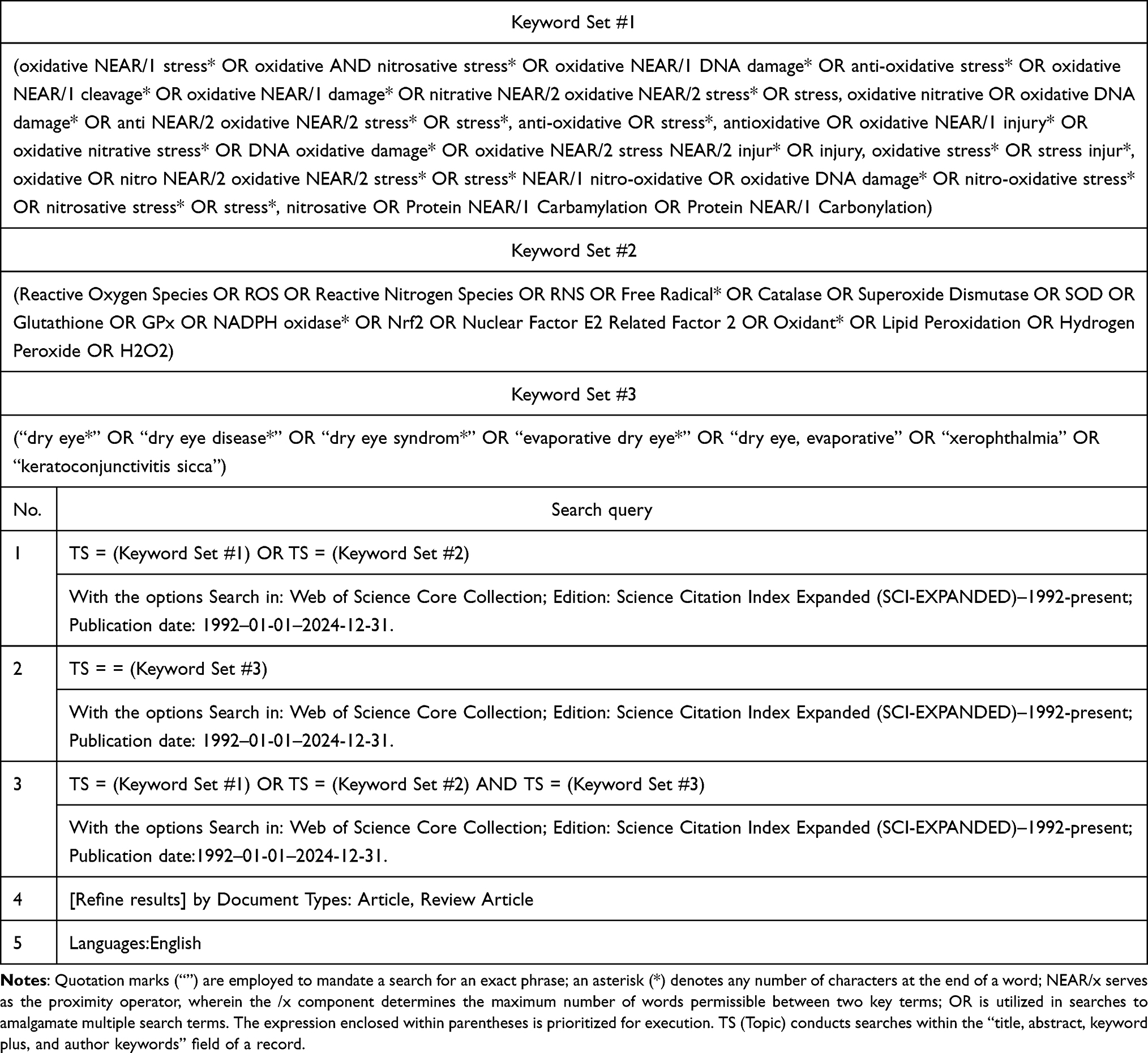 |
Table 1 Keyword Sets and Search Strategy Used in the Study |
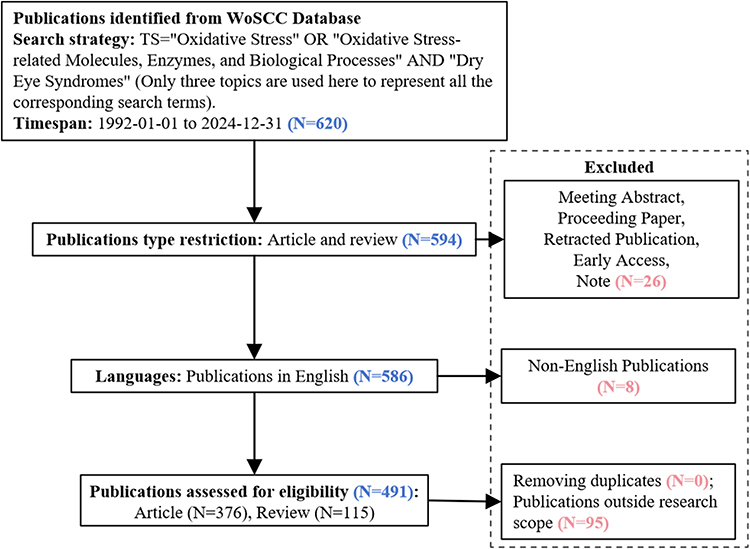 |
Figure 1 Workflow of data collection phase. |
Bibliometric Analysis
Synonyms for countries, institutions, authors, and keywords were standardized to mitigate geographical and terminological biases in the results. For instance, publications originating from England, Northern Ireland, and Scotland were consolidated under the United Kingdom designation prior to data analysis; institutional terms such as Univ New Swales were replaced with Univ New South Wales; authors such as Cejka, C. were replaced with Cejka, Cestmir; and keywords such as dry eye syndromes, dry eye, etc. were uniformly replaced with dry eye disease to identify them as the same term, and the top 5000 commonly used words in Corpus of Contemporary American English were used to exclude invalid words (eg, disease, cell, cells, etc).14
Plain text files were imported into VOSviewer (version 1.6.20), CiteSpace (version 6.4.R1), and the R-based web interface Bibliometrix (version 4.3.0)15 for quantitative and qualitative bibliometric analyses and to construct network visualization maps. Specific graphs were generated in the R environment (version 4.4.0) using the ggplot2 package.16 This integrated approach integrates different tools and methods to elucidate patterns and networks and provide an in-depth representation of bibliographic data.
CiteSpace uses algorithms to identify research hotspots and frontiers, which are then presented through a variety of visualization views.17,18 Based on CiteSpace, we initially removed duplicate literature and assessed the completeness of the information. CiteSpace was utilized for reference burst detection to identify key literature and hot topics. The following parameters were selected for configuration: Time slice (1995–2024), year per slice (1), selection strategy (g index, k =25). Kleinberg’s algorithm (γ=1.0), and a minimum burst duration of 2 years. References with citation bursts (weight ≥2.0) were identified and mapped to trace emerging research trends.
VOSviewer is a bibliometric tool that provides the basic functionality needed to visualize and explore bibliometric networks.19 Co-occurrence network analysis of countries, institutions, journals, authors, and keywords was performed using VOSviewer. In addition, the R-based package Bibliometrix was used to calculate the H-index, G-index, and M-index for authors and journals.
Results
General Data in the Field of Oxidative Stress in DED
From January 1, 1992, to December 31, 2024, a total of 620 publications on oxidative stress in DED were retrieved, and 491 publications that met the criteria were finally included; notably, the earliest of the included papers was published in 1995. The types of literature included were mainly focused on articles (Figure 2). They were written by 2355 authors from 683 institutions in 44 countries and published in 193 journals. A total of 24,437 citations from 4006 journals were cited. In addition, a total of 2000 keywords were generated.
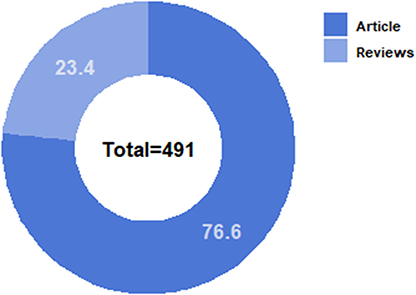 |
Figure 2 The proportion of articles and reviews in publications.The doughnut chart illustrates the proportion of Articles and Reviews in the dataset. The total number of entries is 491, with Articles accounting for 76.6% (n=376) and Reviews accounting for 23.4% (n=115). |
To determine the optimal polynomial coefficients for modeling the total number of publications over time, we built polynomial regression models with coefficients ranging from 1 to 3 and compared the models using the Akaike Information Criterion (AIC) and the Bayesian Information Criterion (BIC).20 The results showed that the trinomial model had the lowest AIC (127.62) and BIC (134.62) values, indicating that it fitted the best among the candidate models (Table S5).
The best-fitting third-degree polynomial regression model was expressed as: 
(y denotes Total Publications and x denotes Year). The model explained 99.6% of the variance in total publications (R²= 0.996), and all polynomial terms were statistically significant (p<0.001) (Table S6).
Residual analyses were conducted to test the assumptions of the polynomial regression model, and the results supported the robustness of the model, indicating that the third-degree polynomial regression model is suitable for describing the relationship between total publications and year (Figures S1–S3).
The model has a good fit and significant coefficients and is able to describe well the pattern of change in the available data: academic output (measured in terms of total publications) shows a non-linear and accelerating trend over the years (Figure 3), which may reflect an increase in research inputs or an expansion of the academic field. If this growth trend continues, more research resources may be needed to support academic research.
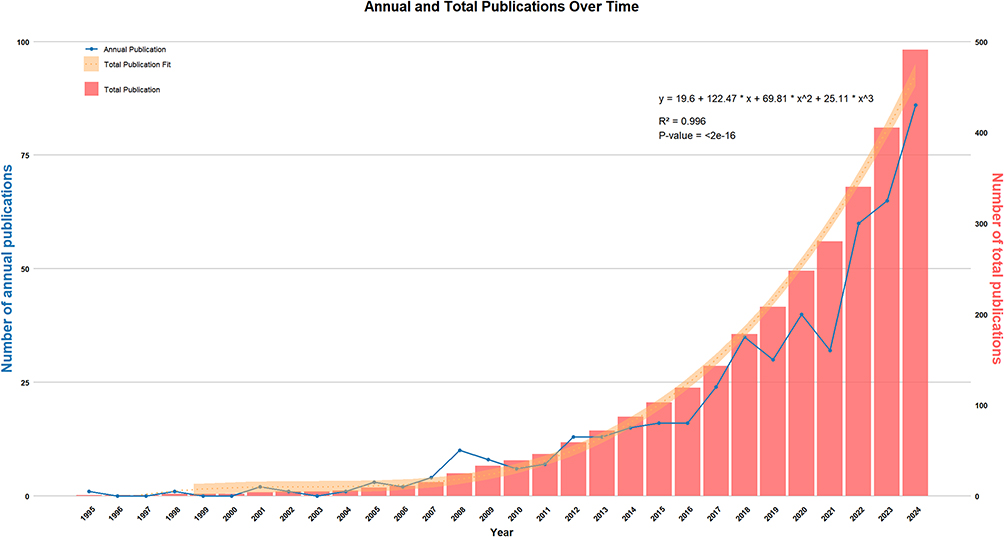 |
Figure 3 Annual and total publications from 1995 to 2024, along with the fitted third-degree polynomial regression curve.The yellowish shaded area represents the 95% confidence interval of the fitted curve. The model formula and statistical results are annotated on the plot. |
Analysis of Countries
A total of 44 countries have contributed to the field of oxidative stress in DED (Figure 4), with the highest number of publications and citations coming from China (184 articles with a total of 3488 citations), followed by the USA (76 articles with a total of 2601 citations) and Japan (53 articles with a total of 1988 citations).
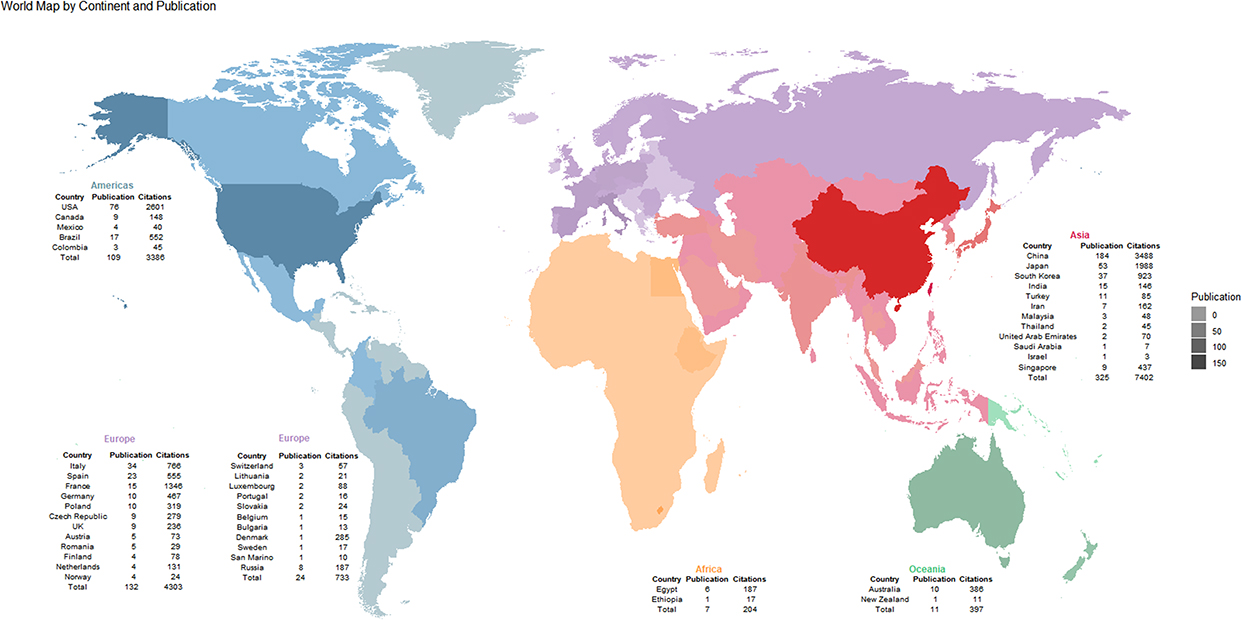 |
Figure 4 World map showing publication distribution by continent. |
The countries where the relevant studies were conducted were in Asia, the Americas, Europe, Africa, and Oceania; Asia had the highest number of publications on oxidative stress in DED, with 325 articles and a total of 7402 citations (Figure 4).
Visual chord diagrams (Figure 5) were created using the R circlize package21 to visualize collaboration between countries. The visualization analysis included 21 countries that had at least five publications. The width of the chords between countries represents the strength of the collaboration, with wider chords indicating stronger collaborations. The figure shows the countries with the most active and relatively weak collaborations, with the USA (weight=49) forming the most extensive collaborations in this research area, followed by China (weight=30) and Japan (weight=20). Countries not appearing in the figure lacked cooperation with each other.
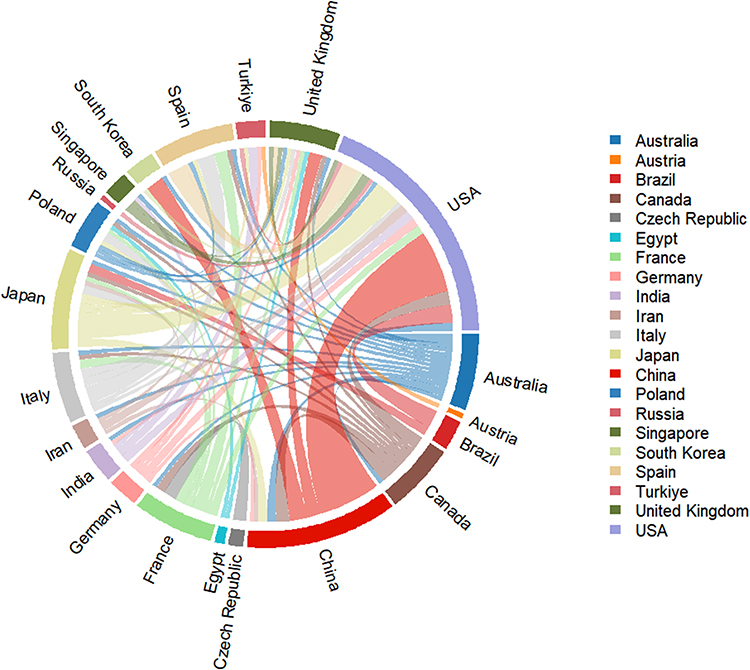 |
Figure 5 Chord Diagram of International Collaboration among countries.This chord diagram visualizes the collaborative relationships between countries based on the dataset provided. Each colored segment represents a country/region, and the arcs connecting the segments indicate the strength of collaboration, quantified by the weight variable. The colors assigned to each country/region are consistent across the diagram and the legend, facilitating identification. |
Analysis of Institutions
A total of 683 institutions are engaged in research in this area. Figure 6 shows the top 10 institutions with the highest number of publications, which accounted for 13.80% of the publications. These institutions are from Japan, China, the USA, and Brazil. There are two Japanese institutions. KEIO UNIV was the most prolific institution, with 37 publications, followed by WENZHOU MED UNIV, with 34 publications. Chinese institutions occupied five seats in the TOP10. HARVARD UNIV, as a representative institution of the United States, published 12 papers. Figure 7 shows the collaboration between the 25 institutions with at least five publications by visualizing the connectivity.
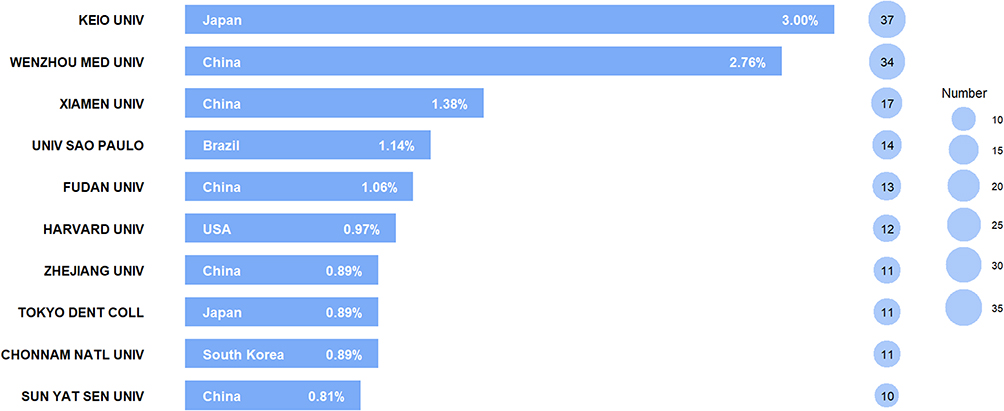 |
Figure 6 Top 10 institutions in terms of publications related to oxidative stress in DED. |
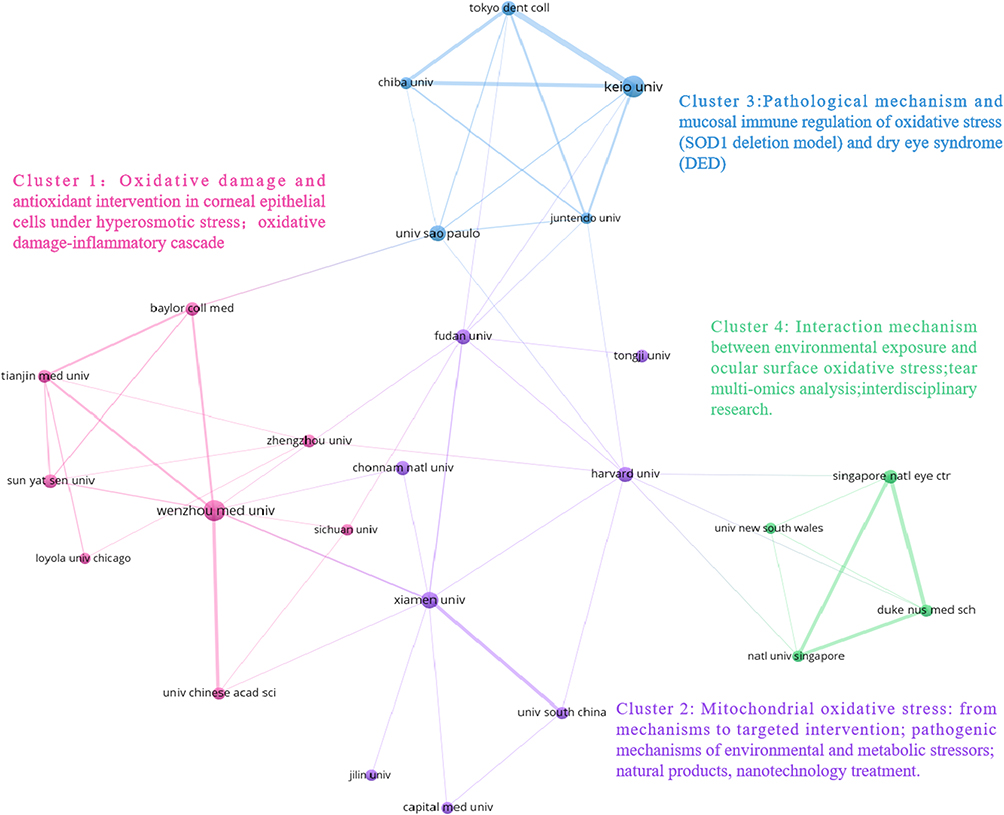 |
Figure 7 The visualisation of institutional cooperation in publications related to oxidative stress in DED (VOSviewer). |
Analysis of Authors
Lotka’s Inverse Square Law is a classical law in bibliometrics that describes the distribution of author productivity in a field of science. The law states that the number of authors who publish “n” papers in a given field is inversely proportional to “n2”: yn=C/n2. “yn” is the number of authors who publish “n” papers; “n” is the number of papers published; and “C” is a constant that is usually determined by fitting the data.22
In this study, we employed non-linear least squares (NLS) regression to estimate the parameter C more accurately. The NLS fitting process was implemented using the nls () function in R. We plotted the observations from this study with the predicted values from the NLS fit to visually assess the degree of model fit (Figure 8). The observed values (blue dots) closely follow the theoretical curve (red line), further validating the applicability of Lotka’s law to the data of this study.
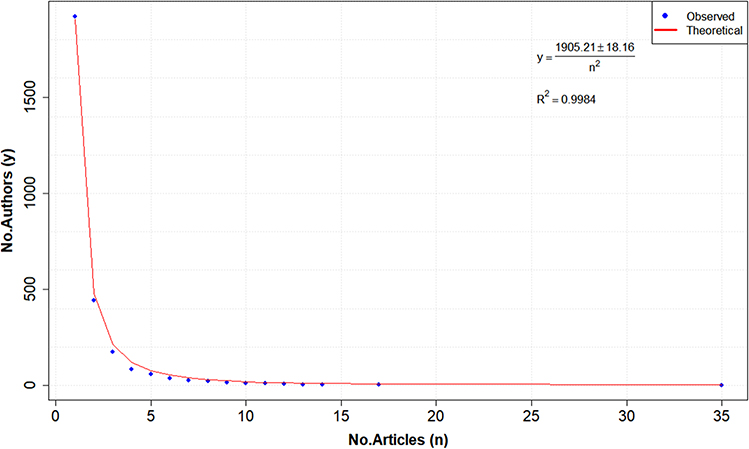 |
Figure 8 Author Productivity Distribution: A Lotka’s Law Perspective.The NLS fit yielded an estimate of C=1905.21, reflecting a baseline of the number of authors who published 1 article, and R2=0.998, indicating that the model explained 99.8% of the variance in the observed data, showing an excellent fit.The residual standard error of 18.16 suggests that the model’s predictions are generally within ±18.16. |
The number of authors who have published only one article is 1922, which represents 84.6% of the total number of authors (1922 out of 2355). Among them, TSUBOTA K published as many as 35 articles, followed by DOGRU M (17) and KOJIMA T (14) (Figure 9). This pattern aligns with the inverse square relationship described by Lotka’s Law, where the majority of authors contributed minimally, and a few authors dominated the field in terms of productivity.23 TSUBOTA K had the highest H-index (21) and G-index (35), reflecting his significant influence in the field. BAUDOUIN C and BRIGNOLE-BAUDOUIN F were among the most cited authors, with 1210 and 1175 citations, respectively. The top 10 authors collectively accounted for over 8000 citations, demonstrating the high impact of their work.
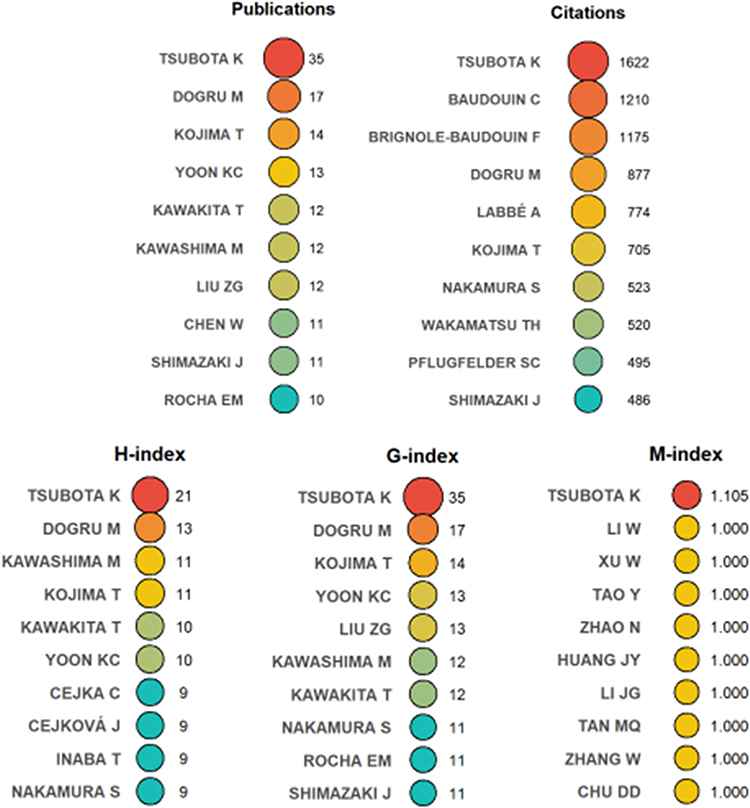 |
Figure 9 A comprehensive analysis of leading authors and their contributions. |
This study analyzes the contributions of leading authors in ocular surface research, focusing on their H-index, G-index, publication counts, and citation metrics. The data highlight the significant impact of researchers such as Tsubota K and Dogru M, who have consistently contributed to advancements in the field.
Analysis of Journals
Journals were classified using Bradford’s Law of scattering, which characterizes the concentration patterns of scholarly literature.24,25 Guided by its proportional distribution principle (1:N:N²), journals were ranked by publication productivity and partitioned into three zones, with Zone 1 comprising the most prolific core journals.
The analysis identified 10 core journals (Zone 1) containing 164 publications, collectively representing the majority (33.4%) of literature in the field, consistent with Bradford’s distribution patterns. An additional 44 journals (Zone 2) contributed 165 publications, while 139 journals (Zone 3) contributed only 162. This distribution confirms the concentration of literature in a small number of core journals. The number of journals and their corresponding contribution to papers are visualized in the embedded figure in Figure 10.
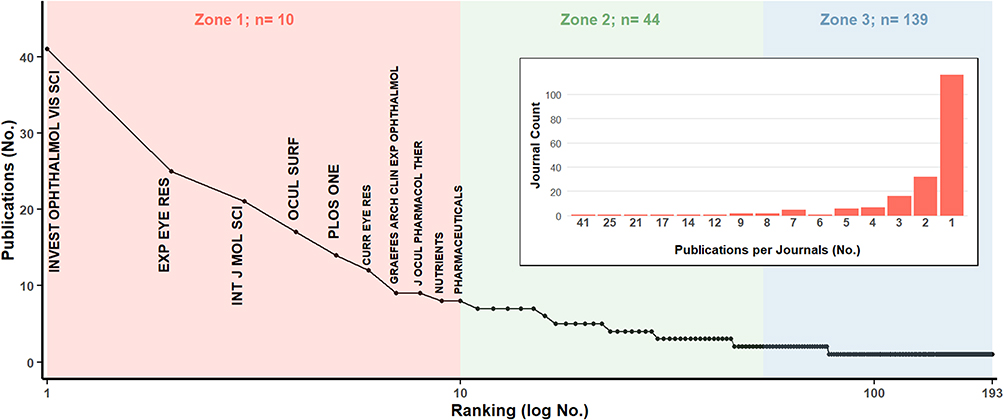 |
Figure 10 Bradford’s Law-based visualisation of journal partitioning and literature distribution in the field of oxidative stress in DED. |
In the research field of oxidative stress in DED, INVEST OPHTHALMOL VIS SCI, EXP EYE RES, and OCUL SURF were the core journals in the field of ophthalmology research with outstanding performance in publications, citations, and H-index, G-index, and M-index. INVEST OPHTH VIS SCI had the best overall performance in all indicators. PHARMACEUTICALS, ANTIOXIDANTS, J NANOBIOTECHNOL, INT J MOL SCI, and NUTRIENTS journals had higher M-index (Figure 11), indicating that cross-disciplinary research in drug pharmacology, nanobiotechnology, molecular sciences, and nutrition at the crossroads of oxidative stress in DED is on the rise.
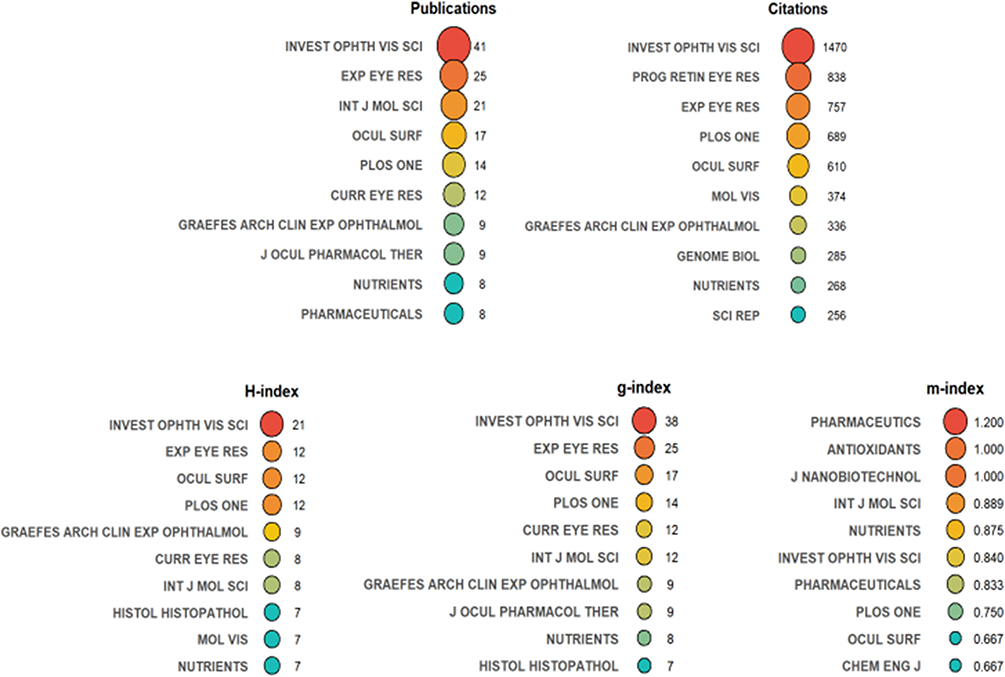 |
Figure 11 A comprehensive analysis of leading journals and their contributions. |
Analysis of Keywords
Keywords condense the core and essence of a paper, and keyword co-occurrence analysis can be used to discover the research hotspots in a particular scientific field. VOSviewer was used to map the keyword co-occurrence network and overlay of 491 papers (Figures 12 and 13). 61 keywords with a frequency greater than or equal to 10 were selected for visualization (Figure 12), and the keyword network consisted of 8490 links. The larger the round node in the graph, the more often the keyword appeared, and the more representative of the hotspot in the field. The node-connecting lines represent the strength of the association; the thicker the line, the more often the two co-occur in the same literature. The node colors represent different clusters, ie, research topics. All the included keywords can be categorized into 6 clusters according to the frequency of co-occurrence, shown in Figure 12 and Table 2, covering basic research, clinical research, and development of therapeutic strategies in oxidative stress in DED. Each direction has its own unique research focus. Still, there are intersections and connections between them, which contribute to a deeper understanding of the mechanism of oxidative stress in DED.
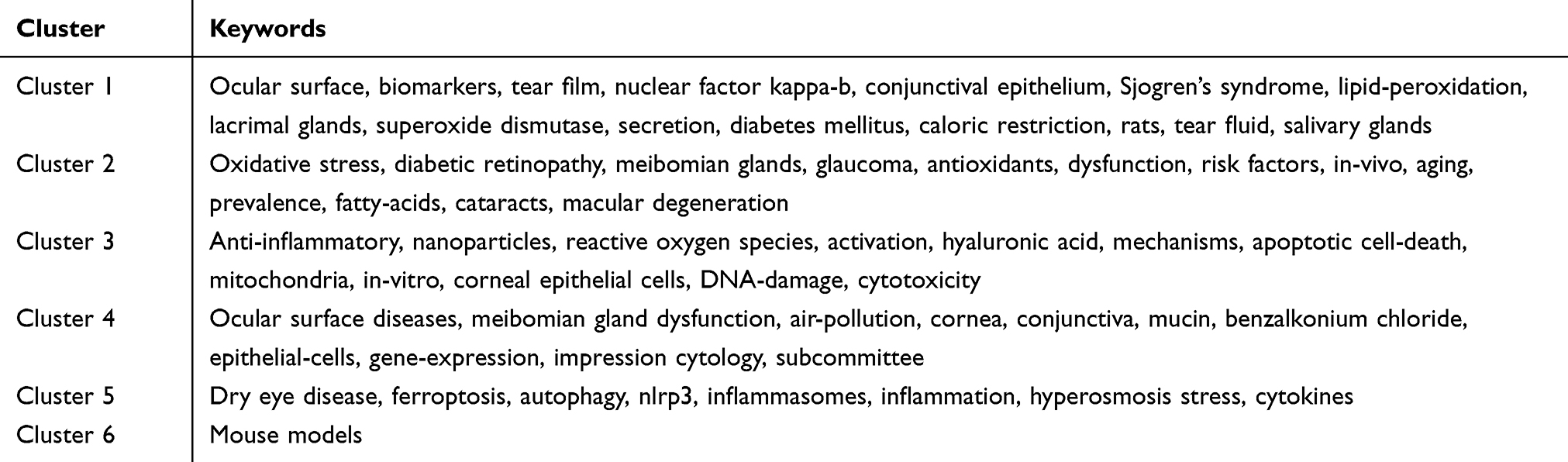 |
Table 2 Keywords Corresponding to the 6 Clusters |
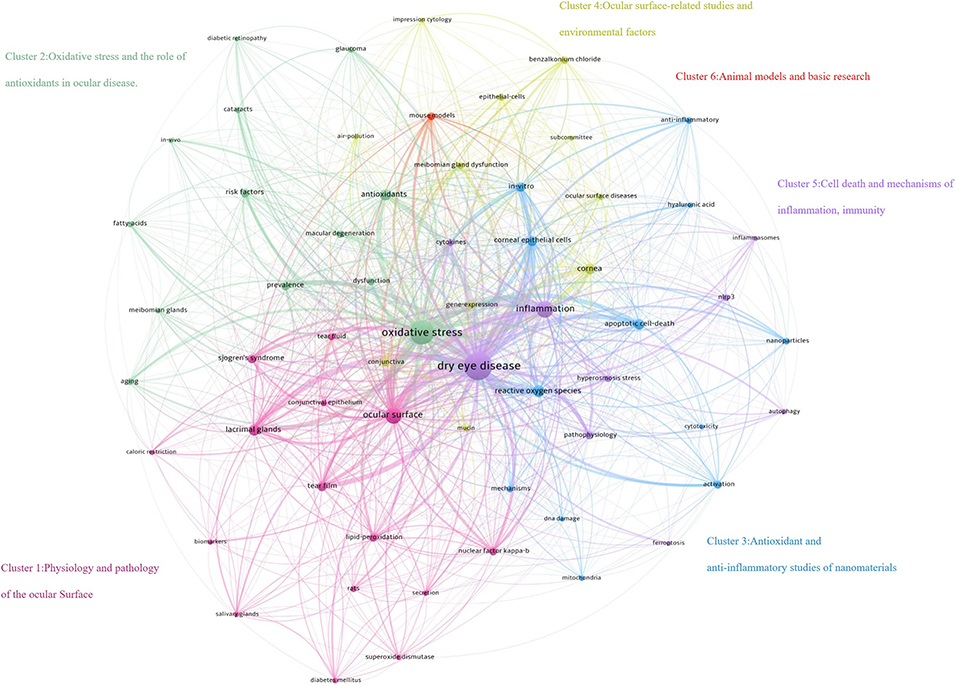 |
Figure 12 Co-occurrence of 61 keywords with a frequency ≥ 10. |
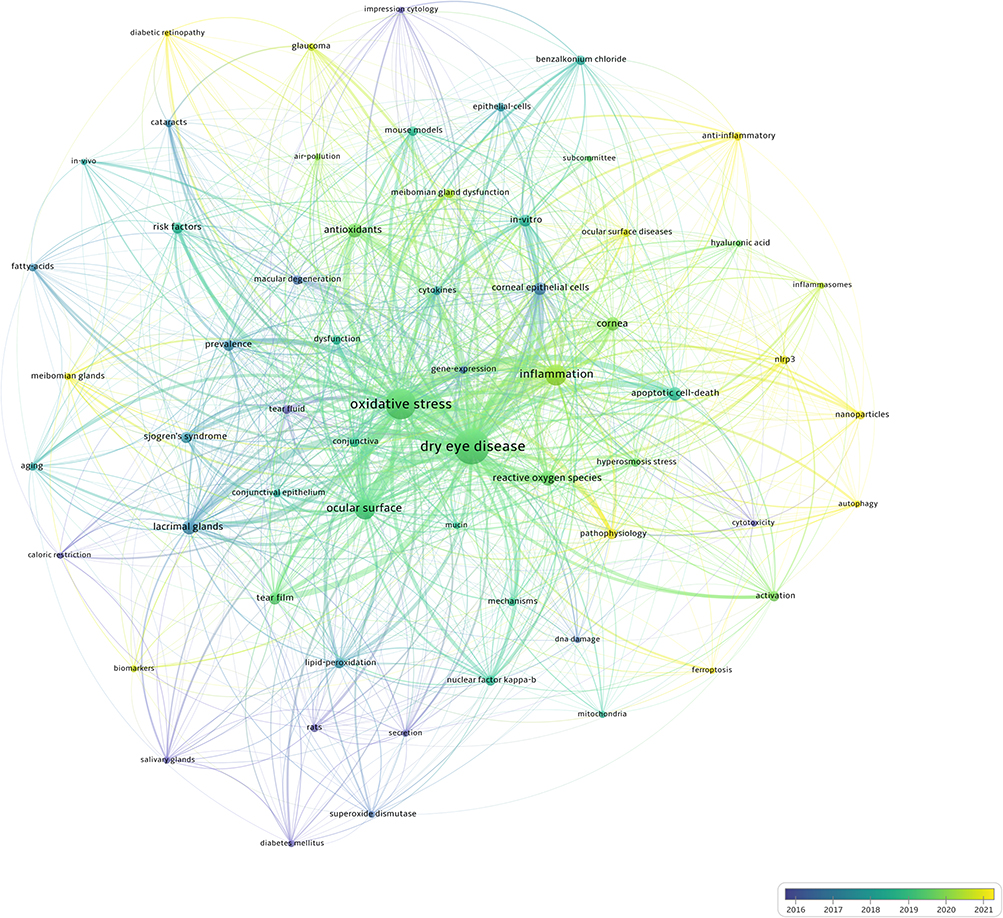 |
Figure 13 Network map of the keywords according to the appearance for the average time. |
The keyword overlay is generated based on the average year in which the keywords appeared in articles, and yellow nodes indicate the latest keywords and hot topics (Figure 13). The novelty of keywords was evaluated by the average publication year (APY). This indicator reflects the degree of activity or change in trend of the node in the research area through the time dimension. According to the APY rankings, keywords emerging after 2021 included ferroptosis (APY = 2023.60), nanoparticles (APY = 2022.47), diabetic retinopathy (APY = 2022.20), pathophysiology (APY =2021.92), anti-inflammatory (APY = 2021.71), and autophagy (APY = 2021.42).
Analysis of Publications
Table 3 lists the top 20 publications with the highest citations on oxidative stress in DED. The publications were mainly published after 2010 (16 out of 20), with the most highly cited publication being Baudouin et al in PROG RETIN EYE RES, which explored the mechanisms of oxidative damage by preservatives in eye drops and is a seminal review in the field with a very high impact. De Souza et al revealed the association between proteases and oxidative stress through tear proteomics, providing key data for biomarker studies. The first study in this research series, conducted by Augustin et al (1995), identified oxidative tissue damage in the tear film of patients with early-stage dry eye.
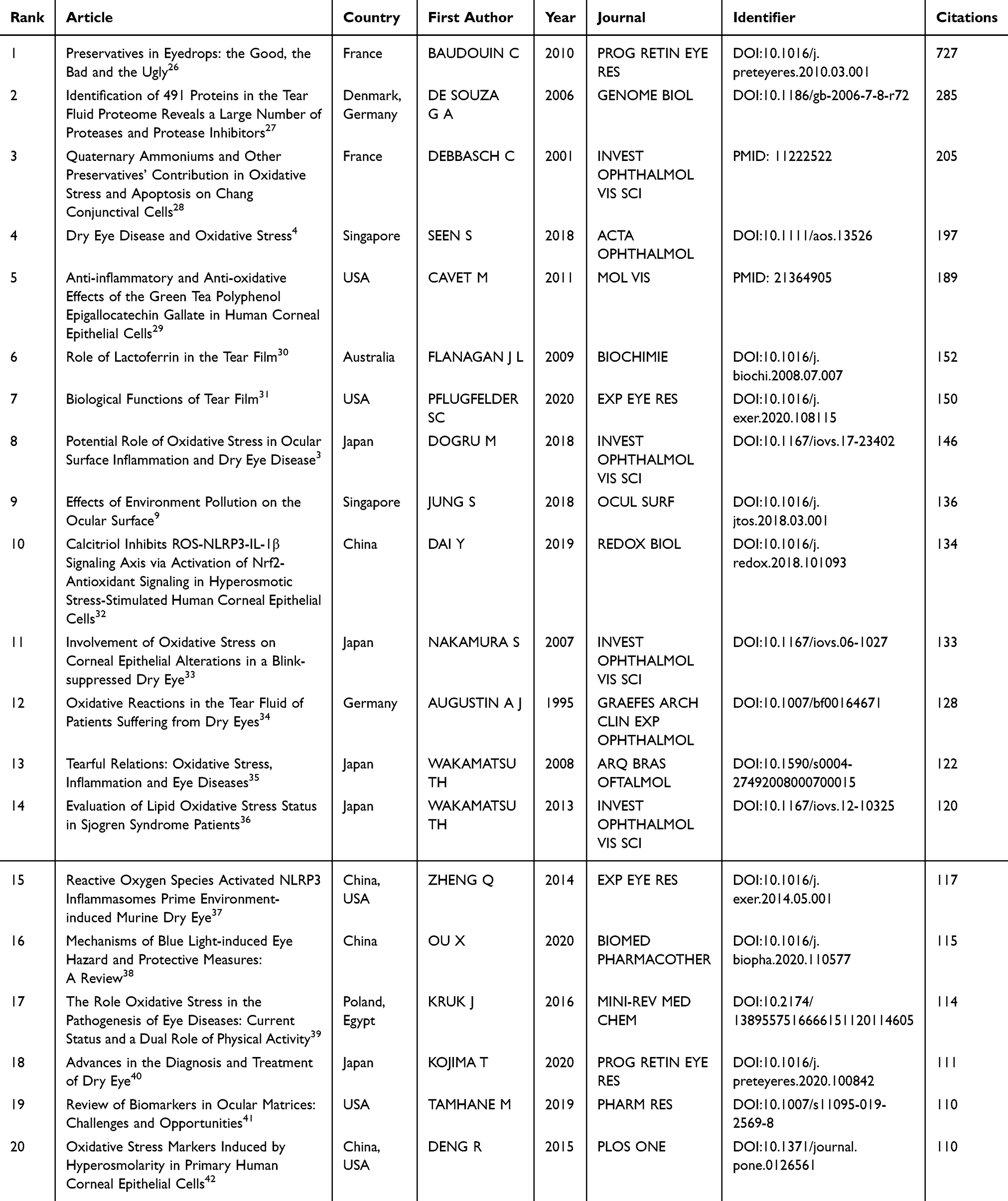 |
Table 3 Top 20 Most Cited Publications on Oxidative Stress in DED |
INVEST OPHTHALMOL VIS SCI (involving 4 studies) was the main publication platform for the empirical studies. PROG RETIN EYE RES included 2 reviews. EXP EYE RES (involving 2 studies) and REDOX BIOL (involving 2 studies) focus on oxidative mechanisms. The top 20 most cited publications mainly focused on oxidative and antioxidant signaling pathways, clinical translation, diagnostic markers, therapeutic strategies, and environmental and pathological associations.
In addition, we used CiteSpace to visualized the top 20 references related to oxidative stress in DED (Figure 14), which had the strongest citation explosion. In the visualization, the blue line indicates the timeline of the keyword from its first appearance to 2024, and the red line indicates the duration of its burst period. INVEST OPHTH VIS SCI (4 studies) and OCUL SURF (5 studies) were the leading carriers of the burst literature. The citation burst period was concentrated in 2008–2024, and further analysis shows that the top 20 cited references mainly covered five research themes. (1) Animal Models Reveal Oxidative Stress-driven Pathogenesis. Studies33,43–46 using rodent models demonstrated that oxidative stress directly contributes to corneal epithelial damage, lacrimal gland dysfunction, and tear film instability. Key mechanisms include mitochondrial dysfunction and impaired antioxidant defenses, leading to lipid peroxidation, DNA damage, and inflammation. These models highlight oxidative stress as a causative factor in DED progression. (2) Oxidative Biomarkers as Clinical Indicators. Elevated oxidative stress markers in tears and ocular surface tissues correlate with DED severity. In non-Sjögren DED patients, the 4-HNE and MDA levels are inversely associated with tear film stability, Schirmer values, and goblet cell density, suggesting their utility for disease monitoring. Hyperosmolarity-induced reactive oxygen species (ROS) overproduction in human corneal epithelial cells (HCECs) has further validated these biomarkers as indicators of membrane lipid peroxidation36,42,47 and mitochondrial DNA damage.33,42,46 (3) ROS-NLRP3-inflammasome Axis in Inflammation. ROS activates NOD-, LRR- and Pyrin domain-containing protein 3 (NLRP3) inflammasomes, triggering caspase-1-dependent interleukin-1 beta (IL-1β) secretion in HCECs and murine DED models. Hyperosmolar stress amplifies this pathway, linking oxidative damage to chronic ocular surface inflammation. Pharmacological ROS inhibition or NLRP3 siRNA knockdown can suppress inflammasome activation, emphasizing ROS as a primary factor for DED-related immune dysregulation.37,48,49 (4) Clinical Guidelines and Epidemiological Insights. The Tear Film & Ocular Surface Society Dry Eye WorkShop II (TFOS DEWS II) reports standardized diagnostic criteria for DED,1,50 emphasizing tear film hyperosmolarity, inflammation, and oxidative stress as central pathophysiological drivers.51 Global prevalence studies highlight aging, female sex, and environmental factors as key risk factors for oxidative damage.52 A staged management algorithm has prioritized antioxidant therapies for subpopulations with evident oxidative stress biomarkers.53 (5) Antioxidant Interventions. Natural antioxidants4,54 and synthetic compounds4,55 can mitigate blue light- or hyperosmolarity-induced oxidative damage in corneal epithelia. An animal study47 showed that selenium-lactoferrin eye drops reduced heme oxygenase-1, cyclooxygenase-2, and IL-6 expression, while a clinical trial proposed vitamin B12 and iodide iontophoresis as emerging therapies.4 However, limited Level 1 evidence underscores the need for rigorous trials.
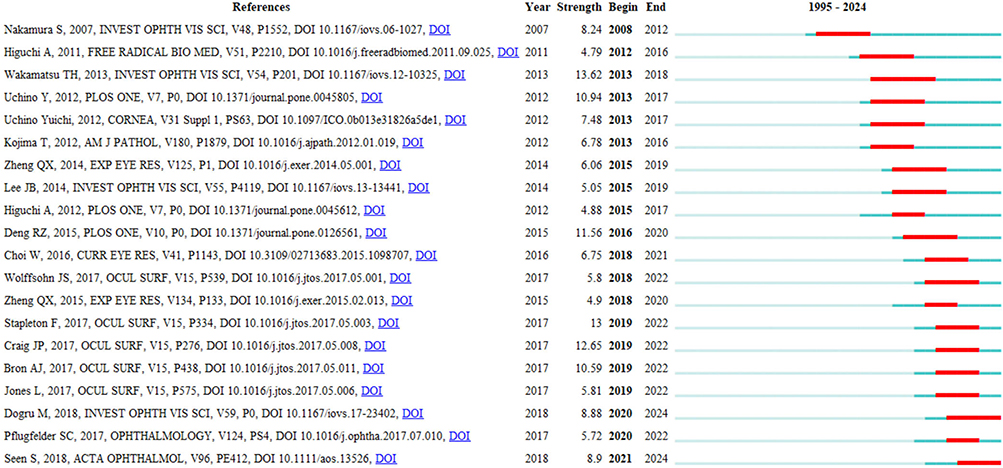 |
Figure 14 The top 20 references related to oxidative stress in DED with the strongest citation bursts. |
Discussion
Bibliometrics, as an important research method, can effectively reveal the research trend and knowledge structure of a specific field by means of quantitative analysis. In this study, 491 qualified studies on oxidative stress in DED were retrieved from WoSCC from its establishment in 1992 to 2024 for a comprehensive bibliometric analysis to explore the research hotspots and trends in the field. The first publication in the collection was in the form of an article in 1995. The DED’s oxidative stress research shows a non-linear accelerating trend (R²=0.996) in the number of publications between 1995 and 2024. After a low base of annual publications (averaging less than 1 per year) between 1995 and 2007, the research entered a phase of rapid growth (averaging about 20.9% per year) after 2010, reflecting a gradual deepening of academic understanding of the central role of oxidative stress in the pathophysiology of DED. This trend likely stems from a confluence of factors, such as heightened public health focus on the burden of DED,56–58 innovations in the detection of oxidative stress on the ocular surface,59–61 the discovery of antioxidant therapeutic targets,62 and the deepening of interdisciplinary collaborations such as localized delivery studies on nanocarriers.63–65 As the field continues to focus on clinical translation, it will be important to optimize resource allocation and prioritize support for directions such as high-throughput tear screening devices, interdisciplinary collaborative networks (eg, ophthalmology-materials science-bioinformatics), and efficacy validation platforms based on real-world data.
According to the distribution of countries and institutions, the study shows that China, the USA, and Japan are the leading countries regarding paper output in the research field of oxidative stress in DED. KEIO UNIV is the most prolific institution in the field and comes from Japan. Institutions in France and Denmark produced the top 3 highly cited papers, while many of the other most-cited papers came from institutions in the United States, China, and Japan. This discrepancy may suggest that research productivity does not linearly correlate with citation dominance in this field. This pattern aligns with the “productivity-impact paradox” observed in interdisciplinary fields, where specialized teams from smaller research ecosystems may achieve disproportionate citation influence through niche innovation. Collaborative network analyses highlight international partnerships, particularly between China and the USA, as well as between Japan and the USA, which may facilitate the interdisciplinary development of oxidative stress research. For instance, the 2024 development of dual-atom nanozyme eye drops emerged from a consortium combining Henan Eye Hospital’s clinical expertise with Harvard’s engineering capabilities.66 Such cross-sector alliances correlate with higher methodological innovation indices, suggesting that international interdisciplinary collaboration facilitates translational breakthroughs in oxidative stress research. Notably, African institutions contributed only 1.4% of studies (7/491) in this analysis (Figure 4), despite the continent bearing a disproportionately high DED burden with a prevalence exceeding 40%.67 This profound mismatch between epidemiological magnitude and research output highlights a critical disparity in global research equity and resource allocation.
Most of the studies in this field are still published in ophthalmology journals such as INVEST OPHTHALMOL VIS SCI, EXP EYE RES, and OCUL SURF. It is worth noting that although journals such as J NANOBIOTECHNOL, INT J MOL SCI, and NUTRIENTS have a relatively limited number of direct publications in the field of ophthalmology, the high citation rates and prominent index rankings of the papers they publish highlight the great potential of nanobiology and molecular biology in the research of oxidative stress in DED. Future research can explore new strategies for eye health by combining cross perspectives of nutrition, nanobiotechnology, and molecular biology.63–65,68
The institutional cooperation network shows the research directions of the major institutional clusters in the field (Figure 7), and each institution has constructed a research ecology of oxidative stress in DED from the perspective of molecular mechanism, mucosal immunity, clinical translation, and technological innovation. Cluster 1 studies involve the mitochondrial oxidative damage-inflammasome axis, lipid peroxidation metabolite driving mechanism, mitochondria-targeted antioxidant therapy, etc.; Cluster 2 research involves environmental/metabolic stress (microplastics, smoke, high-fat diet, etc)., nanomedicine, and multihistological precision therapy; Cluster 3 research involves superoxide dismutase 1-deficient models, age-dependent mucosal secretion disorders, oxidative markers of Sjögren syndrome; Cluster 4 studies involve environmental exposures (air pollution, microplastics), peroxisome proliferator-activated receptors targeted therapy, tear multi-omics and systemic immune diseases. The clusters are complementary regarding the depth and breadth of mechanism resolution and cross-validation of models and technologies. Despite the many advances in basic research, there are still many barriers/dilemmas in clinical translation, such as the limitation of pathological reduction in disease models and the limitation of the deep integration of mitochondria-targeted drugs and nano-delivery systems due to multiple physiological barriers in the cornea (epithelial tight junctions, tear washout, etc). Future research should focus on integrating cross-scale mechanisms, technological convergence, and data sharing to establish a complete translational pipeline - from elucidating molecular targets (antioxidant/anti-inflammatory pathways) to developing personalized therapeutic strategies.
According to the keyword and publications analyses, research in this field has focused on three major themes: oxidative-inflammatory interaction networks, targeted antioxidant strategies, and translational medicine system construction. Oxidative damage promotes the release of pro-inflammatory factors such as IL-1β and tumor necrosis factor α through activation of NLRP3 inflammatory vesicles and the NF-κB pathway,7,69,70 while the inflammatory microenvironment further induces ROS generation, which leads to lipid peroxidation of the meibomian glands, destroying the structure of the lipid layer and accelerating tear evaporation. At the same time, exposure to both exogenous and endogenous ROS leads to cell death and degradation,71 and the mitochondrial ROS induces the collapse of the mitochondrial membrane potential and activation of the caspase apoptotic pathway.72 In addition, oxidative stress can down-regulate corneal epithelial tight junction proteins, leading to increased tear film permeability.73,74 Oxidative stress is involved in the vicious circle of the pathological progression of dry eye through multiple mechanisms.3,4,75 The development of the vicious circle can be broken to some extent by antioxidant therapies,70 which currently include: (1) direct antioxidant: exogenous supplementation of small molecules to scavenge ROS;68,76 (2) indirect modulation: activation of the nuclear factor erythroid 2-related factor 2/antioxidant response element (Nrf2/ARE) pathway to enhance glutathione synthesis,77 or inhibition of ROS-generating enzymes;78 (3) targeted delivery: ROS-responsive nanocarriers for precise drug release on the ocular surface.65,79,80 Although antioxidants are considered potential therapeutic approaches, clinical trials evaluating their efficacy are still limited. In the future, bottlenecks such as low bioavailability of antioxidants and lack of dynamic marker-monitoring technology need to be broken through to achieve individualized treatment.75 With the development of AI-driven technology, future bibliometric studies can incorporate machine learning algorithms to predict emerging research trends and highlight potential research priorities; in addition, national institutions should jointly build a database on oxidative stress in DED, containing genetic, environmental, and lacrimogenomic data, to facilitate AI-driven target prediction.
This study pioneers the first comprehensive bibliometric analysis of oxidative stress in DED. It offers new insights into research trends, prominent contributors, and emerging research topics. Bibliometric mapping enables the visualization of research evolution and identification of key knowledge clusters, thereby facilitating an in-depth understanding of the field’s research landscape.
Three main limitations warrant consideration. First, the analysis was confined to the WoSCC database. This limitation might have led to the exclusion of relevant research articles that are only indexed in other databases, potentially missing out on important perspectives and findings. Secondly, while citation metrics provide valuable insights into scholarly influence, these indicators should be interpreted cautiously as they may not fully capture nuances of research quality or distinguish between direct clinical applicability and foundational scientific contributions. For example, some highly cited methodological papers may drive technological innovations that ultimately enable clinical breakthroughs, even if their immediate therapeutic translation is not evident. Finally, excluding 8 non-English publications (1.6% of total records) may introduce language bias, potentially overlooking critical contributions from regions with high non-English research output.
Conclusion
In summary, this bibliometric analysis highlights the growing recognition of oxidative stress as a pivotal contributor to the pathophysiology of DED. Although substantial advancements have been achieved in elucidating oxidative damage and its clinical relevance to DED, critical gaps persist, particularly in delineating exact molecular pathways, establishing validated biomarkers, and optimizing antioxidant-based therapeutic interventions. Enhancing international collaboration and incorporating AI-driven methods into future bibliometric studies can deepen our understanding of research trends on oxidative stress in DED and help identify gaps that may inform future clinical advancements.
Abbreviations
DED, dry eye disease; NF-κB, nuclear factor kappa-light-chain-enhancer of activated B cells; WoSCC, Web of Science Core Collection; AIC, Akaike Information Criterion; BIC, Bayesian Information Criterion; APY, average publication year; ROS, reactive oxygen species; HCECs, human corneal epithelial cells; IL-1β, interleukin-1 beta; NLRP3, NOD-, LRR- and Pyrin domain-containing protein 3; TFOS DEWS II, Tear Film & Ocular Surface Society Dry Eye WorkShop II; Nrf2/ARE, nuclear factor erythroid 2-related factor 2/antioxidant response element.
Data Sharing Statement
All data generated or analyzed during this study are included.
Ethical Approval
In this study, the data were downloaded directly from the database as secondary data without further animal experiments. Therefore, no ethical approval was required.
Funding
The study was supported by the National Natural Science Foundation of China (No. 81904302); the Project of Shanghai Health Commission (No. 20234Y0066); the Shanghai Leading Talent Program (No. 060).
Disclosure
No potential conflict of interest was reported by the authors.
References
1. Craig JP, Nichols KK, Akpek EK, et al. TFOS DEWS II definition and classification report. Ocul Surf. 2017;15(3):276–283. doi:10.1016/j.jtos.2017.05.008
2. Papas EB. The global prevalence of dry eye disease: a Bayesian view. Ophthalmic Physiol Opt. 2021;41(6):1254–1266. doi:10.1111/opo.12888
3. Dogru M, Kojima T, Simsek C, Tsubota K. Potential role of oxidative stress in ocular surface inflammation and dry eye disease. Invest Ophthalmol Visual Sci. 2018;59(14):DES163–DES168. doi:10.1167/iovs.17-23402
4. Seen S, Tong L. Dry eye disease and oxidative stress. Acta Ophthalmol. 2018;96(4):e412–e420. doi:10.1111/aos.13526
5. Liu H, Gambino F, Algenio CS, et al. Inflammation and oxidative stress induced by lipid peroxidation metabolite 4-hydroxynonenal in human corneal epithelial cells. Graefes Arch Clin Exp Ophthalmol. 2020;258(8):1717–1725. doi:10.1007/s00417-020-04647-2
6. Zuo X, Zeng H, Wang B, et al. AKR1C1 protects corneal epithelial cells against oxidative stress-mediated ferroptosis in dry eye. Invest Ophthalmol Vis Sci. 2022;63(10):3. doi:10.1167/iovs.63.10.3
7. Park B, Jo K, Lee TG, Hyun SW, Kim JS, Kim CS. Polydatin inhibits NLRP3 inflammasome in dry eye disease by attenuating oxidative stress and inhibiting the NF-κB pathway. Nutrients. 2019;11(11):2792. doi:10.3390/nu11112792
8. Huang Y, Wang L, Jin H. cRGD-conjugated bilirubin nanoparticles alleviate dry eye disease via activating the PINK1-mediated mitophagy. Invest Ophthalmol Vis Sci. 2024;65(13):55. doi:10.1167/iovs.65.13.55
9. Jung SJ, Mehta JS, Tong L. Effects of environment pollution on the ocular surface. Ocul Surf. 2018;16(2):198–205. doi:10.1016/j.jtos.2018.03.001
10. Wang J, Chen S, Zhao X, et al. Effect of PPARγ on oxidative stress in diabetes-related dry eye. Exp Eye Res. 2023;231:109498. doi:10.1016/j.exer.2023.109498
11. Singh VK, Singh P, Karmakar M, Leta J, Mayr P. The journal coverage of Web of Science, Scopus and Dimensions: a comparative analysis. Scientometrics. 2021;126(6):5113–5142. doi:10.1007/s11192-021-03948-5
12. Jiang N, Yang T, Han H, et al. Exploring research trend and hotspots on oxidative stress in ischemic stroke (2001–2022): insights from bibliometric. Mol Neurobiol. 2024;61(9):6200–6216. doi:10.1007/s12035-023-03909-4
13. Schargus M, Kromer R, Druchkiv V, Frings A. The top 100 papers in dry eye - A bibliometric analysis. Ocul Surf. 2018;16(1):180–190. doi:10.1016/j.jtos.2017.09.006
14. Word frequency: based on one billion word COCA corpus. Available from: https://www.wordfrequency.info/free.asp.
15. Aria M, Cuccurullo C. bibliometrix: an R-tool for comprehensive science mapping analysis. J Informetrics. 2017;11(4):959–975. doi:10.1016/j.joi.2017.08.007
16. Villanueva RAM, Chen ZJ. ggplot2: elegant graphics for data analysis (2nd ed.). Measurement. 2019;17(3):160–167. doi:10.1080/15366367.2019.1565254
17. Chen C. CiteSpace: A Practical Guide for Mapping Scientific Literature. Hauppauge, NY, USA: Nova Science Publishers; 2016.
18. Chen C, Hu Z, Liu S, Tseng H. Emerging trends in regenerative medicine: a scientometric analysis in CiteSpace. Expert Opin Biol Ther. 2012;12(5):593–608. doi:10.1517/14712598.2012.674507
19. Van Eck N, Waltman L. Software survey: vOSviewer, a computer program for bibliometric mapping. Scientometrics. 2009;84(2):523–538. doi:10.1007/s11192-009-0146-3
20. Vrieze SI. Model selection and psychological theory: a discussion of the differences between the akaike information criterion (AIC) and the Bayesian information criterion (BIC). Psychol Methods. 2012;17(2):228–243. doi:10.1037/a0027127
21. Gu Z, Gu L, Eils R, Schlesner M, Brors B. circlize implements and enhances circular visualization in R. Bioinformatics. 2014;30(19):2811–2812. doi:10.1093/bioinformatics/btu393
22. Chung KH, Pak HS, Cox RK. Patterns of research output in the accounting literature: a study of the bibliometric distributions. Abacus. 1992;28(2):168–185. doi:10.1111/j.1467-6281.1992.tb00278.x
23. López‐fernández MC, Serrano‐bedia AM, Pérez‐pérez M. Entrepreneurship and family firm research: a bibliometric analysis of an emerging field*. J Small Business Manag. 2016;54(2):622–639. doi:10.1111/jsbm.12161
24. Brookes BC. Sources of information on specific subjects. Engineering. 1934;137:85–86.
25. Brookes BC. Theory of the Bradford law. J Doc. 1977;33(3):180–209. doi:10.1108/eb026641
26. Baudouin C, Labbé A, Liang H, Pauly A, Brignole-Baudouin F. Preservatives in eyedrops: the good, the bad and the ugly. Prog Retin Eye Res. 2010;29(4):312–334. doi:10.1016/j.preteyeres.2010.03.001
27. de Souza GA, de Godoy LM, Mann M. Identification of 491 proteins in the tear fluid proteome reveals a large number of proteases and protease inhibitors. Genome Biol. 2006;7(8):R72. doi:10.1186/gb-2006-7-8-r72
28. Debbasch C, Brignole F, Pisella PJ, Warnet JM, Rat P, Baudouin C. Quaternary ammoniums and other preservatives’ contribution in oxidative stress and apoptosis on chang conjunctival cells. Invest Ophthalmol Vis Sci. 2001;42(3):642–652.
29. Cavet ME, Harrington KL, Vollmer TR, Ward KW, Zhang JZ. Anti-inflammatory and anti-oxidative effects of the green tea polyphenol epigallocatechin gallate in human corneal epithelial cells. Mol Vis. 2011;17:533–542.
30. Flanagan JL, Willcox MDP. Role of lactoferrin in the tear film. Biochimie. 2009;91(1):35–43. doi:10.1016/j.biochi.2008.07.007
31. Pflugfelder SC, Stern ME. Biological functions of tear film. Exp Eye Res. 2020;197:108115. doi:10.1016/j.exer.2020.108115
32. Dai Y, Zhang J, Xiang J, Li Y, Wu D, Xu J. Calcitriol inhibits ROS-NLRP3-IL-1β signaling axis via activation of Nrf2-antioxidant signaling in hyperosmotic stress stimulated human corneal epithelial cells. Redox Biol. 2019;21:101093. doi:10.1016/j.redox.2018.101093
33. Nakamura S, Shibuya M, Nakashima H, et al. Involvement of oxidative stress on corneal epithelial alterations in a blink-suppressed dry eye. Invest Ophthalmol Vis Sci. 2007;48(4):1552–1558. doi:10.1167/iovs.06-1027
34. Augustin AJ, Spitznas M, Kaviani N, et al. Oxidative reactions in the tear fluid of patients suffering from dry eyes. Graefes Arch Clin Exp Ophthalmol. 1995;233(11):694–698. doi:10.1007/BF00164671
35. Wakamatsu TH, Dogru M, Tsubota K. Tearful relations: oxidative stress, inflammation and eye diseases. Arq Bras Oftalmol. 2008;71(6 Suppl):72–79. doi:10.1590/s0004-27492008000700015
36. Wakamatsu TH, Dogru M, Matsumoto Y, et al. Evaluation of lipid oxidative stress status in Sjögren syndrome patients. Invest Ophthalmol Vis Sci. 2013;54(1):201–210. doi:10.1167/iovs.12-10325
37. Zheng Q, Ren Y, Reinach PS, et al. Reactive oxygen species activated NLRP3 inflammasomes prime environment-induced murine dry eye. Exp Eye Res. 2014;125:1–8. doi:10.1016/j.exer.2014.05.001
38. Ouyang X, Yang J, Hong Z, Wu Y, Xie Y, Wang G. Mechanisms of blue light-induced eye hazard and protective measures: a review. Biomed Pharmacother. 2020;130:110577. doi:10.1016/j.biopha.2020.110577
39. Kruk J, Kubasik-Kladna K, Aboul-Enein HY. The role oxidative stress in the pathogenesis of eye diseases: current status and a dual role of physical activity. Mini Rev Med Chem. 2015;16(3):241–257. doi:10.2174/1389557516666151120114605
40. Kojima T, Dogru M, Kawashima M, Nakamura S, Tsubota K. Advances in the diagnosis and treatment of dry eye. Prog Retin Eye Res. 2020;78:100842. doi:10.1016/j.preteyeres.2020.100842
41. Tamhane M, Cabrera-Ghayouri S, Abelian G, Viswanath V. Review of biomarkers in ocular matrices: challenges and opportunities. Pharm Res. 2019;36(3):40. doi:10.1007/s11095-019-2569-8
42. Deng R, Hua X, Li J, et al. Oxidative stress markers induced by hyperosmolarity in primary human corneal epithelial cells. PLoS One. 2015;10(5):e0126561. doi:10.1371/journal.pone.0126561
43. Higuchi A, Ito K, Dogru M, et al. Corneal damage and lacrimal gland dysfunction in a smoking rat model. Free Radic Biol Med. 2011;51(12):2210–2216. doi:10.1016/j.freeradbiomed.2011.09.025
44. Uchino Y, Kawakita T, Miyazawa M, et al. Oxidative stress induced inflammation initiates functional decline of tear production. PLoS One. 2012;7(10):e45805. doi:10.1371/journal.pone.0045805
45. Uchino Y, Kawakita T, Ishii T, Ishii N, Tsubota K. A new mouse model of dry eye disease: oxidative stress affects functional decline in the lacrimal gland. Cornea. 2012;31 Suppl 1(Supplement 1):S63–67. doi:10.1097/ICO.0b013e31826a5de1
46. Kojima T, Wakamatsu TH, Dogru M, et al. Age-related dysfunction of the lacrimal gland and oxidative stress: evidence from the Cu,Zn-superoxide dismutase-1 (Sod1) knockout mice. Am J Pathol. 2012;180(5):1879–1896. doi:10.1016/j.ajpath.2012.01.019
47. Choi W, Lian C, Ying L, et al. Expression of lipid peroxidation markers in the tear film and ocular surface of patients with non-Sjogren syndrome: potential biomarkers for dry eye disease. Curr Eye Res. 2016;41(9):1143–1149. doi:10.3109/02713683.2015.1098707
48. Zheng Q, Ren Y, Reinach PS, et al. Reactive oxygen species activated NLRP3 inflammasomes initiate inflammation in hyperosmolarity stressed human corneal epithelial cells and environment-induced dry eye patients. Exp Eye Res. 2015;134:133–140. doi:10.1016/j.exer.2015.02.013
49. Pflugfelder SC, de Paiva CS. The pathophysiology of dry eye disease: what we know and future directions for research. Ophthalmology. 2017;124(11, Supplement):S4–S13. doi:10.1016/j.ophtha.2017.07.010
50. Wolffsohn JS, Arita R, Chalmers R, et al. TFOS DEWS II diagnostic methodology report. Ocul Surf. 2017;15(3):539–574. doi:10.1016/j.jtos.2017.05.001
51. Bron AJ, de Paiva CS, Chauhan SK, et al. TFOS DEWS II pathophysiology report. Ocul Surf. 2017;15(3):438–510. doi:10.1016/j.jtos.2017.05.011
52. Stapleton F, Alves M, Bunya VY, et al. TFOS DEWS II epidemiology report. Ocul Surf. 2017;15(3):334–365. doi:10.1016/j.jtos.2017.05.003
53. Jones L, Downie LE, Korb D, et al. TFOS DEWS II management and therapy report. Ocul Surf. 2017;15(3):575–628. doi:10.1016/j.jtos.2017.05.006
54. Lee JB, Kim SH, Lee SC, et al. Blue light-induced oxidative stress in human corneal epithelial cells: protective effects of ethanol extracts of various medicinal plant mixtures. Invest Ophthalmol Vis Sci. 2014;55(7):4119–4127. doi:10.1167/iovs.13-13441
55. Higuchi A, Inoue H, Kawakita T, Ogishima T, Tsubota K. Selenium compound protects corneal epithelium against oxidative stress. PLoS One. 2012;7(9):e45612. doi:10.1371/journal.pone.0045612
56. Pflugfelder SC. Prevalence, burden, and pharmacoeconomics of dry eye disease. Am J Manag Care. 2008;14(3 Suppl):S102–106.
57. Yang W, Luo Y, Wu S, et al. Estimated annual economic burden of dry eye disease based on a multi-center analysis in China: a retrospective study. Front Med. 2021;8:771352. doi:10.3389/fmed.2021.771352
58. Boboridis KG, Messmer EM, Benítez-Del-Castillo J, et al. Patient-reported burden and overall impact of dry eye disease across eight European countries: a cross-sectional web-based survey. BMJ Open. 2023;13(3):e067007. doi:10.1136/bmjopen-2022-067007
59. Ward SK, Wakamatsu TH, Dogru M, et al. The role of oxidative stress and inflammation in conjunctivochalasis. Invest Ophthalmol Vis Sci. 2010;51(4):1994–2002. doi:10.1167/iovs.09-4130
60. Zhao H, Zhang Y, Ren Y, Wang W. PINK1/parkin-mediated mitophagy ameliorates mitochondrial dysfunction in lacrimal gland acinar cells during aging. Invest Ophthalmol Vis Sci. 2024;65(13):12. doi:10.1167/iovs.65.13.12
61. Kawashima M, Kawakita T, Okada N, et al. Calorie restriction: a new therapeutic intervention for age-related dry eye disease in rats. Biochem Biophys Res Commun. 2010;397(4):724–728. doi:10.1016/j.bbrc.2010.06.018
62. Hayashi R, Himori N, Taguchi K, et al. The role of the Nrf2-mediated defense system in corneal epithelial wound healing. Free Radic Biol Med. 2013;61:333–342. doi:10.1016/j.freeradbiomed.2013.04.008
63. Vandervoort J, Ludwig A. Ocular drug delivery: nanomedicine applications. Nanomedicine. 2007;2(1):11–21. doi:10.2217/17435889.2.1.11
64. Di Tommaso C, Torriglia A, Furrer P, Behar-Cohen F, Gurny R, Möller M. Ocular biocompatibility of novel Cyclosporin A formulations based on methoxy poly(ethylene glycol)-hexylsubstituted poly(lactide) micelle carriers. Int J Pharm. 2011;416(2):515–524. doi:10.1016/j.ijpharm.2011.01.004
65. Wu F, Lv Z, Mao Y, et al. Hyaluronan-modified nanoceria for dry eye disease treatment. J Colloid Interface Sci. 2025;683(Pt 2):215–225. doi:10.1016/j.jcis.2024.12.174
66. Chu D, Zhao M, Rong S, et al. Dual-atom nanozyme eye drops attenuate inflammation and break the vicious cycle in dry eye disease. Nanomicro Lett. 2024;16(1):120. doi:10.1007/s40820-024-01322-7
67. Lin CW, Lin MY, Huang JW, Wang TJ, Lin IC. Impact of dry eye disease treatment on patient quality of life. Front Med. 2024;11:1305579. 10.3389/fmed.2024.1305579
68. Pellegrini M, Senni C, Bernabei F, et al. The role of nutrition and nutritional supplements in ocular surface diseases. Nutrients. 2020;12(4):952. doi:10.3390/nu12040952
69. Zha Z, Chen Q, Xiao D, et al. Mussel-inspired microgel encapsulated NLRP3 inhibitor as a synergistic strategy against dry eye. Front Bioeng Biotechnol. 2022;10:913648. doi:10.3389/fbioe.2022.913648
70. Huang B, Zhang N, Qiu X, et al. Mitochondria-targeted SkQ1 nanoparticles for dry eye disease: inhibiting NLRP3 inflammasome activation by preventing mitochondrial DNA oxidation. J Control Release. 2024;365:1–15. doi:10.1016/j.jconrel.2023.11.021
71. Tsubota K, Kawashima M, Inaba T, et al. The era of antiaging ophthalmology comes of age: antiaging approach for dry eye treatment. Ophthalmic Res. 2010;44(3):146–154. doi:10.1159/000316594
72. Chi W, Hua X, Chen X, et al. Mitochondrial DNA oxidation induces imbalanced activity of NLRP3/NLRP6 inflammasomes by activation of caspase-8 and BRCC36 in dry eye. J Autoimmun. 2017;80:65–76. doi:10.1016/j.jaut.2017.02.006
73. Rao R. Oxidative stress-induced disruption of epithelial and endothelial tight junctions. FBL. 2008;13(18):7210–7226. doi:10.2741/3223
74. Dammak A, Pastrana C, Martin-Gil A, et al. Oxidative stress in the anterior ocular diseases: diagnostic and treatment. Biomedicines. 2023;11(2):292. doi:10.3390/biomedicines11020292
75. Bu J, Liu Y, Zhang R, et al. Potential new target for dry eye disease—oxidative stress. Antioxidants. 2024;13(4):422. doi:10.3390/antiox13040422
76. Macri A, Scanarotti C, Bassi AM, et al. Evaluation of oxidative stress levels in the conjunctival epithelium of patients with or without dry eye, and dry eye patients treated with preservative-free hyaluronic acid 0.15 % and vitamin B12 eye drops. Graefes Arch Clin Exp Ophthalmol. 2015;253(3):425–430. doi:10.1007/s00417-014-2853-6
77. Lin M, Sun X, Ye S, et al. A new antioxidant made from a pterostilbene functionalized graphene nanocomposite as an efficient treatment for dry eye disease. Front Chem. 2022;10:942578. doi:10.3389/fchem.2022.942578
78. Liang Q, Guo R, Tsao JR, et al. Salidroside alleviates oxidative stress in dry eye disease by activating autophagy through AMPK-Sirt1 pathway. Int Immunopharmacol. 2023;121:110397. doi:10.1016/j.intimp.2023.110397
79. Zhang W, Zhao M, Chu D, et al. Dual-ROS-scavenging and dual-lingering nanozyme-based eye drops alleviate dry eye disease. J Nanobiotechnology. 2024;22(1):229. doi:10.1186/s12951-024-02499-0
80. Xia Y, Zhang Y, Du Y, Wang Z, Cheng L, Du Z. Comprehensive dry eye therapy: overcoming ocular surface barrier and combating inflammation, oxidation, and mitochondrial damage. J Nanobiotechnology. 2024;22(1):233. doi:10.1186/s12951-024-02503-7
 © 2025 The Author(s). This work is published and licensed by Dove Medical Press Limited. The
full terms of this license are available at https://www.dovepress.com/terms
and incorporate the Creative Commons Attribution
- Non Commercial (unported, 4.0) License.
By accessing the work you hereby accept the Terms. Non-commercial uses of the work are permitted
without any further permission from Dove Medical Press Limited, provided the work is properly
attributed. For permission for commercial use of this work, please see paragraphs 4.2 and 5 of our Terms.
© 2025 The Author(s). This work is published and licensed by Dove Medical Press Limited. The
full terms of this license are available at https://www.dovepress.com/terms
and incorporate the Creative Commons Attribution
- Non Commercial (unported, 4.0) License.
By accessing the work you hereby accept the Terms. Non-commercial uses of the work are permitted
without any further permission from Dove Medical Press Limited, provided the work is properly
attributed. For permission for commercial use of this work, please see paragraphs 4.2 and 5 of our Terms.
Recommended articles

Knowledge Mapping of Acupuncture for Fibromyalgia from 1990 to 2022: A Bibliometric Analysis
Li P, Zheng H, Chen Y, Liu Z, He J
Journal of Pain Research 2022, 15:2405-2426
Published Date: 18 August 2022
Research Hotspots and Trends on Acupuncture for Neuropathic Pain: A Bibliometric Analysis from 2002 to 2021
Liu D, Chen B, Li T, Zheng L, Li J, Du W, Wang M, Huang Y
Journal of Pain Research 2022, 15:3381-3397
Published Date: 25 October 2022

Knowledge Mapping of International Research on Acupuncture for Chronic Pain: A Bibliometric Analysis


Jiao H, Ding R, Jin P, Wang J, Xu J, Tian W
Journal of Pain Research 2022, 15:3711-3728
Published Date: 2 December 2022
Bibliometrics Analysis and Visualization of Sarcopenia Associated with Osteoporosis from 2000 to 2022
Yang J, Jiang T, Xu G, Liu W
Journal of Pain Research 2023, 16:821-837
Published Date: 13 March 2023
Global Trends and Performances of Acupuncture Therapy on Bell’s Palsy from 2000 to 2023: A Bibliometric Analysis
Yu G, Luo S, Zhu C, Chen L, Huang H, Nie B, Gu J, Liu J
Journal of Pain Research 2023, 16:2155-2169
Published Date: 26 June 2023