
Back to Journals » Advances in Medical Education and Practice » Volume 16
Optimizing Clinical Postgraduate Training: Perspectives of Postgraduate Alumni Regarding Their Residency Training at Mbarara University of Science and Technology, Uganda
Authors Tibaijuka L  , Atimango L, Kajjimu J , Owaraganise A, Kamukama N, Kato PK, Mugyenyi GR , Kayondo M, Boatin AA, Ngonzi J
Received 5 September 2024
Accepted for publication 19 January 2025
Published 25 January 2025 Volume 2025:16 Pages 53—67
DOI https://doi.org/10.2147/AMEP.S487175
Checked for plagiarism Yes
Review by Single anonymous peer review
Peer reviewer comments 2
Editor who approved publication: Prof. Dr. Balakrishnan Nair
Leevan Tibaijuka,1,2 Lorna Atimango,1 Jonathan Kajjimu,1 Asiphas Owaraganise,3 Nixon Kamukama,4 Paul Kalyebara Kato,1 Godfrey Rwambuka Mugyenyi,1 Musa Kayondo,1 Adeline Adwoa Boatin,5 Joseph Ngonzi1
1Department of Obstetrics and Gynecology, Faculty of Medicine, Mbarara University of Science and Technology, Mbarara, Uganda; 2Department of Obstetrics and Gynecology, Mbarara Regional Referral Hospital, Mbarara, Uganda; 3Clinical Division, Infectious Diseases Research Collaboration, Kampala, Uganda; 4Office of the Deputy Vice Chancellor Academic Affairs, Mbarara University of Science and Technology, Mbarara, Uganda; 5Department of Obstetrics and Gynecology, Massachusetts General Hospital, Boston, Massachusetts, USA
Correspondence: Leevan Tibaijuka, Department of Obstetrics and Gynecology, Mbarara University of Science and Technology, P.O. Box 1410, Mbarara, Uganda, Tel +256776868084, Email [email protected]
Background: Understanding alumni satisfaction and the competencies gained during university training can guide improvements in education quality, particularly in higher education institutions. This study at Mbarara University of Science and Technology (MUST) explored the factors influencing alumni decisions, their residency experiences, and their levels of satisfaction. Additionally, it provided recommendations for improving graduate training programs.
Methods: We conducted a mixed methods study from June to September 2022, employing an online survey and in-depth interviews (IDIs). The survey was distributed via Email and WhatsApp to MUST residency alumni, with 12 participants selected for IDIs. Descriptive summary statistics and thematic analysis were used to analyze the data.
Results: Ninety-five MUST alumni (34.3% response rate) participated, predominantly males (80%), aged 31– 40 (69%), and Ugandans (72%). Most graduated after 2018 (83%) in surgical specialties such as obstetrics/gynecology (38%) and general surgery (19%). Factors influencing residency program choice included practice-oriented study programs (61%), fields of specialization (55%), university or departmental reputation (46%), and admission standards (32%). While 80% were satisfied with the learning and teaching, only 50% expressed satisfaction with the infrastructure. IDIs revealed satisfaction due to compassionate faculty and strong university partnerships but criticized limited study facilities, difficult adaptation for international students, insufficient hands-on training, human resource shortages, and limited technology. Recommendations included collaborative mentorship, increased hands-on training exposure, more partnerships, and enhanced infrastructure and technology support.
Conclusion: Most alumni were satisfied with their residency training despite infrastructure dissatisfaction, finding it well-aligned with their work and beneficial for their careers. Our study highlights opportunities for implementing proposed improvements to enhance residency training. It suggests that similar universities should conduct post-graduate tracers to evaluate trainee experiences and inform future directions.
Keywords: residency training, choice, perspectives, recommendations for improvement, MUST, graduates, tracer study, Uganda
Background
Tracer studies involve the identification and follow-up of graduates from institutions of learning aimed at evaluating and exploring how graduates view their experiences during their study period and transition to the job market and provide viable opportunities to improve the quality of education, especially in institutions of higher learning.1 The incorporation of graduates’ experiences in universities has led to considerable progress in improving the teaching and training of graduates.2
Tracer studies have been embraced by universities in high-resource settings; however, only a few African universities have taken up these studies.3,4 In East Africa and Uganda in particular, tracer studies have not attracted much scholarly attention.5,6 Only a few studies have been commissioned by the National Council for Higher Education in Uganda, but the majority of these studies remain unpublished and hence difficult to obtain.7
Tracer studies have been employed for purposes of accreditation of study programs to demonstrate the uniqueness and positioning of individual universities and to enable universities to make informed and evidence-based decisions about improvements and quality education and services in higher education.2
The number of clinical residents trained at different medical training institutions in resource-limited settings has exponentially increased over time, with the expectation that this increase matches the available training resources and translates to improved quality training for this skill-based apprenticeship program.8–11 The residency training landscape in Uganda is marked by several challenges, yet there are also promising advancements. Residency programs often grapple with inadequate infrastructure, limited access to modern medical equipment, and insufficient funding.9,12,13 Additionally, faculty shortages and outdated curricula further complicate the training process.9,12 Despite these obstacles, there are ongoing efforts to enhance the quality of residency training through implementation of initiatives such as mentorship programs, simulation laboratory set-up, research participation, hands-on training and provision of additional funding and scholarships.12,14–16 Institutions like Mbarara University of Science and Technology (MUST) are actively working to improve their residency programs to better address the country’s healthcare needs.12,17,18 While significant challenges remain, strategic planning and ongoing efforts aim to improve the residency training landscape in Uganda.
Assessment of the quality of training may be achieved by exploring the perspectives of the residency alumni regarding their experiences and satisfaction with the training. Therefore, we aimed to evaluate the factors influencing the alumni’s decision to choose a residency training program at Mbarara University of Science and Technology (MUST), explore their experiences and satisfaction with the training, and further explore the recommendations for strengthening the training at the same university in a resource-limited setting.
Materials and Methods
We published the study setting and design, population, sample and procedures elsewhere.18 To summarize, we conducted a cross-sectional mixed methods study among clinical postgraduate alumni of Mbarara University of Science and Technology (MUST). Mbarara University of Science and Technology (MUST), established in October 1989, is a public university located 250 kilometers from Kampala in Southwestern Uganda. It is affiliated with Mbarara Regional Referral Hospital (MRRH), which serves around five million people from ten districts and acts as the teaching hospital for MUST’s medical school. The clinical postgraduate programs at MUST, run under the Faculty of Medicine (FoM), which is the university’s oldest faculty, are conducted at MRRH. Over 33 years, the FoM has grown and is accredited to offer postgraduate programs in various specialties, including Obstetrics and Gynecology, Internal Medicine, Pediatrics and Child Health, General Surgery, ENT, Pathology, Psychiatry, Dermatology, Emergency Medicine (since 2017), Anesthesia and Critical Care, Ophthalmology, and Radiology. These programs are delivered through a combination of clinical clerkships, didactic courses, and self-directed learning to ensure the acquisition of competency-based knowledge and clinical skills relevant to their respective fields.
All eligible residency alumni (on the current electronic mailing lists of MUST residency alumni obtained from the academic registrar’s office and the Directorate of graduate studies (DRGT) from the start of the graduate training at MUST (2003) to 2017 (graduates of the year 2021)) were included in a census survey, and IDIs were conducted with a subset of participants conveniently sampled from survey participants who expressed willingness to be interviewed, ensuring a mix of specialties and years of completion of the residency training. The study aimed to collect both quantitative and qualitative data on their experiences and perspectives during and after completing residency training at MUST. The published study only focused on the spatial distribution and integration of the alumni into the job market (after) the residency training,18 while the current study specifically focuses on the residency training program and the perceived experiences by the alumni (during) the training program.
Data Collection Methods and Tools
Study Procedure
A survey questionnaire was designed using Google Forms, and the links were shared with electronic mailing lists obtained from the academic registrar’s office and the Directorate of Graduate Studies (DRGT) for graduates between 2006 and 2021, and additionally distributed to all clinical alumni via WhatsApp messenger groups weekly for a period of 1 month. We obtained the following information from the online surveys: background sociodemographic information; age, sex, marital status, and year of completion of the residency program; source of funding for postgraduate studies; and assessment of experiences during residency. A Likert scale was used to assess the factors influencing alumni’s decision to choose a residency training program at MUST, their experiences during the training, their likelihood of choosing the same course and university for their training and their satisfaction with the different provisions during residency. The respondents completed the form online and responded on Google Forms. The responses were downloaded as a CSV file.
The survey’s last item asked if participants would be willing to be contacted for an interview. In-depth interview (IDI) participants were randomly identified from survey participants who expressed willingness to be interviewed. The randomly identified participants were emailed to the interview date and time. Interviews were conducted over a secure zoom link. These semi structured interviews aimed to explore in depth the experiences of the alumni during their training, including challenges and recommendations on how to improve the postgraduate training program. Example questions asked included regarding experiences of alumni during their postgraduate training included, “How did you perceive the study environment during your postgraduate residency training at MUST?”, “What is your comment about the study facilities (eg, lecture rooms, tutorial rooms, and reading resources)? How available, reliable and adequate?” “What is your comment about obtaining adequate clinical skills during your training?”, “How satisfied were you with your residency training program?”, “How did the lecturers related to the trainees during the residency training program?”, and “What do you think is lacking in the residency training program to make it more relevant to the trainees?” Interviews ended after all the questions were answered and participants indicated that they had nothing else to share. The interviews were transcribed verbatim and reviewed for accuracy by the interviewer.
Data Management and Analysis
We cleaned and analyzed the quantitative survey data using Stata software (version 17.0; StataCorp, College Station, TX). We summarized the data in the tables as frequencies and percentages. We summarized the Likert scale responses as bar charts using Microsoft Excel.19
As previously described,18 two researchers (LT and JK) analyzed the interviews using a thematic analysis approach.20 They independently read and coded the transcripts, identifying common themes. These themes were discussed and compared, resulting in a consensus without significant differences and findings descriptively presented.
Results
Demographics
As previously shown in Table 1,18 of the 277 usable responses from 303 emailed alumni, 95 completed the tracer survey. Most respondents were male (80%) aged 30–40 (69%). The majority (71%) were from surgical residency programs, particularly Obstetrics/Gynecology (38%). Other common specialties included General Surgery (19%), Pediatrics and Child Health (9%), and Internal Medicine (6%).
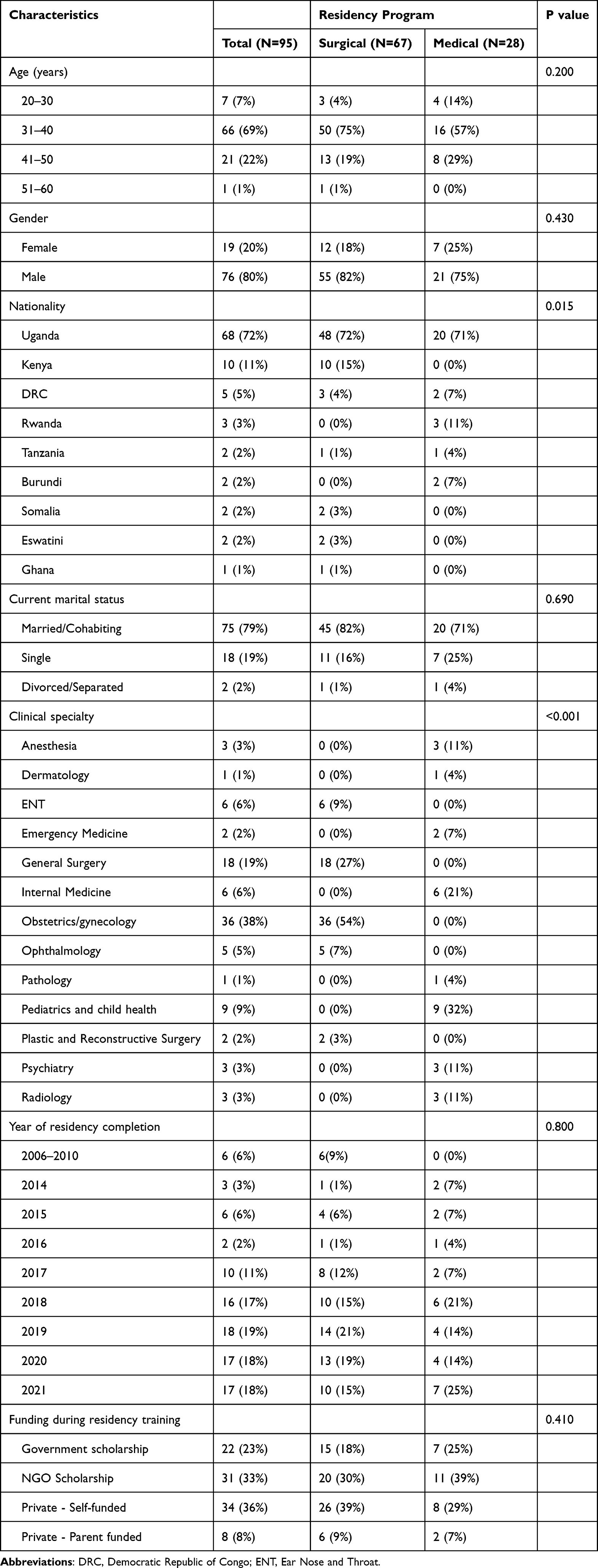 |
Table 1 Background Characteristics of the Respondents |
Choice of Postgraduate Studies at MUST
Most of the respondents perceived the following factors as very important for their decision to enroll in clinical residency programs at MUST: the practice-oriented study program in their clinical area of interest (61%), the areas of specialization provided (55%), the reputation of the university/departments (46%), and the admission standards and prior grades (32%) (Figure 1).
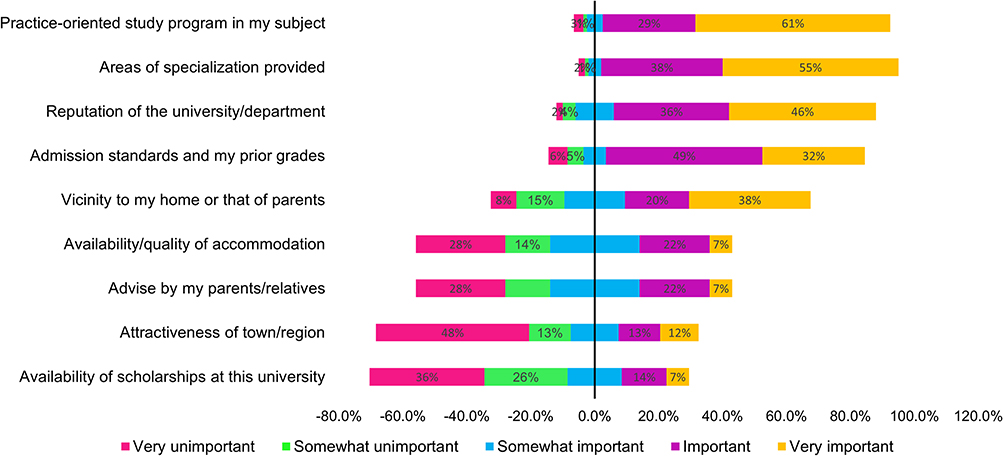 |
Figure 1 Factors influencing decisions to enroll in the residency program at MUST. |
Likelihood of Choosing the Same Course and Institution Again
Many of the respondents were highly likely to choose the same course of study (63%), 40% were highly likely to choose the same institution of study, and 51% reported high likelihood of choosing a surgical specialty again. Among the alumni who had completed a surgical specialty (n=67), 70% (n=47) were highly likely to choose a surgical specialty, whereas only 25% (n=7) of those who had completed a medical specialty (n=28) reported a high likelihood of choosing a medical specialty again (Table 2).
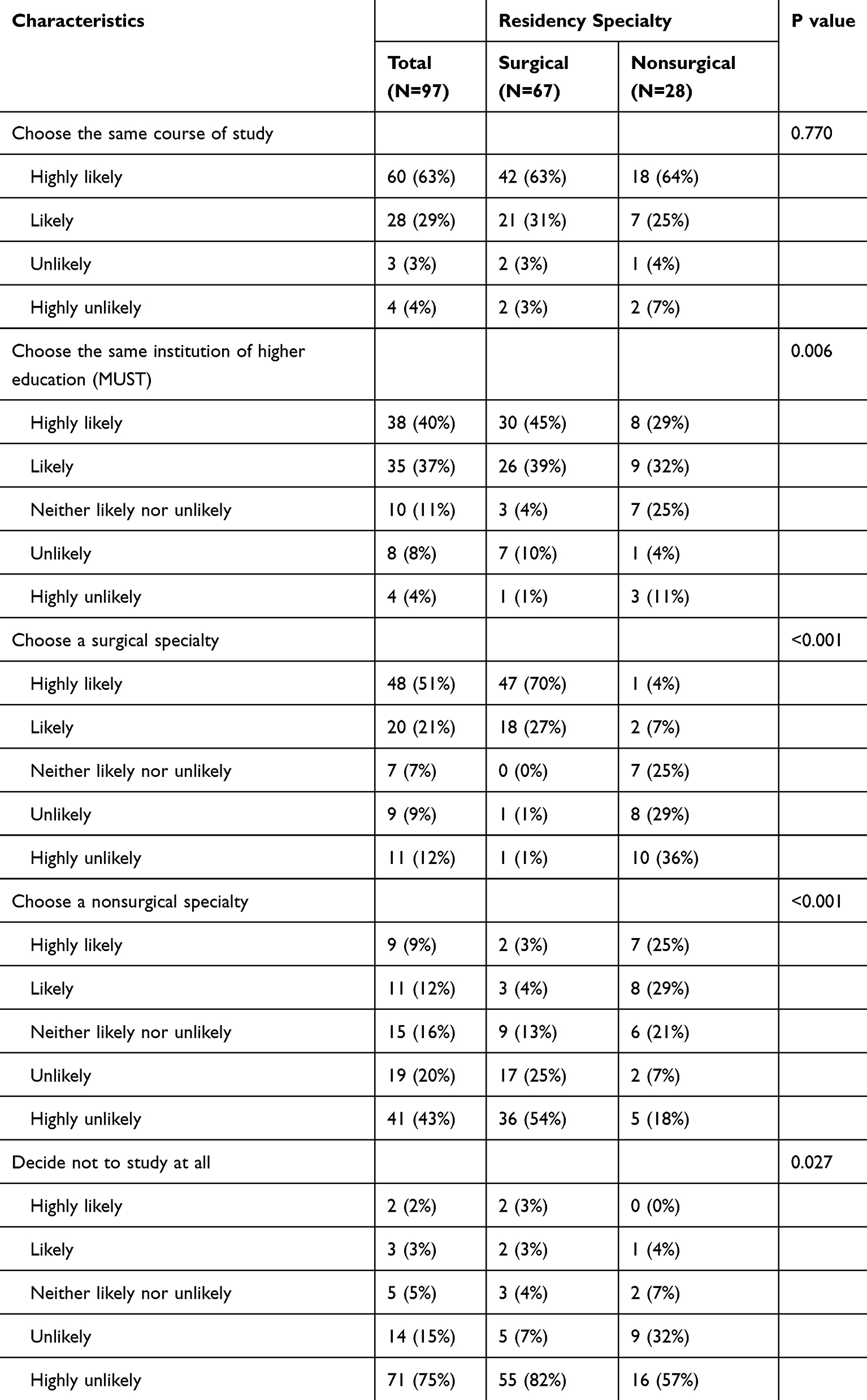 |
Table 2 Looking Back, if You Were to Choose Again, How Likely Would You? |
Experiences Studying at Mbarara University of Science and Technology
The respondents were largely satisfied or very satisfied with the learning and teaching provisions at MUST. However, regarding the learning infrastructure, most of the respondents were either dissatisfied or very dissatisfied with the availability and accessibility of protective gear (28% and 28%, respectively) or with on-call accommodation facilities on the campus (24% and 39%, respectively). Regarding student welfare at the campus, the respondents were dissatisfied or very dissatisfied with the accommodation and catering facilities at the campus (Figures 2–4).
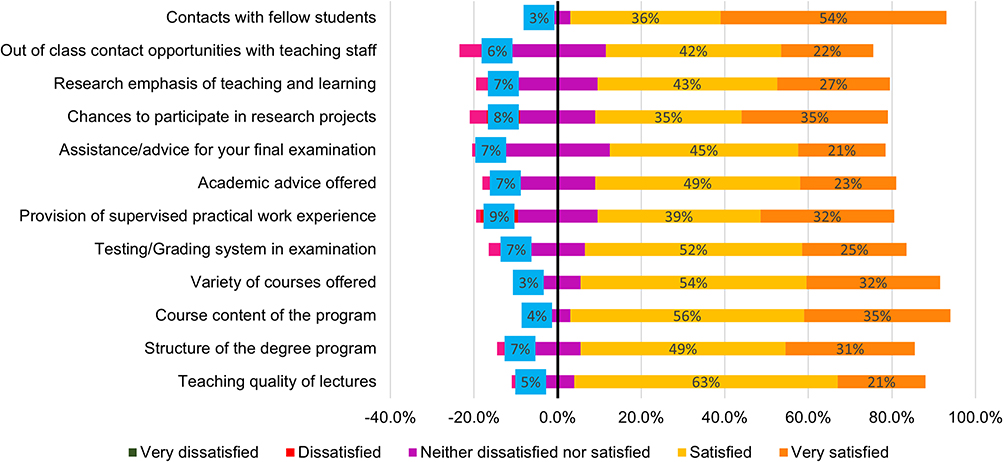 |
Figure 2 Rating of study provisions experienced (learning and teaching) at MUST. |
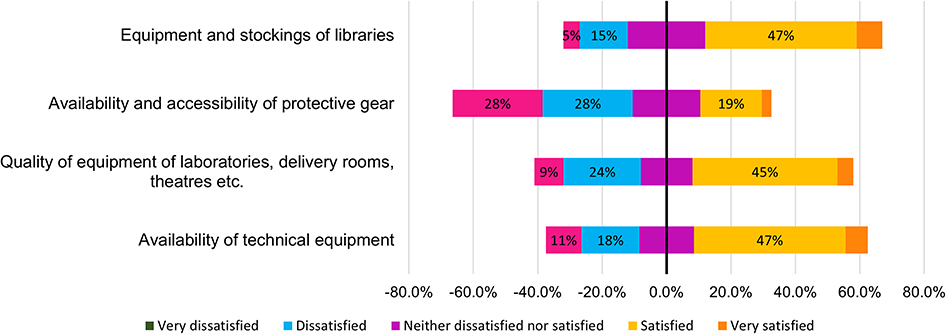 |
Figure 3 Rating of the learning infrastructure during residency training at MUST. |
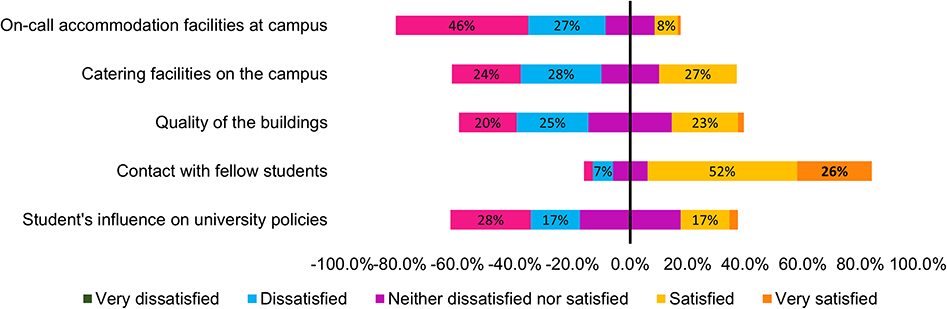 |
Figure 4 Rating of the student welfare during residency training at MUST. |
In-Depth Interviews
We conducted 12 semi structured in-depth interviews with several themes regarding the participants’ experiences with residency at MUST and on suggestions for improving residency training at MUST. Some of the findings from the qualitative in-depth interviews were comparable to the findings from the survey; some participants reported satisfaction with residency training at MUST and provided reasons for their satisfaction, including the presence of compassionate faculty, accessible faculty, good university partnerships, and technological support. However, some participants were dissatisfied with the limited study facilities, difficult adaptation for international students, limited exposure, lack of sufficient hands-on during training, lack of sufficient human resources, tight research processes, and limited technological resources. The participants provided suggestions to improve their residency training at MUST, which included providing diverse and collaborative mentorship to students, listening and kind faculty, having a holistic view of students, increasing student involvement in their training, increasing training exposures, creating more university partnerships, providing more technological support, teaching updated practices and providing more infrastructure.
Residency Training Experiences at MUST
Some participants reported being satisfied with residency training at MUST for reasons related to their satisfaction, including the presence of compassionate faculty (supportive and expert mentors), accessible faculty, good university partnerships, and technological support.
Some participants were satisfied with the ability to obtain adequate skills and great exposure in their areas of residency training; for example, one stated,
I think that was perfect, we had enough exposure and experience, so for all disciplines that could be handled locally in a department, we really had the best exposure. Just a few disciplines where we could have minimal cases and of course without super specialists in that direction [IDI10]
Another highlighted,
I am satisfied, and I can’t complain because I get to practice what I learn. Even now when I came back to work, I am seeing patients, but then I remember that I handled a similar case while in Uganda and when I apply it, it works so I am confident with the skills I learned. [IDI12]
Regarding the working relationships and availability of the lecturers, they reported the following: one participant said,
We had a good working relationship with our teachers, the lectures were conducted on time and the clinical work was well planned. Generally, all teachers were supportive both academically and socially. [IDI01]
Another participant, highlighted the presence of supportive, accessible and compassionate faculty:
Our head of department was truly available and a parent to us; he did all he could to make sure that we are comfortable, and he was one of the people who you could reach anytime and would never look like you are disturbing him or any response that would make you feel uncomfortable He would always come at whatever time you reached him although he was a very busy man that was truly a very big credit, so we always studied, and we were really comfortable [IDI09]
As much as the faculty were accessible and available, the participants noted that they were inadequate and possibly overwhelmed; for example, one stated,
I think they were just overwhelmed but the few that were there always available whenever we needed them. [IDI05]
Participants who benefited from visiting faculty appreciated good university partnerships, as stated:
Our head of department was a white old man who had come from the UK, and he had come to head a program and most of our other free-time department lecturers were also visiting lecturers from either Australia or the USA and even South Africa, which was not a local locality. Therefore, we had a nice learning environment, and we were like a family; it wasn’t like a department where you ran away from your lecturers thinking that they are giving them a heavy workload. [IDI03]
Some reported the availability of technological support, which made the study processes easy, as highlighted:
The department provided internet in the PG (postgraduate) room so at least you would freely access the internet at any time, which was really good to have reliable internet because it made it easy to read. [IDI01]
This was, however, different for some residency programmes and was consequently reported as a challenge by some respondents; for example, one respondent asserted,
…The internet in the university was very poor, so we relied on our lecturers getting for us the internet that we were using within the department, and then maybe later on, we had it through global health as a supporting agency that supplied us with stable internet. [IDI03]
The respondent, however, emphasized collegial support from the faculty who provided internet support.
Challenges Encountered During Residency Training
Several challenges encountered during residency were highlighted, such as limited study facilities, difficult adaptation for international students, limited exposure, lack of sufficient hands-on during training, lack of sufficient human resources, tight research processes, and limited technological resources.
Regarding the training facilities one alumni reported,
There was no obvious lecture room for us, but we had space because we used to have lectures either in the clinic or in the theatre; we also had a room in our faculty, but we didn’t have a standard room where to have classes. It was really difficult because sometimes we would go to the professor’s house; we used a lot of theatre and clinic space for our classes. [IDI06]
Another participant remarked,
Mbarara University is really a small place, as a department we had a very tiny room which was serving many purposes; it was acting as a lecture room, then an office for our head of department and a call room for us. [IDI03]
Some international alumni experienced difficult adaptation as reported by one participant,
I had come with my family for the first time in a new country so it took me some time to adapt as well as my children so that I can be fully occupied as a resident. [IDI12]
Some participants reported inadequate exposure during the residency training; for example, one remarked,
I did not get much exposure because I am just getting most clinical exposure now during my practice, and maybe it is because by then the supervisors on ground had already super specialized so we did not have a discipline and you would find that there was bias toward certain cases which we would just refer to Mulago. [IDI06]
Another alumnus, in regard to the practical hands-on training approach, observed,
There is still weak clinical practice for the students because they focus more on the theory part, though we are trying to come up with more training, but these are not organized by the university. So the practical part is still lacking. [IDI05]
Insufficient numbers of faculty were also noted; for example, one participant highlighted,
We did not have enough supervisors and lecturers, and that was a big problem because the number of the supervisors was truly few, so you would end up doing a lot of things alone but that also has it’s positives, so we managed to navigate through it…. [IDI11]
The alumni also reported tight research processes; one participant noted
The side of research, I think these were a little bit challenging; the departmental presentations are drugged as well as the presentations which are a headache because it takes over three months to get a response which takes up most of the time of our last year which is the same time when we are supposed to do data collection so I think they should work on that. [IDI09]
Technological resources such as computers and the internet were found to be lacking; for example, one participant noted,
It wasn’t that easy; I think the faculty needs computers and needs to provide students with free internet for research because not all students have scholarships or are employed, which quickens access to information. [IDI10]
Recommendations for Solving Gaps in Residency Training
Several suggestions were offered to improve residency training at MUST. These included providing diverse and collaborative mentorship to students, having kind and listening faculty, having a holistic view of students, increasing student involvement in their training, increasing hands-on training exposures, creating more university partnerships, providing more technological support, teaching updated practices and providing more infrastructures.
The respondents suggested providing diverse and collaborative mentorships to the residents during training; for example, one resident suggested,
When they are searching for supervisors, they can have a supervisor within the department and then a supervisor from another department so that we can tap on the richness from the different people. [IDI02]
Another respondent also emphasized collaboration among the mentors; they remarked,
I think the supervisors need to agree with themselves, I like what happened because my supervisors would argue and the sit down and conclude among themselves, but I have seen students who are confused by their supervisors because they tell them to do two different things and they can never allow us to meet for some reason so you stay there without any progress because everyone rubbishes every one’s idea and yet if they sat together, they would be able to agree on something nice. [IDI01]
The respondents also called for compassionate and kind faculty; for example, one alumnus reported,
When you are interacting with the students in a friendly way, it gives them the morale to continue wanting to be in research, but when the relationship is bad, the student is even discouraged from continuing with research. [IDI05]
Other Respondents Recommended the Need for a Holistic View of the students—one Retorted
Supervisors should be interested in the whole sum advancement of their students and not waiting for the grades; they should go beyond waiting for their marks because they need to know what the students are doing even outside the class and what they need to do to assist them to become better; they should offer some level of mentorship. [IDI07]
Some alumni recommended student-led involvement in their training; for example, one participant highlighted,
There are some supervisors who tell you what they want you to do and not what you are thinking of which is not right because as a supervisor you are supposed to listen and guide the students improve their ideas. [IDI01]
Another participant emphasized the provision of constructive feedback and stated,
The most important one is student feedback because it is the only way a student gets to grow because you are able to find faults and work on them which builds confidence in your students. [IDI06]
Another alumnus highlighted the need to strengthen hands-on training, …you need to build confidence in your students so that they are confident while handling complicated cases, allowing hands on as much as possible. [IDI04]
More university partnerships were recommended through exchange trips and collaboration. One alumnus highlighted,
I think exposure and exchange trips to other counties in other settings where they do things a little bit different, that is what I see as a missing link but otherwise our students are competitive. [IDI11]
Another alumnus reported,
I also encourage interaction and collaboration with other universities from outside the world because they helped me a lot. Additionally, encourage zoom sessions of students with different associations in other different countries to widen the knowledge gap so that the students are more holistic and well vast in other countries elsewhere. [IDI06]
The alumni recommended improving technological support. One alumnus highlighted,
I think the faculty needs computers and provide students with free internet for research because not all students have scholarships or are employed, which quickens access to information. [IDI12]
Another participant reported,
They should incorporate artificial intelligence into the learning process and improve accessibility to the internet for the students for better study. [IDI07]
The alumni also recommended teaching updated practices. One suggested the need to update the training program based on the current trends; they highlighted,
Program designers should look at the current trend and need to make sure that the program is based on those two and not linked up to the old approach of training. [IDI03]
Another participant highlighted the need for trainees to be proactive in taking up new developments:
I think the resident training should take up new skills in the medical field because now technology has come in and it changes the way we do things most, especially the people who do surgeries, so we need to take up the new developments in medical practice; there are so many things that the university needs to take up. [IDI08]
The alumni recommended the provision of infrastructure, especially accommodation facilities. One recommended,
The university should have infrastructure in place that supports training of the residents; the hospital should have enough resident houses for doctors, for example, those who are doing clinical discipline so that they are within at any time when they are needed. [IDI03]
Discussion
We explored the factors influencing the decision to enroll in residency training and the likelihood of choosing the same course and institution (MUST) and perspectives on participants’ experiences during residency training at Mbarara University of Science and Technology.
We found that the residency alumni perceived the practice-oriented study program in their clinical area of interest, the areas of specialization provided and the reputation of the university/departments as very important for their decision to enroll in clinical residency programs at MUST. Additionally, alumni were highly likely to choose the same university and residency specialty. The alumni were largely satisfied with the learning and teaching provisions but dissatisfied with the infrastructure and welfare at the university. However, they offered numerous suggestions to improve residency training at MUST.
The respondents’ perceptions of the factors influencing the decision to enroll in residency programs at MUST—the practice-oriented study program in their clinical area of interest, the areas of specialization provided, the reputation of the university/departments, and prior grades—have been reported in other studies among trainees, alumni and those intending to enroll in residency in institutions, both low-, middle- and high-income settings.21–24 Other factors reported from prior studies included flexible work schedules, length of training and personal preferences.21,23 Incorporating these factors provides an opportunity to strengthen residency training programs to meet the evolving preferences and needs of residency trainees—this could consequently attract medical students to specialties with fewer trainees to ensure a mix of specialists graduating and contributing to a balanced healthcare workforce.
The alumni also reported a high likelihood of enrolling in the same course and same institution. This signifies confidence in the training program, institution, and quality of training at the institution.
The alumni largely reported positive reviews and satisfaction regarding the learning and teaching provisions in terms of quality lectures, the structure of the programs, supervised practical work experiences and research support. In addition to the qualitative findings of accessible and compassionate faculty and good university partnerships. This was in keeping with the factors that were rated to have strongly influenced their decisions to enroll in the residency program at MUST. These findings are in keeping with the perspectives reported among residency trainees and graduates in various settings.8,25,26 In contrast, residency alumni were dissatisfied with the learning infrastructure and welfare at the university and with their technological resources and reported little study infrastructure (training space), limited exposure and limited technological support. This finding is similar to that of prior studies in our and other settings.23,25,27,28 The earlier beneficiaries of the residency program, who are now senior faculty in the different specialties, reported an improvement in the residency training program compared to their training time. This implies a great commitment to improving the clinical residency training program. There is further need to progressively improve and strengthen the learning, welfare and technological infrastructure at the university, as these enhance and enable learning and the overall experiences of the trainees.
The participants offered numerous suggestions to improve their residency training. These included the provision of diverse and collaborative mentorship to students, the creation of more university partnerships, the need for supportive faculty, increased student involvement in their training and improvement of exposures, the provision of more technological support, the teaching of updated practices and the provision of more infrastructures. Studies on residency training in other settings have also highlighted similar suggestions for improving residency training to benefit trainees.29–31 A good learning environment is very important for influencing the quality of residency training, as this environment impacts the mental wellbeing, academic performance and clinical efficiency of trainees, consequently reducing the incidence of burnout, depression and other associated sequelae given the highly intensive nature of residency training.32,33
Strengths and Limitations
This study provides information about the motivation for enrolling in residency training as perceived by alumni; it also provides insights from alumni of multiple residency specialties, which speaks to the mix of experiences from the different training programs; and highlights areas of improvement as suggested by the residency training alumni. We employed both quantitative and qualitative techniques with in-depth interviews enriching the survey findings.
The study sample was small but was mainly related to the survey response rate of 34.3%, which is considered appropriate for providing confident estimates.34,35 Another limitation of our study is the inclusion of responses from alumni spanning a 15-year period, from 2006 to 2021. While this approach allowed us to collect a comprehensive mix of perspectives, it might potentially overlook changes and improvements made over the years.
The survey was voluntary and anonymous; this may be prone to sampling bias, as respondents with smooth residency training may be more willing to complete the survey than those who had difficult residencies and vice versa. Additionally, to maintain the anonymity of IDI respondents, we chose not to identify the specialties of different alumni, which may have limited our ability to analyze specific trends and changes within individual programs. Finally, our findings are from residency alumni from only a single university and may not be generalizable to the experiences of graduates from other training institutions. These findings may have several important implications for institutions in settings similar to those of MUST.
Conclusions and Recommendations
Our study highlights that the majority of alumni were satisfied with residency training at MUST—as they perceived the training to be highly beneficial in preparing them for their current work tasks and had positive impacts on their careers. The identified areas of dissatisfaction, especially regarding learning, social and technological infrastructure, provide insights into the need to improve the quality of training by the university focusing on teaching up-to-date practices, enhancing collaborative mentorship opportunities and research support, strengthening university partnerships and providing technological support at university premises to improve the study experiences of students. Universities with similar characteristics and in settings as MUST, need to implement post-graduate tracers to evaluate trainees’ experiences to inform future directions.
Abbreviations
DRGT, Directorate of Graduate Studies; ENT, Ear Nose and Throat; FoM, Faculty of Medicine; IDI, Indepth Interview; MRRH, Mbarara Regional Referral Hospital; MUST, Mbarara University of Science and Technology; NCHE, National Council of Higher Education; NGO, Nongovernmental Organization; WHO, World Health Organization.
Data Sharing Statement
The datasets used during this study are available from the corresponding author upon reasonable request.
Ethical Approval and Informed Consent
The study was approved by the Research Ethics Committee of Mbarara University of Science and Technology under reference number MUST-2022-366. Informed consent was obtained from all study participants. The following statement appeared at the end of the consent form;Do you agree to participate in this survey? Yes/No (Check response below as stated). If you agree to participate, please continue to the survey. If not, you may exit at any time. Study codes were used to ensure the anonymity of the participants’ data. The participants informed consent included publication of anonymized responses/direct quotes. The data generated from the study would only be used for research purposes and would always be private and confidential. All principles of data transfer and protection of human research participants outlined in the Declaration of Helsinki were observed.
Acknowledgments
We acknowledge the office of the academic registrar for providing the Email contacts of the residency alumni, and Ms. Gloria Ninsiima and Mr. Gabriel Nuwagaba for participating in data collection.
Author Contributions
All authors made a significant contribution to the work reported, whether that is in the conception, study design, execution, acquisition of data, analysis and interpretation, or in all these areas; took part in drafting, revising or critically reviewing the article; gave final approval of the version to be published; have agreed on the journal to which the article has been submitted; and agree to be accountable for all aspects of the work.
Funding
This study was supported through the Mbarara University Faculty of Medicine Seed grant funded by Massachusetts General Hospital Center for Global Health’s project entitled “First Mile: Powering the Academic Medical Center to Delivery Healthcare in the Community in Uganda”, supported through the Wyss Medical Foundation. LT is supported by the Mbarara University Research Capacity Initiative (MURCI) Program funded by the Fogarty International Centre of the National Institute of Health (NIH) under grant number D43TW011632. The funders had no role in study design, data collection and analysis, decision to publish, or preparation of the manuscript.
Disclosure
The authors declare that they have no competing interests.
References
1. Schomburg H. Carrying out tracer studies: guide to anticipating and matching skills and jobs. Luxembourg: Publications Office of the European Union. 2016;6:18–20.
2. Schomburg H, Teichler U. Employability and Mobility of Bachelor Graduates in Europe. Springer; 2011.
3. Badiru EO, Wahome M. Conducting graduate tracer studies for quality assurance in east African universities: a focus on graduate students voices on quality culture. Res Gate. 2016;7:174–181.
4. Schomburg H. The professional success of higher education graduates. Eur J Educ. 2007;42:35–57. doi:10.1111/j.1465-3435.2007.00286.x
5. AL-Samarrai S, Bennell P. Where has all the education gone in sub-Saharan Africa? Employment and other outcomes among secondary school and university leavers. J Dev Stud. 2007;43(7):1270–1300. doi:10.1080/00220380701526592
6. Mugabushaka A-M, Schomburg H, Teichler U. 2007. Higher education and work in Africa. A Comparative Empirical Study in Selected Countries. International Centre for Higher Education Research Kassel (INCHER-Kassel). Kassel: Jenior, 2007. Page:137.
7. NCHE. Graduate Tracer and Employers. NCHE/CHEPS/MISR Graduate Tracer and Employers’ Expectation Study; 2006.
8. Colbert-Getz JM, Kim S, Goode VH, Shochet RB, Wright SMJAM. Assessing medical students’ and residents’ perceptions of the learning environment: exploring validity evidence for the interpretation of scores from existing tools. Academic Medicine : Journal of the Association of American Medical Colleges. 2014;89(12):1687–1693. doi:10.1097/ACM.0000000000000433
9. Kagawa MN, Kiguli S, Steinberg H, Jama MP. Perceptions of lecturers, administrators, and students about the workplace as learning environment for undergraduate medical students at a national referral and teaching hospital in Uganda. Advances in Medical Education and Practice. 2022:555–566.
10. Okoroafor SC, Ahmat A, Asamani JA, Millogo JJS, Nyoni J. An overview of health workforce education and accreditation in Africa: implications for scaling-up capacity and quality. Human Resources for Health. 2022;20(1): 37.
11. Ssengooba F, Kiwanuka S, Rutebemberwa E, Ekirapa-Kiracho E. Universal Health Coverage in Uganda: Looking Back and Forward to Speed up the Progress. Kampala Uganda: Makerere University; 2017.
12. Kizza IB, Tugumisirize J, Tweheyo R, et al. Makerere University College of Health Sciences’ role in addressing challenges in health service provision at Mulago national referral hospital. BMC Internatl Health Human Rights. 2011;11:1–10. doi:10.1186/1472-698X-11-S1-S7
13. Ogei E, Lewis C. Medical training in Uganda: a critical but neglected part of the healthcare system. Cureus. 2023;15. doi:10.7759/cureus.40044
14. Galukande M, Ozgediz D, Elobu E, Kaggwa S. Pretraining experience and structure of surgical training at a sub-Saharan African university. World Journal of Surgery. 2013;37:1836–1840. doi:10.1007/s00268-013-2053-2
15. Ozgediz D, Roayaie K, DebaS H, Schecter W, Farmer D. Surgery in developing countries: essential training in residency. Arch Surg. 2005;140:795–800. doi:10.1001/archsurg.140.8.795
16. Ross J. General practice training in Uganda. Part 1: setting, personnel, and facilities. Can Family Physician. 1996;42:213.
17. Bueno J, Gay S. Support to radiology residency programs in developing countries: our experience in Uganda with the Mbarara University of Science and Technology. J Am College Radiol. 2016;13(9):1121–1125. doi:10.1016/j.jacr.2016.04.001
18. Tibaijuka L, Kajjimu J, Atimango L, et al. Impact of the Mbarara University of Science and Technology residency training on increasing access to specialty care workforce. PLOS Global Public Health. 2024;4:e0003021. doi:10.1371/journal.pgph.0003021
19. Carr NT. Using Microsoft excel® to calculate descriptive statistics and create graphs. Language Assessment Quarterly. 2008;5:1 43–62.
20. SundleR AJ, LindberG E, Nilsson C, Palmér L. Qualitative thematic analysis based on descriptive phenomenology. Nursing Open. 2019;6:733–739. doi:10.1002/nop2.275
21. Eze BI, Okoye OI, MadukA-OkafoR FC, Aguwa EN. Factors influencing choice of medical specialty of preresidency medical graduates in southeastern Nigeria. Journal of Graduate Medical Education. 2011;3(3):367–371.
22. Kallio RE. Factors influencing the college choice decisions of graduate students. Research in Higher Education. 1995;36:109–124.
23. NG CL, LIU XD, Govind RM, TAN JWJ, OOI SBS, Archuleta SJ. Factors affecting choice of sponsoring institution for residency among medical students in Singapore. Singapore medical journal. 2018;59(12):642.
24. Yang Y, LI J, WU X, et al. Factors influencing subspecialty choice among medical students: a systematic review and meta-analysis. BMJ open. 2019;9:e022097. doi:10.1136/bmjopen-2018-022097
25. Alele PE, Kiptoo J, Hill-BesinquE K. Postgraduate medical trainees at a Ugandan university perceive their clinical learning environment positively but differentially despite challenging circumstances: a cross-sectional study. BMC Medical Education. 2023;23(1):965.
26. Erumeda NJ, Jenkins LS, George AZJAJOPHC, Medicine F. Perceptions of postgraduate family medicine supervision at decentralised training sites. South Africa. 2022a;14:3111.
27. Erumeda NJ, JenkinS LS, George AZ. Perceptions of resources available for postgraduate family medicine training at a South African university. African Journal of Primary Health Care & Family Medicine. 2022b;14(1):1–12.
28. Fisseha H, Mulugeta B, Argaw AM, Kassu RAJAIME, PRACTICE. Internal medicine residents’ perceptions of the learning environment of a residency training program in Ethiopia: a mixed methods study. Advances in Medical Education and Practice. 2021;12:1175–1183. doi:10.2147/AMEP.S335205
29. Asch DA, Bellini LM, Desai SV, Darragh D, Asch EL, Shea JA. An innovation tournament to improve medical residency. In: Healthcare. Elsevier ; 2022:100614.
30. Brooks JV, Singer SJ, Rosenthal M, Chien AT, Peters AS. Feeling inadequate: residents’ stress and learning at primary care clinics in the United States. Medical teacher. 2018;40(1):920–927.
31. Massagli TL, Zumsteg JM, Osorio MB. Quality improvement education in residency training: a review. American journal of physical medicine & rehabilitation. 2018;97(9):673–678.
32. Kaggwa MM, Kajjimu J, Sserunkuma J, et al. Prevalence of burnout among university students in low-and middle-income countries: a systematic review and meta-analysis. PloS one. 2021;16(8):e0256402.
33. Shah SSNH, Laving A, Okech-Helu VC, Kumar MJBP. Depression and its associated factors: perceived stress, social support, substance use and related sociodemographic risk factors in medical school residents in Nairobi. Kenya. 2021;21:1–15.
34. Deutskens E, De Ruyter K, Wetzels M, Oosterveld P. Response rate and response quality of internet-based surveys: an experimental study. Marketing letters. 2004;15:21–36.
35. Wu M-J, Zhao K, Fils-Aime F. Response rates of online surveys in published research: a meta-analysis. Computers in human behavior reports. 2022;7:100206.
 © 2025 The Author(s). This work is published and licensed by Dove Medical Press Limited. The
full terms of this license are available at https://www.dovepress.com/terms
and incorporate the Creative Commons Attribution
- Non Commercial (unported, 3.0) License.
By accessing the work you hereby accept the Terms. Non-commercial uses of the work are permitted
without any further permission from Dove Medical Press Limited, provided the work is properly
attributed. For permission for commercial use of this work, please see paragraphs 4.2 and 5 of our Terms.
© 2025 The Author(s). This work is published and licensed by Dove Medical Press Limited. The
full terms of this license are available at https://www.dovepress.com/terms
and incorporate the Creative Commons Attribution
- Non Commercial (unported, 3.0) License.
By accessing the work you hereby accept the Terms. Non-commercial uses of the work are permitted
without any further permission from Dove Medical Press Limited, provided the work is properly
attributed. For permission for commercial use of this work, please see paragraphs 4.2 and 5 of our Terms.