
Back to Journals » Neuropsychiatric Disease and Treatment » Volume 22
Mini-Review: Allicin as a Potential Neuroprotective Compound in Neurological Disorders

Received 1 May 2026
Accepted for publication 13 June 2026
Published 18 June 2026 Volume 2026:22 621474
DOI https://doi.org/10.2147/NDT.S621474
Checked for plagiarism Yes
Review by Single anonymous peer review
Peer reviewer comments 2
Editor who approved publication: Dr Roger Pinder
Wen-Rui Tang,1 Ke Qian Chen2
1Department of Infection Control, Xiangtan Central Hospital (The Affiliated Hospital of Hunan University), Xiangtan, 411100, People’s Republic of China; 2Department of Clinical Pharmacy, Xiangtan Central Hospital (The Affiliated Hospital of Hunan University), Xiangtan, 411100, People’s Republic of China
Correspondence: Ke Qian Chen, Department of Clinical Pharmacy, Xiangtan Central Hospital(The Affiliated Hospital of Hunan University), Xiangtan, 411100, People’s Republic of China, Email [email protected]
Abstract: In recent years, allicin has received extensive attention in the field of neuroprotection. This mini-review summarizes the extraction, detection, synthesis, toxicity, novel drug delivery systems of allicin and its research progress in neurological diseases. We found that allicin can exert neuroprotective effects in Alzheimer’s disease, Parkinson’s disease, traumatic brain injury, cerebral ischemia-reperfusion injury, cerebral hemorrhage, and subarachnoid hemorrhage by inhibiting oxidative stress, neuroinflammation, and apoptosis, regulating mitochondrial function, and improving blood-brain barrier integrity. However, current studies are mostly limited to animal experiments and lack high-quality clinical research evidence. Additionally, the unstable chemical properties and low bioavailability of allicin have limited its clinical translation. In the future, more randomized controlled clinical trials should be conducted and new delivery systems should be developed to improve its stability and targeting. This mini-review aims to provide a theoretical basis for further research and application of allicin in neurological diseases.
Keywords: allicin, neurological diseases, Alzheimer’s disease, Parkinson’s disease, brain injury
Introduction
Garlic is a plant with a long history (Figure 1). It is documented that garlic has been cultivated in Mediterranean countries since 3000 BC.1 Ancient Egypt, Rome, and Greece had many areas where garlic was grown.1 In the 16th century, the great Chinese medical scientist Shi Zhen Li described the effects of garlic in his book “Compendium of Materia Medica”.2 In the 19th century, Louis Pasteur (the great French medical scientist) discovered that garlic has anti-bacterial activity.3 As a perennial herb, garlic thrives in mild regions and can be grown all year. Its stem is divided into 6 to 12 bulblets (garlic cloves), which are held together by a fine shell (garlic head). The roots of garlic can grow to a depth of 80 cm closer to the plant’s base. Its leaves are morphologically long, narrow, and flat. The tip, however, is cylindrical and sharp. The flowers are tiny and whitish purple. A 70–80 cm height characterizes the garlic plant; several leaves are 13–15, the weight of the bulb is 50 g with a diameter of 5 cm, and the number of cloves is 12–13. As a popular plant, garlic can be used not only to treat diseases but also to cook food. Meanwhile, garlic is also used as a spice in many Asian countries, such as India, Pakistan, Nepal, and Iran.4 As a valuable food additive and spice, garlic contains many nutrients and chemicals. These substances mainly include sulfur compounds, volatile oils, amino acids, and glycosides. At present, more than 30 sulfur compounds have been found in garlic, and these sulfur-containing compounds are mainly divided into water-soluble and oil-soluble sulfur compounds.5 Among these compounds, alliin, allicin, diallyl trisulfide (DATS), diallyl disulfide (DADS), diallyl monosulfide (DAMS), and diallyl tetrasulfide (DATTS) are common5 (Table 1). Amino acids in garlic are mainly divided into two categories: protein amino acids and non-protein amino acids. Protein amino acids mainly include cysteine, histidine, lysine, alanine, arginine, aspartic acid, aspartate, leucine, methionine, phenylalanine, proline, serine, threonine, tryptophan, cystine and valine. The main non-protein amino acids are alliin, deoxyalliin, S-methyl-L-cysteine, and γ-L-glutamyl-S-allyl-L-cysteine.6 Among them, alliin is a special sulfur-containing amino acid in garlic. There are many glycosides in garlic. These glycosides include scordinin A1, scordinin A2, scordinin A3, scordinin B1, scordinin B2, scordinin B3, protoeruboside B, astivoside B1, et al7 In addition, garlic also contains vitamin A, vitamin B, vitamin C, selenium, calcium, magnesium, manganese, selenium, potassium, zinc, sulfur, and phosphorus.8 Allicin is a compound isolated from garlic bulbs (Table 2). As shown in Figure 2, allicin has been reported to possess a wide range of pharmacological activities, including cardioprotective activity, antimicrobial activity, antidiabetic activity, lung protection, neuroprotective activity, renal protection, anticancer activity, and hepatoprotective activity. Among them, many of the mechanisms related to anti-inflammatory, antioxidant, and immune regulation provide the basis for its potential pharmacological activities. Based on the existing literature, this mini-review systematically reviews the research progress and potential mechanisms of allicin in improving Alzheimer’s disease and other neurological disorders. Meanwhile, this mini-review also summarizes the extraction, synthesis, detection, toxicity, and new delivery systems of allicin. It is worth noting that the reported biological effects in this review are attributable specifically to allicin, rather than garlic or garlic extracts.
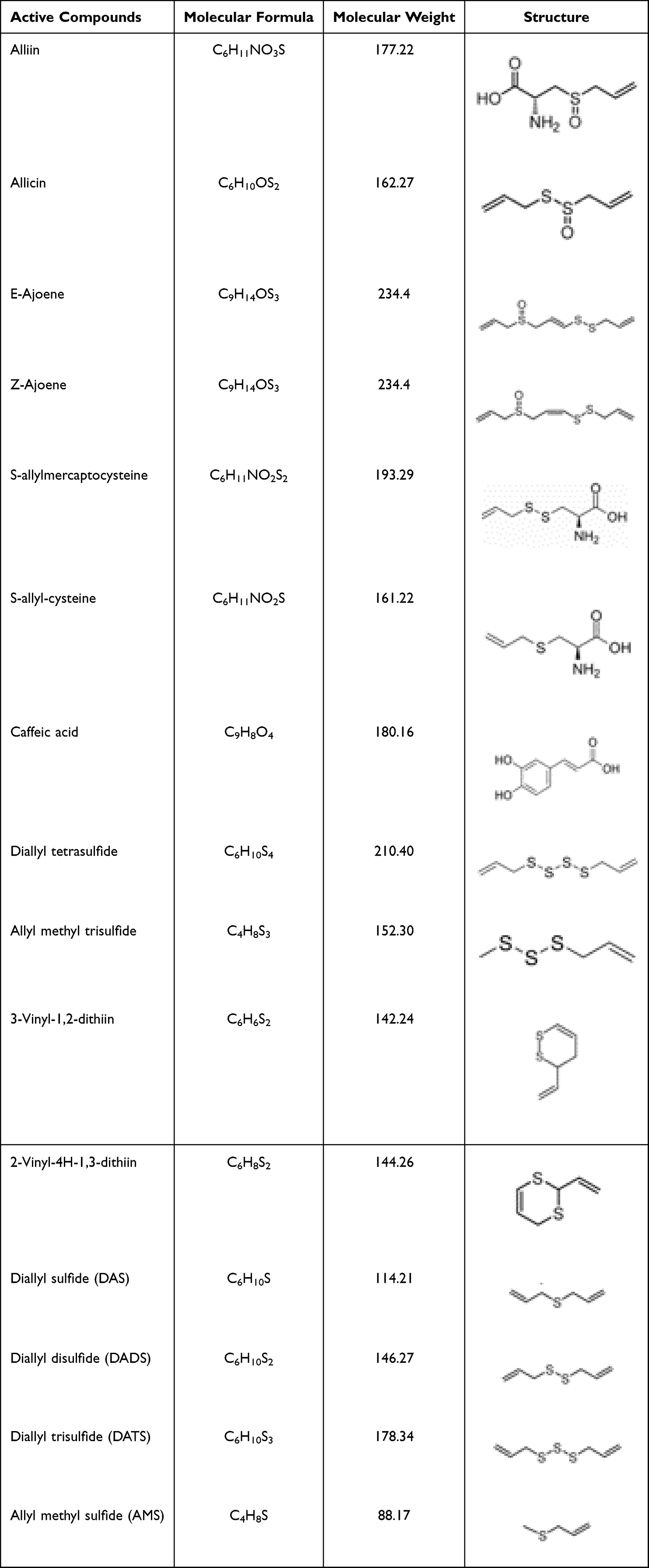 |
Table 1 Major Active Compounds of Garlic |
 |
Table 2 The Properties of Allicin |
 |
Figure 1 The botany (A) and geographical distribution (B) of garlic. |
 |
Figure 2 The pharmacological activity of allicin. |
Extraction, Detection, and Synthesis of Allicin
The extraction of allicin is the key to analyzing its structure and biological properties. Therefore, it is very important to investigate the extraction technology of allicin. At present, the extraction methods of allicin mainly include steam distillation method, organic solvent extraction method, and supercritical CO2 extraction method. The steam distillation method has the advantages of simple equipment, low cost, and good stability.8 Its principle is to pass water vapor into a volatile organic substance that is insoluble in water so that the organic substance is distilled together with water vapor at a temperature below 100°C, and then further separated to obtain a purer substance.8 The main components obtained by this method are small molecule thioether compounds such as allyl trisulfide and allyl disulfide.9 However, due to the relatively high distillation temperature, allicin content is lost.9 The principle of the organic solvent extraction method is that garlic oil is slightly soluble in water, but easily soluble in ethanol, ethyl acetate, ether, and other organic solvents. It is worth noting that the selection of solvent is crucial for this method. The selected solvent needs not only a low boiling point, little residue, and good solubility, but also no toxicity and undesirable odor. At present, ethanol extraction is the most common solvent extraction method. Its advantage is that the temperature of soaking and vacuum distillation is not high, and the content of allicin is high.10 Supercritical CO2 extraction is a novel extraction method. Its principle is to use the physical properties of CO2 in the supercritical state to achieve effective extraction of target components. The advantage of this method is its high extraction yield.11 Some studies have shown that the content of allicin extracted by the supercritical CO2 extraction method is significantly higher than the solvent extraction method and steam distillation method.12 However, the shortcoming of this method is that the required equipment investment is large and the production efficiency is low.11 At present, there are many methods to detect allicin, including gas chromatography, liquid chromatography, thin-layer chromatography, high-performance liquid chromatography, infrared spectroscopy, and ultraviolet spectroscopy.13 Among these methods, high-performance liquid chromatography is the best method to detect the active ingredients of garlic. A large number of studies have detected the content of allicin in fresh garlic, dry powder, and various garlic products by high-performance liquid chromatography. Not surprisingly, these studies have yielded good results.14 Although these methods have been used in the detection of allicin. However, these methods still have some defects, such as low sensitivity, cumbersome processes, and expensive equipment.15 In the future, exploring other methods that can detect allicin content has broad prospects. According to the above content, the extraction of allicin can obtain a high yield and high quality allicin. However, compared with the industrial production of allicin, the extraction of allicin has insurmountable defects, including waste of raw materials, complexity of equipment, and high extraction cost. Therefore, the synthesis of allicin will be extremely important. Previous studies have shown that the synthesis of active ingredients (diallyl trisulfide) in garlic has been used in industrial production. Ultrasound, microwaves, different solvents, and high temperatures can accelerate the synthesis of allicin.16 There are many methods to synthesize allicin, including the oxidation of diallyl disulfide with hydrogen peroxide in acid medium, the oxidation of diallyl disulfide with m-chloroperbenzoic acid in chloroform, the oxidation of diallyl disulfide with magnesium monoperoxyphthalate and tetrabutylammonium hydrogen sulfate17,18(Figure 3). All of these methods are performed at low temperatures (from zero to room temperature). Depending on the purification method used, different purities of allicin can be obtained.
 |
Figure 3 The structure (A) and synthesis (B) of allicin. |
Toxicity of Allicin
It is well known that the side effects of natural medicines often limit their clinical application. Therefore, understanding the side effects of natural medicines is of great significance for the improvement and application of natural medicines in the future. At present, no studies have reported the presence of known toxic compounds in garlic and its extracts.19,20 Some early studies investigated the toxicity of garlic. Although the U.S. Food and Drug Administration considers garlic safe for humans, eating garlic can cause some mild side effects in humans, including nausea, vomiting, diarrhea, and bloating.21 Since the discovery of allicin in 1944, its toxicity has been studied at the cellular and animal levels. Liu C et al wanted to investigate the toxicity of allicin in mice.22 They divided 24 male BALB/c mice into a control group and two allicin groups (15 mg/kg and 30 mg/kg). After six weeks of treatment, the toxicity of allicin was evaluated by observing morphology and detecting serum liver and kidney function. The results showed that allicin (30 mg/kg) had no obvious hepatotoxicity and nephrotoxicity in vivo. On the one hand, there were no significant changes in liver function parameters and kidney function parameters. On the other hand, there was no tissue damage, cell swelling, and obvious pathological changes in the liver and kidney of mice. Notably, no animal deaths or adverse reactions were observed in this study. Zeynel Öztürk et al wanted to investigate the effects of allicin on nasal mucosa. They found that allicin does not have adverse effects on rabbit nasal mucosa, and it does not lead to mucosal bleeding, congestion, inflammation, and calcification.23 Based on currently available preclinical evidence, allicin appears to have a favorable safety profile in animal models. However, given the lack of long-term safety data and clinical studies, its safety in humans cannot be concluded at this stage. More rigorous toxicological evaluations are needed. But even so, doctors should carefully ask patients about their allergy history before using allicin. Patients with allergies should avoid allicin. If the patients develop an allergic reaction, the allicin should be stopped immediately and anti-allergic treatment should be given promptly. Therefore, more studies are needed to investigate the toxicity of allicin in the future.
New Delivery System of Allicin
Allicin is an important compound, and the development of its preparations or products warrants consideration. At present, the main reasons for limiting the development of preparations or products are as follows: first, the unique odor of allicin is difficult to accept by patients. Second, allicin is chemically unstable, and it is very difficult to separate and extract. Third, allicin has chemical residue. Allicin is mainly synthesized from propylene chloride. However, propylene chloride is a strong irritant. Long-term exposure to propylene chloride can cause harm to the respiratory system. These issues limit the promotion and application of allicin. The commonly used allicin preparations include tinctures, pills, tablets, liquors, nasal drops, capsules, and injections. Although these preparations have been improved, there are still many problems. On the one hand, the composition of the preparations is complex and the content of effective ingredients is low, which cannot reach the clinical effect. On the other hand, the preparations will cause irritation to the gastrointestinal tract, skin, mucous membranes, and blood vessels, which affects the efficacy of allicin and the patient’s medication compliance. Therefore, it is of great significance to develop new allicin preparations. Currently, new allicin preparations include the following: Liposomes are spherical vesicles ranging in size from 0.025 μm to 2.5 μm. In general, liposomes are composed of phospholipids, cholesterol, PEG, and other components. As a drug carrier, liposomes have the advantage of improving drug stability and reducing drug toxicity. Allicin liposomes have the advantages of targeting, low toxicity, and sustained release. Nanoparticles are nanoscale materials (1–100 nm) that provide high loading capacity and stability.24 Many studies have shown that beta-lactoglobulin, PEGylated Lecithin-Chitosan-Folic Acid Nanoparticles, and polybutylcyanoacrylate nanoparticles can be used as nanotransporters for allicin.25,26 Compared with pure allicin, these nanotransporters have high encapsulation efficiency and large drug loading capacity, which greatly improves the bioavailability and stability of allicin. In addition to liposomes and nanoparticles, gels, micelles, and gelatin films are also new allicin preparations27,28. These preparations usually have good lubricity and scalability. This will help allicin to enter the cell membrane to exert pharmacological effects.
Allicin and Neurological Disorders
Over the past few decades, an increasing number of neurological disorders have led to premature death or disability. The pathogenesis of these diseases is complex and involves multiple pathological processes such as neuroinflammation, oxidative stress, mitochondrial dysfunction, and apoptosis. Currently, the treatment options for nerve injury are limited, so finding safe and effective neuroprotective drugs holds significant clinical importance. Here, we introduce the research progress and potential mechanisms of allicin in improving Alzheimer’s disease and other neurological disorders (Figure 4).
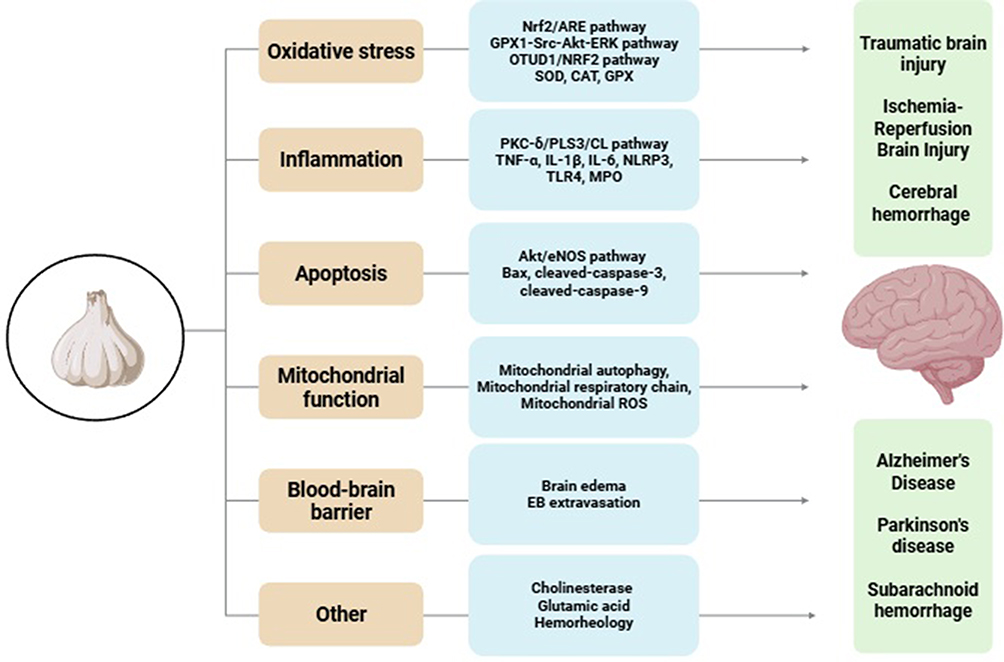 |
Figure 4 The potential mechanisms of allicin in improving Alzheimer’s disease and other neurological disorders. |
Alzheimer’s Disease
Alzheimer’s Disease (AD) is the most common neurodegenerative disorder. Oxidative stress, neuroinflammation, abnormal deposition of β-amyloid protein (amyloid-β, Aβ), and excessive phosphorylation of tau protein are the key factors in its pathogenesis. In the APP/PS1 mouse model, allicin can improve the cognitive function of mice, reduce the expression level of Aβ, alleviate oxidative stress, and enhance mitochondrial dysfunction. Mechanistically, allicin exerts neuroprotective effects by blocking the c-Jun N-terminal kinase (JNK) signaling pathway.29 In the endoplasmic reticulum stress model induced by tunicamycin (TM), allicin significantly improves cognitive deficits, reduces excessive phosphorylation of tau protein and Aβ deposition, and enhances antioxidant enzyme activity.30 Increasing studies have shown that metal elements (copper, aluminum) play a promoting role in the occurrence and development of AD. In AD rats induced by trichloroaluminum and copper sulfate, allicin improves the abnormal deposition of Aβ and the levels of pro-inflammatory factors (TNF-α, IL-6, IL-1β).31
Parkinson’s Disease
As the second most common neurodegenerative disease, Parkinson’s disease (PD) has also become a main global health burden. The cause of PD is related to the degeneration of dopaminergic neurons in the substantia nigra and the reduction of dopamine secretion, but the exact cause is not yet fully clear. The high-risk population mainly consists of elderly people over 60 years old, with slightly more men than women. Mitochondrial dysfunction is closely linked to the pathogenesis of PD. Allicin regulates mitochondrial fusion, fission, and biogenesis, stabilizing mitochondrial structure and function, and exerting neuroprotective effects.32 Mechanistically, it upregulates the expression of peroxisome proliferator activated receptor gamma coactivator-1 (PGC-1), nuclear respiratory factor 1 (NRF-1), and mitochondrial transcription factor A (TFAM), and downregulates the expression of mitochondrial fission protein 1 (Fis-1) and mitochondrial dynamic-related protein 1 (Drp-1). Kumar found that allicin has inhibitory effects on acetylcholinesterase (AChE) and butyrylcholinesterase (BuChE), with IC50 values of 0.01 mg/mL (61.62 μM) and 0.05 mg/mL (308.12 μM), respectively. By inhibiting cholinesterase activity, allicin can increase the level of acetylcholine (ACh) in the brain, improve cognitive function and memory impairment, providing a new strategy for the treatment of PD.33
Traumatic Brain Injury
Traumatic brain injury is a significant cause of neurological dysfunction. Cheng et al discovered that allicin can significantly reduce tumor necrosis factor-α (TNF-α), interleukin-1β (IL-1β), IL-6, reactive oxygen species (ROS), NLRP3 inflammasome, and Toll-like receptor 4 (TLR4) proteins in the Controlled Cortical Impact (CCI) model.34 Behavioral experiments showed that allicin could significantly improve the motor function and cognitive ability of CCI mice. In the rotarod test and Morris water maze (MWM) test, the allicin treatment group exhibited better motor coordination and spatial learning ability.34 Additionally, allicin exerts neuroprotective effects by regulating the nitric oxide synthase (NOS) pathway. In traumatic brain injury rat models, allicin reduces motor function deficits and cortical neuron apoptosis. Mechanistically, allicin inhibits the expression of inducible nitric oxide synthase (iNOS), enhances the phosphorylation of endothelial nitric oxide synthase (eNOS), but has no significant effect on neuronal nitric oxide synthase (nNOS).35 Further studies have shown that allicin mediates anti-inflammatory and antioxidant activities through the Akt/eNOS signaling pathway. Akt inhibitors (LY294002) or eNOS inhibitors (L-NIO) can partially reverse the protective effect of allicin.36
Ischemia-Reperfusion Brain Injury
Ischemia-Reperfusion Brain Injury (IRBI) is the main pathological process of ischemic stroke. In the model of transient middle cerebral artery occlusion (MCAO), allicin can significantly reduce the volume of cerebral infarction and improve neurological function.37 Moreover, allicin can also significantly alleviate brain edema and reduce the permeability of the blood-brain barrier.38,39 Mechanistically, allicin exerts its brain-protective effect by inhibiting the increase in blood viscosity and improving hemorheological indicators. Additionally, oxidative stress is the core mechanism of ischemia-reperfusion injury. Allicin can significantly reduce oxidative stress, lower the activity of nicotinamide adenine dinucleotide phosphate oxidase (NADPH oxidase), alleviate inflammatory responses and mitochondrial respiratory chain dysfunction, and inhibit cell apoptosis. At the same time, allicin enhances the activity of endogenous antioxidant enzymes (CAT, SOD, GPX, GST), and promotes angiogenesis in the infarcted area.37 Zhuang et al further confirmed that allicin activated the GPX1-Src-Akt-ERK signaling pathway, inhibited astrocyte apoptosis and lipid peroxidation, and improved the functional recovery of ischemic stroke.40
Cerebral Hemorrhage and Subarachnoid Hemorrhage
Cerebral hemorrhage and subarachnoid hemorrhage both belong to the bleeding types of cerebral stroke, but there are significant differences in their occurrence sites, causes, symptoms, and treatment methods. Cerebral hemorrhage is the bleeding of blood vessels in the brain parenchyma, which is commonly seen in hypertension or vascular malformations. Subarachnoid hemorrhage is the rupture of blood vessels on the brain surface, which is often caused by an aneurysm rupture or trauma. Shao et al found that allicin alleviates brain edema and blood-brain barrier dysfunction after subarachnoid hemorrhage. Mechanistically, allicin inhibits the expression of cleaved caspase-3, reduces the degree of neuronal degeneration, lowers the proportion of apoptotic neurons, and simultaneously reduces the level of malondialdehyde (MDA), increases glutathione (GSH) and SOD levels.41 Atef et al confirmed in a mouse model of intracerebral hemorrhage that allicin increases the number of surviving neurons around the hematoma. In addition, allicin downregulates the mRNA expression of pro-inflammatory factors IL-6 and CXCL2 in the brain, promoting the recovery of sensory and motor functions.42
Discussion
In conclusion, as a natural active ingredient, allicin has demonstrated extensive neuroprotective effects in various preclinical models of nerve injury. Its mechanism involves inhibiting oxidative stress, inflammation, and apoptosis, regulating mitochondrial function, improving the integrity of the blood-brain barrier, and regulating neurotransmitters. However, current research on the neuroprotective effects of allicin still has some limitations. Firstly, most studies focus on animal models, with a lack of clinical research evidence. Secondly, the unstable chemical properties of allicin limit its clinical application. Thirdly, the doses and administration regimens used in different studies vary greatly, lacking a unified standard. Fourthly, there is insufficient data on the safety of long-term use. Therefore, future research should conduct high-quality randomized controlled clinical trials to verify the efficacy and safety of allicin in neurological diseases, and developing new drug delivery systems for allicin (nanoparticles, prodrugs) to improve its bioavailability and targeting ability are essential.
Author Contributions
All authors made a significant contribution to the work reported, whether that is in the conception, study design, execution, acquisition of data, analysis and interpretation, or in all these areas; took part in drafting, revising or critically reviewing the article; gave final approval of the version to be published; have agreed on the journal to which the article has been submitted; and agree to be accountable for all aspects of the work.
Funding
There is no funding to report.
Disclosure
The authors declare no competing interests in this work.
References
1. Rivlin RS. Historical perspective on the use of garlic. J Nutr. 2001;131(3s):951S–11. doi:10.1093/jn/131.3.951S
2. Wang J, Mei QX. Literature research of Compendium of materia medica quoted from bencao tujing. Zhonghua Yi Shi Za Zhi. 2021;51(1):34–42. doi:10.3760/cma.j.cn112155-20201222-00200
3. Sivam GP. Protection against Helicobacter pylori and other bacterial infections by garlic. J Nutr. 2001;131(3s):1106S–8S. doi:10.1093/jn/131.3.1106S
4. Gawande SJ, Khar A, Lawande KE. First report of iris yellow spot virus on garlic in India. Plant Dis. 2010;94(8):1066. doi:10.1094/PDIS-94-8-1066C
5. G E-SB, Magdy Beshbishy A, L GW, et al. Chemical constituents and pharmacological activities of garlic (Allium sativum L.): a review. Nutrients. 2020;12(3):872. doi:10.3390/nu12030872
6. Liu P, Weng R, Sheng X, et al. Profiling of organosulfur compounds and amino acids in garlic from different regions of China. Food Chem. 2020;305:125499. doi:10.1016/j.foodchem.2019.125499
7. Kominato K. Studies on biological active component in garlic (Allium scorodoprasm L. or Allium sativum). I. Thioglycoside. Chem Pharm Bull. 1969;17(11):2193–2197. doi:10.1248/cpb.17.2193
8. Zhu Y, Inagaki K, Haraguchi H, Chiba K. Determination and size-fractional distribution of the elements in garlic. Anal Sci. 2009;25(1):137–140. doi:10.2116/analsci.25.137
9. Lawson LD, Ransom DK, Hughes BG. Inhibition of whole blood platelet-aggregation by compounds in garlic clove extracts and commercial garlic products. Thromb Res. 1992;65(2):141–156. doi:10.1016/0049-3848(92)90234-2
10. Li F, Li Q, Wu S, Tan Z. Salting-out extraction of allicin from garlic (Allium sativum L.) based on ethanol/ammonium sulfate in laboratory and pilot scale. Food Chem. 2017;217:91–97. doi:10.1016/j.foodchem.2016.08.092
11. Díaz-Reinoso B, Moure A, Domínguez H, Parajó JC. Supercritical CO2 extraction and purification of compounds with antioxidant activity. J Agric Food Chem. 2006;54(7):2441–2469. doi:10.1021/jf052858j
12. Liang G, Qiao X, Bi Y, Zou B, Zheng Z. Studies on purification of allicin by molecular distillation. J Sci Food Agric. 2012;92(7):1475–1478. doi:10.1002/jsfa.4729
13. Rosen RT, Hiserodt RD, Fukuda EK, et al. Determination of allicin, S-allylcysteine and volatile metabolites of garlic in breath, plasma or simulated gastric fluids. J Nutr. 2001;131(3s):968S–71S. doi:10.1093/jn/131.3.968S
14. Blania G, Spangenberg B. Allicin-Freisetzung aus getrocknetem Knoblauch (Allium sativum): eine einfach durchzuführende HPTLC-Simultanbestimmung von Allicin und Ajoen in Knoblauchpulver und daraus hergestellten Fertigarzneimitteln [Formation of allicin from dried garlic (Allium sativum): a simple HPTLC method for simultaneous determination of allicin and ajoene in dried garlic and garlic preparations]. Planta Med. 1991;57(4):371–375. doi:10.1055/s-2006-960120
15. Rybak ME, Calvey EM, Harnly JM. Quantitative determination of allicin in garlic: supercritical fluid extraction and standard addition of alliin. J Agric Food Chem. 2004;52(4):682–687. doi:10.1021/jf034853x
16. Wang J, Cao Y, Wang C, Sun B. Low-frequency and low-intensity ultrasound accelerates alliinase-catalysed synthesis of allicin in freshly crushed garlic. J Sci Food Agric. 2011;91(10):1766–1772. doi:10.1002/jsfa.4377
17. Nikolic V, Stankovic M, Nikolic L, Cvetkovic D. Mechanism and kinetics of synthesis of allicin. Pharmazie. 2004;59(1):10–14.
18. Cruz-Villalon G. Synthesis of allicin and purification by solid-phase extraction. Anal Biochem. 2001;290(2):376–378. doi:10.1006/abio.2001.4990
19. Rana SV, Pal R, Vaiphei K, Sharma SK, Ola RP. Garlic in health and disease. Nutr Res Rev. 2011;24(1):60–71. doi:10.1017/S0954422410000338
20. Miron T, Mironchik M, Mirelman D, Wilchek M, Rabinkov A. Inhibition of tumor growth by a novel approach: in situ allicin generation using targeted alliinase delivery. Mol Cancer Ther. 2003;2(12):1295–1301.
21. Rauf A, Abu-Izneid T, Thiruvengadam M, et al. Garlic (Allium sativum L.): its chemistry, nutritional composition, toxicity, and anticancer properties. Curr Top Med Chem. 2022;22(11):957–972. doi:10.2174/1568026621666211105094939
22. Liu C, Fan H, Guan L, Ma L, Ge RL. Evaluation of allicin against alveolar echinococcosis in vitro and in a mouse model. Acta Parasitol. 2022;67(1):79–93. doi:10.1007/s11686-021-00434-z
23. Öztürk Z, Bayar Muluk N, Oğuz O, et al. Investigation of the effects of allicin on the nasal mucosa. Ear Nose Throat J. 2024;103(3_suppl):63S–68S. doi:10.1177/01455613241257354
24. Joudeh N, Linke D. Nanoparticle classification, physicochemical properties, characterization, and applications: a comprehensive review for biologists. J Nanobiotechnology. 2022;20(1):262. doi:10.1186/s12951-022-01477-8
25. Wilde SC, Keppler JK, Palani K, Schwarz K. β-Lactoglobulin as nanotransporter for allicin: sensory properties and applicability in food. Food Chem. 2016;199:667–674. doi:10.1016/j.foodchem.2015.12.055
26. Hashemy SI, Amiri H, Hosseini H, Sadeghzadeh F, Jaseem MMM, Tabrizi MH. PEGylated lecithin-chitosan-folic acid nanoparticles as nanocarriers of allicin for in vitro controlled release and anticancer effects. Appl Biochem Biotechnol. 2023;195(7):4036–4052. doi:10.1007/s12010-022-04310-y
27. Han X, Lu B, Zou D, et al. Allicin-Loaded intelligent hydrogel coating improving vascular implant performance. ACS Appl Mater Interfaces. 2023;15(32):38247–38263. doi:10.1021/acsami.3c05984
28. Hu L, Zhao P, Wei Y, Guo X, Deng X, Zhang J. Properties of allicin-zein composite nanoparticle gelatin film and their effects on the quality of cold, fresh beef during storage. Foods. 2023;12(19):3713. doi:10.3390/foods12193713
29. Zhang H, Wang P, Xue Y, Liu L, Li Z, Liu Y. Allicin ameliorates cognitive impairment in APP/PS1 mice via suppressing oxidative stress by blocking JNK signaling pathways. Tissue Cell. 2018;50:89–95. doi:10.1016/j.tice.2017.11.002
30. Zhu YF, Li XH, Yuan ZP, et al. Allicin improves endoplasmic reticulum stress-related cognitive deficits via PERK/Nrf2 antioxidative signaling pathway. Eur J Pharmacol. 2015;762:239–246. doi:10.1016/j.ejphar.2015.06.002
31. Kaur S, Raj K, Gupta YK, Singh S. Allicin ameliorates aluminium- and copper-induced cognitive dysfunction in Wistar rats: relevance to neuro-inflammation,neurotransmitters and Aβ(1-42) analysis. J Biol Inorg Chem. 2021;26(4):495–510. doi:10.1007/s00775-021-01866-8
32. Liu H, Mao P, Wang J, Wang T, Xie CH. Allicin protects PC12 cells against 6-OHDA-Induced oxidative stress and mitochondrial dysfunction via regulating mitochondrial dynamics. Cell Physiol Biochem. 2015;36(3):966–979. doi:10.1159/000430271
33. Kumar S. Dual inhibition of acetylcholinesterase and butyrylcholinesterase enzymes by allicin. Indian J Pharmacol. 2015;47(4):444–446. doi:10.4103/0253-7613.161274
34. Cheng Y, Gu W, Wu X, et al. Allicin alleviates traumatic brain injury-induced neuroinflammation by enhancing PKC-δ-mediated mitophagy. Phytomedicine. 2025;139:156500. doi:10.1016/j.phymed.2025.156500
35. Zhou YF, Li WT, Han HC, et al. Allicin protects rat cortical neurons against mechanical trauma injury by regulating nitric oxide synthase pathways. Brain Res Bull. 2014;100:14–21. doi:10.1016/j.brainresbull.2013.10.013
36. Chen W, Qi J, Feng F, et al. Neuroprotective effect of allicin against traumatic brain injury via Akt/endothelial nitric oxide synthase pathway-mediated anti-inflammatory and anti-oxidative activities. Neurochem Int. 2014;68:28–37. doi:10.1016/j.neuint.2014.01.015
37. Kong X, Gong S, Su L, Li C, Kong Y. Neuroprotective effects of allicin on ischemia-reperfusion brain injury. Oncotarget. 2017;8(61):104492–104507. doi:10.18632/oncotarget.22355
38. Li CY, Cheng XS. Effects of allicin on hemorheology in focal cerebral ischemia-reperfusion injury in rats. Zhongguo Zhong Yao Za Zhi. 2007;32(13):1314–1317.
39. Zhang B, Li F, Zhao W, Li J, Li Q, Wang W. Protective effects of allicin against ischemic stroke in a rat model of middle cerebral artery occlusion. Mol Med Rep. 2015;12(3):3734–3738. doi:10.3892/mmr.2015.3883
40. Zhuang F, Shi X, Qiao S, et al. Allicin promotes functional recovery in ischemic stroke via glutathione peroxidase-1 activation of Src-Akt-Erk. Cell Death Discov. 2023;9(1):335. doi:10.1038/s41420-023-01633-5
41. Shao J, Wu Q, Lv SY, et al. Allicin attenuates early brain injury after experimental subarachnoid hemorrhage in rats. J Clin Neurosci. 2019;63:202–208. doi:10.1016/j.jocn.2019.01.024
42. Atef Y, Kinoshita K, Ichihara Y, et al. Therapeutic effect of allicin in a mouse model of intracerebral hemorrhage. J Pharmacol Sci. 2023;153(4):208–214. doi:10.1016/j.jphs.2023.09.007
 © 2026 The Author(s). This work is published and licensed by Dove Medical Press Limited. The
full terms of this license are available at https://www.dovepress.com/terms
and incorporate the Creative Commons Attribution
- Non Commercial (unported, 4.0) License.
By accessing the work you hereby accept the Terms. Non-commercial uses of the work are permitted
without any further permission from Dove Medical Press Limited, provided the work is properly
attributed. For permission for commercial use of this work, please see paragraphs 4.2 and 5 of our Terms.
© 2026 The Author(s). This work is published and licensed by Dove Medical Press Limited. The
full terms of this license are available at https://www.dovepress.com/terms
and incorporate the Creative Commons Attribution
- Non Commercial (unported, 4.0) License.
By accessing the work you hereby accept the Terms. Non-commercial uses of the work are permitted
without any further permission from Dove Medical Press Limited, provided the work is properly
attributed. For permission for commercial use of this work, please see paragraphs 4.2 and 5 of our Terms.
Recommended articles

VPS35-Retromer: Multifunctional Roles in Various Biological Processes – A Focus on Neurodegenerative Diseases and Cancer
Fan X, Xie Y, Cao S, Zhu L, Wang X
Journal of Inflammation Research 2025, 18:4665-4680
Published Date: 3 April 2025
Mesenchymal Stem Cell-Derived Extracellular Vesicles: Emerging Therapies for Neurodegenerative Diseases
Chen P, Wang F, Ling B, Zhu Y, Lin H, Huang J, Wang X
International Journal of Nanomedicine 2025, 20:8547-8565
Published Date: 2 July 2025
Natural Products from Chinese Medicine Targeting NF-κB Signaling: Emerging Therapeutic Avenues for Neurodegenerative Diseases
Wang L, Feng L, Ning B, Wang Z, Dai C, Li M
Drug Design, Development and Therapy 2025, 19:8135-8159
Published Date: 10 September 2025