
Back to Journals » Journal of Multidisciplinary Healthcare » Volume 18
Medication Disposal Practices, Awareness, and Medication Adherence Among Patients with Chronic Conditions: Implications for Public Health
Authors Hsu SH, Wu SC, Lin SW, Lin YC, Yang YM  , Huang SH , Keller JJ, Tang KP, Wang LH
Received 26 September 2025
Accepted for publication 16 December 2025
Published 31 December 2025 Volume 2025:18 Pages 8365—8376
DOI https://doi.org/10.2147/JMDH.S570407
Checked for plagiarism Yes
Review by Single anonymous peer review
Peer reviewer comments 3
Editor who approved publication: Dr Judith Johnson
Su-Han Hsu,1– 3,* Shu-Chuan Wu,4,* Si-Wen Lin,2 Yu-Cheng Lin,2 Yu-Meng Yang,5 Shih-Horng Huang,6 Joseph Jordan Keller,7– 9 Kung-Pei Tang,10,11 Li-Hsuan Wang1,12
1School of Pharmacy, College of Pharmacy, Taipei Medical University, Taipei, Taiwan; 2Department of Pharmacy, Taipei City Hospital Yangming Branch, Taipei, Taiwan; 3Department of Exercise and Health Sciences, University of Taipei, Taipei, Taiwan; 4Department of Pharmacy, Taipei City Hospital, Taipei, Taiwan; 5Graduate Institute of Clinical Pharmacy, College of Medicine, National Taiwan University, Taipei, Taiwan; 6Department of Surgery, Division of General Surgery, Fu Jen Catholic University Hospital, New Taipei City, Taiwan; 7Department of Psychiatry, Western Michigan University Homer Stryker M.D. School of Medicine, Kalamazoo, MI, USA; 8Department of Psychiatry and Behavioral Sciences, University of Washington School of Medicine, Seattle, WA, USA; 9Department of Psychiatry, Children’s Hospital and Regional Medical Center, Seattle, WA, USA; 10Department of Education and Humanities in Medicine, School of Medicine, Taipei Medical University, Taipei, Taiwan; 11Department of Early Childhood and Family Education, College of Education, National Taipei University of Education, Taipei, Taiwan; 12Department of Pharmacy, Taipei Medical University Hospital, Taipei, Taiwan
*These authors contributed equally to this work
Correspondence: Li-Hsuan Wang, Department of Pharmacy, Taipei Medical University Hospital, No. 250 Wu-Hsing Street, Taipei, 11031, Taiwan, Tel +886-2-2737-2181 #8434, Fax +886-2-2739-0671, Email [email protected] Kung-Pei Tang, Department of Early Childhood and Family Education, College of Education, National Taipei University of Education, No. 134, Sec. 2, Heping E. Road, Taipei, 106320, Taiwan, Tel +886-2-2732-1104 #52461, Fax +886-2-2738-4763, Email [email protected]
Purpose: Medication disposal knowledge is a key component of safe pharmaceutical management, while medication adherence remains essential for achieving optimal treatment outcomes among patients with chronic conditions. However, poor adherence may contribute to medication accumulation and waste, which, if not disposed of properly, can pose risks to environmental and public health. Therefore, this study aimed to assess medication disposal knowledge, policy awareness and satisfaction, as well as medication adherence among chronic disease patients, and to examine how these outcomes differed across demographic and clinical subgroups.
Patients and Methods: A cross-sectional design was employed, collecting data from 273 chronic disease patients with long term medication usages at a hospital in Taipei, Taiwan. The questionnaire covered knowledge of medication disposal, medication adherence, clarity of the disposal policy and satisfaction with the disposal policy promotional strategies, and socio-demographics. Independent samples t-tests were used to assess the influence of demographic characteristics on knowledge and adherence. Pearson correlation coefficients were applied to evaluate the relationship between knowledge of medication disposal and medication adherence.
Results: Younger age and higher education were associated with better medication disposal knowledge. Medication adherence was significantly higher among patients over 65, lower education, who lived alone and those taking five or more medications. The medication disposal knowledge was not significantly different between good or poor adherence. Although most respondents were unaware of the recycling label on medication bags, those who knew the location of disposal stations scored higher knowledge of medication disposal, clarity in the disposal policy and satisfaction with the disposal policy promotional strategies.
Conclusion: Medication disposal competency plays an important role in reducing environmental harm, especially in people with poor adherence. Improving knowledge of medication disposal and adherence remains a key objective for medication safety and health issues.
Keywords: cross-sectional survey, environmental health, health literacy, medication taking behavior, pharmaceutical waste, public health policy
Introduction
Medication adherence is a critical factor affecting treatment outcomes in patients with chronic diseases. A study reported that in developed countries, only approximately 50% of patients with chronic conditions maintain satisfactory long-term medication adherence, and this rate is even lower in developing countries.1 Surveys conducted in Taiwan have indicated that approximately 40% to 60% of patients with chronic conditions have a satisfactory medication adherence rate.2–4 Poor medication adherence both adversely affects patient health and leads to an accumulation of unused medications. Improper disposal of these medications substantially contributes to pharmaceutical waste, which, if not managed appropriately, can result in severe environmental pollution.5,6 Certain specialized medications, such as contraceptives,7 pose an even greater risk to ecosystems, making it especially important for patients with poor adherence having more unused medicines.
Improper disposal of pharmaceutical waste can lead to environmental stress. A 2012 survey conducted in Taiwan reported that approximately 8% of the population discarded unused medications by flushing them down the toilet or washing them down the sink,8 which leads to increased concentrations of antibiotics in rivers, groundwater, and drinking water. Such contamination threatens both environmental and public health.9 A similar problem has been observed in China, where local studies have reported an association of antibiotic residues in water bodies with an increased risk of antimicrobial resistance.10 A study in Ethiopia demonstrated that improper antibiotic disposal was associated with the emergence of antimicrobial resistance genes, increasing the risk of infectious disease outbreaks.11 Survey studies conducted in 2015 and 2016 in Arab countries and Afghanistan have revealed that approximately 70% to 80% of the population disposed of unused medications carelessly. These studies also determined that people were concerned about potential environmental pollution and the risk of accidental ingestion. In Taiwan, in 2006, to address environmental problems caused by the improper disposal of pharmaceutical waste,12,13 the Taiwanese government established a medication disposal program. Local governments in Taiwanese cities and counties have established disposal sites at community pharmacies, hospitals, and health service centers. As Taiwan’s waste incinerators have improved their ability to safely process organic matter, the medication disposal policy has shifted. In Taiwan, only certain categories of medications—such as antibiotics, cytotoxic agents, and controlled substances—require special disposal. This policy stems from the fact that Taiwan now relies almost entirely on high-temperature waste incineration, which is capable of safely processing most pharmaceutical organic matter. As a result, only medications with higher environmental or safety risks require additional handling, while most others can be safely disposed of with general household waste. However, this category-based disposal system requires patients to distinguish between different drug types, which may increase the difficulty of proper disposal, especially for older adults or those with limited health literacy.
The medication disposal policy was formulated by the Taipei City Government in accordance with national guidelines issued by Taiwan’s Ministry of Health and Welfare. Instead of routinely collecting all pharmaceutical waste, only five categories of waste, namely antibiotics, hormonal medications, anticancer and immunosuppressive drugs, controlled substances, and needles and syringes, must be taken to designated collection points in located in hospitals, community pharmacies, and health service centers. All other medications should be disposed of properly at home.14
Taiwan’s National Health Insurance system provides high accessibility to health care at a low cost, leading to frequent doctor visits and duplicate prescriptions for system participants.15 These factors not only compromise medication safety but also lead to substantial health-care resource wastage. In Taiwan, the estimated annual value of discarded medications is approximately NT$30 billion.16 In 2018, data from a regional hospital in Taipei revealed that the facility collected an average of 220 kilograms of returned medications per month. Although the volume of discarded medications is exhibiting a downward trend, it remains substantial.17 A 2012 survey in Taiwan identified that the most common reason for medication waste was patients discontinuing or reducing their dosage upon perceiving an improvement in their symptoms or condition.8 In addition, even when households attempt to return or dispose of medications, designated pharmaceutical waste is frequently mixed with nondesignated items, resulting in improper disposal as general waste.17 Together, these behaviors reflect suboptimal medication adherence and inadequate public awareness regarding proper medication disposal in Taiwan.
Although effort has been expended to improve medication adherence, insufficient attention has been given to proper disposal of unused medications, which is equally critical to preventing environmental pollution7,18 and minimizing ecological harm. Reassessing household disposal strategies is vital to reducing environmental damage, enhancing medication safety, and minimizing healthcare resource waste. Evaluating public knowledge, sources of unused medications, adherence levels, and label clarity can guide educational initiatives to promote accurate disposal, improve adherence, and ensure safe and sustainable medication practices.
This study surveyed chronic disease patients to assess medication adherence and their knowledge of pharmaceutical waste disposal. Therefore, this study aimed (1) to evaluate patients’ medication disposal knowledge, policy awareness and satisfaction, and medication adherence, and (2) to explore how these outcomes differed across demographic and clinical characteristics. The findings can aid in the development of strategies to enhance medication adherence, reduce pharmaceutical waste, and improve the accuracy of proper disposal practices among the public.
Materials and Methods
Study Design
This cross-sectional study was conducted at Taipei City Hospital Yang-Ming Branch in spring 2022 using a self-designed questionnaire. This study was reviewed and approved by the Institutional Review Board of Taipei City Hospital, with approval granted on Dec 03, 2021.
The medication disposal policy referenced in this study was formulated by the Taipei City Government, based on national guidelines issued by Taiwan’s Ministry of Health and Welfare. The policy specifically targets five categories of pharmaceutical waste—antibiotics, hormonal medications, anticancer/immunosuppressants, controlled substances, and needles/syringes—which must be returned to designated disposal stations.
Promotional strategies under this policy included recycling labels on medication bags, posters and bulletins displayed at disposal stations and hospital premises, as well as public health education seminars aimed at increasing awareness and compliance among patients.
Participants
Participants were recruited through convenience sampling at the hospital’s outpatient pharmacy (ie, the hospital-based outpatient dispensary). Eligible participants were adults (1) aged 20 years or older, (2) receiving medication treatment for chronic diseases, and (3) self-administering medications. Individuals who were unable to communicate with the researchers were excluded. Written informed consent was obtained from all participants before enrollment.
Procedures
The questionnaire development was conducted in consultation with licensed pharmacists who provided input on the relevance and clarity of items related to medication disposal practices and policy awareness. The self-designed questionnaire encompassed four domains: knowledge of pharmaceutical waste disposal, clarity in the disposal policy, satisfaction with the disposal policy promotional strategies, and sociodemographic information. The pharmaceutical waste disposal section included 10 true-or-false statements, with one point awarded for each correct response and zero points for incorrect or “I don’t know” answers. Higher scores indicated greater competence in pharmaceutical waste disposal. Medication adherence was assessed using the Adherence to Refills and Medications Scale (ARMS), which comprises 12 items used to evaluate adherence to medication instructions and refill compliance. Total scores range from 12 to 48.19 A score of 16 was used as a cutoff;20,21 participants with a score of 12–15 points were classified as having good adherence, and 16 or higher were poor adherence. Clarity in the disposal policy and satisfaction with the disposal policy promotional strategies were each assessed using one items, rated on a 5-point Likert scale. Higher scores indicated greater perceived disposal policy or satisfaction with the policy promotion. The ARMS is reverse-scored, with higher scores indicating poorer adherence, whereas other instruments are positively scored. To minimize potential confusion, all questionnaires were presented with clear instructions and consistent formatting. Participants were informed of the scoring direction where applicable. A detailed description of the full survey instrument is provided in Supplementary File 1.
The questionnaire underwent content validation by a panel of five experts, including one specialist in behavioral theory and four licensed practicing pharmacists, to ensure clarity, relevance, and appropriateness of each item. The questionnaire was pre-tested with six patients to evaluate clarity and comprehension. Minor wording revisions were made based on their feedback to ensure that the items could be completed independently without assistance from research personnel. Internal consistency reliability of the self-developed section was assessed, with Cronbach’s alpha = 0.797, indicating acceptable reliability.
Data Analyses
Questionnaires with substantial missing responses were excluded prior to analysis. For the remaining valid cases, a small number of missing values were not included in the corresponding analyses, and the number of missing cases is indicated in the tables where applicable. Descriptive statistical analyses were conducted to examine knowledge of medication disposal, medication adherence, and satisfaction with the disposal policy promotion. Categorical variables are reported as frequencies and percentages, and continuous variables are expressed as means and standard deviations. Independent samples t-tests were used to assess differences by participant characteristics, and Pearson’s correlation coefficient was used to analyze relationships among the study variables. Data were processed using Microsoft Excel 2010 (Microsoft Corporation, Redmond, WA) and PASW Statistics Version 21.0 (SPSS, Chicago, IL, USA). No a priori power analysis was conducted; however, the final sample of 273 participants is considered adequate for cross-sectional survey analyses. The sample size also met the commonly recommended ratio of at least 5–10 participants per questionnaire item.
Results
A total of 301 patients were approached for participation in this study. After excluding 28 questionnaires due to incomplete responses, 273 valid samples were included in the final analysis. No patient explicitly refused participation. Figure 1 presents the flow of patient recruitment and inclusion.
 |
Figure 1 Study flow diagram of participant recruitment and inclusion. |
The average age of the respondents was 64.32 (SD = 13.182) years, and 149 (55%) participants were aged 65 years or older. Females accounted for 149 (55%) participants. Furthermore, 149 (55%) respondents had a college degree or higher, whereas 124 (45%) had lower educational attainment. Most respondents, 245 (90%) lived with others, and 28 (10%) lived alone. Regarding medication use, 153 (56%) participants reported taking one to four medications, whereas 120 (44%) took five or more. Detailed information is presented in Table 1.
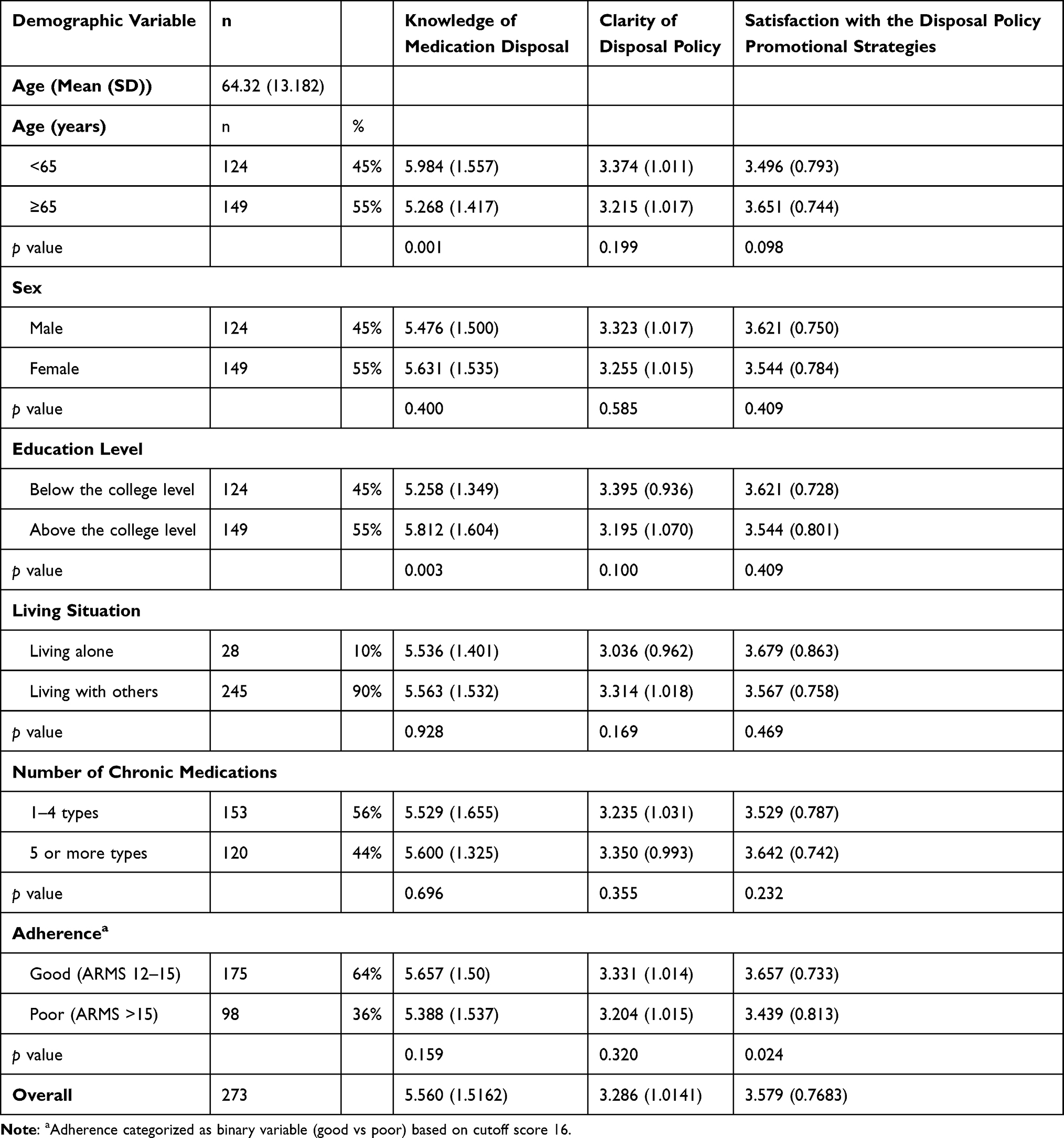 |
Table 1 Patient Characteristics by Disposal Competence and Policy Clarity and Satisfaction |
The medication disposal survey results indicated that patients younger than 65 years had higher competence than did those aged 65 years and older (5.984 vs 5.268, p = 0.001). In addition, participants with a college degree or higher demonstrated greater competence in medication disposal than did those with a lower education level (5.812 vs 5.258, p = 0.003). Both adherence groups exhibited insufficient knowledge of proper medication disposal; however, the participants with good adherence reported higher satisfaction with the disposal policy promotional strategies (3.657 vs 3.439, p = 0.024). No significant differences in disposal knowledge were observed with respect to living situation or the number of chronic medications used. Detailed information is presented in Table 1. For specific disposal items, the correct response rate was highest for needles and syringes (187 in 273, 68.5%) and lowest for general expired medications (109 in 273, 39.9%), which could be discarded through household waste disposal.
In the analysis of medication adherence, an ARMS score of 16 was used as the cutoff for poor adherence. The results indicated that older age (≥65 vs <65 years, 14.792 vs 16.325, p = 0.001), lower education level (low vs high, 14.879 vs 16.040, p = 0.009), living alone (alone vs with others, 14.036 vs 15.682, p < 0.001), and taking more medications (≥5 vs <5, 14.792 vs 16.078, p = 0.004) significantly affected medication adherence. Detailed information is provided in Table 2.
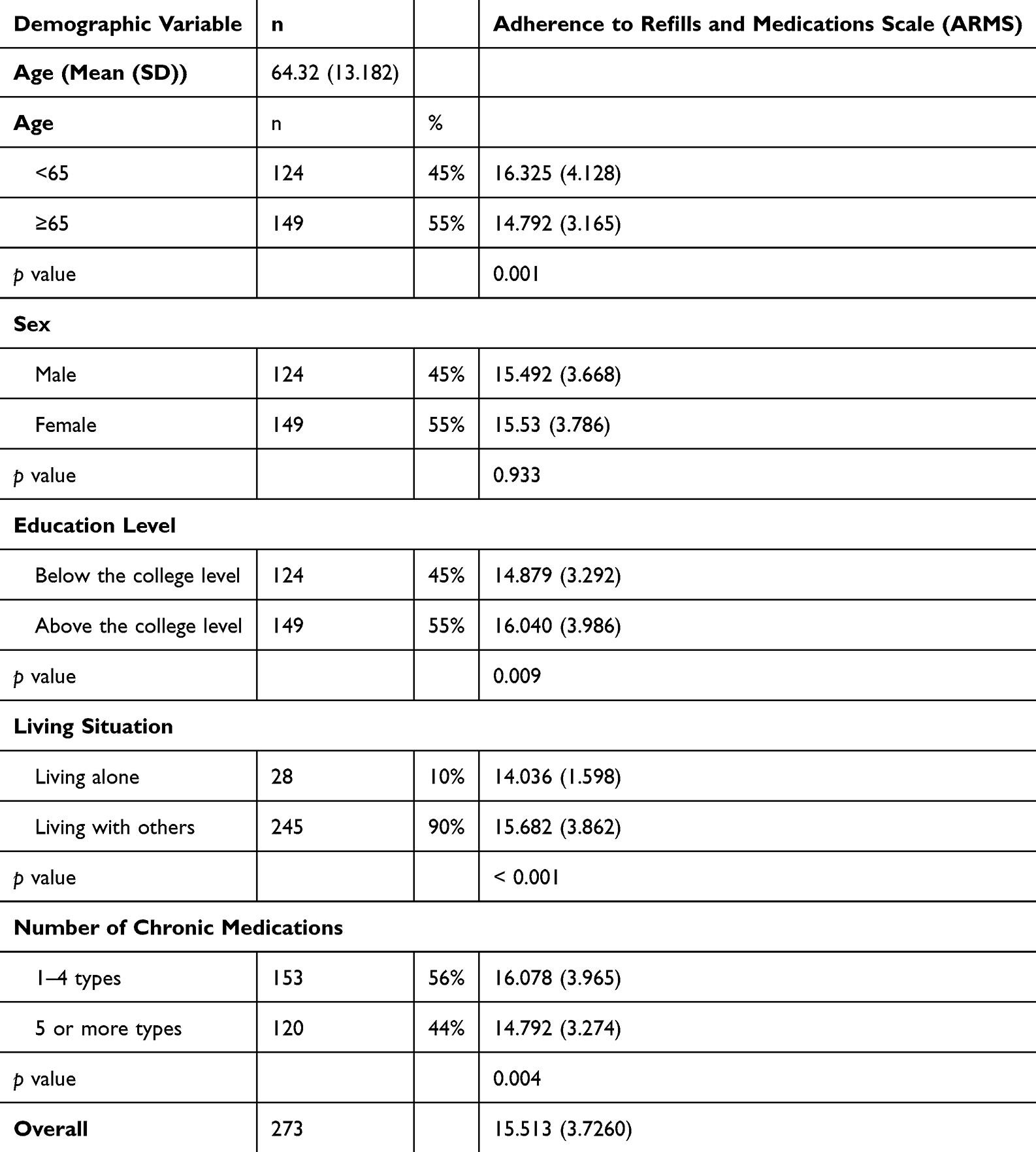 |
Table 2 Patient Characteristics by Medication Adherence |
Correlation analysis revealed no significant relationship between the knowledge of medication disposal and medication adherence. Detailed information is presented in Table 3.
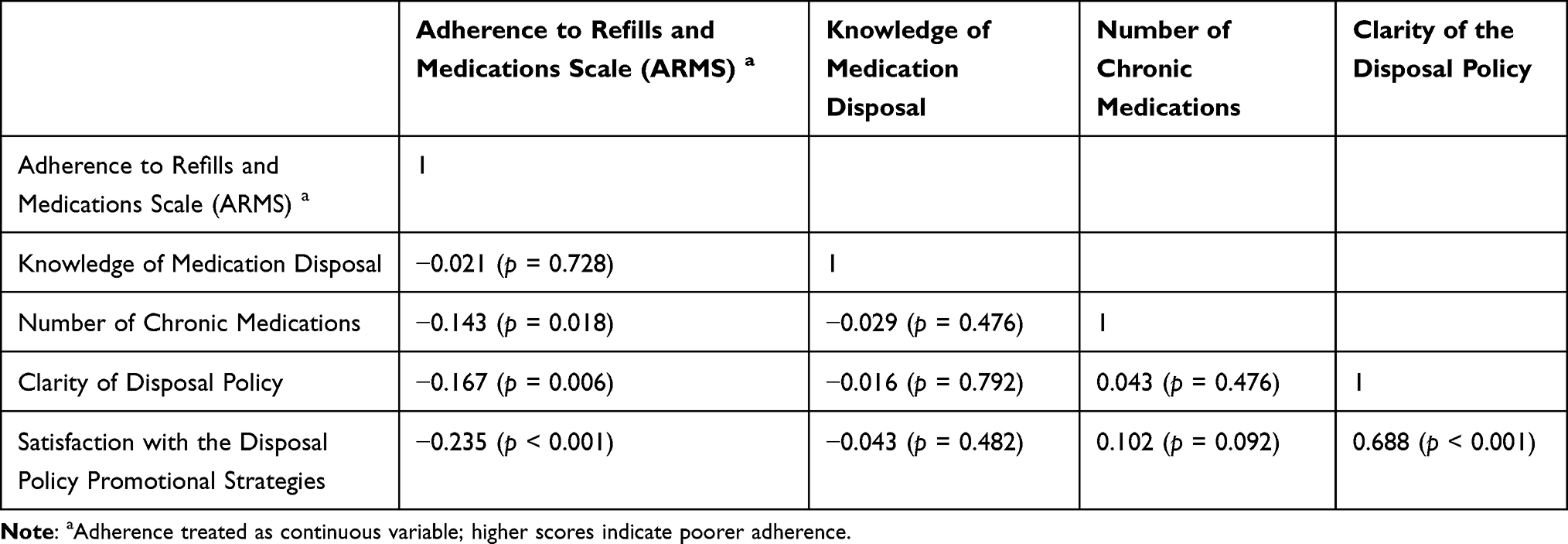 |
Table 3 Correlations of Disposal Knowledge, ARMS, Medication Count, Policy Clarity, and Satisfaction |
In the survey on medication disposal promotion, most respondents (247, 90.48%) were unaware of the recycling label on their medication bags, and 140 (51.28%) knew the location of hospital recycling stations. Further analysis revealed no significant differences in the knowledge of medication disposal, ARMS total score, or clarity in the disposal policy between those aware and unaware of the recycling label. However, respondents who recognized the label reported higher satisfaction with the disposal policy promotional strategies (3.846 vs 3.551, p = 0.029). Patients who knew the location of recycling stations had significantly higher scores for knowledge of medication disposal (5.800 vs 5.326, p = 0.01), clarity in disposal policy (3.529 vs 3.023, p < 0.001), and satisfaction with the disposal policy promotional strategies (3.679 vs 3.470, p = 0.025). Detailed information is provided in Table 4. In addition, demographic factors such as age, sex, education level, living situation, and the number of medications did not lead to significant differences in clarity in the disposal policy or satisfaction with the disposal policy promotional strategies. Detailed information is presented in Table 1.
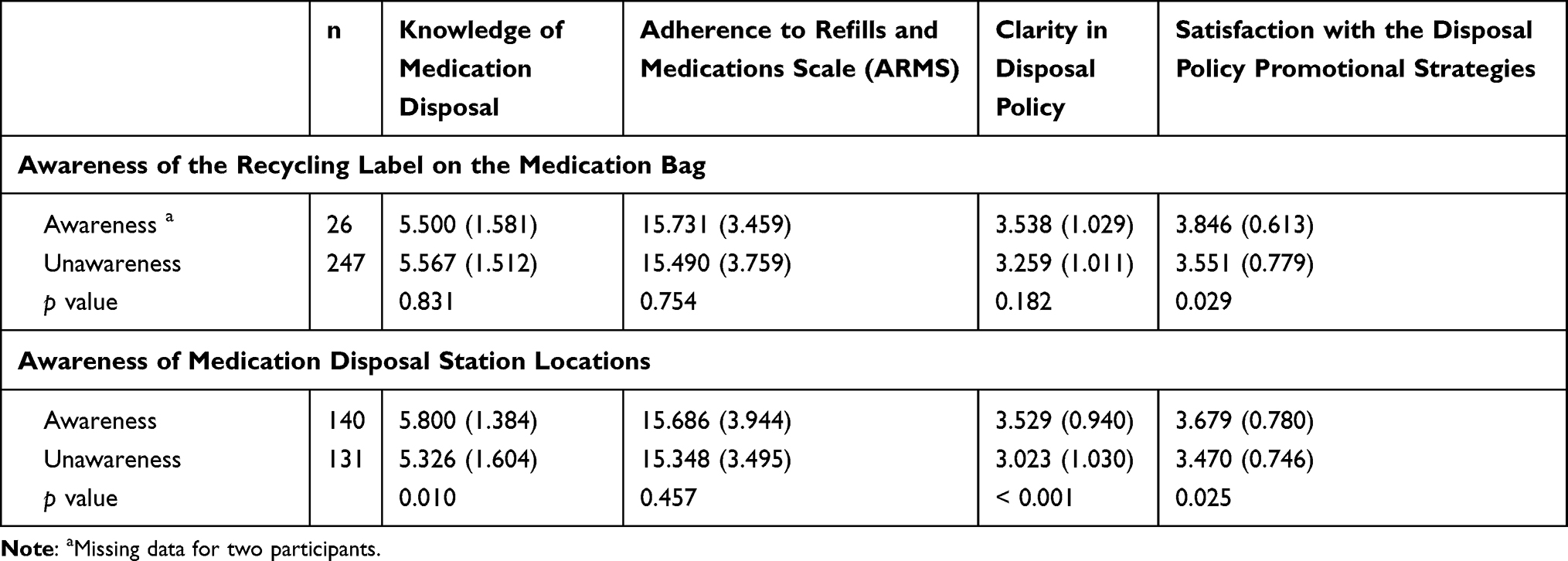 |
Table 4 Associations between awareness of medication disposal information and medication disposal knowledge, adherence, and perceptions of disposal policy |
The ARMS score was significantly negatively correlated with the number of medications (r = −0.143, p = 0.018), clarity in disposal policy promotion (r = −0.167, p = 0.006), and satisfaction with the disposal policy promotional strategies (r = −0.235, p < 0.001). These results indicate that patients taking more medications, perceiving greater clarity in policy, and reporting higher satisfaction with the disposal policy promotional strategies had weak positive impact on medication adherence. In addition, clarity in disposal policy was significantly positively correlated with satisfaction with the disposal policy promotional strategies (r = 0.688, p < 0.001), indicating that increased clarity was associated with greater patient satisfaction. Detailed information is provided in Table 3.
Discussion
Knowledge of Medication Disposal
The results of the present study revealed an average medication disposal competence score of 5.56 among participants. Participants younger than 65 years and those with higher education levels had significantly better medication disposal competence. This age-related effect on disposal competence is consistent with the findings of a 2017 study conducted in Taiwan, where Wang et al observed that individuals aged over 71 years had lower competence in medication disposal.22 A 2011 survey performed in Taiwan that examined the public’s handling of unused medications at home indicated that most individuals disposed of them improperly. Although 69.3% of respondents supported returning unused medications to medical institutions or community pharmacies, 30.2% admitted that they did not follow this practice. Only 7.1% reported using designated collection stations, whereas most either discarded medications as regular waste or stored them at home.23 These findings indicate that only a small proportion of the public engaged in proper medication disposal at the time. Although the present study did not directly examine disposal behaviors, it evaluated public awareness of medication disposal practices following policy changes in Taiwan.
Although efforts to promote medication recycling programs have advanced in Taiwan, public competence in proper medication disposal still requires improvement. Educational outreach efforts must be strengthened, particularly for older adults and individuals with lower education levels. Expanding recycling education can enhance medication disposal competence, increase awareness of the environmental effects of medication waste, and ultimately reduce the negative effects of improper disposal on environmental and public health.9–11
Medication Adherence
In the present study, the ARMS score of participants was 15.513. Overall, 64.1% of the participants had good medication adherence, a rate slightly higher than that reported in previous studies on medication adherence in Taiwan.2–4 This improvement may reflect increased health literacy over time leading to better medication-taking behaviors.
Studies investigating the effect of personal characteristics, such as age, on medication adherence have reported inconsistent findings. The present study determined that patients younger than 65 years had poorer medication adherence, whereas Xie et al (2020) reported no significant association between medication adherence and factors such as sex, age, or living situation. However, their findings demonstrated that patients with a better perceived health status were more likely to adhere to their medication regimen, indicating that self-assessed health plays a critical role in adherence.24 By contrast, West et al (2020) reported that younger participants (under 65 years) had more unused medications than older participants did, potentially indicating poorer adherence.5 Our study demonstrated that patients with higher education levels exhibited lower medication adherence, a result consistent the findings of West et al, who identified a significant association between higher education (particularly among younger and employed individuals) and both poor medication adherence and increased medication waste. This trend may be attributed to the higher prevalence of chronic conditions among older adults, who often require consistent medication management and may have a better understanding of medication use, and increase their perceived health status leading to decreased wastage in this population.5 Research on the relationship between patient characteristics and medication adherence remains inconclusive, with discrepancies likely arising from variations in sample populations, backgrounds, and study designs. Future studies should investigate the effects of these demographic factors to develop more effective interventions for improving adherence in different groups.
Knowledge of Medication Disposal and Medication Adherence
The present study examined the relationship between knowledge of medication disposal and medication adherence. Although no significant correlation was observed, the results align with a 2020 study conducted in Malta.5 Nonadherence is a major contributor to medication wastage18,25 because individuals who do not follow prescribed regimens tend to accumulate unused medications. When combined with limited disposal knowledge, this may exacerbate environmental harm. A study in Florida indicated that mismanagement of medical products, including improper medication nonadherence, safety, storage, and disposal, can significantly affect the quality of life of community-dwelling older adults with chronic diseases.26 Thus, in addition to reducing medication waste and its environmental impact, adherence is crucial in disease management and affects overall quality of life.
Findings from the Malta study and the present study suggest that improving medication disposal competence should be integrated with diversified strategies to enhance both adherence and disposal behaviors. Previous research has shown that health literacy promotion can increase adherence while also reducing medication waste.18 Employing a multi-strategy approach can help minimize unsafe disposal practices and associated health and environmental risks.
Although medication adherence and disposal knowledge are distinct behaviors, they both contribute to the accumulation and management of unused medications. Nonadherence increases the likelihood of stockpiling, whereas limited disposal knowledge affects how these medications are ultimately discarded. Examining both behaviors together thus provides a more comprehensive understanding of the upstream factors influencing medication waste and safe medication practices, which is consistent with the objectives of this study.
Interestingly, this study revealed contrasting patterns between medication disposal knowledge and medication adherence. Younger adults and those with higher education had better disposal knowledge, likely reflecting greater health literacy and better access to information. In contrast, adherence was higher among older adults and individuals with lower education, possibly due to longer disease experience, stronger medication routines, and caregiver support. These findings suggest that disposal knowledge and adherence are shaped by different determinants—knowledge by educational and cognitive factors, and adherence by behavioral habits and clinical engagement—highlighting the need for tailored interventions for different patient groups.
Clarity of the Disposal Policy and Satisfaction with the Disposal Policy Promotional Strategies and Knowledge of Medication Disposal
The results of the present study indicate a correlation between the promotion of disposal policies and knowledge of medication disposal. In this study, patients who knew the location of disposal stations had significantly higher disposal knowledge, suggesting that specific and practical information enhances patients’ ability to adopt proper disposal behaviors. A 2017 survey in Hsinchu County, Taiwan, recommended labeling medication bags to indicate whether a drug should be taken to a disposal station.22 In addition, Taipei City Hospital introduced a new medication bag in 2018 with labels specifying disposal methods, indicating which medications required disposal at a medical facility. However, fewer than 10% of the respondents were aware of these labels, suggesting that the design has not achieved its intended effect. In contrast to relying on symbols on medication bags, providing actionable information, such as specifying the location of disposal stations, may be more effective in guiding patients toward proper disposal practices.
Study Limitations
This study used a well-structured design; however, several limitations must be considered. First, its cross-sectional design limits the ability to assess causal relationships, which only allowed for correlation analysis. Second, the sample was drawn from a single hospital, which may limit the generalizability of the findings. In addition, the small sample sizes of certain subgroups, including participants living alone and those aware of recycling labels, may have limited the statistical power of subgroup comparisons. Therefore, these results should be interpreted with caution, and future studies should consider stratified sampling or targeted recruitment to ensure adequate representation of key subpopulations.
Selection bias is another concern, as participants who agreed to complete the survey may have had a higher level of interest in or awareness of the topic, potentially affecting the objectivity of the responses. Moreover, the use of the ARMS to measure medication adherence may have introduced social desirability bias, potentially leading to an overestimation of adherence levels. This study did not differentiate between types of chronic diseases, which can affect both medication disposal knowledge and adherence,27 potentially masking disease-specific differences. Although the ARMS is designed to assess medication adherence rather than disposal behavior, it was included to explore potential behavioral correlates of disposal knowledge and clarity of disposal policy clarity; however, this may limit the precision of behavioral inferences regarding disposal practices.
Finally, the study was designed as a practical, context-specific investigation aimed at understanding current patterns of medication adherence and disposal behavior in Taiwan. As such, its contribution is primarily applied and policy-oriented, and the study offers limited advancement of theoretical frameworks.
Study Strengths
This study addressed a gap in the literature regarding medication disposal competence in Taiwan and its correlation with medication adherence. A rigorous questionnaire survey was conducted that involved patients from diverse age groups and educational backgrounds, enabling a comprehensive assessment of knowledge levels across different demographics. In addition, by analyzing the relationship between clarity of disposal policy and satisfaction with promotional efforts and medication adherence, this study provides valuable insights for improving future promotion strategies.
Future Recommendations
A 2024 systematic review on global medicine take-back programs identified key factors for success, including accessibility, clear policies, and conveniently located collection sites.28 Incorporating policy and disposal location information into educational materials is essential for improving public awareness. Based on current findings, outreach efforts should prioritize older adults and individuals with lower education levels by providing simple, easy-to-follow disposal guidelines. Moreover, recycling labels on medication bags should be made more prominent, with clear instructions distinguishing medications that must be returned to disposal stations from those that can be safely discarded at home, improving patient recognition and compliance. In Taiwanese hospitals, where most outpatients wait at pharmacies or cashier counters, multimedia displays can be used to promote disposal education. Digital tools, such as mobile app notifications, could further reinforce proper disposal practices.29 These strategies would not only improve medication disposal competence but also reduce medication waste and mitigate the environmental impact of improper disposal, ultimately enhancing public health and safety. This study did not collect detailed information on the specific types of unused medications held by participants. As the disposal policy targets five environmentally hazardous categories, future research should include itemized medication inventories to assess compliance and environmental risk more accurately.
Conclusion
Although this study did not identify a significant correlation between medication disposal competence and medication adherence, enhancing both remains essential for improving medication safety and reducing environmental impact. Pharmacists play a critical role in strengthening public knowledge of medication disposal and adherence by actively promoting patient education, and providing clear guidance on proper disposal and medication use. Integrating pharmacists’ educational efforts with policy support is crucial to developing comprehensive interventions that improve both disposal competence and adherence in the future.
Data Sharing Statement
Due to privacy and ethical restrictions, the data are not publicly available but may be shared by the corresponding author Li-Hsuan Wang (email: [email protected]) upon reasonable request and subject to ethical approval where required.
Ethics Approval
This study was reviewed and approved by the Institutional Review Board of Taipei City Hospital (Approval no. TCHIRB-11011012-E), with approval granted on Dec 03, 2021. This study was conducted in accordance with the principles of the Declaration of Helsinki. Written informed consent was obtained from all participants before enrollment.
Acknowledgments
The authors express their gratitude to the participants and pharmacists in the Department of Pharmacy, Taipei Medical University Hospital, and the Department of Pharmacy, Taipei City Hospital–Yangming Branch, Taipei, Taiwan. We also thank Kuan Yang Chen and Yi Chun Chiu for their support in conducting this study. In addition, we extend our appreciation to the anonymous reviewers whose feedback considerably enhanced our analysis and writing.
Author Contributions
Su-Han Hsu and Shu-Chuan Wu contributed equally and are recognized as co-first authors. All authors made a significant contribution to the work reported, whether that is in the conception, study design, execution, acquisition of data, analysis and interpretation, or in all these areas; took part in drafting, revising or critically reviewing the article; gave final approval of the version to be published; have agreed on the journal to which the article has been submitted; and agree to be accountable for all aspects of the work.
Funding
This study was supported by the Department of Health, Taipei City Government [11401-62-019]. The funder had no role in the design of the study, data collection, analysis, data interpretation, or manuscript preparation.
Disclosure
The authors report no conflicts of interests in this work.
References
1. Sabaté E. Adherence to Long-Term Therapies: Evidence for Action. World Health Organization; 2003.
2. Li YC, Huang WL. Effects of adherence to statin therapy on health care outcomes and utilizations in Taiwan: a population-based study. Biomed Res Int. 2015;2015(1):149573. doi:10.1155/2015/149573
3. Lin YP, Huang YH, Yang YC, Wu JS, Chang CJ, Lu FH. Adherence to antihypertensive medications among the elderly: a community-based survey in Tainan City, Southern Taiwan. Taiwan Geriatr Gerontol. 2007;2(3):176–189.
4. Yeh MY, Sung SC, Yorker BC, Sun CC, Kuo YL. Predictors of adherence to an antidepressant medication regimen among patients diagnosed with depression in Taiwan. Issues Ment Health Nurs. 2008;29(7):701–717. doi:10.1080/01612840802129038
5. West LM, Stewart D, Cordina M. Mixed-methods approach to determine adherence, knowledge and behavioral determinants associated with medication wastage. Res Soc Administrative Pharm. 2020;16(5):654–662. doi:10.1016/j.sapharm.2019.08.003
6. West LM, Diack L, Cordina M, Stewart D. A cross-sectional survey of the Maltese general public on medication wastage. Int J Clin Pharm. 2016;38(2):261–270. doi:10.1007/s11096-015-0233-x
7. Azmi Hassali M, Shakeel S. Unused and expired medications disposal practices among the general public in Selangor, Malaysia. Pharmacy. 2020;8(4):196. doi:10.3390/pharmacy8040196
8. Chen IC, Chiang YM, Chen LC. Investigation of the disposal of expired and unused medicines in households in Taipei. Taiwan J Public Health. 2012;31(3):228–235.
9. Huang WT, Hou LA. An antibacterial battle: the cabinet in disarray. United Daily News. Available from: https://udn.com/news/story/7266/8276872.
10. Wang Y, Dong X, Zang J, et al. Antibiotic residues of drinking-water and its human exposure risk assessment in rural Eastern China. Water Res. 2023;236:119940. doi:10.1016/j.watres.2023.119940
11. Abosse JS, Megersa B, Zewge F, Eregno FE. Healthcare waste management and antimicrobial resistance: a critical review. J Water Health. 2024;22(11):2076–2093. doi:10.2166/wh.2024.232
12. Al-Shareef F, El-Asrar SA, Al-Bakr L, et al. Investigating the disposal of expired and unused medication in Riyadh, Saudi Arabia: a cross-sectional study. Int J Clin Pharm. 2016;38(4):822–828. doi:10.1007/s11096-016-0287-4
13. Bashaar M, Thawani V, Hassali MA, Saleem F. Disposal practices of unused and expired pharmaceuticals among general public in Kabul. BMC Public Health. 2017;17(1):1–8. doi:10.1186/s12889-016-3975-z
14. Taipei City Department of Health. Household pharmaceutical and needle disposal collection zone. Taipei City department of health. Available from: http://www.tpa.org.tw/FamilyDrugsInspection/index.htm#station-section.
15. Lin WC. Medication Appropriateness (Therapeutic Duplications) of BNHI Outpatient Prescriptions [Master′s thesis]. National Taiwan University; 2009.
16. Huang HH, Shen MJ, Liu HS. Comprehensive Review of National Health Insurance. Wu-Nan Book Inc.; 2012.
17. Lee TS, Chang JM, Tseng CT, Chen LC. 2018 medication disposal improvement and promotion outcomes at a regional teaching hospital. presented at: Taiwan society of health-system pharmacists (TSHP); 2019.
18. West LM, Borg Theuma R, Cordina M. Health locus of control: its relationship with medication adherence and medication wastage. Res Soc Administrative Pharm. 2018;14(11):1015–1019. doi:10.1016/j.sapharm.2017.12.003
19. Kripalani S, Risser J, Gatti ME, Jacobson TA. Development and evaluation of the adherence to refills and medications scale (ARMS) among low-literacy patients with chronic disease. Value Health. 2009;12(1):118–123. doi:10.1111/j.1524-4733.2008.00400.x
20. Lomper K, Chabowski M, Chudiak A, Bialoszewski A, Dudek K, Jankowska-Polanska B. Psychometric evaluation of the Polish version of the adherence to refills and medications scale (ARMS) in adults with hypertension. Patient Prefer Adherence. 2018;12:2661–2670. doi:10.2147/PPA.S185305
21. Alammari G, Alhazzani H, AlRajhi N, et al. Validation of an Arabic version of the adherence to refills and medications scale (ARMS). Healthcare. 2021;9(11):1430. doi:10.3390/healthcare9111430
22. Wang TC, Lee PY, Lu HL, Wang HJ, Hsu KC. Behavior and item survey of disposed medicines in Hsinchu, Taiwan. Taiwan J Public Health. 2017;36(1):87. doi:10.6288/TJPH201736105111
23. Hsieh YH, Hsu CS, Chen WC, Tai FM, Yuan C. Investigating the cognition and dealing with the unused drugs at home for the public. J Taiwan Pharm. 2011;27(3):147–152.
24. Xie Z, Liu K, Or C, Chen J, Yan M, Wang H. An examination of the socio-demographic correlates of patient adherence to self-management behaviors and the mediating roles of health attitudes and self-efficacy among patients with coexisting type 2 diabetes and hypertension. BMC Public Health. 2020;20(1):1227. doi:10.1186/s12889-020-09274-4
25. Shrank WH. Our bulging medicine cabinets--the other side of medication nonadherence. N Engl J Med. 2011;364(17):1591–1593. doi:10.1056/NEJMp1011624
26. Benoit ML. Medication adherence and safety program for community-dwelling seniors with chronic conditions. J Dr Nurs Pract. 2016;9(2):170–176. doi:10.1891/2380-9418.9.2.170
27. Briesacher BA, Andrade SE, Fouayzi H, Chan KA. Comparison of drug adherence rates among patients with seven different medical conditions. Pharmacotherapy. 2008;28(4):437–443. doi:10.1592/phco.28.4.437
28. Wang LS, Aziz Z, Wang ES, Chik Z. Unused medicine take-back programmes: a systematic review. J Pharm Policy Pract. 2024;17(1):2395535. doi:10.1080/20523211.2024.2395535
29. Ciciriello S, Johnston RV, Osborne RH, et al. Multimedia educational interventions for consumers about prescribed and over-the-counter medications. Cochrane Database Syst Rev. 2013;2013(4):CD008416. doi:10.1002/14651858.CD008416.pub2
 © 2025 The Author(s). This work is published and licensed by Dove Medical Press Limited. The
full terms of this license are available at https://www.dovepress.com/terms
and incorporate the Creative Commons Attribution
- Non Commercial (unported, 4.0) License.
By accessing the work you hereby accept the Terms. Non-commercial uses of the work are permitted
without any further permission from Dove Medical Press Limited, provided the work is properly
attributed. For permission for commercial use of this work, please see paragraphs 4.2 and 5 of our Terms.
© 2025 The Author(s). This work is published and licensed by Dove Medical Press Limited. The
full terms of this license are available at https://www.dovepress.com/terms
and incorporate the Creative Commons Attribution
- Non Commercial (unported, 4.0) License.
By accessing the work you hereby accept the Terms. Non-commercial uses of the work are permitted
without any further permission from Dove Medical Press Limited, provided the work is properly
attributed. For permission for commercial use of this work, please see paragraphs 4.2 and 5 of our Terms.