
Back to Journals » Journal of Multidisciplinary Healthcare » Volume 19
Mapping Psychosocial Interventions for Mental Health and Well-Being Among Pregnant Women Living with HIV: A Scoping Review
Authors Witdiawati W, Ibrahim K  , Juniarti N , Purnama D, Songwathana P
Received 12 March 2026
Accepted for publication 16 June 2026
Published 9 July 2026 Volume 2026:19 608819
DOI https://doi.org/10.2147/JMDH.S608819
Checked for plagiarism Yes
Review by Single anonymous peer review
Peer reviewer comments 2
Editor who approved publication: Professor Charles V Pollack
Witdiawati Witdiawati,1,2 Kusman Ibrahim,3 Neti Juniarti,2 Dadang Purnama,2 Praneed Songwathana4
1Doctoral Program in Medicine, Faculty of Medicine, Universitas Padjadjaran, Sumedang, Jawa Barat, 45363, Indonesia; 2Department of Community Nursing, Faculty of Nursing, Universitas Padjadjaran, Sumedang, Jawa Barat, 45363, Indonesia; 3Department of Medical-Surgical Nursing, Faculty of Nursing, Universitas Padjadjaran, Sumedang, Jawa Barat, 45363, Indonesia; 4Research and Innovation Center for Well-Being and Continuing Care, Faculty of Nursing, Prince of Songkla University, Hatyai, Songkhla, Thailand
Correspondence: Witdiawati Witdiawati, Department of Community Nursing, Faculty of Nursing, Universitas Padjadjaran, Sumedang, Jawa Barat, Indonesia, Tel +6282121013946, Email [email protected]
Background: Pregnant women living with HIV are at increased risk of depression, anxiety, stigma, gender-based violence, and poor engagement in prevention of mother-to-child transmission services. Psychosocial interventions are increasingly used to complement routine maternal and HIV care, yet evidence remains fragmented across intervention types, settings, and outcomes.
Objective: This scoping review aimed to map psychosocial interventions designed to improve mental health and well-being among pregnant women living with HIV.
Methods: This scoping review followed the Arksey and O’Malley framework, refined by Levac et al, and was reported according to the PRISMA-ScR guideline. PubMed, Scopus, and CINAHL were searched for English-language experimental and quasi-experimental studies published from January 2010 to March 2025. Eligible studies focused on non-pharmacological psychosocial interventions for pregnant or perinatal women living with HIV. Data were extracted using a standardized form and synthesized narratively.
Results: Fourteen studies met the inclusion criteria. Interventions included problem-solving therapy, cognitive-behavioral approaches, peer-mentor and structured support groups, empowerment-based interventions for gender-based violence, community-based counseling, and integrated maternal mental health–parenting programs. Many interventions used task-shifting, peer or lay providers, culturally adapted content, and delivery through clinics, home visits, groups, telephone support, or hybrid formats. Reported benefits included reduced depressive symptoms, improved coping, self-efficacy, disclosure, social support, ART retention, viral suppression, and selected infant growth outcomes. However, findings varied across studies, and some benefits declined over longer follow-up.
Conclusion: Psychosocial interventions show promise for improving mental health, well-being, and HIV care engagement among pregnant women living with HIV. The evidence supports integrating culturally adapted psychosocial support into antenatal and PMTCT services, particularly alongside mental health screening during routine maternal care. Future studies should use stronger designs, longer follow-up, implementation evaluation, and context-sensitive approaches involving partners and families where safe and appropriate.
Keywords: antiretroviral therapy, cultural adaptation, human immunodeficiency virus, pregnant women, psychosocial intervention
Introductions
HIV remains a major global public health concern. According to UNAIDS, an estimated 40.8 million people were living with HIV globally in 2024, including 39.4 million adults and 1.4 million children; women and girls accounted for approximately 53% of all people living with HIV.1 Despite progress in expanding access to antiretroviral therapy, disparities in HIV control outcomes remain evident across countries and population groups, particularly in low- and middle-income countries.2
Pregnant women living with HIV face intersecting biological, psychological, and social challenges that extend beyond biomedical HIV management. These challenges include maintaining antiretroviral therapy during pregnancy, concerns about vertical transmission, HIV-related stigma, disclosure difficulties, depressive and anxiety symptoms, limited partner or family support, gender-based violence, and socioeconomic vulnerability. Evidence from low- and middle-income settings further shows that HIV can generate substantial psychological and social consequences for women and their families, including emotional distress, stigma, relationship disruption, and reduced social support.3 These multidimensional challenges highlight the need for psychosocial interventions that address not only mental health symptoms, but also coping, disclosure, safety, social support, and sustained engagement in maternal HIV care.4 While programs to prevent mother-to-child transmission of HIV have expanded globally, gaps remain in early diagnosis, continuity of care, and consistent engagement of pregnant women in health services.5
Mental health problems are also highly prevalent among pregnant and perinatal women living with HIV. A study among pregnant women living with HIV in Tanzania found that 25.0% screened positive for depression, 23.5% for anxiety, and 17.8% for comorbid depression and anxiety.6 Similarly, research among perinatal women living with HIV in Nigeria reported high levels of psychological burden, with 69.0% reporting depressive symptoms, 78.0% reporting perceived stress, and 15.2% experiencing comorbid depression and stress.7 Meta-analytic evidence also suggests that women living with HIV have higher odds of antenatal and postnatal depressive symptoms compared with women without HIV, with postnatal depressive symptoms reported in approximately 21% of HIV-positive women.8 These findings highlight the urgency of integrating mental health assessment and psychosocial support into routine antenatal, PMTCT, and HIV care services.
Pregnancy is a critical period in the HIV care journey. In addition to the physical and medical demands of pregnancy, pregnant women living with HIV often experience increased psychological stress, such as fear of transmission to the fetus, anxiety about the baby’s health, dilemmas related to disclosing HIV status to partners and family, and stigma experienced in social settings and health care facilities.9 Several studies have shown that the prevalence of depression and anxiety during the antenatal and postnatal periods is higher in pregnant women living with HIV compared to pregnant women without HIV.10,11 This directly impacts maternal well-being, adherence to antiretroviral therapy, and ongoing engagement in services for preventing mother-to-child transmission of HIV.12
The success of antiretroviral therapy and services for preventing mother-to-child transmission of HIV is not only determined by the availability of drugs but is also strongly influenced by psychosocial factors. HIV-related stigma, limited social support, gender-based violence, poverty, and unequal power relations within families and communities can hinder access to and continuity of care.13 In many contexts, pregnant women living with HIV face multiple stigmas, both as women living with HIV and as pregnant women, which can reduce motivation to access health services and worsen mental health outcomes.14 Limited integration of mental health services into maternal care and a shortage of trained health workers further exacerbate these challenges, particularly in resource-limited settings.15
Over the past two decades, various psychosocial interventions have been developed and implemented as adjuncts to antiretroviral therapy to support the mental health and well-being of pregnant women living with HIV. These interventions include individual and group counseling, peer support through maternal mentor programs, problem-solving approaches and cognitive behavioral therapy, community-based interventions, and the use of digital technologies such as mobile-based health services.16–18 The primary goals of these interventions are to reduce symptoms of depression and anxiety, increase coping skills and psychological resilience, reduce stigma, and strengthen social support, ultimately leading to increased engagement in health services and adherence to therapy.
Although several literature reviews have addressed psychosocial interventions for people living with HIV in general or mental health interventions in the perinatal period, most have focused on specific clinical or behavioral outcomes, such as treatment adherence or prevention of infant transmission.19–21 To date, few reviews have specifically mapped the types, characteristics, and outcomes of psychosocial interventions aimed at improving the mental health and well-being of pregnant women living with HIV. Furthermore, limited geographic focus, varying study designs, and the emergence of new interventions and pilot studies highlight the need for a more comprehensive and up-to-date evidence mapping.
Based on these gaps, a scoping review is needed to systematically map the various psychosocial interventions that have been developed and implemented for pregnant women living with HIV. This review aims to identify the types of interventions, the contexts of implementation, and the reported mental health and well-being outcomes, while also highlighting areas that remain under-researched. The results of this scoping review are expected to provide a strong foundation for future intervention development, research prioritization, and the more comprehensive integration of psychosocial support into maternal HIV care services.
Method
Study Design
This study employed a scoping review design based on the Arksey and O’Malley framework developed in 2005 and further refined by Levac et al22,23 The scoping review approach was chosen because the purpose of this study was to comprehensively map the types, characteristics, and outcomes of psychosocial interventions aimed at improving mental health and well-being in pregnant women living with HIV, and to identify evidence gaps in the existing literature. This approach was deemed most appropriate given the diversity of study designs, intervention types, implementation contexts, and reported outcomes, which precluded meaningful quantitative synthesis through meta-analysis.
The reporting of this review followed the Preferred Reporting Items for Systematic Reviews and Meta-Analyses Extension for Scoping Reviews (PRISMA-ScR). Consistent with the purpose of a scoping review, no formal study-level methodological quality appraisal or risk-of-bias assessment was conducted, because the aim was to map the scope, characteristics, and outcomes of the available evidence rather than to estimate intervention effectiveness. The review process involved five stages: identifying the research question, identifying relevant studies, selecting eligible studies, charting the data, and collating, summarizing, and reporting the results narratively.
Search Strategy and Eligibility Criteria
A systematic literature search was conducted in PubMed, Scopus, and CINAHL, with the final search completed on March 31, 2025. These databases were selected because of their relevance to public health, nursing, maternal health, HIV care, and mental health intervention research. All retrieved records were imported into Rayyan for reference management, duplicate removal, and screening.
The search strategy was developed by combining keywords and Medical Subject Headings terms using Boolean operators. To maximize search sensitivity and minimize missing relevant articles, a two-tier strategy was used. The first tier encompassed the key concepts of HIV, pregnancy, and intervention, while the second tier encompassed psychosocial and mental health concepts, applied more flexibly to title, abstract, and full-text screening. Keywords included HIV (human immunodeficiency virus) combined with the terms pregnant women, pregnancy, antenatal, or perinatal, and psychosocial intervention, counseling, peer support, mental health, well-being, depression, or anxiety. Study design filters were not strictly applied during the search to avoid missing studies with variable design labeling.
Two researchers independently screened titles and abstracts, followed by full-text review of articles meeting the initial criteria. Disagreements were resolved through discussion and, if necessary, the involvement of a third researcher. A PRISMA flowchart was used to illustrate the study selection process and the reasons for exclusion during the full-text review stage.
Inclusion and Exclusion Criteria
Study eligibility criteria were established based on the Population Concept Context framework. The population in this review was pregnant women living with HIV, both in the antenatal and perinatal periods, without restrictions on age or geographic location. The concept examined was psychosocial interventions, defined as non-pharmacological interventions aimed at improving mental health and well-being, including individual or group counseling, peer support, cognitive-behavioral approaches, problem-solving, community-based interventions, and technology-based interventions with a psychosocial component. Contexts included health services, antenatal facilities, communities, or a combination of both in various countries.
Eligible studies were original experimental or quasi-experimental studies, including randomized controlled trials, cluster randomized trials, pilot randomized trials, and quasi-experimental studies, published in English between January 1, 2010, and March 31, 2025. Studies were included if they involved pregnant or perinatal women living with HIV and evaluated a non-pharmacological psychosocial intervention targeting mental health, well-being, coping, social support, stigma, or related maternal and HIV care outcomes.
Exclusion criteria included studies that focused solely on pharmacological interventions without a psychosocial component, articles that were editorials, commentaries, literature reviews, conference reports, or abstracts only, and studies with populations that did not specifically include pregnant women living with HIV.
Data Extraction
Data extraction was conducted using a previously developed and piloted standardized form. Extracted data included citation information, year and country of publication, study design, population characteristics and sample size, a description of the intervention including its theoretical basis, key components, delivery method, duration and intensity of the intervention, intervention provider, implementation context, comparison group, if available, and reported mental health and well-being outcomes and timing of measurement. Additionally, information related to implementation aspects such as acceptability, feasibility, and participant engagement was recorded where available.
Two researchers performed data extraction independently, with an initial calibration process on a small subset of articles to ensure consistency. Discrepancies were resolved through joint discussion and clarification.
Data Synthesis
Data synthesis was conducted descriptively and thematically using a reflexive thematic analysis approach. Extracted data were analyzed through a process of familiarization, initial coding, grouping codes into subthemes, and mapping them into main themes representing the types and characteristics of psychosocial interventions. Results are presented as a structured narrative synthesis, grouping studies by intervention type, implementation context, delivery approach, and mental health and well-being outcome domains. This approach allows for a comprehensive mapping of the existing intervention landscape and identification of areas with limited research evidence.
Results
Study Selection
A systematic search of PubMed, Scopus, and CINAHL identified 1000 records. After removing 184 duplicate records, 816 unique records remained. These 816 records were then assessed against the predefined inclusion criteria at the database level, focusing on population, concept, context, study design, publication year, and language. At this stage, 704 records were excluded because they did not involve pregnant women living with HIV, did not include a psychosocial intervention component, or were not primary empirical research. A total of 112 records proceeded to the title and abstract screening stage.
Titles and abstracts of these 112 records were screened for relevance to psychosocial interventions targeting mental health and well-being among pregnant women living with HIV. 88 records were excluded because they did not focus on the target population, did not evaluate a psychosocial intervention, or did not report mental health or related well-being outcomes. The remaining 24 articles were retrieved for full text review. During the full text assessment, the same inclusion criteria were applied in detail, with additional checks on intervention content, outcome reporting, and methodological clarity. 10 articles were excluded because they did not specifically target pregnant women living with HIV, did not include a psychosocial component, or did not provide sufficient information on mental health or well-being outcomes. Ultimately, 14 studies met all inclusion criteria and were included in this scoping review. The study selection process is summarized in the PRISMA flow diagram (Figure 1), and the main characteristics of the included studies are presented in Table 1.
 |
Figure 1 PRISMA Flow Diagram.24 |
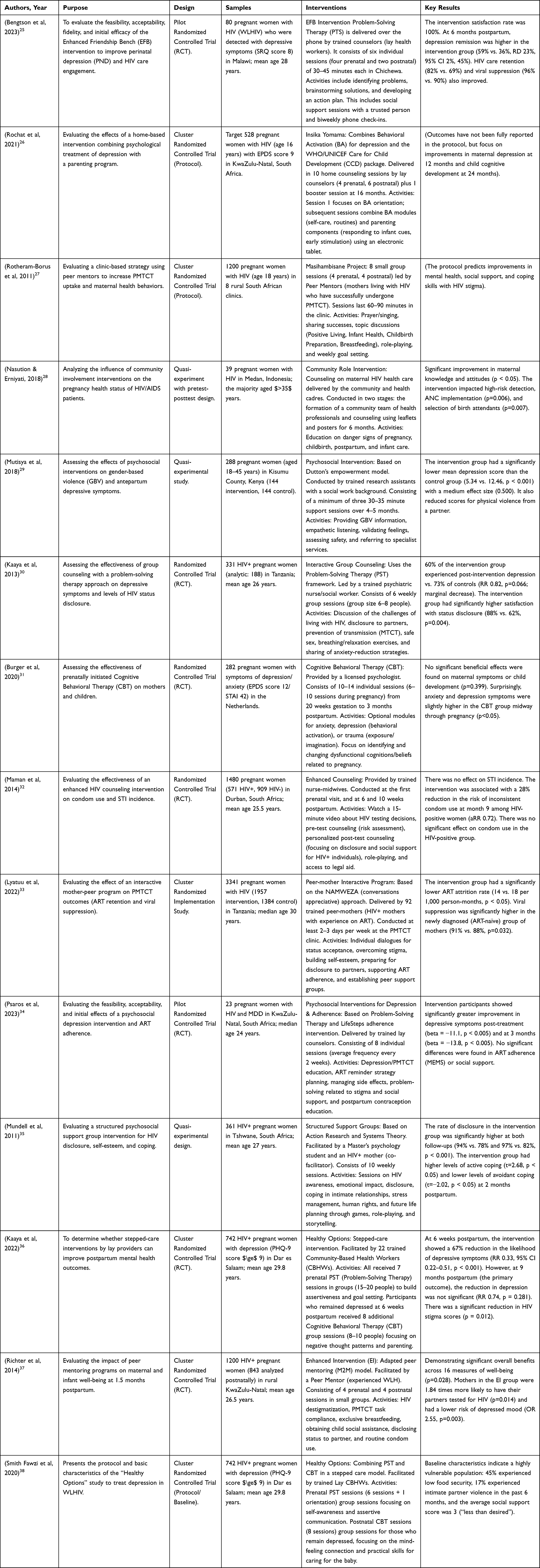 |
Table 1 Data Extraction |
This review identified 14 studies that implemented a range of psychosocial approaches to address specific challenges faced by pregnant women living with HIV (WLHIV), particularly related to adherence to antiretroviral therapy (ART), addressing HIV stigma, improving quality of life, and improving mental health outcomes such as perinatal depression and anxiety. These interventions were also specifically designed to improve other outcomes important to the well-being of WLHIV, including increasing disclosure of HIV status to partners, reducing the risk of gender-based violence (GBV), and optimizing the cognitive and physical development of children exposed to HIV.
The study designs varied, ranging from randomized controlled trials (RCTs), pilot studies, quasi-experimental studies, to study protocols conducted in various geographic contexts. Most studies have focused on high-HIV burden regions in Africa (Malawi, South Africa, Tanzania, and Kenya), but this mapping also includes studies from Asia (Indonesia) and Europe (the Netherlands) to provide a global picture of the integration of psychosocial support into comprehensive maternal HIV care services.27,28,31–33,35
These interventions were delivered by a variety of service providers, including peer mentors, lay health workers, midwives, psychiatric nurses, and professional psychologists.26,30 Many programs integrated digital tools, such as telephone counseling sessions, the use of electronic tablets for session guidance, and educational videos to support decision-making.25,32 Overall, seven principles of contextual adaptation emerged as recurring themes, including the implementation of task-shifting strategies, local language adaptations, the use of a strengths-based approach, and the integration of psychosocial support directly into routine maternal health and PMTCT services to ensure relevant and meaningful services for pregnant women living with HIV.33,34,36,38
Characteristics and Types of Psychosocial Interventions
Psychosocial interventions for pregnant women with HIV (WLHIV) vary widely, but most focus on combining emotional support with practical strategies for HIV management:
Cognitive and Behavioral Therapy: The dominant approach is Problem-Solving Therapy (PST), which aims to help mothers identify life obstacles and address them in a structured manner,25,30 2022;.34 Additionally, Behavioral Activation is used to help mothers return to positive activities to combat depressive symptoms,26 while Cognitive Behavioral Therapy (CBT) is used to address negative thought patterns related to an HIV diagnosis.31,36
Peer Mentorship: This intervention model uses experienced mothers with HIV (Peer Mentors) as role models to provide education, psychosocial support, and motivation in PMTCT care.27,33,37
Integrated Parenting Interventions: Some programs go beyond maternal mental health by integrating parenting packages such as Care for Child Development (CCD) to enhance infant cognitive development.26
Adherence and Empowerment Support: Interventions such as the LifeSteps model focus on solving practical problems in ART adherence,34 while the Dutton empowerment model is used to protect mothers from gender-based violence (GBV).29 In Indonesia, community involvement and health cadres are key in providing educational counseling for pregnant women with HIV.28
Implementation Context and Delivery Strategy
The context of implementation is crucial for the reach and sustainability of interventions in resource-constrained areas:
Task-Shifting Strategy: Most interventions use lay health workers or community volunteers trained and supervised by professionals to cover the shortage of mental health professionals.25,26,34,36,38
Location and Format: Interventions were delivered both individually through home visits to minimize transportation barriers26 and in groups at PMTCT clinics to build social support networks.30,35,37
Utilization of Technology: The use of telephones for counseling sessions25 and the use of educational videos32 are important innovations to increase service flexibility, especially during the pandemic.
Mental Health and Well-Being Outcomes
Reported outcomes range from psychological improvements to better clinical outcomes for both mother and child:
Reduction of Depressive Symptoms: The majority of studies reported significant reductions in perinatal depression scores and higher remission rates in the intervention group.25,29,34,36,37
Increased Disclosure: Psychosocial interventions have been shown to increase mothers’ courage to disclose their HIV status to their partners and increase their satisfaction with the process.30,35,37
Engagement in HIV Care: Improved mental health is correlated with better retention in HIV care, increased ART adherence, and viral suppression.25,33
Child Well-being: Several outcomes show a reduced risk of infants experiencing stunting or delayed height growth.37
Research Gaps and Long-Term Challenges
While initial results are promising, there are several areas that still require attention:
Long-Term Sustainability of Effects: Some interventions show decreased efficacy after the 9-month postpartum period, indicating the need for continued support beyond the postpartum period.35,36
Disadvantages for Specific Groups: Interventions may be less effective for mothers who do not actively seek help (non-help seeking) or for those who face severe structural barriers such as extreme poverty and hunger.31,38
Male Partner Involvement: Very few interventions actively integrate the role of male partners, despite the crucial role of partner support for maternal well-being.25,32,38
Discussions
This scoping review mapped empirical evidence on psychosocial interventions that support the mental health and well being of pregnant women living with HIV. Across fourteen studies, the interventions covered a wide range of approaches, including cognitive and behavioral therapies, peer and group based support, community engagement, and programs that combine maternal mental health with parenting support. Overall, the findings indicate that these interventions are acceptable and feasible when they are aligned with the social, cultural, and linguistic context of women and when they are connected to routine maternal and HIV care services. Psychosocial care appears to function as an essential component of comprehensive PMTCT and ART services rather than an optional addition.
A central message from this review is the importance of contextual and cultural adaptation. Many programs adjusted content, delivery style, and key messages to the daily realities of pregnant women living with HIV. When counseling methods and behavioral strategies were expressed in familiar language and linked to recognizable challenges in pregnancy, relationships, and clinic attendance, participants perceived the interventions as relevant and respectful.32 This recognition can reduce psychological distance between formal services and everyday life and helps explain the high levels of participation and satisfaction reported in several trials.39 In this sense, acceptability and perceived relevance may represent an early stage in the pathway toward sustained behavioral and emotional change, even if they do not always lead directly to strong clinical effects.40
Peer based and lay provider models were another consistent feature in the evidence base. Interventions that relied on peer mentors, community based health workers, or other non specialist providers made it possible to deliver structured psychosocial support in settings where professional mental health staff are scarce.33 At the same time, the shared experience and social proximity between providers and participants appeared to build trust, reduce fear of judgment, and normalize living with HIV during pregnancy. These observations are consistent with theories that emphasize the role of shared identity and credible role models in behavior change.37 Task shifting therefore provided not only a practical workforce solution but also a relational mechanism that likely contributed to the positive outcomes observed in many studies.27
The setting and format of delivery also played an important role. Group based interventions in antenatal and PMTCT clinics allowed women to share experiences, develop mutual support, and practice coping skills in a collective space. Home based models brought support for depression and parenting directly into the household, reduced barriers related to transport and childcare, and allowed intervention providers to observe family dynamics and caregiving practices more closely.27 These approaches respond to earlier concerns that formal facilities can be experienced as intimidating or stigmatizing by women who anticipate blame related to HIV, poverty, or relationship problems.15 Community based and hybrid models instead reposition psychosocial care inside environments that feel safer and more familiar, which seems to be a prerequisite for meaningful engagement in mental health work.41
Many interventions in this review aimed not only to reduce symptoms of depression and anxiety but also to strengthen resilience. Programs frequently targeted active coping, self efficacy, hope, and a sense of control over everyday stressors. Combined models that integrated treatment for maternal depression with parenting support reflected a life course perspective in which the well being of mothers is closely linked to the development of their children.26 By supporting emotional regulation, caregiving confidence, and sensitive parenting, these integrated interventions have the potential to influence both maternal and child outcomes.42 This aligns with broader resilience literature that points to the value of strategies which address individual, family, and caregiving systems at the same time.
The child well-being outcomes identified in this review should be interpreted as potentially indirect effects of psychosocial interventions rather than as isolated child-focused outcomes. Improvements in maternal mental health may reduce psychological distress, emotional withdrawal, and caregiving difficulties, thereby enabling mothers to provide more responsive and consistent care.43 Reduced stress and depressive symptoms may also improve maternal capacity to attend antenatal and postnatal visits, adhere to ART, engage with PMTCT services, follow infant feeding guidance, and participate in growth monitoring.44 In this way, psychosocial interventions may support infant growth and development through multiple pathways, including improved maternal health behaviors, better nutrition-related practices, safer breastfeeding decisions, stronger maternal–child interaction, and greater use of maternal and child health services.45 Therefore, the observed reductions in risks of stunting or delayed height growth in some studies are likely to reflect the combined influence of improved maternal psychological functioning, strengthened social support, better HIV care engagement, and enhanced caregiving quality.
At the same time, several studies illustrate that psychosocial interventions cannot be separated from structural conditions. Baseline data across trials point to high levels of food insecurity, intimate partner violence, and limited social support among pregnant women living with HIV.46 Interventions that explicitly addressed safety, gender based violence, and access to social and legal resources reported improvements in both mental health and exposure to violence. These findings support the view that depression and distress among pregnant women living with HIV are often rooted in intersecting vulnerabilities related to poverty, unsafe relationships, and weak social protection.15 Psychosocial support is likely to be more effective and sustainable when it is linked with efforts to stabilize these structural conditions, rather than focusing only on individual thoughts and emotions.47
Evidence on clinical and behavioral outcomes is encouraging but not uniform. Several studies demonstrated reductions in perinatal depression, improved remission rates, lower HIV related stigma, and better coping among women who received psychosocial interventions.47 Some trials also documented gains in HIV care engagement, including higher retention in ART and higher rates of viral suppression, and in a few cases better indicators of infant growth.48 Other studies, however, found limited or no added benefit of intensive psychotherapy over usual care, or documented early improvements that diminished over longer follow up.49,50 These mixed findings suggest that the effects of psychosocial interventions depend on timing, intensity, fit with the local health system, and the degree to which they are supported by wider family and community resources. Psychosocial programs appear to create important opportunities for improvement, but they are not a guarantee of clinical change in all contexts.51 These findings indicate that psychosocial interventions should be understood not only as mental health support, but also as a potentially important strategy for improving maternal clinical outcomes, continuity of HIV care, and early child growth and development.
Digital components appeared in a modest but informative way. Telephone based counseling and follow up contacts were used to maintain continuity, reinforce skills, and reduce the practical burden of attending repeated clinic sessions. Educational videos were used within antenatal visits to support discussion and decision making.52 These experiences suggest that digital tools can extend the reach and flexibility of psychosocial care for pregnant women living with HIV.53 At the same time, they remain embedded in relationships between women and providers and do not replace the need for interpersonal connection.54 Digital strategies that are integrated into existing care and grounded in trust are likely to be more effective than purely informational approaches that rely on technology alone.49
A clear gap in the evidence relates to partners and family systems. Although many studies touched on disclosure and encouraged women to involve partners in testing or care, very few interventions were explicitly designed around couple or family processes. Yet the studies in this review repeatedly show that partner support, or its absence, is closely related to depressive symptoms, adherence to ART, and key PMTCT behaviors. Limited partner involvement may reflect clinic routines that are oriented toward women, gender norms that discourage male participation, and fears related to blame or violence. Future intervention development may need to pay greater attention to safe and contextually appropriate ways to involve partners and family members, while still centering the autonomy and safety of pregnant women.
Limits and Future Directions
This scoping review was designed to map the breadth of existing evidence rather than to provide definitive estimates of intervention effectiveness, and several limitations must be considered. Following guidance for scoping reviews, we did not conduct formal appraisal of study quality or risk of bias, so the certainty of the available evidence cannot be established. The interventions, comparison conditions, outcome measures, and follow up periods showed considerable diversity, which made quantitative synthesis impractical and means that our conclusions are necessarily descriptive and thematic. The search strategy focused on three large databases and on articles published in English. Studies published in other languages, in regional journals, or in the grey literature may have been missed despite a sensitive and iterative search approach.
In addition, a number of included records were protocols or baseline reports without outcomes, and many completed interventions were evaluated only over short follow up periods, usually confined to pregnancy and the early postpartum period. Most studies were conducted in countries in sub Saharan Africa, with relatively few from other high burden settings in Asia or Latin America. This geographic concentration may limit the generalizability of findings to different health system and cultural environments. The body of evidence itself is mixed, with some interventions demonstrating clear psychosocial and clinical gains and others reporting small or absent effects. Important contextual factors, including food security, household income, exposure to violence, and characteristics of the health system, were not measured consistently and therefore could not be fully considered in this synthesis.
Future research should therefore prioritize adequately powered randomized and quasi experimental designs that include longer follow up and are implemented across a wider range of settings. Studies that directly compare adapted and non adapted versions of interventions would help clarify the specific contribution of contextual and cultural tailoring for pregnant women living with HIV. It will also be important to design and test interventions that engage partners and families where this is safe and appropriate, integrate responses to gender based violence and economic insecurity, and make thoughtful use of digital tools while maintaining a strong relational foundation. Finally, embedding implementation and economic evaluations within psychosocial intervention trials will be essential to identify models that are not only effective but also feasible, scalable, and sustainable within routine maternal and HIV care systems.
Conclusions
This scoping review shows that psychosocial interventions for pregnant women living with HIV can improve mental health, coping, and engagement in HIV care. The mapped studies include problem-solving and cognitive-behavioral approaches, peer mentor and group support models, community and home-based programs, and integrated packages that combine maternal mental health with parenting and adherence support. Across diverse settings, these interventions are generally feasible and acceptable when delivered by trained lay workers or peer mentors, embedded in antenatal and PMTCT services, and responsive to the everyday challenges of pregnancy, HIV, stigma, and caregiving. Many studies reported reductions in perinatal depressive symptoms, better coping and disclosure, and improvements in retention in care, viral suppression, and selected infant growth outcomes, although some trials showed mixed or limited effects and benefits that decreased at later follow-up. Overall, the evidence points to a promising but still developing field.
For policy and practice, these findings support the integration of structured mental health screening and psychosocial support into routine antenatal, PMTCT, and maternal HIV services. This is consistent with WHO’s direction to integrate perinatal mental health into maternal and child health services and to strengthen early identification and management of maternal mental health problems during pregnancy and after childbirth. Psychosocial interventions should therefore be positioned not only as supportive care, but also as part of comprehensive maternal HIV services that address depression, anxiety, stigma, safety, ART adherence, caregiving demands, and continuity of care. Future research should use stronger and adequately powered designs, extend follow-up beyond the early postpartum period, explore safe involvement of partners and families, and incorporate implementation and economic evaluations. This will be essential to inform scalable and sustainable psychosocial models that fit the realities of pregnant women living with HIV in different health system contexts.
Acknowledgments
Authors would like to express their deepest gratitude to Universitas Padjadjaran that supported this research work.
Funding
This research has no external funding.
Disclosure
The authors have declared no conflicts of interest regarding this work.
References
1. UNAIDS. Global HIV & AIDS Statistics — Fact Sheet. Geneva: UNAIDS; 2025. Available from: https://www.unaids.org/en/resources/fact-sheet.
2. Ambachew S, Endalamaw A, Worede A, Tegegne Y, Melku M, Biadgo B. The Prevalence of Metabolic Syndrome in Ethiopian Population: a Systematic Review and Meta-analysis. J Obes. 2020;2020:2701309. doi:10.1155/2020/2701309
3. Fauk NK, Mwanri L, Hawke K, Mohammadi L, Ward PR. Psychological and social impact of HIV on women living with HIV and their families in low- and middle-income asian countries: a systematic search and critical review. Int J Environ Res Public Heal. 2022;19:116668. doi:10.3390/ijerph19116668
4. Kaptchuk RP, Thakker J, Bell J, et al. HIV self-testing in India: implementation and qualitative evaluation of a web-based programme with virtual counsellor support. J Int AIDS Soc. 2024;27(6):e26302–16. doi:10.1002/jia2.26302
5. Psaros C, Stanton AM, Raggio GA, et al. Optimizing PMTCT adherence by treating depression in perinatal women with HIV in South Africa: a pilot randomized controlled trial. Int J Behav Med. 2024;30(1):62–76.
6. Ngocho JS, watt MH, Minja L. Depression and anxiety among pregnant women living with HIV in Kilimanjaro region, Tanzania. PLoS One. 2019;14(10):e0224515. doi:10.1371/journal.pone.0224515
7. Akinsolu FT, Abodunrin OR, Lawale AA, et al. Depression and perceived stress among perinatal women living with HIV in Nigeria. Front Public Health. 2023;11:1259830. doi:10.3389/fpubh.2023.1259830
8. Zhu QY, Huang DS, Lv JD, Guan P, Bai XH. Prevalence of perinatal depression among HIV-positive women: a systematic review and meta-analysis. BMC Psychiatry. 2019;19(1):330. doi:10.1186/s12888-019-2321-2
9. Chilaka VN, Konje JC. HIV in pregnancy - An update. Eur J Obs Gynecol Reprod Biol. 2021;256:1. doi:10.1016/j.ejogrb.2020.11.034
10. Yapa HM, Dhlomo-Mphatswe W, Moshabela M, et al. A Continuous Quality Improvement Intervention to Improve Antenatal HIV Care Testing in Rural South Africa: evaluation of Implementation in a Real-World Setting. Int J Heal Policy Manag. 2022;11(5):610–628.
11. Aliyu MH, Blevins M, Audet CM, et al. Integrated prevention of mother-to-child HIV transmission services, antiretroviral therapy initiation, and maternal and infant retention in care in rural north-central Nigeria: a cluster-randomised controlled trial. Lancet HIV. 2016;3(5):e202–11. doi:10.1016/S2352-3018(16)00018-7
12. Yapa HM, Drayne R, Klein N, et al. Infant feeding knowledge and practice vary by maternal HIV status: a nested cohort study in rural South Africa. Int Breastfeed J. 2020;15(1):77. doi:10.1186/s13006-020-00317-5
13. Nanfuka EK, Kyaddondo D, Ssali SN, Asingwire N. Social capital and resilience among people living on antiretroviral therapy in resource-poor Uganda. PLoS One. 2018;13:197979. doi:10.1371/journal.pone.0197979.
14. Moseholm E, Aho I, Mellgren Å, et al. The experience of pregnancy among women living with HIV in Nordic countries: a qualitative narrative enquiry. Women Heal. 2022;18:17455065211068688. doi:10.1177/17455065211068688
15. Hodson N, Bewley S. Pursuing ethical coherence in the prevention of vertical transmission of HIV: justice and injustice in Option B. J Virus Eradicat. 2017;3(3):163–166. doi:10.1016/S2055-6640(20)30336-8
16. Mimiaga MJ, Thomas B, Biello K, et al. A Pilot Randomized Controlled Trial of an Integrated In-person and Mobile Phone Delivered Counseling and Text Messaging Intervention to Reduce HIV Transmission Risk among Male Sex Workers in Chennai, India. AIDS Behav. 2017;21(11):3172–3181. doi:10.1007/s10461-017-1884-5
17. Mavhu W, Willis N, Mufuka J, et al. Evaluating a multi-component, community-based program to improve adherence and retention in care among adolescents living with HIV in Zimbabwe: study protocol for a cluster randomized controlled trial. Trials. 2017;18(1):478. doi:10.1186/s13063-017-2198-7
18. Yosep I, Hikmat R, Mardhiyah A, Hernawaty T. A Scoping Review of Digital-Based Intervention for Reducing Risk of Suicide Among Adults. J Multidiscip Healthc. 2024;17:3545–3556. doi:10.2147/JMDH.S472264
19. Luenen S, Garnefski N, Spinhoven P, Spaan P, Dusseldorp E, Kraaij V. The benefits of psychosocial interventions for mental health in people living with HIV: a systematic review and meta-analysis. AIDS Behav. 2018;22(2). doi:10.1007/s10461-017-1757-y
20. Witdiawati W, Ibrahim K, Juniarti N, Purnama D, Rahayuwati L. Contextual and culturally adapted interventions to improve HIV outcomes: a scoping review. BMC Infect Dis. 2025;25(1):1760. doi:10.1186/s12879-025-12143-3
21. Okonji EF, Mukumbang FC, Orth Z, Vickerman-Delport SA, Wyk B. Psychosocial support interventions for improved adherence and retention in ART care for adolescents and young people living with HIV: a scoping review. BMC Public Health. 2020;20(1):20. doi:10.1186/s12889-020-09717-y
22. Arksey H, O’Malley L. Scoping studies: toward a methodological framework. Int J Soc Res Methodol. 2005;8(1):19–32. doi:10.1080/1364557032000119616
23. Levac D, Coquhoun H, O’Brien K. Scoping studies: advancing the methodology. Implement Sci. 2010;5(1). doi:10.1186/1748-5908-5-69
24. Page MJ, McKenzie JE, Bossuyt PM. The PRISMA 2020 statement: an updated guideline for reporting systematic reviews. BMJ. 2021;2021:n71. doi:10.1136/bmj.n71
25. Bengtson AM, Filipowicz TR, Mphonda S, et al. An Intervention to Improve Mental Health and HIV Care Engagement Among Perinatal Women in Malawi: a Pilot Randomized Controlled Trial. AIDS and Behavior. 2023;27(11):3559–3570. doi:10.1007/s10461-023-04070-8
26. Rochat TJ, Dube S, Herbst K, et al. An evaluation of a combined psychological and parenting intervention for HIV-positive women depressed in the perinatal period, to enhance child development and reduce maternal depression: study protocol for the Insika Yomama cluster randomised controlle. Bio Med Central. 2021;2021:1–23.
27. Rotheram-Borus MJ, Richter L, Van Rooyen H, et al. Project Masihambisane: a cluster randomised controlled trial with peer mentors to improve outcomes for pregnant mothers living with HIV. Trials. 2011;12(1):2. doi:10.1186/1745-6215-12-2
28. Nasution SS, Erniyati E. The Intervention of Community Role for Improving Health Status of Pregnant Women Suffering HIV-AIDS in Medan. Open Access Maced J Med Sci. 2018;6(9):1768–1772. doi:10.3889/oamjms.2018.324
29. Mutisya RK, Ngure K, Mwachari C. A psychosocial intervention to reduce gender-based violence and antepartum depressive symptoms in pregnant women in Kisumu County, Kenya: a quasi-experimental study. Pan Afr Med J. 2018;29:11. doi:10.11604/pamj.2018.29.11.13596
30. Kaaya SF, Blander J, Antelman G, et al. Randomized controlled trial evaluating the effect of an interactive group counseling intervention for HIV-positive women on prenatal depression and disclosure of HIV status. AIDS Care. 2013;25(7):854–862. doi:10.1080/09540121.2013.763891
31. Burger H, Verbeek T, Aris-Meijer JL, et al. Effects of psychological treatment of mental health problems in pregnant women to protect their offspring: randomised controlled trial. Br J Psychiatry. 2020;216(4):182–188. doi:10.1192/bjp.2019.260
32. Maman S, Moodley D, McNaughton-Reyes HL, Groves AK, Kagee A, Moodley P. Efficacy of enhanced HIV counseling for risk reduction during pregnancy and in the postpartum period: a randomized controlled trial. PLoS One. 2014;9(5):e97092. doi:10.1371/journal.pone.0097092
33. Lyatuu GW, Naburi H, Mwashemele S, et al. Effect of peer-mother interactive programme on prevention of mother-to-child HIV transmission outcomes among pregnant women on anti-retroviral treatment in routine healthcare in Dar es Salaam, Tanzania. PLOS Glob public Heal. 2022;2(3):e0000256. doi:10.1371/journal.pgph.0000256
34. Psaros C, Stanton AM, Raggio GA, et al. Optimizing PMTCT Adherence by Treating Depression in Perinatal Women with HIV in South Africa: a Pilot Randomized Controlled Trial. Int J Behav Med. 2023;30(1):62–76. doi:10.1007/s12529-022-10071-z
35. Mundell JP, Visser MJ, Makin JD, et al. The impact of structured support groups for pregnant South African women recently diagnosed HIV positive. Women Health. 2011;51(6):546–565. doi:10.1080/03630242.2011.606356
36. Kaaya S, Siril H, Fawzi MCS, et al. A peer-facilitated psychological group intervention for perinatal women living with HIV and depression in Tanzania-Healthy Options: a cluster-randomized controlled trial. PLoS Med. 2022;19(12):e1004112. doi:10.1371/journal.pmed.1004112
37. Richter L, Rotheram-Borus MJ, Van Heerden A, et al. Pregnant women living with HIV (WLH) supported at clinics by peer WLH: a cluster randomized controlled trial. AIDS Behav. 2014;18(4):706–715. doi:10.1007/s10461-014-0694-2
38. Smith Fawzi MC, Siril H, Larson E, et al. Healthy Options: study protocol and baseline characteristics for a cluster randomized controlled trial of group psychotherapy for perinatal women living with HIV and depression in Tanzania. BMC Public Health. 2020;20(1):80. doi:10.1186/s12889-019-7907-6
39. Pallitto C, García-Moreno C, Stöeckl H, et al. Testing a counselling intervention in antenatal care for women experiencing partner violence: a study protocol for a randomized controlled trial in Johannesburg, South Africa. BMC Health Serv Res. 2016;16(1):630. doi:10.1186/s12913-016-1872-x
40. Joseph Davey DL, Dovel K, Cleary S, et al. Stepped care to optimize pre-exposure prophylaxis (PrEP) effectiveness in pregnant and postpartum women (SCOPE-PP) in South Africa: a randomized control trial. BMC Public Health. 2022;22(1):1306. doi:10.1186/s12889-022-13652-5
41. Suryavanshi N, Kadam A, Gupte N, et al. A mobile health-facilitated behavioural intervention for community health workers improves exclusive breastfeeding and early infant HIV diagnosis in India: a cluster randomized trial. J Int AIDS Soc. 2020;23(7):e25555–e25555. doi:10.1002/jia2.25555
42. Fayorsey RN, Wang C, Chege D, et al. Effectiveness of a Lay Counselor-Led Combination Intervention for Retention of Mothers and Infants in HIV Care: a Randomized Trial in Kenya. J Acquir Immune Defic Syndr. 2019;80(1):56–63. doi:10.1097/QAI.0000000000001882
43. Breuer E, Myer L, Struthers H, Joska JA. HIV/AIDS and mental health research in sub-Saharan Africa: a systematic review. Afr J AIDS Res. 2011;10(2):101–122. doi:10.2989/16085906.2011.593373
44. Sianturi EI, Longe VS, Arjadi R, Bakri NF, Gunawan E, Sinaga ES. Suicide Behavior Among Indigenous and Non-Indigenous Living with HIV: a Cross-Sectional Study in Indonesia. J Immigr Minor Heal. 2024;26(4):660–666. doi:10.1007/s10903-024-01593-7
45. Yosep I, Hikmat R, Mardhiyah A, Kurniawan K, Tumanggor RD, Novera M. Mental health issues and related psychosocial factors among children and adolescents living with HIV: a scoping review. Int J Africa Nurs Sci. 2026;25:101087.
46. Nkhoma N, Nyondo-Mipando LA, Makanjee C, Myburgh ND, Nyasulu PS. “What Will I Be Doing There Among So Many Women?”: perceptions on Male Support in Prevention of Mother to Child Services in Lilongwe, Malawi. Glob Pediatr Heal. 2019;6:2333794X19865442–2333794X19865442. doi:10.1177/2333794X19865442
47. Joshi S, Namuddu C, Kasujja FX, et al. PrEP uptake and persistence amongst HIV-negative women who exchange sex for money or commodities in Kampala, Uganda: a qualitative inquiry assessing the influence of pregnancy. PLOS Glob public Heal. 2023;3(6):e0000434. doi:10.1371/journal.pgph.0000434
48. Clouse K, Noholoza S, Madwayi S, et al. The Implementation of a GPS-Based Location-Tracking Smartphone App in South Africa to Improve Engagement in HIV Care: randomized Controlled Trial. JMIR mHealth uHealth. 2023;11:e44945.
49. Irawan AS, Döbrössy BM, Biresaw MS, Muharram AP, Kovács SD, Girasek E. Exploring characteristics and common features of digital health in pediatric care in developing countries: a systematic review. Front Digit Heal. 2025;7:1533788. doi:10.3389/fdgth.2025.1533788
50. Mkandawire AK, Jumbe V, Nyondo-Mipando AL. To disclose or not: experiences of HIV infected pregnant women in disclosing their HIV status to their male sexual partners in Blantyre, Malawi. BMC Public Health. 2022;22(1):1552. doi:10.1186/s12889-022-13974-4
51. Yonga AM, Kiss L, Onarheim KH. A systematic review of the effects of intimate partner violence on HIV-positive pregnant women in sub-Saharan Africa. BMC Public Health. 2022;22(1):220. doi:10.1186/s12889-022-12619-w
52. Garcia Vilaplana E, Petignat P, Benski AC, et al. Description of Maternal Morbidities Amongst 1000 Women During Pregnancy in Ambanja, Madagascar - Opportunities and Challenges of Using an mHealth System. Int J Womens Health. 2020;12:823–833. doi:10.2147/IJWH.S260894
53. Wilson EC, Jalil EM, Jalil CM. Results from a peer-based digital systems navigation intervention to increase HIV prevention and care behaviors of young trans women in Rio de Janeiro, Brazil. J Glob Heal Reports. 2021;5:28347. doi:10.29392/001c.28347
54. Yosep I, Mardhiyah A, Lukman M, Hazmi H, Hikmat R. Digital mental health interventions for suicide prevention: a scoping review of assessment, monitoring, and treatment approaches. Int J Africa Nurs Sci. 2026;25:101066.
 © 2026 The Author(s). This work is published and licensed by Dove Medical Press Limited. The
full terms of this license are available at https://www.dovepress.com/terms
and incorporate the Creative Commons Attribution
- Non Commercial (unported, 4.0) License.
By accessing the work you hereby accept the Terms. Non-commercial uses of the work are permitted
without any further permission from Dove Medical Press Limited, provided the work is properly
attributed. For permission for commercial use of this work, please see paragraphs 4.2 and 5 of our Terms.
© 2026 The Author(s). This work is published and licensed by Dove Medical Press Limited. The
full terms of this license are available at https://www.dovepress.com/terms
and incorporate the Creative Commons Attribution
- Non Commercial (unported, 4.0) License.
By accessing the work you hereby accept the Terms. Non-commercial uses of the work are permitted
without any further permission from Dove Medical Press Limited, provided the work is properly
attributed. For permission for commercial use of this work, please see paragraphs 4.2 and 5 of our Terms.
Recommended articles
A Pilot Study of Retinal Vessel Calibre and Its Potential Link to Cardiovascular Risk in HIV
Buthelezi LM, Munsamy AJ, Mashige KP
Clinical Optometry 2026, 18:541786
Published Date: 14 February 2026