
Back to Journals » Advances in Medical Education and Practice » Volume 17
Internal Medicine Physicians’ Reflections on AI Tools for Research Tasks in Turkey: A Qualitative Descriptive Study Following a Brief Educational Session
Authors Zorlu Görgülügil G  , Özdede M , Özbilen M, Polat ZP, Genç AC, Şahin SE, Şahintürk Y
Received 9 March 2026
Accepted for publication 28 May 2026
Published 14 July 2026 Volume 2026:17 607947
DOI https://doi.org/10.2147/AMEP.S607947
Checked for plagiarism Yes
Review by Single anonymous peer review
Peer reviewer comments 2
Editor who approved publication: Dr Sateesh Arja
Gizem Zorlu Görgülügil,1 Murat Özdede,2 Muhammet Özbilen,3 Zeynep Pelin Polat,4 Ahmed Cihad Genç,5 Sait Emir Şahin,6 Yasin Şahintürk1
1Department of Internal Medicine, Antalya Training and Research Hospital, Antalya, Turkey; 2Department of Internal Medicine, Hacettepe University Faculty of Medicine, Ankara, Turkey; 3Department of Internal Medicine, Ordu University Training and Research Hospital, Ordu, Turkey; 4Department of Internal Medicine, Albert Health, Istanbul, Turkey; 5Department of Internal Medicine, Ahmed Cihad Genç Clinic, Istanbul, Turkey; 6Department of Internal Medicine, Sakarya State Hospital, Sakarya, Turkey
Correspondence: Gizem Zorlu Görgülügil, Antalya Training and Research Hospital, Internal Medicine, Antalya, Turkey, Tel +905334319703, Email [email protected]
Background: This study explored internal medicine physicians’ perceptions of AI tools used for research tasks (eg, literature searching, reference management, scholarly writing support, and visualization) following a brief educational session.
Methods: This qualitative descriptive study was conducted with internal medicine physicians who attended a structured and interactive educational session entitled “Artificial Intelligence on the Path to Academia” delivered as part of the 4th National Congress of Internal Medicine. Following the session, individual semi structured interviews were carried out with the participants. Interviews were conducted within 24 hours after the session and documented as written field notes. The study design, conduct, and reporting were planned in accordance with the Consolidated Criteria for Reporting Qualitative Research checklist for qualitative research. The data were systematically analyzed using Braun and Clarke’s thematic analysis approach.
Results: Participants reported heterogeneous and generally limited baseline familiarity with AI-based research task tools. After the session, narratives shifted toward viewing AI as a supportive resource used conditionally under human oversight. Participants described increased intention to use these tools, while concerns regarding ethics, reliability, and academic originality remained salient. A clear need emerged for practical, structured training with a well-defined ethical framework.
Conclusion: Brief educational sessions may help elicit short-term reflections and clarify perceived opportunities and boundaries for using AI tools in research-related academic workflows; the effectiveness of brief interventions remains uncertain and warrants longitudinal evaluation.
Keywords: artificial intelligence, medical education, academic writing, qualitative research, internal medicine
Introduction
In this manuscript, “AI-based tools for research tasks” refers to tools supporting literature searching, reference management, scholarly writing support, and visualization. The rapid advancement of artificial intelligence (AI) based technologies in recent years has profoundly influenced academic research and publishing processes. In time and cognitively demanding tasks such as literature searching, academic writing, reference management, and data visualization, AI-based tools have increasingly emerged as potential supports for academics.1,2 For internal medicine physicians with a high clinical workload, academic productivity represents an additional domain of responsibility that must be managed alongside clinical duties.
Despite growing interest in the use of AI in medical education and academic practice, physicians’ attitudes toward these tools remain heterogeneous. Existing studies indicate that physicians generally perceive AI as beneficial yet report substantial concerns regarding ethics, reliability, academic integrity, and data security.3,4 In particular, the widespread adoption of generative AI tools has rendered debates on academic originality and plagiarism more visible.5
Most studies in the literature focus on medical students or broader groups of healthcare professionals, whereas evidence focusing on residents and specialists who contribute to scholarly activities alongside clinical duties, often under faculty supervision remains limited. Moreover, much of the existing evidence is based on quantitative surveys, and qualitative studies that examine in depth the effects of brief educational interventions on physicians’ perceptions and attitudes are scarce. Internationally, qualitative evidence on how brief, structured AI-focused education shapes practicing physicians’ perceptions, boundaries of use, and ethical concerns in academic workflows remains scarce.
In this context, exploring internal medicine physicians’ perceptions and immediate post-session reflections regarding AI-based tools for research tasks is important for informing effective, ethically grounded, and sustainable training models in academic medicine.
This study focuses on AI-based research task tools (eg, literature searching, writing support, and visualization) rather than the assessment of clinical skills. Accordingly, this study aimed to explore internal medicine physicians’ baseline familiarity, perceived opportunities and concerns, and their post-session reflections regarding AI tools for research tasks.
Methods
Study Design
This was a qualitative descriptive study using individual semi-structured interviews conducted at a single time point after a structured educational session. Data were analyzed using reflexive thematic analysis as described by Braun and Clarke. The study was designed and reported in accordance with the COREQ checklist.
Study Setting and Context
The study was conducted within the context of an educational session entitled “Artificial Intelligence on the Path to Academia,” delivered as part of the program of the 4th National Congress of Internal Medicine in Turkey. The session was planned and implemented by the DAHUDER Artificial Intelligence Study Group operating under the Turkish Association of Internists (DAHUDER). A total of 17 internal medicine physicians attended the session. Accordingly, the research took place in an institutional scientific event setting organized in line with the goals of academic productivity and continuing professional development.
Participants
Physicians who were either internal medicine specialists or residents, attended the educational session, and voluntarily agreed to participate were included in the study. Participants from non–internal medicine specialties and individuals who did not consent to be interviewed were excluded. Sample size was determined based on the principle of thematic saturation commonly used in qualitative research, and data collection was discontinued when no new themes emerged. All 17 attendees were invited for interviews and all consented and participated.
Content of the Educational Session
The session was developed by the DAHUDER Artificial Intelligence Study Group as an original congress-based continuing professional development module. Learning objectives were to (1) introduce commonly used AI tools for research tasks, (2) demonstrate practical workflows through scenarios, and (3) discuss ethical boundaries, transparency, and data security. The content was reviewed internally by the study group for clarity and relevance prior to delivery; pilot testing was not conducted. The training was structured as a 60 minute session comprising two thematic modules, each consisting of a 20 minute presentation followed by a 10 minute interactive discussion; the session format is presented in Figure 1. The first module addressed AI assisted literature searching and reference management, while the second focused on AI supported academic writing and visualization. The session was delivered using a practice-oriented approach based on example scenarios, and active participant engagement was encouraged. Potential applications of AI tools in academic production were discussed within the framework of ethical use, academic originality, and data security.
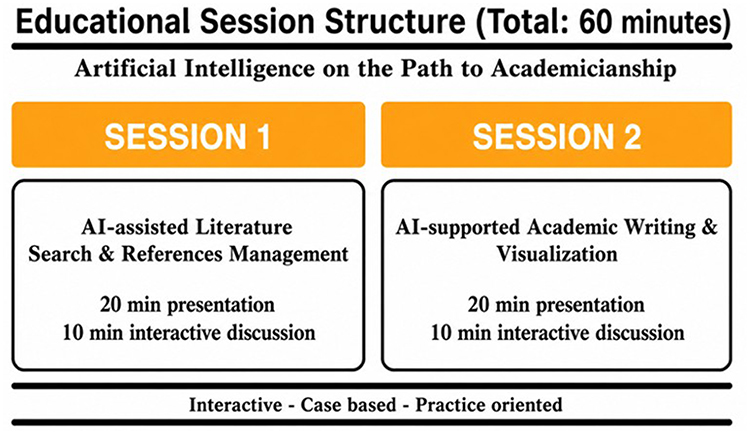 |
Figure 1 Structured Interactive Educational Session. |
Data Collection
Data were collected through one-time, individual semi-structured interviews conducted within 24 hours after completion of the educational session. Interviews were documented as written field notes due to the conference setting, time constraints, and a preference for a brief, low-burden process; interviews were not audio-recorded. Field notes were expanded shortly after each interview and then reviewed and organized for analysis. When developing the interview guide, constructs commonly used to understand perceptions and attitudes toward technology use—such as perceived usefulness, perceived ease of use, and behavioral intention from the Technology Acceptance Model (TAM)—were considered as a conceptual background. However, the study did not aim to test a technology acceptance model; rather, these constructs were used as an interpretive lens. The interview guide was developed by the research team to align with the study objectives and is presented in Table 1. Follow-up questions were asked when necessary to clarify and deepen participants’ responses.
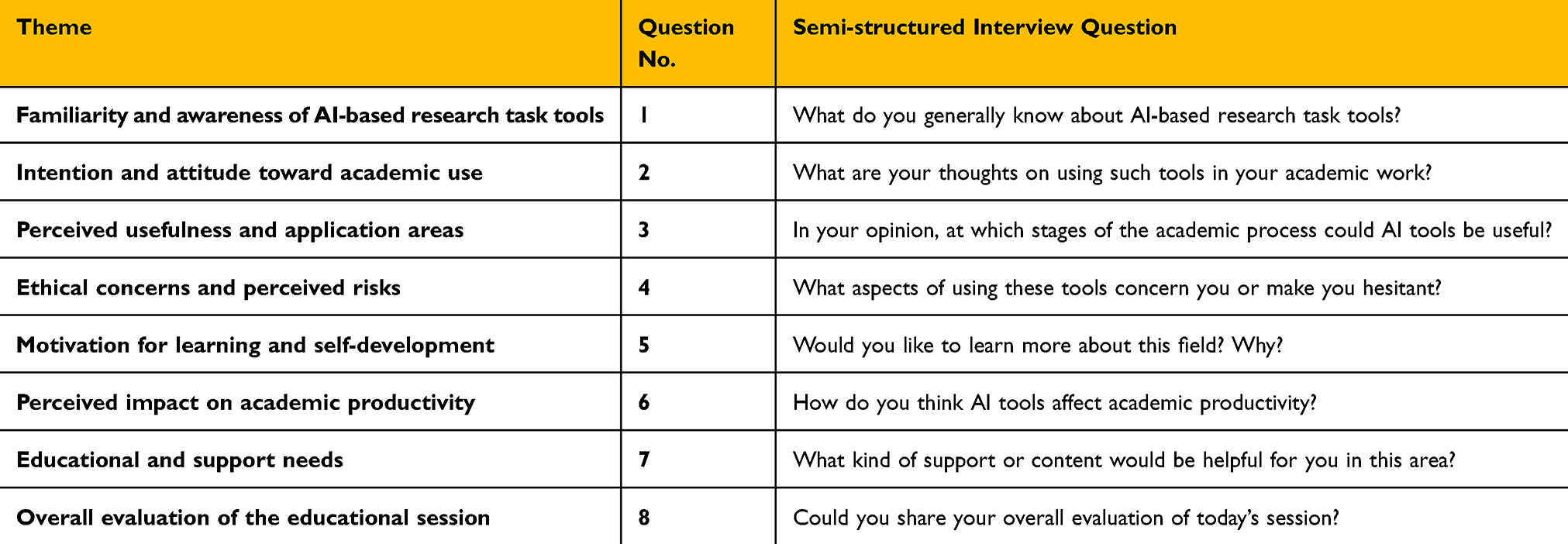 |
Table 1 Thematic Categorization of the Semi-Structured Interview Questions |
Interviewers and Bias Control
The semi-structured interviews were conducted by an internal medicine resident physician with sufficient clinical knowledge who was not involved in planning or delivering the educational session, was not a member of the DAHUDER Artificial Intelligence Study Group, and was independent of the researchers who provide AI-related training. Interviews lasted approximately 15–20 minutes. This separation from the educational content was intended to reduce the risk of influencing participants’ responses and to minimize researcher bias.
Data Analysis
The data were analyzed using the six-phase thematic analysis approach described by Braun and Clarke.6 The analytic process began with familiarization with the data, followed by coding meaningful units of text and examining relationships among codes to generate subthemes and overarching themes. The thematic structure was reviewed iteratively to ensure consistency with the dataset and internal coherence, and consensus was reached on the final themes. To protect the confidentiality of participants’ statements, quotations are presented in the text using anonymized identifiers (eg, D1, D2, D3). Initial codes and themes were reviewed in peer debriefing meetings with the research team to enhance analytic rigor, and an audit trail documenting coding decisions and theme development was maintained.
Trustworthiness
Trustworthiness was enhanced through iterative theme refinement, peer debriefing within the research team, maintenance of an audit trail, and reflexive discussions regarding potential preconceptions.
Methodological Approach and Analytical Framework
In interpreting the findings, selected components of the RE-AIM framework commonly used to evaluate educational interventions were considered as contextual reference points, particularly reach, perceived effectiveness, and adoption. However, this study did not aim to systematically assess all RE-AIM dimensions, and the long-term maintenance component was outside the scope of the present work.
Ethics
Ethics approval for this study was obtained from the Antalya Training and Research Hospital Scientific Research Ethics Committee (date: 08 May 2025; decision no.: 8/8). The study was conducted in accordance with the principles of the Declaration of Helsinki. All participants were informed about the purpose and procedures of the study, and written informed consent was obtained from all participants prior to data collection. The informed consent process included permission for the publication of anonymized responses and direct quotations.
Results
In this study, individual semi-structured interviews were conducted with 17 internal medicine physicians who attended the educational session delivered as part of the 4th National Congress of Internal Medicine. To ensure confidentiality, participants’ statements were anonymized using identifiers D1-D17. Five themes and related subthemes were identified; for clarity, these are reported under three overarching headings. Overall, participants discussed the potential benefits of AI-based research task tools while simultaneously emphasizing ethical concerns and the necessity of human oversight. These shared thematic domains are summarized in Table 2. To present the findings in a more coherent and fluent manner, the results were organized under three headings: (1) familiarity, perceptions, and awareness of AI; (2) boundaries and conditional acceptance in academic use; and (3) training needs and expectations for support.
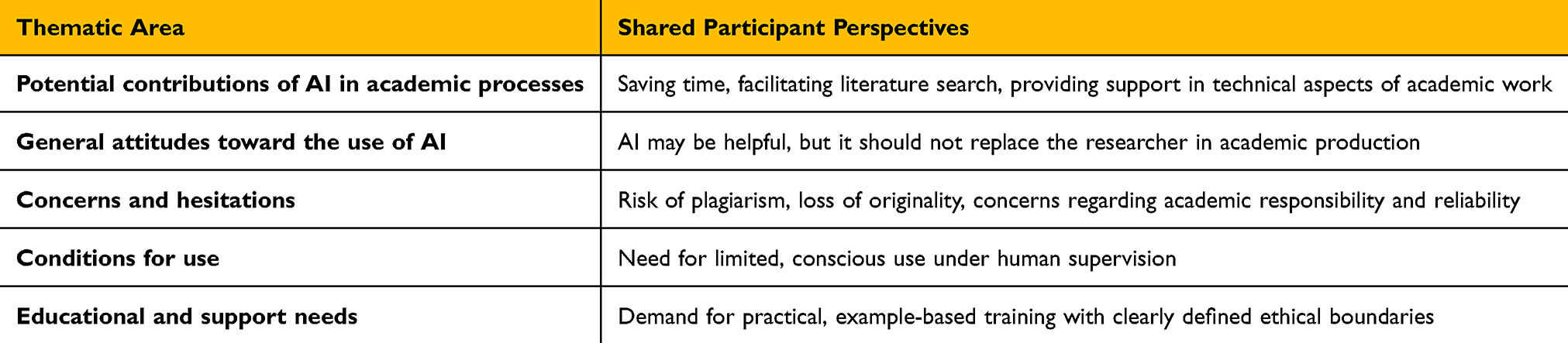 |
Table 2 Thematic Areas and Shared Participant Perspectives Derived from Semi-Structured Interviews |
Familiarity, Perceptions, and Awareness of Artificial Intelligence
Participants’ accounts indicated substantial heterogeneity in both their familiarity with AI-based research task tools and their prior experiences with using them. Some physicians reported that their understanding of these tools was insufficient or superficial and that they had not yet used them actively in academic production. Participants in this group tended to define AI primarily through general technological developments or popular sources and stated that they continued to prefer conventional methods in academic work.
In contrast, other participants demonstrated a clearer awareness of the potential contributions of AI-based tools to academic workflows. In particular, these tools were described as potentially time saving and supportive for tasks such as literature searching, reference management, academic writing, language support, and visualization. However, this awareness appeared to be largely driven by individual experimentation and personal interest rather than supported by systematic training.
Some physicians also noted that their familiarity with AI tools was derived indirectly, limited to a small number of platforms or informed by colleagues’ experiences. This suggests that awareness of AI may remain at the level of name recognition and does not necessarily translate into hands on use.
These limited baseline perceptions were reflected in participants’ statements: “I don’t know anything yet; I haven’t used them and I continue with conventional methods.” (D14) “I have little idea only what I’ve heard from social media and the news; I would call it beginner level.” (D15)
For example, one participant described using multiple tools across the workflow: “I sometimes use tools such as ChatGPT, Elicit, Scite, and Consensus…” (D10)
Overall, participants recognized the potential contributions of AI-based research task tools to scholarly productivity; however, variations in familiarity and experience meant that the boundaries of these contributions had not yet become clearly defined. Participants’ assessments of potential use cases for AI in academic processes are presented in Table 3.
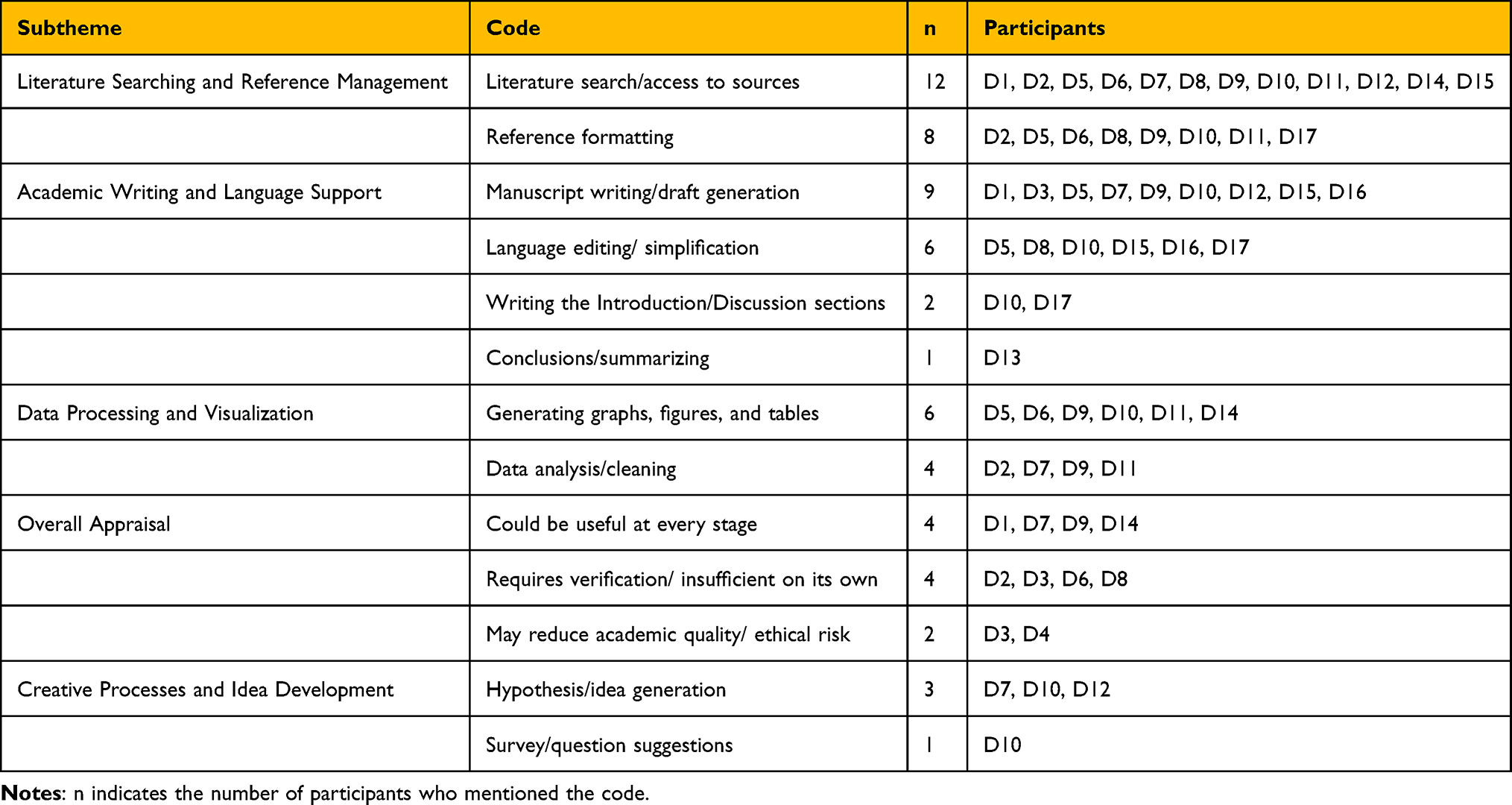 |
Table 3 Physicians’ Views on Potential Use Cases of AI Tools Across Academic Processes |
Boundaries and Conditional Acceptance in Academic Use
Participants’ accounts indicated that attitudes toward the use of AI-based research task tools were clearly conditional and cautious. While physicians acknowledged that these tools could serve a supportive role in academic processes, they expressed various constraints and concerns related to ethics, reliability, and professional identity.
The most frequently emphasized concerns clustered around ethical and academic considerations. Participants reported that AI assisted content generation could undermine academic originality, increase the risk of plagiarism, and obscure the value of scholarly effort. Accordingly, the prevailing view was that AI should not function as an academic decision maker; rather, it should be used as an auxiliary tool under human oversight. Ethical unease was frequently articulated: “Conscience this feels like I have no effort in it…” (D1) “I think academic ethics will be seriously harmed and in fact already is.” (D16)
Reliability and accuracy of information constituted another key limiting factor. Participants noted that AI tools may generate incorrect information and provide inaccurate or fabricated references, making their standalone use in scholarly work problematic. For this reason, it was stressed that AI outputs should be subjected to manual verification and academic scrutiny. Concerns about misinformation and fabricated references were also prominent: “My biggest concern is misinformation…” (D6) “Some tools generate references that look plausible but are incorrect or even fabricated…” (D10)
Some physicians stated that excessive reliance on AI could, in the long term, weaken cognitive skills such as critical thinking, analysis, and writing, potentially fostering academic complacency. In addition, concerns were raised that the use of AI might transform professional identity and diminish the distinctiveness and differentiation of the academic role.
Data security and confidentiality emerged as major concerns, particularly when patient data or unpublished academic work was involved. Uncertainty regarding how data shared with AI tools is stored and the potential risks of third-party access were among the factors reinforcing a cautious approach. Data security considerations further reinforced a cautious approach: “Data security is a major question mark…” (D7) “Preventing data leakage… is crucial.” (D9)
Overall, participants found it more acceptable to use AI-based research task tools not as something to be adopted unconditionally, but as a limited supportive resource aligned with ethical principles and used under human supervision. Participants’ reservations and concerns regarding AI use are summarized in Table 4.
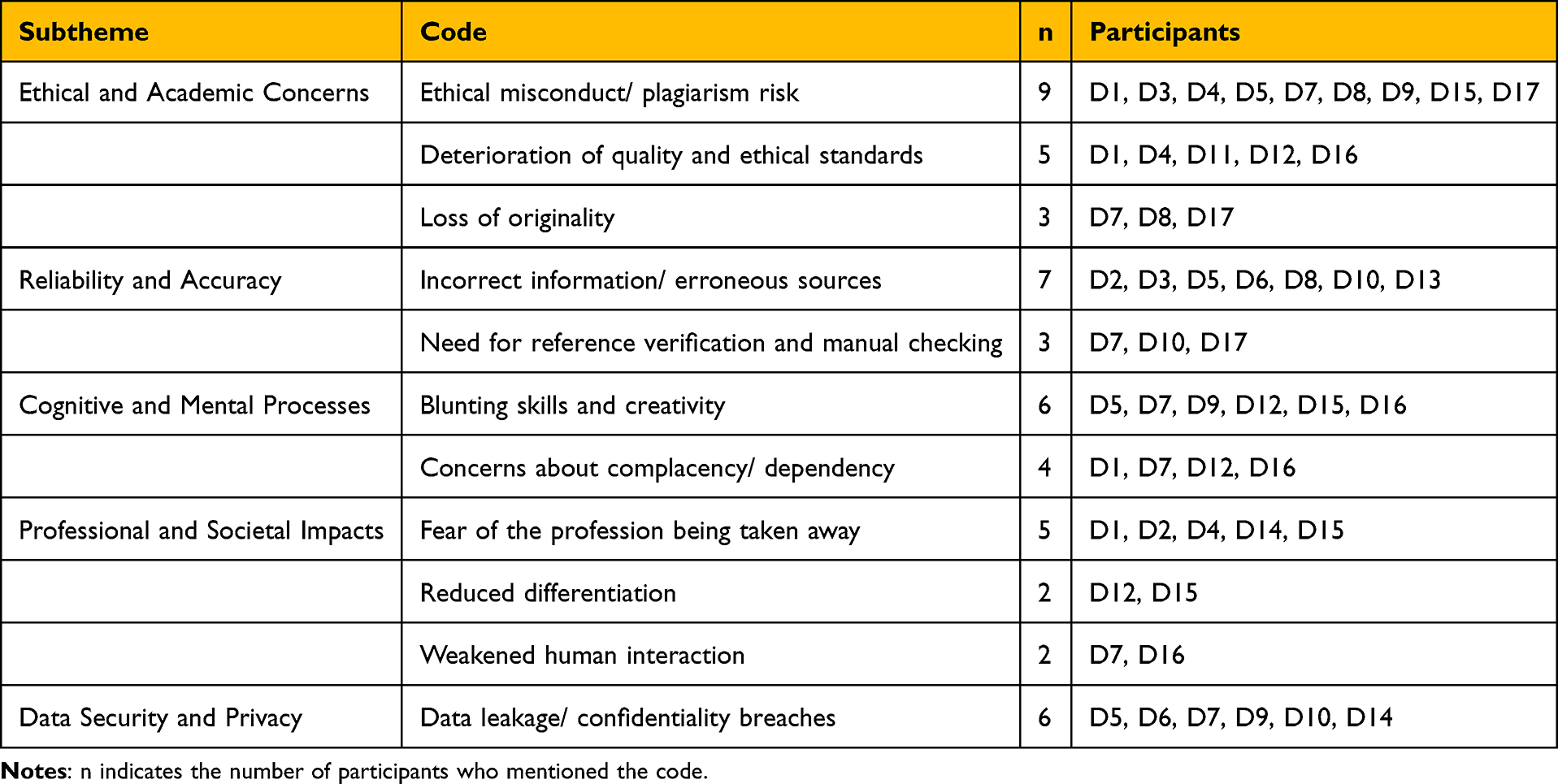 |
Table 4 Physicians’ Views on Reservations and Concerns Regarding the Use of AI Tools |
Training Needs and Expectations for Support
Participants’ accounts suggested that, although interest in and willingness to use AI-based research task tools were high, this willingness was largely shaped by the content and delivery of the training provided. Physicians stated that structured, accessible, and practice-oriented training is needed to enable effective and safe use of these tools. Participants emphasized the perceived inevitability of AI and the need to keep pace: “Yes, absolutely this is the future…” (D1) “I want to benefit more from the potential… but I don’t fully know what to use and how.” (D5). In particular, hands on, scenario-based trainings were emphasized as a way to make concrete how and within what boundaries AI tools can be used in academic workflows. Participants noted that theoretical instruction alone is insufficient; trainings supported by real academic scenarios, case-based examples, and step-by-step applications would facilitate learning. The inclusion of specialty-specific examples was also highlighted as an element that would increase relevance and engagement.
The accessibility of training materials and the use of plain language were identified as important needs, especially for physicians with less familiarity with technology. Participants indicated that explanations delivered at a slower pace, free of overly technical jargon and supported by visual aids, would facilitate learning. A preference for jargon-free, step-by-step instruction was common: “Yes, but it should be simple and hands-on…” (D6) “For those who are not very skilled with computers…” (D8). In this context, tiered training models tailored to different levels of prior experience were preferred.
Given time constraints, online trainings and digital platforms were frequently proposed forms of support. Participants stated that content accessible live or as recordings and available for repeated viewing would make the learning process more flexible. Flexible access via online and replayable formats was highlighted: “If there were online sessions that we could replay from recordings, that would be very helpful.” (D12). In addition, there was a clear need for guidance on how to position AI tools within a framework of ethical use, data security, and academic responsibility. Some participants emphasized the importance of early exposure to these technologies, particularly for younger physicians and future academic candidates, and noted that AI literacy is likely to become a critical skill for long-term academic productivity and competitiveness. Participants also requested explicit guidance on ethical and secure use: “We need guidance on what to do from an ethics and security perspective…” (D7). Overall, participants agreed that training on AI-based research task tools should not be limited to technical instruction but should offer a holistic approach with a clearly defined ethical and academic framework.
Discussion
This qualitative study demonstrates that internal medicine physicians’ perceptions and evaluations of AI-based research task tools are not unidimensional; rather, they reflect a multilayered perspective shaped by perceived benefit, ethical responsibility, and academic originality. The findings indicate that participants viewed AI tools as potentially useful supports in academic production processes; however, this perceived potential did not translate into unconditional acceptance. This pattern is consistent with recent work reporting a form of cautious optimism among physicians toward AI.3,4
One of the key findings was the marked heterogeneity across participants in their levels of familiarity and awareness regarding AI-based research task tools. This suggests that AI literacy is largely driven by individual interest, personal experience, and informal learning pathways. Prior studies across different countries and specialties have similarly shown that, in the absence of systematic and structured training, physicians tend to develop fragmented and intuitive familiarity with AI tools.2
Participants’ tendency to associate AI use primarily with technical stages such as literature searching, reference management, and language editing indicates that AI is positioned as an “assistive tool” within academic production. This aligns with arguments that generative AI cannot replace analytical thinking, scientific interpretation, or academic accountability.7,8 Indeed, the literature emphasizes that while AI-assisted tools may facilitate academic writing processes, intellectual contribution and scientific responsibility must remain with the researcher.5
Ethical concerns and academic integrity emerged as among the strongest and most salient themes in this study. Participants showed high awareness regarding plagiarism risk, loss of originality, and the accuracy of AI generated information. This finding suggests that ethical debates around the use of AI in academia are not merely theoretical but are also perceived as tangible concerns by physicians in practice settings.9,10 Consistently, international editorial bodies and publication ethics guidance recommend that AI be used in scholarly work in a transparent, limited, and auditable manner.11–13
Concerns regarding data security and privacy were particularly prominent in relation to sharing unpublished academic work and sensitive data with AI tools. This may be attributable to the fact that many AI-based tools operate via commercial platforms and that data storage policies are not always sufficiently transparent. Regulatory and normative frameworks such as the European Commission’s guidelines for trustworthy AI underscore that these concerns extend beyond individual preferences and constitute institutional and structural challenges.14
Participants’ statements about training needs further suggest that AI literacy is not solely a technical skill but a multidimensional competence that includes pedagogical and ethical components. The expressed need for hands-on, scenario-based training with clearly defined ethical boundaries indicates that AI integration should not evolve in an unplanned, ad hoc manner. This finding is consistent with scholarship advocating for the structured inclusion of AI in faculty development and continuing professional education programs.15
At a conceptual level, the findings also align with the Technology Acceptance Model (TAM), which is frequently used to explain technology adoption. Participants’ narratives suggest that, despite high perceived usefulness, perceived risks and ethical concerns may constrain intention to use.16 Similarly, when considered through selected RE-AIM components (reach and adoption), targeted brief educational sessions appear effective in raising awareness; however, long-term maintenance and behavioral integration likely require dedicated, longitudinal evaluation.17
In the literature, AI education has been addressed predominantly among medical students, whereas the experiences of specialist physicians in the context of academic production have been examined to a limited extent.1,2 By focusing on internal medicine physicians with high clinical workload and by centering academic production processes, this study contributes to addressing this gap. Moreover, the qualitative approach enabled an in depth understanding of physicians’ perceptions and concerns regarding AI.
Given the single-session format and the timing of interviews, findings should be interpreted as short-term reflections rather than evidence of sustained change.
In conclusion, the findings indicate that internal medicine physicians neither fully reject nor uncritically adopt AI-based research task tools. While physicians consider AI a potential support for academic work, they strongly emphasize that ethical responsibility, academic originality, and human oversight remain indispensable. These results suggest that sustainable integration of AI into academic medicine will depend on critical, ethically grounded, and structured educational approaches.
Limitations
This study has several limitations. It was conducted at a single national congress among volunteer internal medicine physicians, which may limit generalizability. Data were obtained from one-time semi-structured interviews, precluding assessment of long-term changes. As a qualitative study, it did not include a quantitative pre/post comparison or test a technology acceptance model, so causal inferences cannot be made. Participant demographic characteristics (eg, age and gender) were not collected due to the conference setting and the low-burden design, limiting subgroup comparisons and transferability. Finally, interviews were not audio recorded and were analyzed from written notes, which may have reduced the capture of nuanced responses.
Conclusion
This qualitative study suggests that a brief educational session elicited short-term reflections and clarified perceived opportunities and boundaries for using AI tools in research-related academic workflows. Participants emphasized the importance of ethical safeguards and human oversight, and highlighted the need for practical, scenario-based training; the effectiveness of brief interventions remains uncertain and warrants longitudinal evaluation.
Data Sharing Statement
The datasets generated and/or analyzed during the current study are available from the corresponding author on reasonable request.
Ethics Approval and Consent to Participate
Ethics approval for this study was obtained from the Antalya Training and Research Hospital Scientific Research Ethics Committee (date: 08 May 2025; decision no.: 8/8).
Consent for Publication
Written informed consent included permission for publication of anonymized responses and direct quotations.
Acknowledgments
This paper has been uploaded to ResearchSquare as a preprint: https://www.researchsquare.com/article/rs-8712167/v1‘.
Author Contributions
All authors made a significant contribution to the work reported, whether that is in the conception, study design, execution, acquisition of data, analysis and interpretation, or in all these areas; took part in drafting, revising or critically reviewing the article; gave final approval of the version to be published; have agreed on the journal to which the article has been submitted; and agreed to be accountable for all aspects of the work.
Funding
This study received no specific grant from any funding agency in the public, commercial, or not-for-profit sectors.
Disclosure
The authors declare that they have no competing interests.
References
1. Masters K. Artificial intelligence in medical education. Med Teach. 2019;41(9):976–10. doi:10.1080/0142159X.2019.1595557
2. Chan KS, Zary N. Applications and challenges of implementing artificial intelligence in medical education. Int J Med Educ. 2019;10:1–6. doi:10.5116/ijme.5c30.988d
3. Heinrichs H, Kies A, Nagel SK, Kiessling F. Physicians’ attitudes toward artificial intelligence in medicine: mixed methods survey and interview study. J Med Internet Res. 2025;27:e74187. doi:10.2196/74187
4. Negash S. Physicians’ attitudes and acceptance towards artificial intelligence in medical care: a qualitative study in Germany. Front Digit Health. 2025;7:1616827. doi:10.3389/fdgth.2025.1616827
5. Stokel-Walker C, Van Noorden R. What ChatGPT and generative AI mean for science. Nature. 2023;614(7947):214–216. doi:10.1038/d41586-023-00340-6
6. Braun V, Clarke V. Using thematic analysis in psychology. Qual Res Psychol. 2006;3(2):77–101. doi:10.1191/1478088706qp063oa
7. Thorp HH. ChatGPT is fun, but not an author. Science. 2023;379(6630):313. doi:10.1126/science.adg7879
8. Else H. Abstracts written by ChatGPT fool scientists. Nature. 2023;613(7944):423. doi:10.1038/d41586-023-00056-7
9. Yu S, Lee SS, Hwang H. The ethics of using artificial intelligence in medical research. Kosin Med J. 2024;39(4):229–237. doi:10.7180/kmj.24.140
10. Katirai A. The ethics of advancing artificial intelligence in healthcare: analyzing ethical considerations for Japan’s innovative AI hospital system. Front Public Health. 2023;11:1142062. doi:10.3389/fpubh.2023.1142062
11. UNESCO. Recommendation on the Ethics of Artificial Intelligence. Paris: United Nations Educational, Scientific and Cultural Organization; 2021.
12. COPE Council. Guidance on the Use of Artificial Intelligence Tools in Scholarly Publishing. COPE; 2023.
13. Lapeña JF. The updated World Association of Medical Editors (WAME) recommendations on chatbots and generative AI in relation to scholarly publications and International Committee of Medical Journal Editors (ICMJE) recommendations. Philipp J Otolaryngol Head Neck Surg. 2023;38(1):4. doi:10.32412/pjohns.v38i1.2127
14. European Commission. Ethics Guidelines for Trustworthy Artificial Intelligence. Brussels: European Commission; 2019.
15. Steinert Y, editor. Faculty Development in the Health Professions: A Focus on Research and Practice. Dordrecht: Springer; 2014.
16. Davis FD. Perceived usefulness, perceived ease of use, and user acceptance of information technology. MIS Q. 1989;13(3):319–340. doi:10.2307/249008
17. Glasgow RE, Harden SM, Gaglio B, et al. RE-AIM planning and evaluation framework: adapting to new science and practice. Front Public Health. 2019;7:64. doi:10.3389/fpubh.2019.00064
 © 2026 The Author(s). This work is published and licensed by Dove Medical Press Limited. The
full terms of this license are available at https://www.dovepress.com/terms
and incorporate the Creative Commons Attribution
- Non Commercial (unported, 4.0) License.
By accessing the work you hereby accept the Terms. Non-commercial uses of the work are permitted
without any further permission from Dove Medical Press Limited, provided the work is properly
attributed. For permission for commercial use of this work, please see paragraphs 4.2 and 5 of our Terms.
© 2026 The Author(s). This work is published and licensed by Dove Medical Press Limited. The
full terms of this license are available at https://www.dovepress.com/terms
and incorporate the Creative Commons Attribution
- Non Commercial (unported, 4.0) License.
By accessing the work you hereby accept the Terms. Non-commercial uses of the work are permitted
without any further permission from Dove Medical Press Limited, provided the work is properly
attributed. For permission for commercial use of this work, please see paragraphs 4.2 and 5 of our Terms.
Recommended articles
Perspectives of People with Type 2 Diabetes Mellitus Towards a Decision Aid Assessing Preferences of Glucose-Lowering Drugs: The Dilemma of Choosing
Roldan Munoz S, Mol PGM, de Vries F, van Dijk PR, Hillege H, Postmus D, de Vries ST
Patient Preference and Adherence 2025, 19:215-234
Published Date: 25 January 2025
Application of Artificial Intelligence Generated Content in Medical Examinations
Li R, Wu T
Advances in Medical Education and Practice 2025, 16:331-339
Published Date: 25 February 2025
Delving into the Practical Applications and Pitfalls of Large Language Models in Medical Education: Narrative Review
Li R, Wu T
Advances in Medical Education and Practice 2025, 16:625-636
Published Date: 18 April 2025

Training without Harm: Rethinking Ethics, Simulation and the Evolving Future of Medical Education in West Africa
Dike NO, Kajjimu J, Amissah-Arthur MB
Advances in Medical Education and Practice 2026, 17:575929
Published Date: 20 February 2026
Enhancing Medical Education: The Role of Artificial Intelligence Tools in the Teaching-Learning Process
Kalhori Z, Bajoulvand R, Zahedian M, Malgard S, Aalaa M, Asadzandi S
Advances in Medical Education and Practice 2026, 17:592844
Published Date: 23 May 2026