
Back to Journals » Journal of Multidisciplinary Healthcare » Volume 19
Impact of Patients’ Preoperative Psychological Baseline on Postoperative Voice and Quality of Life Following Pharyngo-Laryngectomy with Anterolateral Thigh Flap Reconstruction: A Preliminary Study
Authors Chung IH  , Chin WC, Mercado GAG, Fang TJ, Huang YS
Received 13 January 2026
Accepted for publication 18 June 2026
Published 14 July 2026 Volume 2026:19 596043
DOI https://doi.org/10.2147/JMDH.S596043
Checked for plagiarism Yes
Review by Single anonymous peer review
Peer reviewer comments 2
Editor who approved publication: Professor Veronica Swallow
I-Hang Chung,1,2 Wei-Chih Chin,1,2 Gabrielle Angela G Mercado,3,4 Tuan-Jen Fang,2,3,* Yu-Shu Huang1,2,*
1Department of Psychiatry, Linkou Chang Gung Memorial Hospital, Taoyuan, Taiwan; 2College of Medicine, Chang Gung University, Taoyuan, Taiwan; 3Department of Otorhinolaryngology Head and Neck Surgery, Linkou Chang Gung Memorial Hospital, Taoyuan, Taiwan; 4Department of Otolaryngology Head and Neck Surgery, St. Luke’s Medical Center, Manila, Philippines
*These authors contributed equally to this work
Correspondence: Yu-Shu Huang, Department of Psychiatry, Linkou Chang Gung Memorial Hospital, Taoyuan, Taiwan, Email [email protected] Tuan-Jen Fang, Department of Otorhinolaryngology Head and Neck Surgery, Linkou Chang Gung Memorial Hospital, Taoyuan, Taiwan, Email [email protected]
Background: Patients undergoing total pharyngo-laryngectomy with anterolateral thigh (ALT) free-flap neopharyngeal reconstruction require prolonged voice rehabilitation, yet whether preoperative psychological characteristics predict postoperative voice and quality-of-life (QoL) outcomes in this surgical population has not been examined. We aimed to characterize changes in voice and QoL after this surgery and to explore associations between baseline psychological characteristics and depressive somatic symptoms and these postoperative outcomes.
Methods: In this preliminary, single-center prospective study, 12 adult male patients undergoing primary or salvage total pharyngo-laryngectomy with simultaneous ALT free-flap neopharyngeal reconstruction were enrolled. Health-related QoL (EORTC QLQ-C30 and QLQ-H&N35), personality (Big Five Inventory, BFI), and depressive somatic symptoms (Depression and Somatic Symptoms Scale, DSSS) were assessed at baseline, 3 months, and 6 months postoperatively; the structured psychiatric interview (Mini International Neuropsychiatric Interview, MINI) was administered at baseline. Voice intelligibility (word correct rate), maximum phonation time, and speaking rate were assessed at baseline, 3 months, and 6 months postoperatively. Within-participant changes were analyzed with the Friedman test, and associations were examined using Spearman correlation.
Results: Cancer diagnoses included hypopharyngeal (n = 6) and laryngeal (n = 6) cancer; 10 of 12 participants underwent salvage surgery. EORTC QLQ-H&N35 speech problem scores decreased at 6 months (p = 0.036) and dry mouth scores at 3 months (p = 0.044) relative to baseline, while QLQ-C30 cognitive functioning decreased (p = 0.048) and sense problem scores increased (p = 0.011) over follow-up. Higher baseline neuroticism (r = − 0.928, p = 0.008) and DSSS total scores (r = − 0.928, p = 0.008) were negatively correlated with the 3-to-6-month change in word correct rate. Higher baseline DSSS was associated with poorer 6-month cognitive (r = − 0.678, p = 0.031) and social functioning (r = − 0.786, p = 0.007), and with higher pain scores (r = 0.663, p = 0.037).
Conclusion: In this preliminary cohort, voice intelligibility and several QoL domains improved relative to baseline after pharyngo-laryngectomy with ALT free-flap neopharyngeal reconstruction, while patient-reported cognitive function and sense problems declined. Higher baseline neuroticism and depressive somatic symptoms were associated with smaller postoperative gains. Given the small sample size and the absence of a comparator group, these exploratory findings require confirmation in larger studies before preoperative psychological screening can be recommended for routine clinical use.
Keywords: pharyngo-laryngectomy, anterolateral thigh free flap, voice intelligibility, quality of life, neuroticism, depression
Introduction
Head and neck cancer (HNC) was the seventh most common cancer worldwide in 2018, with estimated prevalence reaching 20 per 100,000.1
Despite advances in diagnosis and treatment, more than 65% of patients with squamous cell cancer of the head and neck develop recurrent or metastatic disease, affecting long-term quality of life with substantial long-term impact on voice and quality of life in survivors.2 Locally advanced laryngeal and hypopharyngeal cancers frequently require total pharyngo-laryngectomy, performed either as primary surgical treatment or as salvage after failed chemoradiation.3 While this procedure offers superior locoregional control in selected advanced disease,4 it results in permanent loss of laryngeal voice production, loss of a competent pharyngo-esophageal segment, and altered swallowing, all of which substantially impair quality of life (QoL).5
Several voice rehabilitation options are available for patients after pharyngo-laryngectomy. Non-surgical aids such as the electrolarynx and the pneumatic artificial larynx can produce intelligible speech, but their use is limited by mechanical sound quality and impracticality in everyday communication.6–8 Surgical voice restoration using tracheoesophageal puncture (TEP) with a voice prosthesis is currently the most widely adopted modern approach, particularly when combined with a free-flap neopharyngeal reconstruction. The tubed anterolateral thigh (ALT) free flap simultaneously reconstructs the digestive conduit and provides a vibratory segment for voice production, and has been reported to yield acceptable voice and swallowing outcomes after total laryngectomy.9,10
Despite intensive rehabilitation, prior studies have reported that more than a quarter of patients remain unable to communicate intelligibly one year after total laryngectomy.11 Among potential contributors to this variability, psychological factors are increasingly recognised: approximately 40–62% of patients with head and neck cancer experience clinically significant anxiety or depressive symptoms,12,13 and preoperative psychological status, including personality traits such as neuroticism and depressive somatic symptoms, has been associated with poorer postoperative QoL in other cancer populations.12–18 To date, however, no study has examined whether preoperative psychological characteristics predict postoperative voice and QoL outcomes in patients undergoing pharyngo-laryngectomy with simultaneous ALT free-flap neopharyngeal reconstruction.
Given the central importance of voice and QoL to recovery after pharyngo-laryngectomy, and given the established role of preoperative psychological status as a determinant of postoperative outcomes in other cancer populations, systematic investigation of baseline psychological characteristics as candidate predictors of outcomes in this specific surgical population is warranted. In this preliminary, single-center prospective study of consecutive adult patients undergoing primary or salvage total pharyngo-laryngectomy with simultaneous ALT free-flap neopharyngeal reconstruction, we aimed to (1) investigate changes in QoL (EORTC QLQ-C30 and QLQ-H&N35) and voice intelligibility from baseline to 3 and 6 months postoperatively, and (2) determine whether baseline personality trait and depressive symptoms are correlated with these postoperative outcomes.
Materials and Methods
Study Design and Ethics
This was a single-center, prospective observational study of consecutive adult patients undergoing primary or salvage total pharyngo-laryngectomy with simultaneous anterolateral thigh (ALT) free-flap neopharyngeal reconstruction at Chang Gung Memorial Hospital between 2021 and 2023. The study was conducted in accordance with the Declaration of Helsinki and was approved by the Institutional Review Board of Chang Gung Memorial Hospital (approval no. 202002169B0). All participants provided written informed consent after a detailed explanation of the study purpose and procedures.
Participants
Eligibility criteria were prespecified in the study protocol approved by our Institutional Review Board.
Inclusion Criteria
- adult patients (≥20 years) of either sex;
- undergoing total pharyngo-laryngectomy with simultaneous anterolateral thigh free-flap neopharyngeal reconstruction at our center (as primary or salvage surgery);
- fully conscious, with a mental state sufficiently stable to participate in the study procedures; and
- willing and able to provide written informed consent.
Exclusion Criteria
- unwillingness or inability to provide written informed consent;
- physical condition that precluded tolerance of, or compliance with, the scheduled study assessments; and
- inability to read, or inability to communicate in Mandarin Chinese or Taiwanese Hokkien, which would preclude completion of the study questionnaires and the structured psychiatric interview.
Cohort
Twelve consecutive patients meeting the eligibility criteria were enrolled. The IRB-approved criteria permitted enrolment of either sex; in this preliminary cohort, all twelve enrolled patients were male, with a mean age of 61.5 ± 8.21 years. The cohort comprised 6 patients with hypopharyngeal cancer (50%) and 6 with laryngeal cancer (50%); 2 patients (17%) underwent primary surgery (both pT3), and 10 patients (83%) underwent salvage surgery after prior chemoradiation (rT1 n = 1, rT2 n = 2, rT3 n = 1, rT4 n = 6). Detailed demographic and clinical characteristics are summarized in Table 1.
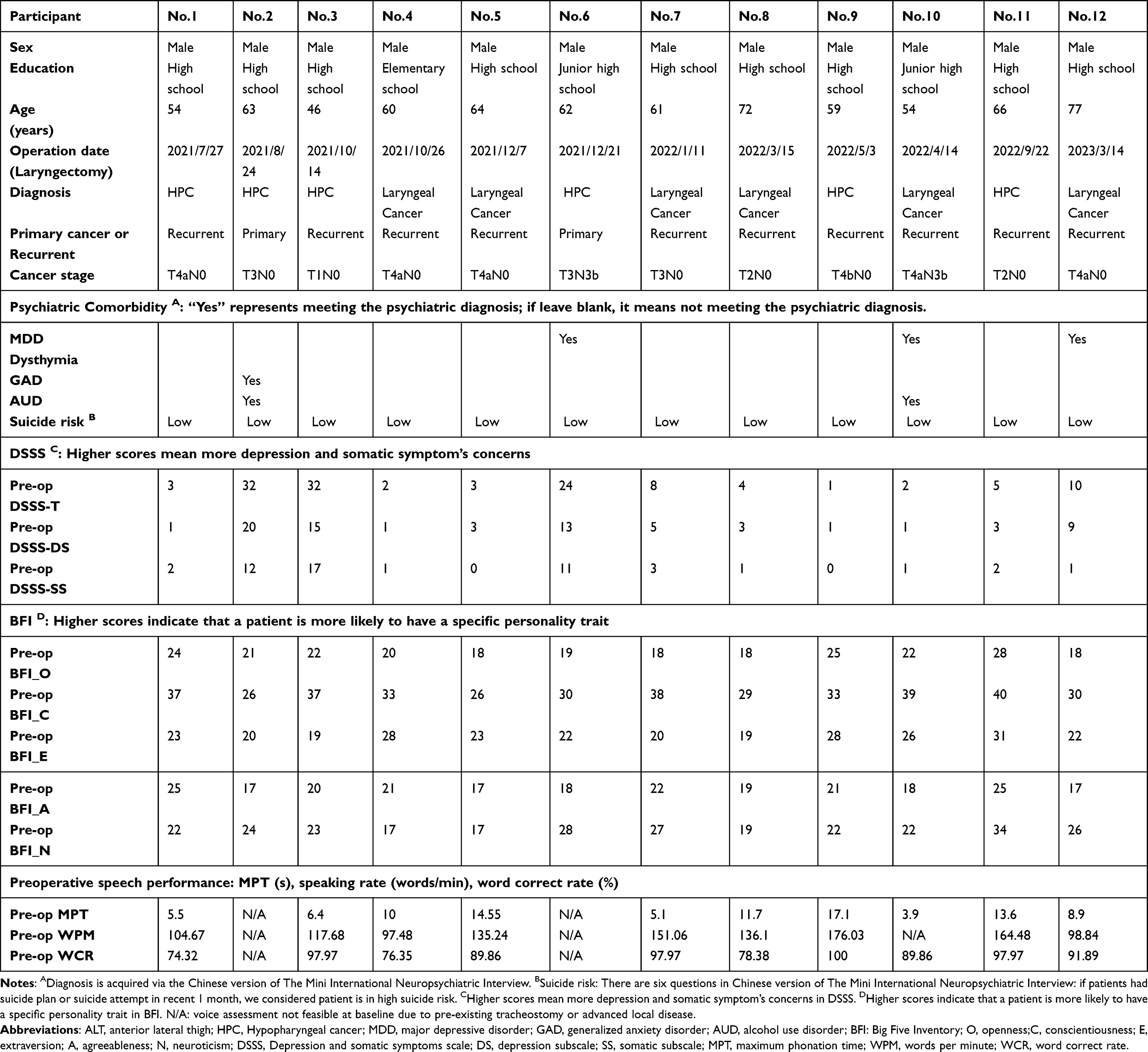 |
Table 1 Demographic Data of Patients Before Receiving ALT Free Flap Neopharyngeal Reconstruction |
The Surgical Technique
A long fasciocutaneous flap was centered on detected perforators typically measuring around 20 x 8cm2. The flap was divided into a proximal trapezoidal shaped flap and a distal dome shaped flap which were created for the purpose of esophageal and voice reconstruction respectively. The trapezoid flap design was correlated to the circumference discrepancy of the proximal and distal esophageal stump. The peripheral aspect of the dome shaped flap was de-epithelialized to create a curved central slip with a widened tail. While maintaining a >90 degree angle between the trapezoid and dome shape flap, the distal segment was tubularized by edge-to-edge closure of the de-epithelialized portion creating a J-shaped reconstructed neopharynx. Two separate stents were then inserted into the reconstructed neopharynx and neo-esophagus to maintain patency during the healing phase. The newly created J shape flap and neo-esophagus were placed onto the laryngopharyngeal defect for inset and anastomosis. The orifice of the reconstructed neopharynx is placed in a supero-lateral position in relation to the tracheostoma. Tension free closure and watertight sutures should be performed to prevent fistula and stricture formation. The technique has been described in our previous reports.10
Rehabilitation Program
Voice rehabilitation began three weeks postoperatively and followed a standardised programme delivered by a qualified speech-language pathologist. The recommended schedule was 6–8 sessions distributed over the first 3 to 6 months. Patients were instructed to practice continuous phonation to allow airflow through the reconstructed neopharynx, both for voice training and to mitigate the risk of stricture. During phonation, the patient occluded the tracheostoma with the thumb so that expiratory airflow was redirected into the reconstructed neopharynx, where vibration of the mucosal wall produced sound; articulation of the oral structures then shaped this sound into intelligible speech.
Individual variation in actual session attendance and at-home practice was not systematically quantified in this preliminary study.10
Outcome Assessments
Assessments were performed at three timepoints: baseline (preoperatively), 3 months postoperatively, and 6 months postoperatively. The numbers of participants completing each assessment at each timepoint are shown in the participant flow diagram (Figure 1) and detailed below.
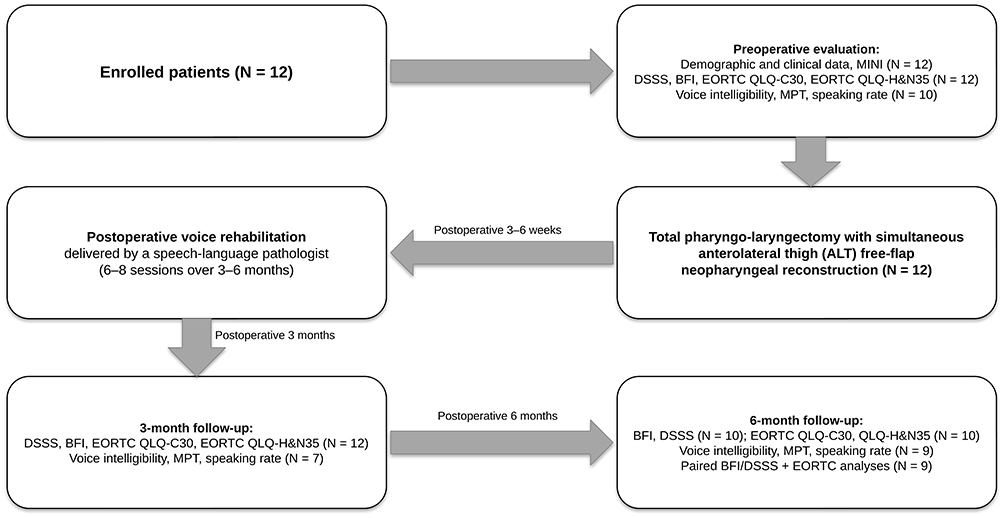 |
Figure 1 Participant flow diagram showing the number of participants completing each assessment at baseline, 3 months, and 6 months postoperatively. Reasons for differences in completion rates across timepoints and between instruments are detailed in Methods Section 2.5.4. Abbreviations: ALT, anterolateral thigh; BFI, Big Five Inventory; DSSS, Depression and Somatic Symptoms Scale; EORTC, European Organisation for Research and Treatment of Cancer; MINI, Mini International Neuropsychiatric Interview; MPT, maximum phonation time. |
Primary Outcome—Quality of Life
Quality of life (QoL) was assessed using the Taiwanese Mandarin versions of the European Organization for Research and Treatment of Cancer Quality of Life Questionnaire Core 30 (EORTC QLQ-C30) and Head and Neck module (EORTC QLQ-H&N35).19,20 For both questionnaires, raw scores are linearly transformed to a 0–100 scale.20 On the functional scales, the global QoL scale, and the summary score, higher scores indicate better functioning; on the symptom scales, higher scores indicate greater symptom burden. The Cronbach’s alpha coefficients of all scales were ≥0.70 in our cohort. EORTC questionnaires were self-administered under the supervision of a research assistant; for participants with reading difficulty, items were read aloud verbatim by the research assistant without further explanation.
Numbers completing the EORTC questionnaires were: baseline n = 12; 3 months n = 12; 6 months n = 10. Reasons for non-completion at the 6-month timepoint are described in Reasons For Non-Completion At The 6-Month Timepoint.
Secondary Outcome—Voice Intelligibility and Temporal Speech Measures
Voice intelligibility was assessed using a validated 74-item Mandarin two-syllable word list comprising 16 vowels and 21 consonants, with tones 1–4 approximately evenly distributed across items. Recordings were performed in a sound-attenuated room using a unidirectional dynamic microphone (Shure SM48; Shure Brothers Inc., USA) at a microphone-to-mouth distance of 10 cm and an angle of 45°. Recordings were rated by a qualified speech-language pathologist who was trained in this standardized protocol. To minimize rater bias, all recordings were de-identified and presented to the rater in randomized order, blinded to the participant’s identity, postoperative timepoint, medical history, and psychological assessment results. Although the rater was the same speech-language pathologist who delivered the rehabilitation program, the standardized de-identification and randomization of recordings during the scoring procedure was intended to mitigate this potential source of bias. Maximum phonation time (MPT) was determined as the longest sustained duration of the vowel/a/at comfortable pitch and loudness. Speaking rate (words per minute) was derived from a continuous reading sample with pauses defined as silence > 250 ms. The word correct rate, defined as the percentage of correctly produced target words, was used as the primary intelligibility metric. The vowel, consonant, phoneme, and tone correct rates were also recorded for descriptive purposes.
Numbers completing the voice intelligibility assessment were: baseline n = 10; 3 months n = 7; 6 months n = 9. At baseline, voice assessment was not feasible in 2 participants because of pre-existing tracheostomy or advanced local disease that precluded a reliable preoperative voice recording. At 3 months, 5 of the 12 enrolled participants had not yet recovered sufficiently for voice assessment (for example, incomplete wound healing or stent still in situ); a subset of these patients underwent their first postoperative voice assessment at 6 months, which explains why the 6-month (n = 9) exceeds the 3-month (n = 7). Paired 3-month and 6-month voice data were available for 6 participants.
Predictor Variables—Psychological Assessments
Four domains were assessed at baseline and at each follow-up timepoint:
- Demographic and clinical characteristics: Sex, age, body mass index, comorbidities, tumor site, TNM stage, primary versus salvage indication, and prior (chemo)radiation history were retrieved from medical records.
- Psychiatric evaluation: The Chinese version of the Mini-International Neuropsychiatric Interview (MINI)21 was administered at baseline by the first author, a board-certified psychiatrist, to screen for current psychiatric disorders defined according to the Diagnostic and Statistical Manual of Mental Disorders, Fifth Edition.22 The MINI is a structured diagnostic interview that ensures consistency across administrations.
- Personality: The Big Five Inventory (BFI)23,24 is a 33-item self-report questionnaire assessing five personality domains (extraversion, agreeableness, conscientiousness, neuroticism, and openness). Higher domain scores indicate greater expression of the corresponding trait. Cronbach’s alpha coefficients of the BFI typically range from 0.75 to 0.90.
- Depressive and somatic symptoms: The Depression and Somatic Symptoms Scale (DSSS)25 is a 22-item self-report instrument comprising a 12-item depression subscale (DS) and a 10-item somatic subscale (SS). Higher scores indicate greater symptom severity. Cronbach’s alpha values of the DSSS and its subscales range from 0.73 to 0.94. Numbers completing the BFI and DSSS were: baseline n = 12; 3 months n = 12; 6 months n = 10. Reasons for non-completion at the 6-month timepoint are described in Reasons for Non-Completion at the 6-Month Timepoint.
Reasons for Non-Completion at the 6-Month Timepoint
At the 6-month timepoint, one of the 12 enrolled participants was lost to follow-up before the visit and contributed no 6-month data. Among the 11 participants who attended the 6-month visit, one returned the BFI and DSSS but not the EORTC, and a different participant returned the EORTC but not the BFI and DSSS. Consequently, the 6-month BFI/DSSS and the 6-month EORTC each had n = 10 contributors. Because the missing individual differed between the two instruments, paired analyses combining 6-month EORTC and 6-month BFI/DSSS data were performed on n = 9 participants with complete data on both measures (see Statistical Analysis).
Personnel and Blinding
Voice rehabilitation was delivered by a qualified speech-language pathologist; the same speech-language pathologist also rated speech intelligibility from the de-identified, randomly ordered recordings, blinded to participants’ identity, postoperative timepoint, medical history, and psychological assessment results (see Secondary Outcome—Voice Intelligibility and Temporal Speech Measures). Psychiatric evaluation (MINI) was performed by the first author, a board-certified psychiatrist. Self-report questionnaires (BFI, DSSS, EORTC QLQ-C30, QLQ-H&N35) were completed by participants under the supervision of a research assistant who did not deliver clinical care.
Statistical Analysis
We used SPSS, version 20 (SPSS, Inc., Chicago, IL, USA) to analyze these data. Variables were presented as either mean ± standard deviation or frequency. Given the small sample size and predominantly non-normal distribution of outcome variables, non-parametric tests were used throughout. Within-participant changes across the three timepoints were assessed using the Friedman test. Associations between baseline psychological predictors (BFI domain scores, DSSS total and subscale scores) and changes in QoL and voice outcomes from baseline to 6 months were examined using Spearman rank correlation. Given the small sample size and the exploratory, hypothesis-generating nature of this preliminary study, no formal correction for multiple comparisons (eg., Bonferroni or false discovery rate) was applied, because such correction in a small sample may obscure preliminary signals worth pursuing; the reported associations should accordingly be regarded as candidate hypotheses rather than confirmed relationships. A p value of less than 0.05 is reported as a nominal indicator of association throughout
Results
Table 1 summarizes the demographic and clinical characteristics of the cohort and the baseline psychiatric assessment, voice intelligibility and temporal speech measures. All 12 participants were male with mean age 61.50±8.21 years. Cancer diagnoses comprised hypopharyngeal cancer (n = 6, 50%) and laryngeal cancer (n = 6, 50%); 2 patients (17%) underwent primary surgery (both pT3) and 10 (83%) underwent salvage surgery after prior (chemo)radiation. The Mini International Neuropsychiatric Interview showed that 3 participants met criteria for major depressive disorder, 2 for alcohol use disorder, and 1 for generalized anxiety disorder. None of the 12 participants were rated as having moderate or high suicide risk on the MINI.
BFI and DSSS scores were obtained at baseline, 3 months, and 6 months postoperatively (Table 2). DSSS total and subscale scores did not change appreciably across the three timepoints. BFI conscientiousness and agreeableness scores decreased across the follow-up period (Friedman test, p = 0.003 for the omnibus comparison). Post hoc pairwise comparisons (Wilcoxon signed-rank) indicated that baseline conscientiousness and agreeableness scores were higher than the corresponding scores at both 3 and 6 months postoperatively, whereas the 3- and 6-month scores did not differ from each other.
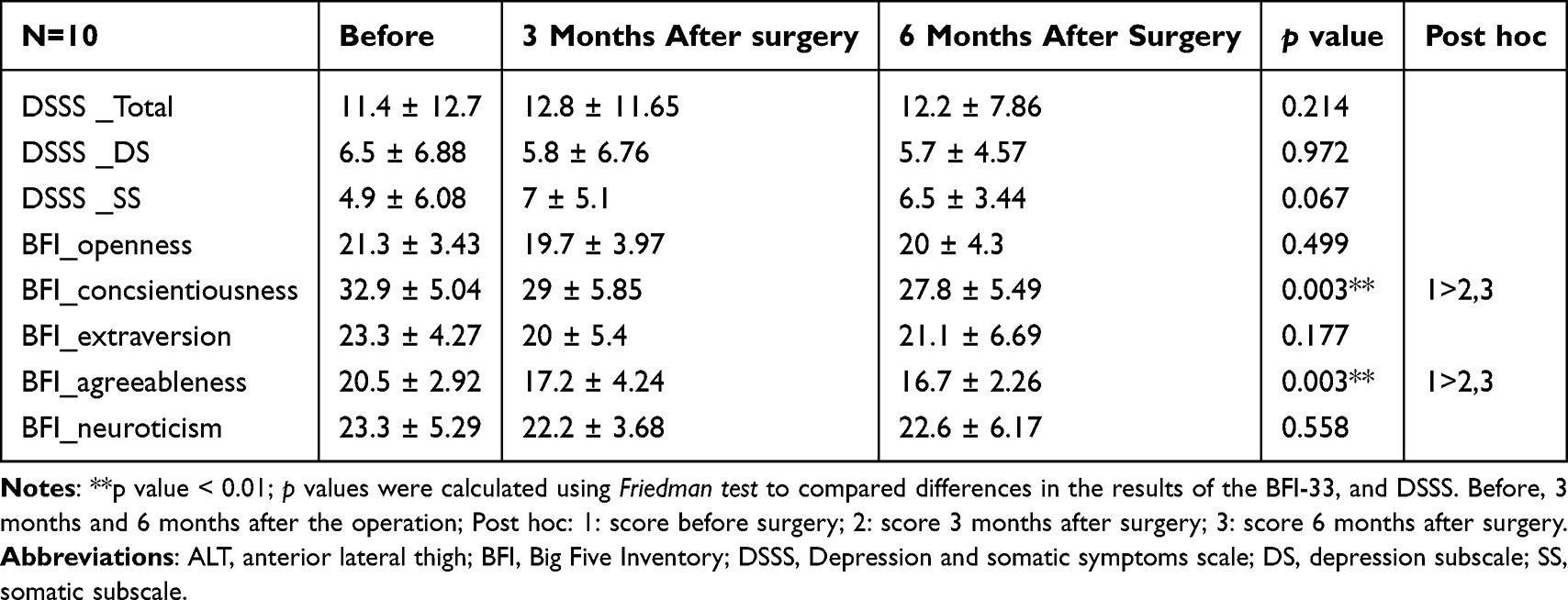 |
Table 2 Comparison of DSSS and BFI Scores of Participants Before, 3 Months and 6 Months After the ALT Free Flap Neopharyngeal Reconstruction |
We evaluated participants’ quality of life by EORTC QLQ-C30 and H&N35 at the baseline and during follow-up (Table 3). On the QLQ-C30, the cognitive functioning subscale score decreased over the follow-up period (Friedman p = 0.048); post hoc pairwise comparisons indicated that the baseline cognitive functioning score was higher than at both 3 and 6 months postoperatively, with no difference between 3 and 6 months. On the QLQ-H&N35, sense problem scores increased over follow-up (p = 0.011), with post hoc pairwise comparisons indicating higher sense problem scores at both 3 and 6 months than at baseline, and no difference between 3 and 6 months. Speech problem scores on the QLQ-H&N35 decreased at 6 months relative to baseline (omnibus p = 0.036). Dry mouth scores decreased at 3 months relative to baseline (p = 0.044). Mouth opening scores also showed an overall change across timepoints (p = 0.045), although no specific pairwise difference between timepoints was identified on post hoc testing.
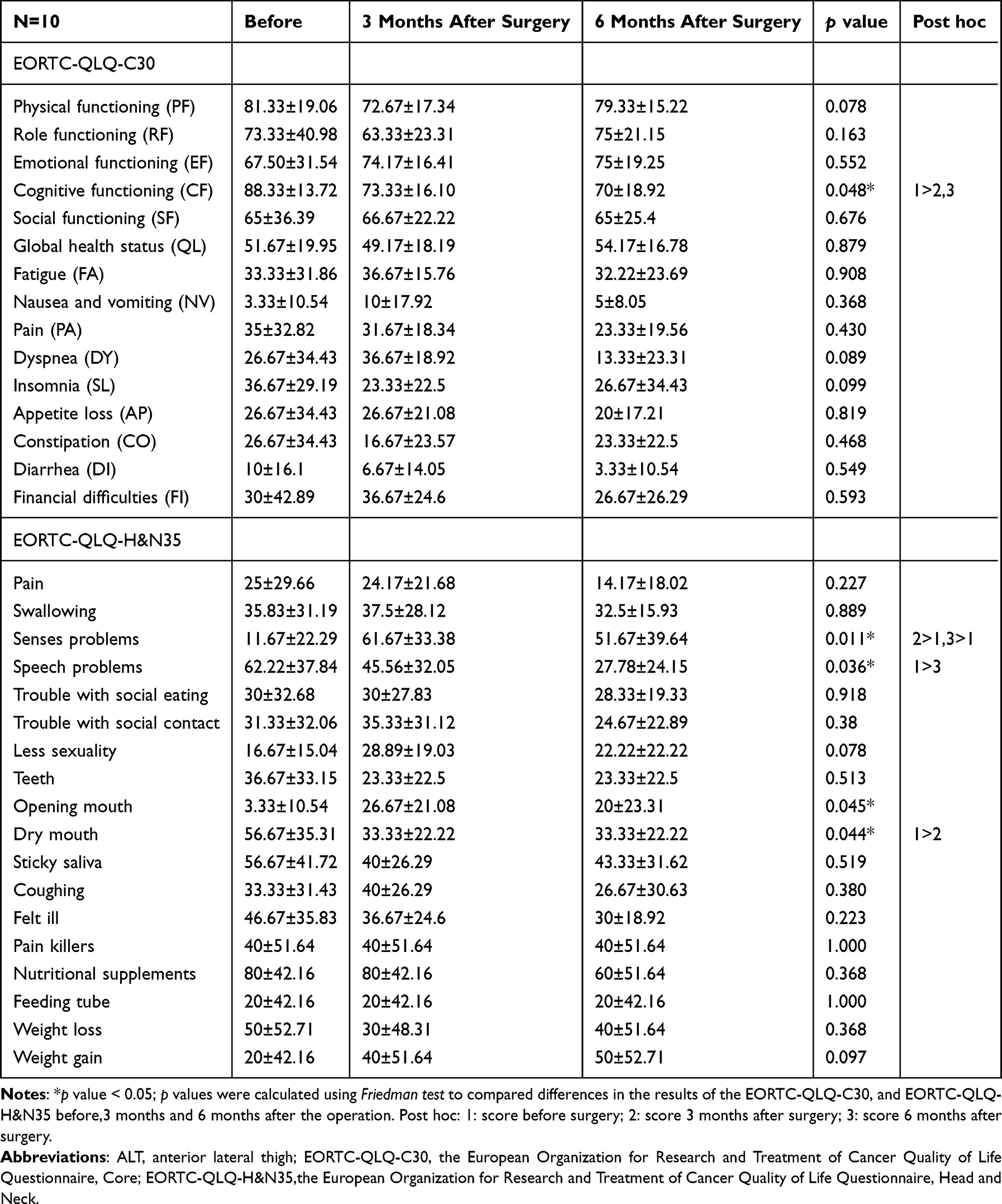 |
Table 3 Comparison of EORTC-QLQ-C30 and EORTC-QLQ-H&N35 Scores of Participants Before, 3 Months and 6 Months After the ALT Free Flap Neopharyngeal Reconstruction |
We then examined correlations between baseline depressive somatic symptoms (DSSS) and 6-month QoL scores (Table 4; paired analyses, n = 9, with reasons for non-completion described in Methods Reasons for Non-Completion at the 6-Month Timepoint). DSSS total score positively correlated with pain (r=0.663, p=0.037) and negatively correlated with cognitive function (r=−0.678, p=0.031) and social function (r=−0.786, p=0.007). DSSS depressive subscale’s score positively correlated with fatigue (r=0.655, p=0.04), pain (r=0.680, p=0.031), felt ill (r=0.698, p=0.025), and negatively correlated with cognitive function (r=−0.748, p=0.013) and social function (r=−0.799, p=0.006). DSSS somatic subscale’s score positively correlated with fatigue (r=0.643, p=0.045), pain (r=0.730, p=0.016), dry mouth (r=0.671, p=0.034), sticky saliva (r=0.736, p=0.015) and negatively correlated with social function (r=−0.784, p=0.007).
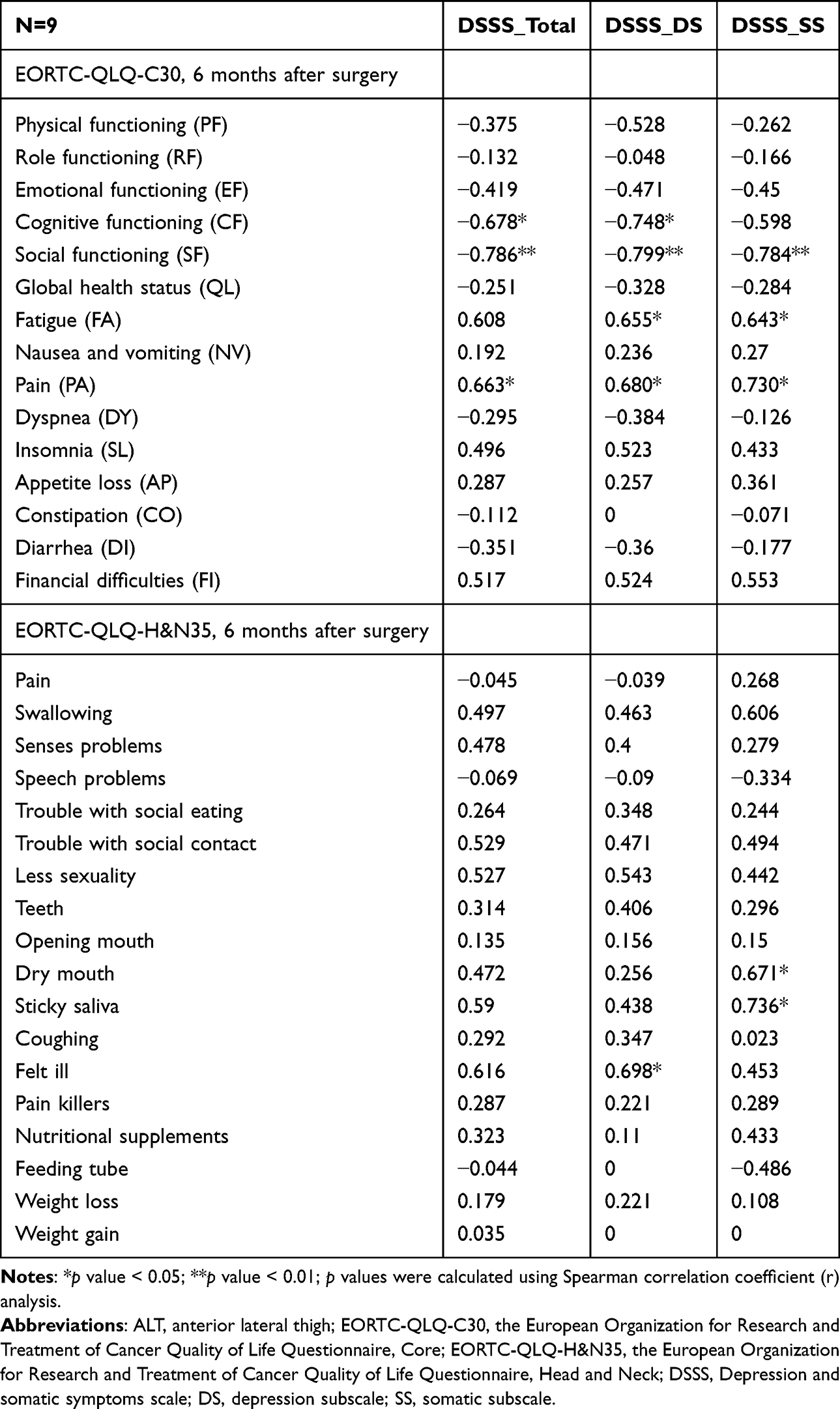 |
Table 4 Correlation of EORTC-QLQ-C30 and EORTC-QLQ-H&N35 Scores of Participants 6 Months After the ALT Free Flap Neopharyngeal Reconstruction and Preoperative DSSS |
Correlations between baseline BFI domain scores and 6-month emotional and QoL outcomes are shown in Table 5 (paired analyses, n = 9). Higher baseline neuroticism was correlated with higher 6-month scores for fatigue (r = 0.740, p = 0.023), pain (r = 0.714, p = 0.031), insomnia (r = 0.694, p = 0.038), and sticky saliva (r = 0.760, p = 0.017), and with higher DSSS total (r = 0.698, p = 0.037) and somatic subscale scores (r = 0.678, p = 0.045). Higher baseline agreeableness was correlated with higher dyspnea scores (r = 0.804, p = 0.009) and with lower “felt ill” scores (r = −0.688, p = 0.040). Higher baseline extraversion was correlated with lower DSSS depression subscale scores (r = −0.705, p = 0.034). Higher baseline openness was correlated with lower QLQ-H&N35 speech problem scores (r = −0.710, p = 0.032).
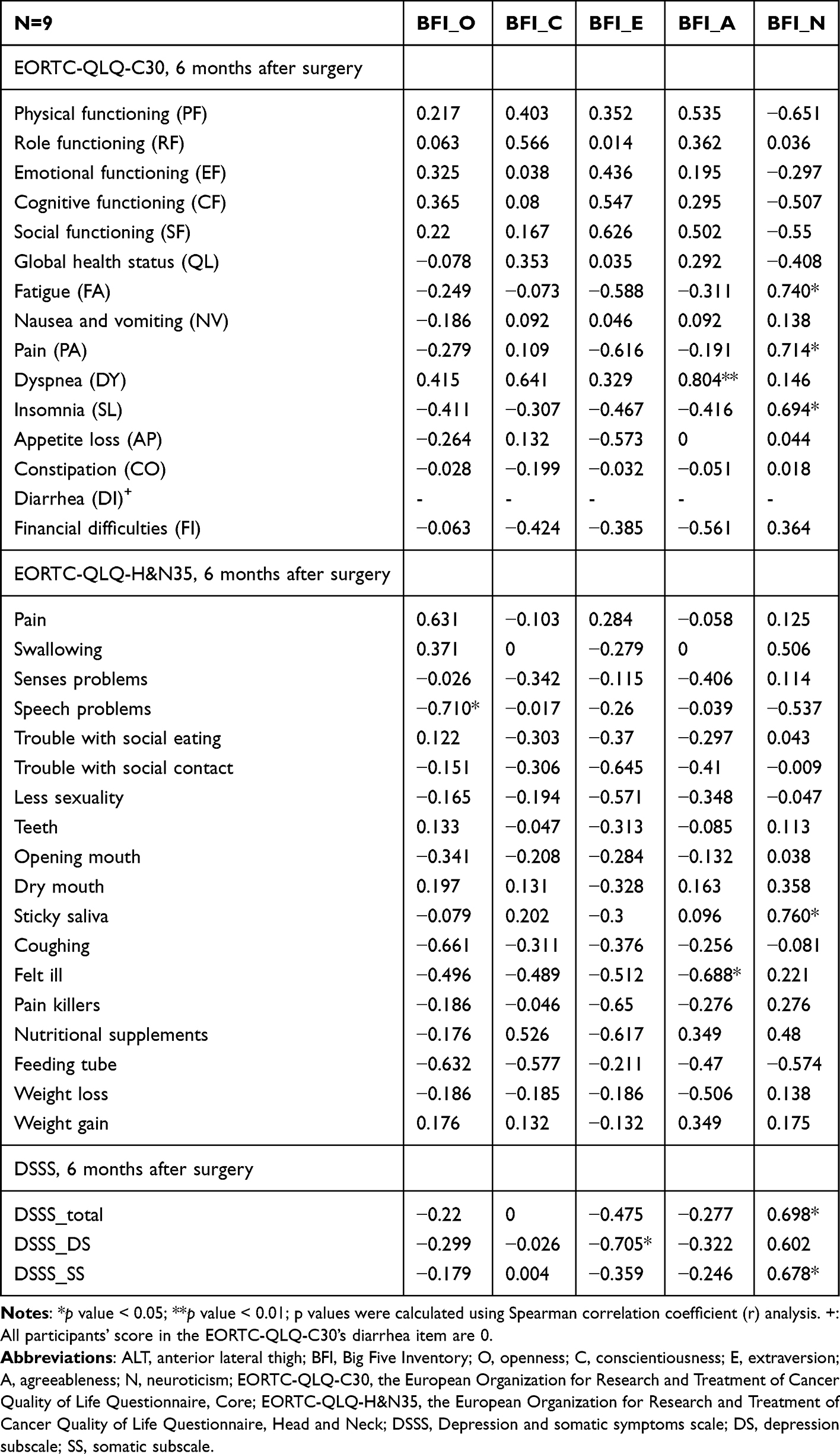 |
Table 5 Correlation of EORTC-QLQ-C30, EORTC-QLQ-H&N35 and DSSS Scores of Participants 6 Months After the ALT Free Flap Neopharyngeal Reconstruction and Preoperative BFI |
Finally, we examined the relationship between baseline psychological measures (BFI domain scores and DSSS) and the change in voice performance, measured by word correct rate, maximum phonation time (MPT), and speaking rate (words per minute), between the 3-month and 6-month assessments (Table 6; n = 6 with complete paired 3- and 6-month voice data, as described in Methods Reasons for Non-Completion at the 6-Month Timepoint). Higher baseline neuroticism was negatively correlated with the change in word correct rate (r = −0.928, p = 0.008), and higher baseline DSSS total scores were similarly negatively correlated with the change in word correct rate (r = −0.928, p = 0.008). Correlations with the change in MPT and the change in speaking rate did not reach the conventional nominal threshold of p < 0.05 in this small paired sample (full values shown in Table 6).
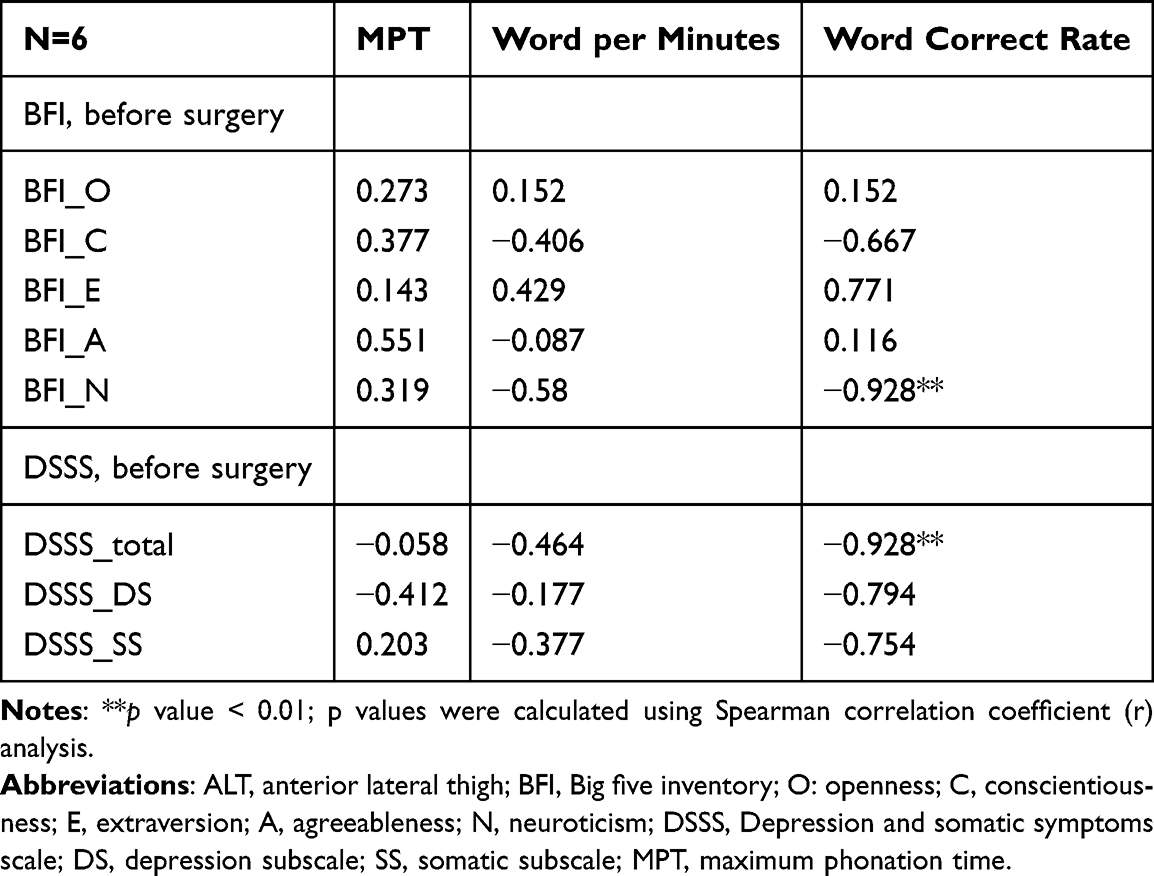 |
Table 6 Correlation of Improvement of MPT, Word per Minutes and Word Correction Test of Participants Between 3 Months to 6 Months After the ALT Free Flap Neopharyngeal Reconstruction and Preoperative BFI and DSSS |
Discussion
In this preliminary, single-center prospective study, we examined whether baseline psychological characteristics were associated with postoperative voice and quality-of-life (QoL) outcomes in 12 patients undergoing primary or salvage total pharyngo-laryngectomy with simultaneous anterolateral thigh (ALT) free-flap neopharyngeal reconstruction. To our knowledge, this is among the first prospective reports to examine preoperative psychological characteristics as candidate predictors of postoperative outcomes in this specific surgical population.
Higher baseline neuroticism scores were associated with poorer postoperative QoL across multiple domains, while higher openness, extraversion, and agreeableness were associated with more favorable postoperative QoL. Higher baseline DSSS total scores were similarly associated with lower postoperative cognitive and social functioning, and with higher pain and fatigue scores. These directional patterns are broadly consistent with prior work in other cancer populations that has linked neuroticism and pretreatment depressive symptoms to worse postoperative QoL trajectories.26–29
Tsao et al, using a J-shaped flap with tracheoesophageal puncture and voice prosthesis after total laryngectomy, reported acceptable voice intelligibility and acoustic outcomes at follow-up.9 Our own group has previously reported that voice intelligibility after ALT free-flap reconstruction is broadly comparable to that achievable with a pneumatic artificial larynx.10 The intelligibility improvement observed in the present cohort is consistent with these prior reports and supports the feasibility of simultaneous ALT free-flap neopharyngeal reconstruction as a voice-restorative option in this population, while acknowledging that voice produced through a reconstructed neopharyngeal segment remains acoustically distinct from normal laryngeal voice. Consistent with these psychological-predictor findings, higher baseline DSSS total and BFI-neuroticism scores were negatively associated with the magnitude of postoperative gains in word correct rate.
Several QoL domains showed favorable change over follow-up. Most notably, EORTC QLQ-H&N35 dry mouth scores decreased at 3 months postoperatively (p = 0.044), consistent with previous reports of improved subjective xerostomia after free-flap reconstruction in selected patients.30 Pain and insomnia scores did not change appreciably across follow-up. Given the absence of a comparison group, we cannot determine whether reconstruction itself altered the trajectory of these symptoms; the observation merely indicates that pain and insomnia did not appear to worsen during the 6-month postoperative window in this preliminary cohort.31–33 By contrast, baseline DSSS total score was associated with higher pain and fatigue scores postoperatively and with lower postoperative cognitive and social functioning. These observations are consistent with prior reports of associations between depressive symptoms and impaired QoL after total laryngectomy.34 Although the underlying mechanisms were not examined in the present study, prior work has proposed inflammatory and central-pain pathways linking depressive symptoms to somatic outcomes;35,36 these mechanistic hypotheses cannot be tested with the present design and should be evaluated in dedicated future studies.
Patient-reported cognitive function, as captured by the EORTC QLQ-C30 cognitive functioning subscale, declined over the postoperative period. Several considerations are relevant in interpreting this finding. First, this subscale is a brief subjective measure of self-perceived concentration and memory, and is not equivalent to a formal neuropsychological assessment; the observed decline therefore reflects the patient’s experience of cognitive change rather than a measured cognitive deficit. Second, most of our cohort underwent salvage surgery after prior chemoradiation (10/12 patients), and prior cytotoxic and radiotherapy treatment is itself associated with subjective cognitive complaints in head and neck cancer survivors.37 Postoperative cognitive change has also been described in surgical head and neck cancer cohorts more broadly, with older age, lower educational attainment, and pre-existing cognitive vulnerability identified as risk factors.38 Given the small sample size, we cannot disentangle these factors in the present analysis, and the trajectory of postoperative cognitive complaints in this population warrants dedicated investigation using validated cognitive testing in future, larger studies.
Postoperative BFI scores for conscientiousness and agreeableness decreased relative to baseline. Personality traits are generally considered stable cognitive and affective response patterns that are established during childhood and adolescence and are modified only modestly thereafter,39 although measurable changes can follow targeted intervention or major life events.40 Diagnosis and surgical treatment of advanced head and neck cancer constitute such an event and may be experienced as traumatic.41,42 An important alternative interpretation, however, is that short-term changes in BFI scores over a 6-month interval may partly reflect transient mood-related variation rather than enduring trait change; this interpretation is consistent with the concurrent fluctuations in depressive symptoms observed in our cohort. Longer follow-up will be required to determine whether these postoperative changes in BFI domain scores represent a temporary, mood-driven shift or a more sustained alteration of trait expression following extensive pharyngo-laryngectomy and reconstruction.
Although the preliminary nature of these findings precludes strong clinical recommendations, our results suggest that routine assessment of preoperative psychological characteristics, including personality traits and depressive somatic symptoms, may add useful prognostic information when counselling patients before total pharyngo-laryngectomy with ALT free-flap reconstruction. Patients with higher baseline neuroticism or depressive somatic symptom scores may benefit from earlier and more intensive perioperative psychological support and individualized rehabilitation planning, with the goal of optimizing engagement with the prolonged speech rehabilitation program that this surgery requires; motivation and adherence during rehabilitation have previously been identified as predictors of communication outcomes after total laryngectomy.11 Whether targeted preoperative psychological intervention can improve postoperative voice and QoL outcomes in this population is an open question and should be the subject of dedicated prospective studies.
Several limitations should be considered when interpreting these findings. First, the sample size was small (n = 12), and the cohort was single-center, exclusively male, and predominantly comprised salvage cases (10/12); these features limit the generalizability of our results. Second, the study was conducted without a comparator arm and observed within-patient changes therefore cannot be attributed specifically to the reconstructive technique or the rehabilitation program. Third, the small sample size precluded multivariable adjustment for potential confounders, including T stage, primary versus salvage indication, prior (chemo)radiation, postoperative complications, age, and comorbidities; the associations we report should therefore be interpreted as unadjusted exploratory signals. Fourth, given the exploratory, hypothesis-generating nature of the study, we did not apply formal correction for multiple comparisons, because such correction in a small sample may obscure preliminary signals worth pursuing; the reported associations should accordingly be regarded as candidate hypotheses rather than confirmed relationships. Fifth, the number of participants completing each assessment varied across timepoints, particularly for voice measures, where preoperative assessment was not feasible in patients with pre-existing tracheostomy or advanced local disease, and where early postoperative recovery delayed initial voice assessment in a subset of patients; these patterns are summarized in Figure 1. Sixth, candidate mediating mechanisms—including rehabilitation adherence, coping behaviors, and biological markers of inflammation—were not directly measured, and the mechanistic statements made here remain speculative. Seventh, outcomes were primarily patient-reported, supplemented by a single perceptual voice intelligibility measure (word correct rate); objective neuropsychological testing and formal acoustic-perceptual analysis by independent raters were beyond the scope of this preliminary report. Eighth, two arrangements limited full assessor independence in this preliminary study and are explicitly acknowledged: (1) the same investigator (a board-certified psychiatrist) administered the structured psychiatric interview and contributed to data analysis, and although self-report instruments and outcome assessments were performed independently, full assessor blinding to predictor scores during analysis was not feasible; (2) the speech-language pathologist who rated voice intelligibility was the same individual who delivered the rehabilitation programme. To mitigate the latter, all recordings were de-identified and presented in randomized order to the rater, who was blinded to the participant’s identity, postoperative timepoint, medical history, and psychological assessment results during scoring; nevertheless, residual familiarity arising from the clinical rehabilitation relationship could not be entirely eliminated. Ninth, follow-up was limited to 6 months; longer-term trajectories of voice, QoL, and psychological status remain to be characterized. Tenth, detailed acoustic and aerodynamic analysis (eg., fundamental frequency, jitter, shimmer, harmonics-to-noise ratio, and maximum phonation time) was not included in the present preliminary report, in part because the interpretation of standard acoustic parameters developed for normal laryngeal voice remains under investigation in alaryngeal speakers producing voice through a reconstructed neopharyngeal segment; detailed acoustic-perceptual characterization in this surgical population is warranted in dedicated future studies with appropriate methodological framing.
Future studies should address these limitations by recruiting larger multicenter cohorts, including primary and salvage subgroups in balanced proportions, incorporating a comparator surgical or rehabilitation arm, directly measuring candidate mediators of the psychological-outcome association (in particular rehabilitation engagement and adherence).
Conclusions
In this preliminary, single-center prospective study of 12 patients undergoing primary or salvage total pharyngo-laryngectomy with simultaneous ALT free-flap neopharyngeal reconstruction, voice intelligibility increased relative to baseline over the 6-month postoperative follow-up, and several quality-of-life domains showed favorable change. Higher baseline neuroticism and higher DSSS scores were associated with smaller postoperative gains in voice intelligibility and across several quality-of-life domains, while higher baseline openness, extraversion, and agreeableness were associated with more favorable quality-of-life outcomes. Given the small sample size and the absence of a comparison group, these findings should be interpreted as exploratory and hypothesis-generating. They suggest that preoperative assessment of personality traits and depressive somatic symptoms may add useful prognostic information at the perioperative counselling stage and could inform individualized psychological support and rehabilitation planning for patients undergoing this surgery, although confirmation in adequately powered prospective studies is required before such an approach can be recommended for routine clinical use.
Abbreviations
ALT: anterolateral thigh; BFI: Big Five Inventory; DSSS: Depression and somatic symptoms scale; EORTC-QLQ-C30: the European Organization for Research and Treatment of Cancer Quality of Life Questionnaire, Core; EORTC-QLQ-H&N35: the European Organization for Research and Treatment of Cancer Quality of Life Questionnaire, Head and Neck.
Acknowledgments
This study was partially supported by the Taiwan Ministry of Science and Technology grant (MOST110-2314-B-182A-144), the National Science and Technology Council (NSTC112-2314-B-182A-025-MY3) and Chang Gung Medical Research Program (CMRPG3N1312) to Tuan-Jen Fang. We want to thank Ms. I Tang to help the statistical analysis.
Disclosure
The authors declare that they have no competing interests in this work.
References
1. Bray F, Ferlay J, Soerjomataram I, Siegel RL, Torre LA, Jemal A. Global cancer statistics 2018: GLOBOCAN estimates of incidence and mortality worldwide for 36 cancers in 185 countries. CA Cancer J Clin. 2018;68(6):394–16. doi:10.3322/caac.21492
2. Chow LQM. Head and neck cancer. N Engl J Med. 2020;382(1):60–72. doi:10.1056/NEJMra1715715
3. Pfister DG, Spencer S, Brizel DM, et al. Head and neck cancers, Version 2.2014. Clinical practice guidelines in oncology. J Natl Compr Canc Netw. 2014;12(10):1454–1487. doi:10.6004/jnccn.2014.0142
4. Brana I, Siu LL. Locally advanced head and neck squamous cell cancer: treatment choice based on risk factors and optimizing drug prescription. Ann Oncol. 2012;23(10):x178–85. doi:10.1093/annonc/mds322
5. Hsin L-J, Fang T-J, Tsang N-M, et al. Tumor volumetry as a prognostic factor in the management of T4a laryngeal cancer. Laryngoscope. 2014;124(5):1134–1140. doi:10.1002/lary.24461
6. Saikachi Y, Stevens KN, Hillman RE. Development and perceptual evaluation of amplitude-based F0 control in electrolarynx speech. J Speech Lang Hear Res. 2009;52(5):1360–1369. doi:10.1044/1092-4388(2009/08-0167)
7. Xu JJ, Chen X, Lu MP, Qiao MZ. Perceptual evaluation and acoustic analysis of pneumatic artificial larynx. Otolaryngol Head Neck Surg. 2009;141(6):776–780. doi:10.1016/j.otohns.2009.09.008
8. Danker H, Wollbrück D, Singer S, Fuchs M, Brähler E, Meyer A. Social withdrawal after laryngectomy. Eur Arch Otorhinolaryngol. 2010;267(4):593–600. doi:10.1007/s00405-009-1087-4
9. Tsao CK, Marchi F, Kang CJ, et al. Comprehensive evaluation of vocal outcomes and quality of life after total laryngectomy and voice restoration with j-flap and tracheoesophageal puncture. Cancers. 2022;14(3):544. doi:10.3390/cancers14030544
10. Lu YA, Pei YC, Chuang HF, et al. Speech performance after anterolateral thigh phonatory tube reconstruction for total laryngectomy. Laryngoscope. 2021;131(6):1349–1357. doi:10.1002/lary.29005
11. Singer S, Meyer A, Fuchs M, et al. Motivation as a predictor of speech intelligibility after total laryngectomy. Head Neck. 2013;35(6):836–846. doi:10.1002/hed.23043
12. Horney DJ, Smith HE, McGurk M, et al. Associations between quality of life, coping styles, optimism, and anxiety and depression in pretreatment patients with head and neck cancer. Head Neck. 2011;33(1):65–71. doi:10.1002/hed.21407
13. Mukoyama N, Nishio N, Kimura H, et al. Anxiety, depression and quality of life in patients with head and neck cancer undergoing laryngectomy: a long-term prospective evaluation. Int J Lang Commun Disord. 2024;59(5):1865–1877. doi:10.1111/1460-6984.13036
14. Lin CH, Chin WC, Huang YS, et al. Short-term and long-term psychological impact and quality of life of patients undergoing orthognathic surgery. Biomed J. 2022;45(3):549–556. doi:10.1016/j.bj.2021.06.002
15. Liu Q, Li L, Wei J, Xie Y. Correlation and influencing factors of preoperative anxiety, postoperative pain, and delirium in elderly patients undergoing gastrointestinal cancer surgery. BMC Anesthesiol. 2023;23(1):78. doi:10.1186/s12871-023-02036-w
16. Huang YS, Chin WC, Yao CF, et al. Sleep, distressed appearance, and quality of life relate to satisfaction with orthognathic surgery. Int J Environ Res Public Health. 2021;18(21):11253. doi:10.3390/ijerph182111253
17. D’Souza V, Blouin E, Zeitouni A, Muller K, Allison PJ. An investigation of the effect of tailored information on symptoms of anxiety and depression in Head and Neck cancer patients. Oral Oncol. 2013;49(5):431–437. doi:10.1016/j.oraloncology.2012.12.001
18. Zhang Z, Leong Bin Abdullah MFI, Shari NI, Lu P. Acceptance and commitment therapy versus mindfulness-based stress reduction for newly diagnosed head and neck cancer patients: a randomized controlled trial assessing efficacy for positive psychology, depression, anxiety, and quality of life. PLoS One. 2022;17(5):e0267887. doi:10.1371/journal.pone.0267887
19. Aaronson NK, Ahmedzai S, Bergman B, et al. The European Organization for Research and Treatment of Cancer QLQ-C30: a quality-of-life instrument for use in international clinical trials in oncology. J Natl Cancer Inst. 1993;85(5):365–376. doi:10.1093/jnci/85.5.365
20. Bjordal K, Hammerlid E, Ahlner-Elmqvist M, et al. Quality of life in head and neck cancer patients: validation of the European Organization for Research and Treatment of Cancer Quality of Life Questionnaire-H&N35. J Clin Oncol. 1999;17(3):1008–1019. doi:10.1200/JCO.1999.17.3.1008
21. Si TM, Shu L, Dang W, et al. Evaluation of the reliability and validity of Chinese version of the Mini-International Neuropsychiatric Interview in patients with mental disorders. Chin Mental Health J. 2009;23:493–503.
22. American Psychiatric Association D, Association AP. Diagnostic and statistical manual of mental disorders: DSM-5. In: American Psychiatric Association. Washington, DC; 2013.
23. John OP, Srivastava S. The big-five trait taxonomy: history, measurement, and theoretical perspectives. 1999.
24. Carciofo R, Yang J, Song N, Du F, Zhang K. Psychometric evaluation of chinese-language 44-Item and 10-Item big five personality inventories, including correlations with chronotype, Mindfulness and Mind Wandering. PLoS One. 2016;11(2):e0149963. doi:10.1371/journal.pone.0149963
25. Hung CI, Weng LJ, Su YJ, Liu CY. Depression and somatic symptoms scale: a new scale with both depression and somatic symptoms emphasized. Psychiatry Clin Neurosci. 2006;60(6):700–708. doi:10.1111/j.1440-1819.2006.01585.x
26. Boyd P, Murray AB, Hyams T, et al. Neuroticism, cancer mortality salience, and physician avoidance in cancer survivors: proximity of treatment matters. Psychooncology. 2022;31(4):641–648. doi:10.1002/pon.5850
27. Ren Y, Li S, Zhou S, et al. Optimism outweighs neuroticism and anxiety sensitivity to predict insomnia symptoms in women after surgery for breast cancer. Support Care Cancer. 2019;27(8):2903–2909. doi:10.1007/s00520-018-4610-6
28. Sobol-Kwapinska M, Bąbel P, Plotek W, Stelcer B. Psychological correlates of acute postsurgical pain: a systematic review and meta-analysis. Eur J Pain. 2016;20(10):1573–1586. doi:10.1002/ejp.886
29. Beisland E, Aarstad AK, Osthus AA, Aarstad HJ. Stability of distress and health-related quality of life as well as relation to neuroticism, coping and TNM stage in head and neck cancer patients during follow-up. Acta Otolaryngol. 2013;133(2):209–217. doi:10.3109/00016489.2012.720032
30. Li W, Xu Z, Liu F, Huang S, Dai W, Sun C. Vascularized free forearm flap versus free anterolateral thigh perforator flaps for reconstruction in patients with head and neck cancer: assessment of quality of life. Head Neck. 2013;35(12):1808–1813. doi:10.1002/hed.23254
31. Hinther A, Nakoneshny SC, Chandarana SP, Wayne Matthews T, Dort JC. Efficacy of postoperative pain management in head and neck cancer patients. J Otolaryngol Head Neck Surg. 2018;47(1):29. doi:10.1186/s40463-018-0274-y
32. Mullan T, Montgomery J, Fleming L. Insomnia, depression and anxiety in patients urgently referred with suspicion of head and neck cancer. J Laryngol Otol. 2024;138(3):325–330. doi:10.1017/S0022215123000889
33. Lahtinen S, Koivunen P, Ala-Kokko T, Laurila P, Kaarela O, Liisanantti JH. Quality of life after free flap surgery for cancer of the head and neck in patients with or without postoperative complications. Eur Arch Otorhinolaryngol. 2018;275(10):2575–2584. doi:10.1007/s00405-018-5103-4
34. Wulff NB, Dalton SO, Wessel I, et al. Health-Related quality of life, dysphagia, voice problems, depression, and anxiety after total laryngectomy. Laryngoscope. 2022;132(5):980–988. doi:10.1002/lary.29857
35. Bufalino C, Hepgul N, Aguglia E, Pariante CM. The role of immune genes in the association between depression and inflammation: a review of recent clinical studies. Brain Behav Immun. 2013;31:31–47. doi:10.1016/j.bbi.2012.04.009
36. Zis P, Daskalaki A, Bountouni I, Sykioti P, Varrassi G, Paladini A. Depression and chronic pain in the elderly: links and management challenges. Clin Interv Aging. 2017;12:709–720. doi:10.2147/CIA.S113576
37. Gan HK, Bernstein LJ, Brown J, et al. Cognitive functioning after radiotherapy or chemoradiotherapy for head-and-neck cancer. Int J Radiat Oncol Biol Phys. 2011;81(1):126–134. doi:10.1016/j.ijrobp.2010.05.004
38. Larrabee K, Meeks N, Williams AM, et al. Cognitive function and postoperative outcomes in patients with head and neck cancer. Laryngoscope. 2023;133(11):2999–3005. doi:10.1002/lary.30677
39. Roberts BW, Yoon HJ. Personality psychology. Annu Rev Psychol. 2022;73:489–516. doi:10.1146/annurev-psych-020821-114927
40. Blackie LER, Hudson NW. Trauma exposure and short-term volitional personality trait change. J Pers. 2023;91(3):583–600. doi:10.1111/jopy.12759
41. Gibson C, O’Connor M, White R, Jackson M, Baxi S, Halkett GK. Silenced: patients’ experiences of voicelessness in head and neck cancer. Patient Educ Couns. 2022;105(7):2410–2416. doi:10.1016/j.pec.2022.02.007
42. Cordova MJ, Riba MB, Spiegel D. Post-traumatic stress disorder and cancer. Lancet Psychiatry. 2017;4(4):330–338. doi:10.1016/S2215-0366(17)30014-7
 © 2026 The Author(s). This work is published and licensed by Dove Medical Press Limited. The
full terms of this license are available at https://www.dovepress.com/terms
and incorporate the Creative Commons Attribution
- Non Commercial (unported, 4.0) License.
By accessing the work you hereby accept the Terms. Non-commercial uses of the work are permitted
without any further permission from Dove Medical Press Limited, provided the work is properly
attributed. For permission for commercial use of this work, please see paragraphs 4.2 and 5 of our Terms.
© 2026 The Author(s). This work is published and licensed by Dove Medical Press Limited. The
full terms of this license are available at https://www.dovepress.com/terms
and incorporate the Creative Commons Attribution
- Non Commercial (unported, 4.0) License.
By accessing the work you hereby accept the Terms. Non-commercial uses of the work are permitted
without any further permission from Dove Medical Press Limited, provided the work is properly
attributed. For permission for commercial use of this work, please see paragraphs 4.2 and 5 of our Terms.
Recommended articles
Exposome Determinants of Quality of Life in Adults Over 50: Personality Traits, Childhood Conditions, and Long-Term Unemployment in SHARELIFE Retrospective Panel
López-González MA, Topa G
Psychology Research and Behavior Management 2024, 17:4207-4220
Published Date: 10 December 2024