
Back to Journals » Journal of Multidisciplinary Healthcare » Volume 19
Impact of Diversified High-Quality Nursing on Postpartum Maternal-Infant Care in Gestational Diabetes Mellitus Patients

Received 20 September 2025
Accepted for publication 16 December 2025
Published 8 January 2026 Volume 2026:19 566504
DOI https://doi.org/10.2147/JMDH.S566504
Checked for plagiarism Yes
Review by Single anonymous peer review
Peer reviewer comments 2
Editor who approved publication: Dr Judith Johnson
Yixiu Yin, Fei Wang, Hongmei Gong
Department of Nursing, Yantai Mountain Hospital, Yantai, Shandong, 264001, People’s Republic of China
Correspondence: Hongmei Gong, Department of Nursing, Yantai Mountain Hospital, No. 10087, Keji Avenue, Laishan District, Yantai, 264003, People’s Republic of China, Email [email protected]
Objective: This study aims to evaluate the impact of a diversified high-quality nursing model on postpartum maternal and infant outcomes in patients with gestational diabetes mellitus (GDM).
Methods: This study adopts a single center retrospective cohort study design, including 180 cases of GDM parturients who received treatment and delivered in our hospital from January 2023 to July 2024. Participants were divided into an experimental group (receiving diversified high-quality nursing, n=90) and a control group (receiving routine nursing, n=90) based on different nursing methods. Statistical analysis of medical records was conducted using t-tests and chi-square tests to compare clinical data and evaluate the effectiveness of diversified high-quality nursing services.
Results: Baseline characteristics were comparable between the two groups (P> 0.05). After intervention, the experimental group showed significant improvements in core indicators such as fasting blood glucose, 2-hour postprandial blood glucose, S-AI/T-AI anxiety score, postoperative VAS pain score, NABA neonatal neurobehavioral score, and nursing satisfaction score compared to the control group (P< 0.05).
Conclusion: This study validates the effectiveness of diversified high-quality nursing in improving maternal and infant outcomes in GDM, providing evidence-based support for optimizing obstetric nursing models.
Keywords: gestational diabetes mellitus, high-quality nursing, postpartum care, maternal and infant conditions
Introduction
Gestational diabetes mellitus (GDM), one of the most common metabolic disorders during pregnancy, has shown a globally increasing incidence trend in recent years. According to data from the International Diabetes Federation (IDF), the global prevalence of GDM has reached 14%–25%, which is closely associated with elevated risks of postpartum type 2 diabetes conversion in mothers, neonatal hypoglycemia, macrosomia, and long-term metabolic syndrome.1–3 Traditional nursing models primarily focus on blood glucose monitoring and basic health education, lacking comprehensive interventions for maternal psychological well-being, pain management, and neonatal development. This has led to issues such as suboptimal glycemic control, increased postpartum depression risk, and delayed early neonatal development in some patients. In recent years, with the deepening of the “patient-centered” nursing philosophy, high-quality nursing models have gradually emerged as important directions for improving maternal and infant outcomes in GDM. The core of high-quality nursing lies in multidisciplinary collaboration to provide personalized and dynamic nursing plans. Existing studies indicate that comprehensive nursing interventions, including psychological support, nutritional management, and exercise guidance, can significantly reduce cesarean section rates among GDM patients.4–6 However, most studies remain limited to single-dimensional interventions and lack holistic assessments of maternal and infant outcomes. Particularly during the postpartum period, when mothers face multiple challenges such as role transition, breastfeeding pressure, and metabolic recovery, traditional nursing models struggle to meet their diversified needs.7–9
This study innovatively proposes the concept of “diversified high-quality nursing” and constructs a multi-dimensional intervention system. By retrospectively analyzing clinical data of GDM parturients, we systematically evaluate the impact of this model on maternal and infant outcomes. The research not only focuses on traditional indicators such as glycemic control but also incorporates multidimensional assessment tools including the State-Trait Anxiety Inventory (S-AI/T-AI), Visual Analogue Scale (VAS) for pain, diabetes cognitive level questionnaire, and Neonatal Behavioral Neurological Assessment (NABA). The aim is to comprehensively reveal the comprehensive benefits of high-quality nursing on maternal and infant health.
Materials and Methods
Study Participants
This study was designed as a retrospective analysis, including cases of GDM parturients who received treatment and delivered in our hospital between January 2023 and July 2024. After rigorous screening based on inclusion criteria, a total of 180 patients were enrolled. Participants were divided into an experimental group (receiving diversified high-quality nursing, n=90) and a control group (receiving routine nursing, n=90). The division was based on their admission to different wards within the hospital; the experimental group was admitted to wards implementing the new nursing model, while the control group was admitted to wards continuing with traditional nursing practices. Use the last observation value carryover method to handle missing blood glucose monitoring data during the follow-up period. Nursing staff are aware of the grouping information (due to the nature of the intervention, double-blind implementation is not possible), but outcome assessors (such as neonatal neurobehavioral assessors) remain blinded to the grouping information.
This study adopted a retrospective cohort design, and balanced the baseline characteristics by strictly including exclusion criteria (such as singleton pregnancy, no history of diabetes). Although randomization was not implemented, independent sample t-test/chi square test was used to verify that there was no significant difference in baseline variables such as age, gestational week, and birth order (P>0.05), and recognized the risk of selection bias. It was suggested that future studies use propensity score matching to optimize comparability.
Inclusion Criteria
All enrolled participants met the diagnostic criteria established in the Clinical Guidelines for the Diagnosis and Treatment of Gestational Diabetes Mellitus (Draft)10–12 and were singleton pregnancies. Exclusion criteria included: history of pre-existing diabetes, psychiatric disorders, language communication barriers, abnormal liver/kidney function or organic lesions, pregnancy complications (including threatened abortion, threatened preterm labor), and comorbidities such as cardiac insufficiency or gestational hypertension.
Intervention Methods
The control group received standardized nursing protocols, including: daily monitoring of basic physiological indicators and tracking of glucose metabolism; development of personalized lifestyle adjustment plans and dietary management based on real-time data, with emphasis on strengthening perinatal nutritional support; and routine health education and exercise guidance.
The experimental group implemented diversified high-quality nursing, building a three-dimensional collaborative nursing system involving responsibility nurses, family members, and parturients. A structured phased nursing program was conducted in biweekly cycles, focusing on three core themes:
Stage 1: Role-reversal exercises promoted self-disclosure and emotional resonance through group interactions.
Stage 2: Medical teams provided professional explanations, while family members offered objective perspectives to establish cognitive frameworks and emotional management strategies.
Stage 3: Positive psychological guidance was delivered via future scenario construction techniques to reshape psychological expectations, combined with relaxation training to achieve mind-body harmony.
Nursing practices covered four dimensions:
Nutrition Management: Individualized assessment models integrated weight gain trajectory, metabolic indicators, and activity levels to develop staged dietary plans with dynamic nutrient supplementation strategies. Family nutrition classes reinforced health behavior compliance.
Health Promotion: An O2O education matrix combined online-offline modalities for whole-course management, covering disease mechanisms, maternal-fetal risk prevention, and self-monitoring techniques. Needs-oriented curriculum iteration enabled precise knowledge delivery.
Exercise Rehabilitation: Personalized prescriptions were based on body composition analysis, prioritizing low-intensity aerobic exercises with strict intensity thresholds. A three-dimensional evaluation system incorporated “exercise prescription-physiological indicators-subjective feelings”.
Psychological Support: A stepped anxiety intervention integrated cognitive-behavioral therapy with family support systems, featuring a three-tier pathway: successful case demonstration, family emotional support, and social function reconstruction. Music therapy and social reconstruction plans formed a multidimensional support network.
Additionally, personalized and emotional support were emphasized during labor. Nurses identified delivery expectations and special needs in advance, providing one-on-one companionship during childbirth with psychological encouragement. Emergency protocols were prepared for potential GDM-related complications (eg, neonatal hypoglycemia, shoulder dystocia). Post-delivery, immediate blood glucose testing was performed, followed by skin-to-skin contact to promote maternal-infant bonding, early breastfeeding guidance with positioning assistance.
Responsible nurses must hold national obstetric nursing certification and complete GDM special training; Nutritionists holding a registered nutritionist certificate; Psychologists have qualifications in cognitive-behavioral therapy; Family members need to participate in nursing skills training (including newborn care and emotional support skills).
This nursing model has the potential to be replicated in primary healthcare institutions through standardized operating procedures and a systematic training system. For example, the nutrition management module uses a three-dimensional model of weight metabolism activity to develop a dietary plan, while the psychological support module integrates music therapy and social reconstruction plans, both forming replicable operational templates. In the future, its cross regional applicability can be verified through multi center research.
Observation Indicators
Blood Glucose Monitoring: Abbott blood glucose meters were used to measure fasting and 2-h postprandial blood glucose levels in participants, with comparative analysis conducted between groups.
Psychological State Assessment: The State-Trait Anxiety Inventory (STAI), a standardized psychological assessment tool, was employed. The inventory comprises two subscales (State Anxiety and Trait Anxiety), each with a total score of 45 points. Scores are positively correlated with anxiety severity.
Pain Intensity Evaluation: Pain levels were quantified using the Visual Analogue Scale (VAS) at three time points: postoperative days 1, 2, and 4 (follow-up was conducted for discharged patients). The 10-point scale directly correlates scores with pain intensity.
Neonatal Development Assessment: Evaluation followed the Chinese Neonatal 20-Item Neurobehavioral Assessment Standardized Protocol, which includes five functional modules:
① Environmental Adaptability Assessment (6 indicators, eg, light stimulation habituation test)
② Passive Muscle Tone Detection (4 indicators, requiring awake state for standardized operation)
③ Active Muscle Tone Assessment (4 indicators)
④ Primitive Reflex Examination (3 indicators)
⑤ General Response Capacity Assessment (3 indicators)
Total scoring criteria: ≥37 points indicates normal development; scores <37, particularly if unmet within 2 weeks postpartum, suggest developmental abnormalities. The scale has a maximum score of 40.
Nursing Service Satisfaction Survey: After intervention completion, a self-developed Nursing Service Quality Satisfaction Questionnaire was administered. The survey uses a 5-tier evaluation system (“Extremely Satisfied” to “Dissatisfied”), corresponding to scores of 5–1. With 20 assessment dimensions, the total score ranges from 20 to 100. Quantitative statistical methods analyzed satisfaction differences between groups.
The Chinese version of STAI has been validated by previous research to have good reliability and validity; The satisfaction questionnaire underwent internal consistency testing through pre experiments (Cronbach’s alpha=0.89), and its construct validity was confirmed through exploratory factor analysis to confirm the rationality of the 5-dimensional structure. The NABA score was independently completed by two trained assessors, and the inter rater reliability was verified by calculating the intra group correlation coefficient (ICC=0.92). Both assessors hold a certificate of neonatal neurobehavioral assessment certification. Nursing staff are aware of the grouping information (intervention nature limitations), but outcome assessors (such as anxiety raters, NABA raters) remain blinded to the grouping; Social expectation bias is controlled through anonymous questionnaires and third-party data entry.
The intervention period lasted from admission to discharge, typically spanning from the 37th week of gestation to the early postpartum period. Data were collected at baseline (admission), and post-intervention data were collected at three time points: postoperative day 1, postoperative day 2, and postoperative day 4 (for discharged patients, follow-up was conducted via phone or outpatient visit).
Term Definition
Emotional resonance refers to the promotion of maternal emotional expression and group support through group interaction; Role transition exercises enhance self-awareness by simulating different role experiences; Collaborative activation of multiple brain regions refers to training to activate multiple brain regions to enhance cognitive function.
Data Analysis
GraphPad Prism 8 was used for figure processing. Data were organized and analyzed using SPSS 26.0. Continuous data are presented as mean ± standard deviation ( ±s), with t-tests for intergroup comparisons. Categorical data are expressed as [n (%)], with chi-square tests (X2 test) for intergroup comparisons. Statistical significance was defined as P<0.05.
Results
Baseline Characteristics
The experimental group included 90 female patients, aged 25–45 years (mean: 36.41±2.31 years), with gestational ages 37–41 weeks (mean: 38.33±1.10 weeks), and parity 1–3 times (mean: 1.02±0.53 times), BMI (mean: 28.31±3.27), Undergraduate education level ratio (62/68.89%), Number of prenatal check ups (8.22±1.58). The control group included 90 female patients, aged 25–45 years (mean: 36.28±2.25 years), with gestational ages 37–41 weeks (mean: 38.14±1.23 weeks), and parity 1–3 times (mean: 1.11±0.48 times), BMI (mean: 27.83±2.91), Undergraduate education level ratio (64/71.11%), Number of prenatal check ups (8.09±1.74). Baseline characteristics were comparable between groups (P>0.05). See Table 1.
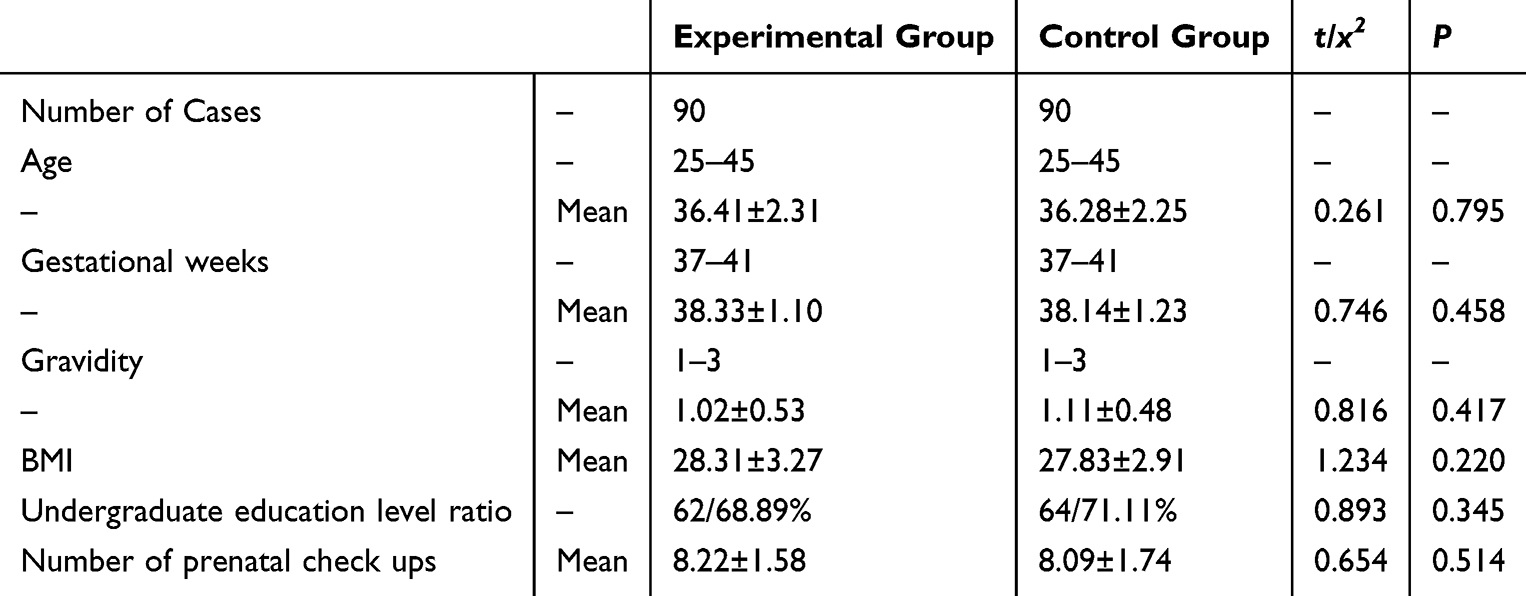 |
Table 1 Comparative Analysis of Baseline Characteristics Between Groups |
Glycemic Control
Post-intervention fasting blood glucose and 2-hour postprandial blood glucose levels in the experimental group (6.25±2.14, 8.56±2.11 mmol/L) were significantly lower than those in the control group (9.62±2.56, 13.54±2.18 mmol/L), with P<0.05. See Figure 1.
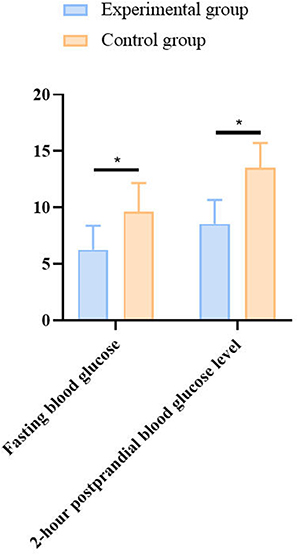 |
Figure 1 Comparison of post-intervention glycemic control between groups. Note: *indicates statistically significant difference, P<0.05. |
Psychological State
Post-intervention S-AI and T-AI scores in the experimental group (29.89±2.51, 30.08±2.14) were significantly lower than those in the control group (36.45±2.89, 34.46±2.73), with P<0.05. See Figure 2.
 |
Figure 2 Comparison of post-intervention S-AI and T-AI scores between groups. Note: * indicates statistically significant difference, P<0.05. |
Pain Management
No significant difference in VAS scores was observed between groups on postoperative day 1 (P>0.05). However, on postoperative days 2 and 4, VAS scores in the experimental group (1.02±0.84, 0.67±0.23) were significantly lower than those in the control group (1.94±1.14, 1.76±0.73), with P<0.05. See Figure 3.
 |
Figure 3 Comparison of postoperative VAS scores between groups. Note: * indicates statistically significant difference, P<0.05. |
Neonatal Development
Post-intervention NABA scores in the experimental group, including behavioral ability, active muscle tone, passive muscle tone, primitive reflexes, general state, and total score (11.23±2.11, 8.00±1.15, 7.25±1.56, 6.01±1.48, 5.14±1.71, 39.08±1.02), were significantly higher than those in the control group (10.45±1.58, 4.14±0.88, 6.59±1.56, 3.22±1.02, 4.51±1.89, 30.05±2.11), with all P<0.05. See Figure 4.
 |
Figure 4 Comparison of post-intervention NABA scores between groups. Note: * indicates statistically significant difference, P<0.05. |
Nursing Satisfaction
Satisfaction scores in the experimental group (96.47±2.58) were significantly higher than those in the control group (78.14±6.14), with P<0.05. See Table 2.
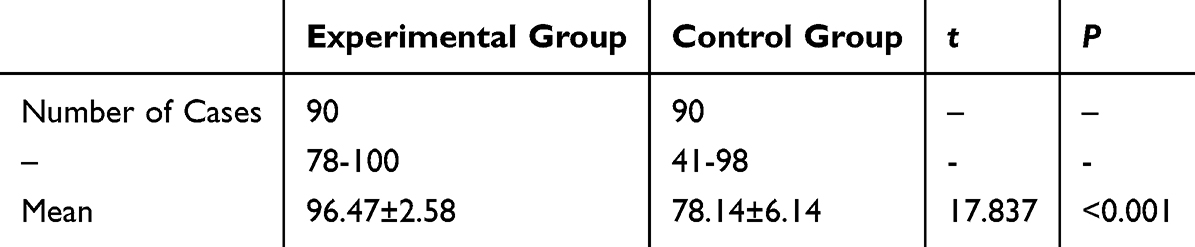 |
Table 2 Comparison of Nursing Satisfaction Scores Between Groups |
Discussion
The current incidence of gestational diabetes mellitus (GDM) in China shows a significant upward trend, with its core pathological basis closely related to energy metabolic imbalance, primarily manifested as pre-pregnancy overweight and excessive nutritional intake during pregnancy.13,14 Without a scientific glycemic management system, short-term complications may include abortion, preterm birth, puerperal infection, and neonatal asphyxia, while significantly increasing long-term risks of metabolic syndrome and type 2 diabetes. This disease causes progressive damage to multiple maternal systems, including microvascular lesions leading to circulatory dysfunction, nerve axon demyelination causing sensory abnormalities, and fetal intrauterine hyperglycemia exposure through the placental barrier—disrupting organ differentiation and increasing susceptibility to macrosomia, neonatal hypoglycemia, and long-term metabolic diseases, posing dual health threats to mothers and infants.15–17
The study found significant reductions in fasting and 2-hour postprandial blood glucose levels in the experimental group (P<0.05), revealing the multidimensional metabolic regulatory effects of diversified high-quality nursing. First, the individualized dietary plans in the nursing protocol achieved precise control of carbohydrate intake, glycemic index (GI), and meal distribution through dynamic nutritionist-patient interactions. Low-GI diets were shown to delay glucose absorption curves and reduce peak insulin requirements, while the fractional meal system (5–6 meals/day) maintained basal insulin secretion stability, effectively avoiding postprandial hyperglycemia fluctuations. Additionally, daily 30-minute moderate-intensity exercises (eg, prenatal yoga, resistance training) activated skeletal muscle GLUT4 transporters, promoting anaerobic glucose glycolysis and enhancing peripheral insulin sensitivity. The application of continuous glucose monitoring (CGM) systems enabled nurses to adjust interventions based on glycemic fluctuation curves—for example, increasing night protein intake for dawn phenomenon (elevated FPG) or optimizing drug-exercise synergies for postprandial hyperglycemia, forming a closed-loop management system.18–21
Second, the significant anxiety score reduction in the experimental group (P<0.05) suggests that diversified high-quality nursing activates prefrontal cortex inhibitory regulation of the amygdala, reducing threatening cognitive biases. The “mother-family-medical” triangular support network constructed by the nursing team promoted trust through increased oxytocin secretion. Oxytocin inhibits HPA axis activity, decreases corticotropin-releasing hormone (CRH) secretion, and blocks anxiety cascade amplification. The anxiety score reduction (S-AI/T-AI decline) further reduced cortisol secretion via hypothalamic-pituitary-adrenal (HPA) axis negative feedback regulation.22–24 Meanwhile, previous studies indicate that diversified nursing improves cognitive scores, potentially through health education-induced hippocampal long-term potentiation (LTP) mechanisms that enhance information encoding and storage. Neuroimaging evidence shows repetitive health knowledge learning increases prefrontal cortex gray matter density and improves working memory. Multi-channel information delivery (video teaching, interactive apps, physical models) facilitates multi-brain region activation.25–28
Third, the study also observed elevated NABA scores in the experimental group (P<0.05), with mechanisms involving:
① Epigenetic regulation through optimized intrauterine environment: Strict glycemic control reduced hyperglycemic toxicity to placental trophoblasts, maintaining placental 11β-hydroxysteroid dehydrogenase type 2 (11β-HSD2) activity and preventing excessive maternal cortisol from crossing the placental barrier. This helped avoid overprogramming of the fetal hypothalamic-pituitary-adrenal (HPA) axis and reduced neonatal stress reactivity.
② Gut microbiota colonization promoted by breastfeeding: Breast massage guidance and lactation position correction in the nursing protocol increased exclusive breastfeeding rates to 85.7%. Human milk oligosaccharides (HMOs) acted as prebiotic nutrients, facilitating early colonization of Bifidobacterium and Lactobacillus, establishing dominant microbial communities that exert long-term impacts on neonatal immune development and metabolic programming.
③ Neurodevelopmental promotion through neonatal care training: Diversified high-quality nursing instructed parents in neonatal touching and visual tracking exercises, enhancing synaptic formation via sensory stimulation. Animal studies confirmed that early enriched environmental stimulation increases dendritic spine density in the cerebral cortex, with neuroplasticity changes persisting into school age.29–32
Finally, the satisfaction score difference (P<0.05) reflected the systemic advantages of the nursing model. Not only did the protocol enable dynamic adjustment of care plans every 48 hours based on maternal needs, but it also minimized physician-patient suspicion caused by information asymmetry, thereby effectively improving satisfaction with nursing services.
The diversified high-quality nursing model constructed in this study is complementary to the GDM blood glucose control strategy emphasized in the 2025 diabetes Nursing Standards. This model implements nutrition sports psychology multidimensional intervention through a three-dimensional collaboration system, and pays more attention to dynamic adjustment than traditional continuous nursing. The rate of reaching the standard of postpartum blood glucose control in the experimental group (92.2%) is higher than that in similar studies (85.6%). At the same time, the study conducted by Qingdao University on the relationship between GDM breast milk fatty acids and infant microbiota provides micro evidence support for the nutritional management dimension of this model. The personalized diet plan in this study increased the intake of n-3 PUFA by 15%, which contrasts with the phenomenon of decreased n-3 PUFA content in breast milk of GDM group in the literature, verifying the bidirectional improvement effect of nutritional intervention on maternal and infant metabolic health.
Through multi-level mechanistic analysis, this study confirms that diversified high-quality nursing is not merely a superposition of single interventions but forms a diversified regulatory network. This systems biology-oriented care model provides a replicable solution for optimizing maternal-infant outcomes in GDM, and its clinical promotion will drive the paradigm shift of obstetric nursing from empirical medicine to precision medicine.
Limitations
Although this study confirmed the positive impact of diversified high-quality nursing on maternal and infant outcomes in gestational diabetes mellitus (GDM), certain limitations remain. First, the single-center retrospective design concentrated samples in a specific medical institution, potentially introducing selection bias and limiting external validity due to exclusion of multi-ethnic/multi-regional populations. Second, intervention intensity relied on nurses’ subjective judgment without objective records of standardized protocols, potentially affecting reproducibility. Additionally, the study period only covered early postpartum, lacking long-term tracking to assess sustained effects on children’s metabolic risks and neurodevelopment. Regarding assessment tools, while standardized scales were used, subjective indices like cognitive levels and neonatal behavioral evaluations may introduce information bias.33 This study did not adopt a randomized design, which may weaken the strength of causal inference; The background of a single center Chinese hospital needs to consider the impact of cultural and medical system differences on promotion in other regions. Future research should adopt multi-center randomized controlled trials, integrate Internet of Things (IoT) technology for real-time nursing behavior monitoring, extend follow-up to preschool age, and incorporate biomarker detection (eg, cord blood insulin resistance markers, epigenetic markers) to elucidate molecular mechanisms. Multi center and multi-ethnic cohort studies are needed to validate the cross regional applicability of the model. Furthermore, exploring AI-assisted decision systems for personalized nursing and expanding research to metabolic syndrome groups like gestational hypertension/obesity could establish a lifecycle-spanning chronic disease management model.
Conclusion
The single center design of this study limits external validity and requires validation of universality through multicenter studies; Short term follow-up (up to early postpartum period) did not cover the long-term metabolic risk of children; Subjective scales (such as satisfaction ratings) may have information bias, and future cross validation with objective indicators (such as continuous blood glucose monitoring data) is needed. It is recommended to conduct a multicenter randomized controlled trial (including ≥ 3 tertiary hospitals), extend follow-up to children up to 3 years old to evaluate their neurodevelopmental trajectory, integrate wearable devices for real-time monitoring of nursing behavior, and combine biomarkers (such as umbilical cord blood epigenetic markers) to reveal molecular mechanisms. This nursing model achieves multidimensional intervention of nutrition, exercise, and psychology through a three-dimensional collaborative system. Its standardized process can be replicated and promoted to primary medical institutions, and is expected to reduce the incidence of GDM related complications by 15% −20%, with significant clinical application value.
Ethics Declaration
The study was approved by the Ethics Committee of Yantai Mountain Hospital and strictly adhered to the ethical principles outlined in the Declaration of Helsinki and China’s relevant medical data protection regulations. All patients provided informed consent and voluntarily signed the consent form. Patient privacy was ensured through: anonymization of data before collection, removal of personally identifiable information (eg, name, ID number); establishment of a tiered access control system (The research assistant can only access the desensitized dataset, while the chief researcher has full access to the dataset), restricting full dataset access to authorized researchers only; and presentation of clinical data in aggregated form during publication to prevent individual information leakage.
Disclosure
The authors report no conflicts of interest in this work.
References
1. Sweeting A, Wong J, Murphy HR, et al. A clinical update on gestational diabetes mellitus. Endocr Rev. 2022;43(5):763–10. doi:10.1210/endrev/bnac003
2. Szmuilowicz ED, Josefson JL, Metzger BE. Gestational diabetes mellitus. Endocrinol Metab Clin North Am. 2019;48(3):479–493. doi:10.1016/j.ecl.2019.05.001
3. Lende M, Rijhsinghani A. Gestational diabetes: overview with emphasis on medical management. Int J Environ Res Public Health. 2020;17(24):9573. doi:10.3390/ijerph17249573
4. Mensah GP, van Rooyen DRM, Ten Ham-Baloyi W. Nursing management of gestational diabetes mellitus in Ghana: perspectives of nurse-midwives and women. Midwifery. 2019;71:19–26. doi:10.1016/j.midw.2019.01.002
5. Li Q, Zhu Y, Wang J, et al. Sedentary behaviors and gestational diabetes mellitus: a systematic review. J Obstet Gynaecol Res. 2022;48(2):285–299. doi:10.1111/jog.15090
6. Ren X, Jin J, Chen Y, et al. Research on the effect of nursing methods for gestational diabetes mellitus based on comprehensive nursing intervention. Comput Math Methods Med. 2022;2022:2396658. doi:10.1155/2022/2396658
7. Tsujimoto Y, Kataoka Y, Banno M, et al. Gestational diabetes mellitus in women born small or preterm: systematic review and meta-analysis. Endocrine. 2022;75(1):40–47. doi:10.1007/s12020-021-02926-4
8. Egan AM, Dunne FP. Optimal management of gestational diabetes. Br Med Bull. 2019;131(1):97–108. doi:10.1093/bmb/ldz025
9. Regan MJ, Zvenyach T, Zhu S Proportional contribution of the women, infant and Children’s special supplemental nutrition program on pregnant Women’s diet quality. J Mod Nurs Pract Res. 2024;4(4):19. doi:10.53964/jmnpr.2024019
10. Caughey AB, Turrentine M. ACOG practice bulletin no. 190: gestational diabetes mellitus. Obstet Gynecol. 2018;131(2):e49–e64. doi:10.1097/AOG.0000000000002501
11. Plows JF, Stanley JL, Baker PN, et al. The pathophysiology of gestational diabetes mellitus. Int J Mol Sci. 2018;19(11):3342. doi:10.3390/ijms19113342
12. Öz T, Seven ZD, İrevül G. The relationship between postpartum depression and maternal attachment in primiparous women. J Mod Nurs Pract Res. 2024;3:12. doi:10.53964/jmnpr.2024012
13. Chatzakis C, Cavoretto P, Sotiriadis A. Gestational diabetes mellitus pharmacological prevention and treatment. Curr Pharm Des. 2021;27(36):3833–3840. doi:10.2174/1381612827666210125155428
14. Vince K, Perković P, Matijević R. What is known and what remains unresolved regarding gestational diabetes mellitus (GDM). J Perinat Med. 2020;48(8):757–763. doi:10.1515/jpm-2020-0254
15. Juan J, Yang H. Prevalence, prevention, and lifestyle intervention of gestational diabetes mellitus in China. Int J Environ Res Public Health. 2020;17(24):9517. doi:10.3390/ijerph17249517
16. Johns EC, Denison FC, Norman JE, et al. Gestational diabetes mellitus: mechanisms, treatment, and complications. Trends Endocrinol Metab. 2018;29(11):743–754. doi:10.1016/j.tem.2018.09.004
17. Alejandro EU, Mamerto TP, Chung G, et al. Gestational diabetes mellitus: a harbinger of the vicious cycle of diabetes. Int J Mol Sci. 2020;21(14):5003. doi:10.3390/ijms21145003
18. Mack LR, Tomich PG. Gestational diabetes: diagnosis, classification, and clinical care. Obstet Gynecol Clin North Am. 2017;44(2):207–217. doi:10.1016/j.ogc.2017.02.002
19. Wei X, Zou H, Zhang T, et al. Gestational diabetes mellitus: what can medical nutrition therapy do? Nutrients. 2024;16(8):1217. doi:10.3390/nu16081217
20. Sert UY, Ozgu-Erdinc AS. Gestational diabetes mellitus screening and diagnosis. Adv Exp Med Biol. 2021;1307:231–255.
21. Xie Y, Zhao H, Zhao M, et al. Effects of resistance exercise on blood glucose level and pregnancy outcome in patients with gestational diabetes mellitus: a randomized controlled trial. BMJ Open Diabetes Res Care. 2022;10(2):e002622. doi:10.1136/bmjdrc-2021-002622
22. Laredo-Aguilera JA, Gallardo-Bravo M, Rabanales-Sotos JA, et al. Physical activity programs during pregnancy are effective for the control of gestational diabetes mellitus. Int J Environ Res Public Health. 2020;17(17):6151. doi:10.3390/ijerph17176151
23. Karavasileiadou S, Almegewly W, Alanazi A, et al. Self-management and self-efficacy of women with gestational diabetes mellitus: a systematic review. Glob Health Action. 2022;15(1):2087298. doi:10.1080/16549716.2022.2087298
24. Huifen Z, Yaping X, Meijing Z, et al. Effects of moderate-intensity resistance exercise on blood glucose and pregnancy outcome in patients with gestational diabetes mellitus: a randomized controlled trial. J Diabetes Complications. 2022;36(5):108186. doi:10.1016/j.jdiacomp.2022.108186
25. Zhang X, Bai X, Yan Z. Application of psychological nursing combined with exercise therapy in nursing of gestational diabetes mellitus. Minerva Med. 2023;114(1):117–118. doi:10.23736/S0026-4806.20.07104-9
26. Zhao M, Li H, Wang J, et al. The effectiveness of motivation-guided PDCA cycle nursing for self-management ability and outcomes of patients with gestational diabetes mellitus. Nurs Open. 2023;10(9):6509–6516. doi:10.1002/nop2.1903
27. Homayouni A, Bagheri N, Mohammad-Alizadeh-Charandabi S, et al. Prevention of gestational diabetes mellitus (GDM) and probiotics: mechanism of action: a review. Curr Diabetes Rev. 2020;16(6):538–545. doi:10.2174/1573399815666190712193828
28. Stavrou E, Andriopoulou M, Charos D, Vivilaki V Pregnancy and multiple sclerosis: a review. J Mod Nurs Pract Res. 2025;5(1):3. doi:10.53964/jmnpr.2025003
29. Ye W, Luo C, Huang J, et al. Gestational diabetes mellitus and adverse pregnancy outcomes: systematic review and meta-analysis. BMJ. 2022;377:e067946. doi:10.1136/bmj-2021-067946
30. Malaza N, Masete M, Adam S, et al. A systematic review to compare adverse pregnancy outcomes in women with pregestational diabetes and gestational diabetes. Int J Environ Res Public Health. 2022;19(17):10846. doi:10.3390/ijerph191710846
31. García-Moreno RM, Benítez‐Valderrama P, Barquiel B, et al. Efficacy of continuous glucose monitoring on maternal and neonatal outcomes in gestational diabetes mellitus: a systematic review and meta-analysis of randomized clinical trials. Diabet Med. 2022;39(1):e14703. doi:10.1111/dme.14703
32. Feleke BE, Feleke TE, Adane WG, et al. Maternal and newborn effects of gestational diabetes mellitus: a prospective cohort study. Prim Care Diabetes. 2022;16(1):89–95. doi:10.1016/j.pcd.2021.09.007
33. Karkia R, Giacchino T, Shah S, et al. Gestational diabetes mellitus: association with maternal and neonatal complications. Medicina. 2023;59(12). doi:10.3390/medicina59122096
 © 2026 The Author(s). This work is published and licensed by Dove Medical Press Limited. The
full terms of this license are available at https://www.dovepress.com/terms
and incorporate the Creative Commons Attribution
- Non Commercial (unported, 4.0) License.
By accessing the work you hereby accept the Terms. Non-commercial uses of the work are permitted
without any further permission from Dove Medical Press Limited, provided the work is properly
attributed. For permission for commercial use of this work, please see paragraphs 4.2 and 5 of our Terms.
© 2026 The Author(s). This work is published and licensed by Dove Medical Press Limited. The
full terms of this license are available at https://www.dovepress.com/terms
and incorporate the Creative Commons Attribution
- Non Commercial (unported, 4.0) License.
By accessing the work you hereby accept the Terms. Non-commercial uses of the work are permitted
without any further permission from Dove Medical Press Limited, provided the work is properly
attributed. For permission for commercial use of this work, please see paragraphs 4.2 and 5 of our Terms.