
Back to Journals » International Journal of Chronic Obstructive Pulmonary Disease » Volume 21

Identifying the Challenges in Self-Management and Preferences for Digital Health Technologies Use Among COPD Patients Based on the CeHRes Roadmap: A Formative Qualitative Study
Authors Tao GF, Yang S, Gao L, Huang X, Huang L
Received 25 May 2026
Accepted for publication 13 July 2026
Published 27 July 2026 Volume 2026:21 623363
DOI https://doi.org/10.2147/COPD.S623363
Checked for plagiarism Yes
Review by Single anonymous peer review
Peer reviewer comments 2
Editor who approved publication: Dr Jill Ohar
Guo-Fang Tao, Su Yang, Luqing Gao, Xiting Huang, Lihua Huang
Nursing Department, The First Affiliated Hospital, Zhejiang University School of Medicine, Hangzhou, People’s Republic of China
Correspondence: Lihua Huang, Nursing Department, The First Affiliated Hospital, Zhejiang University School of Medicine, Hangzhou, People’s Republic of China, Tel +86 13867129329, Email [email protected]
Background: Digital health technologies offer a promising approach to strengthening self-management capacity among patients with chronic obstructive pulmonary disease (COPD), yet clinical application is hampered by poor adherence, low sustained engagement, and limited self-management ability. Although previous studies have identified general self-management challenges in COPD, few have systematically investigated patients’ preferences for digital tools or translated these insights into actionable design principles. This hinders the user-centred development and effective deployment of digital interventions for this population.
Objective: This study aimed to explore the self‑management challenges and preferences for mobile health (mHealth) among COPD patients, with the ultimate goal of translating these findings into design principles for a persuasive self‑management application.
Methods: We conducted in-depth personal interviews with 15 patients with COPD and five healthcare professionals to explore the challenges of self-management and preferences for mHealth. Data were analyzed using thematic analysis. Subsequently, a structured expert consultation was held to translate the findings into key principles for a persuasive self-management application.
Results: Five themes regarding barriers to effective self-management were identified: (1) negative emotional experience, (2) poor health literacy, (3) insufficient family support, (4) inadequate professional health care, and (5) economic burden. Patients expressed four key preferences for digital health technologies: (1) simplicity, (2) personalized decision support, (3) self-report, (4) early warning of deterioration. Furthermore, the panel discussion distilled these findings into eight essential key principles: motivation, simplicity, credibility, guidance, personalization, self-report, warning, and continuity.
Conclusion: This study provides new insights into user-centered mHealth tools for COPD self-management. We derived core design principles from patients’ demands to inform targeted digital interventions. These principles require validation in female, higher-literacy and multi-center samples before wide application. Future work will complete the remaining CeHRes Roadmap stages of design, operationalization and evaluation to refine this framework.
Keywords: chronic obstructive pulmonary disease, self-management, digital health, qualitative study
Introduction
Chronic obstructive pulmonary disease (COPD) is one of the leading causes of morbidity and mortality globally, and its economic and social burden is substantial and rising.1,2 It is estimated that there are around 3 million deaths due to COPD annually worldwide, and by 2060, the annual death toll from COPD and related conditions is expected to surpass 5.4 million, owing to smoking and an aging population.3–5 Among the Chinese population, the overall prevalence of COPD is approximately 8.6%, affecting nearly 100 million people,6 accounting for one quarter of the global total of COPD patients.7 Over the past two decades, although China’s COPD mortality rate has shown a downward trend, the figure remained 47.30 per 100,000 in urban regions and 66.24 per 100,000 in rural areas in 2016, which were higher than the global average.8 COPD-related deaths in China make up over 30% of all COPD deaths across the globe.8 COPD is associated with a significant economic burden. In the European Union, the total direct costs of COPD are estimated to account for approximately 3% of the annual healthcare budget (€38.6 billion).9 In the United States, COPD related direct costs are expected to rise over the next 20 years, with annual costs reaching $40 billion.10,11 Another study indicates12 that over the period 2020–2050, COPD will impose an economic burden of $4.326 trillion on the world economy (uncertainty interval: $3.327–$5.516 trillion; in constant 2017 prices). This economic impact is equivalent to an annual tax burden of 0.111% of global GDP (0.085–0.141%). China and the United States will bear the largest economic burdens, with losses of $1.363 trillion and $1.037 trillion, respectively (uncertainty intervals: $1.034–$1.801 trillion and $0.868–$1.175 trillion).12 COPD imposes a serious health and economic burden on China and is one of the major public health problems that require urgent attention.
Self-management involves acquiring knowledge and skills, monitoring symptoms, solving problems, making decisions, using available resources, working with healthcare professionals, and embedding disease management into everyday routines.13–16 Effective self-management is an important foundation required to improve disease outcomes and enhance patients’ quality of life.17,18 Nevertheless, in contrast to hypertension and diabetes, self-management in COPD frequently falls short of desired outcomes; evidence indicates that patients’ self-management capacity remains at a moderate to low level.8,19
Mobile health (mHealth) utilize tools including smartphones, patient monitoring devices and wearables to deliver medical support and healthcare services for patients.20 Such technologies can elevate the quality and coverage of healthcare services, enabling patients to more easily access health information, receive clinical care, and strengthen their self-management capacities.20–22 In addition, mHealth improves patients’ treatment adherence and thereby optimizes clinical therapeutic outcomes, rendering it a vital tool to support self-management among individuals with chronic diseases.23 However, the development and implementation of mHealth interventions for COPD self-management face several persistent challenges, including poor user compliance, low user engagement, and insufficient self-efficacy.24–28 Accordingly, identifying the factors motivating individuals to adopt these technologies and maintain long-term use constitutes a key research question that requires investigation.
Existing evidence-based studies have identified prominent deficiencies in the application and design of digital health technologies for COPD self-management. A recent literature review reported that among studies exploring digital technology applications for COPD self-management, only 14 studies (13.9%) fully integrated patients’ needs and subjective demands throughout the entire product design and development process.29 Most current interventions merely focus on the improvement of patients’ physical symptoms, while neglecting core elements related to health status improvement and comprehensive self-management29. Through interviews with COPD patients and medical staff, Yvonne J G Korpershoek YJG et al30 found that mobile technology-based intervention programs should be attractive, rewarding and safe. However, the intervention framework proposed in their study mainly concentrates on coping strategies for acute exacerbations of COPD, lacking attention to the full-cycle self-management of the disease.31 In addition, existing studies on the barriers to COPD patients’ adoption of digital health technologies remain limited. Slevip et al32 found that low technological self-efficacy and insufficient perceived usefulness are key barriers to COPD patients’ use of digital health technologies. Nearly half (11/30) of their participants lacked access to smartphones, laptops, or PCs.32 This sample characteristic explains why digital literacy emerged as a core barrier, limiting the generalizability of their findings to COPD populations with different technological baselines.
The CeHRes Roadmap, developed by the University of Twente in the Netherlands,33 focuses on the design, coordination, and implementation of digital health systems and consists of five phases: contextual inquiry, value specification, design, operationalization, and summative evaluation. This roadmap offers a comprehensive framework for the development, implementation, and evaluation of digital health solutions, with a particular emphasis on prioritizing stakeholder needs, preferences, and capabilities throughout the process.34 The CeHRes Roadmap has been successfully applied in various domains, including weight loss management,35 treatment feedback,36,37 symptom management,38 and chronic disease self-management,34,39 demonstrating its effectiveness in practice.
Although existing studies have identified user barriers in COPD mHealth, a systematic design framework targeting long-term self-management to boost engagement and retention remains absent. Guided by the CeHRes Roadmap, this study aims to explore patients’ self-management dilemmas and tool preferences to distill core design principles, aiming to develop an app that enhances sustained use, self-management efficacy, and overall disease outcomes.
Methods
Study Design
As part of a co-design project to develop an mHealth application for COPD self-management, this study focused on the first two phases of the CeHRes Roadmap: Contextual Inquiry and Value Specification (Figure 1). The Contextual Inquiry phase consisted of semi-structured face-to-face interviews conducted to identify self-management barriers experienced by COPD patients and their functional requirements for DHTs. Building on these qualitative interview findings, the Value Specification phase adopted structured expert consultation to establish key principles for COPD patients’ DHT-supported self-management. All qualitative findings documented per the Consolidated Criteria for Reporting Qualitative Research (COREQ),40 (Supplementary Information: Appendix 1).
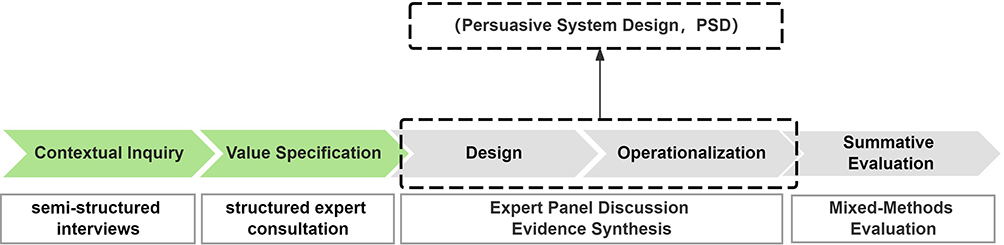 |
Figure 1 Illustrates the phases of the CeHRes Roadmap and the corresponding research activities undertaken in each stage. The first two phases of the CeHRes Roadmap—Contextual Inquiry and Value Specification—correspond to the scope of the present study, which are highlighted in green in the flowchart. |
Recruitment and Participants
Participants were recruited from a tertiary general hospital in eastern China.
Interview
We conducted semi-structured interviews. During the contextual inquiry phase, we conducted semi-structured interviews with all stakeholders (patients with COPD and healthcare professionals). Data collection through interviews took place between April and September 2023. Patient inclusion criteria were: (1) a confirmed COPD diagnosis based on the Global Initiative for Chronic Obstructive Lung Diseases guidelines;41 (2) age between 18 and 89 years. Exclusion criteria included any existing cognitive or psychotic disorders, communication barriers, or severe life-limiting comorbidities such as lung cancer. Eligible healthcare professionals were doctors or nurses with at least 10 years of experience in respiratory medicine. The sample size was based on reaching the saturation level for the interview information, as previously described.42
Structured Expert Consultation
Experts were recruited from four disciplinary backgrounds: respiratory clinical nursing, nursing administration, respiratory medicine and health informatics. All invited specialists were required to have a minimum of ten years of professional practice in their respective fields.
Procedure
Interviews
We developed a semi-structured interview guide for the individual interviews using a literature review and group discussions. Prior to formal data collection, two preliminary interviews (one patient and one healthcare professional) were conducted to refine and revise the interview guide (Supplementary Information: Appendix 2). There was no prior relationship between the interview and the participants, which helped to reduce bias and ensure the objectivity and accuracy of the research results. All one-on-one interviews were conducted by two researchers with formal qualitative research training (TGF and HXT) within a secluded private office at the team’s affiliated hospital, and each interview lasted between 20 and 40 minutes.
Structured Expert Consultation
The process began with an introductory presentation by the first author, who clarified the research objectives and explained the discussion format and guidelines. The structured expert consultation was conducted in two rounds. Each session lasted 1–2 hours on average, and the discussions were documented and synthesized by the second author.
Round 1
Guided by the contextual inquiry interview findings regarding COPD self-management barriers and user preferences for DHTs, each expert independently screened core design principles for the COPD self-management mHealth application. This individual selection process guaranteed that experts drew only on their professional expertise to formulate key design criteria, thereby mitigating potential peer group bias.
Round 2
The second author compiled all candidate principles extracted in Round 1 into an Excel spreadsheet and distributed the document to all expert participants. Subsequently, the experts evaluated each candidate principle based on two dimensions: implementation feasibility and clinical significance. Every expert scored all principles across these two dimensions, and any design principle endorsed by over half of the participants was retained.
Data Analyses
Interview
We conducted a thematic analysis of the interview data.43 All interviews were conducted in Mandarin Chinese, audio-recorded, and transcribed verbatim into written Chinese within 24 hours of each interview.
Transcripts were imported into NVivo 12 software for thematic analysis. Two researchers (TGF and HXT) independently performed qualitative coding using a primarily inductive approach to identify emergent themes. After independent coding, the two researchers jointly consolidated and polished all coded results. Any discrepancies in coding were resolved through in-depth discussion until a consensus was reached, and the finalized thematic framework was ultimately confirmed by the entire research team. All original Chinese quotations selected for the manuscript were translated into English by a bilingual researcher. Following the initial translation, a second investigator cross-checked translated extracts against the original Chinese transcripts to avoid semantic distortion and minimize translation bias during thematic coding.
Structured Expert Consultation
The second author (SY) recorded the discussions and distributed a summary of the key principles to the participating experts for their confirmation. This process ensured the accuracy of the data and validated the key principles for the persuasive design of the mHealth self-management system. After cross-examining divergent viewpoints among specialists, we finalized the key design principles according to their logical rationality and cross-expert consensus.
Ethics
This study was conducted in accordance with the principles outlined in the Declaration of Helsinki and received ethical approval from the Research Ethics Committee of the First Affiliated Hospital, College of Medicine, Zhejiang University (Approval No. 2019–790). Written informed consent was obtained from all participants prior to data collection. The informed consent form explicitly included permission to publish participants’ anonymized responses and direct interview quotes. No identifiable personal information was recorded during interviews to protect participant privacy.
Results
Contextual Inquiry Phase
We interviewed 15 patients (14 men and one woman) and five healthcare professionals (one man and four women). The average age of the patients with COPD was 70 years. The number of years with COPD ranged from 1 to 40 years, and the highest level of education was predominantly primary and middle school (Table 1). The healthcare professionals comprised respiratory physician and respiratory nurse specialists, with an average of 22 years of clinical experience in respiratory medicine (Table 2).
 |
Table 1 Participant Characteristics: Patients with COPD (N=15) |
 |
Table 2 Baseline Characteristics of the Healthcare Professionals (N=5) |
Barriers to Effective Self-Management
Five themes about barriers to effective self-management were developed: (1) Negative emotional experience, (2) poor health literacy, (3) insufficient family support, (4) inadequate professional health care, and (5) economic burden.
Theme 1: Negative Emotional Experience
Patients with COPD have negative emotional experiences such as feelings of isolation, dependence, slackness, and powerlessness in the process of self-management.
Isolation
Social isolation and loneliness are common among individuals with COPD. To cope with these feelings, they may turn to smoking.
It’s too boring to be alone at home, and that makes me want to smoke. But I know I’m not supposed to. (P9, Interview)
I had quit smoking for a year, but then I took it up again, mainly because I was too bored at home alone. (P12, Interview)
Dependence
Holding traditional health beliefs, people with COPD believed that managing their disease depended primarily on doctors and medication. They felt that self-management did little to improve their symptoms or quality of life, and they saw no value in an active lifestyle or rehabilitation exercises beyond taking medication.
Exercise is useless. It all comes down to medication. I can’t manage this disease on my own; I mainly rely on my doctors. (P13, Interview)
It’s possible many patients lack a systematic understanding of self-management and don’t see its importance. (H5, Interview)
Slackness
Some patients with COPD were reluctant to change their unhealthy lifestyles and were unwilling to adhere to recommended health behaviors, such as breathing exercises, physical activity, and healthy eating.
I don’t want to do exercises. I’m too lazy to work out. I don’t pay attention to what I shouldn’t eat. I eat whatever I want. (P12, Interview)
Powerlessness
The progressive nature of COPD fosters a sense of powerlessness in patients. As symptoms like breathlessness and fatigue intensify, they severely diminish functional capacity and undermine the belief that one can alter health-related behaviors.
After cooking at home, I don’t want to move. I can’t walk. (P2, Interview)
However, sometimes the symptoms are so severe that I do not have the strength to use the inhalers. I don’t want to exercise when I am breathless. (P11, Interview)
A long time ago, they taught me breathing exercises, but I was so short of breath that I could only do it twice. (P15, Interview)
Theme 2: Poor Health Literacy
Adequate knowledge and skills form the basis of self-management. Patients with COPD exhibit varying degrees of misconceptions and confusion regarding the knowledge and skills required for self-management in terms of medications, home oxygen therapy, respiratory exercises, exercise rehabilitation, nutritional management, risk factor control, and psychological adjustment, which often leads to ineffective or even inefficient self-management of their condition.
I don’t know which exercises to do, and I don’t know how to do breathing exercises. (P7, Interview)
I didn’t know I had to get vaccinated either. I didn’t know other than the new crown vaccine, no one told me. I don’t know if the medicine is right, I don’t know that I have to exercise, and I don’t know how to do it. (P8, Interview)
Like our patients who repeatedly come to the hospital, some are discharged from the hospital with shortness of breath and turn up the oxygen flow, thinking that the higher the oxygen, the better, which eventually leads to respiratory depression. (H3, Interview)
Theme 3: Insufficient Family Support
Patients with COPD are often heavily dependent on family care due to symptom limitations, reduced mobility, advanced age, low health literacy, and remote residence. However, the core challenge is an imbalance between this high need and the available support. Potential caregivers are often young family members who may lack the capacity to provide timely care due to their own energy constraints or because they do not co-reside with the patient.
It’s not convenient for me to come to the hospital; it’s a long way away. I can’t get back on my own, so I need my family to take me, but they’re all busy. (P8, Interview)
Many elderly people live in remote areas, so getting to the hospital or picking up their medications is very difficult. This often leads to missed medications. Sometimes they are afraid to bother their children. Some people are embarrassed to have their children fill their prescriptions regularly. (H3, Interview)
Theme 4: Inadequate Professional Health Care
Patients’ and caregivers’ understanding and approach to self-management are primarily shaped by healthcare professionals. Consequently, any misconceptions or poor guidance from providers can directly undermine the effectiveness of self-management strategies.
I had to figure it out slowly on my own; the medical staff didn’t tell me anything. (P4, Interview)
Our local hospital never told us how serious the disease was. If they had, we would have followed the doctor’s advice. (P10, Interview)
I was on an inhaled medication, but I stopped after I ran out. No one told me my prescription needed to be refilled, or that I was supposed to continue the treatment. (P13, Interview)
Nurses must repeatedly reinforce inhaled medication techniques because patients’ ability to use them correctly often declines over time. (H1, Interview)
Theme 5: Economic Burden
The economic burden of COPD poses a significant barrier to effective self-management. Many patients from low-income rural households struggle to afford the necessary medications and equipment, such as oxygen concentrators and ventilators. When families cannot manage these expenses, consistent self-management becomes difficult to sustain.
I also know there are benefits to walking with oxygen, but backpacking oxygen is so expensive at over 10,000RMB. (P9, Interview)
Patients with COPD need to have their lung function checked regularly, and this lung function test is very important to the patients. But we can’t popularize it now, like blood pressure, it’s easy to take blood pressure, but the pulmonary function is more troublesome and expensive to do. (H1, Interview)
Preference for Using DHTs
We found four preferences for self-management using DHTs in COPD: (1) simplicity, (2) personalized decision support, (3) self-report, (4) early warning of deterioration.
Theme 1: Simplicity
Patients with COPD are predominantly elderly and often experience impaired hand-eye coordination, diminished vision, and reduced cognitive function. These age-related challenges make it difficult for them to understand and operate mobile devices. Therefore, interface design must prioritize simplicity, with eye-catching fonts, intuitive navigation that minimizes manual input, and content delivered through a combination of images, text, and video to ensure comprehension.
The simpler the better, making it easier for us to use. (P1, Interview)
If the app content is easy to read, we’ll read it; otherwise we won’t. It’s no fun with just words; it’s better to have some pictures. (P2, Interview)
I think the software has to be designed to be more generalized or easier to use. It has to be easy to use, and the operability should be suitable for different levels of literacy. (H2, Interview)
For the application to be convenient and conducive to the use of the elderly, it needs to be one-click. (H4, Interview)
Theme 2: Personalized Decision Support
End-users and healthcare professionals expressed a desire for personalized, tailored advice from DHTs.
I hope this digital health tool can help me improve my lifestyle and exercise. I need it to tell me what kind and how much exercise is right for me. (P5, Interview)
The digital health intervention needs a reminder function with personalized alerts for each patient, tailored to their current disease stage and required evaluation frequency. These reminders should be sent to both the healthcare team and the patients themselves. (H1, Interview)
Theme 3: Self-Report
Healthcare professionals wanted patients with COPD to provide self-reported information, such as details about their health status, functional status, and treatment expectations.
When the patient is at home, their self-reported data provides a more objective and realistic assessment, which is critical for guiding treatment. (H5, Interview)
Self-management software needs to be able to track patients and monitor their information in real-time. Real-time dynamic observation of patient information can include details related to symptom control, medication regimens, oxygen therapy, and exercise. (H4, Interview)
Theme 4: Early Warning of Deterioration
Both patients with COPD and healthcare professionals considered it important and necessary for a COPD mHealth self-management application to provide alerts and advice on how to cope with changes in their condition.
I want to know right away if my condition changes, so I can get treatment earlier. (P7, Interview)
We need a system that provides early warnings of potential exacerbations. For instance, if a patient’s oxygen saturation falls during exercise, that should trigger an alert advising them to seek medical attention. (H5, Interview)
Value Specification Phase
The structured expert consultation comprised two respiratory nurse specialists, one respiratory physician, three nursing administrators, and one informatics specialist, further characteristics are delayed in Table 3. There were no prior relationships between the participants and the researchers. Participants were aware that their involvement contributed to a research study.
 |
Table 3 Basic Information of Experts in the Structured Expert Consultation (N=7) |
After the first round of structured expert consultation, we generated an initial pool of 11 candidate design principles: motivation, simplicity, free of charge, credibility, guidance, personalization, gamification, self-report, continuity, warning, and monitoring. Using a scoring framework weighted by clinical feasibility and practical significance, specialists further shortlisted the top eight principles (motivation, simplicity, credibility, guidance, personalization, self-report, warning, continuity) for integration into the COPD mHealth self-management application. Full scoring results are presented in Appendix 3 and the correspondence between interview findings and key principles is illustrated in Figure 2.
 |
Figure 2 Barriers and patient demands (blue boxes) were extracted from semi-structured patient interviews; the eight key design principles (green boxes) were subsequently finalized by specialists through structured expert consultation based on these interview-derived findings. |
Key Principle: Motivation
Patients with COPD frequently experience negative emotions, including isolation, dependence, frustration, and powerlessness, which undermine their engagement in self-management. This often manifests as apathy toward healthy behaviors and a reluctance to adhere to them. Many patients perceive self-management as ineffective, leading them to rely heavily on medical services while failing to recognize its benefits in slowing disease progression and improving symptoms. When designing a COPD mHealth application, it is crucial to address these negative attitudes and incorporate features dedicated to fostering positive emotions and building motivation.
Key Principle: Credibility
Research interviews revealed that patients in economically underdeveloped regions, particularly those in primary healthcare settings, lack evidence-based clinical guidance due to inequitable distribution of medical resources. To address this gap, it is critical to design a credible, professional self-management application. This system will establish credibility by delivering standardized, guideline-driven care programs and dynamically synchronize with evolving medical evidence to ensure consistent, high-quality self-management support for all COPD patients irrespective of geographic constraints.
Key Principle: Guidance and Simplicity
Interview data reveal that poor health literacy and insufficient family support constitute significant barriers to effective self-management among COPD patients, creating demand for structured guidance. Consequently, COPD self-management systems must integrate dedicated support modules enabling coordinated full-cycle health management with dynamic disease progression monitoring. Concurrently, optimizing e-health technology adoption requires applying the ‘simplification” principle, which could enhance system usability.
Key Principle: Personalization
COPD is complex and heterogeneous, with many intra- and extrapulmonary phenotypes, and patients may be experiencing multiple concomitant chronic diseases.44 The complexity reflects that over time these manifestations have dynamic, non-linear interactions with each other45 The term heterogeneous indicates that not all manifestations are present in all patients at any given time.45 Thus, “templated” interventions may not be suitable for all patients. Interview findings from COPD patients also indicated that their willingness to adopt mHealth application for self-management depends on whether the intervention aligns with their individual characteristics (eg, motivation, preferences, and disease profile). Therefore, COPD self-management software should be tailored to the end user as much as possible.
Key Principle: Self-Report
This study found that healthcare professionals want patients to provide self-reported data on their health status, functional capacity, and treatment expectations. Self-reporting can improve patient outcomes and care quality by enabling early symptom detection and facilitating shared decision-making.46,47 Furthermore, when patients submit basic health data through patient-reported outcomes, it reduces the data collection burden on healthcare providers and improves workflow efficiency.
Key Principle: Continuity
Consistent with prior literature,29 this study identified two prominent barriers hindering continuous COPD self-management among participants: poor health literacy and inadequate professional health care. Lacking systematic knowledge and practical skills for long-term disease management, COPD patients articulated a strong demand for unrestricted, on-demand access to medication reminders, professional clinical guidance, and timely medical feedback, without limitations of time or geographic location. Given the uneven distribution of medical resources across China, where high-quality respiratory care is largely concentrated in a small number of large general hospitals,48 mHealth applications for COPD self-management must deliver uninterrupted, longitudinal care support to fill gaps in routine off-hospital management.
Key Principle: Warning
Interview findings revealed that COPD patients want self-management software to provide early warnings of deterioration. This is critical, as literature shows up to 42% of patients experience two or more exacerbations annually.49,50 These events cause significant patient harm and impose a substantial burden on healthcare systems. Early detection and action can prevent decline and reduce hospitalizations. Therefore, a COPD mHealth app should include an early warning system that leverages self-reported data, clinical information, and AI algorithms. Alerts would be sent to both patients and providers, enabling timely intervention to avert further deterioration.
Discussion
This study explored the barriers to self-management faced by patients with COPD and identified the key principles for designing a mHealth application to support these efforts. Our findings indicate that COPD patients desire DHTs that are simple, personalized, and credible, which aligns with prior research.32,51 While DHTs hold significant potential to improve COPD self-management,29 their impact is limited by low user engagement and poor adherence. 28% of participants discontinued app usage after one month, with this attrition rate rising to 40% at the three-month follow-up.26,27 Collectively, these studies demonstrate that sustaining consistent engagement with digital self-management tools for at least three months poses a substantial challenge: fewer than 20% of participants in prior trials successfully completed the full six-month intervention cycle.28
Developing user-centered interventions—particularly mHealth applications—that are simple, personalized, and credible is therefore critical to improving sustained use and adherence among patients with COPD.27,52,53
Our research also identified needs specific to the COPD population, such as the principle of “motivation.” Compared to patients with other chronic conditions, individuals with COPD contend with more significant negative emotions, including isolation, dependence, frustration, and powerlessness during self-management. These emotional barriers create greater challenges in adopting healthy behaviors, such as smoking cessation,54 engaging in physical activity, and maintaining an anti-inflammatory diet.55 Implementing strategies like peer support and social support is therefore crucial to encourage positive behavioral changes.
The capacity for early “warning” is crucial, as acute exacerbations are highly prevalent among COPD patients.49,50 These events frequently lead to severe outcomes: approximately one-third of patients require hospitalization, and exacerbations contribute to accelerated lung function decline and increased mortality.56,57 Research indicates58 that early identification of clinical deterioration facilitates rapid treatment, reduces the need for hospitalization, and helps preserve lung function. Remote monitoring via mHealth applications enables the early detection of such deterioration and can deliver timely alerts to both patients and healthcare providers. This capability provides critical support for early intervention. Future research should focus on developing integrated self-management systems that leverage diverse data, including self-reported, environmental, and laboratory data, combined with artificial intelligence and machine learning algorithms to predict impending COPD exacerbations, thereby enhancing patient safety.
During Round 2 of structured expert consultation, experts eliminated the “Monitoring” principle. They agreed that monitoring’s core functionality was already covered by Self-report and Warning: Self-report depends on ongoing health tracking, while Warning generates exacerbation alerts via continuous indicator surveillance. Since monitoring serves only as a fundamental auxiliary function rather than an independent design dimension, specialists decided to absorb its meaning into the two retained items to prevent thematic overlap.
Patients with COPD are burdened with substantial long-term financial costs. These expenses mainly derive from hospitalization fees incurred during acute exacerbations, as well as expenditures on oxygen supplies and medications.57,59 Even a complimentary mHealth application cannot offset recurrent outlays such as oxygen consumables and prescription drugs. Furthermore, the expert consultation indicated that free or paid pricing models fall within the scope of commercial operational decisions. Given that the core objective of this study is to establish universal design principles for COPD self-management rather than set pricing standards for digital applications, this candidate principle was not included in the final framework.
The expert consultation deemed gamification a concrete implementation tactic under the overarching Motivation dimension, and thus eliminated it as an independent candidate principle.
Strengths and Limitations
This study has several strengths. First, COPD predominantly affects middle-aged and older adults, with incidence rising markedly with age. Prior research has demonstrated that older adults exhibit poorer long-term engagement and lower adoption willingness toward the DHTs compared with younger populations. This discrepancy mainly arises because existing digital health applications rarely accommodate the unique physiological, behavioural and functional needs of elderly users during development. There are prominent gaps in digital literacy and health technology demands between age groups, which highlights the necessity of recruiting middle-aged and elderly participants for user research. Our sample consisted of COPD patients aged 50 to 89, covering the full spectrum of middle-aged and elderly sufferers. Their demands and concerns regarding DHT-supported COPD self-management better reflect the authentic needs of the general COPD population and deliver more representative insights than data collected solely from younger patients. Second, the panel participating in the structured expert consultation covered multi-disciplinary roles, including respiratory physicians, specialist respiratory nurses, information technology specialists and nursing administrators. This diverse expert composition guaranteed multi-perspective, well-rounded deliberation during the principle screening process.
This study also has some limitations. First, interview participants were predominantly male patients recruited from a single hospital, with only one female respondent. While female COPD patients may have unique demands regarding digital self-management, elderly males constitute the overwhelming majority of COPD sufferers in China.
Second, all data were collected at one tertiary hospital, which may restrict the generalizability of our findings. To offset this sampling constraint, we integrated perspectives from a cross-disciplinary expert panel during the value specification stage; the detailed firsthand feedback from participants still provides meaningful references for local COPD populations.
Third, the first author previously took part in developing mobile applications for chronic disease management and was also responsible for conducting interviews and data coding in this study, which may introduce subjective bias during data analysis. To mitigate this risk, rigorous analytical strategies were implemented in the present study, including dual independent coding, collective verification of all coding outputs by the full research team, and external assessment conducted by a multidisciplinary expert panel. We argue that these multi-layered safeguards have effectively minimised bias potentially stemming from the researcher’s prior relevant development experience.
Conclusions
This study offers new insights into user-centered development of engaging digital self-management tools for patients with COPD. We identified a set of core design principles grounded in COPD patients’ self-management preferences and unmet needs, which may lay an initial foundation for developing targeted mHealth interventions. However, these principles cannot be regarded as broadly applicable guidance until they are further verified among female patients, higher-literacy populations and participants from multi-center cohorts. Based on the core principles summarized in this research, subsequent research must complete the remaining CeHRes Roadmap phases—including tool design, operationalization and outcome evaluation—to further test and refine the proposed design framework.
Trial Registration
ClinicalTrial.govChiCTR2000038478; https://www.chictr.org.cn/ChiCTR2000038478.
Abbreviations
COPD, chronic obstructive pulmonary disease; mHealth, mobile health; APP, application; DH, digital health; DHTs, digital health technologies; DHI, digital health intervention.
Data Sharing Statement
There is no data set associated with the paper.
Ethics Statement
This study was approved by the Research Ethics Committee of the First Affiliated Hospital, College of Medicine, Zhejiang university (2019-790). Written informed consent was obtained from all participants.
Author Contributions
All authors made a significant contribution to the work reported, whether that is in the conception, study design, execution, acquisition of data, analysis and interpretation, or in all these areas; took part in drafting, revising or critically reviewing the article; gave final approval of the version to be published; have agreed on the journal to which the article has been submitted; and agree to be accountable for all aspects of the work.
Funding
This work was supported by the grants from the General Public Welfare Projects of the Science and Technology Department of Zhejiang Province in China (LGF20G030009).
Disclosure
The authors declare no conflicts of interest in this work.
References
1. Vos T, Flaxman AD, Naghavi M, et al. Years lived with disability (YLDs) for 1160 sequelae of 289 diseases and injuries 1990-2010: a systematic analysis for the global burden of disease study 2010. Lancet. 2012;380(9859):2163–15. doi:10.1016/s0140-6736(12)61729-2
2. Lozano R, Naghavi M, Foreman K, et al. Global and regional mortality from 235 causes of death for 20 age groups in 1990 and 2010: a systematic analysis for the global burden of disease study 2010. Lancet. 2012;380(9859):2095–2128. doi:10.1016/s0140-6736(12)61728-0
3. Organization WH. Projections of mortality and causes of death, 2016 and 2060; 2026. Available from: https://colinmathers.com/2022/05/10/projections-of-global-deaths-from-2016-to-2060/.
4. GBD 2013 Mortality and Causes of Death Collaborators. Global, regional, and national age-sex specific all-cause and cause-specific mortality for 240 causes of death, 1990-2013: a systematic analysis for the Global Burden of Disease Study 2013. Lancet. 2015;385(9963):117–71. doi:10.1016/s0140-6736(14)61682-2
5. Lopez AD, Shibuya K, Rao C, et al. Chronic obstructive pulmonary disease: current burden and future projections. Eur Respir J. 2006;27(2):397–412. doi:10.1183/09031936.06.00025805
6. Wang C, Xu J, Yang L, et al. Prevalence and risk factors of chronic obstructive pulmonary disease in China (the China Pulmonary Health [CPH] study): a national cross-sectional study. Lancet. 2018;391(10131):1706–1717. doi:10.1016/s0140-6736(18)30841-9
7. Yin P, Wu J, Wang L, et al. The burden of COPD in China and its provinces: findings from the global burden of disease study 2019. Front Public Health. 2022;10:859499. doi:10.3389/fpubh.2022.859499
8. Quan Z, Yan G, Wang Z, et al. Current status and preventive strategies of chronic obstructive pulmonary disease in China: a literature review. J Thorac Dis. 2021;13(6):3865–3877. doi:10.21037/jtd-20-2051
9. (FIRS). The Global Impact of Respiratory Disease.
10. Guarascio AJ, Ray SM, Finch CK, Self TH. The clinical and economic burden of chronic obstructive pulmonary disease in the USA. ClinicoEconomics Outcomes Res. 2013;5:235–245. doi:10.2147/ceor.S34321
11. Zafari Z, Li S, Eakin MN, Bellanger M, Reed RM. Projecting long-term health and economic burden of COPD in the United States. Chest. 2021;159(4):1400–1410. doi:10.1016/j.chest.2020.09.255
12. Chen S, Kuhn M, Prettner K, et al. The global economic burden of chronic obstructive pulmonary disease for 204 countries and territories in 2020-50: a health-augmented macroeconomic modelling study. Lancet Glob Health. 2023;11(8):e1183–e1193. doi:10.1016/s2214-109x(23)00217-6
13. Schulman-Green D, Jaser S, Martin F, et al. Processes of self-management in chronic illness. J Nurs Scholarship. 2012;44(2):136–144. doi:10.1111/j.1547-5069.2012.01444.x
14. Van de Velde D, De Zutter F, Satink T, et al. Delineating the concept of self-management in chronic conditions: a concept analysis. BMJ Open. 2019;9(7):e027775. doi:10.1136/bmjopen-2018-027775
15. Lorig KR, Holman H. Self-management education: history, definition, outcomes, and mechanisms. Ann Behav Med. 2003;26(1):1–7. doi:10.1207/s15324796abm2601_01
16. Kim SH, Kim KA, Chu SH, et al. Self-management using ehealth technologies for liver transplant recipients: scoping review. J Med Internet Res. 2024;26:e56664. doi:10.2196/56664
17. Schrijver J, Lenferink A, Brusse-Keizer M, et al. Self-management interventions for people with chronic obstructive pulmonary disease. Cochrane Database Syst Rev. 2022;1(1):Cd002990. doi:10.1002/14651858.CD002990.pub4
18. Smalley KR, Aufegger L, Flott K, Mayer EK, Darzi A. Can self-management programmes change healthcare utilisation in COPD?: a systematic review and framework analysis. Patient Educ Couns. 2021;104(1):50–63. doi:10.1016/j.pec.2020.08.015
19. Cravo A, Attar D, Freeman D, Holmes S, Ip L, Singh SJ. The importance of self-management in the context of personalized care in COPD. Int J Chron Obstruct Pulmon Dis. 2022;17:231–243. doi:10.2147/copd.S343108
20. Organization WH. mHealth New horizons for health through mobile technologies: second global survey on eHealth; 2025. Available from: https://www.afro.who.int/publications/mhealth-new-horizons-health-through-mobile-technologie.
21. Board E. mHealth: use of appropriate digital technologies for public health: report by the Director-General. World Health Organization; 2017. Available from: https://iris.who.int/handle/10665/274134.
22. Tomlinson M, Rotheram-Borus MJ, Swartz L, Tsai AC. Scaling up mHealth: where is the evidence? PLoS Med. 2013;10(2):e1001382. doi:10.1371/journal.pmed.1001382
23. Hanlon P, Daines L, Campbell C, McKinstry B, Weller D, Pinnock H. Telehealth interventions to support self-management of long-term conditions: a systematic metareview of diabetes, heart failure, asthma, chronic obstructive pulmonary disease, and cancer. J Med Internet Res. 2017;19(5):e172. doi:10.2196/jmir.6688
24. Janjua S, Banchoff E, Threapleton CJ, Prigmore S, Fletcher J, Disler RT. Digital interventions for the management of chronic obstructive pulmonary disease. Cochrane Database Syst Rev. 2021;4(4):Cd013246. doi:10.1002/14651858.CD013246.pub2
25. Kooij L, Vos PJE, Dijkstra A, van Harten WH. Effectiveness of a mobile health and self-management app for high-risk patients with chronic obstructive pulmonary disease in daily clinical practice: mixed methods evaluation study. JMIR Mhealth Uhealth. 2021;9(2):e21977. doi:10.2196/21977
26. Bourne S, DeVos R, North M, et al. Online versus face-to-face pulmonary rehabilitation for patients with chronic obstructive pulmonary disease: randomised controlled trial. BMJ Open. 2017;7(7):e014580. doi:10.1136/bmjopen-2016-014580
27. North M, Bourne S, Green B, et al. A randomised controlled feasibility trial of E-health application supported care vs usual care after exacerbation of COPD: the RESCUE trial. NPJ Digit Med. 2020;3:145. doi:10.1038/s41746-020-00347-7
28. Blakey JD, Bender BG, Dima AL, Weinman J, Safioti G, Costello RW. Digital technologies and adherence in respiratory diseases: the road ahead. Eur Respir J. 2018;52(5). doi:10.1183/13993003.01147-2018
29. Ramachandran HJ, Oh JL, Cheong YK, et al. Barriers and facilitators to the adoption of digital health interventions for COPD management: a scoping review. Heart Lung. 2023;59:117–127. doi:10.1016/j.hrtlng.2023.02.004
30. Korpershoek YJG, Vervoort S, Trappenburg JCA, Schuurmans MJ. Perceptions of patients with chronic obstructive pulmonary disease and their health care providers towards using mHealth for self-management of exacerbations: a qualitative study. BMC Health Services Res. 2018;18(1):757. doi:10.1186/s12913-018-3545-4
31. Korpershoek YJG, Hermsen S, Schoonhoven L, Schuurmans MJ, Trappenburg JCA. User-centered design of a mobile health intervention to enhance exacerbation-related self-management in patients with chronic obstructive pulmonary disease (Copilot): mixed methods study. J Med Internet Res. 2020;22(6):e15449. doi:10.2196/15449
32. Slevin P, Kessie T, Cullen J, Butler MW, Donnelly SC, Caulfield B. A qualitative study of chronic obstructive pulmonary disease patient perceptions of the barriers and facilitators to adopting digital health technology. Digit Health. 2019;5:2055207619871729. doi:10.1177/2055207619871729
33. van Gemert-Pijnen JE, Nijland N, van Limburg M, et al. A holistic framework to improve the uptake and impact of eHealth technologies. J Med Internet Res. 2011;13(4):e111. doi:10.2196/jmir.1672
34. Breeman LD, Keesman M, Atsma DE, et al. A multi-stakeholder approach to eHealth development: promoting sustained healthy living among cardiovascular patients. Int J Med Inform. 2021;147:104364. doi:10.1016/j.ijmedinf.2020.104364
35. Palacz-Poborczyk I, Idziak P, Januszewicz A, et al. Developing the “choosing health” digital weight loss and maintenance intervention: intervention mapping study. J Med Internet Res. 2022;24(10):e34089. doi:10.2196/34089
36. Bongers IL, Buitenweg DC, van Kuijk R, van Nieuwenhuizen C. I need to know: using the CeHRes roadmap to develop a treatment feedback tool for youngsters with mental health problems. Int J Environ Res Public Health. 2022;19(17). doi:10.3390/ijerph191710834
37. Moradian S, Ghasemi S, Boutorabi B, et al. Development of an eHealth tool for capturing and analyzing the Immune-related Adverse Events (irAEs) in cancer treatment. Cancer Inform. 2023;22:11769351231178587. doi:10.1177/11769351231178587
38. van de Graaf DL, Smeets T, van der Lee ML, et al. Patient-centered development of Embrace Pain: an online acceptance and commitment therapy intervention for cancer survivors with chronic painful chemotherapy-induced peripheral neuropathy. Acta Oncol. 2023;62(7):676–688. doi:10.1080/0284186x.2023.2187260
39. de Frel DL, Schroijen MA, Aardoom JJ, et al. Participatory development of an integrated, eHealth-supported, educational care pathway (Diabetes Box) for people with type 2 diabetes: development and usability study. JMIR Hum Factors. 2024:11e45055. doi:10.2196/45055
40. Tong A, Sainsbury P, Craig J. Consolidated criteria for reporting qualitative research (COREQ): a 32-item checklist for interviews and focus groups. Int J Qual Health Care. 2007;19(6):349–357. doi:10.1093/intqhc/mzm042
41. Disease GIFCOL. Global strategy for prevention, diagnosis and management oF COPD: 2025 report; 2024. Available from: https://goldcopd.org/2025-gold-report/.
42. Kendall M, Carduff E, Lloyd A, et al. Different experiences and goals in different advanced diseases: comparing serial interviews with patients with cancer, organ failure, or frailty and their family and professional carers. J Pain Symptom Manage. 2015;50(2):216–224. doi:10.1016/j.jpainsymman.2015.02.017
43. Kiger ME, Varpio L. Thematic analysis of qualitative data: AMEE Guide No. 131. Med Teach. 2020;42(8):846–854. doi:10.1080/0142159x.2020.1755030
44. Corlateanu A, Mendez Y, Wang Y, Garnica RJA, Botnaru V, Siafakas N. “Chronic obstructive pulmonary disease and phenotypes: a state-of-the-art.”. Pulmonology. 2020;26(2):95–100. doi:10.1016/j.pulmoe.2019.10.006
45. Agusti A, Bel E, Thomas M, et al. Treatable traits: toward precision medicine of chronic airway diseases. Eur Respir J. 2016;47(2):410–419. doi:10.1183/13993003.01359-2015
46. Chmiel FP, Burns DK, Pickering JB, Blythin A, Wilkinson TM, Boniface MJ. Prediction of chronic obstructive pulmonary disease exacerbation events by using patient self-reported data in a Digital Health App: statistical evaluation and machine learning approach. JMIR Med Inform. 2022;10(3):e26499. doi:10.2196/26499
47. Sigurgeirsdottir J, Halldorsdottir S, Arnardottir RH, Gudmundsson G, Bjornsson EH. COPD patients’ experiences, self-reported needs, and needs-driven strategies to cope with self-management. Int J Chron Obstruct Pulmon Dis. 2019;14:1033–1043. doi:10.2147/copd.S201068
48. Shan L, Gan Y, Yan X, Wang S, Yin Y, Wu X. Uneven primary healthcare supply of rural doctors and medical equipment in remote China: community impact and the moderating effect of policy intervention. Int J Equity Health. 2024;23(1):97. doi:10.1186/s12939-024-02183-7
49. Gutiérrez Villegas C, Paz-Zulueta M, Herrero-Montes M, Parás-Bravo P, Madrazo Pérez M. Cost analysis of chronic obstructive pulmonary disease (COPD): a systematic review. Health Econ Rev. 2021;11(1):31. doi:10.1186/s13561-021-00329-9
50. Kong CW, Wilkinson TMA. Predicting and preventing hospital readmission for exacerbations of COPD. ERJ Open Res. 2020;6(2). doi:10.1183/23120541.00325-2019
51. Stuij SM, Drossaert CHC, Labrie NHM, et al. Developing a digital training tool to support oncologists in the skill of information-provision: a user centred approach. BMC Med Educ. 2020;20(1):135. doi:10.1186/s12909-020-1985-0
52. Spielmanns M, Gloeckl R, Jarosch I, et al. Using a smartphone application maintains physical activity following pulmonary rehabilitation in patients with COPD: a randomised controlled trial. Thorax. 2023;78(5):442–450. doi:10.1136/thoraxjnl-2021-218338
53. Win KT, Roberts MRH, Oinas-Kukkonen H. Persuasive system features in computer-mediated lifestyle modification interventions for physical activity. Inform Health Soc Care. 2019;44(4):376–404. doi:10.1080/17538157.2018.1511565
54. Hayes Watson C, Nuss H, Celestin M, et al. Health beliefs associated with poor disease self-management in smokers with asthma and/or COPD: a pilot study. J Asthma. 2019;56(9):1008–1015. doi:10.1080/02770903.2018.1509990
55. Chen C, Yang T, Wang C. The dietary inflammatory index and early COPD: results from the national health and nutrition examination survey. Nutrients. 2022;14(14). doi:10.3390/nu14142841
56. Love ME, Proud D. Respiratory viral and bacterial exacerbations of COPD–the role of the airway epithelium. Cells. 2022;11(9). doi:10.3390/cells11091416
57. Whittaker H, Rothnie KJ, Quint JK. Cause-specific mortality in COPD subpopulations: a cohort study of 339,647 people in England. Thorax. 2024;79(3):202–208. doi:10.1136/thorax-2022-219320
58. Al Rajeh AM, Aldabayan YS, Aldhahir A, et al. Once daily versus overnight and symptom versus physiological monitoring to detect exacerbations of chronic obstructive pulmonary disease: pilot randomized controlled trial. JMIR Mhealth Uhealth. 2020;8(11):e17597. doi:10.2196/17597
59. Juang YR, Lim LHM, Chotirmall SH, et al. Healthcare costs and trends of multimorbidity in COPD patients: a population-based study in Singapore. Int J Chron Obstruct Pulmon Dis. 2026;21:563620. doi:10.2147/copd.S563620
 © 2026 The Author(s). This work is published and licensed by Dove Medical Press Limited. The
full terms of this license are available at https://www.dovepress.com/terms
and incorporate the Creative Commons Attribution
- Non Commercial (unported, 4.0) License.
By accessing the work you hereby accept the Terms. Non-commercial uses of the work are permitted
without any further permission from Dove Medical Press Limited, provided the work is properly
attributed. For permission for commercial use of this work, please see paragraphs 4.2 and 5 of our Terms.
© 2026 The Author(s). This work is published and licensed by Dove Medical Press Limited. The
full terms of this license are available at https://www.dovepress.com/terms
and incorporate the Creative Commons Attribution
- Non Commercial (unported, 4.0) License.
By accessing the work you hereby accept the Terms. Non-commercial uses of the work are permitted
without any further permission from Dove Medical Press Limited, provided the work is properly
attributed. For permission for commercial use of this work, please see paragraphs 4.2 and 5 of our Terms.
Recommended articles


Development and Validation of a Multivariable Exercise Adherence Prediction Model for Patients with COPD: A Prospective Cohort Study


Ricke E, Bakker EW
International Journal of Chronic Obstructive Pulmonary Disease 2023, 18:385-398
Published Date: 22 March 2023

Factors Associated with Non-Adherence to Self-Management Among Patients with Chronic Obstructive Pulmonary Disease: A Survey Using the Delphi Technique and Analytic Hierarchy Process
Choi JY, Ryu EJ
International Journal of Chronic Obstructive Pulmonary Disease 2024, 19:1247-1259
Published Date: 4 June 2024
The Cost-Effectiveness of a Personalised Early Warning Decision Support System (The COPDPredict™ System) to Predict and Prevent Acute Exacerbations of Chronic Obstructive Pulmonary Disease
Hall JA, Turner AM, Gkini E, Mehta R, Spiteri M, Patel N, Jowett S
International Journal of Chronic Obstructive Pulmonary Disease 2025, 20:1693-1710
Published Date: 25 May 2025
Anticipations and Requirements of Individuals with Long-Term Health Conditions Regarding Self-Management and Digital Health Support Tools
Alessa T
Patient Preference and Adherence 2025, 19:2901-2918
Published Date: 13 September 2025
Understanding Medication Self-Management at Home Among Older Adults with Coronary Artery Disease: A Qualitative Study
Xu M, Lo SHS, Zhu L, Huang X
Patient Preference and Adherence 2025, 19:3069-3082
Published Date: 30 September 2025