
Back to Journals » Risk Management and Healthcare Policy » Volume 18
Gamification-Based Interventions in Chronic Disease Care: A Systematic Review of Randomised Controlled Trials
Authors Emaliyawati E  , Ibrahim K , Kurniawan T, Fitria N , Songwathana P
Received 11 October 2025
Accepted for publication 9 December 2025
Published 18 December 2025 Volume 2025:18 Pages 3921—3936
DOI https://doi.org/10.2147/RMHP.S573596
Checked for plagiarism Yes
Review by Single anonymous peer review
Peer reviewer comments 2
Editor who approved publication: Professor Mecit Can Emre Simsekler
Etika Emaliyawati,1 Kusman Ibrahim,2 Titis Kurniawan,2 Nita Fitria,3 Praneed Songwathana4
1Department of Emergency and Critical Care Nursing, Faculty of Nursing, Universitas Padjadjaran, Sumedang, West Java, Indonesia; 2Department of Medical-Surgical Nursing, Faculty of Nursing, Universitas Padjadjaran, Sumedang, West Java, Indonesia; 3Department of Fundamental Nursing, Faculty of Nursing, Universitas Padjadjaran, Sumedang, West Java, Indonesia; 4Faculty of Nursing, Prince of Songkla University, Songkhla, 90110, Thailand
Correspondence: Etika Emaliyawati, Department of Emergency and Critical Care Nursing, Faculty of Nursing, Universitas Padjadjaran, Sumedang, West Java, Indonesia, Fax +622287793411, Email [email protected]
Background: The increasing global burden of chronic conditions demands novel interventions that are both interactive and sustainable. Gamification has emerged as an innovative strategy to enhance patient engagement and self-management in chronic disease care. Although gamification is widely adopted in healthcare, a review of evidence on its effectiveness across various clinical settings remains inconsistent.
Purpose: This review aimed to identify the effectiveness of gamification-based interventions in improving outcomes among patients with chronic diseases.
Methods: A comprehensive systematic literature search was conducted using three major databases: EBSCOhost, PubMed, and Scopus, along with two search engines, including Google Scholar and Sage Journal, without year limitations, following PRISMA 2020 and Cochrane methodological guidelines. Eligible studies were RCTs involving adult patients with chronic illness that implemented gamification interventions. Data were extracted and analysed through qualitative thematic synthesis.
Results: A total of 17 RCTs met the inclusion criteria. Three categories of interventions were identified: (1) active video games for rehabilitation, (2) virtual reality (VR)-based intervention, and (3) digital gamification for education and behaviour change. Across these studies, four consistent outcome domains were identified: physical function improvement, psychological well-being, adherence and self-management, and motivation and engagement. Most studies reported significant improvements in physical function.
Conclusion: Gamification demonstrates multidimensional benefits, integrating physical, psychological, and behavioural improvements within patient-centred digital health frameworks. The success of these interventions depends on aligning game design mechanics with clinical objectives. Future studies should emphasise hybrid, long-term models combining VR, mobile platforms, and clinician feedback systems to enhance sustainability and scalability in chronic disease management.
Keywords: active video games, chronic disease, gamification, virtual reality, adherence
Introduction
Chronic diseases are an escalating global health challenge driven by ageing populations and lifestyle changes.1 They account for over 70% of global deaths. The World Health Organization (WHO) reported that Cardiovascular diseases cause the largest share of NCD-related mortality, about 19 million deaths in 2021, followed by cancers (10 million), chronic respiratory diseases (4 million), and diabetes (over 2 million), contributing collectively to around 80% of all premature NCD deaths.2 A significant proportion of these deaths occur in the South-East Asia Region, 55% of all deaths are due to NCDs, accounting for 9.5 million persons.3 Given their growing impact and the risk of severe complications, timely and innovative healthcare strategies are urgently needed to support effective management.4
Managing chronic diseases requires continuous care and patient engagement, extending far beyond episodic clinical interventions.5 However, adherence to long-term treatment regimens, lifestyle modification, and self-management strategies remains suboptimal.5,6 Patients often struggle with maintaining motivation, overcoming psychological barriers, and sustaining behavioural changes over time.7–9 Poor adherence leads to frequent complications, avoidable hospitalisations, and diminished health outcomes.10,11 These challenges underscore the need for innovative, patient-centred interventions that improve engagement and empower individuals to manage their conditions effectively.
In this context, technological innovations such as gamification are increasingly recognised as promising tools to enhance patient engagement, improve self-management, and support the delivery of accessible, efficient remote healthcare.12,13 Gamification is defined as the application of game design elements in non-game contexts to enhance user engagement, motivation, and behaviour change.14–16 In recent years, gamification has been applied across various health domains, including physical activity promotion, smoking cessation, medication adherence, and mental health management.12,17 For chronic disease care, gamification has been increasingly applied to promote physical activity, improve medication adherence, and support self-management.12,13,17,18 By incorporating elements such as rewards, feedback, competition, and goal-setting, gamified interventions can foster sustained behavioural change and empower patients in managing long-term conditions.16
Despite the growing popularity of gamification in healthcare, the evidence base remains fragmented. Studies vary widely in their methodological rigour, intervention designs, target populations, and outcome measures. Many studies are exploratory or pilot projects, with limited generalizability. Furthermore, while numerous systematic reviews have broadly summarised gamification in health, relatively few have explicitly focused on chronic disease care, and even fewer have synthesised findings from randomised controlled trials (RCTs), the gold standard for evaluating intervention effectiveness.13,16,18 This gap makes it difficult to draw firm conclusions about the role of gamification in improving long-term health outcomes.
Given the urgent global burden of chronic diseases, the limitations of conventional management approaches, and the emerging promise of gamification, there is a compelling need to consolidate high-quality evidence. This systematic review aims to evaluate the effectiveness of gamification-based interventions for chronic disease care, with a specific focus on randomised controlled trials. By synthesising RCT findings, this review seeks to provide a comprehensive and rigorous overview of current knowledge, highlight gaps in the evidence, and identify practical implications for healthcare practice, policy, and future research.
Materials and Methods
Study Design
This study was conducted using a systematic review approach, guided by the Cochrane Handbook for Systematic Reviews of Interventions and reported in accordance with the PRISMA guideline.19,20
Eligibility Criteria
In this systematic review, the PRISMA framework was applied to evaluate the effectiveness of gamification-based interventions in improving chronic disease care. The formulation of research questions and eligibility criteria followed the PICOT approach.21
P (Population): Adult patients with chronic illness
I (Intervention): Games or gamification
C (Comparison): Standard care or usual care
O (Outcome): Chronic disease care or chronic disease management
T (Type of Study): Randomised Controlled Trial
Articles were excluded if they were secondary research or not available in full text. The inclusion criteria comprised original research articles published in English that assessed the role of gamification in enhancing chronic disease care and employed a randomized controlled trial (RCT) design. No restriction was placed on the year of publication to allow comprehensive coverage, enabling the identification of long-term trends, early applications, and comparative effectiveness between earlier and more recent gamification approaches in chronic disease management.
Data Collection and Analysis
Search Strategy
A systematic and comprehensive search strategy was conducted in September 2025. The search covered three major academic databases: EBSCOhost, PubMed, and Scopus, to ensure the retrieval of high-quality, peer-reviewed studies relevant to gamification and chronic disease care. In addition to these core databases, two supplementary search engines, namely Google Scholar and Sage Journals, were used to broaden the scope of the search and capture grey literature or studies that might not be indexed in the primary databases. The search employed a predefined set of keywords: (“chronic disease*” OR “chronic illnesses” OR “chronic condition*” OR “noninfectious disease*”) AND (“Gamification” OR “gamif*” OR “Video Game*” OR “Active video game*”OR “Exergaming” OR “exergam*” OR “Virtual Reality” OR “Virtual Reality Exposure Therapy” OR “computer game*” OR “game-based” OR “game design*” OR “game element*” OR “game component*” OR “game principle*” OR “playful element*”).
To enhance accuracy and inclusiveness, all terms were cross-checked using Medical Subject Headings (MeSH), with additional synonyms applied where appropriate. Boolean operators (AND, OR) were used to refine or expand search outputs based on keyword variations. As each database provides distinct search functionalities, the final query syntax and thesaurus terms were adapted accordingly to optimise retrieval across databases. In addition to the database search, hand searching was also performed to identify any relevant articles that might not have been captured in the electronic search.
Study Selection and Quality Appraisal
The screening of eligible studies was conducted independently by all authors. Potential duplicates were first identified and removed using Mendeley Reference Manager. Titles, abstracts, and full texts were then assessed for relevance based on the predetermined inclusion and exclusion criteria. For quality appraisal, each study was critically evaluated using the Joanna Briggs Institute (JBI) checklist.22 For randomised controlled trials, 13 items were examined, with response options of Yes, No, Not Applicable, and Unclear. A “Yes” response was scored as 1, whereas all other options were scored as 0. Studies yielding a JBI score of less than 70% were excluded. The study assessment was conducted by four reviewers (E.E., K.I., T.K., and N.F)., and any discrepancies were verified by the fifth author (P.S). Any discrepancies identified during the selection and appraisal stages were collectively re-examined, and final inclusion was determined by consensus among all authors, ensuring agreement without conflicting judgments.
Data Extraction and Analysis
Data extraction was initially performed by the first author (E.E.) and subsequently verified by the co-authors (K.I., T.K., and N.F.) using a structured extraction table. For this review, data were organised into tables that systematically outlined all relevant findings in relation to the research objectives. The extracted information encompassed study characteristics and intervention details. Two summary tables were developed to present the findings. Table 1 presents the characteristics of the included studies, including study design, location, sample, setting, gamification intervention, and results. In addition, Table 2 provides a synthesis of the intervention details, including the type of intervention, delivery method, gamification components, and duration.
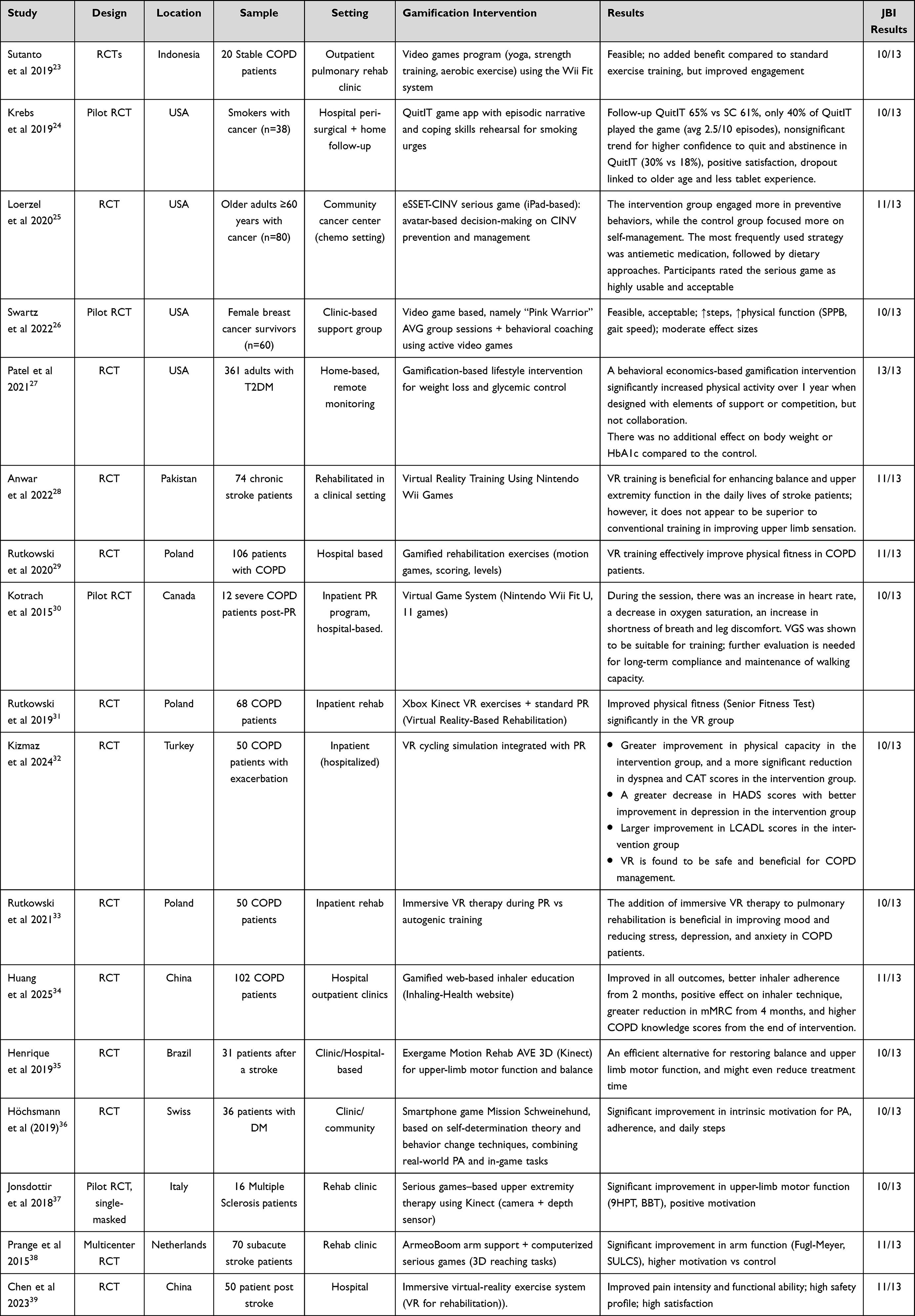 |
Table 1 Characteristics of Studies |
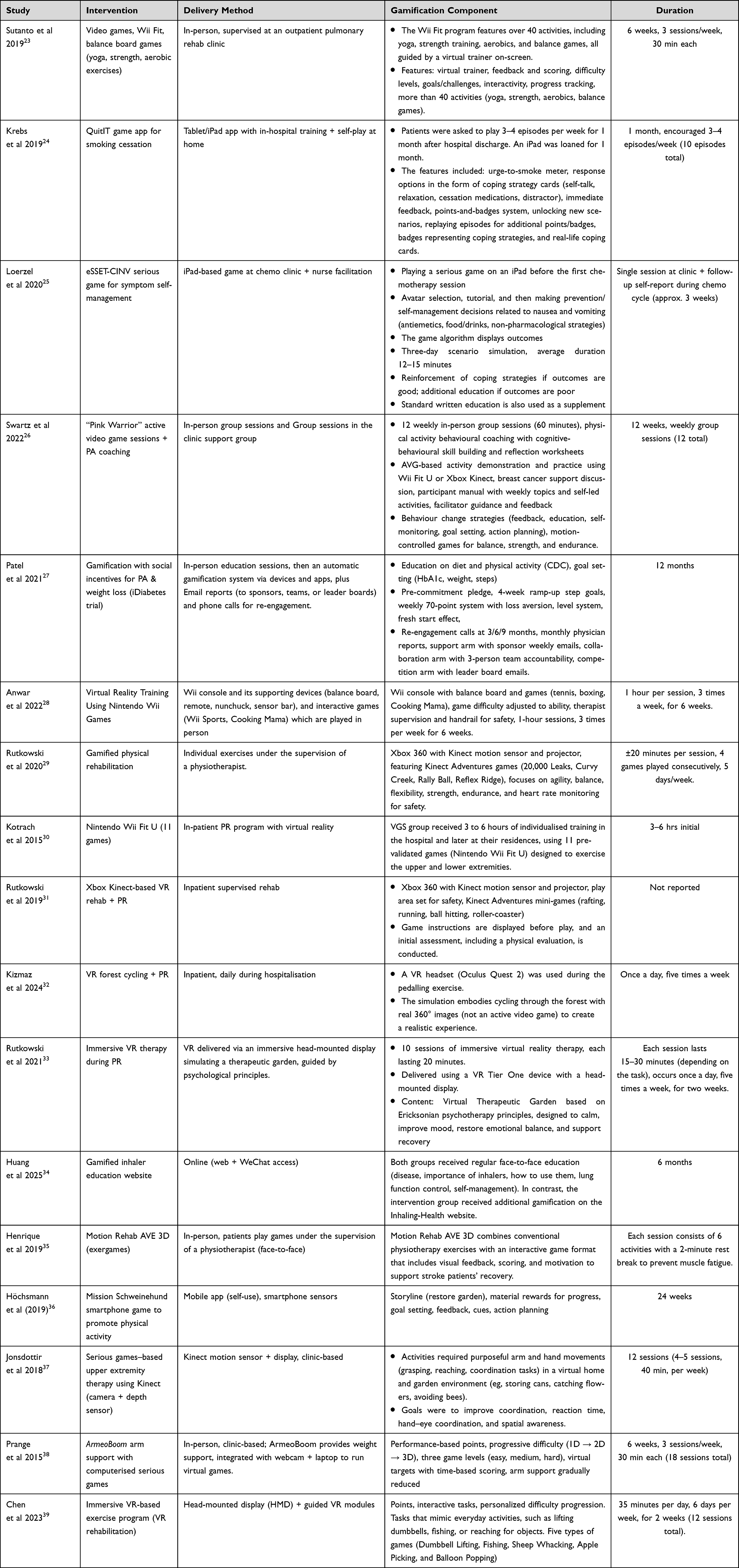 |
Table 2 Summary of Intervention Characteristics |
The analytical process began with the identification and tabulation of data from the selected studies, which were then critically examined and interpreted. The findings were analysed using a qualitative, narrative, and thematic approach, allowing patterns, similarities, and variations across studies to be explored in depth. This method facilitated integrating results into broader themes related to gamification in chronic disease care. Finally, all authors reviewed the extracted and analysed data collaboratively to ensure accuracy and consistency and to minimise potential errors.
Results
Study Selection
A comprehensive search across five major databases, including PubMed (n = 494), Scopus (n = 928), EBSCOhost (n = 182), Google Scholar (n = 300), and SAGE Journals (n = 728), yielded a total of 2,632 records. Following the removal of 1,140 duplicate entries, 1,492 unique records remained for title and abstract screening. Of these, 1,448 records were excluded as they did not meet the inclusion criteria. Subsequently, 44 full-text reports were sought, but 14 could not be accessed due to unavailable full texts or incomplete data, leaving 30 reports for eligibility assessment.
During full-text assessment, 16 studies were excluded for the following reasons: heterogeneous participant characteristics (n = 7), inappropriate study design (n = 5), irrelevant or inappropriate intervention (n = 2), and publications not available in English (n = 2). In addition to database searches, three studies were identified through hand searching via Google Scholar, both meeting the inclusion criteria. In total, 17 studies were included in the final synthesis 14 identified from databases and 3 from hand searching. The study selection process followed the PRISMA 2020 guidelines, as illustrated in Figure 1, ensuring transparency and methodological rigour in identifying eligible studies for review.
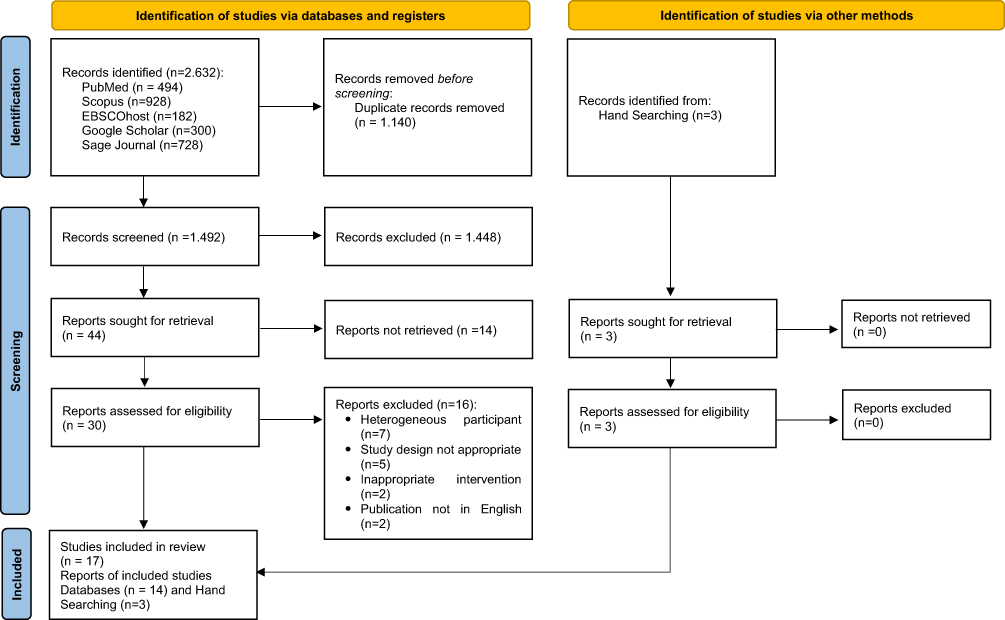 |
Figure 1 PRISMA Flowchart. |
Quality Appraisal Results
Most studies included in this review demonstrated strong methodological quality, with the majority attaining or closely aligning with the Joanna Briggs Institute (JBI) standards (Table 1). Many trials demonstrated high compliance with key methodological criteria, including randomisation, concealed allocation, appropriate statistical analysis, and baseline group comparability. However, a few studies revealed certain methodological shortcomings, particularly the lack of blinding of participants or intervention providers and limited detail in reporting specific procedures. Overall, the methodological robustness of the included trials was considerable, with most fulfilling approximately 10 of the 13 JBI checklist items, thereby reinforcing the credibility and reliability of the synthesised evidence.
Characteristics of the Study
Most of the included studies employed a randomised controlled trial (RCT) design, either as full RCTs or pilot RCTs (See Table 1). The trials were conducted in various countries, with the United States contributing the most studies (4 in total).24–27 Other studies were conducted in Indonesia, Pakistan, Poland, Canada, Turkey, Brazil, Switzerland, Italy, the Netherlands, and China. In addition, the study settings were diverse, ranging from outpatient rehabilitation clinics and hospital inpatient programs to community cancer centres and home-based remote monitoring. This broad geographical and clinical coverage indicates that gamification interventions have been tested across different healthcare systems in both high-income and low- to middle-income countries.
Characteristics of Participants
The number of participants varied considerably, from as few as 12 individuals in a Canadian pilot trial of COPD patients30 to as many as 361 participants with type 2 diabetes in the United States.27 Overall, the trials primarily recruited patients with chronic conditions who required either physical rehabilitation, symptom management, or lifestyle modification. The largest group of participants was patients with chronic obstructive pulmonary disease (COPD), investigated in several studies that evaluated both stable and exacerbated cases.23,29–34 Another significant group was stroke patients, both in subacute and chronic stages, for whom interventions targeted upper limb function and balance recovery.28,35,38 Several cancer populations were also included: older adults undergoing chemotherapy,25 smokers with cancer,24 and breast cancer survivors.26 In addition, trials involved patients with type 2 diabetes mellitus,27,36 and individuals with multiple sclerosis.37 The findings indicate that the populations studied reflected a broad spectrum of chronic illnesses, with COPD being the most frequently investigated condition across studies (See Table 1).
Characteristics of Interventions
From the 16 studies reviewed, three main themes of gamification-based interventions were identified: active video games for physical rehabilitation, virtual reality (VR)-based therapies, and gamification for education and behaviour change. Each study was classified according to the most dominant gamification approach (See Table 2).
Theme I: Active Video Games for Rehabilitation
Eight studies examined the use of active video games (AVG) employing commercial platforms such as Nintendo Wii Fit, Wii Sports, and Xbox Kinect. These interventions were delivered face-to-face in clinical or hospital settings under the supervision of healthcare professionals, emphasising interactive physical training through body movements.
Gamification components included virtual trainers, feedback and scoring systems, progressive difficulty levels, goal achievement, and progress tracking. For instance, Wii Fit offered more than 40 activities (eg, yoga, strength training, aerobics, and balance exercises) guided by a virtual instructor.23 The Pink Warrior program combined active video gaming sessions with behavioural coaching and group support discussions for breast cancer survivors.26 Among patients with COPD, Wii Fit U, featuring 11 games, was used both during inpatient rehabilitation and at home to train upper and lower extremities,30 while Xbox Kinect Adventures was employed in inpatient rehabilitation with mini-games such as Rally Ball and Reflex Ridge.29 Other studies utilised Kinect VR exercises as an adjunct to conventional pulmonary rehabilitation in COPD patients.31
For stroke rehabilitation, Motion Rehab AVE 3D integrated physiotherapy exercises into an interactive game format with visual feedback,35 while patients with multiple sclerosis engaged in Kinect-based therapy focusing on upper-limb coordination tasks.37 Additionally, ArmeoBoom was applied in subacute stroke patients for three-dimensional reaching tasks, with performance-based scoring systems.38 The intervention duration typically ranged from 6 to 12 weeks, with a frequency of 2–5 sessions per week and session lengths between 20 and 60 minutes.
Theme II: Virtual Reality-Based Interventions
Four studies investigated the use of Virtual Reality (VR), delivered in either semi-immersive formats using the Wii console or fully immersive systems with head-mounted displays. These interventions primarily targeted stroke and COPD patients in both inpatient and outpatient rehabilitation settings. Dominant gamification elements included realistic virtual environments, motion-sensor interactions, adaptive difficulty levels, and immersive narrative experiences.
For example, in patients with chronic stroke, Wii-based games such as Wii Sports and Cooking Mama were used with adaptive difficulty and therapist supervision to ensure safety.28 In Poland, COPD patients received immersive VR therapy with a Virtual Therapeutic Garden, based on Ericksonian psychotherapy principles, delivered through a head-mounted display to support emotional regulation.33 In Turkey, COPD patients experiencing exacerbations participated in VR cycling simulations via Oculus Quest 2, providing a 360° forest environment experience.32
Another study, the intervention consisted of an immersive virtual reality–based upper-limb exercise program delivered through a head-mounted display, in which participants engaged in gamified tasks designed to simulate everyday functional movements.39 The system incorporated repetitive motor exercises supported by multimodal feedback, visual, auditory, and haptic, to enhance motor learning and user engagement. Five interactive game modules targeted different upper-limb movements, with each task featuring progressive difficulty levels that could be adjusted based on repetitions, range of motion, and task distance. The program was administered over 2 weeks, with participants completing 35-minute supervised sessions for 6 days per week (a total of 12 sessions), allowing individualized yet structured rehabilitation tailored to musculoskeletal needs.39
Theme III: Gamification for Education and Behaviour Change
Five studies focused on the use of digital apps, iPad-based games, or smartphones to support health education and behaviour change in patients. These interventions were generally individualised, either through loaned devices or using the patient’s personal device.
The gamification components used are episodic narratives, avatars, points and badge systems, leaderboards, time-based challenges, direct feedback, and material rewards. For example, the QuitIT app presents an episodic narrative with an urge-to-smoke meter, coping strategy cards, and a points and badge system for cancer patients who smoke.24 The eSSET-CINV game, administered before chemotherapy, teaches elderly patients to make decisions regarding nausea and vomiting prevention strategies through avatar simulation and outcome algorithms.25 The iDiabetes trial applied behavioural economics principles through a points system, competitive leaderboards, regular reports, and social support for patients with type 2 diabetes.27 Furthermore, the smartphone app-based Mission Schweinehund combines a restore the garden storyline, smartphone sensors, and a goal-setting and feedback system to motivate physical activity in diabetes patients.36 The duration of interventions within this theme varied, ranging from 1 month (QuitIT), 3–6 weeks (eSSET-CINV), to 24 weeks (Mission Schweinehund), and 12 months (iDiabetes). Then, in China, a gamified digital platform called Inhaling-Health was offered via website and WeChat, incorporating feedback, scoring, and inhaler-use education.34
Characteristics of Outcomes
Analysis of the included studies revealed four overarching domains that characterise the impact of gamified interventions on patient outcomes: physical function improvement, psychological well-being, adherence and self-management, and motivation and engagement (see Table 3). These domains collectively illustrate how gamification extends beyond entertainment value to provide measurable therapeutic and behavioural benefits across diverse clinical populations.
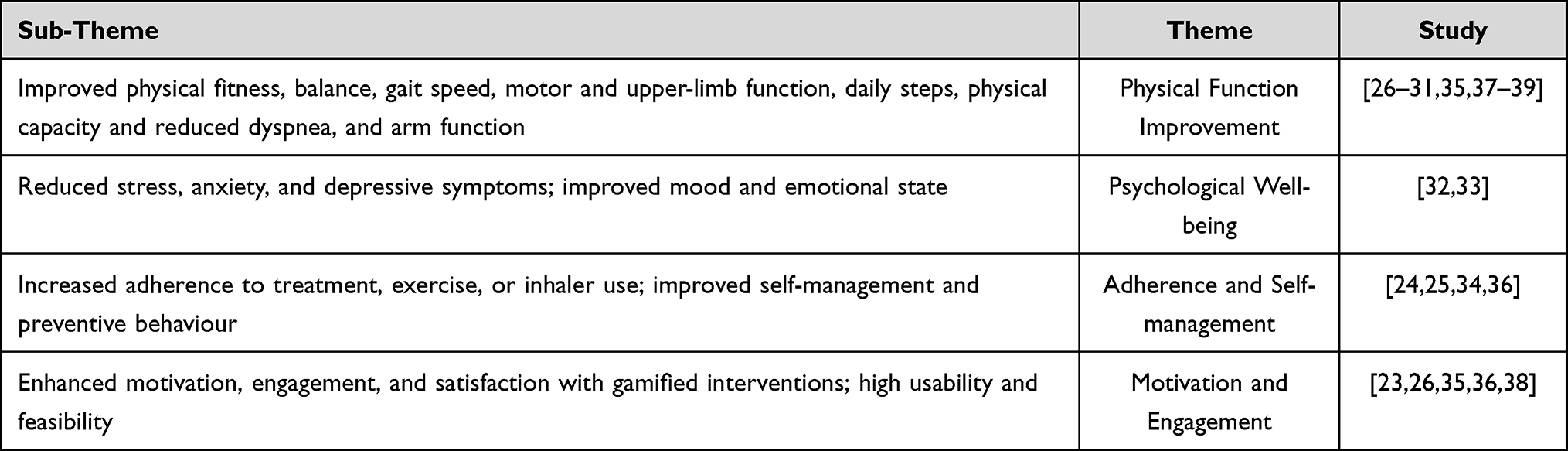 |
Table 3 Summary of Outcome |
Physical Function Improvement emerged as the most frequently reported outcome domain. Across multiple trials, gamified and virtual reality–based interventions demonstrated significant enhancement in balance, gait speed, upper- and lower-limb motor function, and overall physical capacity.26–31,35,37,38 Improvements in exercise performance were frequently accompanied by reductions in dyspnea and fatigue, reflecting better cardiorespiratory endurance and symptom control. The interactive and feedback-driven nature of gamified exercises appeared to facilitate motor relearning and functional recovery, particularly among patients undergoing rehabilitation for chronic conditions.
In the Psychological Well-Being domain, several studies reported positive effects on mental and emotional health.32,33 Gamified interventions incorporating immersive, interactive, or narrative-based elements were associated with reduced levels of anxiety, depression, and stress, alongside improved mood stability and emotional engagement. These findings suggest that gamification may serve as an adjunct to conventional therapy by promoting psychological resilience and fostering a sense of autonomy and enjoyment throughout treatment.32,33
The domain of Adherence and Self-management encompasses improvements in patients’ compliance with prescribed therapeutic regimens, including medication use, exercise adherence, and inhaler technique.24,25,34,36 Gamified elements such as goal setting, progress tracking, and reward-based feedback encouraged sustained engagement and accountability. Enhanced self-management behaviors reflected the patients’ increased self-efficacy, demonstrating that game-based reinforcement mechanisms can effectively translate behavioral intention into long-term health practices.24,25,34,36
Lastly, motivation and engagement represented a cross-cutting domain that underpinned the success of all other outcomes.23,26,35,36,38 Across various intervention modalities, gamification consistently enhanced intrinsic motivation, enjoyment, and usability. High levels of engagement and satisfaction were strongly associated with the feasibility and acceptability of gamified programs, suggesting that well-designed digital games can mitigate attrition, enhance participation, and strengthen continuity of care.23,26,35,36,38
Collectively, these findings indicate that gamified interventions contribute to multidimensional patient benefits, integrating physical, psychological, and behavioural improvements within a motivational framework. The convergence of these domains highlights gamification’s potential as an evidence-based, patient-centred strategy for promoting sustainable health outcomes in chronic disease management and rehabilitation.
Discussion
This review aimed to evaluate the effectiveness of gamification-based interventions in chronic disease management. In a global context, the increasing burden of chronic diseases such as cardiovascular disorders, stroke, COPD, cancer, and diabetes requires innovative strategies to improve patient engagement and self-management. Chronic conditions require long-term rehabilitation and ongoing self-management, making gamification an interesting innovation for maintaining active engagement during the rehabilitation process. Gamification, which integrates game design elements such as feedback, rewards, and challenges, has been reported to possess the potential to improve motivation, adherence, and behavioural change among individuals living with chronic conditions. The review identified three main categories of gamification approaches: active video games for physical rehabilitation, virtual reality (VR)-based intervention, and gamification for education and behaviour change.
In this review, COPD was the population most frequently intervened with gamification,23,29–34 compared to multiple sclerosis.37 The patient population with COPD is indeed the group most often targeted for interventions using a gamification approach when compared to other populations, such as those with multiple sclerosis.18 Recent studies confirm that the application of gamification in COPD management provides flexibility and empowers patients to self-manage, especially through physical rehabilitation-based programs and interactive education.18 In contrast, interventions in multiple sclerosis tend to be directed at providing psychosocial support, increasing disease awareness, and managing symptoms through a personalized approach tailored to each patient’s unique needs.40–42
Across included studies, gamification-based interventions were generally associated with improved therapeutic outcomes related to physical function.26–31,35,37–39 However, it is also not uncommon for gamification interventions to enhance psychological aspects such as stress, anxiety, depression, and mood disorders.26–31,35,37–39 These improvements in physical function and emotional well-being contribute directly to quality of life, as patients become better able to carry out daily activities, have better self-control, and experience lower psychological burden during the treatment process. Gamification also increases patient engagement and confidence in following therapy programs, which ultimately supports overall QoL improvement, especially in chronic conditions that require long-term rehabilitation and consistency in self-management.23,26,35,36,38
Active video game (AVG) interventions have been proven effective in enhancing physical capacity and motor function among patients with chronic diseases, particularly those with COPD, stroke, and cancer. Studies employing platforms such as Nintendo Wii Fit, Wii Sports, and Xbox Kinect demonstrated significant improvements in balance, muscle strength, and overall physical fitness, as well as greater exercise engagement among individuals with chronic conditions.23,28,30,31 In this context, gamification provides instant feedback, a scoring system, and gradual levels of difficulty that reinforce motor learning, reduce training boredom, and increase motivation.28,35,36,38
Virtual reality (VR)-based interventions have also demonstrated promising results in the rehabilitation of patients with COPD and stroke. VR systems enable patients to experience immersive simulations of calming natural environments, stimulate physical activity, and promote psychological relaxation.32,33 The use of immersive narrative elements and multisensory interactions creates a more personalised therapeutic experience compared to conventional therapy.29,33 Moreover, VR interventions have been shown to reduce stress and anxiety through cognitive distraction mechanisms and by enhancing patients’ perceived sense of control during therapy.32,33 Thus, gamification-based VR can be optimised as a component of psychosocial interventions that strengthen self-efficacy and mental resilience in chronic patients.
Digital gamification for education and behaviour change plays a crucial role in enhancing patient adherence and self-management. Smartphone applications and web-based platforms emphasise elements such as points, badges, leaderboards, and social competition to motivate sustained healthy behaviours.27,34,36 Previous studies reported that serious games improved strategies for preventing nausea and vomiting in cancer patients,25 and that physical activity, through competitive social support, improved strategies for preventing nausea and vomiting in cancer patients. These gamification mechanisms align with the principles of behavioural economics, which hold that systems of rewards and penalties reinforce long-term adherence.27
Across all RCTs analysed, improvement in physical function emerged as the most consistent positive outcome. The findings revealed significant enhancements in walking speed, upper extremity function, and patients’ aerobic capacity.26–31,35,37,38 Interactive movement–based interventions activate neuroplasticity mechanisms that support motor recovery through visual feedback and adaptive repetition. This aligns with self-determination theory, wherein the sense of achievement experienced during gameplay reinforces patients’ competence and intrinsic motivation.36 Consequently, active video games (AVG) function not merely as exercise tools but also as behavioural enablers, facilitating improvements in functional performance among patients with chronic diseases.
Enhancing adherence and intrinsic motivation is a key characteristic of successful digital gamification interventions. Evidence indicates that components such as progress tracking, goal setting, and feedback reinforcement are effective in promoting self-management behaviours among patients with chronic illnesses such as COPD and cancer.24,25,34,36 Game mechanics create a sense of accomplishment and personal responsibility, which reduces resistance to treatment routines.10 Intrinsic motivation is a key factor in maintaining long-term participation, strengthening gamification’s position as a transformative adherence-driven intervention in chronic care.34,36 Thus, this domain emphasizes the importance of designing interventions centered on user experience and continuous positive feedback.
On the other hand, several studies have reported limitations associated with the use of gamification. Many previous studies on gamification in chronic disease care have short intervention durations, small sample sizes, and a lack of longitudinal data, making it difficult to assess long-term outcomes and the true effectiveness on patient health.18,43–45 In addition, other studies do not use standardized evaluation measures, which limits comparability across studies.45,46 Studies have reported joint and back pain arising from gamified physical activity, underscoring the need for more robust monitoring and risk mitigation.46 These issues highlight the need for greater attention to safety aspects and risk monitoring.
Although these gamification interventions have some limitations, several studies report good levels of feasibility and acceptance. The studies analyzed reported good retention rates (80%), no study-related adverse events, and a fairly good intervention attendance rate (78%).26 Another study reported that VR interventions are also highly feasible for older people who perceive a greater need for exercise to improve/maintain their limb health.47 Furthermore, some participants reported that the gamification (eSSET-CINV serious game) was easy to play and useful in helping them manage Symptom Self-Management Training–Chemotherapy-Induced Nausea and Vomiting at home, and that the choices in the game were clear and consistent with the teaching standards they had received.25
Overall, this review demonstrates that gamification has a multidimensional impact on chronic disease management, encompassing improvements in physical and psychological well-being, therapeutic adherence, and patient motivation. Collectively, these three gamification modalities, AVG, VR, and digital gamification, represent a continuum of therapeutic engagement, ranging from physical rehabilitation to psychological and behavioural reinforcement. While AVG primarily targets motor recovery through neuroplasticity and feedback loops, VR contributes to emotional regulation and cognitive distraction, and digital gamification strengthens long-term adherence through motivational and social mechanisms. The convergence of these outcomes suggests that gamification operates not as isolated technological tools but as an integrated framework promoting multidimensional self-management in chronic disease care.
Strengths and Limitations
This systematic review is among the few studies that specifically synthesise RCTs evaluating the effectiveness of gamification-based interventions for chronic disease care. By focusing exclusively on RCT designs, this review provides higher-level evidence than previous scoping or narrative reviews, ensuring methodological rigour and reliable interpretation of outcomes. The inclusion of diverse clinical populations ranging from COPD, stroke, diabetes, and cancer to multiple sclerosis adds to the generalizability of findings across different chronic disease contexts. Furthermore, the thematic synthesis categorising interventions into AVG, VR, and digital gamification for education and behaviour change offers a novel, structured lens for understanding how gamified elements function across physical, psychological, and behavioural domains.
However, several limitations must be acknowledged. Considerable heterogeneity existed in the intervention designs, durations, and gamification components, limiting direct comparisons and meta-analytic pooling. Many trials involved small sample sizes, short intervention durations, or lacked long-term follow-up, constraining conclusions about sustainability and clinical scalability. In addition, most studies were conducted in high-income countries, limiting the evidence base for low- and middle-income settings where digital infrastructure and cultural engagement with gaming may differ. Finally, the absence of standardised outcome measures for engagement and motivation represents a methodological gap that future research should address.
Conclusion
Three main categories of gamification-based interventions used in chronic disease care: (1) active video games for rehabilitation, (2) VR-based interventions, and (3) digital gamification for education and behaviour change. Across these interventions, four consistent outcome domains including physical function improvement, psychological well-being, adherence and self-management, and motivation and engagement. Overall, gamification shows multidimensional benefits that integrate physical, psychological, and behavioural aspects of chronic disease management.
Patterns across the included studies suggest that gamification may support multidimensional aspects of chronic disease care by integrating physical, psychological, and behavioural components of patient management. These interpretations should be considered in light of the methodological limitations of the studies, including small sample sizes, short intervention durations, and heterogeneous outcome measures. Future research should incorporate longer-term designs, standardised outcome assessments, and hybrid models that integrate VR, mobile technologies, and clinical support better to understand long-term engagement and sustainability of gamification-based interventions.
Acknowledgments
All authors would like to thank Padjadjaran University, Bandung, West Java, Indonesia, for facilitating the database and funding this research.
Disclosure
The authors report no conflicts of interest in this work.
References
1. Koehlmoos TP, Anwar S, Cravioto A. Global health: chronic diseases and other emergent issues in global health. Infect Dis Clin North Am. 2011;25(3):623–38,ix. doi:10.1016/j.idc.2011.05.008
2. World Heart Organization. Noncommunicable diseases. 2025 [cited Oct 2, 2025]. Available from: https://www.who.int/news-room/fact-sheets/detail/noncommunicable-diseases.
3. World Health Organization (WHO). Noncommunicable diseases in the South-East Asia. 2025 [cited May 20, 2025]. Available from: https://www.who.int/southeastasia/health-topics/noncommunicable-diseases.
4. Peyroteo M, Ferreira IA, Elvas LB, Ferreira JC, Lapão LV. Remote monitoring systems for patients with chronic diseases in primary health care: systematic review. JMIR mHealth uHealth. 2021;9(12):e28285. doi:10.2196/28285
5. Floriancic N, Garnett A, Donelle L. Chronic disease management in a nurse practitioner-led clinic: an interpretive description study. SAGE open Nurs. 2024;10:23779608241299292. doi:10.1177/23779608241299292
6. Sari CWM, Haroen H, Juniarti N, Amalia L, Pardosi JF. A systematic review of continuity of care strategies for enhancing diabetes self-management in older adults in asian countries. J Multidiscip Healthc. 2025;18:5441–5459. doi:10.2147/JMDH.S536258
7. den Kamp EM O, Bakker AB, Tims M, Demerouti E, de Wijs JJ. Working with a chronic health condition: the implications of proactive vitality management for occupational health and performance. J Vocat Behav. 2024;150:103987. doi:10.1016/j.jvb.2024.103987
8. Rahelić V, Perković T, Romić L, et al. The role of behavioral factors on chronic diseases-practice and knowledge gaps. Healthc. 2024;12(24):2520. doi:10.3390/healthcare12242520
9. Jerant AF, Von Friederichs-Fitzwater MM, Moore M. Patients’ perceived barriers to active self-management of chronic conditions. Patient Educ Couns. 2005;57(3):300–307. doi:10.1016/j.pec.2004.08.004
10. Religioni U, Barrios-Rodríguez R, Requena P, Borowska M, Ostrowski J. Enhancing therapy adherence: impact on clinical outcomes, healthcare costs, and patient quality of life. Medicina. 2025;61(1). doi:10.3390/medicina61010153
11. Walsh CA, Cahir C, Tecklenborg S, Byrne C, Culbertson MA, Bennett KE. The association between medication non-adherence and adverse health outcomes in ageing populations: a systematic review and meta-analysis. Br J Clin Pharmacol. 2019;85(11):2464–2478. doi:10.1111/bcp.14075
12. Stutvoet MD, Levelt L, Hrehovcsik MM, et al. Gamification in eHealth for chronic disease self-management in youth: a systematic review. Games Heal J. 2024;13(5):314–331. doi:10.1089/g4h.2023.0111
13. Huang X, Huang L. The use of gamification in the self-management of patients with chronic diseases: scoping review. JMIR Serious Games. 2023;11.
14. Deterding S, Dixon D. From game design elements to gamefulness: defining “Gamification.” proc 16th int acad mindtrek conf 2012 “Envisioning futur media environ mindtrek 2012. 2012;9–15.
15. Huotari K, Hamari J. A definition for gamification: anchoring gamification in the service marketing literature. Electron Mark. 2017;27(1):21–31. doi:10.1007/s12525-015-0212-z
16. Cugelman B. Gamification: what it is and why it matters to digital health behavior change developers. JMIR Serious Games. 2013;1(1):e3. doi:10.2196/games.3139
17. Sardi L, Idri A, Fernández-Alemán JL. A systematic review of gamification in e-Health. J Biomed Inform. 2017;71:31–48. doi:10.1016/j.jbi.2017.05.011
18. Chen J, Yang T, He Q, et al. The impact of gamified interventions on the management of chronic obstructive pulmonary disease: systematic literature review. JMIR Serious Games. 2025;13:1–21. doi:10.2196/69510
19. Page MJ, McKenzie JE, Bossuyt PM, et al. The PRISMA 2020 statement: an updated guideline for reporting systematic reviews. BMJ. 2021;372.
20. Riley RD, Moons KGM, Snell KIE, et al. A guide to systematic review and meta-analysis of prognostic factor studies. BMJ. 2019;364. doi:10.1136/bmj.k4597
21. Page MJ, McKenzie JE, Bossuyt PM, et al. The PRISMA 2020 statement: an updated guideline for reporting systematic reviews. BMJ. 2021;372:1–11.
22. Joanna Briggs Institute (JBI). JBI’s critical appraisal tools [Internet]. Joanna Briggs Institute. 2022 [cited Jan 1, 2023]. Available from: https://jbi.global/critical-appraisal-tools.
23. Sutanto YS, Makhabah DN, Aphridasari J, Doewes M, Suradi Ambrosino N, Ambrosino N. Videogame assisted exercise training in patients with chronic obstructive pulmonary disease: a preliminary study. Pulmonology. 2019;25(5):275–282. doi:10.1016/j.pulmoe.2019.03.007
24. Krebs P, Burkhalter J, Fiske J, et al. The quitIT coping skills game for promoting tobacco cessation among smokers diagnosed with cancer: pilot randomized controlled trial. JMIR mHealth uHealth. 2019;7(1):1–13. doi:10.2196/10071
25. Loerzel VW, Closchesy JM, Geddie PI. Using serious games to increase prevention and self- management of chemotherapy-induced nausea and vomiting in older adults with cancer. Onclo Nurs Forum. 2020;5(47):567–576. doi:10.1188/20.ONF.567-576
26. Swartz MC, Lewis ZH, Deer RR, et al. Feasibility and acceptability of an active video game–based physical activity support group (Pink warrior) for survivors of breast cancer: randomized controlled pilot trial. JMIR Cancer. 2022;8(3):1–18. doi:10.2196/36889
27. Patel MS, Small DS, Harrison JD, et al. Effect of behaviorally designed gamification with social incentives on lifestyle modification among adults with uncontrolled diabetes. JAMA Network Open. 2021;4(5):e2110255. doi:10.1001/jamanetworkopen.2021.10255
28. Anwar N, Karimi H, Ahmad A, et al. Virtual reality training using nintendo wii games for patients with stroke: randomized controlled trial. JMIR Serious Games. 2022;10(2):1–8. doi:10.2196/29830
29. Rutkowski S, Rutkowska A, Kiper P, et al. Virtual reality rehabilitation in patients with chronic obstructive pulmonary disease: a randomized controlled trial. Int J COPD. 2020;15:117–124. doi:10.2147/COPD.S223592
30. Kotrach H, Dajczman E, Tremblay G, et al. A pilot study using virtual game system to maintain adherence to home-based exercise following pulmonary rehabilitation in chronic obstructive pulmonary disease. Chest. 2015;148(4):709A. doi:10.1378/chest.2257078
31. Rutkowski S, Rutkowska A, Jastrzębski D, Racheniuk H, Pawełczyk W, Szczegielniak J. Effect of virtual reality‐based rehabilitation on physical fitness in patients with chronic obstructive pulmonary disease. J Hum Kinet. 2019;69(1):149–157. doi:10.2478/hukin-2019-0022
32. Kizmaz E, Telli Atalay O, Çetin N, Uğurlu E. Virtual reality for COPD exacerbation: a randomized controlled trial. Respir Med. 2024;230(February):5–10. doi:10.1016/j.rmed.2024.107696
33. Rutkowski S, Szczegielniak J, Szczepańska‐Gieracha J. Evaluation of the efficacy of immersive virtual reality therapy as a method supporting pulmonary rehabilitation: a randomized controlled trial. J Clin Med. 2021;10(2):1–12. doi:10.3390/jcm10020352
34. Huang X, Jiang Z, Dai Y, et al. Effect of gamification on improved adherence to inhaled medications in chronic obstructive pulmonary disease: randomized controlled trial. J Med Internet Res. 2025;27(1):e65309. doi:10.2196/65309
35. Henrique PPB, Colussi EL, De Marchi ACB. Effects of exergame on patients’ balance and upper limb motor function after stroke: a randomized controlled trial. J Stroke Cerebrovasc Dis. 2019;28(8):2351–2357. doi:10.1016/j.jstrokecerebrovasdis.2019.05.031
36. Höchsmann C, Infanger D, Klenk C, Königstein K, Walz SP, Schmidt-Trucksäss A. Effectiveness of a behavior change technique-based smartphone game to improve intrinsic motivation and physical activity adherence in patients with type 2 diabetes: randomized controlled trial. JMIR Serious Games. 2019;7(1):1–12. doi:10.2196/11444
37. Jonsdottir J, Bertoni R, Lawo M, Montesano A, Bowman T, Gabrielli S. Serious games for arm rehabilitation of persons with multiple sclerosis. A randomized controlled pilot study. Mult Scler Relat Disord. 2018;19:25–29. doi:10.1016/j.msard.2017.10.010
38. Prange GB, Kottink AIR, Buurke JH, et al. The effect of Arm Support combined with rehabilitation games on upper-extremity function in subacute stroke: a randomized controlled trial. Neurorehabil Neural Repair. 2015;29(2):174–182. doi:10.1177/1545968314535985
39. Chen J, Or CK, Li Z, Yeung EHK, Zhou Y, Hao T. Effectiveness, safety and patients ‘perceptions of an immersive virtual reality – based exercise system for poststroke upper limb motor rehabilitation: a proof-of-concept and feasibility randomized controlled trial. Digital Health. 2023;9. doi:10.1177/20552076231203599
40. Heesen C, Berger T, Riemann-Lorenz K, et al. Mobile health interventions in multiple sclerosis: a systematic review. Mult Scler. 2023;29(14):1709–1720. doi:10.1177/13524585231201089
41. Gitman V, Moss K, Hodgson D. A systematic review and meta-analysis of the effects of non-pharmacological interventions on quality of life in adults with multiple sclerosis. Eur J Med Res. 2023;28(1):294. doi:10.1186/s40001-023-01185-5
42. Kidd T, Carey N, Mold F, et al. A systematic review of the effectiveness of self-management interventions in people with multiple sclerosis at improving depression, anxiety and quality of life. PLoS One. 2017;12(10):e0185931. doi:10.1371/journal.pone.0185931
43. Selles W, Santos E, Romero B, Lunardi A. Effectiveness of gamified exercise programs on the level of physical activity in adults with chronic diseases: a systematic review. Disabil Rehabil. 2024;46:6231–6239. doi:10.1080/09638288.2024.2323614
44. Mazéas A, Duclos M, Pereira B, Chalabaev A. Evaluating the effectiveness of gamification on physical activity: systematic review and meta-analysis of randomized controlled trials. J Med Internet Res. 2022;24.
45. Hualong Wu Q, Hu K, Liu J, et al. Scoping review of gamification in rehabilitation care of adults with chronic illnesses. Nurs Res. 2025;74:233–240. doi:10.1097/NNR.0000000000000816
46. Huang X, Xiang X, Liu Y, Wang Z, Jiang Z, Huang L. The use of gamification in the self-management of patients with chronic diseases: scoping review. JMIR Serious Games. 2022;11.
47. Chen T, Chen J, Or CK, Lo FP. Path analysis of the roles of age, self-efficacy, and TAM constructs in the acceptance of performing upper-limb exercises through immersive virtual reality games. Int J Ind Ergon. 2022;91:103360. doi:10.1016/j.ergon.2022.103360
 © 2025 The Author(s). This work is published and licensed by Dove Medical Press Limited. The
full terms of this license are available at https://www.dovepress.com/terms
and incorporate the Creative Commons Attribution
- Non Commercial (unported, 4.0) License.
By accessing the work you hereby accept the Terms. Non-commercial uses of the work are permitted
without any further permission from Dove Medical Press Limited, provided the work is properly
attributed. For permission for commercial use of this work, please see paragraphs 4.2 and 5 of our Terms.
© 2025 The Author(s). This work is published and licensed by Dove Medical Press Limited. The
full terms of this license are available at https://www.dovepress.com/terms
and incorporate the Creative Commons Attribution
- Non Commercial (unported, 4.0) License.
By accessing the work you hereby accept the Terms. Non-commercial uses of the work are permitted
without any further permission from Dove Medical Press Limited, provided the work is properly
attributed. For permission for commercial use of this work, please see paragraphs 4.2 and 5 of our Terms.
Recommended articles
Determinants of Medication Non-Adherence in 1,750 Indonesian Adults with Chronic Diseases: A Nationwide Cross-Sectional Study
Alfian SD, Griselda M, Hilmi IL, Alshehri AA, Puspitasari IM, Abdulah R
Patient Preference and Adherence 2026, 20:599598
Published Date: 27 April 2026
Gamification and Virtual Reality for Enhancing Disaster Preparedness Among University Students and Health Workers: A Scoping Review
Emaliyawati E, Sugiharto F, Ibrahim K, Trisyani Y, Songwathana P
Journal of Multidisciplinary Healthcare 2026, 19:599619
Published Date: 20 May 2026