
Back to Journals » Advances in Medical Education and Practice » Volume 17
Fostering Research Engagement and Ideation: Insights from Medical Students in Thailand
Authors Plangsiri S  , Jirapornsuwan M, Kaewkamjornchai P
Received 23 December 2025
Accepted for publication 26 March 2026
Published 8 April 2026 Volume 2026:17 591142
DOI https://doi.org/10.2147/AMEP.S591142
Checked for plagiarism Yes
Review by Single anonymous peer review
Peer reviewer comments 2
Editor who approved publication: Dr Md Anwarul Azim Majumder
Settanan Plangsiri,1,2 Manisara Jirapornsuwan,1 Phanuwich Kaewkamjornchai3
1Faculty of Medicine Ramathibodi Hospital, Mahidol University, Bangkok, Thailand; 2Department of Biomedical Engineering, Faculty of Engineering, Mahidol University, Nakhon Pathom, Thailand; 3Chakri Naruebodindra Medical Institute, Faculty of Medicine Ramathibodi Hospital, Mahidol University, Samut Prakan, Thailand
Correspondence: Phanuwich Kaewkamjornchai, Chakri Naruebodindra Medical Institute, Faculty of Medicine Ramathibodi Hospital, Mahidol University, Samut Prakan, Thailand, Email [email protected]
Background: Research plays a vital role in fostering critical thinking among medical students, while also strengthening related skills such as writing, communication, collaboration, and project management. Beyond skill development, research experiences can serve as valuable credentials and inspire future career paths. Despite these benefits, students often face challenges in identifying thought-provoking topics and securing suitable mentors. This study explores how medical students generate research ideas and establish connections with advisors, with the goal of identifying actionable institutional strategies to enhance research engagement.
Methods: Quantitative surveys and qualitative interviews were conducted sequentially, focusing on the 2023 cohort of third-year medical students who were required to complete a research proposal as part of their graduation requirements. Quantitative data were summarized as counts, percentages, means, and standard deviations. To complement these findings, qualitative interview data were analyzed independently by two investigators using reflexive thematic analysis to contextualize and extend the quantitative findings.
Results: Quantitative data from 139 students revealed that the most important factors for generating research ideas were discussions with professors, literature reviews, and attendance at research seminars. Advisors for first research projects were usually class professors, while advisors for subsequent projects were obtained through recommendations. Qualitative interviews with 19 students reflected the survey results while also uncovering additional factors not captured in the survey options, such as assisted advisor matching systems or invitations from previous advisors to collaborate on new projects. The interviews also revealed students’ perspectives on how effectively the curriculum facilitated professor matching and their personal experiences with research advisors. Additionally, while many participants expressed a personal interest in research, the majority opposed making research a mandatory requirement in medical school.
Conclusion: Our findings suggest that strengthening faculty-student interactions, maintaining accessible platforms, and optimizing research seminars can enhance student satisfaction and the overall quality of undergraduate research.
Keywords: medical education, undergraduate medical education, research curriculum, research engagement, medical student research
Introduction
Research plays a crucial role in supporting critical thinking skills among students, which are essential for their future careers. Participation in research and scholarly activities also helps medical students develop transferable skills such as academic writing, communication, collaboration, and project management.1–5 Beyond skill-building, research experience strengthens students’ academic credentials and introduces them to the culture of research, ultimately nurturing long-term professional and intellectual growth.
In recent years, there has been a growing trend of medical students engaging in research.6–8 Countries with medical education systems similar to Thailand’s undergraduate-level programs, such as the Netherlands, Iran, the UK, and Pakistan, have reported a significant increase in high-quality research publications.6,7 Similarly, countries requiring an undergraduate degree before medical school enrollment, such as the United States and Canada, have also demonstrated notable research output from medical students.6 However, in countries like Peru and Nigeria, research productivity remains inconsistent across institutions. Additionally, other regions, including Morocco, Arab nations (Egypt, Algeria, Sudan, Jordan, Syria, and Palestine), and GCC countries (Bahrain, Kuwait, Oman, Qatar, Saudi Arabia, and the United Arab Emirates), face challenges in nurturing student participation in research. These countries need to place greater emphasis on encouraging research activities and equipping students with the necessary skills and knowledge to conduct research effectively.9–14 Students who have completed their first research project are more likely to pursue further research,15 exhibit increased interest in academia,16 and consider pursuing residency.7,17 Moreover, students who perceive themselves as having more research skills or experience like graduate students are more inclined to engage in research.18
However, some existing studies have demonstrated that despite having a positive outlook on the importance of research, only a limited number of students initiate research projects voluntarily.19 Obstacles preventing students from engaging in research include a lack of knowledge,20 limited free time, and inadequate guidance.21 There are not enough opportunities for medical students to conduct research, and most students are uncertain about how to take the initial steps. Medical educators should not only direct students to research opportunities but also guide them in developing the attitudes necessary for success in a research environment.22 Additionally, studies examining how medical students in Southeast Asia generate research ideas and how institutional activities influence idea development remain limited.23–27
The Faculty of Medicine Ramathibodi Hospital is one such medical school in Thailand, a middle-income country in Southeast Asia, that incorporates research education into compulsory undergraduate medical curriculum. Completion of a research project is a graduation requirement. Students are expected to identify an advisor, develop a research proposal, and complete a project, with outputs including a written report and institutional presentation; peer-reviewed publication is encouraged but not required. In addition to introducing research methods, the institution organizes a variety of research-focused seminars to promote research opportunities for the students, such as the Research Market, Research Camp, Research Tour, Dean’s PARTIEs and Science Fair. The Research Market and Research Camp were designed to enable professors to host their own research booths and conduct small seminars at scheduled times, providing opportunities for students to listen, engage in discussions, and establish connections with potential advisors. The Research Tour offers students a guided visit to various professors’ laboratories, where they can observe ongoing projects and gain insights into the professors’ research. Dean’s Parties serve as events where distinguished professors and senior medical students, including recipients of the Prince Mahidol Award Youth Program scholarship, share their experiences and deliver talks to junior students, promoting inspiration and mentorship. Lastly, the Science Fair showcases senior medical students’ research posters, allowing new students to explore and learn from their peers’ work. By participating in these institution-hosted seminars, students have the opportunity to engage with faculty members conducting research across diverse fields, gaining valuable exposure to various research areas and methodologies. Moreover, the institution supports medical students through initiatives like the “Tonkla Ramathibodi’ Research Funding Program, which offers limited funding for research projects. The program also maintains a dedicated website that lists professors along with their areas of expertise and contact information. Additionally, the Tonkla Ramathibodi program includes administrative staff who assist students by answering questions, providing guidance, and facilitating connections with suitable advisors based on students’ research interests or proposed topics. Students can easily access this support by contacting the program via Email and describing their research interests.
In the context of the Faculty of Medicine Ramathibodi Hospital, although all students receive the same curriculum, only a portion of them can independently conceive research topics and initiate research projects faster than their peers. Moreover, it remains unclear whether the various research-supporting activities organized by the institution effectively facilitate research question formulation among students. Despite the widespread inclusion of compulsory research components in undergraduate medical curricula, there is limited empirical evidence explaining how students actually generate research ideas and navigate advisor selection within these structures. Without understanding these mechanisms, curricular investments risk becoming procedural requirements rather than meaningful educational experiences. This study aimed to answer the research question of how do undergraduate medical students generate research ideas and identify research advisors within a compulsory research curriculum, and what institutional factors facilitate or hinder this process? Accordingly, this study aimed to (1) examine how medical students generate research ideas and identify advisors within a compulsory research curriculum, and (2) identify institutional factors that facilitate or impede meaningful research engagement.
Methods
The study utilized a sequential mixed-method design, combining quantitative and qualitative methods to identify and evaluate the most common strategies students used to generate research ideas. The study population consisted of third-year medical students from the Faculty of Medicine Ramathibodi Hospital, Mahidol University. Quantitative data were collected using Google Forms, followed by interviews to gather qualitative insights from the participants.
Quantitative Study
To analyze and identify the factors that influence the initiation of research projects among medical students. An online questionnaire-based quantitative design was utilized, focusing on the process of research idea generation and the approaches students employed to find potential research advisors. The survey was deployed on 13 January 2023 and remained open until 13 February 2023. Students accessed the questionnaire by scanning QR codes linking to the online survey, which was distributed through institutional communication channels with periodic reminders.
Study Design
Data regarding students’ research experiences were collected through Google Forms, an online survey platform. A convenience sampling approach was employed to gather survey responses. The sample size encompassed more than half of the entire cohort of third-year medical students (n=139).
Survey Development and Validation
The survey was constructed based on findings from a comprehensive literature review on factors influencing research engagement among medical students.28–30 Items were designed to capture demographics, research involvement, and perceived factors influencing research initiation and advisor selection. Following this, the investigators consulted three experts in research and medical education to refine the survey items for clarity, relevance, and comprehensiveness. The draft survey was then pilot-tested with 10 third-year medical students to ensure clarity and precision of the questions. Feedback from these students was used to make final adjustments before the survey was distributed to the full cohort.
Data
The collected data included: (1) demographic information such as sex at birth and GPA (2) research-focused questionnaire responses encompassing the domain of research, current student progress, the process through which students developed their research ideas, and the most significant events that assisted students in identifying advisors for their projects.
For the purposes of this study, research domains were categorized based on students’ self-reported descriptions of their projects. “Basic science research” or “foundational research” referred to laboratory-based or experimental studies investigating biological mechanisms at the molecular, cellular, or physiological level. “Clinical research” referred to studies involving patient populations or clinical data, including observational or interventional studies. “Medical education research” referred to studies examining educational interventions, curriculum design, or learning outcomes in medical training. “Systematic review/meta-analysis” referred to studies synthesizing previously published literature using systematic search and evidence synthesis methodologies. “Health policy or health systems research” referred to studies examining healthcare delivery, organization, policy implementation, or health system performance. “Translational research” referred to studies that bridge basic science and clinical application, aiming to translate laboratory discoveries into diagnostic tools, therapeutic interventions, or medical technologies that can be implemented in clinical practice.
Statistical Analysis
Quantitative survey data were first cleaned and organized in Google Sheet to convert raw responses into a usable format. Participants’ demographic characteristics and their responses regarding important factors for research initiation or advisor selection were summarized using descriptive statistics and reported as counts and percentages. Continuous variables (eg., GPA) were presented as means and standard deviations. To compare responses between sexes (female vs. male students) and GPA groups (<3.5 vs. ≥3.5), independent two-sample t-tests and Mann–Whitney U-tests were performed for continuous data, while chi-square tests were used for categorical data. Based on previous studies reporting a positive association between academic performance and research involvement among medical students,28 a one-tailed t-test was used to test the directional hypothesis that students with higher GPAs would initiate more research projects. For all other comparisons without specified direction, a two-tailed alpha level of 0.05 was applied, with results reported alongside 95% confidence intervals (CI). Effect sizes for group comparisons were calculated using Cohen’s d. All inferential analyses and visualizations were conducted using IBM SPSS Statistics (version 30; IBM Corp., Armonk, NY, USA).
Qualitative Study
A structured interview was conducted to explore and uncover the underlying themes in greater depth. Interview participants were recruited from the same student cohort as the survey respondents; however, participation in the qualitative interviews was voluntary and not restricted to survey respondents and were selected using a combination of purposive recruitment and snowball sampling methods. Interviews continued until thematic saturation was achieved, resulting in a total of 19 participants. All interview sessions were recorded and transcribed. Thematic analysis followed Braun and Clarke’s framework.31 Two authors independently read and re-read transcripts, highlighted recurring ideas, and coded responses into categories. Emerging codes were compared, and any conflicts were resolved by a third investigator. The interviews were conducted in Thai through phone calls to maximize participation during study rotations and to reduce scheduling and location barriers. The interview questions included the following:
- What motivated you to start or become interested in your project(s)? Please explain.
- What are your opinions on the strengths and weaknesses of the Faculty of Medicine, Ramathibodi Hospital, in supporting research? Are there specific areas where improvements could help future medical students find their passion and inspiration for research?
- How were you matched with your advisor for your project(s)? Please elaborate.
- What should the Faculty of Medicine, Ramathibodi Hospital, improve to help students find and connect with suitable professors?
- How would you describe an ideal research advisor?
- Do you agree with the current requirement for all medical students at the Faculty of Medicine, Ramathibodi Hospital, to participate in research?
- If research were not mandatory, would you still choose to engage in it?
These questions were designed to probe deeper into areas that could not be fully addressed through quantitative methods, particularly focusing on generation of research ideas and advisor matching. The quantitative questionnaire and qualitative interview questions are provided in Supplementary File 1, available in both Thai and English.
Reflexivity Statement
The research team included faculty members (Phanuwich Kaewkamjornchai, M.D., Samrit Srithamrongsawat, M.D., Ph.D., and Peerasit Sitthirat, M.D.) with experience in medical education research and student mentorship, as well as medical students (Settanan Plangsiri and Manisara Jirapornsuwan) who had recently navigated the research curriculum. Faculty investigators were involved in curriculum delivery but not in student assessment. This positionality informed sensitivity to power dynamics during interviews and was addressed through independent coding and investigator triangulation.
Results
Quantitative Data
Out of the 139 students surveyed, 67.63% had participated in initiating at least one research topic. The majority of students participated in basic science research (35.7%) and clinical research (35.7%), followed by medical education research (10.3%). 3.2% of students participated in combined research, including the combination between foundational and clinical, foundational and systematic review, and medical education and health system research, see Figure 1. The most influential factors for initiating their first research project were discussions with faculty members specializing in their area of interest (67.0%), attending academic conferences or institution-hosted research seminars (39.4%), and conducting self-directed literature reviews (34.0%), see Figure 2. In contrast, interactions with peers, such as juniors and seniors, as well as insights from class lectures, were deemed less significant, see Figure 3. These trends largely carried over to students’ subsequent research endeavors, with discussions with specialized faculty (72.7%) and self-directed literature reviews (57.6%) remaining pivotal.
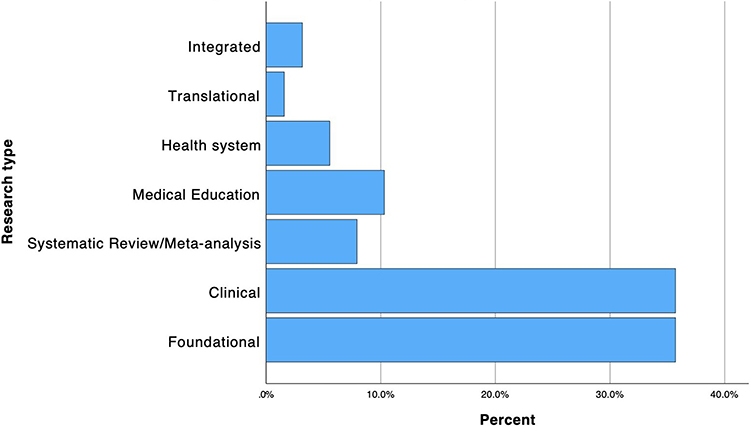 |
Figure 1 Distribution of student-initiated research topics. Percentages represent the proportion of research projects across different research categories including foundational (basic science), clinical, systematic review/meta-analysis, medical education, health systems, and translational research. Integrated research refers to students who initiated multiple research projects spanning different research categories. |
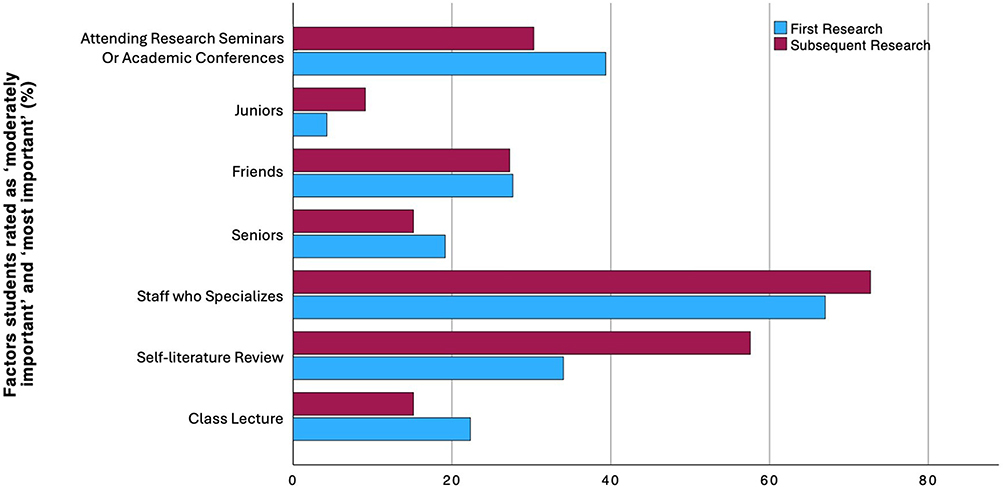 |
Figure 2 Factors rated as moderately important or most important for research topic initiation, comparing first and subsequent research projects. |
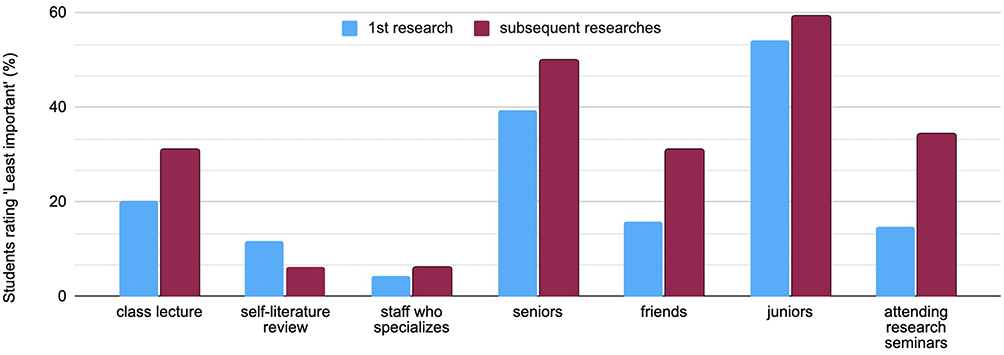 |
Figure 3 Factors rated as least important for research topic initiation, comparing first versus subsequent research projects. |
Students primarily identified their research advisors through institutional research seminars (40.4%) and by directly approaching their class lecturers (23.4%). For subsequent projects, however, recommendations from other professors became an important method for selecting advisors (28.1%). Interestingly, the reliance on research seminars for finding advisors decreased significantly in later projects (40.4% for initial advisors vs. 21.9% for subsequent advisors), see Figure 4.
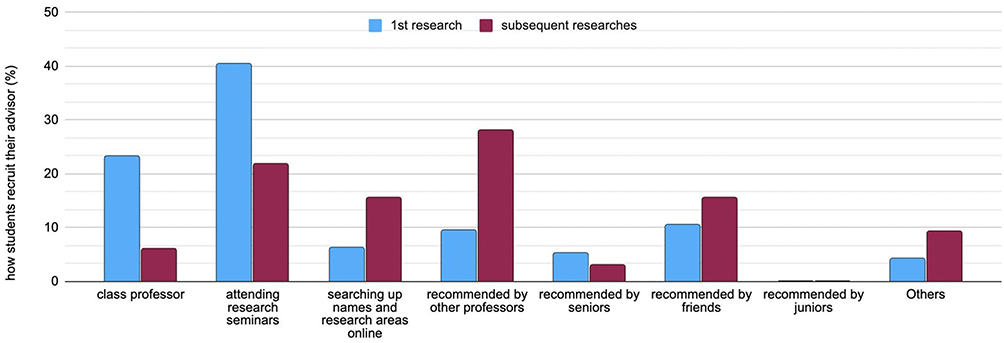 |
Figure 4 Methods used by students to recruit research advisors, comparing first versus subsequent research projects. |
Chi-square tests showed no statistical significance between sex (male or female) and research idea generation, with a p-value of 0.757 and a chi-square value of 0.096, which is below the critical value of 3.84, see Table 1.
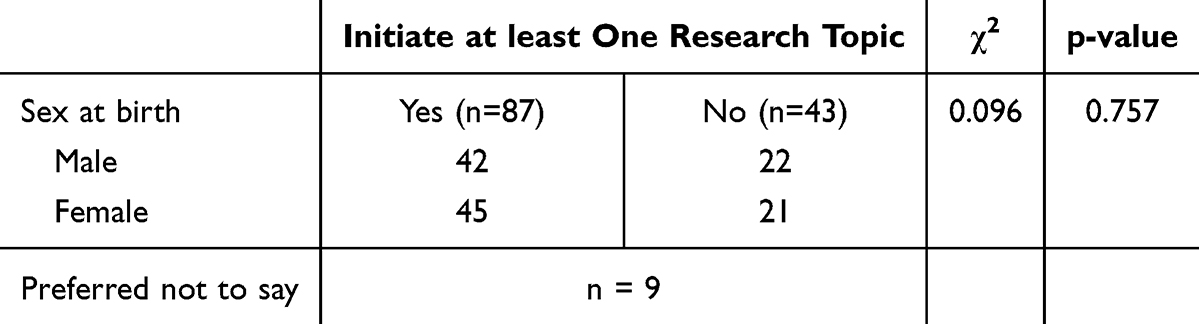 |
Table 1 Association Between Sex at Birth and Generation of at Least One Research Project |
An independent-samples t-test was conducted to compare the number of research activities between students with GPA ≥ 3.5 and those with GPA < 3.5. Students with higher GPA showed a slightly greater mean research involvement (M = 1.07, SD = 0.89) compared to those with lower GPA (M = 0.80, SD = 0.72). The difference approached but did not reach statistical significance on a two-tailed test, t(137) = 1.96, p = 0.052, 95% CI [−0.002, 0.537], with a small-to-moderate effect size (Cohen’s d = 0.34). Under a one-tailed hypothesis predicting higher research activity among higher-GPA students, the result was statistically significant (p = 0.026), see Table 2.
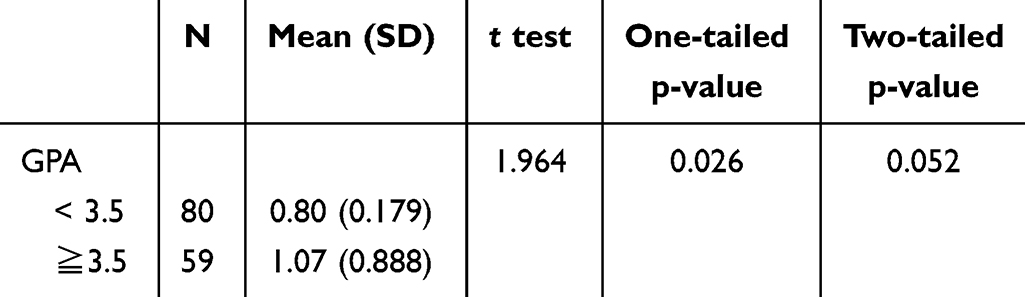 |
Table 2 Association Between GPA and Number of Research Projects Initiated Using Independent t-Test |
To verify this finding without assuming normality, a non-parametric Mann–Whitney U-test was performed. The results similarly indicated no significant difference in the distribution of research activity scores between groups (U = 2758, p = 0.066), see Figure 5. The slight discrepancy between the two tests may reflect the discrete and mildly skewed nature of the N_Research variable, which can reduce the sensitivity of rank-based tests. Overall, these findings suggest a trend toward greater research involvement among students with higher GPA, though the difference was not statistically robust.
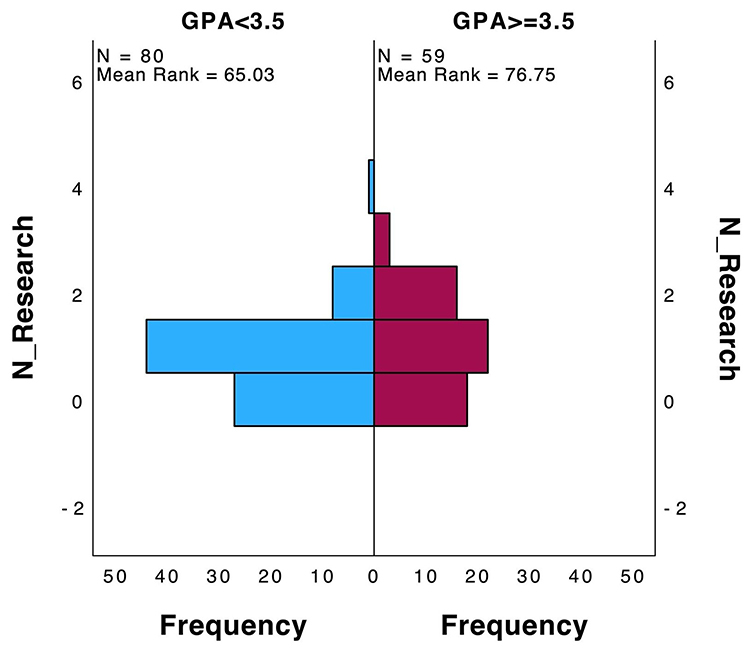 |
Figure 5 Association between GPA and number of research projects initiated, analyzed using the Mann–Whitney U-test. Students were categorized into GPA <3.5 and GPA ≥3.5 groups. |
Qualitative Data
The results of the interview can be broadly categorized into three main themes: generation of research ideas, advisor matching, and perceptions about the curriculum. All participants reported involvement in at least one research project.
Generation of Research Ideas
The first theme identified through the interviews centered on personal motivations for research and the ideation process for research projects. As anticipated, these aspects varied significantly among participants. Interestingly, more than half of the participants highlighted the Tonkla Ramathibodi website or institution-hosted research seminars as valuable resources for generating ideas for their research projects.
Motivations such as career aspirations and interest in specific fields were frequently mentioned and may help explain the trend of higher research productivity observed among higher-GPA students. For example, one participant noted:
At first, I wanted to become an orthopedic surgeon, so pursuing research related to orthopedics could help me decide whether this is the specialty I truly want to pursue.
Another participant similarly described how academic interests influenced topic selection:
I liked the GI block during preclinical years, so I decided to pursue GI-related research. I am also interested in sleep because I feel that sleep is related to many other systems in the body. So these two topics became my focus.
None of the participants suggested systematic differences by sex, reinforcing the non-significant quantitative finding.
Discussions with professors, inspiration from lectures, and seminars closely mirrored the survey results. One participant described how lecture content sparked research interest:
When we started learning about bacteria, parasites, and the oral and gut microbiome, I became very interested in this topic. However, the gut microbiome is already a well-established field of research, and the samples are difficult to collect, so I wanted to investigate the oral microbiome instead. I am also interested in psychiatry, so I wanted to see whether the oral microbiome affects stress among medical students.
Participants also described alternative sources of inspiration, including hackathons, extracurricular activities, and even transforming academic-affairs tasks into research projects. For example, one participant explained that a hackathon event initiated their project:
I am interested in projects involving EMG, and a hackathon event was hosted at Ramathibodi, so I started this research project.
Another participant described how work in academic affairs led to a research question:
My research started from my personal curiosity. I worked on the feedback system for classes. There were problems such as low response rates from students and insufficient information. While working in academic affairs, I noticed that the response rate continued to decrease and the quality of responses was low, so they could not really be used. This made me curious whether it was possible to identify the root cause of this problem using a causal loop diagram.
Similarly, involvement in student organizations also served as a starting point for research ideas:
My research started when I was working as part of the student well-being committee, and my friend suggested that the data collected there could be used for further research.
Some projects stemmed purely from personal curiosity. One participant described how a personal experience prompted their research question:
I chose my research topic partly from a question that personally arose and that I wanted to answer. I suddenly came up with this question based on my own experience. For example, I had to get my blood drawn for a physical examination. The nurses told me to stop eating and drinking for eight hours beforehand. I wondered whether not drinking was really necessary because I became very thirsty in the morning. I looked online with the help of a professor but could not find any agreed acceptable amount of water that could be consumed two hours before blood drawing, so I wanted to investigate this.
Others identified research opportunities through browsing the Tonkla Ramathibodi platform. One participant explained,
I opened the Tonkla Ramathibodi website and looked to see if there were any interesting research projects. I found a professor there and used the Email listed on the website to contact them.
These findings expanded the range of research opportunities beyond those captured in the quantitative responses. A thematic summary is provided in Supplementary File 2.
Advisor Matching
Participants described several pathways through which they connected with research advisors. In some cases, when the project originated from a friend or collaborator rather than the participant themselves, an advisor had already been identified. Interestingly, many students mentioned the Tonkla Ramathibodi website, Email communication with its administrative staff, and research seminars hosted by the institution as key channels for discovering and connecting with professors.
For instance, one participant described directly contacting a professor after identifying their contact information through institutional channels:
For my first research project, I directly emailed a professor. I obtained the Email either from the Tonkla Ramathibodi website or from the Research Market event. I cannot remember exactly which one, but that is how I got the professor’s contact. I also saw that the professor was an orthopedic surgeon working on orthopedic-related research, which caught my attention.
When discussing the qualities of an ideal advisor, participants expressed diverse expectations. Some preferred advisors who provided structured guidance throughout the research process. For example, one participant stated,
My ideal professor would be someone who guides students through every step of the research and closely supports them.
Another emphasized structured mentorship:
The professor should create a timetable and schedule for the students. They should ask when students are available and plan meetings based on that. If students cannot find information, the professor helps them. If students do not have the necessary lab skills, the professor teaches them.
In contrast, other participants preferred a more independent research experience, emphasizing inspiration and intellectual autonomy. As one participant explained,
The professor should not think for the students but instead inspire them and provide resources so they can continue studying and learning on their own.
These perspectives highlight the importance of balancing guidance and independence in the student-advisor relationship, which ultimately requires clear communication between both parties to align expectations.
The interview findings closely reflected the quantitative results regarding advisor recruitment, including through class lecturers, research seminars, searching names and areas of study online, and recommendations from peers or faculty members. Beyond the expected patterns, the interviews revealed unique institutional support that were not explicitly captured in the survey items. For example, some students described facilitated advisor matching through Tonkla Ramathibodi administrative staff. One participant noted,
Honestly, I emailed a Tonkla Ramathibodi administrative staff about the research topic I was interested in and the type of professor I was looking for. I did not write the Email exactly like that, but it was something similar. They then gave me some recommendations. After that, I emailed those professors. The first professor never replied, but the second one did, and that is how I proceeded.
These mechanisms were likely captured under the “other” category in the quantitative responses. A thematic summary is provided in Supplementary File 2.
Perceptions About the Curriculum
Participants generally expressed satisfaction with the faculty’s support for student research, particularly highlighting the accessibility of professors and the financial resources provided through Tonkla Ramathibodi. Institutional seminars and networking events were frequently praised for facilitating exposure to research opportunities. One participant explained,
The faculty and the research course try their best to create environments or common areas where students can learn what professors are working on and collaborate. For example, there is Research Market, or what is it called? Oh, Research Camp. They organize these events so students can be exposed to research opportunities.
Another participant noted that early exposure was particularly beneficial:
One advantage of our faculty is that students are exposed to research early, starting from year 1 through different events.
Similarly, financial support was viewed as a key strength of the program:
Tonkla Ramathibodi provides ample funding support, so students do not have to worry as much about funding. The matching events are also helpful for connecting students with professors.
Despite these positive aspects, many participants expressed dissatisfaction with the mandatory nature of the research requirement for graduation. Several students raised concerns about the timing of the research course, which requires students to select advisors and research topics during the preclinical years. One participant explained,
If professors really want students to conduct research as part of graduation requirements, they should not force students to settle on a project during the preclinical years. Instead, students should be allowed to develop projects later during the clinical years. Otherwise, the topic may not be something students genuinely grow to like.
Another participant highlighted the pressure this system places on students who are less interested in research:
The system in our faculty suits people who enjoy doing research, but it can punish and stress those who are not interested. They may end up choosing topics carelessly, which eventually becomes a burden for both the students and the advisors responsible for them.
Participants also noted that students in the preclinical years may not yet have sufficient exposure to clinical practice to make informed research choices. As one participant explained,
Students who decide which area of medical science they are interested in during the preclinical years are not mature enough yet. By year 3, we have only learned basic science and do not fully understand what ward rounds are like or how surgery is applied in real practice. We still do not see the bigger picture, which means students may approach professors without fully understanding their interests.
Consequently, students may later experience a mismatch between their evolving clinical interests and their previously selected research topics.
This structural limitation was further reinforced by the strict timeline of the research course. As one participant explained,
Because the research course has a strict timeline, it forces students to choose topics that they think they can finish rather than topics they are genuinely interested in.
Opinions regarding the research course itself were mixed. Some students found the course beneficial in providing foundational research knowledge. For instance, one participant stated,
The research course helps students understand how to conduct research.
However, others perceived the course as overly passive and lecture-based:
Sometimes the research course feels too passive because it mainly consists of lectures. I understand that the course is important, but I learn much more from actual experience. I would recommend that the course focus only on the basic concepts and allow students to learn the rest on their own.
Finally, when asked whether they would pursue research if it were not mandatory, responses were evenly distributed. Approximately one-third of participants indicated that they would still conduct research voluntarily, another third were uncertain, and the remaining third stated they would not pursue research without the requirement. A thematic summary is provided in Supplementary File 2.
Discussion
Our analysis uncovered several key insights into how medical students initiate research. Firstly, most students began their research journeys in basic science or clinical research. Discussions with faculty members specializing in their areas of interest emerged as the most critical factor for initiating their first research projects, followed by conducting self-driven literature reviews and attending research seminars.
Interestingly, the importance of research seminars declined for subsequent projects. This trend may reflect the role of seminars as sources of inspiration and guidance for novice researchers, while offering fewer novel insights for more experienced participants. The research curriculum may also influence participation, particularly by motivating students to join introductory programs such as the research camp early in their academic journey. Prior studies have shown that the absence of a structured research curriculum is a barrier to student research participation.32
Our findings also revealed a trend indicating that students with a GPA above 3.5 were more likely to initiate multiple research projects. Based on prior literature suggesting that academically stronger students tend to be more research-active,28 a directional (one-tailed) t-test was applied, revealing a statistically significant difference (p = 0.026). This suggests that students with higher GPAs are indeed more likely to engage in research activities. This may be explained by higher-achieving students being more academically inclined, possessing a broader knowledge base, and demonstrating stronger interest in research, driven by both out of genuine academic interest and the desire to strengthen their curriculum vitae for future residency or career opportunities. These results align with previous studies reporting that students with higher GPAs are more likely to engage in research than their peers with lower GPAs.28
Regarding advisor selection, institution-hosted research seminars proved to be the most influential factor in connecting students with potential mentors. This was closely followed by students directly approaching their professors, likely due to the professors’ accessibility and the visibility of their specialties during lectures. The success of research seminars is further evidenced by students’ ability to work more independently on subsequent projects, employing alternative methods to identify and connect with new advisors.
The results of the interviews revealed a diverse range of starting points and motivations behind medical students’ research projects. However, a strong support system provided by the institution plays a critical role in reducing barriers and enabling these ideas to develop into successful research projects. One notable support initiative at our institution is the Tonkla Ramathibodi program, which is widely praised for facilitating numerous research endeavors. The program offers essential resources, including a comprehensive database of professors and their research interests available on its website. Additionally, Tonkla Ramathibodi administrative staff assist students by connecting them with professors whose expertise aligns with their proposed research projects. The Tonkla Ramathibodi program also provides funding for student projects, reducing reliance on advisor-sourced grants and making it easier for students to embark on their research journeys.
Another key support system at Ramathibodi is the institution-hosted seminars, which provide invaluable opportunities for professors to showcase their work and for students to engage with potential mentors. These events significantly enhance the student-professor matching process, contributing to the institution’s high success rate in encouraging research collaborations. Moreover, many faculty members at Ramathibodi are familiar with and supportive of the research program, and they are highly willing to mentor students, creating a nurturing environment for academic growth. One interesting proposition from previous research is the implementation of peer-to-peer mentorship, which has been shown to effectively encourage students to explore research topics in their fields of interest and could serve as a valuable addition to Ramathibodi’s already supportive academic environment.33 The implementation of these activities to encourage medical students to pursue research has been demonstrated to be important.34
On the other hand, some challenges persist within the research curriculum itself. These challenges mainly fall into two categories: an overly accelerated timeline and the mandatory nature of research projects. Nearly all interview participants expressed dissatisfaction with having to select research advisors and projects during their pre-clinical years. This timing is problematic because pre-clinical students have limited exposure to hospital settings and clinical rotations, often leading them to choose pre-clinical research topics or specialties they later find uninteresting in their clinical years. Time constraints were also frequently mentioned in our interviews as a barrier to conducting research, echoing findings reported by other groups.35 While clinical-year students may have the knowledge to pursue research that aligned with their interests, they are often less inclined to do so due to the heavy demands on their time.25,36
Another issue stems from the requirement that all students complete a research project. Even among participants who would have pursued research voluntarily, there was opposition to making it mandatory for every medical student. The rationale is that not all students aspire to careers in academia and that some prefer to focus on becoming hospitalists. As a result, the mandatory requirement can dilute available funding and faculty resources, forcing professors to supervise both interested and uninterested students, which may lead to mediocre projects and inefficient use of resources.
One proposed solution is to maintain research courses as a curriculum requirement for all medical students but to remove the obligation to complete a research project. This adjustment could ensure that all students gain foundational research skills while allowing those with genuine interest to pursue projects more meaningfully. The feasibility of such a curriculum change would require further discussion and careful evaluation. In fact, prior studies have emphasized that well-structured research programs play a pivotal role in enhancing student engagement and interest in research pursuits.37
The limitations of this study include issues with generalizability, as the conclusions were drawn from a cohort of 2023 third-year medical students from Ramathibodi Hospital. These findings may not apply to institutions with different cultures or curricula. Another limitation is sampling bias, as the use of convenience, purposive, and snowball sampling methods could result in participants being disproportionate to those more engaged or interested in research. Additionally, the study relies on self-reported data, which introduces the potential for bias. The timing of data collection also presents a challenge: quantitative data were collected at the end of the pre-clinical year (third year), while qualitative interviews were conducted during the middle of the clinical year (fourth year), potentially leading to differing viewpoints. Moreover, capturing only a snapshot of a single cohort may not fully represent the evolution of students’ attitudes and experiences with research throughout their medical school journey. Furthermore, because research domains were self-reported by participants, there is a possibility that some students may have misclassified their research type. Finally, while the study examines factors influencing research initiation and advisor matching, it does not explore the quality of completed research projects or their long-term impact on students’ careers, which are also important metrics.38
To address these limitations, future research could involve a broader range of participants, encompassing students from their first year to their final year, to better capture changes in attitudes and experiences over time. Expanding the study to include other institutions or conducting a multi-institutional study could provide insights into how different curricula and cultural contexts shape students’ research experiences. For Ramathibodi specifically, replicating the study after implementing curriculum changes could help assess whether adjustments lead to different outcomes. Transitioning from a cross-sectional to a longitudinal study design would allow for a more comprehensive understanding of how students’ perspectives on research evolve throughout medical school. While similar in scope, longitudinal studies could reveal subtle differences with potential suggestions for curriculum development and research engagement strategies.
Conclusion and Implications
Our findings suggest that structured faculty-student touchpoints and structured research exposure activities are especially valuable for early-year medical students. Medical schools may consider maintaining foundational research training for all students but offering optional research-intensive tracks for motivated learners. Additionally, scheduling advisor-matching later in the curriculum and strengthening mechanisms that help students identify mentors aligned with emerging interests may enhance engagement and satisfaction. Future research could explore whether differentiated research pathways improve student motivation, output quality, and long-term academic involvement.
Data Sharing Statement
The datasets used for this study are available from the corresponding author on reasonable request.
Ethics Approval and Consent to Participate
This study received approval from the Ethics Committee of the Faculty of Medicine, Ramathibodi Hospital, Mahidol University, under study number MURA2023/716. All procedures involving human participants were conducted in accordance with the ethical standards of the Declaration of Helsinki. All interview participants provided written consent before participating in the study. The consent process included permission for the publication of anonymized responses and direct quotations. Copies of the signed consent forms are available upon request.
Acknowledgment
The authors would like to express their sincere gratitude to Samrit Srithamrongsawat, M.D., Ph.D., and Peerasit Sitthirat, M.D., for their contributions in refining the interview questions. Special appreciation is extended to Peerasit Sitthirat, M.D., for his assistance with voice transcription and his thoughtful guidance throughout the project. The authors also wish to thank Pat Ngamdachakij for his unwavering advice and support. Finally, the authors would like to acknowledge Sira Pornsiriprasert, whose initial idea inspired the development of this project.
This manuscript has previously been made available as a preprint on Research Square.39 DOI:10.21203/rs.3.rs-5784741/v1
Funding
The study did not receive any funding.
Disclosure
The authors report no competing interests in this work.
References
1. Zhou K, Cao C, Liu X. et al. The impact of exposure to scientific research and inclusive mentoring style on medical undergraduates’ perceptions of critical thinking, communication, and passion. Med Educ Online. 2025;30(1):2535406. doi:10.1080/10872981.2025.2535406
2. Alnajjar JS, Alabdulqader RA, Alhithlool AW, et al. Impact of an extracurricular research course on medical students: a Quasi-Experimental Study. Adv Med Educ Pract. 2025;16:461–14. doi:10.2147/AMEP.S509323
3. Sahoo S, Mohammed CA. Fostering critical thinking and collaborative learning skills among medical students through a research protocol writing activity in the curriculum. Korean J Med Educ. 2018;30(2):109–118. doi:10.3946/kjme.2018.86
4. Adebisi YA. Undergraduate students’ involvement in research: values, benefits, barriers and recommendations. Ann Med Surg. 2022;81:104384. doi:10.1016/j.amsu.2022.104384
5. Shivni R, Cline C, Newport M, Yuan S, Bergan-Roller HE. Establishing a baseline of science communication skills in an undergraduate environmental science course. Int J Stem Educ. 2021;8(1):47. doi:10.1186/s40594-021-00304-0
6. Wickramasinghe DP, Perera CS, Senarathna S, Samarasekera DN. Patterns and trends of medical student research. BMC Med Educ. 2013;13:175. doi:10.1186/1472-6920-13-175
7. van Eyk HJ, Hooiveld MH, Van Leeuwen TN, et al. Scientific output of Dutch medical students. Med Teach. 2010;32(3):231–235. doi:10.3109/01421591003596592
8. Kan CK, Qureshi MM, Paracha M, Sachs TE, Sarfaty S, Hirsch AE. Effect of medical student contributions on academic productivity: analysis of student authorship over time. Adv Med Educ Pract. 2021;12:481–489. doi:10.2147/AMEP.S301041
9. Urrunaga-Pastor D, Alarcon-Ruiz CA, Heredia P, et al. The scientific production of medical students in Lima, Peru. Heliyon. 2020;6(3):e03542. doi:10.1016/j.heliyon.2020.e03542
10. Touissi Y, Boulaich O, El Idrissi FE, et al. Medical students’ contribution to research; the scientific output of medical theses held in Moroccan medical schools during the last decade (2011-2021). Med Educ Online. 2023;28(1):2218677. doi:10.1080/10872981.2023.2218677
11. Shareef MA, Obad AS, Salah HT, et al. Quantitative and qualitative analysis of medical students’ research output in five developing countries. Cureus. 2020;12(5):e8026. doi:10.7759/cureus.8026
12. Abusamak M, AlQato S, Alrfooh HH, et al. Knowledge, attitudes, practices and barriers of medical research among undergraduate medical students in Jordan: a cross-sectional survey. BMC Med Educ. 2024;24(1):23. doi:10.1186/s12909-023-05002-9
13. Assar A, Matar SG, Hasabo EA, et al. Knowledge, attitudes, practices and perceived barriers towards research in undergraduate medical students of six Arab countries. BMC Med Educ. 2022;22(1):44. doi:10.1186/s12909-022-03121-3
14. Olajide T, Arokoyo K, Adesola A, et al. Building a research culture among nigerian medical students: the modus operandi of the college research and innovation hub. BMC Med Educ. 2024;24(1):1465. doi:10.1186/s12909-024-06518-4
15. Amgad M, Man Kin Tsui M, Liptrott SJ, Shash E. Medical student research: an integrated mixed-methods systematic review and meta-analysis. PLoS One. 2015;10(6):e0127470. doi:10.1371/journal.pone.0127470
16. Solomon SS, Tom SC, Pichert J, Wasserman D, Powers AC. Impact of medical student research in the development of physician-scientists. J Investig Med. 2003;51(3):149–156. doi:10.1136/jim-51-03-17
17. Duan GY, Choo ZY, Halabi DK, Rosenblatt AE, Ruiz de Luzuriaga AM. Characteristics and career outcomes of dermatology-focused medical student research grant recipients. Clin Dermatol. 2024;42(5):547–556. doi:10.1016/j.clindermatol.2024.07.015
18. Burgoyne LN, O’Flynn S, Boylan GB. Undergraduate medical research: the student perspective. Med Educ Online. 2010;15:5212. doi:10.3402/meo.v15i0.5212
19. Nel D, Burman RJ, Hoffman R, Randera-Rees S. The attitudes of medical students to research. S Afr Med J. 2013;104(1):33–36. doi:10.7196/samj.7058
20. Salloum RH, Nazha B, Zgheib NK. Interest and involvement in research during medical school: a global comparison of students at high- and low-income universities. Med Sci Educator. 2014;24(1):65–73. doi:10.1007/s40670-014-0019-0
21. Ocek Z, Bati H, Sezer ED, et al. Research training program in a Turkish medical school: challenges, barriers and opportunities from the perspectives of the students and faculty members. BMC Med Educ. 2021;21(1):2. doi:10.1186/s12909-020-02454-1
22. Perez G, Perez JU, Johnston A. Twelve tips for engaging medical students in rural-focused research. MedEdPublish. 2024;14:243. doi:10.12688/mep.20642.3
23. Kyaw Soe HH, Than NN, Lwin H, Nu Htay MNN, Phyu KL, Abas AL. Knowledge, attitudes, and barriers toward research: the perspectives of undergraduate medical and dental students. J Educ Health Promot. 2018;7:23. doi:10.4103/jehp.jehp_61_17
24. Ichsan I, Wahyuniati N, McKee R, Lobo L, Lancaster K, Redwood-Campbell L. Attitudes, barriers, and enablers towards conducting primary care research in Banda Aceh, Indonesia: a qualitative research study. Asia Pac Fam Med. 2018;17:8. doi:10.1186/s12930-018-0045-y
25. Panpanawan K, Tangjariyatam J, Puranitee P, Pakakasama S, Tanpowpong P. Skills, perception on barriers, and motivation in conducting research in Thai medical students. BMC Med Educ. 2025;25(1):1200. doi:10.1186/s12909-025-07800-9
26. Rozul CD, Tanchuco JJ. Perception of research education among medical students of the University of the Philippines College of Medicine: a mixed-methods study. Acta Medica Philippina. 2025;59(6).
27. Nguyen Thi Yen H, Tran Thi Hoang O, Luu Thi T, Pham Thi T, Do Thi Nha U. Perceptions, attitudes and practice on scientific research of final-year medical students: a cross-sectional study. J Public Health Dev. 2025;23(3):128–137. doi:10.55131/jphd/2025/230310
28. Alhabib RK, Alhusseini N, Aboalsamh AG, et al. Motivators and barriers to research participation among medical students in Saudi Arabia. PLoS One. 2023;18(4):e0284990. doi:10.1371/journal.pone.0284990
29. Alamri Y, Monasterio E, Wilkinson TJ. Factors predictive of medical student involvement in research: results from a New Zealand Institution. Adv Med Educ Pract. 2021;12:183–187. doi:10.2147/AMEP.S284117
30. Osunronbi T, Adeboye W, Faluyi D, et al. Predictors of self-reported research productivity amongst medical students in the United Kingdom: a national cross-sectional survey. BMC Med Educ. 2023;23(1):412. doi:10.1186/s12909-023-04412-z
31. Braun V, Clarke V. Using thematic analysis in psychology. Qual Res Psychol. 2006;3(2):77–101. doi:10.1191/1478088706qp063oa
32. Stone C, Dogbey GY, Klenzak S, Van Fossen K, Tan B, Brannan GD. Contemporary global perspectives of medical students on research during undergraduate medical education: a systematic literature review. Med Educ Online. 2018;23(1):1537430. doi:10.1080/10872981.2018.1537430
33. Keller TE, Logan K, Lindwall J, Beals C. Peer mentoring for undergraduates in a research-focused diversity initiative. Metrop Univ. 2017;28(3):50–66. doi:10.18060/21542
34. Sanabria-de la Torre R, Quinones-Vico MI, Ubago-Rodriguez A, Buendia-Eisman A, Montero-Vilchez T, Arias-Santiago S. Medical students’ interest in research: changing trends during university training. Front Med. 2023;10:1257574. doi:10.3389/fmed.2023.1257574
35. Alyousefi N, Alnojaidi J, Almohsen A, et al. How do medical students perceive their research experiences and associated challenges? Adv Med Educ Pract. 2023;14:9–20. doi:10.2147/AMEP.S395235
36. Lee GSJ, Chin YH, Jiang AA, et al. Teaching medical research to medical students: a systematic review. Med Sci Educ. 2021;31(2):945–962. doi:10.1007/s40670-020-01183-w
37. Mokhtari B, Badalzadeh R, Ghaffarifar S. The next generation of physician-researchers: undergraduate medical students’ and residents’ attitudes, challenges, and approaches towards addressing them. BMC Med Educ. 2024;24(1):1313. doi:10.1186/s12909-024-06166-8
38. Feldman N, Swartz TH, Karani R, Rojas M. An evidence-based framework for medical student research training. Med Sci Educ. 2024;34(2):421–428. doi:10.1007/s40670-024-02001-3
39. Plangsiri S, Jirapornsuwan M, Kaewkamjornchai P. Fostering research engagement and ideation: insights from medical students in Thailand. Res Square. 2025. doi:10.21203/rs.3.rs-5784741/v1
 © 2026 The Author(s). This work is published and licensed by Dove Medical Press Limited. The
full terms of this license are available at https://www.dovepress.com/terms
and incorporate the Creative Commons Attribution
- Non Commercial (unported, 4.0) License.
By accessing the work you hereby accept the Terms. Non-commercial uses of the work are permitted
without any further permission from Dove Medical Press Limited, provided the work is properly
attributed. For permission for commercial use of this work, please see paragraphs 4.2 and 5 of our Terms.
© 2026 The Author(s). This work is published and licensed by Dove Medical Press Limited. The
full terms of this license are available at https://www.dovepress.com/terms
and incorporate the Creative Commons Attribution
- Non Commercial (unported, 4.0) License.
By accessing the work you hereby accept the Terms. Non-commercial uses of the work are permitted
without any further permission from Dove Medical Press Limited, provided the work is properly
attributed. For permission for commercial use of this work, please see paragraphs 4.2 and 5 of our Terms.
Recommended articles

Evaluation of Medical Students’ Knowledge on Palliative Care: A Single Institution Cross-sectional Study
Mosalli RM, Mousa AH, Alshanberi AM, Almatrafi MA
Advances in Medical Education and Practice 2022, 13:893-901
Published Date: 19 August 2022