
Back to Journals » Diabetes, Metabolic Syndrome and Obesity » Volume 19

Exploring the Use of GLP-1-Based Interventions for Obesity: A Qualitative Analysis of ClinicalTrials.gov Data
Authors Alourfi NM, Alorfi NM 
Received 21 October 2025
Accepted for publication 9 March 2026
Published 14 May 2026 Volume 2026:19 575375
DOI https://doi.org/10.2147/DMSO.S575375
Checked for plagiarism Yes
Review by Single anonymous peer review
Peer reviewer comments 2
Editor who approved publication: Prof. Dr. Liang Wang
Nouf M Alourfi,1 Nasser M Alorfi2
1Department of Chemistry, Arts and Sciences College, Rabigh Campus, King Abdulaziz University, Jeddah, Rabigh, 21589, Saudi Arabia; 2Pharmacology and Toxicology Department, College of Pharmacy, Umm Al-Qura University, Makkah, Saudi Arabia
Correspondence: Nasser M Alorfi, Pharmacology and Toxicology Department, College of Pharmacy, Umm Al-Qura University, Makkah, Saudi Arabia, Tel +966500644261, Email [email protected] Nouf M Alourfi, Department of Chemistry, Arts and Sciences College, Rabigh Campus, King Abdulaziz University, Jeddah, Rabigh, 21589, Saudi Arabia, Email [email protected]
Background: Glucagon-like peptide-1 (GLP-1) receptor agonists are a key pharmacological target in obesity management, associated with sustained weight loss and broader metabolic benefits beyond glycaemic control.
Objective: To analyse the characteristics, design trends, and research themes of completed clinical trials investigating GLP-1-based interventions for obesity registered in ClinicalTrials.gov.
Methods: A registry-based cross-sectional qualitative analysis was conducted using ClinicalTrials.gov data retrieved on October 18, 2025. Completed interventional trials evaluating GLP-1 receptor agonists, including liraglutide, semaglutide, tirzepatide, exenatide, dulaglutide, and lixisenatide, were identified. Extracted variables included study phase, intervention type, enrolment, primary outcomes, and completion year. Descriptive statistics were used to summarize quantitative data, and qualitative thematic synthesis was applied to categorize outcome domains and research focus.
Results: A total of 227 completed interventional studies were identified. Liraglutide was the most frequently investigated agent (n = 86), followed by semaglutide (n = 18), tirzepatide (n = 18), exenatide (n = 15), and other GLP-1 analogues. Phase 3 and 4 trials predominated, with most studies enrolling fewer than 200 participants. Primary outcomes were mainly weight-related, with increasing attention to hepatic, cardiometabolic, and inflammatory endpoints. A marked rise in completed trials was observed after 2018, corresponding with the introduction of newer GLP-1 analogues.
Conclusion: Completed GLP-1 obesity trials demonstrate an expanding research focus from weight and glycaemic control toward broader metabolic and organ-specific outcomes. This registry-based qualitative analysis provides a novel overview of research maturity and evolving priorities in GLP-1–based obesity pharmacotherapy.
Keywords: glucagon-like peptide-1, obesity, liraglutide, semaglutide, tirzepatide, metabolic outcomes
Introduction
Obesity is classified as one of the biggest health challenges nowadays, with significant implications for morbidity, mortality, and healthcare cost. According to the World Health Organization (WHO), obesity has reached alarming levels globally. In 2022, around 1 in 8 people were living with obesity, with 2.5 billion adults being overweight — including 890 million with obesity — and 43% of adults classified as overweight. Among younger populations, over 390 million children and adolescents aged 5–19 years were overweight (160 million with obesity), and by 2024, 35 million children under 5 were affected.1
Obesity has a multifactorial aetiology that involves genetic predispositions, behavioural patterns, and environmental influences.2–4 These interacting factors make its pharmacological management complex and challenging.5–7 Among the therapeutic advances, glucagon-like peptide-1 (GLP-1) receptor agonists have emerged as a promising class of agents capable of addressing both weight control and metabolic dysfunction.8–10
Originally developed for type 2 diabetes mellitus (T2DM), GLP-1 analogues such as liraglutide and semaglutide have demonstrated potent appetite-suppressing and weight-reducing effects, leading to their approval for chronic weight management in individuals with or without diabetes.11,12 The GLP-1 receptor, expressed in pancreatic β-cells, the gastrointestinal tract, and the central nervous system, modulates insulin secretion, delays gastric emptying, and enhances satiety.13,14
Multiple systematic reviews and meta-analyses have evaluated the efficacy and safety of GLP-1 receptor agonists for weight reduction, primarily focusing on comparative treatment outcomes.15–17 In contrast, limited attention has been given to synthesizing the characteristics and thematic direction of completed clinical trials, which reflect research maturity, evolving priorities, and real-world translational emphasis in obesity pharmacotherapy. Clinical evidence indicates that different GLP-1 receptor agonists provide distinct benefits in obesity management. Liraglutide has demonstrated consistent weight reduction and improvement in cardiometabolic risk factors, while semaglutide has shown superior efficacy in achieving substantial and sustained weight loss with additional cardiovascular benefits.18–20 Tirzepatide, a dual GIP/GLP-1 receptor agonist, represents a newer therapeutic approach and has demonstrated enhanced weight loss and metabolic outcomes compared with earlier agents.19,20 Other early GLP-1 analogues provided foundational evidence supporting incretin-based therapies and contributed to the evolution of this drug class.
Recent clinical trials have highlighted not only their efficacy in reducing body weight but also their role in improving cardiometabolic parameters, including lipid profiles, blood pressure, and inflammatory markers.21–23 However, the diversity of trial designs, outcome measures, and intervention combinations across studies presents challenges for comparative interpretation.
ClinicalTrials.gov provides a rich repository of registered and completed trials. An exponential growth in trial numbers has occurred; however, a gap remains in synthesizing how these studies collectively shape our understanding of GLP-1 mechanisms and translational potential for obesity management. Previous reviews have primarily focused on drug efficacy or safety, yet little attention has been given to the characteristics and thematic direction of completed studies, which reflect real-world research priorities and maturity of the evidence base.
This qualitative analysis addresses that gap by exploring completed trials using GLP-1-based interventions for obesity as registered on ClinicalTrials.gov. Through descriptive and thematic synthesis, this study aims to characterize research trends, identify emerging patterns in study design, and highlight underexplored areas. The analysis emphasizes not only pharmacological endpoints but also broader dimensions such as study population diversity, adjunctive interventions, and the shift toward personalized obesity care. Ultimately, this work contributes to understanding how GLP-1 research has evolved and where future investigations may yield the greatest public health impact.
Methods
A cross-sectional qualitative analysis was conducted using data retrieved from ClinicalTrials.gov on October 18, 2025. The search strategy employed the term “obesity” in the Condition or Disease field and “GLP-1” in the Intervention field. Filters were applied to include only completed studies across all study types and phases. Data extraction followed a predefined variable framework developed for registry-based analyses. Variables that were incompletely reported in ClinicalTrials.gov records were retained and coded as “not reported”, and no data imputation was performed.
The dataset containing 227 studies was exported in CSV format for descriptive and thematic analysis. Extracted variables included NCT number, study title, brief summary, intervention name, primary outcome measures, enrollment size, study phase, and study type. Data cleaning involved removing duplicates and verifying that interventions explicitly mentioned GLP-1 receptor agonists or analogues such as liraglutide, semaglutide, dulaglutide, exenatide, or tirzepatide.
Quantitative characteristics (eg., frequency of intervention types, sample sizes, and outcome categories) were analyzed using Microsoft Excel. Thematic qualitative analysis was applied to brief summaries and primary outcome descriptions to identify recurrent research patterns, such as mechanisms of action, metabolic endpoints, or comorbidity focus.
No human participants were directly involved, as the data were extracted from publicly available trial records. Therefore, ethical approval was not required. This methodological approach provides a hybrid descriptive-qualitative understanding of the GLP-1 clinical research landscape in obesity.
Results
A total of 227 completed interventional studies assessing glucagon-like peptide-1 (GLP-1)–based interventions for obesity were identified. The overall study characteristics are summarized as shown in Table 1. Most studies were interventional, with variable reporting of trial phase. Phase information was missing in approximately 36.6% of records, whereas among the reported studies, Phase 4 accounted for 19.8%, followed by Phase 1 (14.5%) and Phase 3 (14.5%), as presented in Table 2.
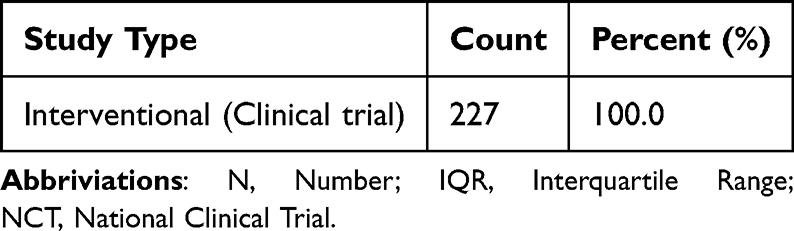 |
Table 1 Study Characteristics |
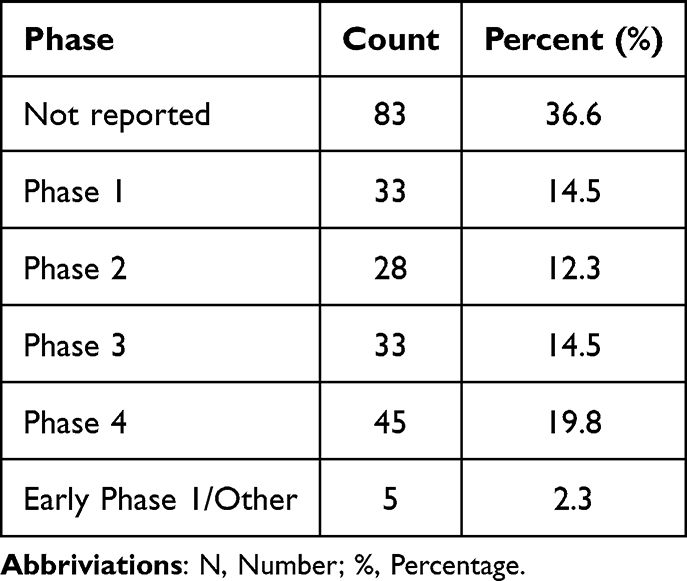 |
Table 2 Trial Phases |
Interventions
The analysis of interventions demonstrated a predominance of liraglutide and semaglutide formulations, as tabulated in Table 3. Liraglutide was the most frequently evaluated GLP-1 receptor agonist (86 studies), followed by semaglutide (18) and tirzepatide (18). Additional agents included exenatide (15), dulaglutide (2), and lixisenatide (1), while 16 studies reported unspecified GLP-1 analogues.
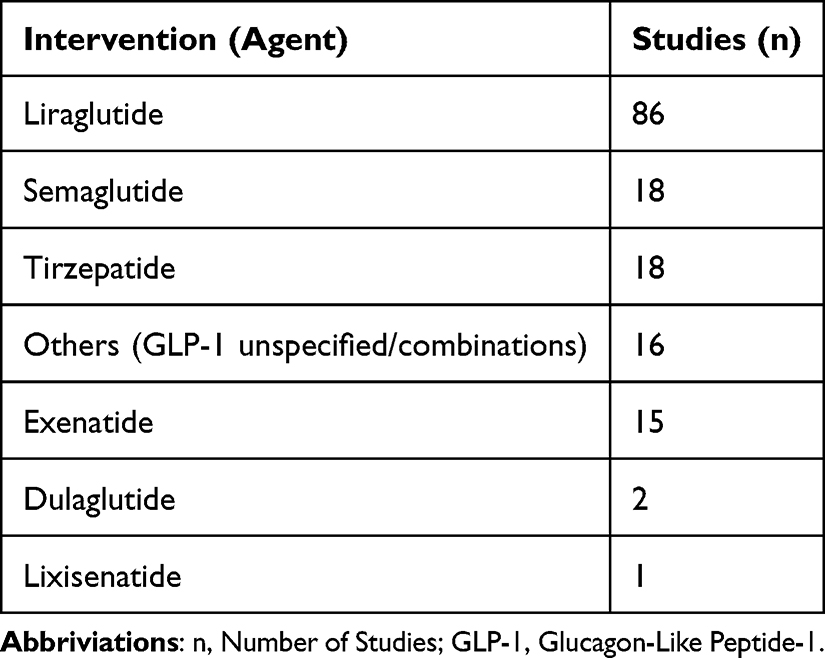 |
Table 3 Interventions by GLP-1 Agent |
Enrollment
Enrollment data were available for 226 trials, comprising64091participants. The median enrollment was 48 participants (IQR 24–130), with the smallest sample = 3 and the largest = 26,944, as shown in Table 4. When grouped by enrollment size (Table 5), most studies involved ≤ 200 participants, indicating predominance of small-scale and mechanistic investigations over large-scale outcome trials.
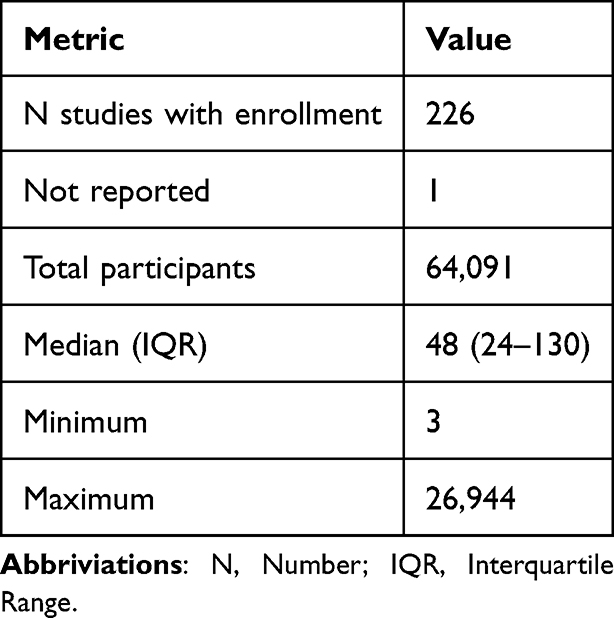 |
Table 4 Enrollment Summary |
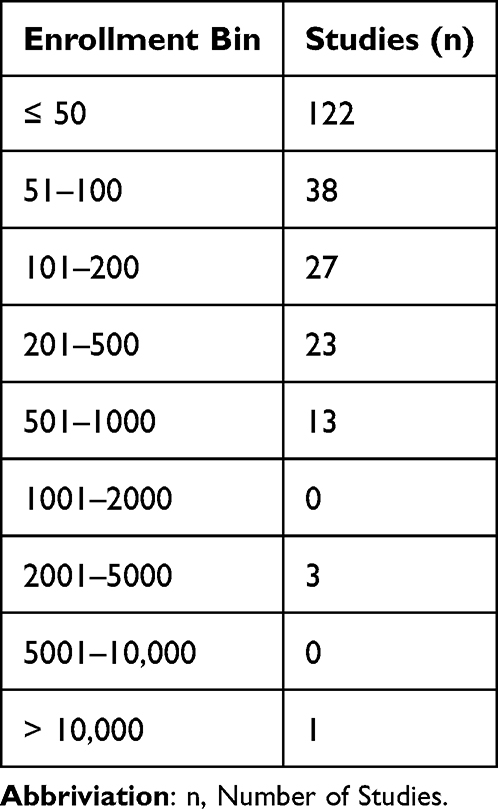 |
Table 5 Enrollment Distribution by bin |
Primary Outcome Domains
Automated text classification identified weight-related outcomes as the most common primary endpoint (91 studies), followed by hepatic outcomes (73) and glycemic outcomes (48). Safety and tolerability were reported as primary outcomes in 23 studies, while cardiometabolic (9), mechanistic (7), and quality of life (2) outcomes were less frequent. Fifty-four studies were unclassified, as tabulated in Table 6.
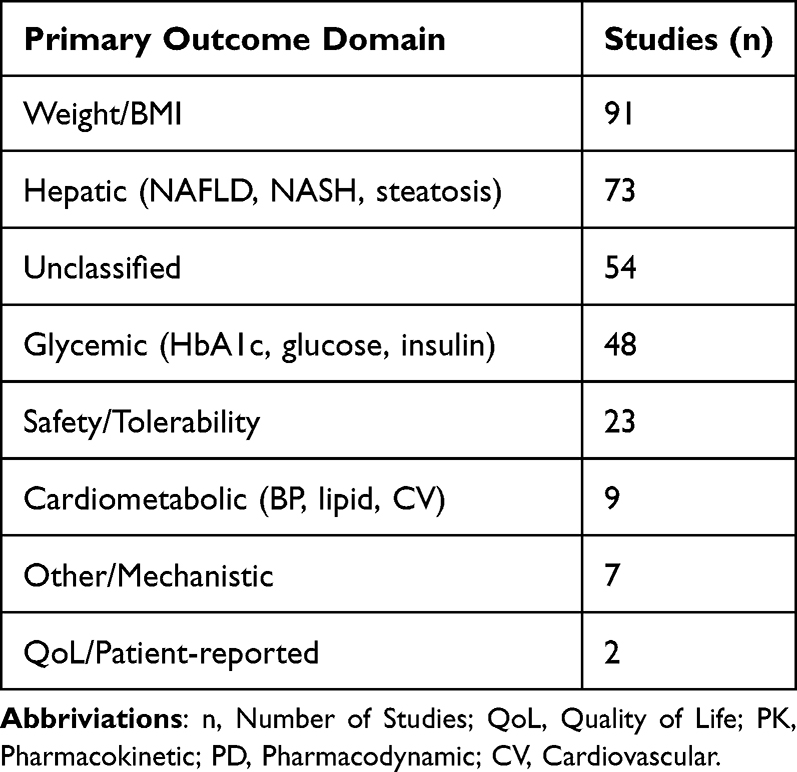 |
Table 6 Primary Outcome Domains |
Geographical Distribution
Geographical analysis demonstrated wide international participation, led by the United States, followed by European and Asian countries, as shown in Table 7. Multicounty collaborations were prominent in late-phase trials, reflecting the global significance of GLP-1 receptor agonist research.
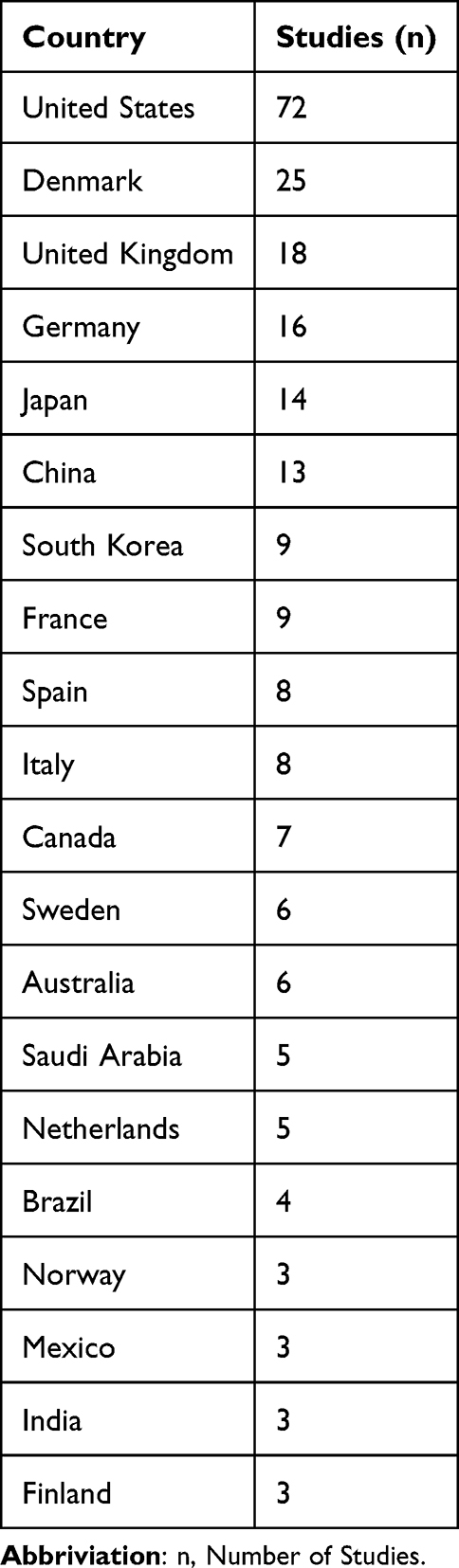 |
Table 7 Country Distribution (Top 20) |
Completion Year Trend
Temporal analysis of completion dates revealed a steady increase in GLP-1 obesity trials, with a marked rise from 2018 onward, corresponding to the development of semaglutide and tirzepatide. This trend, as presented in Table 8, highlights the accelerated expansion of GLP-1-based pharmacotherapy research.
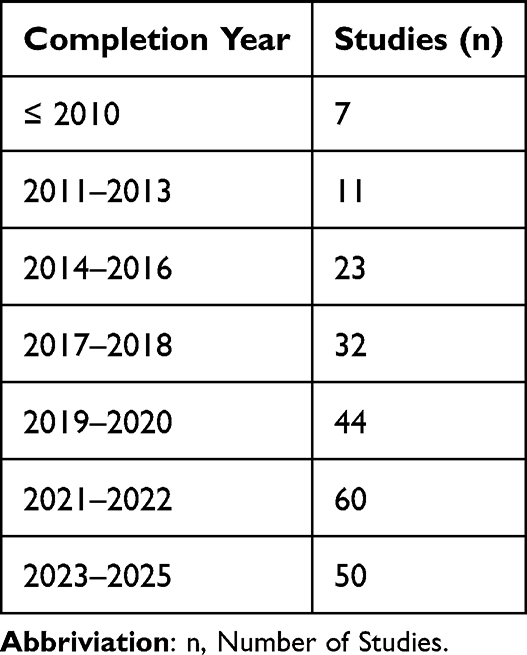 |
Table 8 Completion year Trend |
To address heterogeneity in participant characteristics and intervention exposure, an additional summary (Table 9) was constructed to synthesize available information on age range, reported comorbidities, dose range, intervention duration, and commonly reported adverse effects across major GLP-1 receptor agonists. Due to variability and incomplete reporting in registry records, not all variables were consistently available for every study.
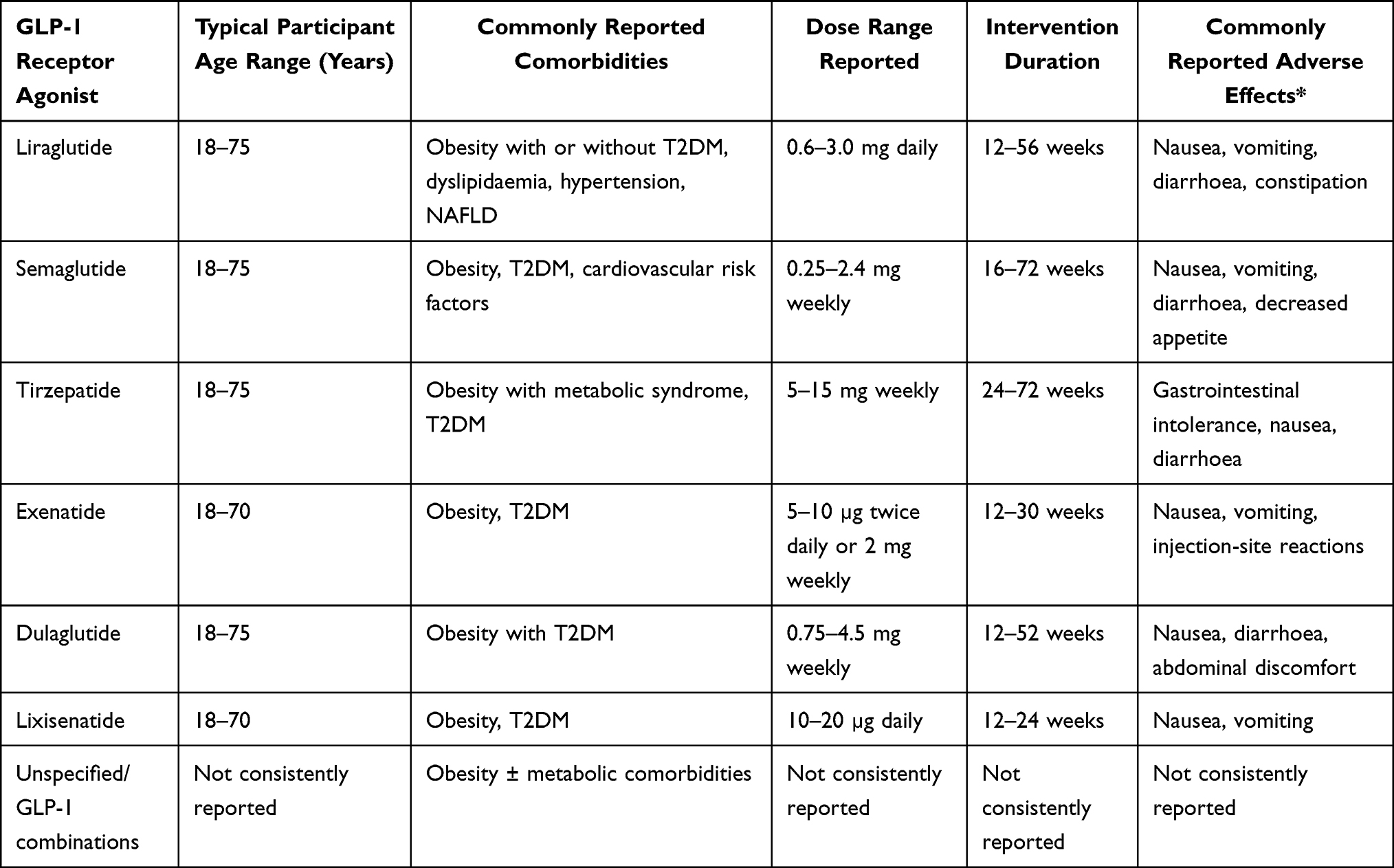 |
Table 9 Summary of Participant Characteristics, Intervention Exposure, and Reported Adverse Effects by GLP-1 Receptor Agonist in Completed Obesity Trials |
Discussion
This analysis of 227 completed interventional studies provides an overview of how glucagon-like peptide-1 (GLP-1)–based therapies have shaped clinical research in obesity treatment. The findings indicate that liraglutide and semaglutide are the most frequently studied agents, reflecting their established clinical use and documented effects in both diabetic and non-diabetic populations. These results correspond with evidence from large randomized controlled trials showing that GLP-1 receptor agonists reduce body weight and improve glycemic control through appetite regulation and delayed gastric emptying mechanisms.24–26
The strong focus on liraglutide and semaglutide also reflects their regulatory approval for chronic weight management. The growing number of studies on tirzepatide, a dual GIP/GLP-1 receptor agonist, represents the next phase of incretin-based pharmacotherapy. Comparative clinical studies have reported greater weight reduction with tirzepatide than with semaglutide, suggesting a shift toward combined receptor targeting strategies in metabolic disease management.19,20,27
Among the GLP-1 receptor agonists, liraglutide and semaglutide represent the most mature agents, supported by a substantial number of Phase 3 and 4 trials in this review. Semaglutide has demonstrated superior weight reduction and broader metabolic benefits, which is reflected in its increasing representation in later-phase studies.17,18,28 Tirzepatide, shows rapid expansion in clinical research activity and is emerging as a highly effective therapeutic option for obesity and related metabolic disorders.15,16 A considerable proportion of the analyzed trials were conducted in later clinical phases (Phase 3–4), indicating that the GLP-1 field has progressed beyond proof-of-concept studies toward confirmatory and post-marketing evaluations. This progression is consistent with the increased emphasis on assessing long-term safety and effectiveness in real-world populations. At the same time, smaller early-phase studies remain common, often focusing on new analogues, oral formulations, or extended-release injections. These complementary directions show that development continues alongside clinical application.
The predominance of weight-related and glycemic endpoints mirrors the main therapeutic objectives of obesity research. However, the growing attention to hepatic, cardiovascular, and inflammatory markers show a wider understanding of obesity as a metabolic disorder rather than a cosmetic issue. Several clinical investigations have demonstrated that GLP-1 receptor agonists improve hepatic function, lipid balance, and blood pressure, supporting their potential to modify cardiometabolic risk.29–31 This broader outcome profile indicates that treatment goals now include organ protection in addition to weight loss.
Most trials were conducted in the United States and Europe, reflecting research infrastructure and early drug availability in these regions. Nevertheless, the increasing participation of Asian and Middle Eastern countries, including Japan, China, and Saudi Arabia, demonstrates expanding international involvement in obesity research. Such geographic diversity strengthens the generalizability of findings and allows evaluation across populations with differing genetic and lifestyle factors.
The increase in completed studies after 2018 corresponds with the introduction of newer GLP-1 agents, particularly semaglutide and tirzepatide. This rise also parallels the growing recognition of obesity as a chronic disease that requires medical treatment beyond diet and exercise programs. Global recommendations published in recent years have emphasized pharmacological management as an integral component of comprehensive obesity care.
However, few trials include patient-reported outcomes or quality-of-life measures, limiting understanding of patient experience and treatment satisfaction. In addition, long-term adherence, cost considerations, and access to therapy are seldom evaluated, although these factors strongly influence clinical success. Reports from clinical practice have noted that discontinuation due to gastrointestinal side effects or financial constraints remains a key obstacle. Addressing these issues through pragmatic and health-economic trials would enhance the relevance of future GLP-1 research.
The variability in enrollment size, study design, and outcome definition among registered trials also complicates comparison and meta-analysis. Greater standardization of protocols and reporting would improve evidence synthesis. Incorporating pharmacogenomic, behavioral, and sociodemographic variables could further clarify which patient groups respond best to specific GLP-1 analogues and improve individualized treatment planning.
Limitations
This study is subject to limitations inherent to the use of ClinicalTrials.gov as a data source, including incomplete or inconsistent reporting of trial characteristics, potential underrepresentation of negative or unpublished outcomes, and heterogeneity in outcome definitions across studies. In several records, detailed information regarding dosing regimens, intervention duration, and adverse event profiles was insufficiently reported, thereby limiting the depth of comparative analysis.
Conclusion
GLP-1 receptor agonists have become central to contemporary obesity pharmacotherapy, with increasing evidence supporting their metabolic, hepatic, and cardiovascular benefits. The present analysis highlights continued research activity, diversification of agents, and expansion of outcome measures beyond weight control toward comprehensive metabolic improvement. Future studies should focus on optimizing long-term adherence, cost-effectiveness, and individualized treatment strategies to maximize the clinical and public health impact of GLP-1–based interventions.
Data Sharing Statement
The data supporting the findings of this study are available from the corresponding author upon reasonable request.
Author Contributions
Nouf M. Alourfi: Conceptualization; Data curation; Formal analysis; Investigation; Funding acquisition; Visualization; Writing – original draft.
Nasser M. Alorfi: Conceptualization; Methodology; Validation; Supervision; Project administration; Funding acquisition; Writing – review and editing.
All authors gave final approval of the version to be published; have agreed on the journal to which the article has been submitted; and agree to be accountable for all aspects of the work.
Funding
This project was funded by the Deanship of Scientific Research (DSR) at King Abdulaziz University, Jeddah, Saudi Arabia, under grant number (IPP: 700-665-2025). The authors, therefore, acknowledge with thanks the DSR for the technical and financial support.
Disclosure
The authors declare no conflicts of interest related to this study.
References
1. World Health Organization. Obesity and Overweight. Available from: https://www.who.int/news-room/fact-sheets/detail/obesity-and-overweight. Accessed October 18, 2025.
2. G Williams, G Fruhbeck. Obesity: Science to Practice (Google EBook). Vol. 600; 2009.
3. Wilding JPH. Pathophysiology and Aetiology of Obesity. Medicine. 2011;39:6–9. doi:10.1016/J.MPMED.2010.10.002
4. Baqai N, Wilding JPH. Pathophysiology and Aetiology of Obesity. Medicine. 2015;43:73–76. doi:10.1016/J.MPMED.2014.11.016
5. Rueda-Clausen CF, Padwal RS, Sharma AM. New Pharmacological Approaches for Obesity Management. Nat Rev Endocrinol. 2013;9:467–478. doi:10.1038/NRENDO.2013.113;SUBJMETA
6. Hussain SS, Bloom SR. The Pharmacological Treatment and Management of Obesity. Postgrad Med. 2011;123:34–44. doi:10.3810/PGM.2011.01.2243
7. Apovian CM, Aronne LJ, Bessesen DH, et al. Pharmacological Management of Obesity: an Endocrine Society Clinical Practice Guideline. J Clin Endocrinol Metab. 2015;100:342–362. doi:10.1210/JC.2014-3415
8. Baggio LL, Drucker DJ. Glucagon-like Peptide-1 Receptor Co-Agonists for Treating Metabolic Disease. Mol Metab. 2021;46:101090. doi:10.1016/J.MOLMET.2020.101090
9. Yang M, Liu S, Zhang C. The Related Metabolic Diseases and Treatments of Obesity. Healthcare. 2022;10:1616. doi:10.3390/HEALTHCARE10091616
10. Capuani B, Pacifici F, Della-Morte D, Lauro D. Glucagon Like Peptide 1 and MicroRNA in Metabolic Diseases: focusing on GLP1 Action on MiRNAs. Front Endocrinol. 2018;9:411306. doi:10.3389/FENDO.2018.00719/BIBTEX
11. Ren X, Hua H, Wu Y, et al. Efficacy and Safety of GLP-1 Agonists in the Treatment of T2DM: a Systematic Review and Network Meta-Analysis. Sci Rep. 2025;15:1–15. doi:10.1038/S41598-025-09807-0;SUBJMETA
12. Alorfi NM, Alshehri FS. Usage of Glucagon-Like Peptide-1 for Obesity in Children; Updated Review of Clinicaltrials.Gov. J Multidiscip Healthc. 2023;16:2179–2187. doi:10.2147/JMDH.S419245
13. Alorfi NM, Algarni AS. Clinical Impact of Semaglutide, a Glucagon-Like Peptide-1 Receptor Agonist, on Obesity Management: a Review. Clin Pharmacol. 2022;14:61–67. doi:10.2147/CPAA.S374741
14. Moiz A, Filion KB, Tsoukas MA, Yu OH, Peters TM, Eisenberg MJ. Mechanisms of GLP-1 Receptor Agonist-Induced Weight Loss: a Review of Central and Peripheral Pathways in Appetite and Energy Regulation. Am J Med. 2025;138:934–940. doi:10.1016/J.AMJMED.2025.01.021
15. Natali LD, de Oliveira LGMS, Barbosa ICQ, Portilho NP. Cardiometabolic Effects of GLP-1 Analogs in Obese and Overweight Patients with Preexisting Cardiovascular Disease: a Systematic Review and Meta Analysis of Randomized Controlled Trials. Heart Lung. 2025;74:174–179. doi:10.1016/J.HRTLNG.2025.07.009
16. Nikolic D, Patti AM, Giglio RV, et al. Liraglutide Improved Cardiometabolic Parameters More in Obese than in Non-Obese Patients with Type 2 Diabetes: a Real-World 18-Month Prospective Study. Diabetes Therapy. 2022;13:453. doi:10.1007/S13300-022-01217-Z
17. Ansari HUH, Qazi SU, Sajid F, et al. Efficacy and Safety of Glucagon-Like Peptide-1 Receptor Agonists on Body Weight and Cardiometabolic Parameters in Individuals With Obesity and Without Diabetes: a Systematic Review and Meta-Analysis. Endocr Pract. 2024;30:160–171. doi:10.1016/j.eprac.2023.11.007
18. Hoffmann K, Michalak M, Paczkowska A. Relative Effectiveness and Safety of the GLP-1 (Glucagon-Like Peptide 1) Receptor Agonists, Semaglutide and Liraglutide in the Treatment of Obese Type 2 Diabetics: a Prospective Observational Cohort Study in Poland. Diabetes Metabolic Syndrome Obesity. 2025;18:2723–2738. doi:10.2147/DMSO.S531697
19. El Nekidy WS, Hasan H, Abidi E, et al. Comparing the Efficacy of Liraglutide and Semaglutide on Weight Loss: experience from the Middle East Gulf Region and Literature Review. Hosp Pharm. 2025;60:00185787251340645. doi:10.1177/00185787251340645
20. Rubino DM, Greenway FL, Khalid U, et al. Effect of Weekly Subcutaneous Semaglutide vs Daily Liraglutide on Body Weight in Adults With Overweight or Obesity Without Diabetes: the STEP 8 Randomized Clinical Trial. JAMA. 2022;327:138–150. doi:10.1001/JAMA.2021.23619
21. Frías JP, Davies MJ, Rosenstock J, et al. Tirzepatide versus Semaglutide Once Weekly in Patients with Type 2 Diabetes. N Engl J Med. 2021;385:503–515. doi:10.1056/NEJMOA2107519
22. Rodriguez PJ, Goodwin Cartwright BM, Gratzl S, et al. Semaglutide vs Tirzepatide for Weight Loss in Adults With Overweight or Obesity. JAMA Intern Med. 2024;184:1056–1064. doi:10.1001/JAMAINTERNMED.2024.2525
23. Aronne LJ, Horn DB, Roux CWL, et al. Tirzepatide as Compared with Semaglutide for the Treatment of Obesity. N Engl J Med. 2025;393:26–36. doi:10.1056/NEJMOA2416394
24. Moiz A, Levett JY, Filion KB, Peri K, Reynier P, Eisenberg MJ. Long-Term Efficacy and Safety of Once-Weekly Semaglutide for Weight Loss in Patients Without Diabetes: a Systematic Review and Meta-Analysis of Randomized Controlled Trials. Am J Cardiol. 2024;222:121–130. doi:10.1016/j.amjcard.2024.04.041
25. Bergmann NC, Davies MJ, Lingvay I, Knop FK. Semaglutide for the Treatment of Overweight and Obesity: a Review. Diabetes Obes Metab. 2022;25:18. doi:10.1111/DOM.14863
26. Wilding JPH, Batterham RL, Calanna S, et al. Once-Weekly Semaglutide in Adults with Overweight or Obesity. N Engl J Med. 2021;384:989–1002. doi:10.1056/NEJMOA2032183;ISSUE:ISSUE:DOI
27. Aronne LJ, Sattar N, Horn DB, et al. Continued Treatment With Tirzepatide for Maintenance of Weight Reduction in Adults With Obesity: the SURMOUNT-4 Randomized Clinical Trial. JAMA. 2024;331:38–48. doi:10.1001/JAMA.2023.24945
28. Jastreboff AM, Aronne LJ, Ahmad NN, et al. Tirzepatide Once Weekly for the Treatment of Obesity. N Engl J Med. 2022;387:205–216. doi:10.1056/NEJMOA2206038;WGROUP:STRING:MMS
29. Al Qassab M, Mneimneh M, Jradi A, et al. The Expanding Role of GLP-1 Receptor Agonists: advancing Clinical Outcomes in Metabolic and Mental Health. Current Issues Mol Biol. 2025;47:285. doi:10.3390/CIMB47040285
30. Zheng Z, Zong Y, Ma Y, et al. Glucagon-like Peptide-1 Receptor: mechanisms and Advances in Therapy. Signal Transduct Target Ther. 2024;9:1–29. doi:10.1038/S41392-024-01931-Z;SUBJMETA
31. Havranek B, Loh R, Torre B, Redfield R, Halegoua-DeMarzio D. Glucagon-like Peptide-1 Receptor Agonists Improve Metabolic Dysfunction-Associated Steatotic Liver Disease Outcomes. Sci Rep. 2025;15:1–11. doi:10.1038/S41598-025-89408-Z;SUBJMETA
 © 2026 The Author(s). This work is published and licensed by Dove Medical Press Limited. The
full terms of this license are available at https://www.dovepress.com/terms
and incorporate the Creative Commons Attribution
- Non Commercial (unported, 4.0) License.
By accessing the work you hereby accept the Terms. Non-commercial uses of the work are permitted
without any further permission from Dove Medical Press Limited, provided the work is properly
attributed. For permission for commercial use of this work, please see paragraphs 4.2 and 5 of our Terms.
© 2026 The Author(s). This work is published and licensed by Dove Medical Press Limited. The
full terms of this license are available at https://www.dovepress.com/terms
and incorporate the Creative Commons Attribution
- Non Commercial (unported, 4.0) License.
By accessing the work you hereby accept the Terms. Non-commercial uses of the work are permitted
without any further permission from Dove Medical Press Limited, provided the work is properly
attributed. For permission for commercial use of this work, please see paragraphs 4.2 and 5 of our Terms.
Recommended articles

Novel Anti-obesity Therapies and their Different Effects and Safety Profiles: A Critical Overview
Telci Caklili O, Cesur M, Mikhailidis DP, Rizzo M
Diabetes, Metabolic Syndrome and Obesity 2023, 16:1767-1774
Published Date: 14 June 2023
GLP-1RA Liraglutide and Semaglutide Improves Obesity-Induced Muscle Atrophy via SIRT1 Pathway
Xiang J, Qin L, Zhong J, Xia N, Liang Y
Diabetes, Metabolic Syndrome and Obesity 2023, 16:2433-2446
Published Date: 15 August 2023
Relative Effectiveness and Safety of the GLP-1 (Glucagon-Like Peptide 1) Receptor Agonists, Semaglutide and Liraglutide in the Treatment of Obese Type 2 Diabetics: A Prospective Observational Cohort Study in Poland
Hoffmann K, Michalak M, Paczkowska A
Diabetes, Metabolic Syndrome and Obesity 2025, 18:2723-2738
Published Date: 7 August 2025

Real-World Effectiveness and Safety of Tirzepatide, Semaglutide, and Liraglutide in Adults with Overweight or Obesity without Diabetes: A Comparative Study


Cetiner S
Diabetes, Metabolic Syndrome and Obesity 2026, 19:594898
Published Date: 31 March 2026
Aesthetic Use of Poly-L-Lactic Acid and Hyaluronic Acid Fillers in Medication-Driven Weight Loss Due to GLP-1 Receptor Agonists: Real-World Case Series from Latin America
Avelar LET, Sarlos P, Guarnieri C, Alvarez PP, Rojas GA, Rossiere N, Toro VA, Kamamoto C, Gomes RT, Nogueira A, Miot HA
Clinical, Cosmetic and Investigational Dermatology 2026, 19:620566
Published Date: 17 June 2026