
Back to Journals » Open Access Emergency Medicine » Volume 17
Effect of an Educational Intervention on Knowledge and Skills of Police Officers Towards Prehospital Care for Road Traffic Accident Victims in Southwestern Uganda
Authors Kyarikunda L, Chelimo P, Nakabugo S, Asaasira D  , Twinamatsiko J, Senyondo F, Tibaijuka L , Charles MK , Birungi J, Niyonzima V
Received 3 March 2025
Accepted for publication 15 October 2025
Published 17 October 2025 Volume 2025:17 Pages 301—311
DOI https://doi.org/10.2147/OAEM.S522213
Checked for plagiarism Yes
Review by Single anonymous peer review
Peer reviewer comments 2
Editor who approved publication: Dr Carl Tishler
Loyce Kyarikunda,1 Philis Chelimo,1 Shamia Nakabugo,1 Daphine Asaasira,1 Jacob Twinamatsiko,1 Frank Senyondo,2 Leevan Tibaijuka,3 Mzee Kaana Charles,4 JohnBosco Birungi,4 Vallence Niyonzima1
1Department of Nursing, Mbarara University of Science and Technology, Mbarara City, Uganda; 2Department of Emergency Medicine, Mbarara University of Science and Technology, Mbarara City, Uganda; 3Department of Obstetrics and Gynecology, Mbarara University of Science and Technology, Mbarara City, Uganda; 4Uganda Red Cross Society, Mbarara Regional Office, Mbarara City, Uganda
Correspondence: Vallence Niyonzima, Department of Nursing. Faculty of Medicine, Mbarara University of Science and Technology, Mbarara City, Uganda, Tel +256777842830, Email [email protected]
Background: Road traffic injuries pose a significant public health challenge in Sub-Saharan Africa, particularly Uganda. Due to limited emergency medical services, police officers and bystanders provide inadequate prehospital care, contributing to high mortality rates of road traffic accident victims. The study evaluated the effect of an educational intervention on the knowledge and skills of police officers towards prehospital care for RTA victims in Southwestern Uganda.
Methodology: The study was conducted at Mbarara Central Police Station using a quasi-experimental design. We recruited a convenience sample of 45 participants who had served for at least 6 months and provided informed consent to participate. Data were collected using a validated structured questionnaire and checklist. Analysis was done using Stata version 17, with variables scoring a p-value of 0.001, which was considered significant utilizing a t-test.
Results: The majority (80%) of the participants were men, mean age was 41.2± 11.3 years. Baseline knowledge and skills in prehospital care were low, with mean scores of 50.7%± 16.8 and 34.0%± 8.1 respectively. Post-intervention, there was a significant improvement in knowledge by 15.4% and skills by 46.4%, which was statistically significant (P< 0.001). Improvement was most notable in the secondary survey by 67% for skills and least in the assessment for major bleeding by 18.5% for knowledge.
Conclusion and recommendations: The study found that an educational intervention greatly enhanced police officers’ prehospital care skills for RTA victims, recommending regular training for Police officers as first responders.
Keywords: road traffic injuries, prehospital care, educational intervention, police officers, emergency medical services, Uganda
Introduction
Road traffic injuries (RTIs) and fatalities are a significant public health issue globally, especially in Sub-Saharan Africa, including Uganda. In 2022, Uganda reported 20,394 traffic accidents, leading to 3,901 deaths, along with 10776 serious injuries and 5,717 minor injuries (UPF, 2023). In many low- and middle-income countries, Uganda inclusive, police officers often play a pivotal role as first responders to road traffic accidents (RTA) due to the limited availability of dedicated emergency medical services.1
The quality of prehospital care provided by traffic police officers can substantially impact the outcomes of accident victims. Properly trained and equipped police officers can administer initial life-saving interventions, stabilize victims, and facilitate timely transport to medical facilities.2 These interventions include hemorrhage control, airway management maneuvers (head-chin lift, jaw thrust), recovery position, fracture immobilization, and safe lifting.3 However, there is often a lack of standardized training and knowledge among traffic police officers regarding prehospital care procedures. This knowledge gap may hinder their ability to provide optimal care, potentially leading to avoidable complications and suboptimal outcomes for accident victims.
The Uganda police, by their role of enforcing traffic rules on the roads, are usually among the first responders to reach the accident scenes placing them in a position to offer prehospital care to the victims.4,5 Whereas police officers receive first aid, rescue, and firefighting training as part of their academy training, those skills are rarely implemented when handling road traffic accident victims.6 This could be due to knowledge and skill attrition. Lukumay, Ndile7 showed that accident victims attended to by traffic police officers had poor outcomes following their involvement in an accident. These poor outcomes were attributed to the poor knowledge and practices concerning post-crash/pre-hospital care provision among these police officers.7 Therefore, addressing the knowledge and skills gap concerning prehospital care among accident victims by traffic police officers is critical to promote better outcomes hence the study aimed to determine the effect of an educational intervention of knowledge and skills of police officers towards prehospital care for road traffic accident victims in southwestern Uganda. The study assessed the baseline knowledge and skills of the police officers prior to the educational intervention and change in knowledge after the educational intervention.
Methodology
Study Setting
The study was conducted at Mbarara Central Police Station (CPS) located in Mbarara City southwestern Uganda. It is approximately 500m from Mbarara University of Science and Technology along the Mbarara- Kabale road. The central Police station is responsible for the central division of Mbarara city. Police officers from Mbarara district, Mbarara North Division, and Mbarara South Division were also recruited for the study. Mbarara City North division police station is located in Biharwe, 15Km from the Mbarara city Centre, Mbarara City South Division police station is located in Ruti, 6km from the city and Mbarara district police station is located in Bwizibwera 20km from the city center8
Study Design
The study employed a quasi-experimental study design according to Maciejewski9 to identify the effect of an educational intervention on prehospital care for accident victims by police officers in Southwestern Uganda. The before-and-after design was employed where the study participants were evaluated before and after the delivery of the intervention. It was a single sample where participants acted as their controls.10
Study Population
Police officers under the traffic and operations department who response to road traffic accidents. There are (40) at Mbarara Central police station, (20) at Mbarara City North Division Station (20), Mbarara City South Division and (20) at Mbarara District police station respectively.
Inclusion Criteria
Police officers in the two departments, who had been involved in handling accident victims and consented to participate in the study.
Police officers who had been in service for more than 6 months.
Exclusion Criteria
Police officers who volunteered to take part in the study as expressed to their commanders left their respective police stations to the study site as study participants but did not consent to participate.
Sample Size and Estimation
Using the G*Power software (latest ver. 3.1.9.7; Heinrich-Heine-Universität Düsseldorf, Düsseldorf, Germany) with the following considerations: a one-tailed T-test for distribution-based approach is used,11 a large effect size of 0.5 (Cohen’s d) and power of 0.95 based on a study by Ndile, Lukumay,12 “Impact of a post-crash first aid educational program on knowledge”, perceived skills confidence, and skills utilization among traffic police officers: a single-arm before-after intervention study with an alpha of 0.05 and beta of 0.95, the sample size was estimated to be 45.
Sampling Procedure
Convenience sampling was used in this study.13 All the available police officers involved in handling road traffic accident victims at Mbarara central police station, North Division, South Division, and Mbarara District police stations who had volunteered to participate in the study as expressed to their commanders were recruited into the study. This ensured the continuity of the police work and some members participating in the study. An estimated number of 100 police officers from the four police stations are involved in handling and response to road traffic accident victims.14
Using Proportion Fraction
Mbarara City Central police station 40/100 = 0.4, Mbarara City South Division 20/100 =0.2, Mbarara City North Division 20/100 =0.2, Mbarara District 20/100 = 0.2. This is presented in Table 1.
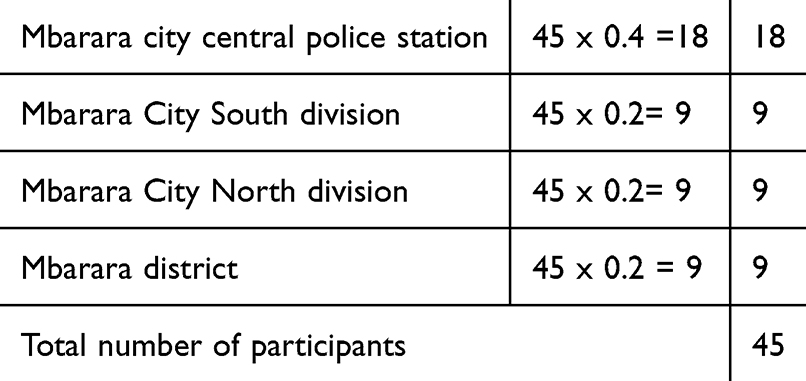 |
Table 1 Showing Sampling Procedure |
Forty-five (45) participants were enrolled and all responded to the pre-tests, however three (03) participants did not respond to the post-test and thus the analysis was restricted to 42 participants.
Study Variables
Independent Variable
Police officers’ demographics such as sex, age, level of education, experience, length of service or, and previous training in prehospital care.
Baseline Knowledge and skills on prehospital care of police officers’ pre-intervention.
Knowledge was graded as low, moderate, and high, while skills were categorized as low, medium, and competent as categorized by.15 Scores of 0–4 (0 <50%) were considered as poor, 5–7(50–79%) medium, and 8–10 (>80%) as good.
Dependent Variable
The change in scores of posttests from pretests on both the questionnaire and skills checklist obtained before and after the intervention. To show the difference in knowledge and skills gained after the educational intervention.
Data Collection Process
Upon approval from the Research ethics committee, the researcher engaged the district police commanders of the 4 police stations in a preparation phase where early planning, duty, and schedule adjustments was done for research participants. An agreeable date was set when the study participants would be able to assemble at Mbarara central police station to be able to participate in the study for the two days of training. During the two-day training period, participants were provided with food, refreshments, and a transport refund.
Data were collected in 3 phases, pre-intervention, intervention, and post-intervention using a self-administered structured questionnaire containing two sections of demographics, and knowledge. A checklist was used to collect data on skills during the simulation session. Following an initial questionnaire administration and simulation exercise, an education session on major prehospital care covering scene safety, airway support, breathing and recovery position, control of bleeding, spine injury precautions, and fracture stabilization, was conducted. Mannequins and role-play were used for the practical session. The education session was conducted by the research team which included an emergency medicine physician, 2 postgraduate critical care nurses, 2 First Aid Red Cross trainers, and the researcher. The 2-day training ran from 9 am to 5 pm.
The same questionnaire was then administered to evaluate the effect of the teaching intervention on knowledge gained and the checklist was used for the simulation session on skills gained among the study participants 4 weeks after the training. The study participants were engaged in their off-duty time, after a telephone call and permission from their respective DPCs to re-engage them for the post-intervention evaluation at their respective police stations.
Quality Control
The study adopted a validated questionnaire and checklist by Koranda, Knettel.16 The tools were pretested among 5 police officers at Lyantonde police station. The results of the pretest were used to refine the tools. To ensure standardization all research assistants were trained before the intervention with inter-observer liability of 0.8 for the checklist. During the intervention, an emergency/medicine physician supervised and oversaw the education on pre-hospital care.
Data Management
The questionnaires and checklists were checked for completeness immediately after data collection. Data were entered in Microsoft Excel version 2016, coded, and cleaned. Two copies of the cleaned data sets were developed with one stored for back up while the other was exported into STATA version 17 for final analysis.
Data Analysis
Descriptive statistics such as frequencies, mean, and standard deviation were used to describe the demographic study variables. Knowledge was categorized into low (0-<50%) if participant scored less than 8 correct answers out of 15 questions, medium (50–79%) if scored 8–11 questions right out of 15, and good (≥80%) knowledge if scored 12 or more questions on the questionnaire. Skill was categorized as low if participant scored less than 9 out of 20 for each of the skills assessed, moderate if participant scored between 10 and 15 out of 20, and competent if participant scored 16 and above out of 20 as categorized in a study by Ogunyemi, Venkatraman.15 Mean scores were calculated from percentages of participants individual total marks out of 100% for both knowledge and skills respectively. Data were tested for normality using a histogram for a bell shape, and kurtosis and skewness were assessed with values of −3 and 3 and 0 for the kurtosis and skewness respectively. T-paired tests were then used to analyze differences in pre- and post-intervention scores for statistical significance as the data were normally distributed.
Ethical Consideration
Ethical Approval was obtained from the Mbarara University Research and Ethics Committee (MUST-2024-1521), administrative clearance from the Regional Police Commander Rwizi Region and, District police commanders of the four police stations to permit the interactions between the researcher and the study participants for the study purposes. Informed consent was sought from all study participants, and emphasis was put on explaining the study objectives to participants, each participant signed a consent form at pre- and post-test of the intervention. Confidentiality was prioritized as personal information such as names, identification numbers, and police service numbers were not obtained. Secondary identifiers were used to maintain participant traceability.17 Participants were explained that refusal to participate in the study or terminating being in the study bore no consequence or reprimand. This study complies with the Declaration of Helsinki.
Results
Demographics
The demographic characteristics of the participants are presented in Table 2
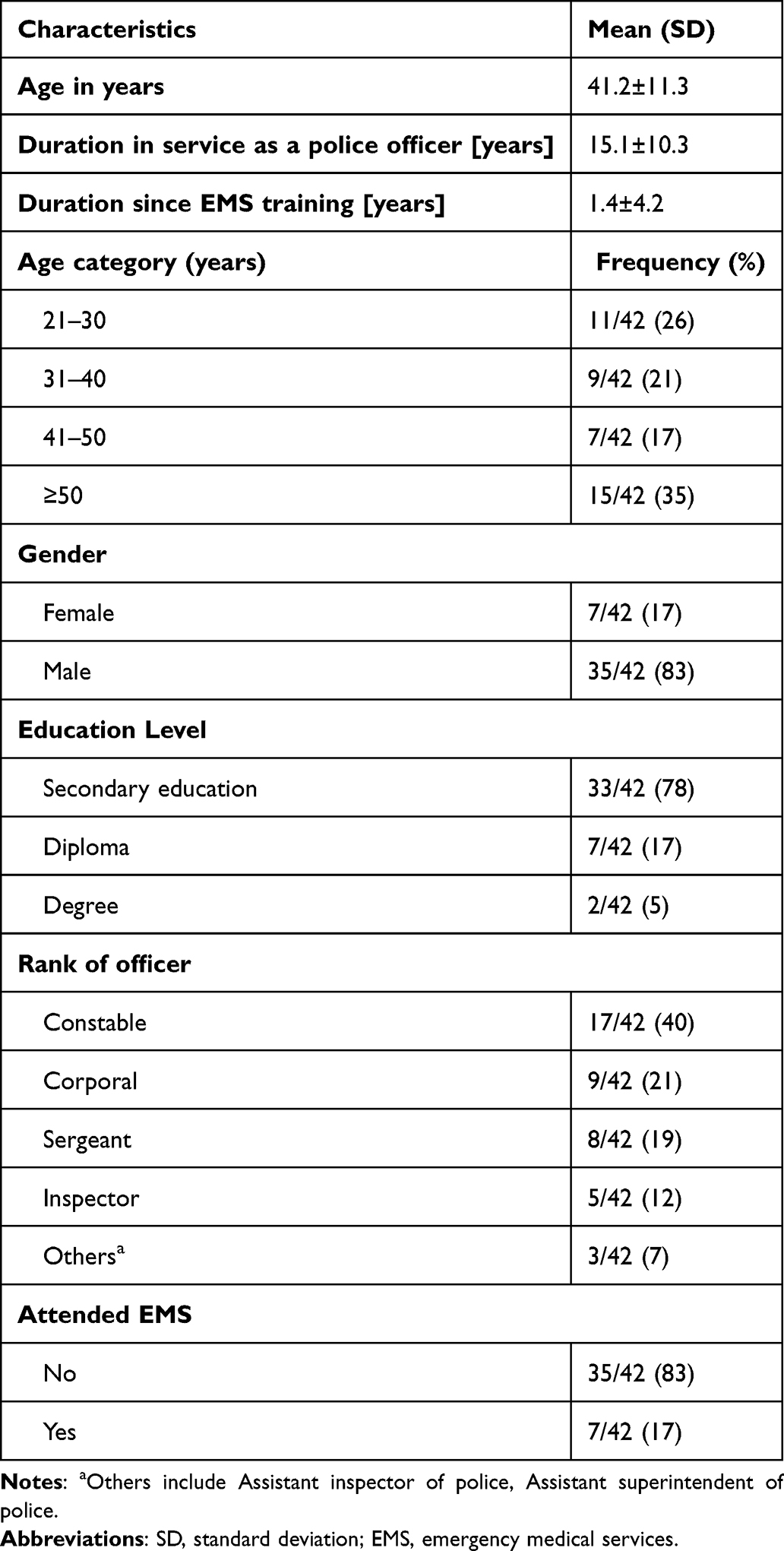 |
Table 2 Participants Demographic Characteristics N=42 |
The mean age of the study participants was 41.2±11.3 years with the majority being males (83%). Most had attained secondary education (78%). They had served in the police force for an average of 15 years, (40%), were at the rank of constable, and only 7 had prior training in emergency medical services (EMS).
Baseline knowledge of police officers towards Prehospital care for road traffic accident in Southwestern Uganda as shown by Table 3
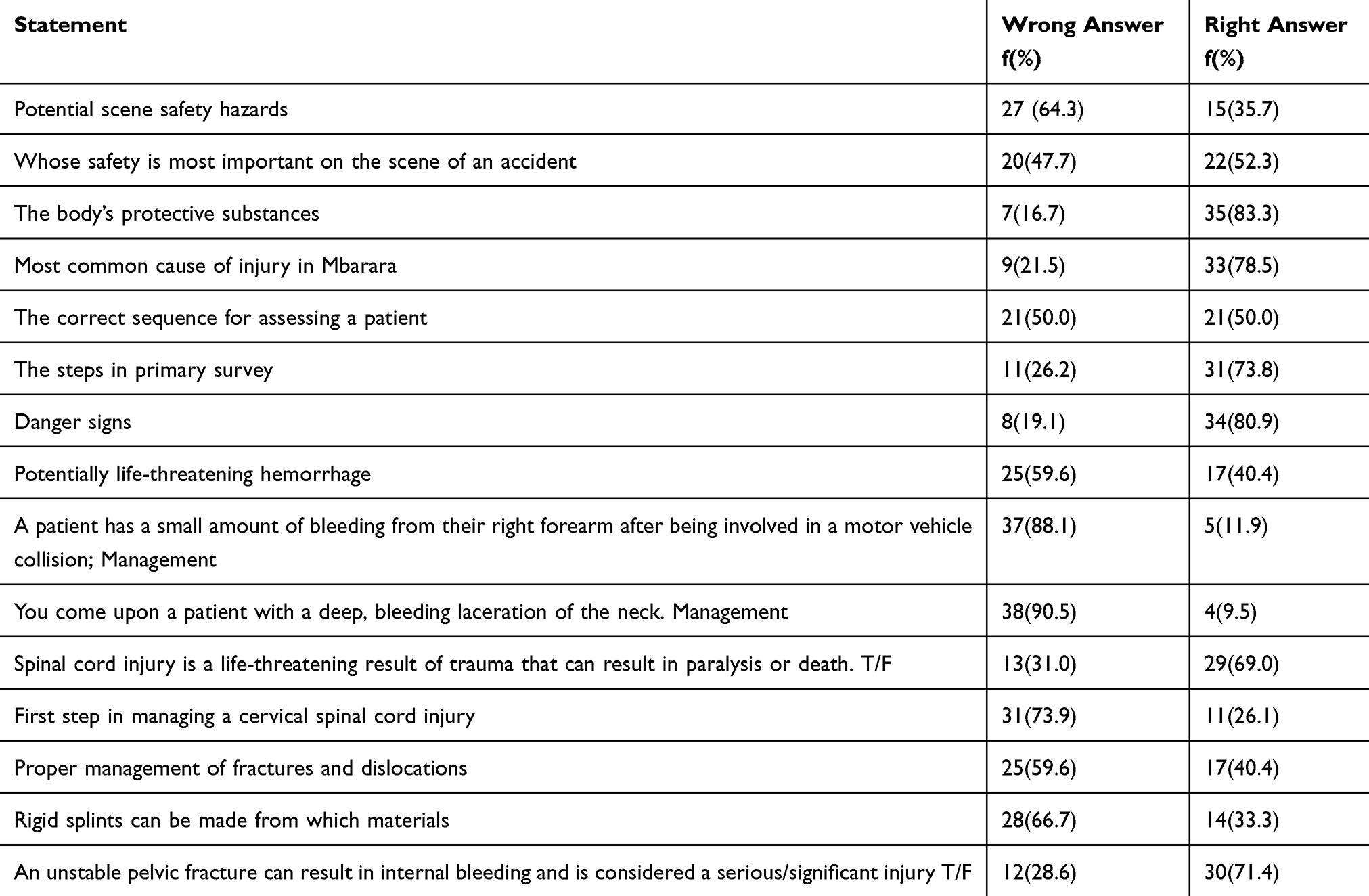 |
Table 3 Baseline Knowledge of Police Officers Towards Prehospital Care (n=42) |
The participants were most knowledgeable on the component of body protective materials (35/42) such as gloves, eye shields, aprons, and danger signs in a road traffic accident victim (34/42) such as not breathing, bleeding, and having a weak pulse. They were least knowledgeable on the management of bleeding for both minor (5/42) and major bleeding (4/42)
Baseline skills of police officers (n=42) shown in Table 4.
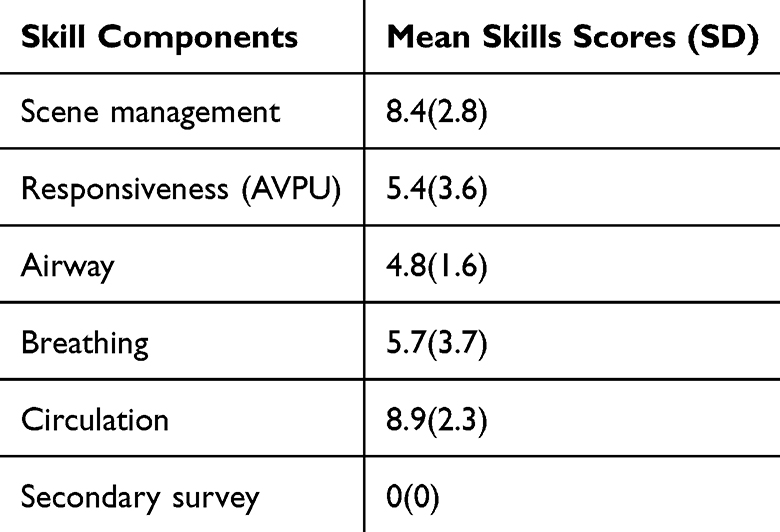 |
Table 4 Baseline Skills of Police Officers Towards Prehospital Care |
From Table 4, the participants had a low level of skill in assessing for all the components of the prehospital care for road traffic accident victims. Scene management had a mean score of 8.4, Responsiveness (AVPU) had a score of 5.4, airway management at 4.8, breathing at 5.7, and circulation at 8.9. They were not aware of secondary survey a skill for finding concealed bleeding.
Summary of the Baseline Knowledge and Skill Scores of Police Officers Towards Prehospital Care
The summary of baseline and skills is shown in Table 5.
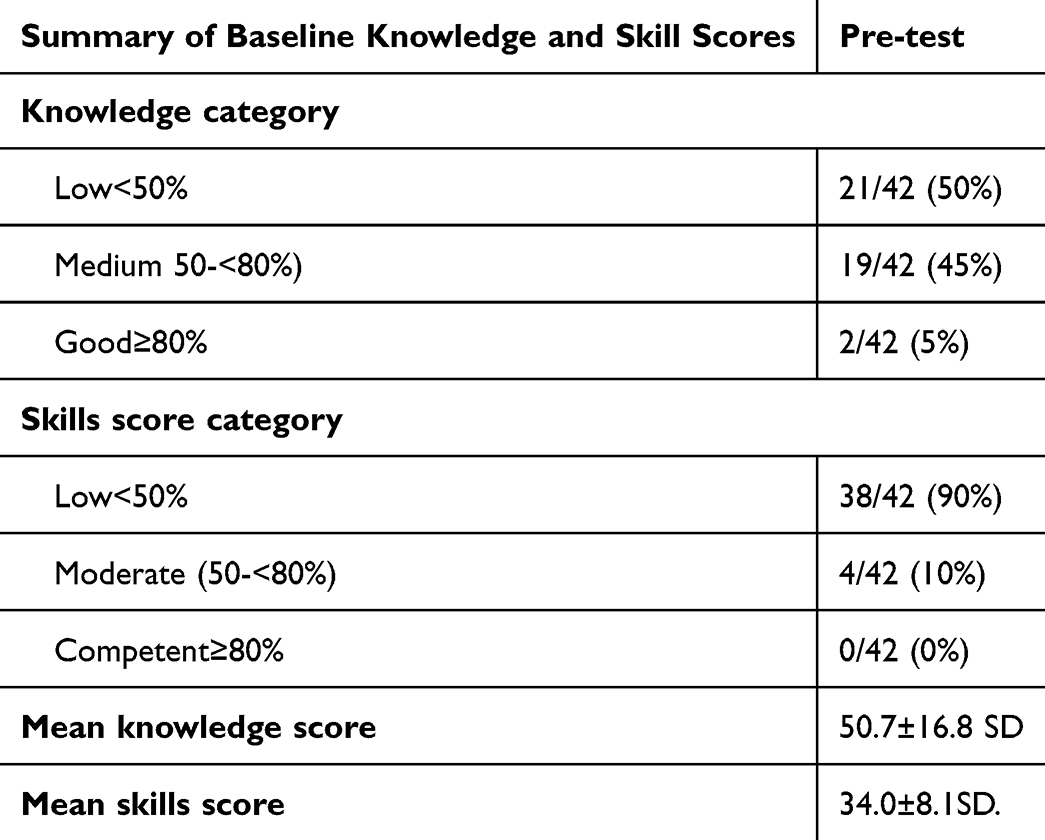 |
Table 5 Summary of Baseline Knowledge and Skills of Police Officers Towards Prehospital Care |
The majority of the participants 50% (21/42) had low baseline knowledge towards prehospital care for road traffic accident victims, 45% (19/42) had moderate, and only 2/42 had good knowledge respectively. Baseline skills in prehospital care were found to be low with 90% (38/42) in this category and only 10% (4/42) with moderate skill on prehospital care. None of the participants were competent in baseline skills of prehospital care for road traffic accident victims. The mean score on prehospital knowledge was 50.7±16.8 SD, and the mean score on skills was 34.0±8.1SD.
The change in knowledge of police officers towards prehospital care after the intervention is shown in Figure 1.
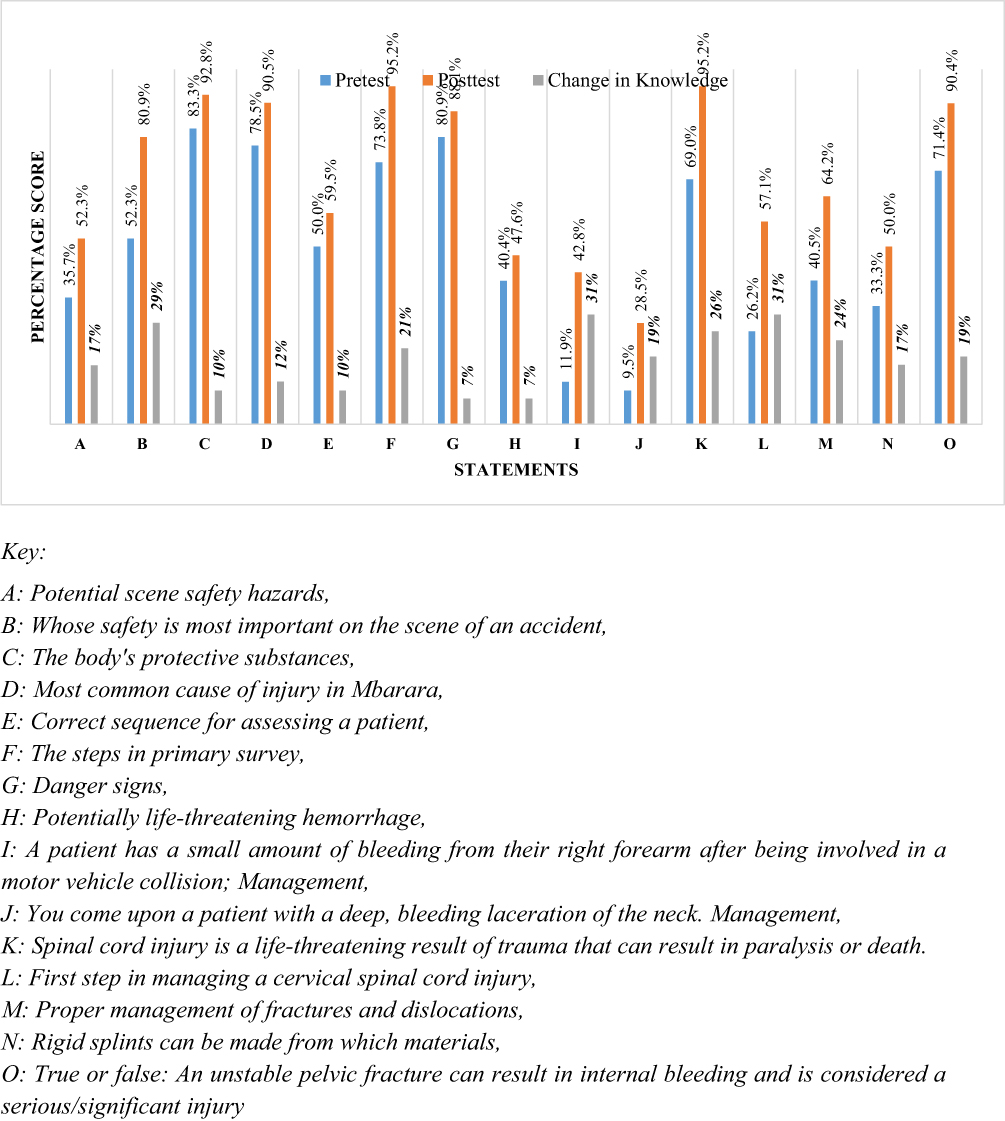 |
Figure 1 Change in knowledge of police officers towards prehospital care (n=42). |
The largest change in knowledge was in the management of minor bleeding and management of spinal cord injury with 31%, respectively. The least change was in identifying potentially life-threatening hemorrhages with 7%.
Summary of the change in knowledge and skills of police officers towards prehospital care is shown in Table 6 below
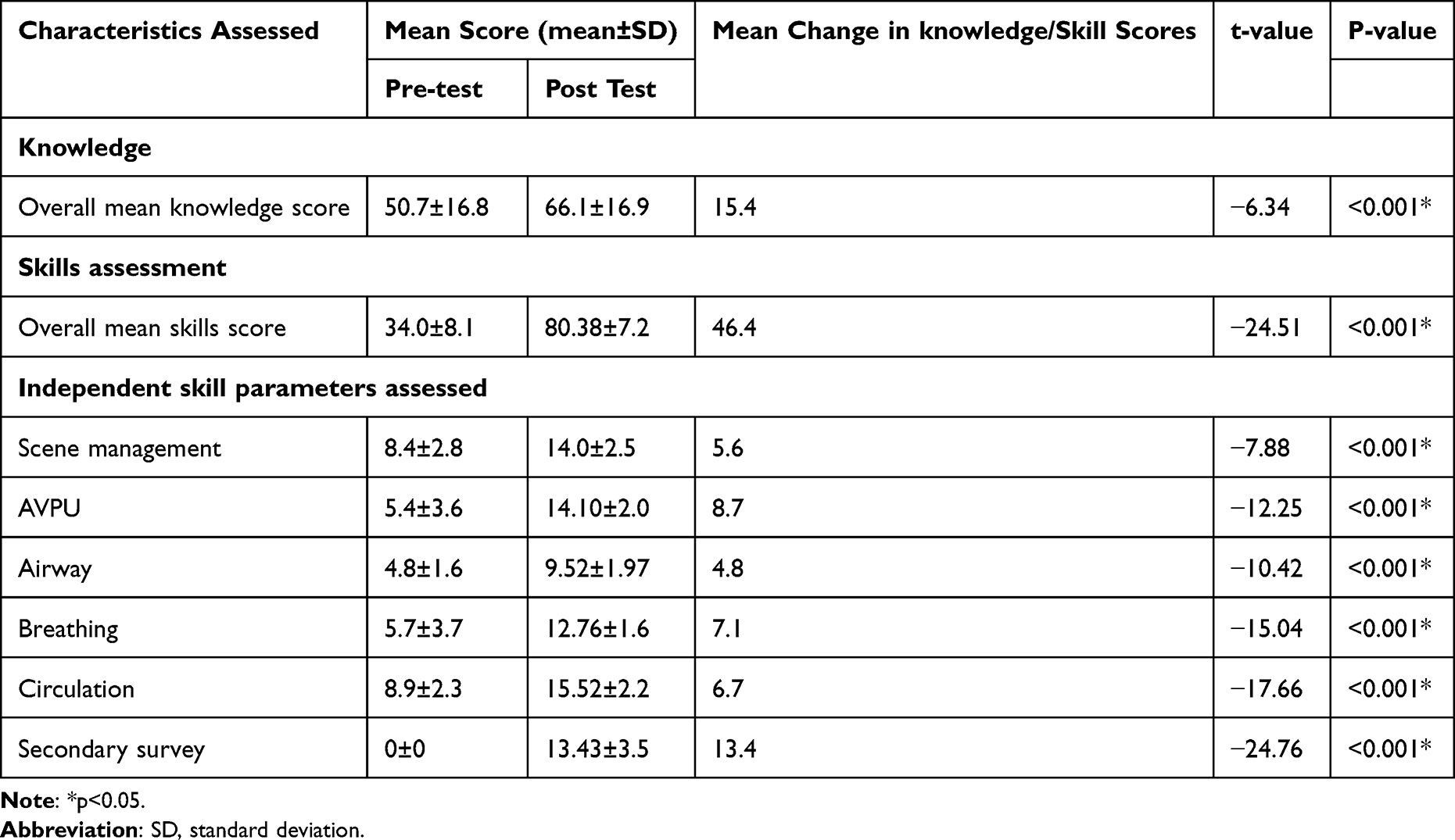 |
Table 6 Shows a Summary of the Change in Knowledge and Skills of Police Officers Towards Prehospital Care. n=42 |
The overall mean knowledge score for the pre-test was 50.74±16.77 compared to 66.1±16.9 post-test, with a significant knowledge change of 15.4 marks, p<0.001.
Also, the overall mean skills score for the pre-test was considerably low (34.0±8.1 marks) compared to the post-test score (80.4±7.2). There was a significant change in overall skill by 46.4 marks, p<0.001.
There was also a significant change in the parameters of the independent skill assessed in terms of scene management by 5.6, AVPU by 8.7, airway assessment by 4.8, breathing by 7.1, circulation by 6.7 and even great change in the skill of secondary survey by 13.4 (p<0.001).
Discussion
The majority of participants demonstrated low baseline knowledge, with a mean score of 50.7%, and performed poorest in managing life-threatening hemorrhage. This may be attributed to the fact that most participants had only a secondary level of education and had not received formal Emergency Medical Services (EMS) training. These findings contrast with previous studies conducted in Nigeria (Ogunyemi et al, 2023) and Tanzania (Ndile et al, 2020a), where higher education levels and prior EMS training were associated with better knowledge and skills among police officers.
The results are consistent with studies from Kampala, Tanzania, Chad, and Nigeria (Ndile et al, 2020a; Ogunyemi et al, 2023; Ssewante et al, 2022; Hancock et al, 2020), which also reported low knowledge among first responders. However, they differ from a study in Thailand where police officers showed a good level of knowledge in prehospital care for road traffic accidents, with scores improving to 66.7%.18 This suggests that educational interventions can enhance prehospital care knowledge among responders, a conclusion supported by studies in Tanzania (Koranda et al, 2023b) and Guatemala (Delaney et al, 2020), where mean knowledge scores improved from 36% to 65% and from 42.0% to 71.2%, respectively. The educational intervention also reinforces subjective norms among responders, as outlined in the theory of reasoned action.
The study further revealed that participants had poor baseline skills in prehospital care, with a mean score of 34%. Performance was below average across all components, particularly in the secondary survey, where none of the participants assessed victims for concealed bleeding or other injuries. This may be due to a lack of in-service training in basic life support and prehospital care for road traffic accident victims, as only 7 out of 42 participants had received EMS training. These findings align with studies conducted among lay responders in eastern Uganda and police officers in Tanzania (Delaney et al, 2018; Lukumay et al, 2018), where baseline skill scores were similarly low. After training, skill scores improved from 46%, with the greatest improvement seen in assessing responsiveness and breathing. This is consistent with a study in Nepal where 93% of participants demonstrated proficiency in assessing breathing (Smart et al, 2022). In contrast, a study in Chad found that lay responders improved most in bleeding control skills, which were frequently used when responding to accident victims nine months post-intervention (Hancock et al, 2020).
Participants also displayed low skills in airway management, likely due to insufficient training in prehospital care. This finding is supported by a study in Tanzania (Lukumay et al, 2018), which reported poor knowledge of maneuvers such as jaw thrust and head tilt among traffic police.
Similarly, poor performance in the secondary survey—where no participant assessed for concealed bleeding or chest/abdominal injuries—may be attributed to a lack of training in assessment protocols and the absence of protective equipment, such as gloves. This aligns with a study in Tanzania (Ndile, 2020), where police officers reported not providing first aid due to a lack of protective gear, leading to skill attrition.
The educational intervention resulted in a mean improvement of 16% in knowledge and 40.6% in skills, as indicated by the difference between pre-test and post-test scores. This demonstrates that training can enhance police officers’ knowledge and skills in prehospital care for road traffic accident victims. The improvement in knowledge may reflect participants’ adaptability to new challenges aligned with their professional duties, which require continuous acquisition of skills. These results are consistent with interventional studies conducted in Tanzania, Chad, Guatemala, and eastern Uganda, which also reported improvements in the knowledge and skills of lay responders (Ndile et al, 2020a; Koranda et al, 2023a; Delaney et al, 2018; Delaney et al, 2020; Hancock et al, 2020). This underscores the importance of training and empowering lay responders, particularly in settings like Uganda where emergency medical services are limited.
Skills and knowledge acquired through practical educational training can be effectively applied in managing road traffic accident victims. Similar studies in Tanzania and Chad showed that participants utilized these skills to respond to accidents six and nine months after training, respectively. In a systematic review of interventional studies on first aid and prehospital care by non-health professionals, Ufashingabire Minani et al (2023) emphasize that educational interventions are crucial for transferring knowledge and skills, though they may not necessarily alter attitudes toward providing prehospital care.
Study Limitations
The study limitation was the inability to do a time series follow-up after the first post-intervention assessment thus the long-term impact of the intervention would not be evaluated. The researcher used descriptive statistics such as the mean, median, and mode to understand central tendencies and variations in the data over time
The study was a single group before and after, and thus causation of the effect cannot entirely be attributed to the intervention, thus results cannot be generalized to the population. The researcher controlled for the threats to validity with good targeted study population, well trained researcher team to deliver the intervention and good analysis methods appropriate for the pre post study design.
Conclusion
The study demonstrated improvement in knowledge and skills after the educational intervention, indicating that well-tailored educational programs for police officers as first responders to RTA victims enhance their knowledge and skills. These educational programs are feasible and can be incorporated into concerted efforts to increase emergency response to RTA victims by police officers.
Recommendation
We recommend prehospital care trainings be conducted every 6 months for policers who act as first responders. A longitudinal study to evaluate the impact of the training received by the police officers in responding to road traffic accident victims and a qualitative study on the experiences of police officers who respond to road traffic accident victims. A knowledge and skills study 6 months after to assess knowledge and skills retention.
Disclosure
The authors report no conflicts of interest in this work.
References
1. WHO. Global status report on road safety 2015. World Health Organization; 2015.
2. WHO. Prehospital trauma care systems. World Health Organization; 2005.
3. Thind A, Hsia R, Mabweijano J, et al. Prehospital and emergency care. Dis Control Priorities. 2015;1:245–262.
4. Ningwa A, Muni K, Oporia F, et al. The state of emergency medical services and acute health facility care in Uganda: findings from a National Cross-Sectional Survey. BMC Health Serv Res. 2020;20(1):1–10. doi:10.1186/s12913-020-05508-8
5. Zziwa EB, Kobusingye O, Guwatudde D. Where are pedestrians injured and killed on Kampala city’s road network? Front Sustainable Cities. 2022;4:838186. doi:10.3389/frsc.2022.838186
6. Mehmood A, Wadhwaniya S, Zziwa EB, et al. “Dying due to poverty and lack of easy transport”: a qualitative study on access and availability of pre-hospital emergency medical services in Kampala, Uganda; 2019.
7. Lukumay GG, Ndile ML, Outwater AH, et al. Provision of post-crash first aid by traffic police in Dar es Salaam, Tanzania: a cross-sectional survey. BMC Emerg Med. 2018;18:1–9. doi:10.1186/s12873-018-0199-9
8. UPF. Annual Crime Report 2022. U.P. Force, Editor. Kampala; 2023:1.
9. Maciejewski ML. Quasi-experimental design. Biostatistics Epidemiolo. 2020;4(1):38–47. doi:10.1080/24709360.2018.1477468
10. Raulin ML, Graziano AM, Longman SL. Quasi-experiments and correlational studies; 1995: 58–77.
11. Kang H. Sample size determination and power analysis using the G* Power software. J Educ Eval Health Professions. 2021;18:18. doi:10.3352/jeehp.2021.18.18
12. Ndile ML, Lukumay GG, Bolenius K, et al. Impact of a postcrash first aid educational program on knowledge, perceived skills confidence, and skills utilization among traffic police officers: a single-arm before-after intervention study. BMC Emerg Med. 2020;20(1):1–9. doi:10.1186/s12873-020-00317-y
13. Stratton SJ. Population research: convenience sampling strategies. Prehospital Disaster Med. 2021;36(4):373–374. doi:10.1017/S1049023X21000649
14. Emerson RW. Blindness, Convenience sampling revisited: embracing its limitations through thoughtful study design. J Visual Impairment Blindness. 2021;115(1):76–77. doi:10.1177/0145482X20987707
15. Ogunyemi K, Venkatraman C, Malolan C, et al. Assessment of knowledge, skills, and preparedness of general-duty police on prehospital Care of Road traffic accident victims in Abuja, Nigeria. Disaster Med Public Health Preparedness. 2023;17:e247. doi:10.1017/dmp.2022.196
16. Koranda NW, Knettel BA, Mabula P, et al. Evaluating the impact of a training program in prehospital trauma care and mental health for traffic police in Arusha, Tanzania. Int Emerg Nurs. 2023;70:101346. doi:10.1016/j.ienj.2023.101346
17. Xiang D, Cai W. Privacy protection and secondary use of health data: strategies and methods. Biomed Res Int. 2021;2021(1):6967166. doi:10.1155/2021/6967166
18. Shrestha B, Pacheun O, Boonshuyar C, et al. Response to road traffic injuries: a survey of Royal Thai Traffic Police in a Northeastern Province of Thailand. J Public Health Dev. 2017;15(1):101–112.
 © 2025 The Author(s). This work is published and licensed by Dove Medical Press Limited. The
full terms of this license are available at https://www.dovepress.com/terms
and incorporate the Creative Commons Attribution
- Non Commercial (unported, 4.0) License.
By accessing the work you hereby accept the Terms. Non-commercial uses of the work are permitted
without any further permission from Dove Medical Press Limited, provided the work is properly
attributed. For permission for commercial use of this work, please see paragraphs 4.2 and 5 of our Terms.
© 2025 The Author(s). This work is published and licensed by Dove Medical Press Limited. The
full terms of this license are available at https://www.dovepress.com/terms
and incorporate the Creative Commons Attribution
- Non Commercial (unported, 4.0) License.
By accessing the work you hereby accept the Terms. Non-commercial uses of the work are permitted
without any further permission from Dove Medical Press Limited, provided the work is properly
attributed. For permission for commercial use of this work, please see paragraphs 4.2 and 5 of our Terms.
Recommended articles

Accuracy of Trauma on Scene Triage Screening Tool (Shock Index, Reverse Shock Index Glasgow Coma Scale and National Early Warning Score) to Predict the Severity of Emergency Department Triage: A Retrospective Cross-Sectional Study
Yuksen C, Angkoontassaneeyarat C, Thananupappaisal S, Laksanamapune T, Phontabtim M, Namsanor P
Open Access Emergency Medicine 2023, 15:79-91
Published Date: 21 March 2023
Prehospital Use of Medication-Assisted Treatment for Opioid Use Disorder: A Rapid Review of Implementation Approaches and Outcomes
Denton EE, Ventura CAI
Substance Abuse and Rehabilitation 2025, 16:55-69
Published Date: 8 March 2025
Forecasting Road Traffic Injuries in North-Eastern Iran: The Effects of COVID-19 and Time Series Analysis (2009–2023)
Akbari Khalaj T, Kenarangi T, Fakoor V, Ghavami V, Yazdani A, Lotfi M, Sangsefidi N
Open Access Emergency Medicine 2026, 18:550300
Published Date: 13 February 2026

From Limited Use to Standard Practice: Retrospective Analysis of Droperidol Administration by Emergency Medical Services (2018–2023)

Schuler RLU, Schuler Jnr PD, Sampson C
Open Access Emergency Medicine 2026, 18:548610
Published Date: 25 February 2026

Effectiveness of Standardized Nurse-Led Triage Protocols in Improving Outcomes, Timeliness, and Accuracy in Road Traffic and Trauma Care in Low-Resource Settings: A Systematic Review
Boutemine L, El-Banna M, Atyeh RR, Sami W, Rizvi MR
Journal of Multidisciplinary Healthcare 2026, 19:585877
Published Date: 14 April 2026