
Back to Journals » Risk Management and Healthcare Policy » Volume 19
Development and Validation of a Predictive Screening Model for Congenital Heart Disease in High-Altitude Children

Received 11 January 2026
Accepted for publication 5 July 2026
Published 22 July 2026 Volume 2026:19 586432
DOI https://doi.org/10.2147/RMHP.S586432
Checked for plagiarism Yes
Review by Single anonymous peer review
Peer reviewer comments 3
Editor who approved publication: Dr Gulsum Kaya
Xulin Hu,1 Yangyan Liu,2 Bo Li1
1Department of Neonatology, Shanghai Tongren Hospital, Shanghai Jiao Tong University School of Medicine, Shanghai, People’s Republic of China; 2Department of Pediatrics, Shanghai Eighth People’s Hospital, Shanghai, People’s Republic of China
Correspondence: Bo Li, Department of Neonatology, Shanghai Tongren Hospital, Shanghai Jiao Tong University School of Medicine, No. 786 Yuyuan Road, Changning District, Shanghai, People’s Republic of China, Tel +86-21-62286069, Email [email protected]
Background and Purpose: Current congenital heart disease (CHD) screening protocols adopt plain-standard criteria, yet they predispose to missed diagnoses and misdiagnoses in high-altitude hypoxic environments. This study aimed to develop and validate a predictive model for early CHD screening in plateau-region school-aged children and to evaluate the cost-effectiveness of different screening strategies.
Methods: Cross-sectional data from 7315 school-age children undergoing initial school screening in high-altitude areas were analyzed using R 4.2.0 and SPSS 26.0. A logistic regression model predicting CHD detection rate was built via stepwise selection. Model performance was assessed through decision curve analysis (DCA), calibration curves, and ROC analysis. Variable importance was visualized via random forest plots. Cost-effectiveness of three screening strategies was evaluated using a Markov model.
Results: Logistic regression model identified drug use (OR=4.368) and respiratory infections (OR=5.795) were independently associated with CHD diagnosis, followed by age (OR=0.680) and smoking (OR=1.476). The model showed excellent discrimination (AUC=0.867). Random forest analysis confirmed respiratory tract infections as the significant associated factor. Cost-effectiveness analysis identified the three-tier screening model as dominant, offering the lowest cost (¥ 2604) and highest health benefit (0.060 QALYs), with the favorable incremental cost–utility ratio. Single-stage diagnosis was the least cost-effective (¥ 15,400).
Conclusion: The three-tier screening strategy, prioritizing children with maternal history of drug use or smoking exposure, younger age, and history of respiratory tract infections, shows a promising cost-effective approach for early CHD detection in high-altitude settings.
Keywords: congenital heart disease, early screening, screening model, school-age children
Introduction
From 1990 to 2021, the global age-standardized prevalence rate (ASPR) of congenital heart disease remained stable. In 2021, the ASPR was estimated at 0.21% (95% confidence interval: 0.19% to 0.23%).1 The prevalence of congenital heart disease (CHD) has been steadily increasing in high-altitude regions. In Tibet, the estimated prevalence among children aged 0–14 years is 1.16% in males and 0.75% in females, with a mortality rate of 0.8%. Infants under the age of two are found to be at higher risk of developing CHD.2 CHD is the most common birth defect among live-born infants and remains a leading cause of mortality during infancy and early childhood.3 Notably, children with CHD who maintain a pulse oxygen saturation above 90% can now survive into adulthood.4 However, adulthood presents additional challenges, as individuals with CHD have a reduced life expectancy, with heart failure being the leading cause of premature mortality.5 Early detection is crucial for timely intervention and optimal treatment outcomes. Patients with simple CHD typically require only routine follow-up, whereas those with complex CHD benefit from multidisciplinary, individualized treatment plans to address their unique medical needs.6 Studies indicate that delayed diagnosis of CHD can lead to acute complications such as severe cyanosis and heart failure, while also increasing the risk of chronic conditions in adulthood, including arrhythmias and pulmonary hypertension.7–9 Recent advancements in cardiovascular diagnostic technologies and pharmacological treatments have significantly improved the survival rates and quality of life of patients with CHD.10,11 Therefore, a comprehensive understanding of factors associated with CHD is essential for optimizing disease management and improving patient outcomes.12 At high altitude, the prevalence and disease burden of CHD are significantly higher than in lowland areas due to hypoxia, low atmospheric pressure, and increased ultraviolet radiation. The occurrence of CHD is associated with alveolar hypoxia induced by the high-altitude environment. Current screening strategies for CHD are primarily based on standards established for lowland regions, such as a pulse oxygen saturation threshold of <95%. However, direct application of these criteria in high-altitude hypoxic environments may result in a significant risk of missed diagnoses and misdiagnoses.13 Given the uneven distribution of primary healthcare resources in high-altitude regions, traditional initial screening methods relying solely on pulse oximetry have proven insufficient for accurately identifying early suspected cases.14 There is a lack of region-specific, multivariable risk prediction tools and economic evaluations of alternative screening pathways for school-age children living at high altitude. Therefore, this study aimed to develop and validate a predictive model for early CHD screening in high-altitude school-age children, and to compare the cost-effectiveness of different screening strategies using a Markov model.
Materials and Methods
Study Design
Study Design and Setting
This census-based cross-sectional study was conducted in the high-altitude region of Gande County, within the Guoluo Tibetan Autonomous Prefecture of Qinghai Province. The altitude was defined as regions of about 3500 meters, consistent with international classifications of high altitude.15
Study Participants
The required sample size was estimated using the formula for a single proportion:
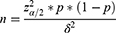
Where zα/2 = 1.96 for a two-sided, α of 0.05, p=0.0021 (0.21%),1 and δ=0.5p,16 This yielded a minimum sample size of 7350.
The study enrolled 8000 children aged 3–12 years from 30 schools in Gande County, Guoluo Tibetan Autonomous Prefecture, Qinghai Province, encompassing both preschool and primary school students. Thirty schools were selected in collaboration with the local education authority to cover both urban and rural areas, and all eligible children within these schools were invited to participate, approximating a cluster census of the target population.
Inclusion criteria were as follows: (1) age 3–12 years; (2) residence in the study area for at least 6 months; and (3) completion of the screening questionnaire with parental consent. Exclusion criteria were as follows: (1) known severe non-cardiac chronic diseases (eg, advanced malignancy); (2) inability to complete basic physical examination; or (3) missing key outcome data.
Each participant was provided with a questionnaire and an informed consent form. Among the distributed documents, 7315 children returned completed questionnaires along with parent-signed consent forms, yielding an overall participation rate of 91.44%. The research protocol was approved by the Ethics Committee of Shanghai Eighth People’s Hospital (Approval No. 2023-048-08). This study was conducted in accordance with the principles of the Declaration of Helsinki.
Screening Process: Stages, Indicators, and Data Collection Tools
Through a hierarchical and progressive research design, the research team systematically collected and analyzed key variables such as individual physiological parameters, maternal exposure characteristics during pregnancy and delivery, and environmental interactions to assess children’s health status and related risk factors. The specific procedures are as follows (Figure 1):
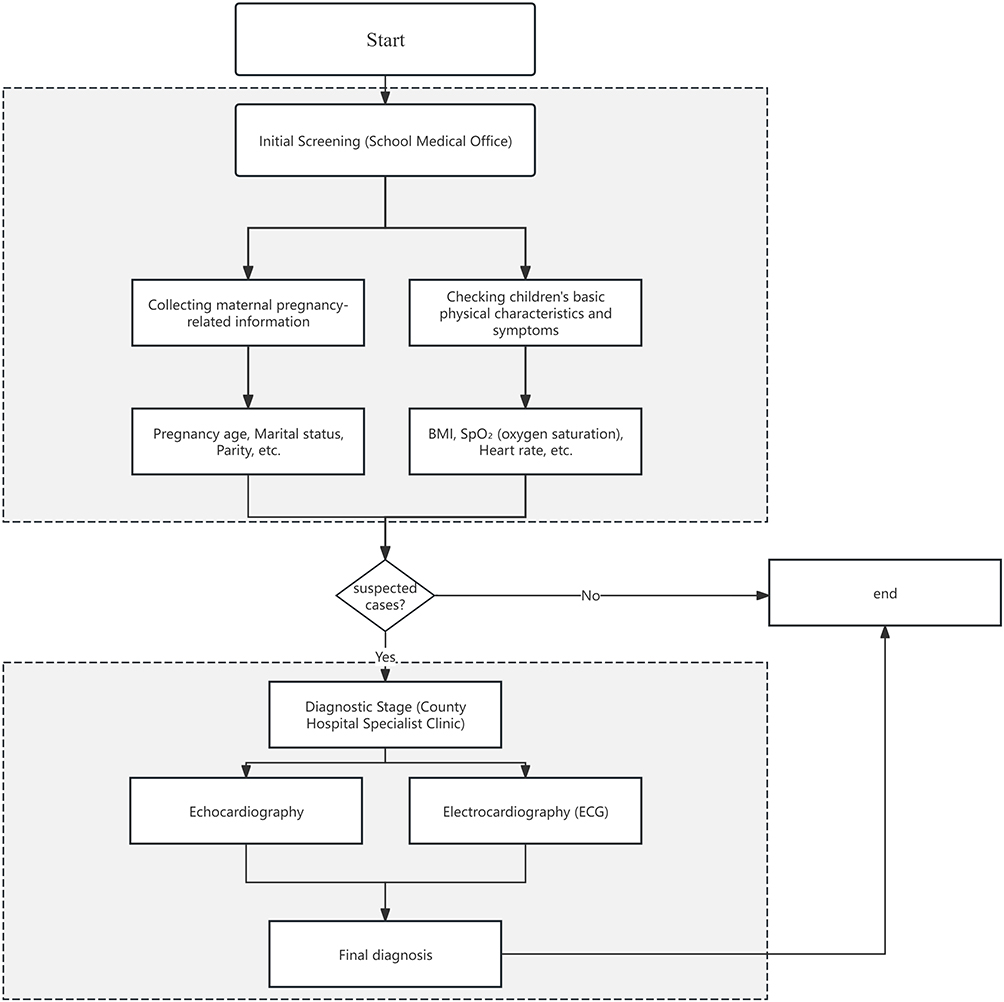 |
Figure 1 Three-tier screening process for congenital heart disease at high altitude. |
Preliminary Screening (School-Based Implementation)
School nurses measured children’s height/weight/BMI using electronic scales (error <1%) and recorded resting oxygen saturation (SpO2)/heart rate via pulse oximetry (three consecutive measurements averaged). Symptom severity was assessed with the Modified Borg Scale, defining exercise intolerance as a ≥15% reduction in 6-minute walk distance. Maternal pregnancy data were collected solely via parental retrospective questionnaires: cumulative exposure to renovation pollutants (estimated in ppm·h) was assessed through parents’ recall of exposure duration and intensity, while folic acid compliance was evaluated by their recollection of supplementation frequency and duration (no validation via FFQ or 24-hour dietary recalls). Gestational complications (eg, anemia, diabetes) were also documented via parental memory of pregnancy-related health issues. Smoking referred to household passive smoking exposure for ≥3 days per week during pregnancy; drug use referred to maternal use of prescription or over-the-counter medications for ≥1 week during pregnancy, including antibiotics and traditional medicines, as reported in the questionnaire. Respiratory infections were defined as physician-diagnosed lower respiratory tract infections requiring medical consultation during pregnancy.
Re-Screening Stage (Implemented by Township Health Centers)
Village doctors, trained via standardized video manuals, performed cardiopulmonary auscultation (Levine grading ≥2/6), Lovibond angle measurement for clubbing, and growth assessment against WHO Z-scores (<-1.88). Positive cases were referred to county hospitals.
Diagnosis Stage (Implementation of County Hospital or Remote Expert Platform)
Structural heart disease was diagnosed per ASE/EACVI echocardiography guidelines, with ECG abnormalities defined by Sokolow-Lyon index >3.5mV.17 Unified equipment brands (SECA/Nonin/Philips) and cloud-based platform for real-time logical consistency checks ensured inter-tier comparability. All suspected cases were confirmed by pediatric cardiologists using echocardiography. A total of 195 children (2.67%) were diagnosed with CHD.
Statistical Analysis
Statistical analyses were performed using R software (version 4.2.0; https://www.r-project.org) and SPSS Statistics (version 26.0; https://www.ibm.com/spss). Reporting of the prediction model followed the TRIPOD recommendations.
Multicollinearity
Spearman correlation screened variables with <25% missing data. Features with |r|>0.6 underwent iterative exclusion based on the outcome association strength.
Risk Factor Analysis
Risk factor analysis was conducted using a multivariable logistic regression framework, with the detection of congenital heart disease (CHD) defined as the dependent variable. Independent variables were initially screened based on clinical relevance and then subjected to stepwise selection guided by the Akaike Information Criterion (AIC). The step() procedure iteratively evaluated candidate predictors and retained the combination that minimized AIC, thereby reducing overfitting while preserving explanatory power. Predicted probabilities generated from the final logistic regression model were subsequently used to construct a decision curve, allowing assessment of the model’s net clinical benefit across a continuum of threshold probabilities. Decision curve analysis (DCA), implemented using the rmda package, compared the model’s net benefit—defined as the balance between true-positive and false-positive classifications—against two reference strategies: treating all individuals and treating none. The resulting plot displayed threshold probability on the x‑axis and net benefit on the y‑axis, with shaded regions indicating ranges where the model outperformed the reference strategies.
Model calibration was evaluated using calibration curves generated with the rms package. Bootstrap resampling (400 iterations) was applied to estimate calibration bands and assess the agreement between predicted and observed CHD probabilities. Statistical significance for all analyses was determined using a two‑tailed α level of 0.05. To further interpret the relative contribution of each predictor, a random forest model was constructed using default tuning parameters, and variable importance was quantified using out‑of‑bag error estimation. Variables were ranked in descending order of importance to illustrate their relative influence on prediction accuracy. Across all analyses, model performance was evaluated using receiver operating characteristic18 curves, calibration metrics, and internal bootstrap validation to ensure robustness and minimize overfitting.
Model Evaluation
The ROC area under the curve (AUC and 95% CI), true positive rate (TPR), false positive rate (FPR) and Youden index were used to evaluate the discriminant ability of the model.
Cost-Effectiveness Analysis
The model evaluates three screening strategies: Strategy 1: Diagnosis-only screening. Strategy 2: Rescreening combined with diagnostic screening. Strategy 3: A three-tier screening model. In this study, a Markov model was employed to analyze the cost-effectiveness of different strategies from a sociological perspective. The Markov model was analyzed using the relevant module in TreeAge Pro. This study developed a three-state Markov model (symptomless, early-stage, late-stage) to simulate disease progression over a one-year cycle, calculating the cumulative discounted costs and Quality-Adjusted Life Years (QALYs) for each period. Model parameters were derived from literature and empirical data, with total costs and total QALYs calculated under the baseline scenario (Tables S1 and S2). To assess parameter uncertainty, we performed probabilistic sensitivity analysis (PSA) with 1000 Monte Carlo simulations (Figure S1).
Bias Mitigation
To minimize selection bias, all children undergoing initial screening in target regions were consecutively enrolled. Information bias was reduced via standardized equipment calibration protocols, double-blinded echocardiogram interpretation, and centralized training for rural clinicians using validated video modules. This questionnaire was developed by the research team through a literature review and expert consultation. The study was conducted with 50 participants, yielding an intra-group correlation coefficient of 0.78 for test–retest reliability at two-week intervals; the internal consistency coefficients (Cronbach’s alpha) for each major exposure dimension ranged from 0.65 to 0.82. Content validity was assessed by three pediatric cardiology specialists and two epidemiology experts, yielding a content validity index of 0.87. However, since all exposure data were collected based on parental recollections, potential recall bias cannot be entirely ruled out.
Results
Characteristics of the Participants
In the initial screening phase of schools in plateau areas, a total of 7315 children were screened, which comprised 52.3% males (3826/7315) and 47.7% females (3489/7315), with a mean age of 10.2±2.1 years. Among them, 16.1% (1176/7315) had SpO2 levels below 95%, indicating possible hypoxemia. 8.7% had abnormal heart rates (either too fast or too slow). 6.3% exhibited abnormal symptom scores, such as fatigue, shortness of breath, and cyanosis. There was a significant correlation (P < 0.05) between maternal high-risk exposure during pregnancy, such as exposure to renovation pollution, pesticide contact, and gestational diabetes, and abnormal physical signs in children (Table 1).
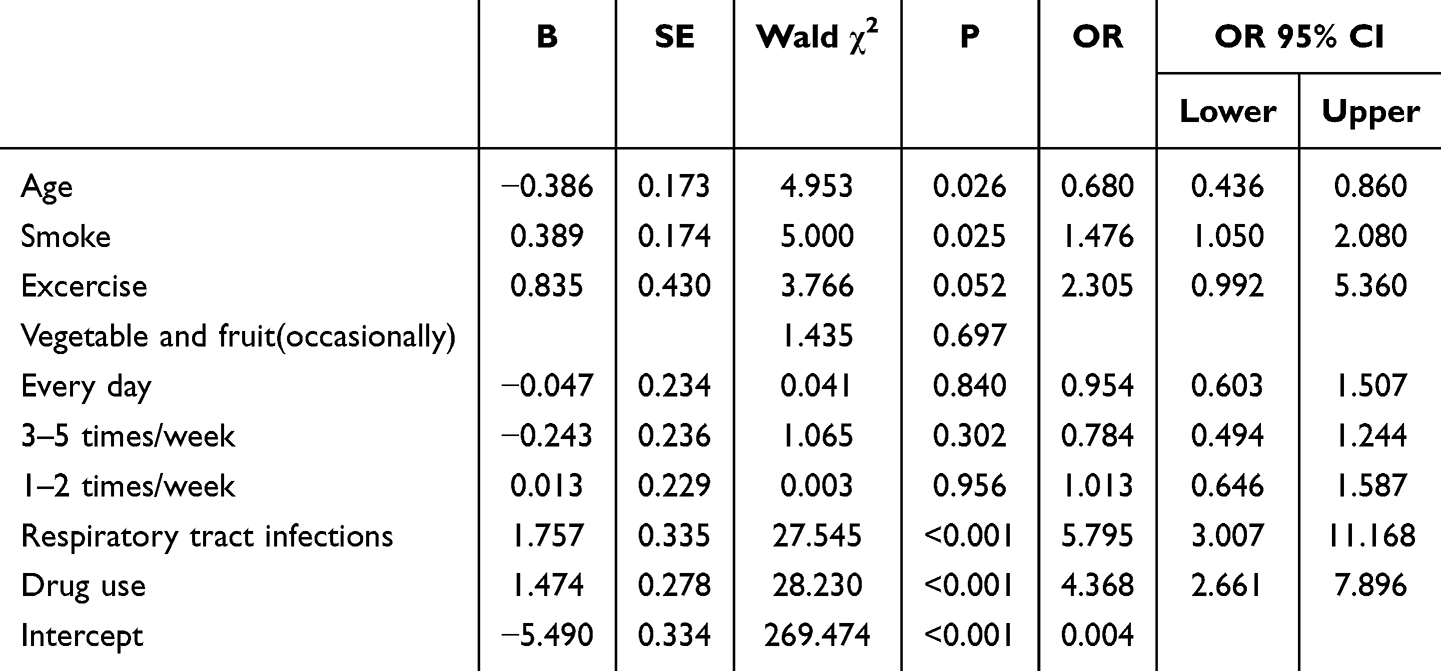 |
Table 1 Logistic Regression Results Table |
Risk Factor Analysis
The heat map indicates a collinearity between the current symptoms of children, such as shortness of breath, cyanosis, and poor exercise tolerance. Therefore, these three variables were excluded (Figure 2A). The logistic regression model reveals that smoking (OR=1.476, 95% CI: 1.050, 2.080) and drug use (OR=4.368, 95% CI: 2.661, 7.896) were independently associated with CHD diagnosis (p < 0.001). Age (OR=0.680, p=0.026) is also a critical factor, with the risk increasing with age. Respiratory infections (OR=5.795, p<0.001) significantly increase the risk. Exercise (OR=2.305, p>0.05) may have an effect, but the P-value is 0.052, not statistically significant (p < 0.05) (Table 2). The risk of illness for those who occasionally eat vegetables and fruits daily or 3–4 times a week is 0.784 to 0.954 times higher than for those who rarely eat them, and for those who eat them 1–2 times a week, it is 1.013 times higher, but none of these differences are statistically significant. Within the threshold probability range of 0%–50%, the net benefit (Net Benefit) of this model is significantly higher than that of the “full treatment” strategy (intervening all patients) and the “no treatment” strategy (no patient intervention) (Figure 2B). The analysis of the calibration curve indicates a high consistency between the model’s predicted probabilities and the actual observed risk probabilities. The predicted values are slightly lower than the actual values in the low-risk area (<20%) and slightly higher in the high-risk area (>60%). However, the overall fit is closely aligned with the ideal diagonal (Hosmer–Lemeshow test: χ2=8.30, p=0.410), indicating that the model has good calibration (Figure 2C).
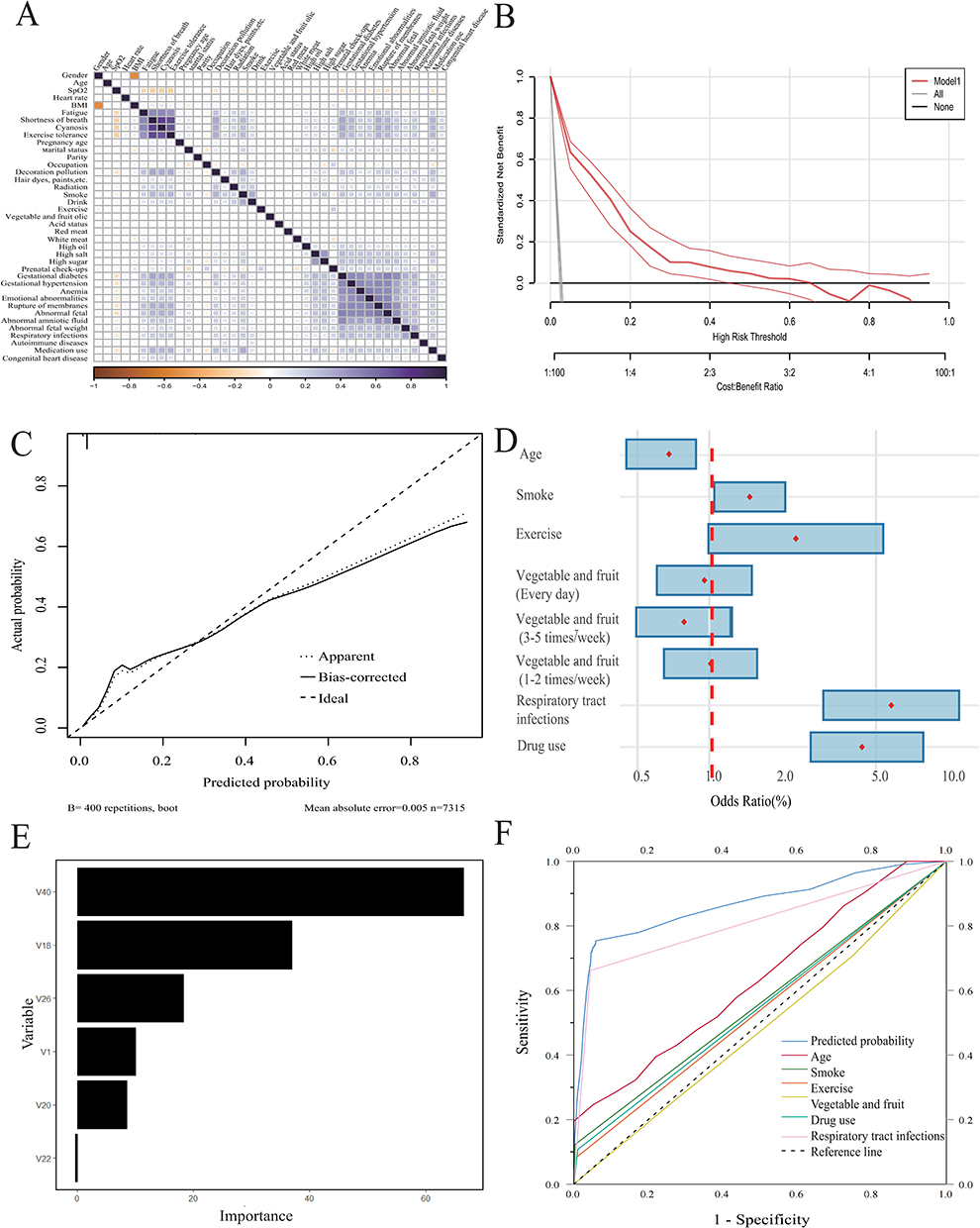 |
Figure 2 Risk factor analysis and model performance, including correlation heatmap, decision curve, calibration plot, variable importance from random forest, and ROC curves ((A) heat map, (B) DCA curve, (C) calibration curve, (D) random forest graph:red dashed line represents OR=1; the dots represent the OR values of that variables, (E) importance ranking graph, (F) ROC curve). |
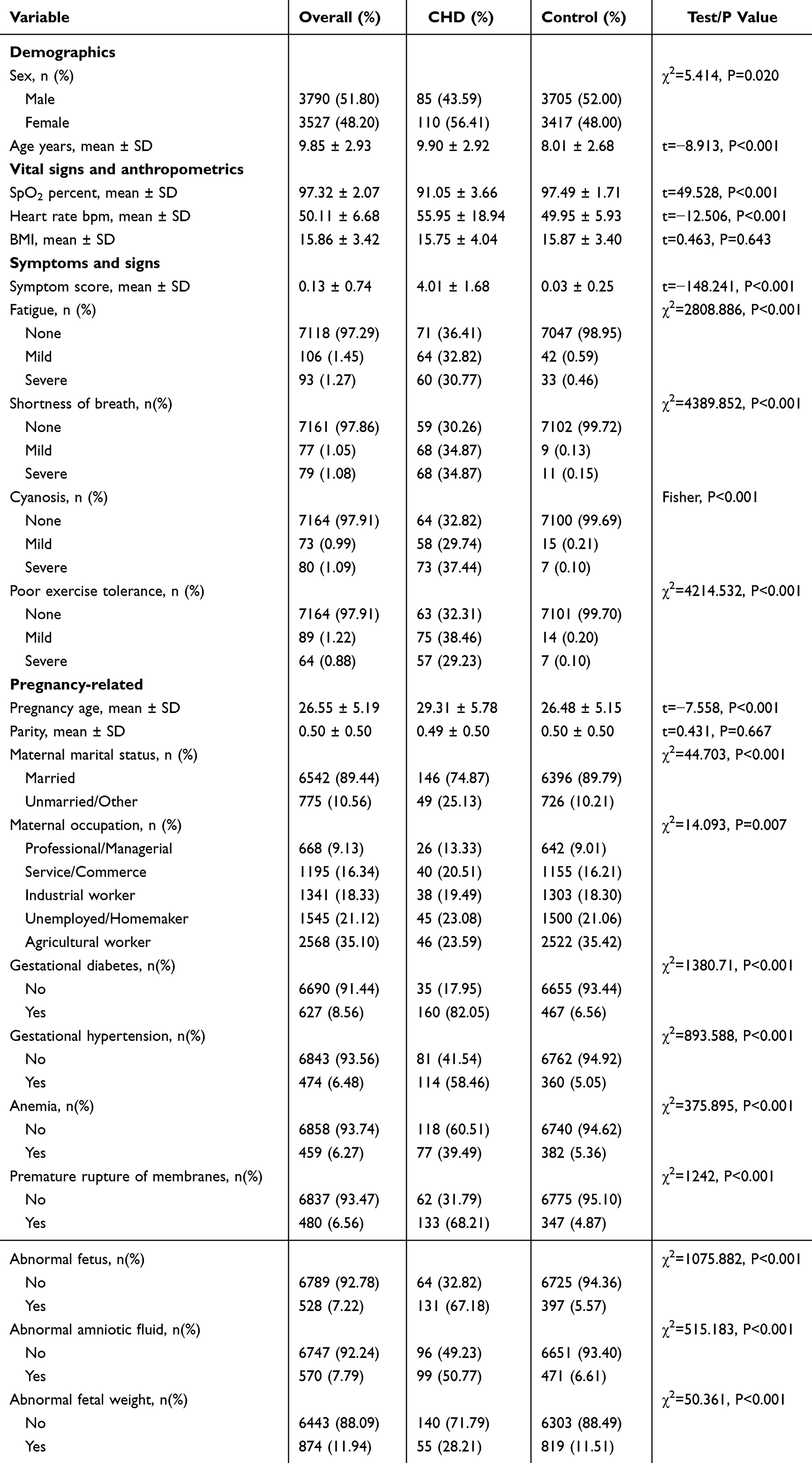 |
Table 2 Comparative Study of Congenital Heart Disease and Maternal and Neonatal Characteristics |
Random forest analysis ranked age, smoking, respiratory infections, and drug use as the most important predictors, consistent with the independent associations identified in the logistic regression model (Figure 2D and E). Age, smoking behavior, a history of respiratory infections, and drug use are all positively correlated with the risk, with the latter three having particularly significant effects. The model based on predictive probability demonstrates strong overall discriminative power, with an AUC of 0.867 (95% CI: 0.834–0.900), P < 0.001, and a TPR of 75.4%. Univariate analysis shows that drug use (AUC=0.809, P < 0.001) and age (AUC=0.635, P < 0.001) are the primary drivers of risk discrimination, with Youden indices of 0.618 and 0.195, respectively. Smoking (AUC=0.560, P=0.004) and a history of respiratory infections (AUC=0.548, P=0.021) are statistically significant but have limited discriminative power. Exercise (AUC=0.538, P=0.069) and the intake of vegetables and fruits (AUC=0.481, P=0.353) showed weak correlation with risk. Although the TPR and TNR of the latter were both 100%, the AUC was close to 0.5, indicating that its discriminative value alone is extremely low (Figure 2F and Table 3). In summary, drug use and age are the core indicators for risk prediction, while smoking and history of respiratory tract infection are secondary factors, and the influence of exercise and dietary intake can be ignored.
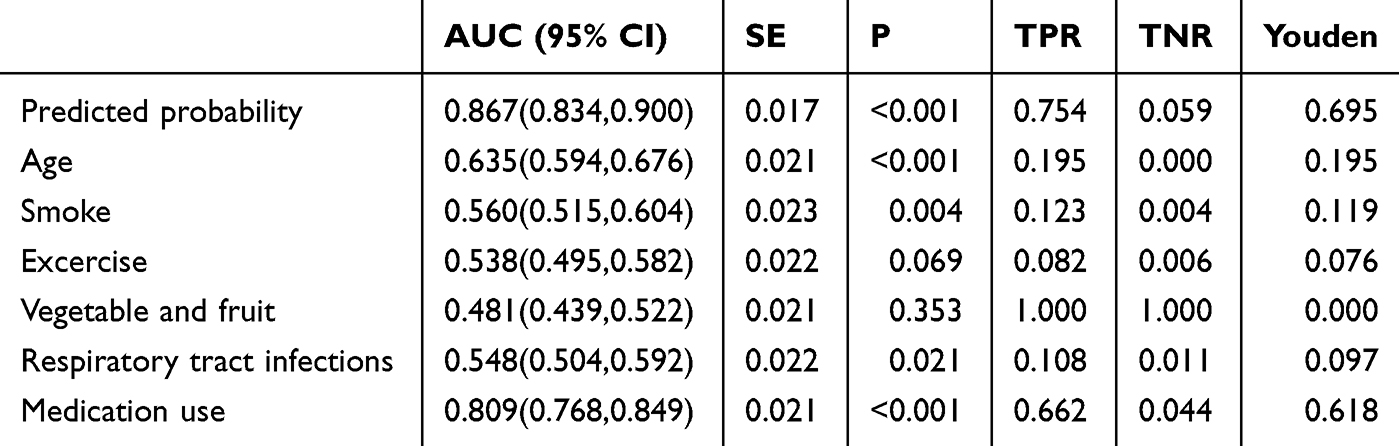 |
Table 3 Predictive Model Result Evaluation Table |
Markov Cost-Effectiveness Analysis
A Markov cost-effectiveness analysis was conducted to evaluate the economic impact of the three-tier screening model for CHD in children in high-altitude regions. The results indicate that the three-tier screening model has the lowest cost (¥2604) and the highest health benefit (0.060 QALYs), demonstrating the best cost-effectiveness ratio.
Compared with diagnosis-only screening (cost ¥15,400; lowest QALY gain), the three-tier screening model achieved the lowest cost (¥2604) and the highest QALY gain (0.060 per child), and was therefore dominant. The rescreening plus diagnosis model had slightly higher costs (¥2694) with similar health benefits.
The incremental cost–utility ratio analysis showed that the three-tier screening model provided greater economic value by avoiding the high costs associated with late diagnosis and treatment. The cost-effectiveness acceptability curve indicated that, across a wide range of willingness-to-pay thresholds, the three-tier strategy had the highest probability of being cost-effective (Figure 3).
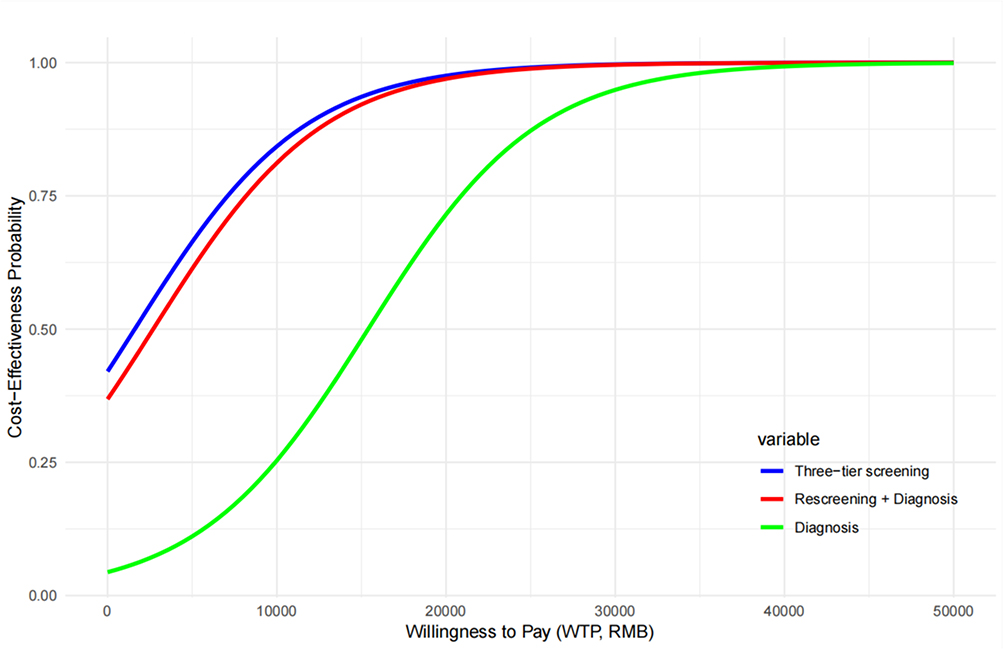 |
Figure 3 Cost-effectiveness acceptability curve from cost-effectiveness analysis. |
Discussion
Fetal heart development in high-altitude hypoxic environments may be influenced by multiple mechanisms. Prolonged hypoxia has been associated with placental dysfunction and elevated maternal inflammatory factors, leading to intrauterine growth restriction and cardiac developmental abnormalities. The underlying mechanisms may involve imbalanced angiogenesis, oxidative stress, and epigenetic modifications.19 Congenital heart disease (CHD) is one of the most prevalent birth defects among children in high-altitude regions, where early detection and intervention are crucial for reducing incidence and improving prognosis. However, limited healthcare resources, inadequate screening systems, and unique geographical conditions continue to pose significant challenges to CHD diagnosis and treatment in these areas.20 However, SpO2 screening for the early detection of critical congenital heart disease (CCHD) has a low sensitivity (32.0%) and a high specificity (99.5%), which may miss some CHDs, such as non-cyanotic CHD.21 Through systematic screening and multi-stage analysis of 7315 children, this study identifies key factors influencing CHD and associated health risks in high-altitude regions.
Drug use (OR=4.368, 95% CI: 2.661, 7.896) was independently associated with CHD diagnosis. These findings suggest that passive smoking and drug use (eg, antibiotic overuse and traditional medicine use) may contribute to impaired lung development and exacerbated inflammatory responses in children living in high-altitude regions, further worsening hypoxia tolerance. Li22 reported that offspring of mothers exposed to passive smoking during pregnancy have a 3.32-fold higher risk of developing CHD compared to non-exposed individuals. Additionally, for pregnant women exposed to passive smoking more than three days per week, the risk of CHD in their offspring increases to 3.62 times. Wu23 reviewed the association between prenatal drug exposure and the risk of cardiovascular disease in adulthood, highlighting the involvement of glucocorticoids, nonsteroidal anti-inflammatory drugs (NSAIDs), and other pharmacological agents. These drugs exert their effects through oxidative stress, nitric oxide (NO) signaling pathways, and multiple molecular mechanisms. The independent effects of age (OR = 0.680) and respiratory infection history (OR = 5.795) suggest that as physiological development increases oxygen demand, recurrent infections may lead to a decline in pulmonary compensatory capacity. This phenomenon is particularly concerning in hypoxic environments, where a vicious cycle of infection, hypoxia, and susceptibility may further exacerbate disease progression.24 These findings are consistent with the characteristics of immature immune systems and fragile respiratory barriers in children living at high altitudes. The limited cardiopulmonary compensatory capacity in hypoxic environments may contribute to infection-induced inflammatory cascades, exacerbating disease progression.25,26 Additionally, the significant age effect suggests that the incidence of CHD in high-altitude children may be associated with vascular remodeling and myocardial injury resulting from chronic hypoxia. Further longitudinal studies are required to validate these associations.27
The cross-sectional study of school-aged children in Qinghai Province and Nagqu, Tibet employed structured questionnaires and physical examinations for screening, demonstrating adequate screening efficacy. However, no economic benefit assessment was mentioned.28,29 In this study, the three-tier screening system achieved self-risk assessment through questionnaire surveys, which not only reduced medical costs but also significantly improved screening efficiency. Using cost-effectiveness analysis, results showed that the three-tier screening model had the lowest cost (¥2604) and highest health benefits (QALY = 0.060), outperforming single-stage diagnostic models.30,31 During the initial screening phase, school-based screenings covering 7315 students rapidly identified high-risk populations. The re-screening phase utilized portable equipment from township health centers to reduce referral costs. The diagnostic stage leveraged teleconsultation platforms to address specialist physician shortages in high-altitude regions. This pyramid-style screening network demonstrates high feasibility in resource-limited areas, providing a new paradigm for congenital heart disease prevention in resource-constrained regions. Compared to single-stage diagnosis, the three-tier screening process reduces medical costs and improves screening efficiency. A Markov model was employed to evaluate the economic benefits of different screening strategies, revealing that the three-tier screening model has the lowest cost (¥2604) and the highest health benefit (QALY = 0.060), showing a clear advantage over the single-stage diagnosis model.30 The initial screening phase achieved rapid identification of high-risk populations through large-scale school coverage (n = 7315). The rescreening phase utilized portable equipment in township health centers to reduce referral costs. The diagnostic phase relied on teleconsultation platforms to address the shortage of specialists in high-altitude regions. This pyramid-style screening network has demonstrated high feasibility in low-resource settings, offering a new paradigm for CHD prevention and control in resource-limited areas.
Limitation
This study provides valuable insights into the risk factors and screening effectiveness of CHD in high-altitude regions, it has several limitations. Firstly, the sample was confined to a single geographical area on the Qinghai-Tibet Plateau, which restricts the generalizability of the findings to other high-altitude populations. Secondly, reliance on self-reported questionnaire data to assess risk factors such as medication history, smoking exposure, and respiratory infections may introduce recall and reporting biases. Finally, the study did not explore epigenetic or molecular mechanisms linking hypoxia to cardiac malformations. Finally, as this study is based on a cross-sectional design, the ability to infer causal relationships between CHD and the identified risk factors is inherently limited, and the observed associations should be interpreted with caution.
Conclusion
This study suggests children with any of the following should proceed to further evaluation: maternal drug use or smoking exposure during pregnancy, age <9 years, history of recurrent respiratory infections, or abnormal findings in preliminary screening. Simultaneously, it advocates for the enhancement of community health education to diminish preventable risks. Moreover, the proposed screening framework, which integrates schools, primary healthcare centers, and teleconsultation platforms, exhibits high adaptability to high-altitude environments due to its cost-effective design. Cost-effectiveness analysis supports the proposed three-tier screening framework as a potentially cost-effective solution.
Acknowledgments
We thank and appreciate the support of Shanghai Tongren Hospital, Shanghai Jiao Tong University School of Medicine and Shanghai Eighth People’s Hospital collaborative staff in assisting with logistical aspects of creating this work.
Funding
No specific funding was received from any bodies in the public, commercial, or not-for-profit sectors to carry out the work described in this article.
Disclosure
The authors report no conflicts of interest in this work.
References
1. Zhang X, Feng Y, Ren J. et al. Global, regional, and national burden of congenital heart disease, 1990–2021: a systematic analysis for the global burden of disease study 2021. Eur J Pediatr. 2025;184(4):253. doi:10.1007/s00431-025-06085-w
2. Charipu, Gennian S, Zhibao D. Atmospheric oxygen partial pressure and risk assessment of tourists’ altitude sickness on the Qinghai-Tibet Plateau. Acta Ecol Sin. 2016;25(01):92–12 doi:10.16258/j.cnki.1674-5906.2016.01.013.
3. Gilboa SM, Devine OJ, Kucik JE, et al. Congenital Heart Defects in the United States: estimating the Magnitude of the Affected Population in 2010. Circulation. 2016;134(2):101–109. doi:10.1161/CIRCULATIONAHA.115.019307
4. Liu Y, Chen S, Zühlke L, et al. Global prevalence of congenital heart disease in school-age children: a meta-analysis and systematic review. BMC Cardiovasc Disorders. 2020;20(1):488. doi:10.1186/s12872-020-01781-x
5. Engelings CC, Helm PC, Abdul-Khaliq H, et al. Cause of death in adults with congenital heart disease - An analysis of the German National Register for Congenital Heart Defects. Int J Cardiol. 2016;211:31–36. doi:10.1016/j.ijcard.2016.02.133
6. Xie D, Fang J, Liu Z, et al. Epidemiology and major subtypes of congenital heart defects in Hunan Province, China. Medicine. 2018;97(31):e11770. doi:10.1097/MD.0000000000011770
7. Lui GK, Saidi A, Bhatt AB, et al. Diagnosis and Management of Noncardiac Complications in Adults With Congenital Heart Disease: a Scientific Statement From the American Heart Association. Circulation. 2017;136(20):e348–e392. doi:10.1161/CIR.0000000000000535
8. Mueller AS, McDonald DM, Singh HS, Ginns JN. Heart failure in adult congenital heart disease: tetralogy of Fallot. Heart Failure Rev. 2020;25(4):583–598. doi:10.1007/s10741-019-09903-0
9. Oliver Ruiz JM. Congenital heart disease in adults: residua, sequelae, and complications of cardiac defects repaired at an early age. Rev Esp Cardiol. 2003;56(1):73–88. doi:10.1157/13042345
10. Krishna MR, Kumar RK. Diagnosis and Management of Critical Congenital Heart Diseases in the Newborn. Indian J Pediatr. 2020;87(5):365–371. doi:10.1007/s12098-019-03163-4
11. Bregman S, Frishman WH. Impact of Improved Survival in Congenital Heart Disease on Incidence of Disease. Cardiol Rev. 2018;26(2):82–85. doi:10.1097/CRD.0000000000000178
12. Hoffman J. The global burden of congenital heart disease. Cardiovas J Africa. 2013;24(4):141–145. doi:10.5830/CVJA-2013-028
13. Granelli ADW, Mellander M, Sunnegårdh JKS, Östman-Smith I, Ostman-Smith I. Screening for duct-dependent congenital heart disease with pulse oximetry: a critical evaluation of strategies to maximize sensitivity. Acta Paediatrica (Oslo, Norway: 1992). 2005;94(11):1590–1596. doi:10.1111/j.1651-2227.2005.tb01834.x
14. Hoffman JIE. Is Pulse Oximetry Useful for Screening Neonates for Critical Congenital Heart Disease at High Altitudes? Pediatric Cardiol. 2016;37(5):812–817. doi:10.1007/s00246-016-1371-1
15. Cai C, Ni G, Chen L, et al. Altitude hypoxia and hypoxemia: pathogenesis and management. Signal Transduct Target Ther. 2026;11(1):27 doi:10.1038/s41392-025-02531-1.
16. CMA CMDA. Expert Consensus on Epidemiological Research of Skin Diseases. Chin Jl of Dermatol. 2020;53(12):951–961 doi:10.35541/cjd.20200913.
17. Gurvitz M, Krieger EV, Fuller S, et al. 2025 ACC/AHA/HRS/ISACHD/SCAI Guideline for the Management of Adults With Congenital Heart Disease: a Report of the American College of Cardiology/American Heart Association Joint Committee on Clinical Practice Guidelines. Circulation. 2026;153(8):e115–e251. doi:10.1161/CIR.0000000000001432
18. Borre ED, Hyle EP, Paltiel AD, et al. The Clinical and Economic Impact of Attaining National HIV/AIDS Strategy Treatment Targets in the United States. J Infect Dis. 2017;216(7):798–807. doi:10.1093/infdis/jix349
19. Amar G, Kusayev J, Frishman WH, Aronow WS. Cardiac Effects in Children of Hypertensive Mothers: a Literature Review. Cardiol Rev. 2025. doi:10.1097/CRD.0000000000000918
20. Hasan A. Relationship of high altitude and congenital heart disease. Indian Heart J. 2016;68(1):9–12. doi:10.1016/j.ihj.2015.12.015
21. Mohsin M, Humayun KN, Atiq M. Clinical Screening for Congenital Heart Disease in Newborns at a Tertiary Care Hospital of a Developing Country. Cureus. 2019;11(6):e4808. doi:10.7759/cureus.4808
22. Jing L, Yujiao D, Hongli W. A case-control study on the relationship between maternal passive smoking during pregnancy and congenital heart disease in offspring. Chin J Epidemiol. 2020;41(6):884–889. doi:10.3760/cma.j.cn112338-20190710-00509
23. Wu T, Zhou K, Hua Y, Zhang W, Li Y. The molecular mechanisms in prenatal drug exposure-induced fetal programmed adult cardiovascular disease. Front Pharmacol. 2023;14:1164487 doi:10.3389/fphar.2023.1164487.
24. Page LK, Staples KJ, Spalluto CM, Watson A, Wilkinson TMA. Influence of Hypoxia on the Epithelial-Pathogen Interactions in the Lung: implications for Respiratory Disease. Frontiers in Immunology. 2021;12. doi:10.3389/fimmu.2021.653969
25. Choudhary R, Kumari S, Ali M, Thinlas T, Rabyang S, Mishra A. Respiratory tract infection: an unfamiliar risk factor in high-altitude pulmonary edema. Briefings Funct Genomics. 2022;23(1):38–45. doi:10.1093/bfgp/elac048
26. Huang R, Huestis M, Gan ES, Ooi EE, Ohh M. Hypoxia and viral infectious diseases. JCI Insight. 2021;6(7). doi:10.1172/jci.insight.147190
27. Caputo M, Ghorbel M, Iacobazzi D. Hypoxia-Induced Molecular and Cellular Changes in the Congenitally Diseased Heart: mechanisms and Strategies of Intervention. In: Zheng J, Zhou C, editors. Hypoxia and Human Diseases. Rijeka: IntechOpen; 2017 doi:10.5772/66038.
28. He S, Zhao F, Liu X, et al. Prevalence of congenital heart disease among school children in Qinghai Province. BMC Pediatric. 2022;22(1):331. doi:10.1186/s12887-022-03364-5
29. Lin T, Jia H, Li Y, et al. Epidemiological Survey of Congenital Heart Disease Among Children Aged from 2 to 18 in Suo County, Nagqu, Tibet. High Alt Med Biol. 2024;25(2):129–135. doi:10.1089/ham.2023.0025
30. Wen C, Wang X, Shu J, et al. Estimated cost-effectiveness of early screening strategies for newborn hearing impairment using a Markov model. Front Public Health. 2025;13:1498860 doi:10.3389/fpubh.2025.1498860.
31. Bai K, Xia Y, Wang T, et al. Post-treatment status and unmet treatment needs after congenital heart defect screening policy in school-aged children: a multi-ethnic screening of 1.02 million in China. Front Public Health. 2026;14:1778716. doi:10.3389/fpubh.2026.1778716
 © 2026 The Author(s). This work is published and licensed by Dove Medical Press Limited. The
full terms of this license are available at https://www.dovepress.com/terms
and incorporate the Creative Commons Attribution
- Non Commercial (unported, 4.0) License.
By accessing the work you hereby accept the Terms. Non-commercial uses of the work are permitted
without any further permission from Dove Medical Press Limited, provided the work is properly
attributed. For permission for commercial use of this work, please see paragraphs 4.2 and 5 of our Terms.
© 2026 The Author(s). This work is published and licensed by Dove Medical Press Limited. The
full terms of this license are available at https://www.dovepress.com/terms
and incorporate the Creative Commons Attribution
- Non Commercial (unported, 4.0) License.
By accessing the work you hereby accept the Terms. Non-commercial uses of the work are permitted
without any further permission from Dove Medical Press Limited, provided the work is properly
attributed. For permission for commercial use of this work, please see paragraphs 4.2 and 5 of our Terms.