
Back to Journals » Journal of Multidisciplinary Healthcare » Volume 19
Cox Proportional Hazards Model Analysis of Survival Among Tuberculosis Patients Under Treatment in Mbuji-Mayi, Democratic Republic of the Congo
Authors Kanyiki Katala M  , Kabamba Nzaji M , Ilunga Ilunga F
Received 12 November 2025
Accepted for publication 3 February 2026
Published 16 February 2026 Volume 2026:19 580987
DOI https://doi.org/10.2147/JMDH.S580987
Checked for plagiarism Yes
Review by Single anonymous peer review
Peer reviewer comments 2
Editor who approved publication: Professor Tilakavati Karupaiah
Moise Kanyiki Katala,1 Michel Kabamba Nzaji,2,3 Félicien Ilunga Ilunga4
1Department of Epidemiology and Biostatistics, Higher Institute of Medical Techniques of Mbuji-Mayi, Mbuji-Mayi, Democratic Republic of Congo; 2Department of Public Health, University of Kamina, Kamina, Democratic Republic of Congo; 3Expanded Programme on Immunization (EPI), Ministry of Health, Kinshasa, Democratic Republic of Congo; 4Department of Epidemiology and Biostatistics, Higher Institute of Medical Techniques of Kinshasa, Kinshasa, Democratic Republic of Congo
Correspondence: Michel Kabamba Nzaji, Email [email protected]
Background: Tuberculosis (TB) remains one of the leading causes of death in Mbuji-Mayi, as in many other cities worldwide. Despite the availability of free treatment, TB continues to spread in the city due to weaknesses in health system performance, socioeconomic conditions, and limited financial resources. This study aimed to contribute to reducing TB-related mortality in Mbuji-Mayi by identifying risk factors affecting the survival of patients undergoing anti-tuberculosis treatment.
Methods: A retrospective cohort study was conducted among tuberculosis patients registered and followed up in the TB treatment centers (CDTs) of Mbuji-Mayi between January 1 and December 31, 2024. Data were collected from patient records and treatment registers. A total of 1,633 cases were included in the analysis. Survival probabilities were estimated using the Kaplan–Meier method, and factors associated with survival were identified using the Cox proportional hazards model.
Results: Multivariate analysis showed that comorbid conditions such as HIV and diabetes were significantly associated with mortality among TB patients (adjusted Hazard Ratio [aHR] = 4.65; p = 0.003). Drug resistance was strongly associated with reduced survival time (aHR = 12.12; p < 0.001). Male sex was more exposed to mortality compared to females (aHR = 9.94; p = 0.026), and tobacco or alcohol use was also a significant risk factor associated with decreased survival (aHR = 3.31; p = 0.046).
Conclusion: The overall survival probability remained high, ranging from 99.7% in the first month to 98.8% in the fifth month of treatment. Most deaths occurred early during therapy. Mortality among TB patients in Mbuji-Mayi is mainly influenced by comorbidity, drug resistance, male sex, and tobacco or alcohol consumption. Strengthening early detection, adherence support, and management of comorbid conditions could improve patient survival.
Keywords: survival modeling, tuberculosis, treatment outcomes, cox proportional hazards, mbuji-mayi, Democratic Republic of the Congo
Introduction
Tuberculosis (TB) remains one of the deadliest infectious diseases globally, second only to HIV/AIDS and among the top ten causes of morbidity and mortality.1 The disease is particularly prevalent in sub-Saharan Africa, where control efforts are frequently hindered by financial constraints, low living standards, and fragile healthcare systems. Prior to the COVID-19 pandemic, TB was a leading cause of death from a single infectious agent.2
In 2022, approximately 10.6 million people developed TB, resulting in 1.4 million deaths worldwide. Although Mycobacterium tuberculosis can infect anyone, the burden of disease disproportionately affects populations living in poverty. Eighty-seven percent of new TB cases occur in thirty high-burden countries. Regionally, Southeast Asia accounts for 45% of cases, followed by Africa (23%), the Western Pacific (18%), the Eastern Mediterranean (8.1%), and the Americas (2.9%).3 Since 2000, the global incidence of TB has increased slightly, at approximately 1.5% per year.
Low-incidence countries, such as those in the European Union and European Economic Area, report fewer than 10 cases per 100,000 population. In 2021, TB incidence was 25 per 100,000 person-years, with 2.4 deaths per 100,000 person-years. Vulnerable populations including migrants, prisoners, and people living with HIV remain at higher risk, with 19,663 TB cases reported among HIV-positive individuals, representing 15% of this population, up from 14.3% in 2019.4
TB incidence varies widely worldwide, ranging from <10 per 100,000 in Western countries to over 500 per 100,000 in high-burden areas such as South Africa. Africa and Southeast Asia bear the highest disease burden, while some former Soviet Union republics report incidences exceeding 100 per 100,000. TB is preventable and curable; approximately 86% of infected individuals can be successfully treated with a 4- to 6-month course of therapy, reducing disease transmission. Despite these achievements, TB remains among the deadliest infectious diseases, particularly in sub-Saharan Africa.3,5 Globally, approximately 10.6 million people developed TB in 2022, resulting in 1.4 million deaths. TB disproportionately affects populations living in poverty.6
The Democratic Republic of Congo (DRC) faces a substantial TB burden, with an estimated incidence of 318 per 100,000 population.7 It is among eight countries accounting for over two-thirds of global TB cases in 2022, reporting 260,431 cases and 4,352 deaths in 2023 a 5% increase compared to the previous year.8 The DRC is also classified as a high-burden country for TB, TB/HIV coinfection, and multidrug-resistant TB (MDR-TB).7 Annually, over 112,000 cases are reported, ranking the DRC 10th globally and 3rd within the WHO African Region. The prevalence is estimated at 549 per 100,000, with a mortality rate of 68 per 100,000. Drug resistance among previously treated cases is approximately 13%, and 3.5% among new cases. HIV co-infection among TB patients is 14%.9
In Mbuji-Mayi, TB remains highly prevalent, with control efforts constrained by economic and systemic challenges. Vulnerable populations include recent TB contacts, undocumented migrants, asylum seekers, the homeless, prisoners, and healthcare workers. Risk factors for progression to active TB include immunosuppression (HIV), diabetes, smoking, alcoholism, age extremes, and occupational exposures.10
Despite the extensive documentation of TB burden, there are limited recent data on the time to TB onset and its predictive factors in Mbuji-Mayi, motivating this study. This study fills a critical knowledge gap by evaluating survival and risk factors using a multivariable Cox model in a high TB-burden urban setting. Understanding these factors is essential for designing effective interventions and informing public health policies. Accordingly, this study was conducted to evaluate survival probability and identify risk factors associated with mortality among TB patients receiving treatment in the city’s Tuberculosis Treatment Centers (CDTs).
Methods
Study Setting
The study was conducted in Mbuji-Mayi, capital of Kasai-Oriental province, DRC. The city covers 168,126 km2 and is marked by precarious living conditions, including inadequate housing, low income, limited access to clean water, lack of electricity, and poorly maintained roads. The population mainly depends on micro-trade and market gardening, with low educational attainment, particularly among young women. Poor public hygiene and the coexistence of revivalist and traditional religious institutions create conditions favorable to tuberculosis transmission.
Study Design and Population
This study employed a retrospective cohort design to assess patient survival under anti-tuberculosis treatment and to identify factors associated with mortality among pulmonary tuberculosis patients. The study population consisted of all patients registered between January 1st and December 31st, 2024, in Tuberculosis Diagnosis and Treatment Centers (CDTs) in Mbuji-Mayi.
A cluster-based sampling approach was applied, with CDT serving as the sampling unit. Ten CDTs were selected due to logistical and operational constraints. Within each selected CDT, all tuberculosis patients who were registered and initiated on treatment during the study period were exhaustively included. Consequently, the sample is representative of patients treated in the selected CDTs but may not fully represent all CDTs in Mbuji-Mayi.
Inclusion criteria were: (1) confirmed tuberculosis diagnosis; (2) initiation of anti-tuberculosis treatment between January 1st and December 31st, 2024; (3) treatment at one of the selected CDTs; and (4) availability of complete medical records, including treatment registry data. Each patient was followed from the date of treatment initiation until the end of the study period, treatment completion, loss to follow-up, or death, whichever occurred first. The follow-up duration for each patient ranged up to 9 months, which is reflected in the survival analysis. Patients not meeting these criteria were excluded.
Ethical Considerations
The study protocol was reviewed and approved by the Bioethics Committee of the Higher Institute of Medical Techniques (Institut Supérieur des Techniques Médicales (ISTM) of Kinshasa, under approval number 0146/CBE/ISTM/KIN/RDC/PMBB/2025, dated May 21, 2025. Authorization for data collection was also obtained from local health authorities, allowing access to tuberculosis patient registries and individual medical records. Given the retrospective nature of the study and the use of routinely collected programmatic data, the requirement for written informed consent was waived by the ethics committee.
Written informed consent was obtained from all individual participants included in the study. The research was conducted in accordance with the Declaration of Helsinki. This research received no specific grant from any funding agency in the public, commercial, or not-for-profit sectors.
Data Management
Raw data from the CDTs were cleaned, recorded, and merged into a single Microsoft Excel 2010 spreadsheet. Information on comorbid conditions and treatment resistance was extracted from individual patient medical records and CDT treatment registries. Data were cross-checked for consistency and completeness to ensure accuracy before analysis.
Data consistency and quality checks were performed using SPSS version 26, and results were subsequently presented as text, tables, and figures.
Statistical Analysis
Descriptive Analysis
Categorical variables were summarized using frequencies and percentages. Continuous variables with a normal distribution were summarized using the mean and standard deviation.
Survival Analysis
The primary outcome variable was death from any cause during anti-tuberculosis treatment, as documented in patient medical records.
Patient survival was estimated using the Kaplan-Meier method, and differences in survival were assessed using the Log rank test. Patients lost to follow-up were censored at their last known visit to account for incomplete observation. The probability of survival at different time points was calculated. To identify predictors of TB-related mortality, a multivariable Cox proportional hazards regression model was applied using a stepwise selection procedure. Given the relatively small number of deaths observed during follow-up (n = 18), caution was exercised in interpreting the Cox proportional hazards model results. The limited number of events may lead to model instability, wide confidence intervals, and potential overestimation of hazard ratios.
Tobacco and alcohol consumption were combined into a single binary variable in the multivariable Cox model due to the limited number of outcome events, in order to reduce model overfitting and improve estimate stability.
Variables with a p-value < 0.05 were considered statistically significant. This model was preferred as it allows estimation of hazard ratios while controlling multiple confounders simultaneously, providing robust survival estimates. Model selection was guided by the Akaike Information Criterion (AIC), with the model exhibiting the lowest AIC retained. Model performance was assessed using concordance statistics (C-statistic) to evaluate predictive accuracy.
Operational Definitions
Comorbidity was defined as the presence of at least one chronic or concurrent medical condition documented at treatment initiation.
At-risk occupations included professions associated with increased exposure or vulnerability to tuberculosis, such as mining, manual labor, and informal sector work.Low level of education was defined as having no formal education or only primary-level education.
Treatment resistance refers to documented resistance to anti-tuberculosis drugs and was categorized as Multidrug-Resistant TB (MDR-TB) if resistant to at least isoniazid and rifampicin, or as other forms of drug resistance if resistance was observed to a single drug or other combinations.
Results
The results in Table 1 indicate that the average age of tuberculosis patients is 39.19 ± 15.2 years. The sex distribution shows a male majority (56.2%) compared to women. Most of participants (80.4%) have a secondary/higher education level, and only a small proportion (19.6%) have a low level of education. Many patients are married (63.4%), 39.7% work in occupations at risk for TB, and 51.1% have a weight at discharge below the average of 51.8 ± 6.21 kg.
 |
Table 1 Distribution of Cases According to Sociodemographic Characteristics |
The results in Table 2 show that 75.4% of patients under treatment had drug-susceptible pulmonary TB, 1.3% had diabetes, the proportion of HIV/TB coinfection was 4.7%, 11.5% of TB patients received the nutritional package, and 13.7% had a tuberculosis-related comorbidity. TB comorbidity’ refers to any additional comorbid conditions excluding HIV and diabetes.
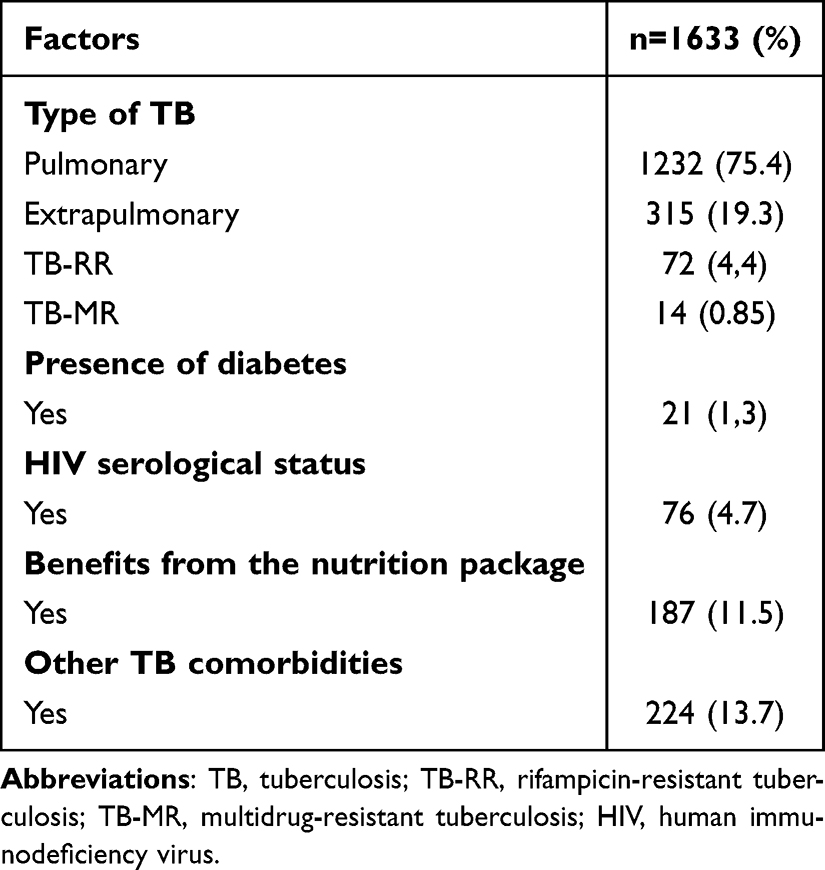 |
Table 2 Distribution of Cases According to Clinical Factors |
The results in Table 3 indicate that 2.8% of patients had a history of treatment discontinuation, 1.8% of these patients were cases of therapeutic failure, 5.2% of patients had a history of temporary treatment interruption (non-adherence), 4.5% of patients experienced product stock shortages, a large majority (87.2%) of patients had been vaccinated against TB, and the majority of patients (88.2%) were new patients. Additionally, 13.4% had not adhered to the dosage and intake of 2RHZE (first-line drug), and the TB mortality rate was 1.1%.
 |
Table 3 Distribution of Cases According to Factors Related to Care |
The results in Table 4 show that 24.1% of tuberculosis patients consumed alcohol, 17.2% of participants smoked, and 2.8% of patients were prisoners.
 |
Table 4 Distribution of Cases According to Environmental Factors |
Table 5 shows that survival probability decreased during the early months of follow-up and then stabilized from the fifth month onward, indicating that most deaths occurred during the initial phase of treatment. The standard error remained low (between 0.0012 and 0.0027), and the 95% confidence intervals were narrow, indicating good precision of the estimates up to the fifth month. At the end of follow-up, most censored observations corresponded to administrative censoring rather than loss to follow-up, which explains the observed pattern at time point six in the survival table.
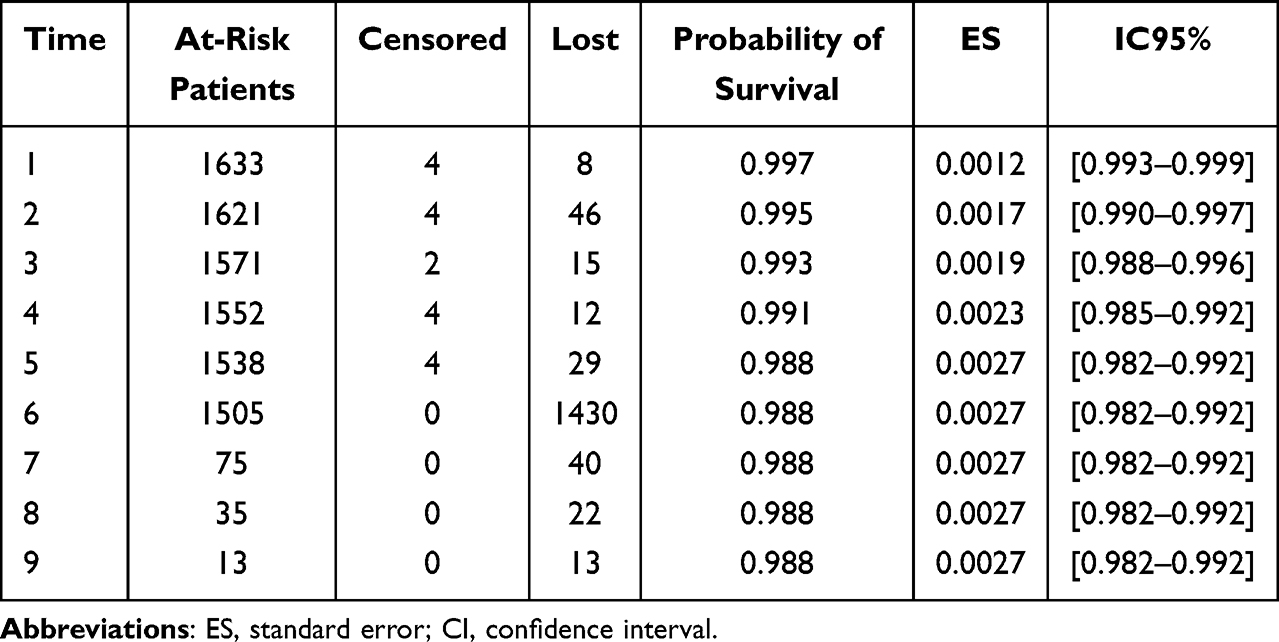 |
Table 5 Presentation of Results According to the Survival Table |
Figure 1 shows that deaths occurred mainly between the first and fifth months of follow-up, indicating that mortality was relatively rare and concentrated during the early phase of treatment.
 |
Figure 1 Kaplan–Meier overall survival curve of tuberculosis patients during treatment follow-up. |
Analysis of Table 6 indicates that, among 1,633 patients, male sex is significantly associated with increased mortality compared to females (HR [95% CI] = 13.1 [1.75–99.1], p = 0.012). Figure 2 illustrates survival differences according to sex. Mortality differed significantly between males and females (p = 0.001), although overall survival probabilities remained high for both groups.
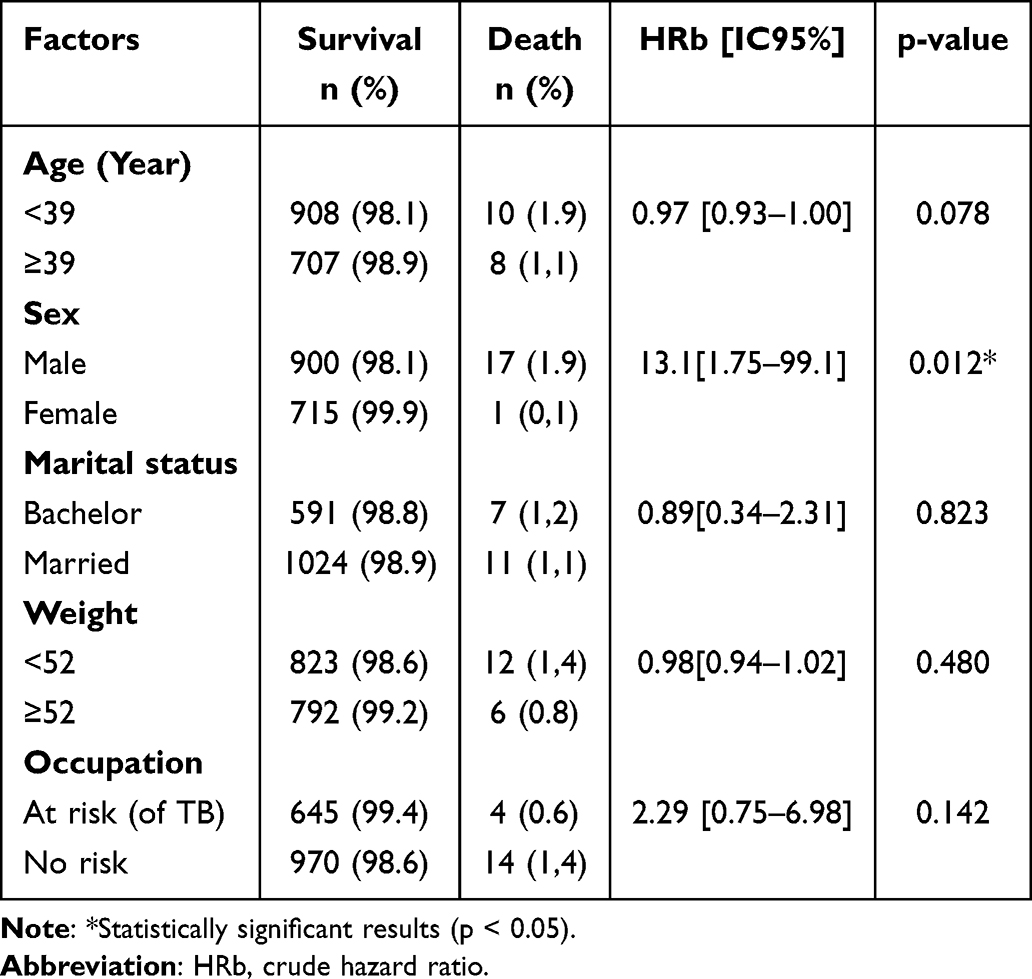 |
Table 6 Sociodemographic Factors of Patients and Their Survival |
 |
Figure 2 Kaplan–Meier survival curves stratified by sex. |
Analysis of Table 7 reveals that TB patients with diabetes have a markedly higher risk of death (HR [95% CI] = 8.07 [3.18–20.47], p < 0.001). A statistically significant difference in survival was observed according to HIV serological status (p < 0.002). Figure 3 presents survival stratified by HIV serological status. A significant association was observed between HIV-positive status and mortality under treatment (p < 0.001), with HIV-positive patients exhibiting lower survival probabilities compared to HIV-negative patients. Figure 4 depicts survival according to the presence of additional comorbidities. The analysis shows that patients with comorbid conditions had a significantly higher risk of mortality (p = 0.001).
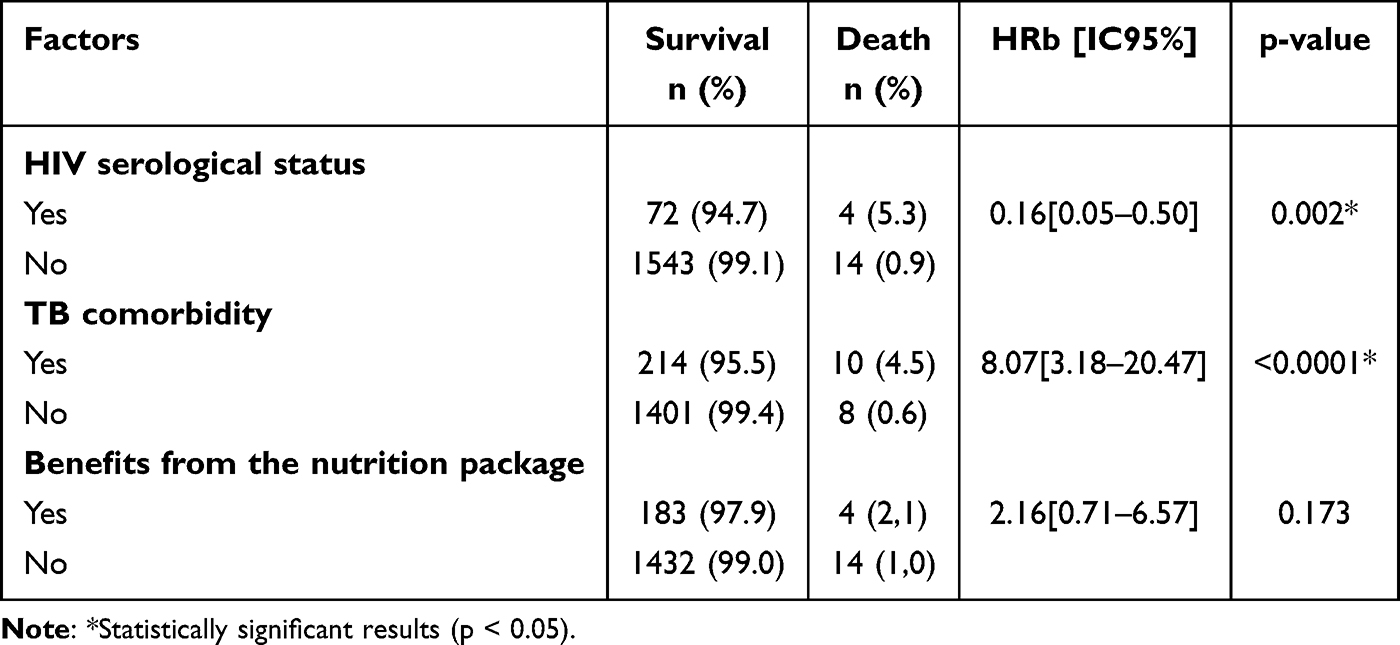 |
Table 7 Clinical Factors and Survival |
 |
Figure 3 Kaplan–Meier survival curves stratified by HIV serological status. |
 |
Figure 4 Kaplan–Meier survival curves stratified by presence of comorbidities. |
As shown in Table 8, a history of treatment discontinuation is strongly associated with a more than 10-fold increased risk of death (HRb [95% CI] = 10.65 [3.50–32.3], p = 0.000), while drug resistance is the most potent risk factor, increasing mortality 18-fold (HRb [95% CI] = 18.3 [7.25–46.5], p < 0.001). Non-adherence to first-line drug dosage and administration is also significantly associated with death (p < 0.001). Figure 5 shows that non-adherence to the prescribed dosage and treatment schedule is associated with reduced survival probability. Figure 6 presents survival according to drug resistance. Drug-resistant TB was associated with lower survival probability and was a significant risk factor for mortality (p < 0.001). Figure 7 demonstrates that abandoning treatment significantly reduces the probability of survival for tuberculosis patients.
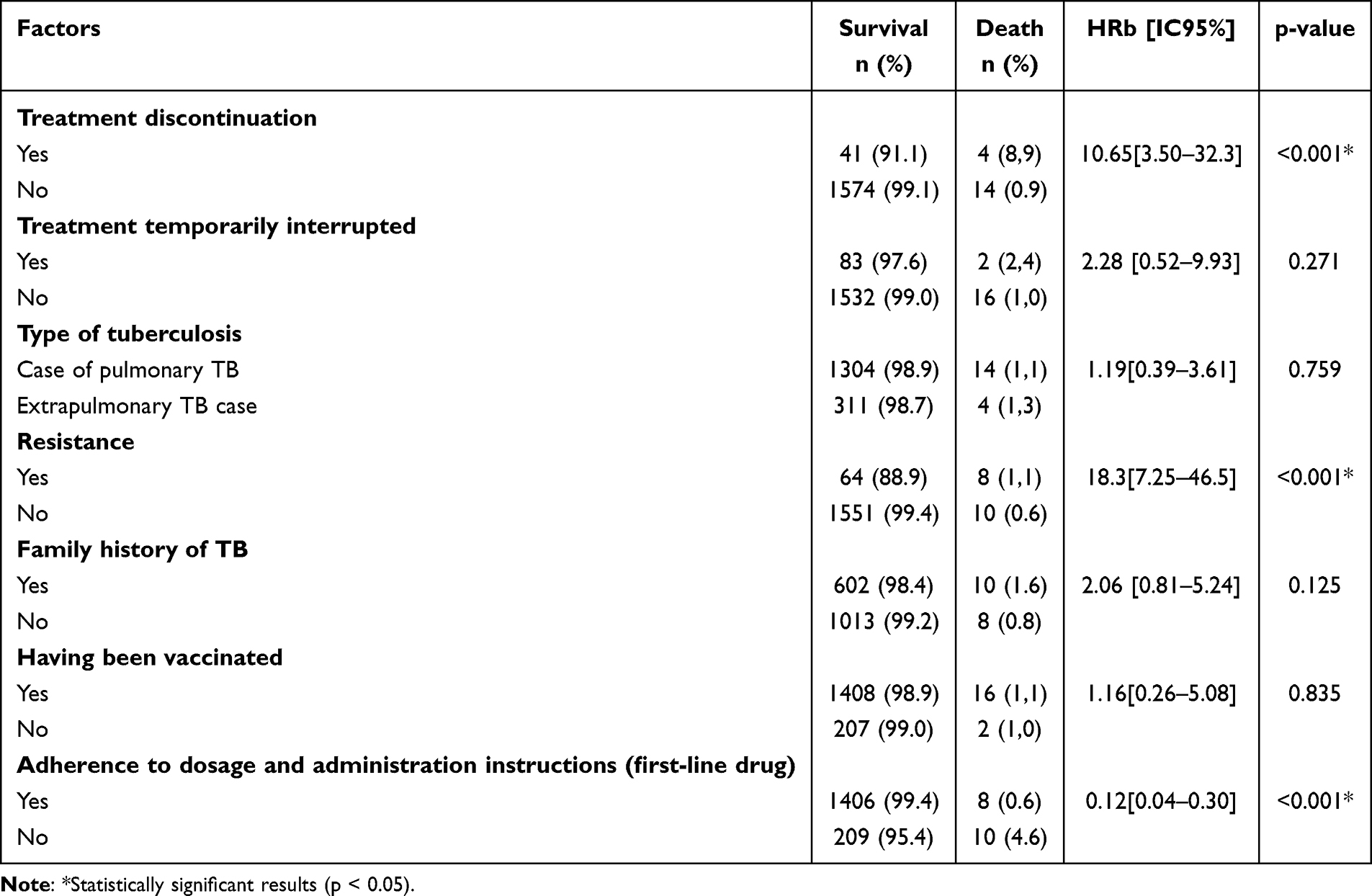 |
Table 8 Factors Related to Patient Care and Survival |
 |
Figure 5 Kaplan–Meier survival curves stratified by adherence to prescribed dosage and treatment schedule. |
 |
Figure 6 Kaplan–Meier survival curves stratified by drug resistance status. |
 |
Figure 7 Kaplan–Meier survival curves stratified by treatment abandonment/discontinuation. |
The results in Table 9 show a significant association among prisoners (p < 0.001). Additionally, a trend toward increased risk was observed among alcohol consumers (HR = 2.46 [0.97–6.23], p = 0.058) and smokers (HRb = 2.36 [0.88–6.29], p = 0.085). Figure 8 illustrates survival among tuberculosis patients in prison. Incarcerated patients exhibited reduced survival probability and a higher risk of death compared to non-incarcerated patients.
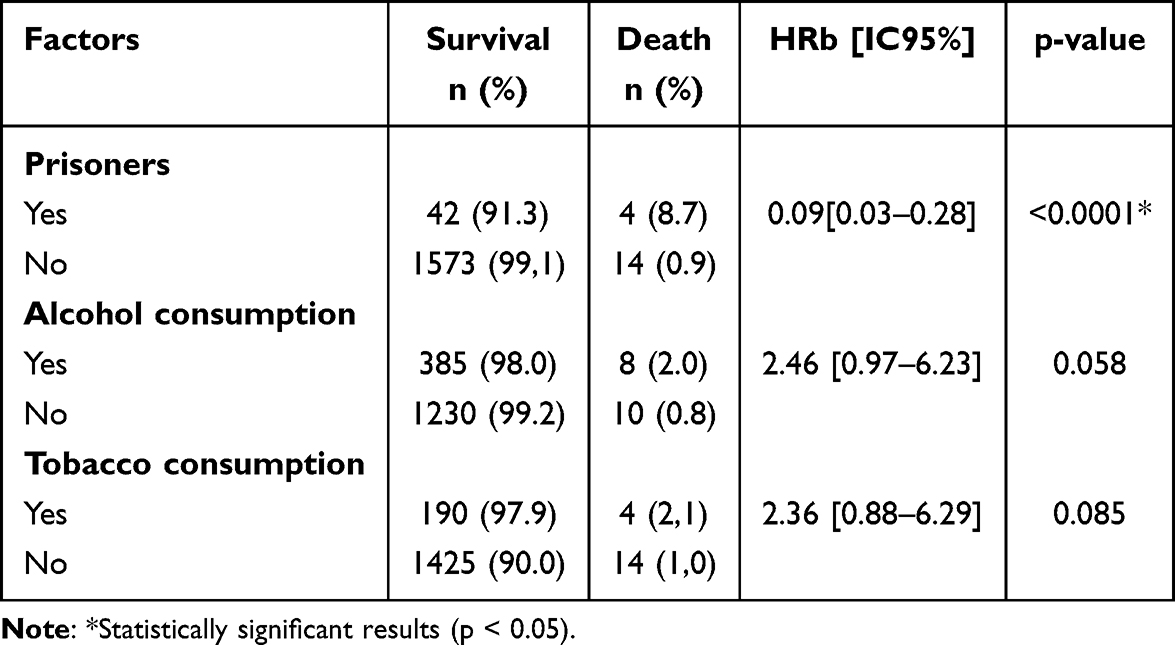 |
Table 9 Environmental Factors and Survival |
 |
Figure 8 Kaplan–Meier survival curves stratified by incarceration status. |
Regarding the survival analysis, the results of the multivariate analysis with the Cox model, adjusted for all variables (Table 10), show that:
- TB comorbidity TB comorbidity was significantly associated with increased mortality with an HRa=4.65 and a p=0.003 and its negative β coefficient (−1.54) indicates a reduction in survival time.
- Treatment resistance is the factor most strongly associated with a reduction in survival time with an HRa = 12.12, p < 0.001.
- Male sex is also significantly associated with reduced survival time. Males are 10 times more likely to be affected than females (HRa = 9.94, p = 0.026 and β coefficient = –2.30).
- Tobacco and alcohol consumption is a significant risk factor associated with reduced survival of patients under treatment with HRa = 3.31 p = 0.046 – and Coefficient β = –1.20). Tobacco and alcohol consumption were analyzed as a combined exposure variable in the multivariable Cox regression model.
 |
Table 10 Predictive Factors of Patient Survival Under TB Treatment Using the Cox Model |
Discussion
The results concerning patient survival show that the overall probability of survival is high, increasing from 0.997 at the first month to 0.988 from the fifth month onward, and remaining stable until the end of follow-up. This trend indicates that deaths are rare and occur mainly at the beginning of the treatment period. The standard error remains low (between 0.0012 and 0.0027), and the 95% confidence intervals are narrow, demonstrating good accuracy of the estimates up to the fifth month.
One of the most striking results is the significant association between male sex and an increased risk of death, with an hazard ratio (HRa) of 9.94 and a p-value of 0.026 indicate that men have a more than 10 times greater risk of death than women in this population. Our findings corroborate previous studies showing that male sex is associated with higher mortality and worse treatment outcomes in tuberculosis patients.11,12 Our results contradict those found by Vignesh Chidambaram, who showed that sex does not influence the follow-up of TB patients (no association was observed in their work), but concluded that men died earlier from multidrug-resistant tuberculosis than women.13,14 This difference could be attributed to various biological, behavioral, or social factors. For example, men may be more likely to neglect preventive healthcare or exhibit more frequent risky behaviors, which could contribute to higher mortality. However, our study did not collect direct data on healthcare-seeking behaviors or risk-taking patterns, so these explanations remain speculative. Furthermore, given the limited number of deaths (n = 18) in our cohort, the Cox proportional hazards model may be subject to overfitting, and the wide confidence intervals observed for some hazard ratios reflect high uncertainty.
The results of this study show a tendency towards a high risk of death among tobacco and alcohol users with an HRa = 3.31, p = 0.046. Alcohol and tobacco are well known for their harmful effects on health, and their consumption could exacerbate other medical conditions, thus increasing the risk of mortality. These results underscore the importance of awareness and intervention programs to reduce alcohol and tobacco consumption, particularly in at-risk populations. Several studies have identified smoking and alcohol use as significant risk factors associated with poorer outcomes and increased mortality in tuberculosis patients. Smoking has been associated with delayed diagnosis and slower sputum conversion among pulmonary TB patients, indicating poorer clinical progression among smokers. Moreover, population-based analyses estimate that tobacco smoking contributes substantially to TB mortality, particularly among men in high-burden countries. These findings support the notion that lifestyle factors such as tobacco and alcohol use may worsen TB prognosis, even though exact survival proportions vary across studies.15–19
Our results highlighted a significant relationship between tuberculosis (TB) patients and those with comorbidities such as HIV and diabetes. TB comorbidity increased the risk of death with a hazard ratio (HRa) of 4.65 and a p-value of 0.003. This means that TB patients were more than four times more likely to die compared to those without this comorbidity. This underscores the importance of integrated and tailored care for these vulnerable populations. Our findings corroborate those of Harvey Attoh Touré et al in their study on risk factors for death among TB patients receiving treatment in five TB treatment centers in northern Côte d’Ivoire;20 they found that HIV comorbidity is a risk factor for TB-related death. The same observation was made by R. Ngakoutou et al in 2023 in their study on risk factors for death from smear-positive pulmonary tuberculosis in patients hospitalized in the pulmonology department of the National Reference University Hospital Center (CHU-RN) in N’Djamena.21 Their work revealed that HIV infection was the highest risk factor for death, with a relative risk of 5.1 among tuberculosis patients. Importantly, treatment resistance was identified as the strongest predictor of reduced survival, with an HRa of 12.12 and a p-value < 0.001. This finding highlights the critical need for early detection and management of drug-resistant TB to improve patient outcomes. Similar observations have been reported in other high-burden settings, where multidrug-resistant tuberculosis significantly increases mortality risk.22
Our results are consistent with several published studies demonstrating the impact of comorbidities on tuberculosis mortality. For example, diabetes mellitus has been associated with significantly increased risk of death during TB treatment in cohorts from Ethiopia and the United States, where TB-diabetes comorbidity raised mortality risk by more than twofold or more. In addition, recent analyses of drug-resistant TB cohorts have shown that HIV co-infection significantly increases both treatment-period and post-treatment mortality. National cohort data have also indicated that comorbid conditions such as HIV, diabetes, alcoholism, and other chronic illnesses are strong predictors of unfavorable outcomes and higher death rates among TB patients. These findings highlight the critical importance of integrated management of TB and comorbid diseases to reduce mortality risk.23,24
One limitation of this study is the small number of deaths (n=18), which may affect the stability of the Cox model estimates and result in wide confidence intervals. Consequently, hazard ratios should be interpreted with caution.Despite this, our results highlight that comorbidities, drug resistance, male sex, and tobacco or alcohol consumption remain key factors influencing survival in TB patients, consistent with previous studies.
Conclusion
The probability of survival among tuberculosis patients under treatment in Mbuji-Mayi remained high, decreasing slightly from 0.997 in the first month to 0.988 from the fifth month onward, and stabilizing thereafter. Most deaths occurred during the early months of therapy, indicating that mortality is relatively rare and concentrated at the beginning of treatment. Patient survival was significantly influenced by TB comorbidity, drug resistance, male sex, and tobacco or alcohol consumption. These findings underscore the importance of early detection, adherence support, and targeted management of comorbidities and behavioral risk factors. Tailored interventions focusing on high-risk populations are essential to improve TB treatment outcomes in this setting.
Acknowledgments
We would like to thank the staff of the Tuberculosis Treatment Centers (CDTs) in Mbuji-Mayi for their support in data collection and access to patient registries. We also acknowledge the local health authorities for their authorization and logistical support. Finally, we thank [Name, if applicable] for their assistance in data entry and management. All individuals mentioned have given their permission to be acknowledged.
Author Contributions
Michel Kabamba Nzaji: Conceptualized and designed the study, supervised the overall project, oversaw data collection, performed data analysis and interpretation, drafted the manuscript, and approved the final version. Moise Kanyiki Katala: Assisted in the study design, participated in data collection, cleaned and managed the data, contributed to data interpretation, and critically reviewed the manuscript. Felicien Ilunga Ilunga: Contributed to the study design, performed statistical analyses, supported interpretation of results, and critically reviewed and revised the manuscript for intellectual content. All authors made a significant contribution to the work reported, whether that is in the conception, study design, execution, acquisition of data, analysis and interpretation, or in all these areas; took part in drafting, revising or critically reviewing the article; gave final approval of the version to be published; have agreed on the journal to which the article has been submitted; and agree to be accountable for all aspects of the work.
Funding
This research received no specific grant from any funding agency in the public, commercial, or not-for-profit sectors.
Disclosure
The authors declare no competing interests in this work.
References
1. Geneva: World Health Organization. Global Tuberculosis Report. Vol t/malaria/.; 2023.
2. Falzon D, Zignol M, Bastard M, Floyd K, Kasaeva T. The impact of the COVID-19 pandemic on the global tuberculosis epidemic. Front Immunol. 2023;14:1–14. doi:10.3389/fimmu.2023.1234785
3. Ta W, Toure D, Mly B, et al. La tuberculose et ses aspects épidémio-cliniques et évolutifs au service de Médecine Interne de l’ Hôpital National Donka (Guinée). 2024;19(5):38–41.
4. Contarino F, Bella F, Di Pietro E, Randazzo C, Contrino ML. The burden of Tuberculosis in a province of a low incidence country: epidemiological differences between Italy-born, regular foreigner and irregular foreigner TB cases. J Prev Med Hyg. 2025;66(1):E67–E74. doi:10.15167/2421-4248/jpmh2025.66.1.3233
5. Ngombe K, Ngatu NR, Mukuku O, et al. Profil Epidemiologiqueet Mortalité due à la Tuberculose dans la Zone de Santé de Kamina, Province du Haut-Lomami, en République Démocratique du Congo. PAMJ - One Heal. 2023:11. doi:10.11604/pamj-oh.2023.11.14.40688.
6. Verstraeten R, Cossa M, Martinez L, Nelson K, Nguenha D, García-Basteiro AL. Epidemiology: the current burden of tuberculosis and its determinants. ERS Monogr. 2023;2023(101):18–33. doi:10.1183/2312508X.10023922
7. Nkisi GB, Yobi DM, Zono BB, Kabututu PZ, Mikobi TM, Bisuta SF. Higher prevalence of pulmonary tuberculosis revealed by Xpert MTB/RIF ultra among drug users in Kinshasa, Democratic Republic of Congo. BMC Infect Dis. 2025;25(1). doi:10.1186/s12879-025-10853-2
8. Lv H, Wang L, Zhang X, et al. Further analysis of tuberculosis in eight high-burden countries based on the global burden of disease study 2021 data. Infect Dis Poverty. 2024;13(1):1–13. doi:10.1186/s40249-024-01247-8
9. Ngouama BB, Djontu JC, Elion Assiana DO, et al. Drug-resistant tuberculosis profiles among patients presenting at the antituberculosis center of Brazzaville, Republic of Congo. Ann Clin Microbiol Antimicrob. 2025;24(1). doi:10.1186/s12941-025-00786-8
10. Kayomo MK, Hasker E, Aloni M, et al. Mbuji-Mayi Central Prison, Democratic Republic of the Congo. Emerg Infect Dis. 2018;24(11):2029–2035. doi:10.3201/eid2411.180769
11. Kubjane M, Cornell M, Osman M, Boulle A, Johnson LF. Drivers of sex differences in the South African adult tuberculosis incidence and mortality trends, 1990–2019. Sci Rep. 2023;13(1):1–11. doi:10.1038/s41598-023-36432-6
12. Pape S, Karki SJ, Heinsohn T, Brandes I, Dierks ML, Lange B. Tuberculosis case fatality is higher in male than female patients in Europe: a systematic review and meta-analysis. Infection. 2024;52(5):1775–1786. doi:10.1007/s15010-024-02206-z
13. Marine BT, Agago MA, Zewde MG. Time to death and its associated factors among tuberculosis patients undergoing directly observed therapy at Butajira General Hospital: using accelerated failure time model. BMC Public Health. 2025;25(1). doi:10.1186/s12889-025-25075-z
14. Skouvig Pedersen O, Butova T, Miasoiedov V, et al. Sex differences in risk factors for unsuccessful tuberculosis treatment outcomes in Eastern Europe from 2020 to 2022: a multi-country retrospective cohort study. Lancet Reg Heal - Eur. 2025;55:101354. doi:10.1016/j.lanepe.2025.101354
15. Wen CP, Chan TC, Chan HT, Tsai MK, Cheng TY, Tsai SP. The reduction of tuberculosis risks by smoking cessation. BMC Infect Dis. 2010;10(156):1–9. doi:10.1186/1471-2334-10-156
16. Amere GA, Nayak P, Salindri AD, Narayan KMV, Magee MJ. Contribution of smoking to tuberculosis incidence and mortality in high-tuberculosis-burden countries. Am J Epidemiol. 2018;187(9):1846–1855. doi:10.1093/aje/kwy081
17. Heshmati B, Omidi S, Mohammadi Y. Impact of alcohol consumption, substance use, and smoking on treatment outcomes in tuberculosis: a systematic review and meta-analysis. Syst Rev. 2025;14(139):1–10. doi:10.1186/s13643-025-02888-y
18. Lin HH, Ezzati M, Murray M. Tobacco smoke, indoor air pollution and tuberculosis: a systematic review and meta-analysis. PLoS Med. 2007;4(1):0173–0189. doi:10.1371/journal.pmed.0040020
19. Weiangkham D, Umnuaypornlert A, Saokaew S, Prommongkol S, Ponmark J. Effect of alcohol consumption on relapse outcomes among tuberculosis patients: a systematic review and meta-analysis. Front Public Health. 2022;10:1–11. doi:10.3389/fpubh.2022.962809
20. Harvey AT, ZA P, NG K, et al. Risk factors associated to the death of tubercular patients in treatment in five tuberculosis care centers in northern Cote d. ivoire. 2017;3(8):77–82.
21. Rangar N, Bolti MA, Abdulaye A, et al. Epidemiological and clinical insights into pulmonary tuberculosis among diabetic patients: a descriptive retrospective study in n’djamena, chad. Asian J Res Infect Dis. 2024;15(7):1–7. doi:10.9734/ajrid/2024/v15i7356
22. Chung-Delgado K, Guillen-Bravo S, Revilla-Montag A, Bernabe-Ortiz A. Mortality among MDR-TB cases: comparison with drug-susceptible tuberculosis and associated factors. PLoS One. 2015;10(3):1–10. doi:10.1371/journal.pone.0119332
23. Workneh MH, Bjune GA, Yimer SA. Diabetes mellitus is associated with increased mortality during tuberculosis treatment: a prospective cohort study among tuberculosis patients in South-Eastern Amahra Region, Ethiopia. Infect Dis Poverty. 2016;5(1):1–10. doi:10.1186/s40249-016-0115-z
24. Nowiński A, Wesołowski S, Korzeniewska-Koseła M. The impact of comorbidities on tuberculosis treatment outcomes in Poland: a national cohort study. Front Public Health. 2023;11:1–12. doi:10.3389/fpubh.2023.1253615
 © 2026 The Author(s). This work is published and licensed by Dove Medical Press Limited. The
full terms of this license are available at https://www.dovepress.com/terms
and incorporate the Creative Commons Attribution
- Non Commercial (unported, 4.0) License.
By accessing the work you hereby accept the Terms. Non-commercial uses of the work are permitted
without any further permission from Dove Medical Press Limited, provided the work is properly
attributed. For permission for commercial use of this work, please see paragraphs 4.2 and 5 of our Terms.
© 2026 The Author(s). This work is published and licensed by Dove Medical Press Limited. The
full terms of this license are available at https://www.dovepress.com/terms
and incorporate the Creative Commons Attribution
- Non Commercial (unported, 4.0) License.
By accessing the work you hereby accept the Terms. Non-commercial uses of the work are permitted
without any further permission from Dove Medical Press Limited, provided the work is properly
attributed. For permission for commercial use of this work, please see paragraphs 4.2 and 5 of our Terms.
Recommended articles

Treatment Outcomes and Risk Factors of Multidrug-Resistant Tuberculosis Patients in Xi’an China, a Retrospective Cohort Study

Ma JB, Zeng LC, Ren F, Dang LY, Luo H, Wu YQ, Yang XJ, Li R, Yang H, Xu Y
Infection and Drug Resistance 2022, 15:4947-4957
Published Date: 29 August 2022
Improving Tuberculosis Treatment Outcomes in Somalia: A Narrative Review of Strategies, Challenges, and Policy Recommendations
Mohamoud JH
Risk Management and Healthcare Policy 2026, 19:595510
Published Date: 17 April 2026