
Back to Journals » Journal of Pain Research » Volume 18
Core Outcome Sets for Pain Disorders: A Systematic Review of Research and Reporting Quality
Authors Cui Y  , Li B, Jiang S, Li Y, Wang S
Received 14 May 2025
Accepted for publication 8 July 2025
Published 28 July 2025 Volume 2025:18 Pages 3745—3756
DOI https://doi.org/10.2147/JPR.S533561
Checked for plagiarism Yes
Review by Single anonymous peer review
Peer reviewer comments 3
Editor who approved publication: Dr Giuliano Lo Bianco
Ying Cui,1– 3,* Bo Li,1– 3,* Shiyi Jiang,4 Yuxian Li,1– 3 Sixuan Wang1– 3
1Department of Acupuncture, First Teaching Hospital of Tianjin University of Traditional Chinese Medicine, Tianjin, People’s Republic of China; 2Department of Acupuncture, National Clinical Research Center for Chinese Medicine Acupuncture and Moxibustion, Tianjin, People’s Republic of China; 3Department of Acupuncture, Tianjin University of Traditional Chinese Medicine, Tianjin, People’s Republic of China; 4Department of Rehabilitation, Wuxi Xishan District Hospital of Traditional Chinese Medicine, Wuxi, Jiangsu, People’s Republic of China
*These authors contributed equally to this work
Correspondence: Bo Li, Department of Acupuncture and Moxibustion, First Teaching Hospital of Tianjin University of Traditional Chinese Medicine, No. 314, Anshan Xi Road, Nankai District, Tianjin, 300072, People’s Republic of China, Email [email protected]
Purpose: To systematically review the current research status of Core Outcome Sets (COS) for pain-related diseases and to evaluate the methodological quality of existing COS.
Methods: Two researchers independently conducted a comprehensive search of both English and Chinese databases. Studies were screened and data were extracted based on predefined inclusion criteria. The methodological quality of the identified COS was assessed using the Core Outcome Set-STAndards for Development (COS-STAD), which includes 11 criteria covering the scope, stakeholder involvement, and the consensus process.
Results: 24 COS were included in the final analysis out of 2150 records initially identified. These COS were primarily developed by organizations or research teams in Europe, Asia, and North America. The included COS covered 22 pain-related disorders, most of which (8 [33%]) were classified as symptoms, signs, or clinical findings according to the ICD-11 classification. One or more of the eight recognized methodologies were used in developing each COS. The most common combination included systematic reviews, Delphi surveys, qualitative interviews, and consensus meetings (6 [25%]). Among key stakeholder groups, clinical experts were most frequently involved (22 [92%]), whereas industry representatives were less engaged (5 [21%]). Only 5 COS (20%) fully met the 11 COS-STAD criteria, indicating room for methodological improvement. The highest scores were for health issue coverage (24/24 points), followed by the involvement of healthcare professionals in reflecting disease experiences (23/24 points). In contrast, the average score for intervention coverage was lowest (15/24), followed by constructing the initial outcome list (18/24). These findings suggest that greater emphasis should be placed on incorporating the perspectives of both professionals and patients during the initial outcome selection process.
Conclusion: The development of Core Outcome Sets should adhere closely to guidelines established by the Core Outcome Measures in Effectiveness Trials (COMET) Initiative. Greater emphasis should be placed on the inclusion and evaluation of interventions. In addition, the perspectives of healthcare professionals and patients should be more thoroughly integrated during the design of the initial outcome list to enhance the relevance and applicability of COS in clinical practice.
Keywords: pain, core outcome set, methodological quality assessment, systematic review
Introduction
Pain is an aversive sensory and emotional experience associated with, or resembling,1 actual or potential tissue damage. It functions both as a symptom and as an independent pathological condition.2
Pain-related disorders are pervasive, including acute traumatic pain, chronic pain, and cancer-related pain.3 Epidemiological data show that chronic pain affects 20% to 30% of the global population and continues to increase annually.4 In China, over 300 million people suffer from chronic pain, with about 20 million new cases each year. These disorders cause significant physical distress and severely reduce quality of life, often leading to psychological issues such as anxiety and depression.5 However, clinical research on pain-related conditions faces many challenges. The subjective nature of pain complicates its assessment and reduces the comparability and reliability of study results. In addition, the multidimensional nature of pain-including intensity, duration, functional impact, and quality of life-has not yet been incorporated into a unified evaluation framework.6 Current assessment methods remain fragmented and inconsistent, hindering the comprehensive evaluation of patient status and treatment efficacy.
In clinical research, outcome measures are essential for evaluating intervention efficacy. Their scientific validity and methodological rigor directly influence study findings’ reliability and clinical relevance.7 However, challenges remain in outcome selection and reporting, including inconsistent definitions, inappropriate choices, measurement variability, and selection bias.8 Studies on the same disease often use different outcome measures,9 and the lack of standardization further limits comparability. To address these issues, the Core Outcome Measures in Effectiveness Trials (COMET) initiative promotes the development of Core Outcome Sets (COS)-standardized outcome sets established through expert consensus and patient input, serving as benchmarks for clinical trials in specific fields.9,10 COS development has become more systematic with the introduction of the Core Outcome Set-Standards for Development (COS-STAD).11 COS-STAD outlines 11 minimum standards across three domains: scope, stakeholder involvement, and consensus process. It provides structured guidance and enhances both the scientific rigor and practical relevance of COS.
In recent years, international research on COS for pain-related disorders has advanced rapidly. For instance, the development of COS for postoperative pain and chronic low back pain has reached a relatively mature stage, with construction methods incorporating the Delphi technique, systematic reviews, and consensus meetings, thereby gradually establishing a standardized development process.12,13 However, for other pain types, such as neuropathic pain and cancer-related pain, research remains in its early stages, and the content and scope of the COS have yet to be fully established. In China, research on pain-related COS began relatively late and is currently focused primarily on developing core outcome systems for chronic pain,14 though the overall number of such studies remains limited.
Although notable progress has been made in the development of COS for pain-related disorders, significant challenges and limitations persist. On one hand, substantial variability exists among research teams regarding COS construction methods, outcome selection, and the application of measurement tools, which undermines the consistency and reliability of research findings.15 On the other hand, the quality of existing COS reports remains inconsistent, with notable deficiencies in the description of scope, methodological detail, consensus-building processes, and result presentation. These shortcomings hinder the broader adoption and clinical application of COS.
Furthermore, cultural and geographical factors also play a critical role in shaping COS development and applicability. Pain perception and reporting are influenced by cultural norms, beliefs, and language, which vary considerably across populations. For example, Sharma et al16 highlighted significant differences in pain-related beliefs and coping strategies among countries, affecting how outcomes are valued and prioritized. In addition, variations in healthcare delivery systems and stakeholder expectations across regions-such as the emphasis on patient autonomy in Western countries versus professional authority in East Asia-can further influence COS content and methodology.17,18
In light of these issues, this study addressed the following research question: What is the current status of COS development for pain-related disorders, and how well do existing COS adhere to recognized methodological standards, such as the COS-STAD? To answer this, we systematically reviewed the literature and evaluated methodological quality using COS-STAD. The findings aim to inform researchers and promote the standardized development and use of COS in pain research and clinical practice.
Methods
Literature Search
PubMed, Medline Ovid, Cochrane, Web of Science, Embase, COMET, CNKI, Wanfang, VIP, and SinoMed were searched by computer, and the core index sets of pain disorders were retrieved. The English search terms are pain, analgesia, ache, core outcome set, COS, outcome measure, and outcome assessment. The Chinese search terms were pain, ache, analgesia, core outcomes, outcome indicators, and Core Outcome Set. The search time limit was until 31 July 2024. The search strategy is available in Appendix 1.
Inclusion Criteria
Focusing on COS for painful diseases, including the COS research process and outcome report.
Exclusion Criteria
(1) literature review and conference abstracts; (2) COS methodology; (3) COS research protocol; (4) repetitively published studies; (5) Unfinished COS.
Literature Screening
The literature was imported into EndNote X9 for plagiarism screening. Two investigators independently screened the title and abstract, and then the full text was screened according to the inclusion and exclusion criteria. If there were disagreements, they were resolved through discussion, or the third investigator was consulted.
Data Extraction
An information extraction table was created using Excel 2019, which included the development organization, first author, year, country, disease, registry, protocol, interventions, methods for selecting outcome measures, stakeholders, core outcome measures, and measurement tools.
Quality Assessment
Two review authors independently assessed the methodological quality of the included studies using COS-STAD. Disagreements were resolved by discussion with a third investigator to reach consensus. The evaluation criteria of COS-STAD include a. Scope specification: including health status, target population, and intervention. b. Stakeholders: including patients with or their representatives of relevant diseases, and health care professionals with experience with relevant diseases. c. Consensus process: The initial list of outcomes considers the views of health care professionals and patients, the scoring process is predefined, the consensus process is predefined, the outcome criteria for inclusion/exclusion/addition are pre-defined, and care is taken to avoid ambiguous language. We assessed COS against all items of the COS-STAD and calculated a score of 1 for reporting (Y) and 0 for unreported (N).
Statistical Analysis
To assess the impact of the COS-STAD guideline introduced in 2017, COS were grouped by publication date (pre-2017 vs post-2017). Total COS-STAD scores were calculated for each study. Data distribution was tested for normality. Normally distributed variables were presented as mean±standard deviation (SD) and compared using an independent samples t-test. Non-normally distributed variables were expressed as median (interquartile range, IQR) and analyzed with the Mann–Whitney U-test. A p-value < 0.05 was considered statistically significant. All analyses were performed using SPSS version 23.0.
Results
According to the search strategy, a total of 2150 documents were retrieved. 755 duplicate documents were eliminated by EndNote X9. 1203 articles were eliminated by reading abstracts, and 165 articles were eliminated by reading the full text, and finally 27 articles were included, of which 24 were Core Outcome Sets and 3 were core outcome measurement tools. Figure 1 shows the details of flow chart.
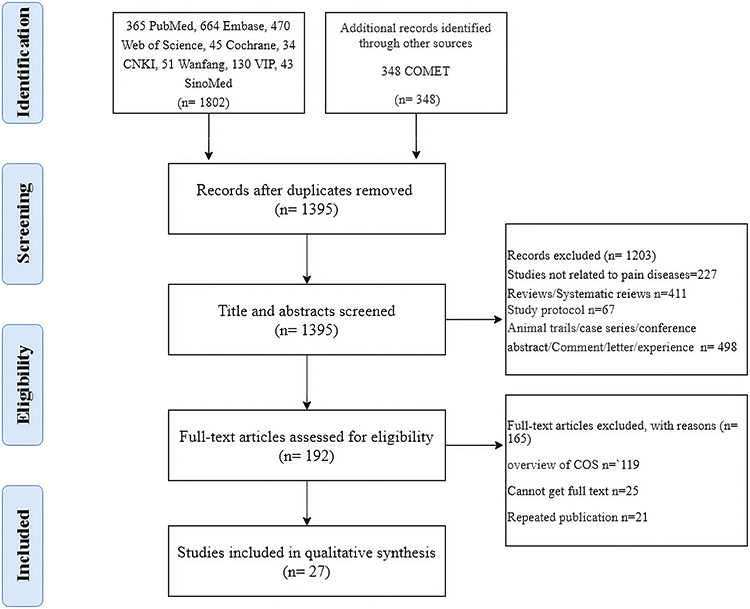 |
Figure 1 Flow chart of literature screening. |
Basic Characteristics of the Included Studies
The study found that the COS of pain disorders was mainly developed by organizations in Europe, Asia, and North America, 5 by the United Kingdom, 4 by China, and 4 by the United States. A total of 22 diseases were involved and classified according to ICD-11, including symptoms, signs, or clinical findings (8 items), musculoskeletal system or connective tissue disorders (3 items), nervous system (3 items), genitourinary system (1 item), circulatory system (1 item), digestive system (1 item), and 7 studies were not classified. Eight studies were registered on the COMET website, one study was registered on both the UKCRN and COMET websites, and only two studies published study protocols. Of the included studies, nine studies reported all/any of the interventions covered by COS, and seven did not report on the interventions covered by COS. Nineteen studies used a combination of methods to form a core set of Outcomes, including systematic reviews (15), Delphi surveys (21), qualitative interviews (10), and consensus meetings (14). In 24 studies, clinicians (22) were the most common participants, followed by patients/carers (20) and researchers (14). The basic characteristics of the included studies are shown in Table 1.
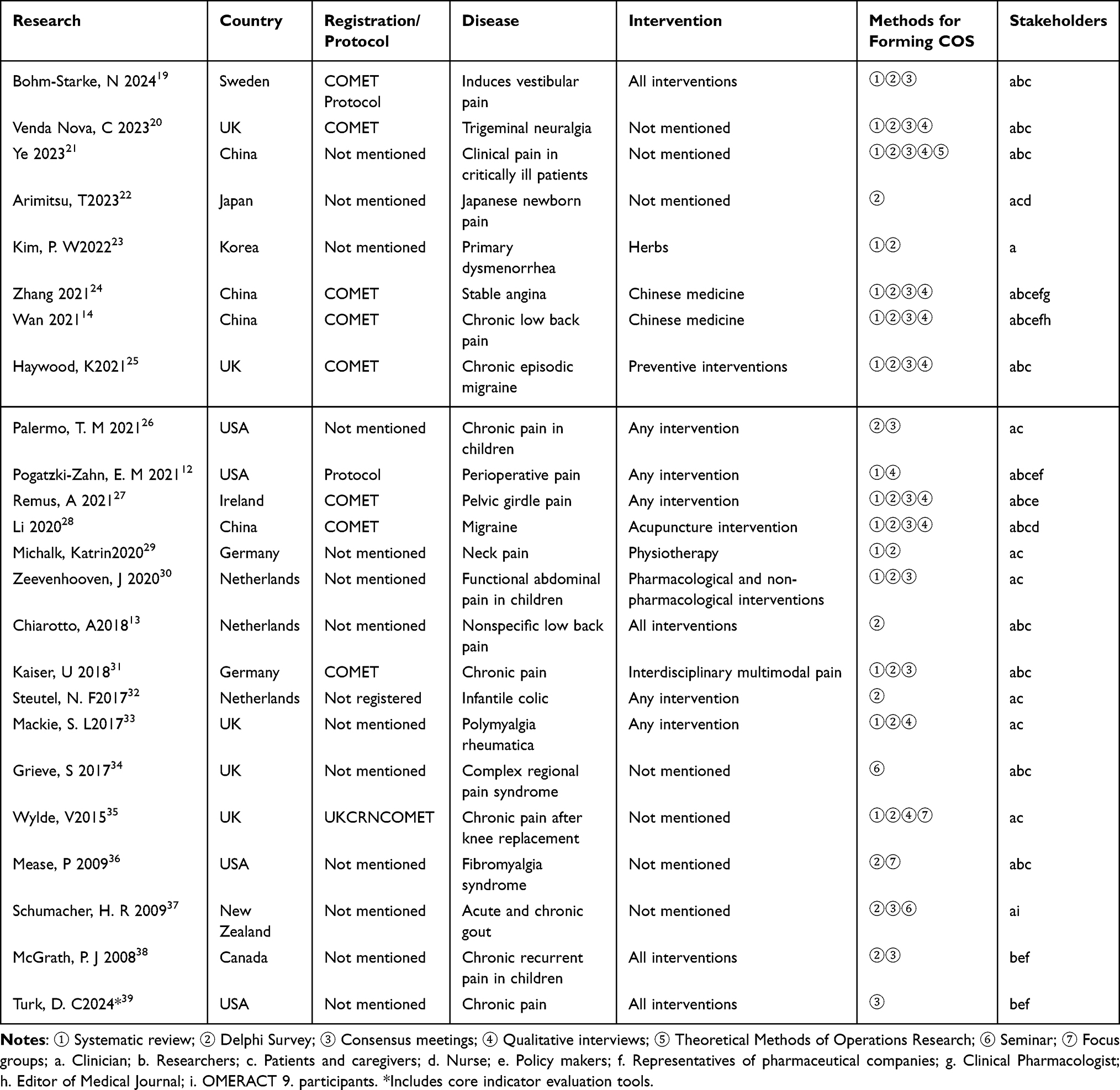 |
Table 1 Basic Characteristics of the Included Studies |
Results of COS Methodological Assessment
Five COS met all 11 criteria, with the highest score of 24/24 for health issues covered by COS, followed by healthcare professionals with patient disease experience (23/24 points); The interventions covered by the COS had the lowest mean score (15/24 points), followed by an initial list of outcomes that considered the views of health care providers and patients (18/24 points). The results of the methodological quality assessment of the COS are shown in Table 2. A heatmap of COS-STAD item reporting is shown in Figure 2.
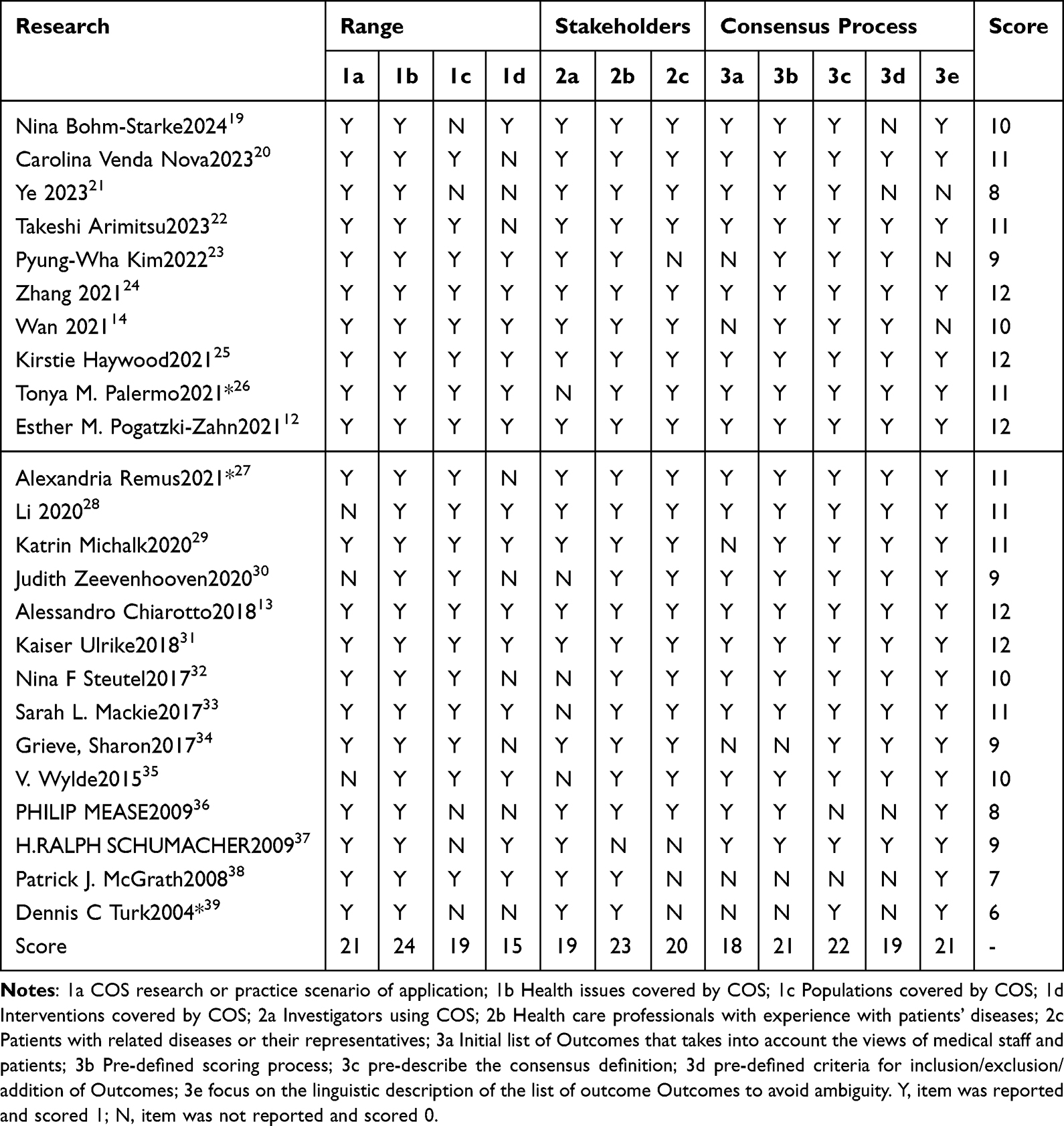 |
Table 2 Results of Methodological Quality Assessment of COS |
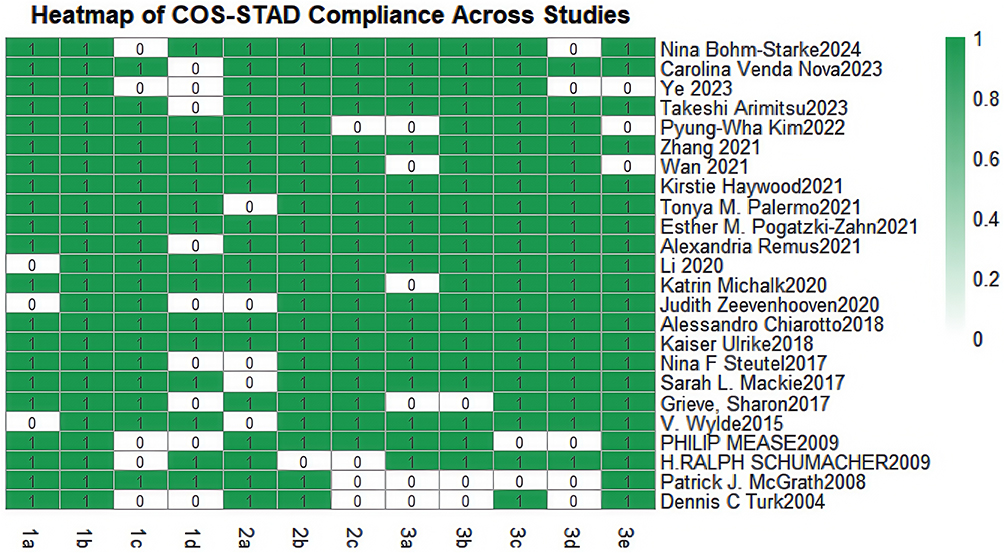 |
Figure 2 Heatmap of COS-STAD Criteria Reporting. Notes: 1a COS research or practice scenario of application; 1b Health issues covered by COS; 1c Populations covered by COS; 1d Interventions covered by COS; 2a Investigators using COS; 2b Health care professionals with experience with patients’ diseases; 2c Patients with related diseases or their representatives; 3a Initial list of Outcomes that takes into account the views of medical staff and patients; 3b Pre-defined scoring process; 3c pre-describe the consensus definition; 3d pre-defined criteria for inclusion/exclusion/addition of Outcomes; 3e focus on the linguistic description of the list of outcome Outcomes to avoid ambiguity. Green indicates reported (1) and white indicates not reported (0). |
Results of Statistical Analysis
Of the 24 COS included in the review, 5 were published before 2017 and 19 after. Before the release of COS-STAD in 2017, the average score of COS-STAD was 8.0, while the average score after 2017 was 10.6. The median total COS-STAD score was significantly higher in the post-2017 group compared to the pre-2017 group (11 [IQR 10–12] vs 8 [IQR 6.75–9.25], p = 0.001, Mann–Whitney U-test), indicating a notable improvement in methodological quality following the release of the COS-STAD recommendations. Results are shown in Figure 3.
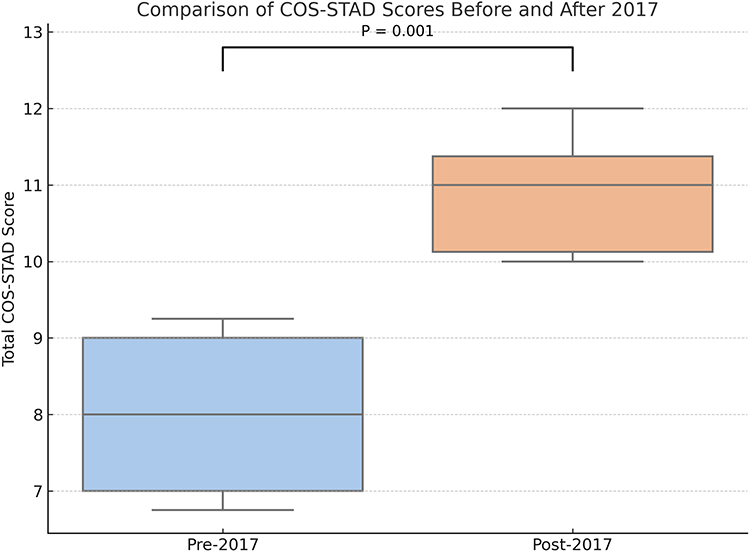 |
Figure 3 Comparison of COS-STAD Scores Before and After 2017. |
Overview of COS in Included Studies
The core outcome measures of the included studies covered 11 domains, including pain (intensity, frequency, duration), quality of life, physical functioning, emotional and psychological functioning, social functioning, safety indicators, endpoints, laboratory indicators, medication use, disease-specific measures, and treatment satisfaction. The five domains with the highest frequency were pain (22 [92%]), quality of life (14 [58%]), physical function (13 [54%]), safety indicators (8 [33%]), emotional and psychological functioning (7 [29%]). The five COSs in the included studies that met all the criteria for quality evaluation are shown in Table 3.
 |
Table 3 Core Outcome Sets Meeting All Criteria |
Discussion
Research Status of COS
In recent years, both the volume and methodological rigor of COS have markedly increased, reflecting growing recognition of the importance of standardized outcome measures in clinical trials.40 This study included 24 COS covering 22 pain-related conditions, mainly developed by teams across Europe, Asia, and North America using methods such as systematic reviews, Delphi surveys, qualitative interviews, and consensus meetings. These approaches have enhanced methodological quality. However, only 20% fully adhered to COS-STAD standards, indicating room for improvement. The highest compliance was observed for the coverage of health conditions (24/24 points), whereas lower scores were noted for the inclusion of interventions (15/24 points) and the initial outcome list (18/24 points), suggesting that COS design has focused more on disease characteristics while overlooking the practicality of interventions and clinical implementation. Furthermore, the participation rate of industry representatives was only 21%, underscoring the need to strengthen the diversity of stakeholder involvement.
Recent studies have also highlighted methodological challenges. Systematic reviews indicate that Delphi studies often suffer from high attrition and inconsistent patient engagement, influenced by survey design, feedback mechanisms, and recruitment methods.41 To address this, some COS developers use mixed-method approaches and structured feedback loops. Rating scale differences (eg, 5-point vs 9-point) also affect outcome prioritization, emphasizing the need for piloting and methodological transparency.42 Although PROs are often included, many COS lack guidance on instrument selection. Guidelines such as COSMIN–COMET and PROMIS are increasingly recommended to ensure validity and comparability.8
Study registration and protocol pre-publication are key to enhancing COS transparency and reproducibility.43 Yet only 2 COS (8%) were pre-published and 9 (37%) registered in the COMET database, revealing significant gaps.44 Registration can improve design robustness, reduce bias, and prevent duplication.9 Moreover, the open dissemination of research plans promotes greater stakeholder engagement,9 thereby increasing the overall impact and practical applicability of COS development and implementation.
Since the release of COS-STAD in 2017, COS quality has improved significantly. Clear standards offer strong methodological guidance, supporting consistency and transparency. Moreover, our findings further indicate that improved adherence to COS-STAD-particularly in stakeholder involvement, transparent reporting, and protocol registration-may contribute to future guideline development and clinical trial design in pain medicine. Enhancing the methodological quality and consistency of outcome reporting can support evidence synthesis, improve trial comparability, and promote more patient-centered research. Therefore, efforts to strengthen COS-STAD compliance should be viewed not only as a methodological refinement but also as a foundation for advancing clinical relevance and practical application. Alongside COS-STAD, the COMET Initiative introduced tools such as COS-STAR45 and COS-STAP46 to support reporting and protocol development. COS-STAR promotes transparent outcome selection and stakeholder reporting, while COS-STAP ensures consistent methodology from design to implementation. Together, these tools have advanced the quality, comparability, and integration of COS across studies.
International teams have played a major role in advancing COS for pain-related conditions. For example, OMERACT–OARSI updated the core outcome set for hip and knee osteoarthritis using a three-round Delphi, establishing a benchmark for musculoskeletal trials.47 The IMI PainCare PROMPT project similarly used a rigorous Delphi process with multi-stakeholder input to develop a perioperative pain COS, consistent with COS-STAD.48 In addition to content standardization, many European research groups have focused on implementation feasibility. A Dutch-led Delphi study established a COS for acute postoperative lumbar spine pain, prioritizing practical domains such as pain intensity, analgesic use, mobilization, length of hospital stay, and safety outcomes.49 Furthermore, a meta-epidemiological review highlighted the low uptake of core domains in back pain trials, calling for COS that are not only methodologically sound but also feasible in practice.50
In contrast, COS development in China began later but has made clear progress. Beyond pain intensity, recent COS increasingly include functional and psychosocial domains, such as anxiety and depression. Traditional therapies, including Chinese medicine, are also being incorporated to better reflect treatment practices.51,52 However, challenges remain, including selecting appropriate instruments for diverse diseases and addressing healthcare disparities across regions.53 With globalization, domestic research increasingly integrates international experience, aligning with global standards while adapting to local contexts, thus strengthening the foundation for scientific evaluation and management of pain-related diseases.54
Recommendations for Future Core Set Creation
In the future, the development of COS should prioritize both methodological rigor and practical utility. This will help improve their scientific validity, scope, and feasibility in clinical settings. First, COS trial registration and protocol publication must be further promoted to enhance transparency and support collaboration. These practices help reduce redundancy,55 ensure efficient resource use, and strengthen the credibility and reproducibility of COS studies. Early disclosure of study protocols also facilitates peer review and stakeholder input, contributing to a more cohesive research environment.56 Second, the development of COS should place greater emphasis on geographic, ethnic, and cultural diversity.53 COS should be tailored to reflect population-specific needs to enhance global relevance and acceptance. International collaboration among researchers, clinicians, and patient groups will be essential to ensure COS are adaptable across healthcare systems and sociocultural contexts. Involving a wide range of stakeholders will improve the relevance, inclusiveness, and real-world uptake of COS.8 With these improvements, future COS initiatives can promote standardization, transparency, and global alignment in outcome evaluation.43 This will ultimately support more effective and patient-centered care.
To improve COS relevance and usability, stakeholders from diverse fields should be actively involved. This includes healthcare professionals, researchers, policymakers, industry representatives, social workers, patients, and caregivers.11 Broad participation ensures that COS reflects varied needs and priorities across healthcare environments. It also helps identify gaps and reduce bias in outcome selection.53 After defining a COS, developers must choose appropriate measurement tools to ensure consistent and accurate outcome assessment. Tools should be selected based on the COMET Health Measurement Tool Selection Criteria and COSMIN standards57 Applying these criteria ensures that the selected measurement tools are valid, reliable, and responsive, thereby improving the usability and scalability of COS in both research and clinical practice. Adaptable instruments enhance consistency and comparability across healthcare settings and populations, supporting more effective evidence-based decision-making. By promoting stakeholder engagement and applying robust measurement standards, future COS development can achieve greater scientific rigor, clinical relevance, and global applicability, ultimately improving the quality and consistency of outcome assessment.58
Furthermore, the implementation of existing COS should be evaluated across healthcare systems and cultural settings. Differences in infrastructure, clinical practice, regulations, and populations may affect how COS are adopted. Systematic evaluations in diverse settings are needed to identify barriers and enablers. Tailored implementation strategies should reflect local healthcare delivery models,45 resource availability, and patient needs. This includes assessing the alignment of COS with national guidelines and clinical protocols. Collaboration with providers, policymakers, and patients is critical to ensure COS are both practical and sustainable in daily practice.
Monitoring and feedback mechanisms are also needed to improve COS use.59 Real-world data can reveal performance gaps,60 inform methodology refinement and improve COS usability. Cross-border and interdisciplinary collaboration will enhance generalizability and adaptability. Addressing these challenges will build a stronger foundation for high-quality and consistent clinical research. In turn, this will advance more standardized, patient-centered, and globally applicable healthcare practices.
Conclusion
The development of COS must follow the COMET Initiative guidelines to ensure methodological rigor. Beyond academic quality, high-quality COS enhances comparability across trials, supports evidence synthesis, informs clinical guidelines, and prioritizes patient-centered outcomes. Future efforts should emphasize early protocol registration, validated measurement tools, and inclusive stakeholder engagement, particularly patients and clinicians. By promoting transparency and standardization, COS can strengthen the global utility of outcome reporting and support more reliable, patient-focused decision-making in both research and healthcare policy.
Data Sharing Statement
All data generated or analyzed during this study are included in this published article and its supplementary information files.
Funding
This work was supported by the project from the Open Project of National Clinical Research Center for Chinese Medicine Acupuncture and Moxibustion (Grant No. NCRCOP2023009) and the Innovation team for Research on Dominant Diseases of Acupuncture and Moxibustion (Grant No. 4042502034).
Disclosure
All authors declare that they have no conflict of interest.
References
1. siriannI J, Ibrahim M, Patwardhan A. Chronic pain syndromes, mechanisms, and current treatments. Prog Mol Biol Transl Sci. 2015;131:565–611. doi:10.1016/bs.pmbts.2015.01.004
2. Raja SN, Carr DB, Cohen M, et al. The revised international association for the study of pain definition of pain: concepts, challenges, and compromises. Pain. 2020;161(9):1976–1982. doi:10.1097/j.pain.0000000000001939
3. Treede RD, Rief W, Barke A, et al. Chronic pain as a symptom or a disease: the IASP Classification of chronic pain for the international classification of diseases (ICD-11). Pain. 2019;160(1):19–27. doi:10.1097/j.pain.0000000000001384
4. Cohen SP, Vase L, Hooten WM. Chronic pain: an update on burden, best practices, and new advances. Lancet. 2021;397(10289):2082–2097. doi:10.1016/S0140-6736(21)00393-7
5. Association P B O T C M. China pain medicine development report (2020). Tsinghua University Press.
6. Pogatzki-Zahn E, Schnabel K, Kaiser U. Patient-reported outcome measures for acute and chronic pain: current knowledge and future directions. Curr Opin Anaesthesiol. 2019;32(5):616–622. doi:10.1097/ACO.0000000000000780
7. Yuzhen Zeng, Shiyao CHEN. Clinical research outcome index selection and sample size estimation. Concord Med J. 2018;9(01):87–92.
8. Prinsen CA, Vohra S, Rose MR, et al. How to select outcome measurement instruments for outcomes included in a “Core Outcome Set” - a practical guideline. Trials. 2016;17(1):449. doi:10.1186/s13063-016-1555-2
9. Gargon E, Gurung B, Medley N, et al. Choosing important health outcomes for comparative effectiveness research: a systematic review. PLoS One. 2014;9(6):e99111. doi:10.1371/journal.pone.0099111
10. Williamson PR, Altman DG, Bagley H, et al. The COMET Handbook: version 1.0. Trials. 2017;18(Suppl 3):280.
11. Kirkham JJ, Davis K, Altman DG, et al. Core outcome set-standards for development: the COS-STAD recommendations. PLoS Med. 2017;14(11):e1002447.
12. Pogatzki-Zahn EM, Liedgens H, Hummelshoj L, et al. Developing consensus on core outcome domains for assessing effectiveness in perioperative pain management: results of the PROMPT/IMI-PainCare Delphi Meeting. Pain. 2021;162(11). doi:10.1097/j.pain.0000000000002254
13. Chiarotto A, Boers M, Deyo RA, et al. Core outcome measurement instruments for clinical trials in nonspecific low back pain. Pain. 2018;159(3):481–495. doi:10.1097/j.pain.0000000000001117
14. Wan Y. Construction of the core outcome index set of clinical research of chronic low back pain in traditional Chinese medicine. 2021.
15. Clarke M, Williamson PR. Core outcome sets and systematic reviews. Syst Rev. 2016;5:11. doi:10.1186/s13643-016-0188-6
16. Sharma S, Ferreira-Valente A, de C. Williams AC, et al. Group differences between countries and between languages in pain-related beliefs, coping, and catastrophizing in chronic pain: a systematic review. Pain Med. 2020;21(9):1847–1862. doi:10.1093/pm/pnz373
17. Rajkumar RP. The influence of cultural and religious factors on cross-national variations in the prevalence of chronic back and neck pain: an analysis of data from the global burden of disease 2019 study. Front Pain Res. 2023;4:1189432. doi:10.3389/fpain.2023.1189432
18. Rogger R, Bello C, Romero CS, et al. Cultural framing and the impact on acute pain and pain services. Curr Pain Headache Rep. 2023;27(9):429–436. doi:10.1007/s11916-023-01125-2
19. Bohm-Starke N, Pukall C, Österberg M, et al. Development of a core outcome set for treatment studies for provoked vestibulodynia. J Sex Med. 2024;21(6):556–565. doi:10.1093/jsxmed/qdae035
20. Venda Nova C, R NIR, Baker SR, et al. An international Delphi survey and consensus meeting to define the core outcome set for trigeminal neuralgia clinical trials. Eur J Pain. 2023;27(1):86–98. doi:10.1002/ejp.2041
21. Quansheng Ye, Shifang LI, Junwei CAI. Construction of the core index set of clinical pain treatment for critically ill patients. Res Practice Health Med. 2023;20(S2):44–47.
22. Arimitsu T, Ozawa M, Gaughwin K. Consensus core outcome rating for the Japanese neonatal pain guidelines. Front Pediatr. 2023;11:1174222. doi:10.3389/fped.2023.1174222
23. W KP, Kim S, Kim DI, et al. Development of the Korean medicine core outcome set for primary dysmenorrhea (COS-PD-KM) for herbal medicine treatment of primary dysmenorrhea in primary clinics. Int J Environ Res Public Health. 2022;19(22). doi:10.3390/ijerph192215321.
24. Mingyan Zhang, Junhua ZHANG, Huizi CAI, Rui FENG, Meijuan LU, Ying TIAN. Development of the core index set of stable angina pectoris clinical trials of traditional Chinese medicine. Acupuncture Herbal Med. 2021;1(1):39–48. doi:10.1097/HM9.0000000000000007
25. Haywood K, Potter R, Froud R, et al. Core outcome set for preventive intervention trials in chronic and episodic migraine (COSMIG): an international, consensus-derived and multistakeholder initiative. BMJ Open. 2021;11(11):e043242. doi:10.1136/bmjopen-2020-043242
26. Palermo TM, Walco GA, Paladhi UR, et al. Core outcome set for pediatric chronic pain clinical trials: results from a Delphi poll and consensus meeting. Pain. 2021;162(10):2539–2547. doi:10.1097/j.pain.0000000000002241
27. Remus A, Smith V, Gutke A, et al. A core outcome set for research and clinical practice in women with pelvic girdle pain: PGP-COS. PLoS One. 2021;16(2):e0247466. doi:10.1371/journal.pone.0247466
28. Xinyi Li, Zhaofeng SHI, Jiayuan HU, Chen H, Yeyin HU, Yusi HUANG. Guihua TIAN Establishment of the core outcome index set of acupuncture treatment for migraine. World Sci Technol - Modernization Traditional Chin Med. 2020;22(01):7–12.
29. Michalk K, Schoettker-Koeniger T, Probst A, et al. Development of a consensus about important outcomes in physiotherapy for neck pain - a delphi study. Physioscience. 2020;16(03):111–120.
30. Zeevenhooven J, Rexwinkel R, Van Berge Henegouwen VWA, et al. A core outcome set for clinical trials in pediatric functional abdominal pain disorders. J Pediatr. 2020;221:115–22.e5. doi:10.1016/j.jpeds.2020.02.032
31. Kaiser U, Kopkow C, Deckert S, et al. Developing a core outcome domain set to assessing effectiveness of interdisciplinary multimodal pain therapy: the VAPAIN consensus statement on core outcome domains. Pain. 2018;159(4):673–683. doi:10.1097/j.pain.0000000000001129
32. Steutel NF, Benninga MA, Langendam MW, et al. Developing a core outcome set for infant colic for primary, secondary and tertiary care settings: a prospective study. BMJ Open. 2017;7(5):e015418. doi:10.1136/bmjopen-2016-015418
33. L MS, Twohig H, M NL, et al. The OMERACT core domain set for outcome measures for clinical trials in polymyalgia rheumatica. J Rheumatol. 2017;44(10):1515–1521. doi:10.3899/jrheum.161109
34. Grieve S, Perez R, Birklein F, et al. Recommendations for a first core outcome measurement set for complex regional pain syndrome clinical studies (COMPACT). Pain. 2017;158(6):1083–1090. doi:10.1097/j.pain.0000000000000866
35. Wylde V, Mackichan F, Bruce J, et al. Assessment of chronic post-surgical pain after knee replacement: development of a core outcome set. Eur J Pain. 2015;19(5):611–620. doi:10.1002/ejp.582
36. Mease P, M AL, H CE, et al. Fibromyalgia syndrome module at OMERACT 9: domain construct. J Rheumatol. 2009;36(10):2318–2329. doi:10.3899/jrheum.090367
37. R SH, Taylor W, Edwards L, et al. Outcome domains for studies of acute and chronic gout. J Rheumatol. 2009;36(10):2342–2345. doi:10.3899/jrheum.090370
38. J MP, A WG, C TD, et al. Core outcome domains and measures for pediatric acute and chronic/recurrent pain clinical trials: pedIMMPACT recommendations. J Pain. 2008;9(9):771–783. doi:10.1016/j.jpain.2008.04.007
39. Turk DC, Dworkin RH. What should be the core outcomes in chronic pain clinical trials? Arthritis Res Ther. 2004;6(4):151–154. doi:10.1186/ar1196
40. Hughes KL, Clarke M, Williamson PR. A systematic review finds core outcome set uptake varies widely across different areas of health. J Clin Epidemiol. 2021;129:114–123. doi:10.1016/j.jclinepi.2020.09.029
41. Barrington H, Young B, Williamson PR. Patient participation in Delphi surveys to develop core outcome sets: systematic review. BMJ Open. 2021;11(9):e051066. doi:10.1136/bmjopen-2021-051066
42. Remus A, Smith V, Wuytack F. Methodology in core outcome set (COS) development: the impact of patient interviews and using a 5-point versus a 9-point Delphi rating scale on core outcome selection in a COS development study. BMC Med Res Methodol. 2021;21(1):10. doi:10.1186/s12874-020-01197-3
43. Chan AW, M TJ, Altman DG, et al. SPIRIT 2013 Statement: defining standard protocol items for clinical trials. Rev Panam Salud Publica. 2015;38(6):506–514.
44. Dwan K, Gamble C, R WP, et al. Systematic review of the empirical evidence of study publication bias and outcome reporting bias - an updated review. PLoS One. 2013;8(7):e66844. doi:10.1371/journal.pone.0066844
45. J KJ, Gorst S, G AD, et al. Core outcome set-standards for reporting: the COS-STAR Statement. PLoS Med. 2016;13(10):e1002148. doi:10.1371/journal.pmed.1002148
46. J KJ, Gorst S, G AD, et al. Core outcome set-standardised protocol items: the COS-STAP statement. Trials. 2019;20(1):116. doi:10.1186/s13063-019-3230-x
47. O ST, A HG, J HD, et al. The OMERACT-OARSI core domain set for measurement in clinical trials of hip and/or knee osteoarthritis. J Rheumatol. 2019;46(8):981–989. doi:10.3899/jrheum.181194
48. M P-ZE, De Lucia S, Weinmann C, et al. A core outcome set of measurement instruments for assessing effectiveness and efficacy of perioperative pain management: results of the international IMI-PainCare PROMPT Delphi consensus process. Br J Anaesth. 2025;134(5):1460–1473. doi:10.1016/j.bja.2025.01.029
49. H VDWI, P VKC, E FMG, et al. Development of a core outcome set of domains to evaluate acute pain treatment after lumbar spine surgery: a modified delphi study. Eur J Pain. 2025;29(2):e4784. doi:10.1002/ejp.4784
50. Innocenti T, Salvioli S, Logullo P, et al. The uptake of the core outcome set for non-specific low back pain clinical trials is poor: a meta-epidemiological study of trial registrations. J Pain. 2024;25(1):31–38. doi:10.1016/j.jpain.2023.08.006
51. Xingying QIU, Qi TANG, Wencong CAO, Bingqing LIU, Zehuai WEN. Geng LI Literature quality evaluation of the research on the core outcome index set related to traditional Chinese medicine. Chinese J of Evidence-Based Med. 2024;24(02):192–201.
52. Dongmei Xing, Zhibin LIU, Chunxiao LI, Zhang J, Mingjun ZHU. Quality evaluation of the core index set report of traditional Chinese medicine. Chin J Trad Chin Med. 2024;39(01):407–409.
53. Boers M, R KJ, Gossec L, et al. How to choose core outcome measurement sets for clinical trials: OMERACT 11 approves filter 2.0. J Rheumatol. 2014;41(5):1025–1030. doi:10.3899/jrheum.131314
54. Bova G, Domenichiello A, E LJ, et al. Developing consensus on core outcome sets of domains for acute, the transition from acute to chronic, recurrent/episodic, and chronic pain: results of the INTEGRATE-pain Delphi process. EClinicalMed. 2023;66:102340. doi:10.1016/j.eclinm.2023.102340
55. Chalmers I, Glasziou P. Avoidable waste in the production and reporting of research evidence. Lancet. 2009;374(9683):86–89. doi:10.1016/S0140-6736(09)60329-9
56. Ioannidis JP. Why most published research findings are false. PLoS Med. 2005;2(8):e124. doi:10.1371/journal.pmed.0020124
57. B TC, C PCA, Chiarotto A, et al. COSMIN methodology for evaluating the content validity of patient-reported outcome measures: a Delphi study. Qual Life Res. 2018;27(5):1159–1170. doi:10.1007/s11136-018-1829-0
58. Mokkink LB, Prinsen CA, Bouter LM, et al. The COnsensus-based Standards for the selection of health Measurement INstruments (COSMIN) and how to select an outcome measurement instrument. Braz J Phys Ther. 2016;20(2):105–113. doi:10.1590/bjpt-rbf.2014.0143
59. Proctor EK, Powell BJ, Mcmillen JC. Implementation strategies: recommendations for specifying and reporting. Implement Sci. 2013;8:139. doi:10.1186/1748-5908-8-139
60. Sherman RE, Anderson SA, Dal Pan GJ, et al. Real-world evidence - what is it and what can it tell us? N Engl J Med. 2016;375(23):2293–2297. doi:10.1056/NEJMsb1609216
 © 2025 The Author(s). This work is published and licensed by Dove Medical Press Limited. The
full terms of this license are available at https://www.dovepress.com/terms
and incorporate the Creative Commons Attribution
- Non Commercial (unported, 4.0) License.
By accessing the work you hereby accept the Terms. Non-commercial uses of the work are permitted
without any further permission from Dove Medical Press Limited, provided the work is properly
attributed. For permission for commercial use of this work, please see paragraphs 4.2 and 5 of our Terms.
© 2025 The Author(s). This work is published and licensed by Dove Medical Press Limited. The
full terms of this license are available at https://www.dovepress.com/terms
and incorporate the Creative Commons Attribution
- Non Commercial (unported, 4.0) License.
By accessing the work you hereby accept the Terms. Non-commercial uses of the work are permitted
without any further permission from Dove Medical Press Limited, provided the work is properly
attributed. For permission for commercial use of this work, please see paragraphs 4.2 and 5 of our Terms.