
Back to Journals » Journal of Pain Research » Volume 18
Comparative Efficacy of Needling and Non-Needling Therapies for Temporomandibular Disorders: A Bayesian Network Meta-Analysis
Authors Ding X  , Liao S , Li T, Qu W, Nie M
Received 6 August 2025
Accepted for publication 12 November 2025
Published 22 November 2025 Volume 2025:18 Pages 6225—6242
DOI https://doi.org/10.2147/JPR.S557353
Checked for plagiarism Yes
Review by Single anonymous peer review
Peer reviewer comments 2
Editor who approved publication: Dr Houman Danesh
Xingji Ding,1,2,* Suping Liao,1,2,* Ting Li,3 Wensheng Qu,4 Min Nie1,2
1State Key Laboratory of Oral & Maxillofacial Reconstruction and Regeneration, Key Laboratory of Oral Biomedicine Ministry of Education, Hubei Key Laboratory of Stomatology, School & Hospital of Stomatology, Wuhan University, Wuhan, People’s Republic of China; 2Department of Cariology and Endodontics, School and Hospital of Stomatology, Wuhan University, Wuhan, People’s Republic of China; 3Department of Pathology, Renmin Hospital of Wuhan University, Wuhan, People’s Republic of China; 4Neurological Department, Tongji Hospital, Tongji Medical College, Huazhong University of Science and Technology, Wuhan, People’s Republic of China
*These authors contributed equally to this work
Correspondence: Wensheng Qu, Neurological Department, Tongji Hospital, Tongji Medical College, Huazhong University of Science and Technology, Wuhan, People’s Republic of China, Tel +86-027-83663337, Email [email protected] Min Nie, State Key Laboratory of Oral & Maxillofacial Reconstruction and Regeneration, Key Laboratory of Oral Biomedicine Ministry of Education, Hubei Key Laboratory of Stomatology, School & Hospital of Stomatology, Wuhan University, Luoyu Road 237, Wuhan, People’s Republic of China, Email [email protected]
Objective: To compare the efficacy of dry needling therapy (DNT), traditional acupuncture (TAT), acupuncture-based combined therapy (ACT), and other interventions for temporomandibular disorders (TMD), focusing on pain relief, functional improvement, and treatment efficacy.
Methods: Following the PICOS framework, we systematically searched PubMed, Embase, Cochrane Library, Web of Science, and CNKI up to July 2025 for randomized controlled trials (RCTs) enrolling adults with TMD. Interventions included seven conservative treatments—TAT, DNT, ACT, cognitive behavioral therapy (CBT), comprehensive physiotherapy (CPT), pharmacologic injection therapy (PIT), and control interventions (CTRL). Primary outcomes were pain intensity (VAS) and functional indices, and secondary outcomes included maximal mouth opening (MMO) and effective rate. Bayesian network meta-analysis was used to estimate comparative efficacy, and risk of bias was assessed using RoB 2.0.
Results: This network meta-analysis included 37 randomized controlled trials with a total of 2581 participants. DNT exhibited the strongest analgesic effect (MD vs control: − 1.61, 95% CI: − 2.81 to − 0.4), outperforming TAT (MD: − 1.56) and pharmacological injection (MD: − 1.41). ACT showed superior multimodal efficacy: significant reductions in PI (MD vs TAT: − 0.13) and CMI, plus the highest treatment efficacy rate (RR: 1.8 vs control). For DI, ACT demonstrated marginal improvement over TAT (MD: − 0.065, CI near zero). No intervention significantly improved MMO. Importantly, the pain reduction achieved by DNT and ACT met the minimal clinically important difference (MCID) threshold for TMD (VAS 0– 1.9), indicating clinically meaningful benefit. Cumulative ranking (SUCRA) confirmed DNT and ACT as top-tier for pain and function, respectively.
Conclusion: DNT and ACT appear to be the most effective interventions for TMD, offering complementary benefits in pain relief and functional recovery. These findings support their potential inclusion in multimodal management strategies, though interpretation should remain cautious given the predominance of Chinese studies and limited long-term and safety data.
Keywords: temporomandibular disorders, dry needling, acupuncture, network meta-analysis, pain management
Introduction
Temporomandibular disorders (TMD) encompass a group of musculoskeletal conditions affecting the temporomandibular joint (TMJ), masticatory muscles, and associated structures. Epidemiological studies indicate a global prevalence of 31% among adults, with women at twice the risk compared to men.1–4 Common symptoms include localized or referred pain, joint dysfunction (eg, clicking, limited mouth opening), and comorbidities like tinnitus or chronic neck pain.1,5 The clinical course of TMD is often characterized by fluctuating symptoms and intermittent remission, driven by complex biomechanical, anatomical, and psychosocial factors.5–9
Current management follows evidence-based guidelines prioritizing conservative therapies, such as physical modalities (eg, ultrasound, acupuncture), oral appliances, pharmacotherapy (NSAIDs, injections), and psychological interventions (eg, cognitive behavioral therapy).10–14 Among these, Traditional Chinese Medicine (TCM) like acupuncture and dry needling therapy (DNT) have gained analgesic and functional benefits in TMD.15–19 Operating on meridian theory, Acupuncture modulates pain via endogenous opioid release, neural crosstalk, and improved microcirculation.15,16 Clinical trials support its efficacy in chronic pain conditions including musculoskeletal pain and migraines.17,20 Dry needling directly targets myofascial trigger points, mechanically disrupting nociceptive signals and reducing local inflammation.18,21 Studies highlight DNT’s rapid analgesic effects, with ~60% of myofascial pain patients achieving ≥50% pain relief post-treatment.19
Previous meta-analyses on acupuncture for TMD have largely focused on pairwise comparisons between single interventions or versus sham controls, yielding fragmented and short-term evidence with limited generalizability. Methodological heterogeneity, small sample sizes, inconsistent diagnostic criteria, and lack of functional outcomes have further constrained their clinical interpretability.22–24 A recent network meta-analysis (NMA)20 compared DNT with manual therapy (MT) in myofascial TMD but was limited by a narrow population scope, short-term pain outcomes, and considerable heterogeneity; while SUCRA rankings suggested MT and DNT as the most effective, the findings were weakened by variable protocols and low evidence certainty. Another NMA25 outside the TMD field explored surgical strategies for odontogenic keratocysts, illustrating the methodological value of NMA but offering no relevance to musculoskeletal orofacial pain. These gaps underscore the need for a comprehensive synthesis comparing needling and non-needling interventions across clinically relevant outcomes.
Therefore, this study aims to conduct a Bayesian network meta-analysis of randomized controlled trials in adults with TMD to compare needling (traditional acupuncture therapy (TAT), DNT) and non-needling modalities (cognitive behavioral therapy (CBT), comprehensive physiotherapy (CPT), pharmacologic injections (PIT), and controls (CTRL)) across pain intensity, functional indices (Disability Index (DI), Pain Index (PI), Clinical Mandibular Index (CMI)), maximal mouth opening (MMO), and total effective rate (TER), with the goal of establishing an evidence-based hierarchy of conservative treatments to inform clinical decision-making.
Materials and Methods
Registration
This NMA was prospectively registered in the International Prospective Register of Systematic Reviews (PROSPERO: CRD420251038898) and conducted in accordance with the Preferred Reporting Items for Systematic Reviews and Meta-Analyses (PRISMA-NMA) guidelines,26,27 as detailed in Supplementary File 1.
Literature Search Strategy
We searched the Cochrane, PubMed, Embase, Web of science, and CNKI databases until July 1, 2025, using a combination of MeSH terms and free-text keywords related to temporomandibular disorders, acupuncture therapy, and dry needling. The full search strategy for the five databases are shown in Supplementary Table1−5.
Eligibility Criteria (PICOS Framework)
The study selection followed the PICOS framework:
Participants (P): Adult patients (≥18 years) with a clinical diagnosis of TMD, established according to DC/TMD or RDC/TMD criteria. Studies using equivalent clinical diagnostic criteria (eg, International Association for the Study of Pain) were considered if definitions were consistent. Trials involving secondary TMD due to trauma, systemic arthritis, fibromyalgia, or post-surgical conditions were excluded.28,29
Interventions (I): Seven conservative treatment modalities for TMD were included: traditional acupuncture (TAT), dry needling therapy (DNT), acupuncture-based combined therapy (ACT), cognitive behavioral therapy (CBT), comprehensive physiotherapy (CPT), pharmacologic injection therapy (PIT), and control interventions (CTRL). The ACT category referred to acupuncture combined with another conservative therapy such as physiotherapy or pharmacologic adjuncts. To minimize potential heterogeneity from combined interventions, sensitivity was conducted.
Comparators (C): Any of the above interventions could serve as a comparator depending on the study design. In the network structure, CBT, CPT, and PIT represented non-needling active comparators, while CTRL (eg, sham, placebo, or routine care) served as the inactive control node. For consistency in ranking, TAT was used as the reference treatment in the network meta-analysis.
Outcomes (O): Primary outcomes included pain intensity (VAS) and functional indices (DI, PI, CMI). Secondary outcomes were MMO and effective rate (dichotomous).
Study design (S): Only randomized controlled trials (RCTs) were included.
Exclusion criteria:
- Non-RCTs (eg, cohort studies, case reports)
- Studies with irrelevant interventions (eg, surgery-only groups)
- Duplicate publications, incomplete data
Study Selection and Data Extraction
Two independent reviewers screened titles/abstracts and extracted data using a standardized form. Discrepancies were resolved by a third reviewer. Extracted data included study characteristics (author, year, country, sample size), patient demographics (gender), intervention details (needling technique), and outcome measures (baseline and post-treatment scores). When key data (eg, mean values or standard deviations) were missing, corresponding authors were contacted to obtain the information. If unavailable, missing values were estimated from reported statistics such as confidence intervals or standard errors using established formulas.
Risk of Bias and Certainty of Evidence Assessment
Risk of bias was assessed using the Cochrane Risk of Bias 2.0 (RoB 2.0) tool across five domains:30 randomization, deviations from intended interventions, missing outcome data, outcome measurement, and selection of reported results. Studies were judged as low risk if they used adequate randomization procedures, appropriately handled deviations from intended interventions (eg, through blinding or statistical adjustment), minimized and properly managed missing data, applied consistent and objective outcome assessment methods, and comprehensively reported all prespecified outcomes. Each study was independently evaluated by two reviewers, and any discrepancies were resolved through discussion; if consensus could not be reached, a third senior reviewer adjudicated the final decision to ensure consistency and methodological rigor.
In addition, the certainty of evidence for each primary outcome was evaluated using the Confidence in Network Meta-Analysis (CINeMA) framework,31,32 which is grounded in the GRADE approach and assesses six domains: within-study bias, reporting bias, indirectness, imprecision, heterogeneity, and incoherence. The CINeMA web application (https://cinema.ispm.unibe.ch/) was used to perform the evaluation and to generate summary ratings of evidence confidence.
Statistical Analysis
A Bayesian NMA was conducted using R 4.4.3 (gemtc and netmeta packages33,34):
- Effect measures:
- Continuous outcomes: Mean difference (MD) with 95% credible intervals (CrI)
- Dichotomous outcomes: Risk ratio (RR) with 95% CrI
- Ranking probabilities: Surface under the cumulative ranking curve (SUCRA) values estimated intervention hierarchies.
- Heterogeneity & inconsistency:
- Assessed via τ2 (tau-squared)
- Node-splitting analysis evaluated direct vs indirect evidence discrepancies
- Funnel plots explored publication bias
- Model fit: Both consistency and inconsistency models were compared using deviance information criterion (DIC).
Result
Data Screening and Results
Our comprehensive search strategy yielded 2,116 records from five major databases: CNKI (516 records), EMBASE (733), PubMed (253), Cochrane Library (176), and Web of science (438). After removing 1,394 duplicate and clearly irrelevant records, we performed title/abstract screening on the remaining 722 publications. This initial screening excluded 625 records that failed to meet our inclusion criteria.
The remaining 97 full-text articles were rigorously evaluated, leading to the exclusion of 50 studies for: Protocol deviations (n=18), incompatible outcome measures (n=32), participant mismatches (n=5), discrepant time points (n=24), and inadequate control groups (n=1). This systematic selection process culminated in the inclusion of 37 RCTs that met the inclusion criteria (see Figure 1).
 |
Figure 1 PRISMA Flow Diagram. |
Characteristics of the Included Studies
The final analysis incorporated 37 RCTs encompassing a total of 2,581 participants. The geographical distribution of these studies was as follows: China, 25 studies (67.6% of total); Brazil, 3 studies; United States, 3 studies; Turkey, 3 studies; and European countries (UK, Italy, Sweden, Finland), 1 study each. Seven distinct therapeutic interventions were evaluated across studies for DNT, TAT, ACT, CBT, CPT, PIT, and CTRL.The comprehensive details regarding specific studies, the number and characteristics of participants, and specific intervention protocols are systematically presented in Table 1.
 |
Table 1 Characteristics of the Included Studies |
Literature Quality Assessment Results
The methodological quality of the 37 included randomized controlled trials was assessed using the Cochrane Risk of Bias 2.0 (RoB 2.0) tool. Most studies showed a low risk of bias across the five evaluated domains, particularly in randomization, outcome measurement, and reporting of results. Overall, 28 studies (75.7%) were rated as low risk in all domains, indicating sound study design and execution. Seven trials (18.9%) had some concerns, mainly related to deviations from intended interventions, while two studies (5.4%) were judged to have a high risk of bias across multiple domains due to weaknesses in randomization and missing outcome data (eg, Min Wu 2021;42 Zhongcheng Xue 202045). Deviations in performance were the most common source of bias, likely reflecting the challenge of blinding participants and personnel in non-pharmacological studies. No evidence of selective reporting bias was found. Taken together, the included RCTs were of generally acceptable to high methodological quality, lending confidence to the reliability of the pooled results in this network meta-analysis (Figure 2 and Supplementary Table 6).
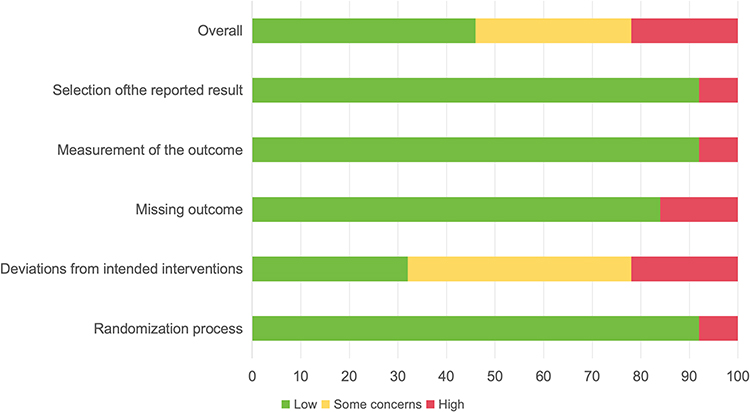 |
Figure 2 Assessments about risk-of-bias of included studies. Green = Low risk, Red = High risk, Yellow = Unknown risk. |
Network Structure of Interventions Across Primary Outcome Measures
The network geometry for four primary outcomes has been presented in Figure 3, (A) Pain Intensity (VAS), (B-D) Friction Indices (DI, PI, CMI). For pain intensity (6 interventions), nodes (proportional to study numbers) formed a dense network with multiple direct comparisons (line thickness indicating comparison frequency), particularly between ACT, DNT and TAT, enabling robust mixed-treatment comparisons. The Friction Indices networks (3–4 interventions) were simpler but maintained direct ACT-TAT comparisons across all subscales. This connectivity supported valid indirect effect estimates through shared comparators. Network consistency was confirmed through node-splitting analysis (p>0.05 for all comparisons).
 |
Figure 3 Network Meta-Analysis for VAS (A), DI (B), PI(C) and CMI (D). Node size corresponds to participant numbers, and connection width indicates the number of studies per comparison. |
Forest Plots and League Table for Head-to-Head Comparisons of Primary Outcome Measures
Pain Intensity (27 Studies, n=1,921)
The network meta-analysis demonstrated significant reductions in pain intensity for both DNT and ACT compared to CTRL. DNT showed the greatest effect (MD −1.6, 95% CrI: −2.8 to −0.4), followed by ACT (MD −1.3, 95% CrI: −2.3 to −0.21). In direct comparisons, DNT was superior to TAT (MD −1.56, −2.69 to −0.38), PIT (MD −1.76, −3.12 to −0.35), and CPT (MD −1.22, −2.28 to −0.46). Similarly, ACT showed advantages over TAT (MD 1.22, 0.61 to 1.8), PIT (MD −1.41, −2.59 to −0.2), and CPT (MD −0.87, −1.53 to −0.21) (Figure 4A and Table 2). When contextualized against the reported minimal clinically important difference (MCID) for pain in TMD (VAS: 0–1.9),71,72 both DNT and ACT achieved clinically meaningful pain relief, meeting the MCID threshold.
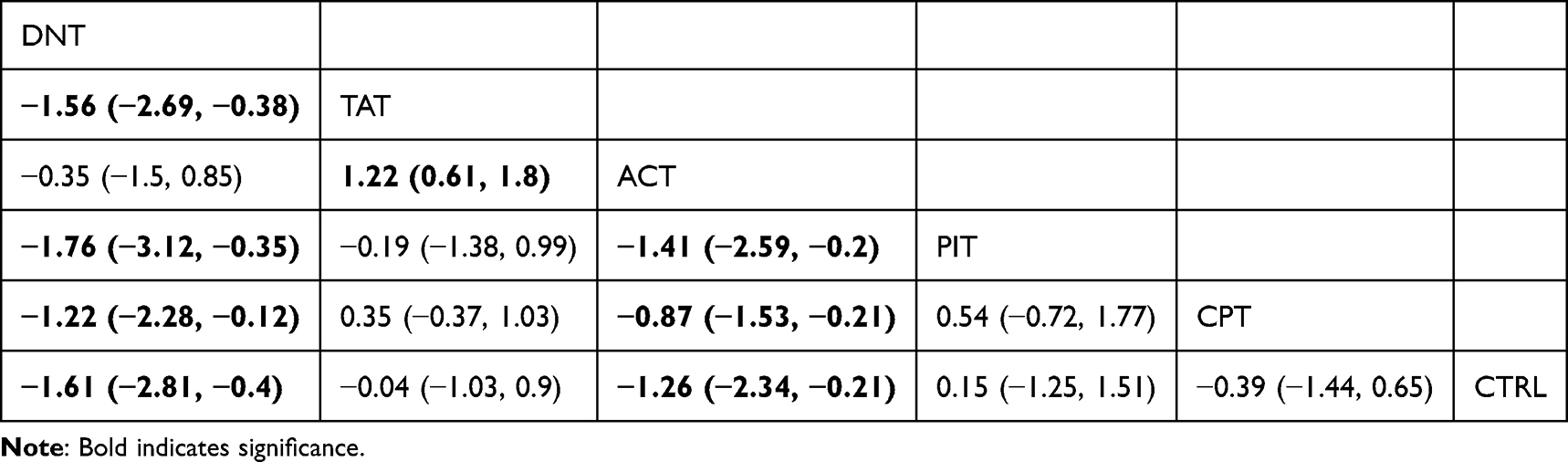 |
Table 2 Comparisons Across Treatments for VAS |
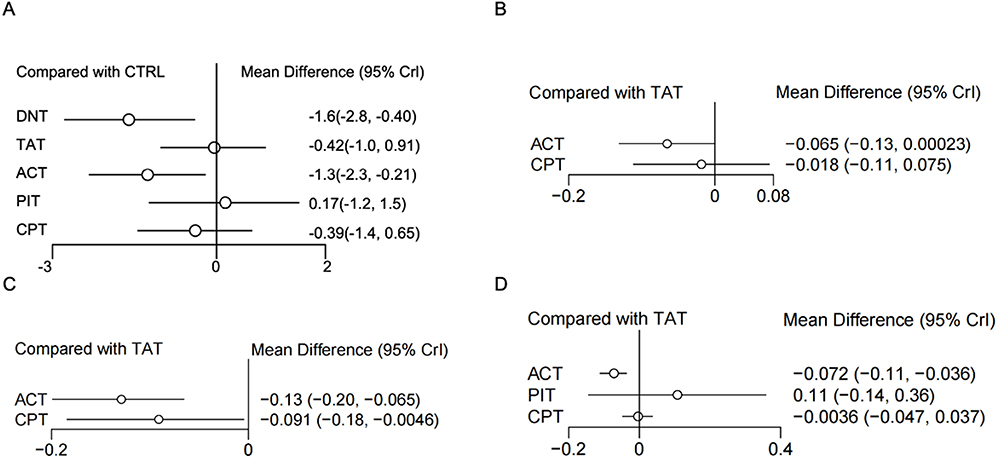 |
Figure 4 Forest plots of primary outcomes.Forest plots of network meta-analysis for (A) VAS (vs CTRL), (B) DI, (C) PI, and (D) CMI (all vs TAT). |
Disability Index (10 Studies, n=833)
For functional improvement measures, ACT showed a trend toward greater improvement than TAT (MD −0.065, 95% CrI: −0.13 to 0.00023), though the confidence interval crossed zero. CPT demonstrated minimal difference from TAT (MD −0.018, 95% CrI: −0.11 to 0.075). Similarly, ACT showed advantages over TAT (MD 0.07, 0 to 0.13) (Figure 4B and Table 3).
 |
Table 3 Comparisons Across Treatments for DI |
Pain Index (10 Studies, n=747)
Both ACT (MD −0.13, 95% CrI: −0.20 to −0.065) and CPT (MD −0.091, 95% CrI: −0.18 to −0.0046) significantly reduced pain scores compared to TAT. The league table analysis confirmed these findings, with ACT showing advantages over TAT (MD 0.13, 0.06 to 0.2) (Figure 4C and Table 4).
 |
Table 4 Comparisons Across Treatments for PI |
Clinical Mandibular Index (13 Studies, n=1,173)
ACT demonstrated statistically significant improvements in mandibular function compared to TAT (MD −0.072, 95% CrI: −0.11 to −0.036). Similarly, ACT showed advantages over TAT (MD 0.06, 0.02 to 0.1) and CPT (MD −0.07, −0.11 to −0.03). No significant differences were observed between PIT, CPT and TAT interventions for this outcome (Figure 4D and Table 5).
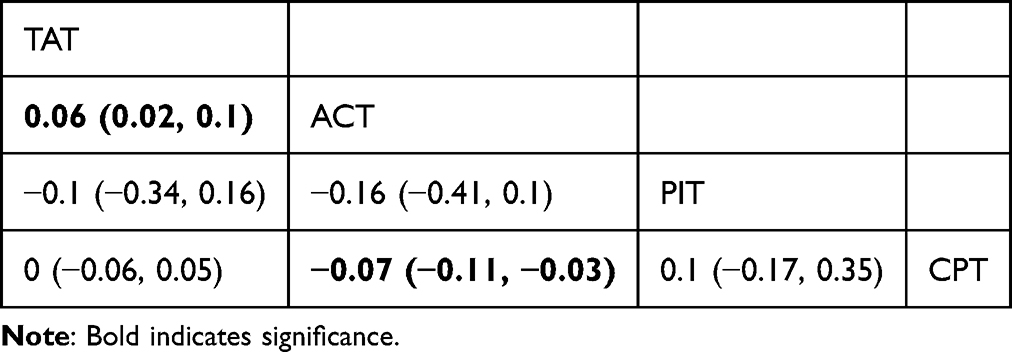 |
Table 5 Comparisons Across Treatments for CMI |
Comprehensive Ranking of SUCRA
The SUCRA analysis revealed distinct efficacy profiles across interventions (Table 6). For pain intensity, DNT demonstrated superior effectiveness (SUCRA=0.94) compared to ACT (0.85) and CPT (0.49). ACT showed the highest efficacy for disability improvement (DI: 0.94 vs TAT: 0.18, CPT: 0.38) and pain reduction (PI: 0.93 vs CPT: 0.56, TAT: 0.01). Regarding mandibular function (CMI), ACT maintained optimal performance (0.97), surpassing CPT (0.45) and TAT (0.40). These rankings were corroborated by cumulative probability and individual rank plots (Figures 5 and 6). The findings position DNT as the optimal intervention for pain control, while ACT emerges as the most comprehensive therapy, demonstrating superior efficacy across functional, pain-related, and clinical mandibular outcomes.
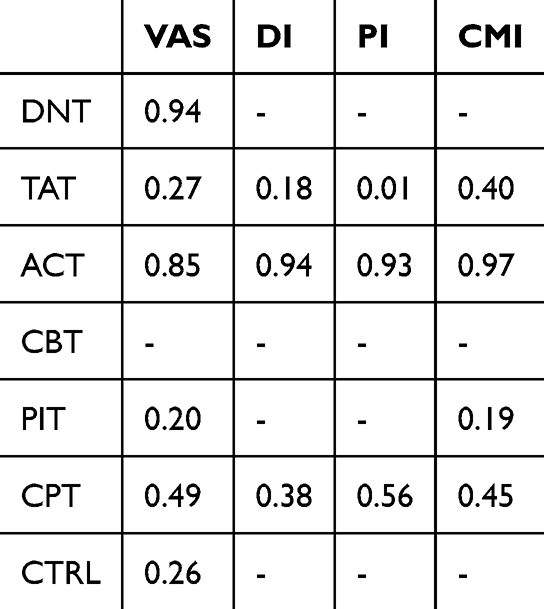 |
Table 6 Comprehensive Ranking of SUCRA of Primary Outcomes |
 |
Figure 5 Cumulative ranking plots of VAS (A), DI (B), PI (C), and CMI (D) for different interventions. |
 |
Figure 6 Individual rank plots of VAS (A), DI (B), PI (C), and CMI (D) for different interventions. |
Analysis of Secondary Outcome Measures
Network Meta-Analysis of Secondary Outcomes
The network meta-analysis evaluated two secondary outcomes: effective rate and MMO. For effective rate, the network comprised 7 interventions (ACT, TAT, DNT, CBT, CPT, CTRL, PIT) with robust direct comparison evidence (Supplementary Figure 1A). In contrast, the MMO network involved fewer interventions (3–4) but maintained sufficient direct comparisons for valid analysis (Supplementary Figure 1B). Both networks demonstrated appropriate connectivity for reliable mixed-treatment comparisons.
Effective Rate (21 Studies, n=1,567)
ACT demonstrated superior treatment effectiveness compared to TAT (MD 1.1, 95% CrI: 1.1–1.2). Relative risk analysis confirmed ACT’s advantages over: TAT (RR 1.15, 95% CrI: 1.08–1.23), PIT (RR 1.34, 95% CrI: 1.12–1.67), and CPT (RR 1.17, 95% CrI: 1.11–1.27). No significant differences were observed between CPT/PIT and TAT. Similarly, ACT showed advantages over TAT (MD 1.15, 1.08 to 1.23), CPT (MD 1.17, 1.08 to 1.27) and PIT (MD 1.34, 1.12 to 1.67) (Supplementary Figures 2A and Supplementary Table 7). SUCRA ranking confirmed ACT’s dominance (0.99) over TAT (0.53), CPT (0.42), and PIT (0.04) (Supplementary Table 9).
Maximal Mouth Opening (17 Studies, n=1,048)
No intervention demonstrated significant improvement in MMO compared to control (Supplementary Figures 2B and Supplementary Table 8). However, SUCRA values indicated ACT (0.71), PIT (0.70), and CBT (0.68) showed relatively better performance than TAT (0.60), DNT (0.33), and CPT (0.25) (Supplementary Table 9). These findings should be interpreted with caution due to the relatively small sample sizes and wide credible intervals across studies, which may limit the precision and robustness of the estimates.
Clinical Implications
ACT emerged as the most effective intervention overall, demonstrating superior treatment effectiveness (SUCRA >0.99) (Table 6 and Supplementary Table 9). Competitive performance in MMO improvement TAT and PIT showed moderate efficacy for MMO, while CPT and DNT exhibited limited effectiveness, particularly for functional improvement.
Safety
Across all included studies, seven trials19,37,38,40,41,54,63 explicitly reported that no adverse events—such as syncope, needle stagnation, or hematoma—occurred in any treatment group. The remaining thirty studies did not provide information on adverse events.
Consistency and Heterogeneity Assessment
We evaluated model consistency by comparing consistency and inconsistency models using the Deviance Information Criterion (DIC). For all outcome measures, the DIC differences between models were minimal (<5), indicating excellent model fit (Supplementary Table 10). Heterogeneity analysis revealed low between-study variance for most outcomes (DI: τ2=0.0066; PI: τ2=0.0049; CMI: τ2=0.0015). While VAS showed moderate heterogeneity (τ2=0.187), this remained acceptable given the network complexity and sample size (Supplementary Table 10). The node-splitting method confirmed agreement between direct and indirect evidence (Supplementary Figures 2−8) Model convergence was validated through: Trace and density plots (Supplementary Figures 9−14) and Gelman-Rubin diagnostics (Supplementary Figures 15−20) All potential scale reduction factors (PSRF) approached 1.0, demonstrating satisfactory convergence. These results collectively confirm that our network meta-analysis model exhibits Robust goodness-of-fit, Strong evidence consistency, Reliable convergence properties and Minimal heterogeneity concerns.
The certainty of evidence was evaluated using the CINeMA framework across all network comparisons. Overall, most outcomes showed moderate to high confidence, indicating that the findings are generally reliable. For VAS and CMI, most comparisons were rated as moderate confidence due to concerns about heterogeneity or imprecision, with only one (CPT vs DNT) downgraded to low confidence for major issues in both domains. For PI, confidence ranged from high (ACT vs TAT) to very low (ACT vs CPT) depending on the number of major concerns, while for DI, most comparisons remained moderate, except ACT vs CPT, which was rated low. Reporting bias and indirectness were consistently judged as low concern (Supplementary Figures 21−28 and Supplementary Table 11−14). Taken together, these results suggest that the evidence supporting the comparative effects of needling-based interventions is broadly credible, though moderate heterogeneity and inconsistency warrant cautious interpretation.
Publication Bias Assessment
Funnel plots were used to assess potential publication bias across outcomes (Supplementary Figures 29−34) Visual inspection revealed generally symmetrical distributions for most outcomes, indicating no major evidence of publication bias. Egger’s tests supported these findings, showing no significant results for VAS (p = 0.64), DI (p = 0.58), effective rate (p = 0.24), and MMO (p = 0.66). However, significant asymmetry was detected for PI (p = 0.02) and CMI (p < 0.01), suggesting possible publication bias in these outcomes. This may lead to an overestimation of the reported functional improvements. Overall, the results indicate a low likelihood of publication bias for most analyses, with moderate concern limited to specific indicators.
Sensitivity Analysis
Sensitivity analyses were conducted to assess the robustness of treatment effects and to explore the influence of different co-interventions within acupuncture-based combined therapy (ACT) (Supplementary Table 15). For dry needling therapy (DNT), the pooled effect remained stable after excluding either acupuncture–physiotherapy (TAT + CPT) or acupuncture–pharmacotherapy (TAT + PIT) studies (MD = –1.61 [–2.81, –0.40] vs –1.59 [–2.79, –0.38] and –1.63 [–2.92, –0.30], respectively), indicating consistent analgesic efficacy. In contrast, for ACT, excluding the single study involving acupuncture plus physiotherapy produced similar results to the main estimate (MD = –1.32 [–2.42, –0.23] vs –1.26 [–2.34, –0.21]), whereas removal of multiple studies combining acupuncture with pharmacologic interventions attenuated the treatment effect and rendered it nonsignificant (MD = –0.70 [–3.51, 1.95]) (Supplementary Table 15). This pattern suggests that the observed benefit of ACT is primarily driven by combinations involving physiotherapy rather than pharmacologic adjuncts, likely due to differing mechanisms of synergy between acupuncture and the respective co-interventions.
Discussion
Primary Findings
This network meta-analysis of 37 randomized controlled trials provides strong evidence that DNT and ACT are effective treatments for temporomandibular disorders. Both interventions consistently outperformed conventional and other non-needling therapies in relieving pain and improving functional outcomes. DNT offered the most reliable benefits for pain reduction, whereas ACT achieved broader gains in mandibular function and overall clinical improvement. In contrast, cognitive and physical therapies alone showed limited efficacy. The consistency of these results across multiple outcomes and sensitivity analyses supports the robustness of the evidence. It underscores DNT and ACT as the most effective treatment strategies identified for TMD management.
Comparison with Previous Evidence
Our findings align partly with and extend the conclusions of previous systematic reviews. Di Francesco et al22 and da Silva Mira et al23 reported that both conventional and laser acupuncture provide short-term pain relief in temporomandibular disorders, though their analyses were limited by small sample sizes, heterogeneity, and a focus on isolated acupuncture modalities. In contrast, the present network meta-analysis incorporated a broader range of interventions—including DNT and ACT—and evaluated multiple clinical outcomes beyond pain, such as mandibular function and overall disability. Our results corroborate earlier evidence that needling-based approaches are effective for pain reduction, while further demonstrating that ACT yields consistent functional benefits not previously quantified. Compared with the network meta-analysis by Al-Moraissi et al24 which identified dry needling among several promising options for myogenous TMD, our study provides updated and more granular evidence integrating recent randomized trials and highlighting ACT as an emerging, multi-modal strategy. Collectively, these findings strengthen the evidence base for needling therapies and clarify their relative therapeutic hierarchy in TMD management.
Underlying Mechanism
Therefore, DNT and ACT demonstrate significant effects in the treatment of TMD, emerging as the most effective interventions in this study. Both treatments outperform other interventions in relieving pain intensity, improving dysfunction, and enhancing the clinical mandibular index, with DNT, in particular, showing a stronger analgesic effect. Dry needling involves the use of solid or hollow subcutaneous needles inserted into the body’s muscle fascia to alleviate pain in local muscles, tendons, fascia, and nerves.73,74 Research shows that DNT can alleviate joint pain and dysfunction caused by TMD by promoting blood flow and releasing muscle tension.75 Additionally, DNT has shown significant effectiveness in treating other musculoskeletal disorders, such as neck and shoulder pain and low back pain.76,77 ACT, by needling local acupoints, can promote the flow of qi and blood circulation, unblock local stagnation of qi and blood, induce functional contraction of the masticatory muscles, and restore normal mandibular movement. Combined with other therapies, it further facilitates oral function recovery and reduces pain symptoms.78
Clinical Implications and Future Directions
This network meta-analysis provides clinically relevant evidence that both DNT and ACT offer meaningful benefits for patients with temporomandibular disorders. The observed improvements in pain intensity for both interventions exceeded the established MCID for TMD, indicating that the effects are not only statistically significant but also clinically perceptible to patients. Beyond pain relief, ACT demonstrated broader functional benefits, suggesting potential utility for patients presenting with complex or multifactorial symptoms. In the broader clinical context, these findings align with recent international guidelines that recommend acupuncture and physical therapy—alone or in combination—as adjunctive options for chronic TMD management. The observed superiority of ACT further supports a multimodal approach that integrates acupuncture with evidence-based rehabilitation strategies, reflecting a pragmatic and patient-centered direction for clinical care.
However, given that most included studies were conducted in China, cultural and practice differences may limit the external validity of these results. Variations in acupuncture techniques, practitioner expertise, and healthcare delivery systems could affect reproducibility in non-Asian populations. Therefore, while DNT and ACT appear promising, their implementation should be interpreted with caution and tailored to local clinical contexts. Future research should prioritize high-quality, multinational randomized controlled trials with standardized outcome definitions, longer follow-up durations, and comprehensive safety reporting. Such studies are essential to confirm long-term efficacy, enhance global applicability, and inform evidence-based updates to international TMD management guidelines.
Limitations
This network meta-analysis has several limitations. Most included trials reported only short-term outcomes, limiting inferences about durability, relapse, and longer-term quality-of-life effects. Generalizability may be constrained because a large proportion of studies were conducted in China; cultural and practice differences could influence treatment response in other settings. Although pain assessment was standardized using VAS across studies, residual clinical heterogeneity remained—particularly regarding TMD subtypes, treatment durations, and intervention protocols (eg, acupuncture points and adjunctive procedures)—which may have contributed to variability in pooled estimates. Some uncertainty also persists around blinding procedures in a subset of trials, which could affect outcome assessment. For outcomes without control data, we used TAT as the network reference to maintain connectivity; while this improves model stability and interpretability, it may bias comparisons toward characteristics specific to TAT. Finally, adverse events were rarely reported across trials, precluding a formal safety analysis; future studies should expand sample sizes and prospectively capture and report harms alongside efficacy outcomes.
Conclusion
DNT demonstrated the most reliable improvement in pain relief, while ACT showed broader benefits in mandibular function and overall clinical outcomes. This study employed a robust Bayesian network meta-analysis approach, and consistent findings were observed across different outcome measures. These methodological strengths enhance the reliability of the results. Although these findings support their therapeutic value, they should be interpreted with caution due to moderate heterogeneity, limited geographic diversity, and incomplete safety reporting among included trials. Further large-scale, multinational studies with standardized outcome measures and long-term follow-up are warranted to confirm these results and strengthen their applicability across diverse clinical settings. Collectively, this study reinforces the potential role of DNT and ACT as evidence-informed options within a multimodal approach to TMD management, aligned with contemporary pain management guidelines.
Data Sharing Statement
All data relevant to the study are included in the article or uploaded as Supplementary Materials.
Acknowledgment
We sincerely acknowledge the invaluable support and academic guidance provided by two research projects. First, we are grateful for the project titled “The Neuro - immune - vascular Interaction Mechanisms of Deqi in Evidence - Based Acupuncture Treatment of Migraine” (Principal Investigator: Wei Wang; Grant No. 82441061). Additionally, we extend our appreciation to the project “Application of Outcome - Based Education (OBE) Combined with Case - Based Collaborative Learning (CBCL) in Clinical Stomatology Practice: A Research Study” (Project No. 2024YB45). Both projects have been instrumental in facilitating the research process and enabling the exploration presented in this paper, providing essential resources and intellectual frameworks that underpinned our investigative efforts.
Author Contributions
All authors made a significant contribution to the work reported, whether that is in the conception, study design, execution, acquisition of data, analysis and interpretation, or in all these areas; took part in drafting, revising or critically reviewing the article; gave final approval of the version to be published; have agreed on the journal to which the article has been submitted; and agree to be accountable for all aspects of the work.
Funding
This study was supported by the National Natural science Foundation of China (82441061).
Disclosure
The authors declare that there is no competing interests in this work.
References
1. Durham J, Newton-John TR, Zakrzewska JM. Temporomandibular disorders. BMJ. 2015;350(9):h1154. doi:10.1136/bmj.h1154
2. Tran C, Ghahreman K, Huppa C, Gallagher JE. Management of temporomandibular disorders: a rapid review of systematic reviews and guidelines. Int J Oral Maxillofac Surg. 2022;51(9):1211–1225. doi:10.1016/j.ijom.2021.11.009
3. Valesan LF, Da-Cas CD, Reus JC, et al. Prevalence of temporomandibular joint disorders: a systematic review and meta-analysis. Clin Oral Investig. 2021;25(2):441–453. doi:10.1007/s00784-020-03710-w
4. Bueno CH, Pereira DD, Pattussi MP, Grossi PK, Grossi ML. Gender differences in temporomandibular disorders in adult populational studies: a systematic review and meta-analysis. J Oral Rehabil. 2018;45(9):720–729. doi:10.1111/joor.12661
5. Justribo-Manion C, Mesa-Jimenez J, Caballero-Ruiz-de-la-Hermosa C, Zuil Escobar JC, Armijo-Olivo S. Is low back pain a risk/prognostic factor for the development and/or progression of temporomandibular disorders? A systematic review with meta-analysis. J Oral Rehabil. 2024;51(2):427–454. doi:10.1111/joor.13601
6. Melis M, Di Giosia M, Colloca L. Ancillary factors in the treatment of orofacial pain: a topical narrative review. J Oral Rehabil. 2019;46(2):200–207. doi:10.1111/joor.12736
7. Haggman-Henrikson B, Liv P, Ilgunas A, et al. Increasing gender differences in the prevalence and chronification of orofacial pain in the population. Pain. 2020;161(8):1768–1775. doi:10.1097/j.pain.0000000000001872
8. Alshahrani AA, Saini RS, Okshah A, et al. The association between genetic factors and temporomandibular disorders: a systematic literature review. Arch Oral Biol. 2024;166:106032. doi:10.1016/j.archoralbio.2024.106032
9. Wan J, Lin J, Zha T, et al. Temporomandibular disorders and mental health: shared etiologies and treatment approaches. J Headache Pain. 2025;26(1):52. doi:10.1186/s10194-025-01985-6
10. Medicine AAoD. Policy Statements. 2024.
11. Lu G, Du R. Temporomandibular joint disorder: an integrated study of the pathophysiology, neural mechanisms, and therapeutic strategies. Arch Oral Biol. 2024;164:106001. doi:10.1016/j.archoralbio.2024.106001
12. Mu J, Furlan AD, Lam WY, Hsu MY, Ning Z, Lao L. Acupuncture for chronic nonspecific low back pain. Cochrane Database Syst Rev. 2020;12(12):CD013814. doi:10.1002/14651858.CD013814
13. Lin JG, Kotha P, Chen YH. Understandings of acupuncture application and mechanisms. Am J Transl Res. 2022;14(3):1469–1481.
14. Dunning J, Butts R, Mourad F, Young I, Flannagan S, Perreault T. Dry needling: a literature review with implications for clinical practice guidelines. Phys Ther Rev. 2014;19(4):252–265. doi:10.1179/108331913X13844245102034
15. Yan Q, Bu H, Xu G, Jia M, Li D. Comparison of the effects of acupuncture methods on the temporomandibular disorder: a network meta-analysis. Oral Dis. 2025;31(1):12–31. doi:10.1111/odi.15131
16. Dadjoo S, Michelogiannakis D, Rossouw PE, Javed F. Potential adjunct therapies for the management of temporomandibular disorders: an evidence-based review. Cranio. 2024;42(6):651–661. doi:10.1080/08869634.2022.2036437
17. Al-Moraissi EA, Goddard G, Christidis N. Are acupuncture and dry needling effective in the management of masticatory muscle pain: a network meta-analysis of randomised clinical trials. J Oral Rehabil. 2023;50(1):87–97. doi:10.1111/joor.13382
18. Wewege MA, Jones MD, Williams SA, Kamper SJ, McAuley JH. Rescaling pain intensity measures for meta-analyses of analgesic medicines for low back pain appears justified: an empirical examination from randomised trials. BMC Med Res Methodol. 2022;22(1):285. doi:10.1186/s12874-022-01763-x
19. Ozmen EE, Unuvar BS. The effects of dry needling and face yoga on pain, depression, function, and sleep quality in patients with temporomandibular dysfunction. Explore J Sci Healing. 2024;20(5). doi:10.1016/j.explore.2024.01.006
20. Menendez-Torre A, Pintado-Zugasti AM, Zaldivar JNC, et al. Effectiveness of deep dry needling versus manual therapy in the treatment of myofascial temporomandibular disorders: a systematic review and network meta-analysis. Chiropr Man Therap. 2023;31(1):46. doi:10.1186/s12998-023-00489-x
21. Vier C, Almeida MB, Neves ML, Santos A, Bracht MA. The effectiveness of dry needling for patients with orofacial pain associated with temporomandibular dysfunction: a systematic review and meta-analysis. Braz J Phys Ther. 2019;23(1):3–11. doi:10.1016/j.bjpt.2018.08.008
22. Di Francesco F, Minervini G, Siurkel Y, Cicciu M, Lanza A. Efficacy of acupuncture and laser acupuncture in temporomandibular disorders: a systematic review and meta-analysis of randomized controlled trials. BMC Oral Health. 2024;24(1):174. doi:10.1186/s12903-023-03806-1
23. da Silva Mira PC, Biagini A, Gomes MG, et al. Laser acupuncture to reduce temporomandibular disorder (TMD) symptoms: systematic review and meta-analysis. Lasers Med Sci. 2024;39(1):66. doi:10.1007/s10103-024-03999-z
24. Al-Moraissi EA, Conti PCR, Alyahya A, Alkebsi K, Elsharkawy A, Christidis N. The hierarchy of different treatments for myogenous temporomandibular disorders: a systematic review and network meta-analysis of randomized clinical trials. Oral Maxillofac Surg. 2022;26(4):519–533. doi:10.1007/s10006-021-01009-y
25. Christidis N, Al-Moraissi EA, Barjandi G, et al. Pharmacological treatments of temporomandibular disorders: a systematic review including a network meta-analysis. Drugs. 2024;84(1):59–81. doi:10.1007/s40265-023-01971-9
26. Page MJ, McKenzie JE, Bossuyt PM, et al. The PRISMA 2020 statement: an updated guideline for reporting systematic reviews. BMJ. 2021;2021:
27. Page MJ, McKenzie JE, Bossuyt PM, et al. The PRISMA 2020 statement: an updated guideline for reporting systematic reviews. PLoS Med. 2021;18(3):e1003583. doi:10.1371/journal.pmed.1003583
28. Schiffman E, Ohrbach R, Truelove E, et al. Diagnostic criteria for temporomandibular disorders (DC/TMD) for Clinical and research applications: recommendations of the international RDC/TMD consortium network* and orofacial pain special interest groupdagger. J Oral Facial Pain Headache. 2014;28(1):6–27. doi:10.11607/jop.1151
29. Dworkin SF, LeResche L. Research diagnostic criteria for temporomandibular disorders: review, criteria, examinations and specifications, critique. J Craniomandib Disord. 1992;6(4):301–355.
30. Sterne JAC, Savovic J, Page MJ, et al. RoB 2: a revised tool for assessing risk of bias in randomised trials. BMJ. 2019;366:l4898. doi:10.1136/bmj.l4898
31. Nikolakopoulou A, Higgins JPT, Papakonstantinou T, et al. CINeMA: an approach for assessing confidence in the results of a network meta-analysis. PLoS Med. 2020;17(4):e1003082. doi:10.1371/journal.pmed.1003082
32. Papakonstantinou T, Nikolakopoulou A, Higgins JPT, Egger M, Salanti G. CINeMA: software for semiautomated assessment of the confidence in the results of network meta-analysis. Campbell Syst Rev. 2020;16(1):e1080. doi:10.1002/cl2.1080
33. Lam Ching W, Li HJ, Guo J, et al. Acupuncture for post-stroke depression: a systematic review and network meta-analysis. BMC Psychiatry. 2023;23(1):314.
34. Lin F, Weng Y, Lin X, Wu D, Su Y, Cai G. Efficacy and safety of treatments for REM sleep behaviour disorder in parkinson’s disease: a systematic review and bayesian network meta-analysis protocol. BMJ Open. 2021;11(12):e047934. doi:10.1136/bmjopen-2020-047934
35. Ferreira CQ, Lima KR, Dias-Peixoto MF, et al. Manual therapy and dry needling improve mobility, pain and reduce fear of covid-19 in temporomandibular disorder patients: randomized controlled trial. Journal of Bodywork and Movement Therapies. 2024;40:620–626. doi:10.1016/j.jbmt.2024.05.015
36. Dingjun Z, Juan C. Clinical observation on treating temporomandibular joint disorders with hegu acupuncture method. Hubei J Tradit Chin Med. 2024;46(10):39–41.
37. Weihua X, Mengwei D, Tianyu X, et al. Clinical Observation on Bilateral Flash Cupping Combined with Acupuncture for Temporomandibular Joint Disorders. Modern J Integrated Tradit Chin Western Med. 2024;33(09):1257–1260.
38. Guijun L, Yu L, Fangpeng W, et al. Clinical observation on joint mobilization combined with acupuncture for temporomandibular joint disorders syndrome. J Changchun Univer Chin Med. 2024;40(08):892–896.
39. Taşkesen F, Cezairli B. The effectiveness of the masseteric nerve block compared with trigger point injections and dry needling in myofascial pain. Cranio. 2023;41(2):96–101. doi:10.1080/08869634.2020.1820686
40. Lei X, Man Y. Clinical Study on Acupuncture Combined with Manual Therapy for Temporomandibular Joint Disorders. J New Chin Med. 2023;55(07):184–188.
41. Wenhui S. Clinical Efficacy of acupuncture at “temporomandibular six points” on temporomandibular joint disorders and its impact on surface electromyography signals. 2022.
42. Min W. Clinical observation on acupuncture for improving dysfunction and anxiety-depression states in temporomandibular joint disorders. 2021.
43. Saichao M, Xiaohui H, Shuheng L, et al. Effects of acupuncture and moxibustion combined with craniosacral therapy on mandibular function and pain intensity in patients with temporomandibular joint disorders. Clin Med Engineer. 2020;27(06):793–794.
44. Wenfang D, Gengbing L, Zhaolian C, et al. Treatment of temporomandibular joint disorders with acupuncture combined with “three-step rehabilitation protocol”: a clinical observation of 30 cases. Fujian J Tradit Chin Med. 2020;51(02):24–26.
45. Zhongcheng X. Clinical observation on the therapeutic efficacy of acupuncture at bilateral xiaguan (ST7). Points Temporomandibular Joint Disord. 2020;2020.
46. Kutuk SG, Ozkan Y, Kutuk M, et al. Comparison of the efficacies of dry needling and botox methods in the treatment of myofascial pain syndrome affecting the temporomandibular joint. J Craniofacial Surg. 2019;30(5):1556–1559. doi:10.1097/SCS.0000000000005473
47. Tang Ying. Clinical trial on acupuncture and moxibustion combined with laser therapy for temporomandibular joint dysfunction syndrome in patients. China J Health Psychol. 2019;31(09):84–86.
48. Chen W, Chunlan X, Hui Z. Acupuncture combined with western medication for temporomandibular joint disorders: a clinical study of 24 cases. Jiangsu J raditional Chin Med. 2019;51(08):66–67.
49. Shugang H, Yang X, Gang O. Therapeutic efficacy of acupuncture combined with exercise therapy for temporomandibular joint disorders in older adults. Practical Geriatrics. 2016;30(11):950–952.
50. Xiaogang D, Yong Q, Jibo F, et al. Acupuncture and moxibustion combined with tuina manipulation for temporomandibular joint disorders: a clinical observation of 60 cases. World Chin Med. 2016;11(05):884–887.
51. Zotelli VL, Grillo CM, Gil ML, et al. Acupuncture effect on pain, mouth opening limitation and on the energy meridians in patients with temporomandibular dysfunction: a randomized controlled trial. J Acupuncture Meridian Studies. 2017;10(5):351–359. doi:10.1016/j.jams.2017.08.005
52. Hong Z, Jiushe K, Baoping Z, et al. Clinical observation on acupuncture combined with sodium hyaluronate injection for temporomandibular joint disorders. J Sichuan Tradit Chin Med. 2016;34(12):199–201.
53. Pianpian J, Zhendi S, Wan X, et al. Evaluation of therapeutic effectiveness of joint mobilization combined with physiotherapy for temporomandibular joint disorders syndrome. Chin J Rehab Med. 2016;31(07):775–778.
54. Yan H, Lihua G, Jing X. Clinical observation on acupuncture combined with herbal cupping for temporomandibular joint disorders. Hebei J Tradit Chin Med World J Acupunc-Moxibus. 2015;25(03):31–34.
55. Grillo CM, Canales GDLT, Wada RS, et al. Could acupuncture be useful in the treatment of temporomandibular dysfunction? J Acupunc Meridian Studies. 2015;8(4):192–199. doi:10.1016/j.jams.2014.12.001
56. Ying C, Biyu X. Clinical study on surrounding acupuncture at xiaguan (ST7) combined with tuina reduction for temporomandibular joint disorders. China Modern Medicine. 2014;21(36):124–126.
57. Diracoglu D, Vural M, Karan A, et al. Effectiveness of dry needling for the treatment of temporomandibular myofascial pain: a double-blind, randomized, placebo controlled study. J Back Musculoskeletal Rehab. 2012;25(4):285–290. doi:10.3233/BMR-2012-0338
58. Shen YF, Younger J, Goddard G, et al. Randomized clinical trial of acupuncture for myofascial pain of the jaw muscles. J Orofacial Pain. 2009;23(4):353–359.
59. Shen YF, Goddard G. The short-term effects of acupuncture on myofascial pain patients after clenching. Pain Practice. 2007;7(3):256–264. doi:10.1111/j.1533-2500.2007.00140.x
60. McMillan AS, Nolan A, Kelly PJ. The efficacy of dry needling and procaine in the treatment of myofascial pain in the jaw muscles. J Orofacial Pain. 1997;11(4):307–314.
61. List T, Helkimo M, Karlsson R. Pressure pain thresholds in patients with craniomandibular disorders before and after treatment with acupuncture and occlusal splint therapy: a controlled clinical study. J Orofacial Pain. 1993;7(3):275–282.
62. Raustia AM, Pohjola RT. Acupuncture compared with stomatognathic treatment for tmj dysfunction.3. Effect of treatment on mobility. J Prosthetic Dentistry. 1986;56(5):616–623. doi:10.1016/0022-3913(86)90430-0
63. Ying Z. Clinical observation on sparrow-peeking moxibustion at xiaguan (ST7) combined with standard acupuncture for cold-dampness obstruction pattern temporomandibular joint disorders. Chin J Modern Med. 2024;2024.
64. Qiufang Z, Xiaohong Y, Juan Y. Therapeutic effects of acupuncture and moxibustion combined with ultrashort wave and medium frequency electrotherapy on temporomandibular joint disorders. China Modern Med. 2020;27(29):126–129.
65. Jing X, Yihua W. Efficacy analysis of acupuncture and moxibustion combined with medium-frequency pulsed current therapy for temporomandibular joint disorders syndrome. Chin Rural Health. 2020;12(24):72.
66. Xiaojian F, Feng X. Clinical observation on acupuncture at tung’s extraordinary points combined with ultrashort wave therapy for temporomandibular joint disorders syndrome. Chin J Rehab. 2020;35(08):418–420.
67. Ning Z. Clinical observation on acupuncture and moxibustion combined with microwave therapy for temporomandibular joint pain. Clinical Research. 2019;27(06):140–141.
68. Tao L, Jidan Z. Study on therapeutic effects of acupuncture and moxibustion combined with microwave therapy for temporomandibular joint pain. J Sichuan Tradit Chin Med. 2018;36(11):207–209.
69. Huixing S, Li M. Clinical observation on combined application of acupuncture and moxibustion with ultrashort wave therapy for temporomandibular joint disorders. Clin J Chin Med. 2017;9(27):102–103.
70. Qingzhi M. Analysis of acupuncture combined with facial-region ultrashort wave therapy for temporomandibular joint disorders syndrome. Electronic J General Stomatol. 2017;4(15):63–64.
71. Calixtre LB, Oliveira AB, Alburquerque-Sendin F, Armijo-Olivo S. What is the minimal important difference of pain intensity, mandibular function, and headache impact in patients with temporomandibular disorders? Clinical significance analysis of a randomized controlled trial. Musculoskelet Sci Pract. 2020;46:102108. doi:10.1016/j.msksp.2020.102108
72. Son J, Kim ES, Lee YJ, Lee NW, Ha IH. Minimum clinically important difference and substantial clinical benefit in patients with chronic temporomandibular disorders. J Oral Rehabil. 2024;51(8):1468–1474. doi:10.1111/joor.13717
73. Travell J, Rinzler SH. Relief of cardiac pain by local block on somatic trigger areas. Proc Soc Exp Biol Med. 1946;63(2):480–482. doi:10.3181/00379727-63-15644
74. Salom-Moreno J, Ayuso-Casado B, Tamaral-Costa B, Sanchez-Mila Z, Fernandez-de-Las-Penas C, Alburquerque-Sendin F. Trigger point dry needling and proprioceptive exercises for the management of chronic ankle instability: a randomized clinical trial. Evid Based Complement Alternat Med. 2015;2015:790209. doi:10.1155/2015/790209
75. Saha P, Choudhary S, Kar S, et al. Dry needling and its application in dentistry: a review. J Pharm Bioallied Sci. 2024;16(Suppl 4):S3031–S3033. doi:10.4103/jpbs.jpbs_799_24
76. Gallego-Sendarrubias GM, Rodriguez-Sanz D, Calvo-Lobo C, Martin JL. Efficacy of dry needling as an adjunct to manual therapy for patients with chronic mechanical neck pain: a randomised clinical trial. Acupunct Med. 2020;38(4):244–254. doi:10.1136/acupmed-2018-011682
77. Lara-Palomo IC, Gil-Martinez E, Antequera-Soler E, Castro-Sanchez AM, Fernandez-Sanchez M, Garcia-Lopez H. Electrical dry needling versus conventional physiotherapy in the treatment of active and latent myofascial trigger points in patients with nonspecific chronic low back pain. Trials. 2022;23(1):238. doi:10.1186/s13063-022-06179-y
78. Al-Moraissi EA, Alradom J, Aladashi O, Goddard G, Christidis N. Needling therapies in the management of myofascial pain of the masticatory muscles: a network meta-analysis of randomised clinical trials. J Oral Rehabil. 2020;47(7):910–922. doi:10.1111/joor.12960
 © 2025 The Author(s). This work is published and licensed by Dove Medical Press Limited. The
full terms of this license are available at https://www.dovepress.com/terms
and incorporate the Creative Commons Attribution
- Non Commercial (unported, 4.0) License.
By accessing the work you hereby accept the Terms. Non-commercial uses of the work are permitted
without any further permission from Dove Medical Press Limited, provided the work is properly
attributed. For permission for commercial use of this work, please see paragraphs 4.2 and 5 of our Terms.
© 2025 The Author(s). This work is published and licensed by Dove Medical Press Limited. The
full terms of this license are available at https://www.dovepress.com/terms
and incorporate the Creative Commons Attribution
- Non Commercial (unported, 4.0) License.
By accessing the work you hereby accept the Terms. Non-commercial uses of the work are permitted
without any further permission from Dove Medical Press Limited, provided the work is properly
attributed. For permission for commercial use of this work, please see paragraphs 4.2 and 5 of our Terms.