
Back to Journals » Journal of Inflammation Research » Volume 19
Bibliometric Insights into Aging and Immune Function in Prostate Cancer: Focus on Chronic Inflammation
Authors Lai S  , Lin C, Li L, Qiu W, Zhang J, Guo T
Received 29 October 2025
Accepted for publication 5 February 2026
Published 20 February 2026 Volume 2026:19 575832
DOI https://doi.org/10.2147/JIR.S575832
Checked for plagiarism Yes
Review by Single anonymous peer review
Peer reviewer comments 2
Editor who approved publication: Dr Felix Marsh-Wakefield
Shaohong Lai,1,* Chongsen Lin,2,* Lujing Li,3 Wenhan Qiu,1 Junfu Zhang,1 Tie Guo4
1Department of Urology, Kidney and Urology Center, the Seventh Affiliated Hospital, Sun Yat-Sen University, Shenzhen, People’s Republic of China; 2Huizhou Hospital of Guangzhou University of Chinese Medicine (Huizhou Hospital of Traditional Chinese Medicine), Huizhou, People’s Republic of China; 3Department of Ultrasound, The Seventh Affiliated Hospital, Sun Yat-Sen University, Shenzhen, People’s Republic of China; 4Department of Urology, The Third Hospital of Hebei Medical University, Shijiazhuang, People’s Republic of China
*These authors contributed equally to this work
Correspondence: Tie Guo, Department of Urology, The Third Hospital of Hebei Medical University, No. 139 Ziqiang Road, Qiaoxi District, Shijiazhuang, 050051, People’s Republic of China, Email [email protected]
Background: Prostate cancer (PCa) is a leading malignancy among men worldwide, with its progression strongly influenced by aging-associated changes in immune function and chronic inflammation. Chronic inflammation acts as a critical mechanism linking aging and immune dysfunction to tumor initiation, progression, and resistance to therapy. This bibliometric analysis aims to comprehensively evaluate the research landscape on aging, immune function, and chronic inflammation in PCa, identifying key trends, contributors, and emerging strategies for addressing these challenges.
Methods: A total of 1,556 publications, spanning January 2015 to October 2025, were retrieved from the Web of Science Core Collection (WoSCC). Bibliometric tools, including VOSviewer, CiteSpace, and Bibliometrix, were employed to analyze publication trends, co-authorship networks, institutional collaborations, and keyword co-occurrences. Special focus was placed on senescence-associated secretory phenotype (SASP) factors, inflammatory biomarkers, and immune dysfunction as aging-related drivers of PCa.
Results: Research in this domain has grown significantly over the past two decades, with the United States, China, and Italy emerging as leading contributors. Key themes include the role of SASP factors, oxidative stress, and immune evasion in aging-related PCa progression. Biomarkers such as interleukin-6 (IL-6) and tumor mutational burden (TMB) are increasingly explored for their potential to guide personalized interventions. Emerging therapeutic strategies involve SASP-targeting interventions, immunotherapies like CAR-T cells, and combination approaches to reprogram the immunosuppressive tumor microenvironment.
Conclusion: This bibliometric analysis provides a comprehensive overview of research trends at the intersection of aging, immune function, and chronic inflammation in PCa. Rather than establishing mechanistic causality, the findings highlight chronic inflammation as a central and evolving research focus within the field. The results offer a data-driven framework for understanding current research priorities and may inform future mechanistic and translational studies aimed at improving therapeutic strategies for aging-associated PCa.
Keywords: prostate cancer, aging, immune function, chronic inflammation, cellular senescence, bibliometric analysis
Introduction
PCa is the most prevalent malignancy of the male genitourinary system and the second leading cause of cancer-related deaths among men worldwide.1 With the global population aging, the burden of PCa is anticipated to rise, demanding a deeper understanding of its complex etiology and progression. Among the key factors driving PCa development and therapeutic resistance, aging, chronic inflammation, and immune dysfunction form an intricate interplay that shapes the tumor microenvironment and influences disease outcomes.
Chronic inflammation serves as a pivotal mechanism in cancer biology, facilitating tumor initiation, immune evasion, and progression.2,3 In PCa, inflammatory processes transform the tumor microenvironment, fostering immune suppression and enabling cancer cell survival and proliferation.4,5 Aging compounds these effects through systemic immunological changes, such as immunosenescence, a gradual decline in immune competence and the accumulation of senescent cells.6 These senescent cells release pro-inflammatory mediators, collectively referred to as the SASP, which amplifies chronic inflammation, impairs immune responses, and promotes tumorigenesis.7 These interconnected mechanisms underscore the critical role of chronic inflammation as a bridge linking aging and immune dysfunction in PCa progression.
Despite the transformative impact of immune checkpoint inhibitors (ICIs) in treating cancers like melanoma and non-small cell lung cancer, their clinical success in PCa has been limited.8,9 PCa is classified as an immunologically “cold” tumor, characterized by low immune cell infiltration and reduced immunogenicity, which hinder the effectiveness of ICIs. The immunosuppressive tumor microenvironment, exacerbated by aging-related immune alterations, presents substantial barriers to effective immunotherapy.10,11 Understanding how chronic inflammation interacts with immune dysfunction and aging is essential for addressing these therapeutic challenges and improving outcomes for PCa patients.
Bibliometric analysis offers a robust framework for systematically exploring the research landscape on these interconnected factors.12 By examining publication trends, collaboration networks, and influential contributions, this approach can uncover critical gaps, highlight emerging opportunities, and inform future research directions. Such an analysis is particularly valuable for studying the intersection of chronic inflammation, immune function, and aging in PCa, providing insights into their collective impact on disease progression and therapeutic resistance.
This study employs bibliometric methods to comprehensively analyze research trends on chronic inflammation, immune function, and aging in PCa from January 2015 to October 2025. Using advanced tools like VOSviewer, CiteSpace, and the R package “bibliometrix,” the analysis aims to identify key contributors, map global collaborations, and spotlight emerging themes. Focus areas include the role of senescence and SASP, biomarker discovery, and innovative therapeutic strategies targeting the triad of aging, immune dysfunction, and chronic inflammation. By providing a nuanced understanding of these interconnected factors, this study seeks to inform future translational efforts and lay the groundwork for more effective and personalized approaches to PCa management.
Methods
Search Strategy
A comprehensive literature search was performed using the WoSCC database (https://www.webofscience.com/wos/woscc/basic-search) to identify relevant publications on the interconnections between aging, PCa, and immune function. The search covered literature published from 2015 to 2025. The database search was conducted on 9 December 2025 (single-day search) to ensure consistency and to avoid temporal variations in indexing and citation counts: TS = ((“prostate cancer” OR “prostate neoplasms” OR “prostate carcinoma” OR “androgen-resistant prostate cancer” OR “hormone-sensitive prostate cancer”) AND (“immune function” OR “immune response” OR “immune regulation” OR “immunotherapy” OR “immune checkpoint” OR “checkpoint inhibitor” OR “tumor microenvironment” OR “tumour microenvironment” OR “tumor-infiltrating lymphocyte” OR “T cell” OR “T-cell” OR “lymphocyte” OR “regulatory T cell” OR “natural killer cell” OR “NK cell” OR “inflammatory response” OR “chronic inflammation” OR “inflammation”) AND (“aging” OR “age-related” OR “senescence” OR “immunosenescence” OR “older adults” OR “elderly” OR “aging population”)).
To ensure the quality and relevance of the search results, several filters were applied. Only peer-reviewed “articles” and “reviews” written in English were included. Non-research document types such as conference abstracts, editorial materials, letters, and non-English publications were excluded.
To further ensure the quality of the dataset, a manual screening process was conducted.Two independent reviewers independently screened the titles and abstracts, followed by full-text assessment when necessary. Studies were excluded if they: (1) Focused on PCa but did not examine immune or aging mechanisms; (2) Investigated immune aging in contexts unrelated to prostate cancer; (3) Discussed PCa therapeutics without meaningful connection to aging or immune modulation. Any disagreements between the two primary reviewers were resolved through discussion, and when consensus could not be reached, a third senior reviewer adjudicated the final decision.
For bibliometric analysis, the study utilized several advanced software tools. VOSviewer (version 1.6.19) was employed to construct and visualize bibliometric networks, revealing patterns in co-authorship, co-citation, and keyword co-occurrence.13 These visualizations provided insights into the contributions of countries, institutions, journals, authors, and major research themes. In the bibliometric maps, nodes represented entities like institutions or keywords, with their size proportional to frequency, while lines between nodes indicated collaboration or co-citation relationships.
CiteSpace (version 6.2.R4) was used to complement the analysis by identifying trends and significant developments in the literature.14 This software generated dual-map overlays to illustrate connections between citing and cited journals, offering insights into cross-disciplinary dissemination. It also identified citation bursts, revealing critical references that had gained prominence over time. Although clustering and burst detection in CiteSpace were algorithmically generated, major clusters were further manually cross-validated by reviewing representative high-impact and high-burst publications within each cluster. Cluster interpretations were refined based on consistency between algorithm-derived keywords and the core research focus of the cited studies.
The open-source R package Bibliometrix (version 4.3.1) (https://www.bibliometrix.org) further enriched the analysis by enabling thematic evolution studies and global collaboration network visualizations.13 Additionally, quantitative trends in publication output were analyzed and visualized using Microsoft Excel, providing a clear representation of the annual growth in research activity. Together, these tools allowed for a comprehensive and systematic examination of the field, uncovering key trends and facilitating the identification of research priorities.
Results
Quantitative Analysis of Publications
Based on our search criteria, a total of 1556 studies were identified in the WoSCC as shown in Figure 1, after excluding meeting abstracts, editorial materials, book chapters, early access articles, letters, proceedings papers, news items, and retracted publications. Subsequently, manual screening was performed to ensure relevance to the research focus on aging, PCa, and immune function. In the end, 1399 studies focused on the connections between aging, PCa, and immune function, including 1207 articles and 192 reviews. As shown in Figure 2, the number of publications on this topic has shown a generally increasing trend over the past decade. In 2015, there were 83 publications, which steadily increased to 97 publications by 2017. However, there was a temporary drop in 2018, with 78 publications. Despite this, the field saw a rapid recovery, with 128 publications in 2020 and a slight dip to 117 publications in 2021.
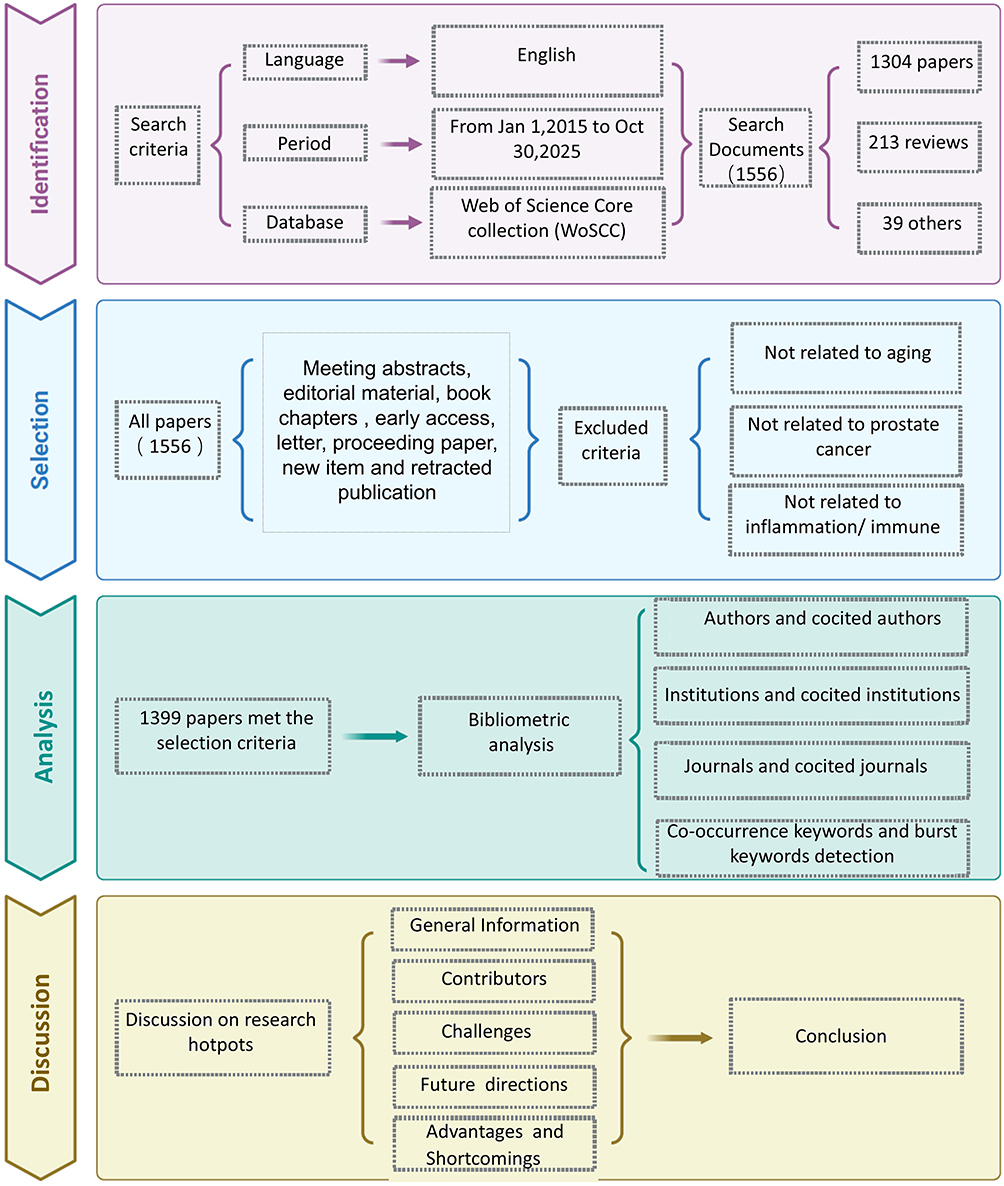 |
Figure 1 Screening flowchart of publications included in the bibliometric analysis. |
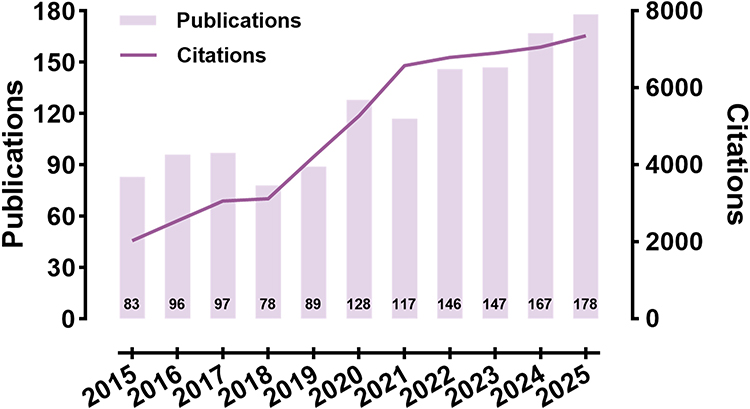 |
Figure 2 Annual research output and citations on aging and immune function in prostate cancer from 2015 to 2025. |
From 2022 to 2025, the field experienced substantial growth, with 178 publications in 2025, representing the highest number of publications during the entire period of analysis. This reflects a growing interest and recognition of the critical interactions between aging, immune function, and PCa, fueled by advances in immunotherapy and aging research. The citation trends closely align with this publication growth, showing a gradual and consistent increase over the decade. By 2025, citations reached a peak, illustrating heightened acknowledgment and validation of this field within the scientific community.
Country and Institutional Analysis
The publications analyzed in this study span across 81 countries and 1901 institutions. Among these, the top 10 countries are primarily distributed in Europe (n = 6), as detailed in Supplementary Table 1. The combined number of publications from the top three countries—the United States (n = 435, 31.1%), China (n = 196, 14.0%), and Italy (n = 95, 7.3%)—accounted for more than half of the total publications. These countries represent significant contributions from North America, Asia, and Europe, respectively. As shown in Supplementary Figure 1, the geographical distribution of research illustrates the widespread nature of global research efforts. The chord diagram in Figure 3A provides an in-depth look at inter-country collaboration. The diagram demonstrates the strength of cooperative ties, with the United States at the center of global collaboration, maintaining significant partnerships with countries such as China, Germany, Italy, Japan, and England. Notably, China has also established robust collaborations with Australia, Sweden, and France, signaling its increasing influence in the field. The chord diagram further visualizes these relationships through line thickness, where thicker lines represent closer collaboration. The timeline encoded in the node colors reflects the peak publication periods for each country, with the red circle around the United States indicating its most productive period occurred between 2023 and 2024. Figure 3B visualizes the global collaboration network, further detailing inter-country partnerships in research on aging and immune function in prostate cancer. The network highlights the United States as the central node, emphasizing its role as a leading contributor and collaborator in this field. Other key countries, such as China, Germany, and Italy, also appear as significant nodes, demonstrating the distributed yet interconnected nature of global research efforts.
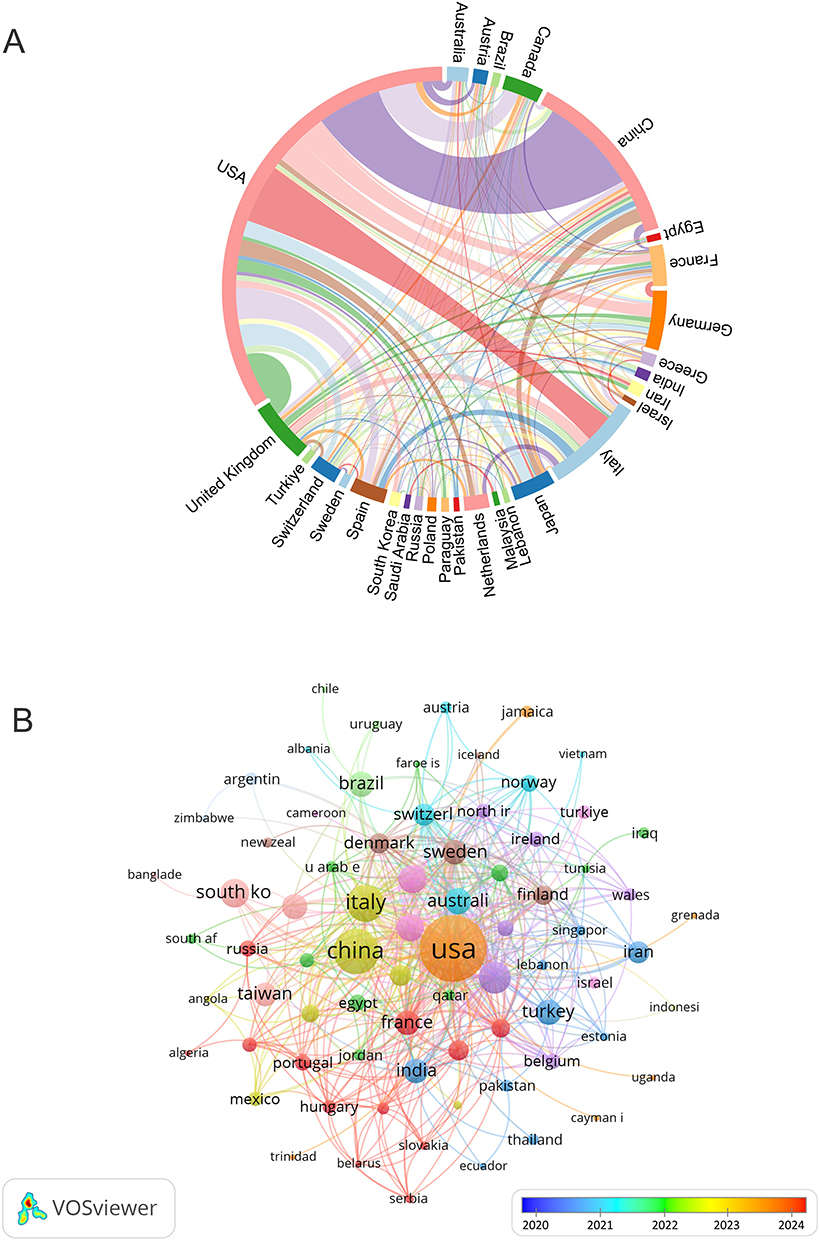 |
Figure 3 (A) Chord diagram of cooperation relationships between countries. Line links indicate the existence of cooperation between countries. The thicker the lines, the closer the cooperation. (B) Visualization of the global collaboration network, depicting the inter-country collaborations in research on aging and immune function in prostate cancer. |
On the institutional level, research efforts are dominated by the United States and the Netherlands, with nine-tenths of the top institutions located in the United States, as shown in Figure 4A. The leading institutions include National Cancer Institute (USA) (n = 79), Johns Hopkins University (USA) (n = 41), and Fred Hutchinson Cancer Research Center (USA) (n = 28), as presented in Figure 4B and Supplementary Table 1.
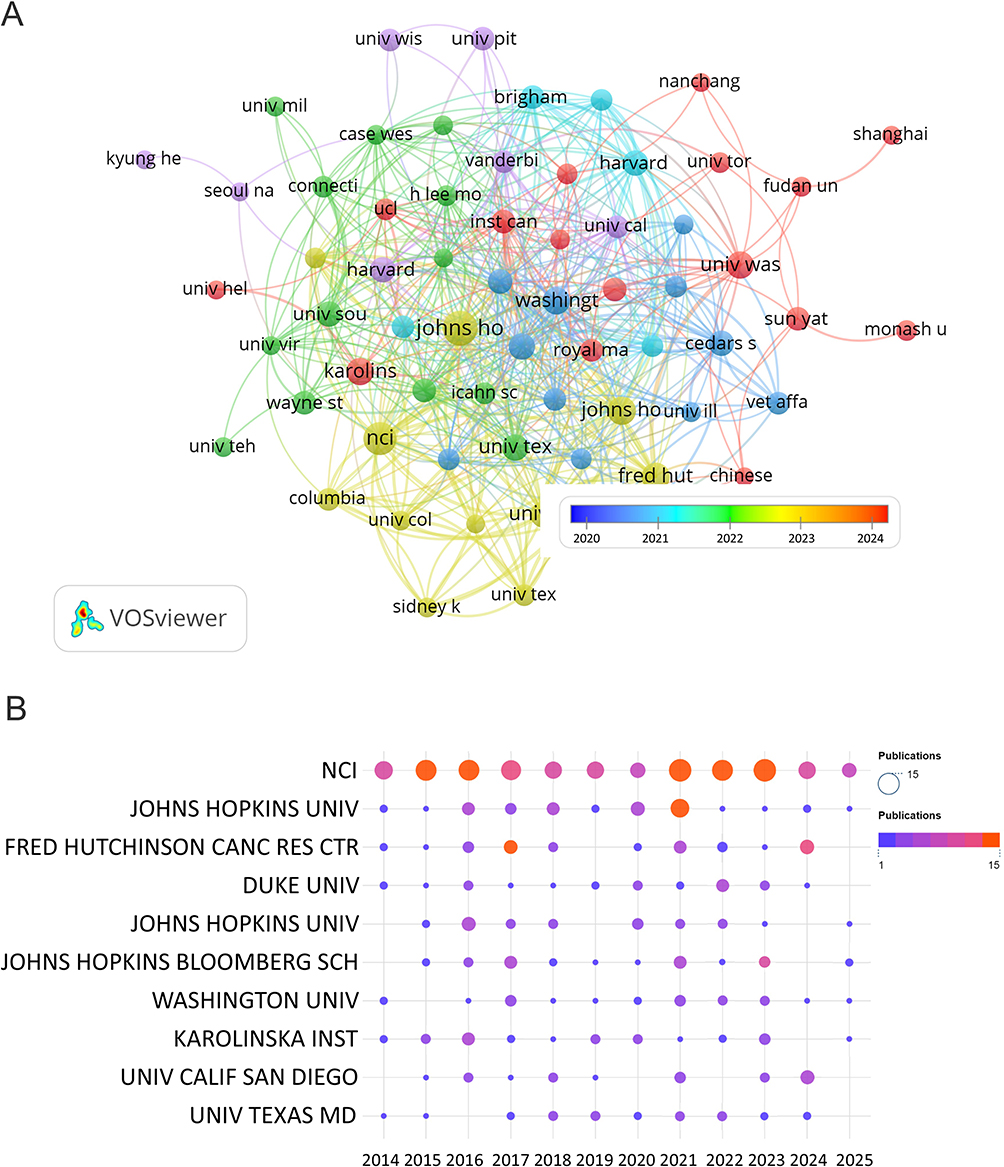 |
Figure 4 (A) Visualization of institutional collaboration networks, highlighting key institutions and their collaborative ties in research on aging and immune function in prostate cancer. (B) Annual publication volume of the top 10 institutions. Larger circles and more intense colors indicate higher publication volumes. |
Journals and Co-Cited Journals
A total of 489 journals were identified publishing research on chronic inflammation, immune function, PCa progression, and aging (Supplementary Figure 2). Table 1 shows that Prostate leads with 48 publications (12.56%), followed by Cancers (27 publications, 7.74%), and PLOS ONE (25 publications, 6.98%). The highest impact factor (IF) among these journals is held by JAMA Oncology (IF = 22.5, Q1). Other key journals include Prostate Cancer and Prostatic Diseases and Cancer Epidemiology Biomarkers & Prevention, further reflecting the journal landscape’s focus on immune function and cancer progression.
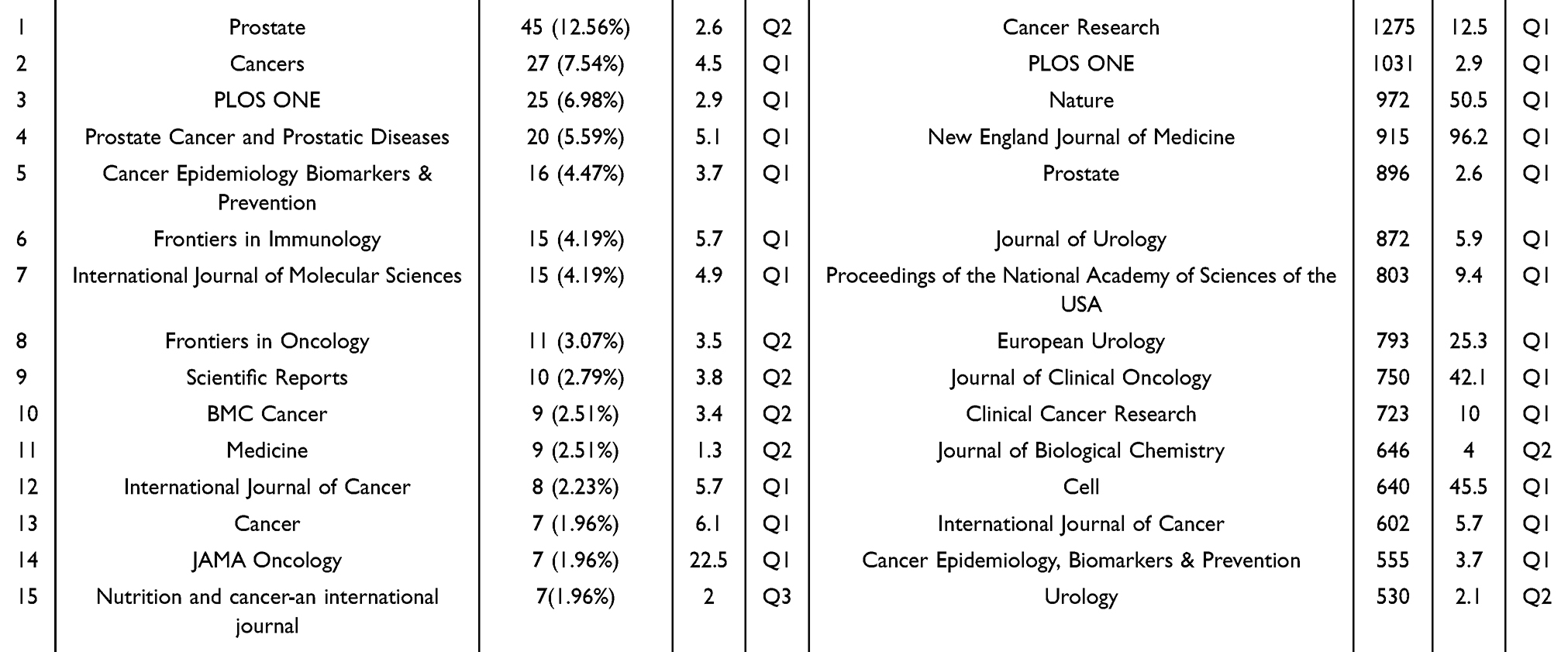 |
Table 1 Journals and Co-Cited Journals Publishing Research on Chronic Inflammation, Immune Function, Prostate Cancer Progression, and Aging |
Table 1 also provides details on the top co-cited journals calculated by VOSviewer. Among them, Cancer Research takes the lead with 1297 co-citations, followed by Nature with 1185 co-citations and PLOS ONE with 1023 co-citations. It is notable that journals like New England Journal of Medicine (1011 co-citations) have substantial influence, further demonstrating the multidisciplinary nature of research on PCa progression and inflammation. Figure 5 presents a co-citation network, which illustrates the interconnections among the most frequently cited journals. For example, Prostate, Cancer Research, and Nature display strong co-citation ties, highlighting their relevance in advancing knowledge within the field.
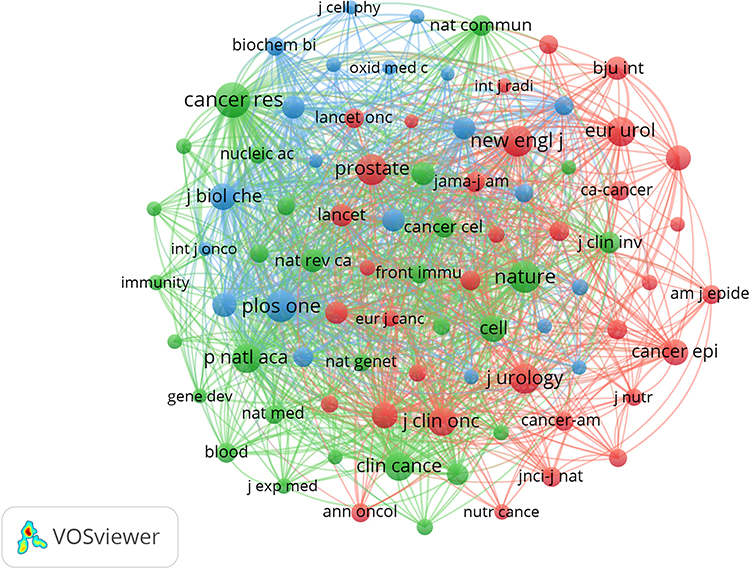 |
Figure 5 Co-citation network of journals frequently cited in this research field. |
The dual-map overlay of journals as shown in Supplementary Figure 3 illustrates the citation relationships between research fields. The left side shows the citing journals, while the right side reflects the cited journals. Research published in Molecular/Biology/Genetics journals is primarily cited by literature from Molecular/Biology/Immunology disciplines. Furthermore, research in the domain of Health/Nursing/Medicine is predominantly cited by studies in Medicine/Medical/Clinical journals. This map provides an important insight into the flow of knowledge across disciplines, reinforcing the broad impact and relevance of studies on chronic inflammation, immune function, and PCa progression in aging research.
Authors and Co-Cited Authors
In the study of aging, immune function, and chronic inflammation as key mechanisms in PCa progression, a total of 6828 authors have contributed to research in this area. In Figure 6A, the cooperative network of 253 authors with at least five publications was visualized using VOSviewer, showing clusters of close collaboration. For example, Platz, Drake, and Freedland, prominent in PCa research, demonstrated active collaboration. Additionally, many authors had overlapping research themes, evidenced by their co-citation relationships.
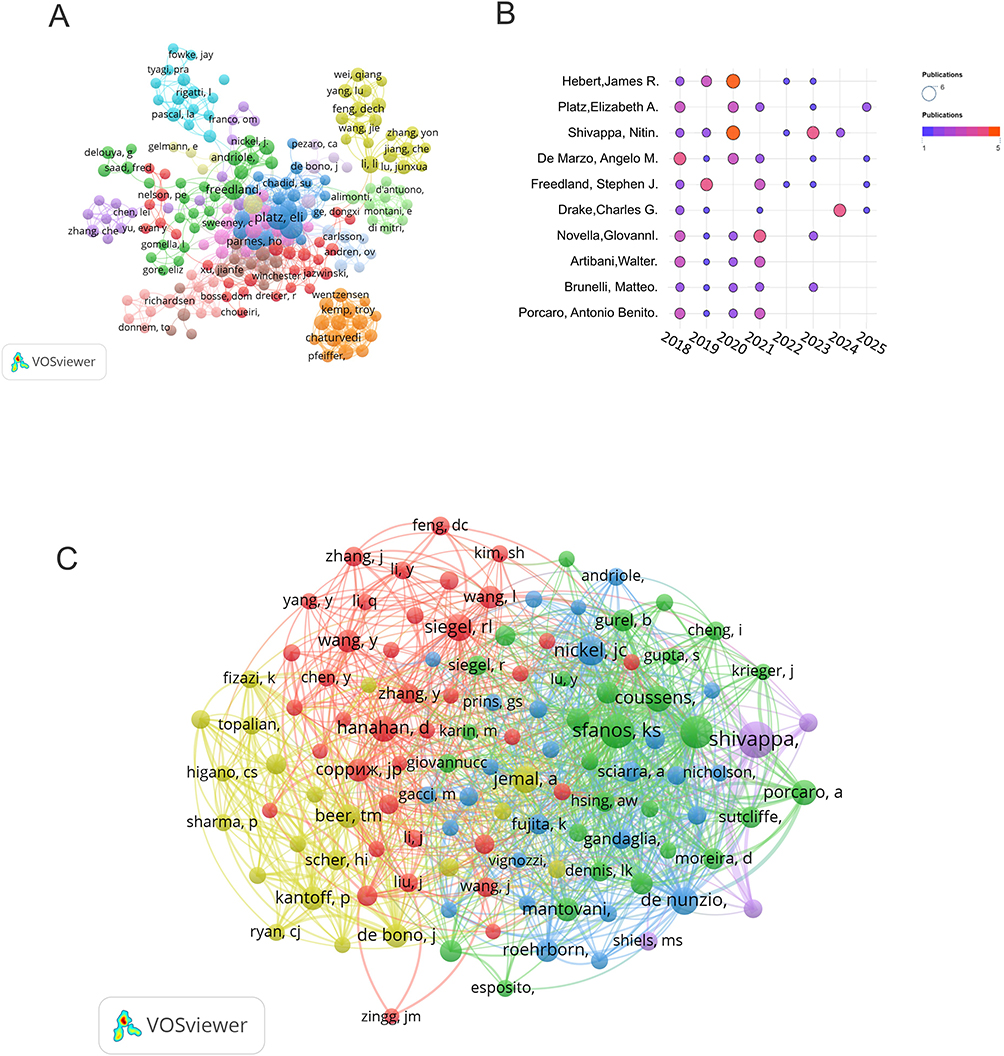 |
Figure 6 (A) Visualization of the leading authors contributing to research on aging and immune function in prostate cancer. (B) Annual publication trends of the top 10 most productive authors. (C) Co-citation network of frequently cited authors in the field. |
The top 10 authors listed in Figure 6B and Supplementary Table 2 demonstrated substantial research output, with James R. Hebert and Elizabeth A. Platz leading with 17 papers and 16 papers each. Hebert, with an h-index of 116, a g-index of 198, and 37,788 total citations, and Platz, with an h-index of 113, a g-index of 201, and 44,323 citations, highlight their broad influence in cancer epidemiology and PCa research. Figure 6C represents the co-citation network, including 118 authors co-cited at least 20 times. Supplementary Table 2 shows the top 10 co-cited authors, and seven authors were co-cited more than 80 times. Notably, the co-citation network revealed that Nitin Shivappa, who is frequently cited in this field, was the most co-cited author with 194 citations, followed by Sfanos, K. S. (167 citations) and Angelo M. De Marzo (140 citations). This figure emphasizes their pivotal role in shaping the research direction in PCa progression. Shivappa’s frequent co-citation, alongside other influential figures like Stephen J. Freedland, Charles G. Drake, and Kathryn S. Sfanos, highlights their contribution to the understanding of the inflammatory microenvironment in PCa and its implications for immune function and disease progression.
Co-Cited References
There are 53787 co-cited references related to PCa, inflammation, and immune function research. As shown in Supplementary Table 3, two references were co-cited more than 70 times. A total of 26 references with at least 20 co-citations were selected to construct the co-citation network map, as shown in the Figure 7. Notably, De Marzo A. M., 2007 and Coussens L. M., 2002 are highly co-cited, indicating their significant influence in this field. The network shows active relationships, such as those between De Marzo A. M. and Sfanos K. S.
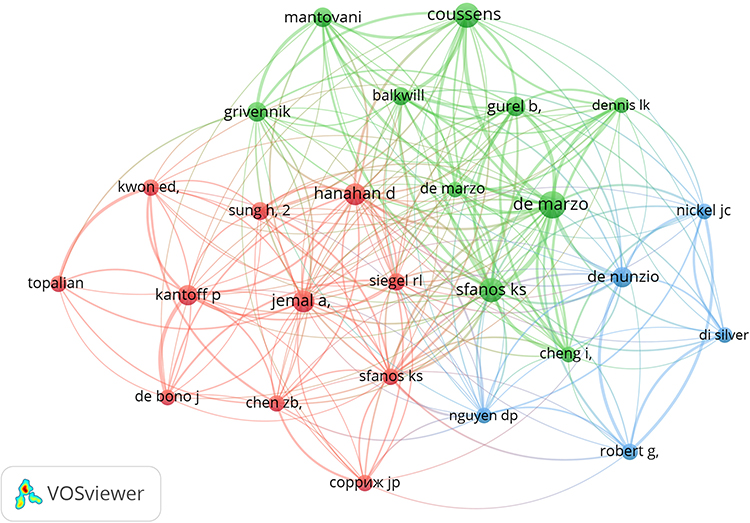 |
Figure 7 Co-citation network of references in research on aging and immune function in prostate cancer. |
Reference with Citation Bursts
References with citation bursts indicate papers that experienced a surge in citation frequency after publication, reflecting high relevance and attention to emerging topics in the field. Supplementary Figure 4 shows the top 25 references with the most powerful citation bursts according to CiteSpace. The red bars in Supplementary Figure 4 highlight the periods of intense citation activity between 2015 and 2025.
Among the references, the paper by Kantoff et al from NEJM showed the strongest citation burst (strength = 5.31), followed by Gurel B et al (2014) from CANCER EPIDEM BILMAR (strength = 4.93) and Hanahan D et al (2011) from Cell (strength = 4.48). The burst strength ranged from 3.68 to 5.31, with durations varying between 2 to 5 years, indicating sustained interest in the subject matter. These references highlight key studies on chronic inflammation, immune response, and PCa progression, contributing significantly to ongoing research in the field (Supplementary Table 4).
Research Hotspots and Emerging Frontiers
The bibliometric analysis of research on chronic inflammation, immune function, and aging in PCa progression has highlighted key hotspots and emerging trends within the field. High-frequency keywords such as “prostate cancer” (283 counts) and “inflammation” (153 counts) underscore their central role in ongoing research (Table 2). These terms reflect the growing emphasis on understanding how chronic inflammation and immune responses drive PCa progression, particularly in aging populations. Additionally, the keyword “aging” (95 counts) highlights the importance of investigating age-related changes in immune function, positioning it as a critical emerging area for therapeutic exploration. These keywords represent research hotspots, signifying sustained interest in developing strategies to mitigate inflammation-driven PCa risks.
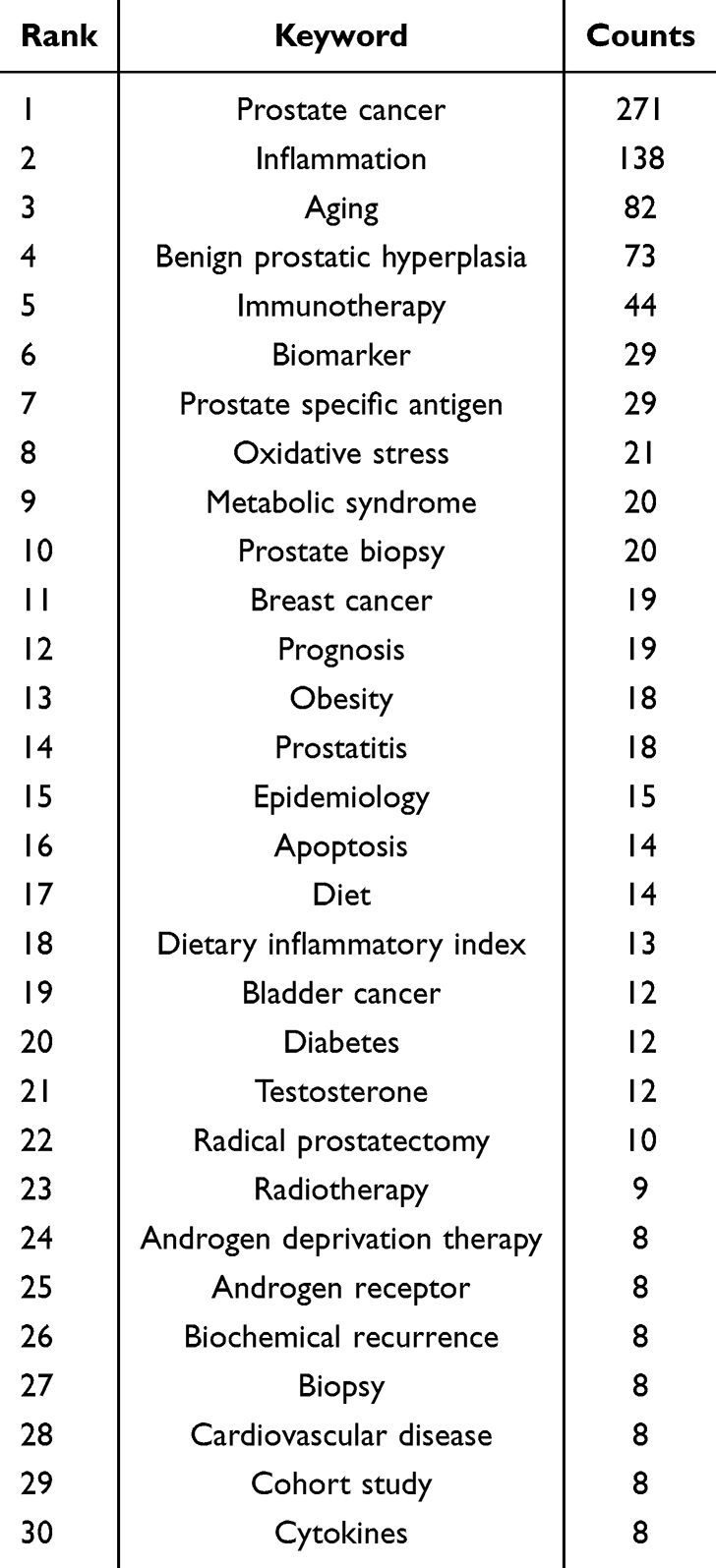 |
Table 2 Top 30 Keywords in Research on Chronic Inflammation, Immune Function, Prostate Cancer Progression, and Aging |
Based on the analysis of research trends on aging, immune function in PCa progression, keyword analysis has identified key thematic clusters and evolving areas of focus. As depicted in Figure 8A, five major thematic clusters emerge, emphasizing the interconnectedness of terms related to PCa, inflammation, aging, and associated immune mechanisms. The red cluster highlights keywords such as “prostate cancer,” “therapy,” and “androgen receptor,” signifying a focus on treatment modalities and cancer biology. The green cluster centers around “inflammation,” including terms like “oxidative stress,” “metabolic syndrome,” and “cytokines,” underscoring the central role of inflammatory processes in PCa progression. The blue cluster, associated with “aging,” incorporates keywords like “immune therapy,” “chronic inflammation,” and “pathogenesis,” reflecting the increasing recognition of age-related changes in immune function as a driver of PCa.
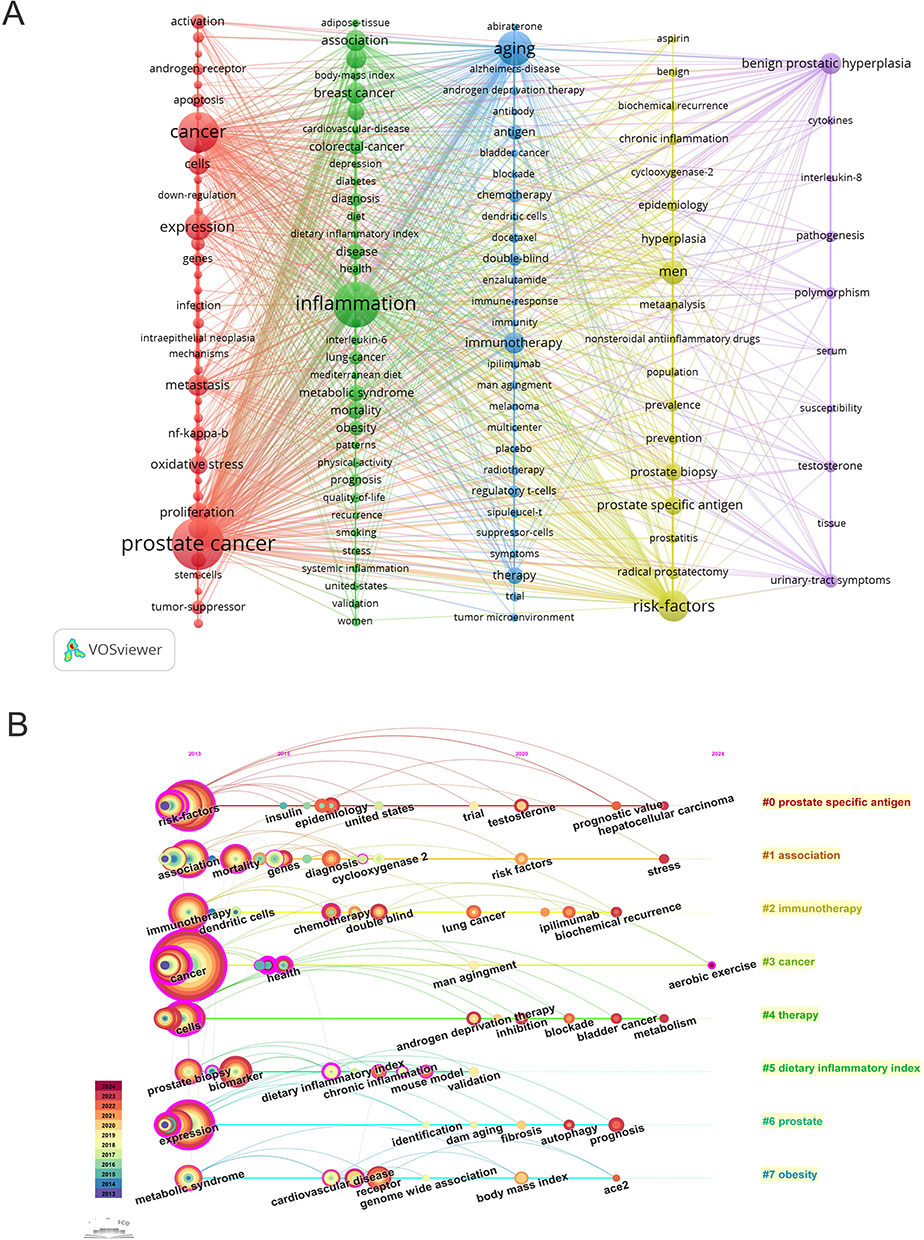 |
Figure 8 (A) Keyword cluster analysis, revealing the main research topics and thematic concentrations in studies on aging and immune function in prostate cancer. (B) Trend topic analysis, highlighting emerging research areas and hot topics in recent years, signaling the evolving focus of the research community. |
Figure 8B provides a temporal analysis of emerging topics and hot areas of research. The trend analysis reveals a shift in focus from foundational studies of PCa biology to more integrated approaches targeting inflammation and aging. Topics such as “prostate-specific antigen,” “androgen receptor signaling,” and “chronic inflammation” gained prominence early in the analyzed timeframe. Recent years have seen increased attention to “immunotherapy,” “dietary inflammatory index,” and “obesity,” reflecting a growing emphasis on lifestyle factors and immunomodulatory treatments. This shift indicates the field’s evolving interest in addressing chronic inflammation and its impact on PCa progression, particularly in aging populations.
The combined analysis of keyword clusters and temporal trends highlights the multidisciplinary nature of this research area. It underscores the importance of targeting chronic inflammation, immune evasion, and age-associated mechanisms to develop comprehensive therapeutic strategies for PCa. These findings provide a roadmap for future research, encouraging exploration into immunotherapy integration, SASP modulation, and the influence of systemic aging processes on PCa.
Discussion
As a bibliometric analysis, this study does not aim to generate novel mechanistic insights or direct clinical evidence regarding PCa progression. Instead, it provides a quantitative and structured overview of how scientific attention has evolved at the intersection of aging, immune function, and chronic inflammation in prostate cancer. Bibliometric approaches inherently reflect patterns of research focus, intellectual influence, and thematic development rather than biological causality. Accordingly, the primary contribution of this study lies in mapping research trajectories, identifying collective research priorities, and highlighting translational gaps that warrant further mechanistic and clinical investigation.
General Research Trends
This bibliometric analysis of research on aging, immune function, and chronic inflammation as key mechanisms in PCa reveals a significant and consistent growth in scientific interest from 2015 to 2025. The number of publications rose from 83 in 2015 to a peak of 178 in 2025, underscoring the increasing recognition of chronic inflammation as a central mechanism connecting aging and immune dysfunction to PCa progression.2,3,7 This upward trend reflects growing optimism regarding the potential of inflammation-targeted and immune-based interventions for PCa, particularly in the context of aging populations. Periodic fluctuations, such as a decline in publications in 2018, may indicate shifting research priorities or challenges in integrating these interconnected fields.
Citation trends parallel the growth in publications, further emphasizing the field’s impact and maturity. Over the decade, citations consistently increased, peaking alongside publication output in 2025. This pattern suggests that influential and foundational studies have progressively shaped the intellectual framework of the field, particularly in areas related to immune regulation and senescence-associated processes. The alignment between publication and citation trends highlights the increasing integration of aging-related immune mechanisms into PCa research and therapeutic exploration.
Geographical analysis highlights the United States as the leading contributor, with 435 publications, followed by China (196) and Italy (95). These countries’ substantial outputs are supported by strong research infrastructures, sustained funding, and the growing clinical burden of prostate cancer. The United States functions as a central hub for international collaboration, maintaining extensive partnerships with China, Germany, and Italy. Meanwhile, Chinese institutions, including Sun Yat-sen University, have rapidly increased their international visibility through collaborations with Australia, Sweden, and France, underscoring the expanding global engagement in this field.
Beyond descriptive collaboration networks, these patterns likely reflect broader structural and strategic factors. The central position of the United States may be attributed to its long-standing integration of aging biology, cancer immunology, and large-scale clinical trial infrastructures, whereas China’s rapid rise likely reflects national prioritization of aging-related diseases and expanding investment in immuno-oncology. European countries such as Italy and Germany appear as important bridging nodes, consistent with a strong tradition of translational research linking molecular mechanisms with clinical applications. Collectively, these findings suggest that international collaboration in this field is shaped by research capacity, funding strategies, and demographic pressures associated with population aging.
The journal analysis reveals that Prostate, Cancers, and PLOS ONE play pivotal roles in disseminating research on this topic, reflecting the interdisciplinary nature of the field. Foundational journals such as Cancer Research and Nature, alongside clinical journals like the New England Journal of Medicine, significantly influence this area, as evidenced by co-citation analyses. These patterns underscore the integration of molecular biology, immunology, and clinical medicine in advancing knowledge on PCa progression. Consistently, the dual-map overlay demonstrates strong citation links between molecular and clinical research, highlighting active knowledge exchange between basic and translational domains.
Building upon this structural integration, the networks and clusters generated by VOSviewer and CiteSpace were interpreted not as isolated visual outputs, but as reflections of collective research priorities and intellectual consensus. By integrating co-authorship, co-citation, and keyword evolution analyses, this study moves beyond descriptive mapping to provide interpretative insights into how research focus, collaboration patterns, and conceptual frameworks have co-evolved in the field.
Contributors
Among the most influential researchers in the study of aging, immune function, and chronic inflammation in PCa, James R. Hebert and Elizabeth A. Platz stand out for their substantial contributions to the field. Both have extensively published on the relationship between systemic inflammation and PCa progression, with 17 and 16 publications each. Dietary Inflammatory Index (DII) development by R. Hebert has been pivotal in linking dietary patterns to systemic inflammation, providing a framework for lifestyle interventions aimed at mitigating inflammation-driven PCa risks.15,16 The research conducted by Elizabeth A. Platz has advanced the understanding of inflammatory biomarkers, such as cytokines, and their role in PCa progression, emphasizing the integration of aging-related immune dysfunction into therapeutic strategies.4,17–19 Together, their work highlights the importance of addressing modifiable risk factors and systemic inflammation in PCa, particularly in aging populations. Charles G. Drake has contributed significantly to the understanding of ICIs in PCa therapy, highlighting their potential when combined with radiotherapy, chemotherapy, or agents targeting tumor immunosuppression to overcome the immunologically “cold” tumor microenvironment.20,21 These findings have informed the development of combination therapeutic strategies aimed at enhancing T-cell-mediated anti-tumor responses, especially in the context of aging-related immune dysfunction.
In the co-citation network, authors such as Nitin Shivappa (194 citations) and Sfanos, K. S. (167 citations) have further enriched the field. Shivappa’s work on the DII has established links between diet, inflammation, and PCa progression, offering actionable insights for prevention.22–24 Sfanos has focused on the interplay between infectious agents, immune dysfunction, and inflammation in PCa, providing critical data on the inflammatory microenvironment’s role in tumor evolution. This research highlights the critical role of chronic inflammation and the urinary microbiome in driving PCa development, emphasizing oxidative stress, epigenetic alterations, and persistent inflammatory states as key mechanisms.25–27
Further, Angelo M. De Marzo’s research has underscored the pivotal role of chronic inflammation in PCa, particularly proliferative inflammatory atrophy (PIA) as a precursor lesion to PCa. His studies have advanced biomarker development and explored the role of the MYC oncogene in tumorigenesis and stem cell regulation.26,28–31 Similarly, studies by Zena Werb and Lisa M. Coussens have identified immune-regulated pathways and highlighted the dual roles of tumor-associated macrophages (TAMs) in PCa. Their work emphasizes the contribution of TAMs to therapy resistance and metabolic reprogramming in the tumor microenvironment, as well as their potential as therapeutic targets.32–34 Finally, D. Hanahan and R. A. Weinberg have incorporated chronic inflammation into the broader conceptual framework of cancer hallmarks, identifying senescent cells as critical players in chronic inflammation and tumor progression. Their insights provide a deeper understanding of PCa biology and its interplay with aging and immune dysfunction.35–37
In conclusion, the collective efforts of these researchers have laid a strong foundation for integrating biomarkers, lifestyle interventions, and innovative therapeutic strategies to address inflammation-driven PCa progression. Their insights continue to shape future research priorities, particularly for aging populations at heightened risk of inflammation-mediated cancer progression, paving the way for more effective and personalized approaches to PCa management.
Challenges, Limitations, and the Shift Toward Combination Therapies
PCa poses significant therapeutic challenges due to its immunologically “cold” tumor microenvironment and its tight association with aging-related processes, such as chronic inflammation and cellular senescence.38,39 These factors create a tumor-permissive environment characterized by low immunogenicity and resistance to conventional therapies. Despite the effectiveness of androgen deprivation therapy (ADT), chemotherapy, and ICIs in certain cases, their limited efficacy in PCa highlights the need for strategies targeting the fundamental drivers of immune dysfunction and chronic inflammation.8,9,40
The prominence of regulatory T cells (Tregs), myeloid-derived suppressor cells (MDSCs), and TAMs in PCa research is strongly supported by co-citation networks and keyword clustering analyses, reflecting a growing consensus that immune regulation plays a decisive role in PCa progression, particularly in aging contexts. Aging further exacerbates these challenges through genomic instability, mitochondrial dysfunction, and the accumulation of senescent cells.19,41 Bibliometric analyses indicate that SASP has emerged as a central research theme linking aging, chronic inflammation, and immune suppression in prostate cancer. Notably, the prominence of these themes reflects a convergence of research attention rather than direct biological causality, underscoring the role of bibliometric analysis in identifying research priorities rather than mechanistic dominance.18,42
Despite this emerging consensus, several important controversies remain unresolved. While chronic inflammation is often characterized as tumor-promoting, evidence suggests that inflammatory and immune responses may exert context-dependent or even anti-tumor effects, particularly during early disease stages or following therapy-induced tissue damage. Similarly, although SASP is frequently associated with immune suppression and tumor progression, its temporal dynamics and cell-type specificity remain incompletely understood. These inconsistencies highlight a critical gap between descriptive associations and causal mechanisms.
Established treatments such as radiotherapy and chemotherapy have been shown to partially modulate the tumor microenvironment by inducing immunogenic cell death and enhancing antigen presentation. For instance, radiotherapy promotes the release of tumor-associated antigens and improves T-cell priming, while chemotherapeutic agents such as docetaxel and cabazitaxel can increase tumor immunogenicity.43–47 The long-term clinical benefits of these approaches remain constrained by the persistent immunosuppressive landscape of PCa, particularly in older patients, supporting a shift toward more integrative and combination-based therapeutic strategies.
Insights from other malignancies provide a conceptual framework for addressing these challenges in PCa. In pancreatic ductal adenocarcinoma (PDAC) and non-small-cell lung cancer (NSCLC), senescence-inducing therapies such as MEK and CDK4/6 inhibitors have been shown to reshape the tumor microenvironment by enhancing vascularization and facilitating immune cell infiltration.47 Consistent with these findings, bibliometric keyword evolution and thematic analyses reveal a growing research focus on senolytic and senomorphic strategies as potential approaches to mitigate SASP-driven inflammation in prostate cancer. Influential studies suggest that targeting senescent cells may represent a promising avenue for reprogramming the tumor microenvironment and enhancing immune responsiveness in aging-associated disease settings.48,49
Epigenetic regulation and targeting the SASP offer complementary strategies to overcome the immunosuppressive tumor microenvironment and address aging-related dysfunction in PCa.50,51 Bibliometric trends indicate increasing attention to epigenetic regulators such as EZH2 and innate immune pathways including STING signaling. Highly cited studies associate EZH2 inhibition with enhanced CD8⁺ T-cell infiltration and interferon activation, supporting epigenetic modulation as a rational strategy to counteract immune suppression, particularly when combined with ICIs.50,52–55
Beyond epigenetic regulation, targeting SASP components through mechanisms such as JUN regulation, KDM4 inhibition, and senolytic or senomorphic therapies has been shown to attenuate inflammation, enhance immune surveillance, and reshape the tumor microenvironment.56–59 These strategies collectively highlight the potential of integrative, combination-based approaches to address aging-driven immune dysfunction and therapeutic resistance in prostate cancer.41
Future Directions
The future directions proposed in this study are derived from convergent signals identified through keyword evolution, co-citation clustering, and publication trend analyses. The increasing prominence of themes related to SASP, immune checkpoint regulation, epigenetic modulation, and combination therapies suggests that future advances in PCa are likely to increasingly emphasize integrative strategies targeting aging-associated inflammation and immune dysfunction.60–62
Targeting SASP represents a promising avenue, given its context-dependent roles in tumor suppression and progression. Senotherapeutic approaches, including senolytics and senomorphics, have emerged as potential strategies to mitigate SASP-driven inflammation and immune suppression, particularly when combined with existing therapies.48,49,56,60–62
Emerging immunotherapies, such as PSMA-targeted CAR-T cells and ICIs, also hold substantial promise for PCa treatment but face challenges related to immune suppression in aging patients. Bibliometric trends indicate increasing interest in combining immunotherapies with SASP-modulating or epigenetic strategies, aiming to reprogram the tumor microenvironment and enhance immune responsiveness.39
Consistent with these observations, the growing co-occurrence of keywords related to immunotherapy, radiotherapy, senescence, and epigenetic regulation reflects an expanding research emphasis on combination therapeutic strategies. These data-driven trends suggest that multimodal approaches may be required to overcome immune resistance and aging-associated tumor biology in prostate cancer.50,51,55 Future research should focus on identifying biomarkers to stratify patients based on therapeutic responsiveness and on conducting well-designed clinical trials to translate these integrative strategies into clinical practice. By addressing the complex interplay between aging, chronic inflammation, and immune dysfunction, such approaches have the potential to substantially improve outcomes for patients with prostate cancer.
Advantages and Shortcomings of the Study
This bibliometric analysis provides a comprehensive quantitative assessment of research trends, collaborative networks, and influential contributors in the field of aging, immune function, and chronic inflammation in prostate cancer. By integrating multiple bibliometric tools, including VOSviewer, CiteSpace, and Bibliometrix, the study systematically maps the intellectual structure and emerging research trajectories, identifying key research hotspots such as SASP-related processes, immune dysfunction, and chronic inflammation, while highlighting translationally relevant themes.
One key strength of this study lies in its objective evaluation of research productivity and intellectual influence. Analyses of publication trends, citation networks, and co-citation relationships identify critical research themes, including oxidative stress, biomarkers, and chronic inflammation, that are central to advancing precision medicine and targeted therapies in prostate cancer. The dual-map overlay of journals further highlights the interdisciplinary integration of molecular biology, immunology, and clinical medicine, underscoring the value of cross-disciplinary approaches in understanding PCa progression. Moreover, by linking basic research with clinical domains, the analysis provides data-driven insights that may inform biomarker development and personalized therapeutic strategies for aging populations.
Nevertheless, several limitations should be acknowledged. Reliance on the Web of Science Core Collection may exclude relevant studies indexed in other databases, such as Scopus or PubMed, and the restriction to English-language publications introduces potential linguistic bias. In addition, time lags in publication and indexing may limit the capture of emerging innovations, including novel immunotherapies and SASP-targeting strategies. Importantly, bibliometric prominence reflects patterns of research attention and intellectual influence rather than direct biological importance or clinical efficacy, and highly cited topics may not necessarily correspond to the most actionable therapeutic mechanisms.
Future bibliometric studies integrating multi-database and real-time analytical approaches may further refine these insights. Despite these limitations, this study provides a valuable framework for understanding the evolving research landscape and for guiding future investigations, collaborations, and translational efforts aimed at improving outcomes for patients with prostate cancer.
Conclusion
This bibliometric analysis provides a systematic overview of research trends at the intersection of aging, immune function, and chronic inflammation in prostate cancer. The findings reveal a growing research emphasis on themes such as SASP, immune regulation, oxidative stress, and inflammatory biomarkers, highlighting their prominence within the current literature.
Rather than establishing mechanistic causality, this study maps the evolving intellectual landscape and identifies key research priorities and collaborative patterns shaping the field. The results underscore the increasing focus on biomarker-driven approaches, immunotherapy, and combination strategies aimed at addressing aging-associated immune dysfunction.
Overall, this work offers a data-driven framework to guide future mechanistic and translational studies, supporting the development of more effective and personalized therapeutic strategies for prostate cancer in aging populations.
Abbreviations
PCa, Prostate cancer; ICIs, Immune checkpoint inhibitors; WoSCC, Web of Science Core Collection; SASP, Senescence-associated secretory phenotype; IL-6, Interleukin-6; TMB, Tumor mutational burden; DII, Dietary Inflammatory Index; TAMs, tumor-associated macrophages; ADT, Androgen deprivation therapy.
Data Sharing Statement
All data supporting the findings of this study are included within the main text and Supplementary Information files. For any additional datasets or materials not included, these can be made available upon reasonable request from the corresponding author. All referenced articles are listed in the references section, and any specific data used from these sources can also be accessed through the corresponding literature.
Author Contributions
Shaohong Lai: Supervision; Funding acquisition; Project administration; Writing – review and editing.
Chongsen Lin: Conceptualization; Data curation; Formal analysis; Visualization; Writing – original draft.
Lujing Li: Methodology; Software; Validation;Funding acquisition.
Wenhan Qiu: Conceptualization; Supervision; Project administration.
Junfu Zhang: Investigation; Resources; Writing – review and editing.
Tie Guo: Supervision;Writing – review and editing.
All authors took part in drafting, revising or critically reviewing the article; gave final approval of the version to be published; have agreed on the journal to which the article has been submitted; and agree to be accountable for all aspects of the work.
Funding
This research was funded by Guangdong Basic and Applied Basic Research Foundation (Grant No. 2024A1515012545, 2023A1515111148), and Shenzhen Fundamental Research Program (Grant No. JCYJ20250604143531036).
Disclosure
The authors declare that they have no conflicts of interest. The funding agencies had no involvement in the design of the study; in the collection, analysis, or interpretation of the data; in the writing of the paper; or in the decision to publish the results.
References
1. Sung H, Ferlay J, Siegel RL, et al. Global Cancer Statistics 2020: GLOBOCAN Estimates of Incidence and Mortality Worldwide for 36 Cancers in 185 Countries. CA Cancer J Clin. 2021;71:209–19. doi:10.3322/caac.21660
2. Zhao H, Wu L, Yan G, et al. Inflammation and tumor progression: signaling pathways and targeted intervention. Signal Transduct Target Ther. 2021;6:263. doi:10.1038/s41392-021-00658-5
3. Gonzalez H, Hagerling C, Werb Z. Roles of the immune system in cancer: from tumor initiation to metastatic progression. Genes Dev. 2018;32:1267–1284. doi:10.1101/gad.314617.118
4. De Marzo AM, Platz EA, Sutcliffe S, et al. Inflammation in prostate carcinogenesis. Nat Rev Cancer. 2007;7:256–269. doi:10.1038/nrc2090
5. Chen L, Xu Y-X, Wang Y-S, et al. Prostate cancer microenvironment: multidimensional regulation of immune cells, vascular system, stromal cells, and microbiota. Mol Cancer. 2024;23:229. doi:10.1186/s12943-024-02137-1
6. Di Micco R, Krizhanovsky V, Baker D, d’Adda Di Fagagna F. Cellular senescence in ageing: from mechanisms to therapeutic opportunities. Nat Rev Mol Cell Biol. 2021;22:75–95. doi:10.1038/s41580-020-00314-w
7. Faget DV, Ren Q, Stewart SA. Unmasking senescence: context-dependent effects of SASP in cancer. Nat Rev Cancer. 2019;19:439–453. doi:10.1038/s41568-019-0156-2
8. Hamid AA, Choudhury AD. Biological and therapeutic advances in the pursuit of effective immunotherapy for prostate cancer. Curr Opin Urol. 2020;30:30–35. doi:10.1097/MOU.0000000000000682
9. Tong D. Selective estrogen receptor modulators contribute to prostate cancer treatment by regulating the tumor immune microenvironment. J for ImmunoTherapy Cancer. 2022;10:e002944. doi:10.1136/jitc-2021-002944
10. Junghans RP, Ma Q, Rathore R, et al. Phase I Trial of Anti-PSMA Designer CAR-T Cells in prostate cancer: possible role for interacting interleukin 2-t cell pharmacodynamics as a determinant of clinical response. Prostate. 2016;76:1257–1270. doi:10.1002/pros.23214
11. Zarrabi KK, Narayan V, Mille PJ, et al. Bispecific PSMA antibodies and CAR-T in metastatic castration-resistant prostate cancer. Ther Adv Urol. 2023;15:17562872231182219. doi:10.1177/17562872231182219
12. Roldan-Valadez E, Salazar-Ruiz SY, Ibarra-Contreras R, Rios C. Current concepts on bibliometrics: a brief review about impact factor, eigenfactor score, citescore, scimago journal rank, source-normalised impact per paper, h-index, and alternative metrics. Ir J Med Sci. 2019;188:939–951. doi:10.1007/s11845-018-1936-5
13. van Eck NJ, Waltman L. Software survey: vOSviewer, a computer program for bibliometric mapping. Scientometrics. 2009;84:523–538. doi:10.1007/s11192-009-0146-3
14. Chen CC II. Detecting and visualizing emerging trends and transient patterns in scientific literature. J Am Soc Inf Sci Technol. 2005;57:359–377. doi:10.1002/asi.20317
15. Shivappa N, Bosetti C, Zucchetto A, et al. Association between dietary inflammatory index and prostate cancer among Italian men. Br J Nutr. 2015;113:278–283. doi:10.1017/S0007114514003572
16. Shivappa N, Jackson MD, Bennett F, Hebert JR. Increased dietary inflammatory index (dii) is associated with increased risk of prostate cancer in jamaican men. Nutr Cancer. 2015;67:941–948. doi:10.1080/01635581.2015.1062117
17. Gurel B, Lucia MS, Thompson IM, et al. Chronic inflammation in benign prostate tissue is associated with high-grade prostate cancer in the placebo arm of the prostate cancer prevention trial. Cancer Epidemiol Biomarkers Prev. 2014;23:847–856. doi:10.1158/1055-9965.EPI-13-1126
18. Michaud DS, Daugherty SE, Berndt SI, et al. Genetic polymorphisms of interleukin-1B (IL-1B), IL-6, IL-8, and IL-10 and risk of prostate cancer. Cancer Res. 2006;66:4525–4530. doi:10.1158/0008-5472.CAN-05-3987
19. Heaphy CM, Yoon GS, Peskoe SB, et al. Prostate cancer cell telomere length variability and stromal cell telomere length as prognostic markers for metastasis and death. Cancer Discov. 2013;3:1130–1141. doi:10.1158/2159-8290.CD-13-0135
20. Topalian SL, Drake CG, Pardoll DM. Immune checkpoint blockade: a common denominator approach to cancer therapy. Cancer Cell. 2015;27:450–461. doi:10.1016/j.ccell.2015.03.001
21. Topalian SL, Hodi FS, Brahmer JR, et al. Safety, activity, and immune correlates of anti-PD-1 antibody in cancer. N Engl J Med. 2012;366:2443–2454. doi:10.1056/NEJMoa1200690
22. Shivappa N, Steck SE, Hurley TG, et al. A population-based dietary inflammatory index predicts levels of C-reactive protein in the seasonal variation of blood cholesterol study (SEASONS). Public Health Nutr. 2014;17:1825–1833. doi:10.1017/S1368980013002565
23. Shivappa N, Steck SE, Hurley TG, Hussey JR, Hebert JR. Designing and developing a literature-derived, population-based dietary inflammatory index. Public Health Nutr. 2014;17:1689–1696. doi:10.1017/S1368980013002115
24. Hebert JR, Shivappa N, Wirth MD, Hussey JR, Hurley TG. Perspective: the dietary inflammatory index (dii)-lessons learned, improvements made, and future directions. Adv Nutr. 2019;10:185–195. doi:10.1093/advances/nmy071
25. Sfanos KS, De Marzo AM. Prostate cancer and inflammation: the evidence. Histopathology. 2012;60:199–215. doi:10.1111/j.1365-2559.2011.04033.x
26. Sfanos KS, Yegnasubramanian S, Nelson WG, De Marzo AM. The inflammatory microenvironment and microbiome in prostate cancer development. Nat Rev Urol. 2018;15:11–24. doi:10.1038/nrurol.2017.167
27. Shrestha E, White JR, Yu S-H, et al. Profiling the urinary microbiome in men with positive versus negative biopsies for prostate cancer. J Urol. 2018;199:161–171. doi:10.1016/j.juro.2017.08.001
28. Steele TM, Meeker AK, Graham MK, et al. Abstract LB324: STING protein expression is increased in intermediate luminal cells in proliferative inflammatory atrophy of the prostate (PIA) and is absent in the majority of primary prostatic adenocarcinomas. Cancer Res. 2024;84:LB324–LB324. doi:10.1158/1538-7445.Am2024-lb324
29. Koh CM, Bieberich CJ, Dang CV, et al. MYC and Prostate Cancer. Genes Cancer. 2010;1:617–628. doi:10.1177/1947601910379132
30. de Bono JS, Guo C, Gurel B, et al. Prostate carcinogenesis: inflammatory storms. Nat Rev Cancer. 2020;20:455–469. doi:10.1038/s41568-020-0267-9
31. Lopez-Bujanda ZA, Haffner MC, Chaimowitz MG, et al. Castration-mediated IL-8 promotes myeloid infiltration and prostate cancer progression. Nat Cancer. 2021;2:803–818. doi:10.1038/s43018-021-00227-3
32. Coussens LM, Werb Z. Inflammation and cancer. Nature. 2002;420:860–867. doi:10.1038/nature01322
33. Binnewies M, Roberts EW, Kersten K, et al. Understanding the tumor immune microenvironment (TIME) for effective therapy. Nat Med. 2018;24:541–550. doi:10.1038/s41591-018-0014-x
34. Hanahan D, Coussens LM. Accessories to the crime: functions of cells recruited to the tumor microenvironment. Cancer Cell. 2012;21:309–322. doi:10.1016/j.ccr.2012.02.022
35. Hanahan D, Weinberg RA. Hallmarks of cancer: the next generation. Cell. 2011;144:646–674. doi:10.1016/j.cell.2011.02.013
36. Hanahan D, Weinberg RA. The hallmarks of cancer. Cell. 2000;100:57–70. doi:10.1016/s0092-8674(00)81683-9
37. Hanahan D. Hallmarks of Cancer: new Dimensions. Cancer Discov. 2022;12:31–46. doi:10.1158/2159-8290.CD-21-1059
38. Narayan V, Barber-Rotenberg JS, Jung I-Y, et al. PSMA-targeting TGFbeta-insensitive armored CAR T cells in metastatic castration-resistant prostate cancer: a Phase 1 trial. Nat Med. 2022;28:724–734. doi:10.1038/s41591-022-01726-1
39. Dorff TB, Blanchard MS, Adkins LN, et al. PSCA-CAR T cell therapy in metastatic castration-resistant prostate cancer: a phase 1 trial. Nat Med. 2024;30:1636–1644. doi:10.1038/s41591-024-02979-8
40. Stultz J, Fong L. How to turn up the heat on the cold immune microenvironment of metastatic prostate cancer. Prostate Cancer Prostatic Dis. 2021;24:697–717. doi:10.1038/s41391-021-00340-5
41. Guo J, Huang X, Dou L, et al. Aging and aging-related diseases: from molecular mechanisms to interventions and treatments. Signal Transduct Target Ther. 2022;7:391. doi:10.1038/s41392-022-01251-0
42. Huseni MA, Wang L, Klementowicz JE, et al. CD8(+) T cell-intrinsic IL-6 signaling promotes resistance to anti-PD-L1 immunotherapy. Cell Rep Med. 2023;4:100878. doi:10.1016/j.xcrm.2022.100878
43. Sartor O, Karrison TG, Sandler HM, et al. Corrigendum to “androgen deprivation and radiotherapy with or without docetaxel for localized high-risk prostat cancer: long-term follow-up from the randomized nrg oncology RTOG 0521 Trial. Eur Urol. 2024;86(86):289–290. doi:10.1016/j.eururo.2024.06.009
44. Rosenthal SA, Hu C, Sartor O, et al. Effect of chemotherapy with docetaxel with androgen suppression and radiotherapy for localized high-risk prostate cancer: the randomized phase iii nrg oncology rtog 0521 trial. J Clin Oncol. 2019;37:1159–1168. doi:10.1200/JCO.18.02158
45. Parker CC, Kynaston H, Cook AD, et al. Duration of androgen deprivation therapy with postoperative radiotherapy for prostate cancer: a comparison of long-course versus short-course androgen deprivation therapy in the RADICALS-HD randomised trial. Lancet. 2024;403:2416–2425. doi:10.1016/S0140-6736(24)00549-X
46. Lane BR, Dess RT, Borza T. More than words: defining adjuvant, consolidative, and salvage treatment after radical prostatectomy. Eur Urol. 2024;86:385–387. doi:10.1016/j.eururo.2024.02.024
47. Mehra N, Kloots I, Slootbeek P, et al. 642TiP Phase II CA184-585 (INSPIRE) trial of ipilimumab with nivolumab for molecular-selected patients with castration-resistant prostate cancer. Ann Oncol. 2021;32:S671. doi:10.1016/j.annonc.2021.08.1155
48. McHugh D, Duran I, Gil J. Senescence as a therapeutic target in cancer and age-related diseases. Nat Rev Drug Discov. 2024;24:57–71. doi:10.1038/s41573-024-01074-4
49. D’Ambrosio M, Gil J. Reshaping of the tumor microenvironment by cellular senescence: an opportunity for senotherapies. Dev Cell. 2023;58:1007–1021. doi:10.1016/j.devcel.2023.05.010
50. Morel KL, Sheahan AV, Burkhart DL, et al. EZH2 inhibition activates a dsRNA-STING-interferon stress axis that potentiates response to PD-1 checkpoint blockade in prostate cancer. Nat Cancer. 2021;2:444–456. doi:10.1038/s43018-021-00185-w
51. Xin L. EZH2 accompanies prostate cancer progression. Nat Cell Biol. 2021;23:934–936. doi:10.1038/s41556-021-00744-4
52. Beer TM, Kwon ED, Drake CG, et al. Randomized, double-blind, phase iii trial of ipilimumab versus placebo in asymptomatic or minimally symptomatic patients with metastatic chemotherapy-naive castration-resistant prostate cancer. J Clin Oncol. 2017;35:40–47. doi:10.1200/JCO.2016.69.1584
53. Madan RA, Gulley JL. Personalized peptide vaccine in prostate cancer: capitalizing on existing immunity. Transl Cancer Res. 2016;5:S1333–S1335. doi:10.21037/tcr.2016.12.27
54. Kaur P, Verma S, Kushwaha PP, Gupta S. EZH2 and NF-kappaB: a context-dependent crosstalk and transcriptional regulation in cancer. Cancer Lett. 2023;560:216143. doi:10.1016/j.canlet.2023.216143
55. Yuan H, Han Y, Wang X, et al. SETD2 RESTRICTS PROSTATE CANCER METASTASIS BY INTEGRATing EZH2 and AMPK signaling pathways. Cancer Cell. 2020;38:350–365.e357. doi:10.1016/j.ccell.2020.05.022
56. Guccini I, Revandkar A, D’Ambrosio M, et al. Senescence reprogramming by timp1 deficiency promotes prostate cancer metastasis. Cancer Cell. 2021;39:68–82e69. doi:10.1016/j.ccell.2020.10.012
57. Redmer T, Raigel M, Sternberg C, et al. JUN mediates the senescence associated secretory phenotype and immune cell recruitment to prevent prostate cancer progression. Mol Cancer. 2024;23:114. doi:10.1186/s12943-024-02022-x
58. Zhang B, Fu D, Xu Q, et al. The senescence-associated secretory phenotype is potentiated by feedforward regulatory mechanisms involving Zscan4 and TAK1. Nat Commun. 2018;9:1723. doi:10.1038/s41467-018-04010-4
59. Zhang B, Long Q, Wu S, et al. KDM4 orchestrates epigenomic remodeling of senescent cells and potentiates the senescence-associated secretory phenotype. Nat Aging. 2021;1:454–472. doi:10.1038/s43587-021-00063-1
60. Dong Z, Luo Y, Yuan Z, et al. Cellular senescence and SASP in tumor progression and therapeutic opportunities. Mol Cancer. 2024;23:181. doi:10.1186/s12943-024-02096-7
61. Coppe JP, Patil CK, Rodier F, et al. Senescence-associated secretory phenotypes reveal cell-nonautonomous functions of oncogenic RAS and the p53 tumor suppressor. PLoS Biol. 2008;6:2853–2868. doi:10.1371/journal.pbio.0060301
62. Coppe JP, Desprez PY, Krtolica A, Campisi J. The senescence-associated secretory phenotype: the dark side of tumor suppression. Annu Rev Pathol. 2010;5:99–118. doi:10.1146/annurev-pathol-121808-102144
63. Jemal A, Bray F, Center MM, et al. Global cancer statistics. CA Cancer J Clin. 2011;61:69–90. doi:10.3322/caac.20107
64. De Nunzio C, Kramer G, Marberger M, et al. The controversial relationship between benign prostatic hyperplasia and prostate cancer: the role of inflammation. Eur Urol. 2011;60:106–117. doi:10.1016/j.eururo.2011.03.055
65. Kantoff PW, Higano CS, Shore ND, et al. Sipuleucel-T immunotherapy for castration-resistant prostate cancer. N Engl J Med. 2010;363:411–422. doi:10.1056/NEJMoa1001294
66. Grivennikov SI, Greten FR, Karin M. Immunity, inflammation, and cancer. Cell. 2010;140:883–899. doi:10.1016/j.cell.2010.01.025
67. Mantovani A, Allavena P, Sica A, Balkwill F. Cancer-related inflammation. Nature. 2008;454:436–444. doi:10.1038/nature07205
 © 2026 The Author(s). This work is published and licensed by Dove Medical Press Limited. The
full terms of this license are available at https://www.dovepress.com/terms
and incorporate the Creative Commons Attribution
- Non Commercial (unported, 4.0) License.
By accessing the work you hereby accept the Terms. Non-commercial uses of the work are permitted
without any further permission from Dove Medical Press Limited, provided the work is properly
attributed. For permission for commercial use of this work, please see paragraphs 4.2 and 5 of our Terms.
© 2026 The Author(s). This work is published and licensed by Dove Medical Press Limited. The
full terms of this license are available at https://www.dovepress.com/terms
and incorporate the Creative Commons Attribution
- Non Commercial (unported, 4.0) License.
By accessing the work you hereby accept the Terms. Non-commercial uses of the work are permitted
without any further permission from Dove Medical Press Limited, provided the work is properly
attributed. For permission for commercial use of this work, please see paragraphs 4.2 and 5 of our Terms.