
Back to Journals » Journal of Multidisciplinary Healthcare » Volume 18
Attitudes and Readiness for Artificial Intelligence Adoption Among Nursing Students in Saudi Arabia: A Cross-Sectional Study

Received 14 September 2025
Accepted for publication 2 December 2025
Published 6 December 2025 Volume 2025:18 Pages 7907—7918
DOI https://doi.org/10.2147/JMDH.S567485
Checked for plagiarism Yes
Review by Single anonymous peer review
Peer reviewer comments 3
Editor who approved publication: Dr David C. Mohr
Fawaz Alatawi,1 Ali Kerari2
1Community and Public Health Nursing, Ministry of Health, Tabuk, Saudi Arabia; 2Nursing Administration and Education Department, College of Nursing, King Saud University, Riyadh, Saudi Arabia
Correspondence: Ali Kerari, Nursing Administration and Education Department, College of Nursing, King Saud University, Riyadh, 11421, Saudi Arabia, Email [email protected]
Purpose: Although artificial intelligence (AI) has garnered increasing attention in education and healthcare, examining the attitude and readiness of future nurses toward AI integration is crucial for creating successful curricula and promoting appropriate utilization of this technology.
Patients and Methods: This cross-sectional study was conducted among 227 nursing students at King Saud University using two validated instruments: the General Attitudes toward Artificial Intelligence Scale and the Medical Artificial Intelligence Readiness Scale for Medical Students. Responses were recorded using a 5-point Likert scale. Descriptive and inferential statistics, including t-tests and correlation analyses, were employed to examine differences across study variables.
Results: Of the 227 participants, 48% (n = 109) were aged 18– 24 years. Majority participants were women (60.4%, n = 137), and 39.6% (n = 90) were men. Nursing students generally demonstrated moderately positive attitudes toward AI. However, an independent-sample t-test indicated that women exhibited more negative attitudes toward AI than men (p = 0.013), and part-time students demonstrated a greater level of AI readiness than full-time students (p = 0.018). No significant differences were observed based on age, marital status, academic level, and/or training/experience. Significant positive correlations were identified between positive and negative attitudes and AI readiness.
Conclusion: The findings of this study may help nursing colleges to incorporate AI into their curricula. However, the study’s cross-sectional design, single site setting, and short duration limit causal inference and generalizability.
Keywords: AI technologies, healthcare, nursing students, attitudes, readiness
Introduction
The concept of artificial intelligence (AI) originated in 1955 with John McCarthy defining it as a scientific and engineering discipline aimed at creating intelligent systems capable of mimicking human cognition.1 It involves computational systems designed to replicate human cognitive functions such as learning, perception, communication, and decision-making.2 Over the years, AI systems have progressed from a concept to a practical reality, and today, they are indispensable across fields, such as education and healthcare.2 Navarrete–Welton and Hashimoto AI applications help improve organizations’ quality, speed, and creativity.3 As a result of recent advancements in robotics, natural language processing, and machine learning, AI will become increasingly prevalent in the education sector, as they are transforming traditional education.4 These technologies not only enhance processes but also provide data that can assist in management and enhance students’ performance.4,5 AI possesses several advantageous features that substantially enhance patient care and foster the development of professionals, including nursing students, who represent the future of the nursing profession.6 Recent advancements in AI technology have significantly expanded its significance and range of use in nursing education and healthcare. In addition, AI has become an important topic across various fields and gained popularity including nursing.7
One of the most important models for describing people’s acceptance of new technologies, such as AI, is the Technology Acceptance Model (TAM), which was first introduced by Davis in 1989.8 TAM posits that perceived usefulness and perceived ease of use are essential factors affecting users’ attitudes and intentions toward technology adoption.8 In nursing education, these constructs are crucial for comprehending how nursing students perceive and incorporate AI into their academic learning and clinical practice.9,10 Empirical research, including studies by Kwak et al and Cho and Seo, has favorably perceived AI and elevated self-efficacy substantially improve students’ preparedness and behavioral intentions to utilize AI-based healthcare technology.11,12 Amiri et al and Castonguay et al also revealed that nursing students’ willingness to use AI significantly increases when they perceive it as both beneficial and straightforward for deployment in educational contexts.13,14 TAM offers a solid theoretical framework for analyzing nursing students’ attitudes and preparedness toward AI, highlighting the necessity of fostering favorable perceptions, improving digital proficiency, and delivering sufficient training to enable successful AI incorporation into nursing programs.13,14
Attitudes represent individuals’ evaluations and beliefs about a technology, influencing their willingness to adopt and engage with it. In nursing education, attitudes toward AI shape how students perceive and integrate technology into learning and clinical practice. Positive attitudes are associated with recognizing AI’s usefulness and potential to enhance nursing performance, while negative attitudes often stem from ethical concerns or fear of replacement.12,13 Studies have demonstrated that supportive attitudes and reduced anxiety significantly increase nursing students’ intention and motivation to use AI-based systems.11–14
Readiness refers to individuals’ preparedness to engage with new technologies and effectively integrate them into practice. In nursing education, readiness encompasses cognitive, technical, and ethical competence to utilize AI responsibly.2,15 Research indicates that higher readiness levels enhance students’ motivation, self-efficacy, and adaptability to technological innovations.16,17 Therefore, assessing readiness is essential for guiding curriculum development and ensuring the successful adoption of AI in nursing education.
Nurses are critical enablers of AI delivery in clinical practice owing to their central role in care delivery. This enables them to assess AI feasibility so that these technologies can be applied based on patient requirements.18 By integrating AI systems, nurses can fulfill organizational needs and identify ethical issues that may have been overlooked.19 However, integrating AI into nursing practice is hindered by barriers like limited communication between nursing staff and technical designers.20 Moreover, more training programs and courses that enable nurses to fully comprehend AI applicability are needed for ensuring appropriate use in practice.21 To achieve this, barriers need to be reduced so nursing can progress alongside AI for patient quality and practice improvements.22
Despite the surge in interest and the development of AI technologies for nursing in the past 10 years, research and empirical data on how these developments affect nursing education remains limited. Ng et al, who stated that although AI has drastically changed the health and education sectors, little is known about how it may be used to improve nursing education.23 In Saudi Arabia, where Vision 2030 emphasizes digital transformation and healthcare innovation, the integration of AI into nursing education is still in its early stages. To maintain the competitiveness of the education and healthcare system, future nurses must develop adequate understanding and readiness to work alongside AI technologies. However, current research in Saudi Arabia has focused on nurses’ or students’ perceptions of AI instead of their readiness to adopt it, highlighting a critical gap in the existing body of knowledge. Accordingly, this study seeks to fill the gap by examining the attitudes and readiness of nursing students at King Saud University (KSU) concerning the incorporation of AI. Despite increasing global focus on AI integration in healthcare, research on the perceptions and readiness of nursing students in Saudi Arabia concerning this technological transition is limited.13,14 Comprehending students’ attitudes and readiness is crucial for ensuring that future nurses possess the requisite knowledge, confidence, and ethical awareness to utilize AI effectively.11,15 By exploring these dimensions, this study contributes to bridging the aforementioned knowledge gap and supporting nursing education policymakers in developing curricula that foster technological competence and professional preparedness for the AI.
Materials and Methods
Research Design
This cross-sectional study was conducted using an online questionnaire distributed to nursing students at KSU, Saudi Arabia, to examine their attitudes and readiness towards AI. Data were collected between October and December 2024.
Setting and Participants
This study was conducted at the College of Nursing, KSU, Saudi Arabia. KSU is one of the largest and oldest universities in Saudi Arabia and is located in Riyadh. It offers associate, bachelor’s, and graduate degrees in various fields. Furthermore, KSU operates on a wide, modernized campus equipped with revolutionary instructional technologies.
The study population consisted of nursing students enrolled in bachelor’s, master’s, and doctoral programs in nursing colleges at KSU. Participants were selected using a nonprobability convenience sampling procedure. This approach is frequently employed in quantitative research owing to its ease of recruitment and cost-effectiveness. The total number of nursing students from the selected population was identified for sample size calculation (n = 1406).
The sample size was determined using a statistical power analysis. G-power software was employed to calculate the required sample size, with the significance level set at α = 0.05. The population effect size was estimated to be f2= 0.15, representing the anticipated strength of the association between the independent and dependent variables. Statistical power is an important parameter in statistical inference.24 According to the guidelines for power analysis, the minimum sample size was estimated at 132; accounting for a 20% attrition rate, 158 participants were required. However, a total of 227 responses were collected, exceeding the calculated sample size and thereby increasing the robustness and generalizability of the findings.
The inclusion criteria used to select eligible participants were:
- Nursing students currently enrolled in an undergraduate program at KSU (second, third, or fourth year; internship);
- Nursing students currently enrolled in a postgraduate program at KSU (master’s or doctoral program); and
- Nursing students with access to digital technologies, including computers, tablets, and smartphones.
The exclusion criteria used to exclude non-eligible participants were:
- Nursing students who provided incomplete survey responses;
- Nursing students from other universities; and
- Nursing students who wanted to withdraw from the study.
Instruments
Demographic Characteristics
The demographic questionnaire included categorical data such as age, gender, academic level, area of training or experience, and employment status (full-time or part-time students). Demographic data were used to assess sample representation and identify response trends across groups.
General Attitudes Toward Artificial Intelligence Scale (GAAIS)
The GAAIS consists of 20 items that assess individuals’ general attitudes toward AI. The scale measures various aspects, including positive (12 items) and negative (8 items) attitudes toward AI, as well as trust in and willingness to use AI. This scale was developed and published in 2020 by Schepman and Rodway.25 For statistical analysis, responses were provided on a 5-Likert scale, where 1 = “Strongly disagree”, 2 = “Disagree”, 3 = “Neutral”, 4 = “Agree”, and 5 = “Strongly agree”. Cronbach’s alpha was 0.85 for positive attitude and 0.76 for negative attitude. In this study, Cronbach’s alphas for the two subscales were 0.90 and 0.80, respectively.
Medical Artificial Intelligence Readiness Scale for Medical Students (MAIRS-MS)
The MAIRS-MS consists of 22 items on readiness for AI. It encompasses four dimensions of AI readiness: cognitive (eight items), ability (eight items), vision (three items), and ethical (three items). This scale was developed and published in 2021.15 For statistical analysis, responses were obtained on a 5-Likert scale, where 1 = “Strongly disagree”, 2 = “Disagree”, 3 = “Neutral”, 4 = “Agree”, and 5 = “Strongly agree”. Cronbach’s alpha was 0.87.11 In this study, Cronbach’s alpha was 0.95.
Data Collection Procedure
An English-language web-based survey was conducted, comprising the GAAIS and MAIRS-MS, along with demographic questions, following approval from the Institutional Review Board (IRB). In October 2024, a web-based invitation link was distributed to nursing students via Email through the college coordinators. The survey was developed using Google Forms and consisted of obtaining informed consent on the first page and three sections: demographics, GAAIS, and MAIRS-MS. Both scales utilized a 5-point Likert scale. In the informed consent section, participants were thoroughly briefed on the study’s objectives, as well as the potential risks and benefits associated with their participation. After reviewing the survey instructions, participants could select “Agree” to proceed with the survey or “Disagree” to be directed to an exit page.
Data Analysis
Data were exported to Microsoft Excel for the initial data cleaning process, during which missing values and outliers were removed. The cleaned data were imported to SPSS Version 29 (IBM Inc., Armonk, NY, USA) for coding and statistical analyses. Descriptive statistics, including frequencies, percentages, means, and standard deviations, were employed to describe sample variables. Normality tests, specifically skewness and kurtosis, confirmed that the data were normally distributed. Consequently, parametric independent sample t-tests were conducted to assess significant differences between the groups, which were dummy-coded prior to the analysis. Pearson’s correlation coefficient was used to examine the relationships among variables. All assumptions related to statistical tests were addressed. Statistical significance was set at p < 0.05.
Ethical Considerations
This study was approved by the IRB committee of KSU (IRB No: KSU-HE-24-207). Informed consent was obtained after outlining the study’s aim, risks, benefits, and procedures to participants and confirming their voluntary participation. Participants had the right to cancel or withdraw their participation by either selecting “Disagree” or choosing not to complete the survey. The researchers had no potential conflicts of interest and adhered to ethical research standards by implementing justice, anonymity, and confidentiality throughout the research process.
Results
Demographic Characteristics
The total number of participants was 227, with a response rate of 91%. Descriptive statistics were computed to summarize the distribution of demographic factors. As shown in Table 1, the largest age group was 18 to 24 years (n = 109, 48%), followed by 25 to 34 years (n = 66, 29.1%) and 35 to 44 years (n = 51, 22.5%); the smallest group was 45 to 55 years (n = 1; 0.4%). The sample consisted of 137 (60.4%) women and 90 (39.6%) men nursing students. In terms of marital status, most participants were single (67.4%), 29.1% were married, and the lowest percentage (3.4%) were divorced. In terms of academic level, 63% of the participants were enrolled in an undergraduate program (bachelors), while 37% were enrolled in postgraduate programs (master’s and PhD). Furthermore, the majority of the students (73.1%) had no training or experience; outpatient experience was the second most common response (23.3%), while inpatient and critical area experiences were rare (2.2%, 1.3%, respectively). Finally, with respect to employment status, most participants were full-time students (73.6%) and 26.4% were part-time students (Table 1).
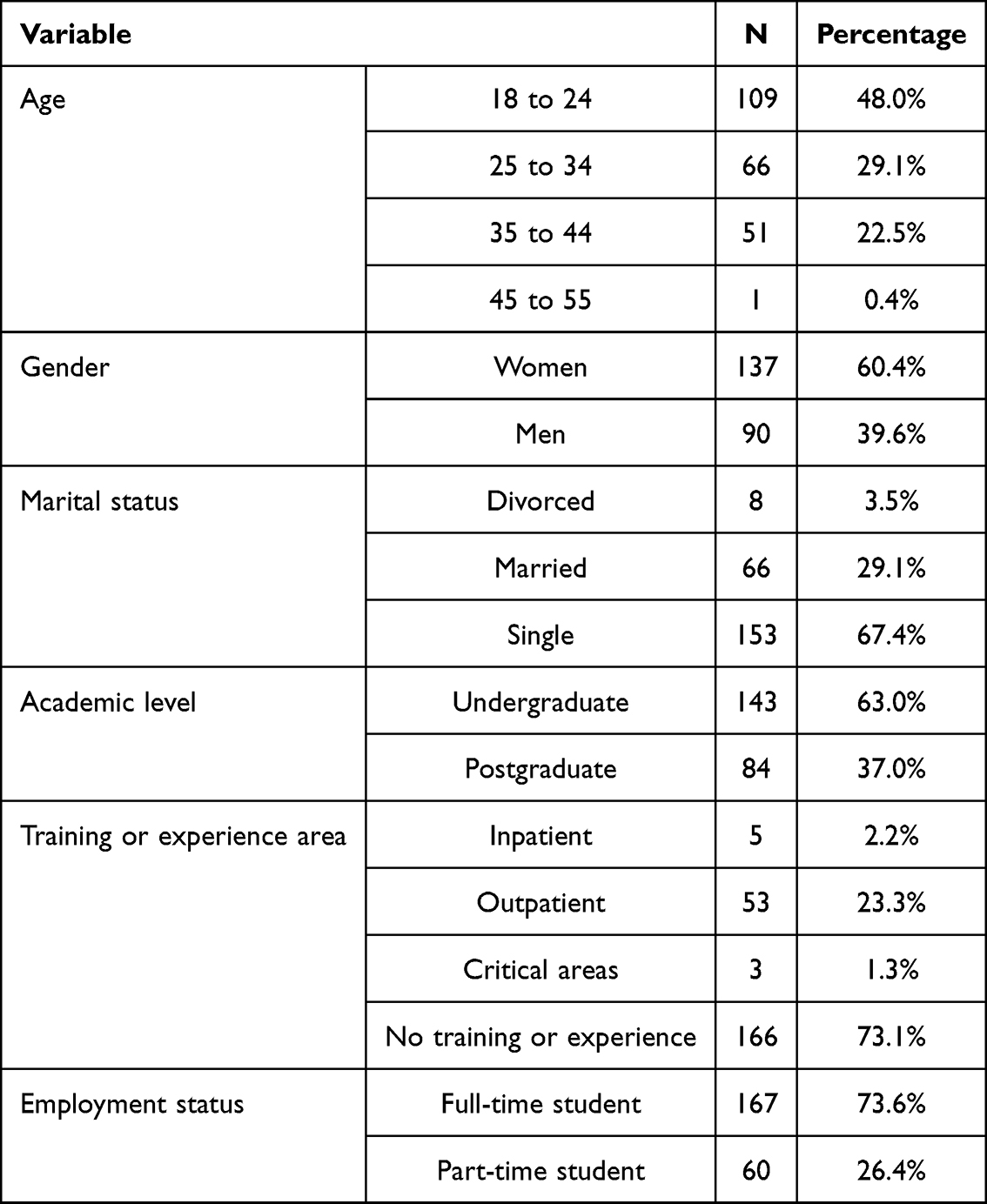 |
Table 1 Demographic Characteristics |
Description of the GIAAS
Positive Attitude Toward AI
Nursing students strongly agreed that AI had numerous beneficial applications, as reflected by the highest weighted mean of 3.72. This was closely followed by the statement that AI is exciting, with a mean of 3.71, indicating high enthusiasm and engagement with the field. Additionally, students expressed significant admiration for AI capabilities, with a mean of 3.66, indicating that they were impressed with what AI can achieve. Furthermore, students believed that AI can provide new economic opportunities for Saudi Arabia and positively impact people’s well-being, with a mean of 3.59. The statement that society will benefit from a future involving AI also demonstrated a high mean score (3.46), indicating broad optimism regarding the benefits of AI. Regarding personal impact, nursing students were willing to integrate AI into their professional lives, with a mean of 3.41. Students exhibited considerable interest in using AI systems in daily life, with a score of 3.34. The overall mean score on the GIAAS positive attitude subscale was 3.43, indicating that nursing students demonstrated a generally moderately positive attitude toward AI (Table 2).
 |
Table 2 Descriptions of Positive Attitude Items |
Negative Attitude Toward AI
Regarding negative perceptions, the belief that AI was used for spying exhibited a mean score of 3.23, reflecting apprehensions about privacy and security. Similarly, students demonstrated a moderate preference for interacting with AI over humans in routine transactions, with a mean of 3.15. They also expressed concerns about the potential dangers of AI, with a mean of 3.16. Moreover, the perception that AI may take control of human beings scored a mean of 3.08, indicating underlying fears of the impact of AI on human agency and livelihoods. The belief that AI can perform better than humans on certain tasks demonstrated a mean score of 3.07, indicating recognition of AI capabilities without overwhelming confidence. Furthermore, concerns about AI making errors and its suitability for routine jobs both scored a mean of 3.04, highlighting cautious attitudes regarding the reliability and role of AI. The overall mean negative attitude score on the GIAAS was 3.05, indicating that nursing students generally exhibited a moderately negative attitude toward AI (Table 3).
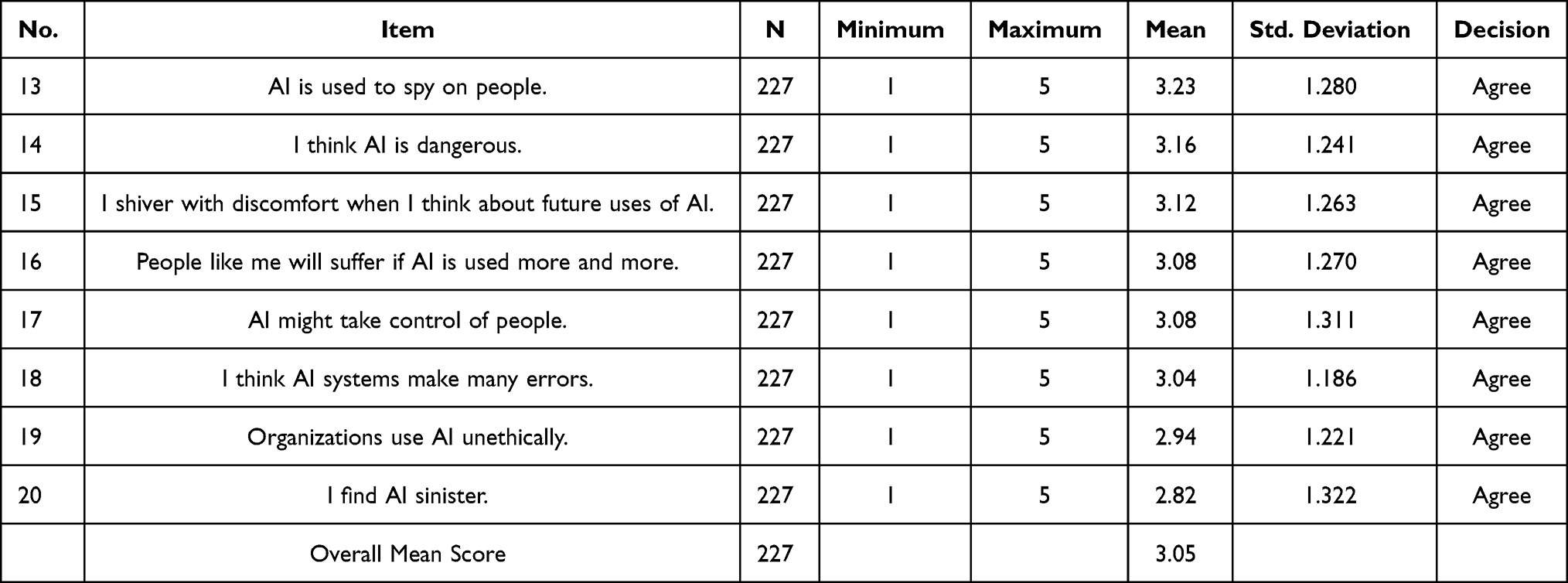 |
Table 3 Descriptions of Negative Attitudes |
Description of the MAIRS-MS
On the MAIRS-MS, with a mean score of 3.42, nursing students expressed confidence in using AI technologies effectively and efficiently in healthcare delivery. This indicates a high level of preparedness for leveraging AI tools in practical healthcare settings. Similarly, with a mean score of 3.34, students felt well prepared to use AI applications in accordance with their intended purposes. Furthermore, with a mean score of 3.37, the students demonstrated proficiency in ethical and legal considerations related to AI in healthcare. A mean score of 3.4 reflected a readiness to act ethically while using AI technologies and adhere to legal regulations governing AI usage in healthcare. This highlights their preparedness for navigating the complex ethical and regulatory landscapes surrounding AI applications. In addition, with a mean score of 3.40, students felt that they possessed the capacity to use health data responsibly and legally, and with a mean score of 3.40, can explain AI applications to patients.
Students also demonstrated readiness for the educational and professional integration of AI. They identified value in using AI for education, services, and research purposes, which is revealed by a mean score of 3.46. Students also expressed readiness to organize workflows according to AI logic, with a mean score of 3.22. Overall, the total mean score of the 22 items in the readiness scale (MAIRS-MS) was 3.29, indicating a generally high level of readiness toward AI, with strengths in practical applications, ethical considerations, and educational integration. These findings indicate readiness to engage with AI technology in healthcare (Table 4).
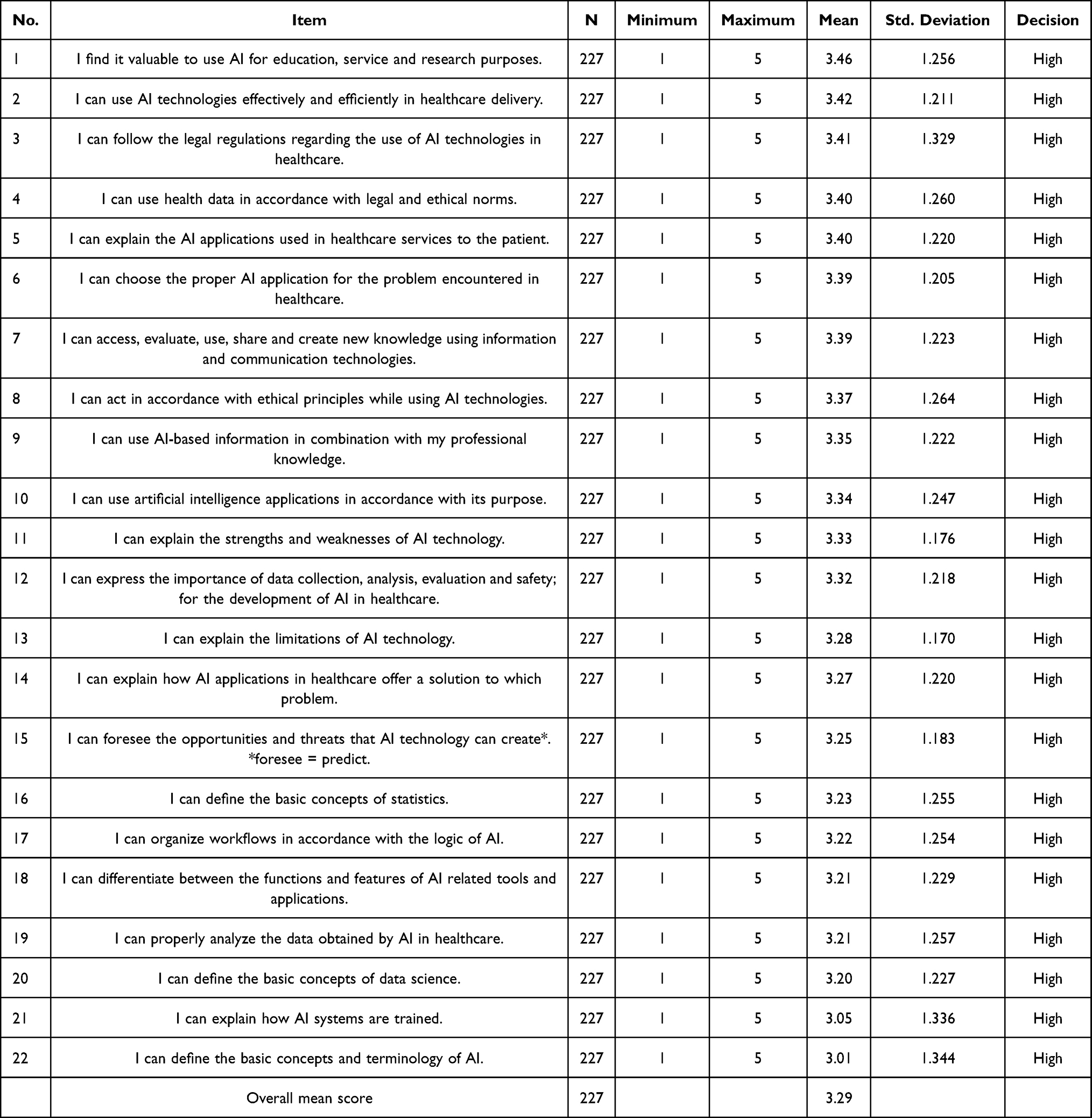 |
Table 4 Descriptive Statistics of the MAIRS-MS |
Women nursing students exhibited a more negative attitude toward AI (M = 3.05, SD = 0.81) than men nursing students (M = 2.77, SD = 0.78), which was statistically significant (t (225) = 2.511, p = 0.013). Furthermore, statistically significant difference in the mean scores for AI readiness between full-time and part-time students were observed, with part-time students’ scores (M = 3.53, SD = 0.90) being significantly higher than those of full-time students (M = 3.21, SD = 0.892) (t (225) = 2.368, p = 0.018). As illustrated in Table 5, no statistical differences in the study’s main variables according to other demographic factors were observed (ie, age, marital status, academic level, and training/experience area).
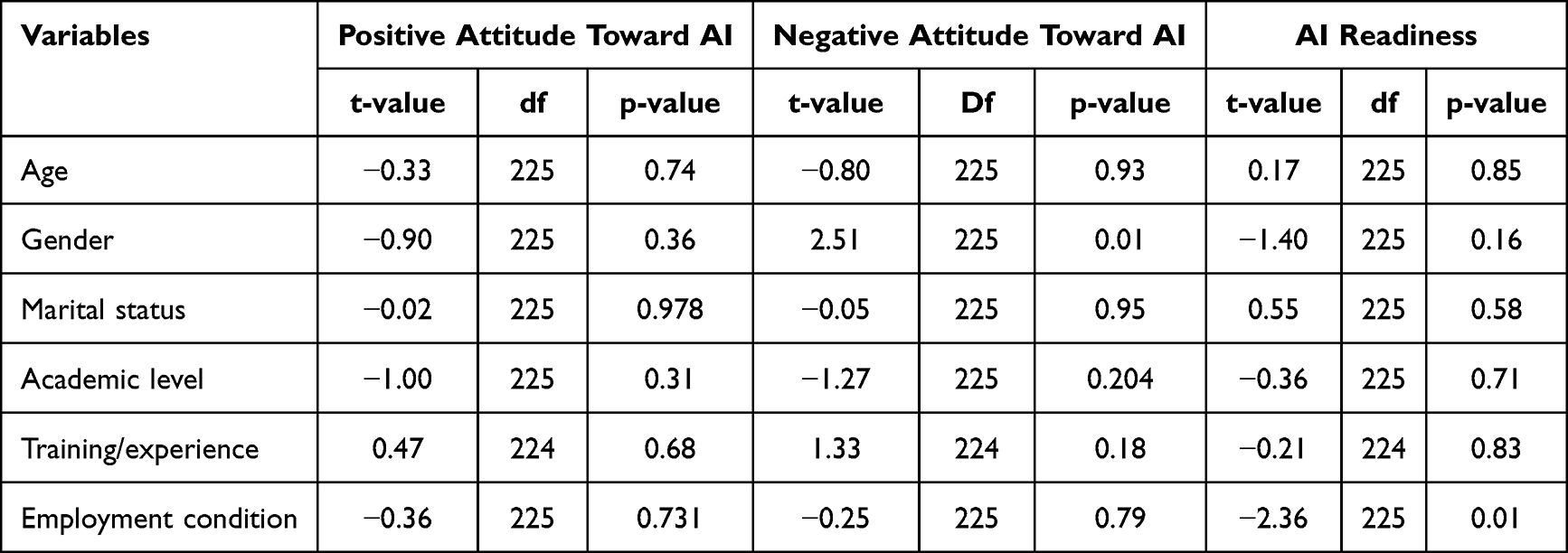 |
Table 5 Mean Differences Between the Study’s Main Variables |
Correlation Analyses of Positive and Negative Attitudes and Readiness Toward AI
As outlined in Table 6, a significant correlation was observed between positive attitudes and AI readiness. Participants with higher scores on the positive attitude subscale reported higher levels of AI readiness (r = 0.71, p < 0.001). Accordingly, participants with higher scores for negative attitudes toward AI reported greater AI readiness. Thus, participants with higher levels of AI readiness exhibited more forgiving attitudes toward its negative aspects.
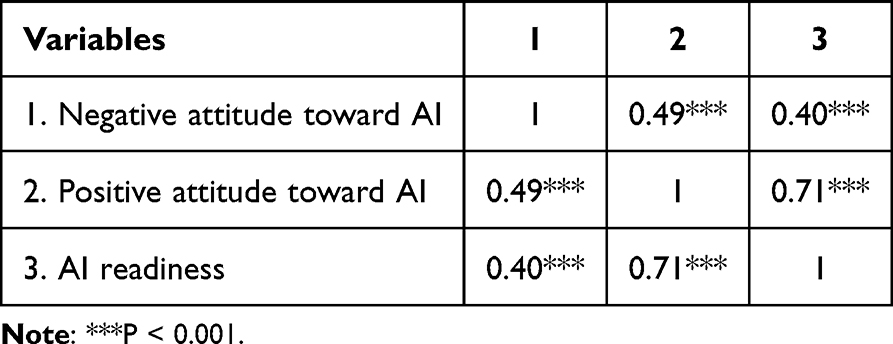 |
Table 6 Correlational Matrix for Positive and Negative Attitudes and Readiness Toward AI |
Discussion
This study examined nursing students’ attitudes and readiness toward AI at KSU. In particular, it aimed to examine current levels of readiness and attitudes toward AI, as well as related demographic differences. The findings provide valuable insights that can guide curriculum enhancements to improve nursing students’ preparedness, motivation, and competencies related to AI.
The overall mean score for positive attitudes toward AI exceeded 3.34. This result is consistent with a recent study in which medical students in Malaysia demonstrated a high awareness level of the role of AI in healthcare, with 87.36% agreeing that its role was essential.26 Similarly, primary school students in Beijing demonstrated enthusiasm for learning AI and perceived technology as powerful and beneficial.27 The current study highlights the favorable disposition among nursing students toward the potential benefits and applications of AI, which can be substantiated by the use of AI applications in educational settings.
Furthermore, the findings revealed a significant relationship between attitudes and readiness to adopt AI. The results indicate that students who perceived AI favorably were more prepared to integrate it into their future practice. This phenomenon can be understood using psychological and educational frameworks. The TAM posits that perceived usefulness and perceived ease of use strongly influence an individual’s behavioral intention to adopt technology.8 Similarly, the theory of planned behavior indicates that attitudes directly influence intentions and subsequent behaviors. As Bosnjak et al stated, the stronger the intention, the more likely it is that the aligned behavior will follow.28 Therefore, students with a positive attitude toward AI are more likely to be enthusiastic about learning its applications and embracing its use in education or healthcare settings.
Students who adopted a forgiving attitude toward the drawbacks of AI were more willing to use it. They recognized that no technology exists without flaws. By accepting the limitations of AI, students can more easily focus on its benefits, instead of being deterred by its drawbacks. Conversely, students who perceived AI as a threat to their roles fear job displacement or loss of human connections in patient care. This can lead to disengagement, lower motivation to learn about AI, and reluctance to adopt new technologies.29 In addition, if nursing programs do not adequately address the integration of AI into educational curricula, and/or faculty members express skepticism about its utility, students may not be motivated to integrate AI into their education or practice. However, exposure to positive role models who successfully use AI in clinical settings can reinforce favorable attitudes and readiness among students. These findings indicate the need for comprehensive training and supportive learning environments that address the benefits and challenges of AI in nursing practice.
The interaction between attitude and readiness implies that positive and negative attitudes simultaneously influence readiness. Possibly, the more students are prepared to use AI, the more favorable their attitude toward it. According to Ma et al, cultural background influences students’ perceptions of AI, shaping their views of its benefits, usability, and potential challenges.30 These cultural differences arise from various factors including societal norms, educational exposure, and the degree of technological integration within each culture. In some cultures, technology is celebrated as essential to progress and modern life, which fosters positive attitudes toward AI. In others, there may be more cautious or skeptical perspectives, perceiving AI with concern, or even apprehension, owing to its perceived complexity and/or potential disruptions. This contributes to the diversity of opinions on the ease of use, acceptance, and applications of AI, particularly among students from different cultural backgrounds.
In the Saudi Arabian context, the integration of AI is expanding across many sectors, particularly in healthcare; this may be influenced by culturally sensitive norms.31,32 This was evidenced during the answering of the second research question, which sought to identify the differences between men and women nursing students in relation to their attitudes and readiness toward AI. The findings demonstrated that women exhibited more negative attitudes than men. These results can be justified by the fact that in Saudi Arabian culture, women are more eager to use AI, regardless of its drawbacks. Therefore, considering these cultural norms when applying AI in educational contexts is important. In addition, a statistically significant difference in the mean AI readiness scores between full-time and part-time students was observed. This might be explained by the fact that part-time students have multiple responsibilities and employ more strategies, such as seeking support from AI or other available resources.26,33
The results of this study are consistent with those of several previous investigations on AI preparedness among medical and nursing students. Labrague et al reported an intermediate level of preparedness among nursing students.21 However, in comparison to the studies by Cruz et al and Al-Qerem et al, which reported lower preparedness levels and cautious attitudes toward AI among medical students in Kazakhstan and Jordan,17,29 our study indicates a higher level of AI readiness, particularly in practical application and ethical considerations. This indicates that students’ readiness is driven primarily by their enthusiasm and the perceived benefits of AI, instead of by any reservations they hold. In addition, variability in institutional exposure to AI-related content may influence students’ familiarity and confidence levels. Institutions offering AI-related courses, simulation experiences, and/or interdisciplinary collaborations help students produce more positive attitudes and higher levels of readiness. However, a lack of structured AI education can generate apprehension and uncertainty.13,14
As discussed by Rony et al, the healthcare landscape is evolving rapidly, with AI emerging as a transformative force.34 Therefore, understanding the perspectives of nursing professionals toward AI integration into future nursing care is crucial. They also recommended comprehensive training programs to equip nursing professionals with the skills necessary for successful AI integration. Therefore, we can infer that students perceive the advantages of AI as outweighing its potential drawbacks, especially in professional fields such as nursing, where opportunities for AI to enhance patient care, streamline workflows, and support decision making exist.
Nursing associations and educational organizations can greatly aid in promoting AI competency among nursing students. They must create standards of care and guidelines for nurses using AI, focusing on responsible and moral use. Continued educational standards for nursing licensure and certification should include AI-related competencies and training to guarantee continued professional development in this rapidly developing field. Furthermore, funded studies examining how AI affects nursing practices and patient outcomes will yield evidence-based insights to direct future adoption efforts. Data privacy, ethical norms, and patient safety should be prioritized in these frameworks. AI can be easily and widely adopted if healthcare facilities and educational programs receive the financial support and incentives to implement AI training and technologies. Promoting informed decision making and acceptance of AI technology also requires educating stakeholders and the public about the advantages as well as the potential dangers of AI in healthcare.
As this study employed a cross-sectional design, conclusions regarding the causal relationships among study variables could not be drawn. Furthermore, because the sample was limited to the KSU College of Nursing, results may not be generalizable to other Saudi Arabian nursing programs. Furthermore, self-reported data may have introduced response bias, affecting the precision of the preparedness and attitude evaluations. Subsequent investigations should proceed in several directions to expand on the present findings. Insights into how exposure and experience shape perceptions can be gained by tracking students’ attitudes toward AI throughout their education and early career using longitudinal research. Comparative research across various Saudi Arabian regions and with international contexts may also help clarify cultural influences on perceptions of AI. Furthermore, qualitative studies should aim to explain why particular attitudes and perspectives on AI exist among nursing students.
Conclusion
Nursing students at KSU generally demonstrated moderately positive attitudes toward AI. They expressed excitement about its potential, recognized its benefits, and maintained a forgiving attitude toward its limitations. This balanced perspective indicates that their enthusiasm for AI is accompanied by a healthy awareness of its associated risks. Moreover, nursing students exhibited a high level of readiness for AI adoption, with notable strengths in practical application, ethical awareness, and educational integration. These findings indicate that they are well prepared to engage with AI technologies in healthcare. Therefore, integrating AI education into nursing curricula should be a priority for educators and institutions. This comprises the development of specialized courses or modules that include both theoretical foundations and practical applications of AI in education, learning and healthcare, as well as the provision of hands-on training opportunities through realistic and virtual learning environments.
Abbreviations
AI, Artificial intelligence; GAAIS, General Attitudes toward Artificial Intelligence Scale; MAIRS-MS, Medical Artificial Intelligence Readiness Scale for Medical Students; SPSS, Statistical Package for the Social Sciences (IBM SPSS Statistics).
Data Sharing Statement
The datasets used and/or analyzed during the current study are available from the corresponding author upon reasonable request.
Ethics Approval and Informed Consent
This study was conducted in accordance with the Declaration of Helsinki and approved by the Institutional Review Board (or Ethics Committee) of King Saud University, Saudi Arabia (IRB No: KSU-HE-24-207). Date of approval: 05-03-2024.
Consent for Publication
Informed consent was obtained from all participants involved in the study.
Acknowledgment
The authors extend appreciation to the Ongoing Research Funding program (ORF-2025-844), King Saud University, Riyadh, Saudi Arabia.
Author Contributions
All authors made a significant contribution to the work reported, whether that is in the conception, study design, execution, acquisition of data, analysis and interpretation, or in all these areas; took part in drafting, revising or critically reviewing the article; gave final approval of the version to be published; have agreed on the journal to which the article has been submitted; and agree to be accountable for all aspects of the work.
Funding
The study was funded by the Ongoing Research Funding program, (ORF-2025-844), King Saud University, Riyadh, Saudi Arabia.
Disclosure
The author(s) report no conflicts of interest in this work.
References
1. Xu Y, Liu X, Cao X, et al. Artificial intelligence: a powerful paradigm for scientific research. Innovation. 2021;2(4):100179. doi:10.1016/j.xinn.2021.100179
2. Taskiran N. Effect of artificial intelligence course in nursing on students’ medical artificial intelligence readiness: a Comparative Quasi-Experimental Study. Nurse Educ. 2023;48(5):E147–E152. doi:10.1097/NNE.0000000000001446
3. Navarrete-Welton AJ, Hashimoto DA. Current applications of artificial intelligence for intraoperative decision support in surgery. Front Med. 2020;14(4):369–381. doi:10.1007/s11684-020-0784-7
4. Buabbas AJ, Miskin B, Alnaqi AA, et al. Investigating students’ perceptions towards artificial intelligence in medical education. Healthcare. 2023;11(9):1298. doi:10.3390/healthcare11091298
5. Larentzakis A, Lygeros N. Artificial Intelligence (AI) in medicine as a strategic valuable tool. Pan Afr Med J. 2021;38(1). doi:10.11604/pamj.2021.38.184.28197
6. Pailaha AD. The impact and issues of artificial intelligence in nursing science and healthcare settings. SAGE Open Nurs. 2023;9:23779608231196847. doi:10.1177/23779608231196847
7. Montejo L, Fenton A, Davis G. Artificial intelligence (AI) applications in healthcare and considerations for nursing education. Nurse Educ Pract. 2024;80:104158. doi:10.1016/j.nepr.2024.104158
8. Davis FD. Perceived usefulness, perceived ease of use, and user acceptance of information technology. MIS Quarterly. 1989;13(3):319–339. doi:10.2307/249008
9. Venkatesh V, Morris MG, Davis GB, Davis FD. User acceptance of information technology: toward a unified view. MIS Quarter. 2003;27(3):425–478. doi:10.2307/30036540
10. Ajzen I. The theory of planned behavior. In: Handbook of Theories of Social Psychology. Vol. 1. 2012:583.
11. Kwak Y, Ahn JW, Seo YH. Influence of AI ethics awareness, attitude, anxiety, and self-efficacy on nursing students’ behavioral intentions. BMC Nursing. 2022a;21(1):1–8. doi:10.1186/s12912-022-01048-0
12. Cho KA, Seo YH. Dual mediating effects of anxiety to use and acceptance attitude of artificial intelligence technology on the relationship between nursing students’ perception of and intention to use them: a descriptive study. BMC Nursing. 2024;23(1):212. doi:10.1186/s12912-024-01887-z
13. Amiri H, Peiravi S, Shojaee R, et al. Medical, dental, and nursing students’ attitudes and knowledge towards artificial intelligence: a systematic review and meta-analysis. BMC Med Educ. 2024;24(1):412. doi:10.1186/s12909-024-05406-1
14. Castonguay A, Farthing P, Davies S, et al. Revolutionizing nursing education through Ai integration: a reflection on the disruptive impact of ChatGPT. Nurse Education Today. 2023;129:105916. doi:10.1016/j.nedt.2023.105916
15. Karaca O, Çalışkan SA, Demir K. Medical artificial intelligence readiness scale for medical students (MAIRS-MS) – development, validity and reliability study. BMC Med Educ. 2021;21(1):112. doi:10.1186/s12909-021-02546-6
16. Kusuma A, Lestari H, Lestari H, Usman O. Influence of motivation work, discipline of work, work environment, cultural organization, and compensation to the performance of employees. SSRN. 2019. doi:10.2139/ssrn.3311306
17. Karaarslan D, Kahraman A, Ergin E. How does training given to pediatric nurses about artificial intelligence and robot nurses affect their opinions and attitude levels? A quasi-experimental study. J Pediatric Nurs. 2024;77:e211–e217. doi:10.1016/j.pedn.2024.04.031
18. Buchanan C, Howitt ML, Wilson R, Booth RG, Risling T, Bamford M. Predicted influences of artificial intelligence on nursing education: scoping review. JMIR Nurs. 2021;4(1):e23933. doi:10.2196/23933
19. Martinez-Ortigosa A, Martinez-Granados A, Gil-Hernández E, Rodriguez-Arrastia M, Ropero-Padilla C, Roman P. Applications of artificial intelligence in nursing care: a systematic review. J Nurs Manag. 2023;2023(1):3219127. doi:10.1155/2023/3219127
20. Kimmerle J, Timm J, Festl-Wietek T, Cress U, Herrmann-Werner A. Medical students’ attitudes toward ai in medicine and their expectations for medical education. J Med Educ Curricular Dev. 2023;10:23821205231219346.
21. Labrague LJ, Aguilar-Rosales R, Yboa BC, Sabio JB. Factors influencing student nurses’ readiness to adopt artificial intelligence (AI) in their studies and their perceived barriers to accessing AI technology: a cross-sectional study. Nurse Education Today. 2023;130:105945. doi:10.1016/j.nedt.2023.105945
22. Al-Qerem W, Eberhardt J, Jarab A, et al. Exploring knowledge, attitudes, and practices towards artificial intelligence among health professions’ students in Jordan. BMC Med Inform Decis Mak. 2023;23(1):288. doi:10.1186/s12911-023-02403-0
23. Zqp N, Ling LYJ, Chew HSJ, Lau Y. The role of artificial intelligence in enhancing clinical nursing care: a scoping review. J Nurs Manag. 2022;30(8):3654–3674. doi:10.1111/jonm.13425
24. Cohen J. Statistical power analysis. Curr Dir Psychol Sci. 1992;1(3):98–101. doi:10.1111/1467-8721.ep10768783
25. Schepman A, Rodway P. Initial validation of the general attitudes towards artificial intelligence scale. Comput Human Behav Rep. 2020;1:100014. doi:10.1016/j.chbr.2020.100014
26. Truong NM, Vo TQ, Tran HTB, Nguyen HT, Pham VNH. Healthcare students’ knowledge, attitudes, and perspectives toward artificial intelligence in the southern Vietnam. Heliyon. 2023;9(12):e22653. doi:10.1016/j.heliyon.2023.e22653
27. Dai Y, Chai CS, Lin PY, Jong MSY, Guo Y, Qin J. Promoting students’ well-being by developing their readiness for the artificial intelligence age. Sustainability. 2020;12(16):6597. doi:10.3390/su12166597
28. Bosnjak M, Ajzen I, Schmidt P. The theory of planned behavior: selected recent advances and applications. Eur J Psychol. 2020;16(3):352–356. doi:10.5964/ejop.v16i3.3107
29. Cruz JP, Sembekova A, Omirzakova D, Bolla SR, Balay-odao EM. Attitudes toward and readiness for medical artificial intelligence among medical and health science students. Health Professions Educ. 2024;10(3):15. doi:10.55890/2452-3011.1296
30. Ma D, Akram H, Chen H. Artificial intelligence in higher education: a cross-cultural examination of students’ behavioral intentions and attitudes. Int Rev Res Open Distributed Learning. 2024;25(3):134–157. doi:10.19173/irrodl.v25i3.7703
31. Alotaibi NS, Alshehri AH. Prospers and obstacles in using artificial intelligence in Saudi Arabia higher education institutions—the potential of AI-based learning outcomes. Sustainability. 2023;15(13):10723. doi:10.3390/su151310723
32. Alharthey BK. The influence of artificial intelligence on customer behavior. Am J Manag Econom Innovations. 2024;6(3):26–38. doi:10.37547/tajmei/Volume06Issue03-04
33. Tezpal M, Ghosh S, Lalwani R, Yadav J, Yadav AK. Artificial intelligence in health care – a study on perceptions of and readiness for artificial intelligence in health-care professionals. J Marine Med Soc. 2024;26(3):376–381. doi:10.4103/jmms.jmms_161_23
34. Rony MK, Kayesh I, Bala SD, Akter F, Parvin MR. Artificial intelligence in future nursing care: exploring perspectives of nursing professionals - A descriptive qualitative study. Heliyon. 2024;10(4):e25718. doi:10.1016/j.heliyon.2024.e25718
 © 2025 The Author(s). This work is published and licensed by Dove Medical Press Limited. The
full terms of this license are available at https://www.dovepress.com/terms
and incorporate the Creative Commons Attribution
- Non Commercial (unported, 4.0) License.
By accessing the work you hereby accept the Terms. Non-commercial uses of the work are permitted
without any further permission from Dove Medical Press Limited, provided the work is properly
attributed. For permission for commercial use of this work, please see paragraphs 4.2 and 5 of our Terms.
© 2025 The Author(s). This work is published and licensed by Dove Medical Press Limited. The
full terms of this license are available at https://www.dovepress.com/terms
and incorporate the Creative Commons Attribution
- Non Commercial (unported, 4.0) License.
By accessing the work you hereby accept the Terms. Non-commercial uses of the work are permitted
without any further permission from Dove Medical Press Limited, provided the work is properly
attributed. For permission for commercial use of this work, please see paragraphs 4.2 and 5 of our Terms.
Recommended articles

Assessment of Students’ Attitudes Towards the Nursing Profession at Wolkite University, Ethiopia, 2021
Emire MS, Haile TG, Tesu M
Nursing: Research and Reviews 2022, 12:159-168
Published Date: 25 August 2022

E-Learning Experiences Among Nursing Students: A Scoping Review
Marawa'a A
Advances in Medical Education and Practice 2024, 15:369-379
Published Date: 3 May 2024