
Back to Journals » Nature and Science of Sleep » Volume 17

Association Between Soy Product Intake and Insomnia in Chinese Middle-Aged and Older Adults: A Cross-Sectional Study
Authors Sun L, Lao J, Guo H, Xu J, Chen YH, Luo X  , He S, Hu W, Wang F , Chen L, Liu Y , Wang Q, Lin W
Received 21 December 2024
Accepted for publication 7 July 2025
Published 13 August 2025 Volume 2025:17 Pages 1837—1849
DOI https://doi.org/10.2147/NSS.S506431
Checked for plagiarism Yes
Review by Single anonymous peer review
Peer reviewer comments 2
Editor who approved publication: Professor Valentina Alfonsi
Lanrong Sun,1,2,* Jiaying Lao,2,* Haihui Guo,1,* Jinzhong Xu,1 Yu-Hsin Chen,2 Xingguang Luo,3 Shencong He,2 Weiming Hu,4 Fan Wang,5 Li Chen,2 Yanlong Liu,2 Qizeng Wang,6 Wenhui Lin6
1Department of Clinical Pharmacy, Affiliated Wenling Hospital, Wenzhou Medical University, Wenling, 317500, People’s Republic of China; 2School of Mental Health, Wenzhou Medical University, Wenzhou, 325035, People’s Republic of China; 3Department of Psychiatry, Yale University School of Medicine, New Haven, CT, 06510, USA; 4Department of Psychiatry, The Third Hospital of Quzhou, Quzhou, People’s Republic of China; 5Department of Psychiatric Research Center, Beijing Hui-Long-Guan Hospital, Peking University, Beijing, 100096, People’s Republic of China; 6Department of Cardiovascular Medicine, Affiliated Wenling Hospital, Wenzhou Medical University, Wenling, 317500, People’s Republic of China
*These authors contributed equally to this work
Correspondence: Yanlong Liu, School of Mental Health, Wenzhou Medical University, Wenzhou, 325035, People’s Republic of China, Email [email protected] Wenhui Lin, Department of Cardiovascular Medicine, Affiliated Wenling Hospital, Wenzhou Medical University, Wenling, 317500, People’s Republic of China, Email [email protected]
Background and Objective: Insomnia has various adverse effects on middle-aged and older adults. Improving insomnia by adjusting diet has attracted attention. This study investigated the relationship between soy product intake and insomnia in middle-aged and older adults and explored the role of inflammatory factors.
Methods: The study included 877 middle-aged and older adults aged ≥ 45 years which from general patients who made an appointment or were admitted to the cardiology department at Wenling Hospital in Taizhou City. The proportion of female participants is 35.01%. Soy product intake was assessed using the Food Frequency Questionnaire (FFQ), sleep was quantified using the Insomnia Severity Index (ISI). The median (IQR) of soy product intake is ≤ 1 time per week (≤ 1 time per week, 2– 6 times per week) and the mean/SD value of insomnia score is 5.43/5.13.
Results: In Chinese middle-aged and older adults, soy product intake was negatively correlated with insomnia (|r|s ≥ 0.117, ps < 0.001), C-reactive protein (CRP), tumor necrosis factor-alpha (TNF-α) and triglyceride (TG) levels (adjusted β: − 0.139, 95% CI: − 0.265 to − 0.012; β: − 0.049, 95% CI: − 0.091 to − 0.006; β: − 0.043, 95% CI: − 0.085 to − 0, respectively). There was no significant correlation between soy product intake and White Blood Cell (WBC), Absolute Neutrophil Count (GRAM), Platelet Count (PLT), Interleukin-1β (IL-1β), Interleukin-2 (IL-2), Interleukin-6 (IL-6), Hemoglobin (Hb), Red Blood Cell (RBC), Low-Density Lipoprotein Cholesterol (LDL-C), High-Density Lipoprotein Cholesterol (HDL-C) and Total Cholesterol (TC) levels.
Conclusion: Lower levels of soy product intake are associated with higher rates of insomnia in the middle-aged and older adults. Additionally, soy product intake is negatively correlated with peripheral blood CRP, TNF-α and TG levels. This study provides a new clinical perspective for middle-aged and older adults to enhance sleep through a balanced diet, wherein the inflammation and lipid may play a potentially crucial role.
Keywords: soy product intake, insomnia, insomnia severity index, serum tumor necrosis factor-alpha, serum C-reactive protein
Introduction
Sleep disorder represents a significant global public health concern, profoundly impacting overall health.1 According to WHO data, the global prevalence of sleep disorders is as high as 27%. Investigations in China indicate over 300 million Chinese adults report having sleep disorders of some sort, with insomnia topping the charts with a staggering 38.2% incidence rate among Chinese people experiencing sleep disorders.2,3 With advancing age, sleep quality typically declines, rendering sleep complaints prevalent among middle-aged and older adults.4 Sleep plays a pivotal role in numerous physiological processes, including immune function, thermoregulation, cognitive function, and memory consolidation.5 Studies have indicated that sleep disorders can detrimentally affect central nervous system functions, leading to cognitive impairment and memory deficits.6–8 Maintaining good sleep hygiene is particularly crucial for averting cognitive decline in middle-aged and older adults,7,9,10 underscoring the imperative to enhance sleep quality for long-term well-being.
In recent years, there has been growing evidence that dietary habits in particular play a key role in improving sleep. Studies have shown that a healthy eating pattern characterized by a high intake of vegetables, fish and soy products can alleviate sleep problems.11,12 Our previous cross-sectional study explored the effects of marine fish diet on sleep disorders and insomnia in Chinese adults13 and found that marine fish intake can improve multiple dimensions of sleep disorders and alleviate insomnia symptoms. However, consuming meat or fish to alleviate insomnia may not be an option for all populations (for example vegetarians).14 The intake of soy products to improve insomnia symptoms has received widespread attention. Soy products contain natural isoflavones like genistein and daidzein.15 Research has shown that soy products and soy isoflavones may mitigate the risk of various mental disorders, including sleep disturbances, Alzheimer’s disease, depression, and anxiety.5,16–19 For instance, a longitudinal study involving 1492 individuals reported an inverse relationship between soy isoflavone intake and the risk of prolonged sleep duration in Chinese adults.16 Similarly, a cross-sectional study with 1311 independent older Japanese adults (aged ≥74 years) revealed a significant negative correlation between high intake of vegetables, soy products, and fruits and difficulty initiating sleep.20 Moreover, supplementation with soy-based infant formulas has been associated with elevated serotonin and tryptophan levels in plasma and brain, potentially enhancing infant sleep latency and neurobehavioral development.21 Laboratory studies have also demonstrated that soy isoflavones can mitigate cognitive impairments induced by chronic sleep deprivation in mice through alleviating oxidative stress and neuroinflammation.5
The mechanism underlying the sleep-enhancing effects of soy products is intricate, yet evidence suggests their potential efficacy in managing insomnia. Soy isoflavones exert anti-inflammatory, antioxidant, and neuroprotective properties,5,22,23 with inflammation closely linked to insomnia.24 Notably, sleep-deprived mice exhibit heightened inflammation levels compared to their well-rested counterparts.25 Additionally, soy protein has been shown to reduce serum triglyceride and cholesterol levels,26 with sleep duration exhibiting a U-shaped relationship with serum lipid levels, implying increased risk of abnormal lipid levels with both short and long sleep durations.27
While prior research has elucidated the beneficial effects of soy products and soy isoflavones on sleep health,16,20 limited literature exists regarding the association between soy product intake and insomnia in middle-aged and older adults. This study aims to: 1) substantiate the independent correlation between soy product intake and insomnia in the middle-aged and older adults; and 2) investigate the relationship between soy product intake and physiological factors such as inflammation levels and blood lipid levels in this demographic.
Materials and Methods
Study Design
This study employed a cross-sectional analysis to examine the interplay between dietary patterns, lifestyles, and clinical conditions in the population of Taizhou City, Zhejiang Province, China. From March 2018 to August 2019, general patients were recruited from Wenling Hospital, affiliated with Wenzhou Medical University. Participants engaged in face-to-face interviews with trained investigators and completed a comprehensive questionnaire covering sociodemographic characteristics, lifestyle factors, medical history, and medication usage. Concurrently, laboratory test results and specialized examinations of the patients were documented.
Participants
As previously mentioned, the participants in this study were derived from an ongoing cohort investigation in Zhejiang Province, China.28–30 In addition, the original plan for this study was to recruit a total of 3,000 in two phases. The first phase was to put up posters at Wenling Hospital to recruit 1,500 persons who made appointments and/or visits in the cardiology department between March 2018 and August 2019. In the end, 1146 general patients who were admitted to the Department of Cardiology for suspected cardiovascular disease and had other suspected comorbidities such as infection, tumors, participated in the study. Initially, a total of 1146 general patients residing in Taizhou participated in the study. Forty individuals with missing blood samples were excluded, resulting in 1106 general patients being included in the study. Epidemiological data, including blood biochemistry, anthropometric measurements, sociodemographic particulars, dietary patterns, and lifestyle characteristics, were collected from these participants. Ultimately, 877 participants were included in the analysis, with the remaining subjects being excluded. The exclusion criteria comprised: (i) Individuals younger than forty-five years of age, as defined by the World Health Organization for middle-aged and older adults (n=43). (ii) Participants who did not complete either the Food Frequency Questionnaire (FFQ) or the Insomnia Severity Index (ISI) (n=186). Detailed information on participant recruitment is illustrated in Figure 1. This study received approval from the ethics committee of Wenling Hospital, affiliated with Wenzhou Medical University, and written informed consent was obtained from all participants prior to data collection.
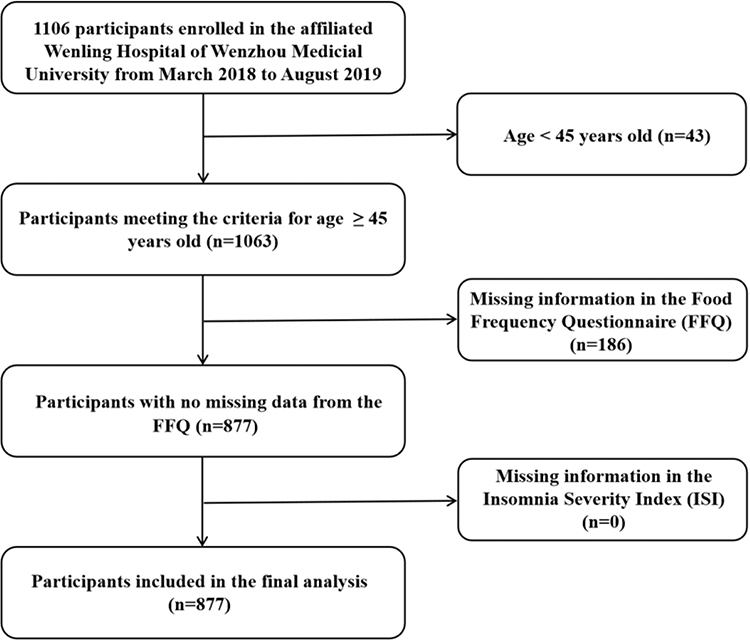 |
Figure 1 Schematic diagram of the participant selection process. |
Clinical and Biochemical Measurements
Participants underwent interviews conducted by professionally trained medical personnel, blood samples, and demographic data were collected following a standardized protocol.30 Additionally, all biological indicators, including Interleukin-1β (IL-1β), interleukin-2 (IL-2), interleukin-6 (IL-6), and tumor necrosis factor-alpha (TNF-α), were assessed using ELISA kits (ELX50).
Dietary Assessment
We use the 10-item food frequency questionnaire which include milk, salt, fruits, vegetables, red meat, seafood, eggs, soy products, nuts and sugar-sweetened beverage to assess dietary intake by investigating the average amount and frequency of consumption of each food. We selected the most common foods listed in the Chinese National Health and Dietary Survey31 and adjusted the food groups based on the common local foods obtained from the pilot trial. The questionnaire used in this study can better reflect the local dietary habits in different regions of China,32,33 and its reliability and validity have been validated.28,34,35
Sleep Quality
We used psychological assessment software purchased by the hospital and obtained from a third party provider, including the Insomnia Severity Index (ISI) scale which was employed to gauge the sleep quality of the participants. The ISI serves as a convenient self-report screening tool for insomnia, enabling the quantification of the nature and severity of sleep disturbances in subjects.13,36 It comprises 7 questions encompassing aspects such as sleep onset, maintenance, early awakening, sleep satisfaction, and impact on daily functioning (social and emotional). Responses are rated on a Likert scale ranging from 0 to 4, with total scores ranging from 0 to 28: scores less than or equal to 7 indicating no clinically significant insomnia, 8 to 14 indicating subthreshold insomnia, 15 to 21 indicating moderate clinical insomnia, and 22 to 28 indicating severe clinical insomnia.36
Statistical Analysis
The data collected underwent comprehensive analysis using R (version 4.2.2), with statistical significance set at p < 0.05. Soy product intake was categorized into tertiles (≤ 1 time per week, 2–6 times per week, ≥ 7 times per week), and the distribution across different lifestyle and clinical factors was compared. Variables using percentages were reported as the chi square test between low, moderate and high intake of soy products. Test-statistic are expressed as: X2 value (degrees of freedom). Other data were reported as Kruskal–Wallis rank-sum test, and comparisons between low, moderate, and high soy product intakes were expressed as medians/IQR. Test-statistic are expressed as: H value. Moreover, Spearman correlation coefficients were calculated to explore the relationship between peripheral blood biochemical indexes, inflammatory factors, insomnia, ISI scores, and soy product intake.
For the multivariate logistic regression analysis, the crude model solely included milk intake as the independent variable. Model 1 adjusted for gender, age, and BMI, while Model 2 further adjusted for lifestyle factors, including current smoking, current drinking, seafood intake, and milk intake. Model 3, considered a more comprehensive model, additionally adjusted for clinical factors such as hypertension, diabetes mellitus (DM), and coronary heart disease (CHD). These variables are recognized as traditional or potential risk factors associated with insomnia. In each regression model, adjusted odds ratios (ORs) and corresponding 95% confidence intervals (CIs) were calculated. Furthermore, linear regression analyses were performed to assess the association between soy product intake and biochemical indicators.
Results
Baseline Characteristics
Tables 1 and 2 present the baseline characteristics of participants categorized by tertiles of soy product intake frequency. A total of 877 middle-aged and older adults were included in this study. Those with higher frequencies of soy product intake were more likely to be female (P = 0.019), had higher seafood intake (P < 0.001), and exhibited a lower prevalence of insomnia (P < 0.001) compared to those with the lowest frequency of soy product intake.
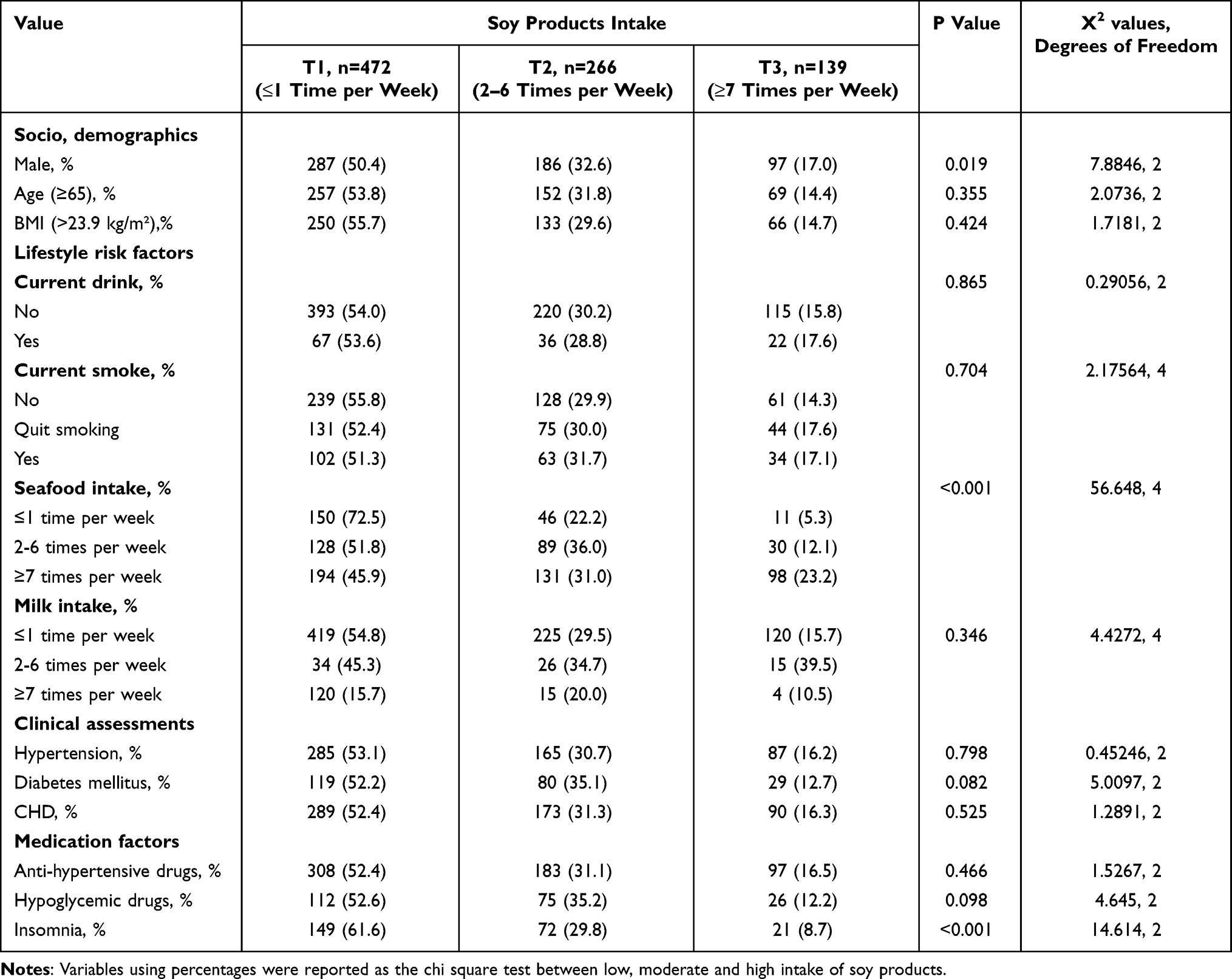 |
Table 1 Baseline Characteristics of 877 Chinese Participants by Tertile of Soy Products Intake |
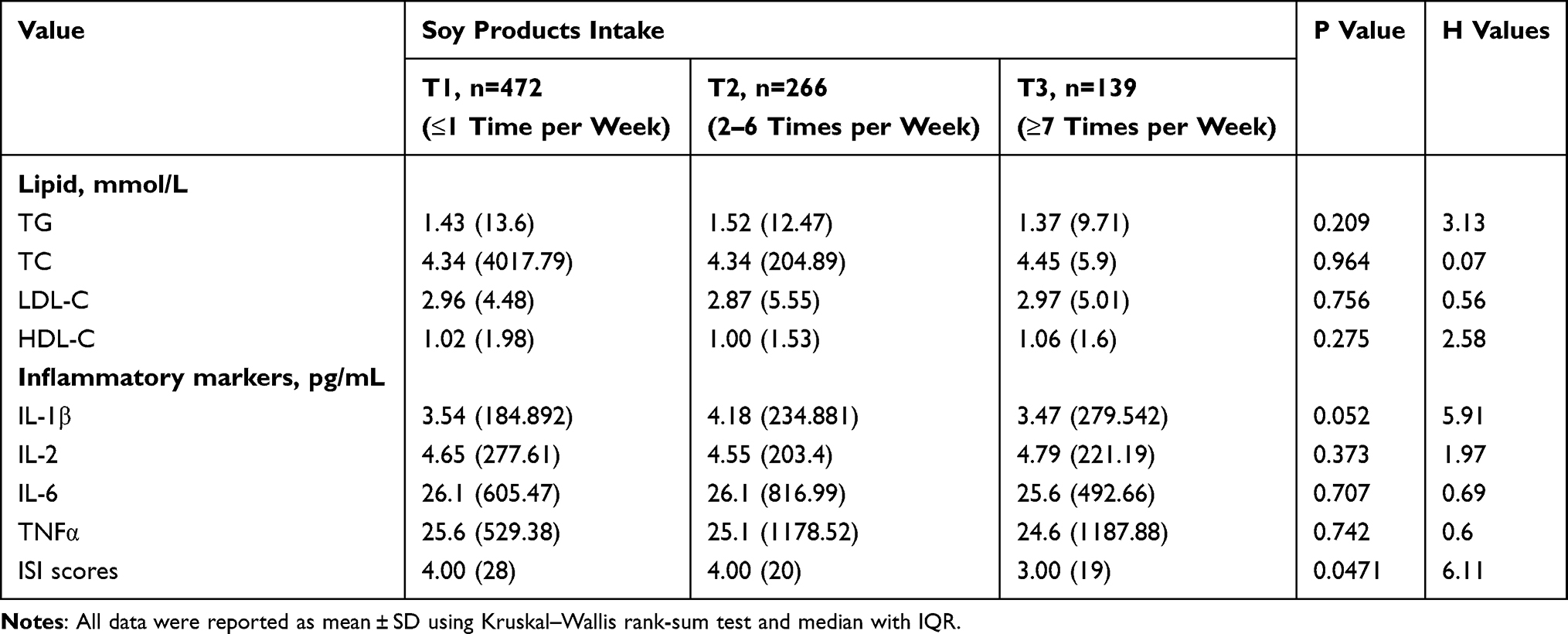 |
Table 2 Baseline Characteristics of 877 Chinese Participants by Tertile of Soy Products Intake |
We also analysed baseline information for 877 middle-aged and older participants stratifying by age and gender. Supplementary Table 1 and Supplementary Table 2 presents that compared with 45–64 years old, participants that ≥65 years old had lower BMI level (P = 0.003), higher seafood intake (P = 0.009), lower milk intake (P = 0.043), and were more likely to have comorbid hypertension (P < 0.001) and cardiovascular disease (P < 0.001) and take more hypertension drugs (P < 0.001). At the same time, participants that ≥65 years old had higher serum total cholesterol levels, lower triglyceride and Low-Density Lipoprotein Cholesterol levels, and higher interleukin-6 levels. After dividing 877 participants into two groups according to gender, we found that male is more likely than female to smoke, drink alcohol, have higher intake of seafood and milk, have an increased risk of cardiovascular disease, and are less prone to insomnia. At the same time, in addition to the total cholesterol level was significantly lower than that of women, the lipid level of men was significantly higher than that of women (Supplementary Table 3 and Supplementary Table 4).
Correlation Analyses
Correlation analyses revealed significant negative associations between soy product intake and insomnia (|r|s ≥ 0.117, ps < 0.001) as well as Insomnia Severity Index (ISI) scores (|r|s ≥ 0.068, ps < 0.05). Additionally, soy product intake was significantly negatively correlated with C-reactive protein (CRP) levels (|r|s ≥ 0.142, ps < 0.05). Furthermore, Hemoglobin (Hb) levels were negatively correlated with insomnia (|r|s ≥ 0.198, ps < 0.001) and ISI scores (|r|s ≥ 0.23, ps < 0.001), while Red Blood Cell (RBC) levels showed similar negative correlations with insomnia (|r|s ≥ 0.167, ps < 0.001) and ISI scores (|r|s ≥ 0.205, ps < 0.001). Refer to Figure 2 for detailed findings.
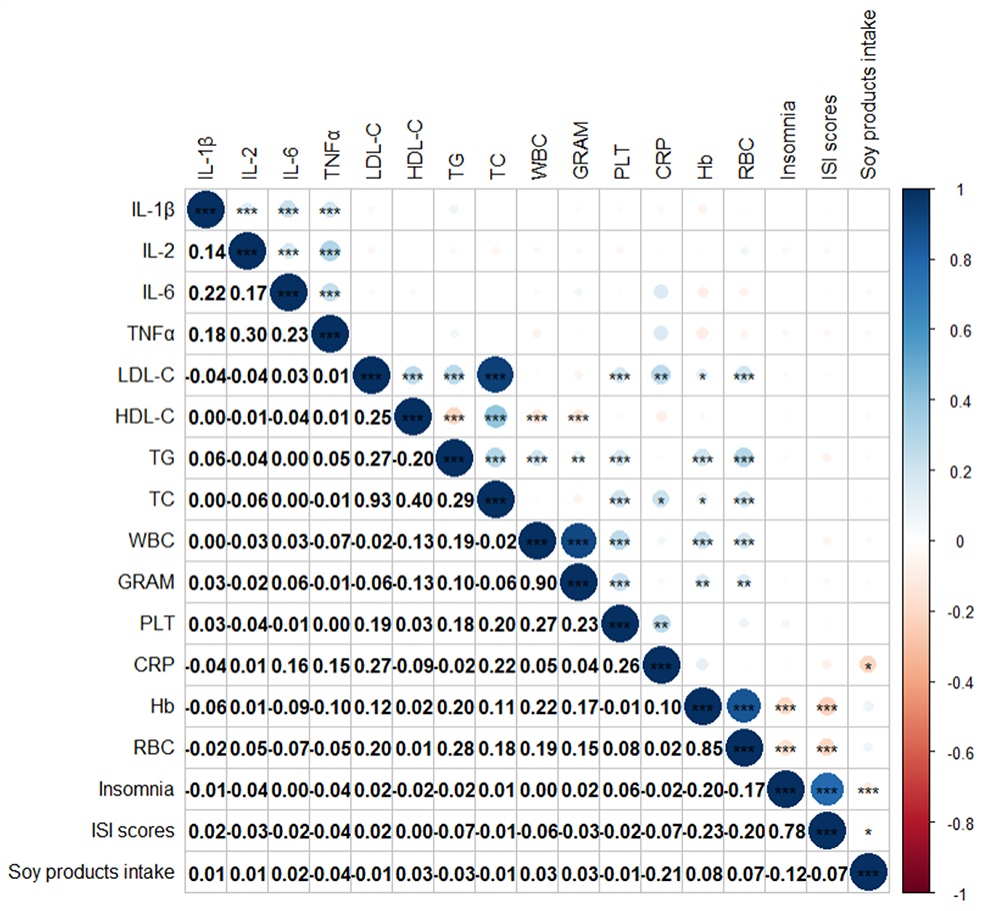 |
Figure 2 Correlations among biochemical indicators, insomnia and soy products intake. Notes: All data were reported as Spearman correlation analysis. *p<0.05, **p<0.01, ***p<0.001. |
Association Between Soy Products Intake and Insomnia Prevalence or ISI Scores
Table 3 illustrates the relationship between soy product intake and insomnia prevalence. In the crude model, individuals in the highest tertile of soy product intake (T3) showed a reduced incidence of insomnia compared to those in the lowest tertile (T1) (OR: 0.386, 95% CI: 0.228–0.626). This association persisted after adjusting for various confounding factors in Model 1, Model 2, and Model 3. Meanwhile, after further adjusting for all ten food frequency questionnaires in Model 2 as covariates, the association between soy product intake and insomnia remained (Supplementary Table 5). Similarly, the severity of insomnia, assessed through simple and multivariate linear regression (Supplementary Table 6), displayed a significant negative association with soy product intake in the full model (β: −0.065, 95% CI: −0.099 to −0.03; β: −0.058, 95% CI: −0.092 to −0.023; β: −0.038, 95% CI: −0.073 to −0.003; β: −0.036, 95% CI: −0.071 to −0.001).
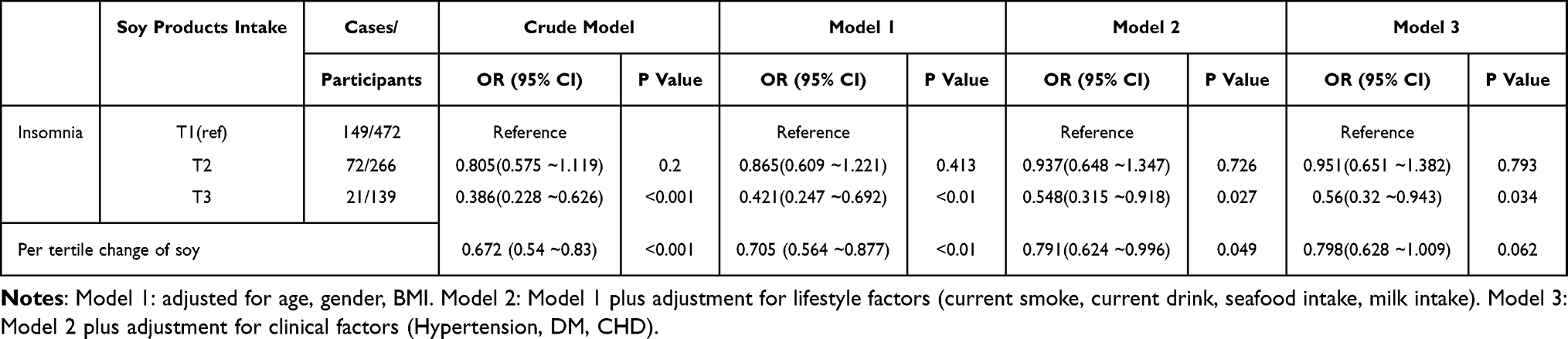 |
Table 3 Odds Ratios of Insomnia Prevalence and Corresponding 95% CIs According to Tertiles of Soy Products Intake |
Association Between Soy Product Intake and Biochemical Indicators
Multivariate linear regressions explored the relationship between soy product intake and various biochemical indicators (Table 4). While no significant association was found between soy product intake and peripheral blood C-reactive protein (CRP) levels in the crude model, adjustments for age, gender, BMI (Model 1), lifestyle factors (Model 2), and clinical factors (Model 3) revealed a significant inverse association. Moreover, no significant association was observed between soy product intake and peripheral blood tumor necrosis factor-alpha (TNF-α) and triglyceride (TG) levels in the crude model or Model 1 and Model 2. However, significant inverse associations emerged after adjusting for clinical factors (Model 3) (β: −0.049, 95% CI: −0.091 to −0.006; β: −0.043, 95% CI: −0.085 to −0).
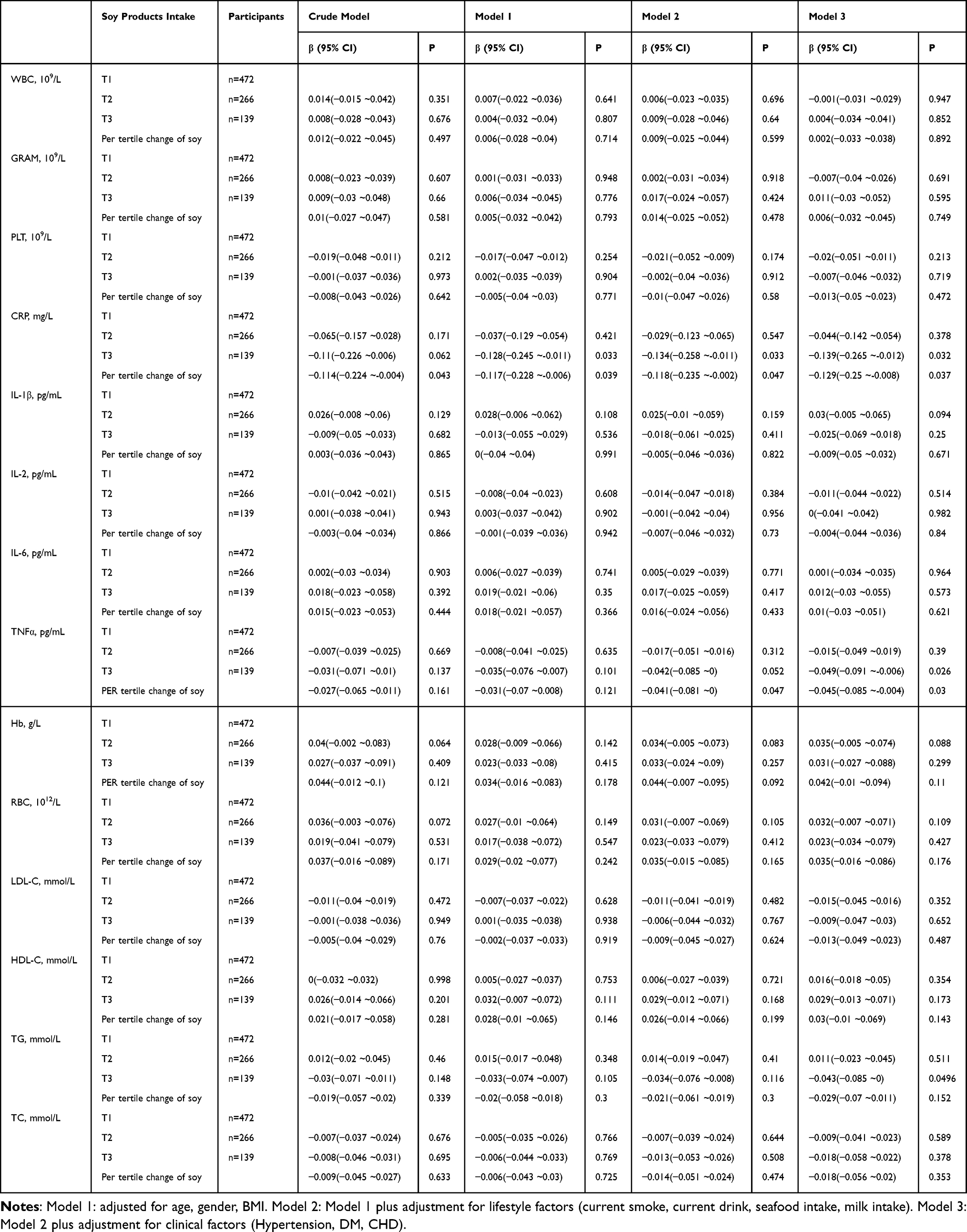 |
Table 4 Associations Between Soy Products Intake and Biochemical Indicators in 877 Chinese Participants |
Discussion
In this cross-sectional study involving 837 middle-aged and older adults, we observed that lower levels of soy intake were associated with higher rates of insomnia. This association persisted even after adjusting for relevant factors. Furthermore, soybean intake showed a negative correlation with peripheral blood C-reactive protein (CRP) level, tumor necrosis factor-alpha (TNF-α) level, and triglyceride (TG) level. Additionally, levels of Hemoglobin (Hb) and Red Blood Cells (RBC) were significantly negatively correlated with insomnia. These findings suggest a novel clinical approach for middle-aged and older adults to enhance sleep through dietary planning, with peripheral blood inflammation and lipid content potentially playing crucial roles in this process.
Our study revealed that higher soy intake was linked to a reduced incidence of insomnia in middle-aged and older adults. Consistent with our findings, a cross-sectional study of seniors aged ≥ 74 years indicated that dietary patterns rich in soy products might alleviate insomnia symptoms in older adults.20 Similarly, a clinical study involving 886 middle-aged and older women aged 45–65 years found that dietary soy replacement therapy could ameliorate menopausal symptoms, including insomnia, in menopausal women.37 Animal experiments have also shown promising results, suggesting that feeding rats soy formula might influence sleep latency and neurobehavioral development.21 Together, these findings suggest that a higher intake of soy products could positively impact sleep, consistent with our study results.
Currently, the precise mechanism through which soy products ameliorate insomnia remains incompletely elucidated. Several potential explanations exist. Firstly, soy products are abundant in dietary fiber, known to modulate the intestinal microbiota and regulate the host’s biological clock, thereby enhancing sleep quality through pro-inflammatory and anti-inflammatory reactions in the gut.38–40 Secondly, soy products contain essential amino acids like tryptophan (Trp),40 a precursor to melatonin involved in regulating inflammatory responses and sleep.41,42 Notably, inflammatory factors appear to intersect in these pathways. Pro-inflammatory factors have been identified as potential risk factors for perimenopausal insomnia, while soy isoflavones exhibit anti-inflammatory and neuroprotective effects.5,43 Thus, we investigated the role of inflammatory factors in soybean product-mediated insomnia improvement among middle-aged and older adults.
Our study revealed that, after adjusting for covariates, soy product intake was significantly inversely associated with peripheral blood TNF-α and CRP levels. Previous studies have shown that soy isoflavone supplementation reduces circulating TNF-α levels in older adults,44 and a clinical trial demonstrated that a soy isoflavone-rich diet decreases peripheral CRP concentrations in postmenopausal women.45 Consistent with these findings, experiments in middle-aged and elderly mice found that soy isoflavones restored dopamine and TNF-α levels in Parkinson’s mice induced by MPTP (1-methyl-4-phenyl-1,2,3,6-tetrahydropyridine).46 Similarly, a study investigating body weight and inflammatory protein levels in mice showed significantly lower serum CRP levels in mice fed high-isoflavone soy protein concentrate compared to those fed low-isoflavone soy protein concentrate,47 aligning with our results.
Without adjusting for age, sex, and BMI, there was no significant correlation between soy product intake and peripheral blood CRP levels. Likewise, a significant negative correlation between soybean product intake and TNF-α levels was evident only after adjusting for age, gender, BMI, lifestyle factors, and clinical factors. A cross-sectional study of 4360 men and 4807 women found a consistent positive association between free estradiol and high CRP in men and older women of all ages, with free androgens positively correlated with high CRP in women under 50 years of age.48 Clinical studies have also highlighted significant TNF-α level variations in the peripheral blood of middle-aged and older adults with diabetes or coronary heart disease.48,49 Thus, our findings of significant correlations after controlling for covariates align with existing literature.
Additionally, we observed a significant negative correlation between soy product intake and TG levels in middle-aged and older adults after adjusting for clinically relevant factors. While previous studies often characterize the soy diet as high-fat, with documented effects on lowering serum TG and cholesterol levels,26 our study did not find a correlation between TG levels and insomnia. A cross-sectional study of 4,757 individuals explored the relationship between insomnia and dyslipidemia, revealing no significant association between insomnia and TG levels; however, TG levels increased significantly after covariate adjustment.50 This discrepancy may stem from TG’s involvement in regulating various physiological processes, including glucose and lipid metabolism, blood pressure regulation, and cardiovascular disease occurrence, potentially influencing the correlation between triglycerides and sleep.26,51 Finally, our study identified significant negative correlations between hemoglobin levels, RBC counts, ISI scores, and insomnia. A case-control study similarly observed significant differences in red blood cell levels, hemoglobin, and hematocrit between patients with chronic insomnia and controls.52 However, further investigation is warranted to elucidate the relationship between soy product intake, hemoglobin or red blood cell levels, and insomnia in middle-aged and older adults.
In addition, there may be a two-way relationship between soy product intake and insomnia. Sleep deprivation can cause gut microbiota dysfunction by influencing homeostasis of the microbiota-gut-brain axis.53 At the same time, sleep disturbances can trigger abnormal gastric acid secretion and increased visceral pain sensitivity, which leads to an increase in the incidence of digestive diseases such as gastroesophageal reflux disease and irritable bowel syndrome.54,55 Therefore, good sleep quality is one of the important factors that affect daily diet. The gastrointestinal symptoms caused by insomnia may reduce the enthusiasm of middle-aged and older adults to consume soy products. Since this study is a cross-sectional study, the possibility of interaction between soy product intake and insomnia cannot be ignored.
This study presents several strengths. Firstly, we examined the association between soy product intake and insomnia in middle-aged and older adults. Secondly, we constructed three models to adjust for known and potential risk factors. Nevertheless, several limitations must be acknowledged. Firstly, our dietary assessment relied on the Food Frequency Questionnaire (FFQ), which only captured meal frequency and lacked details on specific consumption amounts, potentially affecting measurement accuracy. Secondly, the use of the ISI scale for insomnia assessment introduces inherent measurement errors due to its self-rating nature. Thirdly, being a cross-sectional study, causal inferences cannot be drawn from our findings. Prospective studies are warranted to further establish the causal relationship between soy product intake and insomnia in middle-aged and older adults. Fourthly, in future studies, it is necessary to include physical activity as a covariate to verify the relationship between diet and insomnia in middle-aged and older adults. Lastly, It is important to also note that participants investigated in this study were all general patients who experienced some form of heart-related issue and thus scheduled a session with doctors from the Department of Cardiology at Wenling Hospital.
Conclusion
In middle-aged and older adults, lower intake of soy products is associated with higher rates of insomnia. Additionally, soy product intake is negatively correlated with peripheral blood CRP level, TNF-α level, and TG level. In future studies, it would be meaningful to include physical activity as one of the variables to explore the association between soy product intake and insomnia in middle-aged and older adults. Meanwhile, since this study is a cross-sectional study, further longitudinal studies in the future are necessary. Our findings suggest a novel clinical approach for middle-aged and older adults with clinical manifestations of suspected CHD to enhance sleep through dietary planning, with peripheral blood inflammation and lipid content potentially playing crucial roles in this process.
Abbreviations
FFQ, Food Frequency Questionnaire; ISI, Insomnia Severity Index; CRP, C-reactive protein; TNF-α, factor-alpha; TG, triglyceride; IL-1β, Interleukin-1β; IL-2, interleukin-2; IL-6: interleukin-6; DM, diabetes mellitus; CHD, coronary heart disease; ORs, odds ratios; CIs, confidence intervals; Hb, Hemoglobin; RBC, Red Blood Cell; Trp, tryptophan; MPTP, 1-methyl-4-phenyl-1,2,3,6-tetrahydropyridine; LDL-C, Low-Density Lipoprotein Cholesterol; HDL-C, High-Density Lipoprotein Cholesterol; TC, Total Cholesterol; WBC, white blood cell; GRAM, Absolute Neutrophil Count; PLT, platelet count.
Data Sharing Statement
The datasets used and analysed during the current study are available from the corresponding author on reasonable request.
Ethics Approval and Consent to Participate
The present study was approved by the Ethics Committee of Wenling Hospital Affiliated to Wenzhou Medical University, with the identification number KY-2017-2052-01 and was performed in accordance with the Declaration of Helsinki. The patients/participants provided their written informed consent to participate in this study and there was no financial compensation provided to the subjects. No animal studies are presented in this manuscript.
Acknowledgments
We thank professor Caixia Tong who collected the data and provided and cared for study patients. We thank all the teachers, students and related participants for their involvement in this study. We have obtained the written permission from the individual to whom the acknowledgment was made.
Author Contributions
YL - Conceptualization, Project administration, Supervision, Writing - review and editing. QW - Data curation, Project administration, Supervision, Writing - review and editing. WL - Investigation, Project administration, Supervision, Writing - review and editing. LS - Formal analysis, Visualization, Writing - original draft, Writing - review and editing. JL - Methodology, Software, Validation, Writing - original draft. HG - Data curation, Funding acquisition, Resources, Writing - review and editing. JX - Conceptualization, Project administration, Writing - review and editing. YC - Data curation, Formal analysis, Writing - review and editing. XL - Investigation, Writing - review and editing. SH - Investigation, Writing - review and editing. WH - Resources, Writing - review and editing. FW - Methodology, Writing - review and editing. LC - Formal analysis, Validation, Writing - review and editing.
Each of our authors have made substantial contributions to all of the following: (1) Made a significant contribution to the work reported, whether that is in the conception, study design, execution, acquisition of data, analysis and interpretation, or in all these areas, (2) have drafted or written, or substantially revised or critically reviewed the article, (3) have agreed on the journal to which the article will be submitted, (4) reviewed and agreed on all versions of the article before submission, during revision, the final version accepted for publication, and any significant changes introduced at the proofing stage, (5) agree to take responsibility and be accountable for the contents of the article.
Funding
This work was supported by Science and Technology Program of Wenling [grant numbers 2023S00115, Haihui Guo] and Science and technology plan project for disease control and prevention of Zhejiang province [grant numbers 2025JK321, Jinzhong Xu].
Disclosure
The authors declare that they have no competing interests.
References
1. Kp M, Latreille V. Sleep disorders. Am J Med. 2019;132(3):292–299. doi:10.1016/j.amjmed.2018.09.021
2. Huang X, Li SN, Yin JX, et al. Research status of and recommendations for prevention and control of sleep disorders in China]. Sichuan Da Xue Xue Bao Yi Xue Ban. Mar. 2023;54(2):226–230. doi:10.12182/20230360101
3. Wickwire EM, Shaya FT, Scharf SM. Health economics of insomnia treatments: the return on investment for a good night’s sleep. Sleep Med Rev. 2016;30:72–82. doi:10.1016/j.smrv.2015.11.004
4. Kitano N, Tsunoda K, Tsuji T, et al. Association between difficulty initiating sleep in older adults and the combination of leisure-time physical activity and consumption of milk and milk products: a cross-sectional study. BMC Geriatr. 14:118. doi:10.1186/1471-2318-14-118
5. Lu C, Wei Z, Jiang N, et al. Soy isoflavones protects against cognitive deficits induced by chronic sleep deprivation via alleviating oxidative stress and suppressing neuroinflammation. Phytother Res. 2022;36(5):2072–2080. doi:10.1002/ptr.7354
6. Alzoubi KH, Mayyas FA, Khabour OF, Bani Salama FM, Alhashimi FH, Mhaidat NM. Chronic melatonin treatment prevents memory impairment induced by chronic sleep deprivation. Mol Neurobiol. 2016;53(5):3439–3447. doi:10.1007/s12035-015-9286-z
7. Fifel K, Meijer JH, Deboer T. Long-term effects of sleep deprivation on neuronal activity in four hypothalamic areas. Neurobiol Dis. 2018;109(Pt A):54–63. doi:10.1016/j.nbd.2017.10.005
8. Wang S, Su G, Zhang Q, et al. Walnut (Juglans regia) peptides reverse sleep deprivation-induced memory impairment in rat via alleviating oxidative stress. J Agric Food Chem. 66(40):10617–10627. doi:10.1021/acs.jafc.8b03884
9. Hu M, Shu X, Feng H, Xiao LD. Sleep, inflammation and cognitive function in middle-aged and older adults: a population-based study. J Affect Disord. 284:120–125. doi:10.1016/j.jad.2021.02.013
10. Li M, Wang N, Dupre ME. Association between the self-reported duration and quality of sleep and cognitive function among middle-aged and older adults in China. J Affect Disord. 304:20–27. doi:10.1016/j.jad.2022.02.039
11. St-Onge MP, Mikic A, Pietrolungo CE. Effects of diet on sleep quality. Adv Nutr. 2016;7(5):938–949. doi:10.3945/an.116.012336
12. Zuraikat FM, Wood RA, Barragán R, St-Onge MP. Sleep and diet: mounting evidence of a cyclical relationship. Annu Rev Nutr. 41:309–332. doi:10.1146/annurev-nutr-120420-021719
13. Li S, Ma M, Hu L, et al. Association between fish consumption and sleep disorders among Chinese adults: a cross-sectional study. Ann Med. 2025;57(1):2491663. doi:10.1080/07853890.2025.2491663
14. Wang T, Masedunskas A, Willett WC, Fontana L. Vegetarian and vegan diets: benefits and drawbacks. Eur Heart J. 44(36):3423–3439. doi:10.1093/eurheartj/ehad436
15. Lee DE, Lee KW, Byun S, et al. 7,3’,4’-Trihydroxyisoflavone, a metabolite of the soy isoflavone daidzein, suppresses ultraviolet B-induced skin cancer by targeting Cot and MKK4. J Biol Chem. 286(16):14246–14256. doi:10.1074/jbc.M110.147348
16. Cao Y, Taylor AW, Zhen S, Adams R, Appleton S, Shi Z. Soy isoflavone intake and sleep parameters over 5 years among Chinese adults: longitudinal analysis from the Jiangsu Nutrition Study. J Acad Nutr Diet. 2017;117(4):536–544.e2. doi:10.1016/j.jand.2016.10.016
17. Lephart ED, West TW, Weber KS, et al. Neurobehavioral effects of dietary soy phytoestrogens. Neurotoxicol Teratol. 2002;24(1):5–16. doi:10.1016/s0892-0362(01)00197-0
18. Zeng S, Tai F, Zhai P, Yuan A, Jia R, Zhang X. Effect of daidzein on anxiety, social behavior and spatial learning in male Balb/cJ mice. Pharmacol Biochem Behav. 2010;96(1):16–23. doi:10.1016/j.pbb.2010.03.015
19. Zhang T, Jiang G, Li F, et al. Soy product consumption and the risk of major depressive disorder in older adults: evidence from a cohort study. Front Psychiatry. 2022;13:888667. doi:10.3389/fpsyt.2022.888667
20. Kinugawa A, Kusama T, Takeuchi K, et al. Association between dietary pattern and insomnia symptoms among independent older adults: a cross-sectional study based on JAGES. Sleep Med. 2023;112:70–76. doi:10.1016/j.sleep.2023.09.027
21. Sarwar G. Influence of tryptophan supplementation of soy-based infant formulas on protein quality and on blood and brain tryptophan and brain serotonin in the rat model. Plant Foods Hum Nutr. 2001;56(3):275–284. doi:10.1023/a:1011121111899
22. Ahmad A, Ramasamy K, Jaafar SM, Majeed AB, Mani V. Total isoflavones from soybean and tempeh reversed scopolamine-induced amnesia, improved cholinergic activities and reduced neuroinflammation in brain. Food Chem Toxicol. 2014;65:120–128. doi:10.1016/j.fct.2013.12.025
23. Li P, Li X, Yao L, Wu Y, Li B. Soybean isoflavones prevent atrazine-induced neurodegenerative damage by inducing autophagy. Ecotoxicol Environ Saf. 190:110065. doi:10.1016/j.ecoenv.2019.110065
24. Zielinski MR, Neuroinflammation GAJ. Sleep, and Circadian Rhythms. Front Cell Infect Microbiol. 2022;12:853096. doi:10.3389/fcimb.2022.853096
25. Fu X, Yan S, Hu Z, et al. Guhan Yangsheng Jing mitigates hippocampal neuronal pyroptotic injury and manifies learning and memory capabilities in sleep deprived mice via the NLRP3/Caspase1/GSDMD signaling pathway. J Ethnopharmacol. 326:117972. doi:10.1016/j.jep.2024.117972
26. Li T, Han K, Feng G, Guo J, Wan Z, Yang X. Condensation of soy protein peptides contributes to sequester bile acids and mitigate LPS-induced inflammation. J Agric Food Chem. 72(2):1266–1275. doi:10.1021/acs.jafc.3c06480
27. Zhan Y, Chen R, Yu J. Sleep duration and abnormal serum lipids: the China health and nutrition survey. Sleep Med. 2014;15(7):833–839. doi:10.1016/j.sleep.2014.02.006
28. Fan Y, Chen W, Lin W, et al. Increased intake of marine fish contributed to a decreased odds of comorbid depressive symptoms and coronary heart disease in Chinese adults. Front Nutr. 2024;11:1521124. doi:10.3389/fnut.2024.1521124
29. Xu J, Fan Y, Zhou R, et al. The interaction of persistent antiphospholipid antibodies positivity and cigarette smoking is associated with an increased risk of cardiovascular events: cross-sectional and longitudinal analysis. Int J Cardiol. 374:108–114. doi:10.1016/j.ijcard.2022.12.008
30. Xu J, Lao J, Jiang Q, et al. Associations between milk intake and sleep disorders in Chinese adults: a cross-sectional study. Nutrients. 2023 15(18) doi:10.3390/nu15184079
31. Li LM, Rao KQ, Kong LZ, et al. A description on the Chinese national nutrition and health survey in 2002. Zhonghua Liu Xing Bing Xue Za Zhi. 2005;26(7):478–484.
32. Luo TY, Liu XH, Dai TY, Liu XM, Zhang Q, Dong JZ. Ideal cardiovascular health metrics and coronary artery calcification in Northern Chinese Population: a Cross-sectional Study. Biomed Environ Sci. 2016;29(7):475–483. doi:10.3967/bes2016.063
33. Zhuang M, Yuan Z, Lin L, et al. Reproducibility and relative validity of a food frequency questionnaire developed for adults in Taizhou, China. PLoS One. 2012;7(11):e48341. doi:10.1371/journal.pone.0048341
34. Cheng Z, Shuai P, Qiao Q, Li T. Validity and reliability of a simplified food frequency questionnaire: a cross sectional study among physical health examination adults in southwest region of China. Nutr J. 19(1):114. doi:10.1186/s12937-020-00630-z
35. Qin C, Guo Y, Pei P, et al. The relative validity and reproducibility of food frequency questionnaires in the china kadoorie biobank study. Nutrients. 14(4). doi:10.3390/nu14040794
36. Yu DS. Insomnia Severity Index: psychometric properties with Chinese community-dwelling older people. J Adv Nurs. 2010;66(10):2350–2359. doi:10.1111/j.1365-2648.2010.05394.x
37. Newton KM, Buist DS, Keenan NL, Anderson LA, LaCroix AZ. Use of alternative therapies for menopause symptoms: results of a population-based survey. Obstet Gynecol. 2002;100(1):18–25. doi:10.1016/s0029-7844(02)02005-7
38. Erratum. Role of dietary fiber and lifestyle modification in gut health and sleep quality. Front Nutr. 2024;11:1429023. doi:10.3389/fnut.2024.1429023
39. Bolte LA, Vich VA, Imhann F, et al. Long-term dietary patterns are associated with pro-inflammatory and anti-inflammatory features of the gut microbiome. Gut. 2021;70(7):1287–1298. doi:10.1136/gutjnl-2020-322670
40. Polianovskaia A, Jonelis M, Cheung J. The impact of plant-rich diets on sleep: a mini-review. Front Nutr. 2024;11:1239580. doi:10.3389/fnut.2024.1239580
41. Bjørke-Monsen AL, Varsi K, Ulvik A, Sakkestad ST, Ueland PM. A vegetarian diet significantly changes plasma kynurenine concentrations. Biomolecules. 13(2). doi:10.3390/biom13020391
42. Luo Z, Yong K, Du Z, et al. Association between tryptophan metabolism and inflammatory biomarkers in dairy cows with ketosis. Metabolites. 13(3). doi:10.3390/metabo13030333
43. Zhao J, Ji Y, Zuo Y, et al. Association of oxidative stress and proinflammation with insomnia in perimenopause. J Women's Health. 2024;33(3):379–387. doi:10.1089/jwh.2023.0316
44. Prokopidis K, Mazidi M, Sankaranarayanan R, Tajik B, McArdle A, Isanejad M. Effects of whey and soy protein supplementation on inflammatory cytokines in older adults: a systematic review and meta-analysis. Br J Nutr. 129(5):759–770. doi:10.1017/s0007114522001787
45. Hall WL, Vafeiadou K, Hallund J, et al. Soy-isoflavone-enriched foods and inflammatory biomarkers of cardiovascular disease risk in postmenopausal women: interactions with genotype and equol production. Am J Clin Nutr. 2005;82(6):1260–8;quiz1365–6. doi:10.1093/ajcn/82.6.1260
46. Wu Q, Wang M, Chen W, Wang K, Wang Y. Daidzein exerts neuroprotective activity against MPTP-induced Parkinson’s disease in experimental mice and lipopolysaccharide-induced BV2 microglial cells. J Biochem Mol Toxicol. 2022;36(2):e22949. doi:10.1002/jbt.22949
47. Li W, Twaddle NC, Spray B, Nounamo B, Monzavi-Karbassi B, Hakkak R. Feeding soy protein concentrates with low and high isoflavones alters 9 and 18 weeks serum isoflavones and inflammatory protein levels in lean and obese Zucker rats. J Med Food. 2023;26(2):120–127. doi:10.1089/jmf.2022.0100
48. Dubey P, Singh V, Venishetty N, et al. Associations of sex hormone ratios with metabolic syndrome and inflammation in US adult men and women. Front Endocrinol. 2024;15:1384603. doi:10.3389/fendo.2024.1384603
49. Guo F, He M, Hu B, Li G. Levels and clinical significance of the m6A methyltransferase METTL14 in patients with coronary heart disease. Front Cardiovasc Med. 2023;10:1167132. doi:10.3389/fcvm.2023.1167132
50. Vozoris NT. Insomnia symptoms are not associated with dyslipidemia: a population-based study. Sleep. 39(3):551–558. doi:10.5665/sleep.5524
51. Fu H, Shan D, Li J, et al. Potential functionality of β-conglycinin with subunit deficiencies: soy protein may regulate glucose and lipid metabolism. Food Funct. 13(23):12291–12302. doi:10.1039/d2fo02869g
52. Nie L, Pan XL, Zhang XB, Zhang S, Rao JX, Su ZF. Research on the correlation of immunity in patients with chronic insomnia. Front Psychiatry. 2022;13:1034405. doi:10.3389/fpsyt.2022.1034405
53. Wang Z, Lu T, et al. The microbiota-gut-brain axis in sleep disorders. Sleep Med Rev. 2022;65:101691. doi:10.1016/j.smrv.2022.101691
54. Fujiwara Y, Arakawa T, Fass R. Gastroesophageal reflux disease and sleep disturbances. J Gastroenterol. 2012;47(7):760–769. doi:10.1007/s00535-012-0601-4
55. Orr WC, Fass R, Sundaram SS, Scheimann AO. The effect of sleep on gastrointestinal functioning in common digestive diseases. Lancet Gastroenterol Hepatol. 2020;5(6):616–624. doi:10.1016/s2468-1253(19)30412-1
 © 2025 The Author(s). This work is published and licensed by Dove Medical Press Limited. The
full terms of this license are available at https://www.dovepress.com/terms
and incorporate the Creative Commons Attribution
- Non Commercial (unported, 4.0) License.
By accessing the work you hereby accept the Terms. Non-commercial uses of the work are permitted
without any further permission from Dove Medical Press Limited, provided the work is properly
attributed. For permission for commercial use of this work, please see paragraphs 4.2 and 5 of our Terms.
© 2025 The Author(s). This work is published and licensed by Dove Medical Press Limited. The
full terms of this license are available at https://www.dovepress.com/terms
and incorporate the Creative Commons Attribution
- Non Commercial (unported, 4.0) License.
By accessing the work you hereby accept the Terms. Non-commercial uses of the work are permitted
without any further permission from Dove Medical Press Limited, provided the work is properly
attributed. For permission for commercial use of this work, please see paragraphs 4.2 and 5 of our Terms.
Recommended articles
Prevalence of Insomnia and Associated Factors in Female Patients Undergoing Chemotherapy
Taskaynatan H, Ersoz B, Camanli U, Gezici B, Arslan Tan F, Mercan K, Kahraman EG, Unal OU
Nature and Science of Sleep 2025, 17:2517-2528
Published Date: 8 October 2025