
Back to Journals » Journal of Pain Research » Volume 18
Age and Fibromyalgia as Moderators of the Relationships Between Pain and Loneliness: A Longitudinal Study in Patients with Chronic Pain
Authors Wu CH  , Chou WH, Yang HH, Lin T, Long YH, Yang CC, Sun WZ, Lin CP
Received 30 June 2025
Accepted for publication 9 October 2025
Published 13 October 2025 Volume 2025:18 Pages 5385—5397
DOI https://doi.org/10.2147/JPR.S550628
Checked for plagiarism Yes
Review by Single anonymous peer review
Peer reviewer comments 3
Editor who approved publication: Dr Jonathan Greenberg
Chih-Hsun Wu,1,2 Wei-Han Chou,3 Hao-Han Yang,2 Tung Lin,2 Yi-Hsun Long,2,4 Chi-Cheng Yang,1,2 Wei-Zen Sun,3 Chih-Peng Lin3
1Department of Psychology, National Chengchi University, Taipei, Taiwan; 2Clinical Psychology Center, National Taiwan University Hospital, Taipei, Taiwan; 3Department of Anesthesiology, National Taiwan University Hospital, Taipei, Taiwan; 4Cancer Control and Prevention Center, Sijhih Cathay General Hospital, New Taipei City, Taiwan
Correspondence: Chih-Peng Lin, Department of Anesthesiology, National Taiwan University Hospital, 7 Chung Shan S. Road, Taipei, 100225, Taiwan, Tel +88623123456 ext 262158, Email [email protected]
Purpose: The interwoven relationship between social distress and pain is an emerging topic in pain research. The present study aimed to explore the association between pain intensity and loneliness in patients with chronic pain and to further explore fibromyalgia and age as moderators.
Patients and Methods: We recruited adult chronic pain patients from a pain clinic in Taiwan. Pain intensity was evaluated by 0– 10 numerical rating scale, and loneliness was evaluated by 3-item UCLA loneliness scale. The participants were evaluated at baseline (T0) and at a 3-month follow-up (T1). Cross-lagged path analysis was performed to examine the temporal relationship between pain intensity and loneliness. Multigroup analysis was conducted to examine the moderating effect by two pain diagnostic groups (fibromyalgia /non-fibromyalgia), and three age groups (younger /middle /old).
Results: A total of 292 patients were included at T0, and 175 completed the T1 evaluation. The mean age of the participants was 60.42 ± 13.73, and 109 were females. The mean pain intensity was 6.00 ± 2.64 and mean duration was 96.73 ± 109.93 months. The results demonstrated that pain intensity (T0) can negatively predict loneliness (T1) (β = − 0.10, p =0.017), and loneliness (T0) can positively predict higher pain intensity (T1) (β = 0.20, p =0.002) and is moderated by fibromyalgia and age groups.
Conclusion: The study found the bi-directional relationships between pain and loneliness. However, the direction of prediction from pain to loneliness was negative. This implies that the hypothetical vicious circle of escalating pain and loneliness may warrant further investigation.
Keywords: social pain, loneliness, fibromyalgia, age difference
Introduction
Chronic pain is a significant global health burden.1 The impact of persistent pain on patients’ social engagement is considerable, often resulting in reduced participation or avoidance of daily and social activities due to the anticipation of symptom exacerbation, which may subsequently contribute to the development of depression, disuse, and disability.2 Conversely, a growing body of evidence indicates a substantial overlap in the neurobiological underpinnings of physical pain and social pain – the aversive experience resulting from interpersonal rejection or relational loss – with shared neural circuits, genetic factors, and inflammatory pathways implicated in both phenomena.3–5 Furthermore, heightened negative affect in response to interpersonal conflict has been associated with increased pain sensitivity and the adoption of maladaptive pain coping mechanisms.6 Despite this established interplay between social experiences and pain perception, the direct bidirectional relationship between chronic pain and social distress warrants further investigation.
Loneliness, defined as a distressing psychological state arising from a perceived discrepancy between an individual’s desired level of social connection (expectations) and their actual social relationships (objective reality), has been demonstrated to exert significant physical and psychological consequences on overall health outcomes.7 Moreover, a meta-analysis found a robust elevation in loneliness during the COVID-19, which may have further jeopardize mental and physical health.8 Epidemiological studies employing large-scale survey methodologies have suggested a predictive relationship wherein the presence and severity of pain can predict the subsequent development of loneliness,9,10 and conversely, that loneliness can predict the onset and exacerbation of both acute and chronic pain conditions.11 Longitudinal investigations have further posited a reciprocal association, with baseline loneliness significantly predicting an increased risk of incident pain over a four-year period, and vice versa.12
However, the extant literature exhibits notable limitations concerning the specific experiences of clinical populations with chronic pain, as a significant proportion of relevant studies have focused on community-based samples and frequently utilized cross-sectional study designs. Clinical research often aims to elucidate the dynamic relationship between loneliness and pain, which might facilitate the development of more effective therapeutic strategies. For instance, Lui et al reported a non-significant association between loneliness levels and the degree of headache improvement in a clinical cohort.13 Similarly, another study found no significant correlation between total loneliness scores and pain intensity in patients undergoing spinal cord stimulation for chronic pain management.14 In contrast, a study by Wolf et al indicated a predictive relationship wherein heightened daily feelings of loneliness were associated with increased subsequent pain in individuals diagnosed with fibromyalgia.15
Consequently, while prior survey-based research provides general support for an association between loneliness and pain, the precise nature and temporal dynamics of this relationship within clinical chronic pain populations remain incompletely elucidated. This ambiguity may be attributed to several key factors: (1) a relative paucity of longitudinal studies directly examining the reciprocal relationship between loneliness and pain in individuals with chronic pain, and (2) an insufficient consideration of potential moderating variables, such as pertinent patient demographics (eg, age) and specific pain-related characteristics (eg, diagnosis). Existing evidence suggests that advanced age constitutes a risk factor for both loneliness16 and chronic pain;17,18 however, the moderating influence of age on the loneliness-pain interaction remains underexplored.
Among the many diagnostic categories for chronic pain, such as spondylosis, neuropathic pain, headache, complex regional pain syndrome (CRPS), and low back pain, fibromyalgia warrants special attention. Fibromyalgia is a chronic disorder characterized by widespread pain, accompanied by frequent symptoms such as fatigue, insomnia, morning stiffness, depression, and anxiety.19 High levels of negative emotional states, including depression and anxiety, are positively linked to increased pain intensity, fatigue, and cognitive deficits.20 Furthermore, research indicates that individuals with fibromyalgia frequently report feelings of social isolation, misunderstanding, and rejection from their support networks, including family, friends, and healthcare professionals.21 This phenomenon, combined with elevated levels of social invalidation and a heightened sensitivity to both physical and emotional stimuli,22 may render them especially susceptible to loneliness.
To address these identified gaps in the current understanding, the present study employed a longitudinal research design to prospectively investigate the association between pain and loneliness specifically within a clinical cohort of individuals with chronic pain. Furthermore, this investigation aimed to explore the potential moderating roles of both diagnostic category (focused on fibromyalgia) and age on these observed relationships. We hypothesize that greater pain severity will predict higher levels of loneliness over time, and conversely, that higher levels of loneliness will predict greater subsequent pain severity. We further hypothesize that these reciprocal associations will be more pronounced in older adults and in individuals with a diagnosis of fibromyalgia.
Materials and Methods
Participants and Procedures
The current study focused on individuals experiencing chronic pain. This study was conducted at an outpatient Pain Clinic in a medical center in the northern region of Taiwan. All patients were cared by pain specialists, and fibromyalgia was diagnosed following the 2016 American College of Rheumatology diagnostic criteria. Ethical approval for the study protocol was obtained from the Institutional Review Board (IRB: 201605046RIND) of the National Taiwan University Hospital. This study complies with the declaration of Helsinki. Prior to enrollment, all participants provided written informed consent, ensuring adherence to ethical guidelines.
The inclusion criteria for participation were: (1) adults aged 20 years or older; (2) having pain with a duration of at least three months; and (3) attendance at the outpatient Pain Clinic for pain management. Exclusion criteria encompassed individuals exhibiting communication barriers, such as significant auditory or visual impairments; those with a diagnosis of dementia or other severe neurocognitive disorders; patients with a current diagnosis of cancer; and individuals with a life expectancy of less than six months.
Data collection for this longitudinal study was conducted between November 2021 and June 2022. Participants underwent comprehensive evaluations at baseline (T0) and at a three-month follow-up assessment (T1). During the study period, participants continued to receive their usual medical management, which primarily consisted of pharmacological interventions without psychological or behavioral therapies. The three-month follow-up interval was selected based on the common scheduling practices for routine outpatient follow-up appointments for chronic conditions within the Taiwanese healthcare system.
The research process commenced with trained research assistants providing detailed information regarding the study’s objectives and procedures to potentially eligible patients attending their scheduled clinic appointments. Upon expressing willingness to participate, patients were requested to sign a written informed consent form and subsequently complete the study questionnaires. The majority of participants completed these questionnaires within 15 minutes. For the three-month follow-up assessment, research assistants approached participants during their routine outpatient clinic follow-up appointments and invited them to complete questionnaires.
Measurements
Demographic Variables and Pain Intensity
Participants’ medical records were systematically reviewed by pain physicians to categorize them into two distinct groups based on their primary pain-related diagnosis (Dx): (1) Fibromyalgia and (2) Non-Fibromyalgia (eg, neuropathic pain such as postherpetic neuralgia, spondylosis, CRPS, etc).23 Pain intensity experienced during the preceding week was assessed using a numerical rating scale (NRS) ranging from 0 to 10, where 0 represented “no pain” and 10 represented “extreme pain” or “worst pain imaginable”. Furthermore, the following demographic variables were recorded: pain duration (in months), sex, age (in years), educational attainment, marital status, living arrangement, and current employment status.
Loneliness
Loneliness was assessed using the three-item version of the UCLA Loneliness Scale (UCLA-3).24 The UCLA-3, a shortened adaptation of the Revised UCLA Loneliness Scale, was developed to facilitate the evaluation of loneliness in large-scale community surveys due to the length and potential respondent burden associated with the original 20-item versions (UCLA Loneliness Scale Version 3).25 The three items comprising the UCLA-3 are: “How often do you feel that you lack companionship?”, “How often do you feel left out?”, and “How often do you feel isolated from others?”. The UCLA-3 demonstrates acceptable internal consistency, with a reported Cronbach’s alpha coefficient of 0.72. The Traditional Chinese (Taiwanese) version of the UCLA-3 has exhibited sound psychometric properties, including good internal consistency (Cronbach’s α = 0.76) and satisfactory convergent and construct validity, as evidenced in a recent study.26 Participants were instructed to respond to each item using a 5-point Likert scale ranging from “1 Never” to “5 Always”. Higher total scores on the UCLA-3 indicate a greater level of perceived loneliness.
Statistical Analysis
Descriptive statistics were computed for all variables included in the analyses. To assess for potential bias, sensitivity analyses employing Chi-square tests and independent samples t-tests were conducted to examine for significant baseline differences between participants who completed the three-month follow-up and those who did not.
To investigate the moderating effects of pain diagnosis and age on the relationship between pain intensity and loneliness, participants were categorized into: (1) two pain Dx groups: Fibromyalgia and Non-Fibromyalgia, based on the primary pain diagnosis; and (2) three age groups: younger (≤ 49 years), middle-aged (50–64 years), and older (≥ 65 years). This age categorization was informed by a review,16 which indicated a complex relationship between age and pain, with some evidence suggesting pain intensity may increase until middle age. Baseline group differences in categorical variables (eg, sex, educational level) were examined using Chi-square tests. Differences in continuous variables (eg, age, pain duration) across the Dx and age groups at baseline were assessed using independent samples t-tests and one-way analysis of variance (ANOVA), as appropriate.
A 3-way Mixed-Design ANOVA (Age Group x Dx Group x Time) was employed to examine between-group differences in pain intensity and loneliness across the age and diagnosis groups, within-group changes from baseline (T0) to the three-month follow-up (T1), and the interaction effects among these factors.
Cross-lagged path analyses were conducted using structural equation modeling (SEM) to examine the temporal relationships between pain intensity and loneliness. Model estimation was performed using the maximum likelihood method, with 2000 trials of bias-corrected bootstrapping to estimate parameters and derive 95% confidence intervals. The specified model included the following pathways: (1) baseline pain intensity (T0) predicting both pain intensity and loneliness at follow-up (T1); (2) baseline loneliness (T0) predicting both pain intensity and loneliness at follow-up (T1); (3) a correlation between baseline pain intensity and loneliness (T0); and (4) a correlation between the residuals of pain intensity and loneliness at follow-up (T1). The hypothesized model was a just-identified model; thus, the overall model fit statistics are trivially perfect. Multigroup SEM was utilized to examine the moderating effects of pain diagnostic group and age groups on the temporal relationships between pain intensity and loneliness.
All statistical analyses were performed using the Statistical Package for the Social Sciences (SPSS) and Analysis of Moment Structures (AMOS) software, version 21.0 (IBM Corp., Armonk, NY, USA).
Results
At baseline, 298 individuals meeting the inclusion criteria were invited to participate, with six individuals declining to participate. Consequently, a total of 292 participants were included in the baseline assessment. Of these, 175 (59.9%) completed the three-month follow-up assessment. Sensitivity analyses revealed no statistically significant differences in any of the examined baseline variables between participants who completed the follow-up and those who did not (Table S1).
The final sample for analysis comprised 175 patients with chronic pain who completed both baseline and follow-up assessments. The mean age of the participants was 60.42 ± 13.73 years, with 109 (62.3%) being female. In terms of educational attainment, 93 (53.1%) participants had completed 13 or more years of education. The majority of the sample was married (n = 109, 62.3%), living with one to two other individuals (n = 101, 57.7%), and retired (n = 73, 41.7%). Based on pain diagnosis, 45 (25.7%) participants were diagnosed with fibromyalgia (age range: 21–82 years), while 130 (74.3%) were categorized into the non-fibromyalgia group (age range: 26–91 years). Within the non-fibromyalgia group, the most frequent diagnostic categories included spondylosis (n = 42, 32.3%), neuralgia (n = 38, 29.2%), and myofascial pain (n = 13, 10.0%). The mean duration of chronic pain in the overall sample was 96.73 ± 109.93 months, and the mean pain intensity at baseline was 6.00 ± 2.64 on the NRS. The mean score on the UCLA-3 loneliness scale at baseline was 6.26 ± 3.00 (Table 1).
 |
Table 1 Descriptive and Comparative Statistics of All Participants and by Diagnostic Group |
Descriptive and comparative statistics for the two pain diagnosis groups and three age groups are presented in Table 1 and Table 2, respectively. Independent samples t-tests and Chi-square tests revealed significant baseline differences between the fibromyalgia and non-fibromyalgia groups only in age (fibromyalgia group significantly younger) and sex (fibromyalgia group had a significantly higher proportion of females). Participants were subsequently categorized into three age groups: younger (n = 39, 22.3%), middle-aged (n = 62, 35.4%), and older (n = 74, 42.3%). Chi-square tests indicated significant differences in pain diagnosis category, educational level, marital status, and employment status across these age groups. The older age group exhibited a higher percentage of participants with a non-fibromyalgia diagnosis, senior high school education or less, widowed or divorced marital status, and retired employment status. One-way ANOVA revealed a significantly higher mean loneliness score in the younger age group compared to the middle-aged and older age groups (F = 6.76, p =0.000, ɳ2 =0.073).
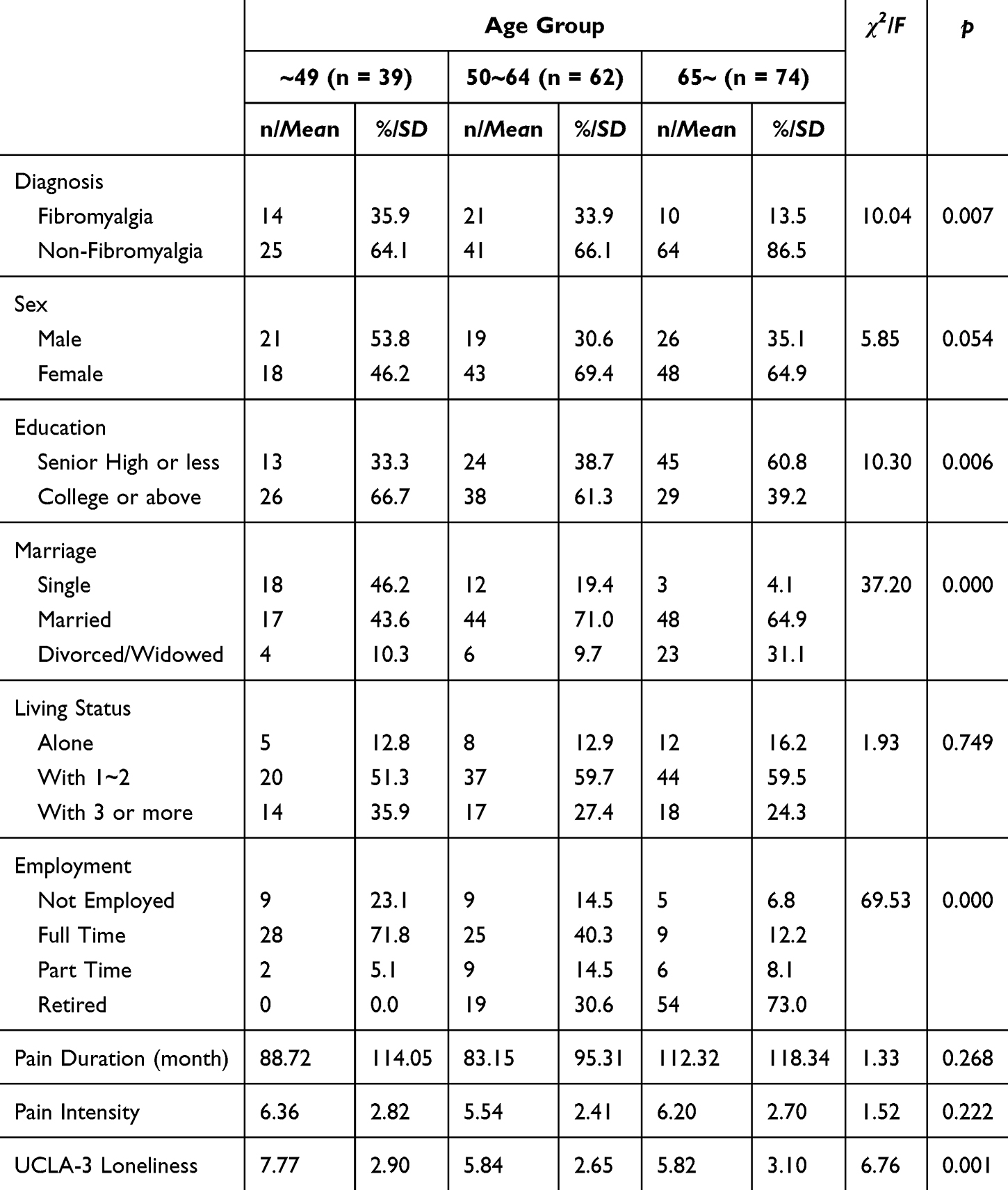 |
Table 2 Descriptive and Comparative Statistics by Age Group |
The results of the 3-way Mixed-Design ANOVA (Table 3) revealed a significant two-way interaction between Age Group and Time (F = 3.30, p =0.039, ɳ2 =0.008), and a significant main effect of Time (F = 10.28, p =0.002, ɳ2 =0.013) on pain intensity. Post-hoc analyses indicated a significant decline in pain intensity from baseline to follow-up in the older age (p =0.001, d = 0.575) and middle-aged (p =0.034, d = 0.275) groups, but not in the younger age group. Furthermore, a significant main effect of Time indicated an overall significant decline in pain intensity across all participants (Figure 1a). Regarding loneliness, the 3-way Mixed-Design ANOVA revealed significant two-way interactions between Age Group and Time (F = 3.30, p =0.039, ɳ2 =0.006) and between Diagnosis Group and Age Group (F = 4.37, p =0.014, ɳ2 =0.040) (Table 3). Post-hoc tests for the Age Group x Time interaction showed that the younger age group reported a significantly higher loneliness score than the middle-aged group at baseline (p =0.002, d = 0.682), but no other significant changes in loneliness over time were observed within age groups. For the Diagnosis Group x Age Group interaction, post-hoc tests indicated that participants with fibromyalgia reported a significantly higher loneliness score than those with non-fibromyalgia in the older age group (p =0.001, d = 1.009) (Figure 1b).
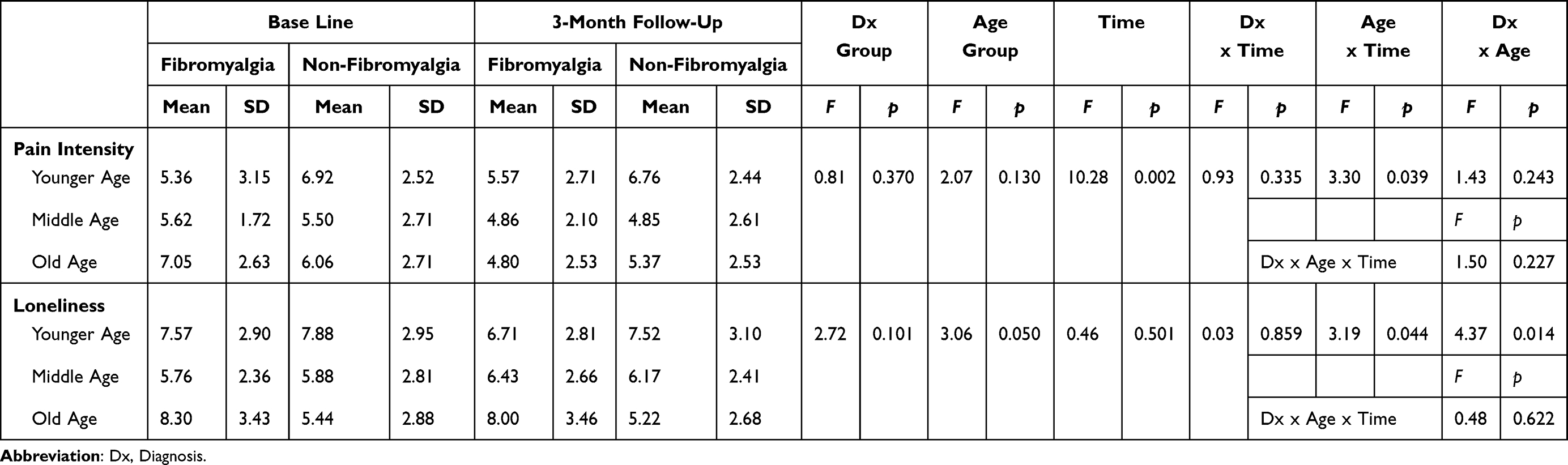 |
Table 3 Results of 3-Way Mixed-Design ANOVA Examining the Effects of Age Group, Diagnosis Group, and Time on Pain Intensity and Loneliness |
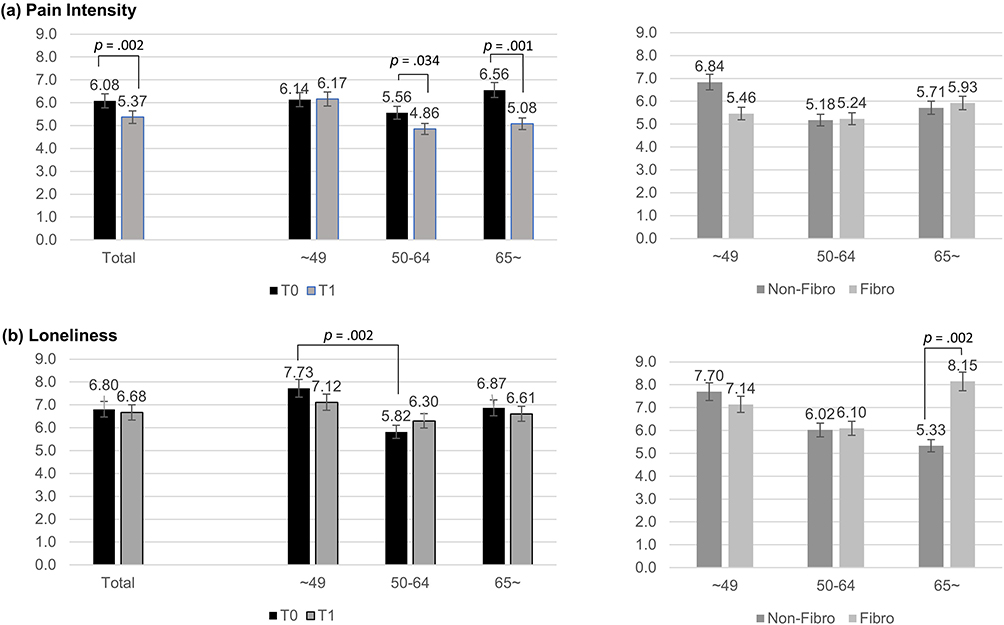 |
Figure 1 The results of Mixed-Design ANOVA on (a) pain intensity and (b) loneliness. |
Cross-Lagged Path Analysis
The standardized path coefficients from the cross-lagged path analysis for the entire sample are presented in Figure 2a (detailed results in Table S2). Baseline loneliness (T0) positively predicted pain intensity at follow-up (T1) (β = 0.20, p =0.002), while baseline pain intensity (T0) negatively predicted loneliness at follow-up (T1) (β = −0.10, p =0.017). Autoregressive paths for both pain intensity (T0 to T1) and loneliness (T0 to T1) were statistically significant.
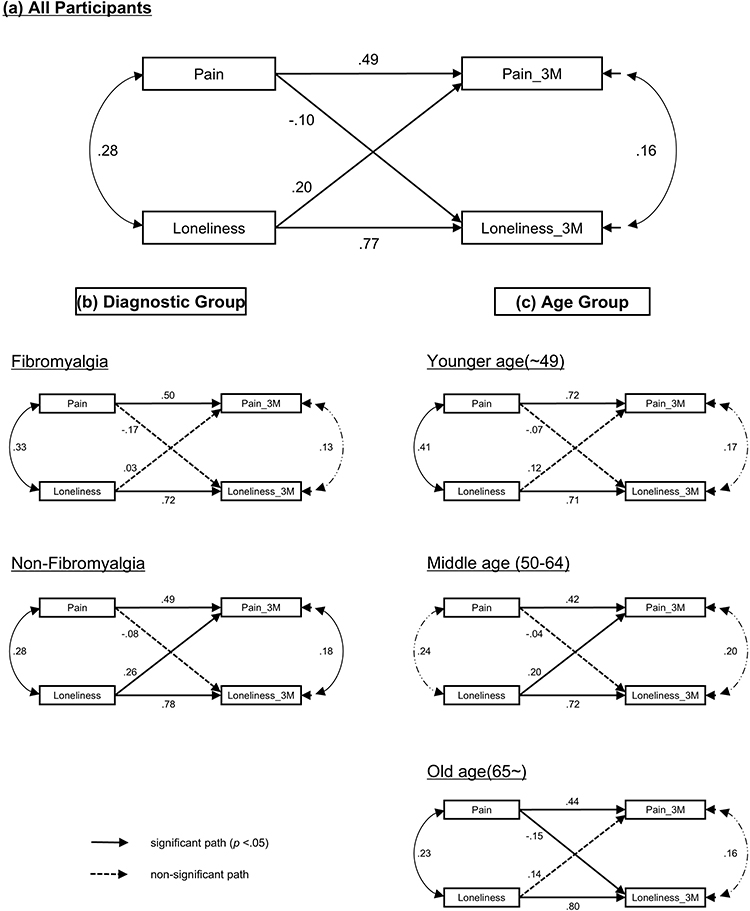 |
Figure 2 The results of the standardized parameter estimate of the cross-lagged path analysis for (a) all participants, (b) by diagnostic groups, and (c) by age groups. |
The results of the multigroup path analysis stratified by pain diagnosis are presented in Figure 2b. Baseline loneliness (T0) positively predicted pain intensity at follow-up (T1) in the non-fibromyalgia group (β = 0.26, p =0.001), but this path was not significant in the fibromyalgia group (β = 0.03, p =0.840). Baseline pain intensity (T0) did not significantly predict loneliness at follow-up (T1) in either the fibromyalgia or non-fibromyalgia groups. All autoregressive paths remained significant within both diagnostic groups.
The results of the multigroup path analysis stratified by age groups presented in Figure 2c, indicated that baseline loneliness (T0) positively predicted pain intensity at follow-up (T1) in the middle-aged group (β = 0.20, p =0.019), but not in the younger (β = 0.12, p =0.302) or older (β = 0.14, p =0.227) age groups. Baseline pain intensity (T0) negatively predicted loneliness at follow-up (T1) in the older age group (β = −0.15, p =0.035), but not in the younger (β = −0.07, p =0.462) or middle-aged (β = −0.04, p =0.639) groups. Autoregressive paths for both pain intensity and loneliness were significant across all three age groups.
Discussion
To the best of our knowledge, this study represents a novel contribution to the literature by employing a longitudinal design to specifically investigate the bidirectional association between chronic pain and loneliness within a clinical population of chronic pain patients, while also examining the potential moderating roles of fibromyalgia and age. The results showed that for patients with chronic pain, higher pain intensity can predict lower loneliness, and higher loneliness can predict higher pain intensity 3 months later. Furthermore, the interplay between pain intensity and loneliness was found to be moderated by both fibromyalgia and age.
The observation that higher baseline loneliness predicted increased pain intensity at the three-month follow-up aligns with findings from prior research focusing on chronic pain15 and other medical conditions that often involve pain. For instance, a cross-sectional study found that greater loneliness is associated with higher pain levels in breast cancer patients,27 and a subsequent longitudinal study has indicated that loneliness is a significant predictor of pain exacerbation in cancer patients over time.28 This finding aligns with the conceptualization of social pain, which posits that experiences of social injury, such as bereavement, exclusion, neglect, rejection, humiliation, or embarrassment, can initiate or intensify physical pain perception.6
Conversely, the finding that higher baseline pain intensity negatively predicted loneliness at the three-month follow-up, particularly significant in the older age group, presents an intriguing divergence from our initial hypothesis and previous survey-based studies that generally reported a positive association between pain intensity and loneliness. This discrepancy may be attributable to fundamental differences in the assessment of pain intensity between clinical patient populations and general survey samples. Survey studies often employ broad, single-item indicators to ascertain the presence of pain,9,11,12 which may capture a wider spectrum of pain experiences, including those of lower intensity or intermittency. In contrast, individuals seeking care within a clinical setting for chronic pain are likely experiencing more severe and persistent symptoms, necessitating active engagement with the healthcare system and allocation of personal resources for treatment. The average pain intensity reported by participants in this study (6 out of 10 on the NRS) underscores this distinction in pain severity between the two populations.
Why does severity matter? As mentioned in the biopsychosocial model of pain29 and the fear avoidance model of pain,2 pain intensity can positively predict loneliness. Patients may reduce their social activities because of pain, making them more likely to experience exclusion and neglect. However, this might not be the entire story. As Sullivan et al suggested,30 pain could be viewed as a communal or interpersonal coping dimension. They believed that the purpose of stronger pain perception and/or expression, or even catastrophizing their pain, was to maximize the likelihood of receiving help, sympathy, and/or support from others in their social network. However, if patients express their pain intensively but fail to receive help and care from those around them, they might feel even more helpless. Considering the differences between clinical and survey studies, it could be reasonable that people with chronic pain who need to visit pain specialists, take pain medications, or undergo treatments (eg, nerve block and operations) have a better chance of receiving social support. Therefore, it is plausible that the current study’s finding of higher pain intensity predicting lower loneliness reflects the unique social support dynamics experienced by individuals actively managing their chronic pain within a healthcare system.
Age as a Moderator
The current study revealed a significant moderating effect of age on the relationship between pain and loneliness, with distinct patterns observed across different age groups. Specifically: (1) higher baseline loneliness predicted greater pain intensity at the three-month follow-up in middle-aged patients, but not in younger or older patients; and (2) higher baseline pain intensity significantly predicted lower loneliness at the three-month follow-up in older patients, but not in younger or middle-aged patients.
From the perspective of discussing chronic pain in a social context, Karos et al31 argued that there is a social norm that “people should be healthy and autonomous”. Individuals with chronic pain, experiencing prolonged periods (≥ 3 months) of compromised health and functional independence, deviate from this norm, potentially increasing their vulnerability to social exclusion or neglect. However, this social expectation of health and autonomy may be less stringently applied to older adults, for whom illness and the need for assistance are more commonly held stereotypes.32 Consequently, older adults with chronic pain may align more readily with the “elderly norm”, potentially facilitating greater access to needed social support. For instance, a study of older adults with arthritis demonstrated that those reporting higher levels of pain also reported receiving more tangible social support.33 Our finding that greater baseline pain intensity predicted lower loneliness at the three-month follow-up in older adults may support the hypothesis that this age group, aligning more closely with societal expectations of needing assistance, is more likely to receive social support when expressing pain, thereby fulfilling their social needs (eg, belonging) and mitigating loneliness.
Moreover, it seems devastating that middle-age patients reporting more severe pain did not reduce their loneliness as the older patients do, but loneliness could further aggravate their pain. Briefly, even if the initial cause of the pain is purely physical, being rejected by others while asking for help (eg, maybe by expressing pain to communicate the support they needed) could cause social harm and loneliness, which in turn worsens the pain. Thus, regardless of whether the pain was originally caused by physical or social injury, chronic pain per se could further impair self-regulatory processes, negatively affecting cognition and emotion and leading to maladaptive outcomes such as learned helplessness, depression, feelings of worthlessness, and marginalization.6 To some extent, the results of the current study echo the advocacy of some scholars who suggest including the evaluation of social distress at the interpersonal and societal levels in integrative chronic pain care.34,35 Furthermore, younger and especially middle-age (50~64) patients with chronic pain might be at risk of social distress. Further studies are required to clarify the effect of age on chronic pain from a more comprehensive biopsychosocial perspective.
Fibromyalgia as a Moderator
The current study found that pain diagnosis groups moderated the relationship between pain and loneliness: 1) higher loneliness could predict higher pain intensity in patients with non-fibromyalgia, and 2) the cross-prediction between pain and loneliness was not significant in patients with fibromyalgia.
The absence of a significant association between pain and loneliness in patients with fibromyalgia is a surprising finding, given that fibromyalgia is often recognized as a prototypical nociplastic pain condition.22,36 Nociplastic pain, as defined by the International Association for the Study of Pain (IASP),37 is “pain that arises from altered nociception despite no clear evidence of actual or threatened tissue damage causing the activation of peripheral nociceptors or evidence for disease or lesion of the somatosensory system causing the pain”. The fundamental distinction between fibromyalgia and non-fibromyalgia pain lies in the lack of clear objective evidence indicating actual or potential physiological tissue damage in the former. The uncertain pathology underlying nociplastic pain conditions, including fibromyalgia, can pose challenges in diagnosis and explanation, potentially acting as a risk factor for heightened social distress. Research suggests that the general population exhibits less empathy and willingness to assist or interact with individuals experiencing medically unexplained pain.38 Consequently, it is plausible that patients with fibromyalgia experience more profound social injury, and that their pain experience further exacerbates threats to their social self, such that the construct of “loneliness” as measured by the UCLA-3 may not fully capture the extent of their social distress. Furthermore, given that fibromyalgia is more prevalent among middle-aged populations and our results show that loneliness positively predicts pain in this age group, future research is warranted to elucidate the nuanced ways in which pain diagnosis influences the intricate relationship between pain and loneliness, taking into account other common related biopsychosocial factors, such as fatigue.
Limitations
This study faced significant recruitment challenges due to the COVID-19 pandemic. Strict access controls in Taiwanese healthcare facilities, implemented from January 2021, likely reduced enrollment and increased attrition. Although nationwide guidelines eased restrictions later in June 2022, these changes occurred towards the end of data collection. Consequently, only 175 (59.9%) of 292 initial participants, and 45 (60.8%) of 74 fibromyalgia patients completed the three-month follow-up. This reduced sample size limited our statistical power, preventing complex analyses like path analysis with simultaneous moderation by age and diagnosis. The relatively small sample of fibromyalgia warrants that the results should be interpreted with caution. The three-month follow-up may not be long enough to capture the long-term bidirectional effects between pain and loneliness. The effects of COVID-19 on loneliness could not be evaluated in this study. Future studies need larger samples and longer follow-up periods to comprehensively examine the multifaceted interplay of factors in chronic pain and loneliness.
Conclusion
This study provides evidence that in patients with chronic pain: (1) higher baseline pain intensity can predict lower loneliness at a three-month follow-up, and (2) higher baseline loneliness can predict greater pain intensity at the same time point. Furthermore, the relationship between pain and loneliness was found to be moderated by both fibromyalgia and age groups, revealing complex interaction patterns. These findings suggest that the psychosocial dimension of loneliness can exacerbate pain, while conversely, pain may, especially in certain contexts (ie, old age), mitigate loneliness. This challenges the notion of a simple vicious cycle of escalating pain and loneliness and suggests that pain expression may, at times, serve as a signal for help in interpersonal contexts for individuals with chronic pain, a dynamic that warrants greater attention from healthcare professionals.
Acknowledgments
We thank the participants and clinic staff for their contributions to the study.
Funding
This work was supported by the National Science and Technology Council, Taiwan [Grant number MOST110-2410-H-004-113-MY2 and NSTC113-2410-H-004-186-MY3] to the first author.
Disclosure
All authors report no conflicts of interest in this work.
References
1. Cieza A, Causey K, Kamenov K, Hanson SW, Chatterji S, Vos T. Global estimates of the need for rehabilitation based on the global burden of disease study 2019: a systematic analysis for the global burden of disease study 2019. Lancet. 2020;396(10267):2006–2017. doi:10.1016/S0140-6736(20)32340-0
2. Vlaeyen JW, Linton SJ. Fear-avoidance model of chronic musculoskeletal pain: 12 years on. Pain. 2012;153(6):1144–1147. doi:10.1016/j.pain.2011.12.009
3. Eisenberger NI. Why rejection hurts: what social neuroscience has revealed about the brain’s response to social rejection. In: Decety J, Cacioppo JT, editors. The Oxford Handbook of Social Neuroscience. Oxford University Press, Oxford library of psychology; 2011:
4. Eisenberger NI, Lieberman MD, Williams KD. Does rejection hurt? An fMRI study of social exclusion. Science. 2003;302(5643):290–292. doi:10.1126/science.1089134
5. Sturgeon JA, Zautra AJ. Social pain and physical pain: shared paths to resilience. Pain Manag. 2016;6(1):63–74. doi:10.2217/pmt.15.56
6. Riva P, Wesselmann ED, Wirth JH, Carter-Sowell AR, Williams KD. When pain does not heal: the common antecedents and consequences of chronic social and physical pain. Basic Appl Soc Psychol. 2014;36(4):329–346. doi:10.1080/01973533.2014.917975
7. Yanguas J, Pinazo-Henandis S, Tarazona-Santabalbina FJ. The complexity of loneliness. Acta Biomed. 2018;89(2):302. doi:10.23750/abm.v89i2.7404
8. Ernst M, Niederer D, Werner AM, et al. Loneliness before and during the COVID-19 pandemic: a systematic review with meta-analysis. Am Psychol. 2022;77:660–677. doi:10.1037/amp0001005
9. Emerson K, Boggero I, Ostir G, Jayawardhana J. Pain as a risk factor for loneliness among older adults. J Aging Health. 2018;30(9):1450–1461. doi:10.1177/0898264317721348
10. Smith TO, Dainty JR, Williamson E, Martin KR. Association between musculoskeletal pain with social isolation and loneliness: analysis of the English Longitudinal Study of Ageing. Br J Pain. 2019;13(2):82–90. doi:10.1177/2049463718802868
11. Allen SF, Gilbody S, Atkin K, van der Feltz-Cornelis C. The associations between loneliness, social exclusion and pain in the general population: a N= 502,528 cross-sectional UK biobank study. J Psychiatr Res. 2020;130:68–74. doi:10.1016/j.jpsychires.2020.06.028
12. Loeffler A, Steptoe A. Bidirectional longitudinal associations between loneliness and pain, and the role of inflammation. Pain. 2021;162(3):930–937. doi:10.1097/j.pain.0000000000002082
13. Lui JZ, Young NP, Ebbert JO, Rosedahl JK, Philpot LM. Loneliness and migraine self-management: a cross-sectional assessment. J Prim Care Community Health. 2020;11:2150132720924874. doi:10.1177/2150132720924874
14. Khazen O, Rosoklija G, Custozzo A, et al. Correlation between aspects of perceived patient loneliness and spinal cord stimulation outcomes. Neuromodulation. 2021;24(1):150–155. doi:10.1111/ner.13299
15. Wolf LD, Davis MC, Yeung EW, Tennen HA. The within-day relation between lonely episodes and subsequent clinical pain in individuals with fibromyalgia: mediating role of pain cognitions. J Psychosom Res. 2015;79(3):202–206. doi:10.1016/j.jpsychores.2014.12.018
16. Surkalim DL, Luo M, Eres R, et al. The prevalence of loneliness across 113 countries: systematic review and meta-analysis. BMJ. 2022:e067068. doi:10.1136/bmj-2021-067068
17. Horgas AL, Elliott AF. Pain in older adults. In: Handbook of the Psychology of Aging. Elsevier; 2021:83–98.
18. Wettstein M, Ghisletta P, Gerstorf D. Feeling older, feeling pain? Reciprocal between-person and within-person associations of pain and subjective age in the second half of life. Psychol Aging. 2024;39(5):510–525. doi:10.1037/pag0000829
19. Galvez-Sánchez CM, Duschek S, Reyes del paso GA. Psychological impact of fibromyalgia: current perspectives. Psychol Res Behav Manag. 2019;12:117–127. doi:10.2147/PRBM.S178240
20. Thieme K, Turk DC, Flor H. Comorbid depression and anxiety in fibromyalgia syndrome: relationship to somatic and psychosocial variables. Psychosom Med. 2004;66(6):837–844. doi:10.1097/01.psy.0000146329.63158.40
21. Coppens E, Van Wambeke P, Morlion B, et al. Prevalence and impact of childhood adversities and post-traumatic stress disorder in women with fibromyalgia and chronic widespread pain. Eur J Pain. 2017;21(9):1582–1590. doi:10.1002/ejp.1059
22. Bidari A, Ghavidel-Parsa B. Nociplastic pain concept, a mechanistic basis for pragmatic approach to fibromyalgia. Clin Rheumatol. 2022;41(10):2939–2947. doi:10.1007/s10067-022-06229-5
23. Kosek E, Cohen M, Baron R, et al. Do we need a third mechanistic descriptor for chronic pain states? Pain. 2016;157(7):1382–1386. doi:10.1097/j.pain.0000000000000507
24. Hughes ME, Waite LJ, Hawkley LC, Cacioppo JT. A short scale for measuring loneliness in large surveys. Res Aging. 2004;26(6):655–672. doi:10.1177/0164027504268574
25. Russell DW. UCLA loneliness scale (Version 3): reliability, validity, and factor structure. J Pers Assess. 1996;66(1):20–40. doi:10.1207/s15327752jpa6601_2
26. Lin C-Y, Tsai C-S, Fan C-W, et al. Psychometric evaluation of three versions of the UCLA loneliness scale (Full, Eight-Item, and Three-Item Versions) among sexual minority men in Taiwan. Int J Environ Res Public Health. 2022;19(13):8095. doi:10.3390/ijerph19138095
27. Jaremka LM, Fagundes CP, Glaser R, Bennett JM, Malarkey WB, Kiecolt-Glaser JK. Loneliness predicts pain, depression, and fatigue: understanding the role of immune dysregulation. Psychoneuroendocrinology. 2013;38(8):1310–1317. doi:10.1016/j.psyneuen.2012.11.016
28. Jaremka LM, Andridge RR, Fagundes CP, et al. Pain, depression, and fatigue: loneliness as a longitudinal risk factor. Health Psychol. 2014;33(9):948. doi:10.1037/a0034012
29. Gatchel RJ, Peng YB, Peters ML, Fuchs PN, Turk DC. The biopsychosocial approach to chronic pain: scientific advances and future directions. Psychol Bull. 2007;133(4):581. doi:10.1037/0033-2909.133.4.581
30. Sullivan MJL, Thorn B, Haythornthwaite JA, et al. Theoretical perspectives on the relation between catastrophizing and pain. Clin J Pain. 2001;17(1):52–64. doi:10.1097/00002508-200103000-00008
31. Karos K, Williams ACC, Meulders A, Vlaeyen JWS. Pain as a threat to the social self: a motivational account. Pain. 2018;159(9):1690–1695. doi:10.1097/j.pain.0000000000001257
32. Rowe JW, Kahn RL. Successful Aging. Pantheon Books; 1998.
33. Lee JE, Kahana B, Kahana E. Social support and cognitive functioning as resources for elderly persons with chronic arthritis pain. Aging Mental Health. 2016;20(4):370–379. doi:10.1080/13607863.2015.1013920
34. De Ruddere L, Craig KD. Understanding stigma and chronic pain: a-state-of-the-art review. Pain. 2016;157(8):1607–1610. doi:10.1097/j.pain.0000000000000512
35. Williams ACDC. Defeating the stigma of chronic pain. Pain. 2016;157(8):1581–1582. doi:10.1097/j.pain.0000000000000530
36. Fitzcharles M-A, Cohen SP, Clauw DJ, Littlejohn G, Usui C, Häuser W. Nociplastic pain: towards an understanding of prevalent pain conditions. Lancet. 2021;397(10289):2098–2110. doi:10.1016/S0140-6736(21)00392-5
37. International Association for the Study of Pain. IASP terminology. Available from: https://www.iasp-pain.org/resources/terminology/?navItemNumber=576#Centralsensitization.
38. De Ruddere L, Bosmans M, Crombez G, Goubert L. Patients are socially excluded when their pain has no medical explanation. J Pain. 2016;17(9):1028–1035. doi:10.1016/j.jpain.2016.06.005
 © 2025 The Author(s). This work is published and licensed by Dove Medical Press Limited. The
full terms of this license are available at https://www.dovepress.com/terms
and incorporate the Creative Commons Attribution
- Non Commercial (unported, 4.0) License.
By accessing the work you hereby accept the Terms. Non-commercial uses of the work are permitted
without any further permission from Dove Medical Press Limited, provided the work is properly
attributed. For permission for commercial use of this work, please see paragraphs 4.2 and 5 of our Terms.
© 2025 The Author(s). This work is published and licensed by Dove Medical Press Limited. The
full terms of this license are available at https://www.dovepress.com/terms
and incorporate the Creative Commons Attribution
- Non Commercial (unported, 4.0) License.
By accessing the work you hereby accept the Terms. Non-commercial uses of the work are permitted
without any further permission from Dove Medical Press Limited, provided the work is properly
attributed. For permission for commercial use of this work, please see paragraphs 4.2 and 5 of our Terms.