
Back to Journals » Advances in Medical Education and Practice » Volume 17
Academic Reading Format Preferences Among Syrian Medical Students: A Cross-Institutional Survey
Authors Almansour S  , Farhat R, Almansour M, Al-Deeb R , Daboul R, Nasra AB , Odeh ZA, Rajjoub N, Zeno M, Alshreibati F
Received 18 February 2026
Accepted for publication 3 June 2026
Published 9 June 2026 Volume 2026:17 604141
DOI https://doi.org/10.2147/AMEP.S604141
Checked for plagiarism Yes
Review by Single anonymous peer review
Peer reviewer comments 2
Editor who approved publication: Dr Sateesh Arja
Shahd Almansour,1 Raghad Farhat,2 Monaf Almansour,1 Rawan Al-Deeb,1 Rawan Daboul,1 Ahmad Bishr Nasra,3 Zahra Amin Odeh,3,4 Najwa Rajjoub,1 Maher Zeno,5 Fahd Alshreibati1,6
1Faculty of Medicine, Homs University, Homs, Syrian Arab Republic; 2Faculty of Pharmacy, Damascus University, Damascus, Syrian Arab Republic; 3Faculty of Medicine, Damascus University, Damascus, Syrian Arab Republic; 4Department of Endocrinology, Police Hospital, Damascus, Syrian Arab Republic; 5Faculty of Medicine, Aleppo University, Aleppo, Syrian Arab Republic; 6Department of Plastic Surgery, Claude Bernard University Lyon 1, Lyon, France
Correspondence: Shahd Almansour, Faculty of Medicine, Homs University, Homs, Syrian Arab Republic, Email [email protected]
Introduction: Despite the global shift toward digital education, many university students continue to report a preference for printed academic materials. In Syria, where higher education has been affected by conflict and variable digital access, understanding students’ reading format preferences may help inform more responsive educational planning. This study examined academic reading format preferences, self-reported reading behaviors, and language-related influences among undergraduate medical students across Syrian institutions.
Methods: A cross-sectional survey of 2,201 undergraduate medical students across Syrian universities was conducted using an adapted Arabic version of the Academic Reading Format International Study (ARFIS) questionnaire, distributed in both digital and paper formats. Data were analyzed using IBM SPSS Statistics for Windows, Version 24.0. Analyses included descriptive statistics, 95% confidence intervals for key proportions, Chi-square tests with Cramér’s V, multivariable logistic regression, and Welch ANOVA with Games-Howell post-hoc testing.
Results: Most students (81.1%) reported a preference for printed academic materials. Students also reported better perceived focus (79.9%) and recall (72.1%) when reading in print. Despite frequent smartphone use for digital reading, 71.2% of students reported printing digital materials for study. Preference for print was stronger for longer texts (7 pages or more; 65.1%), while language-related responses showed more variable format preferences, including a moderate preference for foreign-language texts in print (41.8%). Adjusted analysis showed that sex, university type, medical specialty, and selected device-use variables were independently associated with print preference.
Conclusion: Syrian medical students in this cross-sectional survey most commonly reported a preference for printed academic reading materials, particularly for longer texts and for perceived focus and recall. These findings suggest that student preferences should be considered when planning academic reading resources, while digital integration should account for local context and student access. Because the study relied on self-reported perceptions, non-probability sampling, and a cross-sectional design, the findings should not be interpreted as evidence of objective learning effectiveness. Further longitudinal and experimental research is needed to assess comprehension, academic performance, and the role of digital access barriers.
Keywords: academic reading preferences, Print vs. digital, medical education, Syria, digital divide, hybrid learning
Introduction
Academic reading format preference refers to the medium students prefer for course-related reading, mainly printed or electronic materials. In this study, print format refers to paper-based academic readings, whereas digital or electronic format refers to readings accessed through devices such as smartphones, laptops, tablets, or desktop computers. We use self-reported learning engagement to describe students’ reported reading behaviors, including highlighting, annotation, reviewing, and printing digital materials. Perceived focus and recall refer to students’ subjective assessment of concentration and memory while reading, rather than objectively measured comprehension or academic performance.
Academic reading format preferences have attracted increasing attention with the expansion of digital technologies in higher education. As students increasingly access academic materials through electronic devices, understanding how they choose between print and digital formats has become important for designing learning resources that match students’ study habits and access conditions. Research comparing digital and paper reading suggests that reading medium may be associated with differences in reading behavior, preference, and comprehension, although these relationships vary by task type, text length, and study context.1,2
Despite the growth of digital learning, many studies continue to report a preference for print academic materials, especially for longer or more demanding texts. Large international survey data from tertiary students indicate that many students prefer print for academic reading and report better focus and recall when using printed materials, while electronic formats remain useful for convenience, portability, and short references.3 In medical education, digital textbooks and e-books are valued for accessibility and portability, but many students and residents still report preferring printed books for extended study and complex material.4 These findings suggest that format preference is not simply a choice between print and digital reading, but may depend on reading purpose, device type, text length, and perceived study needs.
The Syrian context gives this issue additional importance. Higher education in Syria has been affected by prolonged conflict, infrastructure damage, resource constraints, and disruption to educational institutions. Previous work on higher education in conflict-affected settings has identified damaged infrastructure, displaced students and faculty, and limited access to resources as major challenges for digital transformation, with Syria used as a case example.5 National indicators also show constraints relevant to digital education; World Bank data report that individuals using the internet in Syria were estimated at 34% in 2018, while access to electricity was estimated at 88.4% in 2023, indicators that do not fully capture connection quality, affordability, or service reliability.6 In education-related systems in Syria, limited internet coverage, electricity cuts, and lack of computers have also been identified as barriers that can increase reliance on paper-based processes.7 Similar barriers, including limited internet access, unreliable electricity, scarce computers, and insufficient technical support, have been reported in e-learning implementation across resource-constrained low- and middle-income countries.8
Although academic reading format preferences have been studied internationally, large-scale data from Syrian medical students remain scarce, particularly in a context where digital education may be shaped by resource limitations and disrupted educational infrastructure. Understanding these preferences is important because medical students require sustained engagement with long and complex academic texts, yet their access to digital tools and stable infrastructure may vary. Therefore, this study aimed to describe academic reading format preferences and self-reported reading behaviors among Syrian medical students and to examine whether these preferences varied by demographic and educational characteristics.
Methods
Study Design and Participants
A cross-sectional study was conducted between April 28 and July 15, 2025, among undergraduate students enrolled in medical colleges in Syrian universities. Eligible participants were students from medicine, dentistry, pharmacy, health sciences, and preparatory-year programs, from the first to the final academic year. Graduates, students outside the target medical-college population, and respondents who did not provide informed consent were excluded. The study aimed to describe academic reading format preferences and self-reported reading behaviors among undergraduate students in medical colleges and to examine whether these preferences varied by demographic, educational, and access-related characteristics.
Ethical approval was obtained from the Scientific Research Ethics Committee at Homs University (Approval ID number: 4213). Participation was voluntary, and only respondents who provided informed consent were included. For online participants, consent was obtained through the first survey item, which explained the study aim and asked whether the respondent agreed to participate. For paper-based participants, trained student researchers explained the study purpose and obtained consent before questionnaire completion.
Sampling and Recruitment
A combination of convenience and snowball sampling was used. Recruitment attempted to reach students across Syrian public and private universities through both electronic and paper-based distribution. The online questionnaire was shared through student groups and online platforms, including WhatsApp, Facebook, and Telegram, as well as official or student-affiliated channels when permission was granted. The paper questionnaire was distributed by trained student researchers in university libraries and during lecture breaks. Researchers approached students who met the eligibility criteria, explained the study purpose, and collected responses only from those who agreed to participate.
Because the online questionnaire was distributed through open social media and student groups, the denominator of all invited students could not be determined, and a conventional response rate could not be calculated. Recruitment was not probability-based or proportionate to university size; therefore, the sample should not be interpreted as nationally representative of all Syrian medical-college students.
Questionnaire and Measures
Data were collected using a structured, self-administered questionnaire composed of four sections: demographics, format preference, learning engagement, and language-related reading preferences. The demographic section collected information on age group, sex, academic year, medical specialty, university type, residence, family income, and visual limitations. Participants were also asked which devices they used for electronic academic reading. Multiple responses were allowed for device use.
The format preference, learning engagement, and language sections included 8, 5, and 3 Likert-style items, respectively. Each item used a five-point response scale: totally disagree, disagree, neutral, agree, and totally agree. The format preference section assessed students’ preferences for print and electronic readings, including perceived recall, convenience, preference for printed course materials, preference by text length, electronic textbook preference, perceived focus, and preference for electronic course readings. The learning engagement section assessed self-reported behaviors such as highlighting, annotation, reviewing, printing digital readings, and making digital copies. The language section assessed whether reading language influenced format preference.
The questionnaire was adapted from the Academic Reading Format International Study instrument developed by Mizrachi et al3 To ensure clarity and accessibility, the questionnaire was translated into Arabic and reviewed by the research team. A pilot study was conducted among 50 students to assess clarity and comprehension; these pilot responses were excluded from the final analysis. Cronbach’s alpha values in the pilot sample were 0.70, 0.77, and 0.94 for the format preference, learning engagement, and language dimensions, respectively. The Arabic version was assessed for clarity, comprehension, and internal consistency in the pilot sample; further psychometric evaluation may be useful in future studies.
Data Management and Missing Data
Responses were reviewed before analysis. Ineligible responses, duplicate entries, incomplete questionnaires, and responses without informed consent were excluded. The final analytic dataset included 2,201 complete responses. All variables included in the main analyses had complete data, so complete-case analysis was used. For the primary binary outcome, neutral responses were grouped with electronic preference as the non-print category. A sensitivity analysis was also performed after excluding neutral responses, comparing print preference directly with electronic preference.
Statistical Analysis
Data were analyzed using IBM SPSS Statistics for Windows, Version 24.0 (IBM Corp., Armonk, NY, USA). Categorical variables were summarized as frequencies and percentages. Key proportions were reported with 95% confidence intervals. Likert-style items were summarized both in their original five-category form and as three-category responses: disagree/totally disagree, neutral, and agree/totally agree.
Overall reading format preference was analyzed as a three-category variable: print, electronic, and neutral. Associations between overall format preference and demographic, educational, and access-related variables were examined using Chi-square tests, with Cramér’s V reported as a measure of association strength. For adjusted analysis, print preference was coded as a binary outcome comparing students who preferred print with those who preferred electronic formats or gave neutral responses. A multivariable binary logistic regression model was fitted to identify factors independently associated with print preference. The model adjusted for sex, age group, university type, medical specialty, academic year, residence, family income, visual problems, and selected device-use indicators. Results were reported as adjusted odds ratios with 95% confidence intervals.
A sensitivity logistic regression analysis was conducted after excluding neutral responses, comparing print preference directly with electronic preference. For comparisons of mean print-format preference scores across academic year and medical specialty, Welch’s ANOVA was used because homogeneity of variance was not assumed; Games-Howell post-hoc tests were used for pairwise comparisons. Statistical significance was set at p < 0.05.
Results
Sample Characteristics
A total of 2,201 undergraduate medical-college students were included in the final analysis. All variables included in the main analyses had complete data. The majority of participants were female (67.3%) and enrolled in public universities (86.6%). Participants were distributed across medicine (35.7%), pharmacy (19.5%), dentistry (19.1%), health sciences (14.3%), and preparatory-year programs (11.4%). Most participants were aged 21–24 years (51.6%), followed by those younger than 21 years (44.1%) and those aged 25 years or older (4.3%). The complete institutional distribution of participants is provided in the supplementary material (Table S1). The demographic characteristics and device-use patterns of the study sample are summarized in the main manuscript (Table 1), and device use is illustrated visually (Figure 1).
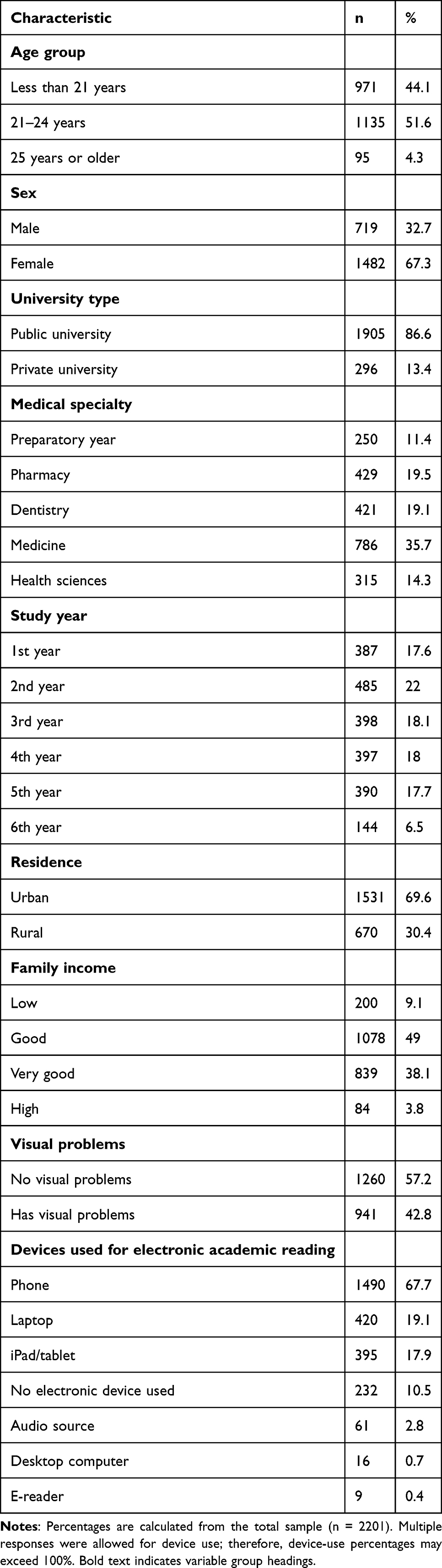 |
Table 1 Participant Characteristics and Device Use |
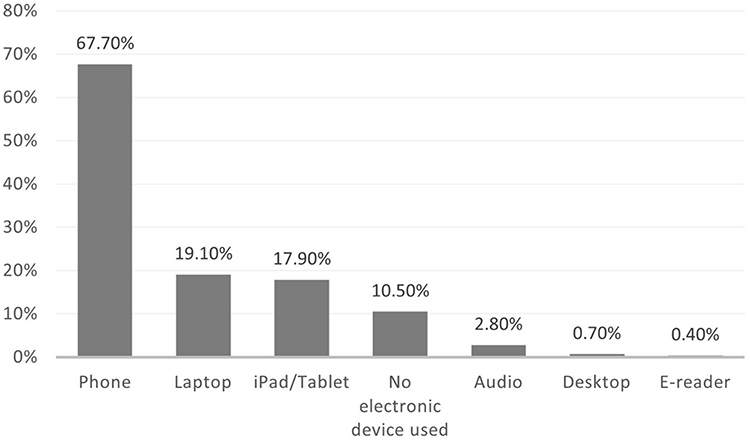 |
Figure 1 Devices used for electronic academic reading among Syrian medical students (n = 2201). Percentages are calculated from the total sample (n = 2201). Multiple responses were allowed; therefore, percentages may exceed 100%. |
Academic Reading Format Preferences
Overall, 1,784 students (81.1%; 95% CI: 79.4–82.7%) preferred print format for academic readings, compared with 380 students (17.3%; 95% CI: 15.7–18.9%) who preferred electronic format and 37 students (1.7%; 95% CI: 1.1–2.2%) who reported a neutral preference. The mean print-format preference score was 3.68 ± 0.68, while the mean electronic-format preference score was 2.52 ± 0.78.
Students commonly reported perceived advantages of print reading. Most agreed or totally agreed that they remembered information best when reading printed pages (72.1%; 95% CI: 70.2–74.0%) and that they focused better when reading in print (79.9%; 95% CI: 78.2–81.6%). Similarly, 71.7% (95% CI: 69.8–73.6%) preferred having all course materials in print format. Preference for print was particularly common for readings of seven pages or more (65.1%; 95% CI: 63.1–67.1%). In contrast, only 17.0% (95% CI: 15.5–18.6%) agreed that electronic reading was more convenient than print reading (Figure 2), while 49.7% (95% CI: 47.6–51.8%) preferred electronic format for readings shorter than seven pages, 15.7% (95% CI: 14.2–17.2%) preferred reading course materials electronically, and 15.0% (95% CI: 13.5–16.5%) preferred electronic textbooks over printed textbooks. The distribution of key format-preference items is provided in the supplementary material (Figure S1–S7).
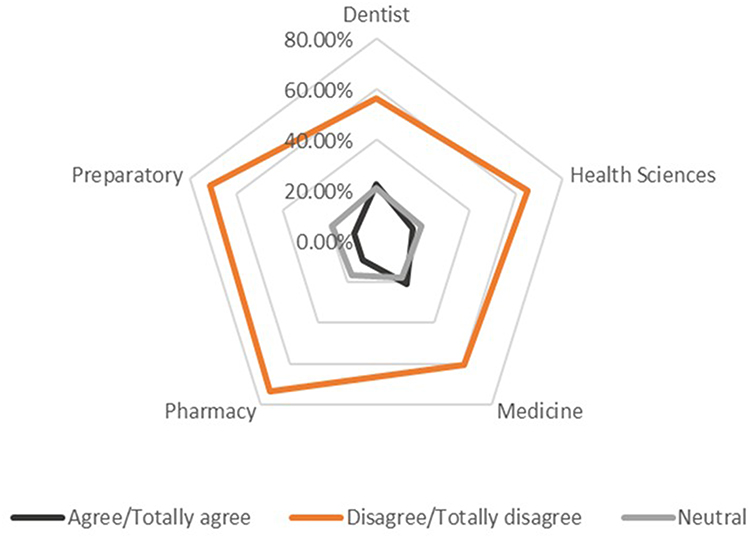 |
Figure 2 Responses to the statement “It is more convenient to read my assigned readings electronically than to read them in print”, reported by medical specialty. n = 2201; Agree/Totally agree n = 375, 17.04%; Neutral n = 413, 18.76%; Disagree/Totally disagree n = 1413, 64.20%. |
Self-Reported Reading Behaviors and Language-Related Preferences
Self-reported reading behaviors also differed by format. Most students reported highlighting or annotating printed readings (78.3%; 95% CI: 76.6–80.0%), compared with 25.3% (95% CI: 23.5–27.1%) who reported highlighting or annotating electronic readings. In addition, 74.1% (95% CI: 72.3–75.9%) reported that they were more likely to review course readings when they were in print, and 71.2% (95% CI: 69.3–73.1%) preferred printing digital readings rather than reading them electronically. By contrast, 25.1% (95% CI: 23.3–26.9%) reported making digital copies of printed course materials.
Language-related responses showed more mixed preferences. Only 23.8% (95% CI: 22.0–25.6%) preferred reading native-language course materials electronically rather than in print, while 41.8% (95% CI: 39.7–43.9%) preferred reading foreign-language materials in print. Overall, 20.1% (95% CI: 18.4–21.8%) agreed that their preferred reading format depended on the language of the reading. The corresponding item-level distributions are provided in the supplementary material (Figures S8–S15).
Bivariate Associations with Overall Format Preference
In bivariate analyses using the three-category format preference variable, format preference was significantly associated with sex, age group, university type, medical specialty, study year, and family income. However, the strength of these associations was generally small or very small based on Cramér’s V. The strongest associations were observed for medical specialty (Cramér’s V = 0.152), sex (Cramér’s V = 0.149), and university type (Cramér’s V = 0.102). Residence and visual problems were not significantly associated with overall format preference. Detailed bivariate results are shown in the main manuscript (Table 2). Complete chi-square analyses by age group and sex are provided in Supplementary Tables S2 and S3, respectively.
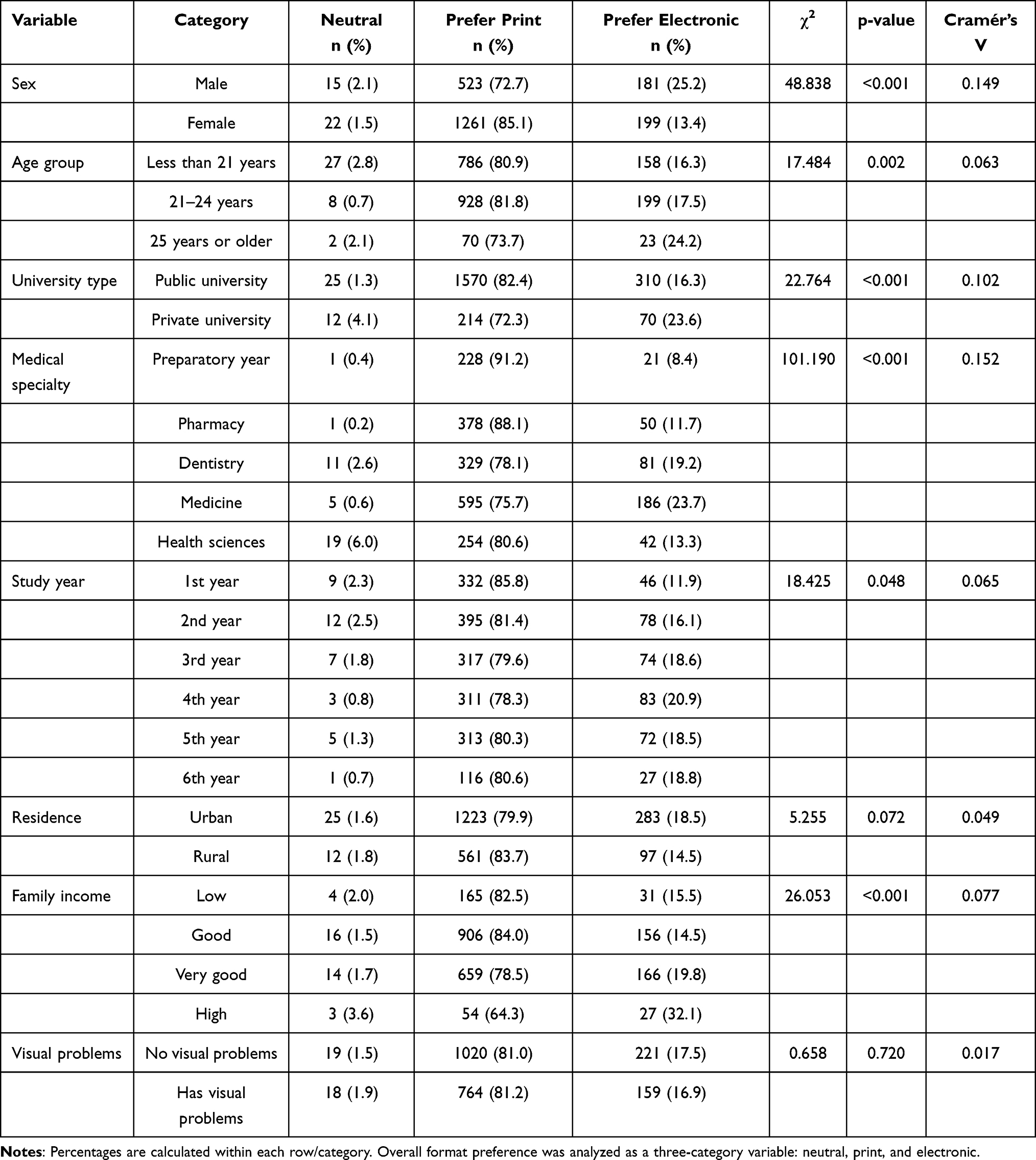 |
Table 2 Bivariate Associations Between Overall Reading Format Preference and Participant Characteristics |
Device-use patterns were also associated with format preference. Mobile phones were the most commonly used device for electronic academic reading (67.7%), followed by laptops (19.1%) and iPads/tablets (17.9%) (Table 1, Figure 1). In bivariate analysis, iPad/tablet use showed the strongest association with overall format preference (Cramér’s V = 0.346, p < 0.001). Students who reported using iPads/tablets had a lower proportion of print preference (52.9%) than those who did not use iPads/tablets (87.2%).
Adjusted Factors Associated with Print Preference
A multivariable logistic regression model was fitted to identify factors independently associated with print preference, compared with electronic or neutral preference. The model was statistically significant (p < 0.001), with a Nagelkerke R2 of 0.256 and acceptable calibration by the Hosmer–Lemeshow test (p = 0.539).
After adjustment, female students had higher odds of preferring print than male students (aOR = 2.06, 95% CI: 1.59–2.66, p < 0.001). Public university students also had higher odds of print preference than private university students (aOR = 1.73, 95% CI: 1.21–2.47, p = 0.003). Medical specialty remained independently associated with print preference, with higher odds among preparatory-year, pharmacy, dentistry, and medicine students compared with health sciences students. Device use was also independently associated with print preference: phone use and reporting no electronic device use were associated with higher odds of print preference, whereas laptop and iPad/tablet use were associated with lower odds. Age group, study year, residence, family income, and visual problems were not independently associated with print preference in the adjusted model. The full adjusted model is presented in the main manuscript (Table 3).
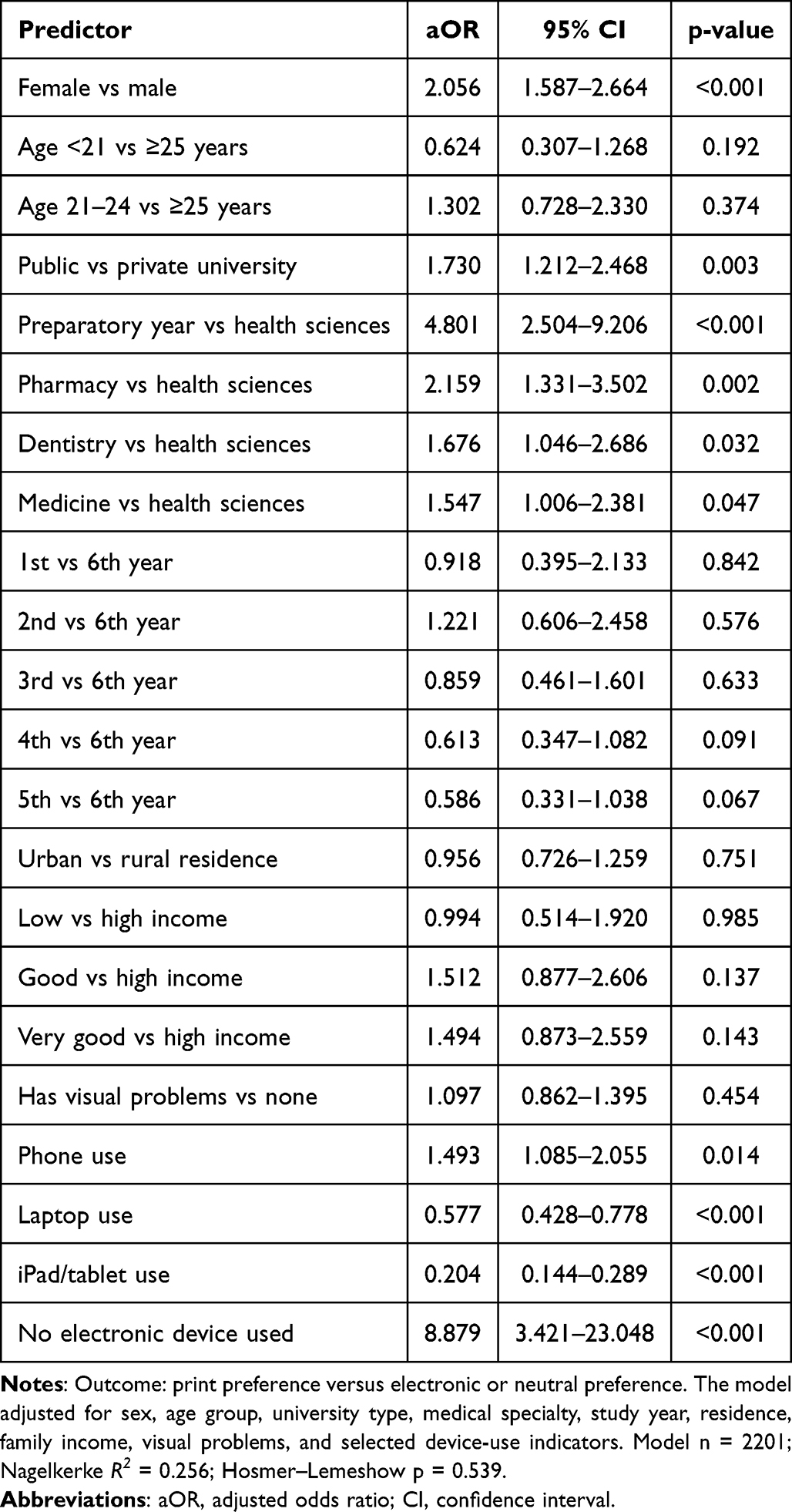 |
Table 3 Multivariable Logistic Regression of Factors Associated with Print Preference |
A sensitivity analysis excluding neutral responses produced broadly similar findings. In this model, print preference was compared directly with electronic preference among 2,164 students. Female sex, public university enrollment, preparatory-year specialty, phone use, laptop use, iPad/tablet use, and reporting no electronic device use remained independently associated with format preference.
Preference Score Comparisons by Study Year and Specialty
Because homogeneity of variance was not assumed, Welch’s ANOVA was used to compare mean print-format preference scores across academic year and medical specialty. Mean print-format preference scores did not differ significantly across academic years (Welch statistic = 0.247, p = 0.942). In contrast, mean print-format preference scores differed significantly across medical specialties (Welch statistic = 11.152, p < 0.001). Games-Howell post-hoc testing showed that preparatory-year and pharmacy students had significantly higher print-format preference scores than dentistry and medicine students. No significant difference was observed between preparatory-year and pharmacy students, or between dentistry and medicine students. Detailed Welch ANOVA and Games-Howell comparisons are provided in the supplementary material (Tables S4 and S5).
Discussion
In this cross-sectional survey of Syrian medical-college students, most participants reported a preference for printed academic materials. Students also more frequently reported better perceived focus, recall, annotation, and review behaviors when using printed materials. These findings should be interpreted as self-reported preferences and perceptions rather than objective evidence that print improves comprehension, retention, or academic performance.
Our findings are consistent with the international ARFIS survey, which reported that many tertiary students preferred print for academic reading and perceived better focus and recall when using printed materials.3 In the present study, 72.1% of students reported that they remembered information best when reading printed pages, and 79.9% reported better focus when reading in print. These perceptions may help explain why 71.2% preferred printing digital readings rather than reading them electronically. However, because comprehension and academic performance were not objectively measured, these results should not be interpreted as proof that printed reading produces better learning outcomes.
One possible explanation for the observed print preference is that printed materials may better support the study behaviors that students already use, such as highlighting, annotation, physical organization, and repeated review. In our sample, 78.3% of students reported highlighting or annotating printed readings, compared with 25.3% who reported doing so with electronic readings. Similarly, 74.1% reported that they were more likely to review readings when they were in print. Previous literature has suggested that medium, annotation behavior, and metacognitive monitoring may differ between print and screen reading, particularly for longer or more demanding texts.9,10 Our findings align with this pattern, but they remain based on students’ self-reported behaviors rather than direct observation of study practices.
Text length appeared to be an important contextual factor. Most students preferred print for readings of seven pages or more, while preferences for shorter texts were more balanced. This supports the view that format preference is task-dependent rather than absolute. Students may find digital formats acceptable or useful for shorter readings, quick reference, or portable access, while still preferring print for longer academic materials. This pattern is broadly consistent with previous ARFIS findings and meta-analytic evidence suggesting that reading medium may matter more for longer or cognitively demanding texts.3,11,12 Still, our study did not directly test comprehension by text length, so this interpretation should be treated as a hypothesis for future research.
Language-related preferences were more mixed. Fewer than one-quarter of students preferred reading native-language course materials electronically rather than in print, while 41.8% preferred foreign-language materials in print. Only 20.1% agreed that their preferred reading format depended on the language of the reading. These findings suggest that language may influence format choice for some students, but it was not the dominant factor in the overall preference pattern. This is also consistent with ARFIS findings, where many students did not report language as a major determinant of format preference.3
Device-use patterns provide additional context. Mobile phones were the most common device used for electronic academic reading, while laptop and tablet use were less frequent, and 10.5% of students reported not using electronic devices for academic reading. In adjusted analysis, tablet/iPad and laptop use were associated with lower odds of print preference, whereas phone use and reporting no electronic device use were associated with higher odds. These associations may reflect differences in digital access, comfort, and reading experience across device types. However, this study did not directly measure internet reliability, electricity stability, device affordability, or digital library access. Therefore, infrastructure-related explanations should be interpreted cautiously. Future studies should collect direct measures of digital access and infrastructure to clarify how these factors shape reading preferences in Syria.
The Syrian context remains important when interpreting these findings. Although our study did not directly assess infrastructure, previous work in low- and middle-income settings has identified limited internet access, electricity instability, limited computer availability, and insufficient technical support as barriers to sustainable digital education.8 In this context, students’ reliance on phones and their continued preference for printed materials may indicate that digital transition should be planned carefully. Rather than assuming that digital materials can fully replace printed resources, educational planners may need to consider students’ reading preferences, device access, and local infrastructure when designing academic reading resources.
Sex, university type, specialty, and device use were independently associated with print preference in the adjusted model. Female students had higher odds of print preference than male students, which is consistent with some previous literature reporting sex-based differences in print and electronic reading preferences.13 Public university students also had higher odds of print preference than private university students. This may reflect differences in educational environment, access to devices, institutional resources, or study habits, but these explanations were not directly measured. Specialty differences were also observed, with higher print-format preference scores among preparatory-year and pharmacy students than among dentistry and medicine students. These findings suggest that student characteristics and educational context may shape reading preferences, but they should not be interpreted as causal relationships.
These findings have practical implications for medical education in resource-limited settings. Educational institutions should consider maintaining printable or print-compatible versions of core academic materials, especially for longer readings and materials that require sustained study. At the same time, the relatively common use of phones for electronic reading suggests that digital resources should be optimized for mobile access when electronic materials are used. A balanced approach may be more appropriate than a complete shift toward either format. Digital integration should be accompanied by attention to device availability, digital literacy, and infrastructure, while printed materials may remain important for students who prefer or depend on them.
Several limitations should be considered. First, the study used convenience and snowball sampling, so the sample should not be interpreted as nationally representative of all Syrian medical-college students. Public university students and female students were overrepresented, which may have influenced the observed preference patterns. Second, all reading preferences, focus, recall, and engagement behaviors were self-reported. The study did not objectively measure comprehension, retention, reading time, academic achievement, or actual annotation behavior. Third, although device use was measured, direct indicators of digital infrastructure, such as internet speed, electricity stability, digital library access, and device affordability, were not collected. Finally, because the study was cross-sectional, causal relationships between student characteristics, device use, and reading preferences cannot be inferred.
Future research should use longitudinal, experimental, or mixed-methods designs to assess whether reading format affects objective comprehension, retention, academic performance, and study efficiency. Qualitative work may also help explain why students prefer specific formats and how infrastructure, cost, device type, and learning strategies influence their choices. Studies that directly measure digital access barriers would be particularly useful in understanding how educational resources can be designed more equitably in Syria and similar settings.
Conclusion
Syrian medical-college students in this cross-sectional survey most commonly reported a preference for printed academic reading materials, particularly for longer texts and for self-reported focus, recall, annotation, and review behaviors. These findings highlight the importance of considering students’ reading preferences when designing academic resources, especially in resource-limited settings. However, because the study relied on self-reported perceptions, non-probability sampling, and a cross-sectional design, the findings should not be interpreted as evidence that print improves learning outcomes. Future longitudinal, experimental, and mixed-methods studies should assess objective comprehension, academic performance, and digital access barriers.
Data Sharing Statement
The data that support the findings of this study are available from the corresponding author upon reasonable request.
Ethics Approval
Ethical approval was obtained from the Scientific Research Ethics Committee at Homs University (Approval ID number: 4213). All procedures complied with the ethical standards of the Declaration of Helsinki. Participants received a detailed information sheet explaining the study purpose, voluntary nature, confidentiality measures, and their right to withdraw. Electronic informed consent was obtained for online participants, and informed consent was obtained before completion of the paper-based questionnaire. No personally identifiable information was collected. Data were stored on password-protected computers accessible only to the research team.
Author Contributions
All authors made a significant contribution to the work reported, whether that is in the conception, study design, execution, acquisition of data, analysis and interpretation, or in all these areas; took part in drafting, revising or critically reviewing the article; gave final approval of the version to be published; have agreed on the journal to which the article has been submitted; and agree to be accountable for all aspects of the work.
Funding
The authors received no specific funding for this work.
Disclosure
The authors declare that they have no competing interests in this work.
References
1. Peras I, Klemenčič Mirazchiyski E, Japelj Pavešić B, Mekiš Recek Ž. Digital versus paper reading: a systematic literature review on contemporary gaps according to gender, socioeconomic status, and rurality. Eur J Investig Health Psychol Educ. 2023;13(10):1986–12. doi:10.3390/ejihpe13100142
2. Bresó-Grancha N, Jorques-Infante MJ, Moret-Tatay C. Reading digital- versus print-easy texts: a study with university students who prefer digital sources. Psicol Reflexao E Crit Rev Semest Dep Psicol UFRGS. 2022;35(1):10. doi:10.1186/s41155-022-00212-4
3. Mizrachi D, Salaz AM, Kurbanoglu S, Boustany J, Rabinowitz M. Academic reading format preferences and behaviors among university students worldwide: a comparative survey analysis. PLoS One. 2018;13(5):e0197444. doi:10.1371/journal.pone.0197444
4. Watson EM. Medical students and residents appreciate ebooks’ convenience, but prefer the print book reading experience. Health Informat Libraries J. 2024;41(4):374–385. doi:10.1111/hir.12485
5. Habib M. Digital transformation strategy for developing higher education in conflict-affected societies. Soc Sci Humanit Open. 2023;8(1):100627. doi:10.1016/j.ssaho.2023.100627
6. World Bank Open Data. World Bank Open Data [Internet]. Available from: https://data.worldbank.org.
7. Strengthening Education Management Information Systems (Emis) And data for increased resilience to crisis: country case study: syria - UNESCO digital library [Internet]. Available from: https://unesdoc.unesco.org/ark:/48223/pf0000376064.
8. Frehywot S, Vovides Y, Talib Z, et al. E-learning in medical education in resource constrained low- and middle-income countries. Hum Resour Health. 2013;11(1):4. doi:10.1186/1478-4491-11-4
9. Delgado P, Vargas C, Ackerman R, Salmerón L. Don’t throw away your printed books: a meta-analysis on the effects of reading media on reading comprehensi. Educ Res Rev. 2018;25:23–38. doi:10.1016/j.edurev.2018.09.003
10. Mueller PA, Oppenheimer DM. The pen is mightier than the keyboard: advantages of longhand over laptop note taking. Psychol Sci. 2014;25(6):1159–1168. doi:10.1177/0956797614524581
11. Clinton V. Reading from paper compared to screens: a systematic review and meta-analysis. J Res Reading. 2019;42(2):288–325. doi:10.1111/1467-9817.12269
12. Ackerman R, Lauterman T. Taking reading comprehension exams on screen or on paper? A metacognitive analysis of learning texts under time pressure. Comput Hum Behav. 2012;28(5):1816–1828. doi:10.1016/j.chb.2012.04.023
13. Leitão L, Amaro S, Henriques C, Fonseca P. Do consumers judge a book by its cover? A study of the factors that influence the purchasing of books. J Retailing Consumer Serv. 2018;42:88–97. doi:10.1016/j.jretconser.2018.01.015
 © 2026 The Author(s). This work is published and licensed by Dove Medical Press Limited. The
full terms of this license are available at https://www.dovepress.com/terms
and incorporate the Creative Commons Attribution
- Non Commercial (unported, 4.0) License.
By accessing the work you hereby accept the Terms. Non-commercial uses of the work are permitted
without any further permission from Dove Medical Press Limited, provided the work is properly
attributed. For permission for commercial use of this work, please see paragraphs 4.2 and 5 of our Terms.
© 2026 The Author(s). This work is published and licensed by Dove Medical Press Limited. The
full terms of this license are available at https://www.dovepress.com/terms
and incorporate the Creative Commons Attribution
- Non Commercial (unported, 4.0) License.
By accessing the work you hereby accept the Terms. Non-commercial uses of the work are permitted
without any further permission from Dove Medical Press Limited, provided the work is properly
attributed. For permission for commercial use of this work, please see paragraphs 4.2 and 5 of our Terms.