
Back to Journals » International Journal of Nanomedicine » Volume 20
Wound Healing: Harnessing Extracellular Vesicles Derived from Adipose-Derived Stem Cells
Authors Liu Q  , Zhang C, Liang Y , Pan X
Received 12 June 2025
Accepted for publication 16 October 2025
Published 1 November 2025 Volume 2025:20 Pages 13209—13229
DOI https://doi.org/10.2147/IJN.S546521
Checked for plagiarism Yes
Review by Single anonymous peer review
Peer reviewer comments 4
Editor who approved publication: Professor Jie Huang
Qisong Liu,1 Cuiping Zhang,2 Yujie Liang,1 Xiaohua Pan1
1Department of Orthopaedics and Traumatology, the Second Affiliated Hospital of Shenzhen University (People’s Hospital of Shenzhen Baoan District), Shenzhen, Guangdong Province, People’s Republic of China; 2Medical Innovation Research Department (Affiliated Research Center for Tissue Repair and Regeneration), PLA General Hospital, Beijing, People’s Republic of China
Correspondence: Yujie Liang, Email [email protected] Xiaohua Pan, Email [email protected]
Abstract: Chronic wounds present a significant clinical challenge, placing a heavy burden on patients and highlighting the need for more effective treatments. Among emerging strategies, adipose-derived stem cells (ADSCs) and their extracellular vesicles (ADSC-EVs) show great promise due to their potent wound-healing capabilities. Clinical evidence indicates that ADSC transplantation effectively promotes healing across diverse chronic wound types, improving healing quality while reducing pathological scarring. As key paracrine mediators of ADSCs, ADSC-EVs have garnered considerable interest for their advantages in therapeutic development and reparative functions. ADSC-EVs precisely modulate critical cells within the wound microenvironment, including keratinocytes, macrophages, endothelial cells, and fibroblasts. This modulation promotes re-epithelialization, resolves inflammation, stimulates angiogenesis, and modulates extracellular matrix remodeling. These regulatory effects are attributed to the rich cargo of bioactive molecules carried by ADSC-EVs, including proteins and non-coding RNAs. Notably, preconditioning strategies and functional delivery materials can further enhance the modulatory effects of ADSC-EVs by enriching them with specific therapeutic molecules and enabling controlled release. Furthermore, ADSC-EVs serve as efficient drug delivery vehicles for exogenous therapeutics, enabling synergistic effects. In summary, both ADSCs and ADSC-EVs demonstrate considerable clinical potential for chronic wound management.
Keywords: diabetic wound, scar formation, ECM remodeling, angiogenesis
Introduction
Chronic wounds are injuries that fail to heal within the expected timeframe and exhibit impaired healing processes.1 This impairment is primarily characterized by prolonged inflammation, reduced regenerative capacity, and compromised tissue remodeling.2 Common underlying etiologies includes venous insufficiency, diabetic neuropathy, pressure ulcers, and arterial insufficiency. As a significant global health burden, chronic wounds affect approximately 1%–2% of the population during their lifetime.1 Furthermore, they impact up to 5% of adults and account for as much as 10% of healthcare expenditures. Recent studies indicate that over a 5-year period, the number of patients with chronic wounds increased by 71%, while corresponding care costs rose by 48%.3
Clinical management strategies for chronic wounds vary depending on the type of chronic wound.4 Debridement serves as the foundational approach, removing necrotic tissue, infected material, and foreign bodies to reduce the inflammatory and expose healthy tissue. Subsequent steps include infection control, maintaining a moist wound healing environment, ensuring adequate nutrition, and managing underlying diseases. Additionally, management involves pressure offloading, negative pressure wound therapy, improving tissue perfusion and oxygenation, and utilizing biological agents as adjunctive therapies. However, current treatment options remain substantially limited. Most approaches focus on symptomatic management rather than rectifying the dysfunctional wound microenvironment, which impedes the restoration of normal healing mechanisms.5 Extended treatment durations and high healthcare costs further exacerbate the burden on patients and medical systems.1 Thus, development innovative therapies that can fundamentally facilitate physiological wound healing represents a pressing challenge in modern clinical practice.
In recent years, mesenchymal stem cells (MSCs) and their extracellular vesicles (EVs) are emerging as pivotal biotherapeutic agents in the realm of wound repair.6,7 MSCs promote wound healing through their capacity to differentiate into skin cell lineages, such as fibroblasts and keratinocytes, as well as through paracrine signaling.8,9 Notably, studies indicate that only a small proportion of transplanted MSCs actually differentiate at wound sites, underscoring the critical role of paracrine mechanisms in driving their therapeutic efficacy.8,10,11 As key paracrine mediators, MSC-secreted EVs (MSC-EVs) exert their pro-repair functions through a diverse array of mechanisms, including immune modulation, angiogenesis activation, epithelial regeneration acceleration, and fibrosis suppression, thereby elevating healing quality.9
Among various sources of MSCs and MSC-EVs, adipose-derived stem cells (ADSCs) and their EVs (ADSC-EVs) have garnered significant attention in recent years, thanks to their accessibility, high abundance, and well-documented efficacy in promoting wound healing.12–14 This review provides a comprehensive overview of the application of ADSCs in wound repair, with a particular focus on ADSC-EVs as an innovative acellular strategy to accelerate the healing process. The core therapeutic mechanisms of ADSC-EVs encompass modulation of the immune microenvironment, enhancement of tissue regeneration, and inhibition of pathological scar formation. By synthesizing the existing evidence, this review aims to establish a theoretical foundation for advancing the clinical translation of ADSC-EV-based therapies.
Mechanisms and Actions of ADSCs in Wound Healing
Extensive experimental evidence has established the therapeutic potential of ADSCs in accelerating wound repair.15) ADSCs can directly differentiate into skin cells to support tissue regeneration. They exhibit remarkable plasticity, differentiating into fibroblasts,16,17 keratinocytes,18 epithelial cells,16 and endothelial cells18,19 under specific microenvironmental cues. For instance, Altman et al demonstrated that ADSCs, co-transplanted with acellular dermal matrices into full-thickness skin defects, differentiated into vascular endothelial cells (expressing von Willebrand factor and smooth muscle actin (SMA)) and fibroblasts (positive for heat shock protein 47 (HSP47)), thereby significantly enhancing neotissue formation.17 This differentiation capacity positions ADSCs as a self-renewing cellular reservoir for structural and functional wound restoration. In addition to their differentiation potential, ADSCs facilitate wound healing via their modulatory effects. Cui et al reported that ADSC transplantation promotes M2 macrophage polarization, thus attenuating chronic inflammation and reducing fibrosis.20 The modulatory effects of ADSCs are largely attributed to their paracrine mechanisms. For example, Cerqueira et al found that ADSCs upregulated keratinocyte growth factor (KGF) expression, stimulating keratinocyte proliferation and modulating epidermal structure and morphology.21 Additionally, Nie et al reported that ADSCs secrete angiogenic cytokines, including vascular endothelial growth factor (VEGF), hepatocyte growth factor (HGF), and fibroblast growth factor 2 (FGF2), which promote wound healing.22
The promising preclinical outcomes have propelled clinical translation of ADSCs in wound management, with multiple registered trials evaluating their therapeutic efficacy. As summarized in Table 1, a systematic search of the PubMed database identified 16 published clinical trials that evaluated the use of ADSCs in cutaneous wound healing. The included studies encompassed four distinct disease models: chronic ulcers (n = 4),23–26 diabetic wounds (n = 5),27–31 postoperative scar prevention (n = 3),32–34 and scar revision (n = 4, 3 acne scars and 1 mature pediatric burn scar).35–38 Regarding cell sources, investigations employed either processed adipose tissue (eg, via centrifugation or micro-fragment), stromal vascular fraction (SVF), or ADSCs. Except for two trials utilizing allogeneic materials, all interventions were autologous. Local injection was the predominant route of administration (14/16 studies), whereas the two trials utilized allogenic ADSCs incorporated into hydrogel or gel-based carriers for topical application.29,30 The majority of trials were exploratory pilot studies; only two were Phase II clinical trials, and no Phase III studies have been reported. Sample sizes were generally modest: aside from two studies enrolling 100 and 114 participants, respectively, all remaining trials included fewer than 100 subjects, consistent with preliminary safety and efficacy assessments. Follow-up durations ranged from 3 to 12 months, adhering to standard wound-healing research protocols. Although most studies reported high follow-up compliance, two trials exhibited dropout rates exceeding 20%.29,34 Twelve trials adopted randomized controlled designs; however, double-blinding was infrequently implemented (3/16) due to technical constraints. Risk-of-bias assessment using the Cochrane RoB 2.0 tool revealed a high risk of bias in 14 of 16 studies. No serious adverse events related to the treatments were reported. Fourteen trials concluded that ADSC-based therapy enhanced wound healing, attenuated scar formation, or improved existing scars, whereas two studies found no significant benefit relative to controls. Among the two low-bias trials, one demonstrated that autologous SVF gel significantly reduced post-mammoplasty scarring, whereas the other reported no significant improvement in mature pediatric burn scars following autologous fat transplantation.32,38 Collectively, current clinical evidence supports the safety and therapeutic potential of ADSC-based interventions for chronic wound healing and scar modulation. Allogeneic ADSC transplantation has also demonstrated comparable safety and efficacy, thereby broadening clinical applicability. Nevertheless, given the predominant high risk of bias and limited sample sizes of low-bias studies (n = 16 and n = 9), large-scale, rigorously designed, double-blind randomized controlled trials are imperative to definitively establish the efficacy and safety of ADSC-based therapies in wound healing.
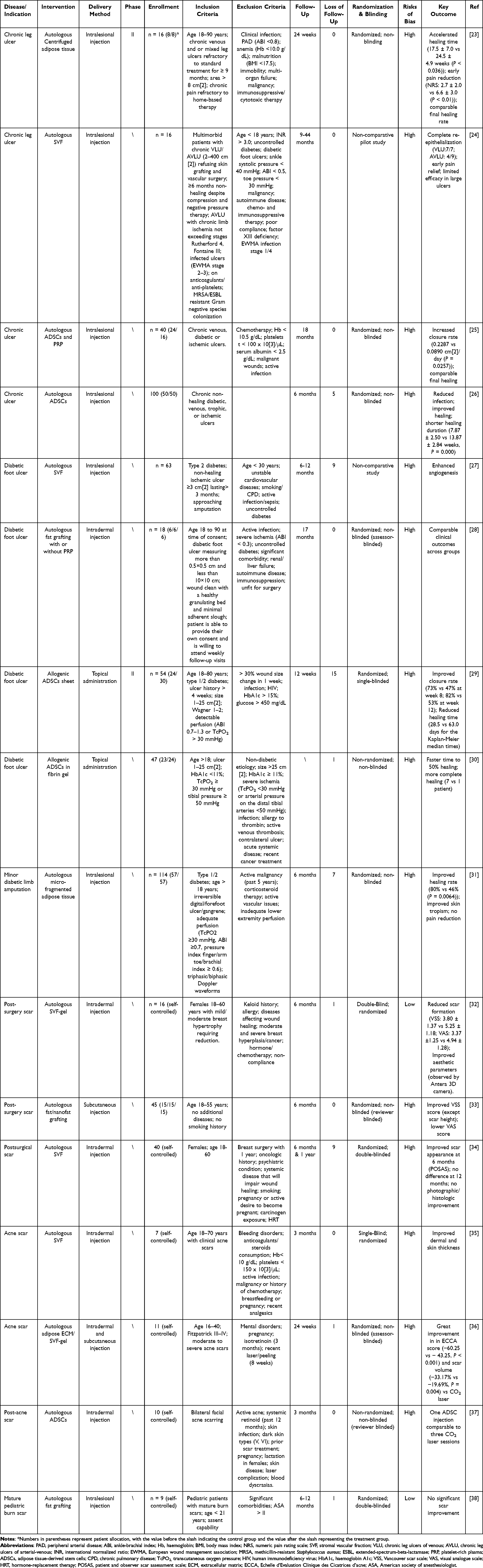 |
Table 1 Clinical Trials of ADSC Therapy in Wound Management |
MSC-EVs as Cell-Free Therapeutics
EVs are lipid-bilayer vesicles ubiquitously released by virtually all cell types. Three principal EV subtypes, classified by biogenetic pathways, include exosomes, microvesicles, and apoptotic bodies (Figure 1).39 The biogenesis of exosomes involves through three distinct stages.40 Initially, the plasma membrane undergoes invagination to form early endosomes. These early endosomes then mature into multivesicular bodies (MVBs) containing intraluminal vesicles (ILVs) through inward budding of the endosomal membrane. Finally, ILVs are released as exosomes via fusion of MVB with the plasma membrane. In contrast, microvesicles originate directly from the outward budding of the plasma membrane, while apoptotic bodies are generated during the fragmentation of apoptotic cells.41 Among these three types of EVs, exosomes have been the most extensively studied. However, current isolation protocols often yield heterogeneous mixtures of exosomes and small microvesicles (size < 200 nm).42 In this study, we use the term “EVs” to refer specifically to these mixed populations. “MVs” denotes larger microvesicles, which, according to the cited literature, are pelleted by centrifugation at 13,000 x g. “ApoBDs” refers to apoptotic bodies, which, based on the referenced studies, are generated by cells upon staurosporine-induced apoptosis.43,44
 |
Figure 1 Schematic illustration of the biogenesis, composition, and regenerative function of MSC-EVs. Micovesicles are generated through direct outward budding of the plasma membrane, while exosomes are released via fusion of MVBs with the plasma membrane. MVBs are formed from early endosomes, which originate through invagination of the plasma membrane during endocytosis. MSC-EVs are composed of a lipid bilayer membrane and express a variety of proteins, including Alix, Annexin, Rab GTPase, tetraspanins (CD63, CD9, CD81) and MHC I/II. They also carry bioactive cargo, such as HSP70, growth factors, enzymes, and nucleic acids. MSC-EVs promote tissue regeneration by improving re-epithelialization, promoting angiogenesis, and suppressing inflammation. |
EVs are composed of lipids, proteins and nucleic acids (Figure 1). MSC-EVs express a variety of characteristic proteins, including ALG-2-interacting protein X (Alix), membrane transport proteins (annexin and Rab GTPase), tetraspanins (CD63, CD9 and CD81), major histocompatibility complex I/II (MHC I/II) and heat-shock proteins (HSP70).45 Additionally, they carry a diverse array of bioactive molecules inherited from the donor cells, such as growth factors, enzymes, and RNAs. These bioactive molecules can be delivered to recipient cells within the wound bed via MSC-EV uptake, thereby improving re-epithelialization, promoting angiogenesis, and suppressing inflammation.46,47
Given that MSC-EVs exhibit regulatory functions comparable to those of MSCs, they are increasingly recognized as a promising cell-free alternative for MSC-based therapies.48 Table 2 provides a detailed comparative analysis of the advantages of MSC-EVs over MSCs in the context of therapeutic development. The superior characteristics of MSC-EVs, including ease of identification,49 high stability,50,51 convenient storage and transport,52,53 cost-effectiveness,54,55 flexibility in clinical administration routes,50,56,57 the ability to cross biological barriers and be engineered for targeted delivery,58 and minimal risk of side effects,59 make them more readily translatable to clinical applications than MSCs.
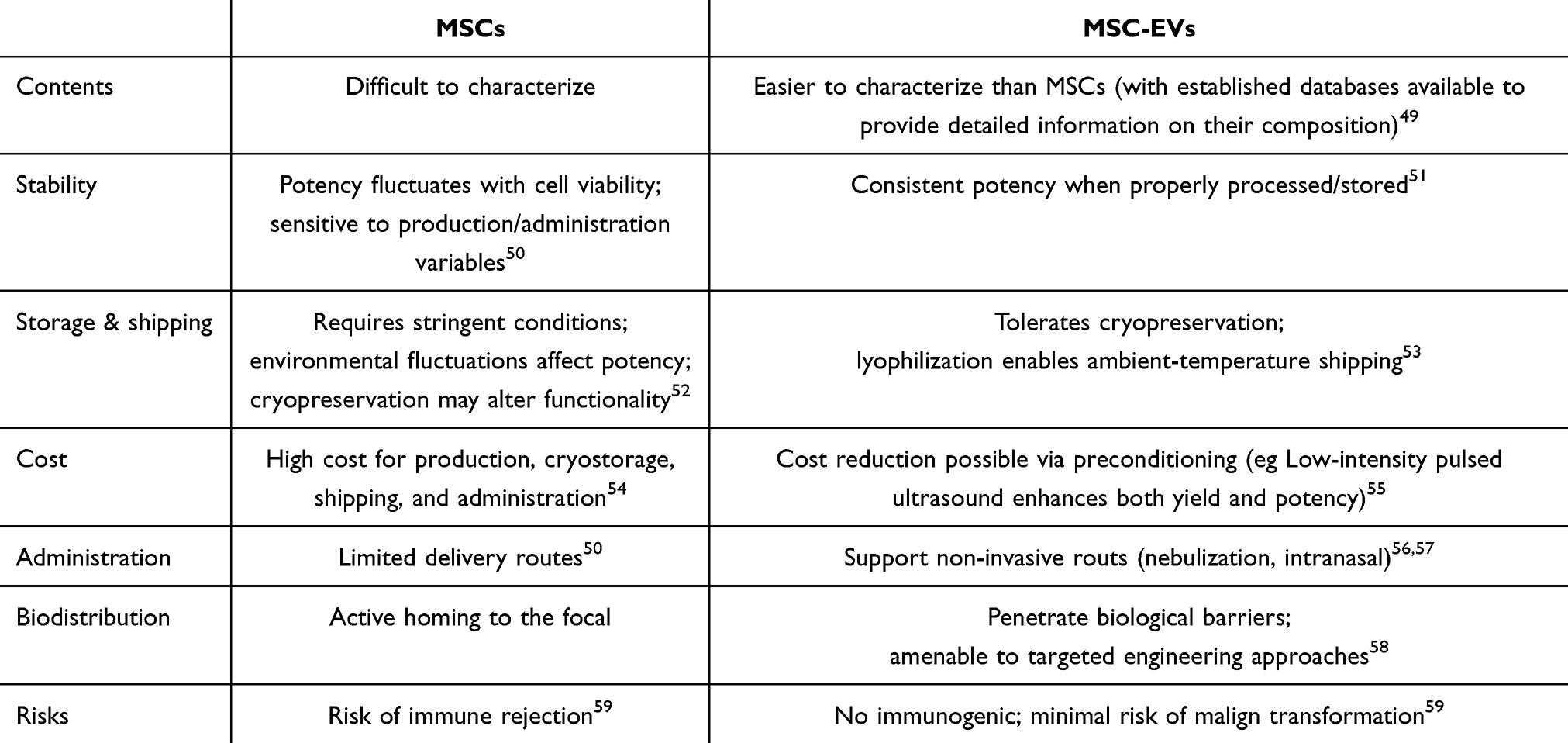 |
Table 2 The Advantages of MSC-EVs Over MSCs in the Context of Therapeutic Development |
The Role of ADSC-EVs in Wound Healing
Wound healing is a dynamically orchestrated physiological process initiated by tissue injury and progresses through four interdependent phases: hemostasis, inflammation, proliferation, and remodeling.60 Chronic or diabetic wounds often stall in the inflammatory stage, leading to impaired healing. ADSC-EVs have emerged as master regulators of this complex process, actively modulating cellular behaviors across the wound environment (Figure 2).61 By delivering bioactive cargo to keratinocytes, fibroblasts, endothelial cells, and macrophages, ADSC-EVs accelerate re-epithelialization, induce angiogenesis, resolve pathological inflammation, and mitigate aberrant fibrosis. This multifaceted intervention strategy positions ADSC-EVs as a highly promising therapeutic platform for the treatment of recalcitrant wounds.
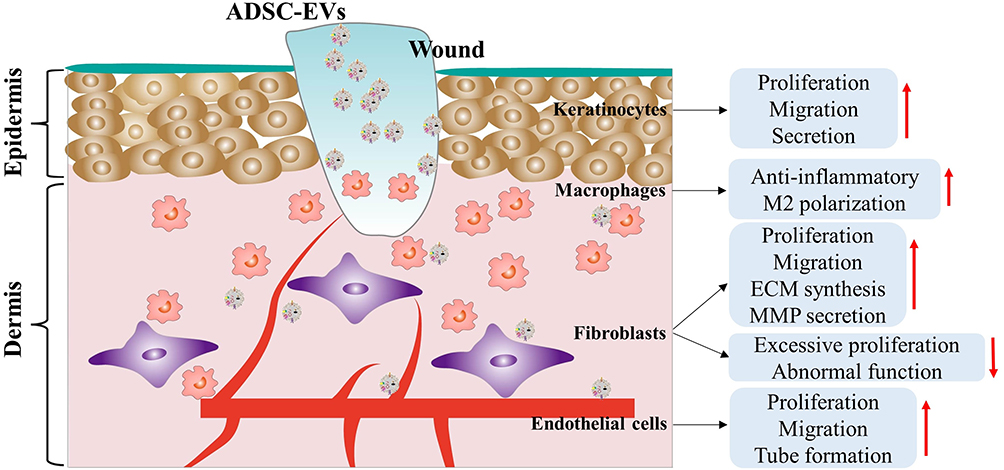 |
Figure 2 ADSC-EVs function as multi-target regulators to orchestrate wound healing. They accelerate tissue regeneration through: stimulating keratinocytes to drive proliferation, migration, differentiation, and paracrine secretion; activating fibroblasts to promote proliferation, migration, ECM synthesis, and matrix metalloproteinase (MMP) secretion; enhancing endothelial function via enhancing proliferation, migration, and tube formation; inducing macrophage M2 polarization and promoting anti-inflammatory cytokine release; and suppressing pathological fibroblast activity by inhibiting over proliferation and abnormal function (upward red arrow indicating promotion, downward red arrow indicating inhibition). Collectively, these actions restore tissue integrity by accelerating re-epithelialization and angiogenesis while resolving inflammation and preventing scar formation. |
ADSC-EVs Modulate Immune Microenvironment
Inflammation exerts a dual role in wound healing, intricately regulated in a dynamic manner.62,63 In the early stages of wound formation, a well-balanced inflammatory response is essential for effectively eliminating pathogens and necrotic tissue, thereby establishing a sterile environment conducive to tissue repair. However, as the healing process progresses, the timely resolution of inflammation becomes a critical juncture for initiating tissue regeneration and remodeling. In pathological conditions such as diabetes, the inflammatory response becomes abnormally prolonged, giving rise to a persistent pro-inflammatory state that ultimately impedes the repair process. Within this context, the dysfunction of core immune effector cells, particularly neutrophils and macrophages, emerges as a central cellular mechanism underlying the impaired healing of chronic wounds. Recent research has indicated that ADSC-EVs possess the capacity to remodel the wound inflammatory microenvironment by modulating these immune cells, thereby overcoming the state of healing stagnation.
Macrophages function as the central orchestrators of wound repair, with their dynamic phenotypic transition (M1→M2) precisely coordinating the progression of healing.62 In the early phase, M1 macrophages secrete pro-inflammatory cytokines, vigorously eliminating pathogens and cellular debris.64 In the later phase, M2 macrophages release anti-inflammatory cytokines, driving angiogenesis and collagen remodeling. The core defect in chronic wounds lies in the retention of macrophages in the M1 phenotype, which prevents the resolution of inflammation and blocks the transmission of repair signals. ADSC-EVs can reverse this imbalance through macrophage modulation. For instance, Yin et al discovered that ADSC-EVs promote M2 macrophage polarization via their cargo circRps5, which regulates miR-124-5p.65 Similarly, Li et al demonstrated that the long non-coding RNA (lncRNA) H19 carried by ADSC-EVs facilitates M2 polarization by modulating miR-130b-3p.66 Beyond altering polarization, ADSC-EVs also regulate macrophages to release pro-repair factors. Wang et al discovered that ADSC-EVs promote the release of Interleukin-33 (IL-33) from macrophages, thereby modulating M2 polarization and enhancing wound repair.67 Hsu et al reported that ADSC-EVs induce monocytes/macrophages to secrete transforming growth factor-β1 (TGF-β1), activating the TGF-β/Smad3 signaling pathway to promote healing.68 Hypoxic preconditioning is a common strategy to enhance MSC-EV yield and efficacy.69 Hypoxia-induced ADSC-EVs deliver circ-Snhg11 to regulate the miR-144-3p/hypoxia-induced factor-1α (HIF-1α) signaling axis, promoting M2 polarization.70 Additionally, ADSC-EVs serve as delivery vehicles for active factors, modulating macrophages via carried proteins or nucleic acids to facilitate repair. For example, Su et al generated miR-21-5p-enriched ADSC-EVs through miR-21-5p overexpression in ADSCs; these EVs effectively promoted wound healing, reduced inflammatory cytokine expression, and enhanced M2 polarization.71 Yu et al significantly enhanced M2 polarization and accelerated wound healing by using ADSCs overexpressing thymosin β4 (Tβ4) to generate Tβ4-loaded ADSC-EVs, thereby suppressing inflammation.72
Neutrophils, as the first responders to wounds, control infection by releasing antimicrobial peptides and forming neutrophil extracellular traps (NETs).73 In physiological healing, neutrophils should undergo timely apoptosis and be cleared by macrophages after fulfilling their tasks. However, in diabetic wounds, delayed neutrophil apoptosis and excessive NET release lead to impaired clearance. ADSC-EV therapy can reduce neutrophil numbers at wound sites, thereby promoting diabetic wound healing.74 Beyond macrophages and neutrophils, other immune cells also contribute to the healing network. For instance, increased mast cell degranulation correlates with impaired diabetic wound healing.75 Administration of ADSC-EVs may reduce the proportion of degranulated type 3 mast cells at diabetic wound sites, thereby accelerating the healing process.74
ADSC-EVs Promote Tissue Regeneration
The proliferation phase is a critical stage in wound healing, encompassing pivotal physiological processes including granulation tissue formation, re-epithelialization, neovascularization, collagen deposition, and wound contraction.76 The phase requires coordinated action of multiple cell types, such as fibroblasts, keratinocytes and endothelial cells.63 In chronic wounds, however, persistent inflammation or hypoxia severely impair cellular functionality, disrupting the proliferative phase.77 ADSC-EVs promote the proliferation, migration and functional recovery of these cells under pathological conditions, thereby accelerating wound healing and facilitating the resolution of refractory wounds.
Fibroblasts, as essential players in wound healing, are recruited to the wound site during the inflammation-resolution transition.78 They secrete matrix metalloproteinase (MMPs) to degrade fibrin clots and produce extracellular matrix (ECM) components that replace provisional matrices.79 The resulting ECM not only supports fibroblast migration and activity, but also provides a structural and signaling foundation for angiogenesis, granulation tissue formation, and epithelialization.80 ADSC-EVs have emerged as potent regulators of fibroblast function, facilitating wound healing through multiple mechanisms. In 2016, Hu et al first reported that ADSC-EVs could optimize fibroblast characteristics by promoting their proliferation and migration, and by upregulating the expression of several genes, including collagen type I and type III, neuro-cadherin, proliferating cell nuclear antigen (PCNA) and cyclin D1, thereby accelerating wound healing.81 In 2021, Wang et al demonstrated that ADSC-EVs could enhance the proliferation and migration of human fibroblasts and promote collagen deposition via the phosphatidylinositol 3-kinase (PI3K)/Protein Kinase B (Akt) signaling pathway.82 Given the presence of the inflammatory stimulation and hypoxia in chronic wounds, the regulatory effects of ADSC-EVs on fibroblasts under these conditions have also been explored. Heo et al reported that ADSC-EVs were able to suppress the inflammatory response of fibroblasts stimulated by interferon gamma (IFNγ) and tumor necrosis factor α (TNFα).83 Patel et al further demonstrated that ADSC-EVs counteract the adverse effects of hydrogen peroxide and lipopolysaccharide on fibroblasts by transporting lncRNA GAS5 and regulating Toll-like receptor 7 (TLR7).84
Keratinocytes are the predominant cells in the epidermis, playing a crucial role in wound healing. Upon injury, they reestablish an epithelial barrier through coordinated cell migration, proliferation and differentiation.85 Moreover, keratinocytes secrete various factors that promote re-epithelialization, stimulate angiogenesis and enhance the production of connective tissue matrix. Accumulated evidence indicates that ADSC-EVs can promote the proliferation and migration of keratinocytes.86 For instance, Zhang et al demonstrated that ADSC-EVs enhance HaCaT cell migration by activating the AKT/HIF-1α signaling pathway.75 Similarly, Lv et al found that ADSC-EVs facilitate HaCaT cell proliferation and migration via the Wnt/β-catenin signaling pathway.87 Notably, the overexpression of miR-21-5p in ADSC-EVs further intensifies this regulatory effect. In addition to these findings, ADSC-EVs have been shown to augment the regulatory capacity of keratinocytes. Ren et al reported that ADSC-derived MVs upregulate the expression of VEGF-A, vascular endothelial growth factor receptor 2 (VEGFR2), α-SMA and fibronectin in HaCaT cells, thereby accelerating wound healing through enhanced angiogenesis and re-epithelialization.42 Similar to fibroblasts, keratinocytes in chronic wounds are often subjected to inflammation and hypoxia, which can impair their function. The impact of ADSC-EVs on keratinocytes under these conditions has also been investigated. Ma et al observed that hydrogen peroxide suppresses HaCaT cell proliferation and migration while promoting apoptosis.88 However, treatment with ADSC-EVs effectively reversed this detrimental effect. He et al further demonstrated that ADSC-EVs counteract the inhibitory effects of hydrogen peroxide on HaCaT cell proliferation and migration by transporting MALAT1 to target miR-124 and activate the Wnt/β-catenin signaling pathway.89
The microvasculature at the wound site supplies essential nutrients and oxygen, supporting cell proliferation and differentiation, thereby facilitating wound healing. However, in non-healing wounds, such as those associated with diabetes and certain chronic conditions, angiogenesis is severely impaired.90 Endothelial cells are pivotal in driving angiogenesis.91 Accumulative evidence indicates that ADSC-EVs can modify endothelial cells, enhancing their proliferation, migration and tube formation capabilities during wound healing.92,93 For instance, Sun et al reported that ADSC-EVs significantly promote the proliferation, migration and tube formation of human umbilical vein endothelial cells (HUVECs).94 Further mechanism studies revealed that elevated expression of EGR-1 in ADSC-EVs activates the keratin pseudouridine synthase 1 (DKC1)/VEGF-A axis by upregulating lncRNA-SENCR in HUVECs, thereby enhancing angiogenesis and facilitating wound healing. Heo et al demonstrated that ADSC-EVs can facilitate the proliferation and tube formation of HUVECs and upregulate multiple pro-angiogenic genes by transporting miR-132 and miR-146a.95 In diabetic wounds, endothelial cells are compromised by high glucose levels and oxidative stress. High glucose condition could impair HUVEC migration and tube formation and downregulate angiogenic genes.96 Treatment with ADSC-EVs can reverse these impairment by reducing reactive oxygen species (ROS) production and protecting mitochondrial function through the sirtuin 3 (SIRT3)/superoxide dismutase 2 (SOD2) pathway.96 Oxidative stress induced by hydrogen peroxide can trigger HUVEC apoptosis and abolish their migratory capacity.97 ADSC-EVs released from MMP-degradable polyethylene glycol (PEG) hydrogels can significantly alleviate the hydrogen peroxide-induced oxidative stress in HUVECs, thereby promoting diabetic wound healing.97
ADSC-EVs Prevent Scar formation
During wound healing, excessive fibroblast proliferation and dysfunction, combined with disordered collagen deposition, frequently result in hypertrophic and keloid scars.98 These pathological scars cause adverse effects, including pain, pruritus, and aesthetic concerns, that significantly impair patients’ psychological well-being and quality of life.99
ADSC-EVs mitigate scar formation by regulating fibroblasts.100 Hu et al demonstrated that ADSC-EVs optimize fibroblast function, enhancing collagen I/III synthesis during early healing while suppressing late-stage collagen expression to minimize scarring.81 Subsequently, the same group reported that ADSC-EVs promote ECM remodeling by increasing the collagen type III:I ratio, further reducing scar formation.101 Chen et al showed that ADSC-EVs downregulate miR-181a to activate SIRT1 in hypertonic scar fibroblasts, reducing collagen and α-SMA expression.102 In vivo studies confirmed that ADSC-EVs decrease collagen deposition in murine wounds and exhibit superior anti-scarring effects compared to EV-free ADSC secretome, including attenuated collagen accumulation and myofibroblast aggregation.103
MicroRNAs are pivotal mediators of ADSC-EVs effects. Li et al identified miR-192-5p in ADSC-EVs as an inhibitor of IL-17RA in fibroblasts, suppressing collagen deposition, myofibroblast differentiation, and hypertonic scarring.104 Liang et al revealed that ADSC-EV-derived miR-128-1-5p targets the TGF-β1/Smad axis, inhibiting TGF-β1, Smad2/3 phosphorylation, and fibrosis markers (α-SMA and collagen I).105 This mechanism attenuates myofibroblast differentiation and collagen deposition, ultimately mitigating scar fibrosis in diabetic wounds.
Anti-scarring efficacy can be enhanced through delivery optimization. Wang et al embedded ADSC-EVs in multifunctional pH-responsive hydrogel, improving diabetic wound healing with accelerated re-epithelialization, angiogenesis, collagen organization, and reducing scarring.92 Zhou et al reported that intravenous ADSC-EV administration augments topical therapy, yielding well-organized collagen fibers and narrower scar width.106
ADSC-EVs also serve as miRNA delivery vehicles. In murine scald models, miR-29a-loaded ADSC-EVs inhibited scarring by suppressing the TGF-β2/Smad3 pathway.107 Meng et al delivered miR-141-3p-enriched ADSC-EVs via dissolvable microneedle arrays, reducing hypertonic skin thickness in rabbit ears and downregulating α-SMA, COL-1, fibronectin, TGF-β2, and p-Smad2/3.108
ADSC-derived ApoBDs (ADSC-ApoBDs) similarly regulate scarring. Yan et al reported that ApoBDs derived from young and aged ADSCs both reduce scar formation in a rat skin defects, with young ADSC-ApoBDs showing superior wound closure and scar minimization.43
ADSC-EVs Promote Diabetic Wound Healing
Diabetic wounds, the most prevalent chronic wounds, present a significant clinical challenge due to their increasing global prevalence and refractory nature.109 These wounds are characterized by sustained inflammation, oxidative stress, and neuropathy, rendering conventional therapies largely ineffective.110 Hence, developing novel treatments targeting multiple pathological pathways is essential.
Recent studies demonstrate that ADSC-EVs effectively promote the diabetic wound regeneration by restoring skin cell functionality and modulating the immune microenvironment. Li et al were the first to demonstrate that ADSC-EVs enhance the proliferation and angiogenesis of endothelial progenitor cells (EPCs) under high-glucose conditions, highlighting their therapeutic potential for diabetic wound healing.111 Song et al further revealed that ADSC-EVs can stimulate the proliferation and migration of HaCaT cells, as well as the proliferation and tube formation of HUVEC cells, collectively accelerating the healing process of diabetic wounds.112 In addition, ADSC-EVs have been shown to regulate fibroblast function to prevent scar formation in diabetic wounds. This is achieved through the delivery of miR-128-1-5p, which modulates the TGF-β1/Smad signaling pathway.105 Moreover, Yin et al discovered that circRps5 carried by ADSC-EVs promotes the M2 polarization of macrophages by regulating miR-124-5p, thereby resolving inflammation.65 These findings collectively illustrate the multifaceted therapeutic mechanism of ADSC-EVs in diabetic wound management.
Preconditioning strategies are extensively utilized to enhance both the yield and therapeutic efficacy of MSC-EVs.113 In the context of diabetic wound healing, methods such as hypoxia and low-intensity ultrasound stimulation have been employed to enhance the performance of ADSC-EVs. Hu et al demonstrated that hypoxia-conditioned ADSC-EVs embedded in gelatin methacryloyl (GelMA) hydrogel could accelerate diabetic wound healing by delivering circ-Snhg11.114 This exosomal circ-Snhg11 targets the miR-144-3p/NFE2L2/HIF1α pathway, thereby promoting the migration, proliferation and tube formation of vascular endothelial cells. In 2024, two additional research groups reported that hypoxia-pretreated ADSC-EVs had superior potential for diabetic wound healing compared to normoxia-pretreated ADSC-EVs by delivering circRNAs, including circ-IGF1R and circ-Erbb2ip.115,116 Detailed mechanistic investigations revealed that circ-IGF1R facilitates angiogenesis by modulating the miR-503-5p/HK2/VEGFA axis, while circ-Erbb2ip enhances angiogenesis and mitigates ROS and inflammatory responses by regulating the miR-670-5p/Nrf1 pathway. Beyond hypoxia, low-intensity ultrasound stimulation has been shown to stimulate the secretion of ADSC-EVs and enhance their biological functions.117 According to nanoparticle tracking analysis (NTA), ultrasound stimulation of ADSCs at a parameter of 1.5 W/cm2 for 30s resulted in a 45-fold increase in EV secretion. Furthermore, these stimulated ADSC-EVs were found to be enriched in wound healing-related miRNAs and accelerated diabetic wound healing in vivo through the promotion of cell proliferation, keratinocyte differentiation and migration, re-epithelialization, collagen deposition, and angiogenesis.
ADSC-EVs also act as versatile delivery vehicles for functional proteins or RNAs, enhancing diabetic wound healing. Li et al overexpressed nuclear factor erythroid 2-related factor 2 (Nrf2) in ADSC-EVs to boost their therapeutic efficacy.111 Using a murine diabetic wound model, they demonstrate that Nrf2-overexpressing ADSC-EVs significantly reduced ulcerated areas. This effect resulted from increased granulation tissue formation, angiogenesis, and growth factor secretion. Overexpressing Nrf2 could significantly reduce the ulcerated area by increasing granulation tissue formation, angiogenesis and growth factor secretion, combined with reduced inflammatory response and oxidative stress in the wound beds. In a separate study, Shi et al utilized ADSC-EVs to deliver mmu_circ_0000250 for treating diabetic wound.118 Overexpression of mmu_circ_0000250 in ADSC-EVs restored endothelial progenitor cell function and enhanced angiogenesis in diabetic wounds in vivo by promoting autophagy activation.
In recent years, research focus has expanded beyond EVs from viable ADSCs, revealing that ApoBDs released by apoptotic ADSCs are emerging as promising candidates for diabetic wound repair.119 Mao et al elucidated that ADSC-ApoBDs potently redirect macrophage polarization toward an anti-inflammatory phenotype, markedly attenuating wound inflammation and stimulating angiogenesis.44 Critically, mechanistic studies identified miR-20a-5p, a highly enriched functional cargo within ADSC-ApoBDs, as a regulator of the Janus kinase (JAK)-signal transducer and activator of transcription (STAT) signaling pathway. By suppressing pathological overactivation of this pathway, miR-20a-5p reshapes the wound immune microenvironment, establishing conditions conducive to healing. This work not only deciphers a fundamental reparative mechanism but also paves the way for clinical translation of apoptotic body-based therapies for diabetic wounds.
Beyond standalone applications, ADSC-EVs can also be integrated with functional scaffolds to augment healing effect. The core advantage of the scaffold lies in its spatial anchoring ability, which can locally retain therapeutics and achieve controllably and sustained release, eliminating the need for repeated dosing and extending therapeutic activity.120,121 Wu et al designed a chitosan hydrogel/ADSC-EV composite dressing, in which ADSC-EVs can be continuously released into the wound microenvironment as the hydrogel degrades gradually, thus prolonging the therapeutic effect.122 The functional expansion of scaffolds can further enhance therapeutic efficacy. For example, co-loading silver ions and ADSC-EVs into the hydrogel can simultaneously achieve antibacterial effects, clearance of oxidative stress damaged cells, and establishing a regenerative microenvironment to facilitate wound healing.123 Targeting the core pathological feature of hypoxia in diabetic wounds, Shiekh et al developed an oxygen-ADSC-EV co-delivery system, OxObandTM.124 This porous cryogel can accelerate wound closure, reduce the risk of infection, enhance collagen deposition, promote rapid re-epithelialization, stimulate robust neovascularization, and alleviate oxidative stress. This strategy of integrating multifunctional materials with ADSC-EVs provides a new paradigm for development customized intelligent wound dressings on demand.
The studies mentioned above underscore the therapeutic promise of ADSC-EVs in diabetic wound repair. Nevertheless, autologous ADSCs isolated from diabetic donors yield EVs (dEVs) with markedly impaired bioactivity. Vuong et al demonstrated that healthy-donor ADSC-EVs (nEVs) robustly promote endothelial survival and neovascularization, whereas dEVs lose these pro-angiogenic properties.125 Under high glucose conditions, nEVs effectively suppress endothelial–mesenchymal transition (EndMT), while dEVs promote EndMT by activating the TGF-β/Smad3 signaling pathway. This pathological shift drives vascular dysfunction and ultimately delays wound closure. The finding underscores the therapeutic promise of ADSC-EV therapy as a powerful means to compensate for the functional deficit of endogenous diabetic ADSCs.
Conclusion and Perspective
Wound healing remains a significant challenge in both laboratory research and clinical practice. ADSCs and ADSC-EVs have garnered considerable attention due to their accessibility, high abundance, and demonstrated efficacy in promoting wound healing.12–14 This review summarizes recent advances in the application of ADSCs and ADSC-EVs for wound healing, covering the current status of ADSC-related clinical trials, as well as the molecular mechanisms and representative applications of ADSC-EVs.
Evidence indicates that ADSC-EVs primarily exert their regulatory effects via the delivery of bioactive cargo, including RNAs and proteins (Figure 3). By targeting multiple cell types, including keratinocytes, macrophages, fibroblasts, and endothelial cells, they effectively promote re-epithelialization, suppress excessive inflammation, optimize ECM remodeling, and stimulate neovascularization to accelerate healing. Moreover, strategies such as cellular preconditioning, therapeutic cargo loading, and integration with functional biomaterials may further enhance the therapeutic potential and clinical applicability of ADSC-EVs.
 |
Figure 3 The roles and mechanisms of RNAs and proteins carried by ADSC-EVs in wound healing (RNAs in blue, proteins in Orange). These molecules specifically promote the functionality of keratinocytes, macrophages, fibroblasts, endothelial cells, and endothelial progenitor cells. By doing so, they accelerate re-epithelialization, resolve inflammation, optimize ECM remodeling, and stimulate angiogenesis. |
Despite the significant regenerative potential of ADSC-EVs, their clinical translation faces several challenges. First, regarding large-scale production and purification: while bioreactor-based cell expansion coupled with tangential flow filtration (TFF) for EV enrichment is technically feasible, TFF-derived products suffer from insufficient purity and high impurity content.126–128 These impurities can mask inherent EV functions, alter in vivo pharmacokinetics, and introduce immunogenicity or batch variability, ultimately compromising therapeutic stability and predictability. While alternative methods such as asymmetric flow field-flow fractionation and size-exclusion chromatography can achieve higher purity, their scalability remains limited.129,130 Second, mechanistic elucidation and heterogeneity present core difficulties: EVs exhibit intrinsic heterogeneity in size, composition, origin, and function across subpopulations.131 This complexity precludes straightforward bioactivity assessment via single-target mechanisms like small-molecule drugs, fundamentally hindering precise mechanistic understanding, reliable potency standardization, and the development of uniform therapeutic products. Overcoming these hurdles demands advanced sorting technologies, deeper mechanistic studies, and functional potency assays aligned with clinical endpoints.
To date, three clinical trials have evaluated ADSC-EVs for wound management.132–134 All reported no adverse events, supporting their safety profile. Alinda et al conducted a randomized controlled trial comparing ADSC-conditioned medium (rich in ADSC-EVs) with framycetin gauze dressing for chronic plantar ulcers in leprosy.132 Treatment with ADSC-conditioned medium significantly reduced mean ulcer area from the second week and mean depth from the third week onward, confirming its therapeutic potential. Estupinan et al compared topical ADSC-EV administration with microneedling-based platelet-rich plasma (PRP) for photoaged facial skin repair.133 Both interventions improved skin conditions, including wrinkling, dyschromia, erythema, texture, and overall appearance, with topical ADSC-EVs achieving outcomes comparable to PRP microneedling, suggesting a viable alternative. KWON et al incorporated ADSC-EVs into a gel and conducted a double-blind randomized self-controlled trial on acne scar repair.134 The ADSC-EV gel significantly improved scar status relative to the blank gel, as measured by a reduction in Échelle d’évaluation clinique des cicatrices d’acné scores (32.5% vs 19.9%, P < 0.01). Additional trials using ADSC-EVs for chronic wound treatment have been registered on ClinicalTrials.gov. However, existing clinical studies exhibit notable limitations: investigated conditions are relatively specific (eg, leprosy-associated plantar ulcers, photoaged skin, and acne scars), most trials lack double-blind randomized designs (except for the acne scar study), and sample sizes are small (fewer than 50 participants). Future research should prioritize larger, double-blind randomized controlled trials targeting a broader spectrum of chronic wounds, such as diabetic ulcers, to further validate the efficacy and safety of ADSC-EVs.
Abbreviations
ADSCs, adipose-derived stem cells; EVs, extracellular vesicles; MSCs, mesenchymal stem cells; MSC-EVs, mesenchymal stem cells-derived EVs; ADSC-EVs, ADSC-derived EVs; SMA, smooth muscle actin; HSP47, heat shock protein 47; KGF, keratinocyte growth factor; VEGF, vascular endothelial growth factor; HGF, hepatocyte growth factor; FGF2, fibroblast growth factor 2; Abbreviation: PAD, peripheral arterial disease; ABI, ankle-brachial index; Hb, haemoglobin; BMI, body mass index; NRS, numeric pain rating scale; SVF, stromal vascular fraction; VLU, chronic leg ulcers of venous; AVLU, chronic leg ulcers of arterial-venous; INR, international normalized ratio; EWMA, European wound management association; MRSA, methicillin-resistant Staphylococcus aureus; ESBL, extended-spectrum-beta-lactamase; PRP, platelet-rich plasma; ADSCs, adipose tissue-derived stem cells; CPD, chronic pulmonary disease; TcPO2, transcutaneous oxygen pressure; HIV, human immunodeficiency virus; HbA1c, haemoglobin A1c; VSS, Vancouver scar scale; VAS, visual analogue scale; HRT, hormone-replacement therapy; POSAS, patient and observer scar assessment scale; ECM, extracellular matrix; ECCA, Echelle d’Evaluation Clinique des Cicatrices d’acne; ASA, American society of anesthesiologist; MVs, microvesicles; MVB, multivesicular body; ILVs, intraluminal vesicles; ApoBDs, apoptotic bodies; Alix, ALG-2-interacting protein X; MHC I/II, major histocompatibility complex I/II; HSP70, heat shock protein 70; long non-coding RNA, lncRNA; Interleukin-33, IL-33; TGF-β1, transforming growth factor-β1; Tβ4, thymosin β4; MMPs, ma rix metalloproteinases; PCNA, proliferating cell nuclear antigen; PI3K, phosphatidylinositol 3-kinase; Akt, Protein Kinase B; IFNγ, interferon gamma; TNF α, tumor necrosis factor α; HIF-1α, hypoxia-induced factor-1α; TLR7, Toll-like receptor 7; VEGFR2, vascular endothelial growth factor receptor 2; α-SMA, α-smooth muscle actin; DKC1, keratin pseudouridine synthase 1; HUVECs, human umbilical vein endothelial cells; ROS, reactive oxygen species; PEG, polyethylene glycol; SIRT3, sirtuin 3; SOD2, superoxide dismutase 2; IL-1β, interleukin 1β; STAT3, signal transducer and activator of transcription 3; IL-10, interleukin 10; NETs, neutrophil extracellular traps; DSPE-PLLA, phosphoethanolamine phospholipid-grafted poly-L-lactic acid; ADSC-ApoBDs, ADSC-derived ApoBDs; EPCs, endothelial progenitor cells; RSFs, skin fibroblasts; NTA, nanoparticle tracking analysis; Nrf2, nuclear factor erythroid 2-related factor 2; JAK, Janus kinase; STAT, signal transducer and activator of transcription; GelMA, gelatin methacryloyl; dEVs, ADSC-EVs derived from diabetic patients; nEVs, ADSC-EVs derived from healthy patients; EndMT, endothelial–mesenchymal transition; TFF, tangential flow filtration.
Funding
This work was funded by Sanming Project of Medicine in Shenzhen (SZSM202106019), the Science and Technology Innovation Committee of Shenzhen (No. JCYJ20220530142618040), the Shenzhen Platform for Trauma Rescue and Regenerative Medicine, and the Bao’an District Clinical Medical Research Center for Traumatology.
Disclosure
The authors declare that there are no competing interests.
References
1. Falanga V, Isseroff RR, Soulika AM, et al. Chronic wounds. Nat Rev Dis Primers. 2022;8(1):50. doi:10.1038/s41572-022-00377-3
2. Li Q, Wang D, Jiang Z, et al. Advances of hydrogel combined with stem cells in promoting chronic wound healing. Front Chem. 2022;10:1038839. doi:10.3389/fchem.2022.1038839
3. Guest JF, Fuller GW, Vowden P. Cohort study evaluating the burden of wounds to the UK’s national health service in 2017/2018: update from 2012/2013. BMJ Open. 2020;10(12):e045253. doi:10.1136/bmjopen-2020-045253
4. Eriksson E, Liu PY, Schultz GS, et al. Chronic wounds: treatment consensus. Wound Repair Regen. 2022;30(2):156–171. doi:10.1111/wrr.12994
5. Wang Z, Qi F, Luo H, Xu G, Wang D. Inflammatory microenvironment of skin wounds. Front Immunol. 2022;13:789274. doi:10.3389/fimmu.2022.789274
6. Sadeghi M, Moghaddam A, Amiri AM, et al. Improving the wound healing process: pivotal role of mesenchymal stromal/stem cells and immune cells. Stem Cell Rev Rep. 2025;21(3):680–697. doi:10.1007/s12015-025-10849-0
7. Gong X, Zhao Q, Zhang H, et al. The effects of mesenchymal stem cells-derived exosomes on metabolic reprogramming in scar formation and wound healing. Int J Nanomed. 2024;19:9871–9887. doi:10.2147/IJN.S480901
8. Huang YZ, Gou M, Da LC, Zhang WQ, Xie HQ. Mesenchymal stem cells for chronic wound healing: current status of preclinical and clinical studies. Tissue Eng Part B Rev. 2020;26(6):555–570. doi:10.1089/ten.teb.2019.0351
9. Bian D, Wu Y, Song G, Azizi R, Zamani A. The application of mesenchymal stromal cells (MSCs) and their derivative exosome in skin wound healing: a comprehensive review. Stem Cell Res Ther. 2022;13(1):24. doi:10.1186/s13287-021-02697-9
10. Jakovljevic J, Harrell CR, Fellabaum C, Arsenijevic A, Jovicic N, Volarevic V. Modulation of autophagy as new approach in mesenchymal stem cell-based therapy. Biomed Pharmacothe. 2018;104:404–410. doi:10.1016/j.biopha.2018.05.061
11. Burdick JA, Mauck RL, Gerecht S. To serve and protect: hydrogels to improve stem cell-based therapies. Cell Stem Cell. 2016;18(1):13–15. doi:10.1016/j.stem.2015.12.004
12. Toyserkani NM, Christensen ML, Sheikh SP, Sørensen JA. Adipose-derived stem cells: new treatment for wound healing? Ann Plastic Surg. 2015;75(1):117–123. doi:10.1097/SAP.0000000000000083
13. Fontes T, Brandão I, Negrão R, Martins MJ, Monteiro R. Autologous fat grafting: harvesting techniques. Ann Med Surg Lond. 2018;36:212–218. doi:10.1016/j.amsu.2018.11.005
14. Aboulhoda BE, Abd El Fattah S. Bone marrow-derived versus adipose-derived stem cells in wound healing: value and route of administration. Cell Tissue Res. 2018;374(2):285–302. doi:10.1007/s00441-018-2879-x
15. Hassanshahi A, Hassanshahi M, Khabbazi S, et al. Adipose-derived stem cells for wound healing. J Cell Physiol. 2019;234(6):7903–7914. doi:10.1002/jcp.27922
16. Shingyochi Y, Orbay H, Mizuno H. Adipose-derived stem cells for wound repair and regeneration. Expert opin biol ther. 2015;15(9):1285–1292. doi:10.1517/14712598.2015.1053867
17. Altman AM, Matthias N, Yan Y, et al. Dermal matrix as a carrier for in vivo delivery of human adipose-derived stem cells. Biomaterials. 2008;29(10):1431–1442. doi:10.1016/j.biomaterials.2007.11.026
18. Ebrahimian TG, Pouzoulet F, Squiban C, et al. Cell therapy based on adipose tissue-derived stromal cells promotes physiological and pathological wound healing. Arteriosclerosis Thrombosis Vasc Biol. 2009;29(4):503–510. doi:10.1161/ATVBAHA.108.178962
19. Rehman J, Traktuev D, Li J, et al. Secretion of angiogenic and antiapoptotic factors by human adipose stromal cells. Circulation. 2004;109(10):1292–1298. doi:10.1161/01.CIR.0000121425.42966.F1
20. Cui Y, He J, Yu Z, et al. Adipose-derived stem cells transplantation improves survival and alleviates contraction of skin grafts via promoting macrophages M2 polarization. Skin Res Technol. 2024;30(8):e13918. doi:10.1111/srt.13918
21. Cerqueira MT, Pirraco RP, Santos TC, et al. Human adipose stem cells cell sheet constructs impact epidermal morphogenesis in full-thickness excisional wounds. Biomacromolecules. 2013;14(11):3997–4008. doi:10.1021/bm4011062
22. Nie C, Yang D, Xu J, Si Z, Jin X, Zhang J. Locally administered adipose-derived stem cells accelerate wound healing through differentiation and vasculogenesis. Cell Transplant. 2011;20(2):205–216. doi:10.3727/096368910X520065
23. Zollino I, Campioni D, Sibilla MG, Tessari M, Malagoni AM, Zamboni P. A phase II randomized clinical trial for the treatment of recalcitrant chronic leg ulcers using centrifuged adipose tissue containing progenitor cells. Cytotherapy. 2019;21(2):200–211. doi:10.1016/j.jcyt.2018.10.012
24. Konstantinow A, Arnold A, Djabali K, et al. Therapy of ulcus cruris of venous and mixed venous arterial origin with autologous, adult, native progenitor cells from subcutaneous adipose tissue: a prospective clinical pilot study. J Eur Acad Dermatol Venereol. 2017;31(12):2104–2118. doi:10.1111/jdv.14489
25. Raposio E, Bertozzi N, Bonomini S, et al. Adipose-derived stem cells added to platelet-rich plasma for chronic skin ulcer therapy. Wounds. 2016;28(4):126–131.
26. Tanios E, Ahmed TM, Shafik EA, et al. Efficacy of adipose-derived stromal vascular fraction cells in the management of chronic ulcers: a randomized clinical trial. Regener Med. 2021;16(11):975–988. doi:10.2217/rme-2020-0207
27. Carstens MH, Quintana FJ, Calderwood ST, et al. Treatment of chronic diabetic foot ulcers with adipose-derived stromal vascular fraction cell injections: safety and evidence of efficacy at 1 year. Stem Cells Transl Med. 2021;10(8):1138–1147. doi:10.1002/sctm.20-0497
28. Smith OJ, Leigh R, Kanapathy M, et al. Fat grafting and platelet-rich plasma for the treatment of diabetic foot ulcers: a feasibility-randomised controlled trial. Int Wound J. 2020;17(6):1578–1594. doi:10.1111/iwj.13433
29. Moon KC, Suh HS, Kim KB, et al. Potential of allogeneic adipose-derived stem cell-hydrogel complex for treating diabetic foot ulcers. Diabetes. 2019;68(4):837–846. doi:10.2337/db18-0699
30. Mrozikiewicz-Rakowska B, Szabłowska-Gadomska I, Cysewski D, et al. Allogenic adipose-derived stem cells in diabetic foot ulcer treatment: clinical effectiveness, safety, survival in the wound site, and proteomic impact. Int J Mol Sci. 2023;24(2):1472. doi:10.3390/ijms24021472
31. Lonardi R, Leone N, Gennai S, Trevisi Borsari G, Covic T, Silingardi R. Autologous micro-fragmented adipose tissue for the treatment of diabetic foot minor amputations: a randomized controlled single-center clinical trial (MiFrAADiF). Stem Cell Res Ther. 2019;10(1):223. doi:10.1186/s13287-019-1328-4
32. Rong X, Tang J, Yang J, et al. Immediate SVF-gel injection reduced incision scar formation: a prospective, double-blind, randomized, self-control trial. Aesthetic Plast Surg. 2024;48(16):3147–3153. doi:10.1007/s00266-024-04126-7
33. Kemaloğlu CA, Özyazgan İ, Gönen ZB. Immediate fat and nanofat-enriched fat grafting in breast reduction for scar management. J Plast Surg Hand Surg. 2021;55(3):173–180. doi:10.1080/2000656X.2020.1856678
34. van Dongen JA, van Boxtel J, Uguten M, et al. Tissue stromal vascular fraction improves early scar healing: a prospective randomized multicenter clinical trial. Aesthet Surg J. 2022;42(7):Np477–np88. doi:10.1093/asj/sjab431
35. Behrangi E, Moradi S, Ghassemi M, et al. The investigation of the efficacy and safety of stromal vascular fraction in the treatment of nanofat-treated acne scar: a randomized blinded controlled clinical trial. Stem Cell Res Ther. 2022;13(1):298. doi:10.1186/s13287-022-02957-2
36. Zhao T, Li M, Wang J, et al. Comparison of the effects of adipose extracellular matrix/stromal vascular fraction gel injection and CO(2) fractional laser on atrophic acne scar in asians through a 24-week prospective, randomized, split-face study. J Cosmet Dermatol. 2025;24(3):e70131. doi:10.1111/jocd.70131
37. Abou Eitta RS, Ismail AA, Abdelmaksoud RA, Ghezlan NA, Mehanna RA. Evaluation of autologous adipose-derived stem cells vs. fractional carbon dioxide laser in the treatment of post acne scars: a split-face study. Int J Dermatol. 2019;58(10):1212–1222. doi:10.1111/ijd.14567
38. Gal S, Ramirez JI, Maguina P. Autologous fat grafting does not improve burn scar appearance: a prospective, randomized, double-blinded, placebo-controlled, pilot study. Burns. 2017;43(3):486–489. doi:10.1016/j.burns.2016.09.019
39. Suchorska WM, Lach MS. The role of exosomes in tumor progression and metastasis. Oncol Rep. 2016;35(3):1237–1244. doi:10.3892/or.2015.4507
40. Arya SB, Collie SP, Parent CA. The ins-and-outs of exosome biogenesis, secretion, and internalization. Trends Cell Biol. 2024;34(2):90–108. doi:10.1016/j.tcb.2023.06.006
41. Van Niel G, D’Angelo G, Raposo G. Shedding light on the cell biology of extracellular vesicles. Nat Rev Mol Cell Biol. 2018;19(4):213–228. doi:10.1038/nrm.2017.125
42. Ren S, Chen J, Duscher D, et al. Microvesicles from human adipose stem cells promote wound healing by optimizing cellular functions via AKT and ERK signaling pathways. Stem Cell Res Ther. 2019;10(1):47. doi:10.1186/s13287-019-1152-x
43. Yan K, Han L, Xu S, et al. The effect of age on the regenerative potential of adipose stem-cell-derived apoptotic extracellular vesicles in rat skin wound healing. Inter J Med Sci. 2024;21(8):1529–1540. doi:10.7150/ijms.94755
44. Mao J, Qian S, Zhao Q, et al. Balancing macrophage polarization via stem cell-derived apoptotic bodies for diabetic wound healing. Med. 2024;5(2):148–68.e8. doi:10.1016/j.medj.2024.01.006
45. Liang ZY, Xu XJ, Rao J, Yang ZL, Wang CH, Chen CM. Mesenchymal stem cell-derived exosomal MiRNAs promote M2 macrophages polarization: therapeutic opportunities for spinal cord injury. Front Mol Neurosci. 2022;15:926928. doi:10.3389/fnmol.2022.926928
46. Avalos PN, Forsthoefel DJ. An emerging frontier in intercellular communication: extracellular vesicles in regeneration. Front Cell Develop Biol. 2022;10:849905. doi:10.3389/fcell.2022.849905
47. Maacha S, Bhat AA, Jimenez L, et al. Extracellular vesicles-mediated intercellular communication: roles in the tumor microenvironment and anti-cancer drug resistance. Mol Cancer. 2019;18(1):55. doi:10.1186/s12943-019-0965-7
48. Keshtkar S, Azarpira N, Ghahremani MH. Mesenchymal stem cell-derived extracellular vesicles: novel frontiers in regenerative medicine. Stem Cell Res Ther. 2018;9(1):63. doi:10.1186/s13287-018-0791-7
49. Chitti SV, Gummadi S, Kang T, et al. Vesiclepedia 2024: an extracellular vesicles and extracellular particles repository. Nucleic Acids Res. 2024;52(D1):D1694–d8. doi:10.1093/nar/gkad1007
50. Galipeau J, Krampera M, Leblanc K, et al. Mesenchymal stromal cell variables influencing clinical potency: the impact of viability, fitness, route of administration and host predisposition. Cytotherapy. 2021;23(5):368–372. doi:10.1016/j.jcyt.2020.11.007
51. Ahmadian S, Jafari N, Tamadon A, Ghaffarzadeh A, Rahbarghazi R, Mahdipour M. Different storage and freezing protocols for extracellular vesicles: a systematic review. Stem Cell Res Ther. 2024;15(1):453. doi:10.1186/s13287-024-04005-7
52. Wang J, Li R. Effects, methods and limits of the cryopreservation on mesenchymal stem cells. Stem Cell Res Ther. 2024;15(1):337. doi:10.1186/s13287-024-03954-3
53. Charoenviriyakul C, Takahashi Y, Nishikawa M, Takakura Y. Preservation of exosomes at room temperature using lyophilization. Int J Pharm. 2018;553(1–2):1–7. doi:10.1016/j.ijpharm.2018.10.032
54. Jossen V, van den Bos C, Eibl R, Eibl D. Manufacturing human mesenchymal stem cells at clinical scale: process and regulatory challenges. Appl Microbiol Biotechnol. 2018;102(9):3981–3994. doi:10.1007/s00253-018-8912-x
55. Zhong F, Cao S, Yang L, et al. Low‑intensity pulsed ultrasound accelerates diabetic wound healing by ADSC‑derived exosomes via promoting the uptake of exosomes and enhancing angiogenesis. Int J Mol Med. 2024;53(3). doi:10.3892/ijmm.2024.5347
56. Zhou X, Deng X, Liu M, et al. Intranasal delivery of BDNF-loaded small extracellular vesicles for cerebral ischemia therapy. J Control Release. 2023;357:1–19. doi:10.1016/j.jconrel.2023.03.033
57. Li J, Sun S, Zhu D, et al. Inhalable stem cell exosomes promote heart repair after myocardial infarction. Circulation. 2024;150(9):710–723. doi:10.1161/CIRCULATIONAHA.123.065005
58. Liu Q, Li D, Pan X, Liang Y. Targeted therapy using engineered extracellular vesicles: principles and strategies for membrane modification. J Nanobiotechnol. 2023;21(1):334. doi:10.1186/s12951-023-02081-0
59. Foo JB, Looi QH, Chong PP, et al. Comparing the therapeutic potential of stem cells and their secretory products in regenerative medicine. Stem Cells Int. 2021;2021:2616807. doi:10.1155/2021/2616807
60. Takeo M, Lee W, Ito M. Wound healing and skin regeneration. Cold Spring Harb Perspect Med. 2015;5(1):a023267. doi:10.1101/cshperspect.a023267
61. An Y, Lin S, Tan X, et al. Exosomes from adipose-derived stem cells and application to skin wound healing. Cell Prolif. 2021;54(3):e12993. doi:10.1111/cpr.12993
62. Hassanshahi A, Moradzad M, Ghalamkari S, Fadaei M, Cowin AJ, Hassanshahi M. Macrophage-mediated inflammation in skin wound healing. Cells. 2022;11(19):2953. doi:10.3390/cells11192953
63. Peña OA, Martin P. Cellular and molecular mechanisms of skin wound healing. Nat Rev Mol Cell Biol. 2024;25(8):599–616. doi:10.1038/s41580-024-00715-1
64. Kloc M, Ghobrial RM, Wosik J, Lewicka A, Lewicki S, Kubiak JZ. Macrophage functions in wound healing. J Tissue Eng Regener Med. 2019;13(1):99–109. doi:10.1002/term.2772
65. Yin D, Shen G. Exosomes from adipose-derived stem cells regulate macrophage polarization and accelerate diabetic wound healing via the circ-Rps5/miR-124-3p axis. Immun Inflamm Dis. 2024;12(6):e1274. doi:10.1002/iid3.1274
66. Li B, Qian L, Pi L, Meng X. A therapeutic role of exosomal lncRNA H19 from adipose mesenchymal stem cells in cutaneous wound healing by triggering macrophage M2 polarization. Cytokine. 2023;165:156175. doi:10.1016/j.cyto.2023.156175
67. Wang Y, Ding H, Bai R, et al. Exosomes from adipose-derived stem cells accelerate wound healing by increasing the release of IL-33 from macrophages. Stem Cell Res Ther. 2025;16(1):80. doi:10.1186/s13287-025-04203-x
68. Hsu HH, Wang AYL, Loh CYY, Pai AA, Kao HK. Therapeutic potential of exosomes derived from diabetic adipose stem cells in cutaneous wound healing of db/db mice. Pharmaceutics. 2022;14(6):1206. doi:10.3390/pharmaceutics14061206
69. Zhuo H, Chen Y, Zhao G. Advances in application of hypoxia-preconditioned mesenchymal stem cell-derived exosomes. Front Cell Dev Biol. 2024;12:1446050. doi:10.3389/fcell.2024.1446050
70. Shi R, Jin Y, Zhao S, Yuan H, Shi J, Zhao H. Hypoxic ADSC-derived exosomes enhance wound healing in diabetic mice via delivery of circ-Snhg11 and induction of M2-like macrophage polarization. Biomed Pharmacother. 2022;153:113463. doi:10.1016/j.biopha.2022.113463
71. Su Y, Huang Z, Chen Y, Deng J, Huang Y, Xiong W. Exosomes from miR-21-5p-modified adipose-derived stem cells promote wound healing by regulating M2 macrophage polarization in a rodent model of pressure ulcer. J Mol Histol. 2025;56(3):135. doi:10.1007/s10735-025-10407-5
72. Yu H, Wang B, Li Z, et al. Tβ4-exosome-loaded hemostatic and antibacterial hydrogel to improve vascular regeneration and modulate macrophage polarization for diabetic wound treatment. Mater Today Bio. 2025;31:101585. doi:10.1016/j.mtbio.2025.101585
73. Wilgus TA, Roy S, McDaniel JC. Neutrophils and wound repair: positive actions and negative reactions. Adv Wound Care. 2013;2(7):379–388. doi:10.1089/wound.2012.0383
74. Khalatbary AR, Omraninava M, Nasiry D, et al. Exosomes derived from human adipose mesenchymal stem cells loaded bioengineered three-dimensional amniotic membrane-scaffold-accelerated diabetic wound healing. Arch Dermatolog Res. 2023;315(10):2853–2870. doi:10.1007/s00403-023-02709-z
75. Dong J, Chen L, Zhang Y, et al. Mast cells in diabetes and diabetic wound healing. Adv Therapy. 2020;37(11):4519–4537. doi:10.1007/s12325-020-01499-4
76. Singh S, Young A, McNaught C-E. The physiology of wound healing. Surgery. 2017;35(9):473–477. doi:10.1016/j.mpsur.2017.06.004
77. Zhao R, Liang H, Clarke E, Jackson C, Xue M. Inflammation in chronic wounds. Int J Mol Sci. 2016;17(12):2085. doi:10.3390/ijms17122085
78. Bainbridge P. Wound healing and the role of fibroblasts. J Wound Care. 2013;22(8):407–8,10–12. doi:10.12968/jowc.2013.22.8.407
79. Li B, Wang JH. Fibroblasts and myofibroblasts in wound healing: force generation and measurement. J Tissue Viability. 2011;20(4):108–120. doi:10.1016/j.jtv.2009.11.004
80. Rozario T, DeSimone DW. The extracellular matrix in development and morphogenesis: a dynamic view. Dev Biol 2010;341(1):126–140. doi:10.1016/j.ydbio.2009.10.026
81. Hu L, Wang J, Zhou X, et al. Exosomes derived from human adipose mensenchymal stem cells accelerates cutaneous wound healing via optimizing the characteristics of fibroblasts. Sci Rep. 2016;6(1):32993. doi:10.1038/srep32993
82. Wang J, Wu H, Peng Y, et al. Hypoxia adipose stem cell-derived exosomes promote high-quality healing of diabetic wound involves activation of PI3K/Akt pathways. J Nanobiotechnol. 2021;19(1):202. doi:10.1186/s12951-021-00942-0
83. Heo JS, Kim S, Yang CE, Choi Y, Song SY, Kim HO. Human adipose mesenchymal stem cell-derived exosomes: a key player in wound healing. Tissue Eng and Regener Med. 2021;18(4):537–548. doi:10.1007/s13770-020-00316-x
84. Patel RS, Impreso S, Lui A, Vidyarthi G, Albear P, Patel NA. Long noncoding RNA GAS5 contained in exosomes derived from human adipose stem cells promotes repair and modulates inflammation in a chronic dermal wound healing model. Biology. 2022;11(3):426. doi:10.3390/biology11030426
85. Wang Y, Graves DT. Keratinocyte function in normal and diabetic wounds and modulation by FOXO1. J Diabetes Res. 2020;2020:3714704. doi:10.1155/2020/3714704
86. Yang C, Luo L, Bai X, et al. Highly-expressed micoRNA-21 in adipose derived stem cell exosomes can enhance the migration and proliferation of the HaCaT cells by increasing the MMP-9 expression through the PI3K/AKT pathway. Arch Biochem Biophys. 2020;681:108259. doi:10.1016/j.abb.2020.108259
87. Lv Q, Deng J, Chen Y, Wang Y, Liu B, Liu J. Engineered human adipose stem-cell-derived exosomes loaded with miR-21-5p to promote diabetic cutaneous wound healing. Mol Pharmaceut. 2020;17(5):1723–1733. doi:10.1021/acs.molpharmaceut.0c00177
88. Ma T, Fu B, Yang X, Xiao Y, Pan M. Adipose mesenchymal stem cell-derived exosomes promote cell proliferation, migration, and inhibit cell apoptosis via Wnt/β-catenin signaling in cutaneous wound healing. J Cell Biochem. 2019;120(6):10847–10854. doi:10.1002/jcb.28376
89. He L, Zhu C, Jia J, et al. ADSC-Exos containing MALAT1 promotes wound healing by targeting miR-124 through activating Wnt/β-catenin pathway. Biosci Rep. 2020;40(5). doi:10.1042/BSR20192549
90. Veith AP, Henderson K, Spencer A, Sligar AD, Baker AB. Therapeutic strategies for enhancing angiogenesis in wound healing. Adv Drug Delivery Rev. 2019;146:97–125. doi:10.1016/j.addr.2018.09.010
91. Ding MH, Lozoya EG, Rico RN, Chew SA. The role of angiogenesis-inducing microRNAs in vascular tissue engineering. Tissue Eng Part A. 2020;26(23–24):1283–1302. doi:10.1089/ten.tea.2020.0170
92. Wang C, Wang M, Xu T, et al. Engineering bioactive self-healing antibacterial exosomes hydrogel for promoting chronic diabetic wound healing and complete skin regeneration. Theranostics. 2019;9(1):65–76. doi:10.7150/thno.29766
93. Xiao S, Xiao C, Miao Y, et al. Human acellular amniotic membrane incorporating exosomes from adipose-derived mesenchymal stem cells promotes diabetic wound healing. Stem Cell Res Ther. 2021;12(1):255. doi:10.1186/s13287-021-02333-6
94. Sun Y, Ju Y, Fang B. Exosomes from human adipose-derived mesenchymal stromal/stem cells accelerate angiogenesis in wound healing: implication of the EGR-1/lncRNA-SENCR/DKC1/VEGF-A axis. Human Cell. 2022;35(5):1375–1390. doi:10.1007/s13577-022-00732-2
95. Heo JS, Kim S. Human adipose mesenchymal stem cells modulate inflammation and angiogenesis through exosomes. Sci Rep. 2022;12(1):2776. doi:10.1038/s41598-022-06824-1
96. Zhang Y, Bai X, Shen K, et al. Exosomes derived from adipose mesenchymal stem cells promote diabetic chronic wound healing through SIRT3/SOD2. Cells. 2022;11(16).
97. Jiang T, Liu S, Wu Z, et al. ADSC-exo@MMP-PEG smart hydrogel promotes diabetic wound healing by optimizing cellular functions and relieving oxidative stress. Materials Today Bio. 2022;16:100365. doi:10.1016/j.mtbio.2022.100365
98. Karppinen SM, Heljasvaara R, Gullberg D, Tasanen K, Pihlajaniemi T. Toward understanding scarless skin wound healing and pathological scarring. F1000Research. 2019;8:8. doi:10.12688/f1000research.17047.1
99. Brown BC, Moss TP, McGrouther DA, Bayat A. Skin scar preconceptions must be challenged: importance of self-perception in skin scarring. J Plastic Reconstruct Aesthetic Surg. 2010;63(6):1022–1029. doi:10.1016/j.bjps.2009.03.019
100. Thulabandu V, Chen D, Atit RP. Dermal fibroblast in cutaneous development and healing. WIRES Dev Biol. 2018;7(2). doi:10.1002/wdev.307
101. Wang L, Hu L, Zhou X, et al. Exosomes secreted by human adipose mesenchymal stem cells promote scarless cutaneous repair by regulating extracellular matrix remodelling. Sci Rep. 2017;7(1):13321. doi:10.1038/s41598-017-12919-x
102. Chen J, Yu W, Xiao C, et al. Exosome from adipose-derived mesenchymal stem cells attenuates scar formation through microRNA-181a/SIRT1 axis. Arch Biochem Biophys. 2023;746:109733. doi:10.1016/j.abb.2023.109733
103. Zhu YZ, Hu X, Zhang J, Wang ZH, Wu S, Yi YY. Extracellular vesicles derived from human adipose-derived stem cell prevent the formation of hypertrophic scar in a rabbit model. Ann Plastic Surg. 2020;84(5):602–607. doi:10.1097/SAP.0000000000002357
104. Li Y, Zhang J, Shi J, et al. Exosomes derived from human adipose mesenchymal stem cells attenuate hypertrophic scar fibrosis by miR-192-5p/IL-17RA/Smad axis. Stem Cell Res Ther. 2021;12(1):221. doi:10.1186/s13287-021-02290-0
105. Liang Q, Zhou D, Ge X, et al. Exosomes from adipose-derived mesenchymal stem cell improve diabetic wound healing and inhibit fibrosis via miR-128-1-5p/TGF-β1/Smad axis. Molecular Cellular Endocrinol. 2024;588:112213. doi:10.1016/j.mce.2024.112213
106. Zhou Y, Zhao B, Zhang XL, et al. Combined topical and systemic administration with human adipose-derived mesenchymal stem cells (hADSC) and hADSC-derived exosomes markedly promoted cutaneous wound healing and regeneration. Stem Cell Res Ther. 2021;12(1):257. doi:10.1186/s13287-021-02287-9
107. Yuan R, Dai X, Li Y, Li C, Liu L. Exosomes from miR-29a-modified adipose-derived mesenchymal stem cells reduce excessive scar formation by inhibiting TGF-β2/Smad3 signaling. Molecular Med Rep. 2021;24(5). doi:10.3892/mmr.2021.12398
108. Meng S, Wei Q, Chen S, et al. MiR-141-3p-functionalized exosomes loaded in dissolvable microneedle arrays for hypertrophic scar treatment. Small. 2024;20(8):e2305374. doi:10.1002/smll.202305374
109. Armstrong DG, Tan TW, Boulton AJM, Bus SA. Diabetic Foot Ulcers: a Review. JAMA. 2023;330(1):62–75. doi:10.1001/jama.2023.10578
110. Burgess JL, Wyant WA, Abdo Abujamra B, Kirsner RS, Jozic I. Diabetic wound-healing science. Medicina. 2021;57(10). doi:10.3390/medicina57101072
111. Li X, Xie X, Lian W, et al. Exosomes from adipose-derived stem cells overexpressing Nrf2 accelerate cutaneous wound healing by promoting vascularization in a diabetic foot ulcer rat model. Exp Mol Med. 2018;50(4):1–14.
112. Song Y, You Y, Xu X, et al. Adipose-derived mesenchymal stem cell-derived exosomes biopotentiated extracellular matrix hydrogels accelerate diabetic wound healing and skin regeneration. Adv Sci. 2023;10(30):e2304023.
113. Chen S, Sun F, Qian H, Xu W, Jiang J. Preconditioning and engineering strategies for improving the efficacy of mesenchymal stem cell-derived exosomes in cell-free therapy. Stem Cells Int. 2022;2022:1779346. doi:10.1155/2022/1779346
114. Hu N, Cai Z, Jiang X, et al. Hypoxia-pretreated ADSC-derived exosome-embedded hydrogels promote angiogenesis and accelerate diabetic wound healing. Acta Biomater. 2023;157:175–186. doi:10.1016/j.actbio.2022.11.057
115. Shi R, Jia P, Zhao S, Yuan H, Shi J, Zhao H. Upregulation of circ-IGF1R increased therapeutic effect of hypoxia-pretreated ADSC-derived extracellular vesicle by regulating miR-503-5p/HK2/VEGFA axis. J Cell & Mol Med. 2024;28(13):e18471. doi:10.1111/jcmm.18471
116. Tang W, Du X, Wu Z, Nie Z, Yu C, Gao Y. circ-Erbb2ip from adipose-derived mesenchymal stem cell-derived exosomes promotes wound healing in diabetic mice by inducing the miR-670-5p/Nrf1 axis. Cell Signalling. 2024;121:111245. doi:10.1016/j.cellsig.2024.111245
117. Zheng Y, Xu P, Pan C, et al. Production and biological effects of extracellular vesicles from adipose-derived stem cells were markedly increased by low-intensity ultrasound stimulation for promoting diabetic wound healing. Stem Cell Rev Rep. 2023;19(3):784–806. doi:10.1007/s12015-022-10487-w
118. Shi R, Jin Y, Hu W, et al. Exosomes derived from mmu_circ_0000250-modified adipose-derived mesenchymal stem cells promote wound healing in diabetic mice by inducing miR-128-3p/SIRT1-mediated autophagy. Am J Physiol Cell Physiol. 2020;318(5):C848–c56. doi:10.1152/ajpcell.00041.2020
119. Kholodenko K, RV MAG, Yarygin KN, Yarygin KN. Apoptotic MSCs and MSC-derived apoptotic bodies as new therapeutic tools. Curr Issues Mole Biology. 2022;44(11):5153–5172. doi:10.3390/cimb44110351
120. Chen J, Chen D, Chen J, et al. An all-in-one CO gas therapy-based hydrogel dressing with sustained insulin release, anti-oxidative stress, antibacterial, and anti-inflammatory capabilities for infected diabetic wounds. Acta Biomater. 2022;146:49–65. doi:10.1016/j.actbio.2022.04.043
121. Li H, Wen H, Zhang H, et al. A multifunctional dihydromyricetin-loaded hydrogel for the sequential modulation of diabetic wound healing and glycemic control. Burns Trauma. 2025;13:tkaf024.
122. Wu D, Tao S, Zhu L, Zhao C, Xu N. Chitosan hydrogel dressing loaded with adipose mesenchymal stem cell-derived exosomes promotes skin full-thickness wound repair. ACS Appl Bio Mater. 2024;7(2):1125–1134. doi:10.1021/acsabm.3c01039
123. Chen Y, Younis MR, He G, et al. Oxidative stimuli-responsive “pollen-like” exosomes from silver nanoflowers remodeling diabetic wound microenvironment for accelerating wound healing. Adv Healthcare Mater. 2023;12(23):e2300456. doi:10.1002/adhm.202300456
124. Shiekh PA, Singh A, Kumar A. Exosome laden oxygen releasing antioxidant and antibacterial cryogel wound dressing OxOBand alleviate diabetic and infectious wound healing. Biomaterials. 2020;249:120020. doi:10.1016/j.biomaterials.2020.120020
125. Vuong CK, Fukushige M, Ngo NH, et al. Extracellular vesicles derived from type 2 diabetic mesenchymal stem cells induce endothelial mesenchymal transition under high glucose conditions through the tgfβ/smad3 signaling pathway. Stem Cells Dev. 2024;33(11–12):262–275. doi:10.1089/scd.2023.0262
126. Zhang J, Lin R, Li Y, et al. A large-scale production of mesenchymal stem cells and their exosomes for an efficient treatment against lung inflammation. Biotechnol J. 2024;19(2):e2300174. doi:10.1002/biot.202300174
127. Qu Q, Fu B, Long Y, Liu ZY, Tian XH. Current strategies for promoting the large-scale production of exosomes. Curr Neuropharmacol. 2023;21(9):1964–1979. doi:10.2174/1570159X21666230216095938
128. Pan W, Chen H, Wang A, Wang F, Zhang X. Challenges and strategies: scalable and efficient production of mesenchymal stem cells-derived exosomes for cell-free therapy. Life Sci. 2023;319:121524. doi:10.1016/j.lfs.2023.121524
129. Zhang H, Freitas D, Kim HS, et al. Identification of distinct nanoparticles and subsets of extracellular vesicles by asymmetric flow field-flow fractionation. Nat Cell Biol. 2018;20(3):332–343. doi:10.1038/s41556-018-0040-4
130. Guo J, Wu C, Lin X, et al. Establishment of a simplified dichotomic size-exclusion chromatography for isolating extracellular vesicles toward clinical applications. J Extracell Vesicles. 2021;10(11):e12145. doi:10.1002/jev2.12145
131. Huang S, Yan F, Qiu Y, et al. Exosomes in inflammation and cancer: from bench to bedside applications. Mol Biomed. 2025;6(1):41. doi:10.1186/s43556-025-00280-9
132. Alinda MD, Christopher PM, Listiawan MY, et al. The efficacy of topical adipose mesenchymal stem cell-conditioned medium versus framycetin gauze dressing in chronic plantar ulcer of leprosy: a randomized controlled trial. Indian J Dermatol Venereol Leprol. 2023;89(5):656–664. doi:10.25259/IJDVL_784_2021
133. Estupiñan B, Ly K, Goldberg DJ. Adipose mesenchymal stem cell-derived exosomes versus platelet-rich plasma treatment for photoaged facial skin: an investigator-blinded, split-face, non-inferiority trial. J Cosmet Dermatol. 2025;24(5):e70208. doi:10.1111/jocd.70208
134. Kwon HH, Yang SH, Lee J, et al. Combination treatment with human adipose tissue stem cell-derived exosomes and fractional CO2 laser for acne scars: a 12-week prospective, double-blind, randomized, split-face study. Acta Derm Venereol. 2020;100(18):adv00310. doi:10.2340/00015555-3666
 © 2025 The Author(s). This work is published and licensed by Dove Medical Press Limited. The
full terms of this license are available at https://www.dovepress.com/terms
and incorporate the Creative Commons Attribution
- Non Commercial (unported, 4.0) License.
By accessing the work you hereby accept the Terms. Non-commercial uses of the work are permitted
without any further permission from Dove Medical Press Limited, provided the work is properly
attributed. For permission for commercial use of this work, please see paragraphs 4.2 and 5 of our Terms.
© 2025 The Author(s). This work is published and licensed by Dove Medical Press Limited. The
full terms of this license are available at https://www.dovepress.com/terms
and incorporate the Creative Commons Attribution
- Non Commercial (unported, 4.0) License.
By accessing the work you hereby accept the Terms. Non-commercial uses of the work are permitted
without any further permission from Dove Medical Press Limited, provided the work is properly
attributed. For permission for commercial use of this work, please see paragraphs 4.2 and 5 of our Terms.