
Back to Journals » Advances in Medical Education and Practice » Volume 16
When Minds Race and Bodies Ache: Investigating the Dual Burden of Generalized Anxiety and Somatic Symptoms on Nursing Students’ Well-Being During Exams at Qassim University
Authors Abdullahi NM  , Elbqry MG , Elmansy FM , Al-Ahdal SA, Qalawa SAA , Alasqah I , Nasir PO
Received 8 July 2025
Accepted for publication 14 October 2025
Published 24 October 2025 Volume 2025:16 Pages 1951—1963
DOI https://doi.org/10.2147/AMEP.S550728
Checked for plagiarism Yes
Review by Single anonymous peer review
Peer reviewer comments 2
Editor who approved publication: Dr Md Anwarul Azim Majumder
Nasiru Mohammed Abdullahi,1 Mohamed Goda Elbqry,2 Fatma Mohamed Elmansy,2 Saddam Ahmed Al-Ahdal,2 Shereen Ahmed A Qalawa,2 Ibrahim Alasqah,1 Patience Osose Nasir3
1Department of Psychiatric, Mental Health, and Community Health, College of Nursing, Qassim University, Buraydah City, Saudi Arabia; 2Department of Medical and Surgical, College of Nursing, Qassim University, Buraydah City, Saudi Arabia; 3Accident and Emergency Department, King Fahad Specialist Hospital, Buraydah City, Saudi Arabia
Correspondence: Fatma Mohamed Elmansy, Department of Medical and Surgical, College of Nursing, Qassim University, P.O. Box: 52571, Buraydah City, Saudi Arabia, Tel +966542235580, Email [email protected]
Background: Nursing students often experience high levels of stress during exams, which may be exacerbated by generalized anxiety disorder and associated somatic symptoms. This dual burden can adversely affect their physical health, mental well-being, and academic achievements.
Aim: This study aimed to investigate the combined impact of generalized anxiety disorder and co-occurring somatic symptoms on the well-being of nursing students during exam periods at Qassim University.
Methods: A cross-sectional correlational study was conducted among 706 nursing students at Qassim University during the exam period in May 2025. Using a standardized self-administered questionnaire to assess generalized anxiety disorder (GAD), patient health questionnaire-15 (PHQ-15) and world health organization’s 5 -item (WHO-5) well-being index. Statistical analysis was performed to examine correlations and identify significant associations.
Results: Most students were female aged 18– 20 years. Over half (56%) reported moderate anxiety, and (52.7%) experienced minimal somatic symptoms. In contrast, the Well-Being Index showed over half of the respondents (52.7%) scoring the high well-being category. A significant positive correlation was found between GAD and PHQ-15 scores (r=0.480, p< 0.001). In contrast, both GAD and PHQ-15 were negatively correlated with WHO-5 scores (r=− 0.238 and r=− 0.346 respectively; p< 0.001).
Conclusion: The findings indicate that generalized anxiety disorder and co-occurring somatic symptoms are prevalent among nursing students during exam periods, particularly affecting younger, female, and early-year students, and are significantly associated with reduced mental well-being. These results provide novel insight into the interplay between anxiety, somatic symptoms, and demographic factors in this population. To mitigate the negative impact of stress and enhance both academic achievements and overall health among nursing students, it is essential to implement mental health support strategies through early screening and intervention, as well as programs to promote student well-being during exams.
Keywords: anxiety, burden, mind, somatic, nursing students, well-being
Introduction
Exams are widely recognized as significant stressors for university students, particularly those enrolled in rigorous healthcare programs like nursing.1 Nursing students often face unique challenges due to the demanding nature of their academic and clinical responsibilities. Among the psychological challenges encountered, Generalized Anxiety Disorder (GAD) stands out as a prevalent concern.2 GAD is characterized by persistent and excessive worry that can interfere with daily functioning and academic achievements. When accompanied by physical symptoms such as headaches, fatigue, gastrointestinal issues, or sleep disturbances, the impact on students’ well-being becomes more complex and severe.3 Globally, studies show that over 60% of nursing students report moderate to high levels of psychological stress related to academic demands, including examinations.4 In Saudi Arabia, studies have highlighted the prevalence of anxiety among healthcare students. For instance, a study conducted at Jazan University found that while 85.3% of nursing students reported minimal anxiety symptoms, 6.3% experienced mild anxiety, 2.4% moderate, and 6.1% severe anxiety levels. Similarly, research among pharmacy students in Riyadh indicated that 49% experienced some level of anxiety, with 25.9% reporting mild, 14.1% moderate, and 8.8% severe symptoms.5 Although moderate to high anxiety percentages may seem modest, even these levels are significant in the context of rigorous healthcare programs, where academic and clinical demands can amplify stress and negatively impact student well-being, academic performance, and future professional readiness. This underscores the urgency of addressing anxiety as a critical factor affecting nursing students’ overall health and educational outcomes.1–3
Anxiety and somatic symptoms are prevalent among nursing students, particularly during exam periods. A study conducted at a public female university in Saudi Arabia revealed that 57.2% of nursing students experienced Illness Anxiety Disorder (IAD), significantly higher than their medical student counterparts, who had a prevalence rate of 17.6%.6 Furthermore, research indicates that somatic symptoms are strongly correlated with mental health issues in medical students, suggesting that nursing students may also be at risk.7 These findings highlight the importance of addressing both anxiety and somatic symptoms to improve the overall well-being and academic performance of nursing students, particularly during high-stress periods such as exams, and provide a strong rationale for the present study.
Understanding the dual burden of GAD and co-occurring somatic symptoms is essential, especially during high-stakes academic periods like exams.8 This burden may not only hinder students’ academic success but also affect their long-term health and readiness for clinical practice. Despite the growing global focus on student mental health, there remains a lack of region-specific research addressing this intersection among nursing students in Saudi Arabia.1,2 This study aims to fill that gap by investigating how generalized anxiety and associated somatic symptoms affect the health and well-being of nursing students during exams at Qassim University. This research is significant as it sheds light on the often-overlooked intersection between mental and physical health among nursing students during exam periods. By identifying the prevalence and impact of GAD and somatic symptoms, the study can inform the development of targeted mental health interventions and academic support programs within nursing faculties. It also contributes to the limited body of literature from Saudi Arabia on student mental health, fostering more culturally and contextually appropriate support systems.
This interaction can be explained by psychophysiological mechanisms, where heightened anxiety activates the sympathetic nervous system and stress hormones such as cortisol, leading to physical manifestations like headaches, fatigue, and sleep disturbances.9
Methods
Design
A cross-sectional correlational study was conducted to investigate the combined effect of generalized anxiety disorder and co-occurring somatic symptoms on the health and well-being of nursing students during exam periods at Qassim University in May 2025. This design involved collecting data at a single point in time to examine relationships between variables without inferring causality, allowing for a snapshot of how anxiety and somatic symptoms jointly affect students’ health during a high-stress period.
Setting
The study was conducted at the College of Nursing and the Applied College of Qassim University during the final exam period in May 2025 to accurately capture exam-related stress. This period was specifically chosen because exams are known to be a high-stress time that can significantly impact students’ anxiety levels and overall well-being. Nursing students were selected as the focus of the study due to the demanding nature of their program, which combines intense academic workload with clinical responsibilities, making them particularly vulnerable to anxiety and related health issues during exam periods.
Sampling and Population
A non-probability convenience sampling technique was employed to recruit all available nursing students (706) during the data collection period. It was chosen for its practicality and efficiency, particularly in contexts where access to the entire population is limited. Inclusion criteria required voluntary consent, representation of both male and female students, enrollment in a nursing specialty at Qassim University, internet access, and the ability to independently complete the electronic questionnaire. To ensure sufficient statistical power, a sample size calculation was conducted prior to data collection using G*Power software (version 3.1). Assuming a medium effect size (0.30), a significance level of α = 0.05, and a statistical power of 0.80, the minimum required sample size was estimated at approximately N = 260. Since the number of participants recruited (706) far exceeded this requirement, the final sample size ensured a statistical power greater than 80%, thereby supporting the reliability and validity of the study’s conclusions. Exclusion criteria included students who were unavailable during data collection (eg, excused or withdrawn), those who did not respond or submitted incomplete questionnaires, and individuals who declined to participate or withdrew their consent.
Tool of Data Collection
Data were collected through a structured, standardized, and confidential online questionnaire, which participants completed independently. The questionnaire was adapted from previously validated studies10–12 and comprised four main sections with established reliability and validity. The first section focused on demographic information, collecting key participant details such as age, gender, college affiliation, academic level, marital status, use of anti-anxiety medication during exam periods, and any prior history of anxiety or related somatic symptoms during exams. Methods: Generalized Anxiety Disorder scale (GAD-7): This section included seven items designed to measure the severity of anxiety symptoms. Participants rated each item using a 4-point Likert scale, where 0 indicated “not at all”, 1 indicated “several days”, 2 indicated “more than half the days”, and 3 indicated “nearly every day”. Based on the total score, anxiety severity was classified into four categories: minimal (0–4), mild (5–9), moderate (10–14), and severe (15–21).
Section (3); Patient Health Questionnaire-15 (PHQ-15); This section assesses the severity of somatic symptoms through 15 items. Each symptom is rated on a scale from 0 to 2, where 0 means “not bothered at all”, 1 means “bothered a little”, and 2 means “bothered a lot”. The total score ranges from 0 to 30 and classifies somatic symptom severity as follows: minimal (0–4), low (5–9), medium (10–14), and high (15–30). A score of 15 or higher indicates high somatic symptom severity, which is often linked to somatization or somatic symptom disorder. Section (4) Well-Being Index (WHO-5): This section consists of five self-reported items measuring subjective psychological well-being. Each item is rated on a 6-point Likert scale, ranging from 0 (“at no time”) to 5 (“all the time”), resulting in a raw score between 0 and 25. Based on the researchers’ adapted interpretation, well-being levels are categorized as minimal (0–4), low (5–9), moderate (10–14), and high (15 and above). Scores of 13 or below indicate a potential risk of depression and warrant further clinical evaluation.
Study Procedure
The researchers followed a clear and ethical process to conduct the study. This included obtaining ethical approval, recruiting participants, collecting data, and ensuring confidentiality. All steps were carried out systematically to maintain the integrity of the research and protect participants’ rights.
Ethical Approval and Administrative Coordination
Prior to data collection, ethical clearance was secured from the Scientific Ethics Committee at the Deanship of Scientific Research, Qassim University. All relevant documents and study materials were submitted for review to ensure that the research adhered to established ethical standards. Additionally, administrative approval was obtained by coordinating with authorized personnel at the participating institutions, which helped ensure institutional cooperation and facilitated the smooth execution of the study. After obtaining the necessary approvals, the researchers approached eligible nursing students at the selected sites. The study’s purpose, procedures, and ethical considerations were clearly explained, emphasizing the voluntary nature of participation and the right to withdraw at any stage without any consequences. Students who agreed to participate provided informed consent electronically before completing the online questionnaire.
Implementation
The electronic questionnaire was designed using Microsoft Forms and distributed via a secure link exclusively through the official university Email system to ensure accessibility only to enrolled students. This distribution method provided participants with the convenience of completing the survey at a time and place that suited them, during the final exam period to accurately reflect exam-related stress in May 2025. The entire process was conducted in strict accordance with the ethical regulations and institutional policies of the participating colleges, guaranteeing compliance with regulatory requirements while fostering an environment conducive to voluntary and engaged participation. To ensure the validity and practicality of the data collection instrument, a pilot study was carried out involving approximately 10% of the target population (70 students). These pilot participants were subsequently included in the main study sample. The pilot phase’s primary goal was to evaluate the questionnaire’s clarity, user-friendliness, and overall feasibility within the specific academic context, as well as to obtain a reliable estimate of the time needed to complete the survey, which was found to range between three and five minutes.
The analysis revealed that the data collection instruments demonstrated good internal consistency, as indicated by Cronbach’s alpha coefficients of 0.82 for the GAD-7, 0.79 for the PHQ-15, and 0.81 for the WHO-5. These results suggest that the questionnaires are reliable and consistently measure their intended constructs, supporting their appropriateness for use within the study population. The questionnaire itself was meticulously developed based on a comprehensive review of existing literature to ensure relevance and content accuracy. After finalizing and adapting the questionnaire for electronic administration, participants were provided with detailed instructions outlining the study’s objectives, step-by-step guidance on how to complete the questionnaire, clarification regarding potential questions, and an approximate duration for completion. The survey was conducted in English, and data collection took place during May 2025, coinciding with the final exam period to capture relevant contextual data.
Statistical Design
Data analysis was conducted using IBM SPSS version 20 (IBM Corp., Armonk, NY, 2011). Categorical variables were presented as frequencies and percentages, while continuous variables were summarized by range, mean, and standard deviation. The Kolmogorov–Smirnov test was used to assess the normality of continuous data. Statistical significance was set at a p-value less than 0.05. The chi-square test was applied to compare categorical variables, with Monte Carlo correction used when more than 20% of expected cell counts were less than five. For normally distributed continuous variables, comparisons across more than two groups were performed using one-way ANOVA, and comparisons between two groups were conducted with the Student’s t-test. Pearson’s correlation coefficient was employed to analyze the relationship between two normally distributed continuous variables.
Discussion
The effect of generalized anxiety disorder (GAD) among nursing students during exams is a critical area of study, particularly when analyzing demographic factors such as age, gender, academic level, and the use of medications. The findings (Table 1) reveal that younger students aged between 18 and 20 years (84.3%), who largely correspond to those in early academic levels (52.1%), are predominantly affected by GAD and co-occurring somatic symptoms during exams. This indicates that students in the early years of the program, typically younger in age, are particularly vulnerable to psychological and somatic burdens during exam periods, possibly due to the challenges of adjusting to academic demands. Most students are single (97.6%), reflecting the typical demographic of nursing students. A significant proportion of students (92.1%) rely on anti-anxiety medications during exams, highlighting the severity of their anxiety. It is important to note that the high percentage of students using anti-anxiety medications (92.1%) could potentially confound the results, as medication use may inflate associations between anxiety and somatic symptoms. However, this finding should be interpreted in the context of nursing education, where female students generally outnumber males, reflecting typical demographic patterns in the field. Recent findings indicate that anxiety symptoms may vary significantly depending on demographic factors.13 Younger students have been found to exhibit higher levels of anxiety, with females that are mostly of the study sample related to nature of the nursing profession and setting culture being more susceptible than their male counterparts.14 It should be noted that the sample was heavily female-skewed, which may influence the observed gender differences in anxiety and somatic symptoms. Furthermore, academic pressures contribute to these trends, with students in advanced clinical settings reporting high levels of anxiety.15 The use of medication as a coping mechanism reflects varying approaches to managing anxiety, emphasizing the need for personalized interventions.16
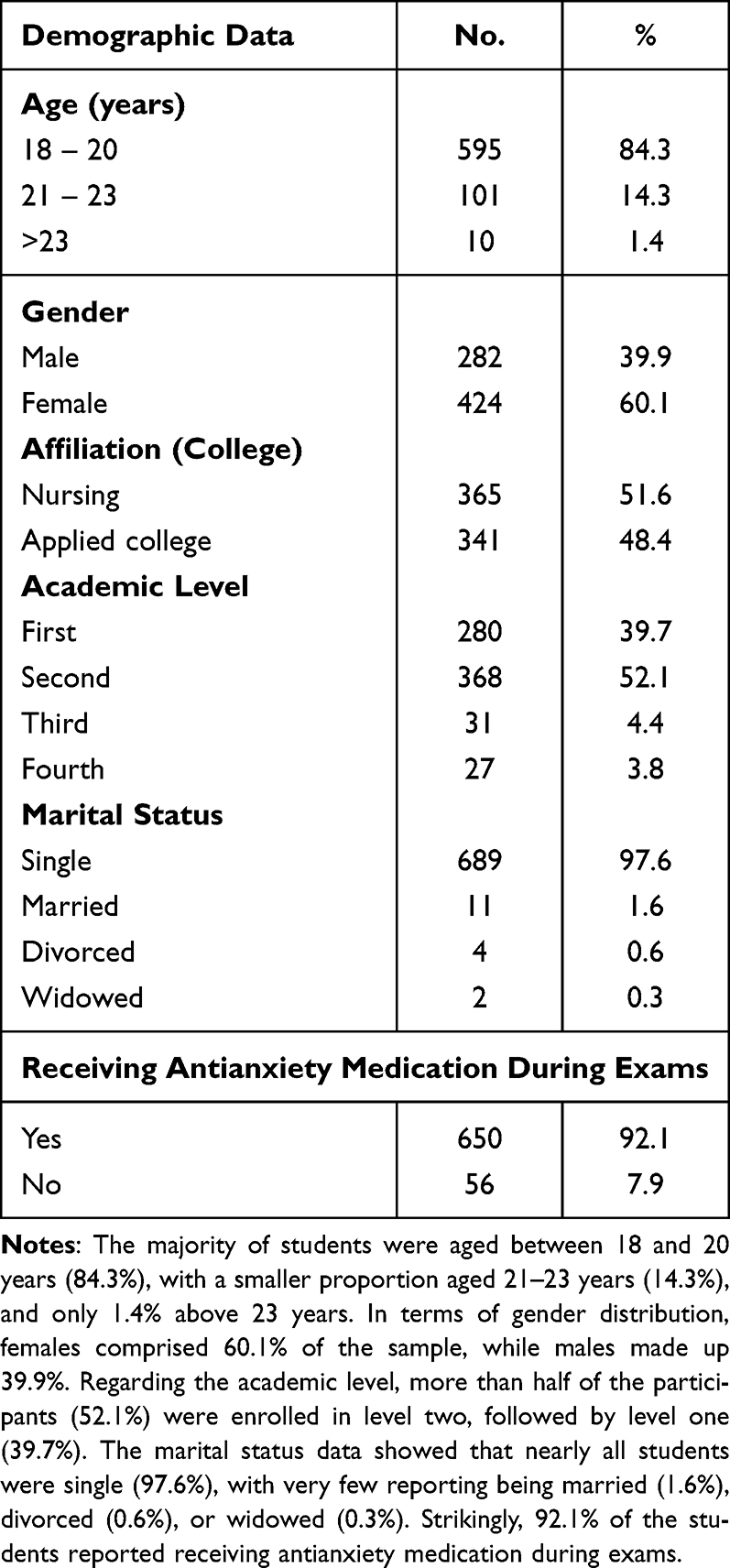 |
Table 1 Distribution of the Studied Participants According to Demographic Data. (n = 706) |
The demographic data provides valuable insight into the characteristics of nursing students experiencing GAD and co-occurring somatic symptoms during exams. The prevalence (Figure 1) of various somatic symptoms reported by participants in a surveyed group. The most reported issues include trouble sleeping (87%), stomach pain (83%), and headaches (82%), indicating a high prevalence of stress-related or psychosomatic conditions. Other frequently mentioned symptoms include chest pain (60%), feeling tired or having low energy (60%), and menstrual problems among females (62%), suggesting a broad spectrum of both general and gender-specific health concerns. Gastrointestinal issues such as changes in bowel habits (56) and gastric upset (51%) are also significant. Less commonly reported symptoms include pain during sexual intercourse (2%) and dizziness (45%). The wide range of symptoms highlights the need for comprehensive healthcare approaches and pre-exams rehabilitation programs that address both physical and mental health issues, with special attention to sleep, digestive health, and stress management. These findings align with previous research, which has shown that demographic factors such as age and gender significantly influence anxiety levels and coping strategies.17
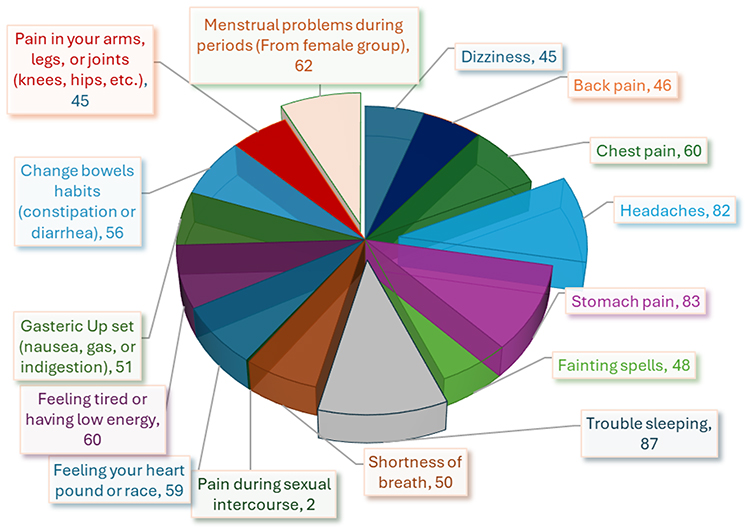 |
Figure 1 Distribution of the studied participants’ somatic symptoms during exams. (n = 706). Notes: Illustrates the prevalence of various somatic symptoms during exams. The most reported issues include trouble sleeping (87%), stomach pain (83%), and headaches (82%). Other frequently mentioned symptoms include chest pain (60%), feeling tired or having low energy (60%), and menstrual problems among females (62%). Gastrointestinal issues such as changes in bowel habits (56%) and gastric upset (51) are also significant. Less commonly reported symptoms include pain during sexual intercourse (2%) and dizziness (45%). |
Moreover, while medication may alleviate anxiety symptoms, it can also cause side effects that impact cognitive function.18 This multifaceted relationship underscores the importance of comprehensive support interventions for nursing students struggling with anxiety.19 The correlation between participants’ history of anxiety and the somatic symptoms reported during exams has emerged as a critical area of study. The results (Figure 2) indicate that nearly half (48.6%) of respondents reported mild symptoms, over a third (36.7%) experienced moderate symptoms, and a notable minority reported severe or very severe anxiety symptoms during exams. This suggests a significant prevalence of exam-related anxiety among the participants. These findings are consistent with previous studies, which have identified exam-related anxiety as a predominant issue among students, with varying levels of severity impacting both academic achievements and mental health. While mild symptoms may lead to manageable stress, moderate to severe anxiety can result in substantial health problems.20,21
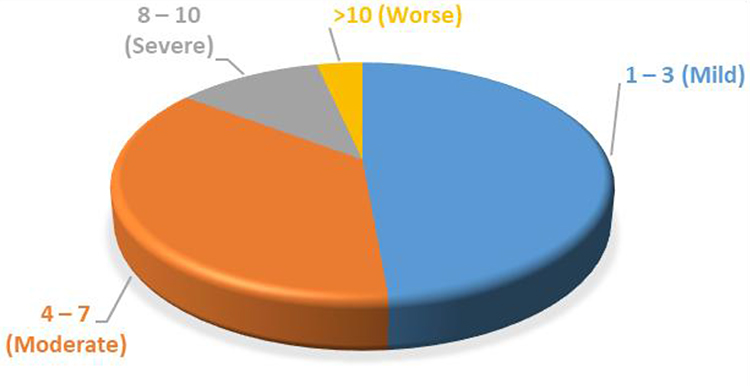 |
Figure 2 Distribution of the studied participants’ previous history of anxiety and somatic symptoms during exams. (n = 706). Notes: Demonstrates previous experiences of anxiety and somatic symptoms during exams, almost half of the participants (48.6%) reported mild symptoms, (36.7%) reported moderate symptoms, and a notable proportion experienced severe (11.2%) or very severe (3.5%) symptoms. |
Further research confirms that emotional distress, including anxiety, is often associated with a range of somatic symptoms that negatively affect overall well-being.22,23 Understanding and addressing these complexities is essential for evaluating the broader implications on academic outcomes and personal health. Notably, this study highlights a considerable psychological burden among participants, with over half (56%) experiencing moderate to severe anxiety and 52.7% reporting somatic symptoms, suggesting underlying stress or anxiety. While a majority (52.7%) of respondents reported positive well-being, a substantial proportion (24%) experienced low well-being, indicating potential mental health risks. This finding aligns with recent studies that describe a paradox in which high levels of anxiety coexist with self-reported positive well-being, particularly across different demographic groups. It is important to acknowledge that the high use of anti-anxiety medication among participants (92.1%) represents a significant confounding factor that may influence the results, as it could reduce anxiety symptoms or enhance perceived well-being, potentially explaining some of the observed trends. Practically, the findings highlight the importance of integrating early screening and psychological interventions within the college environment, such as incorporating anxiety and well-being assessments into the curriculum, providing targeted student support programs, and promoting coping skills and preventive strategies. Regarding the observed trend in which over half of the students reported high well-being despite elevated anxiety levels, this may be attributed to the effects of medication, strong social support, or effective coping strategies that enable students to maintain a sense of well-being despite anxiety. This underscores the complex interaction between anxiety and psychological well-being and emphasizes the need for a comprehensive approach to student support.
The high prevalence of anti-anxiety medication use may have affected the observed relationship between anxiety and well-being. Importantly, these findings call for proactive measures by universities, including early anxiety screening at enrollment, structured peer support programs, and readily accessible counseling services, to identify students at risk and actively promote their mental health and overall well-being. Among nursing students, a high symptom burden, including elevated anxiety and somatic complaints, is associated with reduced psychological well-being and can negatively impact academic performance and overall health. Similarly, during periods of high stress such as exams, students may experience decreased life satisfaction, although effective coping strategies and support systems can help mitigate these effects.24,25 Therefore, addressing this paradox in therapeutic and academic contexts is essential to reduce the risks associated with low well-being while simultaneously promoting resilience and mental health among students.26,27
The study (Figure 3; Table 2) reveals that nursing students experienced notable levels of anxiety, with a mean score of 9.99 (SD = 6.51) on the GAD scale, indicating a moderate level of anxiety symptoms. Although data were collected during exams to capture heightened anxiety and somatic symptoms, this timing may have affected students’ ability to respond fully, potentially influencing data quality and response rates. The mean score on the WHO-5 Well-Being Index was 14.25 (SD = 6.65), reflecting moderate subjective well-being, while the mean score on the PHQ-15 was 7.51 (SD = 5.60), indicating mild to moderate somatic symptom severity during exams. These findings suggest a complex interplay between anxiety, well-being, and physical health among nursing students. This result is consistent with previous research showing that elevated anxiety levels are often associated with reduced well-being across various health contexts.24 The WHO-5 scale further suggests that a decline in subjective well-being frequently parallels an increase in somatic symptoms, echoing findings related to mental health and quality of care in healthcare institutions.28 Moreover, the PHQ-15 scale supports the notion that somatic symptoms can exacerbate anxiety among nursing students, particularly during high-stress periods such as exams.29 These dynamics underscore the urgent need for targeted interventions30,31 aimed at supporting the mental health and overall well-being of nursing students within academic environments.
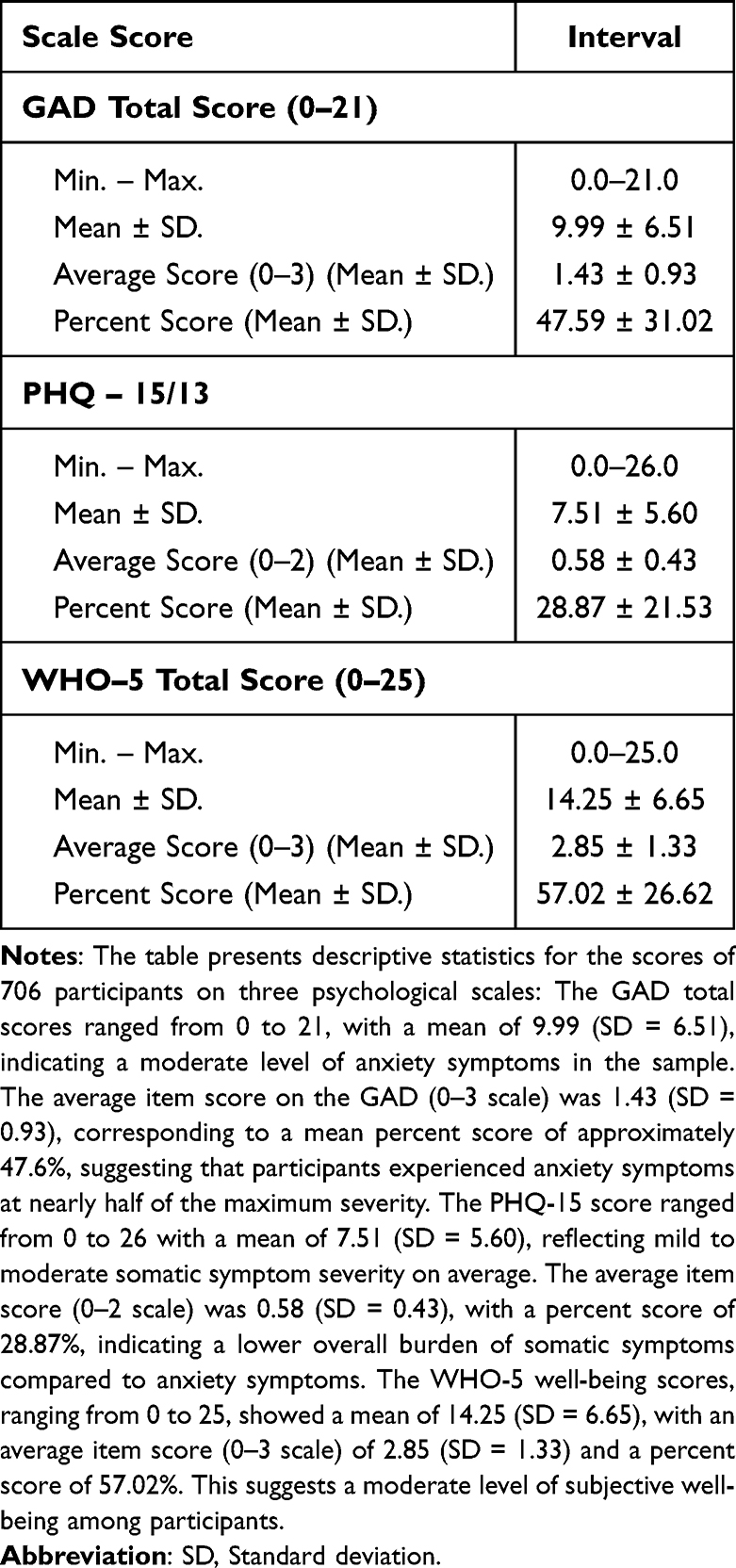 |
Table 2 Mean, Standard Deviation and Percent Score of the Studied Participants’ Score of GAD, PHQ-15 and WHO-5 Score. (n = 706) |
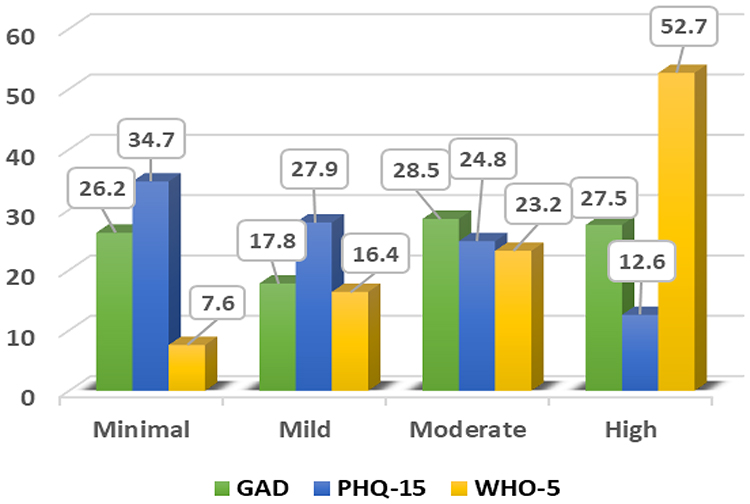 |
Figure 3 Distribution of the studied participants’ level of GAD, PHQ-15 and WHO-5 score. (n = 706). Notes: Shows the distribution of participants’ scores on the GAD, PHQ-15, and WHO-5 scales. Concerning GAD, over half of the participants (56%) reported moderate (28.5%) to severe (27.5%) anxiety levels. The PHQ-15 results show that 34.7% of participants experienced minimal somatic symptoms, yet a combined 52.7% reported low (27.9%) to medium (24.8%) levels. In contrast, the WHO-5 Well-Being Index showed a more positive trend, with over half of the respondents (52.7%) scoring in the high well-being category. However, approximately one in four individuals reported minimal (7.6%) or low (16.4%) well-being, indicating that a significant portion of the population may be at risk of reduced psychological resilience and quality of life. |
The study (Table 3) further revealed a strong positive correlation between GAD and PHQ-15 scores (r = 0.480, p < 0.001), indicating that higher anxiety levels are associated with an increase in physical (somatic) symptoms among nursing students during exams. In contrast, negative correlations were found between both GAD and PHQ-15 scores with WHO-5 scores (r = −0.238 and r = −0.346, respectively; p < 0.001). This suggests that as anxiety and somatic symptoms increase, students’ overall well-being significantly decreases. These findings are consistent with previous research, which demonstrated a positive correlation between GAD and PHQ-15 scores, indicating that increased anxiety exacerbates the physical symptoms experienced by individuals.32 Similarly, the negative correlation between GAD and WHO-5 supports the notion that heightened anxiety adversely affects subjective well-being.33 These results underscore the importance of targeted mental health interventions34 to address the psychological challenges faced by students under academic pressure.33
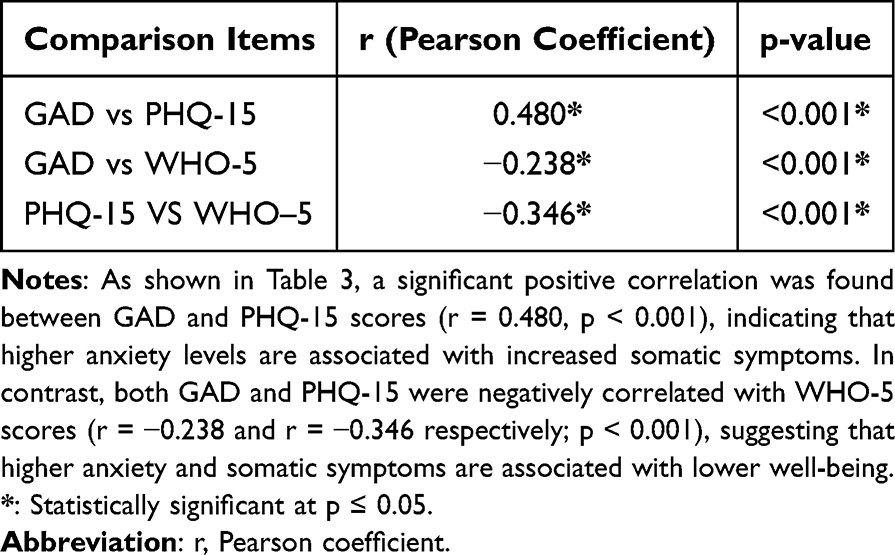 |
Table 3 Correlation Between GAD vs PHQ-15 and WHO-5 of the Studied Participants. (n = 706) |
Further analysis (Table 4) of the relationships between demographic factors, psychosomatic health, and well-being among nursing students revealed significant associations. Age was significantly associated with somatic symptoms (p = 0.012) and well-being (p < 0.001), but not with anxiety. Female nursing students reported significantly higher levels of anxiety (p = 0.026) and somatic symptoms (p < 0.001) compared to their male counterparts. Moreover, students from the nursing college exhibited more somatic symptoms (p < 0.01) and lower well-being (p = 0.05) than students from the applied college. Academic level also showed a significant influence on anxiety (p = 0.020), somatic symptoms (p < 0.001), and well-being (p = 0.007). Additionally, marital status was significantly associated with well-being (p = 0.003). It should be noted that over 95% of participants were single. Despite this, students are generally well-supported culturally by their families and the university, which may contribute positively to their well-being. Nevertheless, this unbalanced distribution may limit the interpretability of the finding. We have updated the discussion to include this clarification and interpret the result with appropriate caution. These demographic correlations highlight the complexity of mental health challenges among nursing students and reinforce the need for tailored support strategies within academic institutions.
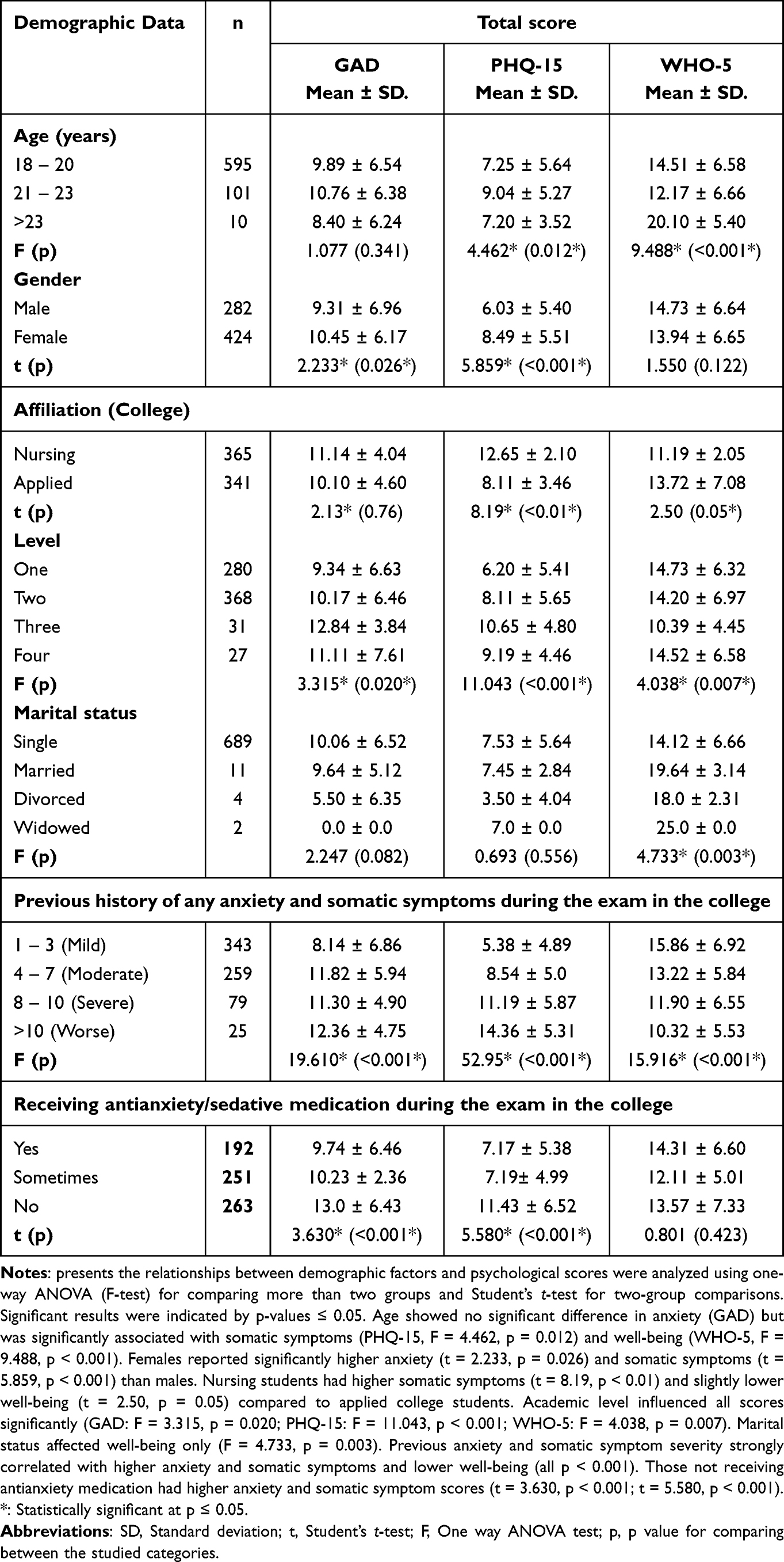 |
Table 4 Relation Between Total GAD, PHQ-15 and WHO-5 Score of the Studied Participants with Demographic Data (n = 706) |
Previous anxiety and somatic issues were strongly associated with higher anxiety levels, increased somatic symptoms, and lower well-being scores among the participants (all p < 0.001). Participants not receiving anti-anxiety medication exhibited significantly higher anxiety and somatic symptom scores (p < 0.001 for both). These findings align with recent research indicating that younger nursing students tend to experience elevated stress and anxiety levels.35 Additionally, academic pressures, especially among third-year students facing multiple stressors, can exacerbate psychosomatic symptoms.9 Previous somatic history also plays a crucial role; students with existing health problems often report higher levels of somatic symptoms.18 Furthermore, a multicenter study highlights the importance of psychological well-being across various demographic groups.31
Despite these valuable insights, several limitations must be acknowledged. First, cross-sectional design restricts the ability to establish causality between anxiety, physical symptoms, and academic stress, as the findings represent only a snapshot in time and do not capture long-term trends or developments. Second, the study relied on self-reported data, which may be subject to recall bias, social desirability bias, or underreporting, particularly regarding mental health issues due to stigma. Third, the study sample included nursing students and mostly are female from both the College of Nursing and the Applied College at Qassim University, which may limit the generalizability of the findings to other disciplines, institutions, or cultural contexts. Additionally, the study did not control potential confounding variables such as sleep patterns, personal or familial stressors, high antianxiety medication use or access to support systems, all of which may influence anxiety levels and physical symptoms. Finally, although the study assessed generalized anxiety and somatic complaints, it did not explore other important psychological factors such as depression, burnout, or coping mechanisms, which could provide a more comprehensive understanding of student well-being during exams.
Conclusions
This study highlights a critical need for targeted psychological and institutional interventions to mitigate anxiety and enhance the overall well-being of nursing students, particularly during exam periods. The results indicate that anxiety remains a prevalent issue that can significantly hinder academic achievement and emotional stability among nursing students. Younger students, females, and those in early academic levels were found to be particularly affected, underscoring the importance of considering demographic factors when designing support strategies. These findings support the study’s objectives by demonstrating the dual burden of psychological and somatic stress during exams and its impact on student well-being.
Implications and Recommendations
The study’s findings have practical implications across nursing education, administration, and future research. In the educational domain, integrating structured modules on stress and anxiety management, including relaxation techniques, time management, and mindfulness practices, can equip students with tools to cope with academic pressures while fostering resilience. Educators should also be trained to recognize signs of student distress and provide timely support. Faculty development programs focused on mental health literacy can create a more responsive and empathetic academic environment, while tailored workshops and peer-support initiatives can promote psychological well-being and normalize discussions around mental health. From an administrative perspective, institutions should prioritize allocating resources toward student mental health services.
This includes access to qualified counselors, online mental health platforms, and clear referral pathways for students in crisis. Policies that prioritize psychological safety, such as flexible exam schedules, mental health leave, and wellness campaigns, can further reduce the burden of untreated anxiety. Regarding research, the study highlights the need for longitudinal investigations to track the progression of anxiety symptoms throughout students’ academic journeys and into professional practice. Future studies should also explore the effectiveness of specific psychological interventions, such as mindfulness-based cognitive therapy or group counseling, in reducing anxiety and improving academic performance. Understanding the interplay between anxiety, academic achievement, and clinical competency can provide deeper insight into how emotional well-being affects professional readiness among nursing students.
Institutional Review Board Statement
Ethical approval for this study was granted by the Scientific Research Ethics Committee of the Deanship of Scientific Research at Qassim University and the study complies with the Declaration of Helsinki (Approval No. 4/2025, Ref: 25/32/02). Prior to participation, all respondents provided written informed consent by signing a consent form before proceeding with the questionnaire.
Data Sharing Statement
The data that support the findings of this study are available from the corresponding author upon reasonable request.
Informed Consent Statement
The purpose of the study was clearly explained to all participants prior to their involvement. Written informed consent was obtained before data collection, with participants assured of their right to withdraw from the study at any time without any penalty or reward. The authors ensured that all collected data were treated with strict confidentiality.
Acknowledgments
The researchers would like to thank the Deanship of Graduate Studies and Scientific Research at Qassim University for financial support (QU-APC-2025). We would like to thank all the participants who agreed to participate in this study.
Author Contributions
All authors made a significant contribution to the work reported, whether that is in the conception, study design, execution, acquisition of data, analysis and interpretation, or in all these areas; took part in drafting, revising or critically reviewing the article; gave final approval of the version to be published; have agreed on the journal to which the article has been submitted; and agree to be accountable for all aspects of the work.
Disclosure
The authors declare that there are no conflicts of interest related to this research. This study was conducted independently and does not conflict with any personal or financial interests.
References
1. Hamid HIA, Higazy OAM, Mohamed FA, et al. Prevalence of stress and anxiety symptoms among nursing students at Jazan University. Afr J Biomed Res. 2024;27(4S).
2. Almutairi AG, Baabbad NM, Alhumaidan AA, Alshahrani AM, Alabdulkarim AI, Alsughier N. Prevalence and factors causing test anxiety among medical students. Middle East Curr Psychiatry. 2024;31(1):48. doi:10.1186/s43045-024-00437-2
3. Kandasamy G, Almanasef M, Almeleebia T, et al. Prevalence of anxiety and depression among university students in Southern Saudi Arabia based on a cross sectional survey. Sci Rep. 2025;15(1):15482. doi:10.1038/s41598-025-00695-y
4. Labrague LJ. Umbrella review: stress levels, sources of stress, and coping mechanisms among student nurses. Nurs Rep. 2024;14(1):362–375. doi:10.3390/nursrep14010028
5. Samreen S, Siddiqui NA, Mothana RA. Prevalence of anxiety and associated factors among pharmacy students in Saudi Arabia: a cross-sectional study. Biomed Res Int. 2020;2020:2436538. doi:10.1155/2020/2436538
6. AlHadi AN, AlAteeq DA, Al-Sharif E, et al. Psychological impact of the COVID-19 pandemic on healthcare workers in Saudi Arabia: a cross-sectional study. Clin Pract Epidemiol Mental Health. 2023;19:1–11.
7. Alzahrani A, Alhussain F, Alanazi F, Almalki M. Prevalence, characteristics and measurement of somatic symptoms related to mental health in medical students: a scoping review. Ann Med. 2023;55(1):2242781. doi:10.1080/07853890.2023.2242781
8. Al-Garni AM, Shati AA, Almonawar NA, et al. Prevalence of depression, anxiety, and stress among students enrolled at King Khalid University: a cross-sectional study. BMC Public Health. 2025;25(1):354. doi:10.1186/s12889-025-21277-7
9. Sperling EL, Hulett JM, Sherwin LB, Thompson S, Bettencourt BA. Prevalence, characteristics and measurement of somatic symptoms related to mental health in medical students: a scoping review. Ann Med. 2023;55(2):2242781.
10. Spitzer RL, Kroenke K, Williams JBW, Löwe B. A brief measure for assessing generalized anxiety disorder: the GAD-7. Arch Internal Med. 2006;166(10):1092–1097. doi:10.1001/archinte.166.10.1092
11. Kroenke K, Spitzer RL, Williams JBW. The PHQ-15: validity of a new measure for evaluating the severity of somatic symptoms. Psychosomatic Med. 2002;64(2):258–266. doi:10.1097/00006842-200203000-00008
12. Topp CW, Østergaard SD, Søndergaard S, Bech P. The WHO-5 Well-Being Index: a systematic review of the literature. Psychother Psychosomatics. 2015;84(3):167–176. doi:10.1159/000376585
13. Fischer S, Gaab J, Ehlert U, Nater UM. Prevalence, overlap, and predictors of functional somatic syndromes in a student sample. Int J Behav Med. 2013;20(2):184–193. doi:10.1007/s12529-012-9266-x
14. Su Y, Li M, Meng X. Symptom patterns in the co-occurrence of depressive and generalized anxiety symptoms: a network analysis of a Canadian nationally representative sample. J Affective Disorders. 2024;351:888–894. doi:10.1016/j.jad.2024.01.266
15. Ramón-Arbués E, Sagarra-Romero L, Echániz-Serrano E, et al. Health-related behaviors and symptoms of anxiety and depression in Spanish nursing students: an observational study. Front Public Health. 2023;11:1265775. doi:10.3389/fpubh.2023.1265775/full
16. Cai H, Xi HT, An F, et al. The association between internet addiction and anxiety in nursing students: a network analysis. Front Psychiatry. 2021;12:723355. doi:10.3389/fpsyt.2021.723355/full
17. Jacqueline Mainwaring DN. Stress, anxiety, and well-being in nurse anesthesia doctoral students. AANA J. 2021;89(5):396–402.
18. Reverté-Villarroya S, Ortega L, Raigal-Aran L, et al. Psychological well-being in nursing students: a multicentric, cross-sectional study. Int J Environ Res Public Health. 2021;18(6):3020. doi:10.3390/ijerph18063020
19. McDermott RC, Fruh SM, Williams S, et al. Characteristics of negative and positive mental health among nursing students in the United States. J Am Psychiatric Nurses Assoc. 2021;27(1):44–53. doi:10.1177/1078390319865322
20. Barret N, Guillaumée T, Rimmelé T, et al. Associations of coping and health-related behaviors with medical students’ well-being and performance during objective structured clinical examination. Sci Rep. 2024;14(1):11298. doi:10.1038/s41598-024-61800-1
21. Rabby MR, Islam MS, Orthy MT, Jami AT, Hasan MT. Depression symptoms, anxiety, and stress among undergraduate entrance admission seeking students in Bangladesh: a cross-sectional study. Front Public Health. 2023;11:1136557. doi:10.3389/fpubh.2023.1136557/full
22. Yatkin E, Aral N, Gunes LC, Tosun S. Mental well-being and test anxiety among students preparing for the university admission exam during the pandemic. Front Psychol. 2023;14:1184788. doi:10.3389/fpsyg.2023.1184788
23. Alshaikh AA, Alamri SM, Riaz F, et al. Exploring the burden of irritable bowel syndrome among university students in Saudi Arabia: a study on prevalence, psychological associations, and well-being. Medicine. 2024;103(19):e38099. doi:10.1097/MD.0000000000038099
24. Mahindru A, Patil P, Agrawal V. Role of physical activity on mental health and well-being: a review. Cureus. 2023;15(1). doi:10.7759/cureus.33475
25. Yang FX, Wong IA. The social crisis aftermath: tourist well-being during the COVID-19 outbreak. J Sustainable Tourism. 2020;29(6):859–878. doi:10.1080/09669582.2020.1843047
26. Fallon N, Brown C, Twiddy H, et al. Adverse effects of COVID-19-related lockdown on pain, physical activity and psychological well-being in people with chronic pain. Br J Pain. 2021;15(3):357–368. doi:10.1177/2049463720973703
27. Habtamu K, Birhane R, Medhin G, Hanlon C, Fekadu A. Psychometric properties of screening questionnaires to detect depression in primary healthcare setting in rural Ethiopia. BMC Primary Care. 2022;23(1):138. doi:10.1186/s12875-022-01755-2
28. Chen H, Cao Y, Lu Y, et al. Factors associated with mental health outcomes among caregivers of older adults in long-term care facilities during COVID-19 post-epidemic era in Shandong, China. Front Psychiatry. 2022;13:1011775. doi:10.3389/fpsyt.2022.1011775/full
29. Li Z, Pu P, Wu M, et al. Ability and utility of the Physician Well-Being Index to identify distress among Chinese physicians. Ann Med. 2025;57(1):2476042. doi:10.1080/07853890.2025.2476042
30. Guerrero Z, Aliev AA, Kondrátová L, et al. Mental health and quality & safety of care in Czech residential institutions during the COVID-19 pandemic: a mixed-methods study. Psychiatr Q. 2021;1:1–9. doi:10.1007/s11126-021-09912-z
31. Alnaser MZ, Alhamad H, Alotaibi N, Alhamdan N, Manee F. Beyond borders: investigating the impact of the 2023 conflict in Gaza on generalized anxiety disorders and associated somatic symptoms and wellbeing among the Kuwait population: a global call for public intervention programs. Front Public Health. 2025;13:1407906. doi:10.3389/fpubh.2025.1407906/full
32. Adamou M, Uche-Ikonne O, Kamposioras K. The Wellbeing Thermometer in Patients with Colorectal Cancer: a Validation Study. Diseases. 2024;12(11):280. doi:10.3390/diseases12110280
33. Madrid‐Cagigal A, Kealy C, Potts C, et al. Digital Mental Health Interventions for University Students With Mental Health Difficulties: a Systematic Review and Meta‐Analysis. Early Intervent Psychiatry. 2025;19(3):e70017. doi:10.1111/eip.70017
34. Martin SD, Urban RW, Johnson AH, Magner D, Wilson JE, Zhang Y. Health-related behaviors, self-rated health, and predictors of stress and well-being in nursing students. J Prof Nurs. 2022;38:45–53. doi:10.1016/j.profnurs.2021.11.008
35. Sokratous S, Alexandrou G, Zavrou R, Karanikola M. Mental health status and stressful life events among postgraduate nursing students in Cyprus: a cross-sectional descriptive correlational study. BMC Nurs. 2023;22(1):294. doi:10.1186/s12912-023-01463-x
 © 2025 The Author(s). This work is published and licensed by Dove Medical Press Limited. The
full terms of this license are available at https://www.dovepress.com/terms
and incorporate the Creative Commons Attribution
- Non Commercial (unported, 4.0) License.
By accessing the work you hereby accept the Terms. Non-commercial uses of the work are permitted
without any further permission from Dove Medical Press Limited, provided the work is properly
attributed. For permission for commercial use of this work, please see paragraphs 4.2 and 5 of our Terms.
© 2025 The Author(s). This work is published and licensed by Dove Medical Press Limited. The
full terms of this license are available at https://www.dovepress.com/terms
and incorporate the Creative Commons Attribution
- Non Commercial (unported, 4.0) License.
By accessing the work you hereby accept the Terms. Non-commercial uses of the work are permitted
without any further permission from Dove Medical Press Limited, provided the work is properly
attributed. For permission for commercial use of this work, please see paragraphs 4.2 and 5 of our Terms.