
Back to Journals » International Journal of General Medicine » Volume 18
Use of Neuromuscular Blocking Agents in Elderly Patients: A Narrative Review in Geriatric Medicine
Authors Radkowski P, Szewczyk M  , Dabdoub T , Murthy R, Grabarczyk Ł
Received 29 June 2025
Accepted for publication 18 November 2025
Published 10 December 2025 Volume 2025:18 Pages 7409—7424
DOI https://doi.org/10.2147/IJGM.S550344
Checked for plagiarism Yes
Review by Single anonymous peer review
Peer reviewer comments 4
Editor who approved publication: Dr Woon-Man Kung
Paweł Radkowski,1– 3 Maciej Szewczyk,4 Tariq Dabdoub,1 Rubie Murthy,1 Łukasz Grabarczyk5
1Department of Anesthesiology and Intensive Care, Faculty of Medicine, Collegium Medicum University of Warmia and Mazury, Olsztyn, Poland; 2Department of Anesthesiology and Intensive Care, Regional Specialist Hospital, Olsztyn, Poland; 3Department of Anaesthesiology and Intensive Care, Hospital Zum Heiligen Geist in Fritzlar, Fritzlar, Germany; 4Department of Internal Medicine, Independent Public Multi-Specialty Healthcare Facility, Stargard, Poland; 5Alarm Clock Clinic, Coma Recovery and Neurorehabilitation Center, Warsaw, Poland
Correspondence: Maciej Szewczyk, Email [email protected]
Abstract: With the growing number of elderly patients undergoing surgical procedures, the use of neuromuscular blocking agents (NMBAs) in geriatric anesthesia has become increasingly relevant. Aging is associated with physiological and pathological changes that affect drug pharmacokinetics and pharmacodynamics, including reduced renal and hepatic function, altered body composition, and decreased plasma protein levels. These changes influence the onset, duration, and recovery from neuromuscular blockade, increasing the risk of postoperative residual curarization (PORC) and respiratory complications. This narrative review summarizes current knowledge on the use of depolarizing and non-depolarizing NMBAs in elderly patients, including benzylisoquinolines (atracurium, cisatracurium, mivacurium) and aminosteroids (rocuronium, vecuronium, pancuronium, pipecuronium). Age-related differences in drug metabolism, distribution, and elimination are discussed, along with the clinical implications for dosing, recovery, and safety. The role of reversal agents, including neostigmine and sugammadex, is emphasized, highlighting their efficacy and safety profiles in older adults. Special attention is given to neuromuscular monitoring, particularly objective quantitative methods as a critical tool to prevent residual blockade. Individualized management strategies, careful agent selection, and vigilant monitoring are essential to optimize safety and outcomes in elderly patients. Despite age-related pharmacological changes, appropriate use of short-acting or organ-independent NMBAs, combined with reversal agents and neuromuscular monitoring, allows for effective and safe anesthesia in the geriatric population. Future research should focus on large-scale studies to better define age-specific NMBA dosing and monitoring guidelines.
Keywords: geriatric anesthesia, geriatrics, pharmacokinetics, delayed recovery, neuromuscular blockade
Introduction
Background
With the increase in the number of patients aged 65 years and older undergoing surgical procedures, anaesthesiologists are treating a growing number of elderly patients.1 As individuals age, physiological changes occur that contribute to a gradual decline in the function of all organ systems, typically at a rate of approximately 1% per year after the age of 40.2 This decline affects organs responsible for drug absorption, distribution, metabolism, and excretion, leading to a pharmacokinetic profile that is more susceptible to drug-related adverse effects.3 Additionally, organs such as the heart, kidneys, and liver are at an increased risk of pathological deterioration with age.4–6 It has been proven that impaired liver and kidney function affects the action of individual skeletal muscle relaxants. Acid–base imbalances and certain electrolyte disturbances also influence their effects. This is particularly important because, with age, both liver and kidney function decline in elderly individuals, and the body’s compensatory capacity is reduced.7–9 These physiological and pathological changes in the pharmacokinetics of elderly patients not only limit the use of certain medications but also necessitate dose adjustments of others.10,11
Neuromuscular Blocking Agents
Neuromuscular blocking agents, also known as skeletal muscle relaxants constitute an important group of drugs used primarily in anesthesia and intensive care. Their main purpose is to temporarily abolish muscle tone, allowing for tracheal intubation, optimal surgical conditions, or controlled mechanical ventilation. These agents are generally divided into two main categories: depolarizing and non-depolarizing drugs. The main representative of the depolarizing group is succinylcholine, which has a rapid onset and short duration of action but is associated with adverse effects such as hyperkalemia and bradycardia. Non-depolarizing agents include compounds such as rocuronium, vecuronium, atracurium, and cisatracurium, which differ in duration of action, elimination pathways, and safety profiles.12 Elderly patients are more sensitive to neuromuscular blocking agents and are more likely to experience postoperative residual curarization (PORC), which is the incomplete recovery of muscle function after the use of neuromuscular blocking agents, which may lead to serious respiratory complications. Therefore, its prevention is a crucial aspect of safe anesthesia management.13,14 To minimize this, medications with favorable profiles should be administered. Furthermore, reversing agents (drugs used to reverse neuromuscular blockade) should be used when applicable, and neuromuscular monitoring implemented.15–17
Aim
The aim of this narrative review is to discuss the use of neuromuscular blocking agents (NMBAs) in elderly patients, with particular emphasis on how aging affects the pharmacokinetics and pharmacodynamics of these drugs. The article will also address the clinical aspects of NMBA administration and the use of reversal agents in anesthesia among older adults, highlighting considerations for safety, efficacy, and individualized approach in geriatric practice.
Methodology and Materials
This narrative review is based on the available literature and the authors’ clinical experience. The purpose of this article is to present the use of neuromuscular blocking agents (NMBAs), reversal agents, and neuromuscular blockade monitoring in elderly patients. We conducted a comprehensive search of electronic databases, including Google Scholar, PubMed, Cochrane Library, the University of Warmia and Mazury knowledge and research platform, and other relevant sources, using selected keywords. In addition, we reviewed drug monographs and medically verified sources for updated pharmacological information. We also based our review on a published document from a project conducted by the Foundation for Initiatives for Society and the Institute for Healthy and Better Aging, in collaboration with the Geriatrics Clinic of the Medical University of Białystok, entitled “Citizen Audit of Pharmacological Treatment of Seniors in Poland”, implemented with a grant from the Active Citizens – Regional Fund Programme, funded by Iceland, Liechtenstein, and Norway under the EEA Grants.
Search terms included, among others: “muscle relaxants”, “neuromuscular blocking agents”, “neuromuscular blockade”, “depolarizing neuromuscular blocking agents”, “non-depolarizing neuromuscular blocking agents”, “reversal agents”, “succinylcholine”, “train-of-four”, “TOF”, “qualitative monitoring methods”, “quantitative monitoring methods”, “pancuronium”, “vecuronium”, “rocuronium”, “atracurium”, “cisatracurium”, “mivacurium”, “neostigmine”, “glycopyrrolate”, “atropine”, “sugammadex”, “elderly”, and “geriatric patients”, used alone or in combination. Only articles fully written in English or with English abstracts were considered. The only work without an abstract or content in English, written in Polish, is a report funded by the Active Citizens – Regional Fund Programme.Both recent publications and foundational principles of anesthesiology and geriatric pharmacology were carefully examined to provide a comprehensive overview of NMBA use in the elderly population.
Elderly Pharmacokinetics and Pharmacodynamics
In elderly patients, drug absorption within the gastrointestinal tract generally remains unchanged; however, significant alterations occur in the subsequent pharmacokinetic phases. The volume of total body water decreases with age, which leads to higher plasma concentrations of hydrophilic drugs and an increased risk of toxicity. Additionally, reduced serum albumin levels—common in older adults suffering from chronic diseases or malnutrition—diminish protein binding, thereby elevating the concentration of the pharmacologically active, unbound fraction of many drugs. Renal drug elimination is impaired with advancing age, as the glomerular filtration rate (eGFR) can decline by up to 50%. This reduced clearance contributes to slower excretion and a higher likelihood of drug accumulation. The decline in renal function is often further exacerbated by comorbid conditions such as hypertension and coronary artery disease. For this reason, assessing kidney function accurately is essential: while the MDRD formula is widely used, it does not account for body weight and may be less suitable for elderly patients who are underweight or overweight. The Cockcroft–Gault equation is therefore recommended and forms the basis for most clinical dosing guidelines (Table 1).18–21
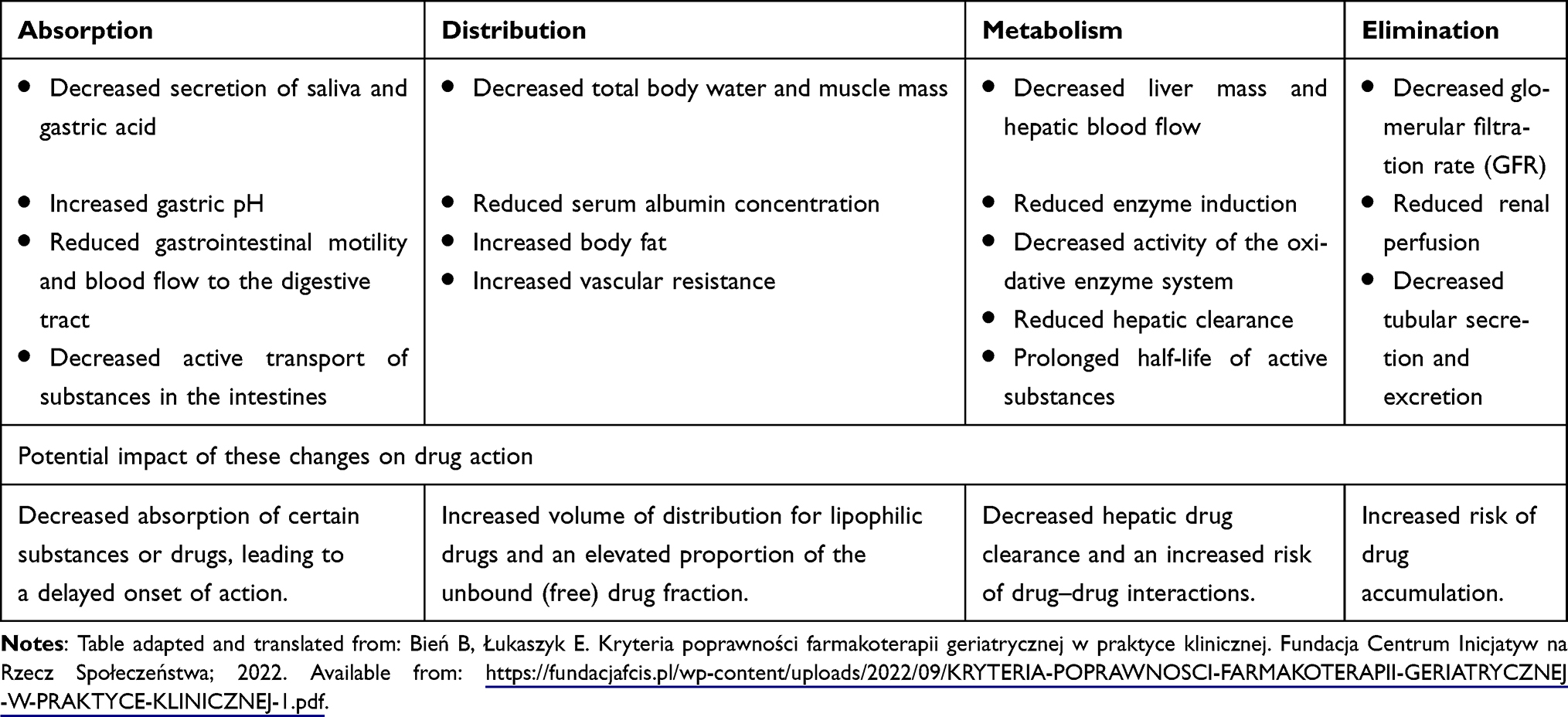 |
Table 1 The Influence of Age on Drug Pharmacokinetics and Pharmacodynamics in the Body |
Distribution of Drug
Once a drug has been administered into the bloodstream, it must move from the intravascular space to other bodily compartments to exert its effects (eg neuromuscular junctions in the case of NMBAs). This rate of distribution is dependent on several factors which can be altered in elderly patients.
With advancing age, changes to bodily composition lead to an increase in fat mass and a decrease in lean mass.22 These alterations influence the distribution of drugs, depending on their physicochemical properties. Specifically, the increased proportion of fat mass enhances the distribution of non-polar, lipophilic drugs. Consequently, the half-life of these drugs may be prolonged, resulting in their effects persisting longer after discontinuation. In contrast, the relative reduction in lean body mass decreases the distribution of polar, more water-soluble drugs, leading to an increase in their serum concentration. As a result, lower doses of water-soluble drugs are required to achieve the desired plasma concentration compared to individuals with higher lean body mass.23
The distribution of a drug is also dependent on the level of binding proteins found in the plasma. These proteins inhibit the distribution of drugs by forming large complexes which are unable to easily cross from the blood stream to other bodily compartments. Therefore, it is the unbound (free) fraction of the drug that is mainly distributed to its target cells to exert its action.23,24 In some elderly patients, a decrease in the level of plasma protein binding may be observed. When present, this alteration is more likely due to an underlying pathology commonly seen with aging (eg renal or hepatic impairment), rather than physiological aging itself.25,26
As it relates to NMBAs, the level of plasma protein binding varies between different agents, from approximately 20% binding seen with succinylcholine to around 82% with atracurium.15,27 The levels of plasma protein binding of NMBAs show limited age-dependent variability, with Cameron et al finding no significant difference in the plasma protein binding of NMBAs between otherwise healthy elderly patients and younger patients.28 Therefore, this factor alone is unlikely to be responsible for change in the onset or duration of action.
Drugs Metabolism
The main organ responsible for drug metabolism is the liver. The size of the liver decreases with age, with an estimated decline of 20–40% of the organ’s volume across an adult’s lifespan. The rate of hepatic blood flow also diminishes with age at a rate of approximately 10% per decade. As a result, in elderly patients, the rate at which a drug is delivered to the liver is reduced by up to 60%. Once in the liver, the intrinsic metabolic activity is also decreased, culminating in a slower rate of metabolism and longer duration of action of drugs.15,29
There are two main pathways through which NMBAs undergo metabolism: organ-dependent and organ-independent metabolism. Aminosteroidal NMBAs (pancuronium, vecuronium, and rocuronium) are cleared through hepatic enzyme activity and renal elimination.30,31 In contrast, benzylisoquinolinium NMBAs (atracurium, cisatracurium, and mivacurium) are metabolized by organ-independent processes, through plasma esterases and Hoffmann degradation. Both hepatic and plasma enzyme activity may be altered with age, leading to slower metabolism and a longer duration of action. However, NMBAs undergoing organ-dependent metabolism are affected to a much larger extent due to age-related organ decline.31 This can be further compounded by hepatic and renal diseases, which are common in this age group.5,6 In comparison, NMBAs undergoing organ-independent metabolism exhibit minimal age-related variability in pharmacokinetics and therefore present with little clinical significance.31
Drugs’ Excretion
Most drugs are primarily eliminated through the kidneys. Beginning in the fourth decade of life, both the size and function of the kidneys begin to decline.32 Additionally, renal blood flow decreases at a rate of approximately 10% per decade.15 This decline in renal function can reduce the rate of drug elimination, leading to drug accumulation in the plasma. This is a key factor in pharmacokinetics, with renal function loss being the primary cause of altered drug processing in individuals aged 65 and older.33 Finally, pathological decline in kidney function is more common in the elderly, increasing the risk of altered drug excretion.5
When it comes to NMBAs, the duration of action of pancuronium and pipecuronium is significantly affected by extensive renal clearance, and these drugs should be avoided in patients with renal impairment. The metabolites of mivacurium and cisatracurium are mainly excreted through renal pathways, and renal impairment can lead to potential prolongation of action and adverse effects (Table 2).7
 |
Table 2 Neuromuscular Blocking Agents and Their Routes of Elimination |
Depolarizing Neuromuscular Blocking Agents in Elderly Patients
Succinylcholine
Succinylcholine is a rapidly acting depolarizing NMBA, the only one of its kind used clinically.30 It is rapidly metabolized by butyrylcholinesterase, with only 10% of the injected dose reaching the neuromuscular junction. While the levels of butyrylcholinesterase are reduced in the elderly, the decrease is not sufficient to produce any significant difference in the duration of action.31 Typically, the dose of succinylcholine administered to facilitate endotracheal intubation is three to four times the effective dose (ie, the dose required to induce a 95% reduction in muscle response to a stimulus). This large dose likely offsets any expected age-related changes in the onset of action due to alterations in distribution.14
Non-Depolarizing Neuromuscular Blocking Agents in Elderly Patients
Benzylisoquoinolines
This group of NMBAs includes atracurium, cisatracurium, and mivacurium. They are metabolized through organ-independent pathways, primarily via plasma esterases and Hoffmann degradation.31 The pharmacokinetics of atracurium and cisatracurium are altered in the elderly. In elderly patients, recovery from both the induction and maintenance bolus of cisatracurium is delayed. The recovery time (time required for muscle function to return after the administration of a neuromuscular blocking agent) when using cisatracurium in the elderly population will also be prolonged. When using atracurium in the geriatric population, a prolonged duration of action should be expected. It has been shown that the use of mivacurium in the elderly will result in both a longer duration of action and delayed recovery.15 Clinically, the effect of age on the pharmacokinetics of these medications is minimal.31
Atracurium
Atracurium is an intermediate-acting, non-depolarizing NMBA of the benzylisoquinolinium class. Like other agents in its class, atracurium undergoes organ-independent metabolism, with 45% metabolized via Hoffmann elimination and the remainder through non-specific plasma esterases. The primary metabolite of atracurium is laudanosine, a nervous system stimulant, which is eliminated via hepatic and renal pathways. Consequently, it may accumulate in elderly patients, as the pharmacokinetics of laudanosine are significantly influenced by aging. Outside the setting of the intensive care unit, laudanosine accumulation and toxicity seem unlikely to occur in clinical practice, as atracurium would need to be administered continuously for a prolonged period.34–36
Studies assessing the effect of aging on the pharmacokinetics of atracurium have produced varied results. Salvov et al compared the duration of neuromuscular block in 40 young patients and 40 elderly patients given atracurium besilate. They found that the duration of action in the elderly patient group was similar to that of the control group, at 46 and 47 minutes, respectively. The assessment was done by measuring the time between the administration and the recovery of the first twitch of the train-of-four response to 25% of the control twitch height.37
Kent et al compared a group of 11 elderly patients (mean age 80.9 years) and 10 young adults (mean age 23.8 years) to assess the pharmacokinetics of atracurium. In their study, they found that the elimination half-life of atracurium in the elderly group was significantly longer than that of the young group (23.1 min vs 20.1 min). However, this was the only pharmacokinetic parameter that was altered, with no significant differences in clearance, volume of distribution, or mean residence.36
Cisatracurium
Cisatracurium is an isomer of atracurium that is four times more potent, with a slightly longer onset and duration of action. Like atracurium, it is primarily eliminated through Hoffmann elimination, which accounts for approximately 74% of its clearance.30 Around 16% of the drug is excreted unchanged in the urine.37 Renal failure may cause a slight decrease in plasma clearance, thereby prolonging its duration of action.30
Studies comparing the onset and duration of action of cisatracurium in elderly versus younger patients have produced varying results. Vested et al (2022) investigated the effects of 0.15 mg/kg cisatracurium in two groups: young adults (18–40 years old) and elderly patients (80 years or older). They found that the onset time in elderly patients was significantly longer, with a mean of 297 seconds compared to 199 seconds in younger patients. Onset was defined as the time from cisatracurium administration to a train-of-four count of 0. Additionally, the elderly group experienced a significantly longer duration of action, with a mean of 89 minutes versus 77 minutes in the younger group. These findings suggest that age may influence both the speed and length of neuromuscular blockade.38
In contrast, Kim et al (2016) compared the onset time and effective dose of cisatracurium in a cohort of 100 elderly patients (≥65 years old) and 100 younger adults (<65 years old). They found no significant difference in onset time, with the elderly group having a mean onset of 369.1 ± 70.0 seconds compared to 375.4 ± 76.9 seconds in the younger group. Moreover, there were no significant differences in the effective doses required to achieve 50% (ED50) and 95% (ED95) muscle relaxation. The ED50 and ED95 values for the elderly group were 34.89 µg/kg and 55.50 µg/kg, respectively, compared to 35.39 µg/kg and 59.58 µg/kg in the younger group. These findings suggest that, in contrast to Vested et al, age may not significantly affect the onset or effective dose of cisatracurium. The discrepancies between these studies may be attributed to differences in sample characteristics, study design, or statistical power, highlighting the need for further research to better understand how aging impacts the pharmacodynamics of cisatracurium.39
Mivacurium
Mivacurium is a short-acting agent belonging to the benzylisoquinolonium group of NMBAs. It is preferred in short surgical procedures, as rapid recovery is observed without the need for a reversal agent. Mivacurium is metabolized mainly by plasma cholinesterase and metabolites along with a small portion of the unchanged drug are excreted via urine and bile.40 It should be emphasized that reduced plasma butyrylcholinesterase (BChE) activity associated with aging can lead to a prolonged duration of action of mivacurium.41
Vested et al conducted a study to compare the difference in onset time and duration of action of mivacurium at the dose of 0.2mg/kg between elderly (≥80 years) and younger (18–40 years) patients. It was found that while the onset of action was the same in the two groups at 210 seconds vs 203 seconds in the elderly and younger groups respectively, the duration of action in elderly patients was 52 minutes, much longer than in the younger patients at 30 minutes.42 The prolonged duration of the drug was suspected to be due to the decrease in plasma cholinesterase observed in the elderly group. This is possible as there is an age-related decrease in plasma cholinesterase (or butyrylcholinesterase, BChE) activity observed in older patients.43 Extra care must be taken by the anesthetist, in rare cases where the patient has homozygous BChE gene mutations, because the duration of action will be prolonged by several hours and reversal by sugammadex will not be possible, so a different NMBA may be considered.42,44 Østergaard et al found that the clearance of mivacurium did not differ greatly between the elderly and young groups but the elderly group showed longer elimination half-lives of the metabolites. The authors believe it to be due to age-related decreased renal clearance.45
Aminosteroids
This class of drugs, along with benzylisoquinolines, belongs to non-depolarizing muscular blocking agents (NMBAs).41 These drugs (such as pancuronium, vecuronium, pipecuronium and rocuronium) undergo hepatic metabolism and are excreted via the kidneys and bile.31,46
When the drugs’ dosage is not appropriately lowered in elderly patients, the duration of action, recovery, as well as overall clearance is generally prolonged. Age-related changes of the pharmacokinetics of long and intermediate-acting NBMAs (especially, aminosteroids) make it difficult to predict the duration of action of the drug, thus increasing the risk of post-operative residual neuromuscular blockade.47 Therefore, in elderly, the use of shorter-acting agents, perioperative neuromuscular monitoring and reversal agents is recommended.48
Pancuronium
Pancuronium, first developed in 1964, is a long-acting NMBA with predominant renal clearance.49 In a comparative analysis done by Rupp et al, the clearance of pancuronium did not differ significantly between elderly and younger patients, although there was a slight increase in the elderly group. They believed this finding to be influenced by the fact that the elderly group of patients had no evidence of renal or hepatic disease.50 In other studies, it was found that in elderly patients, the duration of action and clearance is prolonged, mainly due to decreased renal function, which increases the risk of late recurarization.14 Therefore, shorter acting agents have been preferred in recent times.49
Pipecuronium
Pipecuronium, a long-acting NMBA, does not cause significant hemodynamic changes, and at clinical doses - it does not produce any histamine.51 Furthermore, during intubation and the following 30 minutes, it provides much more cardiovascular stability (which is a concern, as cardiovascular function declines with age) and less rise in intracranial pressure than pancuronium.52 As this drug depends on renal clearance, it may accumulate, in those with renal failure, which elderly people are at an increased risk of developing.5 This results in a prolonged neuromuscular blockage for up to 7 days after drug discontinuation, especially if the dose is not adjusted in response to peripheral nerve stimulation.53
Rocuronium
Rocuronium is also an intermediate-acting, quaternary ammonium NMBA that is primarily excreted by bile and only 30% excreted by the kidneys. A small amount of rocuronium undergoes deacetylation in the liver and does not produce significantly active metabolites.15 When using rocuronium, after administering a bolus dose for intubation or maintenance, its action is prolonged. This effect can be even twice as long compared to the younger adult population.15 In the study provided by Schmartz et al, 32 patients were compared, with 16 aged ≥80 years and 16 aged 20–50 years. They underwent intravenous anesthesia with propofol and sufentanil, and rocuronium was used for muscle relaxation in a bolus dose of 0.6mg/kg. Acceleromyography was used to assess the blockade. Comparing these two groups, in the ≥80 years group, the onset time was 190s (±46s) compared to 123s (±40s) in the 20–50 years group, and the clinical duration was 52 (48–69.5) minutes and 36 (34–41) minutes, respectively. Duration to 90% recovery of baseline was 77.5 (71–88.5) minutes and duration to 100% recovery of baseline was 91.2 (82.2–98). The conclusion was drawn that, compared to younger patients, in patients aged ≥80 years, the effect of rocuronium shifted from a rapid onset, intermediate-acting compound to a slower onset, long-acting compound.17 Matteo et al found in their study that the prolonged duration of action of rocuronium in elderly was due to its decreased elimination. This is suspected to be due to age-related decreased splanchnic blood flow, liver size and hepatic cell mass.54 Xiaobo et al also found prolonged duration of NMB in elderly compared to younger adults receiving rocuronium at 70.75 ± 27.31 min and 48.30 ± 13.97, respectively. Additionally, it was found that in the elderly group receiving rocuronium the mean recovery index was much longer, showing greater variability at 22.40 ± 7.16 minutes the elderly group receiving cisatracurium at 15.50 ± 2.28 minutes.50,55 However, rocuronium does prove to be beneficial in frail patients, owing to the existence of its direct specific reversal agent Sugammadex.51,56 Additional doses of the drug to maintain blockade should be used cautiously and under Train of four (TOF) monitoring.15
Vecuronium
Vecuronium is an intermediate-acting monoquaternary analog of pancuronium with a short onset of action.49 In the elderly population, vecuronium clearance is decreased by approximately 30%, which is likely the main mechanism for the prolongation of duration of action and recovery intervals (up to 30% longer) in this group.15 Lien et al’s study comparing the effects of age on the pharmacokinetics and pharmacodynamics of vecuronium found that spontaneous recovery (50% recovery time, 97.1 ± 29 vs 39.8 ± 14 min), elimination half-time (125 ± 55 vs 78 ± 21 min, P = 0.04) and plasma clearance (2.6 ± 0.6 vs 5.6 ± 3.2 mL/kg/min, P = 0.049) were significantly prolonged in the elderly group compared to the young group. These changes in the elderly group seem to be secondary to age-related renal and hepatic function decline (ie the age-related decrease in hepatic blood flow and glomerular filtration rate).57 To avoid prolonged recovery time, it is suggested that a titrated dose to effect should be used, rather than an age-adjusted dose.15 Sugammadex can reverse the effects of vecuronium.58
Reversal Agents
It is important to restore laryngeal reflexes, respiratory and motor function once recovery begins, this is done by reversal of neuromuscular blockade. At present, there are two main groups of drugs that are used for this – anticholinesterases, the most commonly used agent being neostigmine, and cyclodextrins, the most common agent of this group being sugammadex.59
Neostigmine
Neostigmine has been used to reverse neuromuscular blockade as the standard for years. It can reverse the blockade produced by non-depolarizing NMBAs such as pancuronium, vecuronium, rocuronium and cisatracurium, but has no effect on the blockade by succinylcholine, a depolarizing agent, and could potentiate it. It inhibits acetylcholine breakdown, increasing its concentration at the neuromuscular junction, allowing it to displace the NMBA competitively, enabling muscle contraction.60
However, as it increases acetylcholine concentrations throughout the body, anticholinergic medications must be co-administered (e.g.glycopyrrolate) to reduce adverse effects.61 Some adverse effects especially seen in elderly include bradyarrhythmias, abdominal cramping, urinary urgency and increased bowel peristalsis. Neostigmine has also shown to increase the incidence of postoperative cognitive dysfunction (POCD), a multifactorial condition, especially at higher doses.62 Neostigmine induces bradycardia, which can result in lowered cerebral perfusion and oxygenation, further affecting cognitive abilities.63,64 Therefore, choosing the correct dosage is vital. Zhu, B. et al conducted a study on 132 elderly patients who underwent radical procedures of gastrointestinal cancer, dividing the subjects into neostigmine and saline groups at 2: 1 ratio and found that using 0.02–0.04 mg/kg of neostigmine after the operation could significantly lower the incidence of POCD in the elderly.63
Sugammadex
Sugammadex, a modified gamma cyclodextrin, is used to reverse the effects of quaternary ammonium compounds such as rocuronium (and vecuronium with lower affinity) by encapsulating them for renal clearance, thus antagonizing the neuromuscular blockage. It does not inhibit acetylcholinesterase like neostigmine, as a result of which there is no need for an anticholinergic drug (eg glycopyrrolate) to be co-administered to combat the cholinergic effects on the airway (bronchospasm) and heart (bradycardia).58 This biologically inert property makes sugammadex a more suitable drug for geriatric surgical patients who are at a greater risk of having anticholinergic adverse effects than the general population. Sugammadex is also known to produce faster recovery from NMB than neostigmine, as well as a significant decrease in the risk of bradycardia, postoperative nausea and vomiting, and overall signs of postoperative residual paralysis.65
Sugammadex is excreted through the kidney as a water-soluble complex bound to the neuromuscular blocking agent, without being metabolized in the plasma, thus not recommended in patients with creatine clearance <30mL/min.61 However, there have been reports that show that simply reduced renal function does not hinder its efficacy and how it is tolerated.66 As people age, kidney function declines. In patients over the age of 75, a reduction in clearance by 50% can result in almost twice the half-life of sugammadex, and the reversal of blockade takes much longer in the elderly. Despite this, the same doses are recommended to minimize the risk of residual neuromuscular blockade.15
In the study provided by McDonagh et al, involving 150 patients (48 aged 18–64 years (adult), 62 aged 65–74 years (elderly), and 40 aged 75 years or older (old-elderly)), the pharmacokinetics of sugammadex for reversing rocuronium-induced blockade were evaluated. It was found that recovery of the TOF ratio to 0.9 increased with age, from 2.3 (2.0–2.6) minutes in adults to 2.9 (2.7–3.2) minutes in the combined elderly/old-elderly groups. Recovery of the TOF ratio to 0.9 was estimated to be 0.7 minutes faster in adults compared to patients aged 65 years or older.67 Another study, provided by Kadoi et al, also showed a difference in time to recovery of Trainf-of-Four Ratio (TOFR) >0.9 and time to the first spontaneous breath – this time averaged 443 seconds in the older group, while in the group <50 years it was 403 seconds.68 Carron et al, in a review article, analyzed the literature regarding the use of sugammadex in elderly individuals. The collected data were summarized, highlighting that age affects the pharmacokinetics of sugammadex in older patients. Among those aged >65 years, the time to recovery is prolonged by 1–2 minutes compared to younger patients. However, this extended recovery time is not associated with reduced efficacy or an increased risk of adverse effects. It was suggested that if faster recovery is required, a higher dose of sugammadex should be used. The review also referenced other studies, emphasizing that elderly patients should be carefully monitored, and the neuromuscular blockade should be fully reversed before the end of anesthesia.48,69,70
Post operative urinary retention (POUR) manifests as suprapubic pain, general abdominal discomfort, post operative delirium and overflow incontinence in the elderly. It was found in one analysis of POUR in a group of patients (n=181) undergoing unilateral inguinal herniorrhaphy that sugammadex was associated with lower rates of POUR than neostigmine/glycopyrrolate.71
Neuromuscular Blockade Monitoring
Monitoring of neuromuscular blockade plays an extremely important role in modern anesthesiology and in the management of neuromuscular block. Several monitoring methods can be distinguished — both clinical assessment techniques and those using instrumentation. Based on the type of evaluation, these methods are divided into subjective (qualitative) and objective (quantitative). The quantitative methods deserve the greatest attention, as they provide the most reliable information regarding the degree of blockade.13,72
In the available literature, we did not find studies specifically evaluating neuromuscular blockade monitoring in the geriatric population. However, it is generally accepted that, whenever possible, instrumental monitoring — preferably objective quantitative methods — should be used, although they are still not widely implemented in clinical practice. The most widely used instrumental/subjective method for assessing neuromuscular function is the train-of-four (TOF) monitoring. This technique involves delivering a sequence of four electrical impulses at 0.5-second intervals, repeated every 10 seconds, through electrodes placed over a readily accessible peripheral nerve. The resulting muscle responses to these stimuli are observed and measured. Based on these responses, the TOF ratio is determined, which is the amplitude of the fourth twitch (T4) divided by the first twitch (T1). Current guidelines indicate that adequate recovery of neuromuscular transmission, defined as a TOF ratio greater than 0.9, is necessary before safely proceeding with patient extubation.13
According to the ASA (American Society of Anesthesiologists) recommendations published in 2023, it is strongly recommended to:
- Not rely solely on clinical assessment for determining blockade reversal
- Prefer quantitative monitoring over qualitative assessment to detect residual neuromuscular blockade
- Avoid using ocular muscles for monitoring
- Use the adductor pollicis muscle for neuromuscular monitoring.
- Confirm a TOF ratio (Train of four ratio) ≥0.9 before extubation when using quantitative monitoring
It is conditionally recommended that, in the absence of quantitative monitoring, after using neostigmine for reversal, clinicians should wait at least 10 minutes before extubation.73
The ESAIC (European Society of Anaesthesiology and Intensive Care) 2023 recommendations (Table 3) also strongly recommend the following:
- Use ulnar nerve stimulation and quantitative neuromuscular monitoring (NMM) at the adductor pollicis muscle to exclude residual paralysis.
- Ensure advanced spontaneous recovery (ie, TOF ratio >0.2) before initiating neostigmine-based reversal, and continue quantitative monitoring until a TOF ratio >0.9 has been achieved.
 |
Table 3 Methods of Neuromuscular Transmission Monitoring |
Discussion
The pharmacological management of neuromuscular blockade in elderly patients presents a unique clinical challenge due to age-related physiological, pharmacokinetic, and pharmacodynamic alterations. These changes, combined with the high prevalence of comorbidities and polypharmacy in this population, necessitate individualized dosing, vigilant neuromuscular monitoring, and careful selection of agents to avoid prolonged paralysis or residual blockade.
With advancing age, there is a natural decline in both neurotransmitter levels and receptor availability, a process that becomes even more pronounced in patients with neurological disorders. These neurophysiological changes contribute to an extended duration of action for most neuromuscular blocking agents (NMBAs). In elderly individuals with preexisting respiratory impairment, such alterations heighten the risk of postoperative respiratory complications, including hypoventilation and the need for reintubation. Additionally, age-related weakness of pharyngeal muscles and diminished protective airway reflexes further increase susceptibility to aspiration pneumonia, even with mild residual paralysis. For this reason, complete neuromuscular recovery must be confirmed before extubation to ensure airway safety and reduce postoperative respiratory morbidity.20,73,74
Benzylisoquinolines or Aminosteroids
Benzylisoquinolines such as atracurium, cisatracurium, and mivacurium undergo primarily organ-independent metabolism (via Hoffmann elimination and plasma esterases), which makes them relatively safer for elderly patients with impaired hepatic or renal function, as their elimination does not lead to prolonged paralysis in geriatric populations. In contrast, aminosteroid neuromuscular blocking agents (NMBAs) depend largely on hepatic metabolism and renal excretion. Consequently, their pharmacokinetic profiles are more significantly influenced by age-related reductions in hepatic blood flow and glomerular filtration rate. Studies have shown that these agents exhibit a slower onset, longer duration of action, and delayed recovery in older adults. For example, the clinical duration of rocuronium may double in patients aged ≥80 years compared with younger individuals, likely due to reduced hepatic clearance and altered distribution. Similarly, vecuronium demonstrates a prolonged recovery time and decreased plasma clearance.
Thus, cisatracurium or atracurium may initially appear to be safer choices for elderly patients. However, it is important to note that aminosteroid-induced neuromuscular blockade can be effectively reversed with sugammadex, which plays a crucial role in facilitating complete recovery from neuromuscular blockade and preventing residual paralysis—a particularly dangerous condition in the geriatric population due to the heightened risk of aspiration. Although renal elimination of sugammadex is reduced in older adults, and reversal may occur more slowly, its efficacy remains preserved. Furthermore, sugammadex demonstrates a safer clinical profile than neostigmine in elderly patients, being associated with fewer cardiovascular and cognitive adverse effects, which makes it a more favorable option in this population. Additional evidence also indicates that sugammadex reduces the incidence of postoperative urinary retention compared with neostigmine/glycopyrrolate combinations, further supporting its safety in geriatric anesthesia.
The 2020 SFAR Guidelines (“Guidelines on Muscle Relaxants and Reversal in Anaesthesia” issued by the French Society of Anaesthesia and Intensive Care) do not impose strict recommendations for the use of specific agents. However, they suggest considering atracurium or cisatracurium in patients with renal or hepatic impairment, maintaining standard initial dosing for neuromuscular blockade, and administering the usual reversal dose when sugammadex is used. More recent publications (2023) from the ESAIC and ASA recommend neostigmine as an alternative to sugammadex in cases of minimal neuromuscular blockade, while advising sugammadex for the reversal of deep, moderate, and shallow blocks induced by aminosteroidal agents (rocuronium, vecuronium) — defined as:
- Deep block: post-tetanic count >1 and TOF count = 0
- Moderate block: TOF count = 1–3
- Shallow block: TOF count = 4 and TOF ratio <0.4.12,73,74
It is important to emphasize that none of these guidelines specifically address geriatric populations.
Therefore, the management of elderly patients should be individualized. The preferred agents are those that allow complete and safe reversal of neuromuscular blockade with minimal complications. Despite the influence of age on their pharmacodynamics, aminosteroid NMBAs remain a viable choice because their effects can be fully antagonized with sugammadex. In contrast, neostigmine carries a higher risk of adverse effects, to which older adults are particularly vulnerable.
Given the absence of clear, age-specific recommendations, clinical focus should shift from merely adjusting drug doses to emphasizing accurate neuromuscular monitoring, objective assessment of blockade depth, and individualized management based on monitoring results. Objective monitoring methods thus play a key role in optimizing safety and outcomes in geriatric anesthesia.20
Diabetes Mellitus
The prevalence of diabetes mellitus increases with age, resulting in a growing proportion of elderly patients with this condition. Current evidence suggests that diabetic patients, even in the absence of diabetic neuropathy, may be at an elevated risk of postoperative residual neuromuscular blockade. Importantly, the use of sugammadex for reversal of neuromuscular blockade appears to be equally effective in diabetic and non-diabetic individuals, indicating no significant difference in efficacy between these patient populations.74,75
Hypothermia
In elderly patients, impaired hypothalamic thermoregulation, reduced muscle mass and subcutaneous fat, age-related vascular changes, skin changes, and the thermoregulatory effects of anesthetic agents collectively diminish heat production and conservation, increasing the risk of perioperative hypothermia. Hypothermia can extend the duration of neuromuscular blockade by reducing drug metabolism and clearance, necessitating careful dosing and close monitoring. This effect may delay recovery and increase the likelihood of complications, such as prolonged ventilatory support. Older adults are particularly prone to hypothermia, highlighting the importance of pre-warming and active warming strategies during and after surgical procedures. Specifically, a drop in core body temperature of 2–3°C has been shown to lengthen the action of neuromuscular blocking agents, including vecuronium and atracurium.
It has been shown that hypothermia can significantly delay the reversal of neuromuscular blockade induced by vecuronium when neostigmine is used. During hypothermia, a decrease in the volume of distribution of approximately 40% is observed, and the onset of maximum effect is slower, likely due to reduced muscle blood flow. Clearance, maximum effect, and duration of neostigmine remain unchanged. Additionally, the delayed reversal may be caused by a slower decline of NMBA plasma concentration during hypothermia. Therefore, careful monitoring of such patients and appropriate NMBA dosing are extremely important. In such cases, we should anticipate in advance that prolonged neuromuscular blockade and delayed anesthetic recovery may occur.75–78
Anaphylaxis
Allergic conditions are often associated with younger people, but they can persist into older age, and in some cases, first appear in the elderly. Age over 65 increases the risk of severe or life-threatening anaphylaxis. In older adults, anaphylaxis may present differently and involve distinct triggers. Neuromuscular blocking drugs are responsible for the majority of rapid-onset allergic reactions during anesthesia, causing death in about 4.1% of cases. Cross-sensitivity within this drug class is frequent, affecting 60–70% of patients who are allergic, and is especially common with aminosteroid-based agents. It should be noted that among all neuromuscular blocking agents, succinylcholine carries the highest risk of triggering anaphylaxis, particularly in women.79–81
In the study by Reitter et al, risk factors for fatal perioperative anaphylaxis induced by neuromuscular blocking agents in a French cohort included male sex, non-elective procedures, hypertension, obesity, cardiovascular disease, and ongoing treatment with beta-blockers.82
In the available literature, we did not find age-specific data on anaphylactic reactions to neuromuscular blocking agents in the geriatric population.
Limitations
This narrative review has several limitations. First, as a narrative review, it lacks the quantitative synthesis of data provided by systematic reviews or meta-analyses, and is subject to selection bias. The included studies are heterogeneous in terms of patient populations, NMBA dosing regimens, and monitoring techniques, limiting generalizability. Data specifically addressing elderly and very elderly (≥85 years) or frail patients are scarce. Additionally, many studies were conducted on small patient groups, which may limit the generalizability of the findings. Literature was selected to include only articles written entirely in English or with English abstracts, with the exception of one document in Polish, which may introduce some bias. Finally, the review focuses on immediate perioperative/shortly after neuromuscular blockade outcomes, with limited information on long-term functional or cognitive outcomes in elderly patients.
Future Directions
With the ongoing growth of the elderly population, there is a pressing need for large-scale, age-specific studies on the pharmacokinetics, pharmacodynamics, and clinical effects of neuromuscular blocking agents and their reversal agents. Research should address the high interpatient variability, common comorbidities, and polypharmacy in this population to inform safe and effective dosing strategies. Additionally, the development and implementation of advanced quantitative neuromuscular monitoring technologies should be prioritized, as these tools are essential for preventing residual neuromuscular blockade and improving perioperative outcomes in geriatric patients.
Conclusions
The management of neuromuscular blockade in elderly patients presents unique challenges due to age-related physiological, pharmacokinetic, and pharmacodynamic changes, as well as the high prevalence of comorbidities and polypharmacy. These alterations increase the risk of prolonged paralysis, residual neuromuscular blockade, and postoperative respiratory complications.
Benzylisoquinoline NMBAs (atracurium, cisatracurium, mivacurium) are relatively safer in elderly patients with impaired renal or hepatic function due to organ-independent metabolism. Aminosteroid NMBAs (rocuronium, vecuronium) may exhibit prolonged action but can be effectively and safely reversed with sugammadex, which shows a superior safety profile compared with neostigmine in older adults (Table 4).
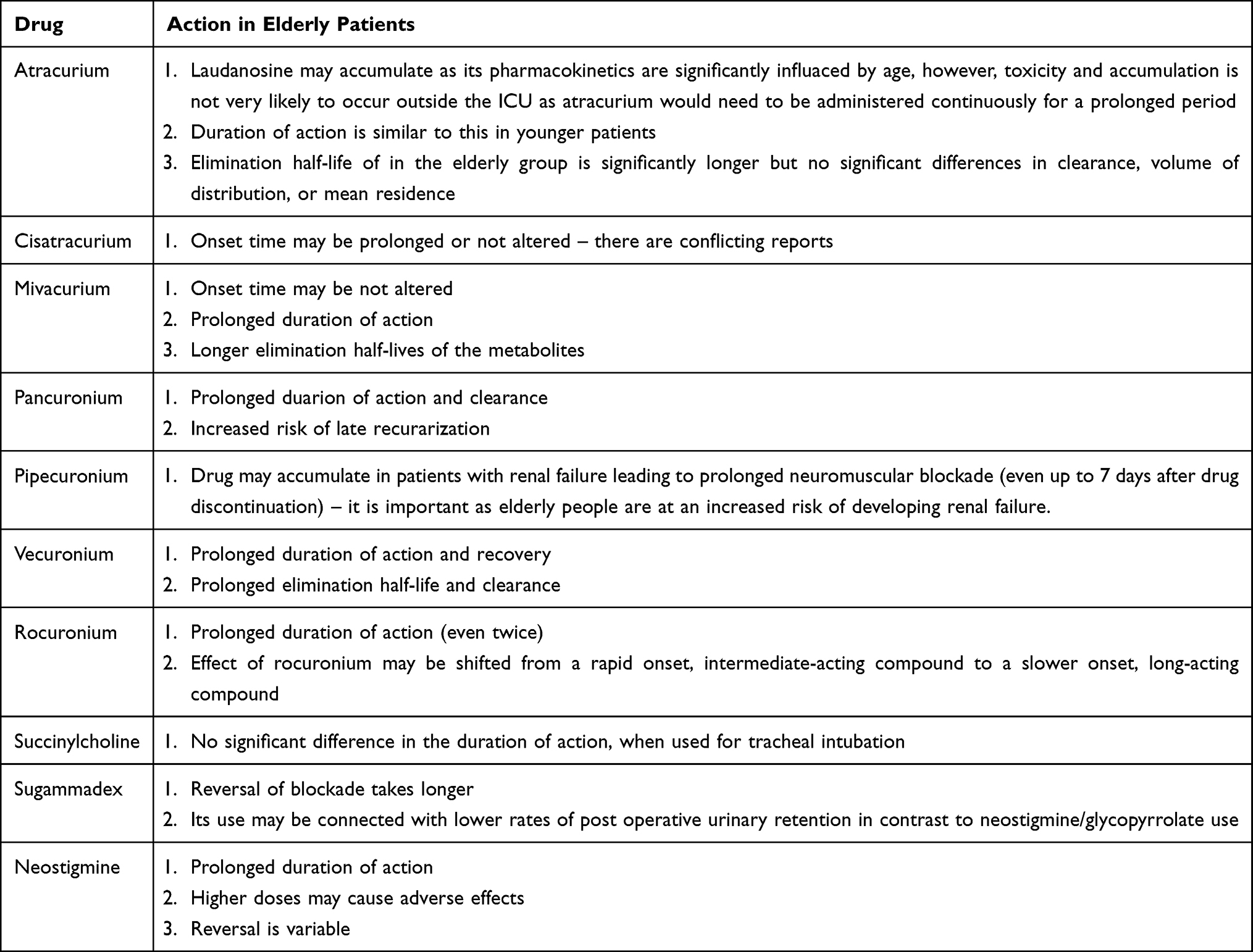 |
Table 4 The Effects of Drugs Used in Neuromuscular Blockade in Elderly Patients Based on the Cited Literature |
Objective neuromuscular monitoring, particularly quantitative methods such as train-of-four (TOF) assessment, is critical to ensure complete recovery before extubation and to prevent postoperative residual curarization. Age-related factors such as diabetes mellitus and perioperative hypothermia can further prolong NMBA effects, underscoring the need for individualized dosing, vigilant monitoring, and tailored reversal strategies.
Overall, safe and effective anesthesia in the geriatric population relies on careful NMBA selection, appropriate use of reversal agents, and rigorous neuromuscular monitoring.
Funding
None.
Disclosure
The authors report no conflicts of interest in this work.
References
1. Fowler AJ, Abbott TEF, Prowle J, Pearse RM. Age of patients undergoing surgery. Br J Surg. 2019;106(8):1012–1018. doi:10.1002/bjs.11148
2. Griffiths R, Beech F, Brown A, et al. Peri-operative care of the elderly 2014. Anaesthesia. 2014;69(s1):81–98. doi:10.1111/anae.12524
3. Muravchick S. Preoperative assessment of the elderly patient. Anesthesiol Clin North Am. 2000;18(1):71–89. doi:10.1016/S0889-8537(05)70150-4
4. Díez-Villanueva P, Jiménez-Méndez C, Alfonso F. Heart failure in the elderly. J Geriatr Cardiol. 2021;18(3):219–232. doi:10.11909/j.issn.1671-5411.2021.03.009
5. Fang Y, Gong AY, Haller ST, Dworkin LD, Liu Z, Gong R. The ageing kidney: molecular mechanisms and clinical implications. Ageing Res Rev. 2020;63:101151. doi:10.1016/j.arr.2020.101151
6. Georgieva M, Xenodochidis C, Krasteva N. Old age as a risk factor for liver diseases: modern therapeutic approaches. Exp Gerontol. 2023;184:112334. doi:10.1016/j.exger.2023.112334
7. Radkowski P, Krupiniewicz KJ, Suchcicki M, et al. Navigating anesthesia: muscle relaxants and reversal agents in patients with renal impairment. Med Sci Monit. 2024;30:e945141. doi:10.12659/MSM.945141
8. Radkowski P, Szewczyk M, Łęczycka A, Kowalczyk K, Kęska M, Stompór T. Impact of liver disease on use of muscle relaxants in anesthesia: a comprehensive review. Med Sci Monit. 2025;31:e945822. doi:10.12659/MSM.945822
9. Radkowski P, Szewczyk M, Czajka A, Samiec M, Braczkowska-Skibińska M. The influence of acid-base balance on anesthetic muscle relaxants: a comprehensive review on clinical applications and mechanisms. Med Sci Monit. 2024;30:e944510. doi:10.12659/MSM.944510
10. American Geriatrics Society Beers Criteria® Update Expert Panel. American geriatrics society 2023 updated AGS beers criteria® for potentially inappropriate medication use in older adults. J Am Geriatr Soc. 2023;71(7):2052–2081. doi:10.1111/jgs.18372
11. Polaka S, Tella JD, Tekade M, Sharma MC, Tekade RK. Impact of ageing on the pharmacokinetics and pharmacodynamics of the drugs. Tekade RK editor. In: Pharmacokinetics and Toxicokinetic Considerations - Vol II. Cambridge, MA, USA: Academic Press; 2022:241–261. doi:10.1016/B978-0-323-98367-9.00008-1
12. Fuchs-Buder T, Romero CS, Lewald H, et al. Peri-operative management of neuromuscular blockade: a guideline from the European society of anaesthesiology and intensive care. Eur J Anaesthesiol. 2023;40(2). https://journals.lww.com/ejanaesthesiology/fulltext/2023/02000/peri_operative_management_of_neuromuscular.3.aspx.
13. Radkowski P, Barańska A, Mieszkowski M, Dawidowska-Fidrych J, Podhorodecka K. Methods for clinical monitoring of neuromuscular transmission in anesthesiology – a review. Int J Gen Med. 2024;17:9–20. doi:10.2147/IJGM.S424555
14. Stankiewicz-Rudnicki M. Neuromuscular blockade in the elderly. Anaesthesiol Intensive Ther. 2016;48(4):257–260. doi:10.5603/AIT.2016.0045
15. Lee LA, Athanassoglou V, Pandit JJ. Neuromuscular blockade in the elderly patient. J Pain Res. 2016;9:437–444. doi:10.2147/JPR.S85183
16. Pietraszewski P, Gaszyński T. Residual neuromuscular block in elderly patients after surgical procedures under general anaesthesia with rocuronium. Anaesthesiol Intensive Ther. 2013;45(2):77–81. doi:10.5603/AIT.2013.0017
17. Schmartz D, Sghaier R, Bernard P, Fils JF, Fuchs-Buder T. Neuromuscular block in patients 80 years and older: a prospective, controlled study. BMC Anesthesiol. 2021;21(1):225. doi:10.1186/s12871-021-01443-1
18. Ruiz A, DiCristina S. Absorption to excretion: the aging body’s take on drugs—a review of pharmacokinetic changes and their impact on medication management. Curr Pharmacol Rep. 2025;11:42. doi:10.1007/s40495-025-00425-y
19. Mangoni AA, Jackson SH. Age-related changes in pharmacokinetics and pharmacodynamics: basic principles and practical applications. Br J Clin Pharmacol. 2004;57(1):6–14. doi:10.1046/j.1365-2125.2003.02007.x
20. Staheli B, Rondeau B. Anesthetic considerations in the geriatric population. [Updated 2023 Aug 5]. In: statPearls [Internet]. Treasure Island (FL): statPearls Publishing; 2025 Available from: https://www.ncbi.nlm.nih.gov/books/NBK572137/.
21. Bień B, Łukaszyk E. Kryteria poprawności farmakoterapii geriatrycznej w praktyce klinicznej na podstawie kryteriów 2019 AGS Beers®, 2015 STOPP/START i 2021 STOPPFall: jak leczyć, żeby najmniej szkodzić? Fundacja Centrum Inicjatyw na Rzecz Społeczeństwa; 2022. Available from: https://fundacjafcis.pl/wp-content/uploads/2022/09/KRYTERIA-POPRAWNOSCI-FARMAKOTERAPII-GERIATRYCZNEJ-W-PRAKTYCE-KLINICZNEJ-1.pdf.
22. Briand M, Raffin J, Gonzalez-Bautista E, et al. Body composition and aging: cross-sectional results from the INSPIRE study in people 20 to 93 years old. GeroScience. 2024;47(1):863–875. doi:10.1007/s11357-024-01245-6
23. Drenth-van Maanen AC, Wilting I, Jansen PAF. Prescribing medicines to older people—How to consider the impact of ageing on human organ and body functions. Br J Clin Pharmacol. 2020;86(10):1921–1930. doi:10.1111/bcp.14094
24. Wanat K. Biological barriers, and the influence of protein binding on the passage of drugs across them. Mol Biol Rep. 2020;47(4):3221–3231. doi:10.1007/s11033-020-05361-2
25. Celestin MN, Musteata FM. Impact of changes in free concentrations and drug-protein binding on drug dosing regimens in special populations and disease states. J Pharm Sci. 2021;110(10):3331–3344. doi:10.1016/j.xphs.2021.05.018
26. Grandison MK, Boudinot FD. Age-related changes in protein binding of drugs. Clin Pharmacokinet. 2000;38(3):271–290. doi:10.2165/00003088-200038030-00005
27. Roy JJ, Varin F. Physicochemical properties of neuromuscular blocking agents and their impact on the pharmacokinetic–pharmacodynamic relationship. Br J Anaesth. 2004;93(2):241–248. doi:10.1093/bja/aeh181
28. Cameron M, Donati F, Varin F. In vitro plasma protein binding of neuromuscular blocking agents in different subpopulations of patients. Anesth Analg. 1995;81(5):1019–1025. doi:10.1097/00000539-199511000-00022
29. Tan JL, Eastment JG, Poudel A, Hubbard RE. Age-related changes in hepatic function: an update on implications for drug therapy. Drugs Aging. 2015;32(12):999–1008. doi:10.1007/s40266-015-0318-1
30. Appiah-Ankam J, Hunter JM. Pharmacology of neuromuscular blocking drugs. Contin Educ Anaesth Crit Care Pain. 2004;4(1):2–7. doi:10.1093/bjaceaccp/mkh002
31. Renew JR, Naguib M. Management of neuromuscular blockade in the elderly and morbidly obese patient: what does the data show? Curr Anesthesiol Rep. 2020;10(2):107–116. doi:10.1007/s40140-020-00375-9
32. Weinstein JR, Anderson S. The aging kidney: physiological changes. Adv Chronic Kidney Dis. 2010;17(4):302–307. doi:10.1053/j.ackd.2010.05.002
33. Aymanns C, Keller F, Maus S, Hartmann B, Czock D. Review on pharmacokinetics and pharmacodynamics and the aging kidney. Clin J Am Soc Nephrol. 2010;5(2):314–327. doi:10.2215/CJN.03960609
34. Fodale V, Santamaria LB. Laudanosine, an atracurium and cisatracurium metabolite. Eur J Anaesthesiol. 2002;19(7):466. doi:10.1017/s0265021502000777
35. Jayawardana A, Bandara S, Karunarathna I. Understanding atracurium: a guide to neuromuscular blockade. 2024. Available from: https://www.researchgate.net/publication/380316267_Understanding_Atracurium_A_Guide_to_Neuromuscular_Blockade.
36. Kent AP, Parker CJ, Hunter JM. Pharmacokinetics of atracurium and laudanosine in the elderly. Br J Anaesth. 1989;63(6):661–666. doi:10.1093/bja/63.6.661
37. Slavov V, Khalil M, Merle JC, Agostini MM, Ruggier R, Duvaldestin P. Comparison of duration of neuromuscular blocking effect of atracurium and vecuronium in young and elderly patients. Br J Anaesth. 1995;74(6):709–711. doi:10.1093/bja/74.6.709
38. Vested M, Kristensen CM, Pape P, et al. Comparison of onset time, duration of action, and intubating conditions after cisatracurium 0.15 mg/kg in young and elderly patients. BMC Anesthesiol. 2022;22(1):339. doi:10.1186/s12871-022-01881-5
39. Kim J, Lee Y, Lee S, et al. Effective doses of cisatracurium in the adult and the elderly. Korean J Anesthesiol. 2016;69(5):453–459. doi:10.4097/kjae.2016.69.5.453
40. Molloy LS, Ledowski T. Mivacurium: a review. Curr Anesthesiol Rep. 2018;8(2):125–129. doi:10.1007/s40140-018-0264-7
41. Radkowski P, Szewczyk M, Grażewicz M, Sobolewski K, Onichimowski D. Use of muscle relaxants in emergency medicine: a review. Med Sci Monit. 2025;31:e949876. doi:10.12659/MSM.949876
42. Vested M, Kempff-Andersen S, Creutzburg A, et al. Onset time, duration of action, and intubating conditions after mivacurium in elderly and younger patients. Acta Anaesthesiol Scand. 2024;68(7):898–905. doi:10.1111/aas.14440
43. Santarpia L, Grandone I, Contaldo F, Pasanisi F. Butyrylcholinesterase as a prognostic marker: a review of the literature. J Cachexia Sarcopenia Muscle. 2013;4(1):31–39. doi:10.1007/s13539-012-0083-5
44. Brazzolotto X, Courcelle S, Sauvanet C, et al. Characterization of four BCHE mutations associated with prolonged effect of suxamethonium. Pharmacogenomics J. 2021;21(2):165–173. doi:10.1038/s41397-020-00192-7
45. Østergaard D, Viby-Mogensen J, Pedersen NA, Holm H, Skovgaard LT. Pharmacokinetics and pharmacodynamics of mivacurium in young adult and elderly patients. Acta Anaesthesiol Scand. 2002;46(6):684–691. doi:10.1034/j.1399-6576.2002.460609.x
46. Adeyinka A, Layer DA. Neuromuscular blocking agents. Updated June 8, 2024. In: statPearls [Internet]. Treasure Island, FL: statPearls Publishing. 2025. Available from: https://www.ncbi.nlm.nih.gov/books/NBK537168/.
47. Lim BG, Lee IO. Anesthetic management of geriatric patients. Korean J Anesthesiol. 2020;73(1):8–29. doi:10.4097/kja.19391
48. Strøm C, Rasmussen LS, Steinmetz J. Practical management of anaesthesia in the elderly. Drugs Aging. 2016;33(11):765–777. doi:10.1007/s40266-016-0413-y
49. Das GN, Sharma P, Maani CV. Pancuronium Updated August 8, 2023. In: statPearls [Internet]. Treasure Island, FL: statPearls Publishing. 2025. Available from: https://www.ncbi.nlm.nih.gov/books/NBK538346/.
50. Rupp SM, Castagnoli KP, Fisher DM, Miller RD. Pancuronium and vecuronium pharmacokinetics and pharmacodynamics in younger and elderly adults. Anesthesiology. 1987;67(1):45–49. doi:10.1097/00000542-198707000-00008
51. Chen R, Sun Y, Li Y, et al. Neuromuscular blocking agents and cancer: a narrative review. J Clin Pharm Ther. 2023;2023(1):5607134. doi:10.1155/2023/5607134
52. Shaheen B, Wig J, Grewal S, Tewari MK. Effect of pipecuronium and pancuronium on intracranial pressure and cardiovascular parameters in patients with supratentorial tumours. Neurol India. 2000;48(1):37–42.
53. Marantuan RS, Hendrika W. Anaphylactic reaction cases induced by neuromuscular blocking agents (NMBAs) used in surgery. Int J Med Health Res. 2022;8(1):82–89.
54. Matteo RS, Ornstein E, Schwartz AE, Ostapkovich N, Stone JG. Pharmacokinetics and pharmacodynamics of rocuronium (Org 9426) in elderly surgical patients. Anesth Analg. 1993;77(6):1193–1197. doi:10.1213/00000539-199312000-00019
55. Xiaobo F, Jianjuan K, Yanlin W. Comparison of the variability of the onset and recovery from neuromuscular blockade with cisatracurium versus rocuronium in elderly patients under total intravenous anesthesia. Braz J Med Biol Res. 2012;45(7):676–680. doi:10.1590/S0100-879X2012007500076
56. Van Zundert TC, Gatt SP, Van Zundert A. Anesthesia and perioperative pain relief in the frail elderly patient. Saudi J Anaesth. 2023;17(4):566. doi:10.4103/sja.sja_628_23
57. Lien CA, Matteo RS, Ornstein E, Schwartz AE, Diaz J. Distribution, elimination, and action of vecuronium in the elderly. Anesth Analg. 1991;73(1):39–42. doi:10.1213/00000539-199107000-00008
58. Chandrasekhar K, Togioka BM, Jeffers JL. Sugammadex Updated May 29, 2023. In: statPearls [Internet]. Treasure Island, FL: statPearls Publishing. 2025. Available from: https://www.ncbi.nlm.nih.gov/books/NBK470263/.
59. Hunter JM. Neuromuscular blocking agents and reversal agents. Anaesth Intensive Care Med. 2021;22(6):380–384. doi:10.1016/j.mpaic.2021.04.010
60. Nair VP, Hunter JM. Anticholinesterases and anticholinergic drugs. Contin Educ Anaesth Crit Care Pain. 2004;4(5):164–168.
61. Gallanosa A, Stevens JB, Hendrix JM, et al. Glycopyrrolate. Updated January 19, 2025. In: statPearls [Internet]. Treasure Island, FL: statPearls Publishing. 2025. Available from: https://www.ncbi.nlm.nih.gov/books/NBK526035/.
62. Zhu B, Sun D, Yang L, et al. The effects of neostigmine on postoperative cognitive function and inflammatory factors in elderly patients – a randomized trial. BMC Geriatr. 2020;20(1):387. doi:10.1186/s12877-020-01793-4
63. Zhang X, Jiang H, Li S, Luo A, Zhao Y. Use of low-dose neostigmine intravenously in the treatment of thyroid storm-induced severe tachycardia in patient during huge pelvic mass resection: a case report and review of literature. Medicine. 2018;97(14):e0300. doi:10.1097/MD.0000000000010300
64. Zuo W, Wu J. The interaction and pathogenesis between cognitive impairment and common cardiovascular diseases in the elderly. Ther Adv Chronic Dis. 2022;13:20406223211063020. doi:10.1177/20406223211063020
65. Hristovska AM, Duch P, Allingstrup M, Afshari A. Efficacy and safety of sugammadex versus neostigmine in reversing neuromuscular blockade in adults. Cochrane Database Syst Rev. 2017;(8):CD012763. doi:10.1002/14651858.CD012763
66. Staals LM, Snoeck MM, Driessen JJ, et al. Reduced clearance of rocuronium and sugammadex in patients with severe to end-stage renal failure: a pharmacokinetic study. Br J Anaesth. 2010;104(1):31–39. doi:10.1093/bja/aep340
67. McDonagh DL, Benedict PE, Kovac AL, et al. Efficacy, safety, and pharmacokinetics of sugammadex for the reversal of rocuronium-induced neuromuscular blockade in elderly patients. Anesthesiology. 2011;114(2):318–329. doi:10.1097/ALN.0b013e3182065c36
68. Kadoi Y, Nishida A, Saito S. Recovery time after sugammadex reversal of rocuronium-induced muscle relaxation for electroconvulsive therapy is independent of cardiac output in both young and elderly patients. J ECT. 2013;29(1):33–36. doi:10.1097/YCT.0b013e31826cf348
69. Carron M, Bertoncello F, Ieppariello G. Profile of sugammadex for reversal of neuromuscular blockade in the elderly: current perspectives. Clin Interv Aging. 2017;13:13–24. doi:10.2147/CIA.S134108
70. Spanjer MR, Bakker NA, Absalom AR. Pharmacology in the elderly and newer anaesthesia drugs. Best Pract Res Clin Anaesthesiol. 2011;25(3):355–365. doi:10.1016/j.bpa.2011.06.002
71. Valencia Morales DJ, Stewart BR, Heller SF, et al. Urinary retention following inguinal herniorrhaphy: role of neuromuscular blockade reversal. Surg Laparosc Endosc Percutan Tech. 2021;31(5):613–617. doi:10.1097/SLE.0000000000000962
72. Szewczyk M, Bieniecka A, Sobolewski K, Banasiak Ł, Grabarczyk Ł. Neuromuscular blocking agents and reversal agents usage, and neuromuscular blockade monitoring in the intensive care unit - review article. Int J Gen Med. 2025;18:3651–3688. doi:10.2147/IJGM.S524089
73. Thilen SR, Weigel WA, Todd MM, et al. American society of anesthesiologists practice guidelines for monitoring and antagonism of neuromuscular blockade: a report by the American society of anesthesiologists task force on neuromuscular blockade. Anesthesiology. 2023;138(1):13–41. doi:10.1097/ALN.0000000000004379
74. Plaud B, Baillard C, Bourgain JL, et al. Guidelines on muscle relaxants and reversal in anaesthesia. Anaesth Crit Care Pain Med. 2020;39(1):125–142. doi:10.1016/j.accpm.2020.01.005
75. Armendariz-Buil I, Lobato-Solores F, Aguilera-Celorrio L. Diabetes mellitus and neuromuscular blockade: review. J Diabetes Metab. 2016;7(6). doi:10.4172/2155-6156.1000678
76. Heier T, Caldwell JE, Warltier D. Impact of hypothermia on the response to neuromuscular blocking drugs. Anesthesiology. 2006;104(5):1070–1080. doi:10.1097/00000542-200605000-00025
77. Leslie K, Sessler DI, Bjorksten AR, Moayeri A. Mild hypothermia alters propofol pharmacokinetics and increases the duration of action of atracurium. Anesth Analg. 1995;80(5):1007–1014. doi:10.1097/00000539-199505000-00027
78. Yoo JH, Sung TY, Oh CS. Cold temperatures, hot risks: perioperative hypothermia in geriatric patients - a narrative review. Anesth Pain Med. 2025;20(3):189–199. doi:10.17085/apm.25294
79. Ciobotaru OR, Stoleriu G, Ciobotaru OC, et al. Postanesthetic skin erythema due to succinylcholine versus atracurium. Exp Ther Med. 2020;20(3):2368–2372. doi:10.3892/etm.2020.8792
80. Radkowski P, Barańska A, Mieszkowski M, Dawidowska-Fidrych J. Muscle relaxants in anaesthesiology, intensive care, and emergency medicine, including recent reports about patients with COVID-19 infection. Anestezjol Ratow. 2021;15:55–69. doi:10.53139/AIR.20211507
81. Linauskienė K, Grincevičienė G, Malinauskienė L, Blažienė A, Chomičienė A. Severe anaphylactic reaction to cisatracurium during anesthesia with cross-reactivity to atracurium. Open Med. 2020;5(1):384–386. doi:10.1515/med-2020-0126
82. Reitter M, Petitpain N, Latarche C, et al. Fatal anaphylaxis with neuromuscular blocking agents: a risk factor and management analysis. Allergy. 2014;69(7):954–959. doi:10.1111/all.12426
 © 2025 The Author(s). This work is published and licensed by Dove Medical Press Limited. The
full terms of this license are available at https://www.dovepress.com/terms
and incorporate the Creative Commons Attribution
- Non Commercial (unported, 4.0) License.
By accessing the work you hereby accept the Terms. Non-commercial uses of the work are permitted
without any further permission from Dove Medical Press Limited, provided the work is properly
attributed. For permission for commercial use of this work, please see paragraphs 4.2 and 5 of our Terms.
© 2025 The Author(s). This work is published and licensed by Dove Medical Press Limited. The
full terms of this license are available at https://www.dovepress.com/terms
and incorporate the Creative Commons Attribution
- Non Commercial (unported, 4.0) License.
By accessing the work you hereby accept the Terms. Non-commercial uses of the work are permitted
without any further permission from Dove Medical Press Limited, provided the work is properly
attributed. For permission for commercial use of this work, please see paragraphs 4.2 and 5 of our Terms.
Recommended articles

Methods for Clinical Monitoring of Neuromuscular Transmission in Anesthesiology – A Review
Radkowski P, Barańska A, Mieszkowski M, Dawidowska-Fidrych J, Podhorodecka K
International Journal of General Medicine 2024, 17:9-20
Published Date: 3 January 2024