
Back to Journals » Clinical Interventions in Aging » Volume 20
Transcutaneous Auricular Vagus Nerve Stimulation for Prevention of Postoperative Delirium in Older Adults Undergoing Total Knee Arthroplasty: A Multicenter Randomized Controlled Trial Protocol
Authors Liao X  , Zhang T , Zhang J , Yang J, Li J , Chen L, Qian B
Received 12 June 2025
Accepted for publication 11 October 2025
Published 22 October 2025 Volume 2025:20 Pages 1787—1797
DOI https://doi.org/10.2147/CIA.S546762
Checked for plagiarism Yes
Review by Single anonymous peer review
Peer reviewer comments 2
Editor who approved publication: Dr Zhi-Ying Wu
Xincheng Liao,1,* Tongtong Zhang,2,* Jingxuan Zhang,3 Jialin Yang,3 Junyu Li,3 Lei Chen,4 Bin Qian4
1Department of Anesthesiology, The Second Affiliated Hospital of Fujian University of Traditional Chinese Medicine, Fuzhou, People’s Republic of China; 2Department of Anesthesiology, Mengchao Hepatobiliary Hospital of Fujian Medical University, Fuzhou, People’s Republic of China; 3Department of Anesthesiology, Shengli Clinical Medical College of Fujian Medical University, Fujian Provincial Hospital, Fuzhou, People’s Republic of China; 4Department of Anesthesiology, People’s Hospital Affiliated to Fujian University of Traditional Chinese Medicine, Fuzhou, People’s Republic of China
*These authors contributed equally to this work
Correspondence: Junyu Li, Department of Anesthesiology, Shengli Clinical Medical College of Fujian Medical University, Fujian Provincial Hospital, 134 Dongjie Street, Fuzhou, 350001, People’s Republic of China, Email [email protected] Lei Chen, Department of Anesthesiology, People’s Hospital Affiliated to Fujian University of Traditional Chinese Medicine, 602 Bayiqi Road, Fuzhou, 350005, People’s Republic of China, Email [email protected]
Purpose: Postoperative delirium affects up to 65% of elderly surgical patients, leading to increased mortality and cognitive decline. Current prevention strategies face implementation barriers, necessitating accessible, non-pharmacological interventions. Transcutaneous auricular vagus nerve stimulation (taVNS), a non-invasive neuromodulation technique, reduces neuroinflammation and regulates autonomic function, offering potential for delirium prevention. This multicenter, randomized, double-blind, sham-controlled trial evaluates whether taVNS can prevent postoperative delirium in older adults undergoing total knee arthroplasty.
Patients and Methods: We will enroll 1448 patients aged 65– 80 years undergoing elective knee replacement under general anesthesia at four hospitals in Fujian Province, China. Participants will be randomized equally to receive active taVNS (25 Hz, 250 μs targeting the cymba conchae and tragus) or sham stimulation (25 Hz, 250 μs targeting the earlobe and antihelix). Both groups will receive interventions at two timepoints: the afternoon before surgery and the morning of surgery before anesthesia. The primary outcome is delirium incidence within 72 hours postoperatively, assessed using the Confusion Assessment Method. Secondary outcomes include inflammatory markers (interleukin-1, interleukin-6, tumor necrosis factor-alpha), autonomic function (heart rate variability), cognitive trajectories, psychological status, sleep quality, pain scores, and recovery parameters. Safety monitoring will follow standardized adverse event reporting guidelines.
Conclusion: If effective, taVNS could provide a practical, non-invasive method to reduce delirium incidence in elderly patients undergoing knee replacement, potentially improving postoperative outcomes and reducing healthcare costs.
Keywords: neuromodulation, cognitive complications, orthopedic surgery, inflammation, autonomic regulation
Introduction
The global elderly population is expected to double by 2050, creating unprecedented healthcare challenges.1 While advances in surgical and anesthetic care enable older adults to undergo procedures that improve quality of life,2 these patients remain vulnerable to postoperative complications due to diminished physiological reserve.3 Among these complications, postoperative delirium is severe, affecting 15–25% of elderly patients after routine major surgery and up to 65% following high-risk procedures. This condition results in extended hospital stays, functional decline, increased mortality, and substantial healthcare costs.4–7
Total knee arthroplasty (TKA) exemplifies a high-risk procedure, with postoperative delirium occurring in 30–50% of elderly patients.8,9 This high incidence stems from patient-related factors (advanced age, multiple medications) and surgery-induced inflammation.10,11 Although the Confusion Assessment Method (CAM) provides validated detection, the hypoactive form of delirium—characterized by withdrawal and reduced responsiveness—comprises 40–75% of cases and carries the highest risk of non-detection.12 Current management involves treating precipitating factors (dehydration, infection, medications) and providing supportive care through reorientation and early mobilization. However, once established, delirium often persists despite treatment, with recovery requiring days to weeks.
Current delirium prevention strategies from the American Society of Anesthesiologists’ Perioperative Brain Health Initiative face significant implementation challenges despite their proven efficacy.13 Multimodal protocols require extensive institutional resources and specialized infrastructure that many facilities lack. Sleep optimization interventions depend on intensive nursing supervision that exceeds standard staffing ratios, while early mobilization programs cannot accommodate patients with postoperative movement restrictions.14,15 These practical barriers preventing widespread adoption of existing prevention methods, necessitating the development of interventions that are both clinically effective and feasible to implement across diverse healthcare settings.
Recent research identifies neuroinflammation and autonomic dysfunction as central mechanisms underlying postoperative delirium pathogenesis.16 Pro-inflammatory cytokines, particularly interleukin-1 (IL-1), interleukin-6 (IL-6), and tumor necrosis factor-alpha (TNF-α), disrupt blood–brain barrier integrity and directly impair cognitive function.17,18 The vagus nerve presents an attractive therapeutic target through its dual role in regulating parasympathetic tone and suppressing inflammation via the cholinergic anti-inflammatory pathway.19 Transcutaneous auricular vagus nerve stimulation (taVNS) provides a non-invasive method to activate this system by electrically stimulating the auricular branch of the vagus nerve at specific ear sites.20 Animal models demonstrate that taVNS suppresses inflammatory cytokine production while restoring autonomic balance,21,22 and preliminary clinical trials have reported cognitive improvements in depression, mild cognitive impairment, and other neuropsychiatric conditions.23–25 Despite these promising findings, no studies have evaluated whether taVNS can prevent postoperative delirium in elderly patients undergoing TKA.26
We hypothesize that taVNS administered perioperatively will reduce postoperative delirium incidence in elderly TKA patients by modulating neuroinflammation and autonomic function. This multicenter randomized controlled trial aims to evaluate the efficacy of taVNS in preventing postoperative delirium within 72 hours after TKA in patients aged 65–80 years. Secondary objectives include assessing the intervention’s effects on inflammatory biomarkers, autonomic function, and long-term cognitive outcomes.
Materials and Methods
Study Setting and Recruitment
This multicenter, randomized, double-blind, sham-controlled trial will be conducted at four hospitals in Fujian Province, China: People’s Hospital Affiliated with Fujian University of Traditional Chinese Medicine (primary center), The Second Affiliated Hospital of Fujian University of Traditional Chinese Medicine, Mengchao Hepatobiliary Hospital of Fujian Medical University, and Fujian Provincial Hospital. The protocol follows SPIRIT 2013 and SPIRIT-TCM Extension 2018 guidelines.27,28 Potential participants will receive comprehensive information about the study purpose, procedures, requirements, risks, and benefits from trained research staff. Written informed consent will be obtained from all participants prior to enrollment. Figure 1 presents the study design and participant flow through the trial phases.
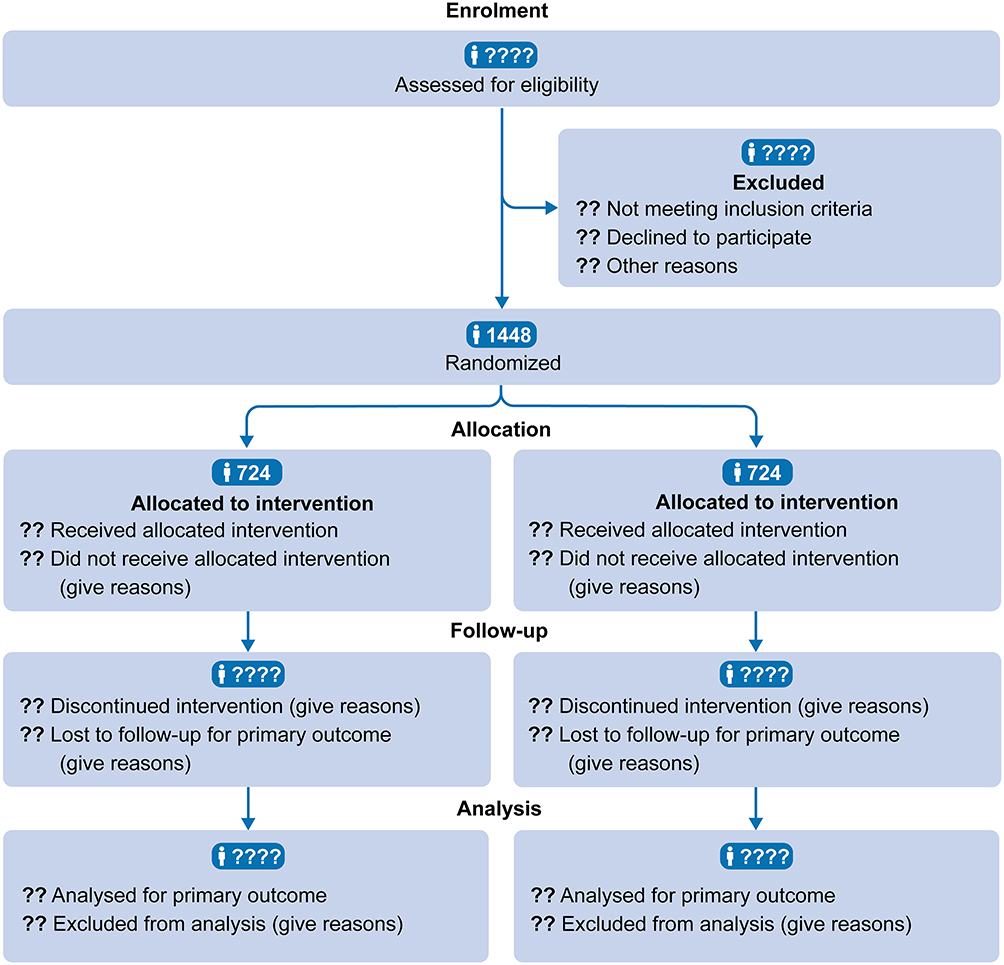 |
Figure 1 Consolidated Standards of Reporting Trials (CONSORT) flow diagram for the planned multicenter randomized controlled trial. Notes: Question marks (?) indicate participant numbers to be determined during trial execution. Target enrollment: 1448 participants randomized 1:1 to active transcutaneous auricular vagus nerve stimulation (taVNS, n=724) or sham stimulation (n=724). Actual enrollment, exclusion, and attrition data will be reported upon study completion. |
Eligibility Criteria
Inclusion Criteria
Patients will be eligible for inclusion if they meet all of the following criteria:
- Aged 65–80 years
- American Society of Anesthesiologists (ASA) physical status II–III
- Scheduled for elective unilateral total knee arthroplasty under general anesthesia
- Able to provide written informed consent
- Sufficient comprehension of Mandarin Chinese to follow study instructions
Exclusion Criteria
Patients will be excluded if any of the following criteria are present:
- Baseline dementia diagnosed using DSM-5 criteria
- Montreal Cognitive Assessment score <19
- Implanted electrical devices (e.g., pacemakers, deep brain stimulators)
- Active infection at the auricular acupuncture sites
- Severe hematologic or hemorrhagic disease
- Severe sensory impairments that prevent a reliable cognitive assessment
- Current alcohol or illicit drug use disorder
- Current use of sedatives, antidepressants, or glucocorticoids
- Receipt of acupuncture or electroacupuncture within one month before surgery
- Any condition deemed unsafe for trial participation by the research team
Randomization, Allocation Concealment, and Blinding
This multicenter trial will randomize 1448 participants (1:1) to active or sham taVNS. An independent statistician will generate the allocation sequence using computerized permuted blocks of six, stratified by site. Allocation concealment will employ sequentially numbered, sealed, opaque envelopes prepared by personnel independent of enrollment and assessment. Treatment providers will receive envelopes containing only de-identified configuration labels (A or B) without treatment designation. Although providers will follow standardized protocols without discussing treatment effects, complete provider blinding cannot be guaranteed given the anatomical specificity of stimulation sites. Participants will remain blinded, as both configurations produce comparable sensory experiences and recipients cannot distinguish between anatomical locations. Outcome assessors will remain independent of intervention delivery, ensuring complete blinding throughout the trial. At study completion, structured questionnaires will evaluate blinding integrity by assessing whether participants and assessors can identify treatment allocation beyond chance probability.
Intervention
The taVNS will be delivered at two timepoints: the afternoon before surgery and the morning of surgery prior to anesthesia induction. Participants will be seated or reclined during the 30-minute stimulation session. Following alcohol preparation of the left ear, the HANS-200E electrical stimulator (Nanjing Jisheng Medical Technology Co., China) will deliver current via specialized 8 mm silver-chloride ear clip electrodes. This standardized equipment will be used across all four study sites.
Active stimulation will target the cymba conchae and tragus, sites with dense vagal afferent innervation. Sham stimulation will target the antihelix and earlobe, where vagal innervation is minimal to absent. Figure 2 illustrates electrode placement for both conditions. Both groups will receive identical stimulation parameters to preserve blinding: 250-microsecond pulse width at 25 Hz frequency, parameters validated for vagal activation.29,30 Current intensity will be individually titrated to each participant’s maximum tolerable level without discomfort, ensuring optimal therapeutic delivery within acceptable tolerability limits for elderly participants.
 |
Figure 2 Electrode placement sites for active and sham transcutaneous auricular vagus nerve stimulation (taVNS). Notes: (A) Active stimulation targets the cymba conchae and tragus with the taVNS device. (B) Sham (control) targets the antihelix and earlobe using the same device. The figure illustrates the anatomical locations where electrodes are placed on the ear for active therapeutic stimulation and control conditions. Blue circles indicate the specific electrode placement points, with connections shown to the taVNS stimulator device. |
Anesthetic Management
A standardized anesthetic protocol will be implemented to minimize perioperative cognitive complications. Following three minutes of preoxygenation with 100% oxygen, anesthesia induction will proceed with propofol 1.5–2.0 mg/kg, sufentanil 0.3 μg/kg, and rocuronium 0.6 mg/kg. Maintenance anesthesia will consist of sevoflurane at 1.5% end-tidal concentration combined with remifentanil infusion at 0.05–0.2 μg/kg/min, titrated to maintain bispectral index values between 40 and 60 while keeping hemodynamic parameters within 20% of baseline values. Supplemental rocuronium 0.15 mg/kg will be administered as needed for adequate surgical relaxation, with neuromuscular blockade reversed using sugammadex upon procedure completion.
Multimodal postoperative analgesia will comprise surgical site infiltration with 20 mL of 0.5% ropivacaine and scheduled intravenous flurbiprofen axetil 50 mg every six hours for 72 hours. Patient-controlled analgesia using morphine will be initiated when pain scores exceed 3 on the 0–10 Numerical Rating Scale. The PCA device will be programmed to deliver 2.0 mg morphine boluses with 10-minute lockout intervals and no background infusion.
Outcomes
Primary Outcome
The primary outcome is postoperative delirium incidence within 72 hours after surgery, assessed using the Confusion Assessment Method (CAM).31 Blinded assessors will begin evaluations 2 hours postoperatively, then twice daily at a minimum of 6-hour intervals through postoperative day 3. Delirium diagnosis requires both features 1 and 2, plus either feature 3 or 4: (1) acute onset or fluctuating course, (2) inattention, (3) disorganized thinking, and (4) altered consciousness level. Patients diagnosed with delirium will undergo daily assessments until resolution to document duration and subtype patterns.
Secondary Outcomes
Serial biomarker measurements will elucidate the intervention’s biological effects. Inflammatory markers including serum interleukin-1, interleukin-6, and tumor necrosis factor-alpha will be analyzed at four timepoints: preoperatively and at 2, 24, and 48 hours postoperatively. Cerebral oxygenation will be monitored continuously throughout surgery and for 24 hours postoperatively using near-infrared spectroscopy to assess cerebral perfusion dynamics. Autonomic function will be evaluated through heart rate variability analysis derived from 5-minute electrocardiogram recordings obtained preoperatively, intraoperatively, and at 24 hours postoperatively, with analysis focusing on time-domain parameters including standard deviation of normal-to-normal intervals and root mean square of successive differences.32
Delirium severity will be quantified using the Delirium Rating Scale-Revised-98, administered daily during the first three postoperative days.33 The Richmond Agitation-Sedation Scale will classify delirium subtypes as hyperactive, hypoactive, or mixed based on standardized score ranges.34 Long-term cognitive trajectories will be assessed using the Abbreviated Mental Test Score at baseline and at 1, 3, 6, and 12 months postoperatively.35 Psychological status will be evaluated preoperatively and daily until discharge using the Hospital Anxiety and Depression Scale.36
Sleep quality assessment will employ the Richards-Campbell Sleep Questionnaire to evaluate sleep depth, latency, efficiency, fragmentation, and quality.37 Pain management effectiveness will be monitored through Numerical Rating Scale scores at rest and with movement at six standardized timepoints during the first 72 hours, alongside documentation of total opioid consumption. Recovery quality will be measured using the validated Chinese version of the 15-item Quality of Recovery questionnaire.38 Clinical outcomes including hospital length of stay, 30-day readmission rates, and major postoperative complications will be systematically recorded.
Safety Outcomes
Adverse event documentation will follow the Common Terminology Criteria for Adverse Events version 5.0 guidelines. Systematic monitoring will capture device-related complications, including skin irritation at electrode sites, dizziness during stimulation, and any procedure-associated adverse effects. All events will be assessed for severity, relationship to intervention, and resolution status.
Participant Timeline
The participant timeline is demonstrated in Table 1.
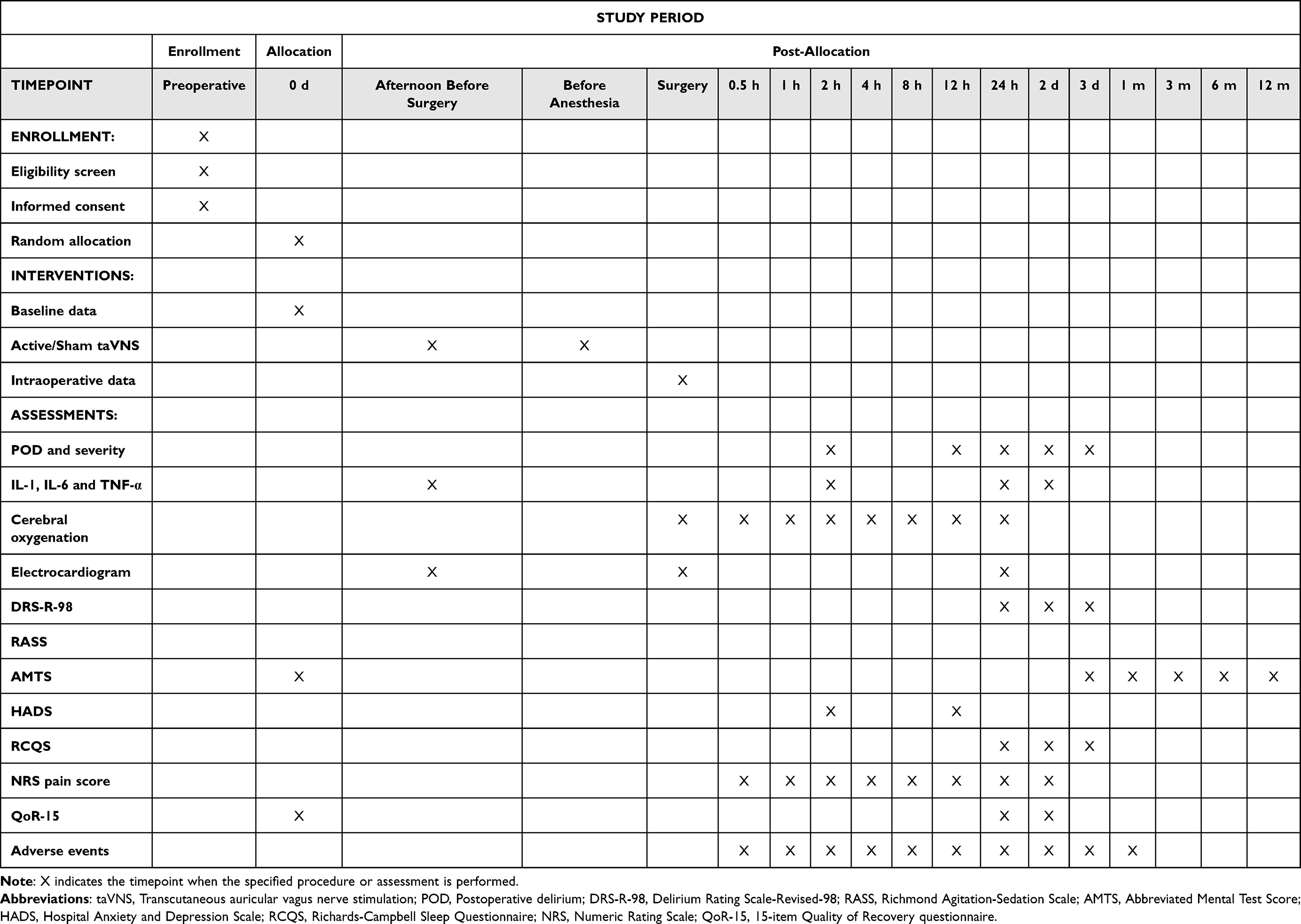 |
Table 1 Participant Timeline |
Sample Size
Sample size was calculated based on postoperative delirium incidence within 72 hours after surgery. With an anticipated baseline delirium rate of 23.9% in the control group and targeting a 30% relative reduction (to 16.7%) in the intervention group, 651 participants per group are required to achieve 90% power at a two-sided alpha of 0.05. Accounting for 10% attrition, the trial will recruit 1448 participants (724 per group).
Study Monitoring and Safety
An independent data monitoring committee will conduct quarterly source data verification to ensure data integrity and participant safety. The committee will compare electronic case report forms against source documents, reporting discrepancies to the principal investigator within two weeks for resolution. Safety monitoring will continue throughout the trial using standardized procedures. While transcutaneous auricular vagus nerve stimulation is generally considered safe, potential adverse events include skin irritation, headache, dizziness, and paresthesia at electrode sites. Blinded assessors will document and grade all adverse events using Common Terminology Criteria for Adverse Events version 5.0. Serious adverse events require reporting to the Institutional Review Board within 24 hours.
Collaborating with the independent safety monitor, the principal investigator will evaluate the relationship between adverse events and the intervention. The Data Safety Monitoring Board may recommend trial modification or termination based on cumulative safety data. Participants experiencing serious adverse events will be evaluated for potential withdrawal according to predefined stopping rules. Participant retention strategies during the 12-month follow-up period include: collecting multiple contact methods at enrollment, scheduling automated reminder calls, and maintaining monthly communication with participants. The study will document all withdrawals without replacement to maintain statistical power calculations. Participants may withdraw consent at any time without obligation to justify. The research team will document withdrawal reasons when provided and analyze patterns of loss to follow-up to evaluate potential impact on external validity.
Data Collection, Management, and Analysis
Trained research assistants, blinded to treatment allocation, will collect all data using standardized electronic case report forms. Data collection will encompass baseline demographics, clinical characteristics, primary and secondary outcomes, and safety parameters. Electronic data capture systems will employ range checks and validation rules to ensure data quality and minimize real-time transcription errors.
The primary analysis will follow intention-to-treat principles, with all randomized participants analyzed in their assigned groups regardless of treatment received or protocol deviations. A secondary per-protocol analysis will include only participants who complete both intervention sessions and have primary outcome data available. Prior to inferential testing, data distribution will be assessed using the Shapiro–Wilk test for normality and Levene’s test for homogeneity of variance. Continuous variables will be reported as mean ± standard deviation for normally distributed data or median (interquartile range) for non-normal distributions. Between-group comparisons will employ independent samples t-tests for parametric data or Mann–Whitney U-tests for non-parametric data. Categorical variables will be presented as frequencies (percentages) and analyzed using chi-square tests for independence, with Fisher’s exact test applied when any expected cell frequency falls below five.
For the primary outcome of 72-hour delirium incidence, we will calculate absolute risk difference with 95% confidence intervals and perform chi-square testing for between-group comparisons. Time-to-delirium onset will be analyzed using Kaplan–Meier survival curves with Log rank tests for group differences. Cox proportional hazards regression will provide hazard ratios adjusted for post-specified baseline covariates including age, baseline cognitive function, and American Society of Anesthesiologists physical status. Longitudinal secondary outcomes will employ linear mixed-effects models with random intercepts to account for within-subject correlation, categorizing time to avoid trajectory assumptions. Model selection will utilize likelihood ratio tests and Akaike information criteria. Sensitivity analyses will address missing data through multiple imputation by chained equations under missing-at-random assumptions. All tests will be two-sided with significance at P < 0.05, applying Benjamini–Hochberg correction for multiple secondary outcomes. Analyses will be performed using R version 4.3.0 or later.
Ethics and Dissemination
This study protocol has received approval from the Institutional Review Board of People’s Hospital Affiliated with Fujian University of Traditional Chinese Medicine (approval number: 2024–048-02). All participating centers will obtain local ethical approval prior to participant recruitment. Trained research personnel will obtain written informed consent from each participant before enrollment. The consent process will involve a comprehensive explanation of study procedures, potential risks and benefits, and alternatives to participation. Participants will receive adequate time to review materials, ask questions, and consult with family members if desired. The informed consent document adheres to the Declaration of Helsinki and Good Clinical Practice guidelines, utilizing language appropriate for the target population.
Study findings will be disseminated through multiple channels regardless of study outcomes. Primary results will be published in peer-reviewed international medical journals following CONSORT guidelines for randomized controlled trials. Additional dissemination will include presentations at scientific conferences and workshops for healthcare professionals, with results communicated directly to participating institutions. Participant confidentiality will be maintained in accordance with applicable data protection regulations. Personal identifiers will be replaced with unique study codes, and access to linking information will be restricted to authorized research personnel. The informed consent form is provided in Appendix A.
Administrative Information
This multicenter clinical trial (Protocol Version 2.0) was registered with the International Traditional Medicine Clinical Trial Registry (ITMCTR2025001153) on 27 May 2025. The trial governance structure comprises a principal investigator who leads the research team under the oversight of a steering committee including site investigators, statisticians, and clinical coordinators from all four participating centers. A dedicated data management team maintains responsibility for electronic data capture systems, validation procedures, and security protocols. The protocol has received approval from the primary institution’s Ethics Review Board (approval number: 2024–048-02), with local ethical clearance required at each participating site before recruitment begins.
All participants or their authorized representatives must provide written informed consent per international research ethics standards. Data confidentiality will be maintained through secure storage systems and systematic de-identification procedures, with access to identifying information restricted to essential personnel only. Research findings will be disseminated through peer-reviewed publications and scientific conferences regardless of outcome direction or statistical significance. Authorship decisions will follow International Committee of Medical Journal Editors guidelines, with contributions assessed according to established criteria for substantial involvement in study design, data acquisition, analysis, and manuscript preparation.
Patient and Public Involvement
Patients and the public were not involved in this study’s design, conduct, reporting, or dissemination. The protocol was developed by clinical researchers and methodologists without direct input from patient representatives or advocacy groups. We acknowledge this limitation, since incorporating patient perspectives could have enhanced the relevance of outcome measures and implementation strategies. Future studies should engage patient partners from the early planning stages to ensure research questions and outcomes reflect the priorities of those with lived experience of postoperative delirium and its consequences.
Discussion
Postoperative delirium affects 12–51% of elderly patients undergoing orthopedic surgery, causing increased mortality, extended hospital stays, and cognitive impairment.39 This growing healthcare challenge has become particularly urgent as total knee arthroplasty procedures increase worldwide.40 Our protocol evaluates a non-invasive intervention targeting neuroinflammatory and autonomic pathways central to delirium development.
Total knee replacement surgery requires specific rehabilitation protocols that delirium can significantly disrupt. Early mobilization is essential for preventing joint stiffness and restoring function, yet delirium can compromise these efforts by impairing patient cooperation and physical coordination.41 This underscores the critical need for delirium prevention in this surgical population.
Recent neuroscience research has elucidated key mechanisms underlying delirium pathogenesis: inflammation, blood–brain barrier disruption, cerebral hypoperfusion, and neurotransmitter imbalances.42,43 Therefore, taVNS may address these mechanisms through dual pathways: reducing inflammation via the cholinergic anti-inflammatory reflex and restoring autonomic homeostasis through enhanced parasympathetic activity.44,45
We selected stimulation parameters (25 Hz frequency, 250 μs pulse width) based on evidence demonstrating optimal vagal activation with minimal patient discomfort.29,30 Nevertheless, several technical parameters remain unresolved, including optimal frequency settings, precise anatomical targeting, and unilateral versus bilateral stimulation. Our trial will provide critical evidence toward standardizing these parameters for clinical implementation.
Our comprehensive assessment strategy incorporates clinical evaluations, biological markers, and functional measures to rigorously assess intervention effectiveness. The primary outcome captures delirium incidence within 72 hours postoperatively, while secondary outcomes track inflammatory responses, autonomic function, and cognitive trajectories over 12 months.
This protocol has several methodological limitations. First, the 72-hour observation period may miss late-onset delirium up to five days postoperatively. Second, our inflammatory biomarkers (IL-1, IL-6, TNF-α) and autonomic measures represent incomplete mechanistic pathways, excluding neurotransmitter dysregulation, oxidative stress, and genetic factors. Third, hypoactive delirium detection remains challenging despite validated assessment tools, potentially resulting in underestimation of true incidence rates.
Future investigations should incorporate extended monitoring beyond one week to capture delayed presentations, expanded biomarker panels including cortisol and brain-derived neurotrophic factor for comprehensive mechanistic insights, and continuous electroencephalography to detect subclinical delirium episodes not captured through behavioral assessment alone.
Conclusion
This multicenter randomized controlled trial will evaluate taVNS as a preventive intervention for postoperative delirium in 1448 elderly patients undergoing total knee arthroplasty. The protocol addresses implementation barriers of current prevention strategies through a non-invasive, resource-efficient intervention compatible with standard perioperative workflows. By delivering stimulation at two critical timepoints—the afternoon before surgery and the morning of surgery—the intervention targets the optimal window for delirium prevention while maintaining clinical feasibility.
If efficacious, this intervention could transform perioperative brain health protocols for elderly surgical patients. The comprehensive 12-month assessment of inflammatory biomarkers, autonomic function, and cognitive outcomes will establish clinical effectiveness and mechanistic understanding. Reducing postoperative delirium incidence would decrease healthcare costs, accelerate functional recovery, and improve quality of life for the growing elderly surgical population. These findings will inform clinical guidelines and advance evidence-based approaches to protecting cognitive function in vulnerable older adults undergoing major surgery.
Acknowledgments
We thank Professor Yusheng Yao for his valuable contributions to this research. We acknowledge the essential participation of all enrolled patients and their families, whose commitment makes this trial possible. We also recognize the dedication of the investigators, anesthesiologists, and support staff at all four participating institutions who ensure protocol adherence and data quality throughout the study.
Funding
This work is supported by Fujian Provincial Health Technology Project (2024QNA072, 2024CXA046), Fujian Medical University Startup Fund for Scientific Research (2023QH1180), Fujian Province Traditional Chinese Medicine Technology Project (2025YBA014), Special Project of National Natural Science Foundation Basic Research Enhancement Program (JCZX202404), and Scientific Research Project from Fujian University of Traditional Chinese Medicine (XB2024002). The funders have no role in study design, data collection, analysis, interpretation, or manuscript preparation.
Disclosure
The authors report no competing financial interests or personal relationships that could have influenced the work reported in this paper.
References
1. Dogra S, Dunstan DW, Sugiyama T, Stathi A, Gardiner PA, Owen N. Active aging and public health: evidence, implications, and opportunities. Annu Rev Public Health. 2022;43:439–459. doi:10.1146/annurev-publhealth-052620-091107
2. Mahender A, Chavan SS, Saroa R, Chauhan M. Recent advances in geriatric anaesthesia. Indian J Anaesth. 2023;67(1):152–158. doi:10.4103/ija.ija_1029_22
3. Hoogendijk EO, Afilalo J, Ensrud KE, Kowal P, Onder G, Fried LP. Frailty: implications for clinical practice and public health. Lancet. 2019;394(10206):1365–1375. doi:10.1016/S0140-6736(19)31786-6
4. Yan E, Veitch M, Saripella A, et al. Association between postoperative delirium and adverse outcomes in older surgical patients: a systematic review and meta-analysis. J Clin Anesth. 2023;90:111221. doi:10.1016/j.jclinane.2023.111221
5. Evered L, Atkins K, Silbert B, Scott DA. Acute peri-operative neurocognitive disorders: a narrative review. Anaesthesia. 2022;77(S1):34–42. doi:10.1111/anae.15613
6. Kunicki ZJ, Ngo LH, Marcantonio ER, et al. Six-year cognitive trajectory in older adults following major surgery and delirium. JAMA Intern Med. 2023;183(5):442–450. doi:10.1001/jamainternmed.2023.0144
7. Thedim M, Vacas S. Postoperative delirium and the older adult: untangling the confusion. J Neurosurg Anesthesiol. 2024;36(3):184–189. doi:10.1097/ANA.0000000000000971
8. Swarbrick CJ, Partridge JSL. Evidence-based strategies to reduce the incidence of postoperative delirium: a narrative review. Anaesthesia. 2022;77(S1):92–101. doi:10.1111/anae.15607
9. Kida K, Sato T, Tsubokawa T. Association of cognitive decline with anesthesia and surgery in older patients. JAMA. 2021;326(24):2530–2531. doi:10.1001/jama.2021.20282
10. Price AJ, Alvand A, Troelsen A, et al. Knee replacement. Lancet. 2018;392(10158):1672–1682. doi:10.1016/S0140-6736(18)32344-4
11. Kitsis P, Zisimou T, Gkiatas I, et al. Postoperative delirium and postoperative cognitive dysfunction in patients with elective hip or knee arthroplasty: a narrative review of the literature. Life. 2022;12(2):314. doi:10.3390/life12020314
12. Marcantonio ER. Delirium in hospitalized older adults. N Engl J Med. 2017;377(15):1456–1466. doi:10.1056/NEJMcp1605501
13. Peden CJ, Miller TR, Deiner SG, et al. Improving perioperative brain health: an expert consensus review of key actions for the perioperative care team. Br J Anaesth. 2021;126(2):423–432. doi:10.1016/j.bja.2020.10.037
14. Seiger AN, Penzel T, Fietze I. Chronic pain management and sleep disorders. Cell Rep Med. 2024;5(10):101761. doi:10.1016/j.xcrm.2024.101761
15. Burton JK, Craig LE, Yong SQ, et al. Non-pharmacological interventions for preventing delirium in hospitalized non-ICU patients. Cochrane Database Syst Rev. 2021;7(7):Cd013307. doi:10.1002/14651858.CD013307.pub2
16. Aldecoa C, Bettelli G, Bilotta F, et al. Update of the European Society of Anesthesiology and Intensive Care Medicine evidence-based and consensus-based guideline on postoperative delirium in adult patients. Eur J Anaesthesiol. 2024;41(2):81–108. doi:10.1097/EJA.0000000000001876
17. Yamanashi T, Sullivan EJ, Comp KR, et al. Anti-inflammatory medication use associated with reduced delirium risk and all-cause mortality: a retrospective cohort study. J Psychosom Res. 2023;168:111212. doi:10.1016/j.jpsychores.2023.111212
18. Cai L, Lu K, Chen X, et al. Auricular vagus nerve stimulation protects against postoperative cognitive dysfunction by attenuating neuroinflammation and neurodegeneration in aged rats. Neurosci Lett. 2019;703:104–110. doi:10.1016/j.neulet.2019.03.034
19. Alen NV. The cholinergic anti-inflammatory pathway in humans: state-of-the-art review and future directions. Neurosci Biobehav Rev. 2022;136:104622. doi:10.1016/j.neubiorev.2022.104622
20. Wang Y, Li SY, Wang D, et al. Transcutaneous auricular vagus nerve stimulation: from concept to application. Neurosci Bull. 2021;37(6):853–862. doi:10.1007/s12264-020-00619-y
21. Go YY, Ju WM, Lee CM, et al. Different transcutaneous auricular vagus nerve stimulation parameters modulate the anti-inflammatory effects on lipopolysaccharide-induced acute inflammation in mice. Biomedicines. 2022;10(2):247. doi:10.3390/biomedicines10020247
22. Du Y, Zhang Y, Bai Y, et al. Transcutaneous auricular vagus nerve stimulation might reduce fear memory in fear-conditioned mice through an anti-neuroinflammatory mechanism. Chin Med J. 2025;138(2):237–239. doi:10.1097/CM9.0000000000003404
23. Wang L, Zhang J, Guo C, et al. The efficacy and safety of transcutaneous auricular vagus nerve stimulation in patients with mild cognitive impairment: a double blinded randomized clinical trial. Brain Stimul. 2022;15(6):1405–1414. doi:10.1016/j.brs.2022.09.003
24. Liu C, Tang H, Liu C, et al. Transcutaneous auricular vagus nerve stimulation for post-stroke depression: a double-blind, randomized, placebo-controlled trial. J Affect Disord. 2024;354:82–88. doi:10.1016/j.jad.2024.03.005
25. Zhang S, Zhao Y, Qin Z, et al. Transcutaneous auricular vagus nerve stimulation for chronic insomnia disorder: a randomized clinical trial. JAMA Network Open. 2024;7(12):e2451217. doi:10.1001/jamanetworkopen.2024.51217
26. Kim AY, Marduy A, de Melo PS, et al. Safety of transcutaneous auricular vagus nerve stimulation (taVNS): a systematic review and meta-analysis. Sci Rep. 2022;12(1):22055. doi:10.1038/s41598-022-25864-1
27. Chan AW, Tetzlaff JM, Gøtzsche PC, et al. SPIRIT 2013 explanation and elaboration: guidance for protocols of clinical trials. BMJ. 2013;346(jan08 15):e7586. doi:10.1136/bmj.e7586
28. Dai L, Cheng CW, Tian R, et al. Standard protocol items for clinical trials with traditional Chinese Medicine 2018: recommendations, explanation and elaboration (SPIRIT-TCM Extension 2018). Chin J Integr Med. 2019;25(1):71–79. doi:10.1007/s11655-018-2999-x
29. Farmer AD, Strzelczyk A, Finisguerra A, et al. International consensus based review and recommendations for minimum reporting standards in research on transcutaneous vagus nerve stimulation (Version 2020). Front Hum Neurosci. 2020;14:568051.
30. Redgrave J, Day D, Leung H, et al. Safety and tolerability of transcutaneous vagus nerve stimulation in humans: a systematic review. Brain Stimul. 2018;11(6):1225–1238. doi:10.1016/j.brs.2018.08.010
31. Ma R, Zhao J, Li C, et al. Diagnostic accuracy of the 3-minute diagnostic interview for confusion assessment method-defined delirium in delirium detection: a systematic review and meta-analysis. Age Ageing. 2023;52(5):afad074. doi:10.1093/ageing/afad074
32. Williams DP, Koenig J, Carnevali L, et al. Heart rate variability and inflammation: a meta-analysis of human studies. Brain Behav Immun. 2019;80:219–226. doi:10.1016/j.bbi.2019.03.009
33. Huang MC, Lee CH, Lai YC, et al. Chinese version of the delirium rating scale-revised-98: reliability and validity. Compr Psychiatry. 2009;50(1):81–85. doi:10.1016/j.comppsych.2008.05.011
34. Ely EW, Truman B, Shintani A, et al. Monitoring sedation status over time in ICU patients: reliability and validity of the Richmond Agitation-Sedation Scale (RASS). JAMA. 2003;289(22):2983–2991. doi:10.1001/jama.289.22.2983
35. Jitapunkul S, Pillay I, Ebrahim S. The abbreviated mental test: its use and validity. Age Ageing. 1991;20(5):332–336. doi:10.1093/ageing/20.5.332
36. Smarr KL, Keefer AL. Measures of depression and depressive symptoms: beck Depression Inventory-II (BDI-II), Center for Epidemiologic Studies Depression Scale (CES-D), Geriatric Depression Scale (GDS), Hospital Anxiety and Depression Scale (Hads), and Patient Health Questionnaire-9 (PHQ-9). Arthritis Care Res. 2011;63:S454–466. doi:10.1002/acr.20556
37. Tonna JE, Dalton A, Presson AP, et al. The Effect of a Quality Improvement Intervention on Sleep and Delirium in Critically Ill Patients in a Surgical ICU. Chest. 2021;160(3):899–908. doi:10.1016/j.chest.2021.03.030
38. Myles PS, Shulman MA, Reilly J, et al. Measurement of quality of recovery after surgery using the 15-item quality of recovery scale: a systematic review and meta-analysis. Br J Anaesth. 2022;128(6):1029–1039. doi:10.1016/j.bja.2022.03.009
39. Potter KM, Prendergast NT, Boyd JG. From traditional typing to intelligent insights: a narrative review of directions toward targeted therapies in delirium. Crit Care Med. 2024;52(8):1285–1294. doi:10.1097/CCM.0000000000006362
40. Zhou Q, Zhou X, Zhang Y, et al. Predictors of postoperative delirium in elderly patients following total Hip and knee arthroplasty: a systematic review and meta-analysis. BMC Musculoskelet Disord. 2021;22(1):945. doi:10.1186/s12891-021-04825-1
41. Rong X, Ding ZC, Yu HD, et al. Risk factors of postoperative delirium in the knee and Hip replacement patients: a systematic review and meta-analysis. J Orthop Surg Res. 2021;16(1):76. doi:10.1186/s13018-020-02127-1
42. Bellelli G, Triolo F, Ferrara MC, et al. Delirium and frailty in older adults: clinical overlap and biological underpinnings. J Intern Med. 2024;296(5):382–398. doi:10.1111/joim.20014
43. Marshall TJ, Watne LO, Sanders RD. Mechanisms of perioperative neuronal injury and the search for therapies. Br J Anaesth. 2025;134(4):906–908. doi:10.1016/j.bja.2024.12.032
44. Srihagulang C, Vongsfak J, Vaniyapong T, et al. Potential roles of vagus nerve stimulation on traumatic brain injury: evidence from in vivo and clinical studies. Exp Neurol. 2022;347:113887. doi:10.1016/j.expneurol.2021.113887
45. Zou N, Zhou Q, Zhang Y, et al. Transcutaneous auricular vagus nerve stimulation as a novel therapy connecting the central and peripheral systems: a review. Int J Surg. 2024;110(8):4993–5006. doi:10.1097/JS9.0000000000001592
 © 2025 The Author(s). This work is published and licensed by Dove Medical Press Limited. The
full terms of this license are available at https://www.dovepress.com/terms
and incorporate the Creative Commons Attribution
- Non Commercial (unported, 4.0) License.
By accessing the work you hereby accept the Terms. Non-commercial uses of the work are permitted
without any further permission from Dove Medical Press Limited, provided the work is properly
attributed. For permission for commercial use of this work, please see paragraphs 4.2 and 5 of our Terms.
© 2025 The Author(s). This work is published and licensed by Dove Medical Press Limited. The
full terms of this license are available at https://www.dovepress.com/terms
and incorporate the Creative Commons Attribution
- Non Commercial (unported, 4.0) License.
By accessing the work you hereby accept the Terms. Non-commercial uses of the work are permitted
without any further permission from Dove Medical Press Limited, provided the work is properly
attributed. For permission for commercial use of this work, please see paragraphs 4.2 and 5 of our Terms.