
Back to Journals » Drug Design, Development and Therapy » Volume 20
Therapeutic Targets, Pharmacological Mechanisms, and Delivery Strategies for Diabetic Peripheral Neuropathy
Authors Wang F  , Shen C , Guo W, Wang J, Xie J, Shen G, Lin Y
Received 4 February 2026
Accepted for publication 10 May 2026
Published 16 May 2026 Volume 2026:20 601248
DOI https://doi.org/10.2147/DDDT.S601248
Checked for plagiarism Yes
Review by Single anonymous peer review
Peer reviewer comments 3
Editor who approved publication: Professor Tamer Ibrahim
Fanjing Wang,1,2,* Chuqiao Shen,3,* Weizhen Guo,1,4 Junyu Wang,1,4 Jinghui Xie,5 Guoming Shen,6 Yixuan Lin1,7
1Department of Endocrinology, The First Affiliated Hospital of Anhui University of Chinese Medicine, Hefei, 230031, People’s Republic of China; 2College of Chinese Medicine, Anhui University of Chinese Medicine, Hefei, 230012, People’s Republic of China; 3Department of Pharmacy, The First Affiliated Hospital of Anhui University of Chinese Medicine, Hefei, 230031, People’s Republic of China; 4First School of Clinical Medicine, Anhui University of Chinese Medicine, Hefei, 230031, People’s Republic of China; 5School of Basic Medical Sciences, Chengdu University of Traditional Chinese Medicine, Chengdu, 611137, People’s Republic of China; 6School of Integrated Chinese and Western Medicine, Anhui University of Chinese Medicine, Hefei, 230012, People’s Republic of China; 7Diabetes Research Institute, Anhui Academy of Chinese Medicine, Hefei, 230031, People’s Republic of China
*These authors contributed equally to this work
Correspondence: Guoming Shen, Email [email protected] Yixuan Lin, Email [email protected]
Abstract: With the global diabetes population projected to reach 783 million by 2045, diabetic peripheral neuropathy (DPN) remains a common and debilitating complication characterized by metabolic stress, inflammation, and microvascular dysfunction. This review summarizes current interventions for DPN from the perspective of therapeutic targets, pharmacological mechanisms, and emerging delivery strategies. Conventional pharmacotherapy mainly provides symptomatic relief; first-line analgesics such as duloxetine and pregabalin offer only moderate benefit, with a number needed to treat of approximately 4– 5. Natural products, including resveratrol, ginkgo biloba, and tanshinone IIA, show antioxidant and anti-inflammatory potential, although supporting evidence remains largely preclinical. Emerging targeted therapies and nanocarrier-based delivery systems may improve disease modification and drug bioavailability. Overall, DPN treatment remains limited by the lack of disease-modifying therapies, insufficient high-quality clinical evidence, and major translational barriers. Future priorities include mechanism-based stratification, combination strategies, and rigorous trials incorporating objective and patient-reported outcomes.
Keywords: diabetic peripheral neuropathy, therapeutic targets, natural products, targeted therapy, drug delivery
Introduction
Diabetes is a leading cause of mortality and contributes substantially to global healthcare burdens. According to the latest statistics, approximately 537 million adults were living with diabetes in 2021, and this number is projected to rise to 783 million by 2045.1 Diabetic peripheral neuropathy (DPN) is one of the most common and clinically burdensome complications of diabetes. Clinically, DPN presents as a symmetrical, length-dependent sensorimotor polyneuropathy. Although factors such as poor glycemic control, obesity, impaired renal function, and smoking are associated with increased risk,2 the core pathology is primarily driven by chronic hyperglycemia-induced metabolic and microvascular injury. Typical symptoms include symmetric sensory loss, discomfort, numbness, and pain, usually affecting the lower limbs earlier and more severely than the upper limbs.
While canonical mechanisms such as polyol pathway activation, oxidative stress, and AGE–RAGE signaling are well established, the broader interplay among inflammatory, mitochondrial, endoplasmic reticulum stress, and microvascular pathways remains under active investigation. Multiple mechanisms contribute to peripheral nerve injury, including hyperglycemic stress, dyslipidemia, metabolic inflammation, insulin resistance, and microcirculatory dysfunction. As illustrated in Figure 1, these pathological processes are interconnected rather than isolated, with extracellular metabolic stress converging on oxidative injury, inflammatory signaling, mitochondrial dysfunction, endoplasmic reticulum stress, and microvascular impairment, which together drive neuronal and cell damage in DPN. Hyperactivity of the polyol pathway accelerates redox imbalance involving nicotinamide adenine dinucleotide phosphate (NADPH) and nicotinamide adenine dinucleotide (NAD+), while excess glucose flux through glycolysis promotes the generation of reactive oxygen species (ROS). Increased ROS production can induce endoplasmic reticulum (ER) stress and DNA damage. ROS and reactive nitrogen species are widely regarded as key pathogenic mediators in diabetic neuropathy.3,4 In parallel, glucose binding to the receptor for advanced glycation end products (RAGE) activates PKC-dependent MAPK cascades, leading to AP-1 and NF-κB activation and accelerating inflammatory responses. Blocking RAGE can correct NF-κB activation and its downstream gene expression in peripheral nerves of diabetic mice.5 Oxidized low-density lipoprotein (ox-LDL) binds to LOX-1, TLR4, and RAGE, thereby activating NADPH oxidase and exacerbating oxidative stress.6,7 Elevated plasma free fatty acids also contribute to insulin resistance and β-cell dysfunction, both of which are important contributors to diabetic neuropathy.8 Beyond these classical pathways, emerging evidence implicates mitochondrial dysfunction, ER stress, and impaired autophagic flux as key contributors to neuronal injury in DPN.9–11
 |
Figure 1 Major pathogenic mechanisms involved in diabetic peripheral neuropathy. Chronic hyperglycemia and related metabolic disturbances contribute to multiple interconnected processes, including polyol pathway activation, oxidative stress, AGE–RAGE signaling, inflammatory activation, mitochondrial dysfunction, endoplasmic reticulum stress, and microvascular impairment, which together promote peripheral nerve injury in DPN. Abbreviations: AGE, advanced glycation end product; RAGE, receptor for advanced glycation end products; ox-LDL, oxidized low-density lipoprotein; LOX-1, lectin-like oxidized low-density lipoprotein receptor-1; TLR4, Toll-like receptor 4; PKC, protein kinase C; ROS, reactive oxygen species; ER, endoplasmic reticulum; MAPK, mitogen-activated protein kinase; NF-κB, nuclear factor kappa B; NADPH, nicotinamide adenine dinucleotide phosphate. |
Despite decades of research, current treatment for DPN remains largely symptomatic. Pain management relies on a limited set of FDA-approved drugs (eg, duloxetine, pregabalin), which provide moderate relief but are often limited by side effects. Disease-modifying therapies—those that arrest or reverse nerve damage—are lacking. In recent years, several novel drug classes (eg, SGLT2 inhibitors, GLP-1 receptor agonists, NaV1.8 blockers) have entered clinical trials, offering hope for mechanism-based interventions. Parallel efforts have explored traditional Chinese medicine (TCM) as a source of multi-target compounds, though their clinical translation faces substantial hurdles. Rather than treating conventional pharmacotherapy and TCM-derived interventions as separate therapeutic silos, the following sections compare how these approaches act on overlapping pathogenic nodes and where they may complement one another in future DPN management.
Clinical Drug Treatment of DPN
Current pharmacological management of DPN focuses on symptomatic pain relief, while disease-modifying therapies remain investigational. In this review, conventional pharmacotherapy is discussed not only as the current clinical standard, but also as a reference framework for understanding why multi-target strategies may be needed in DPN. The following sections are organized by therapeutic target and mechanism, integrating conventional drugs, emerging candidates, and failed approaches within each thematic domain. Table 1 provides a critical evidence summary that distinguishes study type, key outcomes, efficacy signals, and major limitations for each pharmacological class.
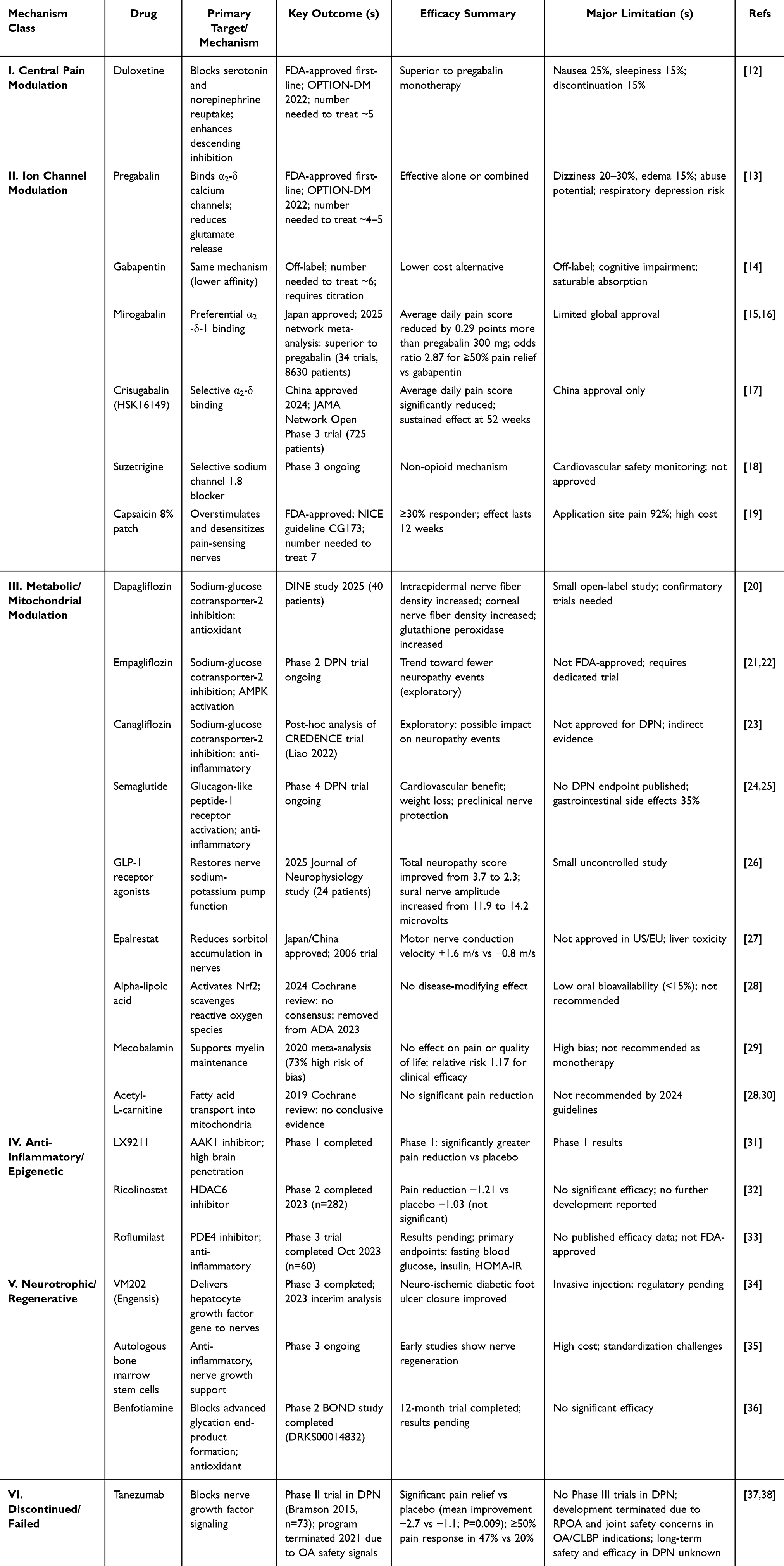 |
Table 1 Mechanism-Based Classification and Critical Evidence Review of Pharmacotherapies for Diabetic Peripheral Neuropathy |
Targeting Central and Peripheral Pain Signaling
Pain in DPN arises from central sensitization and aberrant peripheral afferent activity. First-line treatments target two distinct classes of pain-signaling molecules: serotonin and norepinephrine transporters in the central nervous system, and ɑ2-δ subunits of voltage-gated calcium channels in both central and peripheral neurons.
Duloxetine, the only SNRI approved for DPN, inhibits serotonin and norepinephrine reuptake. This enhances descending inhibitory pathways, providing pain relief with a number needed to treat (NNT) of approximately 5. However, nausea and somnolence lead to discontinuation in about 15% of patients.12
Pregabalin and gabapentin target the ɑ2-δ subunit of voltage-gated calcium channels, thereby reducing excitatory neurotransmitter release. Pregabalin (FDA-approved) has a number needed to treat (NNT) of 4–5, whereas gabapentin (used off-label) appears to be slightly less effective (NNT ~6). Both carry risks of dizziness, edema, and, particularly when combined with central nervous system depressants, respiratory depression.13,14 Next-generation ɑ2-δ ligands with improved subunit selectivity, such as mirogabalin (approved in Japan) and crisugabalin (approved in China), aim to reduce off-target effects.15,17 Recent network meta-analyses suggest mirogabalin may offer superior efficacy and tolerability compared with pregabalin.16
Voltage-gated sodium channel 1.8 (NaV1.8) is expressed selectively in peripheral pain-sensing neurons. Suzetrigine alleviates DPN by blocking the generation of action potential through Nav1.8.18 The capsaicin 8% patch targets TRPV1 by activating and subsequently desensitizing TRPV1 receptors on nociceptive nerve endings, thereby depleting substance P and providing localized relief for up to 12 weeks. Application-site burning and high cost limit its use.19 Nerve growth factor (NGF) was targeted by tanezumab; a Phase II trial in DPN showed significant pain relief, but subsequent development in osteoarthritis revealed a dose-dependent risk of rapidly progressive osteoarthritis requiring joint replacement, leading to program termination.37,38
While current analgesics provide moderate relief by targeting established pain pathways, their utility is constrained by side effects, abuse potential, and a ceiling effect. Newer approaches targeting NaV1.8 and refined ɑ2-δ ligands may improve tolerability, but their ultimate value depends on demonstrating superiority in head-to-head trials. However, because these agents primarily relieve pain rather than reverse nerve injury, attention has increasingly shifted toward metabolic and mitochondrial targets.
Targeting Metabolic and Mitochondrial Pathways
The recognition that DPN involves bioenergetic failure has shifted attention to targets upstream of neuronal damage: sodium-glucose cotransporter-2 (SGLT2), glucagon-like peptide-1 receptor (GLP-1R), and aldose reductase.
SGLT2 inhibitors attenuate oxidative stress, activate AMP-activated protein kinase (AMPK), and improve mitochondrial function. In the DINE study, dapagliflozin increased intraepidermal nerve fiber density, a structural marker of nerve regeneration, thereby suggesting disease-modifying potential.20 Empagliflozin and canagliflozin have also shown signals of reduced neuropathy events in exploratory analyses, although dedicated trials in DPN remain ongoing.21–23
GLP-1R agonists improve axonal function by restoring sodium-potassium pump activity.26 A 2025 mechanistic study showed improvements in nerve excitability and total neuropathy scores in patients treated with semaglutide or exenatide.24,25 Direct DPN-specific evidence for semaglutide remains limited, and further dedicated trials are needed.
Aldose reductase is inhibited by epalrestat, which blocks the polyol pathway. Approved in Japan and China, it showed preserved nerve conduction velocity in a 2006 trial, but a 2007 Cochrane review found no consistent clinical benefit. It is not approved in the US or EU.27
By contrast, several widely used nutraceuticals, alpha-lipoic acid, acetyl-L-carnitine, and mecobalamin, have failed to demonstrate disease-modifying effects in high-quality studies.28,29 Alpha-lipoic acid was removed from the American Diabetes Association (ADA) Standards of Care in 2023; the other two are not recommended by current guidelines.30
Thus, while SGLT2 inhibitors and GLP-1R agonists are promising targets for disease modification, direct DPN-specific clinical evidence remains limited and their efficacy must be confirmed in dedicated trials. The failure of aldose reductase inhibitors and nutraceuticals underscores the importance of robust clinical endpoints and the danger of relying solely on mechanistic plausibility. Against this background, interventions targeting neuroinflammation, epigenetic regulation, and regeneration have also attracted increasing interest.
Targeting Neuroinflammation, Epigenetic Regulation, and Regeneration
Beyond metabolic pathways, interventions targeting neuroinflammation, epigenetic modifiers, and nerve regeneration are under active investigation.
Adaptor-associated kinase 1 (AAK1) is targeted by LX9211, an inhibitor with high brain penetration. Phase 1 DPN trials showed significantly greater pain reduction versus placebo.31 Histone deacetylase 6 (HDAC6) was targeted by ricolinostat. Phase 2 was completed in 2023 but did not demonstrate significant efficacy (pain reduction −1.21 vs −1.03 with placebo), and no further development has been reported.32 The phase 3 clinical trial of roflumilast (phosphodiesterase-4 inhibitor) in the treatment of DPN has proved that it can improve the level of serum neurotensin, neuropathic symptoms and neuropathic pain.33
Hepatocyte growth factor (HGF) is delivered via gene therapy with VM202 (Engensis). A phase 3 interim analysis demonstrated improved closure of neuro-ischemic diabetic foot ulcers,34 suggesting possible relevance to diabetic neurovascular complications, although direct DPN-specific evidence remains limited. Experimental evidence shows that bone marrow-derived mesenchymal stem cells can repair diabetic peripheral neuropathy.35 The phase 2 study of advanced glycation end-products (AGEs) inhibitor benfotiamine showed that it had no significant effect on a variety of clinical indicators of neuropathy.36
These strategies represent a departure from symptom control toward disease modification, targeting fundamental processes such as neuroinflammation, epigenetic regulation, and tissue regeneration. However, with the exception of the discontinued tanezumab, none have yet achieved regulatory approval. This high failure rate reflects several translational challenges in DPN drug development. Many preclinical systems capture only selected pathogenic mechanisms and do not fully reproduce the chronic, heterogeneous, and multisystem nature of human DPN. In addition, clinical trials often enroll patients at stages when structural nerve damage is already established, thereby limiting the impact of mechanism-based interventions. Another persistent obstacle is the lack of sensitive biomarkers for early patient stratification and for monitoring treatment response beyond pain relief alone. Together, these limitations suggest that future progress will depend not only on novel targets, but also on better trial design, earlier intervention windows, and more informative efficacy endpoints. The limited progress of SARM1-directed and mitochondria-focused strategies further illustrates that targeting a single downstream degenerative node may be insufficient once DPN has become structurally established and biologically heterogeneous. In this context, combination strategies that pair symptom-controlling interventions with disease-modifying candidates may warrant priority over single-target approaches alone, because they are more likely to address both pain and the multifactorial pathogenic processes underlying DPN. This therapeutic rationale also helps explain the growing interest in multi-target natural products discussed in the following section.
Natural Products and Derived Compounds for DPN
Natural products have long served as sources of bioactive compounds for neurological disorders. In the context of DPN, they offer a theoretical advantage: multi-target modulation, which aligns with the multifactorial pathogenesis of the disease. Unlike single-target pharmacotherapy, TCM-based interventions are commonly used as multi-component therapies intended to address complex and overlapping pathological processes. In this review, isolated natural compounds and TCM formulas are discussed at complementary levels: studies of single compounds help clarify molecular targets and mechanistic plausibility, whereas studies of whole formulas better reflect the multi-component and potentially synergistic nature of TCM practice. Nevertheless, the current evidence base remains predominantly preclinical, and high-quality clinical data are still limited.
This section therefore organizes the literature around three mechanistic themes—energy metabolism, inflammation and oxidative stress, and neuronal survival—while also considering how these themes relate to formula-based interventions used in TCM. Table 2 summarizes the representative natural products and compound combinations discussed here, together with their primary targets, evidence level or study model, key outcome measures, and major translational limitations.
 |
Table 2 Representative Natural Products and Compound Combinations for Diabetic Peripheral Neuropathy: Mechanisms, Evidence Level, and Translational Limitations |
AMPK Activation and Mitochondrial Enhancement
A recurring mechanism among natural compounds involves AMPK activation and improved mitochondrial function. This aligns with the growing interest in metabolic modulators such as SGLT2 inhibitors and GLP-1 agonists.
Resveratrol, a polyphenol found in grapes and Polygonum cuspidatum, has shown antioxidant and anti-inflammatory potential in preclinical studies relevant to diabetic complications. Animal studies demonstrate that it inhibits ROS production, suppresses NF-κB activation and TNF-α expression, and enhances antioxidant enzyme activity.49,50 Indirect mechanistic evidence from non-DPN cell models also suggests that resveratrol may influence insulin sensitivity and glycolytic regulation through SIRT2-related pathways.39 However, rapid metabolism and low systemic bioavailability after oral administration pose significant challenges for clinical translation. This limitation is common to many polyphenolic compounds.51
The TCM formula Jinmaitong contains several herbs, including Cuscuta chinensis and Ligustrum lucidum. A targeted metabolomics study showed that this formula activates the AMPK/PGC-1α pathway, inhibiting excessive glycolysis and enhancing tricarboxylic acid cycle function in the sciatic nerve of DPN rats.44 These findings suggest that combinations of natural compounds may achieve synergistic effects on energy metabolism. However, the individual active constituents remain unidentified.
From a translational perspective, certain natural products share molecular targets with emerging disease-modifying drugs. Yet unlike SGLT2 inhibitors and GLP-1 receptor agonists, which have demonstrated cardiovascular benefits in large-scale trials, the evidence for AMPK-activating natural compounds remains confined to preclinical models. A deeper obstacle lies in bioavailability. Many active compounds, including resveratrol, have poor water solubility and undergo rapid metabolism, limiting systemic exposure after oral administration.52 Without formulations that achieve meaningful tissue concentrations, even potent mechanism-based compounds cannot deliver clinical benefit. Beyond impaired energy metabolism, oxidative stress and inflammatory signaling constitute another major axis of DPN progression.
Suppressing Inflammation and Oxidative Stress Through NF-κB and Nrf2 Modulation
A second major theme centers on NF-κB and Nrf2 pathway modulation. These pathways are central to neuroinflammation and oxidative damage in DPN.3,4
Astragaloside IV, isolated from Astragalus membranaceus, has shown anti-inflammatory effects through inhibition of the NF-κB pathway in related experimental models.40 Supportive evidence from metabolic models also suggests insulin-sensitizing effects.41 Ginkgo biloba extract (EGb761) improves peripheral sensorimotor nerve function in patients.42 Tanshinone IIA, a lipophilic compound from Salvia miltiorrhiza, exerts anti-inflammatory effects in diabetic peripheral neuropathic pain. It inhibits proinflammatory cytokines (IL-1β, IL-6, TNF-α) and increases anti-inflammatory IL-10 in dorsal root ganglion, attenuating mechanical allodynia and thermal hyperalgesia in diabetic rats.43
Several multi-herb formulas, interpreted in TCM as formula-based rather than single-target interventions, may also act through these inflammatory and oxidative stress pathways. From a modern pharmacological perspective, such formulas appear to regulate overlapping processes including oxidative injury, inflammatory signaling, and microcirculatory dysfunction. This overlap also provides one point of contact between TCM and Western pathophysiology: in TCM, patterns such as Blood Stasis may partially correspond to impaired microcirculation and tissue perfusion, both of which are central to DPN progression. For example, Huangqi Guizhi Wuwu Decoction promotes neurological recovery in diabetic cardiovascular autonomic neuropathy by activating the AMPK/TrkA/TRPM7 pathway, improving heart rate variability and correcting cardiac autonomic nerve imbalance.45 However, this evidence is indirect with respect to DPN, and its direct evidence base for DPN remains limited. Similarly, Buyang Huanwu Decoction increases superoxide dismutase activity and decreases malondialdehyde levels in diabetic patients. A 2023 meta-analysis of 21 randomized controlled trials (1945 patients) demonstrated that this formula improves nerve conduction velocity and clinical efficacy in DPN,46 although the methodological quality of the included studies remains a limitation.
The mechanistic overlap with established drug targets is notable alpha-lipoic acid, a conventional antioxidant, was removed from ADA guidelines due to lack of disease-modifying effects.28 This raises a critical question: do natural products that modulate NF-κB/Nrf2 offer any advantage over single-agent antioxidants? Currently, the answer is unclear. Comparative studies are absent, and the bioavailability of many compounds is limited.53 Moreover, most studies rely on surrogate biochemical markers (eg, NF-κB, MDA, SOD) rather than patient-centered outcomes. As seen with alpha-lipoic acid, positive mechanistic effects do not guarantee clinical benefit.28 Future studies must integrate objective biomarkers, such as intraepidermal nerve fiber density and corneal confocal microscopy, to bridge the gap between mechanism and clinical outcome. At the same time, because attenuation of inflammation alone may be insufficient once neuronal injury is established, increasing attention has also been directed toward apoptosis- and endoplasmic reticulum stress-related pathways.
Promoting Neuronal Survival by Targeting Apoptosis and ER Stress
A third theme involves the inhibition of neuronal apoptosis through modulation of ER stress and Bcl-2 family protein modulation. These mechanisms are also being explored in drug development, although successful clinical translation remains limited.
Taohong Siwu Decoction combines Angelica sinensis, Rehmannia glutinosa, peach kernel, and safflower. Current evidence for this formula is derived mainly from a chemotherapy-induced peripheral neuropathy model, in which network pharmacology analysis suggested multi-target anti-inflammatory and anti-apoptotic mechanisms involving PI3K-Akt, MAPK, TNF, IL-17, and NF-κB pathways.47 Similarly, Compound Danshen Dripping Pills have shown benefits in early diabetic retinopathy and may have only indirect relevance to DPN through microcirculatory and oxidative stress-related mechanisms; direct DPN-specific clinical evidence remains limited.48
Although these pathways are discussed separately for clarity, they are highly interconnected rather than independent. Metabolic stress, oxidative injury, inflammatory activation, and apoptosis converge on a limited number of shared pathogenic nodes, particularly NF-κB/MAPK-related inflammatory signaling, mitochondrial dysfunction, endoplasmic reticulum stress, and impaired neuronal survival. From this perspective, interventions that improve energy homeostasis, attenuate inflammatory signaling, or suppress apoptosis may not act on isolated pathways, but instead modulate overlapping components of the same pathological network. This mechanistic convergence helps explain why conventional pharmacotherapies and multi-target natural products may produce partially overlapping neuroprotective effects and provides a rationale for combination strategies that simultaneously target multiple nodes within the DPN pathogenic web. At the same time, this overlap also underscores a shared set of translational challenges that extends across these approaches.
Common Challenges and Future Directions
Despite promising mechanistic findings, the translation of natural products for DPN remains limited by several shared challenges. First, the current evidence base is still dominated by preclinical studies, whereas DPN-specific randomized clinical trials of natural products remain scarce.54 Second, many natural compounds suffer from poor water solubility, rapid metabolism, low systemic exposure, and insufficient formulation standardization, all of which hinder clinical translation and reproducibility.55 Third, a substantial proportion of existing studies rely on surrogate biochemical markers rather than objective neuropathy-related endpoints, such as intraepidermal nerve fiber density, corneal confocal microscopy, nerve conduction studies, and validated patient-reported outcomes.56 In addition, some compounds or formulas are supported mainly by indirect evidence from related disease models rather than direct DPN-specific studies, which further weakens their translational value.57,58
Future research should therefore move beyond mechanistic plausibility alone and prioritize standardized formulations, rigorous dose-finding studies, and well-designed randomized controlled trials incorporating DPN-relevant structural and functional endpoints together with patient-reported outcomes. Better alignment between mechanistic studies and clinically meaningful outcome measures will be essential for improving the translational value of natural product-based therapies for DPN.
Nanocarrier-Based Drug Delivery Systems for DPN
The preceding sections have highlighted a recurring obstacle in DPN treatment: many promising interventions, including FDA-approved analgesics, emerging metabolic modulators, and natural products, remain limited by suboptimal pharmacokinetics. In DPN, this problem is especially relevant because the disease requires long-term treatment and involves distal peripheral nerves exposed to chronic metabolic injury, neuroinflammation, and impaired microvascular perfusion. Low water solubility, rapid metabolism, and limited tissue exposure can therefore reduce drug availability at sites of nerve injury. Nanocarrier-based delivery systems offer a potential strategy to address these disease-relevant barriers by improving solubility, protecting drugs from premature degradation, enhancing tissue targeting, and enabling sustained or localized release.59 Figure 2 summarizes the major nanocarrier platforms currently explored for DPN-related therapeutics and highlights their relevance in overcoming key delivery barriers, including poor water solubility, rapid degradation, limited oral bioavailability, insufficient tissue targeting, and the need for sustained or localized drug release. Recent advances focus on formulations that enhance pharmacokinetic properties while improving drug exposure within disease-relevant cellular and tissue microenvironments.
 |
Figure 2 Representative nanocarrier platforms potentially applicable to diabetic peripheral neuropathy. The figure schematically summarizes major carrier types discussed in this review, including extracellular vesicle-based systems, lipid-based nanoparticles, solid lipid nanoparticles, nanostructured lipid carriers, lipid–polymer hybrid nanoparticles, hydrogels, and microneedle-based systems. These platforms may help improve solubility, stability, tissue exposure, and sustained or localized release of therapeutics relevant to DPN. |
Targeted Nanocarrier Platforms for DPN Therapy
Neural stem cell-derived extracellular vesicles (NSC-EVs) have emerged as innovative targeted delivery vehicles. Chen et al developed ZH-1c-EVs@SIN, a system composed of NSC-EVs modified with the ZH-1c aptamer and loaded with sinomenine.60 This formulation specifically targets microglia and inhibits the WNT5a/TRPV1 signaling pathway, a key driver of neuroinflammation in DPN. Functional assays demonstrated that ZH-1c-EVs@SIN shifts microglial polarization from the pro-inflammatory M1 phenotype to the anti-inflammatory M2 phenotype, reduces inflammatory cytokine expression, and restores neuronal regulatory proteins. In murine DPN models, the formulation improved pain-related behavior and reversed histopathological signs of nerve damage.60 While these findings are promising, the study remains preclinical, and manufacturing complexity, batch-to-batch variability, and the need for rigorous safety evaluation of exogenous extracellular vesicles continue to pose substantial hurdles to clinical application.
Exosomes from mesenchymal stromal cells (MSCs) represent another actively investigated platform. Engineered MSC-derived exosomes enriched with miR-146a (Exo-146a) have shown amplified therapeutic efficacy in DPN mice compared to native MSC exosomes.61,62 This approach addresses the vulnerability of naked miRNAs to degradation and their low stability in serum. The engineered exosomes shortened treatment duration and achieved better recovery outcomes as measured by nerve conduction velocity and pain thresholds.61 Despite this amplified efficacy, critical questions remain regarding the optimal cell source for exosome production, the standardization of isolation and loading protocols, and the long-term safety of repeated administration.
Lipid-based nanoparticles, including solid lipid nanoparticles (SLNs) and nanostructured lipid carriers (NLCs), have been extensively investigated as strategies to improv the oral bioavailability of poorly soluble drugs. Zaheer et al reported that naringenin-loaded SLNs significantly alleviated oxidative stress and enhance oral bioavailability in diabetic models.63 Similarly, chitosan-coated SLN delivering berberine achieved a 2.8-fold increase in relative bioavailability and exhibited sustained release properties in diabetic models.64 These systems can be also surface-modified to achieve sustained release or to target specific cells types, such as dorsal root ganglia neurons or Schwann cells. However, a persistent translational gap remains. Despite the wealth of preclinical data, only a handful of lipid-based formulations have progressed to clinical trials for DPN.
Lipid-polymer hybrid nanoparticles combine the advantages of both systems. Recent work using a Quality by Design (QbD) approach developed dual-drug nanocarriers co-encapsulating pregabalin and alpha-lipoic acid.65 The optimized nanoparticles exhibited a mean size of 135 nm, high entrapment efficiency, and sustained release extending up to 72 hours. In vivo studies in streptozotocin-induced diabetic rats revealed significant improvements in nerve conduction, oxidative stress markers, and pain thresholds compared with free drugs.66 While these results demonstrate synergistic neuroprotective efficacy, the study highlights a common limitation: most preclinical studies use small animal models with short treatment durations, making it difficult to predict long-term efficacy and safety in human DPN patients.
Biomaterial-Based Delivery Systems
Hydrogels and microneedles represent alternative strategies for local and sustained drug delivery. Thermosensitive hydrogels delivering basic fibroblast growth factor (bFGF), nerve growth factor (NGF), or angiotensin II have shown the potential to promoted nerve regeneration and pain relief in DPN models. Das et al developed an injectable, reversibly thermoresponsive, captopril-laden hydrogel for the local treatment of sensory loss in diabetic neuropathy.67 The system enabled sustained drug release and improved nerve function in animal models. However, the invasive nature of intramuscular or intraneural administration may limits clinical acceptability.
Microneedle (MN) technology has attracted increasing attention as a minimally invasive transdermal delivery strategy. Recent studies have showed developments in MN platforms for diabetic neuropathy management, categorizing them into solid, coated, dissolving, and hydrogel-forming systems.68 Dissolving and hydrogel-forming microneedles loaded with antioxidants, growth factors, and stem cell-derived exosomes have been shown to enhance nerve regeneration and reduce inflammation in animal studies. The technology offers several distinct advantages: it bypasses the stratum corneum, enables direct dermal delivery of therapeutics to affected peripheral nerves, improves patient compliance, and permits sustained release.69–71 Nevertheless, significant barriers continue to impede clinical translation. Manufacturing scalability, batch-to-batch consistency in microneedle fabrication, biological stability of loaded therapeutics, and complex regulatory pathways remain unresolved. Furthermore, the available evidence remains predominantly preclinical, with few large-scale clinical trials validating efficacy in patients with DPN.
A novel electrospinning-hydrogel composite (Fiber-SIN/Gel-LidC) was developed for synergistic release of sinomenine and lidocaine.72 This system enabled sustained drug release over 7 days and produced significant improvements in thermal and mechanical pain thresholds in diabetic rats. Mechanistic studies highlighted neuroprotective effects through MMP9 regulation and sodium channel inhibition. While innovative, the technology faces familiar challenges. The complexity of manufacturing electrospun-hydrogel composites, potential for batch variability, and unknown long-term biocompatibility require systematic evaluation before clinical consideration. These recurring concerns point directly to the broader barriers to clinical translation discussed below.
Critical Barriers to Clinical Translation
The clinical translation of nanocarrier-based therapies from laboratory to clinic faces formidable obstacles. Manufacturing scalability and batch-to-batch consistency represent major technical challenges. Small variations in particle size, surface properties, or drug loading can significantly impact therapeutic outcomes.73,74 Microfluidics-based synthesis has emerged as a promising approach, offering precise control over particle characteristics and improved reproducibility.75,76 However, transition from laboratory synthesis to commercial manufacturing requires stringent quality control measures and compliance with Good Manufacturing Practice (GMP), infrastructure that many academic research groups lack.77
Regulatory uncertainty compounds these challenges. Nanomedicines do not fit neatly within existing regulatory frameworks developed for conventional pharmaceuticals. Agencies such as the FDA and EMA therefore adopt case-by-case, risk-based approaches approaches because of the heterogeneity of nanomedicine platforms.78 The absence of globally harmonized regulatory pathways forces developers to navigate complex, often contradictory requirements across different jurisdictions.79 Standardized protocols for nanoparticle characterization, stability testing, and quality control insufficiently developed, thereby hampering regulatory approval.80
Safety concerns present another major hurdle. Nanoparticles exhibit complex interactions with biological systems that are difficult to predict on the basis of preclinical models. Intravenously administered nanoparticles are rapidly sequestered by Kupffer cells in the liver and spleen, leading to potential accumulation, oxidative stress, and pro-inflammatory responses.81 Long-term toxicity, immunogenicity, and the fate of non-biodegradable nanomaterials in non-target organs require comprehensive evaluation.82,83 The enhanced permeability and retention (EPR) effect, which is often robust in rodent models, is heterogeneous and limited in human tissues, thereby complicating targeting strategies.84
Finally, the clinical evidence base remains weak. Most nanocarrier studies for DPN are confined to proof-of-concept in small animal models, using single-dose or short-term endpoints.85 Patient-centric outcomes such as sustained pain relief, quality of life improvement, and preservation of nerve function are rarely assessed. Without rigorous, well-controlled clinical trials measuring these endpoints, the true therapeutic value of nanocarrier-based DPN therapies remains uncertain.
In the context of DPN drug development, nanocarrier technology serves as a translational bridge. It offers a means of improving the translational potential of compounds that are mechanistically potent yet clinically impractical because of pharmacokinetic limitations—a category that includes many natural products (Natural Products and Derived Compounds for DPN) and even some conventional drugs (Clinical Drug Treatment of DPN). However, without concurrent advances in scalable manufacturing, safety evaluation, and regulatory harmonization, the field risks repeating the pattern of promising preclinical results that fail to reach patients. Among the available preclinical directions, biomimetic extracellular vesicles and lipid-based nanocarriers loaded with multi-target natural compounds may deserve particular translational priority, because they directly address poor solubility, rapid metabolism, and limited tissue exposure while preserving the mechanistic breadth of natural products.86 Addressing these interconnected challenges through collaborative efforts is essential to realize the potential of nanocarrier-based delivery systems to transform DPN pharmacotherapy. Against this translational backdrop, the broader therapeutic landscape of DPN remains defined by substantial unmet need.
Conclusion
Diabetic peripheral neuropathy remains a major clinical challenge because current therapies are still dominated by symptomatic pain control and do not effectively halt underlying nerve degeneration. Emerging targeted therapies show mechanistic promise, but convincing disease-modifying efficacy has not yet been established. Natural products, including TCM-derived compounds and formulas, may offer a multi-target approach to interconnected processes such as neuroinflammation, oxidative stress, and microcirculatory dysfunction, although their clinical translation remains limited. Nanocarrier-based delivery systems may help overcome pharmacokinetic barriers and improve tissue exposure of both conventional and natural therapeutics. Overall, the development of effective disease-modifying treatment for DPN remains a major unmet need.
Future Perspectives
Against this background, future progress in DPN treatment will depend on several priorities. First, rigorous randomized controlled trials are needed that incorporate objective structural biomarkers, such as intraepidermal nerve fiber density and corneal confocal microscopy, together with patient-reported outcomes. Second, improved patient stratification based on dominant pathogenic mechanisms may help identify those most likely to benefit from specific interventions. Third, combination strategies that pair symptom-controlling agents with disease-modifying candidates may represent a promising direction, particularly approaches combining analgesic therapies with metabolic modulators such as SGLT2 inhibitors or GLP-1 receptor agonists. Fourth, nanocarrier systems should be advanced toward scalable, GMP-compliant manufacturing and systematic safety evaluation. In particular, biomimetic extracellular vesicles and lipid-based nanocarriers loaded with multi-target natural compounds may provide an attractive translational direction for overcoming persistent pharmacokinetic limitations. Until these multidimensional approaches are rigorously validated, symptomatic management is likely to remain the clinical mainstay.
Author Contributions
All authors made a significant contribution to the work reported, whether that is in the conception, study design, execution, acquisition of data, analysis and interpretation, or in all these areas; took part in drafting, revising or critically reviewing the article; gave final approval of the version to be published; have agreed on the journal to which the article has been submitted; and agree to be accountable for all aspects of the work.
Funding
This work was supported by the 2024 Self-selected Project of the National Administration of Traditional Chinese Medicine Monitoring and Statistics Center on TCM Policies for Deepening Medical Reform (YGZXKT2024180); 2024 Provincial Quality Engineering Project for Graduate Education under the New Era (2024xscx106); the Scientific Research Foundation of Education Department of Anhui Province of China (2023AH050867, 2024AH051007); Clinical research project of Anhui University of traditional Chinese medicine in 2024 (2024YFYLCZX11).
Disclosure
The authors declare that they have no competing interests.
References
1. Sun H, Saeedi P, Karuranga S, et al. IDF diabetes atlas: global, regional and country-level diabetes prevalence estimates for 2021 and projections for 2045. Diabetes Res Clin Pract. 2022;183:109119. doi:10.1016/j.diabres.2021.109119
2. Wang W, Ji Q, Ran X, et al. Prevalence and risk factors of diabetic peripheral neuropathy: a population-based cross-sectional study in China. Diabetes/Metab Res Rev. 2023;39(8):e3702. doi:10.1002/dmrr.3702
3. Moustafa PE, Abdelkader NF, Awdan SAE, El-Shabrawy OA, Zaki HF. Liraglutide ameliorated peripheral neuropathy in diabetic rats: involvement of oxidative stress, inflammation and extracellular matrix remodeling. J Neurochemistry. 2018;146(2):173–16. doi:10.1111/jnc.14336
4. Askwith T, Zeng W, Eggo MC, Stevens MJ. Oxidative stress and dysregulation of the taurine transporter in high-glucose-exposed human Schwann cells: implications for pathogenesis of diabetic neuropathy. Am J Physiol Endocrinol Metab. 2009;297(3):E620–8. doi:10.1152/ajpendo.00287.2009
5. Bierhaus A, Haslbeck KM, Humpert PM, et al. Loss of pain perception in diabetes is dependent on a receptor of the immunoglobulin superfamily. J Clin Invest. 2004;114(12):1741–1751. doi:10.1172/JCI18058
6. Feng Z, Yang X, Zhang L, et al. Ginkgolide B ameliorates oxidized low-density lipoprotein-induced endothelial dysfunction via modulating Lectin-like ox-LDL-receptor-1 and NADPH oxidase 4 expression and inflammatory cascades. Phytother Res. 2018;32(12):2417–2427. doi:10.1002/ptr.6177
7. Vincent AM, Hayes JM, McLean LL, Vivekanandan-Giri A, Pennathur S, Feldman EL. Dyslipidemia-induced neuropathy in mice: the role of oxLDL/LOX-1. Diabetes. 2009;58(10):2376–2385. doi:10.2337/db09-0047
8. Zhao H, Zhai BW, Zhang MY, et al. Phlorizin from Lithocarpus litseifolius [Hance] Chun ameliorates FFA-induced insulin resistance by regulating AMPK/PI3K/AKT signaling pathway. Phytomedicine. 2024;130:155743. doi:10.1016/j.phymed.2024.155743
9. Yang J, Wei Y, Zhao T, et al. Magnolol effectively ameliorates diabetic peripheral neuropathy in mice. Phytomedicine. 2022;107:154434. doi:10.1016/j.phymed.2022.154434
10. Yao X, Wang X, Zhang R, Kong L, Fan C, Qian Y. Dysregulated mast cell activation induced by diabetic milieu exacerbates the progression of diabetic peripheral neuropathy in mice. Nat Commun. 2025;16(1):4170. doi:10.1038/s41467-025-59562-z
11. Cheng YC, Chang LL, Wang HC, et al. Lysosome evanescence mediates autophagic flux impairment in glucose imbalanced environments. Kaohsiung J Med Sci. 2025;e70145. doi:10.1002/kjm2.70145
12. Tesfaye S, Sloan G, Petrie J, et al. Comparison of amitriptyline supplemented with pregabalin, pregabalin supplemented with amitriptyline, and duloxetine supplemented with pregabalin for the treatment of diabetic peripheral neuropathic pain (OPTION-DM): a multicentre, double-blind, randomised crossover trial. Lancet. 2022;400(10353):680–690. doi:10.1016/S0140-6736(22)01472-6
13. Ahn J, Shahriarirad R, Kwon K, Bejarano-Pineda L, Waryasz G, Ashkani-Esfahani S. Comparative analysis of the therapeutic effects of pregabalin, gabapentin, and duloxetine in diabetic peripheral neuropathy: a retrospective study. J Diab Complications. 2025;39(4):109001. doi:10.1016/j.jdiacomp.2025.109001
14. Finnerup NB, Attal N, Haroutounian S, et al. Pharmacotherapy for neuropathic pain in adults: a systematic review and meta-analysis. Lancet Neurol. 2015;14(2):162–173. doi:10.1016/S1474-4422(14)70251-0
15. Merante D, Rosenstock J, Sharma U, Feins K, Hsu C, Vinik A. Efficacy of mirogabalin (DS-5565) on patient-reported pain and sleep interference in patients with diabetic neuropathic pain: secondary outcomes of a Phase II proof-of-concept study. Pain Med. 2017;18(11):2198–2207. doi:10.1093/pm/pnw342
16. Guo X, Yu Y, Zhang Y, et al. A Phase 3, multicenter, randomized, double-blind, placebo-controlled 14-week study of mirogabalin in Chinese patients with diabetic peripheral neuropathic pain. Pain Ther. 2024;13(4):937–952. doi:10.1007/s40122-024-00617-2
17. Pan T, Ma J, Li Y, et al. Rapid onset of pain relief with crisugabalin in patients with diabetic peripheral neuropathic pain: findings from a multicenter, randomized, double-blind, controlled study. Pain Ther. 2025;14(4):1311–1329. doi:10.1007/s40122-025-00745-3
18. Osteen JD, Immani S, Tapley TL, et al. Pharmacology and mechanism of action of suzetrigine, a potent and selective Na(V)1.8 pain signal inhibitor for the treatment of moderate to severe pain. Pain Ther. 2025;14(2):655–674. doi:10.1007/s40122-024-00697-0
19. Simpson DM, Robinson-Papp J, Van J, et al. Capsaicin 8% patch in painful diabetic peripheral neuropathy: a randomized, double-blind, placebo-controlled study. J Pain. 2017;18(1):42–53. doi:10.1016/j.jpain.2016.09.008
20. Adhikari U, Gad H, Chatterjee D, et al. Dapagliflozin for small nerve fibre regeneration in diabetic peripheral neuropathy: a randomised controlled study (DINE). J Peripher Nerv Syst. 2025;30(1):e70011. doi:10.1111/jns.70011
21. Herrington WG, Staplin N, Wanner C, et al. Empagliflozin in patients with chronic kidney disease. N Engl J Med. 2023;388(2):117–127.
22. El-Haggar SM, Hafez YM, El Sharkawy AM, Khalifa M. Effect of empagliflozin in peripheral diabetic neuropathy of patients with type 2 diabetes mellitus. Med Clin. 2024;163(2):53–61. doi:10.1016/j.medcli.2024.01.027
23. Liao J, Kang A, Xia C, et al. The impact of canagliflozin on the risk of neuropathy events: a post-hoc exploratory analysis of the CREDENCE trial. Diabetes Metab. 2022;48(4):101331. doi:10.1016/j.diabet.2022.101331
24. Lincoff AM, Brown-Frandsen K, Colhoun HM, et al. Semaglutide and cardiovascular outcomes in obesity without diabetes. N Engl J Med. 2023;389(24):2221–2232. doi:10.1056/NEJMoa2307563
25. Davies M, Færch L, Jeppesen OK, et al. Semaglutide 2·4 mg once a week in adults with overweight or obesity, and type 2 diabetes (STEP 2): a randomised, double-blind, double-dummy, placebo-controlled, phase 3 trial. Lancet. 2021;397(10278):971–984. doi:10.1016/S0140-6736(21)00213-0
26. Dhanapalaratnam R, Issar T, Poynten AM, Milner KL, Kwai NCG, Krishnan AV. Impact of glucagon-like peptide-1 receptor agonists on axonal function in diabetic peripheral neuropathy. J Neurophysiol. 2025;133(1):14–21. doi:10.1152/jn.00228.2024
27. Hotta N, Akanuma Y, Kawamori R, et al. Long-term clinical effects of epalrestat, an aldose reductase inhibitor, on diabetic peripheral neuropathy: the 3-year, multicenter, comparative aldose reductase inhibitor-diabetes complications trial. Diabetes Care. 2006;29(7):1538–1544. doi:10.2337/dc05-2370
28. Ziegler D, Low PA, Litchy WJ, et al. Efficacy and safety of antioxidant treatment with α-lipoic acid over 4 years in diabetic polyneuropathy: the NATHAN 1 trial. Diabetes Care. 2011;34(9):2054–2060. doi:10.2337/dc11-0503
29. Sawangjit R, Thongphui S, Chaichompu W, Phumart P. Efficacy and safety of mecobalamin on peripheral neuropathy: a systematic review and meta-analysis of randomized controlled trials. J Altern Complement Med. 2020;26(12):1117–1129. doi:10.1089/acm.2020.0068
30. Rolim LC, da Silva EM, Flumignan RL, Abreu MM, Dib SA. Acetyl-L-carnitine for the treatment of diabetic peripheral neuropathy. Cochrane Database Syst Rev. 2019;6(6):Cd011265. doi:10.1002/14651858.CD011265.pub2
31. Bundrant L, Hunt TL, Banks P, et al. Results of two phase 1, randomized, double-blind, placebo-controlled, studies (ascending single-dose and multiple-dose studies) to determine the safety, tolerability, and pharmacokinetics of orally administered LX9211 in healthy participants. Clin Ther. 2021;43(6):1029–1050. doi:10.1016/j.clinthera.2021.04.014
32. Michelson D, Chin WW, Dworkin RH, et al. A randomized, double-blind, placebo-controlled study of histone deacetylase type 6 inhibition for the treatment of painful diabetic peripheral neuropathy. Pain Rep. 2023;8(6):e1114. doi:10.1097/PR9.0000000000001114
33. Elsharab A, Nooh MZ, Matard RS, Mostafa TM, El-Afify DR. Efficacy and safety of roflumilast versus alpha-lipoic acid in type 2 diabetes with neuropathy: a comparative clinical study. Diabetes Metab Syndr Obes. 2025;18:4193–4210. doi:10.2147/DMSO.S548285
34. Perin E, Loveland L, Caporusso J, et al. Gene therapy for diabetic foot ulcers: interim analysis of a randomised, placebo-controlled phase 3 study of VM202 (ENGENSIS), a plasmid DNA expressing two isoforms of human hepatocyte growth factor. Int Wound J. 2023;20(9):3531–3539. doi:10.1111/iwj.14226
35. Zhang Z, Liu Y, Zhou J. Neuritin promotes bone marrow-derived mesenchymal stem cell migration to treat diabetic peripheral neuropathy. Mol Neurobiol. 2022;59(11):6666–6683. doi:10.1007/s12035-022-03002-2
36. Ziegler D, Sipola G, Strom A, et al. Effects of benfotiamine treatment over 12 months on morphometric, neurophysiological and clinical measures in type 2 diabetes patients with symptomatic polyneuropathy: a randomized, placebo-controlled, double-blind clinical trial (BOND study). BMJ Open Diabetes Res Care. 2026;14(1):e005773. doi:10.1136/bmjdrc-2025-005773
37. Carrino JA, McAlindon TE, Schnitzer TJ, et al. Characterization of adverse joint outcomes in patients with osteoarthritis treated with subcutaneous tanezumab. Osteoarthritis Cartilage. 2023;31(12):1612–1626. doi:10.1016/j.joca.2023.08.010
38. Bramson C, Herrmann DN, Carey W, et al. Exploring the role of tanezumab as a novel treatment for the relief of neuropathic pain. Pain Med. 2015;16(6):1163–1176. doi:10.1111/pme.12677
39. Liang A, Zhang W, Wang Q, et al. Resveratrol regulates insulin resistance to improve the glycolytic pathway by activating SIRT2 in PCOS granulosa cells. Front Nutr. 2022;9:1019562. doi:10.3389/fnut.2022.1019562
40. Zhang WJ, Frei B. Astragaloside IV Inhibits NF- κB activation and inflammatory gene expression in LPS-treated mice. Mediators Inflammation. 2015;2015(1):274314. doi:10.1155/2015/274314
41. Jiang B, Yang Y, Jin H, et al. Astragaloside IV attenuates lipolysis and improves insulin resistance induced by TNFalpha in 3T3-L1 adipocytes. Phytother Res. 2008;22(11):1434–1439. doi:10.1002/ptr.2434
42. Yan L, Wei Q, Gao Y. Treating severe adverse drug reactions caused by ischemic optic neuropathy with ginkgo biloba extract injection: a case report. Altern Ther Health Med. 2023;29(5):78–81.
43. Zhang B, Yu Y, Aori G, et al. Tanshinone IIA attenuates diabetic peripheral neuropathic pain in experimental rats via inhibiting inflammation. Evid Based Complement Alternat Med. 2018;2018(1):2789847. doi:10.1155/2018/2789847
44. Zhao B, Zhang Q, He Y, Cao W, Song W, Liang X. Targeted metabolomics reveals the aberrant energy status in diabetic peripheral neuropathy and the neuroprotective mechanism of traditional Chinese medicine JinMaiTong. J Pharm Anal. 2024;14(2):225–243. doi:10.1016/j.jpha.2023.09.007
45. Zhang M, Sun X, Gao X, et al. Huangqi Guizhi Wuwu decoction alleviates diabetic cardiovascular autonomic neuropathy via AMPK/TrkA/TRPM7 pathway. J Ethnopharmacol. 2025;346:119644. doi:10.1016/j.jep.2025.119644
46. Meizhen Z, Xiaohui H, Yiting T, et al. Efficacy and safety of Buyang Huanwu decoction for diabetic peripheral neuropathy: a systematic review and Metaanalysis. J Trad Chinese Med. 2023;43(5):841–850. doi:10.19852/j.cnki.jtcm.20230802.002
47. Zhou M, Liu L, Tan Y, Huang R, Yang Z. The mechanism of Taohong Siwu decoction in treating chemotherapy-induced peripheral neuropathy: a network pharmacology and molecular docking study. Transl Cancer Res. 2024;13(7):3842–3853. doi:10.21037/tcr-24-1019
48. Luo D, Qin Y, Yuan W, Deng H, Zhang Y, Jin M. Compound Danshen dripping pill for treating early diabetic retinopathy: a randomized, double-dummy, double-blind study. Evid Based Complement Alternat Med. 2015;2015:539185. doi:10.1155/2015/539185
49. Ghanim H, Sia CL, Abuaysheh S, et al. An antiinflammatory and reactive oxygen species suppressive effects of an extract of Polygonum cuspidatum containing resveratrol. J Clin Endocrinol Metab. 2010;95(9):E1–8. doi:10.1210/jc.2010-0482
50. Sedlak L, Wojnar W, Zych M, Wyględowska-Promieńska D, Mrukwa-Kominek E, Kaczmarczyk-Sedlak I. Effect of resveratrol, a dietary-derived polyphenol, on the oxidative stress and polyol pathway in the lens of rats with streptozotocin-induced diabetes. Nutrients. 2018;10(10):1423. doi:10.3390/nu10101423
51. de Lima-Vasconcellos TH, Bovi Dos Santos G, Móvio MI, et al. Neuroprotection provided by polyphenols and flavonoids in photoreceptor degenerative diseases. Neural Regen Res. 2026;21(3):908–922. doi:10.4103/NRR.NRR-D-24-01638
52. Li Y, Zhang R, Zhang Q, et al. Dual strategy for improving the oral bioavailability of resveratrol: enhancing water solubility and inhibiting glucuronidation. J Agricult Food Chemistry. 2021;69(32):9249–9258. doi:10.1021/acs.jafc.1c02602
53. He Z, Diao J, Hamel FG, Duan B. Innovative strategies for diabetic peripheral neuropathy: from clinical management to emerging bioengineering solutions. Bioact Mater. 2026;61:312–338. doi:10.1016/j.bioactmat.2026.02.023
54. Zhao X, An X, Cui Y, et al. TangBi formula for painful diabetic distal symmetric polyneuropathy: a multicenter, randomized, double-blind, placebo-controlled and parallel-group trial. J Diabetes. 2025;17(1):e70045. doi:10.1111/1753-0407.70045
55. Xiong H, Yu LX, Qu H. Batch-to-batch quality consistency evaluation of botanical drug products using multivariate statistical analysis of the chromatographic fingerprint. AAPS Pharm Sci Tech. 2013;14(2):802–810. doi:10.1208/s12249-013-9966-9
56. Chen X, Graham J, Dabbah MA, et al. Small nerve fiber quantification in the diagnosis of diabetic sensorimotor polyneuropathy: comparing corneal confocal microscopy with intraepidermal nerve fiber density. Diabetes Care. 2015;38(6):1138–1144. doi:10.2337/dc14-2422
57. Leng J, Li X, Tian H, et al. Neuroprotective effect of diosgenin in a mouse model of diabetic peripheral neuropathy involves the Nrf2/HO-1 pathway. BMC Complement Med Ther. 2020;20(1):126. doi:10.1186/s12906-020-02930-7
58. Zhang Z, Ye J, Liu X, et al. Huangqi Guizhi Wuwu decoction alleviates oxaliplatin-induced peripheral neuropathy via the gut-peripheral nerve axis. Chin Med. 2023;18(1):114. doi:10.1186/s13020-023-00826-5
59. Li H, Hou Y, Jia S, Tan M, Wang H. Oxidized paramylon self-assembled nanoparticles loaded with fucoxanthin attenuate insulin resistance in HpeG2 cells. Carbohydr Polym. 2024;345:122597. doi:10.1016/j.carbpol.2024.122597
60. Chen J, Zhu L, Chen Y, et al. Targeted neural stem cell-derived extracellular vesicles loaded with Sinomenine alleviate diabetic peripheral neuropathy via WNT5a/TRPV1 pathway modulation. J Nanobiotechnol. 2025;23(1):588. doi:10.1186/s12951-025-03678-3
61. Fan B, Chopp M, Zhang ZG, Liu XS. Treatment of diabetic peripheral neuropathy with engineered mesenchymal stromal cell-derived exosomes enriched with microRNA-146a provide amplified therapeutic efficacy. Exp Neurol. 2021;341:113694. doi:10.1016/j.expneurol.2021.113694
62. Ji H, Lu Y, Liu G, Zhao X, Xu M, Chen M. Role of decreased expression of miR-155 and miR-146a in peripheral blood of type 2 diabetes mellitus patients with diabetic peripheral neuropathy. Diabetes Metab Syndr Obes. 2024;17:2747–2760. doi:10.2147/DMSO.S467409
63. Zaheer Y, Ali MA, Rehman M, et al. Naringenin loaded solid lipid nanoparticles alleviate oxidative stress and enhance oral bioavailability of naringenin. Colloids Surf B Biointerfaces. 2025;247:114423. doi:10.1016/j.colsurfb.2024.114423
64. Liu Y, Hussain SA, Yue H. Protective effects of berberine-loaded chitosan/solid lipid nanoparticles in streptozotocin-induced gestational diabetes mellitus rats. Exp Biol Med. 2025;250:10749. doi:10.3389/ebm.2025.10749
65. Gupta I, Adin SN, Aqil M, Mujeeb M, Akhtar M. Application of QbD-based approach to the development and validation of an RP-HPLC method for simultaneous estimation of pregabalin and naringin in dual-drug loaded liposomes. Biomed Chromatogr. 2023;37(6):e5623. doi:10.1002/bmc.5623
66. Alshehri AS. Kaempferol attenuates diabetic nephropathy in streptozotocin-induced diabetic rats by a hypoglycaemic effect and concomitant activation of the Nrf-2/Ho-1/antioxidants axis. Arch Physiol Biochem. 2023;129(4):984–997. doi:10.1080/13813455.2021.1890129
67. Das AC, Nichols JM, Crelli CV, et al. Injectable, reversibly thermoresponsive captopril-laden hydrogel for the local treatment of sensory loss in diabetic neuropathy. Sci Rep. 2024;14(1):18978. doi:10.1038/s41598-024-69437-w
68. Kondaveeti SB, Kaur K, Gupta V, et al. Next-generation microneedle platforms for site-specific management of diabetic neuropathy. Diabetol Metab Syndr. 2025;17(1):418. doi:10.1186/s13098-025-01966-4
69. Osmanlıoğlu H, Nazıroğlu M. Resveratrol modulates diabetes-induced neuropathic pain, apoptosis, and oxidative neurotoxicity in mice through TRPV4 channel inhibition. Mol Neurobiol. 2024;61(9):7269–7286. doi:10.1007/s12035-024-04311-4
70. Ivanov SV, Ostrovskaya RU, Khlybova AS, Gudasheva TA. Low-molecular-weight perorally active nerve growth factor mimetic reduces manifestations of diabetic neuropathy in wistar rats. Bull Exp Biol Med. 2022;173(1):37–40. doi:10.1007/s10517-022-05488-1
71. Shen W, Hu T, Wang X, et al. Hydrogen sulfide alleviates neural degeneration probably by reducing oxidative stress and aldose reductase expression. J Cell Mol Med. 2024;28(21):e70192. doi:10.1111/jcmm.70192
72. Chen W, Chen J, Lu Y, Chen Y, Liu X, Yang F. Fiber‐electrospun hydrogel therapy for DNP: a synergistic electrospun‐hydrogel composite for alleviating diabetic neuropathic pain via MMP9 regulation and sodium channel inhibition. Bioeng Transl Med. 2025:e70050.
73. Cedervall T, Lynch I, Lindman S, et al. Understanding the nanoparticle-protein Corona using methods to quantify exchange rates and affinities of proteins for nanoparticles. Proc Natl Acad Sci U S A. 2007;104(7):2050–2055. doi:10.1073/pnas.0608582104
74. Bhatia SN, Chen X, Dobrovolskaia MA, Lammers T. Cancer nanomedicine. Nat Rev Cancer. 2022;22(10):550–556. doi:10.1038/s41568-022-00496-9
75. Roces CB, Lou G, Jain N, et al. Manufacturing considerations for the development of lipid nanoparticles using microfluidics. Pharmaceutics. 2020;12(11):1095. doi:10.3390/pharmaceutics12111095
76. Shepherd SJ, Warzecha CC, Yadavali S, et al. Scalable mRNA and siRNA lipid nanoparticle production using a parallelized microfluidic device. Nano Lett. 2021;21(13):5671–5680. doi:10.1021/acs.nanolett.1c01353
77. Gioria S, Caputo F, Urbán P, et al. Are existing standard methods suitable for the evaluation of nanomedicines: some case studies. Nanomedicine. 2018;13(5):539–554. doi:10.2217/nnm-2017-0338
78. Fortune A, Aime A, Raymond D, Kumar S. Nanotechnology in medicine: a double-edged sword for health outcomes. Health Nanotechnol. 2025;1(1). doi:10.1186/s44301-025-00008-2
79. Joyce P, Allen CJ, Alonso MJ, et al. A translational framework to DELIVER nanomedicines to the clinic. Nat Nanotechnol. 2024;19(11):1597–1611. doi:10.1038/s41565-024-01754-7
80. Parot J, Mehn D, Jankevics H, et al. Quality assessment of LNP-RNA therapeutics with orthogonal analytical techniques. J Control Release. 2024;367:385–401. doi:10.1016/j.jconrel.2024.01.037
81. Brodin BA, Saladino GM, hertz HM, Arsenian-Henriksson M, Toprak MS. Innate immuno-response to nanoparticle uptake in liver and spleen mimics pathogen infection. Nanomedicine. 2025;20(22):2721–2731. doi:10.1080/17435889.2025.2571024
82. Deng ZJ, Liang M, Monteiro M, Toth I, Minchin RF. Nanoparticle-induced unfolding of fibrinogen promotes Mac-1 receptor activation and inflammation. Nat Nanotechnol. 2011;6(1):39–44. doi:10.1038/nnano.2010.250
83. Neun BW, Barenholz Y, Szebeni J, Dobrovolskaia MA. Understanding the role of anti-PEG antibodies in the complement activation by doxil in vitro. Molecules. 2018;23(7):1700. doi:10.3390/molecules23071700
84. Lee H, Shields AF, Siegel BA, et al. 64)Cu-MM-302 positron emission tomography quantifies variability of enhanced permeability and retention of nanoparticles in relation to treatment response in patients with metastatic breast cancer. Clin Cancer Res. 2017;23(15):4190–4202. doi:10.1158/1078-0432.CCR-16-3193
85. Lu X, Xu R, Dong X, et al. Cell-derived exosome therapy for diabetic peripheral neuropathy: a preclinical animal studies systematic review and meta-analysis. Stem Cell Res Ther. 2025;16(1):297. doi:10.1186/s13287-025-04432-0
86. Herdiana Y. Bridging the gap: the role of advanced formulation strategies in the clinical translation of nanoparticle-based drug delivery systems. Int J Nanomed. 2025;20:13039–13053. doi:10.2147/IJN.S554821
 © 2026 The Author(s). This work is published and licensed by Dove Medical Press Limited. The
full terms of this license are available at https://www.dovepress.com/terms
and incorporate the Creative Commons Attribution
- Non Commercial (unported, 4.0) License.
By accessing the work you hereby accept the Terms. Non-commercial uses of the work are permitted
without any further permission from Dove Medical Press Limited, provided the work is properly
attributed. For permission for commercial use of this work, please see paragraphs 4.2 and 5 of our Terms.
© 2026 The Author(s). This work is published and licensed by Dove Medical Press Limited. The
full terms of this license are available at https://www.dovepress.com/terms
and incorporate the Creative Commons Attribution
- Non Commercial (unported, 4.0) License.
By accessing the work you hereby accept the Terms. Non-commercial uses of the work are permitted
without any further permission from Dove Medical Press Limited, provided the work is properly
attributed. For permission for commercial use of this work, please see paragraphs 4.2 and 5 of our Terms.