
Back to Journals » Journal of Multidisciplinary Healthcare » Volume 19
The Relationship Between Symptom Burden and Death Anxiety in Ovarian Cancer Patients: The Mediating Effect of Alexithymia
Authors Liu X, Liang R, Ruan T, Yuan Y, Li Y, Lu J
Received 2 September 2025
Accepted for publication 23 January 2026
Published 4 February 2026 Volume 2026:19 564641
DOI https://doi.org/10.2147/JMDH.S564641
Checked for plagiarism Yes
Review by Single anonymous peer review
Peer reviewer comments 2
Editor who approved publication: Dr Jagdish Khubchandani
Xuyan Liu,1,* Renlong Liang,2,* Tingting Ruan,3 Ying Yuan,3 Yiwei Li,3 Jing Lu3
1Department of Nursing, Deyang People’s Hospital, Deyang, Sichuan, People’s Republic of China; 2Department of Neurology, Deyang Hospital Affiliated Hospital of Chengdu University of Traditional Chinese Medicine, Deyang, Sichuan, People’s Republic of China; 3Department of Gynaecology, Deyang People’s Hospital, Deyang, Sichuan, People’s Republic of China
*These authors contributed equally to this work
Correspondence: Yiwei Li, Department of Gynecology, Deyang People’s Hospital, No. 173, Section 1 of North Taishan Road, Jingyang District, Deyang City, Sichuan Province, 618000, People’s Republic of China, Email [email protected]
Purpose: This study aimed to reveal the relationship between death anxiety, symptom burden and alexithymia in ovarian cancer patients, and to explore the potential mediating role of alexithymia in the relationship between symptom burden and death anxiety.
Patients and Methods: 247 patients with ovarian cancer in five tertiary hospitals in Sichuan, China were investigated by convenient sampling method from March 2024 to March 2025. Participants completed demographic questionnaires, the MD Anderson Symptom Inventory, the Toronto Alexithymia Scale, and the Templer-Death Anxiety Scale. SPSS 27.0 software was used for Pearson correlation analysis and analysis of variance, and mediation analysis was conducted with Model 4 in the Process v4.2.
Results: Most patients were aged 45 years or older, had a senior high school education or below, were married, had medical insurance under the New Rural Cooperative Medical Scheme or Resident Basic Medical Insurance, and had a household income between 5000 and 10,000 yuan. The score of the Templer-Death Anxiety scale for ovarian cancer patients was (46.38 ± 6.92), which was at a high level. Statistically Significant differences were observed in death anxiety scores among patients of different ages, educational levels, tumor stages, disease duration, and marital status. Correlation analysis revealed significant correlations among symptom burden, alexithymia, and death anxiety. Symptom burden had a significant positive influence on alexithymia and death anxiety. Additionally, alexithymia had a significant positive impact on death anxiety. Mediation analysis revealed that alexithymia partially mediated the relationship between symptom burden and death anxiety.
Conclusion: We should focus on patients who are younger, unmarried or divorced/widowed, have lower educational attainment, are at a later stage of tumor progression, and have a shorter disease course. Symptom burden influences death anxiety in ovarian cancer patients by affecting alexithymia. Focusing solely on symptom burden without addressing patients’ alexithymia may not be sufficient to reduce their death anxiety.
Keywords: ovarian cancer, psychological factors, symptom assessment, emotional regulation
Introduction
Ovarian cancer is one of the three most common gynecological malignancies and has the highest mortality rate.1 China has the highest incidence and mortality rates for ovarian cancer worldwide.2 The ovaries are located deep within the abdomen. Due to the insidious nature of symptoms and the lack of effective early screening methods, ovarian cancer is often diagnosed at an advanced stage. Approximately 70% of patients experience recurrence, with a five-year survival rate of only 46%, posing a serious threat to women’s health.3,4 Patients with ovarian cancer endure significant psychological distress due to treatment uncertainties and concerns about metastasis and recurrence. Among the numerous psychological issues faced by ovarian cancer patients, death anxiety is particularly noteworthy.
A multicenter study showed that the prevalence of anxiety and depression among advanced cancer patients in China was 29% and 11%, respectively.5 A meta-analysis of 129 studies involving 34,147 participants demonstrated a significant positive correlation between death anxiety and psychological distress such as anxiety, depression, and suffering.6 Death anxiety is a form of existential anxiety that arises when patients become aware of the approaching and inevitable nature of death, leading to negative emotions such as anxiety, depression, frustration, and a sense of meaninglessness.7 Existential anxiety is the root cause of many psychological issues in advanced cancer patients, making it crucial to identify the factors influencing death anxiety.8 Understanding the relationship between symptom burden, alexithymia, and death anxiety will help determine intervention strategies aimed at improving patients’ mental health.
Death anxiety is associated with various adverse outcomes for patients. Death anxiety is a risk factor for patients’ fear of cancer progression and recurrence,9 and is also associated with lower levels of mental health and quality of life.10 A recent meta-analysis showed that death anxiety is significantly associated with mortality in cancer patients.11 Eggen et al12 surveyed 78 patients with metastatic non-small cell lung cancer and found that 43% of advanced lung cancer patients experienced moderate to severe death anxiety, which was associated with cancer symptoms and perceived cognitive impairment. Different racial and cultural backgrounds also influence patients’ death anxiety, with Asian populations exhibiting significantly higher rates of death anxiety than European and American populations.13 Previous studies have shown that for advanced cancer patients, physical symptoms, concerns about family, age, and reduced self-esteem all exacerbate the experience of death anxiety.14
Ovarian cancer patients are one of the groups with the heaviest symptom burden among cancer patients. Symptom burden refers to the physical and psychological distress experienced by patients due to symptoms resulting from the disease or its treatment.15 Surgery and chemotherapy are important treatment modalities for ovarian cancer patients, leading to various complications such as anemia, mucositis, dehydration, peripheral neuropathy, sexual dysfunction, and menopausal syndrome.16,17 These symptoms are interrelated and synergistically influence one another, causing significant suffering for patients.18 Symptom burden is associated with anxiety, depression, and even suicidal ideation in patients, further exacerbating their psychological issues.19 Although studies have demonstrated the relationship between symptom burden and death anxiety,20 the underlying mechanisms remain to be further investigated. Cancer symptoms are cognitively assessed before triggering anxiety and fear responses in patients.21 Research on emotion recognition and regulation can help us better understand the relationship between the two, which is beneficial for improving the quality of life of ovarian cancer patients.
Alexithymia was first proposed by Peter Sineos,22 a psychiatrist at Harvard University, and refers to a deficiency in an individual’s ability to recognize, process, and regulate emotions and feelings, and has been identified as a risk factor for numerous mental disorders and psychosomatic illnesses. The ability to recognize, accept, and regulate emotions is the foundation of mental health, and nearly all forms of psychological pathology involve difficulties in emotional regulation.23 Alexithymia is associated with various psychopathological symptoms, including depression, anxiety, somatization, hostility, and paranoia. It is also related to an increased susceptibility to mental illness, causing patients to experience more severe negative consequences.24 A systematic review of cancer patients found that the prevalence of alexithymia reached 37%, with higher rates in developing countries.25 Alexithymia is part of an individual’s personality traits and is also associated with social life experiences, including illness experiences. To our knowledge, no studies have explored the relationship between alexithymia and death anxiety in ovarian cancer patients. Limited research has examined the impact of alexithymia on death anxiety among emergency medical technicians.26
Pollatos et al27 demonstrated that individuals with higher scores on emotional neglect exhibit greater difficulties in emotional processing. Alexithymia has been linked to patients’ failure to recognize and express their emotions, with these patients often manifesting anxiety, depression, and physical symptoms as a result.28 Previous studies have also shown that alexithymia is significantly correlated with the severity of post-traumatic stress disorder.29 Symptom burden, as a stressor, is associated with alexithymia, and symptom burden serves as a predictor of alexithymia.30 To our knowledge, this study is the first to assess the impact of symptom burden on death anxiety in ovarian cancer patients and the mediating role of alexithymia in this relationship.
This study is grounded in the theoretical frameworks of Terror Management Theory (TMT) and Emotion Regulation Theory. According to TMT, humans inevitably face death, and this unique self-awareness generates profound anxiety and fear. Consequently, we develop psychological defense mechanisms to cope with reminders of death and alleviate this anxiety.31 TMT has several prominent hypotheses, including the death salience hypothesis and the dual-processing model. A series of adverse symptoms in patients can trigger a strong death salience effect, leading to fear of death and subsequent death anxiety. The dual-processing model posits that when faced with death-related information, we consciously or unconsciously employ two defensive mechanisms: proximal defense and distal defense.32 Proximal defense is the first mechanism employed; when exposed to death-related cues, individuals use rationalization strategies to mitigate their anxiety. People first adopt avoidance strategies to ignore and deny the existence and threat of death.33 This passive, repressive coping style leads to patients losing the ability to seek external help and the tendency to use their own psychological adjustment methods. This avoidance-based coping style is a defense mechanism for cancer patients and also an important predictor of negative emotions.34
Emotional Regulation Theory posits that emotions are influenced by external stimuli or one’s own condition. Emotional regulation can occur consciously or unconsciously. After being stimulated, individuals may adopt regulatory strategies to reduce emotional stress, such as avoidance through actions or attention.35 Emotional suppression, a common emotion regulation strategy, inhibits impending emotional expression behaviors. However, its effect merely controls the expression and external manifestation of emotions, while internal emotional experiences remain unchanged, requiring continuous regulation and occupying psychological resources.36
Physical pain induced by symptoms can lead to emotional suppression, depletion of cognitive resources, and impaired emotional recognition and expression. Research has also confirmed an association between symptom burden and alexithymia. However, while symptom burden has a direct impact on death anxiety, its underlying emotional regulation mechanisms remain unclear. This study aims to reveal the relationship between symptom burden, alexithymia, and death anxiety, and to explore whether alexithymia mediates the relationship between symptom burden and death anxiety. Due to the cultural and economic specificity of China, death anxiety in ovarian cancer patients may exhibit unique characteristics. Understanding the underlying mechanisms of these three factors can provide a theoretical basis for reducing death anxiety in ovarian cancer patients and propose new strategies for managing their mental health and end-of-life quality of life. To our knowledge, no previous studies have examined the impact of symptom burden on death anxiety in ovarian cancer patients and analyzed the mediating role of alexithymia. Given this gap, this study proposes the following hypotheses:
Hypothesis 1: Death anxiety in ovarian cancer patients varies across different sociodemographic and disease characteristics. Hypothesis 2: Symptom burden in ovarian cancer patients would have a direct effect on alexithymia and death anxiety. Hypothesis 3: Alexithymia in ovarian cancer patients would have a direct effect on death anxiety. Hypothesis 4: Symptom burden in ovarian cancer patients would have an indirect effect on death anxiety through its influence on alexithymia.
Methods
Research Design
This study was designed as a descriptive, cross-sectional study. The data were collected between March 2024 and March 2025.
Participants and Sample
A convenience sampling method was used to select ovarian cancer patients from five tertiary hospitals in Sichuan Province for this study. This sampling method was chosen due to limitations in funding and time, as well as the difficulty in accessing ovarian cancer patients. Inclusion criteria: ①Pathological examination confirmed ovarian cancer; ②Age≥18 years; ③Patients were aware of their actual condition; ④Patients could independently complete the survey in writing or orally; ⑤No cognitive impairments or mental illnesses; ⑥Voluntary participation in this study. Exclusion criteria: ①Current infection or high fever; ②End-stage organ failure; ③Concurrent other malignant tumors. Termination or withdrawal criteria: Participants who were unwilling to continue participating or whose condition did not permit further participation during the survey. According to Kendall’s sample size estimation method, the sample size should be 5–10 times the number of variables. In this study, the death anxiety scale with the largest number of items, totaling 20 items, was used as the estimation benchmark for the “number of variables”.The maximum number of items in this study’s questionnaire is 20. Considering a 20% dropout rate, the sample size should be at least N=20×5×(1+20%)=120.
Measures
Demographic Questionnaire
Based on the objectives of this study and a review of the literature, the demographic questionnaire included in the survey consists of the following eight items: age, marital status, educational attainment, household income, type of medical insurance, tumor stage, duration of illness, and treatment method.
Toronto Alexithymia Scale (TAS-20)
The scale was developed by Taylor et al37 and consists of three dimensions with 20 items: seven items for identifying emotional disorders, five items for describing emotional disorders, and eight items for extroverted thinking. The scale uses a 5-point Likert scale, with total scores ranging from 20 to 100 points. Higher scores indicate more severe alexithymia in patients. This study used the Chinese version translated and adapted by Chaoyun Xia et al,38 with a Cronbach’s α coefficient of 0.802, suitable for assessing alexithymia in cancer patients. The Cronbach’s α coefficient in this study was 0.911.
Templer-Death Anxiety Scale (T-DAS)
The scale was developed by Templer39 and consists of a single dimension with 15 items, using a 5-point Likert scale. The total score ranges from 15 to 75, with higher scores indicating greater levels of death anxiety in patients. This study used the Chinese version translated and adapted by Hong Yang et al,40 with a Cronbach’s α coefficient of 0.71. The Cronbach’s α coefficient for this study was 0.846.
MD Anderson Symptom Inventory (MDASI)
MDASI is a specific multi-symptom assessment tool developed by the University of Texas MD Anderson Cancer Center for cancer patients.41 The Chinese version consists of two parts. This study utilized the first part of the scale to assess symptom burden in cancer patients, which includes 13 items related to the severity of core symptoms. Each symptom item is scored on an 11-point scale from 0 to 10, with higher scores indicating more severe symptom burden. The Cronbach’s α coefficient for the scale ranges from 0.83 to 0.90. The Cronbach’s α coefficient for this study was 0.858.
Pilot Study
To ensure the scientific rigor of the survey, we conducted a preliminary survey of 10 patients who met the inclusion criteria. Based on patient feedback, we optimized the layout of the questionnaire to make it clearer and easier for patients to complete. The average survey time was less than 15 minutes, which was easily acceptable to patients and avoided the risk of prolonged survey duration affecting the accuracy of the results.
Procedure
Prior to the study, investigators underwent rigorous training, including interpretation of questionnaire items, survey techniques, and survey procedures. The survey was conducted in a private space in a communication room or private ward, using a face-to-face survey method to collect data from patients. Investigators explained the purpose of the study to patients and obtained informed consent. The data that support the findings of this study are available from the corresponding author upon reasonable request.
Ethical Considerations
This study was approved by the Ethics Review Committee of Deyang People’s Hospital, with the approval code 2023–04-082-K01. The study is conducted in accordance with the Declaration of Helsinki. All methods were carried out in accordance with relevant guidelines and regulations, and all participants consented to participate in this study. During the study, participants could withdraw at any time if they felt any discomfort. All data were stored in encrypted form and were used solely for research purposes.
Data Analysis
Data were organized and analyzed using SPSS version 27.0 and Process v4.2 program developed by IBM Corporation. Continuous data are expressed as mean ± standard deviation, and demographic information is presented as frequency and percentage. Cronbach’s α coefficient was used to test internal consistency. One-way analysis of variance was employed to compare death anxiety scores among ovarian cancer patients with different demographic characteristics. Pearson correlation analysis was used to assess the correlation among the three variables. Furthermore, the mediating effect of alexithymia was analyzed using Model 4 in the Process v4.2 program of SPSS software. The test was conducted using the percentile bootstrap confidence intervals, with 5,000 samples calculated to obtain a 95% confidence interval (95% CI). If the 95% CI did not include zero, it indicated a significant mediating effect. All statistical tests were two-tailed, with a significance level of α set at 0.05.
Results
Common Method Bias Test
After testing all items using Harman’s single-factor method, it was found that the maximum factor variance explanation rate was 25.78%, which was less than the critical standard of 40%, indicating that there was no obvious common method bias in this study.
Descriptive Analysis
Demographic Characteristics of Participants
The participants in this study consisted of 247 ovarian cancer patients from five tertiary hospitals in Sichuan Province, China. The patient inclusion diagram is shown in Figure 1.
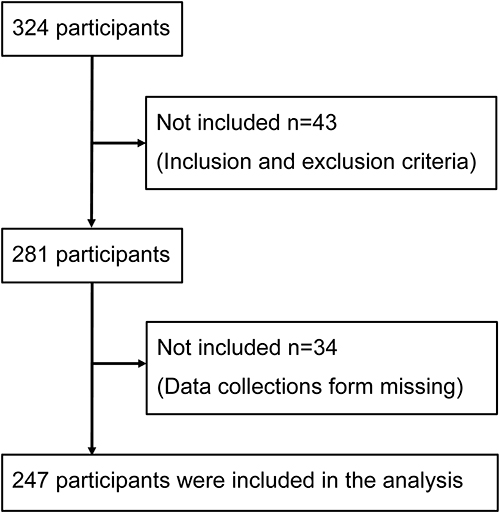 |
Figure 1 Flowchart of the study. |
Most patients were aged 45 years or older, had a senior high school education or below, were married, had medical insurance under the New Rural Cooperative Medical Scheme or Resident Basic Medical Insurance, and had a household income between 5,000 and 10,000 yuan. In terms of disease information, most patients had tumor stages 2–3, a disease duration of more than six months, and received treatment involving surgery combined with chemotherapy. There were statistically significant differences in death anxiety between groups of patients with different ages, educational levels, marital statuses, tumor stages, and disease durations. Our Hypothesis 1 holds true. Table 1 shows the results of the statistical analysis comparing death anxiety across different demographic groups among the surveyed patients.
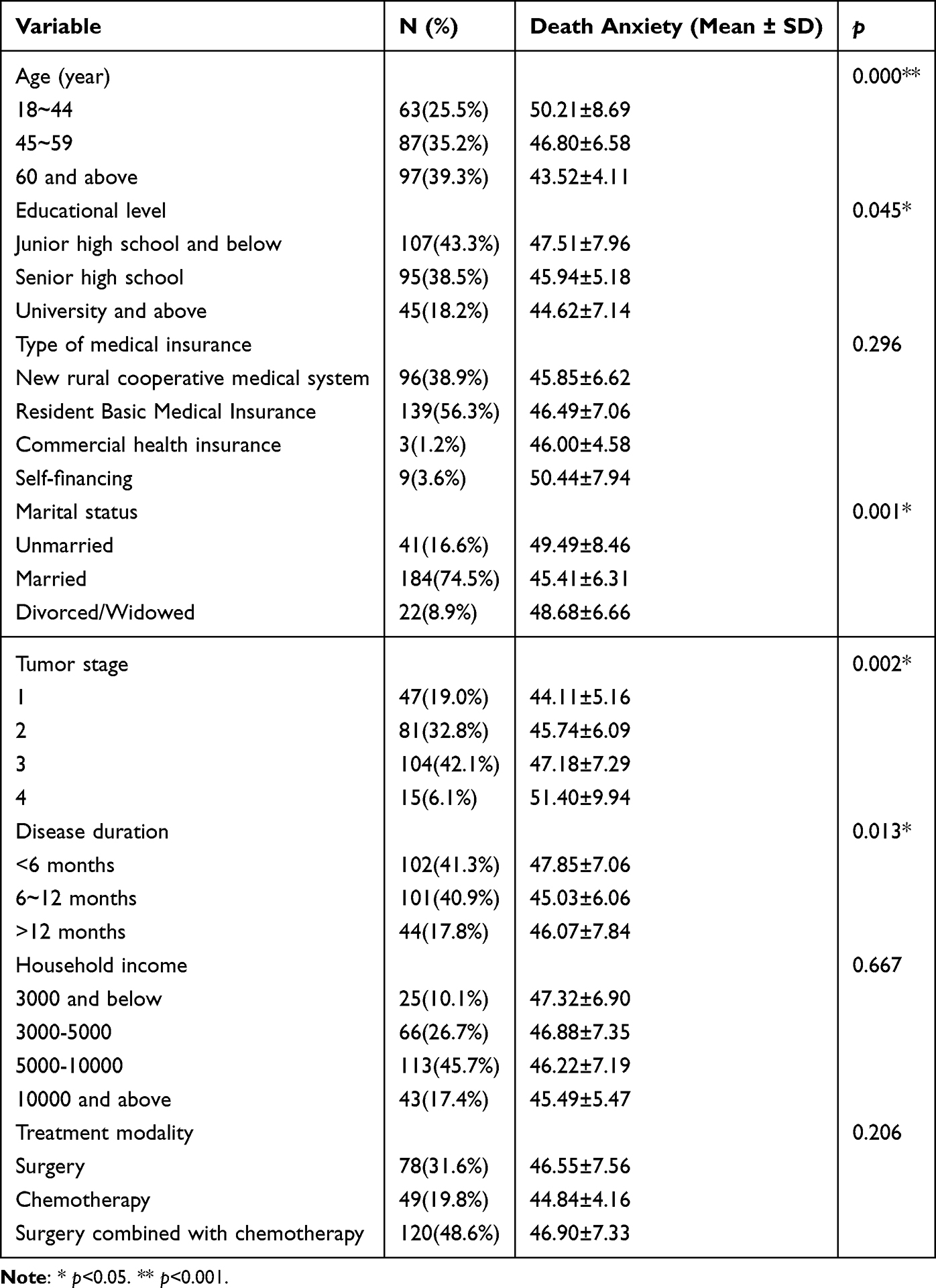 |
Table 1 Demographic Characteristics of Participants (N =247) |
Descriptive Statistics and Correlations of Study Variables
Among all participants, ovarian cancer patients had symptom burden scores of (48.25±9.55), alexithymia scores of (61.94±10.18), and death anxiety scores of (46.38±6.92). Furthermore, correlation analysis indicated significant positive correlations between symptom burden and alexithymia (r=0.420, p<0.001), symptom burden and death anxiety (r=0.425, p<0.001), and alexithymia and death anxiety (r=0.396, p<0.001)(See Table 2).
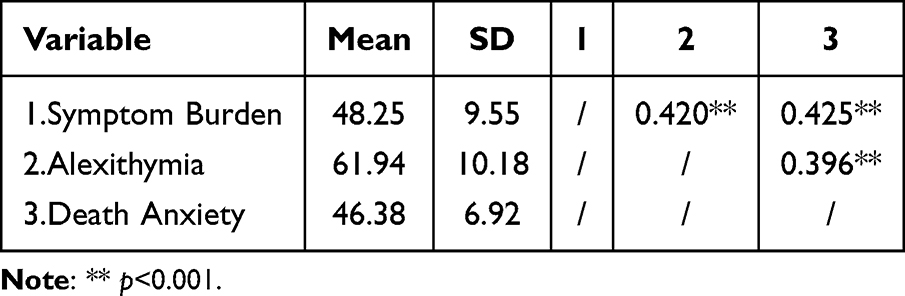 |
Table 2 Descriptive Statistics and Correlations Between the Study Variables |
Direct Effects Between Symptom Burden, Alexithymia, and Death Anxiety
Before conducting the mediation analysis, the direct effects between symptom burden, alexithymia, and death anxiety were assessed. The test of direct relationships found that symptom burden had a significant predictive effect on alexithymia (β=0.4475, p<0.001) and death anxiety (β=0.2278, p<0.001). Additionally, alexithymia also had a significant predictive effect on death anxiety (β=0.1795, p<0.001). Symptom burden explained 17.61% of the variance in alexithymia, and symptom burden and alexithymia together explained 23.85% of the variance in death anxiety (See Table 3). Symptom burden had a direct effect on alexithymia and death anxiety, and alexithymia had a direct effect on death anxiety. Our Hypothesis 2 and Hypothesis 3 are supported.
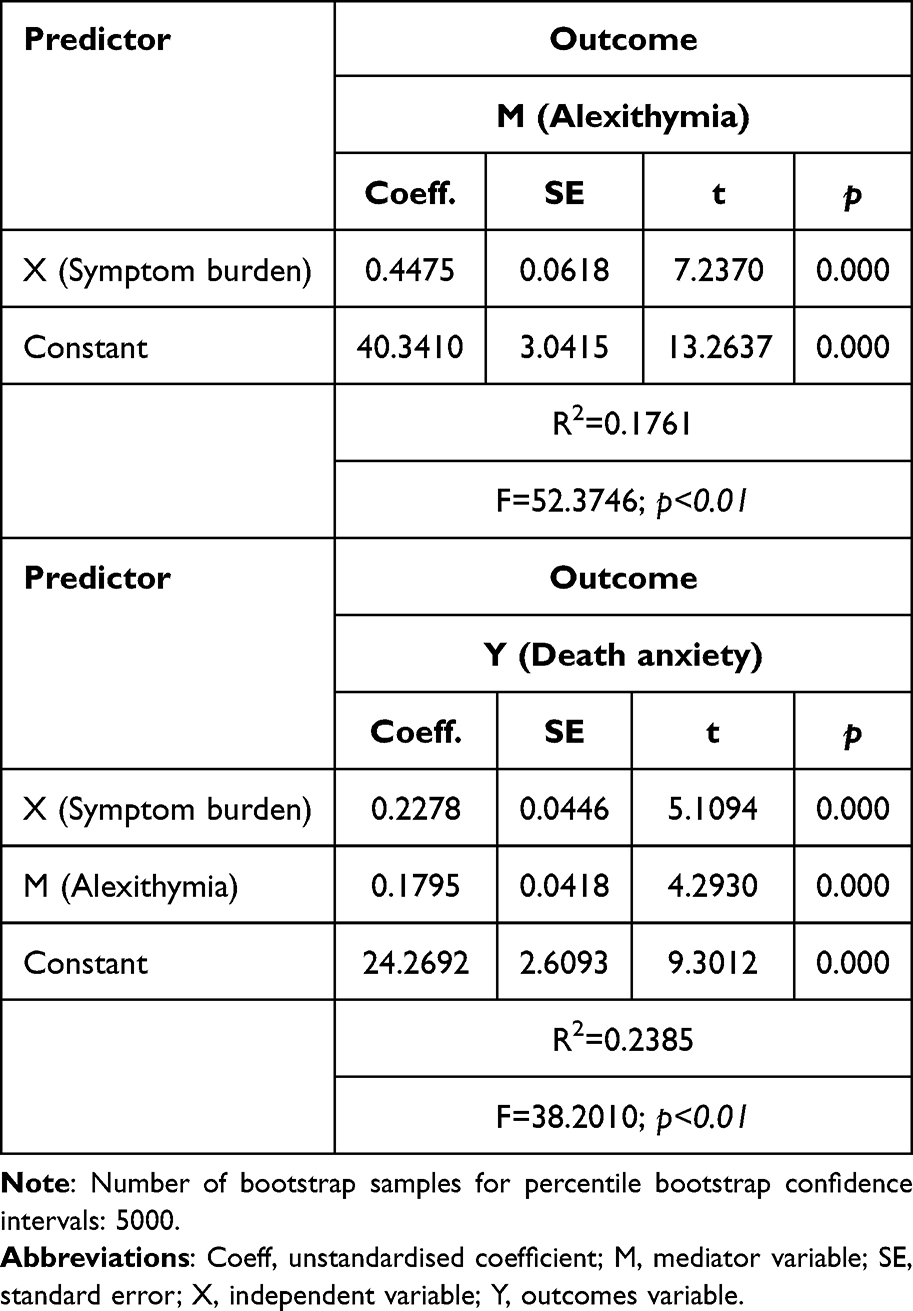 |
Table 3 Unstandardised Coefficients for the Mediation Model |
Mediating Effect Analysis of Alexithymia
Symptom burden was used as the independent variable, alexithymia as the mediating variable, and death anxiety as the dependent variable (See Figure 2). Mediating analysis was conducted to examine the mediating role of alexithymia between symptom burden and death anxiety. In this study, the mediating effect of alexithymia was examined using the bias-corrected, nonparametric percentile Bootstrap method, with 5,000 Bootstrap samples randomly selected from the original data and their 95% CI calculated.
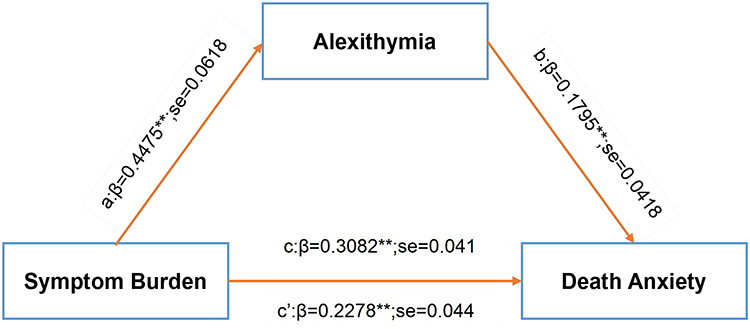 |
Figure 2 The Mediated model. Note: The mediated model. **p<0.001. path a: relation between symptom burden and alexithymia; path b: relation between alexithymia and death anxiety; path c: relation between symptom burden and death anxiety, total effect; path c′: relation between symptom burden and death anxiety, direct effect. |
The mediating effect of symptom burden on the influence of death anxiety through alexithymia was significant (β=0.0803, 95% CI [0.0458, 0.1182]). Since the BootLLCI and BootULCI values did not include zero, the indirect effect was positive and significant. The results indicated that alexithymia partially mediated the effect of symptom burden on death anxiety, with a mediation effect coefficient of 0.0803, accounting for 26.05% of the total effect (See Table 4). Alexithymia was a significant variable in the relationship between symptom burden and death anxiety, and our hypothesis 4 holds true.
 |
Table 4 Unstandardised and Standardised Total, Direct and Indirect Effects of Symptom Burden on Death Anxiety |
Discussion
This study investigated the mediating role of alexithymia in the relationship between symptom burden and death anxiety, as well as the relationships among symptom burden, alexithymia, and death anxiety. Additionally, this study explored the influence of various demographic and disease-related factors on death anxiety. Significant statistical differences in death anxiety were observed among patients of different ages, educational levels, marital statuses, tumor stages, and disease durations. Symptom burden has a positive impact on both alexithymia and death anxiety, and alexithymia was a predictor of death anxiety. Furthermore, alexithymia partially mediated the relationship between symptom burden and death anxiety, meaning that the influence of symptom burden on death anxiety was partially mediated through alexithymia.
Death anxiety is a form of existential anxiety faced by patients. While fear of death is a normal part of the adaptive process in cancer, this fear is chronic and distressing. Death anxiety is closely associated with mental health status42 and is linked to a range of adverse psychological states, including anxiety, depression, panic disorder, and poor sleep quality.43 Death anxiety also influences patients’ willingness to accept and the effectiveness of palliative care, which is detrimental to patients’ ability to spend the end of their lives with dignity.44 Death anxiety also affects patients’ tendency to engage in healthy behaviors, which is detrimental to their prognosis.45 Death anxiety reduces an individual’s sense of well-being and life satisfaction. Identifying the factors influencing death anxiety in cancer patients has become an urgent public health issue.46 Understanding its influencing factors and pathways is of great significance for improving the mental health of ovarian cancer patients.
Ovarian cancer is a significant threat to women’s health, with its high recurrence rate and mortality rate causing patients to experience severe death anxiety. In this study, the death anxiety score for ovarian cancer patients was (46.38 ± 6.92), the symptom burden score was (48.25 ± 9.55), and the alexithymia score was (61.94 ± 10.18). Research indicated that patients undergoing anticancer treatment experience heavier symptom burden due to treatment-related side effects.5 All patients in this study received surgery, chemotherapy, or a combination of both treatments. Combined with the diverse symptoms inherent to ovarian cancer, patients face multiple symptom-related challenges. Therefore, strengthening symptom management for patients is particularly important.47 A meta-analysis revealed that emotional regulation disorders are more pronounced in populations that feel a loss of control over the future and whose safety needs are unmet, such as cancer patients.48
The results of this study showed that death anxiety in ovarian cancer patients varies significantly across different age groups, educational levels, marital statuses, tumor stages, and disease durations. Patients aged 18–44 had the highest mean death anxiety (50.21±8.69). Younger patients often face issues related to the care of their children and parents, leading to higher levels of death anxiety. According to Neel et al,14 the primary source of death anxiety in advanced cancer patients stems from concerns about the impact of death on others. Patients with junior high school education or below had the highest mean death anxiety (47.51±7.96), while those with high school and college education or below had a lower level of death anxiety. Patients with higher educational attainment exhibit lower levels of death anxiety. This is because they tend to have more knowledge regarding death and life cognition and can adopt a more enlightened and mature attitude towards death. When confronted with death anxiety, they can also take more professional and proactive measures.49 Unmarried ovarian cancer patients had higher levels of death anxiety than married and divorced patients, consistent with the findings of Xiao et al. Close relationships such as family and social support are effective resources for coping with death anxiety, enabling individuals to maintain a more positive attitude toward disease management.50
As is well known, patients with tumor stages 3 and 4 often have a higher degree of metastasis and malignancy, resulting in greater symptom burden and psychological stress, as well as deeper levels of death anxiety. This aligns with the findings of Ogce et al,51 who reported that tumor stage influences patients’ mental health levels. Patients with a disease duration of less than 6 months had the highest mean death anxiety (47.85±7.06), which was significantly higher than that in patients with a disease duration of 6 to 12 months and over 12 months. Perhaps it is because newly diagnosed patients are still in the denial period and adaptation stage of cancer, with high levels of psychological stress and shock, and corresponding death anxiety is also relatively high. As the disease progresses, patients have continuously carried out psychological adjustment and adaptation during the process of coping with the disease, and the level of death anxiety has decreased to a certain extent.14 Modern medical technologies have extended the survival period of cancer patients, making the continuous assessment and management of death anxiety even more necessary. We should recognize the individual uniqueness and complexity of each patient and implement targeted, effective intervention measures.52
To our knowledge, there is currently limited literature on the relationship between alexithymia and death anxiety, and no studies have explored the mediating role of alexithymia in the symptom burden and death anxiety of ovarian cancer patients. After conducting a systematic literature review, we proposed four main hypotheses, all of which were validated based on our research findings. Additionally, the results of the correlation analysis indicated that death anxiety was significantly positively correlated with symptom burden and alexithymia, and symptom burden was significantly positively correlated with alexithymia. Previous studies have also found a significant positive correlation between symptom burden and death anxiety in patients with advanced breast cancer.53 Individuals with high symptom burden often experience greater fear and distress related to death.54 Studies on patients with depression have found that somatic symptoms are a factor influencing alexithymia.30
This study confirmed the positive correlation between alexithymia and death anxiety in ovarian cancer patients, with death anxiety increasing as the severity of alexithymia deepens. The results of this study indicated that alexithymia partially mediated the relationship between symptom burden and death anxiety. The reserved and introverted manner of emotional expression in the Chinese population, coupled with an avoidance-oriented coping attitude toward death, makes alexithymia more prominent among Chinese cancer patients. Research shows that physical symptom burden, as a stressor, can lead to impairments in emotional recognition and regulation, thereby further suppressing patients’ emotions.30 Inappropriate stress coping strategies such as denial and avoidance can lead to greater psychological distress, such as anxiety and depression.55 Death anxiety, as a conscious or unconscious fear of death that may occur at any time, does not disappear with avoidance or denial but rather intensifies.56
Implications of the Findings
Theoretical Implications
The findings indicate that both symptom burden and alexithymia can influence death anxiety. Furthermore, this study emphasizes that focusing solely on symptom burden is insufficient to reduce death anxiety. Death anxiety is a complex phenomenon influenced by variables such as symptom burden and alexithymia, providing new insights into the existing literature. This study highlights the importance of alexithymia as a key factor in understanding the relationship between symptom burden and death anxiety. The core characteristics of alexithymia are difficulty in emotion recognition and difficulty in emotion description and expression. Because patients are unable to recognize and process emotions through language, they lack effective emotional regulation strategies and cannot be guided through communication, seeking help or cognitive re-evaluation. Instead, they rely on “passive and repressive coping methods” such as denial, avoidance and suppressed thinking to excuse the emotional distress caused by symptom burden. This ineffective coping approach makes it impossible to handle and digest the fear and threats related to death, thereby intensifying death anxiety. The findings of this study complement the TMT, suggesting that proximal defense mechanisms such as denial and avoidance may temporarily reduce patients’ death anxiety in the short term, but in the long term, they may lead to deficits in emotional recognition and expression, thereby exacerbating death anxiety levels.
Practical Implications
Our findings have important practical implications for nursing managers, clinical nursing staff, and patients’ families. By alleviating symptom burden and alexithymia in ovarian cancer patients and addressing related risk factors, death anxiety can be reduced. Patients with lower alexithymia levels are better able to assess, identify, and express their anxiety, thereby enhancing their disease coping ability and quality of life. Developing detailed strategies to manage symptoms and improve emotional recognition may be beneficial in reducing death anxiety. Understanding the interaction between symptom burden, alexithymia, and death anxiety is a critical step toward improving patients’ mental health.
Limitations
This study proposes a relationship between symptom burden, alexithymia, and death anxiety in ovarian cancer patients based on the TMT. Additionally, our findings validate the TMT and supplement the model from the perspectives of proximal and distal defense mechanisms, providing theoretical references for future research on death anxiety. However, due to time and funding constraints, only patients from five hospitals were selected as research subjects. These patients may not fully represent cancer patients from primary care institutions, other provinces, or groups with different socioeconomic and cultural backgrounds, future studies could expand the scope of the investigation. The data collected in this study are based on patients’ self-reports, which are susceptible to self-reporting biases and limitations.
Conclusions
This study identified sociodemographic and disease-related factors influencing death anxiety in ovarian cancer patients, providing a theoretical basis for personalized patient management. We should prioritize young patients, those with lower educational attainment, those with limited social support, patients with advanced cancer, and those recently diagnosed. Additionally, this study emphasized the role of symptom burden and alexithymia in death anxiety, as physical and psychological issues often intertwine. Clinical care should prioritize addressing symptom burden and alexithymia in ovarian cancer patients. This study confirmed the mediating role of alexithymia in the relationship between symptom burden and death anxiety, providing new management pathways for intervening in death anxiety. This study is a cross-sectional design that can only reveal the associations among variables but cannot infer causal relationships. Moreover, the levels of alexithymia and death anxiety in patients with ovarian cancer may fluctuate as the disease progresses and the treatment process changes. Future research could adopt longitudinal study methods to explore changes in symptom burden, alexithymia, and death anxiety during disease progression, clarifying the specific mechanisms underlying these changes. Future efforts should focus on enhancing training in psychological regulation methods related to distal defense mechanisms, such as strengthening patients’ perception of the value and meaning of life, to reduce their levels of death anxiety. Additionally, the role of symptom burden as a death-related factor in death anxiety should be emphasized, with a focus on identifying synergistic effects between symptom clusters and sentinel symptoms, and actively managing patients’ symptoms. Concurrently, attention should be given to enhancing ovarian cancer patients’ emotional recognition, expression, and regulation abilities to improve their mental health outcomes.
Data Sharing Statement
The data that support the findings of this study are available from the corresponding author upon reasonable request.
Ethics Statement
This study was performed in line with the principles of the Declaration of Helsinki. Approval was granted by the Ethics Committee of Deyang People’s Hospital (Date.10.13.2023/No. 2023-04-082-K01). This study was conducted in accordance with the local legislation and institutional requirements. The participants provided their written informed consent to participate in this study.
Acknowledgments
We thank all participants who voluntarily contributed to this study.
Author Contributions
All authors made a significant contribution to the work reported, whether that is in the conception, study design, execution, acquisition of data, analysis and interpretation, or in all these areas; took part in drafting, revising or critically reviewing the article; gave final approval of the version to be published; have agreed on the journal to which the article has been submitted; and agree to be accountable for all aspects of the work.
Funding
The research leading to these results received funding from [Sichuan Mental Health Education Research Center project of China: The effect of symptom burden on death anxiety in ovarian cancer patients: a cross-lag model mediated by Alexithymia] No [XLJKJY2334B], [Sichuan Medical Health legal Research Center project of China:research on evaluation and protection of risk of leakage of health and health of elderly people under the background of wisdom and care] No [YF22-Q20] and [Foundation of Sichuan Research Center of Applied Psychology: Effect of life review therapy on death anxiety and quality of life in patients with advanced ovarian cancer] No [CSXL-24305].
Disclosure
The authors report no conflicts of interest in this work.
References
1. Feng J, Xu L, Chen Y, Lin R, Li H, He H. Trends in incidence and mortality for ovarian cancer in China from 1990 to 2019 and its forecasted levels in 30 years. J Ovarian Res. 2023;16(1):139. doi:10.1186/s13048-023-01233-y
2. Zhang S, Cheng C, Lin Z, et al. The global burden and associated factors of ovarian cancer in 1990-2019: findings from the Global Burden of Disease Study 2019. BMC Public Health. 2022;22(1):1455. doi:10.1186/s12889-022-13861-y
3. Torre LA, Trabert B, DeSantis CE, et al. Ovarian cancer statistics, 2018. CA Cancer J Clin. 2018;68(4):284–13. doi:10.3322/caac.21456
4. Jelovac D, Armstrong DK. Recent progress in the diagnosis and treatment of ovarian cancer. CA Cancer J Clin. 2011;61(3):183–203. doi:10.3322/caac.20113
5. He Y, Pang Y, Su Z, et al. Symptom burden, psychological distress, and symptom management status in hospitalized patients with advanced cancer: a multicenter study in China. ESMO Open. 2022;7(6):100595. doi:10.1016/j.esmoop.2022.100595
6. Dumitru EP, Cardos RAI, Milea I, et al. A meta-analysis of the association of death anxiety with psychological distress and psychopathology. Nat Hum Behav. 2025;9:933–943. doi:10.1038/s41562-025-02115-7
7. Brown AJ, Sun CC, Urbauer DL, Bodurka DC, Thaker PH, Ramondetta LM. Feeling powerless: locus of control as a potential target for supportive care interventions to increase quality of life and decrease anxiety in ovarian cancer patients. Gynecol Oncol. 2015;138(2):388–393. doi:10.1016/j.ygyno.2015.05.005
8. Lehto RH, Stein KF. Death anxiety: an analysis of an evolving concept. Res Theory Nurs Pract. 2009;23(1):23–41. doi:10.1891/1541-6577.23.1.23
9. Coutts-Bain D, Sharpe L, Russell H. Death anxiety predicts fear of cancer recurrence and progression in ovarian Cancer patients over and above other cognitive factors. J Behav Med. 2023;46(6):1023–1031. doi:10.1007/s10865-023-00422-w
10. Soleimani MA, Lehto RH, Negarandeh R, Bahrami N, Nia HS. Relationships between death anxiety and quality of life in Iranian patients with cancer. Asia Pac J Oncol Nurs. 2016;3(2):183–191. doi:10.4103/2347-5625.182935
11. Bennett A, Sharpe L, Boyse JB. A meta-analysis of death anxiety in people living with or beyond cancer: the important role of culture. J Cancer Surviv. 2025. doi:10.1007/s11764-025-01856-8
12. Eggen AC, Reyners AKL, Shen G, et al. Death anxiety in patients with metastatic non-small cell lung cancer with and without brain metastases. J Pain Symptom Manage. 2020;60(2):422–429.e1. doi:10.1016/j.jpainsymman.2020.02.023
13. Jaberi M, Mohammadi TK, Adib M, Maroufizadeh S, Ashrafi S. The relationship of death anxiety with quality of life and social support in hemodialysis patients. Omega. 2025;90(4):1894–1908. doi:10.1177/00302228221129672
14. Neel C, Lo C, Rydall A, Hales S, Rodin G. Determinants of death anxiety in patients with advanced cancer. BMJ Support Palliat Care. 2015;5(4):373–380. doi:10.1136/bmjspcare-2012-000420
15. Kuo TT, Ma FC. Symptom distresses and coping strategies in patients with non-small cell lung cancer. Cancer Nurs. 2002;25(4):309–317. doi:10.1097/00002820-200208000-00007
16. Rizzuto I, Oehler MK, Lalondrelle S. Sexual and psychosexual consequences of treatment for gynaecological cancers. Clin Oncol. 2021;33(9):602–607. doi:10.1016/j.clon.2021.07.003
17. Lheureux S, Braunstein M, Oza AM. Epithelial ovarian cancer: evolution of management in the era of precision medicine. CA Cancer J Clin. 2019;69(4):280–304. doi:10.3322/caac.21559
18. Feng Y, Lin T, Liu X, Guo X, Chen J, Deng X. A longitudinal study of symptom cluster latent profiles in ovarian cancer patients undergoing chemotherapy. Cancer Med. 2024;13(7):e7139. doi:10.1002/cam4.7139
19. Chen J, Zhang Y, Cheng F, Xie J, Zhang K, Hu D. Symptom distress and suicidal ideation among Chinese ovarian cancer patients: a moderated mediation model of depression and suicide resilience. Front Psychol. 2023;14:1073995. doi:10.3389/fpsyg.2023.1073995
20. McFarland DC, Shaffer KM, Tiersten A, Holland J. Physical symptom burden and its association with distress, anxiety, and depression in breast cancer. Psychosomatics. 2018;59(5):464–471. doi:10.1016/j.psym.2018.01.005
21. Simonelli LE, Siegel SD, Duffy NM. Fear of cancer recurrence: a theoretical review and its relevance for clinical presentation and management. Psychooncology. 2017;26(10):1444–1454. doi:10.1002/pon.4168
22. Sifneos PE. The prevalence of ‘alexithymic’ characteristics in psychosomatic patients. Psychother Psychosom. 1973;22(2):255–262. doi:10.1159/000286529
23. Chervonsky E, Hunt C. Emotion regulation, mental health, and social wellbeing in a young adolescent sample: a concurrent and longitudinal investigation. Emotion. 2019;19(2):270–282. doi:10.1037/emo0000432
24. Okanli A, Karabulutlu EY, Asi Karakas S, Sahin Altun O, Yildirim N. Alexithymia and perception of illness in patients with cancer. Eur J Cancer Care. 2018;27(3):e12839. doi:10.1111/ecc.12839
25. Liu Y, Du Q, Jiang Y. Prevalence of alexithymia in cancer patients: a systematic review and meta-analysis. Support Care Cancer. 2023;31(12):675. doi:10.1007/s00520-023-08106-6
26. Asadi N, Esmaeilpour H, Salmani F, Salmani M. The relationship between death anxiety and alexithymia in emergency medical technicians. Omega. 2022;85(3):772–786. doi:10.1177/00302228211053475
27. Pollatos O, Schubo A, Herbert BM, Matthias E, Schandry R. Deficits in early emotional reactivity in alexithymia. Psychophysiology. 2008;45(5):839–846. doi:10.1111/j.1469-8986.2008.00674.x
28. Ripetti V, Ausania F, Bruni R, Campoli G, Coppola R. Quality of life following colorectal cancer surgery: the role of alexithymia. Eur Surg Res. 2008;41(4):324–330. doi:10.1159/000155898
29. Putica A, O’Donnell ML, Agathos J, Felmingham KL, Krug I, Van Dam NT. Posttraumatic stress and alexithymia: symptom associations. J Nerv Ment Dis. 2023;211(10):752–758. doi:10.1097/NMD.0000000000001689
30. Taycan O, Ozdemir A, Erdogan taycan S. Alexithymia and somatization in depressed patients: the role of the type of somatic symptom attribution. Noro Psikiyatr Ars. 2017;54(2):99–104. doi:10.5152/npa.2016.12385
31. Burke BL, Martens A, Faucher EH. Two decades of terror management theory: a meta-analysis of mortality salience research. Pers Soc Psychol Rev. 2010;14(2):155–195. doi:10.1177/1088868309352321
32. Pyszczynski T, Greenberg J, Solomon S. A dual-process model of defense against conscious and unconscious death-related thoughts: an extension of terror management theory. Psychol Rev. 1999;106(4):835–845. doi:10.1037/0033-295x.106.4.835
33. Kirk A, Meyer JM, Whisman MA, Deacon BJ, Arch JJ. Safety behaviors, experiential avoidance, and anxiety: a path analysis approach. J Anxiety Disord. 2019;64:9–15. doi:10.1016/j.janxdis.2019.03.002
34. Yan Y, Chen Y, Ou M, et al. The mediating role of meaning in life between experiential avoidance and death anxiety among cancer patients: a cross-sectional study. BMC Cancer. 2024;24(1):663. doi:10.1186/s12885-024-12433-0
35. Chen H. A theoretic review of emotion regulation. Open J Social Sci. 2016;04(2):147–153. doi:10.4236/jss.2016.42020
36. De Castella K, Platow MJ, Tamir M, Gross JJ. Beliefs about emotion: implications for avoidance-based emotion regulation and psychological health. Cogn Emot. 2018;32(4):773–795. doi:10.1080/02699931.2017.1353485
37. Taylor GJ. Alexithymia: concept, measurement, and implications for treatment. Am J Psychiatry. 1984;141(6):725–732. doi:10.1176/ajp.141.6.725
38. Xia C, Wang D, Pan X. A study on the applicability of the Toronto Alexithymia self-reporting scale among college students. Zhejiang Med. 2001;12.
39. Templer DI. The construction and validation of a death anxiety scale. J Gen Psychol. 1970;82(2d Half):165–177. doi:10.1080/00221309.1970.9920634
40. Yang H, Han L, Guo H. Cross-cultural adaptation of the death anxiety scale. Chin J Pract Nurs. 2012;28(31):5.
41. Cleeland CS. The M. D. Anderson Symptom Inventory user guide. Houston, TX: University of Texas M. D. Anderson Cancer Center; 2010. Available from: http://www.mdanderson.org/education-and-research/departments-programs-and-labs/departments-and-divisions/symptomresearch/symptom-assessment-tools/MDASI_userguide.pdf.
42. Menzies RE, Menzies RG. Death anxiety and mental health: requiem for a dreamer. J Behav Ther Exp Psychiatry. 2023;78:101807. doi:10.1016/j.jbtep.2022.101807
43. Iverach L, Menzies RG, Menzies RE. Death anxiety and its role in psychopathology: reviewing the status of a transdiagnostic construct. Clin Psychol Rev. 2014;34(7):580–593. doi:10.1016/j.cpr.2014.09.002
44. Nyatanga B. Death anxiety and palliative nursing. Br J Commun Nurs. 2016;21(12):636. doi:10.12968/bjcn.2016.21.12.636
45. Busch H, Knudsen H. Death anxiety is associated with less health behavior for individuals low in action orientation. Omega. 2024;302228241229590. doi:10.1177/00302228241229590
46. Rubin M. Fear of self-annihilation and existential uncertainty as predictors of worldview defense: comparing terror management and uncertainty theories. J Soc Psychol. 2018;158(3):298–308. doi:10.1080/00224545.2017.1341375
47. Mathew A, Doorenbos AZ, Vincent C. Symptom management theory: analysis, evaluation, and implications for caring for adults with cancer. ANS Adv Nurs Sci. 2021;44(3):E93–E112. doi:10.1097/ANS.0000000000000347
48. Pilkington PD, Karantzas GC, Faustino B, Pizarro-Campagna E. Early maladaptive schemas, emotion regulation difficulties and alexithymia: a systematic review and meta-analysis. Clin Psychol Psychother. 2023. doi:10.1002/cpp.2914
49. Li Y, Dong W, Tang H, et al. Correlates of death anxiety for patients with cancer: a systematic review and meta-analysis. J Clin Nurs. 2024;33(5):1933–1947. doi:10.1111/jocn.17021
50. Xiao Z, Zhao Y, Zheng Y, Bao Y, Zhang C. The effect of group identification on death anxiety: the chain mediation role of close relationships and self-esteem. Int J Environ Res Public Health. 2022;19(16):10179. doi:10.3390/ijerph191610179
51. Ogce F, Ozkan S, Baltalarli B. Psychosocial stressors, social support and socio-demographic variables as determinants of quality of life of Turkish breast cancer patients. Asian Pac J Cancer Prev. 2007;8(1):77–82.
52. Lehto R, Negarandeh R. Mental health adaptation to cancer: the role of death anxiety. Asia Pac J Oncol Nurs. 2024;11(8):100513. doi:10.1016/j.apjon.2024.100513
53. Su Z, Zhou Y, Han X, Pang Y, He S, Tang L. Symptom burden in advanced breast cancer patients and its association between death anxiety and psychological distress. Chin J Cancer Res. 2022;34(3):298–308. doi:10.21147/j.issn.1000-9604.2022.03.09
54. Thewes B, Lebel S, Seguin Leclair C, Butow P. A qualitative exploration of fear of cancer recurrence (FCR) amongst Australian and Canadian breast cancer survivors. Support Care Cancer. 2016;24(5):2269–2276. doi:10.1007/s00520-015-3025-x
55. Dev R, Agosta M, Fellman B, et al. Coping strategies and associated symptom burden among patients with advanced cancer. Oncologist. 2024;29(2):166–175. doi:10.1093/oncolo/oyad253
56. Hong Y, Yuhan L, Youhui G, et al. Death anxiety among advanced cancer patients: a cross-sectional survey. Support Care Cancer. 2022;30(4):3531–3539. doi:10.1007/s00520-022-06795-z
 © 2026 The Author(s). This work is published and licensed by Dove Medical Press Limited. The
full terms of this license are available at https://www.dovepress.com/terms
and incorporate the Creative Commons Attribution
- Non Commercial (unported, 4.0) License.
By accessing the work you hereby accept the Terms. Non-commercial uses of the work are permitted
without any further permission from Dove Medical Press Limited, provided the work is properly
attributed. For permission for commercial use of this work, please see paragraphs 4.2 and 5 of our Terms.
© 2026 The Author(s). This work is published and licensed by Dove Medical Press Limited. The
full terms of this license are available at https://www.dovepress.com/terms
and incorporate the Creative Commons Attribution
- Non Commercial (unported, 4.0) License.
By accessing the work you hereby accept the Terms. Non-commercial uses of the work are permitted
without any further permission from Dove Medical Press Limited, provided the work is properly
attributed. For permission for commercial use of this work, please see paragraphs 4.2 and 5 of our Terms.