
Back to Journals » Veterinary Medicine: Research and Reports » Volume 16
Strict Biosecurity and Epidemiological Segmentation Enable Partial Culling During a Highly Pathogenic Avian Influenza Outbreak
Authors Oettler MJ  , Stumpf G, Schulz K, Todte M, Hüttner K , Heyne H, Mettenleiter TC, Conraths FJ, Sauter-Louis C
Received 9 May 2025
Accepted for publication 11 September 2025
Published 2 October 2025 Volume 2025:16 Pages 25—37
DOI https://doi.org/10.2147/VMRR.S539444
Checked for plagiarism Yes
Review by Single anonymous peer review
Peer reviewer comments 2
Editor who approved publication: Professor A. M. Abd El-Aty
Martin J Oettler,1,* Gerald Stumpf,2,* Katja Schulz,1 Matthias Todte,3 Klim Hüttner,4 Heidemarie Heyne,5 Thomas C Mettenleiter,6 Franz J Conraths,1 Carola Sauter-Louis1
1Institute of Epidemiology, Friedrich-Loeffler-Institut, Federal Research Institute for Animal Health, Greifswald-Insel Riems, 17493, Germany; 2Veterinary and Food Inspection Office, Güstrow, 18273, Germany; 3Veterinary Practice MMT, Köthen (Anhalt) 06366, Germany; 4Veterinary Epidemiological Service, State Institute for Agriculture, Food Safety and Fisheries Mecklenburg-Western Pomerania, Rostock, 18059, Germany; 5Animal Health Division, Ministry for Climate Protection, Agriculture, Rural Areas and the Environment of Mecklenburg-Western Pomerania, Schwerin, 19061, Germany; 6Friedrich-Loeffler-Institut, Federal Research Institute for Animal Health, Greifswald-Insel Riems, 17493, Germany
*These authors contributed equally to this work
Correspondence: Martin J Oettler, Institute of Epidemiology, Friedrich-Loeffler-Institut, Federal Research Institute for Animal Health, Südufer 10, Greifswald-Insel Riems, 17493, Germany, Email [email protected]
Background: The mandatory procedures to be followed after official confirmation of an outbreak of category A animal infectious diseases, including highly pathogenic avian influenza (HPAI), is laid down in European and national legislation. Typically, an outbreak of HPAI results in the destruction of the entire poultry population on the affected holding.
Case Presentation: The presented case reports a deviation from this approach, demonstrating the practicality of partial culling in a highly biosecure, epidemiologically segmented holding. These on-site circumstances together with the specific risk assessment led to the elimination of only the affected unit, thereby inhibiting the further spread of the disease. After the destruction of the respective unit (farm), the other farms were closely monitored and tested continuously negative for HPAI virus (HPAIV) despite intensive systematic sampling. In the end, this procedure saved approximately 138,000 animals, ie 75% of the poultry population of the holding from destruction.
Conclusion: This case demonstrates the effectiveness of proper management and high-level biosecurity to avoid excessive destruction of animals in case of an infectious disease outbreak. It might be suitable as a best-practice example in similar situations.
Keywords: epidemiology, epidemiological unit, biosafety, infectious animal diseases, poultry
Introduction
Animal disease outbreaks pose significant challenges to agriculture and global trade but also affect public health. They also impact on animal welfare. When specific animal diseases are officially declared, defined control measures are taken, especially with category A diseases.1 Within the European Union, this means culling of animals to stop the spread of the animal disease.1 These methods are considered the “gold standard” as eliminating both infected and potentially infected hosts is the most effective way to eliminate the pathogen from a medical and infectious disease perspective. However, from an ethical and scientific point of view, these drastic interventions may not always be justified.2 With growing societal concern for animal welfare and sustainability, public attitudes towards culling practices are changing.3 A notable segment of the public opposes the destruction of healthy animals during disease outbreaks, a trend likely to gain further momentum.4
An alternative to whole livestock culling is targeted culling, which is legal in the case of separate epidemiological units in accordance with Article 13 of Commission Delegated Regulation (EU) 2020/687.5 An individual epidemiological unit is defined as not having the same likelihood of exposure to a pathogen as another group of animals.1,6 This requires that the units do not share a common environment or common management practices.6 These epidemiological relationships vary depending on the disease in question.6 In accordance with Article 20 of Commission Delegated Regulation (EU) 2020/689, separate epidemiological units can be defined within the same establishment.7
One of the animal diseases of undoubted importance is HPAI. Outbreaks of HPAI were reported manifold in Europe during the winter 2020/2021 (Figure 1). In Germany, 1,299 cases in wild birds and 253 outbreaks in poultry or captive bird holdings were detected during the winter half-year (November 2020 to April 2021).8 In particular, the Federal State of Mecklenburg-Western Pomerania detected 130 cases in wild birds and 26 outbreaks in poultry or captive bird holdings during this period.9
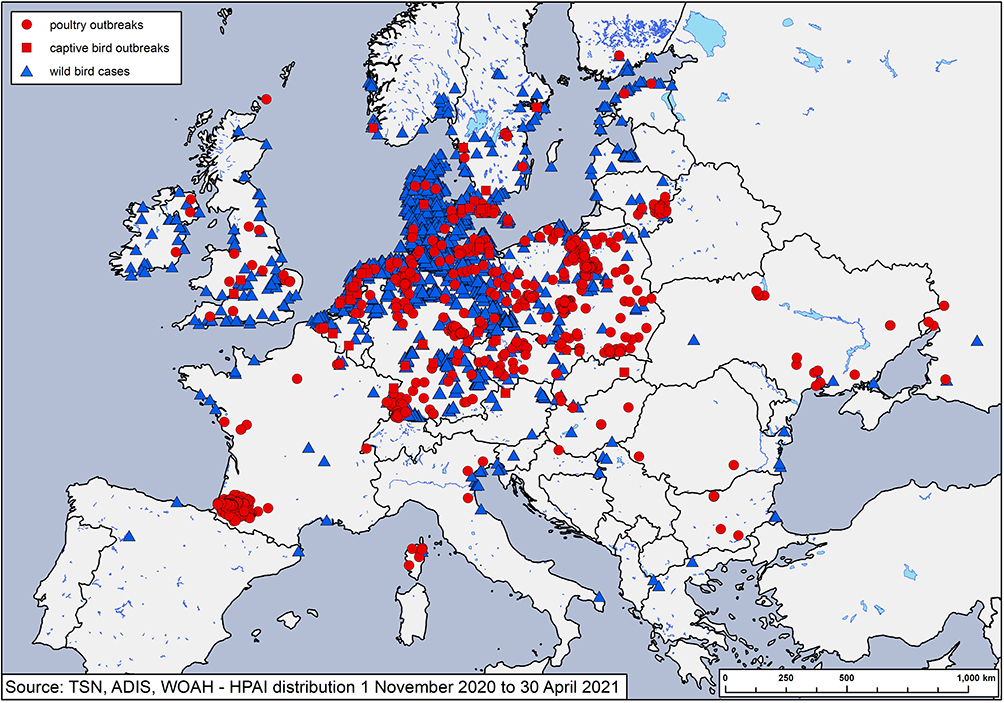 |
Figure 1 Distribution of outbreaks and cases of HPAI during the winter 2020/2021 in Europe. |
Since 21 April 2021, the control of HPAI outbreaks on poultry farms is regulated in the Regulation (EU) 2016/429 of the European Parliament and of the Council (“Animal Health Law”).1 Prior to that, it was regulated in the Council Directive 2005/94/EC and by German national legislation, in particular, the Directive on Avian Influenza (Geflügelpest-Verordnung).10,11 According to the regulations that had to be applied, immediate culling and safe disposal of all birds of an infected holding is mandatory. However, if epidemiological units can be assessed, a derogation is possible in accordance with Article 13 of Commission Delegated Regulation (EU) 2020/687.5
Such a derogation in the event of an HPAI outbreak in a bird holding with different epidemiological units has not been often reported in the scientific literature. One case occurred in a zoo. In this case, the assessment of the different epidemiological units resulted in the destruction of only a few of the valuable zoo birds.12 Another approach was taken in a wild bird rescue center. Similar to the outbreak in the zoo, the majority of the valuable birds were saved from destruction.13 Currently, no studies in the scientific literature address the application of these derogations to poultry production. Therefore, our study may be regarded as a pilot study in this area, highlighting its novelty for livestock husbandry as well.
The reported study examined the partial culling approach taken during an HPAI outbreak in a large poultry holding in the German Federal State of Mecklenburg-Western Pomerania in the winter at the beginning of the year 2021. The aim of this paper is to detail the measures taken in the affected holding, before and during the time period of the HPAI outbreak, which led only to the culling of the epidemiological unit that was affected by the disease. This pilot study underscores the importance of high biosecurity and epidemiological segmentation, illustrating a “best-practice scenario”.
Case Presentation
Initial Situation
The affected poultry holding reared parent animals for broilers on the ground. It consisted of four identical, separate epidemiological units, which are colloquially called “farms”. Each farm consisted out of five units (barns) (Figure 2). Female birds were kept in barns 1–4 (10,000 hens per barn) and male birds in barn 5 (6,000 cocks). In total, there were approximately 180,000 animals on the holding at the time of the HPAI outbreak.
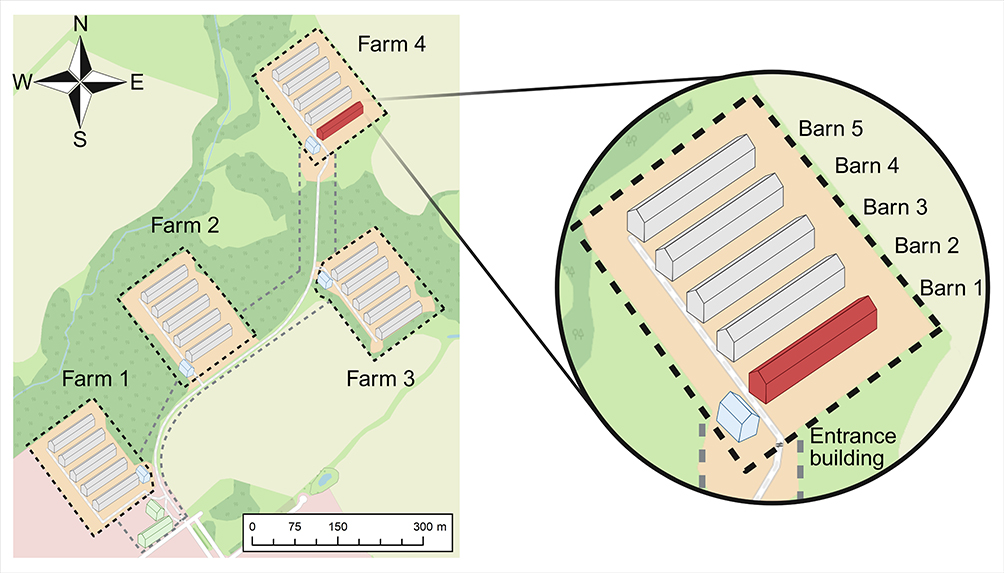 |
Figure 2 Site plan of the poultry holding with detailed view on a stand-alone farm. The red barn (barn 1 of farm 4) was the affected barn. The map is based on OpenStreetMap. Created in BioRender, Oettler, (M) (2025) Created in BioRender. Oettler, M. (2025) https://BioRender.com/hqj2ah5. |
Fencing
The entire holding was fenced and can only be accessed through an electronically locked gate after passing through a vehicle disinfection barrier. Since November 2020, all vehicles entering the site were sprayed with disinfectant at the only one accessible main gate. Each of the four farms was separated and fully fenced with another gate for access (separate for persons and vehicles). The farms were located along an asphalted dead-end road, with farm 1 closest to the gate and farm 4 furthest away (Figure 2).
Staff Access
A total of four employees and the supervisor worked at the holding. For each farm, a single person (farm manager) was responsible. Staff assigned to a specific farm was not allowed to access another farm and equipment was not exchanged between farms. The respective farm manager started in the morning by observing the animals during feeding, which was carried out consecutively, starting from barn 1 to barn 5. Afterwards, the farm manager performed inspection rounds through the barns, looking for health problems and removing dead animals from the barn area if necessary. Personal poultry keeping or contact with other poultry was prohibited for all staff members. Minor repairs were carried out by the respective farm manager, while major repairs were postponed until the service period when the barns were empty. The veterinarian monitoring the flock visited the holding during routine inspections in compliance with the hygiene standards.
Biosecurity
Each individual farm had a separate entrance building, which provides access to the farm area for staff and visitors (Figure 3). Regular access to the clean “white” area was only possible via the hygiene area, which included a shower. At the entrance, there were signs indicating the necessary hygiene measures, the requirement to shower and to register in the visitors’ book. There were separate entrances for men and women, leading to a vestibule where private clothing was taken off, then through a shower room before entering another changing room where towels and farm clothing were provided. All clothes and towels were washed in this building and never left the farm. At the exit of the changing room, special green shoes were provided that had to be worn in the anteroom of the barns. The barns were accessed via the forecourt (Figure 3).
 |
Figure 3 Hygiene scheme of the entrance building and at barn. Created in BioRender. Oettler, (M) (2025) Created in BioRender. Oettler, M. (2025) https://BioRender.com/ozgxjuw. |
Each barn had a permanent closed gate and a separate door for human access. The door leads over a disinfection mat into an anteroom containing technical equipment. There was a wheelbarrow in the vestibule for transporting dead animals. At the end of the anteroom, before the entrance to the animal area, was another hygiene area. A wooden board separated the “black” management area from the “white” area, where the animals were kept. The green shoes were taken off in front of the board, and white shoes were put on behind the board. A door leads from “white” area behind the board to the animal area in the barn.
After leaving the animal area, the white shoes were taken off again in the hygiene area, and green shoes were put on again on the “black” side of the wooden board. With these (green) shoes, staff or visitors walked across the forecourt to the next barn, where separate white shoes were provided before accessing the area with the birds.
No external equipment was required during the rearing period and only staff and the veterinarian entered the barns. Bedding consisted of straw granules, which were brought into the barn before the animals were housed. At the end of the rearing period, bedding and manure were removed from the barn and ploughed in the field.
Dead animals were collected from the barn and loaded onto the wheelbarrow in the anteroom. The carcasses were then transported to the entrance of the farm, where a carcass bin was located in a cooled metal shed (one at each farm). The carcass bin could be opened electronically, so there was no direct contact with the carcass bin. Carcasses in the bins were collected once a week by an authorized animal by-products company from the outside of each farm, ie the vehicles did not enter the farm site but remained on the access road.
Barns were cleaned and disinfected by an external company in the service period after each rearing period. Rodent control too was carried out by an external company during the service period. Additional rodent checks were carried out routinely by the farm manager during the rearing period.
Barn Structure
The barns were enclosed on all sides, light-tight and ventilated via side shafts. Each barn was divided at the center into two parts (front and rear compartment) by a lattice with an integral door. Air intakes at the sides of the building were closed with filters and grilles. For air outlets, there were ten ventilation shafts in the ridge of each barn. Ventilation shafts were gridded at the top and had a butterfly flap inside that opened when the ventilation was on and closed when the fan was off. Below the fan, inside the barn, there was a drip tray to collect condensation and precipitation water if necessary (Figure 4). In winter, intermittent ventilation was used, where two fans were switched on alternately for two minutes at a time.
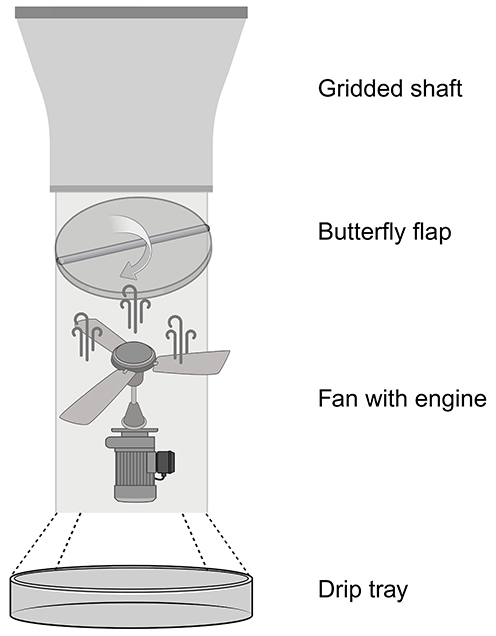 |
Figure 4 Construction of ventilation shafts installed in the ridge of the barns. Created in BioRender. Oettler, (M) (2025) Created in BioRender. Oettler, M. (2025) https://BioRender.com/ub18b6m. |
Feed and Water
The chickens were fed with a complete diet for pullets. Feed was delivered in separate lots for each individual farm, with deliveries every 10 days. Feed silos were located between the barn buildings, necessitating the feed transporters driving onto the clean area of the asphalted forecourt between the entrance building and the barns. Due to market conditions, farm 4 had a different supplier than farms 1–3. The animals received weighed feed and drinking water (public water supply) ad libitum. Feed was transported directly from the silo via a pipeline to the containers in the barn.
Chickens
The poultry holding was managed according to the all-in/all-out principle, ie all chickens at the four individual farms were of the same age. Day-old chicks were delivered over a period of 1–2 weeks, remained on the poultry farms for approximately 20 weeks and were then transported to other farms within the company for hatching egg production. After each run, the 20 barns were cleaned, disinfected and left empty for two to three weeks (service period) before new day-old chicks were brought in.
The birds kept at the time of the outbreak entered on 18 November 2020, ie they were in their 12th week of age and would have remained at the poultry holding for another 8 weeks. The hens weighed about 1.4 kg and the cocks about 1.9 kg. The number of dead animals was recorded daily on the barn cards.
Course of Disease
On 3 February 2021, a slight increase in mortality (six dead animals) and clinical signs of diarrhea were observed in barn 1 of farm 4, which increased during the following days (Table 1). No increased mortality was observed in any other barn of farm 4 or in any other farm of the poultry holding.
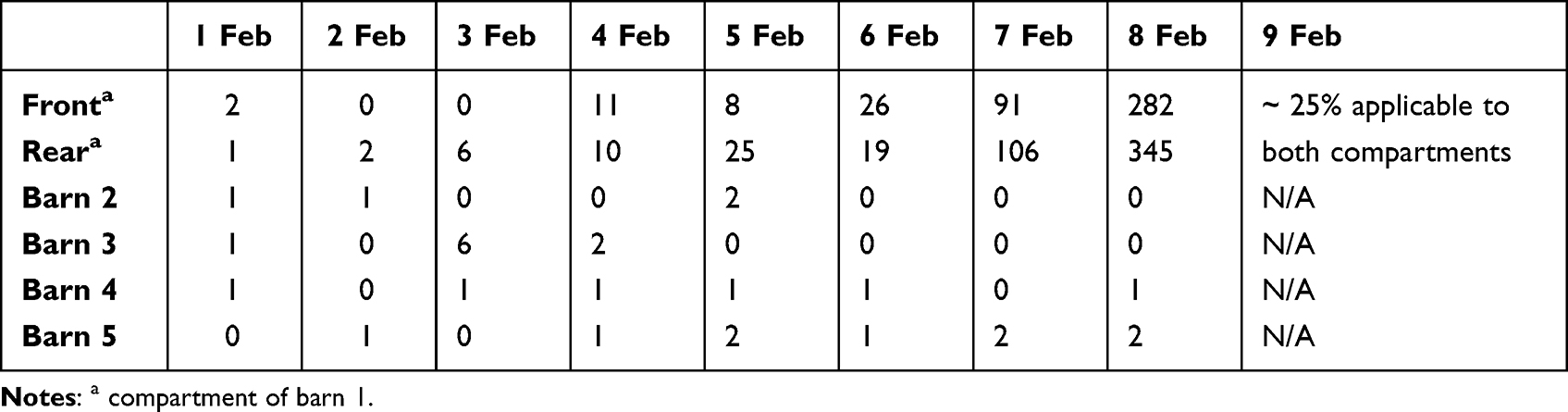 |
Table 1 Number of Dead Animals in Farm 4 Since 1 February 2021 |
On 3 February, the veterinarian monitoring the flock took samples from dead animals in the rear section of barn 1 of farm 4 for a bacteriological examination with antibiogram. An antibiotic treatment (amoxicillin) via the drinking water was started as coccidiosis and clostridiosis were suspected.
On 4 and 5 February, mortality increased in both sections of the infected barn, but no further action was taken as the antibiotic treatment had just started and it was too early to decide whether it was effective or not.
As the mortality continued to increase, the veterinary practice was notified on 6 February (Saturday), and on 7 February (Sunday) the veterinarian in charge of monitoring the flock took samples from the dead animals again. These samples tested positive for avian influenza virus in the laboratory of the veterinary practice on 8 February. The local veterinary authority was informed immediately, and official samples were taken. At this point, the most prominent clinical sign was the high number of fatalities. The state laboratory of Mecklenburg-Western Pomerania tested the official samples positive for HPAIV H5 by real-time PCR RNA.14 This was also confirmed by the national reference laboratory of the Friedrich-Loeffler-Institut on the same day. All samples tested positive for HPAIV of the H5N8 subtype using a real-time PCR RNA detection method specific to this subtype.14
The veterinary authority established restriction zones around the outbreak farm. Within the 3 km protection zone, there were 109 poultry holdings, including two holdings with more than 1,000 birds. The largest poultry holding, with over 830,000 broilers, was set under strict surveillance. Within the 10 km surveillance zone, there were 552 poultry holdings with a total of 11,242 birds, but no holdings with more than 1,000 birds.
Epidemiological Investigations
As the outbreak occurred before 21 April 2021, the Regulation (EU) 2016/429 of the European Parliament and of the Council (“Animal Health Law”) and, in this context, Article 21 of Commission Delegated Regulation (EU) 2020/689 were not yet applicable.1,7 Epidemiological investigations were therefore conducted in accordance with Article 8 of Council Directive 92/119/EEC, Article 6 of Council Directive 2005/94/EC and the German national Directive on Avian Influenza (Geflügelpest-Verordnung).10,11,15
Data and samples were collected during a site visit on 9 February 2021 using structured interviews based on a standard questionnaire for avian influenza outbreak investigations.16 The questionnaire attempted to cover all possible routes of introduction, such as feed, water, purchased animals, direct and indirect contacts through people, vehicles and materials entering the farm. Data on feed were verified through invoices. In addition, the biosecurity measures implemented by the company were observed and assessed. The interviews were conducted simultaneously by a veterinary epidemiologist from the Friedrich-Loeffler-Institut and included the supervisor, the veterinarian responsible for monitoring the flock and the officials from the local veterinary authority.
Sample Collection
On 9 February 2021, samples were taken from the carcasses of the other farms of the poultry holding to assess potential disease spread. The local veterinary authority asked for a sample size of five carcasses per farm as part of a risk-based sampling strategy, in accordance with the soon-to-be-applicable Article 3 of Commission Delegated Regulation (EU) 2020/687.5 Samples from five chickens, preferably dead or weak animals or otherwise randomly selected birds from each farm, were sent to the state laboratory. All samples tested negative for HPAIV by real-time PCR RNA.14 No other farm except the originally affected one showed a major increase in mortality. No clinical signs indicating a suspected HPAI outbreak were observed at any time (Table 2).
 |
Table 2 Chicken Mortality per Farm Until Their 12th week of Age. Approximately 46,000 Chicks Were Housed per Farm |
Also, no increased mortality was observed in barns 2–5 of the infected farm 4, except in barn 1, where approximately one quarter of the chickens died (Table 1).
Noted Irregularities
During the epidemiological investigation of the affected barn, it was found that one of the ventilation shafts was not working (Figure 4). During the interview, the managing staff explained that a technical defect had occurred on 16 January 2021, which resulted in the malfunctioning of the fan. The repair was scheduled for the service period for biosecurity reasons. The affected shaft was located in the middle of the barn, at the boundary between the front and rear compartments. There was water in the drip tray under the exhaust fan.
Avian Influenza Outbreaks in the Vicinity
Prior to the outbreak, between 1 November 2020 and 9 February 2021, a total of four HPAI outbreaks in poultry holdings and one case in a wild bird (grey heron) were detected in the same district. One of the outbreaks occurred in November 2020 and was located in the immediate vicinity of the current outbreak farm, about 600 m away from farm 1. At that time, there were no birds on the now affected farm. The chickens affected in February 2021 were brought in after the neighboring holding had been cleared and disinfected. No wild birds or wild bird droppings were observed in the immediate vicinity of the farm site.
The further exploration of the surrounding habitats for dead wild birds and droppings to test for HPAIV was not successful due to the weather conditions with a closed snow cover. According to a local ornithologist, there were habitats of wild geese, cranes, grey herons and buzzards in the vicinity.
Results of the Epidemiological Investigations
Cause of Entry
Regarding the time of infection, it can be assumed that the introduction took place at the latest on 30/31 January 2021. As the incubation period for avian influenza is at least 1–3 days and the first increase in mortality occurred on 3 February (Table 1), an earlier introduction is unlikely. Unfortunately, the samples taken on 3 February for the bacteriological examination with antibiogram had not been tested for avian influenza. With hindsight, HPAIV was likely already present in the bird population in this barn at that time and the disease might have been detected earlier, if the samples had been tested for HPAIV.
Regarding the location of infection, dead animals occurred simultaneously in both compartments of barn 1, with slightly more and earlier deaths in the rear compartment (Table 1). It is, therefore, probable that the point of entry affected both compartments at about the same time.
Regarding the possible sources of disease introduction, there was no evidence that the virus might have been introduced into the farm via feed, bedding or water. Also, no movement of animals onto the poultry holding had occurred since the time of housing (November 2020).
There was also no evidence of a spill-over from a nearby outbreak. The neighboring holding affected by HPAI in November 2020 was cleared, and disinfected before the day-old chicks were brought to the farm. Due to the short incubation period of HPAI infection, it is very unlikely that the infection originated from the neighboring holding and remained undetected for three months.
Concerning a spill-over from wild birds, no wild birds with avian influenza were found in the immediate vicinity of the affected barn. However, the fact that the neighboring holding was infected with HPAI three months before the described outbreak may illustrate that there was a significant infection pressure from wild birds in the area for a longer period.
Although the poultry holding had implemented a high level of biosecurity, it cannot be excluded that the chickens were infected by indirect contact via fomites from wild birds. Despite the biosecurity measures in place, introduction of the virus into barn 1 via wild bird droppings or contaminated material from the outdoor area of the forecourt by staff is conceivable, although unlikely as footwear is changed before entering the barn. The most likely route of entry is through the ventilation system. The fan in one of the ventilation shafts in the center of the barn, at the boundary between the front and rear compartments, was not working, which may have facilitated a potential route of entry via the ventilation in this area (Figure 4). The defect had been known since mid-January, but the supervisor decided not to have the fan repaired until the service period, due to the increased risk of an introduction by the repair staff. Although there was a build-up of water in the drip tray under the exhaust fan, there was no overflow, and the size of the drip tray meant that dripping water was unlikely to splash over the edge.
Epidemiological Assessment
The outbreak investigation did not provide any indication that the source of introduction of the HPAIV also applied to the other three farms. Furthermore, as the level of biosecurity on the poultry holding was high, the competent authority assessed the risk of disease spread in the light of a possible destruction of all chickens on the holding. The risk assessment was conducted in accordance with the guidelines set out in Article 3 of Commission Decision 2010/367/EU.17 Several points argued in favor of considering the four farms as separate epidemiological units within the poultry holding in accordance with Article 14 of Council Directive 2005/94/EC and the soon-to-be-applicable Article 20 of Commission Delegated Regulation (EU) 2020/689, as well as the WOAH criteria for individual epidemiological units:6,7,11
- The farms are completely physically separated. Within the fencing of the entire poultry holding, each farm is additionally fenced separately.
- Each farm was managed independently. It had its own entrance building, its own farm manager, and staff and equipment were not shared with the other farms.
- Vehicle traffic was segregated within each farm area. Each farm was supplied by a different feed truck and also had its own carcass bin outside each farm area.
- There was high-level biosecurity management on all farms. Showering on entry and changing into farm clothing was compulsory, and there was a hygiene sluice with a further change of footwear for each individual barn.
- Access to more than one farm was strictly limited. Only the veterinarian, the supervisor and visitors such as service personnel had this possibility, but they had to shower in at each individual entrance building on every farm.
Furthermore, the implementation of the biosecurity measures was highly reliable, as evidenced by the fact that after the elevated mortality in barn 1 of farm 4, there was no elevated mortality in any of the other four barns (2–5) even within the affected farm (Table 1).
An additional factor in assessing the potential spread of the disease was the fact that no movements of animals from the separate farms were planned for the following eight weeks, thus reducing the risk of accidental spread of the disease from the other farms. The planned transfer to the hatching egg production holding was scheduled for the beginning of April 2021.
On the basis of the biosecurity measures implemented and the lack of increased mortality in any of the four barns of the affected farm (Table 1), nor in any of the other three farms (Table 2), the competent authority decided not to issue a culling order for farms 1–3, except for the animals in farm 4, as they were considered to be separate epidemiological units with a negligible risk of transmission between them.
Culling of the Affected Farm
As the Article 13 of Commission Delegated Regulation (EU) 2020/687 was not yet applicable, the competent authority granted, in accordance with Article 14 of Council Directive 2005/94/EC, a derogation from the culling of all animals within the poultry holding.5,11
Culling and safe disposal of the animals on farm 4 took place on 10 February 2021 by a specialist company for disease control. Fumigation was the preferred culling option to minimize the movement of animals and the associated increased risk of virus spread through dust formation. However, due to weather conditions, gas could not be delivered in time, and the culling was carried out by means of an electric immersion bath, in accordance with Article 4 of Council Regulation (EC) No 1099/2009 and by German national legislation (Tierschutz-Schlachtverordnung - TierSchlV).18,19 As a precautionary measure, the supervisor ordered the closure of all northern air supply valves in the barns of farms 1–3 in advance, so that only air from off-site the outbreak farm could enter the barns.
A further precautionary measure was taken by the supervisor in consultation with the veterinarian and the competent veterinary authority. The supervisor organized the transport of the culled birds from the eastern side of the farm, ie not via the regular access road (Figure 2). This avoided any potential contamination of the main road connecting all farms. For this purpose, the fence was cut and vehicles entered the farm site via a field track.
At the day of culling, 19 swab samples were taken from randomly selected culled birds in barns 2–5. The lack of increased mortality in these barns prior to culling indicated that these birds were not infected and this was confirmed by negative testing for avian influenza RNA at the state laboratory of Mecklenburg-Western Pomerania by real-time PCR.14
After culling, preliminary disinfection was carried out on the same day. To prevent further possible spread, the contaminated bedding material was stored in the respective barns until the animals from farms 1–3 had been moved. Manure was therefore stored in the middle of each barn until the end of the rearing period, when proper cleaning and disinfection of the barns and the manure was undertaken.
Subsequent Requirements
In order to respond as quickly as possible in the eventual event of an outbreak in farms 1–3, a poultry surveillance system had been set up. This included regular analysis of mortality rates by the veterinary authorities and sampling of birds for laboratory analysis.
In order to rule out a possible infection in the course of culling the chickens in farm 4, a risk-based swab sampling strategy was determined by the local veterinary authority. On 12 February, under the instruction of the veterinarian, combined swab samples (oropharyngeal and cloacal swabs) were taken from five animals per barn (75 in total). Samples were preferably taken from dead or weak animals or otherwise from randomly selected birds, in accordance with the soon-to-be-applicable Article 3 of Commission Delegated Regulation (EU) 2020/687.5 This sampling was repeated 10 days later (22 February). Finally, the veterinarian took pooled cloacal swab samples from the birds in each barn on 26 March 2021, just prior to their transfer to the hatching egg production holding.
Throughout the sampling period, the chickens were clinically healthy with no major increase in mortality rates. All samples tested negative for specific RNA in the state laboratory by real-time PCR.14
All chickens were transferred out from farms 1–3 as planned between 29 March and 1 April 2021. This was followed by the cleaning and disinfection of all barns with special care on farm 4. The manure from the infected farm was transported separately and stored under cover for at least 42 days. The cleaning and disinfection were also repeated after seven days, including the application of quicklime to the paths and maneuvering areas. After a vacancy period of 21 days, restocking took place as planed starting on 3 May 2021. The last control samples were taken on 26 May 2021 from the newly housed birds on farm 4. Five blood samples per barn were taken by the veterinarian and tested for influenza A antibodies by the state laboratory using a specific ELISA.14 These tests were also negative.
Discussion
As HPAIV was successfully eliminated and no local spread occurred, this poultry holding may serve as an example for the implementation of separate epidemiological units with a high level of biosecurity. The approach taken was only possible by an exhaustive risk assessment of the specific conditions. Approximately 138,000 valuable parent animals (75% of the population) could thus be saved and used for their intended purpose. This avoided massive economic losses and also gained a high sustainability benefit. However, this partial culling was carried out as a pilot project, which was closely monitored and would be terminated immediately, if there had been any evidence of HPAI on the other farms, resulting in culling of all remaining birds.
A major threat was the proximity of the farms to each other, which was considered critical. HPAI may potentially transmitted through the air.20 Farm 4 was only 120 m distant from farm 3 and about 350 m from farm 2 (Figure 2). However, there was a small area of woodland between farms 4 and 3, and also between farms 4 and 2, which might have limited potential airborne transmission. To further reduce this probability, the supervisor ordered the closure of all northern air intake valves on the remaining barns after the disease was noticed, until 22 February 2021, where the remaining farms had been tested negative for the second time after the culling.
Our described case shows the importance of separate epidemiological units, also within the same establishment, in accordance with Article 20 of Commission Delegated Regulation (EU) 2020/689.7 A key point is that these epidemiological units must be established prior to the outbreak of the disease in order for appropriately targeted disease control measures to be considered. There are examples of the successful implementation of different epidemiological units for poultry holdings, but no reports in the scientific literature address such a scenario in an HPAI outbreak. However, there are reported cases of successful implementation for other birds, such as in zoos or wild bird rescue centers, in the context of HPAI outbreaks.12,13 Partial culling methods have also recently been considered for other animals affected by infectious diseases such as African swine fever.21
From a socio-economic point of view, the partial culling and the rearing of the remaining animals is a great benefit for the human food chain and also for sustainability of animal products. Furthermore, reduction of the numbers of animals killed for infectious disease outbreak control is ethically relevant to preserve animal life. In addition, there could be a genetic loss if whole flocks of parent or breeding animals are affected, which are highly valuable because of their genotype.
To gain these advantages not only the farm owners should implement epidemiological units in their production system, but also local veterinary authorities are required to assist farm owners with their implementation and also be supportive in case of animal diseases. Moreover, this approach should be recommended and supported by political decision makers. This case also showed that although the responsible farm manager entered each barn of farm 4 every day (and always started in the infected barn 1) even during the incubation period, the infection occurred only in one barn. For future assessments, it would therefore be possible to apply the epidemiological unit principle even further down from farm to barn level, provided that these very high biosecurity standards are in place. However, it must be noted that the scenario was only possible due to the unique poultry holding structure, the professional abilities of the veterinary practitioner on the farm, and the cooperation of the respective veterinary authority, which may represent limitations of this pilot study in comparison to other, perhaps less fortunate, situations. Therefore, this approach cannot be directly generalized to other poultry holdings with less stringent biosecurity measures. As no two cases of outbreaks are exactly identical, there will always be a need for in-depth case-specific risk assessments, which should consider the principles of epidemiological units, animal welfare and sustainability. Yet, the management of the outbreak described here might be suitable as a best-practice example in similar situations.
Conclusion
The possible introduction of HPAI via indirect contact with infected wild birds, possibly through the defective ventilation shaft in barn 1, was identified as plausible. Despite the close proximity of the farms, each was classified as a separate epidemiological unit. This was mainly due to the exceptionally well-implemented separate management practices and strictly enforced biosecurity measures in each farm. In addition, the absence of significant vehicle and animal traffic for the subsequent eight weeks further reduced the risk of disease spread. Nevertheless, the culling and safe disposal of animals from the affected farm posed a significant risk to the neighboring farms and, possibly, to other poultry holdings in the region. However, the rigorous application of biosecurity protocols, combined with carefully planned precautions for the culling process, successfully contained the outbreak to a single farm. No further infections occurred and unaffected farms were able to continue rearing and moving animals to the hatching egg production holding without disruption. This case highlights the critical importance of strict biosecurity standards and the implementation of the separate epidemiological unit concept in limiting the spread of disease. It could serve as a model for partial culling methods in future animal disease outbreaks, as well as stimulating political decision-makers to accelerate the adoption in relevant legislation and guidelines.
Abbreviations
EC, European Commission; EEC, European Economic Community; ELISA, enzyme-linked immunosorbent assay; EU, European Union; HPAI, Highly pathogenic avian influenza; HPAIV, Highly pathogenic avian influenza virus; PCR, polymerase chain reaction; RNA, Ribonucleic acid.
Data Sharing Statement
The data supporting the findings of this study are available from the corresponding author on reasonable request.
Ethics Approval and Informed Consent
Ethical review and approval were waived for this study as the data was collected in the context of animal disease control.
Consent for Publication
Written informed consent was obtained from the supervisor of the affected poultry holding.
Acknowledgments
We thank especially the owner and the staff of the affected poultry holding for their cooperation.
Author Contributions
All authors made a significant contribution to the work reported, whether that is in the conception, study design, execution, acquisition of data, analysis and interpretation, or in all these areas; took part in drafting, revising or critically reviewing the article; gave final approval of the version to be published; have agreed on the journal to which the article has been submitted; and agree to be accountable for all aspects of the work.
Funding
The writing of this paper was realized under funding by the German Federal Ministry of Agriculture, Food and Regional Identity under the German Climate Protection Program 2022, under grant 123-65405/0004.
Disclosure
The authors report no conflicts of interest in this work.
References
1. European Parliament, Council of the European Union. Regulation (EU) 2016/429 of the European parliament and of the council of 9 march 2016 on transmissible animal diseases and amending and repealing certain acts in the area of animal health (‘animal health law’).
2. Lederman Z, Magalhães-Sant’Ana M, Voo TC. Stamping out animal culling: from anthropocentrism to one health ethics. J Agric Environ Ethics. 2021;34(5):27. doi:10.1007/s10806-021-09868-x
3. Alonso ME, González-Montaña JR, Lomillos JM. Consumers’ concerns and perceptions of farm animal welfare. Animals. 2020;10(3). doi:10.3390/ani10030385
4. Cohen NE, Brom FWA, Stassen EN. Moral Convictions and Culling Animals: a Survey in the Netherlands. Anthrozoös. 2012;25(3):353–367. doi:10.2752/175303712X13403555186334
5. European Commission. Commission delegated regulation (EU) 2020/687 of 17 December 2019 supplementing regulation (EU) 2016/429 of the European parliament and the council, as regards rules for the prevention and control of certain listed diseases.
6. World Organisation for Animal Health. Terrestrial animal health code - glossary. Available from: https://www.woah.org/fileadmin/Home/eng/Health_standards/tahc/2018/en_glossaire.htm.
7. European Commission. Commission delegated regulation (EU) 2020/689 of 17 December 2019 supplementing regulation (EU) 2016/429 of the european parliament and of the council as regards rules for surveillance, eradication programmes, and disease-free status for certain listed and emerging diseases.
8. Friedrich-Loeffler-Institut. TSIS - TierSeuchenInformationsSystem. Available from: https://tsis.fli.de/cadenza/w/ai-de-01112020-30042021.
9. Friedrich-Loeffler-Institut. TSIS - TierSeuchenInformationsSystem. Available from: https://tsis.fli.de/cadenza/w/ai-mv-01112020-30042021.
10. Federal Ministry of Food, Agriculture and Consumer protection of Germany. Geflügelpest-Verordnung in der Fassung der Bekanntmachung vom 15. Oktober 2018 (BGBl. I S. 1665 2664).
11. Council of the European Union. Council directive 2005/94/EC of 20 December 2005 on community measures for the control of avian influenza and repealing directive 92/40/EEC.
12. Globig A, Starick E, Homeier T, et al. Epidemiological and molecular analysis of an outbreak of highly pathogenic avian influenza H5N8 clade 2.3.4.4 in a German zoo: effective disease control with minimal culling. Transbound Emerg Dis. 2017;64(6):1813–1824. doi:10.1111/tbed.12570
13. Caliendo V, Mensink M, Begeman L, et al. Highly pathogenic avian influenza virus (H5n8) outbreak in a wild bird rescue center, the Netherlands: consequences and recommendations. J Zoo Wildl Med. 2022;53(1):41–49. doi:10.1638/2021-0083
14. Friedrich-Loeffler-Institut. Geflügelpest (Aviäre Influenza): amtliche Methode und Falldefinition. Available from: https://www.openagrar.de/receive/openagrar_mods_00056470.
15. Council of the European Communities. Council directive 92/119/EEC of 17 December 1992 introducing general Community measures for the control of certain animal diseases and specific measures relating to swine vesicular disease.
16. Conraths FJ, Sauter-Louis C, Globig A, et al. Highly pathogenic avian influenza H5N8 in Germany: outbreak investigations. Transbound Emerg Dis. 2016;63(1):10–13. doi:10.1111/tbed.12443
17. European Commission. 2010/367/: commission decision of 25 June 2010 on the implementation by member states of surveillance programmes for avian influenza in poultry and wild birds.
18. Council of the European Union. Council Regulation (EC) No 1099/2009 of 24 September 2009 on the Protection of Animals at the Time of Killing.
19. Federal ministry of food, agriculture and consumer protection of Germany. Tierschutz-Schlachtverordnung vom 20. Dezember 2012 (BGBl. I S. 2982).
20. Zhao Y, Richardson B, Takle E, Chai L, Schmitt D, Xin H. Airborne transmission may have played a role in the spread of 2015 highly pathogenic avian influenza outbreaks in the United States. Sci Rep. 2019;9(1):11755. doi:10.1038/s41598-019-47788-z
21. Nga BTT, Padungtod P, Depner K, et al. Implications of partial culling on African swine fever control effectiveness in Vietnam. Front Vet Sci. 2022;9:957918. doi:10.3389/fvets.2022.957918
 © 2025 The Author(s). This work is published and licensed by Dove Medical Press Limited. The
full terms of this license are available at https://www.dovepress.com/terms
and incorporate the Creative Commons Attribution
- Non Commercial (unported, 4.0) License.
By accessing the work you hereby accept the Terms. Non-commercial uses of the work are permitted
without any further permission from Dove Medical Press Limited, provided the work is properly
attributed. For permission for commercial use of this work, please see paragraphs 4.2 and 5 of our Terms.
© 2025 The Author(s). This work is published and licensed by Dove Medical Press Limited. The
full terms of this license are available at https://www.dovepress.com/terms
and incorporate the Creative Commons Attribution
- Non Commercial (unported, 4.0) License.
By accessing the work you hereby accept the Terms. Non-commercial uses of the work are permitted
without any further permission from Dove Medical Press Limited, provided the work is properly
attributed. For permission for commercial use of this work, please see paragraphs 4.2 and 5 of our Terms.