
Back to Journals » Risk Management and Healthcare Policy » Volume 19
Stress Experiences and Support Needs of Nurses in Patient Safety Incidents: A Phenomenological Qualitative Study
Authors Zeng W  , Yang Y , Zhang L, Wei H , Jiang L, Li Q
Received 1 November 2025
Accepted for publication 7 February 2026
Published 20 February 2026 Volume 2026:19 578411
DOI https://doi.org/10.2147/RMHP.S578411
Checked for plagiarism Yes
Review by Single anonymous peer review
Peer reviewer comments 2
Editor who approved publication: Dr Keon-Hyung Lee
Wei Zeng,1 Yuxin Yang,1 Li Zhang,1,2 Hang Wei,1 Lijun Jiang,1 Qingyun Li2
1School of Nursing, Nanjing University of Chinese Medicine, Nanjing, People’s Republic of China; 2Department of Nursing, The Second Hospital of Nanjing, Affiliated to Nanjing University of Chinese Medicine, Nanjing, People’s Republic of China
Correspondence: Li Zhang, Department of Nursing, The Second Hospital of Nanjing, Affiliated to Nanjing University of Chinese Medicine, Nanjing, People’s Republic of China, Email [email protected]
Purpose: To explore nurses’ stress experiences, sources of stress, and support needs during patient safety incidents, and to propose tailored management strategies.
Methods: Guided by Perceived Organizational Support Theory and the Dynamic Model of Work Stress, a phenomenological qualitative design was used in this study. Using purposive sampling, we recruited nurses who had directly experienced patient safety incidents (as second victims) from a tertiary hospital in Jiangsu Province, China, between June 10 and July 15, 2025. Data were collected through semi-structured interviews and analyzed with Colaizzi’s seven-step method.
Results: Four core themes and twelve subthemes were identified: (1) multidimensional experiences triggered by incidents; (2) multiple sources of stress; (3) diverse pathways of support; and (4) reflections and suggestions for organizational mechanisms. Nurses described a substantial emotional and bodily burden as second victims. Stressors arose from the interplay of individual psychological conflict, interpersonal pressures, and organizational burdens. Perceived organizational support—such as managers’ protective communication, colleagues’ empathy, and interprofessional collaboration—buffered distress and facilitated recovery; when support was absent or unsystematic, nurses often relied on self-regulation and time to cope.
Conclusion: Nurses’ experiences during patient safety incidents were multidimensional, involving psychological, physiological, and occupational stress shaped by individual, organizational, and social factors. Findings emphasize the need for support interventions tailored to stress sources and nurses’ actual needs to reduce stress and enhance care quality and patient safety.
Keywords: patient safety, nurses, second victim, organizational support, qualitative research
Introduction
The principle of non-maleficence, or “first, do no harm,” is fundamental to healthcare delivery.1 Nevertheless, patient safety incidents remain inevitable in clinical practice. Patient safety incidents refer to unexpected events occurring during diagnosis or treatment that may result in, or have already caused, patient harm, such as prolonged hospitalization, disability, or even death.2 The World Health Organization (WHO) estimates that one in every ten patients receiving healthcare suffers harm during care, with over 3 million deaths worldwide annually attributed to patient safety incidents.1 The frequency and severity of patient safety incidents represent a major global challenge to health systems.
Yet the impact of these events is not confined to patients. After a patient safety incident, the shift may end, but many nurses describe continuing distress—replaying what happened, losing sleep, and returning to work with hypervigilant checking. In this context, patients and their families are regarded as the “first victims,” while healthcare professionals who suffer psychological trauma due to the event are referred to as “second victims”.3 Wu3 first proposed this concept in 2000, and Scott et al4 later defined it as healthcare providers traumatized by adverse events, who often feel personally responsible and doubt their professional competence. This definition remains widely cited in current research.
Multiple studies have shown that the Second Victim Phenomenon (SVP) is common among healthcare professionals. Globally, nearly half have experienced at least one second victim event during their careers,5 while in mainland China, 45.26% of nurses have been directly involved in a patient safety incident.6 Second victims often exhibit psychological symptoms such as anxiety, guilt, and self-doubt, along with physical reactions like insomnia, headaches, and appetite loss.4,6 These negative experiences erode professional identity and job satisfaction, contributing to absenteeism, burnout, and potential recurrent safety incidents.7,8 Understanding nurses’ stress experiences, stressors, and support needs—and providing timely, targeted interventions—is essential for protecting healthcare workers’ well-being and maintaining patient safety.
With “caring for nurses” increasingly recognized as a global nursing priority, greater attention has been given to the support needs of nurses as second victims. The International Council of Nurses (ICN) designated the 2025 International Nurses Day theme, “Our Nurses, Our Future: Caring for Nurses, Promoting Economic Growth,” emphasizing that nurse well-being is essential for sustainable health systems and social stability.9 In China, the 2021 Opinions on Promoting the High-Quality Development of Public Hospitals issued by the General Office of the State Council highlighted the need to protect and support healthcare professionals through long-term mechanisms that enhance their safety and job satisfaction.10
Despite the increasing body of research, notable gaps remain. Most studies have primarily focused on describing nurses’ stress reactions following patient safety incidents, with limited exploration of the underlying causes.11,12 In the absence of a systematic explanation of these stressors, research on support needs often remains generalized and fails to capture nurses’ genuine concerns. Furthermore, few studies have aligned support interventions with both the sources of stress and nurses’ preferred forms of support, thereby limiting the specificity and feasibility of such interventions.13
To better understand nurses’ stressors, stress responses, and support needs following patient safety incidents, this study drew on Perceived Organizational Support Theory14 and the Dynamic Model of Work Stress.15 Perceived Organizational Support Theory emphasizes that what matters is not only what the organization does, but how employees experience these responses—after a patient safety incident, whether nurses feel protected, heard, and treated fairly (eg, through timely, non-blaming communication and transparent, fair incident-handling processes). Evidence suggests that higher perceived organizational support is associated with stronger emotional recovery in stressful situations and a lower risk of burnout,14 providing a theoretical basis for examining the relationship between organizational support and nurses’ stress responses, as well as their support needs in this study. The latter emphasizes the interaction of stressors, personal traits, and coping mechanisms in shaping stress outcomes,15 providing a framework to analyze the multifactorial nature of nurses’ stress during such incidents.
Guided by these theories, this phenomenological qualitative study explored nurses’ lived experiences as second victims, identified major psychological stressors and support needs, and proposed feasible nursing management and organizational strategies to strengthen support systems for second victims in China.
Methods
Study Design
This study employed a phenomenological qualitative design to explore clinical nurses’ stress experiences, sources of stress, and support needs following patient safety incidents. Phenomenology, which emphasizes individuals’ lived experiences, is particularly suitable for investigating the subjective perceptions and meaning-making processes of nurses in specific contexts.16 The study was conducted in accordance with the Consolidated Criteria for Reporting Qualitative Research (COREQ) guidelines.17
Participants
Participants were recruited using purposive sampling from June 10 to July 15, 2025, at a tertiary hospital in Jiangsu Province, China. Eligible nurses were contacted by telephone or WeChat, and the research purpose, as well as participants’ rights and obligations, were explained in detail.
Inclusion criteria: (1) registered nurses with at least one year of frontline clinical experience; (2) direct involvement in at least one patient safety incident as the responsible party; (3) sufficient communication skills to clearly articulate inner experiences; and (4) informed consent with voluntary participation.
Exclusion criteria: (1) nurse managers, interns, or visiting nurses; (2) nurses not working in the hospital during the study period due to leave or vacation; and (3) those who had experienced a major life event (eg, bereavement or severe illness) within the previous six months.
A maximum variation sampling strategy was adopted to ensure diversity across departments, years of service, and types of patient safety incidents, thereby enhancing the representativeness and richness of the data. Data collection and analysis proceeded concurrently, and sampling continued until no new themes emerged and data saturation was achieved.18 Sixteen nurses were ultimately interviewed; no participant refused to take part or withdrew during the study. Data saturation was reached by the 14th interview, with two additional participants included for confirmation.
Research Team Characteristics and Reflexivity
The research team consisted of six members with diverse backgrounds in clinical nursing, management, and research. All interviews were conducted by the first and second authors, both of whom hold master’s degrees in nursing and had received systematic training in qualitative research methods. Notably, the first author had personal experience with a patient safety incident, and this insider perspective supported empathy and rapport-building as well as sensitive probing during interviews, while also increasing attentiveness to participants’ emotional experiences and needs during data analysis. To mitigate potential bias, reflexive memos were maintained and interpretations were discussed within the research team throughout analysis.
Data Collection
Data were collected through semi-structured interviews. Guided by the Dynamic Model of Work Stress and Organizational Support Theory, the research team developed an initial interview guide based on a literature review and group discussion. Two nurses meeting the inclusion criteria participated in pilot interviews, after which the guide was revised and refined (eg, wording, logical flow, and feasibility) to ensure that the questions were clear, understandable, and acceptable to nurses. Because the pilot interviews followed the same data collection procedures as the formal interviews and yielded rich, relevant data, the pilot data were included in the final analysis. The revised guide was reviewed by two qualitative research experts to ensure rigor and validity.
The final interview guide included the following prompts: (1) Please describe the patient safety incident that impressed you most as the directly involved nurse; (2) What types of stress did you experience after the incident, and how did it affect your life and work? (3) Did you consider resigning or transferring to another department after the incident? Why? (4) How would you evaluate your psychological resilience? What forms of help or support did you receive after the incident? (5) During your psychological recovery, were there specific individuals or events that played a key role? (6) In your opinion, what shortcomings exist in the current patient safety incident handling process, and which aspects need improvement?
Interviews were conducted in quiet, private hospital rooms, scheduled in advance to ensure minimal disturbance. Before each session, researchers explained the study purpose and process and established rapport. All interviews were audio-recorded, with non-verbal cues such as facial expressions and emotional changes documented. Participants were encouraged to speak freely, and interviewers used follow-up questions to clarify or deepen responses. Each participant was interviewed once, and no repeat interviews were conducted. Interviews lasted 22–43 minutes.
Data Analysis
Within 24 hours of each interview, the first author transcribed the recordings verbatim in Microsoft Word 2021. The second author re-listened to the audio, verified the transcripts line by line for accuracy and completeness, and returned them to participants for confirmation. Data were analyzed using Colaizzi’s seven-step method,19 with NVivo 14 software facilitating coding and data management.
The analysis process involved: (1) Repeated reading of transcripts and field notes to gain an in-depth understanding of participants’ experiences during patient safety incidents; (2) Identifying all statements related to stressors, coping responses, organizational support, and institutional recommendations; (3) Condensing these statements into meaning units while preserving original intent (eg, “negative emotional experiences,” “systematic psychological assessment and support”); (4) Grouping related meaning units into preliminary themes, such as “emotional and psychological reactions” and “organizational burden”; (5) Defining and describing each theme with illustrative quotations; (6) Refining and abstracting the themes through constant comparison to identify core themes that reflected the essence of the phenomenon, such as “multidimensional experiences triggered by incidents” and “diverse pathways of support”; and (7) Conducting member checking with participants to confirm the accuracy of the findings. No participants raised objections.
Quality Control
To ensure trustworthiness and minimize bias, rigorous quality control measures were applied throughout the study’s design, data collection, and analysis.
Purposive sampling with maximum variation was used to recruit nurses from diverse departments, experience levels, and patient safety incident types, enhancing data richness. During data collection and analysis, researchers adopted bracketing to reduce subjectivity and remain grounded in participants’ original accounts. Triangulation was implemented by combining interviews and observations during data collection and by having two researchers (ZW and YYX) independently code the transcripts, followed by team discussions to achieve consensus and ensure analytic accuracy. Member checking was conducted by returning results to participants for confirmation, and representative quotations were presented to enhance transparency and confirmability. A detailed audit trail documenting all procedures and analytic steps was maintained throughout the research process.
Ethical Considerations
This study was approved by the Ethics Committee of Nanjing Hospital Affiliated to Nanjing University of Chinese Medicine (Approval No.: 2025-LS-ky65) and was conducted in accordance with the principles of the Declaration of Helsinki. All participants provided written informed consent prior to participation, including consent for the publication of anonymized interview data and de-identified direct quotations. To ensure confidentiality, each participant was assigned a unique identifier (eg, N1, N2) in place of personal information. Prior to data organization and analysis, any content involving third parties was de-identified to prevent potential disclosure. Access to unedited raw data was restricted exclusively to the research team members.
Results
A total of 16 nurses were included in this study (15 females and 1 male), coded sequentially from N1 to N16. The mean age of participants was 29 years (range: 22–38), and their average length of clinical service at the time of the incident was 6 years (range: 1–15). The demographic characteristics of the participants are presented in Table 1. From the interview data, four core themes and twelve subthemes were extracted. The detailed thematic framework is summarized in Table 2.
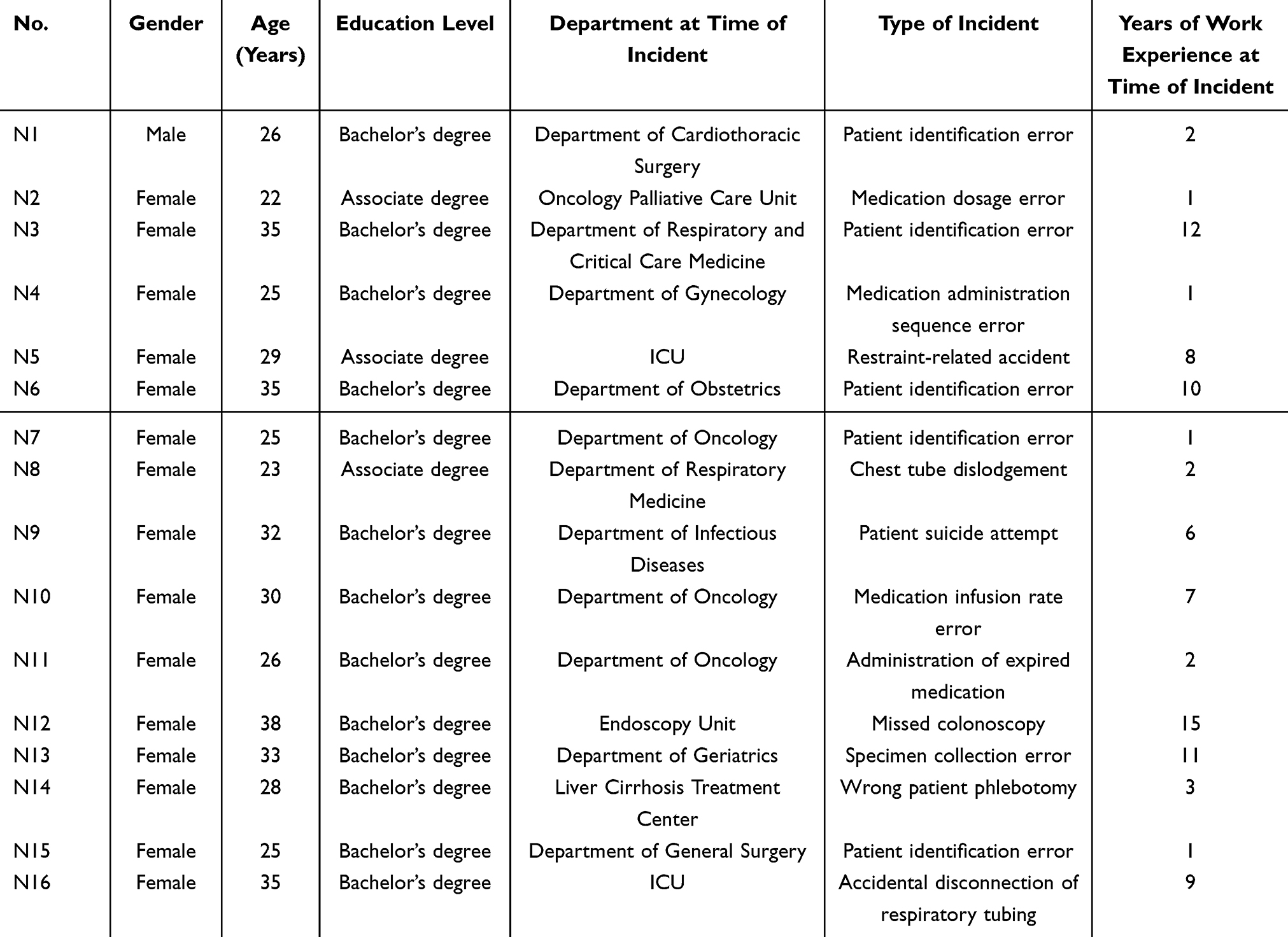 |
Table 1 Demographic and Professional Characteristics of Participants |
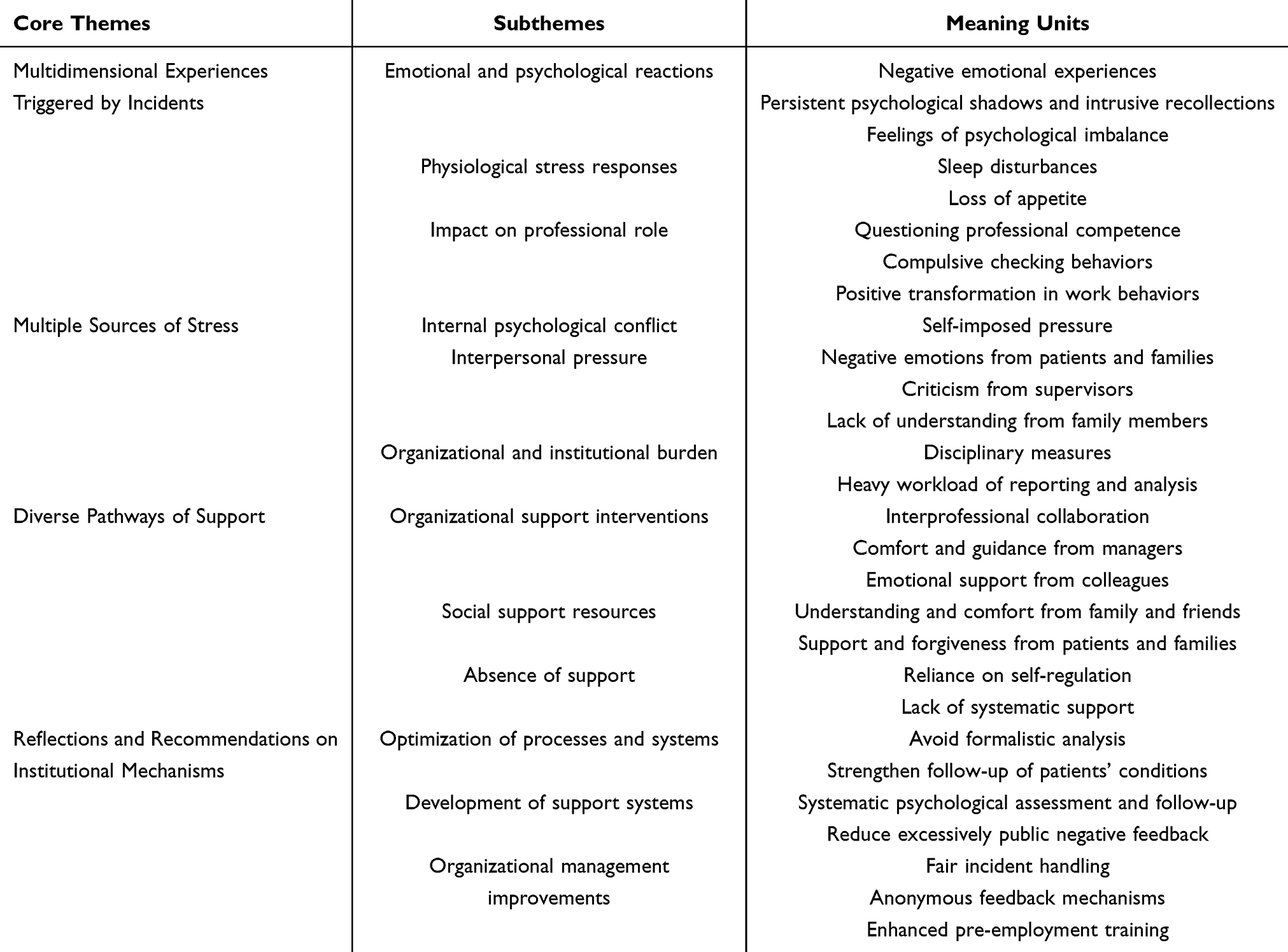 |
Table 2 Summary of Core Themes, Subthemes, and Meaning Units |
Multidimensional Experiences Triggered by Incidents
Emotional and Psychological Reactions
Most participants reported experiencing intense and complex negative emotions after patient safety incidents, primarily characterized by fear, anxiety, guilt, and self-blame. Emotional responses were particularly strong and persistent when the incident had the potential to cause substantial harm to patients. One nurse described how distress surged in solitude after the incident, when the hospital noise was gone:
During the days I was on leave after the incident, I felt extremely distressed when I was alone in my rented apartment (covering face, crying)… (N3).
Another nurse’s fear was tightly bound to a concrete, worst-case outcome for the patient:
At that time, I was very frightened. I was deeply worried that the patient might need an amputation because of this incident (N5).
Such emotional impacts extended far beyond the immediate event, often persisting as long-lasting psychological shadows. Several nurses noted that even after resuming normal work, they continued to recall the incident in everyday situations, resulting in ongoing tension and unease:
No matter how much time has passed, you will still recall that on a certain day, at a certain time, because of this incident, the patient’s life was nearly put at risk (N14).
In addition, some participants expressed feelings of psychological imbalance when they perceived unfair allocation of responsibility or unequal treatment during the aftermath, which further aggravated their emotional burden:
I just felt that we all work diligently, but in the end, all the responsibility was placed solely on me (N12).
Physiological Stress Responses
In addition to psychological reactions, some nurses exhibited pronounced physiological stress symptoms after patient safety incidents. Influenced by persistent tension and anxiety, several participants reported experiencing difficulty falling asleep, frequent awakenings, and recurrent nightmares for days or even longer following the incident:
During that period, I slept very little, and even after the incident was fully resolved, the problem continued for some time (N6).
I had several consecutive nights of nightmares, all related to the incident (N9).
Others described a decline in appetite and reduced food intake, presenting typical signs of stress-induced anorexia:
I couldn’t eat properly. I only managed lunch, but I couldn’t eat breakfast or dinner at all (N1).
Impact on Professional Role
The occurrence of patient safety incidents, to some extent, undermined nurses’ confidence in their professional roles. Several participants reported questioning their professional competence after the event, with some even doubting whether they were suited to continue working in nursing:
At that time, I began to doubt whether I was competent for this profession, wondering if there was something wrong with my ability (N11).
To prevent making similar mistakes again, some nurses developed compulsive work behaviors, such as repeatedly checking procedures, confirming tasks multiple times, and being unable to fully relax even after completing their shifts:
No matter what I did, I kept checking if I had made a mistake… Even after going home, I was worried about whether I had done something wrong or missed something, and I felt very anxious (N14).
On the other hand, some nurses regarded the incident as a warning, which motivated them to work more cautiously, strengthen their sense of responsibility, and enhance risk awareness in subsequent practice:
I raised my own standards and made sure to carry out the checking process very carefully (N13).
Multiple Sources of Stress
Internal Psychological Conflict
Following patient safety incidents, some nurses experienced intense internal psychological conflict. They perceived themselves as the primary party responsible for the incident and felt deep unease and guilt about the potential harm caused to patients. Even in the absence of explicit external blame, these nurses imposed pressure on themselves, enduring a heavy psychological burden through repeated self-reflection:
No one else placed pressure on me. I think the main source of stress was internal, because I kept wondering what kind of harm this incident might have caused to the patient… (N5).
External Interpersonal Pressure
Patients and their families were described as the most direct and intense sources of external pressure for nurses. During the handling of incidents, when patients or their relatives expressed agitation or persistent dissatisfaction, nurses often reported experiencing heightened tension and anxiety:
The main pressure actually came from the patient (hands trembling)… (N6).
The attitudes and approaches of senior managers also significantly influenced the emotional state of the nurses involved. Some participants reported feeling defeated and helpless when subjected to harsh criticism or a lack of empathy from their superiors:
The department director made me write a self-reflection and said, ‘If you can do the job, stay; if not, then leave.’ Those words were really hurtful (N10).
In addition, a lack of understanding from family members was another source of psychological pressure. Some participants described that instead of receiving comfort and support, they faced doubts about their competence and work attitude, which further intensified their mental burden:
When I told my parents about the incident, they didn’t understand. They felt I was careless at work and said I might have caused a lot of trouble for the head nurse or even for the hospital (N15).
Organizational and Institutional Burden
After patient safety incidents, nurses also faced stress stemming from organizational and institutional systems. Some participants reported being subjected to financial penalties or other forms of disciplinary action. Although they acknowledged the rationale behind such policies, they still found them difficult to accept on a personal level, which intensified their negative emotional experiences. Some participants described financial penalties as emotionally demoralizing, as if their month of work had been erased:
I was fined so much money… It felt like all the work I did for that month, all those days, was in vain (N12).
In addition, participants highlighted the heavy administrative workload required after such incidents. Within a short period of time, they were expected to complete multiple forms, conduct root cause analyses, and prepare reports or presentations for meetings. Managing this demanding paperwork and procedural complexity while simultaneously coping with emotional distress further compounded both psychological and occupational stress:
After an adverse event occurs, you have to write all kinds of reports, analyses, and briefings… all of it needs to be written, which creates a lot of pressure (N16).
Diverse Pathways of Support
Organizational Support Interventions
Organizational-level support played a crucial role in alleviating nurses’ psychological stress and assisting in the handling of patient safety incidents. Many participants emphasized that effective collaboration between doctors and nurses helped distribute the burden of responsibility, fostered a sense of trust and support, and contributed to smoother resolution of the incident:
It was the doctor who noticed that the infusion rate was wrong and promptly administered the medication to the patient. The attending physician provided a lot of help at that time, and I really appreciated it. (N10)
Support and guidance from senior managers were also crucial for emotional recovery and work adjustment. Managers actively communicated with patients and families, analyzed the incident, and proposed improvements. Moreover, colleagues who engaged in open communication and provided comfort reduced nurses’ sense of isolation, reinforcing team cohesion and support:
I think the support from managers helped me the most. They didn’t make me face the patient’s family directly (hands trembling, crying) (N3)
Teacher Fu’s timely counseling gave me great comfort and relief (N1)
Social Support Resources
Following patient safety incidents, understanding and care from family members and friends emerged as important resources for alleviating psychological stress. Friends played an active role in emotional recovery by offering companionship and distraction, such as inviting nurses to outings or gatherings, which helped relieve negative emotions. Family members provided more stable and enduring support, not only offering comfort but also suggesting alternative career options. This sense of acceptance and unconditional support helped reduce the stress burden associated with the incident:
During that time, my friends would take me out and keep me from dwelling on the incident. They really understood me… and their help was significant (N15)
After I told my family about the incident, they comforted me and stayed by my side… They fully supported me in giving up this job and even took me on a trip. My family gave me strong psychological support, which greatly reduced my stress. (N4)
Support from patients and their families also played a crucial role in nurses’ recovery. Several participants emphasized that patients’ tolerance and understanding effectively alleviated their psychological burden, while positive and kind attitudes during communication provided renewed motivation to continue their work:
The most important thing was obtaining the patient’s family’s understanding. That felt really significant (N7).
Another described kindness as a reason to keep going:
Some patients were especially kind and warm, which made me feel even more committed to doing my job well (N14)
In addition, improvement in patients’ conditions was perceived as a key source of emotional relief. Seeing patients recover or stabilize gave nurses a strong sense of reassurance:
The patient’s recovery was the greatest help to me (N5).
Absence of Support
Not all nurses were able to obtain effective external support after patient safety incidents. Many participants noted that organizational attention tended to focus on patient outcomes and incident-handling procedures, while nurses’ own emotional reactions and recovery needs were often deprioritized or overlooked:
The hospital and department director only cared about whether the patient was okay or injured, and then left the nurse behind (N16)
In addition, some participants reported that although supervisors might offer some protection “in the bigger picture,” the response was more often characterized by criticism, with little psychological support or comfort. In the context of absent support, nurses often relied on “time” and “self-adjustment” to gradually ease the negative experience associated with the incident:
This kind of thing just takes time… once it’s over, it’s over. No one comes afterward to comfort you or give you any advice (N12)
When there was no one at work with whom they could discuss the incident or feel understood, nurses also reported reduced willingness to disclose or seek help, believing that others could not truly understand their inner experience. Participants used expressions such as “no one to talk to” and “unable to empathize” to describe a coping state of maintaining daily functioning through silence:
Who is there to discuss this with? Even if you tell others… they didn’t go through it themselves, so they can’t truly empathize (N16).
You can only rely on yourself… just endure it and get through (N11).
Reflections and Recommendations on Institutional Mechanisms
Optimization of Processes and Systems
Several participants believed that the current procedures for handling patient safety incidents were overly complicated and, in some respects, unreasonable. They pointed out that incident analysis forms contained excessive and repetitive items, often becoming a mere formality and imposing an excessive documentation burden. Moreover, the use of a single standardized form for all types of adverse events was criticized as lacking specificity, thereby reducing clinical value and processing efficiency:
The process form is so long, with so many items—analyze this cause, analyze that cause… In the end, it’s always the same reason, that the patient didn’t pay attention. What else can I analyze?. (N8)
Not all adverse events should be reported with the same form. For incidents like patient falls or tube removals, the reporting doesn’t need to be so detailed. (N14)
In addition, multiple participants suggested that institutional mechanisms should incorporate follow-up tracking of patients’ conditions. They emphasized that timely updates on treatment outcomes not only help alleviate healthcare providers’ psychological stress but also provide a basis for clarifying responsibility and improving system design:
There should be follow-up to see how long it takes for the patient’s condition to stabilize after treatment. Also, if additional costs arise, is it the healthcare staff who should bear them, or the patient?. (N10)
Development of Support Systems
Many participants emphasized the need to establish a more systematic psychological support mechanism at the institutional level. Current procedures primarily focus on incident reporting and root cause analysis, with insufficient attention to the ongoing psychological well-being of the nurses involved. Participants suggested combining subjective assessments with standardized scales for psychological evaluation, and conducting follow-up at different time points after the incident to dynamically monitor changes in nurses’ mental states:
There should be follow-up to track the psychological changes of the nurse involved after the incident (N6)
Psychological evaluations for us nurses should be strengthened, using both subjective and objective measures… with ongoing follow-up to monitor our mental state. (N10)
At the same time, some participants expressed concern that excessively public feedback processes during incident handling further exacerbated their psychological stress. In certain cases, incidents were required to be reported step by step, and even presented at hospital-wide head nurse meetings. Most nurses felt that the incident itself had already served as a sufficient warning, and that such public disclosures unnecessarily intensified their burden:
I feel that the incident already gave me a huge warning. There’s no need to present it at a hospital-wide meeting—it created enormous pressure (N14).
The incident itself was already overwhelming, and having to report it publicly was even more crushing… (N8).
Organizational Management Improvements
During the handling of patient safety incidents, fairness and transparency were considered essential. Participants noted that when responsibility attribution and disciplinary standards lacked consistency—or were influenced by managers’ personal emotions—dissatisfaction and doubt often arose, thereby undermining institutional credibility:
I felt that the head nurse did not treat everyone equally when dealing with adverse events (N10).
I hope that in handling anything in the future, supervisors will be fair first and not let personal feelings get mixed into it (N12).
Participants also highlighted that decisions regarding incident handling were typically made unilaterally by management, leaving little opportunity for the involved nurses to voice their opinions. Some suggested that an opinion feedback mechanism should be integrated into the process—for example, through anonymous questionnaires—to gather input from those directly affected and to avoid overly one-sided responsibility assignments:
When the incident was being handled, the head nurse never once asked for my opinion… The nursing department could issue an anonymous questionnaire after the decision is made to see whether the person involved is satisfied with the outcome and has any suggestions. (N11)
I suggest that supervisors pay more attention to nurses’ opinions during the process of handling incidents (N16)
In addition, participants recommended strengthening pre-employment training by incorporating content related to patient safety incident reporting and handling procedures. Some nurses recalled that during their first experience with such events, they were unfamiliar with reporting workflows, documentation requirements, and root cause analysis, and thus had to rely on colleagues’ experiences or online materials. They suggested that systematic training during orientation could help reduce the additional stress caused by unfamiliarity with procedures:
When I had to prepare the documents for the first time, I didn’t know how to write them, or how to analyze the causes. I ended up asking friends for copies of reports from their departments and then looked up information online. (N15)
I think we should receive training on adverse event handling processes and how to fill out reporting forms when we first join the hospital (N11)
Discussion
This study explored nurses’ subjective stress experiences, sources of stress, and support needs in the context of patient safety incidents. The findings indicate that such incidents often trigger multidimensional psychological and physiological responses. These responses manifest not only as immediate negative emotions but also as lasting impacts on nurses’ professional identity and daily work. The stress experienced by nurses was characterized by an intricate interplay of factors, including internal psychological conflict arising from self-reflection and self-blame, as well as external pressures from patients and their families, supervisors, relatives, and organizational systems. In coping with these challenges, support from colleagues, supervisors, family members, and even patients played a positive role in alleviating distress. However, in the absence of such support, nurses frequently relied on self-regulation to adapt. Overall, the findings underscore the importance of addressing nurses’ psychological responses, stressors, support needs, and system-level mechanisms in the management of patient safety incidents. Striking a balance between accountability and psychological support is essential to safeguard both nurses’ well-being and patient safety.
Patient safety incidents exert a comprehensive impact on nurses, encompassing psychological, physiological, and professional dimensions. Psychologically, the fear, anxiety, guilt, and self-blame triggered by an incident do not automatically subside when the handling process ends; instead, they are often repeatedly reactivated as a persistent “psychological shadow” in subsequent work and daily life, leaving nurses in a prolonged state of tension, hypervigilance, and self-doubt. This aligns with Scott et al’s description of second victims whose acute stress responses may evolve into longer-term traumatic experiences.4 Further analysis revealed that when responsibility attribution was ambiguous or when handling processes lacked fairness, nurses’ psychological burdens were further exacerbated, sometimes leading to “secondary trauma.” This underscores the critical importance of maintaining fairness and transparency in incident management. On the physiological level, emotional stress was frequently accompanied by physical reactions such as sleep disturbances and appetite loss. Such “mind–body interactions” are not isolated occurrences but rather common manifestations of stress.20,21 Without timely intervention, these reactions may not only compromise nurses’ health but also impair clinical performance and jeopardize patient safety. At the professional level, patient safety incidents often undermined nurses’ confidence and professional identity, with some participants even questioning their suitability for nursing practice. Declines in professional confidence and increased turnover intentions are common among second victims.22,23 Some nurses developed compulsive checking behaviors and excessive caution—so-called “error-correcting” behaviors.24 While these may reflect heightened anxiety, they can also be understood as overcompensation to prevent future mistakes. Notably, however, some nurses are able to interpret the incident as a warning and translate it into reflection and learning, becoming more self-disciplined and strengthening their sense of responsibility in subsequent practice—demonstrating a process of “negative experience–reflection–positive transformation.” Prior research suggests that whether nurses remain trapped in emotional distress or achieve positive growth following an incident is closely linked to individual personality traits,25 explaining the variability in post-incident experiences.
The impact of patient safety incidents on nurses is therefore multidimensional, enduring, and heterogeneous. In practice, managers should recognize the diverse psychological, physiological, and professional responses of nurses and identify high-risk groups—such as those with diminished professional confidence or elevated anxiety. Interventions such as non-punitive root cause analyses, psychological counseling, and positive guidance can offer opportunities for post-traumatic growth, enabling nurses to transition from “trauma” to “growth.”
After patient safety incidents, the stress experienced by nurses exhibited an interwoven triadic pattern of individual, interpersonal, and institutional factors. At the individual level, internal psychological conflict was the predominant burden: some nurses attributed responsibility to themselves even in the absence of external blame, resulting in persistent guilt and anxiety. This aligns with prior studies demonstrating that second victims often impose excessive psychological pressure on themselves due to a strong sense of moral responsibility, which can lead to long-lasting psychological shadows and self-denial.20,26 At the interpersonal level, patients’ and families’ negative emotions were identified as the most direct source of external stress, while unsympathetic responses from managers further intensified feelings of helplessness. Previous research has shown that adverse patient emotions significantly heighten nurses’ psychological stress, and lack of organizational support is a key factor exacerbating the second victim dilemma.27–29 Thus, when patients or their families are highly agitated, managers should intervene proactively and “buffer” nurses from direct conflict situations to prevent additional secondary harm. In addition, family members’ lack of understanding may become an additional source of psychological stress for nurses. This phenomenon has been rarely discussed in prior research and may be related to the high expectations for “responsibility” and “professional performance” embedded in Chinese family culture. Nursing work is often moralized and framed as a role that must be “meticulous, responsible, and error-free.” When a patient safety incident occurs, family members may be more likely to judge the nurse in terms of “having an improper attitude” or “lacking a sense of responsibility,” which can further intensify nurses’ guilt and self-blame. Moreover, in a collectivist cultural context, individual actions are often interpreted through a collective lens; after the incident, family members may emphasize “not causing trouble for the workplace” or “not affecting the department,” thereby extending nurses’ stress from the individual level to the collective level. At the institutional level, organizational burdens were also prominent. Nurses not only faced financial penalties but were also required to complete extensive documentation and reporting tasks in a short time, creating both psychological and occupational strain. Sha et al30 noted that the severity of second victim experiences is closely related to the reporting process. Although reporting systems are intended to promote patient safety and quality improvement, overly cumbersome procedures often become an “institutional burden,” leading to “documentation fatigue,” diminished clinical focus, and reduced job satisfaction—all of which may ultimately undermine patient safety improvement efforts.
In sum, the sources of stress following patient safety incidents are multidimensional, arising from the combined effects of self-blame, lack of interpersonal support, and institutional burdens. To address these challenges, managers should seek a balance between procedural enforcement and humanistic care. Practical strategies may include streamlining reporting processes, strengthening supportive communication, and recognizing the role of family support systems, thereby alleviating nurses’ psychological stress, promoting recovery, and sustaining professional development.
The support that nurses received after patient safety incidents was primarily derived from organizational and social levels, though notable gaps in support were also evident. At the organizational level, support from managers and colleagues was found to be critical in alleviating anxiety and preventing secondary harm. Protective interventions by managers and the comforting collaboration of colleagues were identified as key factors in facilitating psychological recovery for nurses following incidents.31,32 This study revealed that when managers communicated with patients and families on behalf of nurses, such actions were especially important in reducing the stress caused by patients’ negative emotions and preventing further psychological harm. In addition, interprofessional collaboration was recognized by participants as a valuable form of support. High-quality teamwork between nurses and physicians not only improves clinical communication and reduces errors but also alleviates work-related stress and psychological burden.33 According to organizational support theory, individuals’ perceptions of organizational support are crucial determinants of psychological well-being and work attitudes.14 When nurses perceive both emotional and institutional protection from their organizations, they develop stronger feelings of professional security and self-worth, which accelerate their recovery from psychological distress. At the social level, understanding from friends and family was viewed as an essential resource for emotional healing. Social support theory suggests that positive social networks enhance individuals’ capacity to cope with stress and reduce the persistence of psychological trauma.34 Importantly, tolerance and forgiveness from patients and their families carried unique significance in nurses’ recovery. High-quality nurse–patient communication not only improves patient satisfaction but also enhances nurses’ job satisfaction and professional identity, thereby reducing burnout.35 Improvement in patients’ clinical conditions was also frequently described as a source of comfort and even a form of “self-redemption” for nurses. This finding suggests that managers, when handling patient safety incidents, should pay attention not only to providing emotional and institutional support for nurses but also to the outcomes and feedback related to patients’ conditions. Establishing mechanisms for patient follow-up and timely feedback may help nurses witness recovery, thereby reducing prolonged negative emotions and fostering psychological healing. This study also revealed the phenomenon of absent support. Some nurses reported a lack of effective organizational and interpersonal assistance after incidents, leaving them to rely solely on self-regulation and the passage of time for recovery. Although self-adjustment plays a role in post-incident restoration, its effectiveness is limited, potentially prolonging psychological trauma and exacerbating burnout. In certain institutions, systematic support mechanisms for second victims remain absent.36 Future nursing management should promote the institutionalization of support systems, building multilayered and sustainable networks of care to prevent nurses from feeling isolated and unsupported after patient safety incidents.
Although existing patient safety incident management systems provide a basic framework for reporting and accountability, this study found that these mechanisms remain insufficient in meeting the complex needs of nurses as second victims. First, at the procedural level, participants consistently reported that current reporting and analysis forms were overly cumbersome and lacked specificity, reducing incident reporting to a formalistic burden rather than a tool for quality improvement. Future systems should adopt differentiated forms tailored to the responsible party and type of incident in order to enhance the validity and clinical relevance of reports. At the support system level, existing mechanisms primarily emphasize reporting, root cause analysis, and nurses’ immediate reactions, while neglecting sustained attention to long-term psychological well-being.37 Participants expressed the need for psychological assessments combining subjective experiences with standardized scales, along with follow-up interventions at different time points. This recommendation aligns with international second victim support initiatives such as the Resilience In Stressful Events (RISE) program,38 which integrates psychological assessment, regular follow-up, and individualized interventions. Such structured support systems have been shown to significantly reduce nurses’ psychological trauma and turnover risk following adverse events.4 Importantly, nurses in this study highlighted that presenting incidents at hospital-wide meetings often caused “secondary harm,” underscoring the need for systems to strike a balance between transparency and protection to avoid exacerbating distress through excessive disclosure. At the organizational management level, fairness and transparency emerged as core elements for building nurses’ trust in incident management. When responsibility allocation was influenced by managers’ subjective judgments, dissatisfaction arose and institutional credibility was undermined. Prior studies have noted that managerial fairness and transparency can not only strengthen nurses’ sense of belonging but also mitigate psychological trauma and promote organizational learning through mechanisms of procedural justice.39 Therefore, incorporating anonymous feedback and opinion-gathering mechanisms into incident handling may both enhance credibility and align with the principles of openness and fairness emphasized in healthcare governance. Finally, at the educational and training level, this study revealed that junior nurses or those experiencing incidents for the first time often faced additional stress due to unfamiliarity with reporting processes. A review has shown that insufficient education and training frequently leave nurses uncertain about “what should be reported and how,” thereby creating barriers to incident reporting.40 Nursing managers should strengthen education on reporting and handling procedures through pre-employment orientation and routine training, including simulation exercises. Ensuring that nurses are fully informed and confident in these processes can help reduce unnecessary stress associated with procedural unfamiliarity.
Strengths of the Study
Grounded in Organizational Support Theory and the Dynamic Model of Work Stress, this study systematically examined nurses’ stressors, stress responses, and support needs during patient safety incidents across individual, organizational, and institutional levels. Building on these insights, the study further proposed targeted recommendations for system optimization and managerial improvement, offering valuable guidance for the development of interventions and support policies. The use of a rigorous qualitative design, combined with triangulation, strengthened the scientific rigor and trustworthiness of the findings.
Limitations of the Study
This study has several limitations. First, all participants were recruited from a single tertiary hospital in Jiangsu Province, China, which may introduce institutional and regional bias and limit the generalizability of the findings. Second, only one of the 16 participants was male, which may have overlooked potential gender-related differences in experiences and perspectives. Third, the data relied primarily on participants’ recollections, which could be subject to recall bias. Finally, although researchers maintained a stance of bracketing to minimize personal preconceptions, the findings ultimately represent researchers’ interpretations of participants’ narratives and may thus be influenced by subjective understanding.
Conclusion
The stress experiences of nurses during patient safety incidents highlight the multiple challenges inherent in clinical practice—challenges that not only threaten nurses’ physical and psychological well-being but may also indirectly compromise patient safety. The findings suggest that managers should provide more individualized and sustained support interventions after such incidents, integrating institutional optimization with psychological care. Simplifying and humanizing incident management procedures, establishing fair and transparent mechanisms for responsibility attribution, and leveraging family and social resources can help mitigate nurses’ stress and strengthen their professional resilience. Future research should further examine differences across gender and regions, explore context-specific support models tailored to local needs, and evaluate their long-term effects on nurses’ professional development and patient safety outcomes.
Acknowledgments
We sincerely thank the nurses who participated in the interviews for generously sharing their valuable experiences despite their busy schedules. Our sincere thanks are extended to our supervisor and research team for their guidance and contributions to the study design, data analysis, and manuscript preparation.
Disclosure
The authors report no conflicts of interest in this work.
References
1. WHO. World Patient Safety Day. 2023.
2. Thomson R, Lewalle P, Sherman H, Hibbert P, Runciman W, Castro G. Towards an International Classification for Patient Safety: a Delphi survey. Int J Qual Health Care. 2009;21(1):9–15. doi:10.1093/intqhc/mzn055
3. Wu AW. Medical error: the second victim. The doctor who makes the mistake needs help too. BMJ. 2000;320(7237):726–727. doi:10.1136/bmj.320.7237.726
4. Scott SD, Hirschinger LE, Cox KR, McCoig M, Brandt J, Hall LW. The natural history of recovery for the healthcare provider “second victim” after adverse patient events. Qual Saf Health Care. 2009;18(5):325–330. doi:10.1136/qshc.2009.032870
5. White RM, Delacroix R. Second victim phenomenon: is “just culture” a reality? An integrative review. Appl Nurs Res. 2020;56:151319. doi:10.1016/j.apnr.2020.151319
6. Huang R, Sun H, Chen G, Li Y, Wang J. Second-victim experience and support among nurses in mainland China. J Nurs Manag. 2022;30(1):260–267. doi:10.1111/jonm.13490
7. Ozeke O, Ozeke V, Coskun O, Budakoglu II. Second victims in health care: current perspectives. Adv Med Educ Pract. 2019;10:593–603. doi:10.2147/AMEP.S185912
8. Choi EY, Pyo J, Ock M, Lee H. Profiles of second victim symptoms and desired support strategies among Korean nurses: a latent profile analysis. J Adv Nurs. 2022;78(9):2872–2883. doi:10.1111/jan.15221
9. International Council of Nurses. (2025). ICN puts wellbeing of nurses at centre of International Nurses Day 2025. Available from: https://www.icn.ch/news/icn-puts-wellbeing-nurses-centre-international-nurses-day-2025.
10. The General Office of the State Council of the People’s Republic of China. 2021. Opinions on promoting the high-quality development of public hospitals. In: Gazette of the State Council of the People’s Republic of China. Vol. 17:174–178. Available from: https://www.gov.cn/gongbao/content/2021/content_5618942.htm.
11. Zhang H, Huang X, Gu H, et al. A qualitative study on the psychological experiences of second victims after adverse obstetric nursing events. Junshi Huli [Military Nurs]. 2023;40(9):22–25. in Chinese.
12. Lee W, Pyo J, Jang SG, Choi JE, Ock M. Experiences and responses of second victims of patient safety incidents in Korea: a qualitative study. BMC Health Serv Res. 2019;19(1):100. doi:10.1186/s12913-019-3936-1
13. Zhou H, Zhuang Y, Wang X, et al. Visualization analysis of research hotspots and trends on second victims in nursing. Zhonghua Jiwie Zhongzheng Huli Zazhi [Chin J Critl Care Nurs]. 2024;5(9):812–818. in Chinese.
14. Rhoades L, Eisenberger R. Perceived organizational support: a review of the literature. J Appl Psychol. 2002;87(4):698–714. doi:10.1037/0021-9010.87.4.698
15. Wiley. Managing Workplace Stress: a Best Practice Blueprint. Available from: https://www.wiley.com/en-us/Managing+Workplace+Stress%3A+A+Best+Practice+Blueprint-p-9780470842874.
16. Zhang K. The concept and development of phenomenological research (Heidegger, M.) [in Chinese]. J Guizhou Univ (Soc Sci). 2024;42:5. 1–11. doi:10.15958/j.cnki.gdxbshb.2024.05.01
17. Tong A, Sainsbury P, Craig J. Consolidated criteria for reporting qualitative research (COREQ): a 32-item checklist for interviews and focus groups. Int J Qual Health Care. 2007;19(6):349–357. doi:10.1093/intqhc/mzm042
18. Saunders B, Sim J, Kingstone T, et al. Saturation in qualitative research: exploring its conceptualization and operationalization. Qual Quant. 2018;52(4):1893–1907. doi:10.1007/s11135-017-0574-8
19. Colaizzi PF. Psychological Research as the Phenomenologist Views It. In: Valle RS, King M, editors. Existential-Phenomenological Alternatives for Psychology. Oxford University Press; 1978:6.
20. Busch IM, Moretti F, Purgato M, Barbui C, Wu AW, Rimondini M. Psychological and Psychosomatic Symptoms of Second Victims of Adverse Events: a Systematic Review and Meta-Analysis. J Patient Saf. 2020;16(2):e61–e74. doi:10.1097/PTS.0000000000000589
21. Li S, Lu X, Zhou D, et al. A qualitative study on the psychological recovery pathways of nurse second victims. Hulixue Zazhi [J Nursing]. 2023;38(2):66–68+81. in Chinese.
22. Al Sabei S, Qutishat M. Second victim syndrome and turnover intention among critical care nurses. Discov Ment Health. 2025;5(1):110. doi:10.1007/s44192-025-00256-9
23. Li P, Li B, Geng R, et al. Path analysis of the effects of distress and rumination on job burnout among nurse second victims. Zhongguo Huli Guanli [Chin Nurs Manag]. 2025;25(4):597–602. in Chinese.
24. Delacroix R. Exploring the experience of nurse practitioners who have committed medical errors: a phenomenological approach. J Am Assoc Nurse Practitioner. 2017;29(7):403–409. doi:10.1002/2327-6924.12468
25. Li X, Chong MC, Che CC, et al. Barriers and Facilitators to Coping with Second Victim Experiences: insights from Nurses and Nurse Managers. Journal of Nursing Management. 2024;2024(1):5523579. doi:10.1155/2024/5523579
26. Stovall M, Hansen L, van Ryn M. A Critical Review: moral Injury in Nurses in the Aftermath of a Patient Safety Incident. J Nurs Scholarsh. 2020;52(3):320–328. doi:10.1111/jnu.12551
27. Zhang L, Xie A, Wang C, et al. A phenomenological study on the experiences of junior pediatric nurses during adverse nursing events. Quanke Huli [General Nursing]. 2023;21(28):3976–3979. in Chinese.
28. Quillivan RR, Burlison JD, Browne EK, Scott SD, Hoffman JM. Patient Safety Culture and the Second Victim Phenomenon: connecting Culture to Staff Distress in Nurses. Jt Comm J Qual Patient Saf. 2016;42(8):377–386. doi:10.1016/s1553-7250(16)42053-2
29. Kuang Z, Chen L, Lai G, et al. Current status and influencing factors of support for second victims in ICU nursing adverse events. Jiefangjun Huli Zazhi [J PLA Nurs]. 2021;38(12):13–17. in Chinese.
30. Shahbazzadeh F, Habibi Soola A, Narimani S, Ajri-Khameslou M. Investigating the status of the second victims of error and related factors in nurses: a description study. BMC Nurs. 2025;24(1):99. doi:10.1186/s12912-024-02669-3
31. Järvisalo P, Haatainen K, Von Bonsdorff M, Turunen H, Härkänen M. Interventions to support nurses as second victims of patient safety incidents: a qualitative study of nurse managers’ perceptions. J Adv Nurs. 2024;80(6):2552–2565. doi:10.1111/jan.16013
32. Zhu K, Xue H, Zhang F, et al. The mediating role of second victim experiences and support between hospital patient safety culture and job burnout among nurses. Zhongguo Huli Guanli [Chin Nurs Manag]. 2022;22(12):1877–1882. in Chinese.
33. Ali H, Ibrahem SZ, Al Mudaf B, Al Fadalah T, Jamal D, El-Jardali F. Baseline assessment of patient safety culture in public hospitals in Kuwait. BMC Health Serv Res. 2018;18(1):158. doi:10.1186/s12913-018-2960-x
34. Chen A, Lu Y. Research on active behavior of SNS users: an integrated perspective of commitment, social support, sunk cost, and social influence theories. Nankai Guanli Pinglun [Nankai Business Rev]. 2014;17(3):30–39. in Chinese.
35. Granados Gámez G. The nurse-patient relationship as a caring relationship. Nurs Sci Q. 2009;22(2):126–127. doi:10.1177/0894318409332789
36. Wu X, Xu Z, Fu K, et al. The impact of support for nurse second victims on post-traumatic growth: the mediating role of rumination. Huli Guanli Zazhi [J Nurs Manage]. 2022;22(2):89–93. in Chinese.
37. Busch IM, Moretti F, Campagna I, et al. Promoting the Psychological Well-Being of Healthcare Providers Facing the Burden of Adverse Events: a Systematic Review of Second Victim Support Resources. Int J Environ Res Public Health. 2021;18(10):5080. doi:10.3390/ijerph18105080
38. Edrees H, Connors C, Paine L, Norvell M, Taylor H, Wu AW. Implementing the RISE second victim support programme at the Johns Hopkins Hospital: a case study. BMJ Open. 2016;6(9):e011708. doi:10.1136/bmjopen-2016-011708
39. Ito A, Sasaki M, Yonekura Y, Ogata Y. Impact of organizational justice and manager’s mental health on staff nurses’ affective commitment: a multilevel analysis of the work environment of hospital nurses in Japan-Part II (WENS-J-II). Int J Nurs Stud Adv. 2023;5:100137. doi:10.1016/j.ijnsa.2023.100137
40. Hamed MMM, Konstantinidis S. Barriers to Incident Reporting among Nurses: a Qualitative Systematic Review. West J Nurs Res. 2022;44(5):506–523. doi:10.1177/0193945921999449
 © 2026 The Author(s). This work is published and licensed by Dove Medical Press Limited. The
full terms of this license are available at https://www.dovepress.com/terms
and incorporate the Creative Commons Attribution
- Non Commercial (unported, 4.0) License.
By accessing the work you hereby accept the Terms. Non-commercial uses of the work are permitted
without any further permission from Dove Medical Press Limited, provided the work is properly
attributed. For permission for commercial use of this work, please see paragraphs 4.2 and 5 of our Terms.
© 2026 The Author(s). This work is published and licensed by Dove Medical Press Limited. The
full terms of this license are available at https://www.dovepress.com/terms
and incorporate the Creative Commons Attribution
- Non Commercial (unported, 4.0) License.
By accessing the work you hereby accept the Terms. Non-commercial uses of the work are permitted
without any further permission from Dove Medical Press Limited, provided the work is properly
attributed. For permission for commercial use of this work, please see paragraphs 4.2 and 5 of our Terms.