
Back to Journals » Journal of Multidisciplinary Healthcare » Volume 18
Research on the Implementation Status and Optimization Path of “Internet + Nursing Service” from the Perspective of Grade Hospital Difference: A Multi-Dimensional Empirical Study Based on Online Nurses in Quzhou City
Authors Xu W  , Jiang C, Xu L , Qiu T
Received 7 April 2025
Accepted for publication 24 July 2025
Published 13 August 2025 Volume 2025:18 Pages 4989—4999
DOI https://doi.org/10.2147/JMDH.S532942
Checked for plagiarism Yes
Review by Single anonymous peer review
Peer reviewer comments 2
Editor who approved publication: Dr David C. Mohr
Wenxian Xu,1 Chao Jiang,2 Liping Xu,3 Ting Qiu4
1Nursing Department, The Quzhou Affiliated Hospital of Wenzhou Medical University, Quzhou People’s Hospital, Quzhou, Zhejiang, People’s Republic of China; 2Wound Repair Department & Hepatobiliary Surgery, The Quzhou Affiliated Hospital of Wenzhou Medical University, Quzhou People’s Hospital, Quzhou, Zhejiang, People’s Republic of China; 3Otorhinolaryngology Department, The Quzhou Affiliated Hospital of Wenzhou Medical University, Quzhou People’s Hospital, Quzhou, Zhejiang, People’s Republic of China; 4Traditional Chinese Medicine & Rheumatology and Immunology Department, The Quzhou Affiliated Hospital of Wenzhou Medical University, Quzhou People’s Hospital, Quzhou, Zhejiang, People’s Republic of China
Correspondence: Ting Qiu, Traditional Chinese Medicine & Rheumatology and Immunology Department, The Quzhou Affiliated Hospital of Wenzhou Medical University, Quzhou People’s Hospital, Quzhou, 324000, People’s Republic of China, Email [email protected]
Purpose: This study aims to explore the hierarchical management model of “Internet + Nursing Services” in prefecture-level regions, and provide targeted management strategies and improvement measures for managers of hospitals at different levels, so as to improve the overall quality and effectiveness of “Internet + Nursing Services” and promote the sustainable development of “Internet + Nursing Services”.
Patients and Methods: A cross-sectional study was conducted on online nurses from different grades of hospitals contracted with “Zheli Nursing” in Quzhou City using cluster sampling method, to compare the differences in cognition, service willingness, service experience, risk perception, and obtained policy support among online nurses from different grades of hospitals in carrying out “Internet + Nursing Services”.
Results: Online nurses in high-level hospitals have advantages in cognition of knowledge related to “Internet + Nursing Services”, service willingness, and service capabilities, but they face challenges in occupational safety and adaptation to complex environments. In contrast, online nurses in low-level hospitals have insufficient cognition of relevant knowledge about “Internet + Nursing Services”, low service willingness, and concerns about road safety and medical violence, and they receive relatively less policy support and other issues.
Conclusion: This study found significant quantitative differences in multiple dimensions among online nurses from different graded hospitals in Quzhou during the provision of “Internet + Nursing Services”, providing scientific basis and practical guidance for optimizing the hierarchical management of “Internet + Nursing Services”.
Keywords: internet plus nursing services, cognition, risk perception, grade hospital
Introduction
The global aging situation is becoming increasingly severe, and the proportion of people aged 60 and above is continuing to rise.1 Taking China as an example, data from the seventh national population census shows that the proportion of people aged 65 and above has reached 13.5% of the total population.2 Aging has also posed new challenges to social elderly care and medical costs.3 With the advancement of medical technology and the diversification of patient needs, the traditional medical model has struggled to meet the demands of modern society. The National Health Commission of China has actively promoted “Internet + Nursing Services”, aiming to optimize the allocation of medical resources and improve the accessibility and quality of medical services through innovative service models.4–6 Graded hospitals are evaluated and graded by China’s health departments according to the scale of hospital development, medical quality and medical service capabilities. The system classifies hospitals into three levels and six Levels, namely Level III A, Level III B, Level III C; Level II A, Level II B, Level II C; and Level I A, Level I B, Level I C. Among them, Level III A is the highest level, and Level I C is the lowest level.7 However, as an important model for the sinking of medical resources, the promotion effect of ‘Internet + Nursing Services’ is constrained by the hierarchical differences of medical institutions. The cognition of ‘Internet + Nursing Services’ refers to nurses’ awareness of the purpose, operation mechanism, risk prevention mechanism and other related knowledge of “Internet + Nursing Services”.8 Only when nurses understand and accept this relevant knowledge can they be willing to participate in the services from the bottom of their hearts.9 Nevertheless, existing studies mostly focus on the service model itself, lacking a differentiated analysis of online nurses’ cognition, service willingness, service experience, and risk perception in carrying out “Internet + Nursing Services” under the influence of hospital levels.3,10,11 This study, based on the empirical data of online nurses in different level hospitals in Quzhou, explores the key influencing factors for the implementation of the service, aiming to provide a scientific basis and practical guidance for third-party platforms, local governments and relevant departments to optimize the hierarchical management of “Internet + Nursing Services”.
Materials and Methods
Research Object
This study used a cluster sampling method to conduct a cross-sectional survey of online nurses from different level hospitals contracted with “Zheli Nursing” in Quzhou. As there are no Level C hospitals in Quzhou, the survey was only conducted on Level III A,Level III B,Level II A, and Level II B hospitals. With the help of the Quzhou Nursing Association, the questionnaire was distributed in the form of online filling through “Wenjuanxing” (an online survey platform). The inclusion criteria were: nurses who had registered as online nurses in “Zheli Nursing” and had at least 6 months of experience in “Internet + Nursing Services”. The exclusion criteria were: nurses on leave or resigned during the survey period.
The sample size of this study was calculated based on the Kendall (1975) estimation method: the sample size should be 20 times the number of questionnaire items (36 items in total), and a 20% loss rate should be added to ensure the questionnaire recovery rate.12 Therefore, the sample size of this study should be no less than 864 (n=20×36×(1+20%)=864). A total of 943 valid questionnaires were finally received, including 257 from Level III A hospitals, 321 from Level III B hospitals, 245 from Level II A hospitals, and 120 from Level II B hospitals.
Research Method
Designing the questionnaire. In accordance with the requirements of the “Internet + Nursing Services” Pilot Work Plan issued by the National Health Commission, the Questionnaire on the Current Situation of “Internet + Nursing Services” Carried out by Online Nurses in Quzhou was gradually formulated through literature review, group discussions, and consultations with experts having a background in internet research. The questionnaire covers basic information and four dimensions.13,14
Except for the basic information, the remaining four dimensions consist of 36 items in total. The Likert 5-point scoring method is adopted, and the questionnaire is designed with single-choice questions. Scores range from 1 point (strongly disagree) to 5 points (strongly agree), where a higher score indicates a higher level of satisfaction. From November 5th to November 12th, 2024, the research team, through the directors of the Quzhou Nursing Association, distributed QR codes to online nurses in various medical institutions via “Wenjuanxing” (an online survey platform) to conduct an online questionnaire survey. This period coincided with the council meeting of Quzhou Nursing Association, where nursing leaders from all public hospitals in Quzhou would attend. The significance of the survey and precautions could be uniformly explained at the meeting. The questionnaire content is as follows:
Basic Information
The level of medical institution, department, gender, age, education background, professional title, years of service, whether being a specialist nurse, and whether there are children to care for at home, etc.
Cognition and Service Willingness
A1. You are aware of the relevant content and trial effects of the Operation Plans for Pilot Cities of National “Internet + Nursing Services”. A2. You are aware of the qualifications related to the admission of nurses for online home nursing services. A3. You can skillfully use the “Zheli Nursing” third-party platform APP. A4. You believe that carrying out “Internet + Nursing Services” can optimize the allocation of nursing resources. A5. You believe that carrying out “Internet + Nursing Services” can improve nursing quality. A6. You believe that engaging in “Internet + Nursing Services” can improve nurses’ life satisfaction and happiness. A7. Choosing to engage in “Internet + Nursing Services” is your personal initiative. A8. The willingness to choose “Internet + Nursing Services” is influenced by your family members or relatives. A9. The willingness to choose “Internet + Nursing Services” is influenced by your unit leaders or colleagues. A10. The willingness to choose “Internet + Nursing Services” is influenced by the clients you serve.
Service Experience
B1. As an online nurse, your personal experience is that online consultations are more frequent than offline order services. B2. As an online nurse, your personal experience is that offline order services are more frequent than online consultations. B3. As of the time of this survey, in the online orders you have completed, you have intentionally asked colleagues or relatives to help place orders in order to meet quotas. B4. After accepting an order, the arrangement of the service time period can receive the understanding and support of the patient and family members. B5. After an order is booked, if the service time needs to be adjusted due to work conflicts, the “Zheli Nursing” platform system can quickly facilitate negotiation and adjustment. B6. You feel satisfied with the home working environment when providing on-site services. B7. The remuneration for online nursing services is considered to have a positive correlation with the service travel costs. B8. You believe that the disposal of medical waste generated during the on-site nursing services as an online nurse is inconvenient.
Risk Perception
C1. You are concerned about potential personal safety hazards during the round trip of home nursing services. C2. You are concerned that home-based services may expose you to violent harm due to medical disputes. C3. You are concerned that home-based services may cause personal injury to yourself due to the personal reasons of the patient or family members. C4. You are concerned that exposure to infectious disease patients or the working environment during home-based services may pose potential harm to your health. C5. You are concerned that personal information about yourself or the patient may be leaked during home-based services. C6. You are concerned that engaging in online nursing services during rest time may affect your physical health. C7. You are concerned that patients or family members may have requirements for online nurses that exceed the scope of the ordered services. C8. You are concerned about the occupational medical safety risks in independent practice during home visits. C9. You are concerned that home nursing services may affect service quality due to failure to timely detect changes in the patient’s condition or lack of correct nursing risk decision-making ability. C10. You are concerned that online nursing services may affect the nursing staff allocation in the department, leading to potential safety hazards in departmental work.
Obtained Policy Support
D1. Your hospital provides relevant admission training and assessment for nurses applying for contract for the first time. D2. Your hospital provides training on the operation procedures of the “Zheli Nursing” APP for nurses who sign the contract for the first time. D3. Your hospital provides training on relevant laws and regulations/risk control for the work of online nurses. D4. Your hospital provides sufficient technical operation training for the work of online nurses. D5. Your hospital conducts annual training on emergency response plans, tabletop exercises, and comprehensive emergency drills for unexpected incidents. D6. Your hospital provides strong team support for the work of online nurses. D7. The managers of your hospital can timely understand the problems and ideas of online nurses. D8. Your hospital brings more substantial and guaranteed income to the work of online nurses.
Statistical Analysis
The data were statistically analyzed using SPSS 22.0 software. For categorical data such as department, education background, age, professional title, years of service, whether being a specialist nurse, and whether there are children to care for at home, they are presented as percentages “%”, and the chi-square (χ2) test is used for comparisons between groups.15 For the measurement data of online nurses in different grades of hospitals regarding their cognition of knowledge related to “Internet + Nursing Services”, service willingness, service experience, risk perception, and obtained policy support, they are expressed as ( ±s), and the F-test is used for comparisons between groups. P < 0.05 was considered statistically significant.16
Results
Characteristics of the Participants
The comparisons of online nurses in different grades of hospitals in terms of education background, professional title, age, years of service, whether being a specialist nurse, and whether there are children to care for at home are shown in Table 1, and the differences were not statistically significant (P>0.05). It shows that there were no significant differences in academic qualifications, professional titles, age, years of service, whether they were specialist nurses, and whether there were children to care for at home among online nurses in different grade hospitals in Quzhou area. See Table 1 for details.
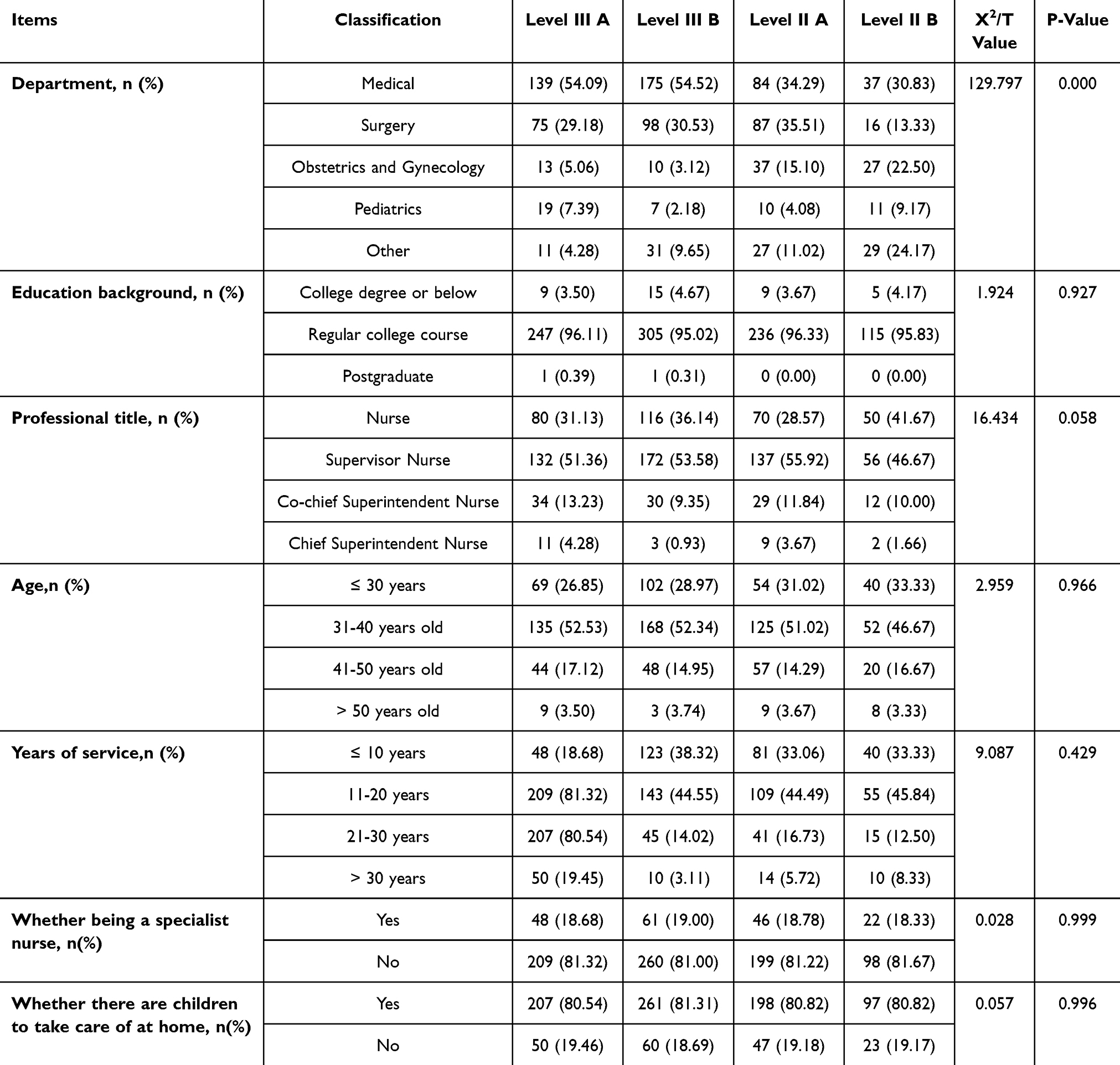 |
Table 1 General Information of Online Appointment Nurses in Different Levels of Hospitals (n = 943) |
Differences in Cognition of Relevant Knowledge and Personal Service Willingness
There were hierarchical differences in the cognition of relevant knowledge about “Internet + Nursing Services” and personal service willingness among online nurses in hospitals of different grades. The influence of family/relatives, unit leaders/colleagues, and service recipients on the service willingness of online nurses showed no significant differences. However, there were significant differences (p<0.05) in personal service willingness and cognition of relevant knowledge about “Internet + Nursing Services”, with the scores ranking from high to low as Level III A, Level III B,Level II A, Level II B. See Table 2 for details.
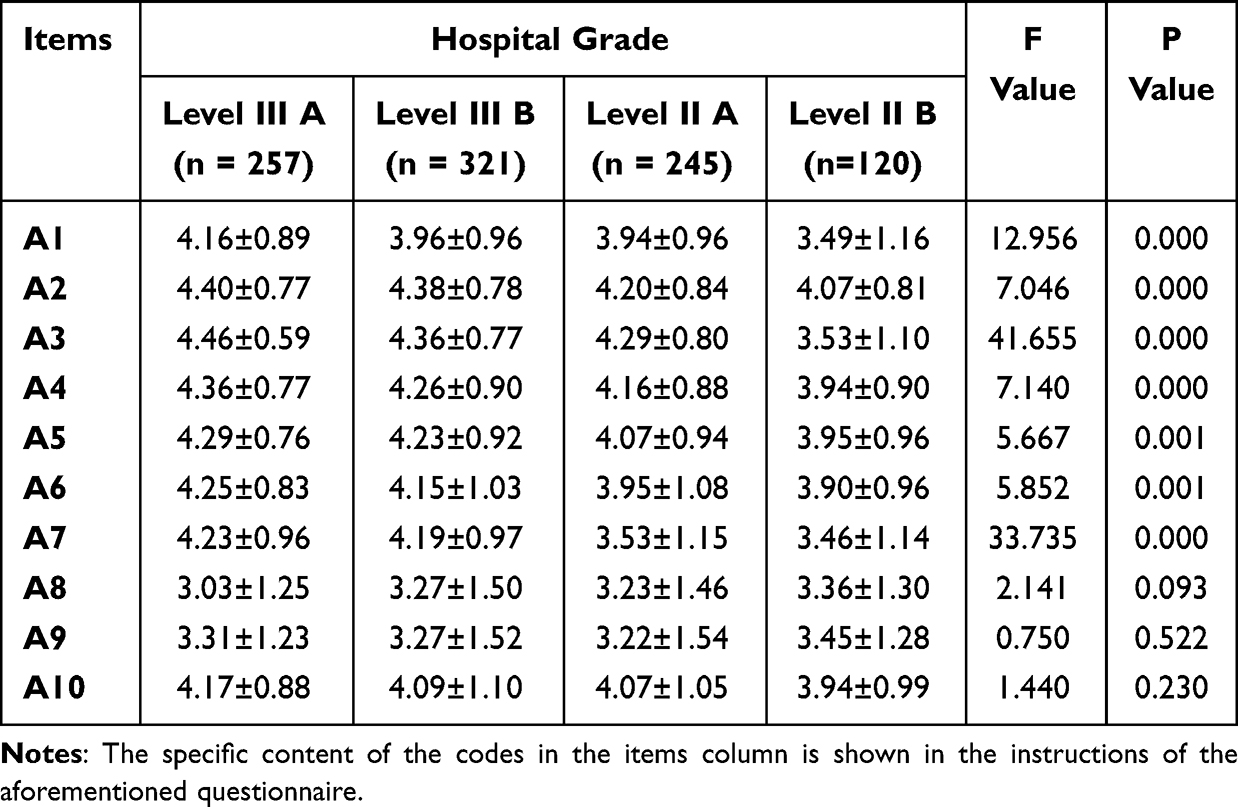 |
Table 2 Stratified Differences in Cognition and Service Willingness of Online Appointment Nurses in Different Levels of Hospitals on “Internet Plus Nursing Services” ( |

Differences in Service Experience
There were hierarchical differences in the service experience of “Internet + Nursing Services” provided by online nurses in hospitals of different grades. However, there were no differences among hospitals of different grades in terms of “whether colleagues/relatives were asked to help place orders for completed orders”, “whether the service time arrangement after order acceptance was supported by patients”, and “platform service time coordination”. However, there were significant differences (p<0.05) among hospitals of different grades in items such as online consultation, offline order acceptance, home service environment, and labor remuneration. Specifically, Level III A scored the highest in online consultation and offline order acceptance, while Level II B scored the lowest. In contrast, Level II B scored the highest in home service environment and service remuneration, while Level III A scored the lowest. See Table 3 for details.
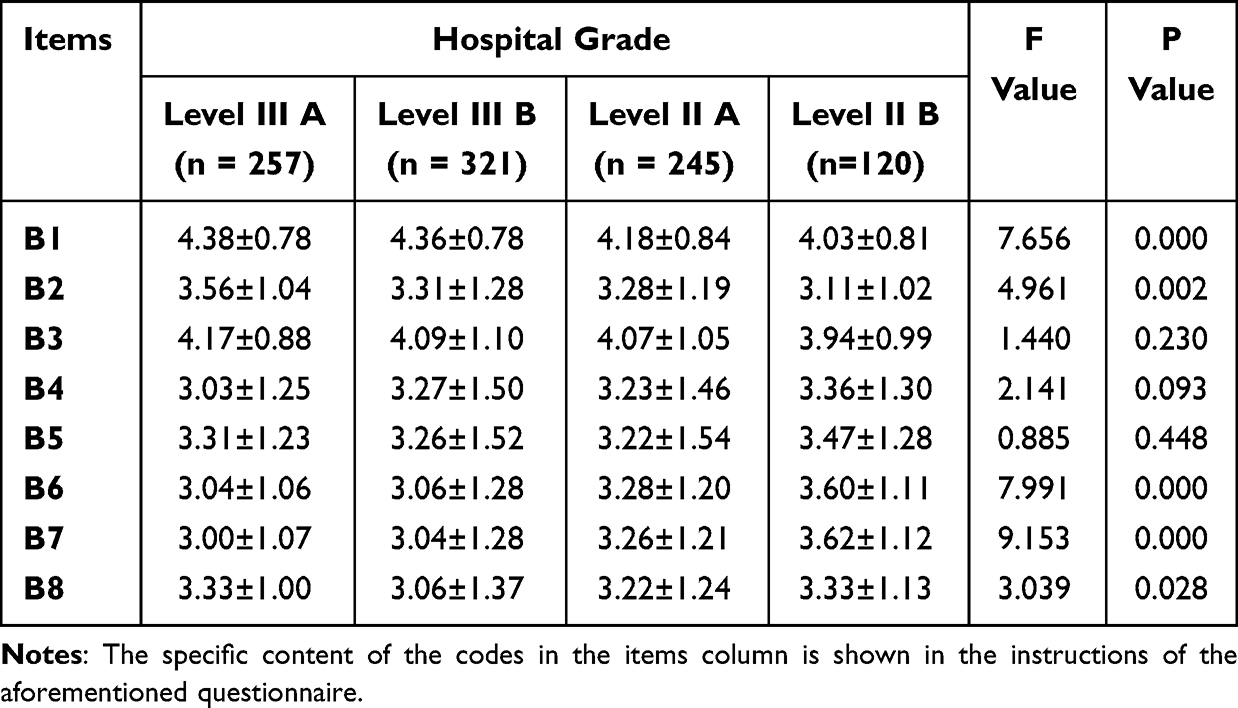 |
Table 3 Comparison of the Actual Service Experience of “Internet Plus Nursing Services” Carried out by Online Appointment Nurses in Different Levels of Hospitals ( |

Differences in Risk Perception
There was an asymmetry in the risk perception of “Internet + Nursing Services” provided by online nurses in hospitals of different grades. Online nurses in hospitals of all grades showed high levels of concern about contracting infectious diseases in the work environment and personal information leakage. However, concerns about road safety and medical violence were more pronounced in lower-grade hospitals, while concerns about the impact of online nursing services on physical health, occupational medical safety in home services, service quality, and influence on department work were more significant in higher-grade hospitals (p<0.05). See Table 4 for details.
 |
Table 4 Comparison of Risk Perception of Implementing “Internet Plus Nursing Services” Among Online Appointment Nurses in Different Levels of Hospitals ( |

Differences in Policy Support
There was a hierarchical gradient in policy support for online nurses to implement “Internet + Nursing Services” in hospitals of different grades. The policy support for “Internet + Nursing Services” in higher-grade hospitals was significantly higher than that in lower-grade hospitals (p<0.05), with the scores ranking from high to low as Level III A, Level III B, Level II A, and Level II B. See Table 5 for details.
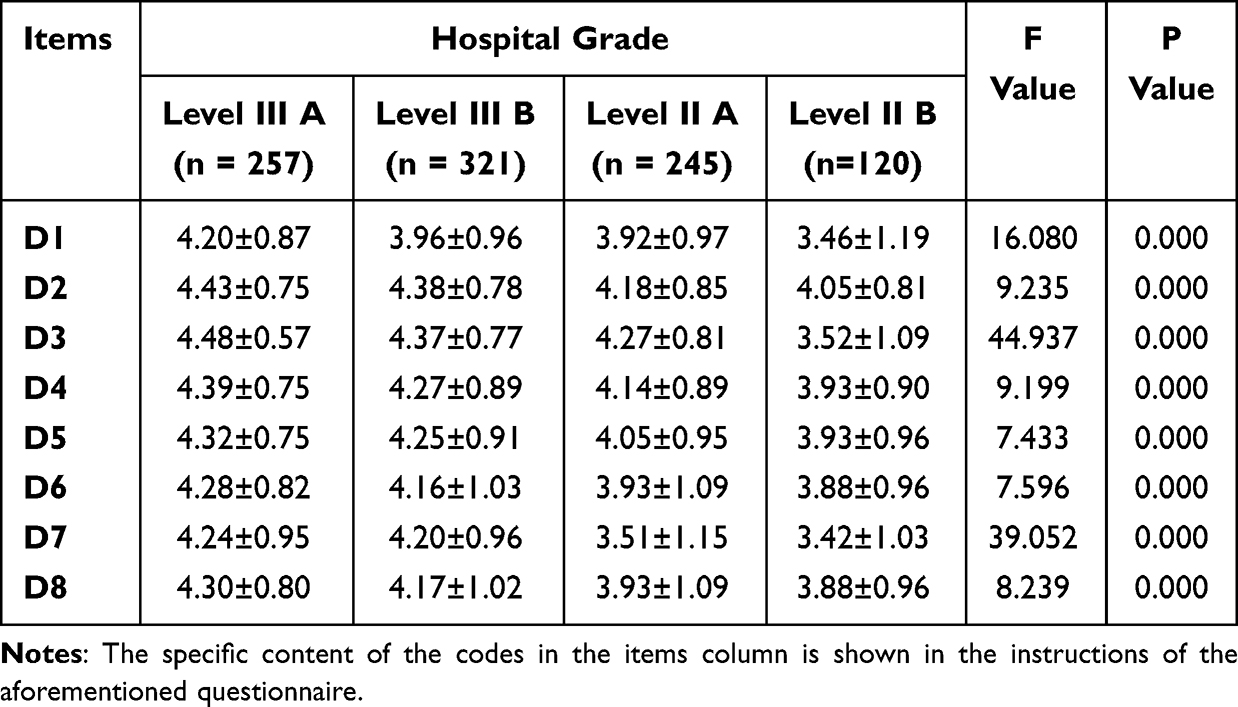 |
Table 5 Comparison of “Internet Plus Nursing Services” Policies and Training Support for Online Appointment Nurses in Hospitals of Different Levels ( |

Discussion
The Awareness and Service Willingness of Online Appointment Nurses in Lower-Level Hospitals Regarding the Implementation of “Internet + Nursing Services” Need to Be Further Enhanced
This study found that there are significant differences in the awareness of “Internet + Nursing Services” among online appointment nurses in hospitals of different grades in Quzhou City, presenting a phenomenon of “Matthew Discontinuity”.17,18 The nurses’ awareness of such services keeps increasing as the hospital grade rises. However, the publicity and education for nurses regarding “Internet + Nursing Services” in primary hospitals are still far from adequate because relevant departments have not yet attached sufficient importance to it. It is recommended that local governments and relevant departments implement differentiated empowerment, increase the training for online appointment nurses in lower-level hospitals and the construction of informatization, expand the coverage and frequency of training, and ensure that online appointment nurses can promptly obtain the latest policies, information technologies, and training resources of the same quality as those in higher-level hospitals for “Internet + Nursing Services”.19 Thereby narrowing the cognitive gap and promoting the equalization of service awareness. It is possible to establish a special training fund, which is specifically used for the training of online appointment nurses in lower-level hospitals, so as to relieve the economic burden of these hospitals. Formulate the “Resource Allocation Standards for Internet + Nursing Services in Graded Hospitals”. Mandate Class III Grade A hospitals to output training resources to Class II hospitals. For example, encourage nursing experts in higher-level hospitals and experienced online appointment nurses to provide on-site guidance and training in lower-level hospitals.20 Through both verbal instruction and personal example, improve the service level of nurses in lower-level hospitals and promote the coordinated development of the region.
There are Differences in the Service Modes of “Internet Plus Nursing Services” in Different Levels of Hospitals, Which Need to Be Further Optimized and Coordinated
This study found that there are significant differences among online appointment nurses in hospitals of different grades in aspects such as online consultation, offline order receiving, home service environment, and service remuneration. Among them, in the two aspects of online consultation and offline order receiving, the higher the hospital grade, the higher the scores. This reflects the service imbalance caused by the differences in hospital grades during the current promotion process of “Internet + Nursing Services”. This may be related to the fact that higher-level hospitals have obvious advantages in terms of hospital brand image and social reputation. Patients are more inclined to trust the medical standards and service quality of higher-level hospitals. Patients are also more willing to choose higher-level hospitals when making appointments for “Internet + Nursing Services”. In addition, online appointment nurses in higher-level hospitals enjoy a more complete training system, technical support, and a team collaboration environment. These factors have promoted the development of the personal professional skills of online appointment nurses. Only in this way can online appointment nurses better serve patients. However, due to the limitations of resources, the shortage of human resources and other influences, online appointment nurses in lower-level hospitals often feel overwhelmed during the process of providing services, which affects their job satisfaction and the number of service orders.21 Therefore, lower - level hospitals should not only enhance training to improve the professional service skills of medical staff, but also tap into the potential of their specialized departments with advantages, publicize their distinctive services, and step up market promotion. In addition, it is recommended that third-party platforms optimize the order allocation path. Advanced technical means such as cloud computing, big data, and artificial intelligence can be utilized to develop a regional hierarchical management dynamic appointment system,22,23 and build a regional “Internet + Nursing Services” information platform to achieve real-time sharing. When lower-level hospitals encounter conflicts due to a shortage of human resources or technical difficulties,24,25 the platform can authorize online appointment nurses from higher-level hospitals to assist the lower-level hospitals in completing order reservations and providing services.
The Adaptability Strategy of Home Service Environment and Labor Remuneration System of Online Appointment Nurses Need to Be Further Optimized
This study found that there are differences in the ways that online nurses in hospitals of different grades cope with diverse home service environments. Nurses in high-grade hospitals face more challenges when providing services in complex home environments. This may be related to the fact that more orders for online nurses in high-grade hospitals come from patients who have extremely high requirements for medical resources and nursing quality. These patients may have more health risk factors and require more special treatment and nursing environments, such as a strict sterile environment. In addition, the service scope of high-grade hospitals may be wider, involving some people who live in relatively remote areas but have high-end needs. The home environment conditions such as infrastructure in these areas may vary greatly, and nurses need to spend more energy to adapt and adjust. On the other hand, the service recipients of online nurses in low-grade hospitals are likely to be mainly patients with common diseases in the surrounding communities. The service items are relatively routine, and the service content is more basic. Suggestions: Adjust the focus of training for online nurses in hospitals of different grades. For high - grade hospitals, greater emphasis should be placed on training nurses to deal with complex and changeable home environments. The “VR simulation training” can be adopted to enhance nurses’ adaptability to complex home scenarios.24,26 For low-grade hospitals, the emphasis should be on improving professional service skills. According to the survey, there are differences in the remuneration for home services among hospitals of different grades, and high-grade hospitals have lower scores in this regard. Suggestions: Establish a fair, reasonable and differentiated incentive strategy with motivation to attract and retain excellent online nurses and promote the sustainable development of “Internet + Nursing Service”. Corresponding incentive measures such as financial subsidies, preferential policies for professional title promotion, paid vacations, and opportunities for continuing education can be provided according to the actual situations of hospitals of different grades, so as to improve the work enthusiasm and professional loyalty of online nurses.27,28 At the same time, social capital should be encouraged to participate.29 Through the public-private partnership model, the resource situation of primary medical institutions can be improved, and a multi-level and all-round supported “Internet + Nursing Service” system can be constructed.
The Occupational Safety Guarantee Mechanism of Online Appointment Nurses Needs to Be Improved Urgently, and Hospitals of Different Levels Are Facing Differentiated Challenges
It is found that the online appointment nurses of different levels of hospitals in Quzhou have differences in their perception of the risk of “Internet Plus nursing services”, and the exposure to infectious diseases in the working environment and the leakage of personal information. Online appointment nurses of all levels of hospitals have high concerns, highlighting the deficiency of occupational safety guarantee mechanism. However, worries about road safety and violent injuries due to medical disputes are more obvious in low-level hospitals. Online services with low-level hospitals may be more concentrated in surrounding rural areas. Public security and road conditions in these areas are relatively complicated, and road safety is difficult to guarantee. In addition, medical disputes occur. When there is a dispute, there is a lack of perfect emergency response mechanism and security support. Worries about the impact of online service on health, occupational medical safety, service quality and department work in door-to-door service are more obvious in tertiary hospitals. Online nurses may face greater work pressure with tertiary hospitals, and the clients’ conditions are complex and have high expectations for service quality. However, long-term high-intensity work is easy to affect health, and in on-site service, occupational medical risks are increased due to the changeable condition of patients and uncontrollable environmental factors. At the same time, I am worried that the service quality problem will damage the reputation of the department and affect my career development. It may also be that due to the systematic training of top three nurses, the risk assessment is more rational.30 It is suggested that local governments or departments establish a sound occupational safety protection system for online nurses, including but not limited to regular safety education and training, emergency response plans, and efficient communication and coordination mechanisms. Low-level hospitals establish a linkage mechanism with local public security departments to give priority to solving the shortcomings of personal safety and emergency response capabilities. It is suggested that platform functions should be developed at different levels and “one-click help” should be added, such as configuring portable safety equipment (such as GPS alarm). At the same time, online appointment nurses in low-level hospitals can establish a quick handling channel for medical disputes, provide personal safety subsidies, and reduce occupational risks. At the same time, it is suggested to introduce a third-party insurance mechanism to provide additional occupational safety guarantee for online appointment nurses and enhance their sense of employment security. On the basis of the above-mentioned occupational safety measures, high-level hospitals should focus on the legal dispute prediction of online service and establish an “expert-nurse” linkage response mechanism. At the same time, the workload of online service should be reasonably planned, the quality monitoring and feedback mechanism should be strengthened, and necessary occupational health examination and psychological support should be provided for nurses.
Limitations
This study has some limitations. First, the sample was limited to the prefecture-level region of Quzhou, which may have caused the research results to be affected by the specific cultural region. Second, the study only discussed differences through quantitative methods, which may have overlooked some personalized factors.
Conclusion
There are significant quantitative differences in the cognition of “Internet + Nursing Services” - related knowledge, service willingness, service ability and risk perception among online appointment nurses in hospitals of different grades in Quzhou City. High-level hospitals have advantages in the cognition of knowledge related to “Internet + Nursing Services”, service hospitals, service capabilities, and policy support, but they are faced with challenges in occupational safety and adaptation to complex environments. While low-level hospitals have prominent shortfalls, including insufficient cognition of “Internet + Nursing Services”, low willingness to provide services, concerns about road safety and medical violence, and weak policy support.
In the future, it is necessary to rely on the hierarchical management system to build a service network of “tertiary-level leading and secondary-level supplementary”, and enhance the service capabilities of grassroots hospitals through policy preferences. Suggestions: 1.Establish a cross-hospital collaboration platform to share training resources.2.Optimize the order allocation mechanism to reduce ineffective services provided by secondary-level nurses.3.Incorporate online nursing services into performance appraisals to enhance nurses’ motivation to participate.4.Improve the occupational safety guarantee mechanism to ensure nurses’ safe practice.
Data Sharing Statement
The datasets collected and/or analyzed during the current study are available from the corresponding author upon reasonable request.
Ethics Approval and Informed Consent
My study complies with the Declaration of Helsinki. The survey participants were informed of the purpose of the study and agreed to participate. This study has been ethically approved by the Medical Ethics Review Committee of Quzhou People’s Hospital (Approval number: 2025-004).
Acknowledgments
We acknowledge the respondents who completed the questionnaire in this study.
Author Contributions
All authors made a significant contribution to the work reported, whether that is in the conception, study design, execution, acquisition of data, analysis and interpretation, or in all these areas; took part in drafting, revising or critically reviewing the article; gave final approval of the version to be published; have agreed on the journal to which the article has been submitted; and agree to be accountable for all aspects of the work.
Funding
This research was partially supported by Zhejiang Provincial Medical and Health Science and Technology Plan Project (No.2025KY1784).
Disclosure
The authors report no conflicts of interest in this work.
References
1. Rapp T, Ronchetti J, Sicsic J. Where are populations aging better? A global comparison of healthy aging across organization for economic cooperation and development countries. Value Health. 2022;25(9):1520–1527. PMID: 35710893. doi:10.1016/j.jval.2022.05.007
2. Song H, Jiang C, Sun Z. Unveiling the nexus between rural population aging, technical efficiency, and carbon emissions in Chinese agriculture. PLoS One. 2024;19(6):e0300124. PMID: 38843280; PMCID: PMC11156370. doi:10.1371/journal.pone.0300124
3. Nie JL, Fan R, Wu YF, et al. By internal network or by external network?-study on the social network mechanism of reducing the perception of old-age support risks of rural elders in China. Int J Environ Res Public Health. 2022;19(22):15289. PMID: 36430008; PMCID: PMC9690998. doi:10.3390/ijerph192215289
4. Chen J, Yu Q, Qi RN. Practice and thinking of “Internet plus nursing services” in Beijing. Chin Nurs Manage. 2019;19(07):964–967.
5. Hu BC, Yang D. Practice and discussion of “Internet plus nursing services” in Zhejiang Province. J Nurs Rehab. 2021;20(04):1–4.
6. Guo I, Zhang T, Li B. ZHEJIANG PRACTICE OF “Internet Plus nursing services” MODE. Health Econ Res. 2024;41(03):78–81. doi:10.14055/j.cnki.33-1056/f.2024.03.011
7. Zhang H. A Study on the Implementation Status, Existing Problems and Countermeasures of the Hierarchical Hospital Accreditation System in China. Soochow University; 2016.
8. Jiang J. Research on the Operation Mode of “Internet Plus Medical” Under the Background of Hierarchical Diagnosis and Treatment. Southeast University; 2020; doi:10.27014/D.cnki.gdnau.2020.004065
9. Tan DQ. A study on the cognition, attitude and willingness of “Internet Plus nursing services” among nursing staff in Chongqing. Chongqing Med Univ. 2024. doi:10.27674/D.cnki.gcyku.2024.000274
10. Yq R, Wang L, Gu Y, et al. Analysis of the current situation and trend of home-based individualized nursing for residents in a certain area in China. Postgrad Med. 2024;136(5):551–561. Epub 2024 Jun 28. PMID: 38912825. doi:10.1080/00325481.2024.2370233
11. Yuan S, Liu M, Peng Y, et al. “Internet+nursing service” mobile apps in China app stores: functionality and quality assessment study. JMIR mHealth UHealth. 2024;12:e52169. PMID: 38409754; PMCID: PMC10912935. doi:10.2196/52169
12. Tan CH, Liu ZQ, Liu YH, et al. Investigation and analysis of the willingness, cognition and training status of nursing staff in different levels of hospitals to carry out Internet Plus nursing services. J Clin Res. 2024;41(07):977–979+983.
13. National Health Commission of the People’s Republic of China. Interpretation of the policy “ notice of the general office of the national health commission on piloting medical care services for the elderly. Chin Clin Nurs. 2022;14(09):531.
14. Tan SJ, Han XL, Geng BB. A qualitative study on the “Internet Plus nursing services” work experience of practitioner nurses. Chin Evidence Based Nurs. 2024;10(16):2995–2999.
15. Yao RC, Zheng J, Yao YP. Statistical analysis methods of SPSS for ordered categorical data. Mod Preventive Med. 2013;40(16):2972–2975+2978.
16. Yu QY. Analysis on the correct application of “statistically significant difference” in statistical terms and “significant difference” in arithmetic terms. J Shenyang Med College. 2004;03:207–208.
17. Ma G, Hou J, Peng S, et al. Nurses’ willingness and demand for internet + home care services and its influencing factors in different levels of hospitals in China-a nationwide survey. Risk Manag Health Policy. 2022;15:1395–1405. PMID: 35911086; PMCID: PMC9326896. doi:10.2147/RMHP.S367412
18. Guo XM, Zou WJ, Wang QQ, et al. Analysis of the current situation and development trend of “Internet Plus nursing services” based on GPT-4 language model. Chin Evidence Based Nurs. 2025;11(04):767–770.
19. Wang JY, Zhang FW, Wu H, et al. Analysis and research on “Internet Plus nursing services” policy at the provincial level in China. Chin Nurs Manage. 2023;23(01):25–31.
20. He XJ, Yi XY, Wei N. Examining the impact of internet-enabled nursing practices, guided by specialist nurses on patients with hypertension and their caregivers. Exp Gerontol. 2024;197:112606. Epub 2024 Oct 15. PMID: 39389278. doi:10.1016/j.exger.2024.112606
21. Zhao WL. Analysis of key points of human resource integration and optimization in the construction of medical consortium. Chin Health Stand Manag. 2021;12(09):47–50.
22. Cr B, Klahn S, Randle L, et al. Impacts of an acute care telenursing program on discharge, patient experience, and nursing experience: retrospective cohort comparison study. J Med Internet Res. 2024;26:e54330. PMID: 38573753; PMCID: PMC11027046. doi:10.2196/54330
23. Zhao Y, Sazlina SG, Rokhani FZ, et al. The expectations and acceptability of a smart nursing home model among Chinese older adults: a mixed methods study. BMC Nurs. 2024;23(1):40. PMID: 38218894; PMCID: PMC10788001. doi:10.1186/s12912-023-01676-0
24. Mahling M, Wunderlich R, Steiner D, Gorgati E, Festl-Wietek T, Herrmann-Werner A. Virtual reality for emergency medicine training in medical school: prospective, large-cohort implementation study. J Med Internet Res. 2023;25:e43649. PMID: 36867440; PMCID: PMC10024212. doi:10.2196/43649
25. Sawyer E, Buschel H, Tang H, Mouline O, Wu R. A review of emergency laparoscopic cholecystectomies in Far North Queensland. ANZ J Surg. 2024;94(12):2206–2212. PMID: 39411971. doi:10.1111/ans.19277
26. Sw B, Yeo T, Hj L, et al. Systematic analysis of anatomy virtual reality (VR) apps for advanced education and further applications. Sci Rep. 2024;14(1):31835. PMID: 39738416; PMCID: PMC11685998. doi:10.1038/s41598-024-82945-z
27. Ramanan H, Shensa A, Guth V, et al. Attitudes and preferences about retention: a survey study of nursing home employees. Geriatr Nurs. 2024;60:186–190. PMID: 39265380. doi:10.1016/j.gerinurse.2024.08.044
28. Abhicharttibutra K, Wichaikhum OA, Nantsupawat A, et al. Perspectives of nurses regarding total rewards and their preferences in Thailand: a qualitative descriptive study. Int Nurs Rev. 2023;70(2):229–238. PMID: 35763841. doi:10.1111/inr.12784
29. Fu YF, Yuan FJ, Liu PL. Analysis of the willingness and influencing factors of clinical nurses in tertiary hospitals to participate in “Internet Plus nursing services. J Clin Nurs Pract. 2024;10(12):121–123.
30. Bu W, Xiao M, Xie SM, et al. Research progress on nurse practice risks under the “Internet Plus nursing services” model. Chin Evidence Based Nurs. 2022;8(13):1756–1760.
 © 2025 The Author(s). This work is published and licensed by Dove Medical Press Limited. The
full terms of this license are available at https://www.dovepress.com/terms
and incorporate the Creative Commons Attribution
- Non Commercial (unported, 4.0) License.
By accessing the work you hereby accept the Terms. Non-commercial uses of the work are permitted
without any further permission from Dove Medical Press Limited, provided the work is properly
attributed. For permission for commercial use of this work, please see paragraphs 4.2 and 5 of our Terms.
© 2025 The Author(s). This work is published and licensed by Dove Medical Press Limited. The
full terms of this license are available at https://www.dovepress.com/terms
and incorporate the Creative Commons Attribution
- Non Commercial (unported, 4.0) License.
By accessing the work you hereby accept the Terms. Non-commercial uses of the work are permitted
without any further permission from Dove Medical Press Limited, provided the work is properly
attributed. For permission for commercial use of this work, please see paragraphs 4.2 and 5 of our Terms.