
Back to Journals » ClinicoEconomics and Outcomes Research » Volume 18
Real-World Progression-Free Survival and Healthcare Resource Utilization Associated with Daratumumab Use in Transplant-Ineligible Multiple Myeloma Patients in Italy
Authors Perrone V, Barilà G, Franceschini L, Mele G, Mazzoni S, Cappuccilli M  , Andretta M, Bacca M, Bartolini F, Barbieri A, Blasi A, Chinellato A, Dell'Orco S, Ferrante F, Lombardi R, Mancini D, Pagliaro R, Paciello A, Pastorello M, Procacci C , Ricciardulli D, Ubertazzo L, Valpondi P, Zucchi A, Degli Esposti L
Received 29 November 2025
Accepted for publication 25 March 2026
Published 1 April 2026 Volume 2026:18 585246
DOI https://doi.org/10.2147/CEOR.S585246
Checked for plagiarism Yes
Review by Single anonymous peer review
Peer reviewer comments 2
Editor who approved publication: Professor Giorgio Colombo
Valentina Perrone,1 Gregorio Barilà,2 Luca Franceschini,3 Giuseppe Mele,4 Stefania Mazzoni,1 Maria Cappuccilli,1 Margherita Andretta,5 Marcello Bacca,6 Fausto Bartolini,7 Antonietta Barbieri,8 Alessandra Blasi,9 Alessandro Chinellato,10 Stefania Dell’Orco,11 Fulvio Ferrante,12 Renato Lombardi,13 Daniela Mancini,6 Romina Pagliaro,14 Arrigo Paciello,15 Maurizio Pastorello,16 Cataldo Procacci,17 Daniela Ricciardulli,14 Loredana Ubertazzo,18 Paola Valpondi,19 Alberto Zucchi,20 Luca Degli Esposti1
1CliCon S.r.l. Società Benefit, Health Economics & Outcomes Research, Bologna, Italy; 2Hematology Unit, San Bortolo Hospital, Vicenza, Italy; 3Lymphoprolipherative Diseases Unit- Oncohaematology Department, Policlinico Tor Vergata, Rome, Italy; 4Hematology Unit, “A. Perrino” Hospital, Brindisi, Italy; 5Territorial Pharmaceutical Care Unit, Local Social and Health Authority No. 8 Berica, Vicenza, Italy; 6Direction of Planning and Management Control, Local Health Authority of Brindisi, Brindisi, Italy; 7Pharmaceutical Department, Local Health Authority Umbria 2, and Coordination of the Umbria Region Steering Committee on Pharmaceutical Governance, Terni, Italy; 8Territorial Pharmaceutical Service Complex Unit, Local Health Authority of Vercelli, Vercelli, Italy; 9Hospital Pharmacy Complex Unit, Local Health Authority Roma 3, Rome, Italy; 10Hospital Pharmacy Complex Unit, Local Social and Health Authority No. 3 Serenissima, Mestre (Venice), Italy; 11Territorial Pharmaceutical Service Complex Unit, Local Health Authority, Albano Laziale (Rome), Italy; 12Department of Diagnostics and Pharmaceutical Care, Local Health Authority of Frosinone, Frosinone, Italy; 13Territorial Pharmaceutical Service, Local Health Authority of Foggia, Foggia, Italy; 14Territorial Pharmaceutical Service Complex Unit, Local Health Authority Roma 5, Rome, Italy; 15Territorial Pharmaceutical Service Complex Unit, Health Protection Agency of Bergamo, Bergamo, Italy; 16Pharmaceutical Department, Public Agency for Personal Care Services of Palermo, Palermo, Italy; 17Pharmaceutical Department, Local Health Authority of Barletta Andria Trani (BAT), Andria, Italy; 18Territorial Pharmacy Complex Unit, Local Health Authority, Civitavecchia (Rome), Italy; 19Territorial Pharmaceutical Care Complex Unit, Local Social and Health Authority No. 7 Pedemontana, Bassano del Grappa (Vicenza), Italy; 20Complex Operational Unit of Epidemiology Service, Health Protection Agency of Bergamo, Bergamo, Italy
Correspondence: Valentina Perrone, CliCon S.r.l. Società Benefit - Health, Economics & Outcomes Research, Via Murri 9, Bologna, 40137, Italy, Tel +39 (0)544 38393, Fax +39 (0)544 212699, Email [email protected]
Purpose: This study evaluated real-world clinical and economic outcomes associated with daratumumab-based regimens in patients with multiple myeloma (MM) ineligible for autologous stem cell transplantation (ASCT) in Italy. Differences in healthcare resource use according to daratumumab administration route (intravenous vs subcutaneous) were also explored.
Methods: A retrospective observational analysis was conducted using administrative healthcare databases from Italian Local Health Units covering ~12 million individuals (2018– 2023). Patients with MM receiving daratumumab in first-line (1L) or second-line (2L) therapy were included. Real-world progression-free survival (rwPFS), defined as time to treatment switch or death, was used as a proxy endpoint for disease progression, and healthcare resource utilization were compared between treatment regimens. Propensity score weighting was applied to to improve comparability between treatment groups. Direct healthcare costs captured in administrative databases were analyzed from the perspective of the Italian National Health System.
Results: Among 790 non-ASCT MM patients, 344 received 1L DaraRd and 413 received 2L DaraRd. In the 1L setting, median rwPFS was not reached for DaraRd and was 25.7 months for Rd (p=0.011). In 2L, median rwPFS was 42.9 months for DaraRd versus 19.1 months for Rd (p < 0.001). In 1L, DaraRd was associated with lower hospitalization costs compared with Rd for both all-cause (€ 4324 vs € 7971) and MM-related (€ 2862 vs € 6693) admissions. In 2L, differences in hospitalization costs were smaller and not statistically significant.
Conclusion: In this real-world analysis, daratumumab-based regimens were associated with longer rwPFS compared with Rd among transplant-ineligible MM patients, in both 1L and 2 L settings. In 1L treatment, these outcomes were accompanied by lower hospitalization costs. Given the retrospective design and the use of administrative healthcare data, these findings should be interpreted with caution, but they contribute to the growing body of real-world evidence on treatment outcomes and resource utilization in routine clinical practice.
Keywords: daratumumab, dexamethasone, healthcare costs, healthcare resource utilization, lenalidomide, multiple myeloma, real-world evidence, subcutaneous administration
Introduction
Multiple myeloma (MM) is a clonal plasma cell malignancy characterized by the uncontrolled proliferation within the bone marrow, resulting in bone destruction, hematologic dysfunction, and immune suppression.1–3 MM accounts for approximately 1% of all cancers and more than 10% of hematologic malignancies globally, with increasing incidence, partly driven by ageing populations and advances in diagnostic methods.4 Despite significant progress in therapeutic options over the past two decades, MM remains incurable. As a result, treatment strategies continue to focus on extending progression-free survival (PFS), improving overall survival (OS), and maintaining quality of life, particularly in vulnerable subpopulations such as the elderly or transplant-ineligible patients.5
The treatment landscape of MM has undergone substantial transformation with the introduction of novel therapeutic classes, including immunomodulatory drugs (IMiDs), proteasome inhibitors (PIs), and monoclonal antibodies.6–10 Among monoclonal antibodies, daratumumab—a human IgG1κ antibody targeting CD38—has emerged as a key component of MM therapy. Its mechanisms of action include antibody-dependent cellular cytotoxicity, complement-dependent cytotoxicity, and direct apoptosis of CD38-expressing cells.11,12 Initially introduced for relapsed or refractory MM, daratumumab has demonstrated efficacy across multiple lines of treatment, leading to its progressive expansion into frontline settings, including for patients not eligible for autologous stem cell transplantation (ASCT).13–15
Patients considered ineligible for ASCT represent a particularly heterogeneous population. Transplant ineligibility may be determined by advanced age, frailty, comorbidity burden, or reduced functional status, resulting in a wide clinical spectrum that ranges from relatively fit elderly patients to highly frail individuals with limited physiological reserve. This heterogeneity has important implications for treatment selection, treatment tolerance, and clinical outcomes. In routine clinical practice, physicians often individualize therapeutic strategies based on frailty assessments and comorbidity profiles, factors that are only partially captured in administrative healthcare databases. Consequently, real-world populations may differ substantially from those enrolled in randomized clinical trials, where eligibility criteria typically exclude patients with severe comorbidities or poor performance status.
Before the introduction of daratumumab into first line (1L) regimens, standard therapies for transplant-ineligible patients primarily relied on combinations such as lenalidomide and dexamethasone (Rd) or bortezomib-based regimens. These treatments, while effective for some patients, showed limited long-term benefit in frail or elderly populations, with disease progression commonly occurring within two to three years.16 The integration of daratumumab into frontline combinations such as DaraRd (daratumumab/lenalidomide/dexamethasone) led to remarkable improvements in clinical outcomes. In the MAIA pivotal trial, DaraRd demonstrated a significant advantage in prolonging PFS and reducing the risk of disease progression and mortality during the early treatment phases. These benefits may allow patients to defer the need for more intensive and more expensive second-line (2L) therapies.16
In Italy, daratumumab received reimbursement approval for 2L use in 2018 and for 1L treatment in transplant-ineligible patients starting in 2021.17,18 These regulatory decisions reflect its expanding role in MM management.
It is important to note that the evidence supporting 1L use originated from pivotal trials in specific patient populations: the MAIA trial for transplant-ineligible patients14 and the CASSIOPEIA trial for transplant-eligible patients.19 International regulatory bodies, including the European Medicines Agency (EMA) and the U.S. Food and Drug Administration (FDA), followed similar timelines for approval, largely driven by these trial results.14,19 The alignment between regulatory approvals and emerging clinical data provides an opportunity to explore treatment patterns, outcomes, and healthcare resource utilization in a real-world context during a period of rapidly evolving practice.
Recent trends in MM treatment underscored the growing emphasis on achieving deeper and faster responses through multidrug combinations, especially in earlier lines of therapy. In both randomized controlled trials and real-world analyses, adding daratumumab to Rd has consistently improved PFS and OS compared to Rd alone, reaffirming its clinical value across diverse patient populations.20–24 In the context of MM, real-world evidence complements randomized clinical trials (RCTs) by capturing data from patients with complex comorbidity profiles who are often excluded from RCTs, thereby offering a more comprehensive understanding of treatment outcomes.23–25 Administrative healthcare databases, which capture longitudinal data on diagnoses, drug prescriptions, hospitalizations, and outpatient care, can represent a valuable tool to examine treatment effectiveness and economic impact in broader unselected populations.
Another important consideration when interpreting real-world evidence concerns the definition of clinical endpoints derived from administrative data. In clinical trials, progression-free survival (PFS) is determined through standardized radiologic and laboratory assessments of disease progression. In contrast, real-world progression-free survival (rwPFS) is commonly estimated using proxy indicators, such as treatment discontinuation, switching to a subsequent therapy line, or death. These proxies may be influenced not only by biological disease progression but also by clinical decision-making, reimbursement policies, and physician practice patterns. Therefore, while rwPFS provides a pragmatic measure of treatment effectiveness in routine care, its interpretation requires careful consideration of the healthcare context in which treatment decisions occur.
However, despite increasing use of daratumumab in real-world practice, evidence regarding its impact on treatment sequencing, disease progression, and healthcare costs in routine clinical settings remains limited. Moreover, the optimal sequencing of therapies MM remains an area of active clinical debate. The earlier introduction of highly effective agents, including anti-CD38 monoclonal antibodies such as daratumumab, may improve depth and duration of response, potentially delaying disease progression and the need for subsequent lines of therapy. However, earlier exposure to these agents also raises questions regarding treatment options at relapse and potential biological mechanisms of resistance, including modulation of CD38 expression. In addition, increasing evidence suggests that multiple myeloma progression is strongly influenced by the interaction between malignant plasma cells and the bone marrow microenvironment, which promotes disease persistence and drug resistance. Moreover, therapeutic pressure may shape clonal evolution from precursor conditions such as monoclonal gammopathy of undetermined significance (MGUS) to overt multiple myeloma, contributing to the emergence of resistant subclones over time.26 Evaluating treatment outcomes across different lines of therapy in real-world settings may therefore provide valuable insights into how therapeutic sequencing affects both clinical outcomes and healthcare resource utilization and medical costs. MM is associated with a substantial economic burden for healthcare systems. Disease management typically involves long treatment durations, combination regimens with high drug acquisition costs, and frequent monitoring through outpatient visits, laboratory tests, and hospitalizations. In aging populations, these costs may increase further due to comorbidity management and supportive care needs. Within publicly funded healthcare systems such as the Italian National Health Service (INHS), understanding patterns of healthcare resource consumption and treatment-related costs is essential to inform resource allocation and ensure the sustainability of innovative therapies.
To date, few studies have quantitatively assessed how the shift toward earlier use of daratumumab affects rwPFS, overall treatment costs, and healthcare resource utilization. Moreover, there is limited understanding of whether daratumumab route of administration, intravenous (IV) or subcutaneous (SC), may influence outcomes and expenditures. Addressing these knowledge gaps is essential to inform healthcare planning, policy development, and future treatment guidelines.
The primary objective of this study was to evaluate the association between daratumumab-based regimens and real-world clinical outcomes, specifically rwPFS, in patients with MM who are ineligible for ASCT. Secondary objectives included the assessment of healthcare resource utilization (HCRU), hospitalization costs, and treatment patterns across different lines of therapy within the Italian National Health System.
Materials and Methods
Study Design and Data Source
A retrospective observational study was carried out using data derived from administrative healthcare databases from Italian Local Health Units (LHUs), encompassing approximately 12 million health-assisted individuals. The analysis integrated multiple data sources, as previously described by our research group:27 (a) beneficiaries database providing demographic information; (b) pharmaceutical database for details on reimbursed medications, such as prescription dates and Anatomical-Therapeutic Chemical (ATC) codes; (c) hospitalization database, containing records of discharge diagnoses coded using the International Classification of Diseases, 9th Revision, Clinical Modification (ICD-9-CM), along with admission and discharge dates; (d) outpatient specialist services database, for information on diagnostic procedures and specialist consultations, including their type and date of provision; (e) exemption database reports data on healthcare payment waiver codes, including type and activation date.
The dataset used consists solely of anonymized data. All the results of the analyses were produced and presented as aggregated summaries. Approval has been obtained from the ethics committees of the participating healthcare entities.
Patient Population
Patients with MM were identified between January 2018 and June 2023 using a diagnosis proxy based on data from linked healthcare databases, including hospital discharge records, exemption codes specific to MM, and prescriptions for medications used exclusively in MM treatment.
Inclusion required at least one of the following criteria: hospital discharge diagnosis (at any level) for MM (ICD-9-CM code 203.0); or at least one prescription for MM-specific therapies such as daratumumab (ATC codes L01XC24, L01FC01), elotuzumab (L01XC23, L01FX08), isatuximab (L01XC38, L01FC02), ixazomib (L01XX50, L01XG03), carfilzomib (L01XX45, L01XG02), or belantamab mafodotin (L01FX15); or an exemption code specific for MM (code 048.203.0).
To ensure data quality and patient follow-up, all the individuals included were required to have at least one year of data availability before the index-date (defined as the start of treatment) and at least one year of follow-up data thereafter. The index-date was used to initiate longitudinal tracking of treatment pathways, outcomes, and HCRU.
Patients were excluded if they began treatment with daratumumab from January 2023 onward and had evidence of light chain (AL) amyloidosis, as identified either through a hospital diagnosis (ICD-9-CM code 277.3) or an exemption code (RCG130). This was to avoid misclassifying cases treated for AL amyloidosis rather than MM following recent changes in therapeutic reimbursement.
The study population was stratified into two main cohorts: patients without record of previous ASCT during the observation period, and patients with ASCT. ASCT was identified through specific procedure codes (41.01, 41.04, 41.07, 41.09). Among the non-ASCT cohort, further stratification was applied based on treatment lines, distinguishing between patients in their 1L and 2L of therapy.
Treatment lines were defined using pharmaceutical dispensing data. To account for prescription timing variability, a grace period equivalent to 50% of the expected cycle duration was applied to detect regimen combinations. If corticosteroids (eg, dexamethasone or prednisone) were not traceable (possibly due to hospital-only dispensing), the regimen was inferred based on the associated agents (eg, VM reclassified as VMp).
Only patients with an incident 1L treatment initiated from 2021 onward, or a 2L treatment from 2018 onward (aligned with national reimbursement policies for daratumumab), were eligible for inclusion in the analysis of treatment patterns, clinical outcomes, and HCRU.
To summarize, algorithms based on combinations of diagnosis codes, exemption codes and disease-specific treatments have been widely used in administrative database studies to identify MM populations in the absence of clinical registries. The cohort selection process followed a stepwise approach. First, patients with evidence of MM were identified in the administrative databases using diagnosis codes and treatment records. Second, patients receiving daratumumab during the study period were selected. Third, the index-date was defined as the date of the first daratumumab administration. Fourth, patients were classified according to the line of therapy in which daratumumab was initiated. Finally, inclusion and exclusion criteria were applied to ensure adequate observation time and data completeness before inclusion in the final analytic cohorts.
Treatment Patterns
The treatment regimens analyzed were grouped by line of therapy and regimen type. Treatment lines for MM were defined based on prescription claims data and structured by evaluating specific drug combinations used in clinical practice.
To account for variability in prescription timing, a time window extending up to 150% of the expected cycle length was applied for each regimen (eg, for a 6-week cycle, a window of up to 9 weeks was included) to capture continuation of the same therapeutic line. This approach enhanced flexibility in determining whether prescriptions belonged to the same treatment line.
If a treatment regimen was observed without corticosteroids (ie, dexamethasone or prednisone), the regimen was reclassified under its complete standard combination assuming corticosteroids were administered but not captured in the dataset (eg, VM was interpreted as VMp). This adjustment was necessary because corticosteroids are often dispensed at hospital level and may not be traceable in prescription data. Although the main comparative analysis focused on DRd vs Rd, other regimens were also investigated to provide a comprehensive overview of real-world treatment patterns. Specifically, the 1L-regimens considered were those approved and reimbursed by the INHS during the study period, as follows:
- DaraVMp (daratumumab/bortezomib/melphalan/prednisone), 6-week cycles
- DaraRd (daratumumab/lenalidomide/dexamethasone), 4-week cycles
- VMp (bortezomib/melphalan/prednisone), 6-week cycles
- VRd (bortezomib/lenalidomide/dexamethasone), 3-week cycles
- Rd (lenalidomide/dexamethasone), 4-week cycles
- DaraVTd (daratumumab/bortezomib/thalidomide/dexamethasone), 4-week cycles
- VTd (bortezomib/thalidomide/dexamethasone), 4-week cycles
The 2L-regimens were the following:
- DaraRd (daratumumab/lenalidomide/dexamethasone), 4-week cycles
- IsaKd (isatuximab/carfilzomib/dexamethasone), 4-week cycles
- KRd (carfilzomib/lenalidomide/dexamethasone), 4-week cycles
- Rd (lenalidomide/dexamethasone), 4-week cycles
- PomVd (pomalidomide/bortezomib/dexamethasone), 3-week cycles
- IxaRd (ixazomib/lenalidomide/dexamethasone), 4-week cycles
- EloRd (elotuzumab/lenalidomide/dexamethasone), 4-week cycles
- DaraVd (daratumumab/bortezomib/dexamethasone), 6-week cycles
- EloPd (elotuzumab/pomalidomide/dexamethasone), 4-week cycles
- Kd (carfilzomib/dexamethasone), 4-week cycles
Due to the reimbursement timeline of daratumumab in Italy (from 2018 for 2L treatment and from 2021 for 1L treatment), this analysis included only patients who initiated their 1L therapy from 2021 onward or 2L therapy from 2018 onward. DaraPd (daratumumab/pomalidomide/dexamethasone), reimbursed in Italy from January 2023, was not included in the analysis due to the very limited number of patients initiating this regimen within the study period.
The study focused on the evaluation of the following predefined treatment regimens: Rd, DaraRd, DaraVMp, and VMp in 1L; and Rd, DaraRd, KRd, and IsaKd in 2L.
Baseline Characteristics
For each patient included in the analysis, demographic information, specifically age and sex, was recorded at the index-date. Clinical status was assessed during the characterization period using the Charlson Comorbidity Index (CCI).28 A modified version of the CCI was applied for this analysis, excluding cancer-related conditions from the scoring.
In addition, the following comorbidities were investigated throughout the whole characterization period: hypertension, identified by at least 1 hospitalization with a discharge diagnosis for hypertension (ICD-9-CM codes 401, 402, 403, 404, 405) or at least 1 prescription of ATC codes C02, C03, C07, C08, C09 or an active exemption code A31, 031; coronary artery disease (myocardial infarction excluded), identified by at least 1 hospitalization with a discharge diagnosis for coronary artery disease (ICD-9-CM codes 411, 413, 414); arrhythmia, identified by at least 1 hospitalization with a discharge diagnosis for arrhythmia (ICD-9-CM code 427.31) or at least 1 prescription of ATC code C01B; hypothyroidism, identified by at least 1 hospitalization with a discharge diagnosis for hypothyroidism (ICD-9-CM codes 243, 244, 245.2) or at least 1 prescription of ATC code H03AA or an active exemption code 027; gastritis/duodenitis, identified by at least 1 hospitalization with a discharge diagnosis for gastritis/duodenitis (ICD-9-CM code 535) or at least 1 prescription of ATC code A02BC; diverticulitis, identified by at least 1 hospitalization with a discharge diagnosis for diverticulitis (ICD-9-CM codes 562.0, 562.1); neuropathy, identified by at least 1 hospitalization with a discharge diagnosis for neuropathy (ICD-9-CM code 357.3).
The use of the following co-treatments was assessed during the 12 months prior to the index date: bisphosphonates (ATC code M05BA), antiviral treatment (ATC code J05), antithrombotic treatment (ATC code B01), antibiotics (ATC code J01), erythropoiesis-stimulating agents (ESA) (ATC code B03XA01), aspirin (ATC code B01AC06), granulocyte-colony stimulating factor (G-CSF) (ATC code L03AA02).
Clinical Outcomes
Kaplan-Meier survival analysis was used to evaluate rwPFS, defined as the time (in months) from treatment initiation (index-date) to either the start of a subsequent therapy line or death from any cause, whichever occurred first. In administrative databases, this endpoint represents a pragmatic proxy for disease progression and may reflect both biological progression and clinical decision-making processes related to treatment changes.
Patients without an event at the end of follow-up were censored at the date of last database availability. Survival curves were compared using the Log rank test, with significance set at a two-sided p-value <0.05.
Healthcare Resource Use and Direct Costs
HCRU and the associated direct medical costs were analyzed throughout the follow-up period and presented per patient per year (PPPY). The evaluation covered drug treatments (both MM-related and non-MM-related), all-cause hospitalizations, and outpatient specialist services. Costs were calculated in euros (€) based on national tariffs and reimbursement rates and adjusted to the most recent year available. Outliers, defined as values exceeding three standard deviations from the mean, were excluded from cost analyses. This trimming approach was applied to reduce the potential influence of extreme values that may arise from atypical billing records or rare high-cost events in administrative databases, which could disproportionately affect mean estimates.
Additionally, HCRU and costs during DaraRd treatment were stratified by administration method (IV vs SC). The 10 most frequently prescribed non-MM-related drugs during the first year of follow-up were also reported by number and percentage of patients receiving them.
Statistical Analysis
Descriptive statistics were used to summarize baseline and follow-up data. Continuous variables were expressed as means with standard deviations (SD), while categorical variables were presented as counts and percentages. To reduce confounding and ensure group comparability, inverse probability of treatment weighting (IPTW) was applied using propensity scores. The model included variables such as age, sex, CCI, key comorbidities (eg, hypertension, gastritis/duodenitis), and use of specific co-medications (eg, antivirals, antibiotics, antithrombotics, aspirin). Stabilized weights were used to minimize variance, and values beyond the first and 99th percentiles were trimmed. Covariate balance post-weighting was assessed using the Standardized Mean Difference (SMD), with SMD <0.2 indicating adequate balance. Given the retrospective observational design and the use of a fixed population derived from administrative databases, formal sample size calculations were not performed. Subgroup analyses, particularly those based on treatment administration route or later lines of therapy, should therefore be interpreted as exploratory. All analyses were performed using Stata SE version 17.0 (StataCorp LLC, College Station, TX, USA).
Results
A total of 2419 patients with MM were identified from administrative healthcare databases. Of these, 1629 patients formed the ASCT cohort, consisting of individuals eligible for ASCT who had undergone the procedure, while 790 patients constituted the non-ASCT cohort, corresponding to those non-eligible for ASCT. The analysis focused on the non-ASCT cohort, aligning with the typical population eligible for daratumumab-based treatment in the 1L and 2L settings. This group was further stratified into those initiating 1L therapy from 2021 onward, and 2L therapy from 2018 onward, based on the timing of daratumumab reimbursement in Italy.
Among non-ASCT MM patients, a steady increase in the use of daratumumab in 1L treatment was observed from 2021 to 2023, rising from 48.1% to 60.3%. In contrast, the use of daratumumab in the 2L setting declined over time from 63.9% in 2019 to 45.8% in 2023 (Figure 1).
 |
Figure 1 Trends of treatment lines with daratumumab combinations over the years 2018–2023. Abbreviations: 1L, first line; 2L, second line. |
Non-ASCT Cohort in 1L
Among non-ASCT patients with MM who started a 1L treatment from 2021, the most frequently used regimens were DaraRd (n=344) and Rd (n=231). Other regimens were observed but involved small numbers of patients and were not considered for the successive analyses.
Patients in the DaraRd cohort were younger than those in Rd cohort (mean age 73.0 vs 77.7 years, p<0.001), with similar sex distribution (54.9% vs 56.3% males, respectively) and comorbidity burden (mean CCI 0.8 vs 0.9). Common co-medications included corticosteroids, antivirals, antibiotics, and antihypertensives. IPTW adjustment resulted in well-balanced groups across all key covariates (SMD <0.2), confirming comparability (Table 1).
 |
Table 1 Baseline Characteristics of Non-ASCT Patients in 1L Treatment Before and After IPTW |
Over 36 months of follow-up, Kaplan-Meier estimates of rwPFS indicated significant differences between the two regimens (Figure 2). Median rwPFS was not reached for DaraRd, while it was 25.7 months for Rd (p=0.011). The absence of a reached median rwPFS in some cohorts likely reflects both favourable disease control and the relatively limited follow-up duration available for patients initiating first-line daratumumab during the study period. The proportion of patients who progressed to a subsequent treatment or died was significantly lower in the DaraRd group than in the Rd group (35.8% vs 50.9%, p=0.010). The percentage of patients who died was 14.5% in the DaraRd group and 34.1% in the Rd group (p<0.001) (Table 2). These estimates should be interpreted in the context of real-world analyses based on administrative databases, where rwPFS represents a pragmatic proxy for disease progression derived from treatment changes or death. Consequently, the observed differences may reflect both treatment effectiveness and real-world clinical decision-making processes.
 |
Table 2 Clinical Outcomes in Non-ASCT Patients with MM Receiving 1L with DaraRd versus Rd After IPTW Adjustment |
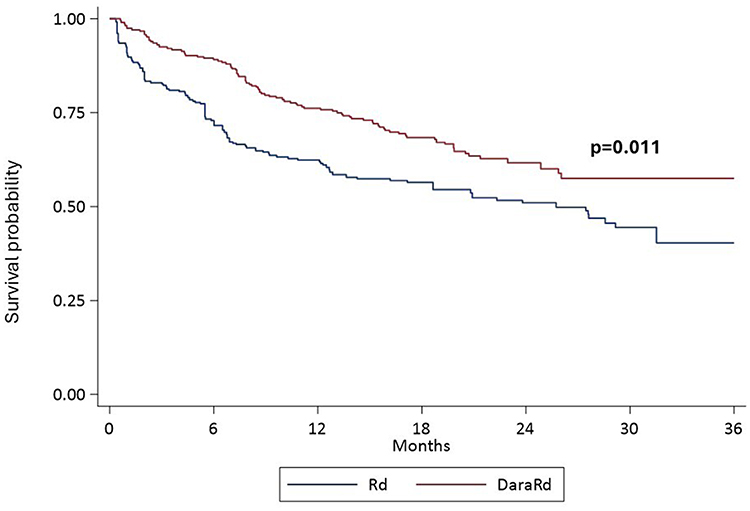 |
Figure 2 Kaplan Meier curves for rwPFS in MM non-ASCT patients in 1L of treatment, after IPTW matching. Abbreviations: 1L, first line; ASCT, autologous stem cell transplantation; IPTW, inverse probability of treatment weighting; MM, multiple myeloma; rwPFS, real-world progression-free survival. |
The results of HCRU analysis among patients in 1L, showing PPPY resource utilization during the treatment period after IPTW adjustment are presented in Table 3. Patients on DaraRd exhibited higher consumption of all drugs (p<0.001), MM-related medications (p<0.001), non-MM-related medications (p=0.005), and outpatient services (p<0.001), the latter feasibly due to the increased frequency of infusion-related procedures, consistent with daratumumab administration protocol. Conversely, MM-related hospitalizations were significantly lower in the DaraRd group (p=0.016), and all-cause hospitalizations were also tendentially reduced, approaching statistical significance (p=0.071).
 |
Table 3 HCRU of Non-ASCT Patients in 1L Treatment During the Treatment Period |
Consistent with HCRU patterns, total hospitalization costs and MM-related hospitalization costs (excluding 3 outliers) were lower in the DaraRd than in the Rd group (respectively €4324 vs €7971; and €2862 vs €6693) (Figure 3).
 |
Figure 3 Hospitalization costs PPPY (mean, €) during the treatment period in non-ASCT MM patients in 1L of treatment, after IPTW matching. Abbreviations: MM, multiple myeloma, PPPY, per patient per year. |
Among patients treated with DaraRd, the differences in HCRU or costs associated with IV (N=64) and SC (N=113) administration did not reach statistical significance, though a favourable trend was observed for the SC route. It should be noted that, these cost estimates represent direct reimbursed healthcare expenditures captured within the administrative databases and should therefore be interpreted as descriptive indicators of HCRU rather than as a formal cost-effectiveness assessment.
Non-ASCT Cohort in 2L
In non-ASCT patients with MM who began 2L treatment from 2018, the most frequently used regimens were DaraRd (n=413) and Rd (n=259). Regimen used in smaller groups of patients were not included in subsequent analyses.
In the unmatched population, for the treatment combinations DaraRd and Rd, the mean ages were 69.3 and 73.4 years (p<0.001), respectively; males accounted for 51.6% and 45.9% of the patients, and the average CCI was 0.7 and 0.8. Following IPTW adjustment, the groups were well-matched, allowing unbiased comparison of outcomes (Table 4).
 |
Table 4 Baseline Characteristics of Non-ASCT Patients in 2L Treatment Before and After IPTW |
The Kaplan–Meier curves presented in Figure 4 show a clear separation between treatment groups, indicating longer rwPFS across patients treated with DaraRd or with Rd. The median rwPFS in the 2L setting was 42.9 months for DaraRd vs 19.1 months for Rd (p<0.001). At a median follow-up of 36 months, the risk of disease progression or death in DaraRd group was lower than the risk in Rd group, with 47.9% of DaraRd patients experienced progression or death, compared to 69.1% in the Rd cohort (p<0.001) (Table 5).
 |
Table 5 Clinical Outcomes in Non-ASCT Patients with MM Receiving 2L with DaraRd versus Rd After IPTW Adjustment |
 |
Figure 4 Kaplan Meier curves for rwPFS in MM non-ASCT patients in 2L of treatment, after IPTW matching. Abbreviations: 2L, second line; ASCT, autologous stem cell transplantation; IPTW, inverse probability of treatment weighting; MM, multiple myeloma; rwPFS, real-world progression-free survival. |
Table 6 reports the results of the HCRU analysis among patients in 2L showing resource use PPPY during the treatment period after IPTW adjustment. Patients on DaraRd exhibited higher consumption of all medications (p<0.001), and MM-related drugs (p<0.001), while the other items did not differ between the two treatments.
 |
Table 6 HCRU of Non-ASCT Patients in 2L Treatment During the Treatment Period. Data are Reported PPPY and Expressed as Mean (SD), After IPTW Balancing |
As shown in Figure 5, the differences in hospitalization costs in 2L non-ASCT MM patients were smaller compared with 1L treatment, and not statistically significant. However, a tendency toward lower costs with DaraRd versus Rd was maintained, for both all-cause and MM-related hospitalizations (respectively €2601 vs €3274; and €2006 vs €2502).
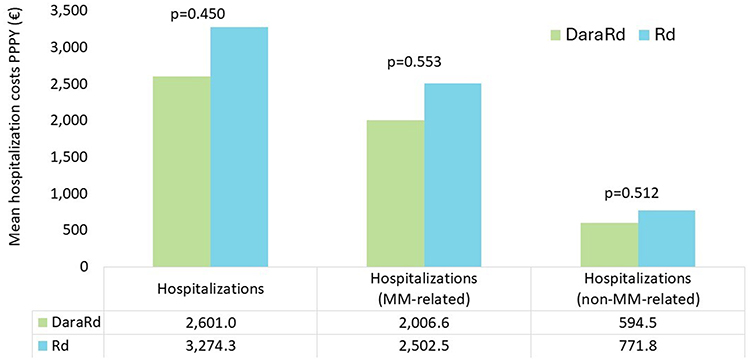 |
Figure 5 Hospitalization costs PPPY (mean, €) during the treatment period in non-ASCT MM patients in 2L of treatment, after IPTW matching. Abbreviation: MM, multiple myeloma. |
Discussion
This real-world analysis provides evidence of an association between daratumumab-based regimens and rwPFS, together with differences in HCRU and costs compared with Rd in non-ASCT eligible MM patients, across both 1L and 2L settings. By integrating survival outcomes, HCRU, and direct cost data, our study offers a robust and multifaceted evaluation of daratumumab’s impact in real-world clinical practice.
In the 1L cohort, patients treated with DaraRd experienced markedly longer rwPFS than those receiving Rd, reinforcing the survival advantage associated with daratumumab-based regimens in frontline use. This pattern is consistent with the results of MAIA trial, which reported a median PFS of 56.2 months versus 34.4 months with Rd.14 The close alignment between clinical trial and real-world outcomes supports the durability of benefit associated with daratumumab-containing regimens and demonstrates their effectiveness in everyday clinical practice, where patients tend to be older, more frail, and more comorbid than those enrolled in randomized trials.19–21,23–25,29–31 The lower mortality rates found in our DaraRd cohort aligns with survival outcomes from pivotal trials such as POLLUX, where DaraRd demonstrated a significant OS benefit at long-term follow-up.20 Similarly promising results emerged from the ALCYONE trial, where daratumumab-bortezomib-melphalan-prednisone (DaraVMP) reduced the risk of death by 40% (HR 0.60) and improved 36-month OS to 78% versus 68% with VMP.32 Recently, the CEPHEUS trial reported higher minimal residual disease (MRD) negativity (60.9% vs 39.4%) and deeper responses (complete response: 81.2% vs 61.6%) with daratumumab-bortezomib-lenalidomide-dexamethasone (DaraVRd) compared to VRd, corresponding to a 43% reduction in risk of progression or death (HR 0.57).33 However, these mortality differences should be interpreted cautiously, as residual confounding, patient selection, and competing mortality risks may influence outcome estimates in observational analyses based on administrative healthcare data. Our real-world analysis noted a shift in the clinical practice towards a larger use of daratumumab as frontline option from 2021 onward and reduced use in 2L settings from 2018, supporting a trend toward earlier initiation to optimize long-term disease control and to mitigate treatment-related burden in later lines. In line with these observations, recently published epidemiological analyses in Italy reported that earlier integration of daratumumab may improve clinical outcomes and overall treatment efficiency at the population level.27,34
While the consistency between our findings and pivotal trials strengthens the biological plausibility of the observed associations, important differences between randomized trial populations and real-world cohorts should be considered. Patients included in routine clinical practice are typically older, present with a higher burden of comorbidities, and may experience different patterns of treatment discontinuation, monitoring intensity, and supportive care compared with patients enrolled in clinical trials. These differences may influence both rwPFS estimates and healthcare resource utilization, and therefore real-world analyses should be interpreted as complementary to, rather than substitutes for, randomized evidence. Nevertheless, the broader implications of earlier daratumumab use within the evolving treatment landscape of MM remain an area of active discussion. While earlier integration of highly active combinations may improve disease control and delay progression, questions remain regarding optimal treatment sequencing and the potential impact of widespread CD38-targeting therapies on resistance mechanisms and the effectiveness of subsequent lines of treatment. As therapeutic options expand and treatment paradigms evolve toward continuous and multidrug strategies, understanding how early exposure to specific mechanisms of action influences long-term disease trajectories will be critical for optimizing treatment pathways. The results of this analysis should also be interpreted within the broader biological complexity of multiple myeloma, where interactions between malignant plasma cells and the bone marrow microenvironment contribute to disease progression and therapeutic resistance. In this context, early treatment strategies may influence clonal selection dynamics, potentially shaping long-term disease evolution and treatment response.26
In 2L setting, DaraRd maintained a clear advantage, with a median rwPFS more than doubling that of Rd (42.9 vs 19.1 months). These findings are consistent with real-world data, simulation analyses and the POLLUX and MAIA trials, which consistently described survival benefits and overall response rates when daratumumab is used in 1L rather than reserved for later lines.14,20,21,23,35 A growing body of real-world evidence also supports the regimen effectiveness in older, comorbid populations that are often underrepresented in clinical trials, further validating its broader applicability.36,37
Although DaraRd was associated with increased outpatient service utilization and higher drug costs, likely owing to infusion and monitoring protocols, it was more cost-effective from the hospitalization perspective. In the 1L setting, all-cause and MM-related hospitalization costs were significantly lower in DaraRd vs Rd cohort. This reduction supports previous findings that enhanced disease control afforded by potent regimens like DaraRd can lead to decreased need for inpatient care.38 In the 2L setting, DaraRd continued to show lower all-cause and MM-related inpatient costs compared with Rd, although the differences were less pronounced than those observed in 1L. This may reflect greater heterogeneity in treatment history and disease burden in later lines and underlines the importance of timely intervention with the most effective regimen to prevent increased resource consumption in subsequent lines of treatment. Nevertheless, this apparent “flattening” of economic differences between 1L and 2L might likely reflect the effect of IPTW, which was applied to equalize baseline characteristics. Indeed, prior to weighting, patients treated with DaraRd in 2L were generally younger and presented with a slightly lower comorbidity burden, consistent with a potential selection bias favoring fitter individuals. Thus, given that IPTW adjustment balanced age and comorbidity profiles were across groups, feasibly inherent differences in hospitalization risk and related costs attenuated. As such, the alignment of costs post-weighting supports the robustness of our findings and underscores the importance of accounting for baseline population heterogeneity when evaluating real-world economic outcomes.
Importantly, cost dynamics appear to be influenced by both treatment efficacy and administration logistics. Outpatient services and drug costs increased due to treatment complexity, yet these were partially offset by lower inpatient expenditure, especially during 1L therapy. This pattern is consistent with other European real-world studies demonstrating favorable cost-effectiveness for daratumumab regimens within public healthcare systems.39
Economic outcomes in our study are particularly informative for healthcare policymakers. The reduction in MM-related hospitalizations and the trend toward cost savings observed for DaraRd align with other European economic assessments.38 While upfront drug and outpatient costs may rise, these may be offset by reductions in inpatient treatment, making DaraRd a potentially sustainable option within the INHS. These findings should be interpreted as patterns of healthcare resource utilization rather than evidence of overall cost savings or cost-effectiveness.
Regarding administration route, our comparison of IV and SC daratumumab should be considered exploratory. Given the relatively limited sample size and the observational nature of the analysis, these comparisons were not designed to establish definitive differences between administration routes. Although no significant differences in clinical or economic outcomes were observed, a descriptive trend toward reduced outpatient visits was noted with SC administration. This aligns with clinical trial findings demonstrating non-inferior efficacy of SC versus IV administration12 and with Italian real-world micro-costing analyses showing that SC daratumumab can reduce infusion time, staff workload, and overall administration costs.40 Our real-world findings strengthen the case for clinical adoption of SC delivery, which can reduce administration burden and optimize resource utilization without compromising outcomes.
These findings should be interpreted considering some limitations inherent to retrospective analyses based on administrative healthcare databases. First, granular clinical variables such as cytogenetic risk features, disease staging, biochemical markers, performance status, or frailty measures were not available, which may result in residual confounding despite the use of propensity score weighting. Besides, administrative databases do not systematically capture clinical indicators of disease burden, such as anemia severity, renal impairment, bone involvement, or other markers of disease aggressiveness, which may further contribute to residual confounding. Additionally, rwPFS is subject to variability in treatment-switching practices and may not perfectly coincide with biological progression Although IPTW mitigated several confounders, residual confounding from unmeasured variables, such as frailty or socioeconomic status, cannot be excluded. Case identification relied on proxy definitions based on diagnosis and treatment records, which may lead to potential misclassification of MM. Moreover, rwPFS was estimated using treatment changes as a proxy for disease progression; this measure may be influenced by physician prescribing behaviour, reimbursement rules, and clinical practice patterns. Another point is the observation window for first-line daratumumab was limited by the timing of reimbursement approval in Italy, resulting in shorter follow-up for this cohort. Furthermore, the economic analysis captured only reimbursed healthcare services and excluded non-reimbursed costs, such as patient co-pays, caregiver support, or lost productivity, likely underestimating the full economic impact of treatment differences. It should also noted that the present analysis cannot provide information on patient-reported outcomes, health-related quality of life, or formal cost-effectiveness metrics. Cost estimates were normalized per patient per year to account for differences in follow-up duration; however, this approach may still be influenced by differential treatment exposure and censoring across cohorts. The economic results presented should therefore be interpreted as patterns of HCRU within the INHS rather than as comprehensive economic evaluations. Future studies integrating clinical registries, patient-reported outcomes, and longer follow-up will be necessary to better characterize the full clinical and economic value of daratumumab-based strategies in routine care. Lastly, the analysis did not include DaraPd and IsaVRd, introduced in Italy after the end of inclusion period.
Despite these limitations, the strengths of this study include its large, nationally representative population, rigorous statistical adjustment, and comprehensive outcome measures. Collectively, these findings provide a robust picture of daratumumab’s real-world impact and offer valuable insights for optimizing therapeutic sequencing and resource allocation in MM management.
Conclusion
This real-world analysis suggests that daratumumab-based regimens are associated with longer rwPFS compared with Rd in non-ASCT patients with MM treated in routine clinical practice. This pattern was observed in both 1L and 2L settings, although the magnitude of the association appeared more pronounced in the 1Lcohort.
From a healthcare resource perspective, the 1L use of daratumumab-based regimens was accompanied by lower hospitalization costs, whereas economic differences were less evident in 2L treatment. These findings highlight potential differences in HCRU across treatment lines in routine clinical practice.
Overall, this analysis provides real-world insights into clinical outcomes and HCRU associated with daratumumab-based regimens within the INHS. These results may contribute to the ongoing evaluation of treatment strategies and the role of daratumumab in the management of transplant-ineligible patients with MM in real-world clinical settings.
Data Sharing Statement
The data supporting the findings of this article are available at aggregated level from the authors upon reasonable request and with permission of the participating healthcare entities. Requests to access should be directed to corresponding author.
Ethics Committee Approval
The dataset used consists solely of anonymized data. All the results of the analyses were produced and presented as aggregated summaries. Approval has been obtained from the ethics committees of the participating healthcare entities.
Informed Consent Statement
The dataset utilized by CliCon is anonymized at the source by the local health authorities that own the data, through their own personnel or entities specifically appointed by the authorities themselves. Consequently, the data have already been processed by said local health authorities in the fulfillment of their institutional duties. Therefore, Article 110 of the Italian Privacy Code (“processing of health-related data for scientific research purposes in the medical, biomedical, or epidemiological fields”) does not apply to this analysis.
Disclosure
Luca Franceschini reports receiving consulting fees for participation in advisory boards from Janssen, Amgen, Takeda, Menarini Stemline, Sanofi, GSK, and BMS. He also reports non-remunerated collaborations with Pfizer and Binding Site–Thermo Fisher. Gregorio Barilà has received honoraria from Amgen, GlaxoSmithKline, Bristol-Myers Squibb and Johnson & Johnson, has served on advisory boards for Johnson & Johnson, Pfizer and Menarini-Stemline and has received consultancy fees from Johnson & Johnson, Sanofi and Amgen. All other coauthors have no competing interest to disclose for this work.
References
1. Kyle RA, Rajkumar SV. Multiple myeloma. N Engl J Med. 2004;351:1860–16. doi:10.1056/NEJMra041875
2. Kyrtsonis MC. Genetic and molecular mechanisms in multiple myeloma: a route to better understand disease pathogenesis and heterogeneity. TACG. 2010;41. doi:10.2147/TACG.S7456
3. Bolli N, Martinelli G, Cerchione C. The molecular pathogenesis of multiple myeloma. Hematol Rep. 2020;12:9054. doi:10.4081/hr.2020.9054
4. Rajkumar SV. Multiple myeloma: 2022 update on diagnosis, risk stratification, and management. American J Hematol. 2022;97:1086–1107. doi:10.1002/ajh.26590
5. Mohty M, Facon T, Malard F, Harousseau J-L. A roadmap towards improving outcomes in multiple myeloma. Blood Cancer J. 2024;14:135. doi:10.1038/s41408-024-01115-6
6. Dima D, Jiang D, Singh DJ, et al. Multiple myeloma therapy: emerging trends and challenges. Cancers. 2022;14:4082. doi:10.3390/cancers14174082
7. Holstein SA, McCarthy PL. Immunomodulatory Drugs in multiple myeloma: mechanisms of action and clinical experience. Drugs. 2017;77:505–520. doi:10.1007/s40265-017-0689-1
8. Thakurta A, Pierceall WE, Amatangelo MD, Flynt E, Agarwal A. Developing next generation immunomodulatory drugs and their combinations in multiple myeloma. Oncotarget. 2021;12:1555–1563. doi:10.18632/oncotarget.27973
9. Ito S. Proteasome inhibitors for the treatment of multiple myeloma. Cancers. 2020;12:265. doi:10.3390/cancers12020265
10. Petrucci MT, Vozella F. The Anti-CD38 antibody therapy in multiple myeloma. Cells. 2019;8:1629. doi:10.3390/cells8121629
11. Palumbo A, Chanan-Khan A, Weisel K, et al. Daratumumab, bortezomib, and dexamethasone for multiple myeloma. N Engl J Med. 2016;375:754–766. doi:10.1056/NEJMoa1606038
12. Mateos M-V, Nahi H, Legiec W, et al. Subcutaneous versus intravenous daratumumab in patients with relapsed or refractory multiple myeloma (COLUMBA): a multicentre, open-label, non-inferiority, randomised, Phase 3 trial. Lancet Haematol. 2020;7:e370–80. doi:10.1016/S2352-3026(20)30070-3
13. Spencer A, Moreau P, Mateos M-V, et al. Daratumumab for patients with myeloma with early or late relapse after initial therapy: subgroup analysis of CASTOR and POLLUX. Blood Adv. 2024;8:388–398. doi:10.1182/bloodadvances.2023010579
14. Facon T, Kumar S, Plesner T, et al. Daratumumab plus lenalidomide and dexamethasone for untreated myeloma. N Engl J Med. 2019;380:2104–2115. doi:10.1056/NEJMoa1817249
15. Mateos M-V, Dimopoulos MA, Cavo M, et al. Daratumumab plus bortezomib, melphalan, and prednisone for untreated myeloma. N Engl J Med. 2018;378:518–528. doi:10.1056/NEJMoa1714678
16. Facon T, San-Miguel J, Dimopoulos MA, et al. Treatment regimens for transplant-ineligible patients with newly diagnosed multiple myeloma: a systematic literature review and network meta-analysis. Adv Ther. 2022;39:1976–1992. doi:10.1007/s12325-022-02083-8
17. Italian Medicines Agency (AIFA). Regime di rimborsabilità e prezzo, a seguito di nuove indicazioni terapeutiche, del medicinale per uso umano «Darzalex». (Determina n. 616/2018). https://www.gazzettaufficiale.it/atto/serie_generale/caricaDettaglioAtto/originario?atto.dataPubblicazioneGazzetta=2018-04-18&atto.codiceRedazionale=18A02839&elenco30giorni=true.
18. Italian Medicines Agency (AIFA). Regime di rimborsabilità e prezzo, a prezzo a seguito di nuove indicazioni terapeutiche e riclassificazione del medicinale per uso umano «Darzalex» (Determina n. DG/1391/2021). https://www.gazzettaufficiale.it/atto/serie_generale/caricaDettaglioAtto/originario?atto.dataPubblicazioneGazzetta=2021-12-03&atto.codiceRedazionale=21A07072&elenco30giorni=true.
19. Moreau P, Attal M, Hulin C, et al. Bortezomib, thalidomide, and dexamethasone with or without daratumumab before and after autologous stem-cell transplantation for newly diagnosed multiple myeloma (CASSIOPEIA): a randomised, open-label, phase 3 study. Lancet. 2019;394:29–38. doi:10.1016/S0140-6736(19)31240-1
20. Dimopoulos MA, Oriol A, Nahi H, et al. Overall survival with daratumumab, lenalidomide, and dexamethasone in previously treated multiple myeloma (POLLUX): a randomized, open-label, Phase III trial. JCO. 2023;41:1590–1599. doi:10.1200/JCO.22.00940
21. Bahlis NJ, Dimopoulos MA, White DJ, et al. Daratumumab plus lenalidomide and dexamethasone in relapsed/refractory multiple myeloma: extended follow-up of POLLUX, a randomized, open-label, phase 3 study. Leukemia. 2020;34:1875–1884. doi:10.1038/s41375-020-0711-6
22. Facon T, Moreau P, Weisel K, et al. Daratumumab/lenalidomide/dexamethasone in transplant-ineligible newly diagnosed myeloma: MAIA long-term outcomes. Leukemia. 2025;39:942–950. doi:10.1038/s41375-024-02505-2
23. Suzuki K, Fujimori Y, Sakai C, Tsuchiya H, Koroki Y. Real-world treatment outcomes of different sequencing options with daratumumab, lenalidomide, and dexamethasone in patients with transplant-ineligible multiple myeloma in Japan. Cancers. 2025;17:1389. doi:10.3390/cancers17091389
24. Wang L, Yang W, Wang Y, et al. Real-world analysis of treatment patterns, effectiveness, and safety of daratumumab-based regimens in Chinese patients with newly diagnosed or relapsed/refractory multiple myeloma. BMC Cancer. 2025;25:836. doi:10.1186/s12885-025-13925-3
25. Stork M, Spicka I, Radocha J, et al. Daratumumab with lenalidomide and dexamethasone in relapsed or refractory multiple myeloma patients – real world evidence analysis. Ann Hematol. 2023;102:1501–1511. doi:10.1007/s00277-023-05188-4
26. Solimando AG, Malerba E, Leone P, et al. Drug resistance in multiple myeloma: soldiers and weapons in the bone marrow niche. Front Oncol. 2022;12:973836. doi:10.3389/fonc.2022.973836
27. Perrone V, Mazzoni S, Cappuccilli M, Di Virgilio R, Degli Esposti L. A real-world analysis of patients with triple class exposed multiple myeloma in italy: epidemiology estimates, treatment pattern and economic burden. FE. 2025;26. doi:10.7175/fe.v26i1.1580.
28. Charlson ME, Pompei P, Ales KL, MacKenzie CR. A new method of classifying prognostic comorbidity in longitudinal studies: development and validation. J Chronic Dis. 1987;40:373–383. doi:10.1016/0021-9681(87)90171-8
29. Durie BGM, Kumar SK, Usmani SZ, et al. Daratumumab-lenalidomide-dexamethasone vs standard-of-care regimens: efficacy in transplant-ineligible untreated myeloma. Am J Hematol. 2020;95:1486–1494. doi:10.1002/ajh.25963
30. Mangiacavalli S, Cartia CS, Galli M, et al. Lenalidomide-based triplet regimens in first relapsed multiple myeloma patients: real-world evidence from a propensity score matched analysis. Haematol. 2022;108:833–842. doi:10.3324/haematol.2022.281342
31. Kiss S, Gede N, Soós A, et al. Efficacy of first-line treatment options in transplant-ineligible multiple myeloma: a network meta-analysis. Crit Rev Oncology/Hematol. 2021;168:103504. doi:10.1016/j.critrevonc.2021.103504
32. Mateos M-V, San-Miguel J, Cavo M, et al. Bortezomib, melphalan, and prednisone with or without daratumumab in transplant-ineligible patients with newly diagnosed multiple myeloma (ALCYONE): final analysis of an open-label, randomised, multicentre, phase 3 trial. Lancet Oncol. 2025;26:596–608. doi:10.1016/S1470-2045(25)00018-X
33. Usmani SZ, Facon T, Hungria V, et al. Daratumumab plus bortezomib, lenalidomide and dexamethasone for transplant-ineligible or transplant-deferred newly diagnosed multiple myeloma: the randomized phase 3 CEPHEUS trial. Nat Med. 2025;31:1195–1202. doi:10.1038/s41591-024-03485-7
34. Mina R, Mangiacavalli S, Rossini B, et al. Multiple myeloma in Italy: an epidemiological model by treatment line and refractoriness status. Clin Lymphoma Myeloma Leukemia. 2025;25:e253–61. doi:10.1016/j.clml.2024.12.012
35. Fonseca R, Facon T, Hashim M, et al. Impact of treatment sequencing on overall survival in patients with transplant-ineligible newly diagnosed myeloma. Oncologist. 2023;28:e263–9. doi:10.1093/oncolo/oyad053
36. Mansour R, Green KM, Chang M, et al. Comparative efficacy of daratumumab, pomalidomide and dexamethasone compared to daratumumab, carfilzomib and dexamethasone in patients with relapsed-refractory multiple myeloma (RRMM) aged 70 and above: a multicenter study. Blood. 2024;144:1965. doi:10.1182/blood-2024-209196
37. Palmieri S, Della Pepa R, Rocco S, et al. First-line daratumumab-based regimens in multiple myeloma patients aged 65-70 years: a pilot real-world study on efficacy and safety. Blood. 2024;144:7073. doi:10.1182/blood-2024-210292
38. Mele G, Di Renzo N, Cascavilla N, et al. Real-world evidence on the use of daratumumab, bortezomib and dexamethasone (DVd) in lenalidomide-refractory myeloma patients: subgroup analysis of the multicenter retrospective experience by ‘rete ematologica pugliese’. Leuk Lymphoma. 2023;64:1715–1718. doi:10.1080/10428194.2023.2232487
39. Gaultney JG, Franken MG, Tan SS, et al. Real-world health care costs of relapsed/refractory multiple myeloma during the era of novel cancer agents: real-world health care costs of novel agents for multiple myeloma. J Clin Pharm Therapeut. 2013;38:41–47. doi:10.1111/jcpt.12020
40. Pradelli L, Massaia M, Todisco E, et al. Improved efficiency of daratumumab treatment of multiple myeloma adopting the subcutaneous route: a micro‐costing analysis in three Italian hematology centers. Cancer Med. 2023;12:21480–21489. doi:10.1002/cam4.6699
 © 2026 The Author(s). This work is published and licensed by Dove Medical Press Limited. The
full terms of this license are available at https://www.dovepress.com/terms
and incorporate the Creative Commons Attribution
- Non Commercial (unported, 4.0) License.
By accessing the work you hereby accept the Terms. Non-commercial uses of the work are permitted
without any further permission from Dove Medical Press Limited, provided the work is properly
attributed. For permission for commercial use of this work, please see paragraphs 4.2 and 5 of our Terms.
© 2026 The Author(s). This work is published and licensed by Dove Medical Press Limited. The
full terms of this license are available at https://www.dovepress.com/terms
and incorporate the Creative Commons Attribution
- Non Commercial (unported, 4.0) License.
By accessing the work you hereby accept the Terms. Non-commercial uses of the work are permitted
without any further permission from Dove Medical Press Limited, provided the work is properly
attributed. For permission for commercial use of this work, please see paragraphs 4.2 and 5 of our Terms.