
Back to Journals » Clinical Optometry » Volume 18

Real-World in-Home Use Test Evaluation of a Unique Multi-Purpose Solution for Planned Replacement Soft Contact Lens Users
Authors Nguyen C  , Schafer J, Rah MJ, Schaeffer M
Received 2 December 2025
Accepted for publication 5 June 2026
Published 29 June 2026 Volume 2026:18 585916
DOI https://doi.org/10.2147/OPTO.S585916
Checked for plagiarism Yes
Review by Single anonymous peer review
Peer reviewer comments 2
Editor who approved publication: Prof. Dr. Chris Lievens
Chi Nguyen,1 Jeffery Schafer,2 Marjorie J Rah,2 Mark Schaeffer3
1Youth Vision, Denver, CO, USA; 2Bausch + Lomb, Bridgewater, NJ, USA; 3MyEyeDr, Birmingham, AL, USA
Correspondence: Marjorie J Rah, Bausch + Lomb, 1400 N. Goodman Street, Rochester, NY, 14609, USA, Tel +1 585-413-6397, Email [email protected]
Purpose: Contact lens (CL) wear may induce changes to the tear film, leading to sensations of ocular dryness and CL discomfort, key reasons for CL discontinuation. CL care solutions can help address underlying mechanisms of CL discomfort, improving wear experience. We report outcomes of an in-home use test of Biotrue® Hydration Plus Multi-Purpose Solution (BHP MPS; Bausch + Lomb, Rochester, NY, USA), which is formulated to maintain ocular surface homeostasis and improve CL comfort.
Patients and Methods: In this IRB-approved, real-world survey study, adult soft CL users used BHP MPS for 7 days before completing a survey rating their experience (agreement/disagreement for attributes including CL cleanliness, comfort [including during extended screen use], prevention of CL dryness, perception of CL hydration, gentleness on eyes, and likelihood to recommend to others). A power analysis estimated sample size for 80% statistical power. Responses were analyzed with 2-sided exact binomial tests for agreement in > 50% of responses (significance level α=0.05).
Results: Participants (N=435) were demographically balanced (mean age 42.5 years; 52.9% female). Over 60% of participants reported baseline CL dryness and tired eyes; 8.0% were likely to discontinue CL wear. At the end of the trial period, 98.9% were satisfied with how their CLs felt. Individual responses were significantly > 50% for all attributes (p< 0.05), including 91.7% agreeing that BHP MPS positively impacted CL comfort (and helped to keep CLs feeling clean [96.8%], keep CLs comfortable so that eyes do not feel tired [93.1%], maintain CL comfort [94.7%], prevent CL dryness [93.6%], maintain comfort with extended screen use [92.0%], and maintain hydration [94.7%] while being gentle on eyes [96.6%]); 94.0% would recommend BHP MPS to other CL wearers. No adverse events were reported.
Conclusion: BHP MPS demonstrated strong performance across all key criteria evaluated in this real-world cohort of soft CL wearers for improved CL wear experience.
Plain Language Summary: Comfort is important to keep people wearing their contact lenses, but some people stop wearing them because their eyes feel uncomfortable and dry over time. For reusable contact lenses especially, the choice of lens cleaning and care solution is important to help keep lenses feeling comfortable.
Biotrue® Hydration Plus Multi-Purpose Solution (BHP MPS; Bausch + Lomb, Rochester, NY, USA) is a unique contact lens solution with ingredients that help clean and remove spots off the lenses, which may help keep the eye healthy and help the contact lenses feel more comfortable. The BHP MPS ingredients were chosen based on scientific research and advice from experts.
This study looked at how using BHP MPS in daily life made people feel. The study included 435 people who regularly wore reusable contact lenses. Overall, these people agreed that BHP MPS helped keep their contact lenses clean and comfortable, was gentle on their eyes, and stopped their lenses from feeling dry, even if they were using a screen, like a computer, for a long time. Nearly everyone in the study agreed they would recommend BHP MPS to others who wear contact lenses.
This study showed that BHP MPS can help reusable contact lens wearers, improving the way people’s eyes feel. This real-life study is important because it builds on what we already know about BHP MPS from other studies and helps people who wear contact lenses and their eye care doctors choose the right contact lens solution to use.
Keywords: contact lens comfort, hyaluronan, poloxamine, poloxamer, erythritol
Introduction
Contact lenses (CLs) are an important option for vision correction and are worn by 150 million people worldwide, with over 40 million adult CL wearers in the United States.1–3 Comfort is crucial to CL wear experience and CL users cite discomfort, including symptoms of ocular dryness, as a key contributing factor to reduced or discontinued CL wear.4,5 Preventing CL wear discontinuation also remains an important consideration for eye care practitioners (ECPs) given that discontinuation rates are estimated to be approximately 1 in 4 over the first 1–3 years of wear.6,7
CL wear causes biophysical changes in the tear film, including increased instability, evaporation rate and osmolarity, and reduced tear turnover, which can contribute directly to sensations of dryness or discomfort and exacerbate friction between the CL and lid wiper or ocular surface.8–10 Environmental and lifestyle factors can also play an additive and important role,10 including digital screen use, which is known to alter blink dynamics (reducing blink rate and blink completeness) and cause rapid changes in the tear film that can collectively contribute to sensations of ocular dryness; these sensations may be exacerbated in those who wear CLs while engaging in this activity.11–13 Increased reliance on digital screens for work, recreation, and social interaction, which was accelerated by the coronavirus disease of 2019 (COVID-19) pandemic, may be an important factor in the real-world prevalence of symptoms of CL discomfort.9,11,14
A variety of demographic factors, such as age and gender, might also influence CL comfort and wear experience, although robust associations with CL discontinuation have not been observed in studies with multivariable analyses to date.6,15,16
A recent survey of 742 habitual soft CL (SCL) wearers found that >80% used planned replacement (PR) SCLs in 2023,17 and a 2024 survey evaluating practitioner fitting trends reported that approximately 40% of overall CL fits were for planned replacement soft contact lenses (PRSCLs; daily disposable SCLs comprised 45%).18 Taken together, these findings suggest that PRSCL wearers continue to make up a considerable proportion of new CL fits; their choice of care solution(s) to disinfect, clean, and store their CLs can contribute to comfort and their overall experience of CL wear.5,19,20
Of the two main CL disinfection solution types available (hydrogen peroxide solution [HPS] or multi-purpose solution [MPS]), 91% of PRSCL wearers globally were prescribed an MPS in 2023.21 While performance and user satisfaction with contemporary CL care options and recent innovations is high, dryness remains the most commonly experienced problem, with close to half of CL wearers (47%) experiencing this issue in the past year.22
Learnings over the past decade that were synthesized into landmark international scientific workshop reports in recent years have informed scientific understanding of, and subsequent innovation in, both CL design and CL care solution formulations.23,24 Specifically, these reports provided guidance on agents that could be included in care solutions to sustain CL surface wettability and preserve ocular surface homeostasis,23,24 and also address underlying mechanisms of CL discomfort, including key biophysical changes in the tear film.24 These include hyaluronan (HA) as a lubricant and moisturizer, erythritol, which is a four-carbon polyol that can act as an osmoprotectant/antioxidant, and potassium, which is a tear-native electrolyte.24–26
Based on these learnings and prior clinical and real-world experience with the original Biotrue MPS,27,28 the Biotrue Hydration Plus Multi-Purpose CL Solution (BHP MPS; Bausch + Lomb, Rochester, NY, USA) is an MPS formulated for PRSCL wearers.29,30 The BHP MPS formulation includes 25% more HA than the original Biotrue MPS to increase moisture retention, along with the surfactants poloxamine 1107 and poloxamer 181 as well as the electrolyte potassium and antioxidant/osmoprotectant erythritol to collectively help maintain ocular surface homeostasis.29–32 BHP MPS also contains polyaminopropyl biguanide, polyquaternium-1, and alexidine dihydrochloride as a triple disinfectant system at effectively low concentrations to ensure favorable ocular compatibility while also providing broad disinfection efficacy.29,30 BHP MPS is also formulated to a solution pH of 7.5 (within mid-range of healthy tears) to support initial comfort at CL insertion.33
The clinical performance and biocompatibility of BHP MPS were established in a multicenter, 3-month, prospective study of 127 habitual PRSCL wearers, and demonstrated high ratings for overall comfort, vision and impression, and CL cleanliness on removal, as well as slit lamp findings indicating favorable biological compatibility.34
The impact of environmental and lifestyle factors on CL wear experience means real-world data on user experience with MPS products, including participant-reported outcomes, can provide relevant insight on product use and performance, and improve understanding of the real-world experience of PRSCL wearers.6,10,14,24,35 This in-home use test (IHUT) aimed to evaluate the performance of BHP MPS among habitual users of PRSCLs in a real-world setting.
Methods
Participant Recruitment and Study Design
This was a real-world survey study of patient-reported outcomes following one week of use of BHP MPS. The study protocol received IRB approval from Advarra prior to participant recruitment and was conducted in accordance with the Declaration of Helsinki. Participants were adult users of hydrophilic PRSCLs and were recruited through an online panel provider in the United States. Inclusion and exclusion criteria are summarized in Table S1. Successfully recruited participants completed and electronically signed an online informed consent form prior to enrollment, after which they received one 10 oz bottle of BHP MPS by post, with accompanying instructions for use, a new CL case, and a prepaid shipping label to return the unused portion after completing the study survey.
Participants were instructed to use BHP MPS for at least 5 days out of a 7-day week period (to allow for participants who may not wear CLs every single day in a 7-day week) and to start with a new pair of CLs for the first use. Following this 7-day period, participants returned the remaining product to the manufacturer by post and completed an online survey via a secure link. The survey was designed on a 7-point Likert scale to rate their CL wearing experience while using BHP MPS (including agreement versus disagreement for attributes such as overall comfort, comfort throughout the day, comfort at end of day, comfort during digital screen use, prevention of CL dryness, perception of CL hydration, gentleness on eyes, CL cleanliness, and overall satisfaction with CL wearing experience). At least 60% of completed online surveys were validated by phone (ie, phone calls were made to participants to confirm they indeed participated in the survey). Additional details on the study design, methodology, and definitions are provided in the Supplementary methods.
Sample Size
The power analysis for this study indicated a required 194 participants to detect the effect of interest, based on an assumed effect size (f=0.20), an alpha level of 0.05, and an 80% statistical power to detect differences across survey metrics. Rounding up this value yielded a target of 200 participants. Collection of 400 representative study completions was targeted to minimize over-quota sampling, of which an estimated minimum of 10% of any prespecified study subgroups would come from the representative sample.
Statistical Analysis
Baseline demographics and characteristics were captured using descriptive statistics; definitions of the regions in which participants lived are given in the Supplementary methods. Two-sided exact binomial tests determined if more than 50% of responses indicated agreement for each performance attribute (summed across the three agree responses in the 7-point Likert scale). All statistical hypothesis testing used a significance level of α=0.05.
Results
Participant Demographics and Characteristics
The final representative sample cohort for this study consisted of 435 participants; 65.5% used BHP MPS for ≥7 days during the study, 19.1% used it for 6 days, and 15.4% used it for 5 days. Mean age was 42.5 ± 12.3 years, with 42.8% of participants ≥45 years of age; 52.9% of participants were female (Table 1). There were no extreme imbalances in regional distribution, with 20.9%, 23.9%, 35.6%, and 19.5% of participants living in the East, Midwest, South, and West of the United States, respectively.
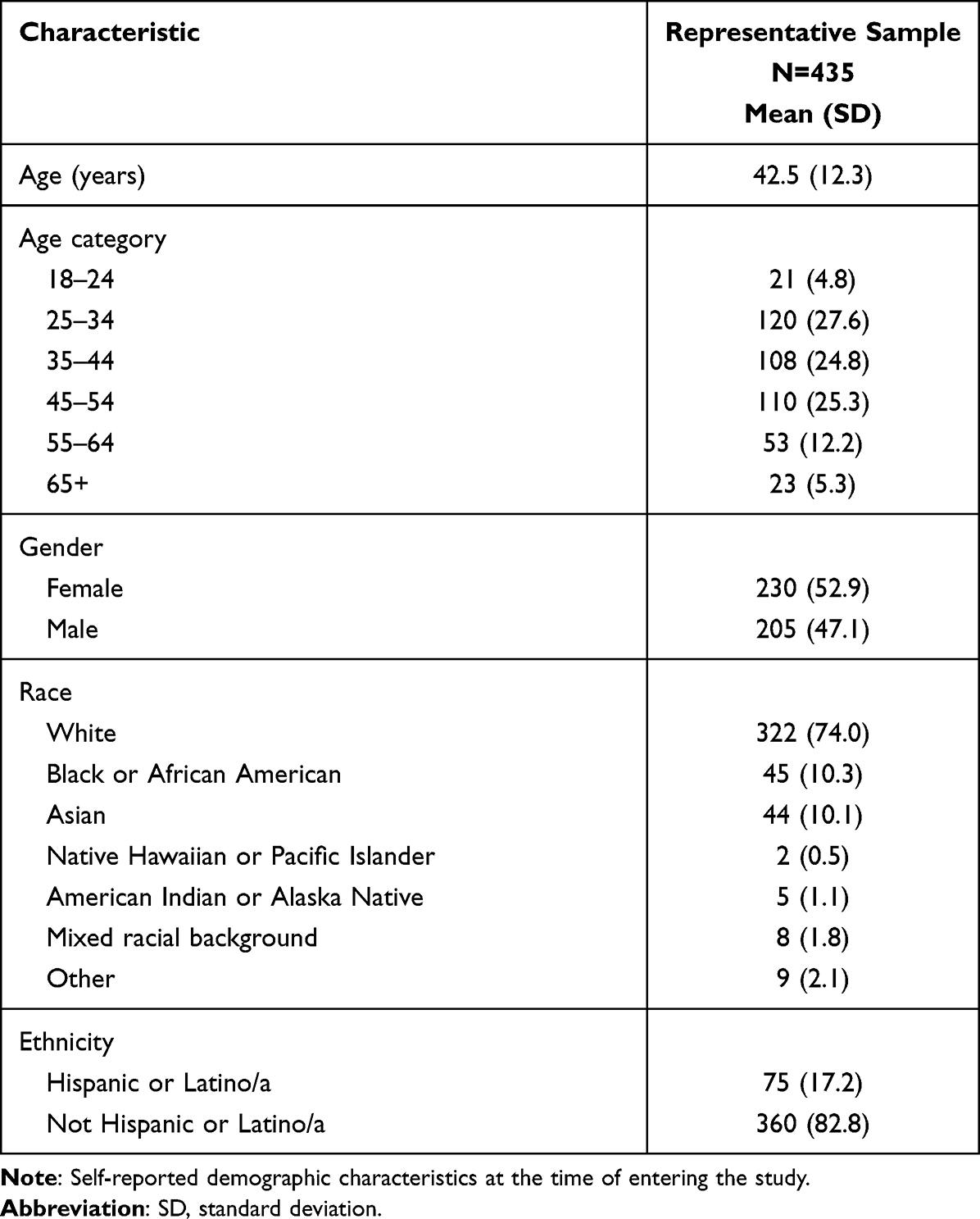 |
Table 1 Demographics of the Representative Sample |
Nearly half (45.7%) of participants wore monthly PRSCLs, and 24.1% wore biweekly PRSCLs (Table S2). Immediately prior to the study, Biotrue MPS (Bausch + Lomb, Rochester, NY, USA) was the most frequently used CL care solution (22.1% of participants), followed by ACUVUE® RevitaLens MPS (Johnson & Johnson, Jacksonville, FL, USA) and OPTI-FREE® Replenish® MPS (Alcon, Fort Worth, TX, USA; 13.6% and 12.6%, respectively); 10% of participants used a store or generic brand of MPS (Table 2).
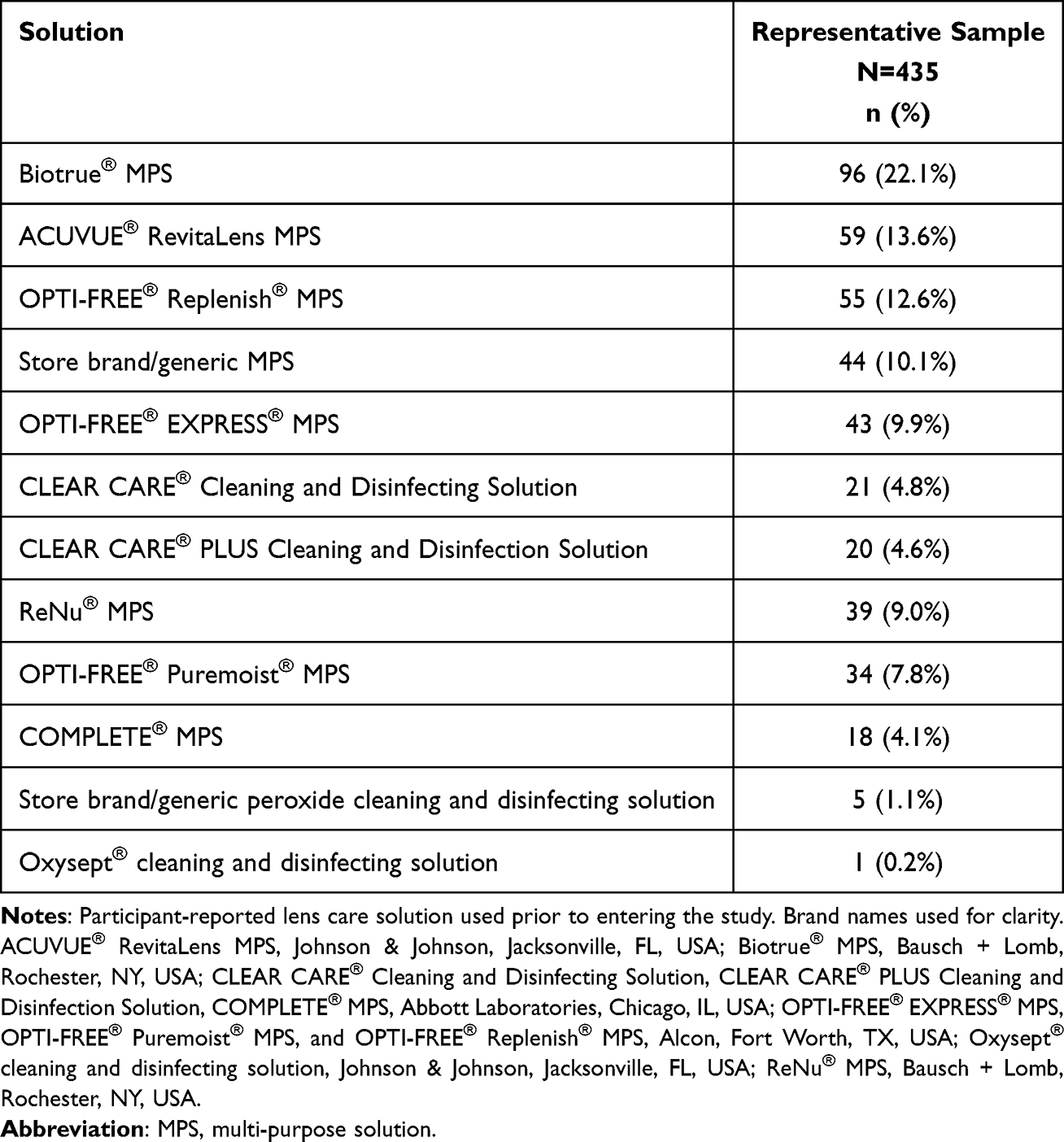 |
Table 2 Habitual Lens Care Solution |
The amount of time participants reported spending on digital devices at baseline is summarized in Figure 1. The most common activity was watching television, followed by using a smartphone/tablet: 83% and 78% of participants reported watching television and/or using a smartphone/tablet for ≥2 hours per day, respectively. Computer use for work was common, with about 55% of participants using a computer for work in an office and/or at home for ≥2 hours per day; 53% of participants played games on a digital device for ≥2 hours per day.
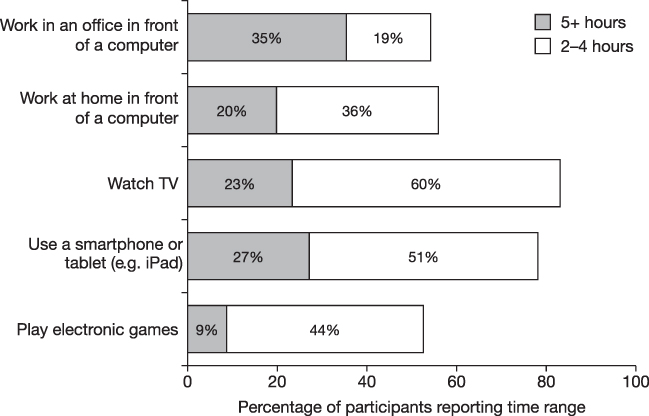 |
Figure 1 Average hours per typical weekday spent on activities of interest. Responses gathered from participants reporting approximately how many hours in an average weekday they engaged in the specified activities while wearing their CLs. Percentage values indicate the proportion of participants reporting engaging in each activity (N=435). Abbreviation: CL, contact lens. |
The most common conditions participants reported with their habitual CLs were CL dryness and tired eyes, followed by eye strain and/or compromised vision (blurred or fluctuating vision), and approximately 1 in 4 participants reported regularly experiencing halos or glare while wearing their CLs (Figure 2). At baseline, 35/435 (8.0%) participants reported a likelihood of stopping wearing CLs altogether in the next 6 months.
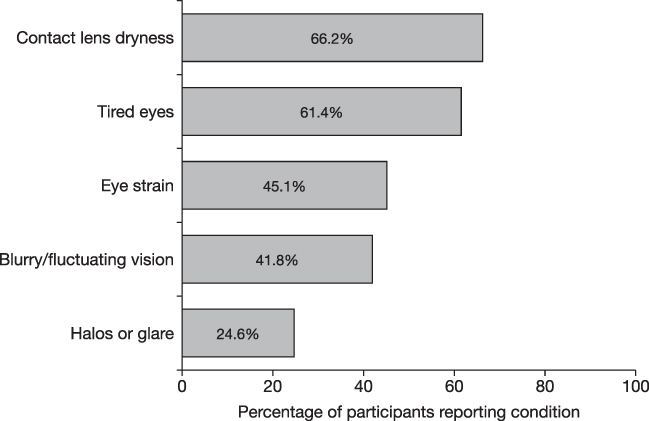 |
Figure 2 Reported conditions associated with habitual contact lens wear. Responses gathered from participants answering the following question: How often, if at all, do you experience each of the following conditions? Responses shown were either “Frequently” or “Occasionally” (binary variable). Percentage values indicate the proportion of participants reporting each condition (N=435). |
Satisfaction and Wear Experience with BHP MPS
Participants reported satisfaction overall with how their CLs felt after using BHP MPS (98.9% agreement). Favorable responses were significantly better than 50% for all performance attributes (p<0.05).
At the end of the study period, 91.7% of all participants agreed that BHP MPS positively impacted how their CLs felt. This was consistent with results across attributes (Table 3), including keeping CLs feeling clean (96.8%), helping keep CLs comfortable so that eyes did not feel tired (93.1%), maintaining CL comfort throughout the day (94.7%), helping to prevent CL dryness (93.6%), maintaining comfort even when using screens for hours (92.0%), maintaining hydration throughout the day (94.7%), and being gentle on their eyes (96.6%). Furthermore, 94.0% of participants were likely to recommend BHP MPS to other CL wearers. No adverse events were reported by any of the 435 participants over the course of this study.
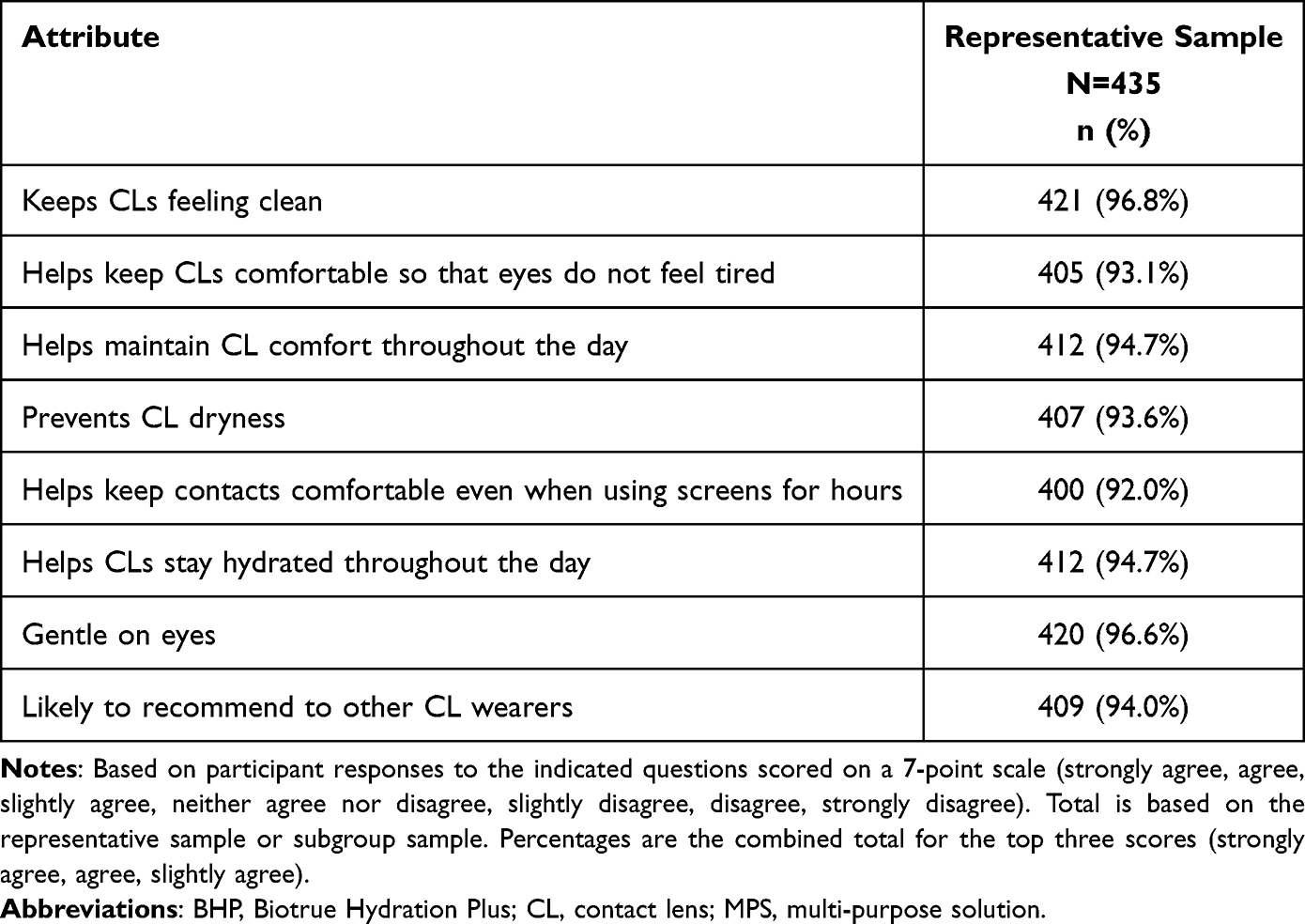 |
Table 3 Agreement with Key BHP MPS Attributes |
Discussion
The choice of CL care solution, along with adherence to appropriate use, can influence CL wear comfort and success, and MPSs remain more routinely recommended by ECPs.10,21 Addressing or preventing CL discontinuation remains an important consideration for ECPs,5 so considering the impact of innovative options for CL care, not just CL modality and materials, may be an increasingly valuable part of a comprehensive approach to ensuring successful and continued CL wear. BHP MPS is uniquely formulated specifically to help maintain ocular surface homeostasis, with a tear-equivalent pH and key ingredients based on scientific research, including HA, key surfactants, potassium, and erythritol.24,29,30
This IHUT demonstrates the real-world, positive impact of BHP MPS on comfort and wear satisfaction for a large cohort of PRSCL wearers. The findings highlight the benefits of BHP MPS to PRSCL wearers and, by extension, ECPs by supporting a positive CL wear experience. Participants perceived BHP MPS as being gentle on the eyes, kept CLs feeling clean, and maintained CL comfort and hydration throughout the day, factors which can contribute to overall CL wear satisfaction.5,7,36 Study participants reported high levels of satisfaction with BHP MPS, and nearly all reported that they would recommend it to other CL wearers.
The results presented here highlight the benefits of the BHP MPS formulation, in the context of the real-world lived experiences of a population of PRSCL wearers who almost unanimously reported regular use of digital screens (computer, smartphone, television), and over half reported some degree of CL dryness and tired eyes at baseline. Given our current understanding of the impact of digital device use in CL wearers on tear film and blink dynamics, and the resulting sensations of dryness or discomfort,11–13 the experiences of comfort, cleanliness, hydration, and satisfaction reported in this study suggest that BHP MPS can support PRSCL wear experience even for those who may be more susceptible to discomfort due to this lifestyle factor. This observation may have lasting real-world relevance as the frequency and duration of digital device use continues to increase, and those who also engage in more intensive digital device use, such as video game players, continue to comprise a notable demographic worldwide, which is now estimated at approximately 3 billion individuals.12,37
The real-world insights from this IHUT build on in vitro and clinical study evidence for BHP MPS evaluating its attributes, efficacy, and performance.34,38,39 Simulated wear studies have demonstrated sustained HA release by CLs soaked overnight in BHP MPS during 20 hours of simulated wear, and greater HA release from CLs soaked in BHP MPS versus Biotrue MPS-soaked CLs over the first 12 hours of simulated wear.39,40 These findings align with the participant-reported feelings of hydration and comfort reported here. The antimicrobial efficacy of BHP MPS was demonstrated to be equivalent to HPS, and more effective than other MPS options, based on the International Organization for Standardization (Geneva, Switzerland) 14,729 stand-alone test protocol.38,41 That study validated the BHP MPS unique triple disinfectant system against multiple challenge microorganisms, representative of those associated with microbial keratitis, in the setting of the manufacturer-recommended soak time.38,41 Importantly, findings from the present study suggest that the BHP MPS disinfection capability does not compromise CL wearer comfort, with over 95% of participants reporting BHP MPS as being gentle on their eyes. The current study also demonstrates real-world consistency with observations from a prospective clinical trial of BHP MPS, which demonstrated positive ratings across all the evaluated clinical and subjective performance attributes.34
Strengths of the present study include the IRB-approved real-world pragmatic study design to collect data on contemporary CL wear experience, which included a large PRSCL wearer population across the United States. The enrolled population was reflective of the potential variety of PRSCL wearers seen in clinical practice2,3 based on participant demographics including age (with >40% being 45 years of age or older), gender, and racial/ethnic diversity, and it included users of a range of CL wear types and prior CL care solution options (including both commercial and generic brands) at baseline.
The findings should be considered in the context of limitations intrinsic to the study protocol, including the subjective and self-reported nature of the data collected. There was no direct monetary compensation offered specifically for this study; however any standard incentive typical of online panel providers could be considered in the interpretation of the present findings. Although enrollment achieved the required sample size to detect differences across survey metrics, no masked control or comparator arm was included, which precludes conclusive statements regarding the impact of BHP MPS versus a specific comparator solution. Current sample numbers also prevent formal comparisons of performance between BHP MPS and specific prior CL care solutions.
The findings presented here indicate that BHP MPS offers favorable comfort and satisfaction alongside its established robust antimicrobial efficacy for PRSCL wearers. Areas for additional analysis and future work to expand on the findings presented here include exploration of the impact of BHP MPS on additional subgroups of interest, such as those who report wearing CLs for particularly extended periods of time (≥10 hours per day). Analysis according to baseline causes of CL dissatisfaction and baseline self-reported CL dryness could be informative, and evaluating the impact of CL wearers’ positive experience with BHP MPS on their reported attitudes towards considering CL discontinuation would also be of interest. Although the present representative sample included a relatively small number of participants who met study definitions for being on the verge of discontinuation, further analysis of a sample of participants enriched with those who meet this criterion is an area of active exploration.42
Conclusion
The present IHUT provides valuable insights into the real-world experience of PRSCL wearers using BHP MPS. This unique formulation demonstrated strong performance in a real-world cohort of PRSCL wearers, across all criteria evaluated, and improved CL wear experience. Although the findings should be considered with respect to limitations inherent to real-world survey studies in general, overall these results further support recent clinical trial evidence in demonstrating the positive impact of BHP MPS on self-reported CL wearer comfort and add to the body of evidence indicating that BHP MPS is a high-performance care option for both CL wearers and ECPs to consider.
Abbreviations
BHP, Biotrue Hydration Plus; CL, contact lens; COVID-19, coronavirus disease of 2019; ECP, eye care practitioner; HA, hyaluronan; HPS, hydrogen peroxide solution; IHUT, in-home use test; IRB, institutional review board; MPS, multi-purpose solution; PR, planned replacement; PRSCL, planned replacement soft contact lens; SCL, soft contact lens; SD, standard deviation.
Data Sharing Statement
Relevant data are within the manuscript. Clarification requests around the manuscript and its data can be made to the corresponding author.
Ethics Approval and Informed Consent
The study protocol (Pro00065039) received institutional review board (IRB) approval from Advarra prior to participant recruitment and was conducted in accordance with the Declaration of Helsinki and applicable local regulations.
Acknowledgments
The authors wish to acknowledge all of the participants involved in the study.
Medical writing/editorial support was provided by Vicky Reynolds, PhD and Lee-Jay Bannister, PhD (Illuminate Medical, UK) and was funded by the study sponsor (Bausch & Lomb Incorporated, Rochester, NY, USA).
The abstract of this paper was previously presented at the American Academy of Optometry Annual Meeting, November 6–9, 2024, Indianapolis, IN, USA as a poster presentation.
Author Contributions
All authors attest that they meet the current International Committee of Medical Journal Editors (ICMJE) criteria for authorship. All authors made a significant contribution to the work reported, whether that is in the conception, study design, execution, acquisition of data, analysis and interpretation, or in all these areas; took part in drafting, revising, or critically reviewing the article; gave final approval of the version to be published; have agreed on the journal to which the article has been submitted; and agree to be accountable for all aspects of the work.
Funding
This study was funded by Bausch & Lomb Incorporated, including payment of the journal Rapid Service fee.
Disclosure
Chi Nguyen and Mark Schaeffer are consultants to Bausch & Lomb Incorporated. All other authors are employees of Bausch & Lomb Incorporated. The authors report no other conflicts of interest in this work.
References
1. Moreddu R, Vigolo D, Yetisen AK. Contact lens technology: from fundamentals to applications. Adv Healthc Mater. 2019;8(15):e1900368. doi:10.1002/adhm.201900368
2. Cope JR, Collier SA, Rao MM, et al. Contact lens wearer demographics and risk behaviors for contact lens-related eye infections—United States, 2014. MMWR Morb Mortal Wkly Rep. 2015;64(32):865–10. doi:10.15585/mmwr.mm6432a2
3. Konne NM, Collier SA, Spangler J, Cope JR. Healthy contact lens behaviors communicated by eye care providers and recalled by patients - United States, 2018. MMWR Morb Mortal Wkly Rep. 2019;68(32):693–697. doi:10.15585/mmwr.mm6832a2
4. Morgan PB, Sulley AL. Challenges to the new soft contact lens wearer and strategies for clinical management. Cont Lens Anterior Eye. 2023;46(3):101827. doi:10.1016/j.clae.2023.101827
5. Pucker AD, Tichenor AA. A review of contact lens dropout. Clin Optom. 2020;12:85–94. doi:10.2147/OPTO.S198637
6. Joeris A, Zhu TY, Lambert S, Wood A, Jayakumar P. Real-world patient data: can they support decision making and patient engagement? Injury. 2023;54 Suppl 3:S51–S56. doi:10.1016/j.injury.2021.12.012
7. Sulley A, Young G, Hunt C. Factors in the success of new contact lens wearers. Cont Lens Anterior Eye. 2017;40(1):15–24. doi:10.1016/j.clae.2016.10.002
8. Gomes JAP, Azar DT, Baudouin C, et al. TFOS DEWS II iatrogenic report. Ocul Surf. 2017;15(3):511–538. doi:10.1016/j.jtos.2017.05.004
9. Koh S. Contact lens wear and dry eye: beyond the known. Asia Pac J Ophthalmol (Phila). 2020;9(6):498–504. doi:10.1097/APO.0000000000000329
10. Jones L, Efron N, Bandamwar K, et al. TFOS lifestyle: impact of contact lenses on the ocular surface. Ocul Surf. 2023;29:175–219.
11. Al-Mohtaseb Z, Schachter S, Shen Lee B, Garlich J, Trattler W. The relationship between dry eye disease and digital screen use. Clin Ophthalmol. 2021;15:3811–3820.
12. Jaiswal S, Asper L, Long J, Lee A, Harrison K, Golebiowski B. Ocular and visual discomfort associated with smartphones, tablets and computers: what we do and do not know. Clin Exp Optom. 2019;102(5):463–477.
13. Jansen ME, Begley CG, Himebaugh NH, Port NL. Effect of contact lens wear and a near task on tear film break-up. Optom Vis Sci. 2010;87(5):350–357. doi:10.1097/OPX.0b013e3181d951df
14. Nichols KK, Redfern RL, Jacob JT, et al. The TFOS international workshop on contact lens discomfort: report of the definition and classification subcommittee. Invest Ophthalmol Vis Sci. 2013;54(11):TFOS14–TFOS19. doi:10.1167/iovs.13-13074
15. Naduvilath T, Papas EB, Lazon de la Jara P. Demographic factors affect ocular comfort ratings during contact lens wear. Optom Vis Sci. 2016;93(8):1004–1010. doi:10.1097/OPX.0000000000000884
16. Richards J, Rickert M, Carr K, Meyer D, Kollbaum P. The association between participant-reported ratings of comfort, dryness and vision quality in soft contact lens wearers. Ophthalmic Physiol Opt. 2024;44(4):693–703. doi:10.1111/opo.13292
17. Multi-sponsor Surveys, Inc. 2023 study of the U.S. consumer contact lens market, (MS2314). 2023. Available from: https://www.multisponsor.com/wp-content/uploads/2024/02/US-Consumer-Contact-Lens-Market-MS2314.pdf.
18. Morgan PB, Efron N, Woods CA, Jones D, Jones L, Nichols JJ. International trends in daily disposable contact lens prescribing (2000-2023): an update. Cont Lens Anterior Eye. 2024;47(6):102259. doi:10.1016/j.clae.2024.102259
19. Diec J, Papas E, Naduvilath T, Xu P, Holden BA, Lazon de la Jara P. Combined effect of comfort and adverse events on contact lens performance. Optom Vis Sci. 2013;90(7):674–681. doi:10.1097/OPX.0000000000000008
20. Stuart A. Contact lenses: when a solution is the problem. Am Acad Ophthalmol. 2012;23–25.
21. Morgan PB, Woods CA, Tranoudis IG, et al. International contact lens prescribing in 2023. Contact Lens Spectrum. 2024. Available from: https://www.clspectrum.com/issues/2024/januaryfebruary/international-contact-lens-prescribing-in-2023/.
22. Multi-sponsor Surveys, Inc. The 2023 study of contact lens cleaning & care (MS2307). 2023. Available from: https://www.multisponsor.com/wp-content/uploads/2023/08/Contact-Lens-Cleaning-and-Care-MS2307.pdf.
23. Craig JP, Willcox MD, Argueso P, et al. The TFOS international workshop on contact lens discomfort: report of the contact lens interactions with the tear film subcommittee. Invest Ophthalmol Vis Sci. 2013;54(11):TFOS123–156. doi:10.1167/iovs.13-13235
24. Jones L, Downie LE, Korb D, et al. TFOS DEWS II management and therapy report. Ocul Surf. 2017;15(3):575–628. doi:10.1016/j.jtos.2017.05.006
25. Hynnekleiv L, Magno M, Vernhardsdottir RR, et al. Hyaluronic acid in the treatment of dry eye disease. Acta Ophthalmol. 2022;100(8):844–860. doi:10.1111/aos.15159
26. Rah MJ. A review of hyaluronan and its ophthalmic applications. Optometry. 2011;82(1):38–43. doi:10.1016/j.optm.2010.08.003
27. Bednar K, Doktor M, Bateman K. Patient satisfaction with multipurpose solutions in over 3000 subjects.
28. Reindel W, Cairns G, Merchea M. Assessment of patient and practitioner satisfaction with Biotrue multi-purpose solution for contact lenses. Cont Lens Anterior Eye. 2010;33 Suppl 1:S12–S17. doi:10.1016/j.clae.2010.06.013
29. Bausch & Lomb Incorporated. Biotrue hydration plus multi-purpose solution. 2021. Available from: https://pi.bausch.com/globalassets/pdf/packageinserts/vision-care/biotrue-hydration-plus-package-insert.pdf.
30. Bausch & Lomb Incorporated. Biotrue hydration plus contact lens solution. Available from: https://www.biotrue.com/products/hydration-plus-contact-solution/.
31. Bachman WG, Wilson G. Essential ions for maintenance of the corneal epithelial surface. Invest Ophthalmol Vis Sci. 1985;26(11):1484–1488.
32. Yang W, Zhao X, Han M, et al. Recent advances in biosynthesis mechanisms and yield enhancement strategies of erythritol. Crit Rev Food Sci Nutr. 2024;64(33):13112–13132. doi:10.1080/10408398.2023.2260869
33. Abelson MB, Udell IJ, Weston JH. Normal human tear pH by direct measurement. Arch Ophthalmol. 1981;99(2):301. doi:10.1001/archopht.1981.03930010303017
34. Schaeffer M, Shahidi A, Mosehauer G, Rah M, Reindel W. Clinical evaluation of biotrue hydration plus multipurpose solution in daily use with planned replacement soft contact lenses. Ophthalmol Ther. 2025;14(6):1249–1260. doi:10.1007/s40123-025-01123-0
35. U.S. Food & Drug Administration. Use of real-world evidence to support regulatory decision-making for medical devices. 2017. Available from: https://www.fda.gov/media/99447/download.
36. Best N, Drury L, Wolffsohn JS. Predicting success with silicone-hydrogel contact lenses in new wearers. Cont Lens Anterior Eye. 2013;36(5):232–237. doi:10.1016/j.clae.2013.02.013
37. Looi JC, Wilkes FA, Bastiampillai T, Allison S. Practical psychiatry: taking gaming seriously - a primer for psychiatrists on gamers and gaming culture. Australas Psychiatry. 2024;32(1):59–62. doi:10.1177/10398562231211137
38. Corwin-Buell J, Callahan D, McGrath D, Millard K, Mosehauer G, Phatak NR. Biocidal efficacies of contact lens disinfecting solutions against international organization for standardization (ISO) compendial organisms. Clin Ophthalmol. 2024;18:337–345. doi:10.2147/OPTH.S445870
39. Scheuer M, Shahidi A, Mosehauer G, Rah M, Reindel W. Hyaluronan release from contact lenses soaked in a new hyaluronan-containing multi-purpose solution.
40. Scheuer CA, Fridman KM, Barniak VL, Burke SE, Venkatesh S. Retention of conditioning agent hyaluronan on hydrogel contact lenses. Cont Lens Anterior Eye. 2010;33 Suppl 1:S2–S6. doi:10.1016/j.clae.2010.10.003
41. International Organization for Standardization. Microbiological requirements and test methods for products and regimens for hygienic management of contact lenses – amendment 1. 2010. Available from: https://www.iso.org/standard/51069.html.
42. Rah M, Schafer J, Shahidi A, Reindel W. In-home use test of a novel contact lens solution in contact lens wearers on the verge of dropout. Invest Ophthalmol Vis Sci. 2024;65:2687.
 © 2026 The Author(s). This work is published and licensed by Dove Medical Press Limited. The
full terms of this license are available at https://www.dovepress.com/terms
and incorporate the Creative Commons Attribution
- Non Commercial (unported, 4.0) License.
By accessing the work you hereby accept the Terms. Non-commercial uses of the work are permitted
without any further permission from Dove Medical Press Limited, provided the work is properly
attributed. For permission for commercial use of this work, please see paragraphs 4.2 and 5 of our Terms.
© 2026 The Author(s). This work is published and licensed by Dove Medical Press Limited. The
full terms of this license are available at https://www.dovepress.com/terms
and incorporate the Creative Commons Attribution
- Non Commercial (unported, 4.0) License.
By accessing the work you hereby accept the Terms. Non-commercial uses of the work are permitted
without any further permission from Dove Medical Press Limited, provided the work is properly
attributed. For permission for commercial use of this work, please see paragraphs 4.2 and 5 of our Terms.