
Back to Journals » International Journal of Women's Health » Volume 17
Prevalence and Determinants of Common Sexually Transmitted Infections Among Women Presenting with Vaginal Discharge at a Tertiary Care Hospital in Eritrea
Authors Berhane A, Tesfai B  , Frezgi O , Hussein KF, Kibreab F
Received 21 May 2025
Accepted for publication 23 September 2025
Published 3 October 2025 Volume 2025:17 Pages 3469—3478
DOI https://doi.org/10.2147/IJWH.S541994
Checked for plagiarism Yes
Review by Single anonymous peer review
Peer reviewer comments 3
Editor who approved publication: Dr Everett Magann
Araia Berhane,1 Berhe Tesfai,2,3 Okbu Frezgi,2,3 Khalid Farah Hussein,2,3 Fitsum Kibreab4
1Communicable Division Control (CDC), Ministry of Health, Asmara, Eritrea; 2Department of Obstetrics and Gynecology, Orotta College of Medicine and Health Science, Ministry of Health, Asmara, Eritrea; 3Orotta National Referral Maternity Hospital, Ministry of Health, Asmara, Eritrea; 4Ministry of Health, Health Research and Resources Center Division, Asmara, Eritrea
Correspondence: Berhe Tesfai, Email [email protected]
Background: Vaginal discharge is a common symptom of sexually transmitted infections (STIs), and prompt identification is crucial to prevent long-term complications affecting reproductive health. This study aimed to determine the prevalence and associated factors of selected sexually transmitted infections and assess the relevance of syndromic management among patients presenting with vaginal discharge.
Methods: An analytic hospital based; cross-sectional study was conducted at a tertiary hospital involving patients with vaginal discharge. Physicians carried out clinical examinations, and serologic assessments were performed for Human Immunodeficiency Virus (HIV), syphilis, and viral hepatitis. Cervical swabs were analysed using Gene Xpert Polymerase Chain Reaction (PCR) for C. trachomatis, T. vaginalis, N. gonorrhoea, and Human papilloma virus (HPV). Univariable and multivariable analyses were conducted, with a P-value < 0.05 considered statistically significant.
Results: A total of 362 patients were enrolled. The majority were married (81.5%), multigravida (60.8%), and housewives (59.1%), with 65.5% having completed junior or secondary school. The prevalence of HIV (2.5%), syphilis (0.6%), HBsAg (1.9%), and Anti-HBc (19.1%) was identified through serologic analysis. Molecular testing using Gene Xpert PCR (NAAT) detected T. vaginalis in 4.4% of cases and HPV in 1.7%, while C. trachomatis and N. gonorrhea were not detected. Key associated factors included age (AOR: 4.44, 95% CI: 2.16– 9.11; P< 0.001), genital itching (AOR: 0.51, 95% CI: 0.30– 0.85; P< 0.01), and sexual intercourse under the influence of alcohol (AOR: 0.11, 95% CI: 0.01– 1.06; P< 0.05).
Conclusion: The low prevalence of selected Sexually transmitted infections such as syphilis and HPV, and the absence of C. trachomatis and N. gonorrhoea, challenge the effectiveness of syndromic management in this population. Point of care molecular diagnostic approaches are recommended to improve the accuracy of Sexually transmitted infections diagnosis and management.
Keywords: STIs, C. trachomatis, N. gonorrhoea, vaginal discharge, prevalence
Introduction
Sexually transmitted infections (STIs) pose a significant public health challenge globally, with higher prevalence rates observed in developing countries due to limited access to treatment.1 In 2019, the World Health Organization (WHO) reported new cases of chlamydia (127.2 million), gonorrhoea (86.9 million), syphilis (6.3 million), trichomoniasis (156 million), and human papillomavirus (HPV) (291 million).2 Among these, Chlamydia trachomatis (CT) and Neisseria gonorrhea (NG) are the most prevalent bacterial STIs, while Trichomonas vaginalis (TV) is the most common curable non-viral STI.3,4 Recent statistics from 2022 indicate that chlamydia remains the most frequently reported STI among women (17.9%), followed by gonorrhoea (2.3%), syphilis (0.15%), and HIV (0.05%).5
Vaginal discharge is a widespread gynaecologic complaint that may be physiological or indicate severe genital tract conditions, including pelvic inflammatory disease (PID), particularly in young, reproductive-age women.6,7 TV is a key contributor to reproductive morbidity and facilitates HIV transmission, making it a critical public health concern.8 Furthermore, infections such as TV and bacterial vaginosis (BV) are common among HIV-positive women.9 STIs significantly impact female reproductive health due to anatomical susceptibility, contributing to infertility, anogenital cancer, adverse pregnancy outcomes, and fetal abnormalities.10
Syndromic management is widely used to manage people with vaginal discharge. In most resource-limited settings, the syndromic management flow charts are still the standard of care where laboratory diagnosis is not available.2 To address symptomatic vaginal discharge, WHO recommends same-visit treatment for NG, CT, and/or TV based on results from quality-assured molecular assays.2 In resource-limited settings where molecular diagnostic tools are unavailable, treatment is guided by point-of-care tests or syndromic management.2 Rapid diagnostics such as the Cepheid GeneXpert® (Xpert) CT/NG assay allow for immediate treatment during clinical visits.4,11
Nucleic acid amplification tests (NAATs) are now recommended by the CDC as the tests of choice.4 Tests using Cepheid GeneXpert CT/NG (Xpert) assay for chlamydia in females demonstrated sensitivities for endocervical, vaginal, and urine samples of 97.4%, 98.7%, and 97.6%, respectively.4 Results for gonorrhea in females demonstrated sensitivities for endocervical, vaginal, and urine samples of 100.0%, 100.0%, and 95.6%, respectively. These results indicate that this short-turn around-time test can be used to accurately test patients and to possibly do so at the site of care, thus potentially improving chlamydia and gonorrhea control efforts.4
Laboratory investigations have confirmed varying prevalence rates for conditions like bacterial vaginosis (50%), trichomoniasis (27.8%), and candidiasis (41.7%).12 Similarly, reported prevalence rates for TV range from 1.7%13 to 6.7%,14 while CT and NG have been detected at 8.7% and 1.7%, respectively.14 Low-prevalence STI populations have reported CT detection rates of 6.4%, NG at 0.6%, and TV at 4.0%.15 In sub-Saharan Africa, community-based studies have demonstrated a low prevalence of CT, ranging between 1.6% and 3.2%.16 STI are common in women in rural Brazil and represent an important health threat in view of the HIV pandemic. The prevalence of STI were HPV 11.7%, chlamydia 4.5%, trichomoniasis 4.1%, gonorrhea 1.2%, syphilis 0.2%, and HIV 0%. The prevalence of BV and candidiasis was 20% and 12.5%, respectively.17
In Eritrea, Health Management Information System (HMIS) data from 2015 to 2022 revealed an increase in vaginal discharge cases from 2822 to 3141 across all regions. From authors observational clinical point of view, due to limited diagnostic capacity, particularly in lower-health facilities, syndromic management remains the most employed approach in accordance with WHO guidelines and National STI Treatment Guidelines. However, syndromic management often lacks accuracy as vaginal discharge can be physiological.
There are no published studies done in Eritrea related to prevalence of STI and risk factors on patients with vaginal discharge. Defining STI prevalence, specifically for CT, NG, and TV, alongside identifying associated risk factors, is essential for integrating laboratory-based diagnostics into STI management. This study aimed to determine the prevalence and determinants of STIs and assess the relevance of syndromic management in patients presenting with vaginal discharge at Orotta National Referral Maternity Hospital.
Methodology
Study Design, Setting, and Study Population
A prospective cross-sectional study was conducted at Orotta National Referral Maternity Hospital, a tertiary referral and teaching maternity hospital that serves patients from across the country. Female patients presenting to the outpatient department with complaints of vaginal discharge during the study period were eligible to participate.
Sampling Procedure
All patients with complaints of vaginal discharge who visited the outpatient department of Orotta National Referral Maternity Hospital between April 1, 2023, and August 31, 2023, were consecutively enrolled until the required sample size was achieved.
Sample Size Determination
The sample size for this study was calculated based on the estimated prevalence of vaginal discharge, desired precision level, and confidence interval. Since no prior estimates were available, the prevalence (p) was assumed to be 50%, with a confidence level (z) of 95% and a precision level (d) of 5.45%. Using Epi Info 7, an initial sample size of 323 was calculated. Accounting for a 10% non-response rate, the final estimated sample size was 359, though data were ultimately collected from 362 respondents.
Inclusion and Exclusion Criteria
All patients who presented with vaginal discharge to the outpatient department during the study time were included in the study. Patients who had mental illness, males, and patients who had no vaginal discharge were excluded from the study.
Data Collection
Questionnaire
A pre-designed questionnaire, partly based on previous literature2,5,18 and partially prepared by the authors specific for this study, was used to collect information on sociodemographic characteristics, risk factors, clinical presentations, and complications. A total of 10 staffs were trained, 5 on data collection and transport, and 5 on sample analysis and results were obtained on the same day.
Specimen Collection
After completing the questionnaire, 5 mL of venous blood was drawn from each patient for serologic testing of HIV, hepatitis B virus, and syphilis. A sterile speculum examination was performed, and three cervical swabs were collected from each patient for polymerase chain reaction (PCR) analysis of Chlamydia trachomatis (CT), Trichomonas vaginalis (TV), Neisseria gonorrhea (NG), and human papillomavirus (HPV). Additionally, pelvic and per-vaginal examinations were conducted to assess clinical presentations.
The cervical swabs were collected using cobas® or Cepheid® PCR media tubes to ensure adequate samples for all pathogens. Samples were transported immediately and stored following the manufacturers’ guidelines at the National Health Laboratory (NHL). A pilot study was conducted prior to data collection to adapt the tools and laboratory procedures to the study’s objectives and context.
Specimen Analysis
HIV testing was performed using Murex EIA HIV Ab/Ag and Vironostika EIA HIV Ab/Ag, with confirmatory tests for positive cases. Hepatitis B surface antigen (HBsAg) was detected using SURASE B-96 ELISA (TMB), while anti-HBc was tested with NANBASE C-96 V4.0 EIA. Positive results for hepatitis B were confirmed using SD BIOLINE HBsAg ELISA kits. Blood samples were screened for syphilis antibodies using the TPHA test, and positive results were further evaluated for recent infections using the RPR test. Cervical swab specimens were analyzed using cobas® or Cepheid® PCR for CT, TV, NG, and HPV. HPV-positive cases were classified by subtype.
Data Analysis and Interpretation
Data were checked for completeness before entry, and double data entry was performed using CSPro 7.2. The dataset was then exported to SPSS version 25 for analysis. Descriptive statistics were used to determine the prevalence of sexually transmitted infections (STIs). The chi-square test was applied to compare STI prevalence across demographic and clinical characteristics. Logistic regression analysis identified factors associated with STIs, with a P-value of < 0.05 considered statistically significant.
Ethical Considerations
Ethical approval for the study was obtained from the Ministry of Health Ethical Clearance and Review Committee (Reference: 04/06/2023). The head departments of Orotta National Referral Maternity Hospital and the National Health Laboratory were informed, and formal permission was granted by the respective authorities. Written informed consent was obtained from all participants, and patient confidentiality was strictly maintained, and the study complies with the Declaration of Helsinki. Personal identifiers were coded, and data were analyzed in aggregate to ensure privacy.
Results
Sociodemographic Characteristics of Patients with Vaginal Discharge
A total of 362 patients with vaginal discharge were enrolled in the study. Most of the patients were married (81.5%) and had at least a Junior and Secondary level of education (65.5%). The proportion of vaginal discharge increased significantly with patient age (P<0.001) but decreased with higher education levels (P<0.01). At least one sexually transmitted infection (STI), including HIV, HBsAg, anti-HBc, syphilis, CT, TV, NG, or HPV was documented in 25.7% of the patients. Table 1 provides a detailed breakdown of the sociodemographic characteristics and STI test results.
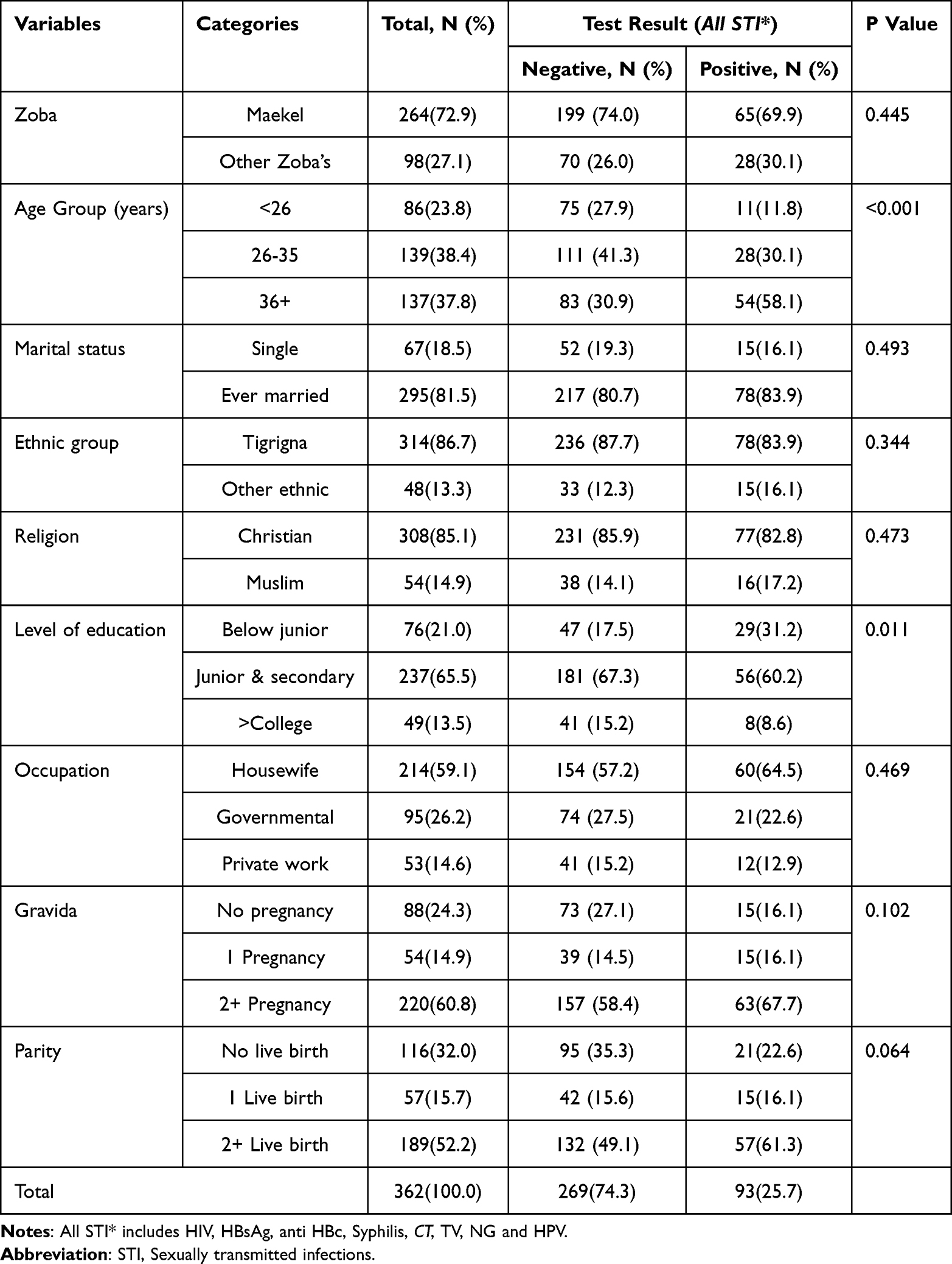 |
Table 1 Sociodemographic Characteristics of Patients with Vaginal Discharge |
Risk Factors and Complications Associated with STIs in Patients with Vaginal Discharge
This study identified several factors significantly associated with STIs. Genital itching was strongly associated with STIs (72%, P<0.019), and 100% of patients with a positive STI result had a history of sexual intercourse (P<0.007). Significant associations were also observed with sexual intercourse under the influence of alcohol (P<0.031), initiating sexual activity before the age of 20 (P<0.028), and a history of ectopic pregnancy (P<0.05). However, chronic diseases and contraceptive use were not significantly linked to STIs. Complications included infertility (32.5%) and chronic pelvic pain (71%), although STI positivity was not significantly correlated with these complications (Table 2).
 |
Table 2 Risk Factors and Complications of STIs in Patients with Vaginal Discharge |
Prevalence of Sexually Transmitted Infections in Patients with Vaginal Discharge
The prevalence of HIV among patients was 2.5%, with 1.1% of patients being previously diagnosed and on treatment. Prevalence of syphilis (0.6%), HBsAg (1.9%), and anti-HBc was detected in 19.1% of patients. Gene Xpert PCR/Nucleic Acid Amplification Tests (NAAT) did not detect C. trachomatis or N. gonorrhoea in any of the samples. T. vaginalis was detected in 4.4% of patients, while 1.7% tested positive for HPV (serotypes 16 and 18). Co-infection among different STIs occurred in 14.7% of patients (Table 3).
 |
Table 3 Prevalence of STIs in Patients with Vaginal Discharge |
Multivariable Analysis of Patients with Vaginal Discharge
Multivariable analysis revealed that older age (AOR: 4.44, 95% CI: 2.16–9.11; P<0.001), genital itching alongside vaginal discharge (AOR: 0.51, 95% CI: 0.30–0.85; P<0.01), and sexual intercourse under the influence of alcohol (AOR: 0.11, 95% CI: 0.01–1.06; P<0.05) were significant risk factors for STIs. Table 4 summarizes the multivariable analysis results.
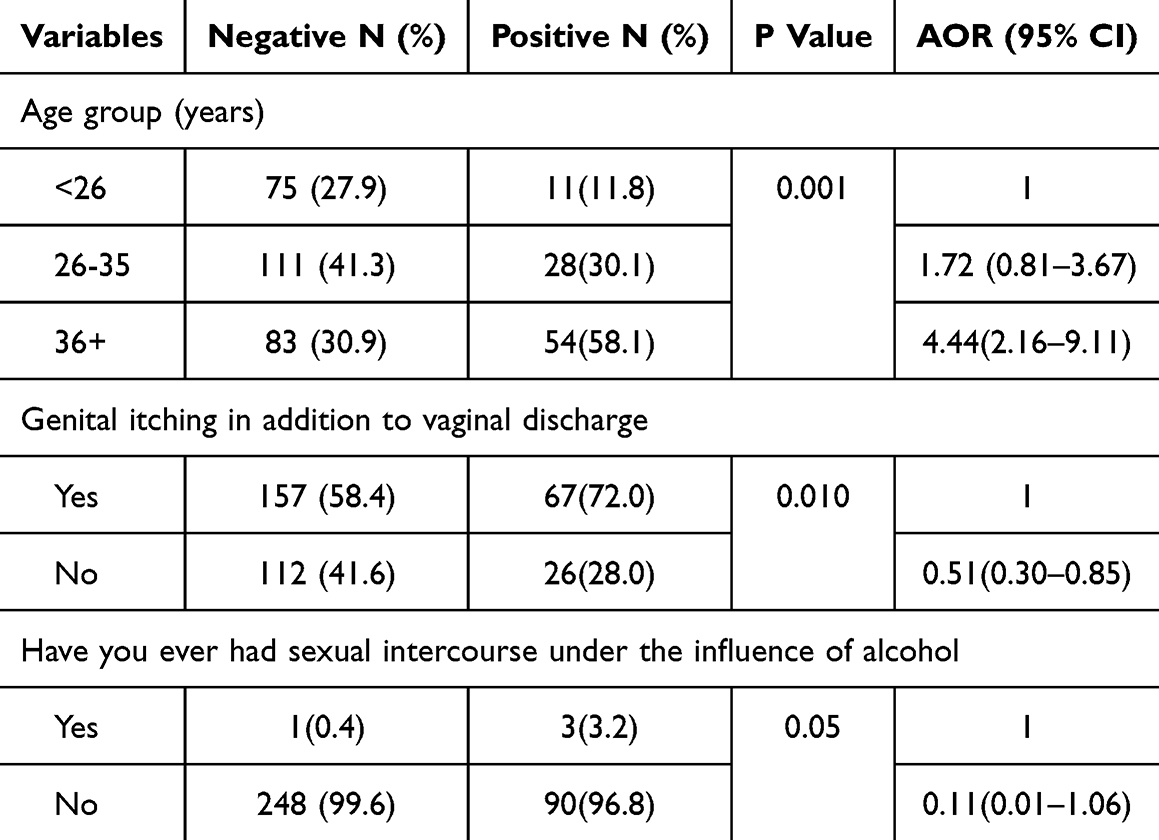 |
Table 4 Multivariable Analysis of Risk Factors for STIs in Patients with Vaginal Discharge |
Discussion
Sexually transmitted infections (STIs) remain a significant public health concern globally due to their potential to cause severe health complications, including increased susceptibility to HIV infection. In our study, no cases of Chlamydia trachomatis (CT) or Neisseria gonorrhoea (NG) were detected using Gene Xpert PCR (NAAT) analysis, aligning with previous studies conducted in Eritrea19 and India.20 However, this finding contrasts with most global literature, which identifies CT and NG as leading causes of STIs, reporting prevalence rates ranging from 12.2% for CT20 to 1.4% for NG.6 Factors such as the diagnostic sensitivity and specificity of laboratory methods and resource limitations in low-income settings may contribute to this disparity. The absence of CT and NG in our study underscores the need for further research and the incorporation of advanced diagnostic modalities to reduce reliance on the syndromic management approach, which could inadvertently contribute to antimicrobial resistance.
The prevalence of Trichomonas vaginalis (TV) and human papillomavirus (HPV) in our study was 4.4% and 1.7%, respectively. These findings were consistent with studies reporting TV prevalence rates of 3.8%12 and 4.3%6 in patients with vaginal discharge. Conversely, our results were lower than global estimates, which suggest TV prevalence rates of 8.1%8 and 10%.20 The relatively low detection of TV in this study emphasizes the need to include TV in routine molecular diagnostic testing alongside CT and NG to ensure comprehensive management of STIs. Furthermore, the detection of HPV highlights the need for cervical cancer prevention and treatment strategies, particularly in high-risk populations.
The study also revealed a 2.5% prevalence of HIV among patients with vaginal discharge, like rates observed in other studies.6 This finding is lower than reports from Mozambique and Angola, where higher rates of HIV/STI co-infections were observed.18,21 The effective implementation of HIV prevention strategies in Eritrea likely explains the lower prevalence. Meanwhile, the prevalence of hepatitis B virus (HBsAg) and anti-HBc was 1.9% and 19.1%, respectively, underscoring the need for expanded hepatitis B vaccination and screening programs. In particular, the high prevalence of anti-HBc warrants further research and policy interventions, including the administration of hepatitis B immunoglobulin and vaccines to newborns of infected mothers.
The co-infection rate in this study was 14.7%, which is higher than rates reported in some regions, such as Angola, where the prevalence of HIV/HBV co-infection was 6.3%.21 Co-infections involving HPV and bacterial vaginosis (BV) were also commonly reported in other studies.17 Given the frequency of co-infections, introducing NAAT diagnostic platforms that simultaneously test for multiple pathogens, including CT, NG, TV, BV, and Mycoplasma genitalium, would significantly enhance management strategies and reduce diagnostic gaps.
Age, genital itching, and sexual intercourse under the influence of alcohol were identified as significant determinants of STIs in this study. These findings align with other research demonstrating that younger age and lack of a spouse are risk factors for CT,7 while TV is more prevalent in women over 40 years of age.14 Patients aged 36 years and above in our study exhibited a higher prevalence of HIV and anti-HBc positivity. Clinical presentations such as mucopurulent discharge, lower abdominal pain, and cervical motion tenderness were observed in most patients, consistent with pelvic inflammatory disease (PID) and STIs. However, only 25.7% of the participants tested positive for at least one STI. This highlights the limitations of symptom-based diagnosis, as previously reported in other studies where only 35.6% of symptomatic females tested positive for STIs.12
Our findings suggest that clinical symptoms and vaginal discharge are not reliable indicators of infections such as gonorrhea or chlamydia. This observation is consistent with previous studies reporting that vaginal discharge and clinical cervicitis diagnoses are poor predictors of NG or CT infections.12 Consequently, over-diagnosis and treatment of physiological discharge as pathological remain a concern, particularly in low-resource settings. These findings call for a reassessment of the syndromic management approach, which, despite its utility in resource-constrained environments, poses risks such as inappropriate antimicrobial use, resistance development, and adverse drug reactions.
The World Health Organization (WHO) recommends syndromic treatment for NG, CT, and TV in cases of vaginal discharge when laboratory testing is unavailable or limited.2 However, our study indicates that the syndromic approach may not be effective in settings with low STI prevalence. Alternative strategies, including the use of quality-assured molecular assays capable of delivering same-day results for NG, CT, and TV, should be prioritized. Other STIs, such as HIV, HBV, syphilis, and HPV, which have specific management protocols, should not be grouped under syndromic management.
This study was limited by the inability to determine the prevalence of BV, candidiasis, and other pathogens like M. genitalium. Previous research has shown that BV is a common cause of vaginal discharge, with prevalence rates of 29.2%12 and 26%.20 The most common isolates include Candida spp., Gardnerella vaginalis, and E. coli.6 Future studies with larger sample sizes and a focus on additional pathogens will help provide a more comprehensive understanding of vaginal discharge etiology and improve diagnostic accuracy.
In conclusion, while syndromic management remains the standard in resource-limited settings, its limitations highlight the need for policy revisions and the adoption of laboratory-based diagnostics to improve patient outcomes. Until policy changes are implemented, adherence to WHO recommendations for syndromic management will remain essential for STI treatment in Eritrea. It is highly recommended that integration of molecular testing in low-resource settings to prevent the burden of antimicrobial resistance with the syndromic management.
As the management based on systematic molecular diagnostics in not yet implemented in Eritrea, the efficacy of syndromic management was questioned as higher rates of treatment failure and antimicrobial resistance on patients with vaginal discharge were observed. The finding in this study is novel as Chlamydia trachomatis or Neisseria gonorrhoea cases were not detected using Gene Xpert PCR (NAAT) analysis, which indicated the drawback of syndromic management and highlights the laboratory-based management. This study could have selection bias, and these results can be applied to non-tertiary health care setting. The public health importance is highly valuable as these infections and antimicrobial resistance from syndromic management can be prevented by community awareness.
Author Information
Araia Berhane, MD, MSc PH, Communicable Diseases Control Division, Ministry of Health, Asmara, Eritrea. Email: [email protected].
Berhe Tesfai, MD, Obstetrician and Gynecologist, Department of Obstetrics and Gynecology, Orotta College of Medicine and Health Science, Orotta National Referral Maternity Hospital, Ministry of Health, Asmara, Eritrea. Email: [email protected].
Okbu Frezgi, MD, Obstetrician and Gynecologist, Department of Obstetrics and Gynecology, Orotta College of Medicine and Health Science, Orotta National Referral Maternity Hospital, Ministry of Health, Asmara, Eritrea. [email protected].
Khalid Farah Hussein, MD, Obstetrician and Gynecologist, Associate Professor, Department of Obstetrics and Gynecology, Orotta College of Medicine and Health Science, Orotta National Referral Maternity Hospital, Ministry of Health, Asmara, Eritrea. Email: [email protected].
Fitsum Kibreab, PhD, Statistician, Epidemiologist and International Public Health Expert, Ministry of Health, Health Research and Resources Center Division, Asmara, Eritrea. Email: [email protected].
Acknowledgments
Authors acknowledge the Director of National Health Laboratory (NHL), staff of Communicable Diseases Control (CDC) division and Orotta National Referral Maternity Hospital for their continuous support for the study. We also acknowledge the respondents for giving us their time to fill out the questionnaire and Mr. Medhane Asrat (Statistician) for doing part of the data analysis.
Author Contributions
All authors made a significant contribution to the work reported, whether that is in the conception, study design, execution, acquisition of data, analysis and interpretation, or in all these areas; took part in drafting, revising or critically reviewing the article; gave final approval of the version to be published; have agreed on the journal to which the article has been submitted; and agree to be accountable for all aspects of the work.
Funding
The authors received no specific funding for this work.
Disclosure
The authors report no conflicts of interest in this work.
References
1. Xie T-A. et al. Evaluation of the Diagnostic Efficacy of Xpert CT/NG for Chlamydia trachomatis and Neisseria gonorrhoeae. Bio Med Research Int. 2020;2020: 2892734.
2. World Health Organization, et al. Guidelines for the Management of Symptomatic Sexually Transmitted Infections; 2021.
3. Helena Pellrud DG, Christian Steczkó N, Nilsson C, et al. Trichomonas vaginalis Infections are Rare Among Young Patients Attending an STI Clinic in Sweden. Acta Derm Venereol. 2015;95(3):343–344. doi:10.2340/00015555-1946
4. Gaydos, Gaydos CA, Van Der Pol B, et al. Performance of the Cepheid CT/NG Xpert Rapid PCR Test for Detection of Chlamydia trachomatis and Neisseria gonorrhoeae. J Clin Microbiol. 2013;51(6):1666–1672. doi:10.1128/JCM.03461-12
5. Report R. Sexually transmitted infections in the Netherlands in 2022. Available from: wwwrivmnl/en/accessibility.
6. Anorlu R, Imosemi D, Odunukwe N, et al. Prevalence Of Hiv Among Women With Vaginal Discharge In A Gynecological Clinic. J Nail Med Assoc. 2004;96:367–371.
7. Łój AB B, Ciećwież S, Ciećwież S, et al. The role of serological testing for Chlamydia trachomatis in differential diagnosis of pelvic pain. Ann Agric Environ Med. 2016;23(2):506–510. doi:10.5604/12321966.1219196
8. Kissinger, et al. Trichomonas vaginalis: a review of epidemiologic, clinical and treatment issues. BMC Infect Dis. 2015;15:307. doi:10.1186/s12879-015-1055-0.
9. Gatski, Gatski M, Martin DH, et al. Co-Occurrence of Trichomonas vaginalis and Bacterial Vaginosis Among HIV-Positive Women. Sex Transm Dis. 2011;38(3):163–166. doi:10.1097/OLQ.0b013e3181f22f56
10. Olivia T, Gerwen V, Marrazzo JM, et al. Sexually transmitted infections and female reproductive health. Nature Micribiology. 2022;7(8):1116–1126. doi:10.1038/s41564-022-01177-x
11. Gaydos CA, et al. Review of use of a new rapid real-time PCR, the Cepheid GeneXpert®(Xpert) CT/NG assay, for Chlamydia trachomatis and Neisseria gonorrhoeae: results for patients while in a clinical setting. Expert Rev Mol Diagn. 2014;14(2):135–137. doi:10.1586/14737159.2014.871495
12. Chauhan, et al. Clinical and laboratory diagnosis of vaginal discharge syndrome. Indian Dermatol Online J. 2014;5(1):1.
13. Pereyre S, Laurier Nadalié C, Bébéar C, et al. Mycoplasma genitalium and Trichomonas vaginalis in France: a point prevalence study in people screened for sexually transmitted diseases. Clin Microbiol Infect. 2017;23(2):
14. Ginocchio, Ginocchio CC, Chapin K, et al. Prevalence of Trichomonas vaginalis and Coinfection with Chlamydia trachomatis and Neisseria gonorrhoeae in the United States as Determined by the Aptima Trichomonas vaginalis Nucleic Acid Amplification Assay. J Clin Microbiol. 2012;50(8):2601–2608. doi:10.1128/JCM.00748-12
15. KL Munson, M Napierala, E Munson. Suboptimal Trichomonas vaginalis Antigen Test Performance in a Low-Prevalence Sexually Transmitted Infection Community. J Clin Microbiol. 2016;54(2):500–501. doi:10.1128/JCM.02949-15
16. Masese, Masese L, Baeten JM, et al. Incidence and Correlates of Chlamydia trachomatis Infection in a High Risk Cohort of Kenyan Women. Sex Transm Dis. 2013;40(3):221–225. doi:10.1097/OLQ.0b013e318272fe45
17. Araújo Oliveira F, Pfleger V, Lang K, et al. Sexually transmitted infections, bacterial vaginosis, and candidiasis in women of reproductive age in rural Northeast Brazil: a population-based study. Mem Inst Oswaldo Cruz Rio de Janeiro. 2007;102(6):751–756. doi:10.1590/S0074-02762007000600015
18. Viegas EOTN, Macovela E, Gonçalves E, et al. Incidence of HIV and the Prevalence of HIV, Hepatitis B and Syphilis among Youths in Maputo, Mozambique: a Cohort Study. PLoS One. 2015;10(3):e0121452. doi:10.1371/journal.pone.0121452
19. Hussein K, Tesfai B, Frezgi O, et al. Antimicrobial Resistance Patterns in Patients with Vaginal Discharge: a 2019-2022 Analysis at the National Health Laboratory in Eritrea. Biomed Res Int. 2024;2024:1–11. doi:10.1155/2024/7193490
20. S Vishwanath, V Talwar, R Prasad, et al. Syndromic management of vaginal discharge among women in a reproductive health clinic in India. Sex Transm Inf. 2000;76(4):303–306. doi:10.1136/sti.76.4.303
21. Vueba, Vueba AN, Almendra R, et al. Prevalence of HIV and hepatitis B virus among pregnant women in Luanda (Angola): geospatial distribution and its association with socio-demographic and clinical-obstetric determinants. Virol J. 2021;18(239):1–11. doi:10.1186/s12985-021-01698-7
 © 2025 The Author(s). This work is published and licensed by Dove Medical Press Limited. The
full terms of this license are available at https://www.dovepress.com/terms
and incorporate the Creative Commons Attribution
- Non Commercial (unported, 4.0) License.
By accessing the work you hereby accept the Terms. Non-commercial uses of the work are permitted
without any further permission from Dove Medical Press Limited, provided the work is properly
attributed. For permission for commercial use of this work, please see paragraphs 4.2 and 5 of our Terms.
© 2025 The Author(s). This work is published and licensed by Dove Medical Press Limited. The
full terms of this license are available at https://www.dovepress.com/terms
and incorporate the Creative Commons Attribution
- Non Commercial (unported, 4.0) License.
By accessing the work you hereby accept the Terms. Non-commercial uses of the work are permitted
without any further permission from Dove Medical Press Limited, provided the work is properly
attributed. For permission for commercial use of this work, please see paragraphs 4.2 and 5 of our Terms.
Recommended articles
Prevalence, Types and Contributing Factors of Female Infertility at Orotta National Referral Maternity Hospital, Eritrea: A Cross-Sectional Study
Tesfai B, Mehari K, Ghebregherghsh ST, Frezgi O, Kibreab F
International Journal of General Medicine 2025, 18:7699-7713
Published Date: 19 December 2025