
Back to Journals » Journal of Multidisciplinary Healthcare » Volume 19
Prescribing Errors in Iraqi Intensive and Cardiac Care Units: A Qualitative Investigations of Pharmacists’ Perceptions, Determining Factors, Outcomes and Management Strategies
Authors Ali ZT  , Mikhael EM
Received 5 April 2026
Accepted for publication 6 July 2026
Published 13 July 2026 Volume 2026:19 613855
DOI https://doi.org/10.2147/JMDH.S613855
Checked for plagiarism Yes
Review by Single anonymous peer review
Peer reviewer comments 3
Editor who approved publication: Dr Pavani Rangachari
Zina Tahsin Ali,1 Ehab Mudher Mikhael2
1Clinical Pharmacy Department- College of Pharmacy – University of Al-Muthanna, Samawah, Al-Muthanna, Iraq; 2Clinical Pharmacy Department- college of pharmacy – University of Baghdad, Baghdad, Iraq
Correspondence: Ehab Mudher Mikhael, Email [email protected]
Background: Prescribing errors are common in critical care units (CRCU) in developing countries. Little is known about the causes of these errors and the pharmacists’ role in preventing and managing them in Iraqi hospitals.
Objective: To get an in-depth understanding of the perspectives and practice of Iraqi pharmacists regarding prescribing errors in CRCU.
Methods: A descriptive-qualitative study was conducted through face-to-face interviews with a consensus sample of pharmacists who have been working at the CRCU of Al-Husain Hospital in Al-Muthanna city/Iraq for at least 3 months. The interviews were conducted in Arabic using a validated semi-structured guide. The data were analyzed using thematic-analysis.
Results: Sixteen pharmacists participated in the study, and three themes emerged. The first theme explored pharmacists’ perceptions and experiences of prescribing errors in CRCU, with most pharmacists viewing these errors as common and potentially harmful to patients. The second theme focused on the types and determinants of prescribing errors, with drug-drug interactions, dosing errors, and irrational prescribing identified as the main types; pharmacists perceived that such errors are often physician-related, stemming from negligence and limited competence, and institution-related, due to patient workload and medication shortages. The third theme addressed the detection, prevention, and management of prescribing errors, with all pharmacists reporting the use of websites and general mobile applications for error detection and resolution. Most pharmacists indicated informing the responsible physician about the errors and leaving the correction decision to the physician’s discretion. Additionally, most participants recommended enhancing physicians’ skills through targeted training and developing specialized applications to support physicians in managing CRCU patients.
Conclusion: Participating pharmacists considered prescribing errors, mainly dosing and drug-interactions, to be common in CRCU. They attributed these errors to physician negligence, limited competence, and workload. Pharmacists are using general applications for error detection. To reduce these errors, implementing targeted training and developing specialized applications are recommended.
Keywords: prescribing errors, critical care units, Iraq, pharmacists’ perspectives, management of prescribing errors
Introduction
Medication errors are defined as preventable events that threaten patient safety and may result in prolonged hospital stays and increased healthcare costs. These errors can occur at various stages of the medication process, including prescribing, transcribing, dispensing, and administration. However, prescribing errors are the most common type;1–3 such errors are characterized by mistakes in the prescriber’s decision-making process that result in inappropriate medication choices, omissions, incorrect combinations, incorrect indications, or errors in dosage, frequency, route of administration, or duration of therapy.4,5
There are many reasons behind the occurrence of prescribing errors. Some are personal related, such as lack of competency, inability to follow treatment guidelines, workload fatigue; others are institutional related errors, including insufficient supervision, staffing shortages, and lack of adequate technical infrastructure.2,6,7
Prescribing errors present a substantial risk to treatment outcomes, particularly among critically ill patients who are frequently admitted to critical care settings, including intensive care (ICU) and cardiac care units (CCU).7–9
Several studies have explored the prevalence of prescribing errors in critical care units (CRCU) globally.10–12 For instance, a retrospective, multi-centre study across 24 UK critical care units found a prevalence of 15% for prescription errors, with about 1/5 of these errors were classified as significant, serious, or potentially life-threatening.10 Main factors increasing the rate of prescribing errors among such patients included the need for using multiple medications especially intravenous medications and the presence of Comorbidities in critically ill patients.10 In developing countries, a prospective observational study was conducted in the ICU of an academic tertiary care hospital in North India and found a rate of 10.7% for prescribing errors, and such errors are highly increased among patients with impaired organ function.11 In Iraq, a recent retrospective study at the main teaching hospital in Al-Muthanna found that prescribing errors were common among critically ill patients, with these errors being strongly influenced by patient renal function and other comorbidities.12 The reported prescribing error rates were 44.7% in the ICU and 46.8% in the CCU, which are substantially higher than rates documented in other both developed and developing countries.
Pharmacists, as medication experts, are uniquely positioned to influence medication safety practices by detecting and preventing errors through reviewing and approving physicians’ prescriptions, conducting medication reconciliation, and educating patients and other healthcare professionals about appropriate medication use.13,14 When errors are identified, pharmacists can help manage them by communicating with prescribers to correct them through adjusting medication regimens and doses, as well as recommending alternative medications to ensure the optimum efficacy and safety of prescribed treatments. Previous studies have demonstrated that pharmacist-led interventions can reduce prescribing errors by approximately 37–43%.15,16 Therefore, integrating pharmacists into the prescribing process is vital for enhancing medication management and ensuring patient safety.
To the best of our knowledge, there is a paucity of knowledge behind the reasons for prescribing errors and the current role of pharmacists in Iraqi hospitals regarding the prevention and management of medication errors for critically ill patients. Therefore, the current study aimed to get an in depth understanding of the perspectives and practices of Iraqi pharmacists regarding prescribing errors in CRCU (intensive and cardiac care units), as well as their role in detecting, preventing and managing these errors. It is expected that the results of the current study will be useful in informing policy development and implementing evidence-based interventions to reduce medication errors and improve patient outcomes in critical care settings.
This paper is structured into several key sections. The Methods section involves the current study design, including participant recruitment, data collection through semi-structured interviews, and thematic analysis procedures. The Results section presents the main findings, organized into themes such as perceptions of prescribing errors, types and causes of errors, detection methods, and prevention strategies. The Discussion contextualizes these findings within existing literature, highlighting their implications for practice and policy, and addresses the study’s limitations. Finally, the Conclusions summarize key insights and propose recommendations for reducing medication errors in critical care units.
Methods
Study Design
A descriptive qualitative study was conducted with pharmacists working at the CRCU (ie., intensive care unit (ICU) and cardiac care unit (CCU)) of Al Husain Teaching Hospital in Al-Muthanna city/Iraq, to get an in-depth understanding of their perspectives and practices regarding prescribing errors in the CRCU.
Ethical Considerations
The study was ethically approved by the ethical committee at the college of pharmacy – University of Baghdad (ethical approval number: RECAUBCP06262H at 10/06/2025).
Considering cultural factors and the likelihood that many individuals in Iraq may be hesitant to sign documents, the ethical committee accepted obtaining verbal instead of written consent from study participants.17 All Participants were informed that their consent included publication of responses and direct quotes. To ensure maximum confidentiality, participants were not required to disclose their identities during the interview. Meanwhile, the researcher employed pseudonyms for the participants in the interview transcription.
Development and Validation of the Interview Guide
The study authors developed the interview guide, which consisted of semi structured questions, after taking into account ideas in suitable previous literature.18–22 To validate the content of the interview guide, it was sent to a panel of six experts, four of them were academic pharmacists with robust experience in qualitative studies and two were senior physicians who have working experience in the CRCU.
The experts were asked to check the relevance and clarity of each question. Additionally, they were encouraged to provide feedback on any language and wording issues.
To assess the content validity of the interview guide, the Content Validity Ratio (CVR) was calculated using Lawshe’s method.23 According to this method values equal to one were considered acceptable and could be retained in the interview guide.23 Obtained values for content validity ratio regarding relevance and clarity of the guide items were found to be one, indicating consensus among all experts regarding the relevance and clarity of all guide items. However, one expert provided minor linguistic revisions on two items. After incorporating these revisions, all experts approved the guide (Appendix A).
Study Sample
All pharmacists with at least 3 months of working experience in the CRCU were considered eligible to participate in this part of the study. A purposive sampling strategy was employed to enroll participants through a consensus approach aimed at capturing diverse and comprehensive perspectives. Of the 23 pharmacists working in the CRCU, 16 met the inclusion criteria and were invited to participate. All invited pharmacists were informed about the study objectives and the audio recording process. Fortunately, all 16 pharmacists provided their verbal informed consent and agreed to participate in the study. Enrolled participants were contacted before the study to allow for scheduling a sufficient time for the interview. All participants were interviewed in a quiet area at the clinical pharmacy room of the hospital.
Data Collection and Analysis
The interviews were conducted from 10/07/2025 to 01/11/2025 in accordance with the interview guide in the Arabic language. Probing questions were used to elicit additional comments when necessary. Interviews were conducted by the first author, a PhD candidate in clinical pharmacy, who received training in interview techniques from the second author, a PhD in clinical pharmacy with extensive experience in qualitative research. The training involved conducting pilot interviews with two pharmacists to identify and address potential issues, thereby preventing their occurrence during the actual study and ensuring proficiency. All interviews were audio-recorded using a mobile recorder. Each interview lasted approximately 15–20 minutes.
Interviews with pharmacists were continued until reaching the saturation point, the point at which no new information was obtained for two consecutive participants.
The first author transcribed the audio-recorded interviews directly into an Excel spreadsheet in the original Arabic language to preserve the integrity of the meaning throughout the data analysis process. Themes and subthemes were generated through the application of a hybrid approach, incorporating both inductive and deductive methods.17 In the inductive approach, thematic analysis was conducted in accordance with Braun and Clarke’s six-step framework.24 The first two steps involve familiarizing oneself with the comments and creating initial codes. These steps were done by the first author who, manually coded all the interviews in English language. Meanwhile, the second author performed a double-check of these English codes against the original Arabic spreadsheet, verifying that the codes accurately represented the participants’ statements to ensure the reliability and “trustworthiness” of the analysis. Any discrepancies in interpretation were resolved through discussion and consensus between study authors. A codebook was created to maintain uniformity in the coding process across all interviews. The third step involved identifying potential themes. In addition, this step was coupled with a deductive approach, in which a predetermined template derived from the ideas and sequence of questions outlined in the interview guide was used to generate themes. The last steps included evaluating the generated themes, clearly defining and naming them, and ultimately documenting the findings.
It is worth noting that all terms used in the Results section reflect exactly what was used by patients during the interviews, and no additional categorization or quantitative definition of these terms was applied during the analysis.
Results
Sixteen pharmacists participated in this study. Most pharmacists were females (n=10) holding Bachelor degree in pharmaceutical sciences (n=14). The mean age of participated pharmacists was 30.13 years, with a range from 26 to 41 years. Half of the participants were working in the ICU and the other half in the CCU. Full details about demographics of study participants are shown in Table 1.
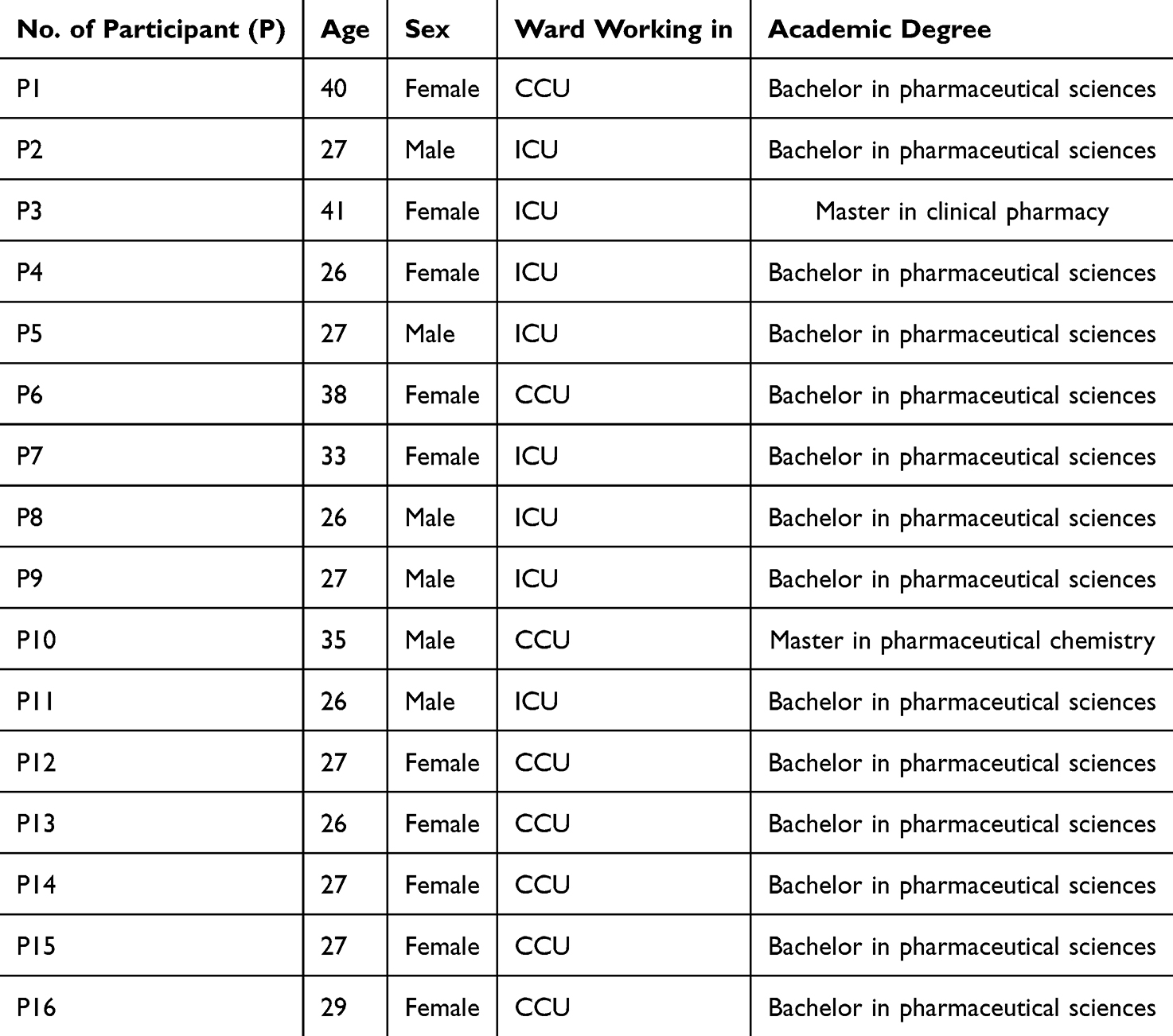 |
Table 1 Demographics of Study Participants |
The results of this study showed three major themes: perceptions and experiences of pharmacists about prescribing errors in CRCU, types and determinants of prescribing errors, and detection, prevention and management of prescribing errors. Table 2 shows study themes and subthemes.
 |
Table 2 Study Themes |
Frequency of Prescribing Errors
All participants reported identifying prescribing errors in the critical care units; however, the majority (n=12) indicated that these errors are very common and occur frequently in such settings. Two participants indicated that such errors occur occasionally. One participant stated that prescribing errors can occur in these units but generally at a lower rate compared to other wards. Another participant acknowledged the occurrence of prescribing errors but did not specify a frequency.
Medication errors occur frequently about 3 times per week. P2
Medication errors can occur in the CCU; although I do not have confirmed statistics, they tend to happen less frequently than in other units. P1
Impact of Prescribing Errors on Patients in the CRCU
Most participating pharmacists (n=13) believed that prescribing errors could be harmful to patients, either directly (n=12) or indirectly (n=1). Among those who reported direct harm, eight had witnessed at least one adverse outcome, including patient death (n=4), medication toxicity and side effects (n=3), renal failure (n=2), and disease progression due to omission of necessary medication (n=1). On the other hand, four pharmacists thought that, although errors can sometimes cause direct harm, such harm often goes unnoticed due to negligence or insufficient follow-up. Regarding the indirect harm, one pharmacist reported that prescribing errors can indirectly harm patients by leading to irrational medication use and wastage. Conversely, two pharmacists considered such harm negligible because it is usually quickly corrected. The last pharmacist stated that there was no harm, as no patient harm caused by prescribing errors had been witnessed. A flowchart is shown in Figure 1.
Although most prescribing errors can cause significant harm to patients, they often go unnoticed due to negligence and are only detected by chance. P1
Sometimes, prescribing errors can lead to drug toxicity and consequently the patient’s death. I have witnessed a patient who died due to methotrexate and digoxin toxicity. Occasionally, they can cause kidney failure, such as administering vancomycin, acyclovir, and gentamicin together for a long period without proper monitoring. P9
 |
Figure 1 Impact of prescribing errors on patients in the CRCU. |
Types of Prescribing Errors in the CRCU
All participants reported witnessing at least one medication error. The most frequently reported errors included drug-drug interactions (n=11), irrational prescribing of medications (n=12), dosing errors (n=9), issues with the duration of prescribed therapy (n=6), lack of monitoring (n=8), prescribing contraindicated drugs (n=2), duplicate prescribing (n=2), errors in the note for propofol administration (n=1), reconstitution error for omeprazole (n=1), and dosing frequency error (n=2) for omeprazole (5 times daily) and for ceftriaxone (4 times daily). Regarding drug-drug interactions, most pharmacists reported encountering more than one interaction. Upon reviewing the examples provided by pharmacists using the Medscape Drug Interaction Checker, it was found that most of these reported interactions were accurate and potentially serious (n=16), while a few were not true interactions (n=2). Among the genuine interactions, the majority (n=6) involved antibiotics, such as meropenem with valproic acid; ceftriaxone with Ringer’s lactate or calcium (prescribed to be administered IV simultaneously). Other notable interactions included omeprazole (n=6) with clopidogrel; beta-blockers with Ventolin (n=3), which can increase heart rate; and tramadol with ondansetron (n=1).
Regarding irrational prescribing (n=11), only one participant reported irrational prescribing of steroids, while the majority highlighted irrational prescribing of antibiotics, which are often prescribed without a clear indication and without culture and sensitivity testing.
For dosing errors, three participants reported such errors in patients with renal impairment, another two reported errors in prescribed antibiotics, and two others identified errors when prescribing enoxaparin. Additionally, two participants noted dosing errors with less frequently prescribed medications such as rifampicin and isosorbide. One participant reported a dosing error with H2 antagonist, and another identified an error related to the loading dose of clopidogrel.
Lack of monitoring was reported as failure of physicians to monitor patient response to antibiotics (n=6) and albumin (n=1), besides lack of prescribing for tests that are useful for monitoring side effects (n=2) of vancomycin (n=1) and dexamethasone (n=1) when prescribed for a long period of time.
Duration errors were commonly reported with prescribed antibiotics. Specifically, four participants noted prescribing antibiotics for extended periods without a clear indication, while two participants reported prescribing meropenem for very short durations (1–2 days) due to physicians’ belief that it was sufficiently potent to eradicate bacteria within that timeframe.
The reported instances of duplicate prescribing included prescribing two NSAIDs and prescribing another drug from the same class that the patient was already taking, due to a lack of review of the patient’s medication history.
Dosing errors and drug-drug interactions are among the most common types of prescription errors. The most frequent examples of drug interactions include prescribing calcium ampules simultaneously with ceftriaxone, as well as prescribing omeprazole with Plavix®. Dosing errors are common with antibiotics, as with meropenem, which is sometimes prescribed once daily because physicians believe it is sufficiently potent to be effective with this regimen. In addition, nearly all antibiotics are prescribed without culture and sensitivity testing. P10.
Prescription errors occur frequently, such as physicians being unaware of the available dosing strengths of certain medications, particularly those prescribed infrequently. For example, prescribing Rifadin® 500 mg instead of the standard 300 mg, or Isordil 12.5 mg instead of 10 mg. Other common errors include prescribing drug combinations that interact negatively, such as Tramadol with Ondansetron—which can reduce Tramadol’s effectiveness; prescribing Omeprazole with Enoxaparin; Azithromycin with antihistamines; and administering Ceftriaxone with Ringer’s lactate infusion. Additionally, some physicians prescribe Voltaren injections for patients with peptic ulcers without considering contraindications. P13
Causes of Prescribing Errors
Regarding the possible causes of prescribing errors, all participating pharmacists identified at least one contributing factor. These causes were structurally categorized into four primary causes: physician-related reasons (n=16), institutional-related reasons (n=13), patient-related reasons (n=10), and documentation challenges (n=6) (Table 3).
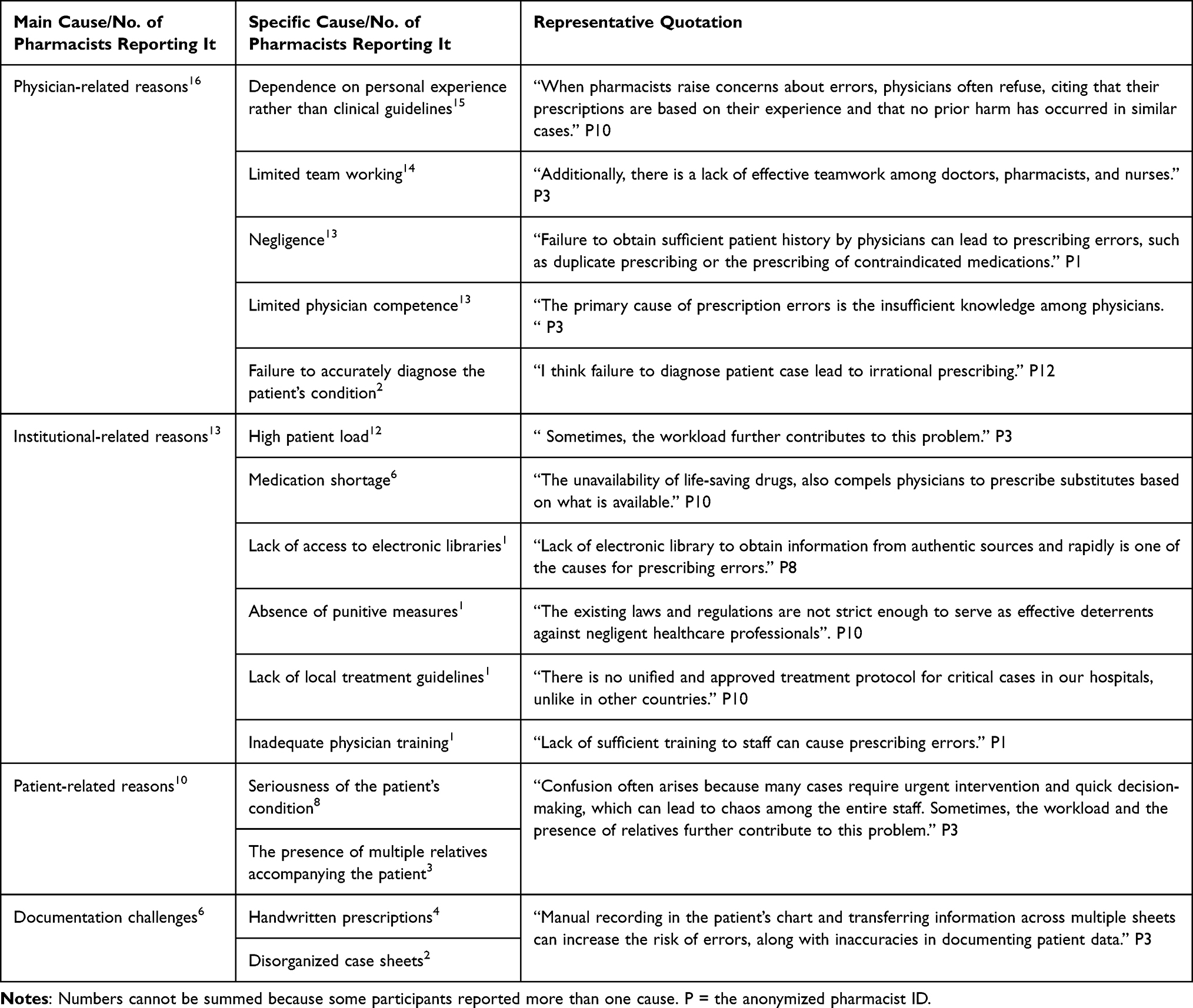 |
Table 3 Causes of Prescribing Errors |
Regarding physician-related reasons, all participating pharmacists perceived that at least one physician-related factor contributed to prescribing errors, with most reporting multiple causes. The most frequently identified issues were physicians’ dependence on personal experience rather than adherence to clinical guidelines (n=15) and negligent behaviors (n=13). Among the pharmacists who reported negligent behaviors, some cited more than one type of negligence, including ignoring pharmacists’ comments and recommendations (n=4), failing to monitor prescribed medications (n=4), relying on outdated medical information and guidelines (n=4), treating patients without following established treatment protocols (n=3), and neglecting to obtain comprehensive medical and medication histories (n=2). Other physician-related reasons include limited team working and collaboration with other healthcare professionals, such as pharmacists, nurses, and physicians from other specialties (n=14), limited physician competence (n=13), and failure to accurately diagnose the patient’s condition (n=2).
Institutional factors were also identified by several pharmacists as contributors to prescribing errors. Notably, most respondents (n=12) considered the high patient load in public hospitals to be a major factor increasing the risk of errors. Six respondents cited the limited availability of medications in public hospitals as a significant issue, often forcing physicians to prescribe alternative treatments that may not be optimal for the patient. Additionally, one pharmacist highlighted the lack of access to electronic libraries as a barrier to rapid and accurate information retrieval, which can contribute to prescribing errors. Other reported reasons include the absence of punitive measures for physicians who prescribe suboptimal medications (n=1), lack of local treatment guidelines (n=1), and inadequate physician training (n=1).
Ten pharmacists cited at least one patient-related reason for prescribing errors. Eight of these pharmacists attributed errors to the seriousness of the patient’s condition, which necessitated urgent treatment. Additionally, three pharmacists mentioned another factor: the presence of multiple relatives accompanying the patient, who often interfere with the physician’s decision-making regarding patient treatment.
Documentation challenges were cited by six pharmacists as a cause of prescribing errors. Among them, four considered handwritten prescriptions to be the main issue, as pharmacists often had difficulty reading the handwriting, which lead to dispensing incorrect treatments. The remaining two pharmacists attributed prescribing errors to disorganized case sheets, which hindered physicians’ ability to monitor lab tests and the patient’s previous status, thereby increasing the likelihood of errors.
Confusion often arises because many cases require urgent intervention and quick decision-making, which can lead to chaos among the entire staff. Occasionally, the workload and the presence of relatives further contribute to this problem. Additionally, there is a lack of effective teamwork among doctors, pharmacists, and nurses. Manual recording in the patient’s chart and transferring information across multiple sheets can increase the risk of errors, along with inaccuracies in documenting patient data. The selection of the appropriate medication by the specialist may be hindered by its unavailability in the hospital, leading to the dispensing of alternative drugs. For example, administering a dopamine ampoule instead of dobutamine when the latter is unavailable. P 3
The primary cause of prescription errors is the insufficient knowledge among physicians. Additionally, there is no unified and approved treatment protocol for critical cases in our hospitals, unlike in other countries. When pharmacists raise concerns about errors, physicians often refuse, citing that their prescriptions are based on their experience and that no prior harm has occurred in similar cases. The existing laws and regulations are not strict enough to serve as effective deterrents against negligent healthcare professionals. Furthermore, family members of patients sometimes intervene in treatment decisions, which can disrupt workflow. The unavailability of life-saving drugs, also compels physicians to prescribe substitutes based on what is available. P10
Tools Used in Detection of Prescribing Errors
All participating pharmacists reported utilizing websites and mobile applications to assist in the detection and resolution of prescribing errors. Regarding the utilized websites and mobile applications, the majority of study participants (n=15) considered these tools to be highly useful, while only one participant believed they provided some benefit. All participants relied on the Medscape application in their work; however, 13 of them depended solely on Medscape. The remaining pharmacists also used additional applications alongside Medscape, such as Lexicomp (n=1), BNF (n=1), or Puked Infusion (n=1). Most participants (n=14) reported daily use of these applications, whereas two respondents indicated infrequent usage. Despite the positive attitudes of study participants toward the available applications and their support in detecting and managing prescribing errors, most of them (n=15) reported one or more challenges with these applications. Twelve participants viewed these applications as sources of general information about diseases and medications. In this regard, seven participants found searching for information in these applications to be time-consuming, while five participants noted that the applications do not account for individual patient factors such as medical history or current medications. As a result, they may recommend treatments or medications that could interact with or be contraindicated based on the patient’s specific medical background. Six participants reported that these applications lack information on commonly used medications in the CRCU. Three participants criticized the applications for insufficient details regarding drug dilution and compatibility with other medications or fluids. Another three participants highlighted the absence of storage information for medications within these applications. Additionally, one participant noted that some information requires an active internet connection, another pointed out the lack of details about extemporaneous preparation procedures, and one more mentioned the absence of information on the necessary monitoring criteria for prescribed medications.
In addition to technology, all study participants (n=10) reported relying on written sources while reviewing prescriptions for errors. Fifteen participants indicated the use of medical books such as the BNF, Iraqi Drug Guide, Pharmacotherapy Handbook, Lippincott’s Pharmacology, and Stockley’s Drug Interactions. Meanwhile, six of these participants also reported supplementing these resources with college lectures (n=5) or with approved clinical guidelines (n=1). The remaining participant reported using college lectures in addition to technology.
Regarding the usage of written sources, only one participant reported daily use of them, whereas the others (n=15) indicated infrequent usage. Despite the infrequent use, all participants perceived high benefits from these sources. The main reasons cited for this benefit included the availability of information without internet access, information about medications available in Iraq, and the perception that having a hard-copy reference made it easier to convince physicians to accept pharmacists’ recommendations. Although participants held positive attitudes toward written sources and valued their role in detecting and managing prescribing errors, most (n=11) reported challenges in their use. These challenges included a lack of information on newly approved medications, limited details regarding medication doses, and difficulty in finding the needed information.
I use Medscape daily because it is free and useful; however, it lacks certain information regarding drug administration. Additionally, adjusting doses based on specific patient conditions, such as low albumin levels or impaired kidney function, is also challenging with Medscape. I sometimes depend on my college lectures, the BNF, and therapeutic books to get detailed and accurate information. P8
I rely on Medscape and the BNF on a daily basis and find Medscape highly beneficial; however, it lacks dosing information tailored to specific indications. Sometimes, we need to dispense medications in doses different from those listed in Medscape, depending on what is available in the Iraqi market. Additionally, there is difficulty in obtaining detailed information about drug compatibility with IV fluids. We require rapid access to information, which most current applications are unable to provide efficiently. P2
Pharmacists’ Action When Detecting a Prescribing Error
When detecting prescribing errors, only six pharmacists reported taking action—either correcting the error (n=4) or stopping the offending medication (n=2)—and then informing the responsible physician. In contrast, ten pharmacists simply notified the responsible physician about the error, either by noting it on the patient’s case sheet (n=6) or verbally (n=4), without taking further action and leaving the decision to correct the error at the discretion of the responsible physician.
I inform the responsible physician of the error, and he/she usually made the final decision. P12
I correct the error immediately and then inform the physician with these details. P4
Current Institutional Measures to Prevent or at Least Reduce Prescribing Errors
Regarding institutional strategies to mitigate prescribing errors in the CRCU, the findings can be categorized into three perspectives as reported by participating pharmacists: no institutional measures (n=8), uncertainty about whether such measures exist (n=2), and the existence of some measures (n=6). Among those who reported that specific institutional strategies are in place, three pharmacists reported the implementation of policies requiring the documentation of notes on patients’ cases whenever prescribing errors are identified. Other reported measures include mandating pharmacists to supervise the dispensing and administration of medications for CRCU patients (n=1) and promoting team-based collaboration among healthcare professionals within the CRCU. Additionally, one pharmacist reported that MOH regulations stipulate medical staff should remain in the CRCU without rotation for a minimum of 2–3 years; however, this regulation has not yet been activated in hospitals.
The MOH has made a decision to permanently assign trained staff to the CRCU for 2-3 years to gain sufficient experience and reduce all types of medication errors. However, this policy has not yet been actively implemented. P3
There are no any institutional measures to reduce the risk of prescribing errors. P11
Recommended Strategies to Reduce Prescribing Errors in CRCU
To minimize prescribing errors, all participating pharmacists offered multiple recommendations, including enhancing physicians’ competence and skills (n=16), as well as addressing institutional (n=16) and scientific-related issues (n=8) (Table 4).
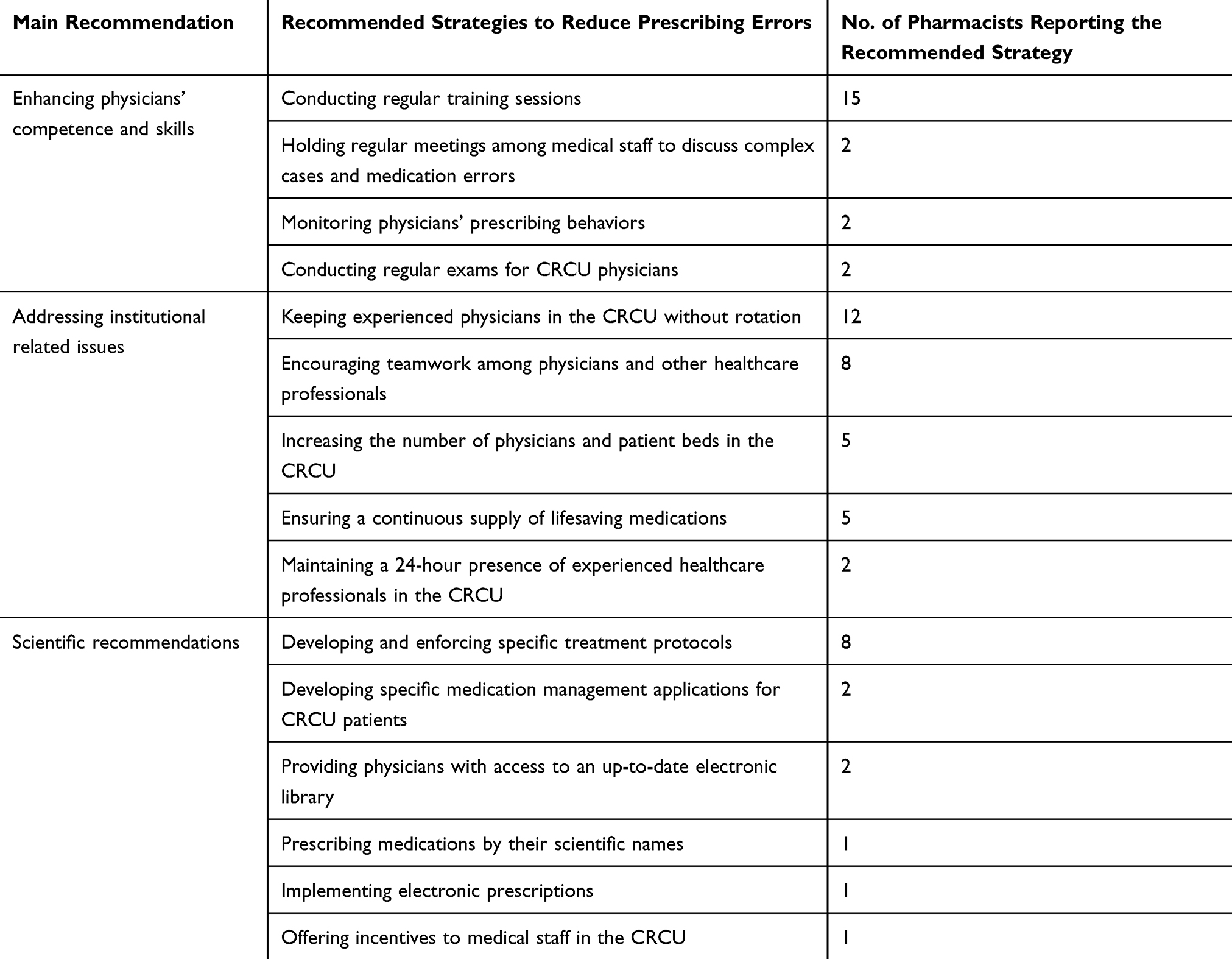 |
Table 4 Recommended Strategies to Reduce Prescribing Errors in CRCU |
To enhance physicians’ competence and skills, participating pharmacists provided multiple recommendations, including conducting regular training sessions (n=15), holding regular meetings among medical staff to discuss complex cases and medication errors (n=2), monitoring physicians’ prescribing behaviors (n=2), and conducting regular exams for CRCU physicians (n=2).
To minimize prescribing errors due to institutional-related issues, study participants recommended keeping experienced physicians in the CRCU without rotation (n=12); promoting teamwork among physicians and other healthcare professionals (n=8); increasing the number of physicians and patient beds in the CRCU (n=5); ensuring a continuous supply of lifesaving medications in hospitals (n=5); maintaining a 24-hour presence of experienced healthcare professionals in the CRCU (n=2); implementing electronic prescriptions instead of handwritten ones (n=1); and offering incentives to medical staff in the CRCU (n=1).
The scientific recommendations by study participants included developing and enforcing specific treatment protocols for physicians (n=8), prescribing medications by their scientific names rather than trade names (n=1), developing specific medication management applications to assist physicians in managing CRCU patients (n=2), and providing physicians with access to an up-to-date electronic library (n=2).
Organizing regular lectures and meetings for the staff of the CRCU, along with providing them with an electronic library containing important resources for them. There is also a need to develop mobile applications that include comprehensive and detailed information about the medications used in CRCU. Additionally, maintaining the healthcare team in the CRCU without rotation. P5
I recommend fostering teamwork among healthcare professionals working in the CRCU, along with providing ongoing training. Additionally, I suggest motivating these professionals through specific privileges compared to their peers, as I have observed that most are reluctant to work in such units. I also recommend ensuring a continuous supply of life-saving medications to these units. P1
Discussion
This qualitative study, conducted within the CRCU at Al Husain Teaching Hospital in Al-Muthanna City, Iraq, provides valuable insights into the prescription errors and their underlying causes in this acute and critical clinical setting. The study findings highlight certain challenges that are frequently driven by the complexities of this environment, as well as identify specific factors that are uniquely exacerbated in resource-limited and high-pressure healthcare contexts. Nearly all participating pharmacists believe that prescription errors are common in the CRCU. This observation aligns with existing literature indicating a high frequency of prescribing errors among critically ill patients.25
Moreover, the present study findings offer a convincing, although concerning, perspective on the practical consequences of prescribing errors. The participating pharmacists reported that prescribing errors are not merely administrative issues but have the potential to impact patient safety. They perceived some errors as potentially harmful and recalled cases that were associated with adverse outcomes, including death. Close to this finding, a cross-sectional study by Kumar et al found that 10.7% of critically ill patients experienced prescription errors, with 3.5% classified as severe.11 Moreover, Rothschild et al found that 13% of prescribing errors in the critical care setting being life-threatening or fatal.25
Although there are differences in study design between these studies and the current one, all emphasize the high-risk environment of the CRCU, where complex cases and poly pharmacy contribute to an increased likelihood of medication-related issues.20 The elevated risk of fatality from prescribing errors among CRCU patients is somewhat anticipated, as these patients are often prescribed multiple high-risk medications such as inotropes and anti-arrhythmics, which have narrow therapeutic windows;26 however, additional studies are needed to better understand this potential relationship. Despite the high fatality of prescribing errors in the CRCU, the good news is that many of these errors could be avoidable through careful team working.25,27 In this context, many participating pharmacists recognized the benefits of teamwork and thus recommended promoting better collaboration among healthcare professionals to reduce such errors in the CRCU.
Additionally, the participating pharmacists highlighted another negative consequence of prescribing errors: irrational medication use. This issue can indirectly impact patients’ care, as medications needed for some individuals may be unavailable due to being prescribed to those without a genuine medical need. This issue may be more relevant in countries with limited resources,28 such as Iraq.
On the other hand, some of the participated pharmacist considered prescribing errors to have a negligible effect on patients at the CRCU while others thought that it “often goes unnoticed”. These perceptions are two sides of the same coin. They draw attention to a crucial problem in patient safety: the “iceberg phenomenon” of medication errors, in which only a small percentage of harms are observable and reported.29
According to the current study results, drug -drug interactions and irrational antibiotic prescribing were the most common prescribing errors in the CRCU. Similar findings were seen in the intensive care units of other developing countries.5,30 Meanwhile irrational antibiotic prescribing is more common in Iraqi hospitals, often driven by factors such as limited diagnostic facilities, lack of antimicrobial stewardship programs, and prescriber habits.31
On the other hand, drug-drug interaction errors might stem from the complex nature of patient cases that often necessitate treatment with multiple medications,7,25 which could potentially increase the likelihood of drug interactions and irrational prescribing. Therefore, careful review of prescriptions by pharmacists is essential and highly recommended by many of the participating pharmacists in the current study to help reduce the likelihood of these errors. Additionally, the establishment of Antimicrobial Stewardship Programs in the CRCU are also recommended, as they have been shown to decrease inappropriate prescribing and enhance patient outcomes, especially in the settings with limited culture and sensitivity testing.32
Other reported prescribing errors included dosing errors, dosing frequency errors, and errors in the duration of prescribed treatment. These errors may be related to the presence of different organ failures for many patients in the CRCU which necessitates dosing and dosing frequency adjustment.11,33
Furthermore, some of the participated pharmacists report prescribing contraindicated medications and duplicate prescribing. Although these errors appear to be less common, they may be related to the limited knowledge of physicians about medications and their mechanism of action.34 Therefore, pharmacists must conduct educational meetings and conferences for physicians to expand their knowledge about medications and hence reduce the chance of prescribing errors.
Despite the importance of monitoring medications’ effects and side effects to ensure maximum benefit and safety, especially in critically ill patients,35 this step was neglected by physicians, as reported by half of the study participants. This finding is consistent with a recent retrospective study conducted at the CRCU of the main teaching hospital in Al-Muthanna, Iraq, which reported that no monitoring tests were ordered in 27% of patient charts.12 This issue may be attributed to limited team collaboration between physicians and pharmacists, who possess greater knowledge about necessary monitoring tests for medication effectiveness and side effects. Additionally, the limited availability of resources, such as laboratory tests and investigation tools in Iraqi hospitals, may contribute to this problem.
According to the current study, prescribing errors are perceived by participating pharmacists to arise from a complex interplay of human, systemic, and environmental factors, rather than a singular cause. Human-related causes include both physician and patient-related factors. Regarding physician-related causes of prescribing errors, most reported reasons by participating pharmacists included physicians’ reliance on their clinical experience rather than clinical guidelines, carelessness, limited competence, inadequate training, and poor collaboration with other healthcare professionals. Most of these reasons are well documented in the literature as factors that increase the likelihood of prescribing errors.36–38
Therefore, many participants recommended involving physicians in ongoing training and education to strengthen their skills and competence, as well as keeping them up-to-date with the latest treatment guidelines. Similarly, Likic and Maxwell39 highlighted the importance of ongoing professional development in safeguarding patients against prescribing errors. Additionally, the participating pharmacists in the present study emphasized the importance of addressing staffing issues through retaining physicians in the CRCU without rotation and encouraging physicians to work as a team with pharmacists and other healthcare professionals. These recommendations are highly valued, as they can enhance physicians’ experience40 and improve their familiarity with the healthcare team dynamics and unit-specific protocols,41 and thereby prevent disjointed work. Ultimately, this can reduce the risk of prescribing errors.42
On the other hand, the patient-related reasons for prescribing errors as reported by study participants included the seriousness of the patient’s condition, which necessitated urgent treatment without reflective time for reviewing the prescribed treatment. Similarly, Farzi et al found that healthcare professionals perceive prescribing and administration errors to often arise from the urgent need for emergent management of patients in intensive care units.20 Meanwhile, participating pharmacists in the current study considered the presence of multiple relatives accompanying the patient as a source for prescribing errors because they often interfere with the physician’s decision-making regarding treatment. This issue is common in many healthcare systems and has been reported in countries such as Bahrain43 and Italy,44 suggesting that it is a widespread sociocultural challenge that is also relevant in the Iraqi context. In Iraqi hospitals, this situation may be further influenced by the lenient regulations in Iraqi hospitals that permit a large number of relatives to accompany patients. This environment can increase the risk of assaulting physicians, particularly due to the lack of punitive laws addressing such behaviors.
Furthermore, participating pharmacists in the current study reported that institutional variables, particularly the high patient load and medication shortages as an important systemic drivers for prescribing errors. Similar reasons for prescribing errors were reported in literature. For instance, Mahomedradja et al, found that excessive workload and production pressure in CRCU are significant catalysts for prescribing errors36 Additionally, a study conducted by Abdel-Latif (2016) showed that the necessity for therapeutic alternatives due to medication unavailability increases the possibility of improper prescriptions and adverse pharmacological events.45 To minimize prescribing errors that are caused by medication interruption, some pharmacists recommended ensuring a continuous supply of life-saving medications in hospitals. This recommendation is highly reasonable since medication interruption is a major cause for prescribing error as shown in a recent systematic review study.46
On the other hand, handwritten prescriptions were cited by some of the participating pharmacists as a cause of prescribing errors, as they could lead to the dispensing of incorrect treatments due to difficulties in reading these prescriptions. Similar concerns were already recognizable in literature.47 Additionally, the lack of computerized physician order entry increases the cognitive burden on physicians and pharmacists to detect errors and hence increase the chance of prescribing errors.48 In this regard, one pharmacist suggested implementation of electronic prescriptions instead of handwritten ones to reduce prescribing errors. This recommendation is consistent with the findings of a systematic review, which reported that electronic prescriptions are effective in reducing prescribing errors.49
The results of the current study showed that nearly all participating pharmacists mainly depend on websites and mobile applications, particularly Medscape, to assist in the detection and resolution of prescribing errors. When necessary, they occasionally supplement these technological tools with medical books. Overall, most participants considered these applications to be highly beneficial in enhancing their role in detecting and managing prescribing errors. This high reliance on technology suggests a paradigm shift in clinical practice, where electronic tools are no longer viewed as optional aids but rather as essential components for ensuring the accuracy and efficiency of pharmacists’ roles in detecting, preventing, and managing prescribing errors. Similarly, Sutton et al (2020) found that drug reference apps are among the most favored and respected mobile health technologies among medical professionals, primarily due to their portability and ability to provide prompt responses to drug-related inquiries at the point of care.50 Thus, the use of these applications could enhance productivity and support informed decision-making; however, most study participants reported that such applications despite their benefits, such applications may not fully account for individual patient factors. Therefore, relying solely on applications like Medscape to verify prescriptions may not always be ideal, as they often suggest general treatment options without considering individual patient factors such as allergies, organ function (eg, renal or hepatic impairment), comorbidities, or current medications. This limitation in currently used applications can increase the time pharmacists spend verifying and customizing therapy, primarily due to the need for extensive cross-referencing of information. This process can lead to delays in patient care and may increase the risk of errors if not managed efficiently. Another challenge for the use of such applications for checking prescriptions at the CRCU as reported by most participated pharmacists is the lack of information on CRCU-specific drugs, besides lacking needed details for drug dilution, compatibility, and storage. A close finding was reported by Shahmoradi et al (2021), who considered that clinical decision support systems in the intensive care units frequently neglected to incorporate complex dosage regimens necessary for critically ill patients or institution-specific guidelines, which limited their usefulness.51 The last reported challenge for the currently available medical applications is their reliance on an active internet connection which can limit access to the needed information in places with inadequate connectivity—a problem that is clearly noticed in countries with low-resource settings.52 Therefore, some of the participating pharmacists recommended developing specific medication applications to assist Iraqi physicians in managing patients at the CRCU. Such a recommendation is highly valued in previous literature for its effectiveness in reducing prescribing errors.53,54 However, most of the supporting evidence comes from high-resource settings. Given Iraq’s limited financial and technical resources, careful evaluation of the practicality and feasibility of this recommendation is essential before implementation.
To address problems and difficulties with the currently used applications, some study participants reported verifying prescriptions for possible errors by consulting additional sources such as medical textbooks and college lectures. While this approach seems helpful, the information in college lectures is often outdated, not always valid, and not consistently evidence-based. Moreover, medical textbooks frequently rely on outdated guidelines.55 Consequently, relying on these references may be inadequate and could lead to missing some prescribing errors, particularly in the treatment of critically ill patients, where decisions must be based on the most current and evidence-based guidelines. Therefore, it is highly recommended that pharmacists rely on recent clinical guidelines in conjunction with mobile applications when evaluating the appropriateness of prescribed medications for patients in the CRCU.
Regarding pharmacists’ actions when detecting a prescribing error, some pharmacists reported directly correcting the error before consulting the responsible physician. This approach contradicts the best practice, which recommends informing the physician about the error to resolve it through a consensus decision.56–59 Conversely, pharmacists who reported informing the responsible physician about the error often did so without providing any recommendations on how to resolve the issue or prevent similar errors in the future. Additionally, some pharmacists notify the physician about the error by writing notes on the patient’s case sheet, which, as opposed to verbal communication, may negatively impact the speed at which errors are addressed and may be less convincing to physicians in accepting the pharmacist’s recommendations.60 In summary, the actions reported by study participants suggest the presence of poor and potentially unethical practices among pharmacists working at the CRCU. However, given the qualitative nature of the data, these findings are specific to this unit and should not be generalized to other units or hospitals.
Regarding the current institutional measures to prevent or at least reduce prescribing errors at CRCUs in Iraqi hospitals, only a few pharmacists were aware of these measures. This may be attributed to the possibility that these regulations are not adequately communicated to pharmacists or are not effectively implemented or reinforced within hospitals, leading to limited awareness of the existing safety protocols and their importance. Meanwhile, few pharmacists were aware of the current institutional measures to reduce prescribing errors. Those who were aware, reported that these regulations include mandates for pharmacists to supervise the dispensing and administration of medications for CRCU patients, collaborate with physicians, and document notes on patients’ case sheets when prescribing errors are detected. All these measures are well documented in the literature as effective in preventing prescribing errors.58,59 Therefore, it is highly recommended to inform pharmacists about the current institutional regulations and to monitor their adherence to these measures in order to enhance patient safety in the CRCU.
The findings of this study have significant implications for enhancing medication safety in CRCU, especially within resource-limited environments like Iraqi hospitals. Achieving this improvement requires strengthening physicians’ knowledge and adherence to clinical guidelines through continuous education and targeted training programs. Additionally, prioritizing the implementation of electronic prescribing systems and specialized clinical decision support tools designed for the CRCU environment can significantly aid in accurate prescribing, error detection, and prevention. Moreover, establishing institutional policies that foster effective teamwork, open communication, and a non-punitive culture regarding prescribing errors can create a safer environment and promote optimal patient care.
The current study has several limitations. First, it was conducted in a single hospital; however, this was the largest and main hospital in Al-Muthanna Governorate. Second, there is a potential risk of social desirability bias and self-bias, which may have led participants to conceal certain facts or provide responses they perceived as more acceptable or favorable regarding pharmacists’ roles, while potentially exaggerating the negative aspects of other healthcare professionals’ practices; nonetheless, this issue is common in most interview-based studies.61,62 Third, pharmacists currently working in the CRCU did not participate in validating the interview guide. However, the guide was reviewed and validated by academic pharmacists who have some knowledge of CRCU work, as they typically visit CRCUs during their academic roles in educating students in hospital training courses or have had prior experience working in these units at some point in their careers. This supports the guide’s relevance and appropriateness. Fourth, the study was limited to interviewing pharmacists only, which may result in a one-sided perspective and restrict a comprehensive understanding of the underlying reasons behind prescribing errors in the CRCU. However, prioritizing pharmacists’ insights is justified because they play a critical role in detecting and preventing prescribing errors. Fifth, there is a potential for recall bias regarding reported harms of prescribing errors, as these were not clinically verified and primarily depended on participants’ remembered experiences. Sixth, the absence of comparison between interview findings and prescription audits, medication-error reports, direct observations, or hospital policy documents may limit the comprehensiveness and validation of the study’s results.
The final limitation relates to the necessity of translating quotations into English, which may impact the preservation of their original meaning; however, this challenge is also common in studies conducted in Iraq.63,64
In conclusion, hospital pharmacists perceived prescribing errors as a common issue among patients in the CRCU and consider some errors to have the potential to be life-threatening. The majority of these errors related to incorrect dosing and drug-drug interactions. Pharmacists perceived these errors to be influenced by factors such as physician negligence, limited clinical competence, and high workload. Pharmacists reported relying primarily on general mobile applications to identify prescribing errors. It is highly recommended to provide targeted training and education for physicians and to develop specialized mobile applications to effectively reduce prescribing errors in the CRCU.
Acknowledgment
This paper has been uploaded to Research Square as a preprint: https://www.researchsquare.com/article/rs-8935828/v1
Author Contributions
All authors made a significant contribution to the work reported, whether that is in the conception, study design, execution, acquisition of data, analysis and interpretation, or in all these areas; took part in drafting, revising or critically reviewing the article; gave final approval of the version to be published; have agreed on the journal to which the article has been submitted; and agree to be accountable for all aspects of the work.
Disclosure
The authors report no conflicts of interest in this work.
References
1. Mosah HA, Sahib AS, AL-Biati HA. Evaluation of Medication Errors in Hospitalized Patients. Al-Kindy Col Med J. 2012;8(2):75–18.
2. Guntschnig S, Barbosa R, Jenzer H, et al. Tackling medication errors: how a systems approach improves patient safety. Eur J Hosp Pharm. 2025. doi:10.1136/ejhpharm-2025-004533
3. Mistry B, Patel Z, Prajapati M. Medication errors: understanding the types, causes, and prevention, and the critical role of pharmacists. Int J Pharm Res App. 2023;8(5):1358–1370.
4. Aronson JK. Medication errors: definitions and classification. Br J Clin Pharmacol. 2009;67(6):599–604.
5. Agalu A, Ayele Y, Bedada W, Woldie M. Medication prescribing errors in the intensive care unit of Jimma University Specialized Hospital, Southwest Ethiopia. J Multidiscip Healthc. 2011;4:377–382.
6. Bakhshi F, Mitchell R, Khosravi A, Antikchi M. Guideline adherence for controlling incidence of medication errors: a systematic mixed-method review. Int J Pharm Pract. 2025;33(5):477–493. doi:10.1093/ijpp/riaf049
7. Pintado Delgado MC, Sánchez Navarro IM, Baldominos Utrilla G. Medication errors reported in an adult Intensive Care Unit in a level 2 hospital in Spain. Med Intensiva. 2023;47(12):736–738. doi:10.1016/j.medin.2023.08.003
8. Kwiecień-Jaguś K, Mędrzycka-Dąbrowska W, Kopeć M. Understanding medication errors in intensive care settings and operating rooms-a systematic review. Medicina. 2025;61(3):369. doi:10.3390/medicina61030369
9. Freedman JE, Becker RC, Adams JE, et al. Medication errors in acute cardiac care: an American Heart Association scientific statement from the council on clinical cardiology subcommittee on acute cardiac care, council on cardiopulmonary and critical care, council on cardiovascular nursing, and council on stroke. Circulation. 2002;106(20):2623–2629. doi:10.1161/01.cir.0000037748.19282.7d
10. Ridley SA, Booth SA, Thompson CM, Intensive Care Society’s Working Group on Adverse Incidents. Prescription errors in UK critical care units. Anaesthesia. 2004;59(12):1193–1200. doi:10.1111/j.1365-2044.2004.03969.x
11. Kumar M, Sahni N, Shafiq N, Yaddanapudi LN. Medication prescription errors in the intensive care unit: prospective Observational Study. Indian J Crit Care Med. 2022;26(5):555–559. doi:10.5005/jp-journals-10071-24148
12. Ali ZT, Mikhael EM. Physician adherence to treatment guidelines and the incidence of prescribing errors for patients in intensive and cardiac care units at a teaching hospital, Al-Muthanna City, Iraq: a Retrospective Analysis. Al-Rafidain J Med Sci. 2026;10(1):155–162. doi:10.54133/ajms.v10i1.2677
13. Gillani SW, Gulam SM, Thomas D, et al. Role and services of a pharmacist in the prevention of medication errors: a Systematic Review. Curr Drug Saf. 2021;16(3):322–328. doi:10.2174/1574886315666201002124713
14. Da Silva LO, de Oliveira AI, de Araújo IB, Saldanha V. Prescribing errors in an intensive care unit and the role of the pharmacist: erros de prescrição em uma unidade de tratamento intensivo e o papel do Farmacêutico. J Hosp Pharm Health Serv. 2019;3(3).
15. Salik F, Nawaz MA. Role of clinical pharmacists in reducing prescription errors in hospitals. J Med Med Res. 2026;3(1):1–10.
16. Silva LO, Oliveira AI, Araújo IB, Saldanha V. Prescribing errors in an intensive care unit and the role of the pharmacist. Rev Bras Farm Hosp Serv Saúde. 2012;3(3):6–10.
17. Al-Hadi AH, Mikhael EM. Pharmacists’ perception about efficacy, safety, and quality of dietary supplements that used for rheumatic disorders in the Iraqi pharmaceutical market. PLoS One. 2024;19(7):e0306380. doi:10.1371/journal.pone.0306380
18. Savva G, Papastavrou E, Charalambous A, Vryonides S, Merkouris A. Exploring nurses’ perceptions of medication error risk factors: findings from a Sequential Qualitative Study. Glob Qual Nurs Res. 2022;9:23333936221094857. doi:10.1177/23333936221094857
19. Coli RD, Anjos MF, Pereira LL. The attitudes of nurses from an intensive care unit in the face of errors: an approach in light of bioethics. Revista Latino-Am Enfermagem. 2010;18(3):324–330. doi:10.1590/S0104-11692010000300005
20. Farzi S, Irajpour A, Saghaei M, Ravaghi H. Causes of medication errors in intensive care units from the perspective of healthcare professionals. J Res Pharm Pract. 2017;6(3):158–165. doi:10.4103/jrpp.JRPP_17_47
21. Salar A, Kiani F, Rezaee N. Preventing the medication errors in hospitals: a qualitative study. Int J Africa Nurs Sci. 2020;13:100235. doi:10.1016/j.ijans.2020.100235
22. AL-Jumaili AA, Jabri AM, Al-Rekabi MD, Abbood SK, Hussein AH. Physician acceptance of pharmacist recommendations about medication prescribing errors in Iraqi hospitals. INNOV Pharm. 2016;7(3). doi:10.24926/iip.v7i3.443
23. Lawshe CH. A quantitative approach to content validity. Personnel Psychol. 1975;28(4):563–575. doi:10.1111/j.1744-6570.1975.tb01393.x
24. Braun V, Clarke V. Using thematic analysis in psychology. Qual Res Psychol. 2006;3(2):77–101. doi:10.1191/1478088706qp063oa
25. Rothschild JM, Landrigan CP, Cronin JW, et al. The Critical Care Safety Study: the incidence and nature of adverse events and serious medical errors in intensive care. Crit Care Med. 2005;33(8):1694–1700. doi:10.1097/01.CCM.0000171609.91035.BD
26. Sadozai SK, Yasir M, Hussain S, et al. Medication errors and drug therapy related problems in hypertensive cardiovascular patients: a prospective evaluation using the PCNE classification in a critical care setting. Pjmcr. 2025;4(4):10–31.
27. Moyen E, Camiré E, Stelfox HT. Clinical review: medication errors in critical care. Crit Care. 2008;12(2):208. doi:10.1186/cc6813
28. Ofori-Asenso R, Agyeman AA. Irrational use of medicines—a summary of key concepts. Pharmacy. 2016;4(4):35. doi:10.3390/pharmacy4040035
29. Merino P, Martín MC, Alonso A, Gutiérrez I, Álvarez J, Becerril F. SYREC Study Investigators. Medication errors in Spanish intensive care units. Medicina Intensiva. 2013;37(6):391–399. doi:10.1016/j.medin.2012.11.002
30. Gedam S, Singh AP, Singh AP, Barmaiya N, Barmaiya N. Prescribing pattern of antimicrobial agents in intensive care unit of a teaching hospital in Central India. Int J Basic Clin Pharmacol. 2017;6(6):1507–1510. doi:10.18203/2319-2003.ijbcp20172250
31. Al-Jumaili AA, Ahmed KK. A review of antibiotic misuse and bacterial resistance in Iraq. East Mediterr Health J. 2024;30(10):663–670. doi:10.26719/2024.30.10.663
32. Khadse SN, Ugemuge S, Singh C. Impact of antimicrobial stewardship on reducing antimicrobial resistance. Cureus. 2023;15(12):e49935. doi:10.7759/cureus.49935
33. Koike D, Ito M, Tomomatsu K, et al. The impact of patient information on prescribing errors: insights from pharmaceutical interventions. Explor Res Clin Soc Pharm. 2025;20:100665. doi:10.1016/j.rcsop.2025.100665
34. Chen YF, Neil KE, Avery AJ, Dewey ME, Johnson C. Prescribing errors and other problems reported by community pharmacists. Ther Clin Risk Manag. 2005;1(4):333–342.
35. Coleman JJ, Ferner RE, Evans SJ. Monitoring for adverse drug reactions. Br J Clin Pharmacol. 2006;61(4):371–378. doi:10.1111/j.1365-2125.2006.02596.x
36. Mahomedradja RF, Schinkel M, Sigaloff KCE, et al. Factors influencing in-hospital prescribing errors: a systematic review. Br J Clin Pharmacol. 2023;89(6):1724–1735. doi:10.1111/bcp.15694
37. Kozer E, Scolnik D, Macpherson A, et al. Variables associated with medication errors in pediatric emergency medicine. Pediatrics. 2002;110(4):737–742. doi:10.1542/peds.110.4.737
38. Dean B, Schachter M, Vincent C, Barber N. Causes of prescribing errors in hospital inpatients: a prospective study. Lancet. 2002;359(9315):1373–1378. doi:10.1016/S0140-6736(02)08350-2
39. Likic R, Maxwell SR. Prevention of medication errors: teaching and training. Br J Clin Pharmacol. 2009;67(6):656–661. doi:10.1111/j.1365-2125.2009.03423.x
40. La AM, Patel BK, Choe JH, Zeveney A, Pincavage AT. Critical care exposure and preparedness among internal medicine residents: results from the American College of Physicians In-Training Exam Survey. Am J Med. 2024;137(12):1276–1281. doi:10.1016/j.amjmed.2024.08.017
41. Burchardi H, Moerer O. Twenty-four hour presence of physicians in the ICU. Crit Care. 2001;5(3):131–137. doi:10.1186/cc1012
42. Plevová I, Plevová I. Measures to prevent medication errors in intensive care units. Cent Eur J Nurs Midwifery. 2019;10(2):1059. doi:10.15452/CEJNM.2019.10.0014
43. Fateel EE, O’Neill CS. Family members’ involvement in the care of critically ill patients in two intensive care units in an acute hospital in Bahrain: the experiences and perspectives of family members’ and nurses’ - A qualitative study. Clin Nurs Stud. 2016;4(1):57–69.
44. Cecchini I, Pazzagli M, Sgarioto S, et al. Critical issues in the relationships between patient relatives and hospital staff: qualitative research based on focus group. Ital J Med. 2014;8(2):64. doi:10.4081/itjm.2014.99
45. Abdel-Latif MM. Knowledge of healthcare professionals about medication errors in hospitals. J Basic Clin Pharm. 2016;7(3):87–92. doi:10.4103/0976-0105.183264
46. Ayanaw M, Lim A, Khera H, Vu T, Goordeen D, Malone D. How do interruptions and distractions affect pharmacy practice? A scoping review of their impact and interventions in dispensing. Res Social Adm Pharm. 2025;21(9):667–678. doi:10.1016/j.sapharm.2025.05.001
47. Albarrak AI, Al Rashidi EA, Fatani RK, Al Ageel SI, Mohammed R. Assessment of legibility and completeness of handwritten and electronic prescriptions. Saudi Pharm J. 2014;22(6):522–527. doi:10.1016/j.jsps.2014.02.013
48. Kopp BJ, Erstad BL, Allen ME, Theodorou AA, Priestley G. Medication errors and adverse drug events in an intensive care unit: direct observation approach for detection. Crit Care Med. 2006;34(2):415–425. doi:10.1097/01.CCM.0000198106.54306.D7
49. Ammenwerth E, Schnell-Inderst P, Machan C, Siebert U. The effect of electronic prescribing on medication errors and adverse drug events: a systematic review. J Am Med Inform Assoc. 2008;15(5):585–600. doi:10.1197/jamia.M2667
50. Sutton RT, Pincock D, Baumgart DC, Sadowski DC, Fedorak RN, Kroeker KI. An overview of clinical decision support systems: benefits, risks, and strategies for success. NPJ Digit Med. 2020;3:17. doi:10.1038/s41746-020-0221-y
51. Shahmoradi L, Safdari R, Ahmadi H, Zahmatkeshan M. Clinical decision support systems-based interventions to improve medication outcomes: a systematic literature review on features and effects. Med J Islam Repub Iran. 2021;35:27. doi:10.47176/mjiri.35.27
52. Schachenhofer L, Hirsch P, Gronalt M. How internet blackouts affect information flows in organizations-Analyzing cascade effects and feedback loops. Int J Disaster Risk Reduct. 2023;98:104101. doi:10.1016/j.ijdrr.2023.104101
53. Nanji KC, Garabedian PM, Shaikh SD, et al. Development of a perioperative medication-related clinical decision support tool to prevent medication errors: an analysis of user feedback. Appl Clin Inform. 2021;12(5):984–995. doi:10.1055/s-0041-1736339
54. Manias E, Williams A, Liew D. Interventions to reduce medication errors in adult intensive care: a systematic review. Br J Clin Pharmacol. 2012;74(3):411–423. doi:10.1111/j.1365-2125.2012.04220.x
55. Tez M, Yildiz B. How reliable are medical textbooks? J grad med educ. 2017;9(4):550. doi:10.4300/JGME-D-17-00209.1
56. Wilkes S, Kalfsvel L, Van Rosse F, Versmissen J, Van Der Kuy H, Zaal R. Resolution rate of prescribing errors after advice from a specialised hospital pharmacist or a substitute hospital pharmacist: a retrospective cross-sectional study. Eur J Hosp Pharm. 2026;33(3):206–212. doi:10.1136/ejhpharm-2024-004392
57. Smith ED. Are pharmacists responsible for physicians’ prescription errors? McKee v. American Home Products, 113 Wash. 2d 701, 782 P.2d 1045 (1989). Washington Law Rev. 1990;65:959.
58. Jiang SP, Chen J, Zhang XG, Lu XY, Zhao QW. Implementation of pharmacists’ interventions and assessment of medication errors in an intensive care unit of a Chinese tertiary hospital. Ther Clin Risk Manag. 2014;10:861–866. doi:10.2147/TCRM.S69585
59. Kessemeier N, Meyn D, Hoeckel M, Reitze J, Culmsee C, Tryba M. A new approach on assessing clinical pharmacists’ impact on prescribing errors in a surgical intensive care unit. Int J Clin Pharm. 2019;41(5):1184–1192. doi:10.1007/s11096-019-00874-8
60. Waszyk-Nowaczyk M, Guzenda W, Kamasa K, et al. Cooperation between pharmacists and physicians - whether it was before and is it still ongoing during the pandemic? J Multidiscip Healthc. 2021;14:2101–2110. doi:10.2147/JMDH.S318480
61. Mikhael EM, Jebur NJ, Jamal MY, Hameed TA. Perception, experience, and practice of Iraqi community pharmacists towards customers with substance use disorder. SAGE Open Med. 2024;12:20503121241275472. doi:10.1177/20503121241275472
62. Mikhael EM, Al-Jumaili AA, Jamal MY, Abdulazeez ZD. Current status and perceived challenges of collaborative research in a leading pharmacy college in Iraq: a qualitative study. BMC Med Educ. 2025;25(1):61. doi:10.1186/s12909-025-06653-6
63. Abdul-Ameer LA, Mikhael EM, Lua PL. Perceptions and experiences of community pharmacists about weight loss dietary supplements: a qualitative study. J Pharmaceut Health Care Sci. 2025;11(1):1. doi:10.1186/s40780-025-00497-4
64. Talabani SN, Mikhael EM. Exploring the experiences and perspectives of Iraqi healthcare providers on the challenges and determinants of HIV management: a qualitative study. Pharmacia. 2025;72:1–5. doi:10.3897/pharmacia.72.e163561
 © 2026 The Author(s). This work is published and licensed by Dove Medical Press Limited. The
full terms of this license are available at https://www.dovepress.com/terms
and incorporate the Creative Commons Attribution
- Non Commercial (unported, 4.0) License.
By accessing the work you hereby accept the Terms. Non-commercial uses of the work are permitted
without any further permission from Dove Medical Press Limited, provided the work is properly
attributed. For permission for commercial use of this work, please see paragraphs 4.2 and 5 of our Terms.
© 2026 The Author(s). This work is published and licensed by Dove Medical Press Limited. The
full terms of this license are available at https://www.dovepress.com/terms
and incorporate the Creative Commons Attribution
- Non Commercial (unported, 4.0) License.
By accessing the work you hereby accept the Terms. Non-commercial uses of the work are permitted
without any further permission from Dove Medical Press Limited, provided the work is properly
attributed. For permission for commercial use of this work, please see paragraphs 4.2 and 5 of our Terms.