
Back to Journals » Journal of Pain Research » Volume 19
Preoperative Neutrophil-to-Lymphocyte Ratio and PCA-Derived Opioid Demand After Laparoscopic Gynecologic Surgery

Received 7 April 2026
Accepted for publication 27 June 2026
Published 10 July 2026 Volume 2026:19 614963
DOI https://doi.org/10.2147/JPR.S614963
Checked for plagiarism Yes
Review by Single anonymous peer review
Peer reviewer comments 2
Editor who approved publication: Dr Karina Gritsenko
Umit Can Ok, Bahanur Cekic
Department of Anesthesiology and Reanimation, Karadeniz Technical University Faculty of Medicine Hospital, Trabzon, Türkiye
Correspondence: Umit Can Ok, Department of Anesthesiology and Reanimation, Ordu University Faculty of Medicine, Ordu, Türkiye, Email [email protected]
Purpose: To evaluate whether preoperative neutrophil-to-lymphocyte ratio (NLR) is associated with early postoperative pain burden and PCA-derived opioid requirement after laparoscopic gynecologic surgery.
Methods: In this prospective observational study, 59 ASA I–III adults undergoing laparoscopic gynecologic surgery were grouped using a predefined preoperative NLR threshold as < 2 (Group 1, n= 32) or ≥ 2 (Group 2, n=27). Included procedures were laparoscopic hysterectomy, myomectomy, tubal ligation, salpingectomy, cystectomy, and ovarian torsion surgery. Pain was assessed using the numeric rating scale (NRS) at 2, 4, 12, and 24 hours. PCA logs were used to quantify attempted demands, delivered boluses, failed attempts, attempted-to-delivered bolus ratio, and 24-hour PCA-delivered bolus fentanyl consumption. ROC and regression analyses were interpreted as exploratory.
Results: Group 2 had higher 24-hour PCA-delivered bolus fentanyl consumption than Group 1 (240.01 ± 79.72 vs 158.43 ± 64.94 µg, p< 0.001), with greater attempted demands, delivered boluses, failed attempts, and attempted-to-delivered bolus ratio (all p≤ .013). Weight-adjusted PCA-delivered bolus fentanyl consumption was also higher in Group 2 (3.22 ± 1.02 vs 2.24 ± 0.86 µg/kg, p< 0.001). NRS scores were higher in Group 2 at all postoperative time points (all p< 0.05). In exploratory ROC analysis, preoperative NLR showed an AUC of 0.782 (95% CI 0.641– 0.903; p=0.001), with a ROC-derived cutoff of 2.02. Preoperative NLR ≥ 2 was associated with high opioid requirement after adjustment for age and body mass index (adjusted OR 7.14, 95% CI 1.64– 31.09; p=0.009). In multivariable linear regression, preoperative NLR remained associated with 24-hour PCA-delivered bolus fentanyl consumption (β=30.54, 95% CI 8.56– 52.52; p=0.007).
Conclusion: Higher preoperative NLR was associated with greater early postoperative pain burden and PCA-derived opioid requirement. Given the single-center design and modest sample size, the clinical utility of the NLR threshold requires validation in larger independent cohorts.
Keywords: postoperative pain, opioid requirement, patient-controlled analgesia, neutrophil-to-lymphocyte ratio, laparoscopic gynecologic surgery
Introduction
Postoperative pain remains one of the most common and clinically important problems after surgery. Inadequately controlled pain may delay mobilization, impair recovery, prolong hospital stay, and increase cardiopulmonary complications and patient distress. Effective early postoperative analgesia is therefore essential not only for patient comfort but also for functional recovery and overall perioperative outcomes.1,2
Although laparoscopic gynecologic surgery is less invasive than open surgery, it does not eliminate the burden of postoperative pain. Pain after laparoscopy is multifactorial and may arise from trocar incisions, manipulation of intra-abdominal organs, pneumoperitoneum-related peritoneal irritation, and referred shoulder pain due to diaphragmatic irritation. Consequently, some patients experience moderate-to-severe pain despite minimally invasive surgery and require clinically meaningful amounts of postoperative opioid analgesia.3–5
Patient-controlled analgesia (PCA) is widely used for postoperative pain management because it enables individualized, patient-driven opioid titration. Beyond its therapeutic role, PCA also provides objective information on analgesic demand through device-recorded attempted and delivered boluses. These parameters may offer a more granular assessment of early postoperative analgesic requirements than pain scores alone, as they reflect both perceived pain burden and the patient’s ongoing need for opioid rescue. Identifying patients who are likely to require greater early opioid use may therefore support closer monitoring, earlier reassessment, and more timely optimization of multimodal analgesic strategies. Because PCA-derived parameters reflect patient-driven opioid demand, they may provide a useful framework for examining whether preoperative patient-related factors, such as systemic inflammatory status, are associated with early postoperative analgesic requirements.6,7
A major challenge in perioperative pain management is the heterogeneity of postoperative analgesic requirements across patients undergoing similar procedures. Although demographic, surgical, and anesthetic factors contribute to this variability, simple and readily available preoperative markers that may help anticipate early postoperative opioid needs remain of clinical interest. In this context, the neutrophil-to-lymphocyte ratio (NLR), derived from a routine complete blood count, has been investigated as an inflammatory biomarker associated with several perioperative outcomes, including postoperative morbidity, postoperative nausea and vomiting, and pain-related outcomes.8–10 Elevated preoperative NLR may reflect a heightened systemic inflammatory state that predisposes patients to greater surgery-induced nociceptive sensitization. Surgical injury can trigger the release of proinflammatory cytokines that may lower peripheral nociceptor thresholds and contribute to central sensitization through neuroimmune pathways, potentially amplifying early postoperative pain intensity and analgesic demand.11 Despite this plausible mechanistic basis, evidence regarding the association between preoperative NLR and objectively measured, patient-driven early postoperative opioid requirement remains limited.
Therefore, the aim of this prospective observational study was to characterize early postoperative opioid requirements and pain burden after laparoscopic gynecologic surgery and to evaluate whether preoperative NLR is associated with these outcomes. We hypothesized that patients with higher preoperative NLR would have greater early postoperative pain, higher PCA demand, and greater 24-hour fentanyl bolus consumption.
Methods
Study Design and Ethical Approval
This prospective observational study was conducted in accordance with the Declaration of Helsinki and is reported in line with the Strengthening the Reporting of Observational Studies in Epidemiology (STROBE) statement. The study protocol, entitled “The Effect of Preoperative Neutrophil-to-Lymphocyte Ratio on Postoperative Analgesic Consumption in Laparoscopic Gynecologic Surgery”, was approved by the Ethics Committee of Karadeniz Technical University Faculty of Medicine Hospital (Protocol No. 2020/90; approval date: June 19, 2020). Written informed consent was obtained from all participants before enrollment. Data were collected between July 2020 and January 2021.
Patients
A total of 60 adult patients aged 18 years or older with American Society of Anesthesiologists (ASA) physical status I–III who were scheduled for elective laparoscopic gynecologic surgery were screened for inclusion. Eligible patients were expected to undergo procedures lasting 30–180 minutes.
Patients were excluded if they had neurological or psychiatric disorders that could impair pain reporting, severe cardiopulmonary disease, end-stage organ failure, intensive care unit admission before surgery, morbid obesity, allergy to anesthetic drugs, alcohol or drug dependence, operative duration shorter than 30 minutes, or intraoperative conversion to laparotomy. Preoperative clinical and laboratory records were also reviewed for clinically evident active infection or marked leukocytosis, as these conditions could substantially influence preoperative NLR values. One patient was excluded because of intraoperative conversion to laparotomy; therefore, the final analysis included 59 patients.
Preoperative NLR Assessment and Grouping
Preoperative neutrophil-to-lymphocyte ratio (NLR) was calculated from the routine preoperative complete blood count as the absolute neutrophil count divided by the absolute lymphocyte count. Patients were categorized according to preoperative NLR into Group 1 (NLR <2) and Group 2 (NLR ≥2). The cutoff value of 2 was selected before the main comparative analyses because it is a simple clinically interpretable threshold and is consistent with values used in previous perioperative pain-related studies evaluating NLR. The ROC-derived cutoff was assessed separately as an exploratory analysis and was not used to define the primary NLR groups. A repeat complete blood count was obtained at postoperative hour 2, and postoperative NLR was recalculated for descriptive assessment.
Anesthesia and Intraoperative Analgesia
Standard intraoperative monitoring was applied in all patients. General anesthesia was maintained with sevoflurane in a 50% oxygen/air mixture. Intraoperative analgesia was provided with remifentanil infusion. Remifentanil was prepared at a standard concentration of 20 µg/mL and titrated according to intraoperative clinical requirements. Intraoperative remifentanil infusion volume was extracted from anesthesia records and included in the comparative and multivariable analyses. Additional neuromuscular blockade was administered when clinically indicated. Intraoperative tramadol administration was recorded from the anesthesia charts. At the end of surgery, patients with a modified Aldrete score of 9 or higher were transferred from the post-anesthesia care unit (PACU) to the ward.
Postoperative Pain Assessment and PCA Protocol
Postoperative pain intensity was assessed using the numeric rating scale (NRS; 0 = no pain, 10 = worst imaginable pain) at 2, 4, 12, and 24 hours after surgery by trained clinical staff who were not involved in group allocation and were unaware of the preoperative NLR category.
All patients received intravenous fentanyl patient-controlled analgesia (PCA) initiated in the PACU. The PCA settings were standardized as follows: basal infusion 0.5 µg/kg/h, bolus dose 10 µg, and lockout interval 30 minutes. PCA device logs were used to record the number of attempted demands and delivered boluses during the first 24 postoperative hours. Twenty-four-hour PCA-delivered bolus fentanyl consumption was calculated as the number of delivered boluses multiplied by 10 µg. Because all patients received the same weight-based basal fentanyl infusion protocol, this outcome was analyzed separately from the basal infusion component and should not be interpreted as total postoperative fentanyl exposure. It was intended to reflect patient-driven bolus opioid requirement. To account for body weight, PCA-delivered bolus fentanyl consumption was also expressed as µg/kg.
Intravenous paracetamol (1 g) was administered as rescue analgesia when NRS was 4 or higher according to routine PACU and ward practice. Rescue paracetamol use was recorded descriptively; however, the primary analyses focused on PCA device-derived fentanyl outcomes.
Outcomes
The primary outcome was 24-hour PCA-delivered bolus fentanyl consumption, calculated from PCA device logs and reported separately from the basal fentanyl infusion component. Secondary outcomes included the number of attempted PCA demands, delivered boluses, failed PCA attempts (attempted demands minus delivered boluses), the attempted-to-delivered bolus ratio, weight-adjusted PCA-delivered bolus fentanyl consumption (µg/kg), and postoperative pain scores at 2, 4, 12, and 24 hours.
For receiver operating characteristic (ROC) analysis, high opioid requirement was defined a priori as 24-hour PCA-delivered bolus fentanyl consumption greater than 235 µg, corresponding to the 75th percentile of the study population.
Statistical Analysis
For sample size estimation, the study by Öner et al was considered, in which a very large effect size was observed for analgesic consumption between patients with NLR <2 and those with NLR ≥2 (Cohen’s d=4.27). However, because direct use of such a large effect size could lead to an overestimation of the expected group difference, a more conservative approach was adopted, and the effect size was set at Cohen’s d=0.8, corresponding to a large effect according to Cohen’s classification. Assuming a two-sided α level of 0.05 and a statistical power (1−β) of 0.80, the minimum required sample size was calculated as 26 patients per group. To account for potential exclusions, the target sample size was set at 60 patients. Statistical analyses were performed using IBM SPSS Statistics version 23. Normality was assessed with the Shapiro–Wilk test. Continuous variables were compared using the independent-samples t-test for normally distributed data and the Mann–Whitney U-test for non-normally distributed data. Categorical variables were compared using the chi-square test or Fisher’s exact test, as appropriate. Failed PCA attempts and the attempted-to-delivered bolus ratio were derived from PCA device log data and compared between groups using the same approach applied to other continuous outcomes, according to distributional characteristics.
Longitudinal changes in postoperative NRS scores were evaluated using a linear mixed-effects model with group, time, and group × time interaction as fixed effects and subject as a random intercept. An unstructured covariance matrix was used for repeated within-subject measurements. Post hoc pairwise comparisons were adjusted using the Holm–Bonferroni method.
Associations between preoperative NLR and postoperative outcomes, including NRS scores and PCA-derived opioid outcomes, were assessed using Spearman’s rank correlation coefficient. Multivariable linear regression was performed to evaluate the association between preoperative NLR and the primary outcome. In this model, 24-hour PCA-delivered bolus fentanyl consumption was the dependent variable, and preoperative NLR was entered as the main predictor with adjustment for age, body mass index, ASA physical status, operative duration, intraoperative remifentanil infusion volume, and intraoperative tramadol dose.
ROC curve analysis was performed as an exploratory analysis to assess whether preoperative NLR could discriminate patients with high 24-hour PCA-delivered bolus fentanyl consumption. The area under the ROC curve (AUC) with 95% confidence intervals was calculated, and the optimal cutoff value was determined using the Youden index. Logistic regression was used to examine the association between preoperative NLR group and high opioid requirement, defined as 24-hour PCA-delivered bolus fentanyl consumption >235 µg. In this analysis, preoperative NLR category (NLR <2 vs ≥2) was entered as the main predictor. Given the limited number of high opioid requirement events, unadjusted models were first calculated, followed by a parsimonious adjusted model including age and body mass index as covariates. Odds ratios (ORs) with 95% confidence intervals (CIs) were reported. Data are presented as mean ± standard deviation, median [interquartile range], median (minimum–maximum), or number (percentage), as appropriate. For selected key between-group comparisons, mean differences with 95% confidence intervals were reported to describe the magnitude and precision of the observed differences. A two-sided p value <0.05 was considered statistically significant. There were no missing data for the primary outcome or the main covariates included in the analyses.
Results
A total of 60 patients were enrolled in the study. One patient was excluded because of intraoperative conversion to laparotomy, leaving 59 patients for the final analysis. Of these, 32 patients were classified into Group 1 (preoperative NLR <2) and 27 patients into Group 2 (preoperative NLR ≥2). Baseline demographic and clinical characteristics were comparable between the groups (all p>0.05) (Table 1). Laparoscopic gynecologic procedure types were similarly distributed between the groups (p=0.504) and included total laparoscopic hysterectomy with bilateral salpingo-oophorectomy, myomectomy, tubal ligation, salpingectomy, cystectomy, and laparoscopic surgery for ovarian torsion. Smoking status was also similar between Group 1 and Group 2 (12.5% vs 11.1%, p=1.000).
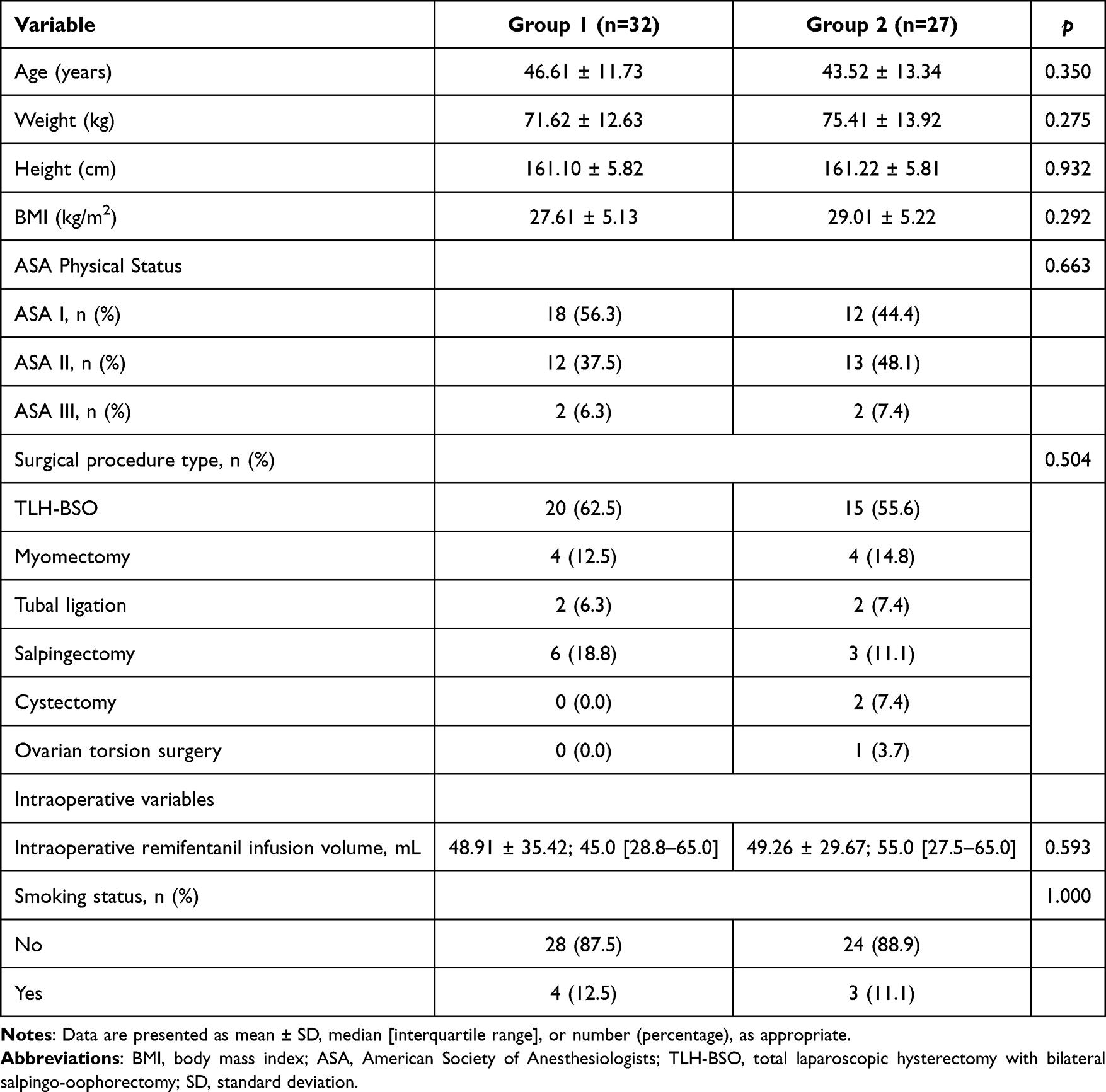 |
Table 1 Baseline Characteristics of the Study Population |
Primary Outcome: 24-Hour PCA-Delivered Bolus Fentanyl Consumption
The primary opioid outcome, 24-hour PCA-delivered bolus fentanyl consumption, was higher in Group 2 than in Group 1 (median [IQR], 220 [185–290] vs 140 [120–180] µg; p<0.001), with a mean between-group difference of 81.6 µg (95% CI 43.9–119.3) (Table 2).
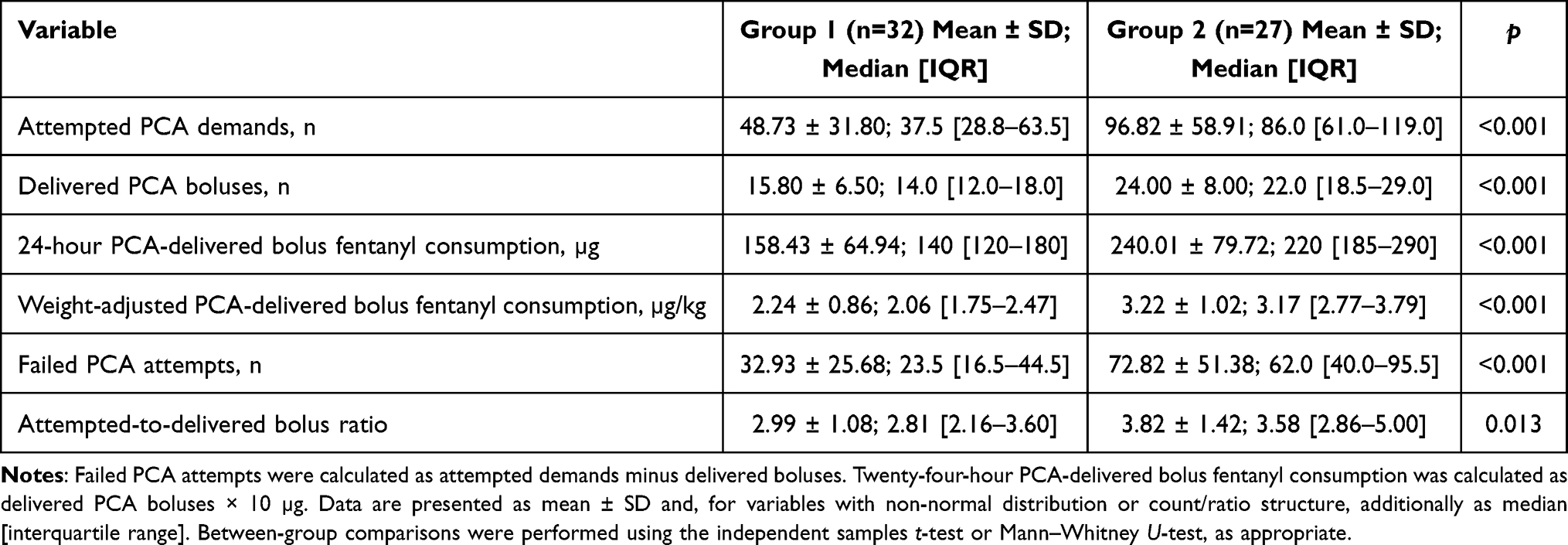 |
Table 2 PCA Demand and Fentanyl Consumption During the First 24 h |
Secondary PCA-Derived Outcomes
Group 2 also showed greater PCA-derived demand, with higher attempted PCA demands, delivered PCA boluses, failed PCA attempts, and attempted-to-delivered bolus ratio than Group 1 (all p<0.05) (Table 2). Weight-adjusted PCA-delivered bolus fentanyl consumption also showed a similar between-group difference, with higher values in Group 2 than in Group 1 (mean difference, 0.98 µg/kg; 95% CI 0.49–1.47) (Table 2).
Postoperative Pain Intensity
Postoperative NRS scores were higher in Group 2 than in Group 1 at 2, 4, 12, and 24 hours after surgery (all p<0.05) (Table 3). The mean between-group differences were 0.88 points at 2 hours (95% CI 0.42–1.33), 0.76 points at 4 hours (95% CI 0.33–1.20), 0.56 points at 12 hours (95% CI 0.15–0.97), and 0.44 points at 24 hours (95% CI 0.19–0.68).
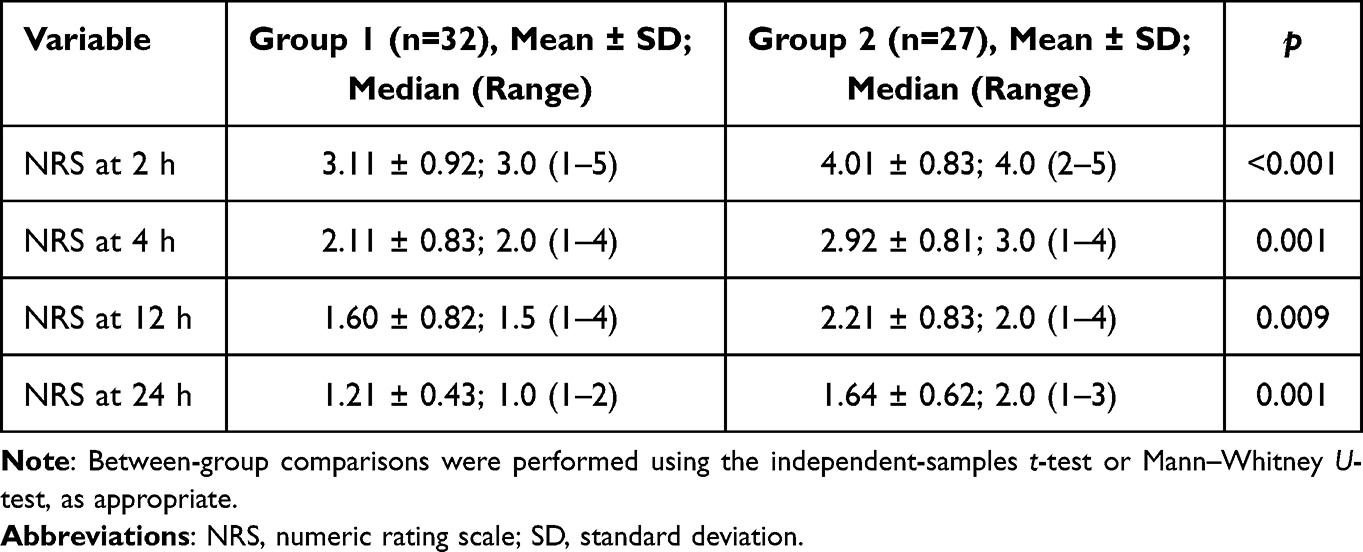 |
Table 3 Comparison of Postoperative NRS Scores Between Groups |
Exploratory Analyses
Preoperative NLR was positively correlated with postoperative pain scores at all measured time points. Spearman correlation coefficients were 0.48 at 2 hours, 0.50 at 4 hours, 0.33 at 12 hours, and 0.47 at 24 hours (all p≤.010).
In the exploratory ROC analysis, preoperative NLR showed an AUC of 0.782 (95% CI 0.641–0.903; p=0.001) for identifying patients with high opioid requirement, defined as 24-hour PCA-delivered bolus fentanyl consumption >235 µg (Figure 1). The ROC-derived cutoff value was 2.02, with a sensitivity of 0.80 and a specificity of 0.68.
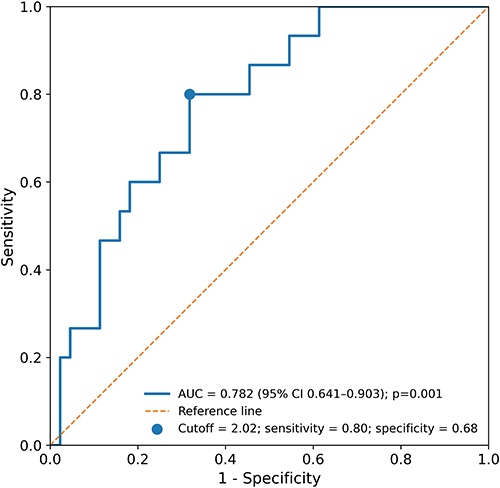 |
Figure 1 Receiver operating characteristic curve for preoperative neutrophil-to lymphocyte ratio in identifying high opioid requirement, defined as 24-hour PCA-delivered bolus fentanyl consumption >235 µg. The analysis included 59 patients. AUC was 0.782 (95% CI 0.641–0.903; p=0.001). The ROC-derived cutoff value was 2.02, with a sensitivity of 0.80 and specificity of 0.68. Abbreviations: AUC, area under the curve; PCA, patient-controlled analgesia. |
High opioid requirement, defined as 24-hour PCA-delivered bolus fentanyl consumption >235 µg, was observed in 3 patients in Group 1 and 12 patients in Group 2 (9.4% vs 44.4%, Fisher exact p=0.003). In the exploratory logistic regression model, preoperative NLR ≥2 was associated with increased odds of high opioid requirement (unadjusted OR 7.73, 95% CI 1.89–31.69, p=0.004). This association persisted after adjustment for age and body mass index (adjusted OR 7.14, 95% CI 1.64–31.09, p=0.009) (Table 4).
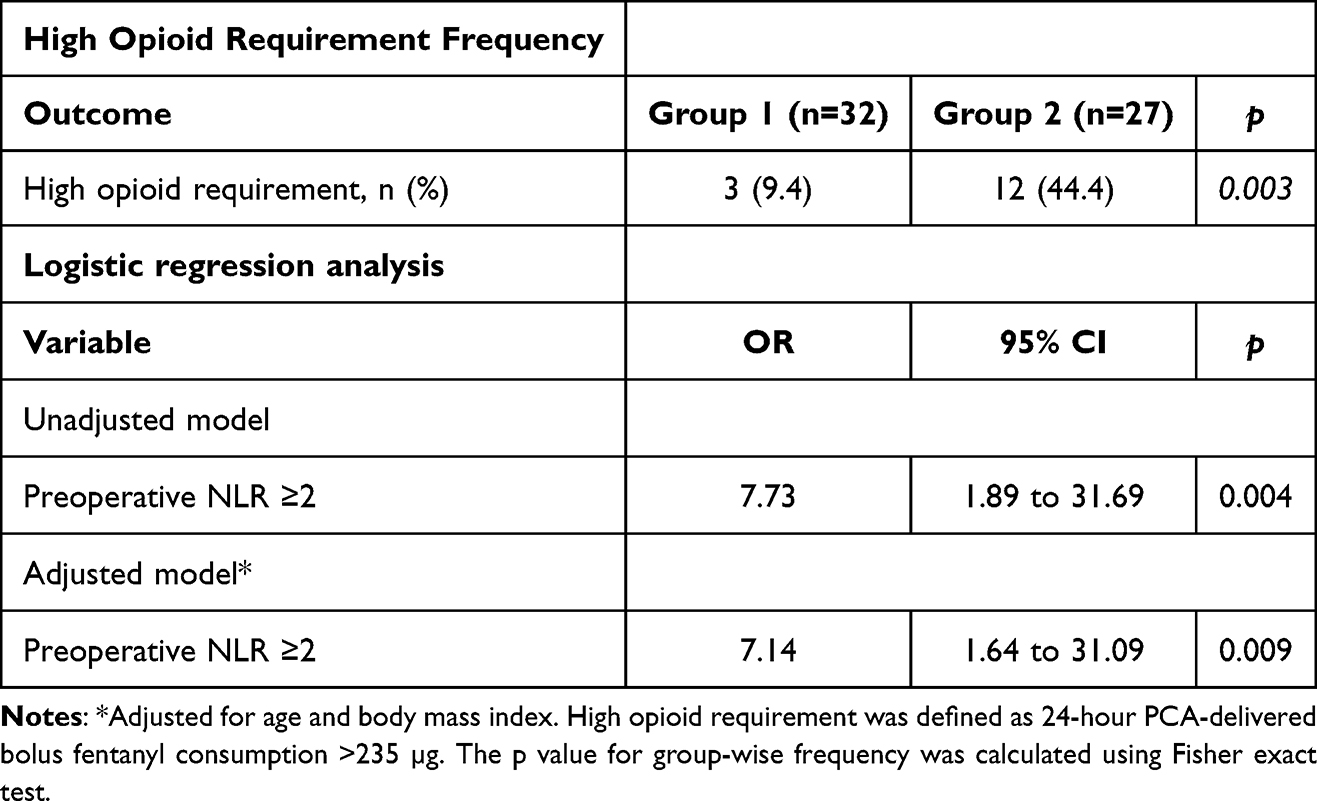 |
Table 4 High Opioid Requirement Frequency and Logistic Regression Analysis |
In exploratory multivariable linear regression analysis, preoperative NLR remained associated with higher 24-hour PCA-delivered bolus fentanyl consumption after adjustment for age, body mass index, ASA physical status, operative duration, intraoperative remifentanil infusion volume, and intraoperative tramadol dose (β=30.54 µg per 1-unit increase; 95% CI 8.56–52.52; p=0.007) (Table 5).
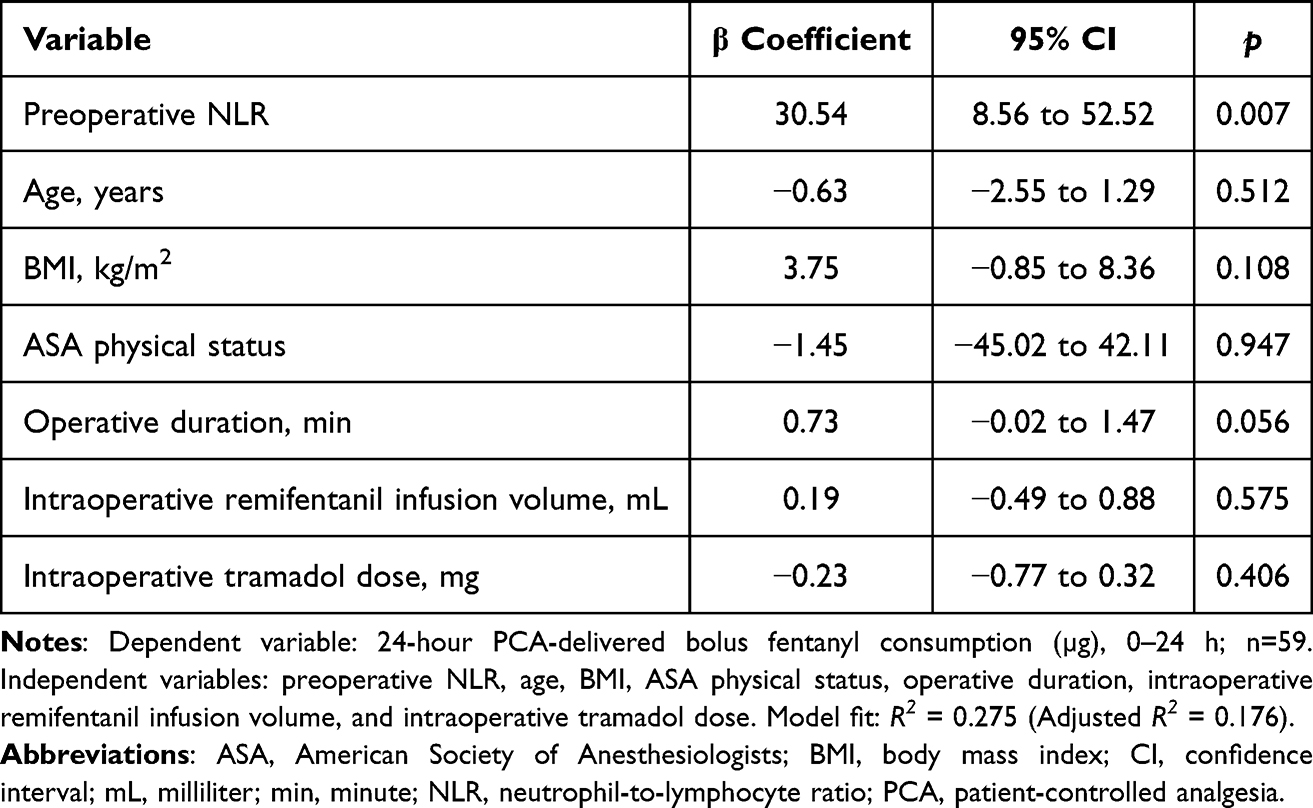 |
Table 5 Multivariable Linear Regression Analysis for 24-Hour PCA-Delivered Bolus Fentanyl Consumption |
Discussion
In this prospective observational study of patients undergoing laparoscopic gynecologic surgery, we found that preoperative neutrophil-to-lymphocyte ratio (NLR) was associated with early postoperative pain burden and opioid requirement. Patients with preoperative NLR ≥2 had higher postoperative pain scores, greater PCA demand, more failed PCA attempts, higher fentanyl bolus consumption, and higher weight-adjusted opioid consumption during the first 24 postoperative hours. In addition, in exploratory analyses, preoperative NLR showed moderate discriminatory ability for identifying high opioid requirement and remained associated with greater opioid use in regression analyses. These findings suggest that a readily available preoperative inflammatory marker may help identify patients with greater early analgesic needs after laparoscopic gynecologic surgery.
One of the most clinically relevant aspects of the present study is that the association was not limited to pain scores alone. PCA device logs showed that patients with higher preoperative NLR not only received more fentanyl boluses, but also generated more attempts and more failed attempts, with a higher attempted-to-delivered bolus ratio. This pattern suggests that these patients experienced greater unmet analgesic demand during the early postoperative period. Accordingly, the signal observed in this study appears to reflect not only subjective pain intensity, but also a sustained patient-driven burden of analgesic need during the early postoperative period.
Postoperative pain after laparoscopic gynecologic surgery is multifactorial and may be influenced by trocar-related somatic pain, visceral irritation, pneumoperitoneum-related peritoneal inflammation, and referred shoulder pain. Although laparoscopic procedures are less invasive than open surgery, clinically important pain remains common in the early postoperative period. This variability in pain experience and opioid requirement has important implications for postoperative management, because some patients may require closer reassessment and earlier optimization of analgesia despite undergoing apparently similar procedures. Although the distribution of procedure types was comparable between groups, different laparoscopic gynecologic procedures may still generate different degrees of somatic, visceral, and pneumoperitoneum-related pain. Therefore, the observed association between NLR and postoperative analgesic requirement should be interpreted within the context of this procedural heterogeneity. In this context, identifying simple preoperative indicators associated with higher early analgesic demand remains clinically relevant.3,12,13
NLR has been investigated as a marker of systemic inflammatory status in a range of perioperative settings. Previous studies have suggested that higher NLR values may be associated with postoperative pain intensity, postoperative nausea and vomiting, and broader perioperative risk.8,9,14 Our findings are generally consistent with this literature in showing a positive association between higher preoperative NLR and greater postoperative pain burden.8,9,15 A possible explanation is that a higher preoperative inflammatory state may reflect increased susceptibility to surgery-induced nociceptive sensitization. Surgical trauma, tissue manipulation, pneumoperitoneum-related peritoneal irritation, and visceral inflammatory responses may activate inflammatory pathways that contribute to peripheral and central sensitization, thereby increasing early postoperative pain and analgesic demand. However, NLR should not be interpreted as a direct mechanistic marker of pain generation; rather, it may represent a nonspecific indicator of preoperative inflammatory balance that is associated with early postoperative analgesic requirement. The present study extends prior observations by focusing on objectively captured PCA-derived opioid outcomes, including attempted and delivered boluses, rather than relying solely on pain scores or nonstandardized rescue analgesic administration. This distinction is important because PCA log data may more directly reflect patient-driven analgesic requirement during the early postoperative period.6,7 In contrast, postoperative NLR measured at 2 hours was not meaningfully correlated with postoperative pain scores in our cohort, suggesting that preoperative NLR may be more relevant for anticipatory risk stratification than early postoperative inflammatory assessment.
In the exploratory ROC analysis, preoperative NLR showed moderate discriminatory ability for identifying patients with high 24-hour PCA bolus fentanyl consumption. The ROC-derived optimal cutoff was 2.02, which was close to the NLR threshold of 2 used for the main group comparisons and to thresholds reported in previous perioperative pain-related studies.10,15 Logistic regression also showed that patients with NLR ≥2 had higher odds of high opioid requirement after adjustment for age and body mass index. Together with the multivariable linear regression findings, these results suggest that the association between NLR and early opioid requirement was not explained solely by simple demographic differences. However, the ROC-derived cutoff and logistic regression findings should be interpreted as exploratory and hypothesis-generating rather than definitive, given the modest sample size, limited number of high opioid requirement events, and single-center design.
Another notable finding was that the association was generally consistent across different analytic approaches. Group comparisons, correlation analyses, ROC analysis, logistic regression, and multivariable linear regression all showed findings in the same direction. This consistency supports the interpretation that preoperative NLR was associated with early postoperative opioid requirement, although these analyses should be considered supportive rather than confirmatory. Notably, continuous preoperative NLR was associated with 24-hour PCA-delivered bolus fentanyl consumption in adjusted linear regression, whereas the grouped analysis using NLR ≥2 may be more practical for clinical interpretation of high opioid requirement. Taken together, these findings suggest that preoperative NLR may be useful as a simple risk-stratification marker rather than as a standalone mechanistic explanation of postoperative pain.
From a clinical perspective, these findings do not imply that NLR should determine analgesic management on its own. Rather, NLR may help identify patients who warrant closer early postoperative observation, more proactive reassessment of pain control, and earlier optimization of multimodal analgesia. In patients with elevated preoperative NLR, clinicians may anticipate greater PCA demand and a higher likelihood of substantial early opioid requirement. Thus, the potential value of NLR in this setting lies in risk stratification and planning rather than in replacing clinical assessment.
This study has several limitations. First, although the design was prospective, the sample size was modest and the study was conducted at a single center, which may limit generalizability. Surgical procedure distribution was comparable between groups; however, the inclusion of different laparoscopic gynecologic procedures may still have introduced some residual heterogeneity in postoperative pain profiles and opioid requirements. Second, NLR is a nonspecific inflammatory marker and may be influenced by factors unrelated to postoperative pain. Although preoperative clinical and laboratory records were reviewed for clinically evident active infection or marked leukocytosis, mild or subclinical inflammatory conditions, corticosteroid exposure, immunosuppressive treatment, endometriosis-related inflammation, or undiagnosed inflammatory states may not have been fully captured. Therefore, residual confounding related to unmeasured inflammatory or immunologic conditions cannot be excluded. Third, because this was an observational study, residual confounding cannot be excluded despite multivariable adjustment. Fourth, the ROC-derived cutoff and logistic regression findings should be interpreted cautiously because of the limited number of patients with high opioid requirement. Finally, postoperative nausea and vomiting and other opioid-related adverse effects were not evaluated as prespecified endpoints in the present analysis.
Conclusion
Higher preoperative NLR was associated with greater early postoperative pain burden, greater PCA demand, more failed PCA attempts, and higher PCA-delivered bolus fentanyl consumption after laparoscopic gynecologic surgery. These findings suggest that preoperative NLR may provide additional information for anticipating early postoperative analgesic needs, particularly when interpreted together with clinical assessment and PCA-derived outcomes. However, given the single-center observational design and modest sample size, the clinical utility of the NLR threshold requires validation in larger independent cohorts.
Data Sharing Statement
The datasets generated and/or analyzed during the current study are available from the corresponding author on reasonable request.
Ethics Approval and Informed Consent
This prospective observational study was conducted in accordance with the Declaration of Helsinki. The study protocol, entitled “The Effect of Preoperative Neutrophil-to-Lymphocyte Ratio on Postoperative Analgesic Consumption in Laparoscopic Gynecologic Surgery”, was approved by the Ethics Committee of Karadeniz Technical University Faculty of Medicine Hospital (Protocol No. 2020/90; approval date: June 19, 2020). Written informed consent was obtained from all participants before enrollment.
Author Contributions
All authors made a significant contribution to the work reported, whether that is in the conception, study design, execution, acquisition of data, analysis and interpretation, or in all these areas; took part in drafting, revising or critically reviewing the article; gave final approval of the version to be published; have agreed on the journal to which the article has been submitted; and agree to be accountable for all aspects of the work.
Funding
The authors received no specific funding for this work.
Disclosure
The authors report no conflicts of interest in this work.
References
1. Liu Y, Xiao S, Yang H, et al; CAPOPS Group. Postoperative pain-related outcomes and perioperative pain management in China: a population-based study. Lancet Reg Health West Pac. 2023;39:100822. doi:10.1016/j.lanwpc.2023.100822
2. Gan TJ. Poorly controlled postoperative pain: prevalence, consequences, and prevention. J Pain Res. 2017;10:2287–10. doi:10.2147/JPR.S144066
3. Xu P, Li Y, Ren J. Meta-analysis and systematic review of influence of different humidified carbon dioxide on intraoperative and postoperative gynaecological laparoscopic surgery. Ann Palliat Med. 2021;10(7):7992–8002. doi:10.21037/apm-21-1517
4. Li X, Li K. Time characteristics of shoulder pain after laparoscopic surgery. JSLS. 2021;25(2):e202100027. doi:10.4293/JSLS.2021.00027
5. Bourgeois C, Oyaert L, Van de Velde M, et al. Pain management after laparoscopic cholecystectomy: a systematic review and procedure-specific postoperative pain management (PROSPECT) recommendations. Eur J Anaesthesiol. 2024;41(11):841–855. doi:10.1097/EJA.0000000000002047
6. Motamed C. Clinical update on patient-controlled analgesia for acute postoperative pain. Pharmacy. 2022;10(1):22. doi:10.3390/pharmacy10010022
7. Oh C, Chung W, Hong B. Optimizing patient-controlled analgesia: a narrative review based on a single center audit process. Anesth Pain Med. 2024;19(Suppl 1):S61–S72. doi:10.17085/apm.24075
8. Daoudia M, Decruynaere C, Le Polain de Waroux B, Thonnard JL, Plaghki L, Forget P. Biological inflammatory markers mediate the effect of preoperative pain-related behaviours on postoperative analgesics requirements. BMC Anesthesiol. 2015;15:183. doi:10.1186/s12871-015-0167-9
9. Shu B, Xu F, Zheng X, et al. Change in perioperative neutrophil-lymphocyte ratio as a potential predictive biomarker for chronic postsurgical pain and quality of life: an ambispective observational cohort study. Front Immunol. 2023;14:1177285. doi:10.3389/fimmu.2023.1177285
10. Akiyama T, Nakadate Y, Nakajima E, Iijima T, Matsukawa T. Relationship between preoperative neutrophil-to-lymphocyte ratio and patient-controlled analgesia consumption following cardiac surgery: a retrospective study. Cureus. 2025;17(7):e88230. doi:10.7759/cureus.88230
11. Chidambaran V, Duan Q, Pilipenko V, et al. The role of cytokines in acute and chronic postsurgical pain after major musculoskeletal surgeries in a quaternary pediatric center. Brain Behav Immun. 2024;122:596–603. doi:10.1016/j.bbi.2024.08.056
12. Othow CO, Woyessa AH, Abebe MS, et al. The magnitude and associated factors of post-operative pain among adult patients: a multicenter study. Ann Med Surg Lond. 2022;81:104406. doi:10.1016/j.amsu.2022.104406
13. Rashdan M, Daradkeh S, Al-Ghazawi M, et al. Effect of low-pressure pneumoperitoneum on pain and inflammation in laparoscopic cholecystectomy: a randomized controlled clinical trial. BMC Res Notes. 2023;16(1):235. doi:10.1186/s13104-023-06492-y
14. Arpaci AH, Erkan M, Eroglu F, et al. Association of postoperative nausea and vomiting incidence with neutrophil-lymphocyte ratio in ambulatory maxillofacial surgery. J Oral Maxillofac Surg. 2017;75(7):1367–1371. doi:10.1016/j.joms.2016.12.036
15. Turgut H, Gonullu H, Sahin L, et al. Neutrophil lymphocyte ratio predicts postoperative pain after orthognathic surgery. Niger J Clin Pract. 2017;20(10):1242–1245. doi:10.4103/1119-3077.181399
 © 2026 The Author(s). This work is published and licensed by Dove Medical Press Limited. The
full terms of this license are available at https://www.dovepress.com/terms
and incorporate the Creative Commons Attribution
- Non Commercial (unported, 4.0) License.
By accessing the work you hereby accept the Terms. Non-commercial uses of the work are permitted
without any further permission from Dove Medical Press Limited, provided the work is properly
attributed. For permission for commercial use of this work, please see paragraphs 4.2 and 5 of our Terms.
© 2026 The Author(s). This work is published and licensed by Dove Medical Press Limited. The
full terms of this license are available at https://www.dovepress.com/terms
and incorporate the Creative Commons Attribution
- Non Commercial (unported, 4.0) License.
By accessing the work you hereby accept the Terms. Non-commercial uses of the work are permitted
without any further permission from Dove Medical Press Limited, provided the work is properly
attributed. For permission for commercial use of this work, please see paragraphs 4.2 and 5 of our Terms.
Recommended articles
Patient Refusal of Patient-Controlled Analgesia: Incidence, Associated Factors, and Reasons—A Prospective Mixed-Methods Cohort Study Protocol in a Chinese Tertiary Hospital
Shen Y, Yang G, Sang J, Li L, Tian J, Sun Z, Chu Q
Journal of Pain Research 2026, 19:623742
Published Date: 3 July 2026