
Back to Journals » Advances in Medical Education and Practice » Volume 16
Predictive Validity of Pre-Clinical Academic Achievements in Comprehensive Basic Science Examination: A Nationwide Cohort of Iranian Medical Students
Authors Rashidi F  , Sattarpour R , Meysamie A
Received 23 July 2025
Accepted for publication 24 September 2025
Published 29 September 2025 Volume 2025:16 Pages 1747—1759
DOI https://doi.org/10.2147/AMEP.S552380
Checked for plagiarism Yes
Review by Single anonymous peer review
Peer reviewer comments 2
Editor who approved publication: Dr Sateesh Arja
Farhang Rashidi,1 Reza Sattarpour,1 Alipasha Meysamie2
1School of Medicine, Tehran University of Medical Sciences (TUMS), Tehran, Iran; 2Department of Preventive and Community Medicine, School of Medicine, Tehran University of Medical Sciences, Tehran, Iran
Correspondence: Alipasha Meysamie, Preventive and Community Medicine, Medical School, Tehran University of Medical Sciences, Tehran, Iran, Email [email protected]
Background: Medical education directly impacts patient care, yet the predictive validity of pre-clinical academic performance for licensure exam outcomes remains debated. This national, multi-institutional study (2019– 2021) assessed the relationship between university course grades, cumulative grade point average (GPA), and Comprehensive Basic Science Examination (CBSE) scores in Iranian medical students.
Methods: Course grades and GPAs of 23 medical schools were linked to CBSE outcomes of 51 medical schools across five consecutive exam periods via student national ID. Pearson’s correlation, paired t-tests, ANOVA, and chi-square assessed trends. Hierarchical cluster analysis (dendrogram) examined course grade correlations. Independent CBSE total score predictors were found using multiple linear regression.
Results: Of the 25,757 individual records, 9,359 (45.2% female) had complete academic and CBSE data, making them eligible for primary analyses (84.5% passed CBSE on the first attempt). The GPA was 15.11± 1.74, and the CBSE score was 101.68± 24.61. All course grades correlated significantly with CBSE subtests (r=0.055– 0.544, P< 0.001). A significant moderate association (r=0.492, P< 0.001) exists between overall GPA and CBSE. Repeat examinees had considerably lower GPAs and CBSE scores (P< 0.001). GPA (β=0.318), Anatomy (β=0.158), Physiology (β=0.135), Epidemiology (β=0.043), and Virology (β=0.043) were the most significant predictors in regression modeling (R²=0.426). Cluster analysis showed that academic grades in anatomy, physiology, and biochemistry were strongly correlated with CBSE subtests.
Conclusion: This study represents the first large-scale national dataset in Iran pertaining to medical education. Pre-clinical GPA and course grades exhibit overall and subject-specific, notable predictive validity for CBSE performance. To enhance medical education and licensure results, it is advisable to implement standardized, cross-institutional comparisons alongside dynamic curriculum reviews. The regression model and clustering insights provide a framework for targeted educational interventions.
Keywords: medical education, GPA, comprehensive basic science examination, academic performance
Introduction
Medical student academic performance is usually considered an indicator of future physician competence, with implications for career success and quality of patient care. Medical educators require comprehensive insight into academic performance metrics, including grade assessments, attendance patterns, and engagement in clinical experiences, to effectively identify at-risk students, optimize curricula, and foster an environment that leads to learning and success. Previous studies have explored factors affecting academic performance, such as pre-admission qualifications, learning preferences, mental health, and environmental influences. However, there is a continued necessity for large-scale, nationally representative research that encompasses diverse student populations and contexts.1–3 We utilize Messick’s comprehensive validity framework to evaluate the validity of academic assessments, focusing on content relevance, response processes, internal structure, relationships to other variables, and consequences.4,5
The curriculum for pre-clinical courses in Iran includes basic science and physiopathology courses. Studies argue that pre-clinical academic performance is a necessary foundation for clinical success. Nehy et al underlined that insufficient attention to basic sciences might have a negative impact on comprehensive test scores.2 Supporting this, Lynch found that university-level basic science courses more accurately predict performance in advanced coursework than secondary education science preparation, reinforcing the necessity of basic sciences within medical curricula.6 However, there is a growing recognition of the need for greater integration between basic sciences and clinical learning, as well as the inclusion of interdisciplinary subjects that address the complex health needs of society.7,8
Medical curricula of the Iranian Medical Education Department require students to take an exam called the Comprehensive Basic Science Exam (CBSE) upon completion of basic science courses. This helps to assess how well they understand the key concepts, allowing them to choose their clinical courses, given a previous study highlighting the validity of CBSE for screening students for the following academic courses.9 Prior investigations into the predictive validity of CBSE scores in relation to course grades and GPA have yielded varied outcomes, with certain studies demonstrating robust correlations, whereas others indicate weak or inconsistent relationships. Furthermore, international evidence suggests the presence of biases and inequities in assessment systems that could influence these correlations. In contracting results, Lankarani et al found that the average scores of the comprehensive basic science exam, except for the immunology course, have consistently decreased by one to two points compared to the class scores, and even in the case of psychology, there has been a more obvious downward trend.10 There was no correlation between average course scores and CBSE sub-scores in all these courses. Similar results were also found by Nemat Bakhsh et al in a prospective study. Evidence from medical education globally, including contexts similar to Iran, highlights that assessment systems often suffer from bias and inequity that undermine the validity of alignment between course assessments and comprehensive exams.11 Bias in assessment can distort the predictive value of GPAs and exam scores, suggesting that apparent correlations may not fully reflect true competence or learning outcomes.
Despite these insights, there is a lack of research evaluating the reliability of pre-clinical performance as a predictor of CBSE outcomes and, ultimately, clinical competence within a large, nationally representative Iranian cohort. This study investigates the correlations among basic science course scores, GPA, and CBSE results, utilizing a validity framework to assess their predictive value and educational implications.-.
Materials and Methods
Study Design and Setting
This comprehensive national research employed a retrospective cohort design to assess the academic performance of medical students throughout Iran, concentrating on the correlation between their university grades and scores from the Comprehensive Basic Science Examination (CBSE). The investigation took place at medical schools across the country, encompassing a wide variety of academic institutions, both public and private. The study focused on evaluating student performance over five academic cohorts spanning from 2019 to 2021, including all medical schools throughout Iran, yielding a comprehensive and representative sample of medical students with diverse educational backgrounds.
Ethical Considerations
The study protocol was reviewed and approved by the National Agency for Strategic Research in Medical Education (NASR) Ethics Committee (approval code: IR.NASRME.REC.1402.125). Measures were implemented to ensure compliance with international publishing standards. Initially, national ID numbers were required for record linkage; however, all identifiers were permanently anonymized prior to analysis to safeguard participant privacy. Results were compiled, and personal information was excluded, focusing solely on academic characteristics. Access to secure institutional systems was restricted solely to the study team, who had password protection in place. All files remained on internal systems, and processing adhered to national data protection regulations. The ethics committee waived informed consent due to the retrospective nature of the investigation and the anonymization of the results. The inclusion of all participating university records, without preferential selection, and the identification of contextual discrepancies addressed equity concerns. The research procedures ensured the preservation of all student rights, confidentiality, and equitable representation.
Data Collection Process
The data collection process required several coordination steps with the General Medicine Secretariat, which enabled communication with the Educational Department of the Ministry of Health and Medical Education. The dataset comprised academic performance data for students from the five most recent cohorts, specifically encompassing the 2019 (winter), 2020 (fall), 2020 (winter), 2021 (fall), and 2021 (winter) examination periods. The requested data comprised students’ grades in essential medical science courses, including Physiology, Biochemistry, Microbiology, Parasitology, Entomology, and Virology, along with their cumulative GPAs. The initial objective was to gather data over a decade; however, this was restricted to five cohorts due to difficulties accessing student records and substantial curriculum reforms in the General Medicine program in the previous years. The dataset offered an overview of performance across a five-year timeframe.
After obtaining the required permission and coordination for using students’ data from the NASR, all 51 medical schools were asked to provide us with the required data. However, only 23 responded to the request, submitting data across 212 distinct files in Excel or Word format. Despite initial challenges in standardizing formats, the universities provided the requested course grades and GPAs for the specified cohorts. They sent the data to the Ministry of Health and Medical Education, which shared them with us. Nonetheless, certain universities did not comply with the specified data structure, resulting in the submission of incomplete or non-standardized records. Only universities that supplied complete and standardized data were included in the analysis; institutions that did not provide accurate information or did not meet data standards were excluded. The final dataset regarding academic performance comprised 11,240 records sourced from 23 universities. Simultaneously, CBSE results were obtained from the Educational Assessment Center of the Ministry of Health, consisting of five cohorts from 51 medical schools with 23,434 individual records. These two datasets were later associated using students’ national ID numbers. The ethics committee waived student consent due to using the documented data, and the anonymous nature of the analysis and presentation of the results.
Data Processing and Standardization
The process of data cleaning and integration comprised three essential steps:
- Cleaning University Data: Discrepancies in the submitted files, including missing or incorrect student national ID numbers, have been addressed. In instances of incomplete course grades, GPAs were recalculated utilizing the available course credit weights.
- The CBSE scores were standardized across all cohorts to address variations in difficulty levels during different examination periods. The data were integrated with university records using student national IDs, resulting in a unified dataset.
- Final Data Merging: Following the data cleaning process, 25,757 records were consolidated from the two main datasets (university grades and CBSE scores) into a unified dataset, ensuring accurate linkage of all student identifiers and performance metrics. The final dataset comprised 11,240 records of university grades and GPAs, alongside 23,434 records of CBSE results. A total of 9,359 records, representing 36.3%, contained both university grades and CBSE scores, which were incorporated into the final analysis, and the remaining were considered as missing. No significant differences were observed between the omitted individuals (due to the lack of required data to link the GPAs and CBSE scores) and the included students; thus, the data were assessed to be representative of the national scale.
Statistical Analysis
Descriptive statistics, including mean, standard deviation, median, and interquartile range, were computed for both raw and standardized scores. It is worth mentioning that the scale of GPAs and each course’s score was 10 through 20 since students could not take the CBSE in case of failing courses (which is traditionally considered as obtaining a score below 10 in any course). However, the average CBSE score falls between 70% of the top 5% of students’ scores (which is the passing threshold according to the Ministry of Health’s Educational Assessment Center) and 200 (which is the full mark). Moreover, due to the different difficulty scales of exams in each medical school, the course scores and GPAs were not directly comparable between different schools. Thus, CBSE scores and university grades were standardized using z-scores to ensure comparability across cohorts. Standardization involved separately standardizing CBSE scores and university grades for each cohort, employing the mean and standard deviation of the entire cohort to compute z-scores. The final standardized scores were transformed to achieve a mean of 15 and a standard deviation of 3.5, enabling comparison across various cohorts and variables. Raw and standardized scores for CBSE and university grades were classified into three performance categories: A (≥17), B (≥14 and <17), and C (<14). This classification facilitated a more precise analysis of performance trends and group comparisons.
The analysis of trends and performance over time utilized raw CBSE scores as the primary basis, given that these scores were standardized across cohorts. Various statistical tests were utilized to analyze the relationships between university grades and CBSE performance. A paired Samples t-test is employed to compare the means of university grades and CBSE scores for individual students. Using Pearson Correlation, the strength of the linear relationship between university grades and CBSE scores was evaluated. The McNemar Test was utilized to compare categorical data between paired observations. ANOVA and Independent Samples t-tests were employed to assess performance differences among various groups, such as universities or cohorts. The Chi-square Test for Trend evaluated temporal trends in academic performance among different cohorts. Regression analysis employed linear regression models to investigate the association between university grades and CBSE scores while controlling for potential confounding variables, including cohort and university type.
However, one major unpredictable confounding factor was the COVID-19 pandemic. Although major comprehensive examinations in the pandemic period were held in person, as they would have been in a normal situation, the basic science courses examinations and scorings were held online. Due to a sudden major shift toward online education and assessments during this period, the effects and influences of this shift are yet to be comprehensively studied and evaluated.
Data cleaning, standardization, and statistical analyses were conducted using SPSS version 27. The significance level was established at P<0.05 for all analyses, with results presented alongside 95% confidence intervals. Error bar plots were graphically used to represent the relationship between university grades and CBSE scores. Missing data (those with mismatching national IDs regarding GPAs and CBSE) were excluded from any analysis to maintain the robustness of the outcomes.
Results
Descriptive Statistics
A total of 25,757 student records were collected from 23 medical schools across the country. Among these, 9,359 records (36.3%) included both CBSE and university grade data, 14,074 records (54.6%) contained only CBSE data, and 2,324 records (9.0%) comprised solely university grades (Table 1). Out of students with both CBSE and university grade data available, 5,129 (54.8%) were male, while 4,230 (45.2%) were female. A majority of students (84.5%) attempted the CBSE once, while 10.8% did so twice, and 4.9% attempted it three or more times. In a sample of 23,433 CBSE records, the mean score was 101.68, with a standard deviation of 24.61. The subtest means varied from 0.91±0.74 in Entomology to 26.05±8.44 in Anatomy (Table 2). For university course grades, among 11,644 students with complete data, course grade means were closely grouped between 15 and 16 on a 0–20 scale, with the highest mean in Islamic Studies (18.00±1.75) and the lowest in Microbiology (14.91±2.56) (Table 3). The mean GPA was 15.11, with a standard deviation of 1.74. Upon stratification into grades A (≥17), B (14–17), and C (<14), Islamic Studies exhibited the highest proportion of “A” grades at 77.9%, followed by English at 51.4%. In contrast, Microbiology recorded a mere 24.6% “A” grades (Table 4).
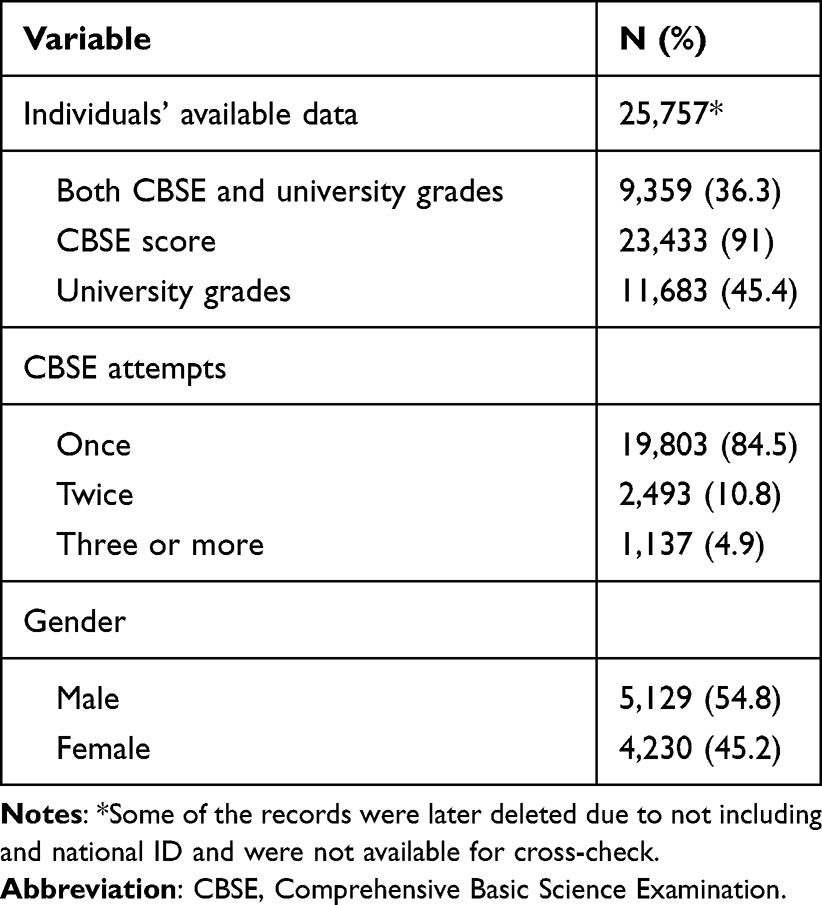 |
Table 1 Participant Distribution by Data Completeness, Gender, and CBSE Attempts |
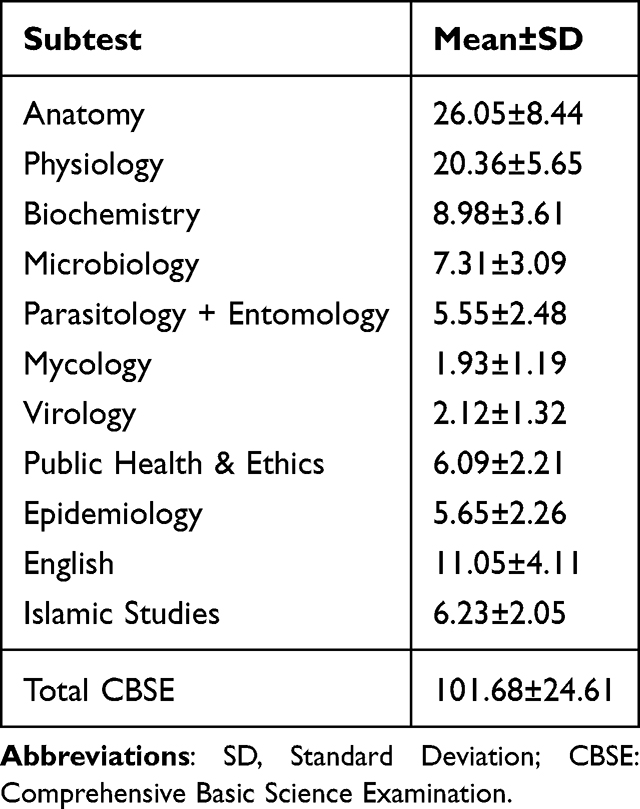 |
Table 2 CBSE Subtest Score Distribution (N=23,433) |
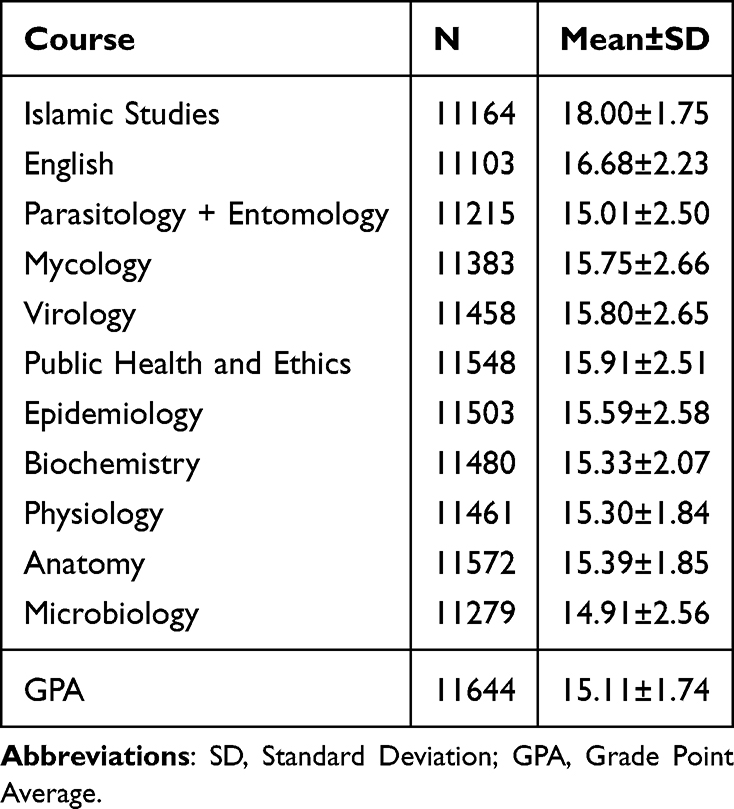 |
Table 3 University Course Grade Distribution |
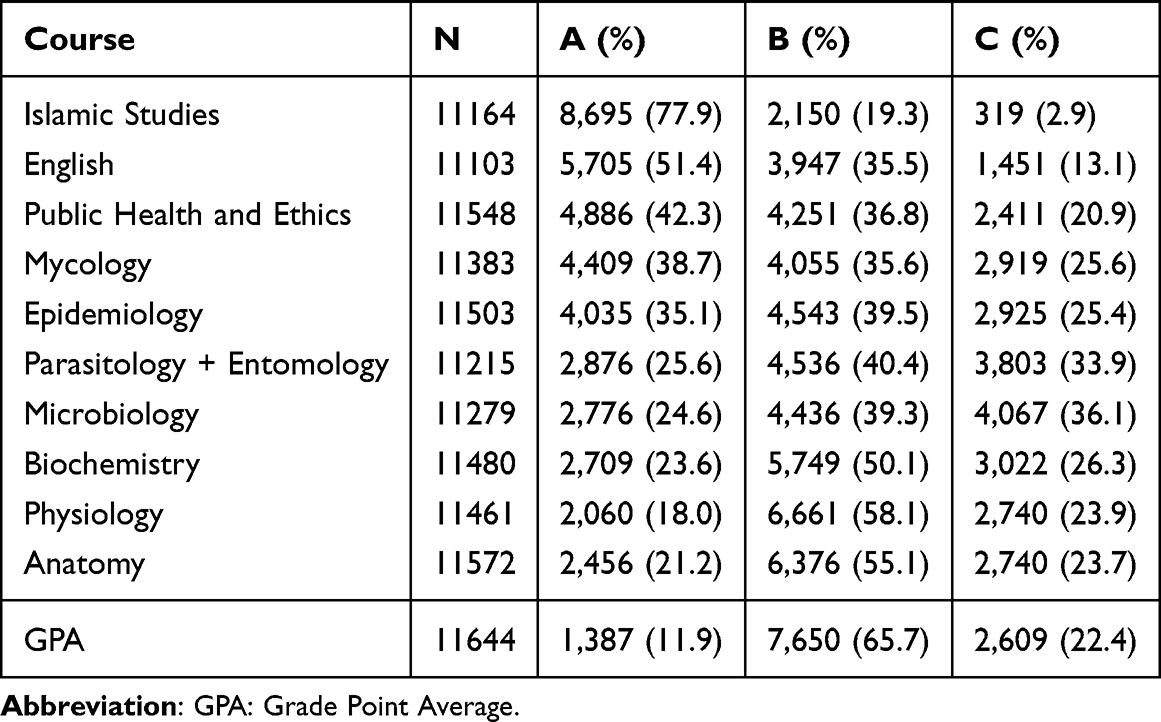 |
Table 4 Distribution of University Grades Classification by Course |
Correlation Between GPA and CBSE
Paired samples t-tests showed that all courses’ raw and standardized means differed significantly (P<0.001), with Pearson correlations ranging from r=0.055 (Virology) to r=0.544 (Anatomy). The overall GPA-CBSE correlation was r=0.492 (P<0.001) (Table 5). Pearson correlations among all standardized university courses and CBSE total ranged from r=0.183 (Islamic Studies vs Microbiology) to r=0.789 (GPA vs Anatomy), indicating robust interrelationships (Table 6).
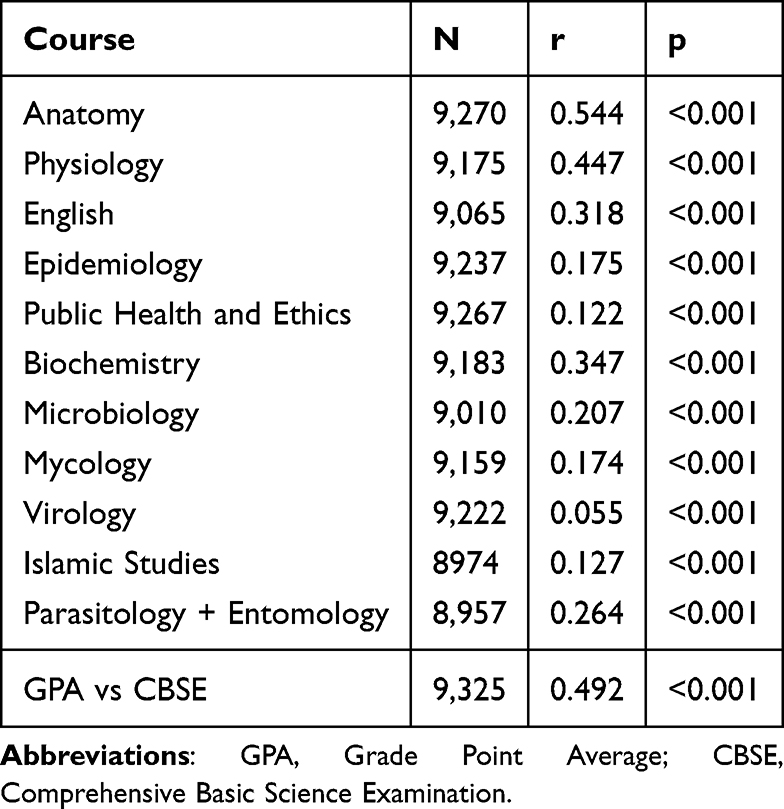 |
Table 5 Paired t-Tests and Pearson Correlations Between Course Grades and CBSE Subtests |
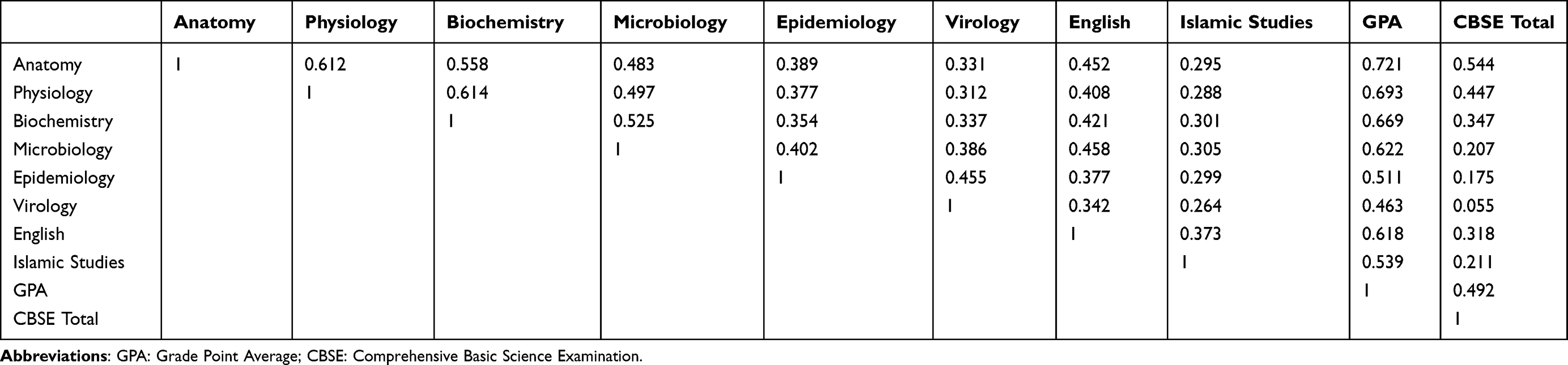 |
Table 6 Pearson Correlation Matrix of Standardized University Grades and CBSE Total Score (N = 9,359) |
Performance by Course
Performance exhibited significant variation across subjects. Students achieving high grades in a course generally performed better on the associated CBSE subtest. CBSE Physiology scores averaged 24.47±4.80 for students receiving an “A” in university Physiology, compared to 17.95±4.84 for those with a “C” (P<0.001). In Biochemistry, the mean CBSE score was 11.08±3.99 for students receiving an “A” grade, in contrast to 7.85±2.92 for those with a “C” grade (P<0.001). Parallel trends were observed in Microbiology and other courses (all P<0.001), indicating subject-specific differences in predictive validity, where higher course grades predicted higher CBSE scores.
A multiple linear regression analysis involving 8,209 complete cases evaluated the predictive significance of university courses on the CBSE total score. A preliminary “Enter” model revealed significant positive coefficients for ten courses and a significant negative coefficient for GPA, whereas Parasitology and Entomology were non-significant. A backward-elimination model was conducted, resulting in the retention of ten predictors, which included GPA and nine courses. The model yielded R=0.653, R²=0.426, and adjusted R²=0.425 (Table 7).
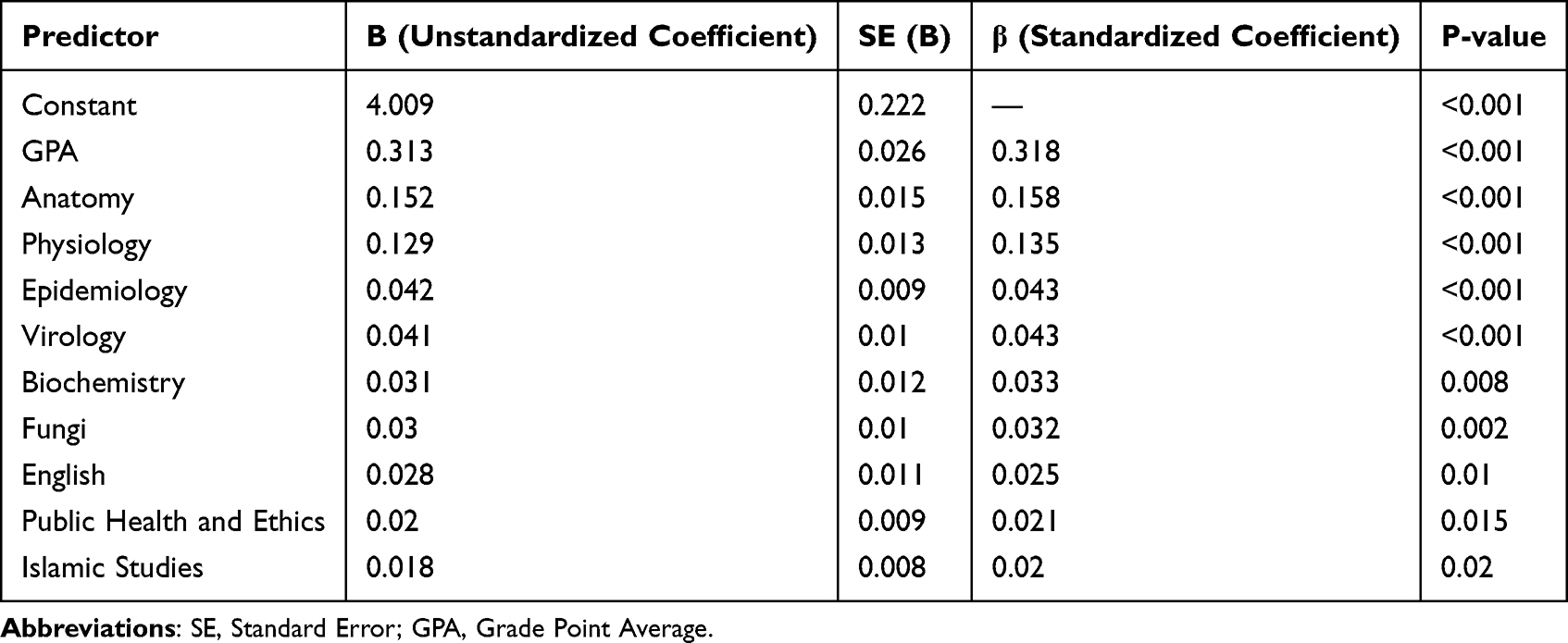 |
Table 7 Final Backward Regression Model Predicting CBSE Total Score (N = 8,209) |
Repeat Test Patterns
Students who repeatedly attempted the CBSE generally exhibited diminished academic performance. Among two-time takers, only 1.4% achieved the top GPA category (“A”), whereas 12.8% of first-time takers reached this level. In contrast, 53.7% of students who attempted the assessment twice were categorized in the lowest GPA bracket (“C”), compared to 26.2% of those who took it once. This pattern persisted across three or more trials. Repeat examinees were overrepresented in the lowest GPA category, aligning with patterns of repeated failure.
Time Trends
Comparative analysis of CBSE scores across exam periods from Winter 2019 to Winter 2021 revealed an increase in the proportion of students achieving grade A, rising from 4.5% in Winter 2020 to 11.9% in Winter 2021 (χ² for trend P<0.001). This trend suggests performance improvements, likely attributable to curriculum reforms (Table 8).
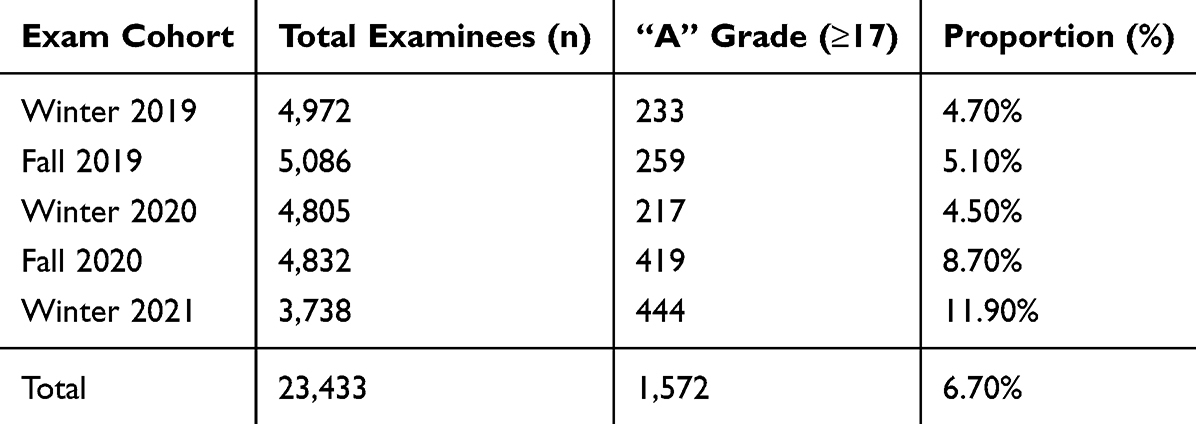 |
Table 8 Proportion of Students Achieving “A” Grades in CBSE Across Exam Periods (2019–2021) |
Discussion
The current study is the first nationwide study evaluating the academic performance of Iranian medical students. The results revealed statistically significant correlations between academic metrics and licensing examination performance. The analysis demonstrated a moderate correlation (r=0.492, P<0.001) between cumulative GPA and total Comprehensive Basic Science Examination (CBSE) scores, with subject-specific correlations ranging from weak (Virology, r=0.055) to strong (Anatomy, r=0.544). The analysis identified GPA, Anatomy, Physiology, Epidemiology, and Virology as the strongest independent predictors of CBSE performance (R²=0.426), suggesting specific foundational sciences may particularly influence licensing examination success.
Correlation Between Academic Performance and Licensing Examination Outcomes
Our findings align with previous studies in other countries, demonstrating that undergraduate academic metrics can predict licensure comprehensive exam outcomes. A recent study of osteopathic medical students reported that cumulative undergraduate GPA significantly predicted performance on both Level 1 and Level 2 of the COMLEX-USA exams (β coefficients comparable to ours), supporting the generalizability of GPA as a predictor across contexts.12 Similarly, research has demonstrated that science-based test scores (comparable to our basic science course grades) exhibited the strongest correlations with medical school performance and licensing exam results.13
However, the literature in Iranian studies is challenging. While some studies support the substantial predictive value of GPAs in comprehensive exams,14–17 others question this notion.11 Nematbakhsh reported a positive but weak correlation between most of the courses and CBSE scores.11 This might be due to the localization of a single medical school and the selection bias they have had, along with the curriculum change later, which considers their data out of date. Also, a systematic review later in 2016 concluded that students’ GPA is a key predictor of comprehensive exam results.18
Interestingly, Adelmashhadsari et al19 concluded that the students’ academic performance in high school also plays a significant role in their educational progress. Unfortunately, no data regarding high school grades were available for the current study to confirm our results further. They also recommended considering high school GPA as an influential factor in selecting medical students.19 This approach has been highly implemented in the Iranian National University Entrance Exam (Konkour) since 2020 and might be a potential approach for consideration in the Iranian National Residency Entrance Exam.
Our moderate overall GPA-CBSE correlation highlights that pre-clinical academic achievement remains a notable predictor of licensing exam success, though not exclusive. This correlation aligns with findings from a study that demonstrated earlier academic performance measures can effectively predict licensing examination scores, particularly within longitudinal curricula.20,21 Our research further validates this predictive relationship in the context of Iranian medical education.
Subject-Specific Predictive Patterns
Subject-specific analyses in our cohort revealed that courses with high cognitive load and integrative content, Anatomy (mean β=0.158), and Physiology (β=0.135) were among the most potent predictors of CBSE total score. This mirrors findings from Lynch et al, who demonstrated that basic science coursework more accurately forecasts advanced academic performance than pre-university science preparation.13 Nehy et al also emphasized the critical role of basic science mastery in achieving strong comprehensive exam results, advocating for reinforced foundational teaching to improve summative assessment outcomes.22
The clustering of Anatomy, Physiology, and Biochemistry grades with their CBSE subtests, revealed by our dendrogram analysis, further supports the curricular emphasis on integrated, clinically relevant basic sciences. This pattern suggests that certain cognitive domains share underlying structures that transfer across course performance and standardized testing. Interestingly, these findings also align with research showing that basic science mastery provides the cognitive scaffolding necessary for clinical reasoning development and examination success.23,24
Although pre-clinical GPA and subject-specific performance demonstrate important predictive value, a significant amount of variance in CBSE outcomes remains unaccounted for. This indicates that non-cognitive factors may significantly contribute to student success. Previous studies have emphasized the impact of factors such as motivation, self-regulated learning, resilience, and test-taking strategies, alongside contextual elements like socioeconomic status and availability of academic resources.25–27 The dimensions not addressed in this study likely have a significant impact on licensure examination performance and require systematic investigation. Integrating non-cognitive measures into forthcoming predictive models could enhance their explanatory capacity and offer a more comprehensive understanding of student achievement.
Institutional Variations and Standardization Challenges
We also observed significant differences in both raw and transformed scores across medical schools, likely reflecting variability in institutional resources, faculty expertise, and student support infrastructures. Although disparate grading policies and assessment standards challenge direct inter-institutional comparisons, our standardized scoring approach (mean=15, SD=3.5) offers one model for facilitating fair comparisons. Recent research on USMLE Step 1 performance across different medical school types revealed notable variations in pass rates. In 2021, first-time takers from U.S./Canadian MD and DO degree programs had pass rates of 96% and 94%, respectively, while non-US/Canadian schools had a pass rate of 82%.28 Following the transition to pass/fail scoring in 2022, these rates dropped to 93%, 89%, and 74%, respectively. Similar calls for cross-institutional standardization have emerged in international settings; for instance, the Association of American Medical Colleges has advocated for standardized pre-clerkship score transformations to improve comparability across US medical schools.29 Adopting a national framework for basic science assessment standardization in Iran may enhance equity and benchmarking.
Implications for Educational Support
The markedly lower GPAs and CBSE scores among repeat examinees in our cohort echo patterns observed in US licensing data. Eisendrath et al reported that repeat USMLE takers displayed consistently lower pass rates and score gains, with most successful repeat attempts occurring by the fourth try.30 While repeated exposure to exam content can confer modest score improvements, the diminished baseline performance of repeaters highlights the importance of early identification and targeted remediation for at-risk students. Our data reinforce the need for robust support systems, such as formative assessments, academic coaching, and stress management resources, to reduce the likelihood of repeat failures.
Temporal Trends and Curriculum Reform
Temporal trends in CBSE performance showed modest improvement. “A” grade rates rose from 4.5% in Winter 2020 to 11.9% in Winter 2021 (χ² trend P<0.001), potentially reflecting curriculum reforms initiated in 2019. This aligns with global moves toward competency-based pre-clinical curricula, which integrate basic sciences with early clinical experiences and employ frequent formative assessment to support learning.31 However, this timeframe aligns with the COVID-19 pandemic, which shifted education and assessments toward remote, online formats, potentially leading to fraud and related confounders. Although, as explained in the methods, CBSE were held in person during the pandemic era, the GPAs might have been affected explicitly.
Future longitudinal studies should assess whether these curricular innovations sustain performance gains, particularly in underperforming subtests. Research has demonstrated that learning strategy interventions, particularly those focused on concentration, can significantly impact licensing examination performance, suggesting that curriculum reforms emphasizing these strategies may yield long-term benefits.32,33
Hierarchical Cluster Analysis and Curriculum Mapping
Our hierarchical cluster analysis, revealing tight clusters between related courses and their corresponding CBSE subtests, suggests that certain domains (eg, anatomical sciences) may share underlying cognitive and pedagogical constructs. These insights can inform curriculum mapping and assessment design by identifying clusters of content that benefit from integrated teaching approaches.
This clustering pattern is supported by research on COMLEX-USA performance, which found that elective upper-level undergraduate science courses influenced performance on licensing examinations.34,35 The relationship between course clusters and examination subtests suggests that curricular organization that reinforces these natural knowledge structures may enhance student performance on comprehensive assessments. Additionally, research on pathology board examination performance found that higher USMLE Step 1 scores (≥90 on the 2-digit scale) perfectly predicted first-attempt success on specialty board examinations over nine years.34,36 This perfect correlation for high-performing students further supports the notion that certain knowledge structures and test-taking abilities transfer across different assessment formats.12,13,22,29–31,37
Limitations and Implications for Future Research
As mentioned earlier, the current study is the first national study of Iranian medical students’ performances. However, there are some limitations, including the exclusion of roughly 60% of potential records due to incomplete or limited data, an inherent challenge in large-scale, retrospective designs, and the inability to assess other influential factors such as entrance exam rank, socioeconomic status, and non-cognitive attributes. Moreover, our reliance on national ID for data linkage while ensuring student privacy may have introduced selection bias if ID errors correlated with performance. In addition, the COVID-19 pandemic was a major, unpredictable confounding factor whose effects have not yet been comprehensively studied. Sudden shift toward online education and assessments may have caused score skewness and biased our results. Future research should incorporate prospective designs with richer covariate data and explore the impact of modern e-learning tools and competency-based assessments on predictive validity.
Implications for medical educators and policymakers include (1) reinforcing foundational basic science teaching, particularly in Anatomy and Physiology, to maximize CBSE performance; (2) implementing early identification and support programs for students at risk of repeat exam attempts; (3) adopting standardized score transformations to enable fair inter-institutional comparisons; and (4) tailoring gender-sensitive educational strategies to optimize learning and exam readiness. Our regression model and clustering insights provide actionable targets for curriculum enhancement and personalized remediation.
Conclusion
In conclusion, this nationwide analysis highlights the moderate predictive validity of pre-clinical GPA and course grades for comprehensive basic science exam outcomes, revealing important subject-specific and demographic nuances. The results require careful interpretation due to not fully capturing all potential confounders and the unique disruptions posed by the COVID-19 pandemic. The results suggest that by integrating standardized assessments, targeted support interventions, and standard education aligned with the curriculum, medical schools can better prepare students for both academic success and clinical competence in an ever-evolving healthcare landscape. Future research should investigate these relationships in varied contexts and assess the long-term effects on clinical competence.
Acknowledgments
We want to thank the National Agency for Strategic Research in Medical Education (NASR) for funding the current study. In addition, we would like to thank the Ministry of Health and Medical Education, medical schools, and all who helped us by providing the necessary licenses and data for this national study.
Disclosure
The authors report no conflicts of interest in this work.
References
1. Rueangket P, Thaebanpakul C, Sakboonyarat B, et al. Educational data mining: factors influencing medical student success and the exploration of visualization techniques. Front Educ. 2024;9.
2. Nehy GM, Jaypalan M, Naserpoor HA. Basic science educational department performance evaluation based on comprehensive basic science exams’ score in Zahedan in the year 2001–2011; 2014.
3. Diarsvitri W, Garianto E, Indrawati R, et al. Estimating students’ academic success in the preclinical stage of undergraduate medical education using the admission test approach. J Adv Med Educ Professionalism. 2024;12(4):235–242. doi:10.30476/jamp.2024.101936.1949
4. Messick S. (1989). Validity. In R. L. Linn (Ed.), Educational Measurement. (
5. Downing SM. Validity: on meaningful interpretation of assessment data. Med Educ. 2003;37(9):830–837. doi:10.1046/j.1365-2923.2003.01594.x
6. Lynch C, Grant T, McLoughlin P, et al. The relevance of basic sciences in undergraduate medical education. Irish J Med Sci. 2016;185(1):195–201. doi:10.1007/s11845-015-1268-7
7. Davoudi F, Esmaeeli S, AhmadzadAsl M, et al. Academic performance in Iranian medical students during the pre-clinical stage. Med J Islamic Republic Iran. 2017;31(1):77–82. doi:10.18869/mjiri.31.14
8. Dabaliz AA, Kaadan S, Dabbagh MM, et al. Predictive validity of pre-admission assessments on medical student performance. Int J Med Educ. 2017;8:408–413. doi:10.5116/ijme.5a10.04e1
9. Sekandari S, Akbari M. Evaluation of the predictive validity of comprehensive basic science examination for the adequacy of dentistry students’. Clin Competence. 2016;40:113–122.
10. Lankarani KB, Honarvar B, Faghihi SA, et al. Demanded interdisciplinary subjects for integration in medical education program from the point of view of graduated medical physicians and senior medical students: a nationwide mixed qualitative-quantitative study from Iran. BMC Med Educ. 2024;24(1). doi:10.1186/s12909-024-05079-w
11. Nemat Bakhsh M. Teacher evaluation. Iran J Med Educ. 2004;4(1):82–85.
12. Royal KD, Meyer C, Guercio E, et al. The predictive validity of MCAT scores and undergraduate GPA for COMLEX-USA licensure exam performance of students enrolled in osteopathic medical schools. J Osteopath Med. 2025;125(1):9–18. doi:10.1515/jom-2023-0265
13. Almarabheh A, Shehata MH, Ismaeel A, et al. Predictive validity of admission criteria in predicting academic performance of medical students: a retrospective cohort study. Front Med. 2022;9:971926. doi:10.3389/fmed.2022.971926
14. Bahramian A, Negahdari R, Abed Kahnamouei M, et al. The relationship between the average score of first two years and comprehensive basic science examination score of dentistry students of Tabriz University of medical sciences. Iran J Med Educ. 2021;21:439–442.
15. Khazaei MR, Zarin A, Rezaei M, et al. Factors affecting the results of comprehensive pre-internship exam among medical students of Kermanshah University of Medical Sciences. Korean J Med Educ. 2018;30(2):131–139. doi:10.3946/kjme.2018.88
16. Jafari F, Aminizadeh M, Samadpour M, et al. Evaluation of comprehensive medical basic sciences exams and their predictive factors. Biomed Pharmacol J. 2015;7(1):93–103. doi:10.13005/bpj/456
17. Esmaeili A, Haghdoost AA. The internal consistency of medical students’ scores in their physiopathology and clinical courses. Indian J Med Sci. 2008;62(7):267–274. doi:10.4103/0019-5359.42022
18. Changiz T, Asgari F, Yamani N. A systematic review of studies on general medicine comprehensive exams in Iran. J Res Med Dental Sci. 2016;4:38. doi:10.5455/jrmds.2016448
19. Adelmashhadsari F, Mitra Elmi F, Mitra Elmi M, et al. The effect of diploma grade point average on educational evaluation status of medical students in Babol University of Medical Sciences during 2006–2011. Res Med Educ. 2016;7(4):39–45. doi:10.18869/acadpub.rme.7.4.39
20. Anna Banal RR, Malijan MC, Solidum FP, et al. The predictive value of admission qualifications on the academic performance of first-year medical students in Pamantasan ng Lungsod ng Maynila (PLM) College of Medicine. J Educ Learn. 2024;13(6).
21. Zhong Q, Wang H, Christensen P, et al. Early prediction of the risk of scoring lower than 500 on the COMLEX 1. BMC Med Educ. 2021;21(1). doi:10.1186/s12909-021-02501-5
22. Saxena S, Wright WS, Khalil MK. Gender differences in learning and study strategies impact medical students’ preclinical and USMLE step 1 examination performance. BMC Med Educ. 2024;24(1):504. doi:10.1186/s12909-024-05494-z
23. Clark I. Formative Assessment: assessment Is for Self-regulated Learning. Educ Psychol Rev. 2012;24(2):205–249. doi:10.1007/s10648-011-9191-6
24. McNeil K, Mashhouri V, Christensen P, et al. Effects of organ system courses of the first two years of medical school on the performance of the Comprehensive Osteopathic Medical Licensing Examination of the United States (COMLEX-USA) level 2-cognitive evaluation. Cureus. 2022;14(6):e25939–e25939. doi:10.7759/cureus.25939
25. Chisholm-Burns MA, Berg-Poppe P, Spivey CA, et al. Systematic review of non-cognitive factors influence on health professions students’ academic performance. Adv Health Sci Educ. 2021;26(4):1373–1445. doi:10.1007/s10459-021-10042-1
26. Privado J, Pérez-Eizaguirre M, Martínez-Rodríguez M, et al. Cognitive and non-cognitive factors as predictors of academic performance. Learn Individual Differences. 2024;116:102536. doi:10.1016/j.lindif.2024.102536
27. Žuljević MF, Buljan I. Academic and non-academic predictors of academic performance in medical school: an exploratory cohort study. BMC Med Educ. 2022;22(1):366. doi:10.1186/s12909-022-03436-1
28. Yadav S, Dekhne A, Harikrishnan S, et al. The pass/fail effect: a longitudinal study of United States Medical Licensing Examination (USMLE) step 1 performance over a decade. Cureus. 2023;15(7):e41702–e41702.
29. Huang PH, Arianpoor A, Taylor S, et al. Insights into undergraduate medical student selection tools: a systematic review and meta-analysis. J Educ Eval Health Prof. 2024;21:22. doi:10.3352/jeehp.2024.21.22
30. Busche K, Elks ML, Hanson JT, et al. The validity of scores from the new MCAT exam in predicting student performance: results from a multisite study. Acad Med. 2020;95(3):387–395. doi:10.1097/ACM.0000000000002942
31. Cuddy MM, Swanson DB, Clauser BE. A Multilevel analysis of the relationships between examinee gender and United States Medical Licensing Exam (USMLE) step 2 CK content area performance. Acad Med. 2007;82(10 Suppl):S89–93. doi:10.1097/ACM.0b013e3181400379
32. Wong SK, Ramirez JR, Helf SC. Student performance on levels 1 and 2-CE of COMLEX-USA: do elective upper-level undergraduate science courses matter? J Osteopathic Med. 2009;109(11):592–598.
33. West C, Kurz T, Smith S, et al. Are study strategies related to medical licensing exam performance? Int J Med Educ. 2014;5:199–204. doi:10.5116/ijme.5439.6491
34. Picarsic J, Raval JS, Macpherson T. United States Medical Licensing Examination step 1 two-digit score: a correlation with the American Board of Pathology first-time test taker pass/fail rate at the University of Pittsburgh Medical Center. Arch Pathol Lab Med. 2011;135(10):1349–1352. doi:10.5858/arpa.2010-0240-EP
35. Wong SK, Ramirez JR, Helf SC. Student performance on levels 1 and 2-CE of COMLEX-USA: do elective upper-level undergraduate science courses matter? J Am Osteopath Assoc. 2009;109(11):592–598.
36. Maholtz DE, Erickson MJ, Cymet T. Comprehensive osteopathic medical licensing examination-USA level 1 and level 2-cognitive evaluation preparation and outcomes. J Am Osteopathic Assoc. 2015;115(4):232–235. doi:10.7556/jaoa.2015.046
37. Rubright JD, Ong TQ, Jodoin MG, et al. Revisiting retake policy: analyzing the success rates of examinees with multiple attempts on the United States Medical Licensing Examination. Acad Med. 2022;97(8):1219–1225. doi:10.1097/ACM.0000000000004713
 © 2025 The Author(s). This work is published and licensed by Dove Medical Press Limited. The
full terms of this license are available at https://www.dovepress.com/terms
and incorporate the Creative Commons Attribution
- Non Commercial (unported, 4.0) License.
By accessing the work you hereby accept the Terms. Non-commercial uses of the work are permitted
without any further permission from Dove Medical Press Limited, provided the work is properly
attributed. For permission for commercial use of this work, please see paragraphs 4.2 and 5 of our Terms.
© 2025 The Author(s). This work is published and licensed by Dove Medical Press Limited. The
full terms of this license are available at https://www.dovepress.com/terms
and incorporate the Creative Commons Attribution
- Non Commercial (unported, 4.0) License.
By accessing the work you hereby accept the Terms. Non-commercial uses of the work are permitted
without any further permission from Dove Medical Press Limited, provided the work is properly
attributed. For permission for commercial use of this work, please see paragraphs 4.2 and 5 of our Terms.