
Back to Journals » Advances in Medical Education and Practice » Volume 16
Predatory Publishing Awareness Among Dental Interns in Riyadh, Saudi Arabia: A Cross-Sectional Study
Authors Alkadi L  , Aldghim A, Farook FF, Alfadley A, Jamleh A
Received 30 June 2025
Accepted for publication 5 November 2025
Published 15 November 2025 Volume 2025:16 Pages 2103—2114
DOI https://doi.org/10.2147/AMEP.S548141
Checked for plagiarism Yes
Review by Single anonymous peer review
Peer reviewer comments 2
Editor who approved publication: Dr Md Anwarul Azim Majumder
Lubna Alkadi,1,2 Adhwaa Aldghim,2,3 Fathima Fazrina Farook,2,4 Abdulmohsen Alfadley,1,2 Ahmed Jamleh5
1Restorative and Prosthetic Dental Sciences Department, College of Dentistry, King Saud bin Abdulaziz University for Health Sciences, Riyadh, Saudi Arabia; 2King Abdullah International Medical Research Centre, Ministry of National Guard Health Affairs, Riyadh, Saudi Arabia; 3Department of Prosthetic Dental Sciences, King Saud University, Riyadh, Saudi Arabia; 4Preventive Dental Sciences Department, College of Dentistry, King Saud bin Abdulaziz University for Health Sciences, Riyadh, Saudi Arabia; 5Department of Restorative Dentistry, College of Dental Medicine, University of Sharjah, Sharjah, United Arab Emirates
Correspondence: Lubna Alkadi, Restorative and Prosthetic Dental Sciences Department, College of Dentistry, King Saud bin Abdulaziz University for Health Sciences, P.O. Box 22490, Riyadh, 11426, Saudi Arabia, Tel +966114299999/Ext.95723, Email [email protected]
Purpose: The proliferation of predatory open-access journals poses a significant threat to scientific integrity, especially among early-career researchers unfamiliar with deceptive publishing practices. This study aimed to assess dental interns’ awareness of predatory journals in Riyadh and to identify factors associated with awareness, including research interest and familiarity with journal evaluation tools.
Methods: An analytical cross-sectional survey was conducted among 155 dental interns across six institutions in Riyadh. A self-developed, psychometrically validated electronic questionnaire assessed participants’ demographic profiles, research experience, and awareness of predatory journals. Statistical analyses included Cronbach’s alpha, exploratory factor analysis, chi-square tests, t-tests, and logistic regression.
Results: Only 47.7% of interns recognized the term “predatory journal”, and 74.8% were unfamiliar with Beall’s List. Awareness was significantly associated with research interest (OR = 7.18, *p* < 0.001) and prior invitations from predatory journals (OR = 8.82). Demographic factors such as gender, marital status, and university affiliation showed no significant associations with awareness. Awareness was moderately correlated with prior publication activity (r = 0.38, p < 0.001) but was not significantly predicted by publication count in regression models.
Conclusion: The findings reveal moderate yet inconsistent awareness of predatory publishing practices among dental interns in Riyadh. While many exhibit strong research interest, gaps remain in ethical journal evaluation and identification. Targeted educational initiatives, including institutional workshops and curriculum integration, are essential to foster ethical publishing literacy among emerging dental professionals.
Keywords: predatory journals, dental interns, research ethics, open access publishing
A Letter to the Editor has been published for this article.
A Response to Letter by Dr Abdalla has been published for this article.
Introduction
The rise of predatory open-access (OA) journals poses a significant threat to the integrity of scientific research dissemination. The term “predatory journals” was first introduced by Jeffrey Beall to describe journals that exploit the open-access publishing model for profit, often without providing legitimate peer review or editorial oversight.1 By the end of 2016, the number of such journals had reportedly exceeded 10,000.1 A longitudinal analysis by Shen and Björk revealed an explosive increase in publication volume in these journals, from 53,000 articles in 2010 to 420,000 in 2014 alone.2
In academia, the dissemination of research is tightly linked to professional advancement, including promotions, grants, and academic recognition. However, this pressure to publish may inadvertently encourage engagement with unethical publishing platforms.3 The predatory model targets inexperienced researchers —especially early-career professionals—luring them into publishing with minimal review standards and substantial author fees, often under the guise of legitimate editorial practices.4,5
Although open access provides the benefit of unrestricted availability of scholarly work, it has also enabled the spread of scientifically questionable literature. Predatory journals often mimic the names and websites of reputable journals to deceive authors.1 Such fraudulent practices compromise the trustworthiness of academic publishing and violate basic editorial standards—such as peer review, transparency in conflict-of-interest disclosures, and proper content archiving—as recommended by global organizations including the World Association of Medical Editors (WAME), the Committee on Publication Ethics (COPE), the International Committee of Medical Journal Editors (ICMJE), and the Council of Science Editors (CSE).6,7 Additionally, validated tools are now available to assess researchers’ knowledge and perceptions of predatory journals. For example, the Predatory Journals Knowledge–Perception (KP) Assessment Questionnaire provides a standardized measure for evaluating training impact.8
Dental interns, in particular, may be at elevated risk due to insufficient formal training in publication ethics, journal selection, and research methodology during undergraduate education.9,10 While global literature has begun addressing the issue of predatory publishing in various healthcare domains, few empirical studies have evaluated this concern specifically within dental education.
While prior work done in Riyadh has validated an instrument to measure knowledge and perceptions of predatory journals in researcher populations, evidence specific to dental interns in Saudi Arabia remains limited.8 Accordingly, our study provides a multi-institutional assessment of dental interns in the central region. It aimed to quantify dental interns’ awareness of predatory journals in Riyadh, Saudi Arabia, and to examine associated predictors to inform targeted educational interventions.
Findings from this study may inform curricular reforms in dental schools and broader multidisciplinary efforts to strengthen publishing literacy in early-career health professionals. Given the potential consequences of publishing in predatory journals —including reputational harm, wasted research efforts, and diminished academic credibility— addressing these gaps is essential to safeguarding the professional development and scholarly integrity of future dental practitioners.
Methods
This analytical cross-sectional study received ethical approval from the King Abdullah International Medical Research Center (KAIMRC), Riyadh, Saudi Arabia (IRB number: NRC23R/517/07). All participants provided informed consent electronically before starting the survey. No identifying data were collected, IP addresses were not stored, and responses were analyzed in aggregate only.
The study encompassed the complete population of dental interns (N=559) across all six dental training institutions in Riyadh, including both public and private colleges, ensuring comprehensive representation of the target demographic.
Sample size determination accounted for the stratified analytical design. Using the single proportion method with a 95% confidence level and an expected awareness proportion of 28.97% (derived from pilot data involving 20 interns), we calculated a minimum requirement of 152 participants to achieve a margin of error of ±5%. This was conservatively increased to 155 to accommodate potential non-response while maintaining analytical power.*
Proportional allocation was implemented across all institutional strata (range: 6.1–35.7% of total sample per stratum), with randomized participant selection within each stratum using verified enrollment rosters. This sampling framework enabled robust between-group comparisons while preserving the population’s natural distribution across Riyadh’s dental education landscape.
The self-administered structured electronic questionnaire was developed through a three-phase process: First, a comprehensive literature review identified core constructs related to predatory publishing awareness. Second, content validity was assessed by an expert panel comprising three dental researchers and consultants, who evaluated item relevance and clarity using a 4-point scale (CVI = 0.89). Finally, cognitive interviews with 20 dental interns confirmed comprehension and led to refinements in terminology.
The final English-language instrument contained 30 items organized into three domains: Demographic characteristics (5 items), Research/publication history (4 items) that included research interest, total publications, first-author publications, open-access publications, and journal invitation patterns); and the last domain, Predatory journal awareness (20 items), comprising four subdomains: evaluation behaviors, knowledge indicators, open-access perceptions, and predatory journal characteristics.
Formal approvals were obtained from the deanship of each participating college prior to data collection. The electronic survey was subsequently deployed via Google Forms and distributed to interns through institutional channels. The survey ran July to December, 2024. Invitations were sent once at launch with two reminder emails at two-week intervals to optimize response rates. To prevent multiple participation, Google Forms’ “Limit to 1 response” was enabled and “Edit after submit” was disabled. Respondents could skip any item, and, partial submissions were excluded from analysis. Results are reported for complete cases only; no data imputation was performed.
All analyses were conducted using R 4.3.1. The instrument’s psychometric properties were evaluated through reliability testing (Cronbach’s α for three scales: Awareness/Checking Behaviors, Journal Preferences, and Predatory Journal Knowledge) and validity testing, including construct validity via exploratory factor analysis (maximum likelihood estimation with varimax rotation; retention criteria: eigenvalue >1.0, loadings ≥0.40), criterion validity using known-groups comparison (independent t-tests), and convergent validity (Pearson correlation). Bivariate analyses employed χ2/Fisher’s exact tests for categorical variables and independent t-tests (with Levene’s test for equality of variances) for continuous variables. Multivariable logistic regression examined predictors of awareness (research interest, predatory invitations, Beall’s List familiarity, and publication count), with model assumptions verified through variance inflation factors (VIF <2) and Hosmer-Lemeshow goodness-of-fit test. Statistical significance was set at p<0.05 (two-tailed). Reporting followed the Checklist for Reporting of Survey Studies (CROSS) guideline; the completed checklist is provided within the supplementary material file under S1, and the full survey instrument under S2.
Results
Participant Characteristics
A total of 155 dental interns participated in the study (52/155 (33.5%) male, 103/155 (66.5%) female), with a mean age of 24.7±2.4 years. The majority were single 144/155 (92.9%) and represented six institutions, most notably King Saud University (KSU, 52/155 (33.5%)) and King Saud bin Abdulaziz University for Health Sciences (KSAU-HS, 41/155 (26.5%)). While 64/155 (41.3%) expressed interest in pursuing academic careers (Table 1).
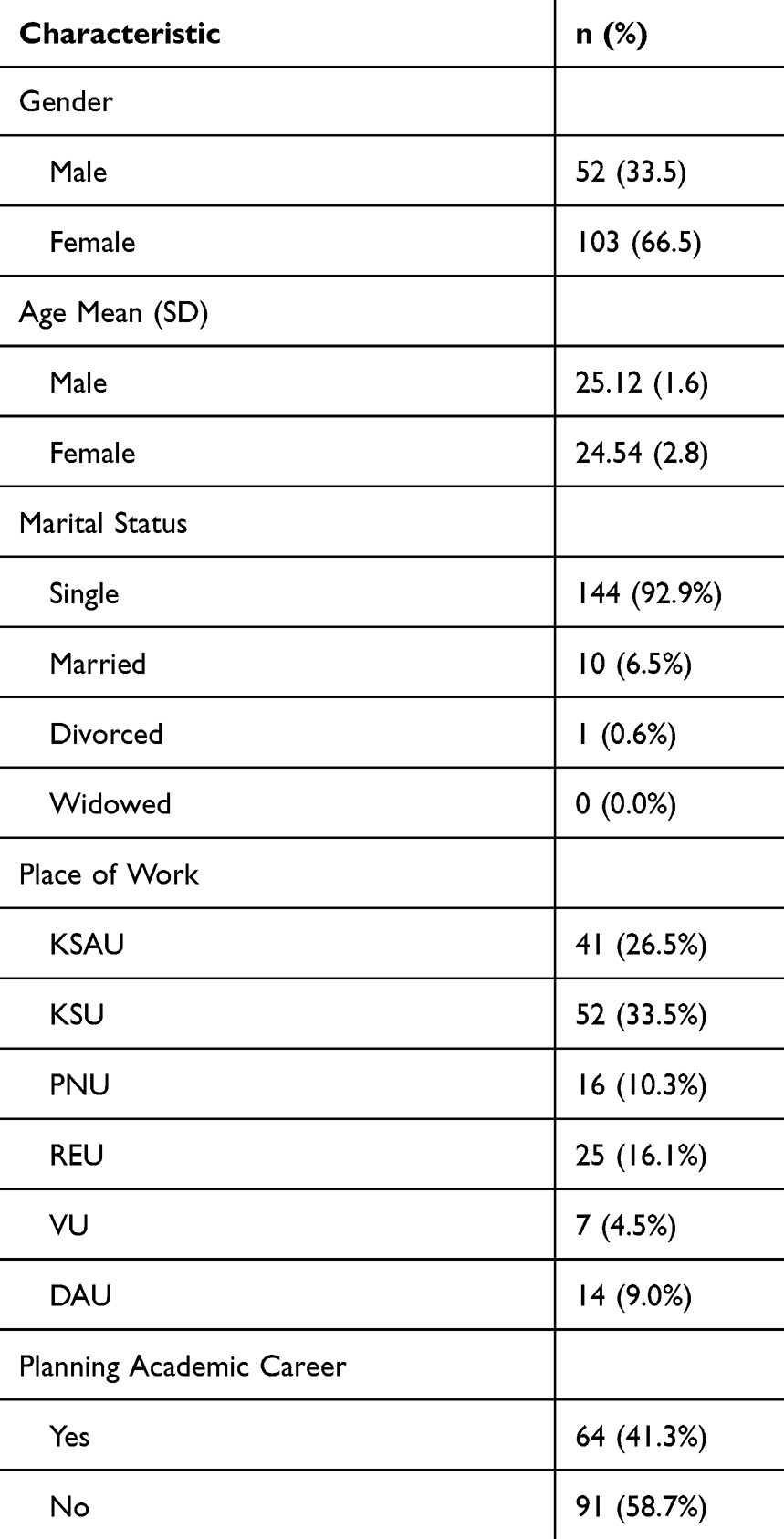 |
Table 1 Demographic Characteristics of the Respondents |
Psychometric Properties and Validation Findings
The instrument demonstrated strong reliability, with Cronbach’s α of 0.90 (95% CI: 0.87–0.92) for Awareness/Checking Behaviors, 0.69 for Journal Preferences, and 0.76 for Predatory Journal Knowledge and strong unidimensionality in EFA, with all items loading >0.70 on a single factor explaining 69.3% of variance. Known-groups analysis revealed significantly higher awareness scores among experienced researchers (M = 3.57±1.12) versus novices (M = 2.38±1.04; t[53.02] = 4.55, p < 0.001, d = 1.09) demonstrating good criterion validity. Convergent validity was supported by a moderate positive correlation between awareness scores and publication count (r=0.38, p<0.001).
Research Activity and Publication Experience
Research interest was reported by 95/155 (61.3%) of participants. 116/155 (75%) had at least one publication, only 49/155 (31.6%) had published as a first or corresponding author, and 40/155 (25.8%) had no publications at all. Open-access publishing experience varied: 59/155 (38.1%) reported one OA publication, and 55/155 (35.5%) reported none (Table 2).
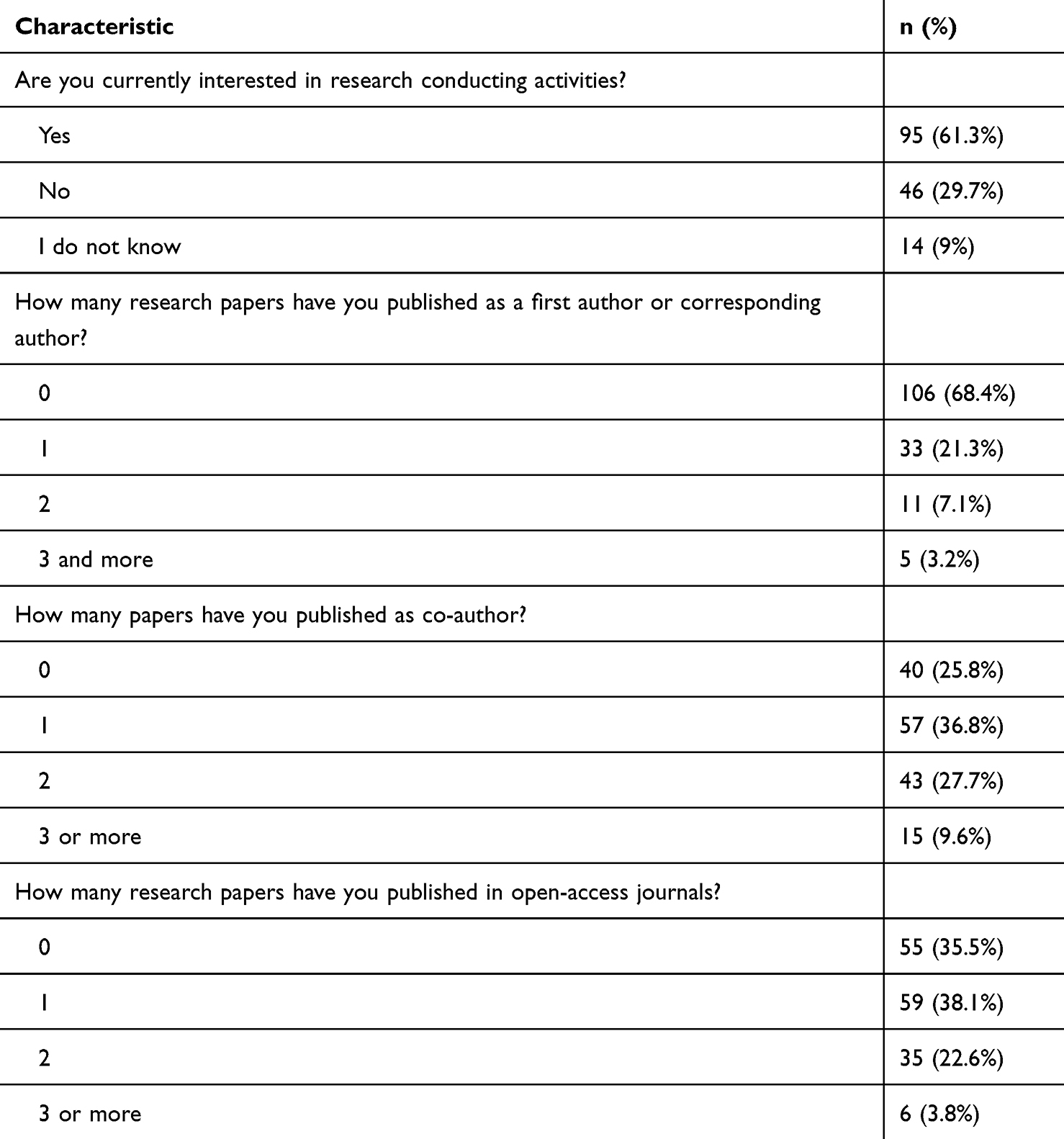 |
Table 2 Research Activities of the Respondents |
Awareness of Predatory Journals
Knowledge of predatory publishing practices was limited. Approximately 116/155 (74.8%) were unfamiliar with Beall’s List, 81/155 (52.3%) did not recognize the term “predatory journal”, and 107/155 (69.0%) had no knowledge of the “Think, Check, Submit” initiative (Table 3).
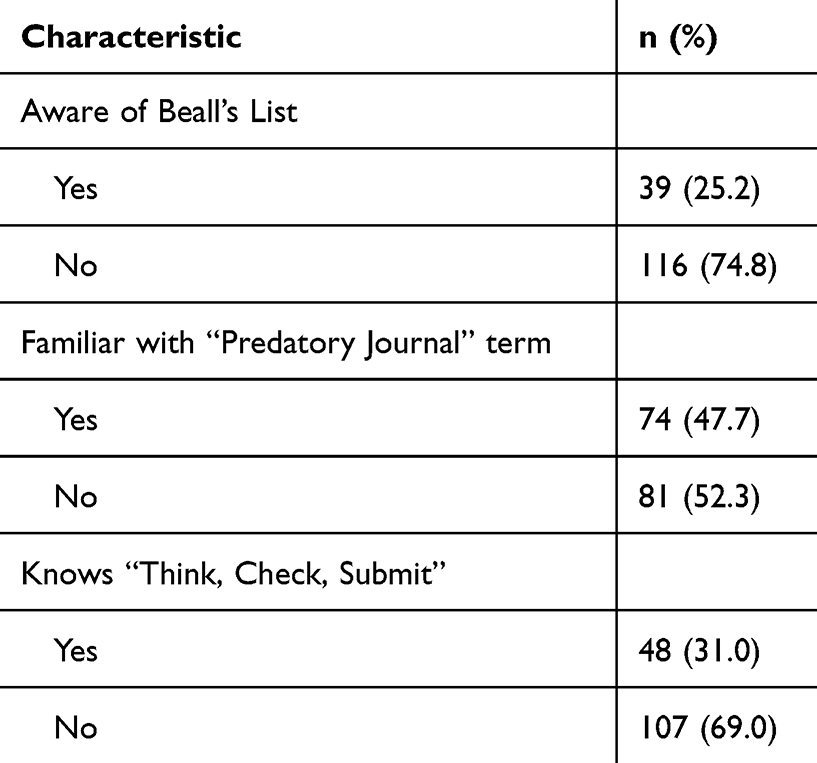 |
Table 3 Awareness of Predatory Journals of the Respondents |
Journal Evaluation Practices
As depicted in Figure 1, fundamental journal checks—such as verifying the journal name and reviewing editorial boards—were frequently performed, with 76/155 (50%) reporting they “Always” conduct these checks. However, ethical criteria were less consistently applied: only 30/155 (19.2%) regularly checked for COPE membership, and 42/155 (27%) assessed peer review practices. Although 74/155 (48%) acknowledged awareness of predatory journals, only 23/155 (15%) demonstrated confidence in identifying them.
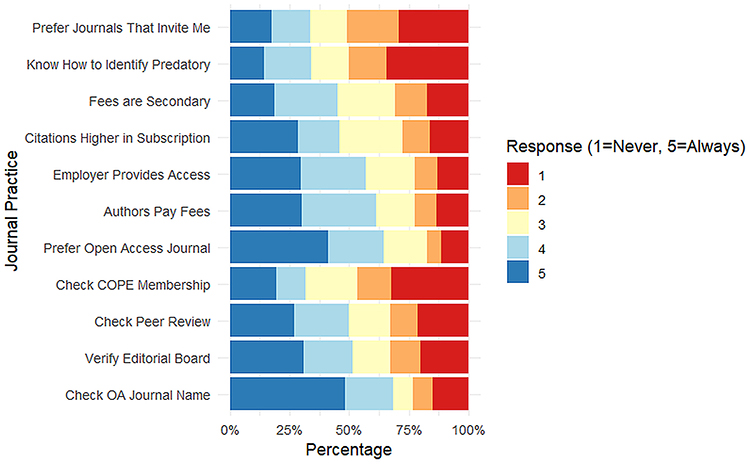 |
Figure 1 Journal selection practices and awareness among the respondents. |
Open Access Preferences and Motivations
While 101/155 (65%) “Always” or “Often” preferred publishing in OA journals, 72/155 (46%) believed subscription-based journals were more likely to yield higher citations. Financial considerations were secondary for 71/155 (45%) of participants, and more than 78/155 (50%) acknowledged that authors typically pay publishing fees upon acceptance.
Half of the respondents were cautious about journals that send email invitations, rarely or never preferring them. More than half reported regular access to paywalled articles via their institutions.
Researchers prioritized basic quality indicators (eg, journal name, editorial board) over systematic ethical checks (eg, COPE membership). Despite awareness of predatory journals, proactive identification skills were limited. The coexistence of Open Access (OA) preference and subscription-based citation beliefs highlights unresolved tensions in perceived journal impact.
Figure 2 illustrates participants’ perceptions of predatory journal characteristics. Most commonly cited indicators included lack of indexing 56/155 (36.1%), absence of an impact factor (36.1%), inadequate peer review 53/155 (34.2%), low article quality 53/155 (34.2%), and flashy or exaggerated journal names 53/155 (34.2%). Operational red flags such as rapid publication 46/155 (29.9%) and fake editorial boards 46/155 (29.9%) were noted by nearly one-third of respondents. Surprisingly, high publication fees were the least recognized marker 28/155 (18.1%).
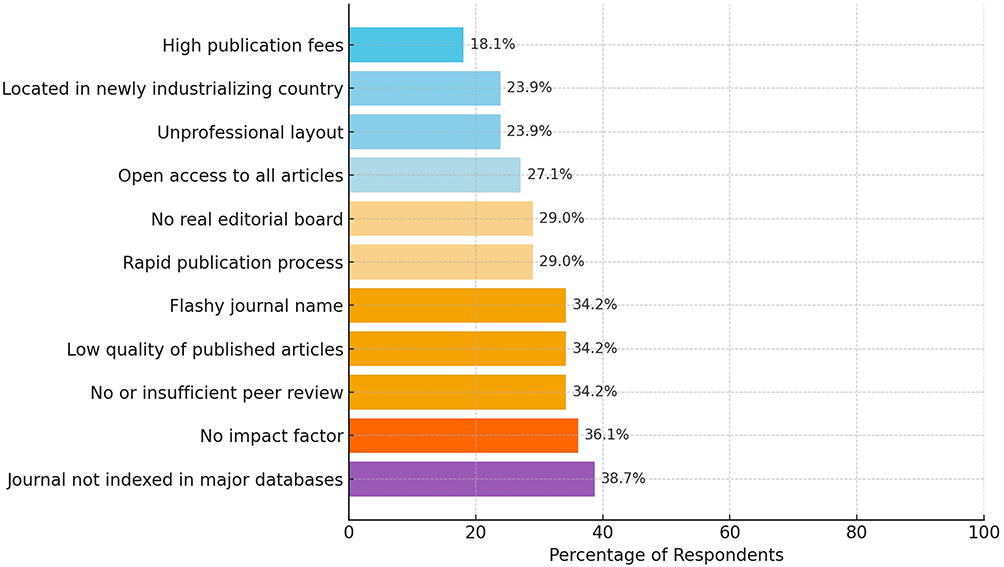 |
Figure 2 Recognized characteristics of predatory journals as identified by the respondents. |
Motivations for Choosing OA Journals
The most frequently cited reasons for submitting to OA journals were faster review processes 98/155 (63.2%) and easier submission protocols 79/155 (51.0%). Traditional motivations such as citation impact 76/155 (49.0%) and accessibility 42/155 (27.1%) were less commonly endorsed (Figure 3), suggesting a preference for convenience over open-access principles.
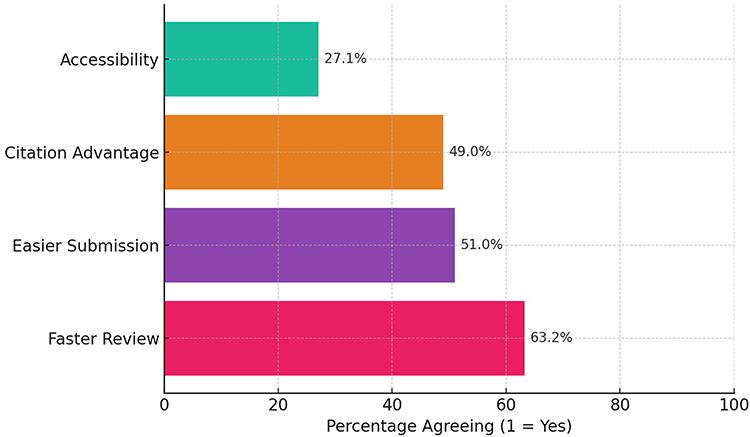 |
Figure 3 Reasons for choosing open access journals. |
Bivariate Analysis
Chi-square tests revealed no significant association between gender and awareness of predatory journals (χ2(1) = 0.000, p = 1.000), indicating comparable levels of awareness among male and female dental interns in our sample. Similarly, awareness levels did not significantly differ across universities (χ2(5) = 7.99, p = 0.157), with a small effect size (Cramer’s V = 0.10), suggesting that university affiliation accounted for minimal variation in awareness.
Furthermore, no statistically significant relationship was found between awareness of predatory journals and prior publication experience (χ2(1) = 2.69, p = 0.101) as shown in Figure 4. These findings suggest that publication experience does not strongly influence awareness of predatory journals among dental interns.
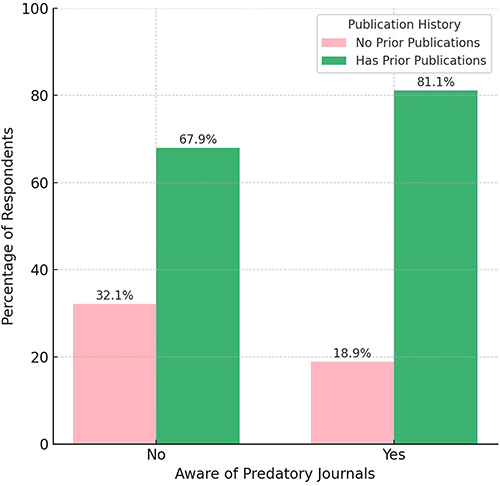 |
Figure 4 Awareness of predatory journals by publication status. |
A Chi-square test showed a significant association between research interest and awareness of predatory journals (p <0.001). Among those interested in research, 61/95 (64.2%) were aware, compared to 9/46 (19.6%) of those not interested and 4/14 (28.6%) of those unsure (Table 4).
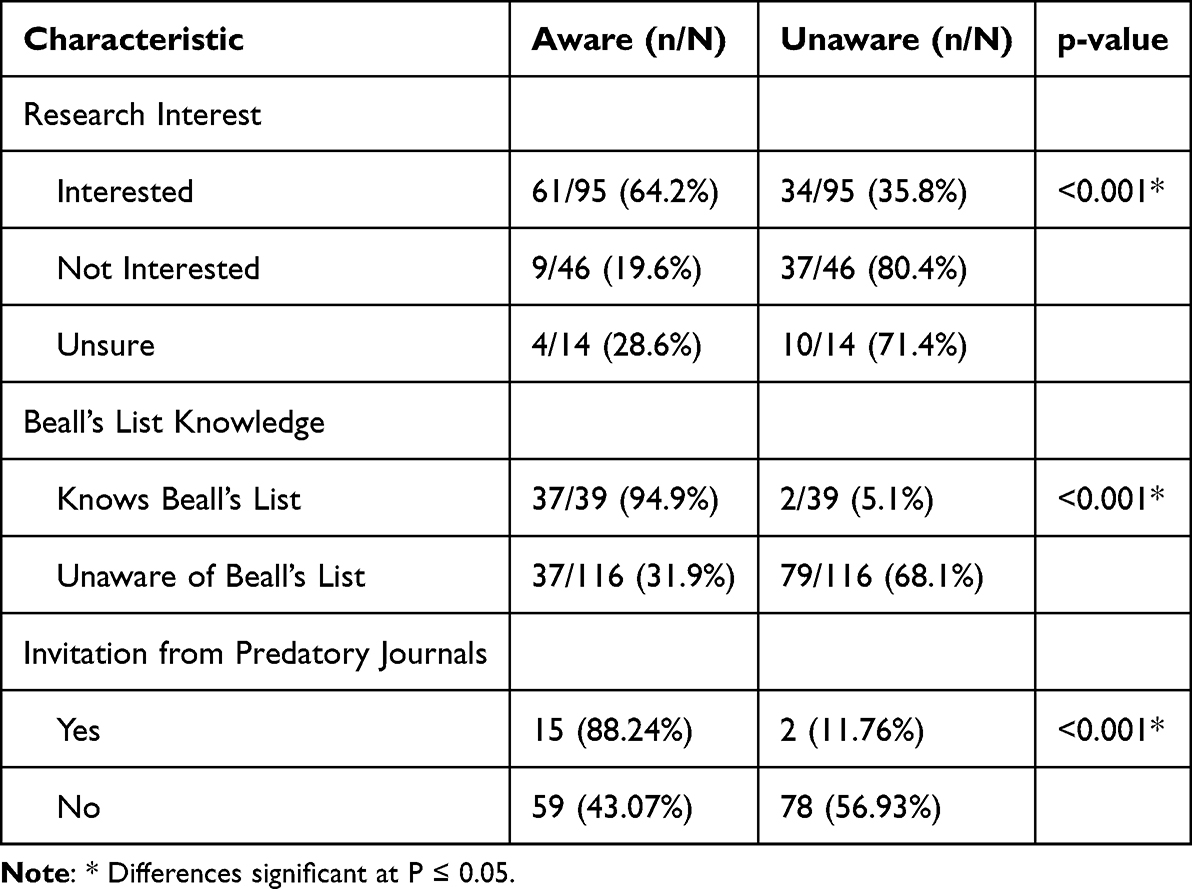 |
Table 4 Awareness Status of the Respondents |
Cramér’s V (0.418) indicated a moderate to strong association, suggesting that individuals engaged in research are more likely to be familiar with predatory journals.
Participants who knew Beall’s List were far more likely to be aware of predatory journals 37/39 (94.9%) than those who did not 37/116 (31.9%) (p < 0.001). However, 2/39 (5%) knowing Beall’s List remained unaware of predatory journals overall.
Regarding invitations from predatory journals, a significant association was found between receiving such invitations and awareness of predatory journals (p < 0.001, chi-square test). Among those who received invitations from predatory journals, 15/17 (88.24%) were aware of them, whereas only 59/137 (43.07%) of those who did not receive such invitations reported awareness. Conversely, no significant association was found between receiving general journal invitations and awareness of predatory journals (p = 0.37, chi-square test).
The analysis revealed a significant association between familiarity with predatory journals and intention to pursue an academic career as shown in Table 5 (p < 0.001). A higher proportion of familiar participants planned to stay in academia 64/81 (79.0%) compared with unfamiliar participants 27/74 (36.5%). No significant associations were observed for gender (p = 0.50) or marital status (p = 0.85) (Table 5). These results suggest that knowledge of predatory publishing may influence researchers’ career decisions, while demographic factors appear unrelated.
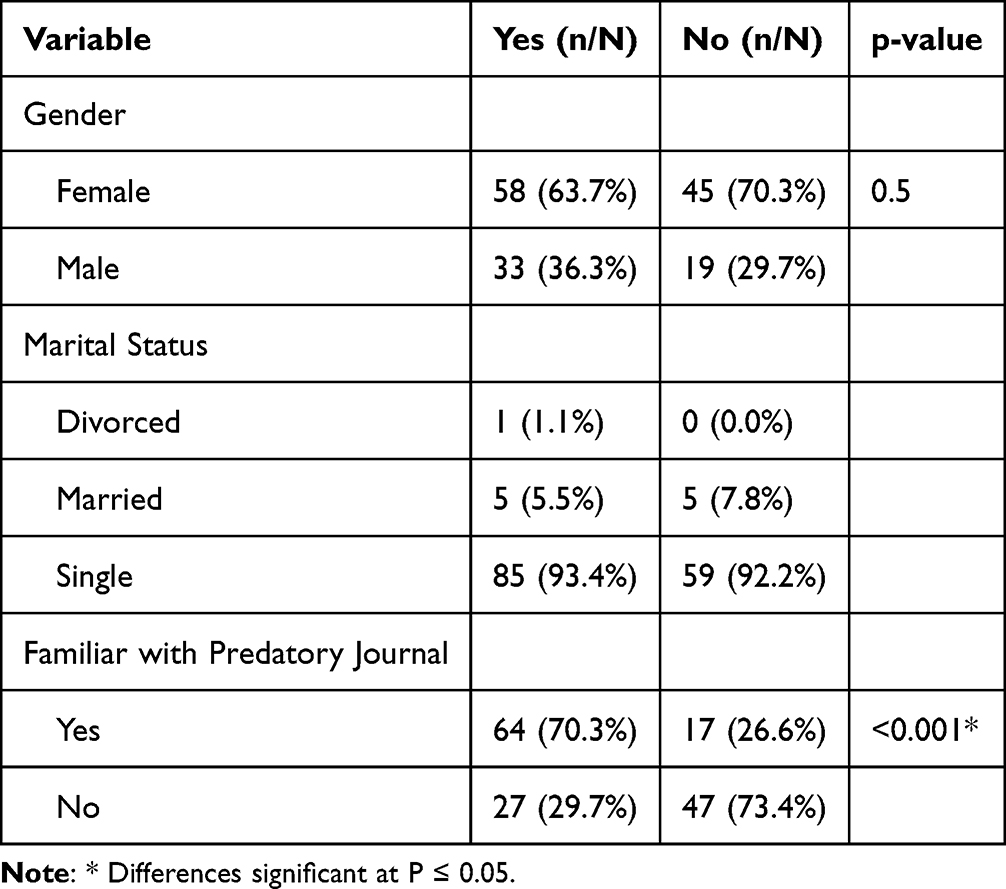 |
Table 5 Intent to Pursue Academia Among the Respondents |
Predictors of Awareness: Logistic Regression
A binomial logistic regression was conducted to identify predictors of predatory journal awareness based on research interest, institutional affiliation, publication history, and knowledge indicators (Table 6). The full model significantly improved prediction compared to the null model, χ2(10) = 83.57, p <0.001, explaining approximately 39% of the variance (Nagelkerke R2 =0.387).
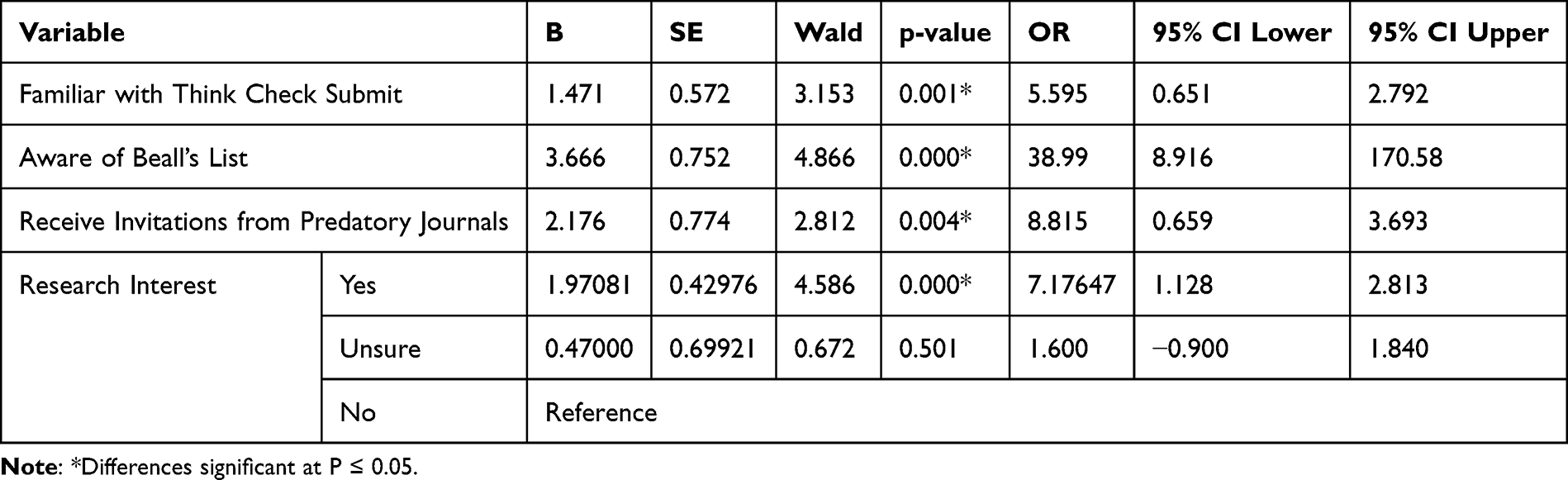 |
Table 6 Multivariable Binary Logistic Regression of Factors Associated with Predatory Journal Awareness |
Familiarity with Beall’s List emerged as the strongest predictor of recognizing predatory journals (b = 3.67, SE = 0.75, Wald = 4.87, p <0.001), with an odds ratio (OR) of 38.99 (95% CI [8.92, 170.58]), indicating that participants familiar with Beall’s List were nearly 39 times more likely to recognize predatory journals.
Familiarity with the “Think, Check, Submit” guidelines significantly increased awareness (b = 1.47, SE = 0.57, Wald = 3.15, p =0.001, OR = 5.60, 95% CI [0.65, 2.79]).
Receiving invitations from predatory journals was also a strong predictor (b = 2.18, SE = 0.77, Wald = 2.81, p =0.004, OR = 8.82, 95% CI [0.66, 3.69]), suggesting that those who received such invitations had over 8 times higher odds of awareness.
Research interest significantly predicted awareness. Compared to those with no research interest (reference group), individuals interested in research were significantly more likely to recognize predatory journals (b = 1.97, SE = 0.43, Wald = 4.59, p <0.001, OR = 7.18, 95% CI [1.13, 2.81]). Being “unsure” about research interest had no significant effect (b = 0.47, SE = 0.70, Wald = 0.67, p =0.501, OR = 1.60, 95% CI [−0.90, 1.84]), nor did publication count or institutional affiliation (all ps > 0.05).
The model demonstrated good fit, with no multicollinearity concerns (all VIFs < 2) and an adequate distribution of deviance residuals (Mdn = −0.27, IQR = 1.32).
Discussion
To the best of our knowledge, this study is among the first to assess the awareness of predatory journals among dental interns in the central region of Saudi Arabia. The findings reveal a moderate level of awareness within this cohort, with significant knowledge gaps regarding foundational tools used to identify unethical publishing practices. Recent surveys show low to moderate awareness of predatory publishing among students and early-career researchers, including medical education cohorts and multi-country student samples, aligning with our baseline levels.11
Although more than 95/155 (60%) of interns reported active research interest and many had co-authored publications, overall awareness of critical publishing-literacy concepts such as “predatory journals”, Beall’s List, and “Think, Check, Submit”, was only 74/155 (47.7%). Within the cohort, however, awareness was higher among those declaring a research interest (61/95, 64.2%) than among those not interested (9/46, 19.6%) or unsure (4/14, 28.6%), consistent with external reports that research engagement aligns with greater publishing literacy.3,4,12 Externally, research engagement or experience tracks with higher awareness in academic samples (eg, nurse-research faculty), supporting our observed association with declared research interest.13
Our findings also align with those reported by Maurer et al,14 who observed that less than half of orthopedic and trauma surgeons surveyed were familiar with the concept of predatory journals. This knowledge gap was even more pronounced in a pan-Austrian dermatology survey, where only 29.4% of respondents had awareness of predatory journals and just 6.7% were familiar with Beall’s List.7 These parallels suggest that the issue is not confined to a specific specialty or level of experience but reflects a systemic lack of formal training in publishing literacy.15
Moreover, one of the most striking findings of this study was the widespread unfamiliarity with foundational tools designed to safeguard researchers against predatory publishing. Specifically, nearly three-quarters of participants were unaware of Beall’s List, and more than half did not recognize the term “predatory journal.” Familiarity with the “Think, Check, Submit” initiative was also limited. These results are consistent with prior literature suggesting that early-career researchers often lack formal instruction on how to critically evaluate the credibility, indexing status, and editorial practices of academic journals.3,4,13 By contrast, other cohorts report substantial uptake of “Think, Check, Submit” and verification checks (indexing, COPE review); in Jordan, applying “Think, Check, Submit” and related checks predicted better identification of predatory journals, highlighting a teachable gap in our interns.16
This gap in publishing literacy exposes inexperienced authors to deceptive solicitations and increases the risk of disseminating their work through unethical platforms, thereby undermining both the visibility and integrity of their scholarly contributions.17 Within Saudi dental schools, evidence-based dentistry (EBD) competencies are taught, yet explicit, structured training on journal appraisal and predatory-publishing detection is not consistently embedded, which likely contributes to the observed literacy gap among interns.18,19
Notably, our regression analysis identified several key predictors of predatory journal awareness, including prior exposure to predatory invitations, familiarity with evaluation frameworks, and active interest in research. Multiple studies document high volumes of unsolicited invitations with hallmarks of predatory outlets (assured acceptance, rapid turnaround, poor grammar).20,21
However, demographic variables such as gender, marital status, or institutional affiliation were not significantly associated with awareness. This supports the view that awareness is shaped more by research engagement and informational exposure than by passive demographic characteristics.
Awareness was positively associated with intention to pursue an academic career (p < 0.001). Familiar participants were more likely to plan to stay in academia 64/81 (79.0%) than unfamiliar participants 27/74 (36.5%). This pattern suggests that interns who already recognize predatory publishing may better appreciate academic publishing norms and, consequently, are more inclined toward academic trajectories. This pattern is consistent with surveys showing that awareness rises with academic advancement and research output—for example, among German orthopaedic/trauma surgeons, awareness correlated with professional position and publication history, and among medical oncologists it was higher in those with more publications.14
However, a cross-institutional faculty survey found no association between the ability to identify a predatory journal and academic rank or publication history, suggesting the relationship may vary by setting and discipline.22
The preference among respondents for OA journals, despite limited skills to evaluate journal quality, further highlights a disconnect between access ideals and publishing literacy. This tension mirrors prior literature showing that early-career researchers are often drawn to OA platforms due to faster publication times and accessibility, without fully understanding the associated risks.8,9
Comparable tensions between pro-OA attitudes and limited appraisal are seen elsewhere; notably, many authors who later recognized a predatory outlet took no corrective action, and predatory dental articles can achieve social-media reach comparable to legitimate outlets, amplifying misinformation risk.23
In light of these findings, we strongly advocate for the integration of structured training on publishing ethics, journal evaluation, and scholarly communication standards into undergraduate and internship-level dental education. Such curricula should not only cover tools like “Think, Check, Submit” but also include critical discussions on peer review integrity, indexing services, impact factor inflation, and deceptive solicitation tactics. These interventions could be embedded within research methodology or professional development modules. Recent work has validated a knowledge–perception instrument for predatory journals, enabling standardized evaluation of teaching impact. Education-focused reviews likewise call for formal curriculum integration and promotion policies that disincentivize predatory outlets. We align our recommendations with these directions.8,11
Finally, institutions and regulatory bodies should consider broader policy-level responses, such as publishing literacy audits, resource allocation for faculty-led workshops, and dissemination of standardized guidelines through academic networks. Institutional levers also matter: emerging evidence suggests promotion/verification policies can deter questionable publications; recent commentaries further outline organizational countermeasures.24,25
This study offers several notable strengths. First, the use of a stratified random sampling technique across six dental institutions in Riyadh ensured broad representation and reduced institutional sampling bias, thereby enhancing the generalizability of the findings. Second, the study addresses a critically underexplored area within dental education in Saudi Arabia—predatory publishing awareness among dental interns—which adds unique regional value and fills an existing gap in the literature. However, certain limitations must be acknowledged. The cross-sectional design captures awareness at a single point in time. Self-reported data are subject to recall and social desirability biases, particularly regarding research experience and publication activity. Additionally, despite efforts to sample proportionally, non-response bias remains a possibility, as individuals with limited interest in research ethics may have been less inclined to participate. Finally, the study focused solely on dental interns, and while this group represents an important target for educational interventions, the findings may not be generalizable to other health professions or more experienced clinicians.
Conclusion
This study reveals a moderate level of awareness of predatory publishing practices among dental interns with awareness levels significantly influenced by research interest and familiarity with journal evaluation tools. Despite substantial interest in research, many interns demonstrated limited ability to critically assess journal credibility, leaving them vulnerable to unethical publishing platforms.
Disclosure
The authors report no conflicts of interest in this work.
References
1. Beall J. Dangerous predatory publishers threaten medical research. J Korean Med Sci. 2016;31(10):1511. doi:10.3346/jkms.2016.31.10.1511
2. Shen C, Björk BC. ‘Predatory’ open access: a longitudinal study of article volumes and market characteristics. BMC Med. 2015;13(1):230. doi:10.1186/s12916-015-0469-2
3. Moher D, Bouter L, Kleinert S, et al. The Hong Kong principles for assessing researchers: fostering research integrity. PLoS Biol. 2020;18(7):e3000737. doi:10.1371/journal.pbio.3000737
4. Cobey KD, Lalu MM, Skidmore B, et al. Knowledge and motivations of researchers publishing in presumed predatory journals: a survey. BMJ Open. 2019;9(3):e026516. doi:10.1136/bmjopen-2018-026516
5. Sorokowski P, Kulczycki E, Sorokowska A, Pisanski K. Predatory journals recruit fake editor. Nature. 2017;543(7646):481–483. doi:10.1038/543481a
6. Laine C, Winker M. Identifying predatory or pseudo-journals. Biochem Med. 2017;27(2):285–291. doi:10.11613/BM.2017.031
7. Richtig G, Richtig M, Hoetzenecker W, et al. Knowledge and influence of predatory journals in dermatology: a pan-Austrian survey. Acta Derm Venereol. 2019;99(1):58–62. doi:10.2340/00015555-3037
8. Marar S, Hamza MA, Ayyash M, Abu-Shaheen A. Development and validation of an instrument to assess the knowledge and perceptions of predatory journals. Heliyon. 2023;9(11):e22270. doi:10.1016/j.heliyon.2023.e22270
9. Seethapathy GS, Santhosh Kumar JU, Hareesha AS. India’s scientific publication in predatory journals: need for regulating quality of Indian science and education. Curr Sci. 2016;111(11):1759–1764. doi:10.18520/cs/v111/i11/1759-1764
10. Eriksson S, Helgesson G. Time to stop talking about ‘predatory journals’. Learn Publ. 2018;31(2):181–183. doi:10.1002/leap.1135
11. Tomlinson OW. Predatory publishing in medical education: a rapid scoping review. BMC Med Educ. 2024;24:33.
12. Grudniewicz A, Moher D, Cobey KD, et al. Predatory journals: no definition, no defence. Nature. 2019;576(7786):210–212. doi:10.1038/d41586-019-03759-y
13. Hashish EAA, Alsenany SA, Abdelaliem SMF. Investigating academic nurse researchers’ knowledge, experience, and attitude toward predatory journals. J Prof Nurs. 2024;51:1–8. doi:10.1016/j.profnurs.2024.01.003
14. Maurer E, Walter N, Histing T, et al. Awareness of predatory journals among orthopaedic and trauma surgeons. BMC Musculoskelet Disord. 2021;22(1):9. doi:10.1186/s12891-021-04223-7
15. da Silva JAT. An alert to graduate students and young scientists: predatory publishers are still a big threat. J Acad Librariansh. 2021;47(1):102271
16. Khabour OF, Alzoubi KH, Aldarabseh WM. Awareness of Jordanian researchers about predatory journals: a need for training. Sci Eng Ethics. 2024;30(6):58. doi:10.1007/s11948-024-00519-8
17. Moher D, Shamseer L, Cobey KD, et al. Stop this waste of people, animals and money. Nature. 2017;549(7670):23–25. doi:10.1038/549023a
18. Aboalshamat K, Alharbi R, Alharbi A, et al. The perception of evidence-based dentistry among dental professionals in Saudi Arabia during COVID-19 pandemic. J Pharm Bioallied Sci. 2022;14(Suppl 1):S99–S105. doi:10.4103/jpbs.jpbs_575_21
19. Zahran M, Sabbahi DA. Development and implementation of evidence-based dentistry teaching module at Saudi Arabian university. Egypt Dent J. 2021;67(1):519–530. doi:10.21608/edj.2020.46192.1291
20. Livas C, Delli K. “Dear doctor, greetings of the day!”: a 1-year observational study of presumed predatory journal invitations. Prog Orthod. 2023;24(1):21. doi:10.1186/s40510-023-00471-6
21. Joubert G, Aluko O. Email invitations to publish: academically sound (such as SAFP) versus potentially predatory journals. South Afr Family Pract. 2024;66(1):e1–e5. doi:10.4102/safp.v66i1.5984
22. Swanberg SM, Thielen J, Bulgarelli N. Faculty knowledge and attitudes regarding predatory open access journals: a needs assessment study. J Med Libr Assoc. 2020;108(2):208–218. doi:10.5195/jmla.2020.849
23. Conlogue BC, Gilman NV, Holmes LM. Open access and predatory publishing: a survey of the publishing practices of academic pharmacists and nurses in the United States. J Med Libr Assoc. 2022;110(3):294–305. doi:10.5195/jmla.2022.1377
24. Frandsen TF, Lamptey RB, Borteye EM. Promotion standards to discourage publishing in questionable journals: a follow-up study. J Acad Librariansh. 2024;50(5):102895. doi:10.1016/j.acalib.2024.102895
25. Laine C, Babski D, Bachelet VC, et al. Predatory journals—what can we do to protect their prey? N Engl J Med. 2025;392(3):283–285. doi:10.1056/NEJMe2415937
 © 2025 The Author(s). This work is published and licensed by Dove Medical Press Limited. The
full terms of this license are available at https://www.dovepress.com/terms
and incorporate the Creative Commons Attribution
- Non Commercial (unported, 4.0) License.
By accessing the work you hereby accept the Terms. Non-commercial uses of the work are permitted
without any further permission from Dove Medical Press Limited, provided the work is properly
attributed. For permission for commercial use of this work, please see paragraphs 4.2 and 5 of our Terms.
© 2025 The Author(s). This work is published and licensed by Dove Medical Press Limited. The
full terms of this license are available at https://www.dovepress.com/terms
and incorporate the Creative Commons Attribution
- Non Commercial (unported, 4.0) License.
By accessing the work you hereby accept the Terms. Non-commercial uses of the work are permitted
without any further permission from Dove Medical Press Limited, provided the work is properly
attributed. For permission for commercial use of this work, please see paragraphs 4.2 and 5 of our Terms.