
Back to Journals » ClinicoEconomics and Outcomes Research » Volume 18
Pharmaceutical Manufacturing in China Innovation Performance: A Dynamic QCA Analysis Based on the WSR Perspective
Authors Zhu W, Tao S, Zhou X, Fu R
Received 15 August 2025
Accepted for publication 31 December 2025
Published 13 January 2026 Volume 2026:18 560908
DOI https://doi.org/10.2147/CEOR.S560908
Checked for plagiarism Yes
Review by Single anonymous peer review
Peer reviewer comments 2
Editor who approved publication: Prof. Dr. Dean Smith
Wangwang Zhu,1 Shiqi Tao,2 Xiaoying Zhou,1 Rui Fu3
1Department of Rehabilitation and Health Care, Wuxi Higher Health Vocational Technology School, Wuxi, Jiangsu, People’s Republic of China; 2School of Hospital Economics and Management, Anhui University of Traditional Chinese Medicine, Hefei, Anhui, People’s Republic of China; 3Organization and Personnel Department, The Second People’s Hospital of Wuxi (Jiangnan University Medical Center), Wuxi, Jiangsu, People’s Republic of China
Correspondence: Rui Fu, Organization and Personnel Department, The Second People’s Hospital of Wuxi (Jiangnan University Medical Center), Wuxi, Jiangsu, 214002, People’s Republic of China, Email [email protected]
Purpose: This study aims to investigate the theoretical foundations and driving mechanisms of innovation performance in the Chinese pharmaceutical manufacturing industry, offering theoretical and practical insights for enhancing the industry’s innovation capacity and global competitiveness.
Patients and Methods: Drawing upon the “Wuli-Shili-Renli” (WSR) systems methodology and a configurational perspective, this study employs dynamic Qualitative Comparative Analysis (QCA) to analyze Chinese provincial panel data spanning 2015– 2021. The study explores the configurational effects of influencing factors across three dimensions—digital economy, environmental regulation, and social capital—on the innovation performance of the pharmaceutical manufacturing industry across 30 Chinese provinces and municipalities.
Results: (1) The consistency scores for all antecedent conditions were below 0.9, indicating that no single factor constitutes a necessary condition for high innovation performance in the pharmaceutical manufacturing industry. (2) Three effective configurational paths driving high innovation performance were identified: the “dual-driven”, “multiple-dominant”, and “balanced coordination” paths. The overall solution consistency was 0.938, with an overall solution coverage of 0.511. (3) Temporally, configuration consistency exhibited a marked decline in 2017 and 2019, dropping below 0.9. (4) Spatially, the “balanced coordination” path achieved the highest provincial coverage, accounting for approximately 60%. Meanwhile, the “multiple-dominant” path revealed significant regional disparities, underscoring the need for most provinces to promote collaborative innovation within the industry.
Conclusion: The integration of the “Wuli-Shili-Renli” (WSR) systems methodology with dynamic fuzzy-set Qualitative Comparative Analysis (fsQCA) transcends the limitations of single-paradigm research. This study offers two primary contributions. First, it provides a robust theoretical framework for analyzing high innovation performance in the Chinese pharmaceutical manufacturing industry, thereby enriching the international innovation management literature. Second, it serves as a cross-cultural exemplar, synthesizing Eastern systems thinking with Western empirical methods to advance the global discourse on pharmaceutical innovation. Furthermore, the findings offer actionable insights for policymakers and stakeholders to foster high-quality development and enhance the global competitiveness of the pharmaceutical industry.
Keywords: pharmaceutical manufacturing, innovation performance, wuli-shili-renli methodology, digital economy, dynamic fuzzy-set qualitative comparative analysis
Introduction
The pharmaceutical manufacturing industry is a strategic sector pivotal to the national economy, public health, and national security, serving as a cornerstone of the “Healthy China” initiative. The Chinese government has consistently prioritized its development. In 2015, the launch of policies encouraging innovative drug R&D propelled the sector into a new era of rapid growth. Furthermore, since the “13th Five-Year Plan” (2016–2020), the promotion of the pharmaceutical industry has been integrated into long-term strategic planning, yielding remarkable results. According to the National Bureau of Statistics, in 2021, the value added by the pharmaceutical manufacturing industry rose by 24.8% year-on-year—15.2 percentage points higher than the general industrial average. Meanwhile, operating income grew by 19.1% and profits surged by 68.7%, establishing the sector as a new engine of China’s economic growth.1 Released in 2022, the “14th Five-Year Plan for the Development of the Pharmaceutical Industry” further emphasizes that the industry must accelerate reforms in quality, efficiency, and growth drivers to support the new paradigm of high-quality development.2
Concurrently, a new wave of technological revolution and cross-sector integration is accelerating, with digital technology becoming deeply embedded throughout the innovation chain of the pharmaceutical manufacturing industry. While these trends present new opportunities, they also impose higher demands on the sector. However, challenges such as limited original innovation capacity in frontier fields, suboptimal collaborative innovation, and weak international competitiveness continue to constrain development.3 Consequently, driven by both national strategic directives and market imperatives, improving the innovation performance of the pharmaceutical manufacturing industry has become an urgent priority. Addressing this issue is essential to promoting the industry’s transformation toward high-end, intelligent, and green manufacturing, building new international competitive advantages, and meeting diverse and multi-tiered public health needs.
Domestic and international scholars have produced extensive research on the influencing factors and improvement paths of innovation performance in the pharmaceutical manufacturing industry. The research trajectory demonstrates a progressive evolution from focusing on “external environmental support” to “internal driving mechanisms” and, more recently, to “network collaborative empowerment”, laying a solid foundation for this study. First, regarding the external environment—the foundation for innovative development—resource allocation efficiency and institutional improvements directly affect the implementation and effectiveness of innovation activities. Yin Junjie et al4 noted that environmental factors such as informatization, government support, and the financial ecosystem positively impact technological innovation performance, with government support contributing the most. Li Tuochen et al5 found that the driving effect of industrial transfer on innovation performance is significantly constrained by the mismatch of high-end resources, exhibiting a dual threshold effect. Similarly, Luo Fanguo and Jing Jingting confirmed that the digital economy and digital transformation facilitate high-quality development by improving innovation efficiency and reducing costs, highlighting the critical role of environmental factors like digitalization and resource allocation.6,7 Second, if the external environment constitutes the “exogenous factor” of development, corporate investment strategies and governance mechanisms represent the “endogenous drivers” determining innovation performance. These factors directly influence the efficiency of resource utilization and the conversion of R&D into outcomes. Regarding innovation investment, Lai Hongbo and Chu Yanxia argued that both cost-based and investment-based environmental regulations provide an “incentive effect” for innovation.8 Chen Xiaoyu et al emphasized that non-R&D activities, such as technological transformation and technology acquisition, also have a significant impact.9 Xu et al found that while R&D investment significantly boosts performance, government subsidies show no obvious direct effect.10 However, Zhang et al revealed that executives with pharmaceutical backgrounds can enhance innovation by increasing R&D investment, with government subsidies playing a moderating role, thereby underscoring the importance of internal governance.11 Third, given the increasing complexity and systemic nature of innovation, the efficacy of isolated efforts by single enterprises or factors has diminished; network collaboration has thus emerged as a key pathway for breaking through innovation bottlenecks. Fan Ye and Li Linjun confirmed that network organizations provide essential support for technological innovation through material, information, and energy exchange mechanisms.12 Furthermore, Tang Xinxin and Zhang Ruilong, as well as Xu Honghao et al, verified the significant impact of social capital on the innovation performance of listed pharmaceutical companies.13,14 They also identified a non-linear inverted “U” shaped relationship between structural holes and innovation performance in cooperative networks, highlighting the core value of network resources.
Although the aforementioned studies have covered three major dimensions—environmental, internal, and network factors—most focus on the isolated “net effects” of individual factors, overlooking the complex interdependence and synergistic effects of multi-level factors. Consequently, some scholars have begun to adopt configurational perspectives to explore the mechanisms by which multi-factor interplay impacts innovation performance in the pharmaceutical manufacturing industry. For instance, Lu Ruoyu et al employed fsQCA to analyze the combined effects and path selection of economic, scientific, technological, and policy conditions.15 Similarly, Zhu Wangwang et al analyzed the synergistic driving paths of technological, organizational, and environmental conditions from the perspective of knowledge advantage formation.3 Furthermore, Wang Juan and Li Mengmiao utilized a mixed-method approach combining NCA and fsQCA to test the configurational effects of six conditions—including digital transformation and innovation investment—on the high-quality development of pharmaceutical enterprises, confirming the critical impact of factor combinations on innovation performance.16
In summary, while innovation performance in the pharmaceutical manufacturing industry has attracted significant academic attention, several limitations remain. First, few studies have integrated multi-level antecedent conditions—such as the digital economy, environmental regulation, and social capital—within a unified framework alongside innovation performance. This lack of a multi-dimensional theoretical framework is a critical gap, as this topic is not only of significant scholarly interest but also a key issue for strengthening China’s industrial innovation capacity and regional competitiveness.17 As an effective tool for addressing complex systems, the “Wuli-Shili-Renli” (WSR) methodology can facilitate a comprehensive, multi-level theoretical analysis of innovation performance, providing a novel perspective for promoting high-quality development. Second, while research on influencing factors is abundant, the dominance of “net effect” analyses often obscures the configurational effects and synergistic interactions of multiple factors. Adopting a configurational perspective allows the dynamic QCA method to transcend the limitations of traditional paradigms, identifying conditional combinations with synergistic effects and explaining the driving paths within complex systems.18 Third, traditional fsQCA is limited by cross-sectional data and cannot fully capture the temporal dynamics of causal relationships. In contrast, dynamic QCA based on panel data can effectively elucidate the configurational effects and longitudinal evolution of innovation performance in the pharmaceutical manufacturing industry.
Consequently, this study utilizes panel data from 30 Chinese provinces and municipalities spanning 2015 to 2021. Based on the WSR systems methodology and dynamic QCA, it explores the configurational paths driving high innovation performance in the pharmaceutical manufacturing industry, specifically addressing the following research questions: (1) Does any single factor constitute a necessary condition for high innovation performance in the pharmaceutical manufacturing industry? (2) Do antecedent conditions exhibit significant temporal effects, and what are their dynamic evolutionary characteristics? (3) Are there significant differences in the spatial distribution of these driving paths, and how should regions select development strategies tailored to local conditions?
This study contributes to the literature in three key ways: (1) Theoretically, it constructs an integrated WSR analytical framework, clarifying the interplay among factors across three dimensions—Wuli (digital economy), Shili (environmental regulation), and Renli (social capital). This reveals the equifinality and substitutability of paths for improving innovation performance, thereby deepening the theoretical understanding of the field. (2) Methodologically, it introduces dynamic QCA into the study of pharmaceutical manufacturing innovation. By integrating the time dimension, this approach captures the temporal dynamics of configurations, overcoming the static limitations of traditional analyses. (3) Practically, it elucidates the mechanisms of multi-factor combinations within a broader institutional and industrial context, providing actionable insights for policymakers to accurately identify key incentives and select appropriate improvement paths.
Research Framework Construction
In the mid-1990s, Professor Gu Jifa, a renowned expert in systems science, and Dr.Zhu Zhichang introduced the “Wuli-Shili-Renli” (WSR) methodology. This framework represents an Eastern systems approach that integrates qualitative and quantitative analyses. The WSR methodology emphasizes the integration of the Wuli, Shili, and Renli dimensions, positing them as interconnected, mutually conditioning, and interactive. By conceptualizing complex research problems as holistic systems, the methodology explores the internal relationships among elements, serving as a robust theoretical tool for resolving complex systemic problems.19 The trajectory of innovation performance in the pharmaceutical manufacturing industry is characterized by its systemic nature and complexity, aligning well with the analytical strengths of the WSR methodology.
First, improving innovation performance necessitates a systemic approach. The application of the WSR methodology facilitates a comprehensive and in-depth understanding of the material conditions (Wuli), operating mechanisms (Shili), and human dynamics (Renli) within the pharmaceutical manufacturing innovation system, thereby aiding in the identification of effective pathways for enhancement. Second, regarding research content, both the enhancement of innovation performance and the WSR methodology aim to uncover the internal mechanisms and principles of complex systems. Innovation performance reflects an emergent property of a complex system, arising at the holistic level through the continuous interaction of multiple dimensions. This creates a strong theoretical alignment between the methodology and the subject matter. Third, the WSR methodology adheres to the principle of context-specific analysis. It flexibly adapts to national strategies, regional realities, and dynamic industrial shifts, thereby optimizing the balance between innovation efficiency and management costs to effectively address the research questions.
Accordingly, this study maps the theoretical correspondence between the Wuli-Shili-Renli dimensions and the determinants of innovation performance in the pharmaceutical manufacturing industry, constructing the WSR theoretical framework illustrated in Figure 1.
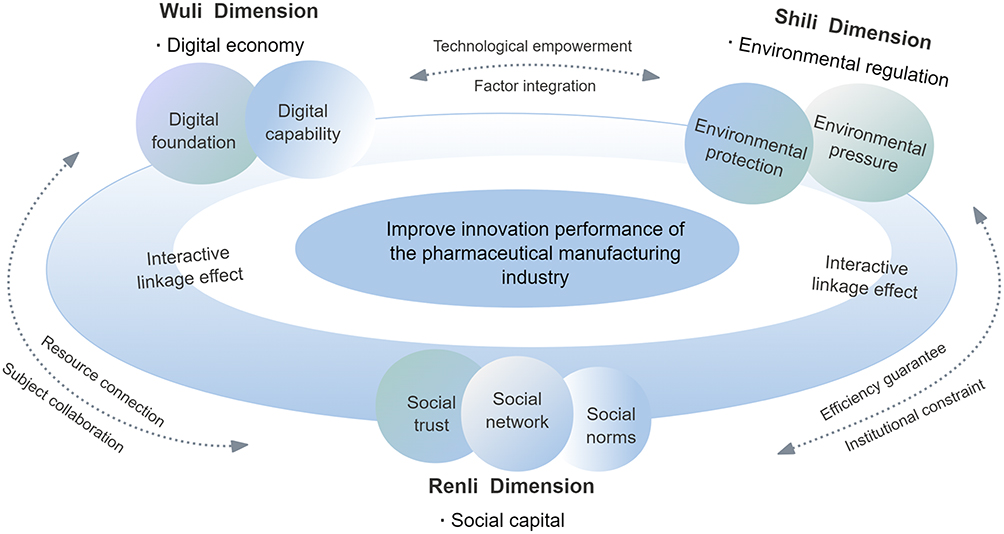 |
Figure 1 WSR grouping analysis framework for innovation performance in pharmaceutical manufacturing industry. |
“Wuli” Dimension
Wuli refers to the fundamental material and technical mechanisms, encompassing the objective entities and conditions that constitute a system.20 In the context of this study, Wuli represents the material basis, infrastructure, and external environment supporting the innovative development of the pharmaceutical manufacturing industry. As the foundational driver of the new global industrial revolution, the digital economy enhances innovation performance by integrating technology, optimizing factor allocation, and fostering innovation. It establishes a favorable digital ecosystem for the industry’s high-quality development. Consequently, this study identifies the digital economy as the key Wuli condition affecting high innovation performance in the pharmaceutical manufacturing industry.
“Shili” Dimension
Shili pertains to organizational logic and management principles, focusing on the methods of “how to resolve problems”.21 In the context of the pharmaceutical manufacturing industry, Shili encompasses the strategic management and decision-making processes adopted by stakeholders to improve innovation performance, emphasizing the efficiency and effectiveness of their actions. Governed by state guidance and market constraints, environmental regulation promotes green innovation, quality improvement, and efficiency enhancement within the industry through the “innovation compensation” effect.22 This mechanism allows enterprises to secure institutional and financial support from the government while simultaneously establishing competitive advantages through technological innovation. Consequently, this study identifies environmental regulation as the key Shili condition affecting high innovation performance in the pharmaceutical manufacturing industry.
“Renli” Dimension
Renli pertains to human dynamics and social relations, focusing on the evolving interpersonal relationships that occur during the problem-solving process within a system.20 In the context of the pharmaceutical manufacturing industry, Renli emphasizes the critical role of stakeholders in innovation activities. The integration of Renli factors facilitates collaborative responses among multiple stakeholders, enabling co-creation of value.17 Social capital is defined as a social organizational characteristic encompassing trust, norms, and relational networks.22 It functions as both a social network resource and a vital mechanism for resource allocation, providing enterprises with the actual and potential resources necessary to gain competitive advantages.23,24 Consequently, this study identifies social capital as the key Renli condition affecting high innovation performance in the pharmaceutical manufacturing industry.
The WSR methodology posits that the three dimensions—Wuli, Shili, and Renli—are not isolated elements but are bound by an inherent logic of reciprocal influence.25 The digital economy determines the resource dependency pathways of stakeholders, serving as the objective material condition (Wuli).26 Environmental regulation acts as a critical safeguard for improving innovation performance and provides the institutional framework constraining both the digital economy and social capital, thereby ensuring the system operates effectively (Shili).27 Finally, social capital reflects the extensibility and sustainability of the digital economy and environmental regulation, ultimately determining the extent and impact of innovation performance. This requires leveraging the capabilities and social networks of stakeholders (Renli).24 Leveraging the synergistic effects of the Wuli-Shili-Renli dimensions is essential for enhancing innovation performance in the pharmaceutical manufacturing industry during this new stage of development.17
Research Methodology and Data Sources
Research Methodology
As a complex system, the high innovation performance of the pharmaceutical manufacturing industry is characterized by continuous temporal evolution. Traditional QCA methodology is constrained by its reliance on cross-sectional data, making it difficult to fully capture the configurational effects of causality across the time dimension. In contrast, dynamic QCA overcomes the limitations of traditional qualitative and quantitative methods. Adopting a configurational and holistic perspective, it addresses the issues of conjectural causation, asymmetry, and equifinality, thereby revealing the synergistic mechanisms affecting innovation performance over time. Furthermore, the Wuli, Shili, and Renli dimensions do not function independently in practice but operate synergistically. Accordingly, this study employs R software to apply dynamic QCA, exploring the pathways to high innovation performance in the pharmaceutical manufacturing industry while accounting for temporal effects. Additionally, Enhanced Standard Analysis (ESA) is applied to improve the precision of the configurational results.18 Compared to traditional QCA, the dynamic QCA method not only reveals the configurational effects of multiple antecedent conditions but also effectively utilizes panel data to measure consistency within cases (intra-case), between cases (inter-case), and in the aggregate. By employing consistency-adjusted distance analysis, it allows for a deep examination of how consistency shifts across time and cases, more accurately reflecting the temporal dynamics of causality.
Variable Selection and Statistical Description
This study employs the WSR theoretical framework to construct a configurational model encompassing all antecedent variables within the Wuli, Shili, and Renli dimensions, alongside the data regarding the outcome variable. The data were sourced from the China Statistical Yearbook, the China Environmental Statistical Yearbook, the China High Technology Industry Statistical Yearbook, and the statistical yearbooks of relevant provinces and municipalities covering the period 2016–2022. To address missing data for specific pharmaceutical manufacturing indicators in 2017, values were imputed using the average of the 2014–2016 data. This approach ensures the continuity and completeness of the panel dataset while minimizing measurement error. The correlation matrix and descriptive statistics for the research variables are presented in Table 1.
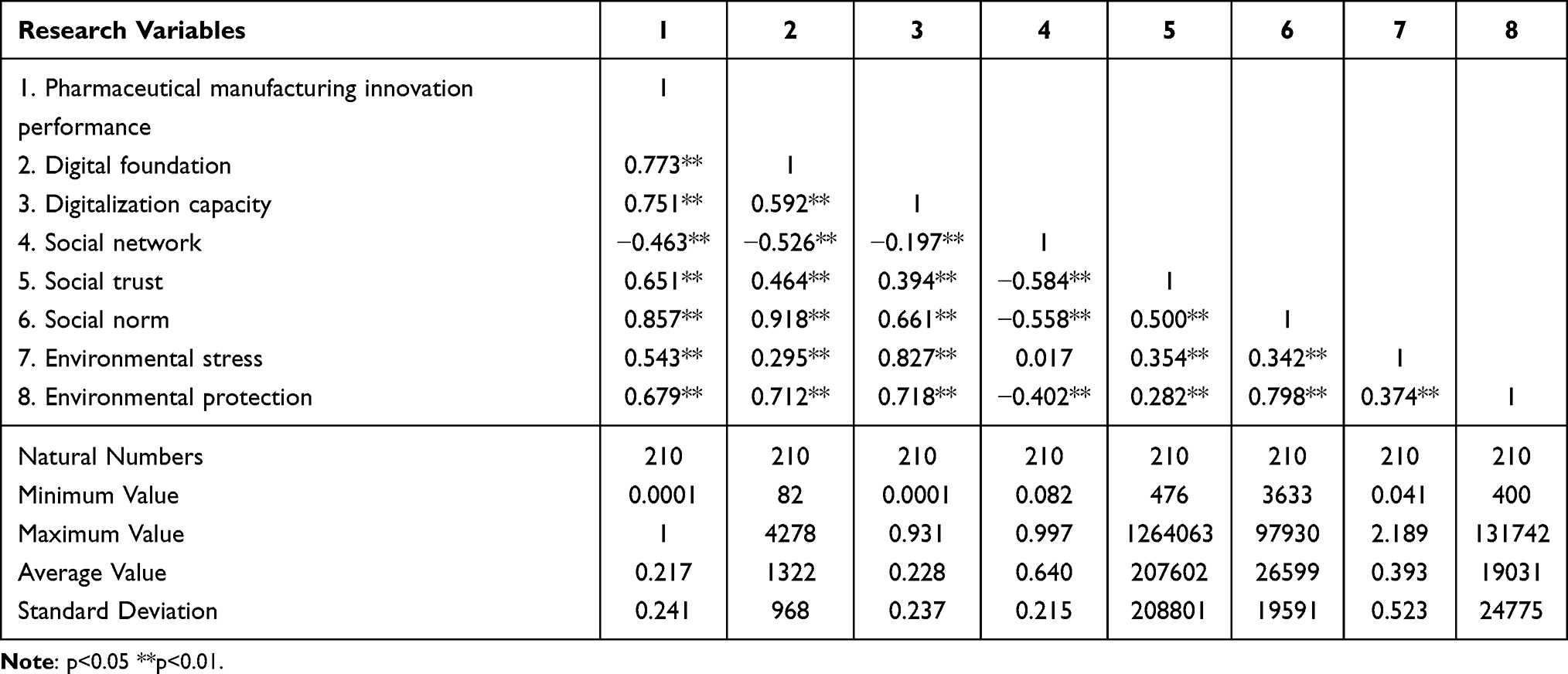 |
Table 1 Matrix of Correlation Coefficients and Results of Descriptive Statistical Analysis of the Study Variables |
Outcome Variable
Considering data availability, scientific rigor, and logical consistency, the innovation performance of the pharmaceutical manufacturing industry is selected as the outcome variable. Maximizing innovation performance requires aligning production factor inputs with outputs; specifically, performance is effectively enhanced when resource inputs generate substantial value. To capture this, three indicators are utilized. Sales revenue from new products and the number of new product development projects represent the economic output of innovation. Meanwhile, patent applications—the primary indicator of R&D output—serve as a key metric for technological innovation capability. Finally, the entropy method is employed to assign weights to these three indicators and calculate a composite score for the innovation performance of the pharmaceutical manufacturing industry.
Conditional Variable
In accordance with the WSR research framework, the digital economy, social capital, and environmental regulation are identified as the primary antecedent conditions influencing high innovation performance in the pharmaceutical manufacturing industry. The specific indicator system is presented in Table 2.
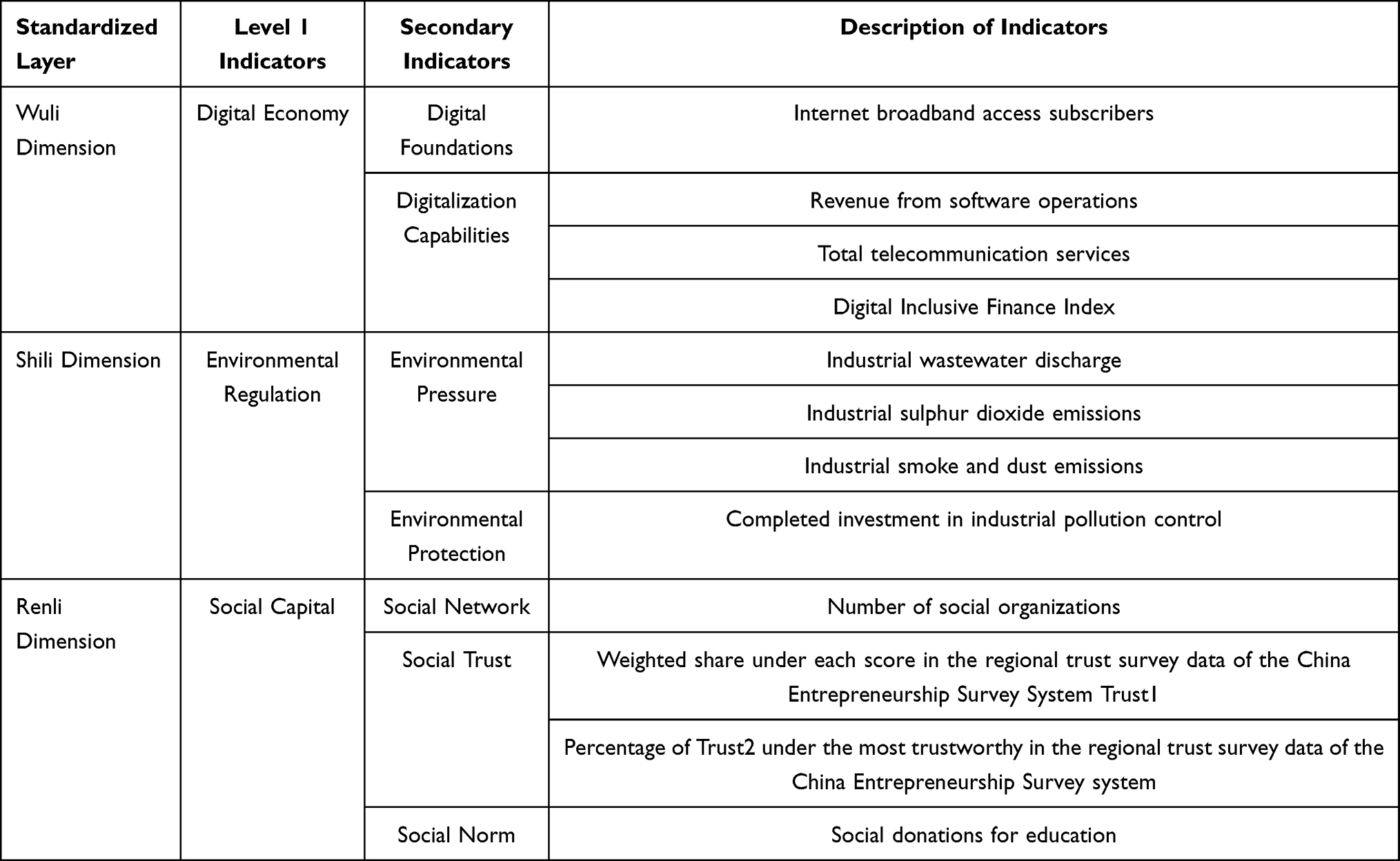 |
Table 2 Antecedents of Innovation Performance in Pharmaceutical Manufacturing Based on WSR Methodology |
Digital Economy
Digital infrastructure and digital capability are core components of the digital economy. The enhancement of digital infrastructure and the advancement of digital industrialization can effectively improve the quality of traditional production factors in the pharmaceutical manufacturing industry. By promoting their circulation and rational allocation, these factors drive improvements in innovation performance. Drawing on Guo Tongji, digital infrastructure is proxied by the number of fixed broadband subscribers.28 Digital capability is evaluated using three indicators: software business revenue, total volume of telecommunications business, and the digital financial inclusion index.
Environmental Regulation
Based on the theories of “compliance costs” and “innovation compensation”, environmental regulation drives industrial innovation.21 The intensity of environmental regulation is measured through two dimensions: environmental pressure and environmental protection efforts. For environmental pressure, following Zhao Wei, three indicators are selected: industrial wastewater discharge, sulfur dioxide emissions, and smoke/dust emissions.29 To ensure data consistency, these negative indicators are reverse-coded (normalized as positive indicators) and combined using the entropy method to generate a composite score characterizing environmental pressure. For environmental protection, reflecting the “Shili” of active governance and referencing Qiao Pingping, the investment in industrial pollution control is selected as the proxy measure.30
Social Capital
Social capital, primarily composed of social networks, social trust, and social norms, facilitates industrial transformation and innovation performance by promoting agglomeration, reducing information mismatch, and enhancing resource allocation efficiency. Adopting the approach of Zeng Keqiang and Luo Nengsheng, social networks are characterized by the number of social organizations;31 social trust is measured using the provincial trust index; and social norms are proxied by educational donations.32
Data Calibration
Based on established practices in prior research, this study employs the direct method of calibration.33 The standardized data are calibrated using the 75th, 50th, and 25th percentiles as the three major anchor points, representing Full Membership, the Crossover Point, and Full Non-membership, respectively. These calibration thresholds are detailed in Table 3.
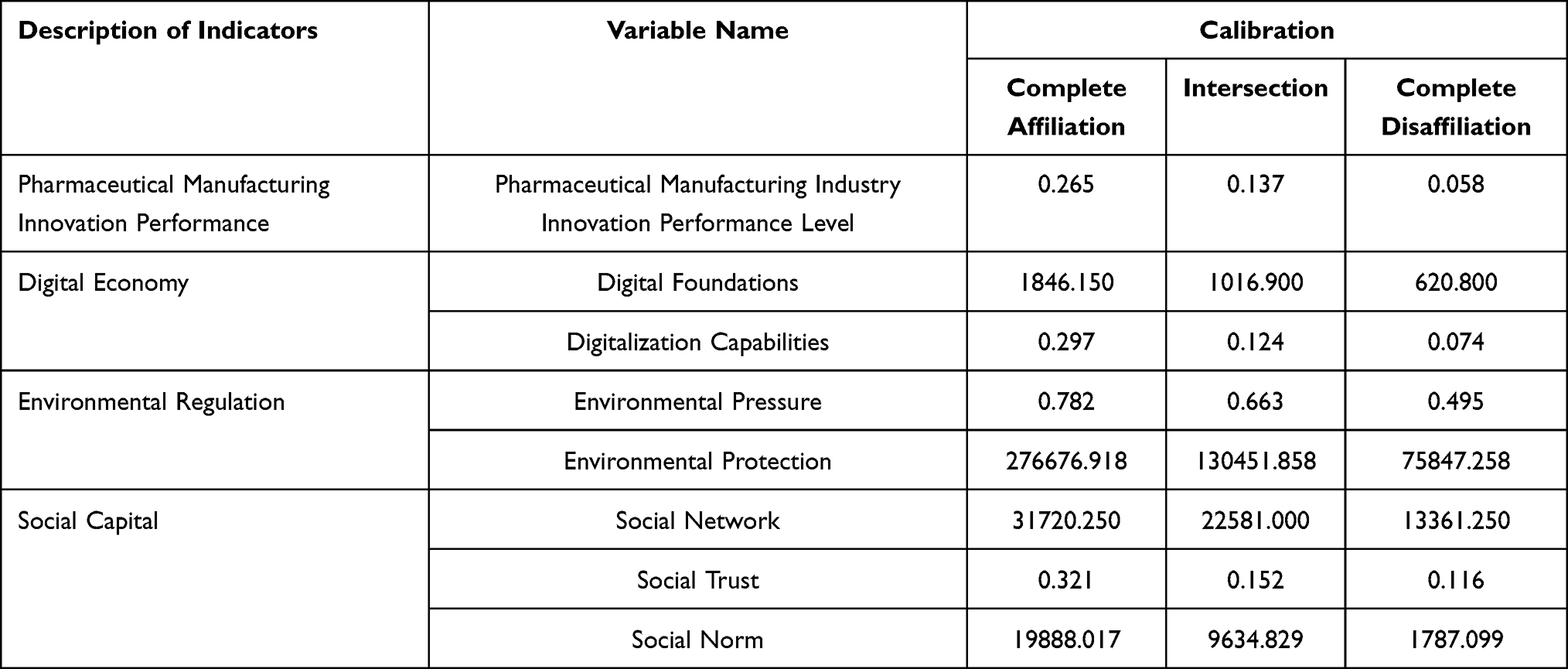 |
Table 3 Variable Calibration |
Results and Analysis
Analysis of Necessary Conditions
In dynamic QCA, the consistency and consistency-adjusted distance of all antecedent conditions are analyzed to determine necessity. A condition is considered necessary for the outcome if its consistency score exceeds 0.9.34 According to Enhanced Standard Analysis (ESA), when the consistency-adjusted distance is below 0.2, the aggregated consistency is considered reliable and serves as the primary basis for judgment.18 Conversely, when this distance exceeds 0.2, the necessity of the condition requires further analysis using panel data specifics. As shown in Table 4, the consistency scores for all seven conditions are below 0.9; consequently, no single condition is initially deemed necessary for the outcome. However, the intra-group consistency-adjusted distances for all conditions exceed 0.1. This variation likely stems from regional heterogeneity in endogenous factor endowments, economic externalities, and institutional conditions, which cause significant fluctuations in intra-group consistency.35 Additionally, for digital infrastructure, social networks, social norms, and environmental protection, the inter-group consistency distance exceeds 0.2. This warrants a deeper analysis that incorporates the corresponding inter-group consistency and coverage metrics.
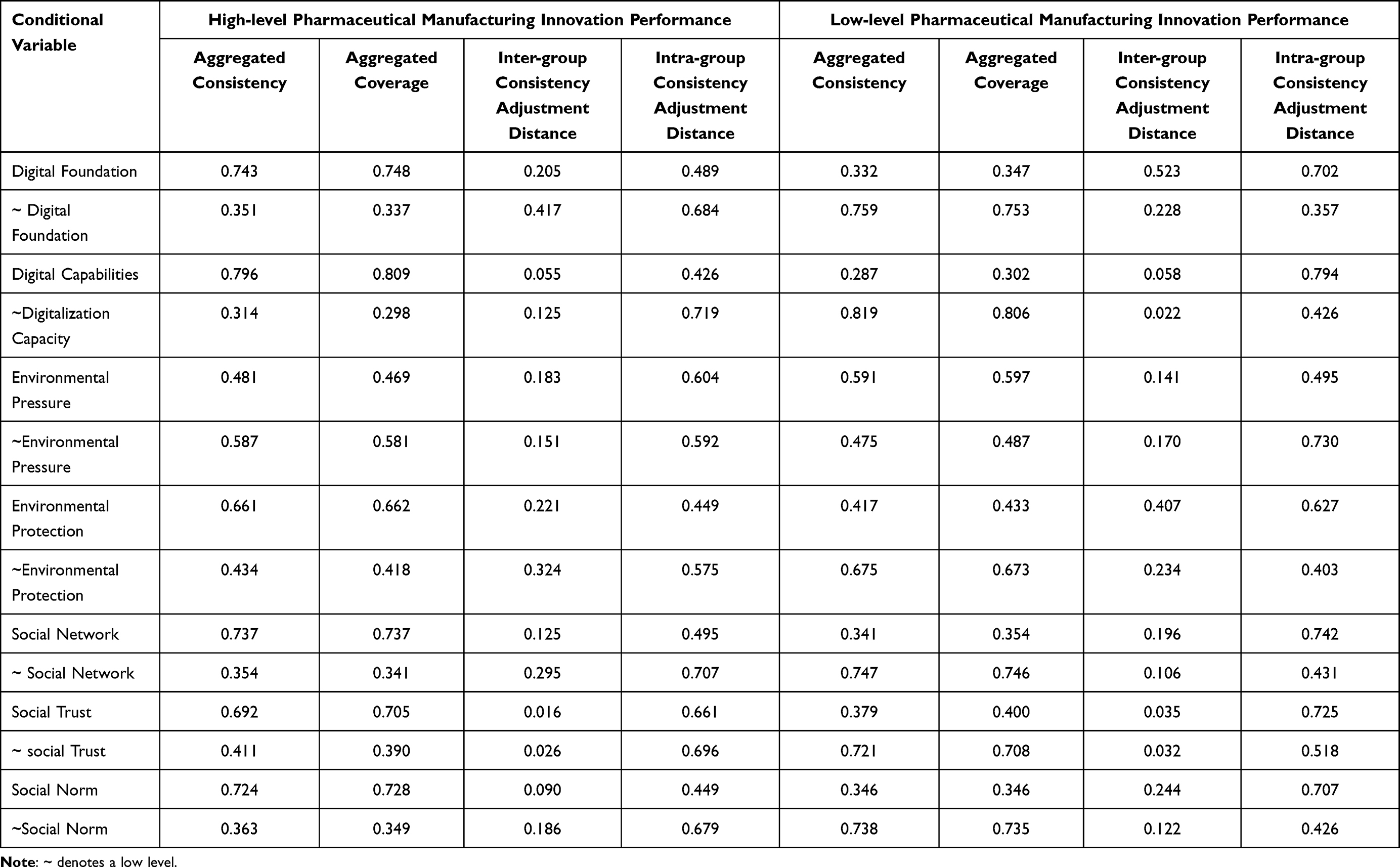 |
Table 4 Results of Necessity Analysis of Conditional Variables |
As indicated in Table 5, first, for situation 4, although the consistency scores for 2015 and 2016 exceed 0.9 with coverage greater than 0.5, the scatterplots for both years reveal a distribution concentrated along the right Y-axis, thereby failing the test for necessity.34 Second, with the exception of situation 4, the consistency scores for the remaining nine conditions across all years are below 0.9, confirming that no relationship of necessity exists for these conditions.34 Notably, regarding digital infrastructure (situation 1), while it does not constitute a necessary condition for high innovation performance in the pharmaceutical manufacturing industry, it exhibited a distinct temporal trend from 2015 to 2020. This mirrors the global trend of digital technology empowering industrial innovation. For instance, developed nations in Europe and North America established digital infrastructure earlier than China, and their pharmaceutical innovation performance has grown steadily alongside the advancement of digitalization.36 This corroborates the universal supporting role of digital infrastructure in industrial innovation. In general, the impact of individual conditions on innovation performance is not independent; rather, these conditions generate a combined effect through linkage and matching. This characteristic is consistent with the principle of multi-factor synergy observed in complex industrial innovation contexts internationally.18
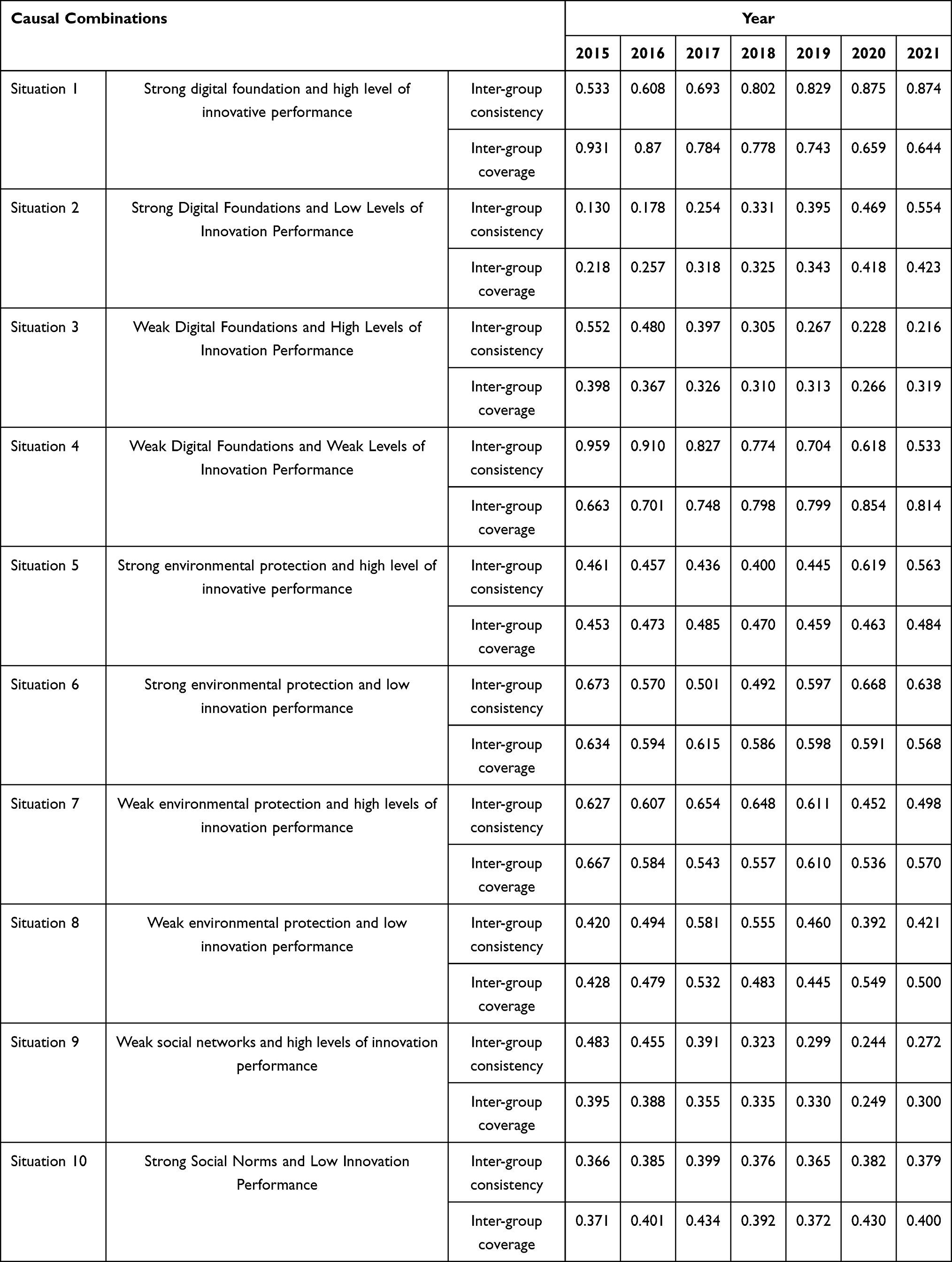 |
Table 5 Data Between Groups with Adjusted Distances Greater Than 0.2 |
Sufficiency Analysis of Conditional Grouping
Configurational analysis examines how different combinations of antecedent conditions impact the outcome. Following the recommendations of Schneider and Wagemann, this study sets the consistency threshold at 0.90, the frequency threshold at 2, and the Proportional Reduction in Inconsistency (PRI) threshold at 0.75.34 Through Enhanced Standard Analysis (ESA), three types of solutions are derived: the parsimonious solution, the intermediate solution, and the complex solution. To distinguish between core and peripheral conditions, the intermediate solution serves as the primary reference, while the parsimonious solution functions as a supplementary guide.
Aggregated Results
Table 6 presents the three configurations driving high innovation performance in the pharmaceutical manufacturing industry. Based on the specific combinations of conditions across dimensions, these configurations are termed the “dual-driven”, “multiple-dominant”, and “balanced coordination” paths. The overall solution PRI is 0.922, the overall solution consistency is 0.938, and the overall solution coverage is 0.511. Specifically, the consistency for each configuration exceeds 0.9, and the intra-group consistency-adjusted distances are below 0.2. The absence of significant temporal or cross-case variations suggests that the aggregated consistency possesses robust explanatory power. Consequently, these three configurations can be regarded as sufficient conditions for generating high innovation performance in the pharmaceutical manufacturing industry.
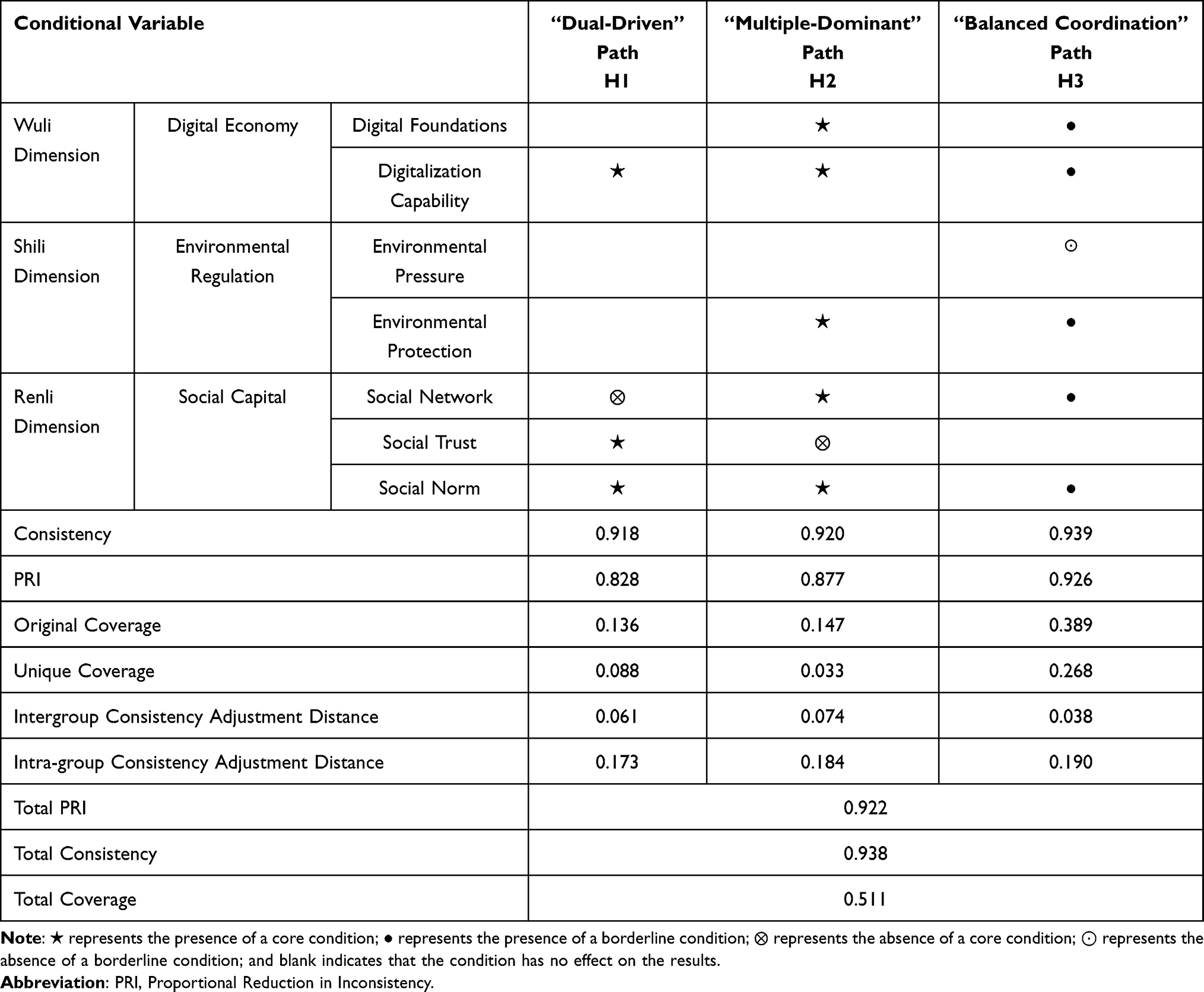 |
Table 6 Results of the Configuration Analysis |
In the “Dual-Driven” model (Configuration H1), digital capability, social trust, and social norms—combined with the absence of social networks—serve as core conditions. Meanwhile, digital infrastructure and environmental regulation do not play a significant role in facilitating high innovation performance in the pharmaceutical manufacturing industry. This configuration suggests that provinces with weak social network relationships can still promote innovation performance by enhancing digital capabilities, social trust, and social norms, irrespective of the status of digital infrastructure or environmental regulation (Figure 2). Specifically, supported by robust digital capabilities, high levels of social trust and social norms facilitate the dismantling of information barriers between diverse stakeholders. This fosters the establishment of communication platforms and strengthens partnerships, thereby enhancing collaborative innovation and improving the sustainable performance of the industry. Sichuan Province serves as a representative case for this path. In 2015, the Sichuan provincial government issued the “Implementation Opinions on Accelerating the Innovation and Development of the Pharmaceutical Industry”, which emphasizes adhering to an innovation-driven strategy, promoting the deep integration of information technology with the pharmaceutical sector, and accelerating industrial transformation to enhance competitiveness. In recent years, Sichuan’s pharmaceutical industry has exhibited a trend of regional agglomeration. The continuous improvement of digital capability, coupled with the interconnection of ecological, talent, and capital elements, has provided a solid foundation for development. This trajectory mirrors the innovation breakthrough path adopted by certain pharmaceutical clusters in India, which rely on technology empowerment and trust-based collaboration. As a developing nation, India also faces the challenge of fragmented social networks; however, it has successfully enhanced the global competitiveness of its generic drug industry by focusing on core technological capabilities and industry standards.37 This validates the applicability of the “Dual-Driven” path for developing regions.
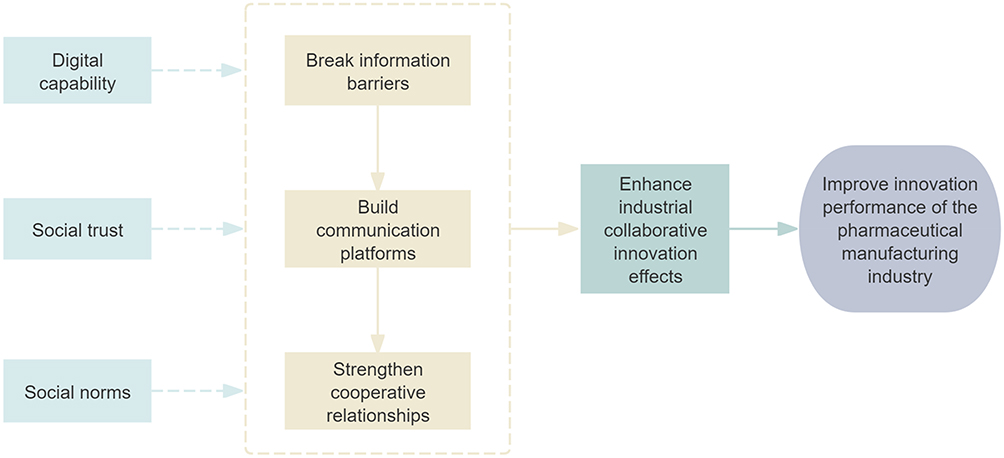 |
Figure 2 Mechanism diagram of configuration H1-Driven innovation performance in pharmaceutical manufacturing. |
In the “Multiple-Dominant” model (Configuration H2), elements of the digital economy, social networks, social norms, and environmental protection serve as core conditions, while the absence of social trust also serves as a core condition. Environmental pressure is irrelevant to this path. This configuration indicates that provinces lacking social trust can still effectively drive innovation performance in the pharmaceutical manufacturing industry by leveraging the digital economy and the synergies between social networks and social norms, irrespective of environmental pressure (Figure 3). Anhui Province serves as a representative case for this configuration. In its pursuit of high-quality development, Anhui has actively integrated into the digital economy strategic hub of the Yangtze River Delta. By leveraging regional coordination mechanisms to aggregate talent, technology, industry, and capital, the province has significantly strengthened its industrial innovation capacity. Simultaneously, Anhui adheres to a strategy of digital leadership and green synergy, promoting digital empowerment in green manufacturing. This “multiple linkage matching” has led to high innovation performance. This trajectory aligns with the industrial development models seen in certain Southeast Asian nations, which compensate for institutional trust deficits through strong regional coordination and policy guidance.38 International experience demonstrates that in contexts with weak foundations of social trust, strengthening regional collaborative networks and implementing stringent environmental regulations can effectively replace the inefficient resource allocation caused by low trust. This principle has been validated by practices in central China and various developing countries.
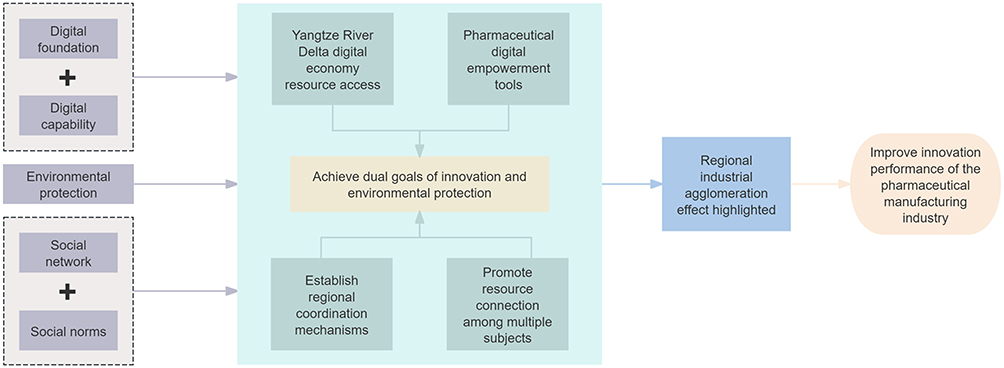 |
Figure 3 Mechanism diagram of configuration H2-Driven innovation performance in pharmaceutical manufacturing. |
In the “Balanced Coordination” model (Configuration H3), digital infrastructure, digital capability, environmental protection, social networks, and social norms appear as peripheral conditions in a balanced, synergistic state. The absence of environmental pressure also functions as a peripheral condition, while social trust is irrelevant. This configuration demonstrates that the digital economy, social networks, social norms, and environmental protection exert synergistic linkage effects to jointly promote innovation performance in the pharmaceutical manufacturing industry (Figure 4). Beijing exemplifies this path. The “14th Five-Year Plan (2021–2025) and Long-Range Objectives Through the Year 2035”, adopted by the Central Committee, emphasizes that the new development concepts—innovation, coordination, green development, openness, and sharing—are intrinsically interconnected. Adherence to these concepts serves as the conceptual guide for promoting high-quality development in the new era.39 Against this backdrop, Beijing, as a pioneer in high-quality development, focuses on integrating intelligent technology with medicine. It has constructed a “technology + pharmaceutical + finance” innovation ecosystem, which aligns with the global industry’s mainstream trend of “technological innovation + green transformation + network collaboration”. This trajectory mirrors the experience of many European countries, which have achieved high-end upgrading of their pharmaceutical industries by improving digital infrastructure, implementing strict environmental standards, and fostering industrial cluster collaboration.36 This consistency highlights the cross-national universality of the “Balanced Coordination” path. Additionally, this path covers nearly 40% of China’s provinces, indicating that multi-factor synergy is a universal principle for pharmaceutical manufacturing innovation.
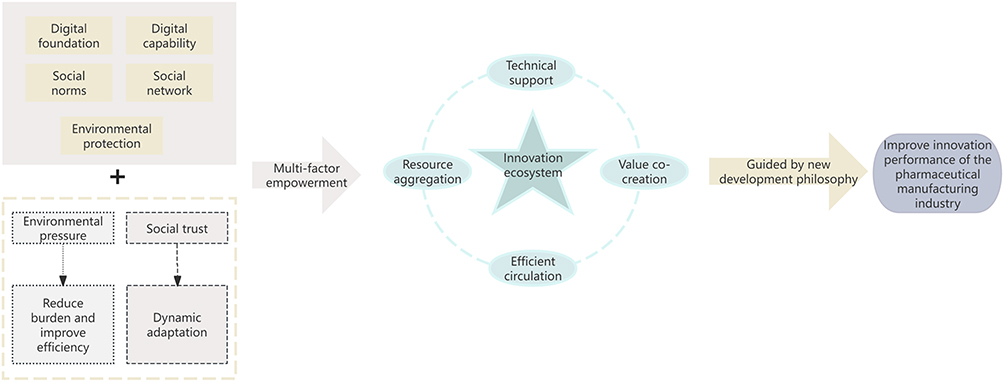 |
Figure 4 Mechanism diagram of configuration H3-Driven innovation performance in pharmaceutical manufacturing. |
Inter-Group Results
Temporal Evolution Analysis Based on the overall inter-group results, the inter-group consistency distances for each configuration are below 0.2, indicating no significant structural shift over time. However, a closer observation of the temporal dynamics reveals a concentrated decline in consistency scores in both 2017 and 2019, contrasting with a peak in 2018. This volatility is likely attributable to specific policy shocks.
In 2017, China comprehensively advanced public hospital reform, abolishing drug markups nationwide. As pharmaceutical price reform entered a critical “deep-water” zone, the revenue growth of the pharmaceutical manufacturing industry slowed. Structurally, this represents a transitory decline driven by healthcare system reform. However, as an industry characterized by weak cyclicality and high policy sensitivity, the sector regained vitality in 2018, supported by a new round of healthcare reforms, environmental policies, and the digital economy. Subsequently, in 2019, the industry faced renewed pressures from policies such as health insurance fee controls, Volume-Based Procurement (VBP), and the Generic Drug Consistency Evaluation (GQCE). These measures intensified downward pressure on drug prices and necessitated higher R&D investment, thereby increasing production costs and causing a short-term decline in profit growth rates.
Similar policy shock effects have been observed internationally. During the Medicare payment reform in the United States and the drug pricing mechanism adjustment in Germany, pharmaceutical industries in both nations experienced short-term fluctuations in innovation performance.40 This indicates that, as a policy-sensitive sector, the stability of the pharmaceutical manufacturing industry’s innovation path is inherently susceptible to dynamic changes in the institutional environment. In the long run, however, these policy adjustments force the industry to transform toward innovation-driven development. This aligns with the evolutionary trajectory of the global pharmaceutical industry: “policy guidance – structural adjustment – innovation upgrading”.36 The phasic fluctuations observed in China’s pharmaceutical manufacturing industry are precisely the embodiment of this universal pattern within the Chinese context (Figure 5).
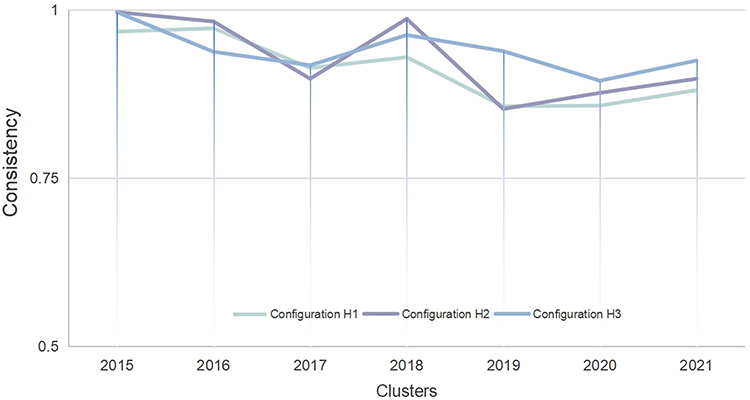 |
Figure 5 Inter-group consistency changes between groups. |
Intra-Group Results
Spatial Heterogeneity Analysis The intra-group consistency results indicate that the configurational paths for China’s provinces remain relatively stable throughout the study period, with no significant differences in explanatory power across most regions. Specifically, the consistency scores for the majority of provinces exceed 0.75, achieving high innovation performance through equifinality (ie, different paths leading to the same destination). Among these, the “Balanced Coordination” path (Configuration H3) is applicable to the largest number of provinces, suggesting that multi-factor synergy is key to promoting high-quality development in the pharmaceutical manufacturing industry. This finding aligns with the experience of global premier pharmaceutical clusters, such as Boston (USA) and Basel (Switzerland). These regions have successfully built sustainable innovation ecosystems by integrating digital technology, environmental governance, and social capital.41 However, a small number of provinces—mainly concentrated in the Western and Northeastern regions, such as Guangxi, Guizhou, Yunnan, Shaanxi, Xinjiang, and Liaoning—exhibit consistency scores below 0.75. This discrepancy is likely attributable to regional economic disparities (Figure 6).
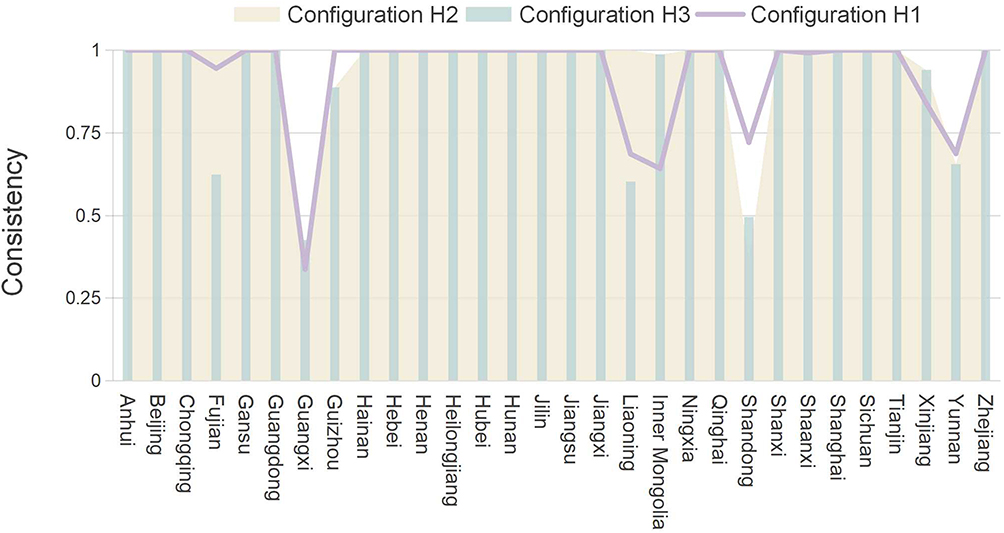 |
Figure 6 Intra-group consistency changes. |
Given the general stability in consistency, the Kruskal–Wallis rank sum test was employed to further examine regional differences in coverage across Eastern, Central, Western, and Northeastern China. The analysis reveals significant spatial heterogeneity in the coverage of Configuration H2 (“Multiple-Dominant”). In contrast, no significant spatial differences were observed in the coverage of Configuration H1 (“Dual-Driven”) or Configuration H3 (“Balanced Coordination”) (Table 7).
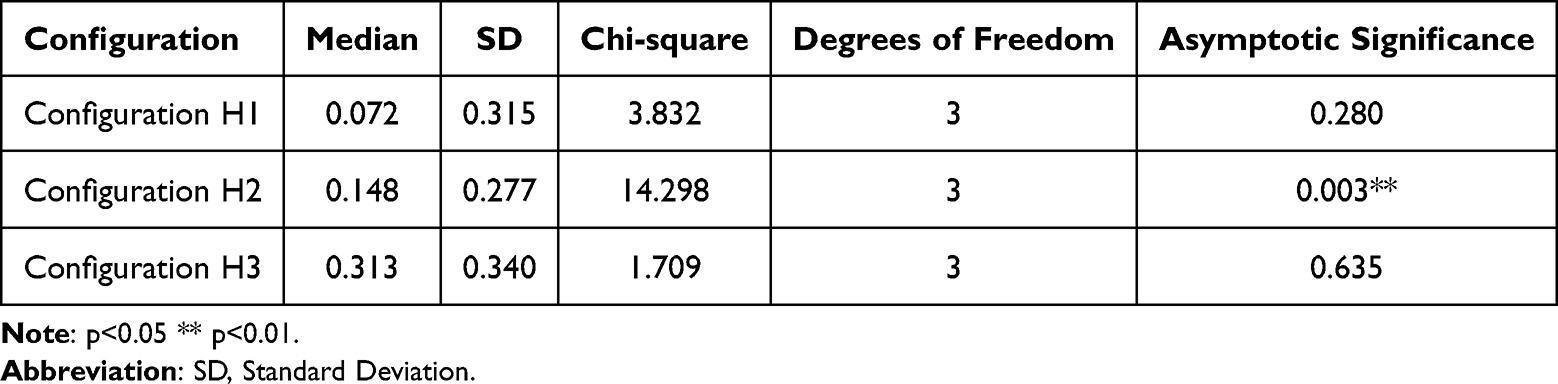 |
Table 7 Kruskal–Wallis Test Results |
Table 8 indicates that the cases explained by Configuration H2 are predominantly concentrated in the Central region. Since the implementation of the “Rise of Central China” strategy, this region has experienced rapid economic development, making a significant contribution to national stability. In recent years, supported by national policies, the Central region has accelerated the adoption of digital, networked, and intelligent technologies, striving to promote the high-quality development of its manufacturing sector. Furthermore, the region has seized new opportunities for high-level opening-up by strengthening inter-regional collaboration and leveraging comparative advantages. By facilitating the smooth flow and rational allocation of diverse resource elements, the region provides critical safeguards—including talent, technology, and information—for the innovative development of the pharmaceutical manufacturing industry. Simultaneously, driven by the strategic shift from a quantity-focused “growth-driven rise” to a “quality-oriented, green rise”, the Central region is actively pursuing sustainable development goals. Consequently, the coordinated development and symbiosis of the digital economy, environmental regulation, and social capital represent an effective pathway for the region’s high-quality development in the new era.
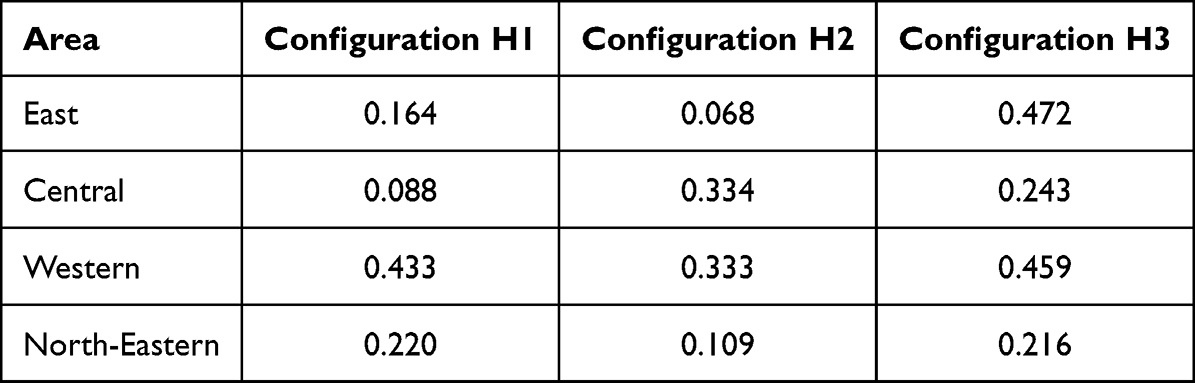 |
Table 8 Regional Path Coverage Mean |
This model offers valuable insights for other developing nations. For instance, certain African countries face similar challenges in their pharmaceutical sectors: regional disparities and fragmented resource distribution. By replicating the “multiple-dominant” path of China’s Central region—specifically by strengthening regional coordination policies and focusing on the integration of core resources—these nations can achieve catch-up development.42
Robustness Test
Following the primary analysis using dynamic QCA, robustness checks were conducted to assess the validity of the configurational paths and examine the sensitivity of the results. This study employed the method of adjusting threshold criteria, specifically increasing the Proportional Reduction in Inconsistency (PRI) threshold from 0.75 to 0.8.43 The resulting configurations remain consistent with the original findings presented in Table 6. This confirms that the analytical results of this study demonstrate robust stability (Table 9).
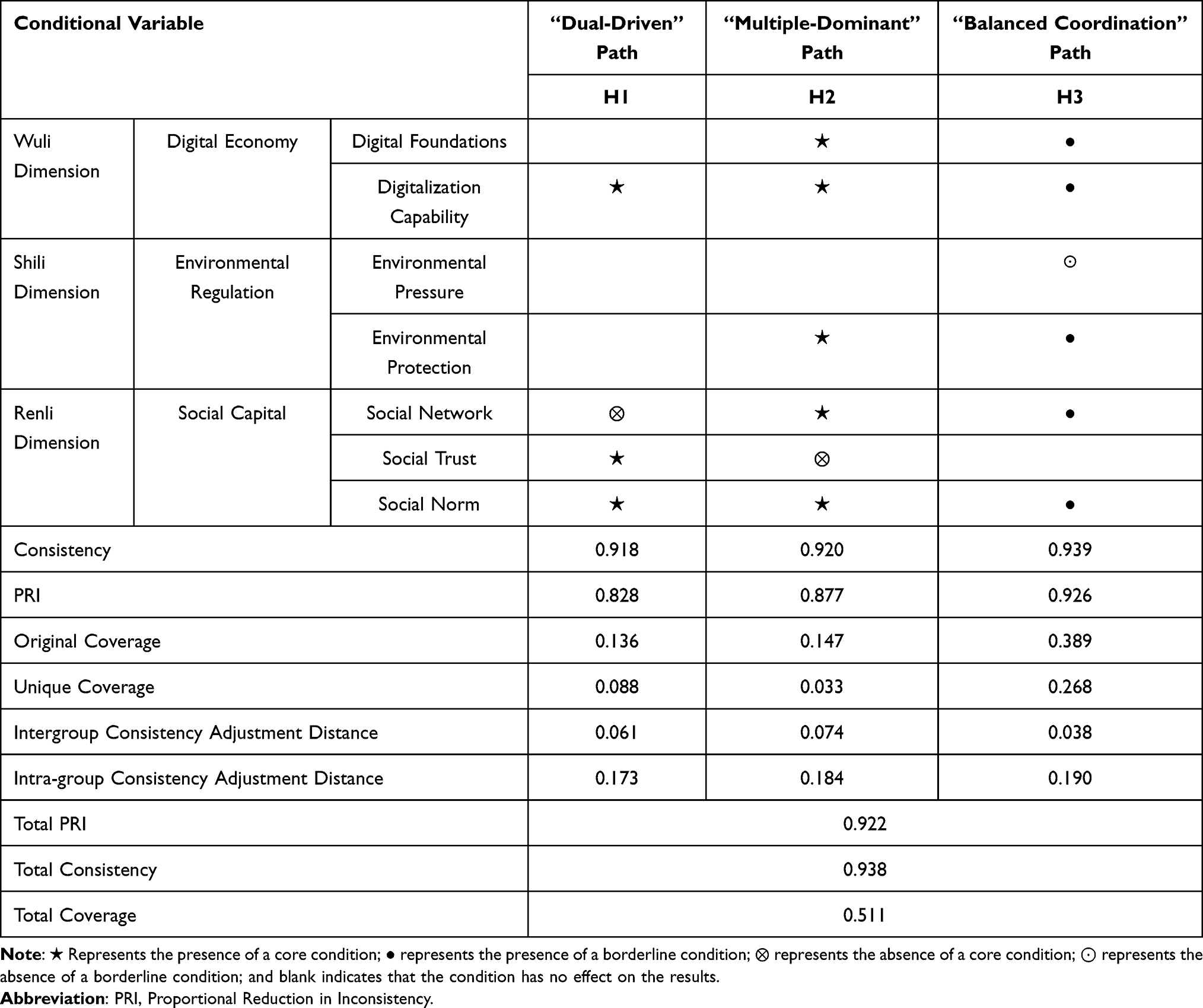 |
Table 9 Robustness Test Results After Threshold Adjustment |
Limitations and Prospects
This study acknowledges several limitations that offer avenues for future research. First, while the theoretical framework constructed based on the WSR methodology incorporates a broad range of influencing factors, certain variables remain unexplored. Future studies should consider a more comprehensive integration of additional factors to deepen the understanding of the synergistic driving mechanisms behind innovation performance. Second, although this study utilized dynamic QCA to reveal the temporal effects on innovation performance, the analysis of spatial heterogeneity was relatively limited. Future research could further explore the application of dynamic QCA in uncovering spatial dynamics or integrate spatial econometric methods. Finally, to ensure data completeness and accuracy, this study relied on provincial panel data with a relatively limited temporal scope. Future research should consider extending the observation period or refining the unit of analysis (eg, to the city or firm level). This would allow for a more comprehensive analysis of long-term development trends and provide more targeted pathways for improving innovation performance in the pharmaceutical manufacturing industry.
Conclusions
This study analyzes panel data from 30 Chinese provinces using dynamic QCA to explore the configurational effects of influencing factors across three dimensions—digital economy (Wuli), environmental regulation (Shili), and social capital (Renli)—on innovation performance. By revealing the core conditions and complex relationships driving high innovation performance in the pharmaceutical manufacturing industry, this study draws the following conclusions:
First, no single variable constitutes a necessary condition for high innovation performance. Instead, three distinct configurational paths emerge, demonstrating equifinality—where diverse approaches lead to the same outcome. These paths essentially represent differentiated combinations of the WSR dimensions: The “Dual-Driven” path relies on the core interplay between the Wuli and Renli dimensions. It overcomes weak social networks by leveraging technological empowerment and the complementarity of trust and norms. The “Multiple-Dominant” path achieves partial synergy among the Wuli, Shili, and Renli dimensions, compensating for deficits in social trust through institutional regulation and network collaboration. The “Balanced Coordination” path achieves comprehensive synergy across all three dimensions, embodying the WSR core principle of “overall optimization”. These paths confirm the multiple-driver logic of innovation in complex systems and reveal the intrinsic mechanism of “mutual complementarity and flexible adaptation” among elements across different dimensions.
Second, temporally, the industry exhibits high policy sensitivity. The concentrated decline in configuration consistency in 2017 and 2019 stems from the transitory impact of dynamic shifts in the Shili dimension (policy shocks), which temporarily disrupted the configurational equilibrium between Wuli and Renli. Spatially, the high coverage of the “Balanced Coordination” path suggests that most regions have established a foundational configuration of WSR elements, enabling them to improve performance through synergistic linkage. In contrast, the concentration of the “Multiple-Dominant” path in Central China reflects an adaptive choice: under strong policy guidance (Wuli and Shili), these regions strengthen regional collaboration (Renli) to offset specific resource constraints. This verifies the constraining effect of regional factor endowments on the selection of WSR configurations.
Third, the integrated WSR and dynamic QCA framework offers a novel paradigm for analyzing complex innovation issues. Ideally, synergy among the digital environment, social capital, and environmental regulation promotes the flow and integration of innovation elements, shaping core competitiveness. However, empirical results show that regions lacking comprehensive advantages can still enhance performance by leveraging their comparative advantages. This provides clear practical guidance for developing countries: rather than pursuing an immediate, perfect balance of all elements, nations with limited resources should select adaptive paths based on their specific factor endowments. Furthermore, developing countries must prioritize the dynamic impact of the Shili dimension, establishing mechanisms to adjust WSR element combinations in response to institutional changes. This approach allows them to leverage local comparative advantages while navigating policy shifts, ultimately achieving steady improvements in pharmaceutical innovation performance.
Policy Recommendations
Cultivate New Competitive Advantages in the Digital Economy to Empower High-Quality Development in the Pharmaceutical Manufacturing Industry
To achieve high innovation performance in the pharmaceutical manufacturing industry, all regions must prioritize the innovation-driving role of the digital economy. Developing countries, in particular, should avoid the indiscriminate pursuit of full digital infrastructure coverage. Instead, priority should be given to the digital transformation of critical segments within the pharmaceutical value chain. For instance, resources should be channeled into building specialized digital platforms for high-value applications, such as drug target screening and clinical trial data analysis. Simultaneously, policy incentives—including tax reductions and special subsidies—should be introduced to foster collaboration between local pharmaceutical enterprises and digital technology firms, thereby rapidly enhancing capabilities in critical value chain activities. Currently, China’s pharmaceutical manufacturing industry remains in the growth phase of technological innovation. Therefore, it is essential to leverage the “dual engines” of digital technology and data factors to promote the deep integration of industrial and digital technologies, thereby injecting sustained momentum into high-quality development.
Prioritize Synergistic Factor Matching and Leverage Comparative Advantages Based on Regional Conditions
Significant heterogeneity exists across China’s regions regarding factor endowments and comparative advantages, leading to diverse configurational paths for achieving high innovation performance in the pharmaceutical manufacturing industry. Consequently, path selection must align with regional realities—a logic that provides critical reference points for other developing countries. Recommendations for Developing Countries: Developing nations should first conduct a diagnostic assessment of local factor endowments from the WSR (Wuli-Shili-Renli) perspective to identify constraints and strengths in the physical (Wuli—digital infrastructure), organizational (Shili—policy capacity), and human (Renli—social capital) dimensions. For countries with robust digital infrastructure but fragmented social networks, the “Dual-Driven” path is recommended. Targeted policies should be formulated to cultivate an industrial trust system and standardized norms—such as establishing credit rating systems for pharmaceutical enterprises and implementing unified quality standard certifications—to compensate for network deficiencies through the optimization of the Renli dimension. For countries with strong policy capacity but insufficient social trust, the “Multiple-Dominant” path is applicable. These nations should strengthen the stringent enforcement of environmental regulations and build regional collaborative networks. Measures such as establishing cross-regional pharmaceutical cooperation funds and formulating unified environmental technology standards can effectively substitute for the lack of trust through the synergy of Shili and specific Renli factors. For countries with a solid development foundation, the “Balanced Coordination” path can be implemented in phases: first, improving digital infrastructure and environmental policy frameworks; second, cultivating social capital through industry associations, industry-university-research alliances, and other platforms; and finally, gradually achieving full synergy among all three dimensions.
Recommendations for Chinese Regions: Regions following the “Dual-Driven” path need to unleash the potential of data factors through the interaction of social capital to enhance technological innovation capabilities. Regions aligned with the “Multiple-Dominant” path should emphasize the digital economy and social capital while strengthening environmental regulation to promote green, high-quality development. Areas adopting the “Balanced Coordination” path should leverage digital economy empowerment to enhance the permeation and diffusion of social capital within innovation factors, balancing technological innovation with ecological protection to generate synergistic innovation effects.
Promote the Open Sharing of Innovation Resources and Facilitate Collaborative Industrial Innovation and Development
In the current developmental phase, the Chinese pharmaceutical manufacturing industry faces challenges such as the scarcity of high-end resources and inefficiencies in factor allocation. Consequently, optimizing resource allocation efficiency has become a critical priority. Regions must fully leverage the digital economy and social capital to promote the open sharing of innovation resources, including talent, capital, information, and technology. It is crucial to accelerate the construction of an enterprise-led, market-oriented innovation ecosystem that deeply integrates industry, academia, and research. By dismantling barriers between innovation stakeholders and deepening collaborative innovation, holistic competitiveness and innovation performance can be enhanced. For developing nations, China’s experience in regional collaboration offers a blueprint for establishing cross-border or intra-regional innovation resource-sharing platforms: In the physical dimension (Wuli): Nations should promote the shared use of pharmaceutical R&D equipment and digital tools within the region to reduce innovation costs for small and medium-sized enterprises (SMEs). In the organizational dimension (Shili): Joint efforts should be made to formulate unified innovation policies and intellectual property rights (IPR) regulations to minimize inter-regional policy barriers. In the human dimension (Renli): The cross-regional flow of technology, information, and talent should be facilitated through mechanisms such as cross-border talent exchange programs and industry association networks. Furthermore, developing countries can leverage their comparative advantages to focus on niche segments and establish specialized industrial clusters—such as those for Active Pharmaceutical Ingredient (API) production and generic drug R&D. This strategy allows them to compensate for overall resource scarcity through resource sharing and collaborative innovation within clusters.
Establish a Dynamic Policy Adjustment Mechanism to Adapt to the Evolution Law of Innovation Paths
The pharmaceutical manufacturing industry is highly sensitive to policy interventions, as evidenced by the volatility in configuration consistency observed in China in 2017 and 2019. Consequently, when formulating innovation policies, developing countries must establish a closed-loop mechanism comprising “policy implementation, impact monitoring, and dynamic adjustment”. First, drawing on lessons from China’s healthcare reform, governments should introduce transitional support mechanisms simultaneously with major regulatory changes, such as health insurance cost-containment or drug price adjustments. Specific measures might include providing phased tax incentives for innovative drug R&D and establishing risk compensation funds. These buffers can mitigate the transitory shocks of policy adjustments on industrial innovation. Second, policymakers must conduct regular assessments of how policies affect the synergistic interaction of WSR factors. If the constraining effect of a specific dimension intensifies—for instance, the underutilization of digital technology (Wuli) or a decline in social trust (Renli)—corrective policies should be promptly introduced to optimize factor combinations. This ensures the stability and sustainability of innovation paths. Through such adaptive governance, nations can create a stable and resilient institutional environment conducive to improving innovation performance in the pharmaceutical manufacturing industry.
Data Sharing Statement
Data are available from the corresponding author on reasonable request.
Funding
The research was funded by the key project of Anhui University Excellent Youth (gxyqZD2021015); Anhui Provincial Department of Education Higher Education Research Program Project (2024AH052720).
Disclosure
The authors report no conflicts of interest in this work.
References
1. Consumer Goods Industry Department, Ministry of Industry and Information Technology. Economic operation of the pharmaceutical industry in 2021. 2022. Available from: https://www.miit.gov.cn/zwgk/zcwj/wjfb/tz/art/2022/art_1d7a5730f52741849531d30165805960.html.
2. Yin Y, Chen P. Digital transformation, operational capability and corporate performance - an empirical analysis based on listed companies in pharmaceutical manufacturing industry. Fr Account. 2024;18:72–21.
3. Wangwang Z, Qunshan T, Shiqi T, et al. Configuration analysis of knowledge advantage on innovation performance in pharmaceutical manufacturing industry under technology-organization-environment framework. Chin J New Drugs. 2024;33(10):961–970.
4. Junjie Y, Yunfei S, Hang Q. The impact of innovation environment on regional innovation performance -Empirical evidence from panel data of China’s pharmaceutical manufacturing industry. J Univ Electron Sci Technol. 2015;17(06):56–63. doi:10.14071/j.1008-8105(2015)06-0056-08
5. Li T, Han D, Liang L, et al. Industry transfer, high-end resource mismatch and innovation performance - A threshold mechanism based on pharmaceutical manufacturing data. Syst Eng. 2019;37(05):62–70.
6. Luo G. Research on Measuring the Impact of Digital Economy on the High-Quality Development of Pharmaceutical Manufacturing Industry. Jiangxi University of Finance and Economics; 2023. doi:10.27175/d.cnki.gjxcu.2023.000669
7. Jing J. Research on the impact of digital transformation on enterprise performance. Inner Mongolia University of Science and Technology; 2023. DOI:10.27724/d.cnki.gnmgk.2023.000045.
8. Lai H, Chu Y. Research on the impact of environmental regulation policy evolution on the innovation efficiency of China’s pharmaceutical manufacturing industry. Technol Innov Manag. 2019;40(04):405–410. doi:10.14090/j.cnki.jscx.2019.0402
9. Chen X, Wang J, Wang Q, et al. Impact of non-R&D innovation on innovation performance in China’s pharmaceutical manufacturing industry. Med Herald. 2021;40(07):977–983.
10. Xu J, Wang X, Liu F. Government subsidies, R&D investment and innovation performance: analysis from pharmaceutical sector in China. Technol Anal Strat Manage. 2020;33(5):535–553. doi:10.1080/09537325.2020.1830055
11. Zhang L, Li S, Wu M. Executive pharmaceutical background, R&D investment and corporate innovation performance. Am J Transl Res. 2023;15(11):6576–6586.6576–6586. PMID: 38074834; PMCID: PMC10703667.
12. Fan Y, Linjun L. The contribution of network organization to technological innovation-taking chinese pharmaceutical industry as an example. Times Finance. 2016;27:284–285+288.
13. Tang X, Zhang R. Research on the influencing factors and mechanism of innovation performance of listed companies in pharmaceutical manufacturing industry. Accounting China Township Enterprises. 2019;10:71–72.
14. Hsu H, Li S, Liu J, et al. A study on the impact of firms’ network location on innovation performance under the perspective of cooperative network--The pharmaceutical manufacturing industry as an example. Sci Technol Manag Res. 2023;43:143–154.
15. Lu R, Zhang L, Chen X, et al. Science-based research on the configuration and path of factors influencing industrial development--QCA analysis of pharmaceutical manufacturing industry in 31 provinces in mainland China. Sci Technol Prog Countermeas. 2022;39:20–28.
16. Wang J, Li M. The configuration path of high quality development of pharmaceutical manufacturing enterprises under the TOE framework--Based on fsQCA and NCA mixed research method. J Cent South Univ Natl. 2024;44:148–160+187–188. doi:10.19898/j.cnki.42-1704/C.20240831.07
17. Wang H, Zhou X, Xia T, Zhang Z. High innovation efficiency model of industrial innovation laboratory--a configuration analysis based on the theory of “wuli-shili-renli”. Sci Technol Manag Res. 2022;42:71–78.
18. Garcia-Castro R, Ariño A. A general approach to panel data set-theoretic research. J Adv Manag Sci Inf Syst. 2016;2:526.
19. Gu J, Zhu Z. Knowing Wuli, sensing Shili, caring for Renli: methodology of the WSR approach. Syst Pract Action Res. 2000;13:11–20. doi:10.1023/A:1009567421256
20. Zhu Z. Dealing with a differentiated whole: the philosophy of the WSR approach. Syst Pract Action Res. 2000;13:21–57. doi:10.1023/A:1009519505326
21. Gong M, You Z, Wang L, et al. Environmental regulation, trade comparative advantage, and the manufacturing industry’s green transformation and upgrading[. Int J Environ Res Public Health. 2020;17(8):2823. doi:10.3390/ijerph17082823
22. Putman R. Making Democracy Work: Civic Traditions in Modern Italy. Princeton University Press; 1993.
23. Zhang Q. Research on social capital and performance of state-owned enterprises. Contemp Finance Econ. 2000;1:53–58.
24. Zhu W, He Y. Social capital and the expansion of the horizon of economic analysis. Dyn Econom. 2005;4:81–85.
25. Zhang C, Dongchuan S. Some concepts and understanding of WSR methodology. Syst Eng. 2001;06:1–8.
26. Zou Z, Chen X. The impact of foreign direct investment on technological innovation and high-quality economic development and its mechanism of action--Based on the moderating role of environmental regulation. Res Manag. 2023;44:165–175.
27. Song J, Chen J. Exploration of dimensions and scale development of service capability of manufacturing companies under WSR framework. Manage Rev. 2021;33(05):87–96.
28. Guo T, Zhong S, Hu M. Measuring the impact of digital economy on industrial structure upgrading of pharmaceutical manufacturing industry. Finance Econ. 2022;(09):62–71.
29. Zhao W. The impact of science and technology innovation on the high-quality development of the distribution industry - the mediating effect of logistics efficiency and the moderating effect of environmental regulation. Res Bus Econ. 2023;19:29–32.
30. Qiao P. Environmental regulation, foreign direct investment and high-quality development of green economy. Tech Econ Manag Res. 2023;09:110–115.
31. Zeng K, Luo N. Social capital and industrial restructuring: An analysis based on regional and structural effects. China Soft Science. 2017;04:66–79.
32. Zhang W, Ke R. Trust and its explanation: A cross-provincial survey analysis from China. Econ Res. 2002;10:59–70+96.
33. Guedes MJ, da Conceição Gonçalves V, Soares N, Valente M. UK evidence for the determinants of R&D intensity from a panel fsQCA. J Bus Res. 2016;69:5431–5436. doi:10.1016/j.jbusres.2016.04.150
34. Schneider CQ, Wagemann C. Set-Theoretic Methods for the Social Sciences: A Guide to Qualitative Comparative Analysi. Cambridge University Press; 2012.
35. Boschma R, Frenken K. Evolutionary economic geography. New Oxf Handb Econ Geogr. 2018;213–229.
36. Brown K, Green P. Digital transformation and green upgrading of global pharmaceutical clusters. Glob Health Innov. 2019;6(4):51–68.
37. Patel P, Kumar S. Technological empowerment and trust collaboration: the Indian generic pharmaceutical industry’s innovation path. J Asian Econ. 2020;68:101289.
38. Tanaka Y, Sato M. Regional coordination and policy guidance: pharmaceutical industry development in Southeast Asia. Asian J Technol Innovation. 2021;29(1):34–51.
39. CPC central committee’s proposal on formulating the 14th five-year plan for national economic and social development and the visionary goals for the 2035 period. People’s Daily,2020-11-04(001). DOI:10.28655/n.cnki.nrmrb.2020.010934.
40. Smith JD, Lee SH. Policy shocks and pharmaceutical innovation performance volatility. J Med Ind Res. 2021;38(5):124–139.
41. Carter A, White D. Sustainable innovation ecosystems in global pharmaceutical hubs: boston and basel cases. Res Policy. 2018;47(9):1689–1702.
42. Okonjo-Iweala N, Moyo S. Latecomer catch-up strategies for pharmaceutical innovation in Africa. World Dev. 2019;121:289–302.
43. Rihoux B, Ragin CC. Configurational Comparative Methods: Qualitative Comparative Analysis (QCA) and Related Techniques. Sage Publications; 2008.
 © 2026 The Author(s). This work is published and licensed by Dove Medical Press Limited. The
full terms of this license are available at https://www.dovepress.com/terms
and incorporate the Creative Commons Attribution
- Non Commercial (unported, 4.0) License.
By accessing the work you hereby accept the Terms. Non-commercial uses of the work are permitted
without any further permission from Dove Medical Press Limited, provided the work is properly
attributed. For permission for commercial use of this work, please see paragraphs 4.2 and 5 of our Terms.
© 2026 The Author(s). This work is published and licensed by Dove Medical Press Limited. The
full terms of this license are available at https://www.dovepress.com/terms
and incorporate the Creative Commons Attribution
- Non Commercial (unported, 4.0) License.
By accessing the work you hereby accept the Terms. Non-commercial uses of the work are permitted
without any further permission from Dove Medical Press Limited, provided the work is properly
attributed. For permission for commercial use of this work, please see paragraphs 4.2 and 5 of our Terms.