
Back to Journals » Journal of Multidisciplinary Healthcare » Volume 18
Perceptions of Traditional Chinese Medicine, Clinical Practice Experiences, and Teaching Feedback of Diabetes Specialist Nurses: A Qualitative Study
Authors Wang J, Ben S, Li H, Wang H  , Zhang Y, Ni Y, Zhao H
Received 28 May 2025
Accepted for publication 21 October 2025
Published 30 October 2025 Volume 2025:18 Pages 7035—7047
DOI https://doi.org/10.2147/JMDH.S535190
Checked for plagiarism Yes
Review by Single anonymous peer review
Peer reviewer comments 2
Editor who approved publication: Dr Scott Fraser
Jing Wang,1,* Shiyan Ben,2,* Huiqin Li,2,* Hui Wang,2 Yuyao Zhang,2 Yingqun Ni,1 Hong Zhao3
1Department of Endocrinology, the First Affiliated Hospital of Anhui University of Chinese Medicine, Hefei City, Anhui Province, 230031, People’s Republic of China; 2School of Nursing, Anhui University of Chinese Medicine, Hefei City, Anhui Province, 230012, People’s Republic of China; 3Department of Nursing, the First Affiliated Hospital of Anhui University of Chinese Medicine, Hefei City, Anhui Province, 230031, People’s Republic of China
*These authors contributed equally to this work
Correspondence: Hong Zhao, Department of Nursing, the First Affiliated Hospital of Anhui University of Chinese Medicine, No. 117 Meishan Road, Hefei City, Anhui Province, People’s Republic of China, Tel +86152-5516-2578, Email [email protected]
Objective: To explore diabetes specialist nurses’ perceptions of traditional Chinese medicine, their clinical practice experiences, and feedback on the teaching model.
Methods: The study conducted semi-structured qualitative interviews with 21 diabetes specialist nurses who were trained in traditional Chinese medicine nursing, using purposeful sampling. Data were analyzed using traditional content analysis. The Consolidated Criteria for Reporting Qualitative Research (COREQ) checklist for qualitative research was used.
Results: Three themes were distilled: A layer-by-layer deepening of traditional Chinese medicine perception, clinical practice experience of traditional Chinese medicine nursing in diabetes and feedback on teaching traditional Chinese medicine clinical practice to diabetes specialist nurses.
Conclusion: The province’s diabetes specialist nurse base training program, integrating Chinese and Western medicine, has enhanced the knowledge of traditional Chinese medicine nursing among specialist nurses and is highly regarded for its clinical practice experience. It also promotes the dissemination of traditional Chinese medicine culture. However, further optimization, such as extending the duration of clinical practical training in traditional Chinese medicine nursing for diabetes, is needed to meet the demand for high-quality training of diabetes specialist nursing personnel integrating Chinese and Western medicine.
Keywords: diabetes specialist nurse, perception, traditional Chinese medicine clinical practice, teaching feedback, qualitative study
Introduction
According to the International Diabetes Federation (IDF) Diabetes Atlas, the global prevalence of diabetes is projected to increase significantly in the coming decades. Projections indicate a global prevalence of diabetes that is expected to rise to 12.2% (783.2 million people) by 2045.1 This growth trend highlights the urgent need for effective diabetes management strategies. Nurses, especially diabetes specialist nurses (DSNs), play a crucial role in diabetes management. DSNs provide specialized care to patients through clinical skills, educational support, psychological interventions, and interdisciplinary communication and collaboration. The survey results indicate that patients who received education on the management of diabetes from a DSN have demonstrated an enhancement in their proficiency in insulin injection.2
Internationally, the management of type 2 diabetes (T2D) has seen significant advancements, particularly in the areas of lifestyle modification and multidisciplinary care. Recent studies have highlighted the importance of Lifestyle Medicine Case Manager Nurses in providing comprehensive care for T2D patients.3 In addition, a Case Manager Led Multi-Disciplinary Team Approach is effective in improving glycemic control in T2D patients in primary care settings.4 A systematic review concluded that nurse-led programmes significantly improved diabetes self-management behaviors, glycemic control, and quality of life in patients with T2D.5 Nevertheless, the limitations of the Western medical model in addressing symptoms and quality of life persist. This underscores the necessity for an integrated approach that incorporates both Western and traditional Chinese medicine (TCM), thereby ensuring a comprehensive therapeutic regimen.
TCM, with its holistic concept and evidence-based system combined with its long history of clinical practice, can comprehensively regulate the body’s metabolism. It has been demonstrated that TCM techniques, including the TCM acupuncture point patch, moxibustion, and ear acupuncture point, have the capacity to ameliorate symptoms and assist in the regulation of blood glucose, thereby aiding in the prevention of diabetes complications.6 The integration of TCM content into the training program for DSNs signifies a significant advancement in the realm of chronic disease management. The combined application of TCM evidence-based care based on Western medical nursing reduces blood glucose levels and demonstrates the value of improving anxiety and depression scores and quality of life in diabetic patients.7
China currently has the largest number of people with diabetes in the world, which places enormous pressure on the public health system.8 The training of DSNs in both TCM and Western medicine nursing skills is imperative to address this challenge. While there have been studies on the clinical practice training of TCM for DSNs in China, the cultivation of their TCM clinical thinking has been limited by the teaching model. This model does not include specific clinical practice experiences and related feedback for DSNs.9 Consequently, it is imperative to incorporate training with TCM elements and characteristics into the clinical practice training of DSNs. The prevalence of T2D in the elderly population is higher than in other age demographics. This condition is intricate and frequently presents with multiple complications.10 It has been demonstrated that elderly patients suffering from T2D frequently exhibit cognitive decline, memory loss,11 and non-adherence to medical regimens when compared to adult patients.12 Consequently, it is more clinically valuable to explore the practical training of TCM for geriatric diabetes, and TCM nursing can be metabolically adjusted to the overall condition of elderly patients, which provides a reference for the subsequent construction of a higher-quality TCM clinical practice training method for DSNs. This study adopts a qualitative approach to explore the actual feelings of DSNs trained in TCM nursing on the perception, clinical practice, and teaching mode of TCM culture in the process of TCM nursing for elderly diabetic patients. The objective is to provide references for the subsequent promotion of TCM culture and the construction of a higher-quality training method for TCM nursing practice.
Methods
Study Design
This qualitative study employed semi-structured in-depth interviews and thematic analysis to comprehensively examine perceptions of TCM, clinical practice experiences, and teaching feedback of DSNs. In accordance with the Consolidated Criteria for Reporting Qualitative Research (COREQ) checklist,13 the research methodology was meticulously designed to ensure a comprehensive exploration of this subject. The detailed items are listed in the Supplementary material “COREQ: 32-item checklist 535190” attached to the article.
Interview Outline Design
The objective of this study is to undertake a preliminary investigation into the TCM learning experience of DSNs. Given the paucity of research in this area and the absence of established theoretical frameworks to inform the study, the interview outlines were meticulously designed to prioritize the research questions, incorporating open-ended inquiries to maximize the acquisition of information and to establish the foundation for subsequent theoretical constructs.
To conduct in-depth interviews with DSNs, this study conducted an interview outline design based on a progressive design from three stages: perceptual stage, practical training experience stage, and practical training feedback stage.
Following the literature review and analysis and expert group discussion, the interview outline was initially drawn up. Pre-interviews were conducted with two DSNs who met the entry criteria, and the final outline was revised and completed by combining the results of the pre-interviews and the opinions of the two senior DSNs (Table 1).
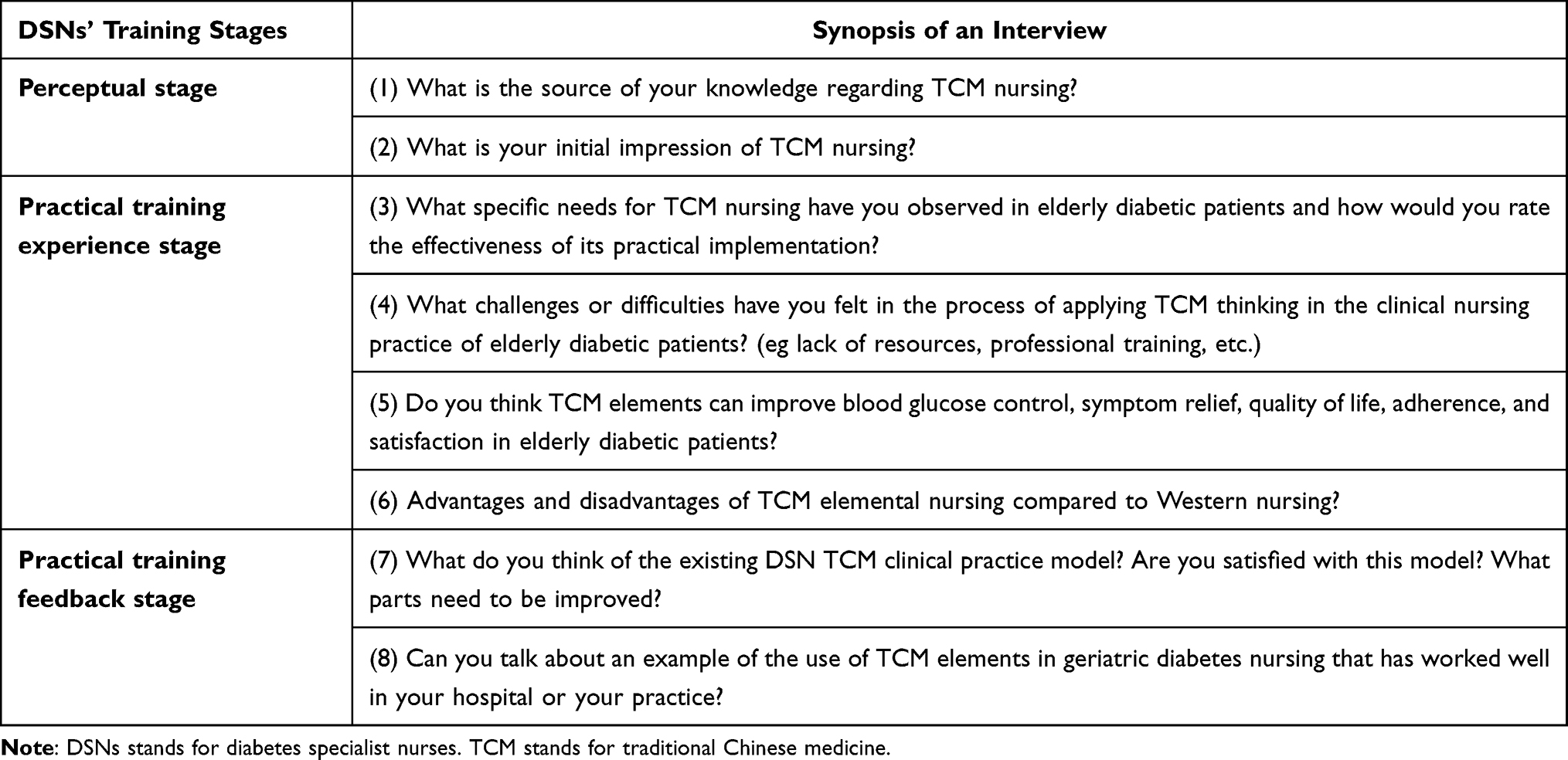 |
Table 1 Semi-Structured Interview Outlines |
Recruitment
Twenty-one DSNs who came to the First Affiliated Hospital of Anhui University of TCM (the training base for DSNs in Anhui Province) to learn TCM nursing knowledge from August to December 2024 were selected as study subjects (Table 2). The sample size was determined based on the principles of saturation theory, which suggests that data collection should continue until no new information or themes emerge. This approach is predicated on the principle of ensuring that the sample size is sufficiently large to capture the diversity of experiences and perceptions among DSNs, while maintaining the feasibility of the study.14 A substantial body of research has demonstrated that a sample size of 20 to 30 participants is frequently sufficient to attain saturation in qualitative study, particularly in the context of exploring intricate phenomena such as the integration of TCM and Western medicine in nursing practice.15,16
 |
Table 2 Eligibility Criteria for DSNs |
Data Collection
This study utilized one-on-one face-to-face interviews. Shiyan Ben, a female nursing postgraduate student with specialized training in qualitative interviewing, conducted all interviews individually. The interviews consisted of two parts. The first part collected socio-demographic details of DSNs. The second part was an in-depth interview based on a semi-structured interview outline in order to gain a deeper understanding of DSNs’ perceptions of TCM, clinical practice experiences, and feedback on the teaching model. Before the interview, the purpose and content of the interview were explained to the DSNs based on obtaining her informed consent, and she was encouraged to express her true feelings. Three DSNs were also selected for pre-interviews prior to the formal interviews. The interview was conducted in the conversation room of the training base, which was quiet and private, and lasted for 20–40 minutes; the whole interview was recorded. The interview process is designed to ensure continuity and completeness, with particular attention paid to the recording of non-verbal signals such as tone of voice, facial expressions, and body movements of the DSNs interviewed. The correct application of communication skills is imperative, with the use of baiting language being avoided. The interview should be concluded when no further novel information has been forthcoming. All DSNs were interviewed in full and the interviews were complete.
Data Analysis
The audio recordings were synchronized and verified by two researchers after the interviews were completed, and the recordings were converted into manuscripts within 24 hours. And the formed audio transcript will be checked against the DSNs. For ambiguous responses, follow-up questions were conducted to verify the responses of the interviewed DSNs. And, all DSNs in this interview answered clearly and did not involve repeat interviews. The collation of the manuscript data was conducted through the utilization of traditional content analysis,17 with subsequent analysis being facilitated by the NVivo 12.0 qualitative analysis tool (a total of 38 codes were formed). Finally, the groups discussed the results of the analysis. They incorporated feedback from the interviewed DSNs to coalesce ideas and refine them to determine the final theme refinement plan.
Quality Control
To exercise control over the quality of the interviews and ensure the authenticity and rigor of the results, the following principles will be observed during the interview process: The interviewer has undergone systematic qualitative study training and possesses extensive clinical work experience. The interviewer establishes a positive nurse-patient relationship with the DSNs before the interview and thoroughly informs the patient of all aspects of the study to facilitate the expression of the DSNs’ genuine thoughts. The audio-recorded material was transcribed and analyzed in pairs. This was done within 24 hours of the interview. In the case of dissenting views, the 3rd party will adjudicate through group discussion.
Results
DSNs Characteristics
This study included a total of 21 DSNs, numbered P1 to P21. Their demographic characteristics are as follows: All DSNs were female, aged between 26 and 48 years (mean age 33.29 ± 4.10 years). All DSNs had a nursing background and had been engaged in specialized nursing for 4 to 13 years (mean 8.57 ± 2.98 years). In terms of workplace location, 9 DSNs (42.9%) worked in county hospitals, while 12 DSNs (57.1%) worked in municipal hospitals. In terms of job title, 14 DSNs (66.7%) were nurses in charge, and 7 DSNs (33.3%) were nurses. In terms of educational background, 20 DSNs (95.2%) held a bachelor’s degree, while 1 DSN (4.8%) held a college degree. In terms of TCM background, 6 DSNs (28.6%) had received TCM studies, while 15 DSNs (71.4%) had not received TCM studies. These results indicate that most DSNs have not received systematic studies in TCM, and there is an urgent need for studies in TCM theory and skills (Table 3).
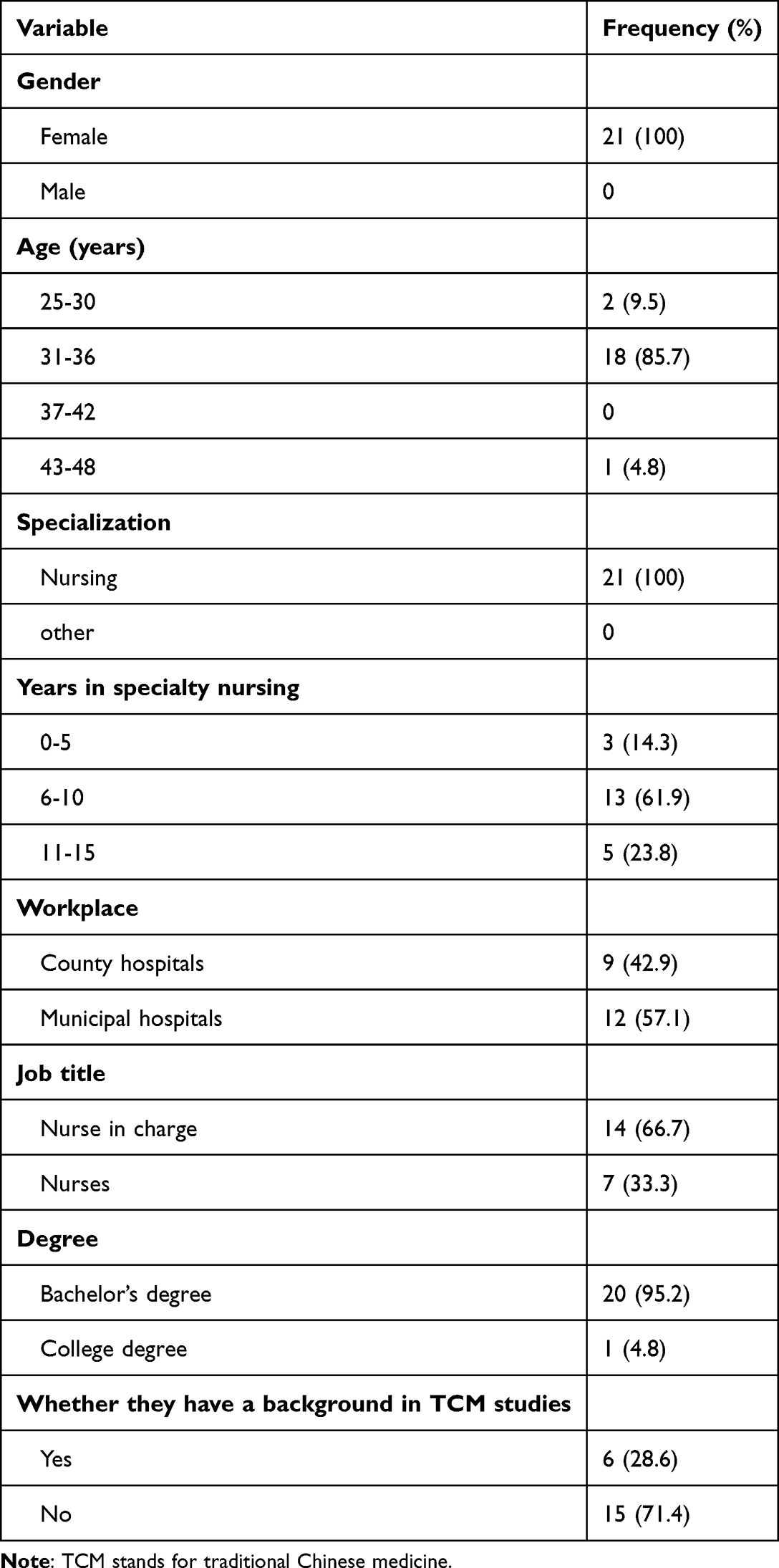 |
Table 3 DSNs’ Characteristics (n=21) |
Theme Concise Way
The theme of this study is closely related to the design of the interview outline, which is based on the three stages: “perceptual stage, practical training experience stage, and practical training feedback stage”. It is developed from the three core terms of perception, practical training and practical training feedback, with a few adjustments to the specific content (Table 4).
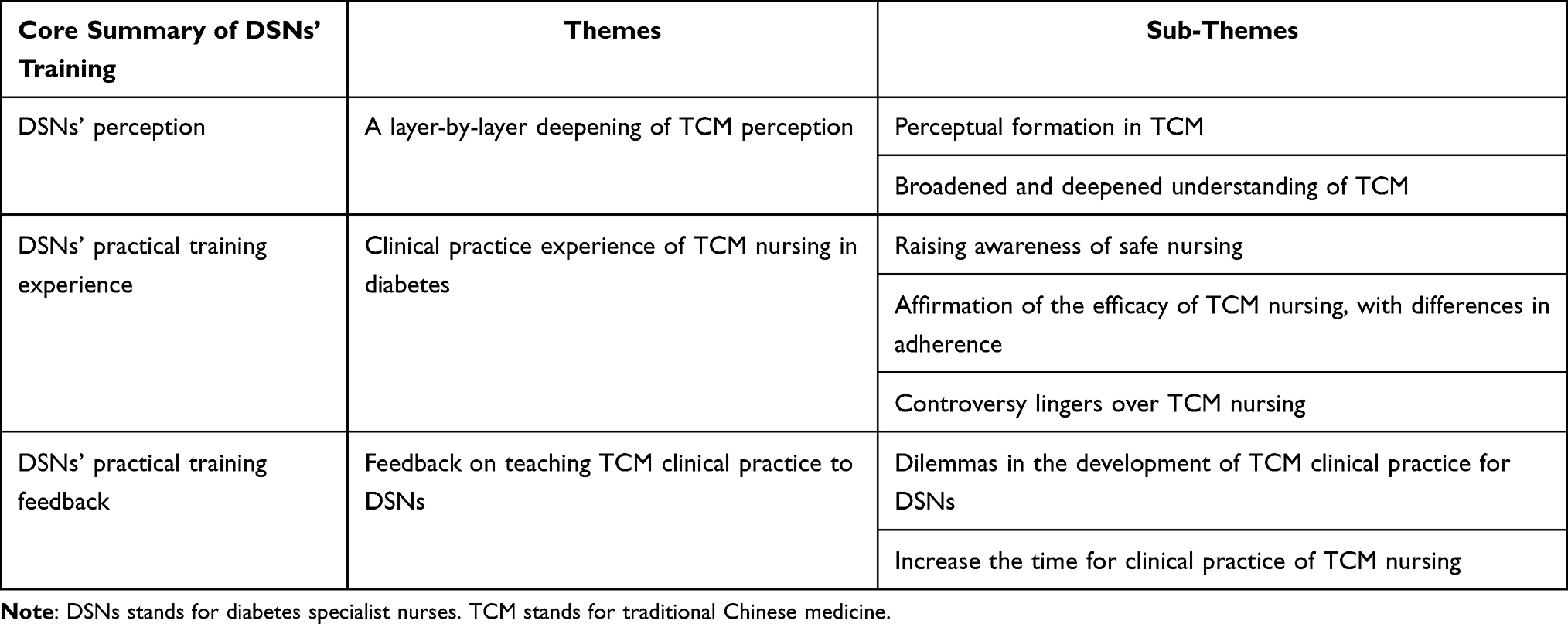 |
Table 4 Theme Summary |
Theme 1: A Layer-by-Layer Deepening of TCM Perception
Perceptual Formation in TCM
In recent years, the promotion of TCM culture has given impetus to the development of TCM, and the influence of TCM culture has been gradually expanded. Moreover, the application of TCM nursing techniques in the clinic has been gradually explored and discussed by an increasing number of researchers. The interviewed DSNs indicated that they had more or less heard about or experienced these techniques.
I’ve only heard about it in my normal life and work, but it was mainly when I came here and trained as a DSN that I started to get a deeper understanding of it. (P1)
The first contact is in life, their own experience of gua sha, massage, and so on, after having done the body feels more relaxed and soothed. (P12)
However, the initial impression of the DSNs interviewed was predominantly “magical and profound”, while some described it as “metaphysical”, which reflected the perception of TCM nursing as somewhat one-sided in the public’s eye. The underlying reason for this phenomenon is that the predominant form of medicine in contemporary society remains Western medicine. The majority of the DSNs who participated in the study were recruited from Western hospitals and had limited exposure to TCM nursing, if any. Consequently, their perceptions and assessments of TCM nursing frequently remained at a superficial and subjective level.
I’ve always found TCM esoteric, but to be honest, I didn’t feel very able to learn and understand it at first. (P8)
I feel that some of the effects of TCM are still very immediate, but I used to feel that TCM was very mysterious before I came here. (P18)
Broadened and Deepened Understanding of TCM
The interviewed DSNs indicated that their understanding of TCM had undergone a significant transformation from a superficial to a profound level through systematic and professional training in clinical TCM practice. This transformation occurred as a result of combining theoretical learning and practical operation. Interviewed DSNs learned that external treatments of TCM nursing, such as tuina and cupping, can significantly relieve symptoms and improve quality of life at the same time, as well as reduce the side effects of internal medication, especially for elderly patients with coexisting diabetes.
I think what’s special about TCM is that it’s mostly non-invasive topical techniques, which are less traumatic. (P7)
In TCM, the emphasis is on holistic treatment, and then the overall adjustment of the disease. (P14)
A notable example of this is TCM, which is characterized by its targeted approach, its use of evidence-based practices, and its emphasis on individualization in treatment. (P17)
Theme 2: Clinical Practice Experience of TCM Nursing in Diabetes
Raising Awareness of Safe Nursing
The primary objective of nursing practice is to mitigate safety risks, which forms the foundational principle underpinning the enhancement of the quality of nursing services. In the course of interviews, DSNs indicated that, in integrating the characteristics of elderly diabetic patients, such as sensory decline and vascular nerve damage, TCM nursing techniques must pay particular attention to the safety of the operation, especially with regard to temperature, in order to prevent burns.
It is the older patients who feel sluggish, compared to young people, which has declined, the implementation of moxibustion, and Chinese herbal hot compress pack, when to strengthen the patrol observation. (P10)
Affirmation of the Efficacy of TCM Nursing, with Differences in Adherence
The development and popularity of TCM have resulted in an enhancement of cultural confidence among a greater number of individuals. This is further compounded by the repetitive nature of elderly diabetic patients’ visits to the clinic, which engenders an increased awareness of the efficacy of TCM care and facilitates the articulation of their affirmation of TCM nursing.
Diabetes combined with herpes zoster can be used with hibiscus cream and Manchurian wild ginger (a Chinese herbal medicine) externally applied to the wound; the patient reflected that the pain-relieving effect is good. (P7)
The practice of auricular point bloodletting therapy has been utilized as a therapeutic modality for elderly diabetic patients afflicted with headaches, toothaches, or ocular manifestations, such as swelling and blurring of the eyes. This approach has been demonstrated to yield immediate results. At the same time, auricular acupoint bean burrowing has an outstanding effect on the improvement of insomnia. (P 20)
Although TCM nursing is widely recognized by patients, the interviewed DSNs indicated that some patients are still reluctant to receive TCM nursing due to the drawbacks of TCM nursing and other factors during its specific implementation.
My feeling is that there are older diabetic patients who are just very receptive, and there are patients who are just maybe a little bit less sure about the effects of this, and then the receptivity is just very poor. (P2)
Elderly diabetic patients are highly receptive to TCM techniques and are more interested in TCM rehabilitation. However, the slowness of TCM in lowering blood sugar combined with individual differences and other factors makes some elderly diabetic patients unable to persist in completing the course of treatment. (P14)
Based on this, some interviewed DSNs said that Chinese and Western medicines have their strengths and weaknesses and that they should take the strengths of both, make up for their respective deficiencies, and form a new treatment system to better meet the needs of patients as well as to adapt to the needs of modern medicine.
I hope I can carry out at least one TCM treatment when I get back. (P3)
Controversy Lingers Over TCM Nursing
Interviewed DSNs said that TCM is a system of medicine with a long history in China. It is a scientific and effective form of treatment in clinical practice, and many patients have expressed their satisfaction with its efficacy. However, due to its shortcomings, such as the slow onset of action and the poor results it can produce, it has led to a degree of patient distrust.
The disadvantage of TCM is that it is slow to lower blood sugar. (P10)
The drawback of TCM nursing is that some TCM techniques, such as auricular points bean-pressing, are applied, and many patients are not sure whether it works or not. (P16)
Effectiveness ratings are all subjectively stated by the patient, without a scale or objective test indicator to compare. (P17)
Theme 3: Feedback on Teaching TCM Clinical Practice to DSNs
Dilemmas in the Development of TCM Clinical Practice for DSNs
The feedback from the DSNs interviewed highlighted three key issues. Firstly, there was limited theoretical mastery. Secondly, there was insufficient practical experience. Thirdly, a clinical mindset in TCM has not yet been developed. The process is gradual and refined, requiring solid theoretical learning of basic concepts, expansion of discursive and holistic concepts, prolonged clinical practice, and continuous self-improvement. The training period for DSN is a mere four months, and the clinical TCM practice is a mere two weeks. The theoretical knowledge of TCM is inadequate, and the combination of theoretical and practical knowledge is limited, falling far short of the necessary conditions for a deep understanding of TCM elements within such a limited timeframe.
For example, I am more interested in auricular acupuncture points, but I find it difficult to remember the points and so on, and I can’t grasp the principle of auricular acupuncture point matching, and I am not familiar with the operation. (P5)
Although I learned a lot during the whole process, I didn’t quite understand a lot of it, and I think I need to further strengthen the practical training and combine it with the theoretical contents of the previous TCM lectures. (P16)
Increase the Time for Clinical Practice of TCM Nursing
In consideration of the elements of learning difficulty and the practical requirements of clinical practice in TCM nursing, the majority of the interviewed DSNs indicated that the training time allocated to clinical practice in TCM nursing was inadequate. This was primarily due to a lack of a robust theoretical foundation in TCM and insufficient exposure to TCM, resulting in deficient knowledge acquisition. Consequently, the efficacy of clinical practice in TCM nursing was diminished, and the DSNs reported having acquired only a limited amount of knowledge.
I think it’s better to practice a bit more and give us more hands-on time. (P6)
I think our exposure to TCM clinical nursing is too short, and this should be a long time coming. (P16)
Discussion
For DSNs to Cultivate the Cultural Heritage of TCM and Strengthen Their Knowledge of TCM Layer by Layer
TCM nursing has a historical origin, rich philosophical thinking, and clinical practice experience, and is an important part of China’s traditional medicine.18 The enhancement of cultural awareness about TCM has the potential to contribute to the promotion of nursing care based on TCM.19 In the context of challenging clinical presentations, particularly the intricate clinical dilemmas posed by geriatric diabetes, a combinatorial approach that integrates Chinese and Western medicinal traditions can be employed. This integration enables the leveraging of each tradition’s strengths, thereby enhancing the efficacy of nursing interventions. This study found that most of the DSNs were exposed to TCM nursing techniques only through this training, which suggests that their previous knowledge of TCM was limited. Following the completion of their clinical practice, these DSNs appeared to re-evaluate their initial perceptions, expressing a profound appreciation for the distinctive qualities of TCM nursing and a strong inclination to continue their learning.
The interviewed DSNs have been identified as having considerable potential for enhancement of the cultivation of TCM cultural heritage. They will be able to review and summarize their practical experience and try to innovate TCM nursing approaches through extensive clinical practice in the future. Collectively, these nurses can assist in the modernization and promotion of the clinical application of TCM nursing techniques. For instance, the integration of contemporary information technology and big data analysis facilitates the exploration of the extensive application of TCM nursing techniques in diabetic patients, thereby further enhancing the scientific principles underpinning TCM nursing for diabetes and concomitantly promoting academic exchanges.20
Opening New Perspectives on Clinical TCM Nursing Interventions for Geriatric Diabetes in DSNs
TCM has been demonstrated to be efficacious in ameliorating patient symptoms and enhancing their quality of life through a variety of non-pharmacological treatments.21 The dialectical concept of TCM holds greater potential for multidimensional interventions in blood glucose regulation and complication management when compared with Western medicine.22
Elderly diabetic patients are often associated with multi-system complications and multiple medication problems, belonging to the TCM “Xiao Ke”, “qi and yin deficiency”, “spleen”, and “spleen and kidney insufficiency”, evidence of the majority, and accompanied by blood stasis, phlegm and dampness, and other pathological products accumulation.23 The present interview demonstrates that a number of DSNs highlighted the significance of TCM nursing applications in the management of diabetes, particularly in elderly diabetic patients. This observation is consistent with the findings of recent studies. Recent studies have demonstrated that the Baduanjin can enhance the insulin sensitivity index in elderly patients suffering from diabetes.24 The utilization of herbal foot baths has been demonstrated to engender positive outcomes, including the enhancement of bodily functions and the alleviation of symptoms.25 In comparison with Western medical care, TCM nursing has been shown to have wide application, safety, reliability, and simplicity of operation.26 However, combined with the clinical practice training experience of the interviewed DSNs, TCM nursing still exists in the lowering of blood glucose mass acceptance needs to be improved, which is not as fast as the effect of Western medicine. Concurrently, extant assessments of TCM nursing skills are predominantly reliant on subjective evaluations by patients and nurses.27 Although these subjective evaluations can offer valuable insights, they may lack the precision and consistency required for conducting rigorous scientific studies. To address this limitation, future research and training evaluations should utilize standardized assessment tools and objective indicators. Validated questionnaires and scales can be used to quantify the effectiveness of patient care. For example, the Scale for Determining the Efficacy of TCM Symptoms,28 and the TCM Characteristic Nursing Quality Evaluation System29 can be utilized. Furthermore, objective indicators, such as fluctuations in blood glucose levels and enhancements in the frequency of diabetic complications, can offer a more comprehensive and effective evaluation of the efficacy of TCM nursing techniques, thereby enhancing the scientific validity of TCM nursing interventions.
This qualitative study found that many DSNs witnessed elderly diabetic patients benefiting from a number of aspects of TCM nursing techniques and TCM dietary modifications. Consequently, the integration of Chinese and Western medicines should be promoted to address the diversified health needs of the population and to promote medical innovation, which offers a novel perspective in response to the diversification of medicine. However, nowadays, in China, Western hospitals still occupy the main body of hospitals.30 Hospitals should consider incorporating DSNs who have received training in the characteristic model of integrating Chinese and Western medicine. These DSNs can serve as a catalyst for technological innovation that combines TCM nursing and modern medicine nursing from a multi-dimensional and novel perspective. In future research, the continuation and follow-up of TCM nursing interventions in elderly diabetic patients should be a primary focus. The effects of these interventions on physiological and psychological mechanisms in this demographic should be explored. Additionally, the potential of electronic health record (EHR) big data analysis to evaluate the long-term benefits of TCM nursing in elderly diabetic patients should be investigated.31 The integration of the Internet with TCM nursing services represents a significant development in the management of diabetes, offering a comprehensive approach to promoting the health of patients suffering from this condition.32 This integration of strategies has the potential to open a new chapter in the management of diabetes, offering patients a more effective and holistic approach to their care.33
Renewal of TCM Clinical Practice Training Model for DSNs Focusing on Diabetes
A comprehensive analysis of the interview results revealed that the interviewed DSNs confronted a multitude of challenges. These challenges encompassed a paucity of theoretical knowledge of TCM, a dearth of practical experience, and the immaturity of clinical thinking in TCM. Certain researchers have posited that nurses lack knowledge of Chinese medicinal practices. They have problems with rudimentary technical operation of TCM nursing, a lack of standardization, and professionalism.34 And the intricacy of the diabetic profile in elderly individuals necessitates collaborative interventions from both Chinese and Western medicinal traditions.35 It is imperative to acknowledge the prevailing training paradigm, which is characterized by its brevity and the limited exposure of DSNs to TCM. Consequently, it is essential to optimize the distribution of theoretical and practical TCM training time in future educational programmes. Referring to the relevant literature studies and specific training experiences, it is recommended that the minimum duration of TCM clinical training for DSNs be set at 120 credit hours (1 credit hour is 45 minutes, and the total duration of practice is three weeks).36 It is stipulated that no more than 10 DSNs should be supervised by one instructor at the same time, so as to ensure individualized feedback and the safety of the operation.37 The integration of three specific TCM modules is also required: fundamentals of TCM and diabetes diagnosis, practical training in TCM nursing techniques, and case management and scientific research methods in TCM. Practical methods can also collaborate with the tongue image library, pulse diagnostic instrument, and other such apparatus for the four diagnostic simulations of TCM.38 Furthermore, the recording of more standardized TCM nursing technology operation videos is promoted to facilitate a more detailed and thorough grasp of TCM theoretical knowledge and clinical skills by DSNs.
As previously mentioned, there is an urgent need to improve TCM nursing education, and this discussion highlights the necessity for more comprehensive training programmes. The programme should comprise extended clinical practice, in-depth theory, and education in TCM care techniques. By addressing these gaps, training can be more closely aligned with the research goal of enhancing diabetes care through integrative medicine. It is recommended that future research endeavours concentrate on the evaluation of the long-term repercussions of such enhanced training programmes on patient outcomes and the comprehensive quality of diabetes management.
Implications for Clinical Practice
The present study demonstrates the fundamental principles and the advantages of TCM nursing in the field of diabetes, which helps to improve the quality of life of diabetic patients and promotes the global dissemination and application of TCM nursing in the field of diabetes.
This study demonstrates that, given the increasing number of diabetic patients and the development of integrated Chinese and Western medicine nursing, there is a vital need to develop specialized Chinese and Western medicine caregivers in the field of diabetes to alleviate the pressure of treatment.
This study suggests that today’s DSNs’ knowledge of TCM is still shallow and the teaching mode of TCM nursing is flawed, which requires further optimization of TCM nursing education and promotion of innovation in TCM nursing education to cultivate more high-quality nursing talents.
Strengths and Limitations
The present study originated from the TCM perception of DSNs, gradually progressed to clinical practice, and eventually fed back to the level of teaching reform, forming a complete closed-loop research path. This multidimensional and progressive perspective not only focuses on the current status of DSNs’ TCM perception but also delves into its application in clinical practice as well as feedback to teaching reform, providing a new perspective for a comprehensive understanding of TCM nursing competence of DSNs.
Nevertheless, the present study is subject to a number of limitations. Firstly, the purposive sample of 21 DSNs selected from a single provincial training site limits the generalization of the findings to nurses from other cultural or educational backgrounds. In the future, a select group of DSNs from various provinces and cities will be invited to participate in training courses on TCM nursing. The objective of this initiative is to increase the sample size and further validate and enhance the research results. Secondly, while qualitative study designs are well-suited for exploring lived experiences, they are inherently susceptible to researcher bias and participant self-report. Therefore, future studies should incorporate quantitative validation to ensure the interpretation of results is accurate. Thirdly, although the semi-structured interviews were pre-tested, it is possible that they did not encompass all aspects of TCM nursing practice. Subsequent studies may incorporate multiple validations of observational data to enhance the reliability of the study.
Conclusion
The study’s findings underscore the considerable promise of incorporating TCM nursing into the training curricula for DSNs. A qualitative analysis of in-depth interviews with DSNs revealed a shift in their perceptions of TCM nursing. Initially, DSNs expressed skepticism regarding the efficacy of TCM nursing. However, subsequent interviews indicated a transformation in their perspective, leading to a deeper appreciation for the holistic and patient-centered approach characteristic of TCM nursing. But the study identified challenges in the current training model, including the limited duration of clinical practice and the lack of robust theoretical foundations. To address the aforementioned challenges and enhance prospective training programs, a series of specific recommendations is hereby put forward. It is imperative that future initiatives place a premium on extending the duration of clinical practice, augmenting in-depth theoretical education, and formulating standardized protocols for TCM nursing interventions. Furthermore, the implementation of standardized pre- and post-training assessments will provide a structured framework for the evaluation of the effectiveness of TCM training. These assessments should encompass both theoretical knowledge tests and practical skill evaluations. And the implementation of standardized patient outcome measures, including changes in blood glucose levels and patient satisfaction scores, will enable a comprehensive evaluation of the impact of TCM training on clinical practice. In summary, the integration of TCM nursing into diabetes care training has demonstrated potential to enhance patient care. Subsequent research endeavors should assess the long-term repercussions of TCM nursing on patient outcomes and refine training programs based on empirical evidence. This approach will contribute to the broader goal of promoting integrative medicine in diabetes management.
Data Sharing Statement
The data that support the findings of this study are available from the corresponding author upon reasonable request.
Ethics Approval and Informed Consent
The study involving human participants was conducted following the Declaration of Helsinki and approved by the Ethics Committee of the First Affiliated Hospital of Anhui University of Chinese Medicine (No. 2024AH-73). Informed consent was obtained from all participants in the study.
Consent for Publication
Written informed consent was obtained from all participants, including permission for the publication of their anonymized responses and direct quotes.
Acknowledgments
The authors would like to express their sincere gratitude to all the DSNs who participated in this study for sharing their honest thoughts. This paper has been uploaded to JMIR Preprints as a preprint: https://doi.org/10.2196/preprints.77145.
Author Contributions
All authors made a significant contribution to the work reported, whether that is in the conception, study design, execution, acquisition of data, analysis and interpretation, or in all these areas; took part in drafting, revising or critically reviewing the article; gave final approval of the version to be published; have agreed on the journal to which the article has been submitted; and agree to be accountable for all aspects of the work.
Funding
Anhui Province Traditional Chinese Medicine Inheritance and Innovation Research Program (Project NO.2024CCCX024). Provincial Quality Engineering Program for Higher Education Institutions in Anhui Province (Project NO.2022xskc056). Anhui University of Traditional Chinese Medicine School-level Teaching and Research Program (Project NO.2023xjjy_zd031).
Disclosure
The authors declare no conflicts of interest in this work.
References
1. Sun H, Saeedi P, Karuranga S, et al. IDF diabetes atlas: global, regional and country-level diabetes prevalence estimates for 2021 and projections for 2045. Diabetes Res Clin Pract. 2022;183:109119. doi:10.1016/j.diabres.2021.109119
2. Gilligan L, Page E, Hall J, et al. Diabetes specialist nurse support, training and ‘virtual’ advice reduces district nurse visits and improves outcomes for people with diabetes requiring visits for insulin administration. Diabetes Res Clin Pract. 2025;219:111948. doi:10.1016/j.diabres.2024.111948
3. Cangelosi G, Grappasonni I, Pantanetti P, et al. Nurse case manager lifestyle medicine (NCMLM) in the type two diabetes patient concerning post COVID-19 pandemic management: integrated-scoping literature review. Ann Ig. 2022;34(6):585–602. doi:10.7416/ai.2022.2500
4. Alshowair A, Altamimi S, Alshahrani S, et al. Effectiveness of case manager led multi-disciplinary team approach on glycemic control amongst T2DM patients in primary care in riyadh: a retrospective follow-up study. J Prim Care Community Health. 2023;14:21501319231204592. doi:10.1177/21501319231204592
5. Yuksel M, Bektas H, Ozer ZC. The effect of nurse-led diabetes self-management programmes on glycosylated haemoglobin levels in individuals with type 2 diabetes: a systematic review. Int J Nurs Pract. 2023;29(6):e13175. doi:10.1111/ijn.13175
6. Lin X, Chen YN, Xu WD, et al. Effect of applying traditional Chinese medicine clinical nursing intervention for blood glucose level and chronic complications in patients withtype 2 diabete. Nurs Pract and Res. 2020;17(5):145–147. doi:10.3969/j.issn.1672-9676.2020.05.057
7. Wang L, Chen ZM, Sui JJ. Effect of integrated traditional Chinese and western medicine nursing on blood glucoselevel and psychological status of patients with diabetic nephropathy. J Clin Nurs Pract. 2024;10(5):49–52. doi:10.11997/nitcwm.202405013
8. Zhou YC, Liu JM, Zhao ZP, et al. The national and provincial prevalence and non-fatal burdens of diabetes in China from 2005 to 2023 with projections of prevalence to 2050. Mil Med Res. 2025;12(1):28. doi:10.1186/s40779-025-00615-1
9. Guan YX, Wang J, Cao H. Design and application of a core competency-based training programme for diabetes specialist nurses in Anhui province. Int J Nurs. 2023;42(2):215–218. doi:10.3760/cma.j.cn221370-20201013-00052
10. Chinese Diabetes Society. Guideline for the prevention and treatment of diabetes mellitus in China (2024 edition). Chin J of Diabetes Mellitus. 2025;17(1):16–139. doi:10.3760/cma.j.cn115791-20241203-00705
11. Miao W, Lu Y, Xv H, et al. Study protocol for a prediction model for mild cognitive impairment in older adults with diabetes mellitus and construction of a nurse-led screening system: a prospective observational study. BMJ Open. 2024;14(2):e075466. doi:10.1136/bmjopen-2023-075466
12. Mendes R, Martins S, Fernandes L. Adherence to medication, physical activity and diet in older adults with diabetes: its association with cognition, anxiety and depression. J Clin Med Res. 2019;11(8):583–592. doi:10.14740/jocmr3894
13. Tong A, Sainsbury P, Craig J. Consolidated criteria for reporting qualitative research (COREQ): a 32-item checklist for interviews and focus groups. Int J Qual Health Care. 2007;19(6):349–357. doi:10.1093/intqhc/mzm042
14. Vasileiou K, Barnett J, Thorpe S, et al. Characterising and justifying sample size sufficiency in interview-based studies: systematic analysis of qualitative health research over a 15-year period. BMC Med Res Methodol. 2018;18(1):148. doi:10.1186/s12874-018-0594-7
15. Chen L, Xie W, Ren XY, et al. Characterising and justifying sample size sufficiency in interview-based studies: systematic analysis of qualitative health research over a 15-year period. Shanghai Nurs. 2024;24(08):14. doi:10.3969/j.issn.1009-8399.2024.08.003
16. Zhao SH, Bao Y, Lu Y, et al. A qualitative study on the role play and core competence of traditional Chinese medicine nursing backbone talent. J Nurses Train. 2024;39(13):1390–1394. doi:10.16821/j.cnki.hsjx.2024.13.008
17. Im D, Pyo J, Lee H, et al. Qualitative research in healthcare: data analysis. J Prev Med Public Health. 2023;56(2):100–110. doi:10.3961/jpmph.22.471
18. Lu HJ, Zheng Q, Zhou SY. Investigation on the knowledge-attitude-practice status of TCM nursing of nurses in genernal hospital and its influencing factors. ZJ Med Edu. 2024;23(2):69–73. doi:10.20019/j.cnki.1672-0024.2024.02.069.05
19. Hong SW, Wu XH. Survey on neonatal nurses’ knowledge of Chinese medicine nursing and management suggestions. J Tradit Chin Med Mang. 2024;32(9):32–33. doi:10.16690/j.cnki.1007-9203.2024.09.002
20. Yeh WC, Kuo CY, Chen JM, et al. Pioneering data processing for convolutional neural networks to enhance the diagnostic accuracy of traditional chinese medicine pulse diagnosis for diabetes. Bioengineering (Basel). 2024;11(6). doi:10.3390/bioengineering11060561
21. Liu J, Yao C, Wang Y, et al. Non-drug interventions of traditional Chinese medicine in preventing type 2 diabetes: a review. Chin Med. 2023;18(1):151. doi:10.1186/s13020-023-00854-1
22. Wang J, Ma Q, Li Y, et al. Research progress on traditional Chinese medicine syndromes of diabetes mellitus. Biomed Pharmacother. 2020;121:109565. doi:10.1016/j.biopha.2019.109565
23. Guo J, Chen H, Song J, et al. Syndrome differentiation of diabetes by the traditional Chinese medicine according to evidence-based medicine and expert consensus opinion. Evid Based Complement Alternat Med. 2014;2014(1):492193. doi:10.1155/2014/492193
24. Yang L, Wang XY, Yan HN. Intervention of baduanjin combined with cognitive training on cognitive frailty in elderly diabetic patients: a clinical study. CGP. 2023;26(23):2848–2853. doi:10.12114/j.issn.1007-9572.2023.0148
25. Fan G, Huang H, Lin Y, et al. Herbal medicine foot bath for the treatment of diabetic peripheral neuropathy: protocol for a randomized, double-blind and controlled trial. Trials. 2018;19(1):483. doi:10.1186/s13063-018-2856-4
26. Yu XY. Current status of application of Chinese medicine nursing techniques in Chinese medicine hospitals and management suggestions. J Tradit Chin Med Manag. 2021;29(6):82–83. doi:10.16690/j.cnki.1007-9203.2021.06.036
27. Lian F, Ni Q, Shen Y, et al. International traditional Chinese medicine guideline for diagnostic and treatment principles of diabetes. Ann Palliat Med. 2020;9(4):2237–2250. doi:10.21037/apm-19-271
28. Wang SQ, Gao Y, Wu SX. Thoughts on the clinical evaluation methodology of new medicine of syndrome TCM. W J TCM. 2014;9(8):1093–1095. doi:10.3969/j.issn.1673-7202.2014.08.037
29. Q XX. Application of traditional chinese medicine characteristic nursing quality evaluation system in nursing management. J Tradit Chin Med Manage. 2021;29(16):79–80. doi:10.16690/j.cnki.1007-9203.2021.16.034
30. PZ ZYH. Research progress in the quality of life and its influencing factors in type 2 diabetes. Chin Med Mod Distance Educ China. 2021;19(13):206–208. doi:10.3969/j.issn.1672-2779.2021.13.076
31. Dionisi S, Di simone E, Alicastro GM, et al. Nursing summary: designing a nursing section in the electronic health record. Acta Biomed. 2019;90(3):293–299. doi:10.23750/abm.v90i3.7411
32. Zhang GX, Li J, Wang XY, et al. Effect of “internet+traditional Chinese medicine nursing services” on quality of life of low vision patients. Chin Nur Res. 2024;38(6):1092–1094. doi:10.12102/j.issn.1009-6493.2024.06.029
33. Duan YY, Liu PR, Huo TT, et al. Application and development of intelligent medicine in traditional Chinese medicine. Curr Med Sci. 2021;41(6):1116–1122. doi:10.1007/s11596-021-2483-2
34. Zhu LQ. Factors affecting the development of Chinese medicine nursing techniques in primary Chinese medicine hospitals and measures to deal with them. J Tradit Chin Med Manag. 2024;32(17):250–252. doi:10.16690/j.cnki.1007-9203.2024.17.082
35. Zhang L. Evaluation on the effect of integrated traditional Chinese and Western medicine nursing on patients’ satisfaction in elderly diabetic patients. Chin Community Doctors. 2021;37(23):156–157. doi:10.3969/j.issn.1007-614x.2021.23.074
36. Cao HY, Zhang Y, Wang HX. Development of training program for specialty nurses of traditional Chinese medicine nursing technology. Chin J Prac Nurs. 2023;39(17):1335–1341. doi:10.3760/cma.j.cn211501-20221230-03939
37. Wei JJ, Ran ZR, Shi AL, et al. Combining flipped classroom and mind mapping in the training of traditional Chinese medicine specialty nurses′ ability in dialectical nursing. J Nurs Sci. 2024;39(09):80–84. doi:10.3870/j.issn.1001-4152.2024.090080
38. Liu JT, Ruan ZC, Sun HY, et al. Research hotspot extraction and trend ananlysis of teaching reform in traditional Chinese medicine internal medicine based on CiteSpace. China Medical Herald. 2024;21(35):69–74. doi:10.20047/j.issn1673-7210.2024.35.12
 © 2025 The Author(s). This work is published and licensed by Dove Medical Press Limited. The
full terms of this license are available at https://www.dovepress.com/terms
and incorporate the Creative Commons Attribution
- Non Commercial (unported, 4.0) License.
By accessing the work you hereby accept the Terms. Non-commercial uses of the work are permitted
without any further permission from Dove Medical Press Limited, provided the work is properly
attributed. For permission for commercial use of this work, please see paragraphs 4.2 and 5 of our Terms.
© 2025 The Author(s). This work is published and licensed by Dove Medical Press Limited. The
full terms of this license are available at https://www.dovepress.com/terms
and incorporate the Creative Commons Attribution
- Non Commercial (unported, 4.0) License.
By accessing the work you hereby accept the Terms. Non-commercial uses of the work are permitted
without any further permission from Dove Medical Press Limited, provided the work is properly
attributed. For permission for commercial use of this work, please see paragraphs 4.2 and 5 of our Terms.
Recommended articles
Perspectives of People with Type 2 Diabetes Mellitus Towards a Decision Aid Assessing Preferences of Glucose-Lowering Drugs: The Dilemma of Choosing
Roldan Munoz S, Mol PGM, de Vries F, van Dijk PR, Hillege H, Postmus D, de Vries ST
Patient Preference and Adherence 2025, 19:215-234
Published Date: 25 January 2025