
Back to Journals » International Journal of Nanomedicine » Volume 20
Nanocrystalline Drug Delivery Systems for Natural Compounds: Progress, Challenges and Future Opportunities
Authors Ji M, Long L, Xiong S, Liu Z, Luo J, Liu D
Received 27 May 2025
Accepted for publication 18 August 2025
Published 17 September 2025 Volume 2025:20 Pages 11315—11339
DOI https://doi.org/10.2147/IJN.S536383
Checked for plagiarism Yes
Review by Single anonymous peer review
Peer reviewer comments 2
Editor who approved publication: Professor Jie Huang
Manting Ji,1 Li Long,1 Sijia Xiong,1 Zhongqiu Liu,2 Jun Luo,3 Dan Liu1,3
1Department of Pharmacy, The Second Affiliated Hospital of Nanchang University, Nanchang, Jiangxi, 330006, People’s Republic of China; 2Guangdong Key Laboratory for Translational Cancer Research of Chinese Medicine, Joint Laboratory for Translational Cancer Research of Chinese Medicine of the Ministry of Education of the People’s Republic of China, International Institute for Translational Chinese Medicine, Guangzhou University of Chinese Medicine, Guangzhou, People’s Republic of China; 3Jiangxi Province Key Laboratory of Precision Cell Therapy, The Second Affiliated Hospital of Nanchang University, Nanchang, JIangxi, 330006
Correspondence: Dan Liu; Jun Luo, Email [email protected]; [email protected]
Abstract: Herbal medicines, under the guidance of Traditional Chinese medicine (TCM) theory, have played an irreplaceable role in treating and controlling various diseases for centuries. However, both traditional and contemporary TCM formulations are plagued by drawbacks such as complex preparation processes, poor stability, and the inconvenience of water decoction. Moreover, natural active ingredients derived from TCM, despite their definite physicochemical properties and significant therapeutic potential—exemplified by the anticancer effects of terpenoids like paclitaxel and tretinoin, and the antihypertensive properties of flavonoids including artemisinin and quercetin—face substantial hurdles in clinical translation due to poor aqueous solubility, low bioavailability, and potential toxicity. Nanocrystalline drug delivery systems (NCDDS) have emerged as a versatile strategy to address these limitations, leveraging the unique properties of nanocrystals to enhance drug dissolution, improve bioavailability, and enable targeted delivery. This review synthesizes recent advancements in NCDDS for natural compounds, elaborating on the current cutting-edge status of preparation techniques and characterization methods, as well as key progress in enhancing the in vitro and in vivo efficacy of natural agents, including terpenoids, flavonoids, and polyphenols. Despite these accomplishments, several challenges persist, such as inadequate colloidal stability, obstacles in scaling up production, and potential long-term toxicity concerns. Future opportunities are centered on the development of advanced nanocrystal preparation technologies, integration with multifunctional modification techniques, and exploration of interdisciplinary cross-applications. The objective of this review is to offer insights into the current landscape of NCDDS for natural compounds and to guide further research efforts toward addressing existing challenges, thereby expediting their clinical translation.
Keywords: herbal medicine, chinese medicine, natural compounds, drug delivery systems, nanocrystal technology
Graphical Abstract:

Introduction
Role and Limitations of Herbs in Traditional Medicine
Herbal medicines have a long-standing presence in numerous traditional medical systems worldwide, and their therapeutic efficacy has been demonstrated over an extended timeframe. Plant extracts and their active ingredients have a long history of use in the treatment of a wide range of diseases, including inflammation, respiratory disorders, metabolic disorders, and even cancer. These extracts have been utilized in various systems of medicine, such as TCM, Ayurvedic Medicine, Siddha Medicine, and Unani Medicine, reflecting their diverse applications in healthcare.1 For example, in Ayurvedic medicine, Divya-Swasari-Vati (DSV) is a calcium-rich Ayurvedic prescription medicine consisting of a finely ground powder of nine botanical medicines from the Ayurvedic system of medicine and ash of seven minerals known as Bhasmas. It is used to treat respiratory diseases and pneumonia.2 In TCM, the use of herbs such as turmeric, ginkgo biloba, and safranin is a well-established practice for combating inflammation, enhancing circulation, and regulating metabolism.3–5 According to statistical data, approximately one-third of the most prevalent pharmaceuticals in current use are derived from plant or natural sources, underscoring the pivotal role of herbal remedies in the realm of drug development.6
Despite their considerable medicinal potential, herbal medicines confront a series of obstacles in terms of clinical transformation and widespread application. On one hand, traditional drug delivery systems commonly employed in herbal preparations in both traditional and modern Chinese medicine have numerous drawbacks. For instance, conventional dosage forms of herbal medicine—including soups, pills, pastes, and dispersions—are constrained by conventional processes and technological conditions. On the another hand, these forms are deficient in modern quality standards and are challenging to standardize on an industrial scale.7 Furthermore, the active ingredient content of herbs is significantly affected by factors such as geography, climate, and harvesting season. For instance, the flavonoid content of ginkgo biloba can fluctuate by more than 30% due to regional differences in growth, which complicates the control of consistency in preparations from batch to batch.8 Conversely, as research into herbal medicines progresses, their active ingredients are increasingly characterized by clear physicochemical properties. However, the bioavailability of most active herbal ingredients is limited due to their physicochemical properties, such as high fat solubility or insufficient water solubility, and poor membrane permeability.9 Consequently, their bioavailability is extremely low, as evidenced by the fact that less than 10% of quercetin, a flavonoid compound, is bioavailable after oral intake.10 In addition, polyphenols and terpenoids, which are the active ingredients, exhibit suboptimal stability. These compounds are sensitive to light, heat, oxidation, and undergo facile degradation during storage, resulting in a loss of biological activity.11,12 For instance, the degradation rate of polyphenolic compounds, such as curcumin, can reach up to 50% within three days in light.13 In the presence of oxygen, tetracyclic diterpenes, including andrographolide, undergo auto-oxidation through the process of andrographolide glycoside and other inactive product degradation.14
The Revolutionary Impact of Nanotechnology on Herbal Medicine
The advent of nanotechnology has furnished a pivotal solution to the constraints imposed by herbal medicines by means of the formulation of nanoscale drug delivery systems (eg, herbal nanomedicines) that substantially augment the therapeutic potential of herbal medicines. A wide array of herbal medicines and their bioactive components have been utilized in the development and enhancement of diverse nanoformulations.15 Some of the common nano-formulations including liposomes, dendritic polymers, polymeric micelles, nanoparticle solvents, nanocrystals, and polymer-based multi-drug couplings are illustrated in Figure 1.
 |
Figure 1 Structural illustration of applications in nanodrugs of TCMs. Firstly, medicinally active compounds are extracted from herbs through (1) and then (2) various types of nanotechnology are applied to obtain nano-herbal preparations, which are categorized into (3) nano-delivered drugs and (4) nano-molecular drugs. |
These nano-formulations are not only powerful and promising strategies to improve the delivery problem of active ingredients in HNMs (like Solid lipid nanoparticles (SLN) loaded with tretinoin16 reduced mucosal irritation, and SLN loaded with geranylgeranyl increased bioavailability by more than three times), but also play a significant role in improving the stability of the drugs (eg, glycyrrhetinic acid,17 resveratrol,18 and curcumin,19 as well as the active ingredients that are prone to degradation under physiological conditions).
Nanocrystal technology is a key tool for improving the bioavailability of insoluble drugs. This technology takes advantage of nanoscale surface effects, quantum-limited domain effects, and the high specific surface area of particles to refine drug particle size down to 10–1000 nm. These properties help overcome the dissolution and absorption bottlenecks of conventional drugs. As illustrated in Figure 2, drug nanocrystals produced with nanocrystal technology have several advantages over other nanosystems. These advantages include relatively low manufacturing costs, ease of scaling up to commercial levels, simple particle size control, and multiple delivery methods (eg, oral,20 injectable,21 transdermal,22 pulmonary,23 and ocular,24 among others). Additionally, drug nanocrystals require only a small amount of stabilizer or protectant and have a theoretical drug loading capacity close to 100%. This reduces physicochemical interference between the excipient and the drug, decreasing the probability of adverse reactions in the body.25
 |
Figure 2 Advantages of nanocrystalline technology over other nanotechnologies. The advantages of pharmaceutical nanocrystals are mainly the following four points: (A) low amount of excipients, high safety; (B) low preparation cost, easy to industrialize; (C) high drug loading, good drug efficacy; (D) application of a variety of dosage forms. |
Therefore, this review is based on the advantages of nanocrystalline technology in the application of natural compound formulations and revolves around the nanocrystalline technology, summarizing the techniques used to prepare natural compound components into nanocrystalline drugs using nanocrystal technology, factors affecting the preparation of nanocrystalline drugs, and the characterization methods for determining the level of quality of nanocrystalline drugs. The paper also outlines and analyzes which natural compounds are suitable for preparation into nanocrystalline drugs as well as future trends and challenges facing nanocrystalline technology in the field of natural compounds.
Common Methods for Preparing Drug Nanocrystals
Preparation technology is an important tool for successfully converting natural ingredients into nanocrystals for use in drug delivery systems. Nanocrystal technology for preparing drug nanocrystals is divided into three main categories: bottom-up, top-down, and combinatorial techniques. These techniques reduce the size of drug particles to the nanoscale using physical or chemical means to improve the delivery properties of insoluble drugs. Figure 3 briefly shows representative preparation methods of the two techniques, which can be compared to see the differences, as detailed below.
 |
Figure 3 A schematic comparing Top-Down vs Bottom-Umethods. |
Top-Down Approach
The top-down technique uses specific mechanical processes to compress active pharmaceutical ingredients (APIs) down to the nanoscale. The two most commonly used methods are wet media milling (WMM)26 and high-pressure homogenization (HPH).27 In the WMM method, the pharmaceutical ingredients are dispersed in a liquid medium (usually aqueous), grinding media (beads made from various materials) are added, and the coarse particles are broken into nanocrystals using mechanical forces generated by the milling process (eg, rotational motion, collisions between the media and particles, and shearing). Key parameters affecting the outcome (eg, particle size and dissolution kinetics) include grinding time, rotational speed, grinding media volume, and mass loading of the APIs. A study on the production of nanocrystals (NCs) by wet milling using a dual asymmetric centrifugal (DAC) mixer, which can vary the rotation speed, found that the DAC method had the highest milling efficiency compared to conventional wet media milling. All drugs exhibited crystalline properties, confirming that the DAC method can successfully prepare NCs.28 In the HPH, the drug suspension is placed under high pressure and passes through a homogenization cavity or interstitial structure at high speed. The coarse particles are crushed into nanocrystals using comprehensive mechanical effects, such as the cavitation and impaction effects and the shear force generated during the process. There are two types of HPH: the microfluidization technique and Piston-gap homogenizers, which differ based on the homogenizing equipment and parameters used.29 Although its particle size reduction is less effective than wet milling, the impurity content of drug nanocrystal suspensions prepared by the HPH process is much lower.
Both methods are simple, low-cost technologies that can easily be converted from laboratory scale to mass production. Many marketed nanocrystalline drugs are prepared using these methods. Examples include Emend®, an antiemetic drug manufactured by Merck; Focalin XR®, an ADHD drug manufactured by Novartis; and Invega Sustenna®, an antipsychotic drug manufactured by Johnson & Johnson. These nanocrystalline drugs all have improved bioavailability compared to traditional dosage forms. They are also easy to administer as needed, thus improving patient compliance.30–32
Bottom-up Methods
The bottom-up method for producing drug nanocrystals is predicated on the principle of precipitating drug nanocrystals from a supersaturated solution of a drug, also known as precipitation. Precipitation can be induced by processes that further increase the degree of supersaturation in the system, such as solvent evaporation, lowering the temperature, or mixing it with a counter-solvent. Depending on the process, they can be systematically categorized into different sub-methods, including solvent-counter-solvent precipitation, supercritical fluid methods, solvent evaporation, and freeze-drying.33 Among the various precipitation techniques, the production of drug nanocrystals by liquid solvent-anti-solvent addition has been most reported. This is due to the fact that it is the simplest and most cost-effective method. In this process, the counter-solvent—which is miscible with the solvent but does not dissolve the drug—is added to the drug solution and thoroughly mixed to create a supersaturated condition. This leads to the nucleation and precipitation of the drug molecules, and ultimately, the formation of nanoscale drug nanocrystals. Furthermore, a substantial body of research has evidenced that incorporating specific external factors, such as ultrasound, high gravity, evaporation, microfluidics, and others, into the solvent-counter-solvent process not only facilitates the precipitation of nanocrystals but also significantly reduces the particle size of the crystals.34 However, this method is associated with several drawbacks, including the complexity of regulating the nucleation process, the challenge of selecting suitable solvents and stabilizers, and the presence of significant solvent residues. This has caused it to not receive much attention in industrialized production.35
The emergence of supercritical fluid methods has addressed these issues. These methods utilize supercritical fluids (SCFs) as solvents or anti-solvents, leveraging their unique properties under high pressure. Upon depressurization, SCFs can rapidly vaporize and completely separate from the system, thereby avoiding organic solvent residues that are problematic in traditional solvent-based approaches. The resulting nanocrystals exhibit high purity, which better meets the stringent standards for pharmaceutical formulations.36 Supercritical technologies for nanocrystal preparation, including RESS (Rapid Expansion of Supercritical Solutions), RESOLVE (Rapid Expansion of Supercritical Solutions into a Liquid Solvent), and SAS (Supercritical Anti-Solvent), are applicable not only to heat-sensitive drugs but also to other pharmaceutical substances.37
Freeze-drying and spray drying are two techniques based on the principle of physical solvent removal. They eliminate solvents from drug solutions, causing the drug to crystallize into nanocrystals due to supersaturation. During the preparation process, careful selection of solvents, drying protectants, and stabilizers is crucial; otherwise, issues such as solvent residues, particle agglomeration, or crystal form transformation may occur.38
In summary, due to differences in their principles and process characteristics, these four categories of methods have distinct focuses in terms of applicability, scaling potential, and product performance. They demonstrate the versatility of tailoring nanocrystal properties through solution chemistry and process kinetics.
Combination of Bottom-up and Top-Down Approaches
The typical process of preparing nanocrystals via combined technologies involves first synthesizing coarse crystals using bottom-up approaches, followed by regulating their particle size and morphology through top-down methods, ultimately obtaining nanocrystals with small particle sizes and uniform distribution. In 2003, Baxter launched the Nanoedge technology, which stands as the first combined technology in the field of nanocrystal preparation.39 It initially generates micron-sized crystal particles via precipitation, then employs high-pressure homogenization to enhance the uniformity of crystal size and product stability.40 The H69 technology, jointly developed by Muller and MasChwitter, shares a similar principle with Nanoedge, with the key difference being that the precipitation of drug particles occurs in the high-pressure region of the homogenizer.41
Studies have shown that high-pressure homogenization is the most widely used top-down technique in combined processes, which can be combined with various bottom-up methods to form technologies such as H96 (freeze-drying combined with high-pressure homogenization), H42 (spray drying combined with high-pressure homogenization), and CT (media milling combined with high-pressure homogenization).41–43 Additionally, PLH technology and ARTcrystals technology are also typical representatives.44 The core advantage of such multi-process synergistic systems lies in their ability to prepare drug nanocrystals with smaller particle sizes. Zhao et al conducted a study on the drug NC of clonidine using a combination of techniques (antisolvent precipitation-rotary evaporation-HPH). The study yielded NC with sizes between 140 and 180 nm and polydispersity indices (PDI) of 0.1 to 0.25. Lyophilization also improved the stability of the suspension and increased the drug loading capacity.45
However, combined processes are rarely applied in industrial practice, mainly due to the significant cost increase caused by the two-stage preparation mode, specifically reflected in prolonged operation time, increased energy consumption, and aggravated potential equipment wear. Therefore, this method is only suitable for scenarios with extreme requirements for particle size reduction.
Finally, the advantages and insufficient of all nanocrystalline preparation technologies and the characteristics of relevant application components are summarized in Table 1.
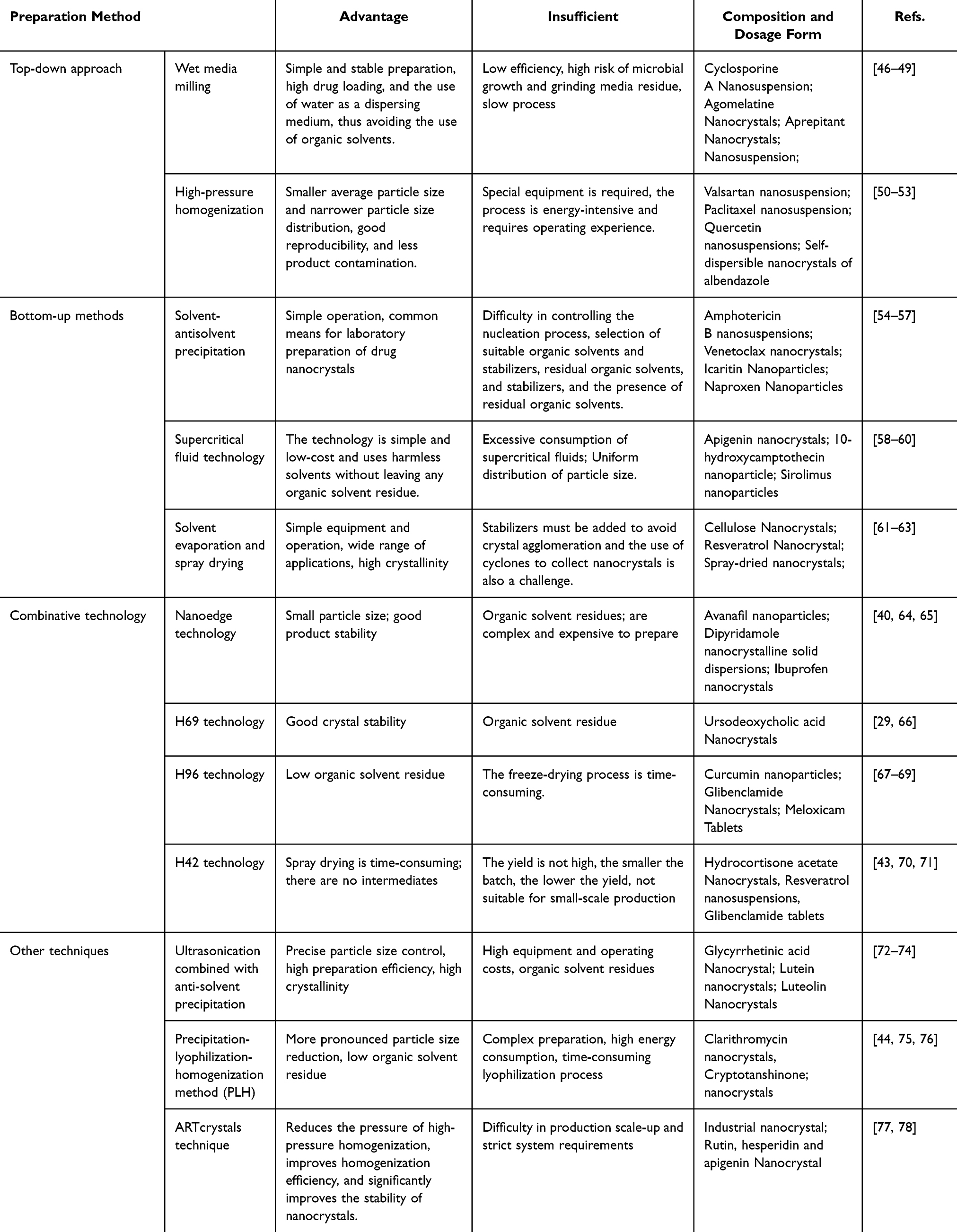 |
Table 1 Advantages and Insufficient of Different Preparation Techniques and Representative Nanocrystalline Drugs |
Characterization Techniques for Drug Nanocrystals
The development of nanocrystalline drugs as key formulations to enhance the bioavailability of difficult-to-solve drugs is contingent upon systematic characterization technologies for quality control, safety, and efficacy. In this chapter, the core technical scope of nanocrystal drug characterization is systematically delineated. The principles, applications, and limitations of various characterization methods are described from the three dimensions of physicochemical properties, biological properties, and stability. This provides technical references for the optimization of research and development of nanocrystalline drugs and the quality control of nanocrystalline drugs. Table 2 offers a concise exposition of the primary advantages and disadvantages associated with the diverse methodologies employed for the characterization of the physicochemical properties of drug nanocrystals. A thorough exposition of these methodologies is provided in the ensuing subsections.
 |
Table 2 Properties of Nanosystems and Most Relevant Characterization Techniques |
Characterization of Physicochemical Properties of Nanocrystalline Drugs
Particle Size and Distribution, Surface Charge Measurement
The physicochemical properties of nanocrystals determine their formulation performance. Key parameters include particle size distribution, surface charge, crystalline structure, surface features, and drug loading capacity. These properties must be characterized using multiple technologies.
Dynamic Light Scattering (DLS) has emerged as a routine screening technique for determining nanocrystal size and size distribution, owing to its speed and convenience. It enables the measurement of hydrodynamic diameter and polydispersity index (PDI), where a lower PDI indicates better long-term stability of the crystals.79 However, DLS results are susceptible to interference from the medium’s refractive index and particle agglomeration, thus requiring verification of particle morphology by complementary techniques such as transmission electron microscopy (TEM) or scanning electron microscopy (SEM). With sub-nanometer resolution, TEM allows observation of crystal lattice structures, while SEM is more suitable for analyzing surface topographies. Both techniques effectively compensate for DLS’s bias in detecting large particles, typically through size distribution analysis based on counting at least 200 particles.80 Nanoparticle Tracking Analysis, a recently developed technique, calculates particle size by directly tracking the movement of individual particles and exhibits higher accuracy than DLS in low-concentration systems.81
Additionally, zeta potential determination, which assesses surface charge based on the principle of electrophoretic light scattering, often shares instrumentation with DLS. The zeta potential is associated with the colloidal stability of nanoparticles (NPs). According to guidelines for nanodelivery systems, NP dispersions with zeta potential values of ±0–10 mV, ±10–20 mV, ±20–30 mV, and >±30 mV are classified as highly unstable, relatively stable, moderately stable, and highly stable, respectively.82 Therefore, when evaluating the surface charge of NPs, only the magnitude (regardless of positive or negative polarity) matters: a higher absolute value of zeta potential indicates stronger electrostatic repulsion between particles, which helps maintain the uniform dispersion of nanocrystals in the dispersion medium and keeps the nanocrystalline drug system in a stable state. Recently, Zong et al83 successfully developed curcumin nanocrystals with adjustable surface zeta potential. Their study not only revealed that curcumin NCs could enhance the water solubility, stability, and dissolution rate of curcumin, but also found that curcumin NCs with high positive surface charge exhibited excellent antibacterial activity against both Escherichia coli and Staphylococcus aureus, and that the antibacterial activity depended on the high value of its zeta potential.
The Analysis of Surfaces and Crystal Structures
Analyzing the surface features and crystalline structure of nanocrystals is crucial not only for determining the solubility, stability, and biocompatibility of drug nanocrystals but also for understanding their functional mechanisms. The analytical methods can be primarily categorized into two types: One type includes X-ray diffraction (XRD) and Fourier transform infrared (FTIR) spectroscopy, which explore the interaction between electromagnetic waves (eg, X-rays, infrared rays) and substances to resolve their crystalline structures, chemical compositions, or functional group information. The other type comprises differential scanning calorimetry (DSC) and thermogravimetric analysis (TGA), which reveal thermal stability, phase transition behavior, or compositional evolution by monitoring changes in physical or chemical properties during temperature variation.
Both types of methods are often used together in specific practices. In the experiment on esterification of starch nanocrystals (SNCs) with oleic acid, the successful synthesis of oleic acid-modified SNCs (SNCs-OA) was confirmed by FTIR spectroscopy—through identifying changes in functional group peaks—and XRD—via analyzing crystalline structure alterations. Meanwhile, TGA and DSC curves demonstrated that oleic acid modification reduced the thermal stability of SNCs. These results indicate that the combination of these multi-technical analyses ensures the reliability and comprehensiveness of experimental findings, thereby facilitating a deeper understanding of nanocrystal properties.84
Drug Load or Entrapped Efficiency
Although making nanocrystals of insoluble natural drug components can increase the solubility and bioavailability of the drug, in actual clinical trials, drug nanocrystals are usually made into formulations with different delivery forms, taking into account the type of patient and compliance, as well as therapeutic requirements. Therefore, another major parameter of nanocrystal drug characterization analysis is to calculate the encapsulation rate or drug loading capacity by determining the free or bound drug content. A high drug loading capacity indicates that more active drugs can be carried; a high encapsulation rate means less loss of drug and high utilization. Determination of their total drug content or encapsulation rate is usually based on disruption of the nanomedicine, such as separation of a free and encapsulated drug by freeze-drying and addition of surfactants or organic solvents, and separation methods include dextran gel column method, ultracentrifugation method, and ultrafiltration method. Followed by quantification of the drug or the active ingredient using high-performance liquid chromatography (HPLC) and an appropriate detector (UV-visible or fluorescent).85
Characterization of Biological Properties of Nanocrystalline Drugs
In assessing the biological behavior of nanocrystals, the in vitro dissolution test is of primary importance. The methods for determining the in vitro dissolution of nanocrystalline drugs include the paddle method, dialysis bag method, and flow cell method, among which the dialysis bag method is most commonly used for testing the dissolution of nanocrystalline formulations.86 Based on Fick’s law of diffusion, this method operates under conditions simulating the human physiological environment. Utilizing the semipermeability of the dialysis membrane, the drug is placed in a specific dissolution medium, allowing the drug to dissolve from the formulation and diffuse through the dialysis membrane into the receiving solution. The in vitro dissolution rate and extent of the drug are evaluated by measuring the time-dependent changes in drug concentration in the receiving solution. This method reflects the in vivo behavior of nanomedicines to a certain extent, thereby ensuring the effectiveness and safety of clinical drug use.
Nanocrystal Drug Stability Characterization Techniques
Stability Study
The stability of nanocrystals is a key bottleneck in formulation industrialization. As an important part of quality control for APIs or formulations, stability studies require assessing physicochemical stability changes via accelerated and long-term tests—simulating actual storage or accelerated degradation conditions to monitor short- and long-term drug changes and predict long-term storage stability.
For physical stability, DLS is used periodically to monitor particle size and PDI changes in sample suspensions; It is instability when particle size increases by over 20% or visible precipitation occurs.87 To avoid agglomeration artifacts during routine sample preparation, cryogenic transmission electron microscopy can capture the true morphology of nanocrystals in the frozen state.88 For chemical stability, HPLC measures changes in drug content to calculate the degradation rate constant (k) and expiration date (t90).
Additionally, the stability characterization has enabled researchers to more deeply explore the factors affecting nanocrystal stability and improvement measures. Figure 4 provides a concise synopsis of the predominant factors influencing the stability of nanocrystalline drugs and the corresponding strategies for their mitigation.
 |
Figure 4 Instability phenomenon of nanocrystals and improvement methods. (1) The crystal aggregation due to small particle size and large specific surface area of high free energy nanocrystals can be solved by the addition of an appropriate amount of stabilizers; (2) Reduction of particle size and its distribution can help to improve nanocrystal settling problems; (3) The Ostwald ripening phenomenon can lead to nanocrystalline drug instability and even aggregation, and the use of stabilizers can help improve the situation; (4) The drug itself is chemically unstable or improper preparation and storage conditions can lead to crystalline transformation of drug nanocrystals. This can be improved by using co-amorphous drug systems. |
Instability Principles and Improvement Strategies
As shown in the figure, drug nanocrystals exhibit instability due to aggregation, sedimentation, Ostwald ripening, and other factors. Common approaches to improve the stability of drug nanocrystals include controlling particle size,89 rational selection of stabilizers,90 and crystal form regulation.91 Among these, stabilizers demonstrate multi-dimensional academic advantages in addressing the stability issues of nanocrystalline drugs. Zhang et al92 prepared naringenin NCs using different stabilizers, respectively. The naringenin nanocrystals stabilized by PVP showed optimal performance in terms of dissolution behavior, cellular uptake, permeability, oral bioavailability, and in vitro and in vivo anti-inflammatory effects. The underlying mechanism is that the stabilizer inhibits nucleation by preventing the dimerization of naringenin, thereby enhancing the stability of the supersaturated solution when the nanocrystals dissolve. This further indicates that stabilizers not only improve the stability and oral bioavailability of naringenin nanocrystals but also that their types affect the “stabilization-synergistic enhancement” effect. In addition, the multi-functionality of stabilizers has expanded their application value and promoted the development of natural-source stabilizers. Liu et al93 innovatively used arbutin as a multifunctional stabilizer for novel nanocrystal-based solid dispersions (NSDs) with high drug loading, successfully preparing AP-NSDs by combining homogenization and spray drying. The results showed that the in vitro dissolution rate of the insoluble drug apigenin (AP) was improved, and the AP-NSDs stabilized by 20% arbutin had high drug loading, good redispersibility, and stability.
In summary, the characterization of nanocrystalline drugs necessitates the establishment of a multifaceted technical system. This system is achieved through the systematic correlation analysis of physicochemical properties, biological properties, and stability. The implementation of this multifaceted system is essential to ensure the quality control of drugs from the laboratory research and development phase to the industrial production phase.
Natural Ingredients for Successful Preparation of Nanocrystals And Applications
Natural ingredients have attracted much attention in the research and development of modern drug delivery systems due to their advantages such as multi-targeting and low toxicity. Meanwhile, nanocrystal technology provides an effective approach to solving problems like low solubility and poor bioavailability of natural ingredients. As the core material basis of nanocrystal drug delivery systems, natural ingredients directly determine the efficacy of the delivery systems through their selection and application. This chapter focuses on natural ingredients that have successfully been used to prepare nanocrystals (Table 3), exploring their application value in drug delivery systems. It not only concretely presents the progress of natural compound nanocrystal drug delivery systems, but also provides a practical basis for the subsequent analysis of challenges and opportunities.
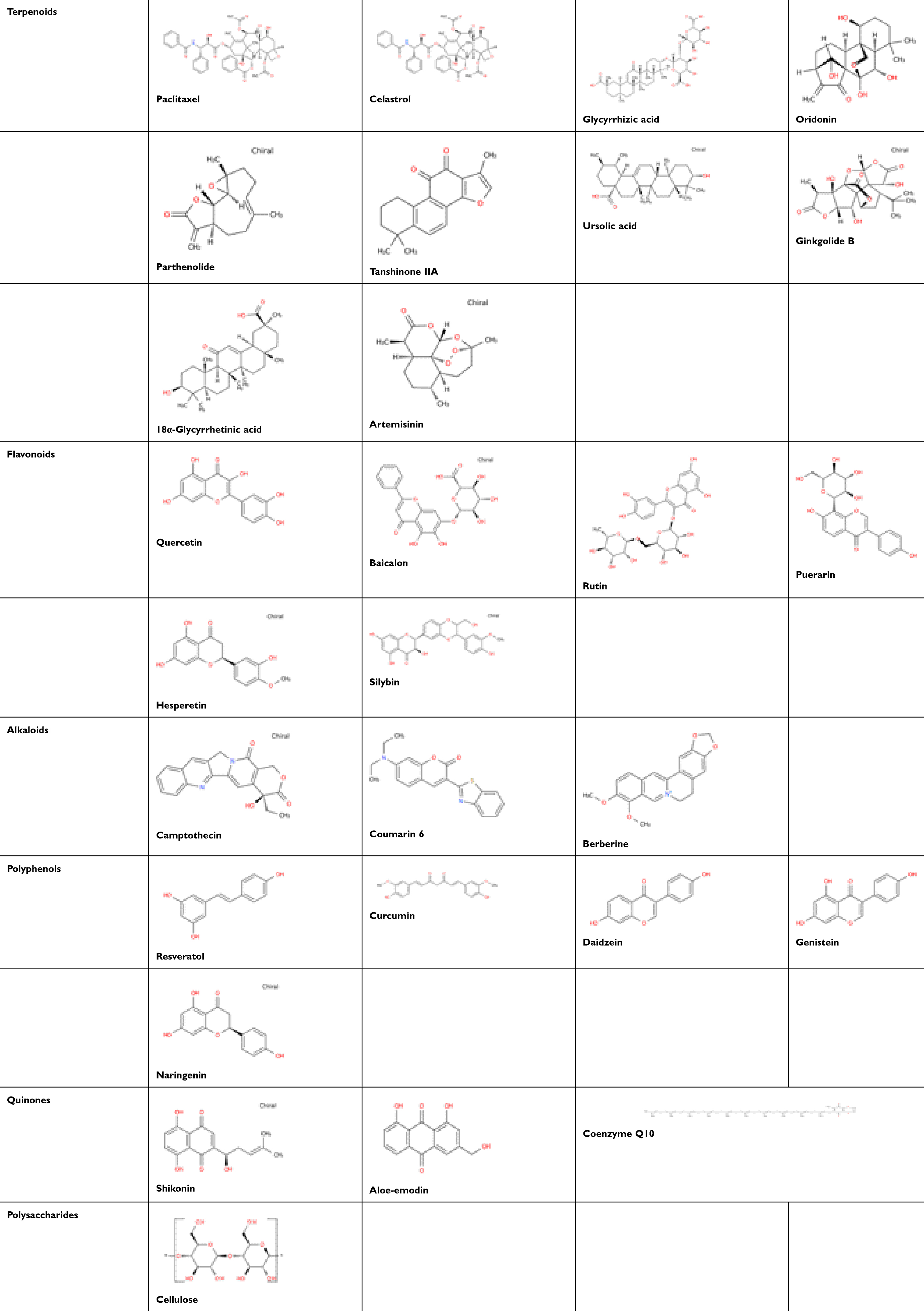 |
Table 3 Summary of Nanocrystalline Drugs of Various Natural Compounds |
Terpenoids
Terpenes are found in nature as secondary metabolites of plants (essential oils, resins, waxes and latex), bacteria, fungi and algae.94 A multitude of studies have demonstrated that terpenoids manifest a diverse array of pharmacological activities, including anti-inflammatory, antimicrobial, anticancer, and antiparasitic properties. This characteristic renders them promising candidates for the development of novel pharmaceutical agents.95–97
A typical example is paclitaxel, an anticancer drug extracted from the bark of Taxus chinensis and a naturally occurring diterpenoid compound for oral administration. Firstly, its encapsulation with albumin to form nanocrystals improves the formulation limitations of poor water solubility and low bioavailability of paclitaxel, while also enhancing tumor targeting.98 Secondly, paclitaxel nanocrystals, as the core of high-dose drugs, are used to construct a biomimetic platelet membrane-camouflaged paclitaxel nanocrystal system, which not only breaks through the dose limitation of intravenous chemotherapy but also enhances the efficacy of postoperative chemotherapy.99 Recently, a new method for preparing carrier-free paclitaxel nanocrystals has been developed: by exploiting a wide metastable zone applicable to the preparation of carrier-free nanocrystals, ultrasonic treatment within this zone triggers nucleation, forming small and uniform nanocrystals.100 Other natural terpenoids with similar formulation limitations, such as artemisinin, tanshinone IIA, andrographolide, triptolide, and ginsenosides, etc., can also benefit from nanocrystal formulations as an effective approach to improve the aforementioned limitations, with specific examples provided in Table 4.
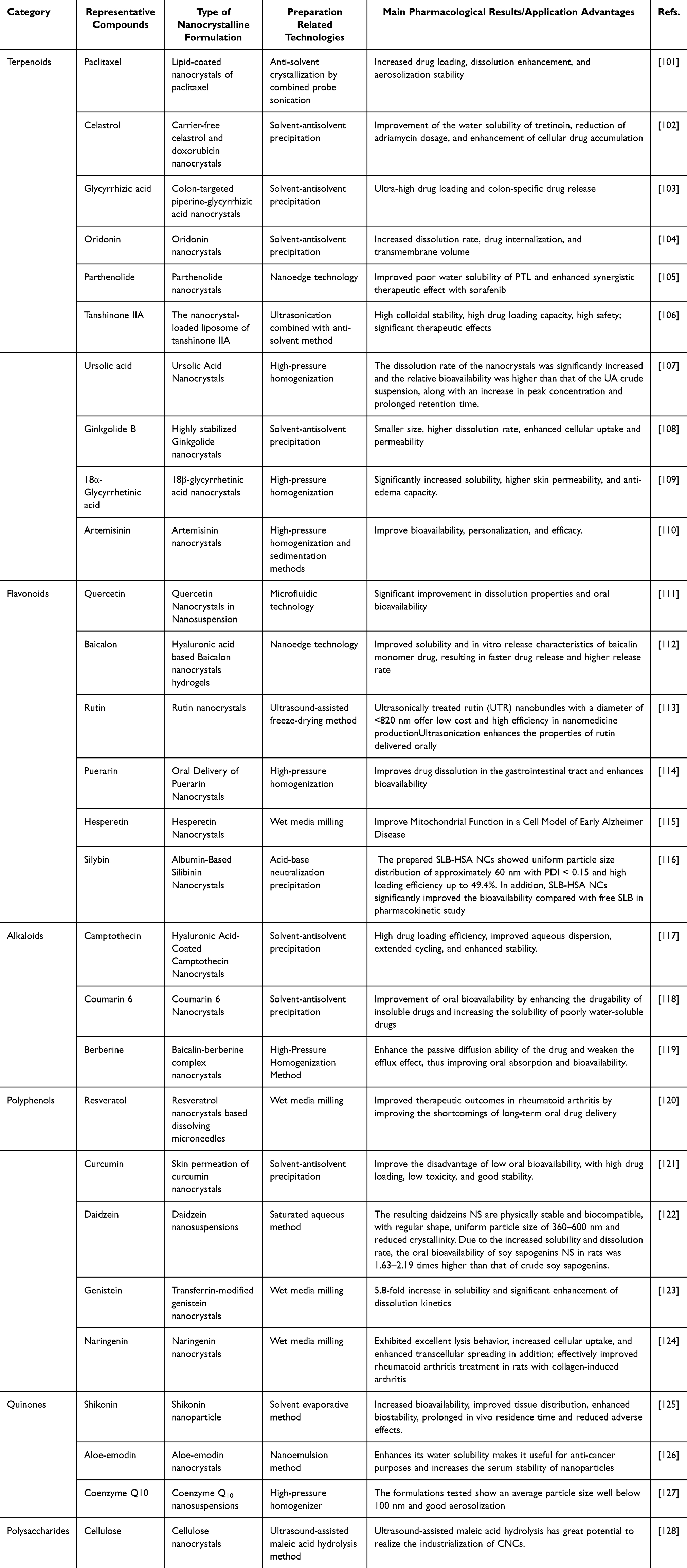 |
Table 4 Summarizing Natural Compound Nanocrystal Types, Preparation Techniques and Pharmacological Results |
Flavonoids
Flavonoids, as natural compounds, hold promising applications in medicine due to their multiple therapeutic targets and low toxicity. Among their diverse pharmacological activities, antioxidant, anti-inflammatory, wound-healing, depigmenting, photoprotective, and anti-aging effects are beneficial to the skin, showing potential in the treatment of various skin diseases.129 However, their lipophilicity, low solubility, and poor skin permeability limit therapeutic efficacy. Nanocrystals may serve as a promising technological platform to enhance the overall therapeutic properties of flavonoids when administered via the dermal route.130
Currently, the main flavonoids prepared using nanocrystal technology include quercetin, baicalin, apigenin, lignans, rutin, and hesperidin. In experiments evaluating the effects of quercetin and titanium dioxide nanocrystal gel (nanogel) on skin cancer and chemoprevention, in vitro studies demonstrated increased drug deposition in the skin, attributed to the nanocrystals’ small particle size and large surface area. In vivo studies on SKH-1 mice also showed that the nanogel-pretreated group had significantly reduced tumor size and volume compared to the UV-exposed group.131
Another study utilized nanosuspensions prepared by the SmartCrystal® process to enhance rutin’s antioxidant activity and skin permeability. In vivo permeation tests on pig ear skin, rutin nanocrystals achieved 4 to 5 times higher concentrations in the deeper layers of the stratum corneum than the normal form, confirming their superior permeability.132 Additionally, baicalin can be combined with other natural products such as glycyrrhetinic acid and berberine to form composite nanocrystals, improving the solubility and in vitro release profiles of the individual components.133–135
Alkaloids
Alkaloids are a class of natural compounds containing primarily basic nitrogen atoms. Based on their main carbon-nitrogen backbone structures, they can be divided into several subclasses, including pyrrole, pyridine, quinoline, isoquinoline, and indole alkaloids. The natural alkaloid components that can be formulated into nanocrystals are limited. Compared with quinoline antitumor drugs—whose hydrophobicity, lactone ring instability, and high toxicity have been addressed by nanocrystal preparation (As seen in Table 4)—coumarin nanocrystals have more specific applications.
Coumarin 6 (C6), a naturally occurring indole alkaloid, exhibits high photostability, structural diversity, low toxicity, and biological activity, making it one of the classic fluorescent dyes.136 Both coumarin and boron dipyrromethene systems have been effectively used as fluorescent probes, chemosensors, and energy transfer carriers, finding wide applications in molecular sensing, bioimaging, and photothermal cancer therapy.137,138 Recently, a study prepared NCs using C6 as a model drug and utilized its fluorescent properties to investigate the absorption mechanism of NCs. The results showed that NCs enhance oral bioavailability mainly by improving the solubility of poorly water-soluble drugs.118 This finding is of great significance for the extensive application of NCs in improving the druggability of insoluble drugs and also provides a universal technique for tracking the distribution, trans-epithelial transport, and intracellular fate of nanocrystals.
Polyphenols
Polyphenolic natural compounds have emerged as a vital resource for drug discovery and development, owing to their structural diversity and pleiotropic effects. Their applications have expanded from traditional Chinese medicine to modern precision medicine. In recent years, nanomedicines containing polyphenolic compounds have garnered extensive research interest due to their potent anticancer activity and multifunctionality, with resveratrol, curcumin, and puerarin being typical examples.
Resveratrol exhibits various bioactive effects, including anti-inflammatory, antiviral, antioxidant, anti-cardiovascular disease, and antitumor properties. Notably, its excellent antitumor activity has established it as a natural antitumor agent following paclitaxel. The preparation of resveratrol into nanocrystals using nanocrystal technology has overcome limitations related to its physicochemical properties (such as poor solubility and photoinstability) and pharmacokinetic characteristics (rapid metabolism, quick elimination, and low bioavailability), thereby improving its bioavailability.139 This makes it a promising therapeutic approach for cancer and Parkinson’s disease. Additionally, its integration with soluble transdermal drug delivery system microneedles has emerged as a novel therapy for cutaneous melanoma.140 In pulmonary delivery studies, microparticulate formulations based on curcumin (CUR) acetate NCs enhanced the local bioavailability of transformed CUR and demonstrated better therapeutic efficacy in a rat model of pulmonary arterial hypertension.141
Another study revealed that puerarin nanocrystals can adsorb onto the surface of micrometer-sized oil droplets, forming a “micro-nano” synergistic microstructure. This not only improves the physical stability of the emulsion but also facilitates cellular uptake and translocation of components, holding promise as a potential new oral dosage form for traditional Chinese medicine compounds.142
Quinones
According to the prevailing taxonomy, quinones can be classified into five distinct classes: benzoquinones, naphthoquinones, phenanthrenequinones, and anthraquinones. This classification system is based on the parent structure. Anthraquinones represent a prominent class of natural quinones that has been extensively researched. These compounds are found in various plants, including rhubarb, crocus sativus, and cassia seeds. Examples of anthraquinones include rhodopsin,143 rhodopsinol,144 and aloe rhodopsin.145 Recent studies have shown that aloe-emodin (AE) has unfavorable pharmacokinetic properties as an iron death inducer and photosensitizer for specific surface diseases. However, aloe-emodin nanocrystals can evade immune clearance, significantly increase tumor accumulation in vivo, and achieve superior therapeutic efficacy compared to free AE.126 Benzoquinones have a relatively limited distribution in the natural world, and representative compounds such as coenzyme Q10 (ubiquinone), although not strictly a natural phylloquinone, have a wide range of sources (eg, plant and animal cells), and have antioxidant and cellular energy metabolism-enhancing functions.146 The nanocrystalline form has been demonstrated to enhance the water solubility and bioavailability of coenzyme Q10, thereby facilitating its absorption by the human body.127 This form is frequently utilized in health supplements, food additives, and skin care products to augment the antioxidant effect.147
Polysaccharides
Polysaccharides are a class of important organic compounds widely distributed in nature and serve as the primary source of energy for all living organisms to maintain life activities. Based on their natural sources, polysaccharides can be categorized into plant-derived, animal-derived, and microbial-derived types. Cellulose, as the most abundant plant polysaccharide on Earth, is a crucial source for the preparation of nanocrystals. Through enzymatic/acid hydrolysis, mechanical treatment, oxidation, or other means, amorphous chains are separated from cellulose fibers, and the crystalline components (cellulose nanocrystals, CNCs) are extracted.148
CNCs possess unparalleled properties, including excellent mechanical strength, high surface area, low density, and biodegradability, making them attractive materials for various fields such as biomedical engineering, renewable energy, and nanotechnology—for instance, as lubricant additives,149 biopolymer films,150 and sensors.151 Compared with the application of nanocrystal technology in improving the pharmacological effects and properties of other types of compounds, polysaccharide nanocrystals tend to act as one of the auxiliary tools facilitating the successful application of nanocrystal formulations.152
Meanwhile, significant progress has been made in the surface modification/functionalization methods of CNCs, expanding their potential applications. Particularly in Pickering emulsion drug delivery systems, Pickering agents stabilized by acylated cellulose nanocrystals are used for the oral co-delivery of macromolecules and penetration enhancers;153 cellulose nanocrystals with optimized lengths can enhance curcumin delivery in Pickering emulsions;154 and clove oil Pickering emulsions based on sodium carboxymethyl cellulose-modified CNCs exhibit enhanced antibacterial activity.155
Current Challenges and Future Opportunities
The application of natural ingredient nanocrystals in drug delivery systems, despite showing significant potential, still confronts multiple challenges. The complexity of natural ingredients complicates purification and renders their activity vulnerable to the preparation environment. Additionally, the instability of nanocrystals during storage and in vivo transport, coupled with delays in scaled-up production and in vivo behavioral studies, hinders their clinical translation.156 Moreover, regulations governing nanopharmaceuticals—encompassing stability, manufacturing, and toxicology—and the stringent control measures imposed on these aspects present the most notable barriers to the development of pharmaceutical or API nanocrystalline drugs. Nevertheless, these challenges also give rise to distinct development opportunities:
To tackle the issues of compositional complexity and stability, nanocrystals can be endowed with properties like targeting and smart responsiveness through multifunctional modifications, thereby enhancing their specificity and stability. In one study, folic acid was employed as a ligand to stabilize andrographolide nanocrystals, leveraging the stabilizing effect of serum proteins and the modifying role of ligand conjugation. These nanocrystals were co-loaded with imatinib into the hydrophobic domains of bovine serum albumin. Experiments demonstrated that the resulting nanocrystals achieved high drug-loading capacity and excellent colloidal stability, while folic acid modification enhanced tumor targeting.157 Several other studies have indicated that parameters such as the molecular weight, hydrophilic-hydrophobic properties, and concentration of stabilizers influence the adsorption efficiency and stability of nanocrystal formulations.158 Establishing key criteria for the initial evaluation of stabilizers can thus help optimize stabilization strategies, thereby improving the formulation of poorly water-soluble drugs.
To address the challenges in large-scale production of nanocrystalline drugs—such as difficulties in controlling particle size uniformity, significant batch-to-batch variation, and complex optimization of process parameters—artificial intelligence (AI) offers solutions through multi-dimensional technical approaches.159 For instance, machine learning algorithms (eg, random forests, artificial neural networks) are used to model correlations between key production parameters (eg, dispersant concentration, milling time, temperature) and quality attributes (eg, nanocrystal particle size distribution, zeta potential).159,160 This enables accurate prediction and optimization of process parameters. Ze et al161 for example, innovatively replaced traditional reactors with impinging jet crystallizers. By combining computational fluid dynamics simulations with experimental studies, they determined optimal process parameters for the crystallizer, successfully preparing baicalin nanocrystals with an average particle size below 300 nm and spherical morphology—conducive to improving baicalin’s bioavailability and stability. Additionally, digital twin models, integrating historical production data, raw material properties, and quality testing results, can simulate process stability under different scale-up scenarios, reducing trial-and-error costs and enhancing batch consistency. Buket Aksu et al162 demonstrated this by applying AI to control critical quality attributes in ramipril tablet production via wet granulation. They designed experiments using response surface methodology and AI-based artificial neural network modeling, and utilized an AI-driven multidimensional design space to produce ramipril tablets with consistent quality.
Finally, the development of new preparation techniques characterized by high efficiency, environmental friendliness, and low cost—such as green synthesis methods and microfluidics—has also emerged as a key breakthrough. For example, Zhu et al163 utilized microfluidics to fabricate curcumin-soy protein isolate-rhamnolipid ternary complex nanocrystals through a simple, controllable one-step assembly process, with no risk of solvent residue. The results showed that the solubility and bioaccessibility of curcumin in these nanocrystals increased by 664.67 and 6.49 times, respectively.
Conclusions and Perspectives
In summary, the following points can be concluded: First, although nanocrystalline technology has a relatively short development history, both its preparation methods and characterization techniques are relatively mature in the application of natural compound formulations. We can not only select appropriate preparation methods based on the properties and particle size requirements of natural active compounds but also use various characterization techniques to evaluate and analyze the material properties, composition, structure, and performance of nanocrystalline drugs. This provides a basis for optimizing drug preparation processes, dosage forms, and quality control.
Second, research on the factors affecting the stability of nanocrystalline drugs has yielded certain results. These findings can guide the research, development, and production of nanocrystalline drugs, helping researchers select suitable drug carriers, stabilizers, and preparation processes at an early stage. This improves the success rate of research and development, shortens the research cycle, and reduces costs.
Third, nanocrystalline technology offers new solutions to the clinical application bottlenecks of natural active ingredients in traditional Chinese medicine. Its potential in improving drug solubility, enhancing bioavailability, strengthening targeting, and reducing toxicity lays an important foundation for the modernization and clinical translation of natural drugs. The challenges in the application of natural ingredient nanocrystals also provide continuous impetus for the development of nanocrystalline drug delivery systems.
It is reasonable to believe that the application prospects of nanocrystalline technology in the field of natural compound formulations will become increasingly promising.
Abbreviations
NCDDS, Nanocrystalline drug delivery systems; TCM/TCMs, traditional Chinese medicine/medicines; DSV, Divya-Swasari-Vati; SLD, Solid lipid nanoparticles; WMM, wet media milling; HPH, High-Pressure Homogenisation; DAC, dual asymmetric centrifugal; NC/NCs, nanocrystals; ADHD, Attention deficit disorder; SCFs, supercritical fluids; H69 technology, High Pressure Cavitation Precipitation-Homogenisation Combined Technology; H42 technology, Spray Drying - High Pressure Homogenising Combined Technology; H96 technology, Freeze Drying - High Pressure Homogenising Combination Technology; PLH, precipitation-lyophilization-homogenization method; SLC, static light scattering; DLS, dynamic light scattering; PDI, Polymer dispersity index; SEM, scanning electron microscopy; TEM, transmission electron microscopy; DSC, differential scanning calorimetry; TGA, thermogravimetric analysis; FTIRS, fourier transform red spectroscopy; PXRD/XRD, powder x-ray diffraction/ x-ray diffraction; HPLC, high-performance liquid chromatography; API/APIs, active pharmaceutical ingredient/ingredients; SNCs, starch nanocrystals; PVP, k; AP, apigenin; NSD, nanocrystal-based solid dispersions; CUR, curcumin; AE, aloe rhodopsin; CNCs, cellulose nanocrystals.
Data Sharing Statement
No new data were created or analyzed in this study.
Funding
This work was supported by the fund of the National Sciences Foundation of China (No. 82460800), China Postdoctoral Science Foundation (No. 2023M731496), The Natural Science Foundation of Jiangxi Province (No. 20232BAB216127), Incubation project of the Second Affiliated Hospital of Nanchang University (No. 2022YNFY12035), and Jiangxi Province Key Laboratory of Precision Cell Therapy (No. 2024SSY06241).
Disclosure
The authors report no conflicts of interest in this work.
References
1. Teja PK, Mithiya J, Kate AS, Bairwa K, Chauthe SK. Herbal nanomedicines: recent advancements, challenges, opportunities and regulatory overview. Phytomedicine. 2022;96:153890. doi:10.1016/j.phymed.2021.153890
2. Balkrishna A, Sinha S, Varshney A. Calcio-herbal medicine Divya-Swasari-Vati demonstrates acceptable non-clinical safety profile in the repeated-dose 28-day subacute oral toxicity study in Sprague-Dawley rats, under GLP compliance. Front Pharmacol. 2025;16:1547532. doi:10.3389/fphar.2025.1547532
3. Shao Z, Wang B, Shi Y, et al. Senolytic agent Quercetin ameliorates intervertebral disc degeneration via the Nrf2/NF-κB axis. Osteoarthritis Cartilage. 2021;29(3):413–422. doi:10.1016/j.joca.2020.11.006
4. Kim JW, Jeong JS, Kim JH, et al. Turmeric extract alleviates airway inflammation via oxidative stress-driven MAPKs/MMPs pathway. Int Immunopharmacol. 2024;141:113018. doi:10.1016/j.intimp.2024.113018
5. Li XY, Wang QF, Duan Y, Zhang YW, Wang H, Liu AJ. Inhibition of mitochondrial oxidative stress and apoptosis in the protection of Ginkgo biloba extract 50 against cognitive impairment. J Ethnopharmacol. 2025;351:120059. doi:10.1016/j.jep.2025.120059
6. Atanasov AG, Waltenberger B, Pferschy-Wenzig E-M, et al. Discovery and resupply of pharmacologically active plant-derived natural products: a review. Biotechnol Adv. 2015;33(8):1582–1614. doi:10.1016/j.biotechadv.2015.08.001
7. H N, M C, RM T, et al. In Vitro Hepatic Models to Assess Herb-Drug Interactions: approaches and Challenges. Pharmaceuticals. 2023;16(3):409. doi:10.3390/ph16030409
8. Kulić Ž, Lehner MD, Dietz GPH. Ginkgo biloba leaf extract EGb 761(®) as a paragon of the product by process concept. Front Pharmacol. 2022;13:1007746. doi:10.3389/fphar.2022.1007746
9. Qiu C, Zhang JZ, Wu B, et al. Advanced application of nanotechnology in active constituents of Traditional Chinese Medicines. J Nanobiotechnology. 2023;21(1):456. doi:10.1186/s12951-023-02165-x
10. Kandemir K, Tomas M, McClements DJ, Capanoglu E. Recent advances on the improvement of quercetin bioavailability. Trends Food Sci Technol. 2022;119:192–200. doi:10.1016/j.tifs.2021.11.032
11. Qiao L, Han M, Gao S, et al. Research progress on nanotechnology for delivery of active ingredients from traditional Chinese medicines. J Mater Chem B. 2020;8(30):6333–6351. doi:10.1039/d0tb01260b
12. Munin A, Edwards-Lévy F. Encapsulation of natural polyphenolic compounds; a review. Pharmaceutics. 2011;3(4):793–829. doi:10.3390/pharmaceutics3040793
13. Jankun J, Wyganowska-świątkowska M, Dettlaff K, et al. Determining whether curcumin degradation/condensation is actually bioactivation (Review). Int J Mol Med. 2016;37(5):1151–1158. doi:10.3892/ijmm.2016.2524
14. Islam MT, Ali ES, Uddin SJ, et al. Andrographolide, a diterpene lactone from Andrographis paniculata and its therapeutic promises in cancer. Cancer Lett. 2018;420:129–145. doi:10.1016/j.canlet.2018.01.074
15. Patra JK, Das G, Fraceto LF, et al. Nano based drug delivery systems: recent developments and future prospects. J Nanobiotechnol. 2018;16(1):71. doi:10.1186/s12951-018-0392-8
16. Ridolfi DM, Marcato PD, Justo GZ, Cordi L, Machado D, Durán N. Chitosan-solid lipid nanoparticles as carriers for topical delivery of tretinoin. Colloids Surf B Biointerfaces. 2012;93:36–40. doi:10.1016/j.colsurfb.2011.11.051
17. Chen J, Lin Y, Wu M, et al. Glycyrrhetinic acid proliposomes mediated by mannosylated ligand: preparation, physicochemical characterization, environmental stability and bioactivity evaluation. Colloids Surf B Biointerfaces. 2022;218:112781. doi:10.1016/j.colsurfb.2022.112781
18. Li C, Wang Z, Lei H, Zhang D. Recent progress in nanotechnology-based drug carriers for resveratrol delivery. Drug Deliv. 2023;30(1):2174206. doi:10.1080/10717544.2023.2174206
19. Maleki Dizaj S, Alipour M, Dalir Abdolahinia E, et al. Curcumin nanoformulations: beneficial nanomedicine against cancer. Phytother Res. 2022;36(3):1156–1181. doi:10.1002/ptr.7389
20. Paredes AJ, Camacho NM, Schofs L, et al. Ricobendazole nanocrystals obtained by media milling and spray drying: pharmacokinetic comparison with the micronized form of the drug. Int J Pharm. 2020;585:119501. doi:10.1016/j.ijpharm.2020.119501
21. Lu Y, Li Y, Wu W. Injected nanocrystals for targeted drug delivery. Acta Pharmaceutica Sinica B. 2016;6(2):106–113. doi:10.1016/j.apsb.2015.11.005
22. Li Y, Wang D, Lu S, et al. Pramipexole nanocrystals for transdermal permeation: characterization and its enhancement micro-mechanism. Eur J Pharm Sci. 2018;124:80–88. doi:10.1016/j.ejps.2018.08.003
23. Rundfeldt C, Steckel H, Scherliess H, Wyska E, Wlaź P. Inhalable highly concentrated itraconazole nanosuspension for the treatment of bronchopulmonary aspergillosis. Eur J Pharm Biopharm. 2013;83(1):44–53. doi:10.1016/j.ejpb.2012.09.018
24. Maged A, Mahmoud AA, Ghorab MM. Nano Spray Drying Technique as a Novel Approach To Formulate Stable Econazole Nitrate Nanosuspension Formulations for Ocular Use. Mol Pharmaceut. 2016;13(9):2951–2965. doi:10.1021/acs.molpharmaceut.6b00167
25. McGuckin MB, Wang J, Ghanma R, et al. Nanocrystals as a master key to deliver hydrophobic drugs via multiple administration routes. J Control Release. 2022;345:334–353. doi:10.1016/j.jconrel.2022.03.012
26. Merisko-Liversidge E, Liversidge GG. Nanosizing for oral and parenteral drug delivery: a perspective on formulating poorly-water soluble compounds using wet media milling technology. Adv Drug Delivery Rev. 2011;63(6):427–440. doi:10.1016/j.addr.2010.12.007
27. Keck CM, Müller RH. Drug nanocrystals of poorly soluble drugs produced by high pressure homogenisation. Eur J Pharm Biopharm. 2006;62(1):3–16. doi:10.1016/j.ejpb.2005.05.009
28. Lopez-Vidal L, Bordon MG, Paredes AJ. Super-fast production of drug nanocrystals: dual asymmetric centrifugation-enabled media milling applied to high throughput formulation screening. Mater Des. 2025;255:114216. doi:10.1016/j.matdes.2025.114216
29. Möschwitzer JP. Drug nanocrystals in the commercial pharmaceutical development process. Int J Pharm. 2013;453(1):142–156. doi:10.1016/j.ijpharm.2012.09.034
30. Moen MD, Keam SJ. Dexmethylphenidate extended release: a review of its use in the treatment of attention-deficit hyperactivity disorder. CNS Drugs. 2009;23(12):1057–1083. doi:10.2165/11201140-000000000-00000
31. Shegokar R, Müller RH. Nanocrystals: industrially feasible multifunctional formulation technology for poorly soluble actives. Int J Pharm. 2010;399(1):129–139. doi:10.1016/j.ijpharm.2010.07.044
32. Chue P, Chue J. A review of paliperidone palmitate. Expert Rev Neurother. 2012;12(12):1383–1397. doi:10.1586/ern.12.137
33. Al-Kassas R, Bansal M, Shaw J. Nanosizing techniques for improving bioavailability of drugs. J Control Release. 2017;260:202–212. doi:10.1016/j.jconrel.2017.06.003
34. Sinha B, Müller RH, Möschwitzer JP. Bottom-up approaches for preparing drug nanocrystals: formulations and factors affecting particle size. Int J Pharm. 2013;453(1):126–141. doi:10.1016/j.ijpharm.2013.01.019
35. Costa C, Padrela L. Progress on drug nanoparticle manufacturing: exploring the adaptability of batch bottom-up approaches to continuous manufacturing. J Drug Delivery Sci Technol. 2025;111:107120. doi:10.1016/j.jddst.2025.107120
36. Padrela L, Rodrigues MA, Duarte A, Dias AMA, Braga MEM, de Sousa HC. Supercritical carbon dioxide-based technologies for the production of drug nanoparticles/nanocrystals – a comprehensive review. Adv Drug Delivery Rev. 2018;131:22–78. doi:10.1016/j.addr.2018.07.010
37. Fontana F, Figueiredo P, Zhang P, Hirvonen JT, Liu D, Santos HA. Production of pure drug nanocrystals and nano co-crystals by confinement methods. Adv Drug Delivery Rev. 2018;131:3–21. doi:10.1016/j.addr.2018.05.002
38. Sverdlov Arzi R, Sosnik A. Electrohydrodynamic atomization and spray-drying for the production of pure drug nanocrystals and co-crystals. Adv Drug Delivery Rev. 2018;131:79–100. doi:10.1016/j.addr.2018.07.012
39. Homayouni A, Sadeghi F, Varshosaz J, Garekani HA, Nokhodchi A. Comparing various techniques to produce micro/nanoparticles for enhancing the dissolution of celecoxib containing PVP. Eur J Pharm Biopharm. 2014;88(1):261–274. doi:10.1016/j.ejpb.2014.05.022
40. Soliman KA, Ibrahim HK, Ghorab MM. Effects of different combinations of nanocrystallization technologies on avanafil nanoparticles: in vitro, in vivo and stability evaluation. Int J Pharm. 2017;517(1):148–156. doi:10.1016/j.ijpharm.2016.12.012
41. Junyaprasert VB, Morakul B. Nanocrystals for enhancement of oral bioavailability of poorly water-soluble drugs. Asian J Pharm Sci. 2015;10(1):13–23. doi:10.1016/j.ajps.2014.08.005
42. Al Shaal L, Shegokar R, Müller RH. Production and characterization of antioxidant apigenin nanocrystals as a novel UV skin protective formulation. Int J Pharm. 2011;420(1):133–140. doi:10.1016/j.ijpharm.2011.08.018
43. Salazar J, Müller RH, Möschwitzer JP. Application of the combinative particle size reduction technology H 42 to produce fast dissolving glibenclamide tablets. Eur J Pharm Sci. 2013;49(4):565–577. doi:10.1016/j.ejps.2013.04.003
44. Morakul B, Suksiriworapong J, Leanpolchareanchai J, Junyaprasert VB. Precipitation-lyophilization-homogenization (PLH) for preparation of clarithromycin nanocrystals: influencing factors on physicochemical properties and stability. Int J Pharm. 2013;457(1):187–196. doi:10.1016/j.ijpharm.2013.09.022
45. Zhao D, Hu C, Fu Q, Lv H. Combined chemotherapy for triple negative breast cancer treatment by paclitaxel and niclosamide nanocrystals loaded thermosensitive hydrogel. Eur J Pharm Sci. 2021;167:105992. doi:10.1016/j.ejps.2021.105992
46. Pınar SG, Canpınar H, Tan Ç, Çelebi N. A new nanosuspension prepared with wet milling method for oral delivery of highly variable drug Cyclosporine A: development, optimization and in vivo evaluation. Eur J Pharm Sci. 2022;171:106123. doi:10.1016/j.ejps.2022.106123
47. Vardaka E, Andreas O, Nikolakakis I, Kachrimanis K. Development of agomelatine nanocomposite formulations by wet media milling. Eur J Pharm Sci. 2021;166:105979. doi:10.1016/j.ejps.2021.105979
48. Toziopoulou F, Malamatari M, Nikolakakis I, Kachrimanis K. Production of aprepitant nanocrystals by wet media milling and subsequent solidification. Int J Pharm. 2017;533(2):324–334. doi:10.1016/j.ijpharm.2017.02.065
49. Tian Y, Wang S, Yu Y, et al. Review of nanosuspension formulation and process analysis in wet media milling using microhydrodynamic model and emerging characterization methods. Int J Pharm. 2022;623:121862. doi:10.1016/j.ijpharm.2022.121862
50. Gora S, Mustafa G, Sahni JK, Ali J, Baboota S. Nanosizing of valsartan by high pressure homogenization to produce dissolution enhanced nanosuspension: pharmacokinetics and pharmacodyanamic study. Drug Deliv. 2016;23(3):940–950. doi:10.3109/10717544.2014.923066
51. Li Y, Zhao X, Zu Y, Zhang Y. Preparation and characterization of paclitaxel nanosuspension using novel emulsification method by combining high speed homogenizer and high pressure homogenization. Int J Pharm. 2015;490(1–2):324–333. doi:10.1016/j.ijpharm.2015.05.070
52. Karadag A, Ozcelik B, Huang Q. Quercetin nanosuspensions produced by high-pressure homogenization. J Agric Food Chem. 2014;62(8):1852–1859. doi:10.1021/jf404065p
53. Paredes AJ, Llabot JM, Sánchez Bruni S, Allemandi D, Palma SD. Self-dispersible nanocrystals of albendazole produced by high pressure homogenization and spray-drying. Drug Dev Ind Pharm. 2016;42(10):1564–1570. doi:10.3109/03639045.2016.1151036
54. Zhou Y, Fang Q, Niu B, et al. Comparative studies on amphotericin B nanosuspensions prepared by a high pressure homogenization method and an antisolvent precipitation method. Colloids Surf B Biointerfaces. 2018;172:372–379. doi:10.1016/j.colsurfb.2018.08.016
55. Panwar D, Thakor P, Sharma M, et al. Hyaluronic acid-engineered Bcl-2 inhibitor nanocrystals for site-specific delivery to breast tumor cells. Nanomedicine. 2023;18(15):1005–1023. doi:10.2217/nnm-2023-0132
56. Tang C, Meng K, Chen X, et al. Preparation, Characterization, and In Vivo Evaluation of Amorphous Icaritin Nanoparticles Prepared by a Reactive Precipitation Technique. Molecules. 2021;26(10):2913. doi:10.3390/molecules26102913
57. Kumar R, Siril PF, Javid F. Unusual anti-leukemia activity of nanoformulated naproxen and other non-steroidal anti-inflammatory drugs. Mater Sci Eng C Mater Biol Appl. 2016;69:1335–1344. doi:10.1016/j.msec.2016.08.024
58. Zhang J, Huang Y, Liu D, Gao Y, Qian S. Preparation of apigenin nanocrystals using supercritical antisolvent process for dissolution and bioavailability enhancement. Eur J Pharm Sci. 2013;48(4):740–747. doi:10.1016/j.ejps.2012.12.026
59. Zhao X, Zu Y, Jiang R, et al. Preparation and Physicochemical Properties of 10-Hydroxycamptothecin (HCPT) Nanoparticles by Supercritical Antisolvent (SAS) Process. Int J Mol Sci. 2011;12(4):2678–2691. doi:10.3390/ijms12042678
60. Kim MS, Kim JS, Park HJ, Cho WK, Cha KH, Hwang SJ. Enhanced bioavailability of sirolimus via preparation of solid dispersion nanoparticles using a supercritical antisolvent process. Int J Nanomed. 2011;6:2997–3009. doi:10.2147/ijn.S26546
61. Elabasy A, Shoaib A, Waqas M, Shi Z, Jiang M. Cellulose Nanocrystals Loaded with Thiamethoxam: fabrication, Characterization, and Evaluation of Insecticidal Activity against Phenacoccus solenopsis Tinsley (Hemiptera: pseudococcidae). Nanomaterials. 2020;10(4):788. doi:10.3390/nano10040788
62. Ainurofiq A, Hidayat Y, Lestari EYP, Kumalasari MMW, Choiri S. Resveratrol Nanocrystal Incorporated into Mesoporous Material: rational Design and Screening through Quality-by-Design Approach. Nanomaterials. 2022;12(2):214. doi:10.3390/nano12020214
63. Hou Y, Shao J, Fu Q, Li J, Sun J, He Z. Spray-dried nanocrystals for a highly hydrophobic drug: increased drug loading, enhanced redispersity, and improved oral bioavailability. Int J Pharm. 2017;516(1–2):372–379. doi:10.1016/j.ijpharm.2016.11.043
64. Girdhar A, Thakur PS, Sheokand S, Bansal AK. Permeability Behavior of Nanocrystalline Solid Dispersion of Dipyridamole Generated Using NanoCrySP Technology. Pharmaceutics. 2018;10(3):160. doi:10.3390/pharmaceutics10030160
65. Sinha B, Müller RH, Möschwitzer JP. Systematic investigation of the cavi-precipitation process for the production of ibuprofen nanocrystals. Int J Pharm. 2013;458(2):315–323. doi:10.1016/j.ijpharm.2013.10.025
66. Li Y, Wang Y, Yue PF, et al. A novel high-pressure precipitation tandem homogenization technology for drug nanocrystals production - a case study with ursodeoxycholic acid. Pharm Dev Technol. 2014;19(6):662–670. doi:10.3109/10837450.2013.819015
67. Homayouni A, Sohrabi M, Amini M, Varshosaz J, Nokhodchi A. Effect of high pressure homogenization on physicochemical properties of curcumin nanoparticles prepared by antisolvent crystallization using HPMC or PVP. Mater Sci Eng C Mater Biol Appl. 2019;98:185–196. doi:10.1016/j.msec.2018.12.128
68. Salazar J, Ghanem A, Müller RH, Möschwitzer JP. Nanocrystals: comparison of the size reduction effectiveness of a novel combinative method with conventional top-down approaches. Eur J Pharm Biopharm. 2012;81(1):82–90. doi:10.1016/j.ejpb.2011.12.015
69. Liu T, Yao G, Zhang X, et al. Systematical Investigation of Different Drug Nanocrystal Technologies to Produce Fast Dissolving Meloxicam Tablets. AAPS Pharm Sci Tech. 2018;19(2):783–791. doi:10.1208/s12249-017-0889-8
70. Möschwitzer J, Müller RH. New method for the effective production of ultrafine drug nanocrystals. J Nanosci Nanotechnol. 2006;6(9–10):3145–3153. doi:10.1166/jnn.2006.480
71. Liu T, Müller RH, Möschwitzer JP. Systematical investigation of a combinative particle size reduction technology for production of resveratrol nanosuspensions. AAPS Pharm Sci Tech. 2017;18(5):1683–1691. doi:10.1208/s12249-016-0612-1
72. Lei Y, Kong Y, Sui H, Feng J, Zhu R, Wang W. Enhanced oral bioavailability of glycyrrhetinic acid via nanocrystal formulation. Drug Deliv Transl Res. 2016;6(5):519–525. doi:10.1007/s13346-016-0300-4
73. Chang D, Ma Y, Cao G, et al. Improved oral bioavailability for lutein by nanocrystal technology: formulation development, in vitro and in vivo evaluation. Artif Cells Nanomed Biotechnol. 2018;46(5):1018–1024. doi:10.1080/21691401.2017.1358732
74. Liu J, Sun Y, Cheng M, et al. Improving Oral Bioavailability of Luteolin Nanocrystals by Surface Modification of Sodium Dodecyl Sulfate. AAPS Pharm Sci Tech. 2021;22(3):133. doi:10.1208/s12249-021-02012-y
75. Morakul B, Suksiriworapong J, Chomnawang MT, Langguth P, Junyaprasert VB. Dissolution enhancement and in vitro performance of clarithromycin nanocrystals produced by precipitation-lyophilization-homogenization method. Eur J Pharm Biopharm. 2014;88(3):886–896. doi:10.1016/j.ejpb.2014.08.013
76. Zhao W, Ruan B, Sun X, Yu Z. Preparation and optimization of surface stabilized cryptotanshinone nanocrystals with enhanced bioavailability. Front Pharmacol. 2023;14:1122071. doi:10.3389/fphar.2023.1122071
77. Scholz P, Arntjen A, Müller RH, Keck CM. ARTcrystal process for industrial nanocrystal production--optimization of the ART MICCRA pre-milling step. Int J Pharm. 2014;465(1–2):388–395. doi:10.1016/j.ijpharm.2014.02.026
78. Scholz P, Keck CM. Flavonoid nanocrystals produced by ARTcrystal®-technology. Int J Pharm. 2015;482(1–2):27–37. doi:10.1016/j.ijpharm.2014.11.008
79. Kaasalainen M, Aseyev V, von Haartman E, et al. Size, Stability, and Porosity of Mesoporous Nanoparticles Characterized with Light Scattering. Nanoscale Res Lett. 2017;12(1):74. doi:10.1186/s11671-017-1853-y
80. Espenti CS, Rao KM, Rao KSVK, Mettu MR, Han SS. Advancements in transmission and scanning electron microscopy for nanomaterials: insights into structural, morphological, and functional characteristics. Appl Mater Today. 2025;45:102829. doi:10.1016/j.apmt.2025.102829
81. Hou J, Ci H, Wang P, et al. Nanoparticle tracking analysis versus dynamic light scattering: case study on the effect of Ca2+ and alginate on the aggregation of cerium oxide nanoparticles. J Hazard Mater. 2018;360:319–328. doi:10.1016/j.jhazmat.2018.08.010
82. Bhattacharjee S. DLS and zeta potential – what they are and what they are not? J Control Release. 2016;235:337–351. doi:10.1016/j.jconrel.2016.06.017
83. Zong R, Ruan H, Zhu W, et al. Curcumin nanocrystals with tunable surface zeta potential: preparation, characterization and antibacterial study. J Drug Delivery Sci Technol. 2022;76:103771. doi:10.1016/j.jddst.2022.103771
84. Bezzekhami MA, Belkhir NL, Harrane A, La Pietra M, Bououdina M, Bellucci S. Facile and eco-friendly method of starch nanocrystals esterified with oleic acid using natural clay as a catalyst: synthesis, Box-Behnken optimization, characterization and analysis of thermal and antioxidant properties. Int J Biol Macromol. 2025;292:139295. doi:10.1016/j.ijbiomac.2024.139295
85. Wang X, Li S, Zeng M, et al. Preparation, characterization and application of antimicrobial pectin-konjac glucomannan composite films incorporating cellulose nanocrystals stabilized clove essential oil pickering emulsion. LWT. 2025;225:117855. doi:10.1016/j.lwt.2025.117855
86. Yang ZY, Sheng LJ, Zhu L, L X. Advances in the in Vitro Dissolution Methods of Nanomedicines. Herald Med. 2022;41(11):1615–1621.
87. Zheng GY, Luo YM, Liu ZM, Che X, W LH. Two Preparation Methods for Enhancing the Bioavailability of Quercetin Nanosuspensions. Chinese Journal of New Drug. 2024;33(23):2529–2536.
88. Li T, Cipolla D, Rades T, Boyd BJ. Drug nanocrystallisation within liposomes. J Control Release. 2018;288:96–110. doi:10.1016/j.jconrel.2018.09.001
89. He Y, Liang Y, Mak JCW, et al. Size effect of curcumin nanocrystals on dissolution, airway mucosa penetration, lung tissue distribution and absorption by pulmonary delivery. Colloids Surf B. 2020;186:110703. doi:10.1016/j.colsurfb.2019.110703
90. Sharma S, Verma A, Pandey G, Mittapelly N, Mishra PR. Investigating the role of Pluronic-g-Cationic polyelectrolyte as functional stabilizer for nanocrystals: impact on Paclitaxel oral bioavailability and tumor growth. Acta Biomater. 2015;26:169–183. doi:10.1016/j.actbio.2015.08.005
91. Zhao J, Yang J, Xie Y. Improvement strategies for the oral bioavailability of poorly water-soluble flavonoids: an overview. Int J Pharm. 2019;570:118642. doi:10.1016/j.ijpharm.2019.118642
92. Zhang G, Guan H, Li J, et al. Roles of effective stabilizers in improving oral bioavailability of naringenin nanocrystals: maintenance of supersaturation generated upon dissolution by inhibition of drug dimerization. Asian J Pharm Sci. 2022;17(5):741–750. doi:10.1016/j.ajps.2022.09.001
93. Liu Y, Wu Z, Chen Y, et al. Rubusoside As a Multifunctional Stabilizer for Novel Nanocrystal-Based Solid Dispersions with a High Drug Loading: a Case Study. J Pharmaceut Sci. 2024;113(3):699–710. doi:10.1016/j.xphs.2023.08.024
94. Roy S, Ghosh A, Majie A, et al. Terpenoids as potential phytoconstituent in the treatment of diabetes: from preclinical to clinical advancement. Phytomedicine. 2024;129:155638. doi:10.1016/j.phymed.2024.155638
95. Zhao WS, Chen KF, Liu M, et al. Investigation of targets and anticancer mechanisms of covalently acting natural products by functional proteomics. Acta Pharmacol Sin. 2023;44(8):1701–1711. doi:10.1038/s41401-023-01072-z
96. Masyita A, Mustika Sari R, Dwi Astuti A, et al. Terpenes and terpenoids as main bioactive compounds of essential oils, their roles in human health and potential application as natural food preservatives. Food Chem X. 2022;13:100217. doi:10.1016/j.fochx.2022.100217
97. Zhou B, Yue JM. Terpenoids of plants from Chloranthaceae family: chemistry, bioactivity, and synthesis. Nat Prod Rep. 2024;41(9):1368–1402. doi:10.1039/d4np00005f
98. Park J, Sun B, Yeo Y. Albumin-coated nanocrystals for carrier-free delivery of paclitaxel. J Control Release. 2017;263:90–101. doi:10.1016/j.jconrel.2016.12.040
99. Mei D, Gong L, Zou Y, et al. Platelet membrane-cloaked paclitaxel-nanocrystals augment postoperative chemotherapeutical efficacy. J Control Release. 2020;324:341–353. doi:10.1016/j.jconrel.2020.05.016
100. Ren X, Qi J, Wu W, Yin Z, Li T, Lu Y. Development of carrier-free nanocrystals of poorly water-soluble drugs by exploring metastable zone of nucleation. Acta Pharmaceutica Sinica B. 2019;9(1):118–127. doi:10.1016/j.apsb.2018.05.004
101. Kumar M, Jha A, Bharti K, et al. Lipid-coated nanocrystals of paclitaxel as dry powder for inhalation: characterization, in-vitro performance, and pharmacokinetic assessment. Colloids Surf B Biointerfaces. 2024;237:113865. doi:10.1016/j.colsurfb.2024.113865
102. Xiao Y, Liu J, Guo M, et al. Synergistic combination chemotherapy using carrier-free celastrol and doxorubicin nanocrystals for overcoming drug resistance. Nanoscale. 2018;10(26):12639–12649. doi:10.1039/c8nr02700e
103. Wu X, Zhang Q, Peng L, et al. Colon-targeted piperine-glycyrrhizic acid nanocrystals for ulcerative colitis synergetic therapy via macrophage polarization. J Mater Chem B. 2024;12(6):1604–1616. doi:10.1039/d3tb02312e
104. Sheng H, Zhang Y, Nai J, et al. Preparation of oridonin nanocrystals and study of their endocytosis and transcytosis behaviours on MDCK polarized epithelial cells. Pharm Biol. 2020;58(1):518–527. doi:10.1080/13880209.2020.1767160
105. Liang P, Wu H, Zhang Z, Jiang S, Lv H. Preparation and characterization of parthenolide nanocrystals for enhancing therapeutic effects of sorafenib against advanced hepatocellular carcinoma. Int J Pharm. 2020;583:119375. doi:10.1016/j.ijpharm.2020.119375
106. Cai C, Liu K, Yang D, et al. The nanocrystal-loaded liposome of tanshinone IIA with high drug loading and stability towards efficient liver fibrosis reversion. Nanomed Nanotechnol Biol Med. 2025;63:102797. doi:10.1016/j.nano.2024.102797
107. Pi J, Liu Z, Wang H, et al. Ursolic Acid Nanocrystals for Dissolution Rate and Bioavailability Enhancement: influence of Different Particle Size. Curr Drug Deliv. 2016;13(8):1358–1366. doi:10.2174/1567201813666160307142757
108. Liu Y, Liu W, Xiong S, et al. Highly stabilized nanocrystals delivering Ginkgolide B in protecting against the Parkinson’s disease. Int J Pharm. 2020;577:119053. doi:10.1016/j.ijpharm.2020.119053
109. Quan W, Kong S, Ouyang Q, et al. Use of 18β-glycyrrhetinic acid nanocrystals to enhance anti-inflammatory activity by improving topical delivery. Colloids Surf B Biointerfaces. 2021;205:111791. doi:10.1016/j.colsurfb.2021.111791
110. Guo M, Qin S, Wang S, et al. Herbal Medicine Nanocrystals: a Potential Novel Therapeutic Strategy. Molecules. 2023;28(17):6370. doi:10.3390/molecules28176370
111. Wang J, Xue X, Miao X. Antioxidant Effects of Quercetin Nanocrystals in Nanosuspension against Hydrogen Peroxide-Induced Oxidative Stress in a Zebrafish Model. Pharmaceuticals. 2023;16(9):1209. doi:10.3390/ph16091209
112. Wei S, Xie J, Luo Y, et al. Hyaluronic acid based nanocrystals hydrogels for enhanced topical delivery of drug: a case study. Carbohydr Polym. 2018;202:64–71. doi:10.1016/j.carbpol.2018.08.112
113. Ekaette I, Saldaña MDA. Ultrasound-assisted modification of rutin to nanocrystals and its application in barley starch pyrodextrinization. Food Chem. 2021;344:128626. doi:10.1016/j.foodchem.2020.128626
114. Xiong S, Liu W, Li D, et al. Oral Delivery of Puerarin Nanocrystals To Improve Brain Accumulation and Anti-Parkinsonian Efficacy. Mol Pharm. 2019;16(4):1444–1455. doi:10.1021/acs.molpharmaceut.8b01012
115. Babylon L, Grewal R, Stahr PL, Eckert RW, Keck CM, Eckert GP. Hesperetin Nanocrystals Improve Mitochondrial Function in a Cell Model of Early Alzheimer Disease. Antioxidants. 2021;10(7):1003. doi:10.3390/antiox10071003
116. Luo S, Yang Y, Zhao T, et al. Albumin-Based Silibinin Nanocrystals Targeting Activated Hepatic Stellate Cells for Liver Fibrosis Therapy. ACS Appl Mater Interfaces. 2023;15(6):7747–7758. doi:10.1021/acsami.2c19269
117. Wang J, Muhammad N, Li T, et al. Hyaluronic Acid-Coated Camptothecin Nanocrystals for Targeted Drug Delivery to Enhance Anticancer Efficacy. Mol Pharm. 2020;17(7):2411–2425. doi:10.1021/acs.molpharmaceut.0c00161
118. Zhang G, Wang Y, Zhang Z, He Z, Liu Y, Fu Q. FRET imaging revealed that nanocrystals enhanced drug oral absorption by dissolution rather than endocytosis: a case study of coumarin 6. J Control Release. 2021;332:225–232. doi:10.1016/j.jconrel.2021.02.025
119. Li Z, Liu Y, Wang J, et al. Baicalin-berberine complex nanocrystals orally promote the co-absorption of two components. Drug Deliv Transl Res. 2022;12(12):3017–3028. doi:10.1007/s13346-022-01167-w
120. Diao N, Liu Y, Wang W, et al. Resveratrol nanocrystals based dissolving microneedles with highly efficient for rheumatoid arthritis. Drug Deliv Transl Res. 2025;15(1):203–215. doi:10.1007/s13346-024-01581-2
121. Xiang H, Xu S, Zhang W, Li Y, Zhou Y, Miao X. Skin permeation of curcumin nanocrystals: effect of particle size, delivery vehicles, and permeation enhancer. Colloids Surf B Biointerfaces. 2023;224:113203. doi:10.1016/j.colsurfb.2023.113203
122. Wang H, Xiao Y, Wang H, et al. Development of daidzein nanosuspensions: preparation, characterization, in vitro evaluation, and pharmacokinetic analysis. Int J Pharm. 2019;566:67–76. doi:10.1016/j.ijpharm.2019.05.051
123. Iqbal FM, Rodríguez-Nogales C, Boulens N, Delie F. Formulation and optimization of transferrin-modified genistein nanocrystals: in vitro anti-cancer assessment and pharmacokinetic evaluation. Int J Pharm. 2024;667(Pt A):124863. doi:10.1016/j.ijpharm.2024.124863
124. Zhang G, Sun G, Guan H, et al. Naringenin nanocrystals for improving anti-rheumatoid arthritis activity. Asian J Pharm Sci. 2021;16(6):816–825. doi:10.1016/j.ajps.2021.09.001
125. Yu S, Li J, Zhang J, et al. Nanosized Shikonin Disrupts Tumor-Cell Mismatch Repair and Synergizes with Manganese to Sensitize Squamous Carcinoma to Immunotherapy. ACS Nano. 2025;19(14):13889–13905. doi:10.1021/acsnano.4c17090
126. Wu M, Ling W, Wei J, et al. Biomimetic photosensitizer nanocrystals trigger enhanced ferroptosis for improving cancer treatment. J Control Release. 2022;352:1116–1133. doi:10.1016/j.jconrel.2022.11.026
127. Rossi I, Sonvico F, McConville JT, et al. Nebulized coenzyme Q 10 nanosuspensions: a versatile approach for pulmonary antioxidant therapy. Eur J Pharm Sci. 2018;113:159–170. doi:10.1016/j.ejps.2017.10.024
128. Zhu S, Sun H, Mu T, Li Q, Richel A. Preparation of cellulose nanocrystals from purple sweet potato peels by ultrasound-assisted maleic acid hydrolysis. Food Chem. 2023;403:134496. doi:10.1016/j.foodchem.2022.134496
129. Nagula RL, Wairkar S. Recent advances in topical delivery of flavonoids: a review. J Control Release. 2019;296:190–201. doi:10.1016/j.jconrel.2019.01.029
130. Liu Y, Zhao J, Chen J, Miao X. Nanocrystals in cosmetics and cosmeceuticals by topical delivery. Colloids Surf B. 2023;227:113385. doi:10.1016/j.colsurfb.2023.113385
131. Bagde A, Patel K, Mondal A, et al. Combination of UVB Absorbing Titanium Dioxide and Quercetin Nanogel for Skin Cancer Chemoprevention. AAPS Pharm Sci Tech. 2019;20(6):240. doi:10.1208/s12249-019-1424-x
132. Li J, Ni W, Aisha M, Zhang J, Sun M. A rutin nanocrystal gel as an effective dermal delivery system for enhanced anti-photoaging application. Drug Dev Ind Pharm. 2021;47(3):429–439. doi:10.1080/03639045.2021.1890113
133. Li T, Wang P, Guo W, et al. Natural Berberine-Based Chinese Herb Medicine Assembled Nanostructures with Modified Antibacterial Application. ACS Nano. 2019;13(6):6770–6781. doi:10.1021/acsnano.9b01346
134. l X, Zhao YX, k L, Gu H, L XF. Optimization of preparation technology and in vitro release of baicalin-glycyrrhizic acid solid nanocrystals. China Pharm. 2023;34(23):2829–2834.
135. Tang Y-J, Guo H-P, Zou M-S, et al. Mechanism of Chaishao Kaiyu Decoction in ameliorating hippocampal neuroinflammation in depressed rats based on complement component C3/C3aR pathway. Zhongguo Zhong Yao Za Zhi = Zhongguo Zhongyao Zazhi = China Journal of Chinese Materia Medica. 2025;50(1):1–18. doi:10.19540/j.cnki.cjcmm.20240712.705
136. Yan M, Xin J, Fan L, et al. Electrochemistry and Electrochemiluminescence of Coumarin Derivative Microrods: mechanism Insights. Anal Chem. 2021;93(7):3461–3469. doi:10.1021/acs.analchem.0c04783
137. Han Q, Wang N, Wang M, Wang J. Donor-acceptor based enhanced electrochemiluminescence of coumarin microcrystals: mechanism study and sensing application. Sensors and Actuat B Chem. 2023;393:134296. doi:10.1016/j.snb.2023.134296
138. Stefanachi A, Muncipinto G, Leonetti F. Editorial: coumarins: new synthetic approaches and new pharmacological applications. Front Chem. 2023;10:1124816. doi:10.3389/fchem.2022.1124816
139. Song Y, Zhang J, Zhu L, Zhang H, Wu G, Liu T. Recent advances in nanodelivery systems of resveratrol and their biomedical and food applications: a review. Food Funct. 2024;15(17):8629–8643. doi:10.1039/d3fo03892k
140. Diao N, Qu H, Wang W, et al. Preparation and evaluation of a soluble microneedle loaded with resveratrol nanocrystals. J Drug Delivery Sci Technol. 2024;94:105463. doi:10.1016/j.jddst.2024.105463
141. Hu X, Yang -F-F, Wei X-L, et al. Curcumin Acetate Nanocrystals for sustained Pulmonary Delivery: preparation, Characterization and In Vivo Evaluation. J Biomed Nanotechnol. 2017;13(1):99. doi:10.1166/jbn.2017.2326
142. Zhang JF, Ye X, Wang YH, Xu XY, Y T. Nanocrystals self-stabilized Pickering emulsion loaded with activecomponents of Tongmai prescription: preparation, characterizationand evaluation by Caco-2 cell model. Acta Pharmaceutica Sinica B. 2023;58(01):208–216. doi:10.16438/j.0513-4870.2022-0495
143. Dong X, Fu J, Yin X, et al. Emodin: a Review of its Pharmacology, Toxicity and Pharmacokinetics. Phytother Res. 2016;30(8):1207–1218. doi:10.1002/ptr.5631
144. Li P, Lu Q, Jiang W, et al. Pharmacokinetics and pharmacodynamics of rhubarb anthraquinones extract in normal and disease rats. Biomed Pharmacother. 2017;91:425–435. doi:10.1016/j.biopha.2017.04.109
145. Dong X, Zeng Y, Liu Y, et al. Aloe-emodin: a review of its pharmacology, toxicity, and pharmacokinetics. Phytother Res. 2020;34(2):270–281. doi:10.1002/ptr.6532
146. Sguizzato M, Mariani P, Spinozzi F, et al. Ethosomes for Coenzyme Q10 Cutaneous Administration: from Design to 3D Skin Tissue Evaluation. Antioxidants. 2020;9(6):485. doi:10.3390/antiox9060485
147. Žmitek K, Pogačnik T, Mervic L, Žmitek J, Pravst I. The effect of dietary intake of coenzyme Q10 on skin parameters and condition: results of a randomised, placebo-controlled, double-blind study. Biofactors. 2017;43(1):132–140. doi:10.1002/biof.1316
148. Aziz T, Ullah A, Zeb U, et al. Advancements in cellulose nanocrystals: a review of functionalization, applications, and challenges. Int J Biol Macromol. 2025;315:144552. doi:10.1016/j.ijbiomac.2025.144552
149. Cheng Y, Meng Y, Guan M, Cai Y, Liu X. Semi-carbonized cellulose nanocrystal as a novel water-based lubricant nanoadditive for reducing friction and wear. Tribol Int. 2025;212:110959. doi:10.1016/j.triboint.2025.110959
150. Lawal KG, Nazir A, Sundarakani B, Stathopoulos C, Maqsood S. Bioactive biopolymer films reinforced with cellulose nanocrystals and green-extracted polyphenols from date seeds for veal meat preservation. Int J Biol Macromol. 2025;310:143275. doi:10.1016/j.ijbiomac.2025.143275
151. Tang Y, Petropoulos K, Kurth F, et al. Screen-Printed Glucose Sensors Modified with Cellulose Nanocrystals (CNCs) for Cell Culture Monitoring. Biosensors. 2020;10(9):125. doi:10.3390/bios10090125
152. Si Y, Luo H, Zhou F, et al. Advances in polysaccharide nanocrystals as pharmaceutical excipients. Carbohydr Polym. 2021;262:117922. doi:10.1016/j.carbpol.2021.117922
153. Bertsch P, Frøslev P, Currie J, Carrière F, Müllertz A, Nielsen HM. Pickering double emulsions stabilized by acylated cellulose nanocrystals for oral co-delivery of macromolecules and permeation enhancers. J Colloid Interface Sci. 2025;700:138363. doi:10.1016/j.jcis.2025.138363
154. Gao X, Hou Y, Deng Y, et al. From agro-waste to functional emulsifiers: length-optimized cellulose nanocrystals from jujube seeds enhance curcumin delivery in pickering emulsions. Food Hydrocoll. 2026;170:111704. doi:10.1016/j.foodhyd.2025.111704
155. Yu H, Huang G, Ma Y, et al. Cellulose nanocrystals based clove oil Pickering emulsion for enhanced antibacterial activity. Int J Biol Macromol. 2021;170:24–32. doi:10.1016/j.ijbiomac.2020.12.027
156. Pardhi E, Vasave R, Srivastava V, Yadav R, Mehra NK. Nanocrystal technologies in biomedical science: from the bench to the clinic. Drug Discovery Today. 2024;29(3):103913. doi:10.1016/j.drudis.2024.103913
157. Wang S, Liu X, Wang S, et al. Imatinib co-loaded targeted realgar nanocrystal for synergistic therapy of chronic myeloid leukemia. J Control Release. 2021;338:190–200. doi:10.1016/j.jconrel.2021.08.035
158. Amiri F, Nokhodchi A, Barzegar-Jalali M, Valizadeh H. A deep Insight into stabilization strategies and surface modification of nanocrystals and their implications in drug delivery: focus on taxanes. Int J Pharm. 2025;680:125794. doi:10.1016/j.ijpharm.2025.125794
159. Gholap AD, Uddin MJ, Faiyazuddin M, Omri A, Gowri S, Khalid M. Advances in artificial intelligence for drug delivery and development: a comprehensive review. Comput Biol Med. 2024;178:108702. doi:10.1016/j.compbiomed.2024.108702
160. Jablonka L, Ashtikar M, Gao G, et al. Advanced in silico modeling explains pharmacokinetics and biodistribution of temoporfin nanocrystals in humans. J Control Release. 2019;308:57–70. doi:10.1016/j.jconrel.2019.06.029
161. Lian ZY, Gao FZ, Qin RX, Ma JQ, Wang XZ. Preparation of baicalin nanocrystals using an impinging jet crystallizer. Chem Eng Res Des. 2025;217:376–386. doi:10.1016/j.cherd.2025.04.004
162. Aksu B, Paradkar A, de Matas M, Özer Ö, Güneri T, York P. A quality by design approach using artificial intelligence techniques to control the critical quality attributes of ramipril tablets manufactured by wet granulation. Pharm Dev Technol. 2013;18(1):236–245. doi:10.3109/10837450.2012.705294
163. Zhu Z, Liu J, Hu Y, et al. Tailoring curcumin ternary complex nanocrystals via microfluidic mediated assembly: stability, solubility, bioaccessibility and formation mechanism. Food Chem. 2025;480:143920. doi:10.1016/j.foodchem.2025.143920
 © 2025 The Author(s). This work is published and licensed by Dove Medical Press Limited. The
full terms of this license are available at https://www.dovepress.com/terms
and incorporate the Creative Commons Attribution
- Non Commercial (unported, 4.0) License.
By accessing the work you hereby accept the Terms. Non-commercial uses of the work are permitted
without any further permission from Dove Medical Press Limited, provided the work is properly
attributed. For permission for commercial use of this work, please see paragraphs 4.2 and 5 of our Terms.
© 2025 The Author(s). This work is published and licensed by Dove Medical Press Limited. The
full terms of this license are available at https://www.dovepress.com/terms
and incorporate the Creative Commons Attribution
- Non Commercial (unported, 4.0) License.
By accessing the work you hereby accept the Terms. Non-commercial uses of the work are permitted
without any further permission from Dove Medical Press Limited, provided the work is properly
attributed. For permission for commercial use of this work, please see paragraphs 4.2 and 5 of our Terms.