
Back to Journals » Integrated Pharmacy Research and Practice » Volume 13


Medication Counselling on Unlicensed Medicines Should Be Improved – Results from a Finnish Survey for Patients and Pharmacy Staff
Authors Liipo T  , Prami T , Iso-Mustajärvi I , Pölkki M , Juppo A
Received 8 August 2024
Accepted for publication 10 October 2024
Published 27 October 2024 Volume 2024:13 Pages 191—200
DOI https://doi.org/10.2147/IPRP.S481732
Checked for plagiarism Yes
Review by Single anonymous peer review
Peer reviewer comments 3
Editor who approved publication: Professor Walid Al-Qerem
Video abstract presented by Liipo.
Views: 159
Tiina Liipo,1,2 Tuire Prami,2 Ilona Iso-Mustajärvi,2 Mari Pölkki,2 Anne Juppo1
1University of Helsinki, Faculty of Pharmacy, Division of Pharmaceutical Chemistry and Technology, Helsinki, Finland; 2Oriola, Espoo, Finland
Correspondence: Anne Juppo, University of Helsinki, Faculty of Pharmacy, Division of Pharmaceutical Chemistry and Technology, Viikinkaari 5 E, 00014 University of Helsinki, Helsinki, Finland, Tel +358505306147, Email [email protected]
Background: Finnish authorities have published specific instructions for prescribing, handling, and dispensing unlicensed medicines and for the associated communication with patients. However, there is a clear research gap concerning the quality of medication counselling given by doctors and especially pharmacists to patients who are prescribed unlicensed medicines. The success of such counselling was studied with a survey for both pharmacy staff and patients.
Methods: The survey was conducted in 2022 with two electronic semi-structured questionnaires, one for patients (or caregivers of underaged patients) purchasing medicines with special or fixed-term special permits from community pharmacies in Finland and one for the pharmacy staff dispensing such medication.
Results: In all, 49% of the 389 pharmacists did not know if the prescribing doctor had given any counselling to the patient, and 52% of the pharmacists had not given any counselling to the patient themselves. Still, 51% of the pharmacists considered that the patient had received sufficient medication counselling. Almost every one of the 36 patients expressed that they had received medication counselling, 61% of them from the prescribing doctor and 53% from a pharmacist.
Conclusion: Medication counselling on unlicensed medicines should be improved to ensure their safe and effective use. This survey revealed that many patients did not receive any such medication counselling as required by the Finnish Medicines Decree.
Plain Language Summary: If patients need medicines that are not available in their own country, they can be treated with unlicensed medicines imported from abroad.Community pharmacies deliver tens of thousands of packages of unlicensed medicines yearly in Finland, and we wanted to find out whether patients receive appropriate information about their use.We contacted pharmacy staff and patients using unlicensed medicines and conducted an electronic survey to ask about their experiences on whether patients receive sufficient information on these medicines.Almost every patient participating the survey felt that they had received counselling on their unlicensed medication, more often from a doctor than a pharmacist, despite most of the pharmacist responding to this survey had a lot of work experience and dispensed these medicines regularly.Patients have the right to receive supporting information to ensure the effectiveness and safety of their medication, and pharmacists have a crucial role in ensuring this.Based on this study, we suggest that pharmaceutical companies and authorities should provide reliable supporting material on the use of unlicensed medicines for doctors, pharmacists, and patients, bearing in mind the respective information needs of these groups.
Keywords: unlicensed medicines, medicines with special permit, medication counselling, survey
Introduction
Unlicensed medicines are prescribed when an individual patient needs a medication that does not have a marketing authorization in the country in question. When purchasing medicines, patients are always entitled to medication counselling and correct information. However, few studies have been published on the quality of patient counselling in community pharmacies,1,2 and there is no up-to-date research on how this obligation to give counselling is implemented in practice for unlicensed products for which information is usually poorly available or perhaps only available in a foreign language.
To give guidance on processes related to unlicensed medicines, authorities have published specific instructions for prescribing, handling and dispensing these products, and these instructions also discuss communication with patients.3–5 Medicines with marketing authorization are always the primary option for patients’ treatment in Finland.3 In individual cases and for specific therapeutic reasons, it is possible to apply for a special permit for an unlicensed medicine from the Finnish Medicines Agency Fimea. Fimea may authorize such a special permit based on a case-by-case overall assessment. Special permit medicines are imported into Finland under the Medicines Act.6 The importer is typically a pharmaceutical wholesaler, hospital pharmacy, or retail pharmacy. Special permit medicines are imported to meet patient’s needs, and they generally have a marketing authorization in their country of origin but not in Finland. According to the Finnish Medicines Decree, a special permit authorization is valid for one year.7 Fimea may also grant a fixed-term special permit for a medicinal product on its own initiative, without a separate application.4 In these cases, a prescription is sufficient as such and no separate application for a special permit is needed.
Unlicensed medicines do not have national translations of their product information (summary of product characteristics, labelling, or package leaflet). The prescriber must ensure that each patient receives sufficient information on the correct and safe use of the product.8 On the other hand, pharmacists dispensing an unlicensed medicine must also ensure for their part that the user receives sufficient counselling and guidance on the correct and safe use of the product, product storage, and other instructions to ensure the success of the treatment.7 These patient counselling challenges related to unlicensed medicines and the need for risk mitigation should be considered as important as those identified in other contexts, for example, in relation to automatic biological medicine substitution.9
International and scientific literature on this topic is very scarce. In 2020, qualitative semi-structured interviews were conducted aiming to explore views and experiences of community pharmacy staff on accessing and supplying unlicensed medicines to patients.2 Only six participants completed an interview on challenges faced in patient care. The results suggested that an integrated and transparent care pathway that follows the patient would reduce clinical risk and logistical problems. Tailored support for patients and healthcare professionals might provide further reassurance.
Bourns reviewed the legal frameworks, the risks, and their management for unlicensed medication in UK but did not focus on patient counselling.10 According to a review by Sutherland and Waldek, safe and effective use of unlicensed medicines – including those used off-label outside their licensed indications – require robust clinical management processes and sufficient information available to the patient.1 It was concluded that more information is needed to increase the availability of guidance. Unlike the paper by Sutherland and Waldek, the present study defines an unlicensed medicine as a medicine without marketing authorization in the country of use and thus excludes the off-label use of medicines licensed in Finland. This is also the approach used in the local guidance and legislation presented above.3,4,7,8 Our study also excludes veterinary products.
As community pharmacies are relatively unfamiliar with unlicensed medicines, pharmacy staff might expect doctors to have higher responsibility for patient counselling. This might lead to a greater variation in the level of information given.
The success of counselling in pharmacies was studied with a survey that targeted both pharmacy staff and patients. The survey also aimed to map the ways in which importers, marketing authorization holders, and other stakeholders could support the implementation of medication counselling on unlicensed medicines in the future.
Materials and Methods
Surveys and Questionnaires
This research project included two surveys, one of which was intended for Finnish pharmacists working in community pharmacies and the other for patients using medicines with a special or fixed-term special permit in Finland. The pharmacists were recruited through the communication channels of Oriola (a pharmaceutical wholesale company) in June–November 2022 by sending them an open invitation. The survey for pharmacists included 11 questions about the respondents’ professional background, their experiences of dispensing unlicensed medicines, and the type of supporting material they would prefer for medication counselling.
The other survey targeted patients purchasing medicines with special or fixed-term special permits from community pharmacies in Finland. The survey was aimed for adults, but caregivers purchasing medicines for their underaged children were allowed to answer too. This survey was carried out in August–November 2022 via Oriola’s Research Pharmacy Network consisting of more than 130 community pharmacies. The network covers about 20% of Finnish pharmacies and geographically represents all of Finland. Potential respondents were identified by pharmacists at the time of dispensing prescriptions and were invited to participate on iPads in the pharmacy or later via an internet link using their own mobile devices. The patient survey also included 11 questions, which concerned the respondents’ background information, medication counselling given by the pharmacist and prescribing doctor, and any need to search for additional information.
In questions related to dispensing unlicensed medicines, the pharmacists were asked to consider their latest dispensing event. In the patient survey, the respondents were also asked to think back to their latest experience of medication counselling involving an unlicensed medicine. Some of the survey responses could, in principle, involve the same event; however, the study design intentionally excluded any attempts to identify and link such cases.
Both questionnaires were semi-structured, and questions were specifically tailored for the purposes of this study. The structured questions had exclusive answer options if not otherwise reported in the Results section. The questionnaires, planned by the authors, were first face-validated and their content validity was then assessed by five independent pharmacists from Oriola and the University of Helsinki.
Both surveys were electronic and data collection was compliant with the European Union (EU) General Data Protection Regulation (GDPR). No data were saved on iPads or other devices, as all data were transferred directly to a secure server.
Ethics
The questionnaires were anonymous, and participation was voluntary and based on consent. The respondents were allowed to skip questions, stop answering, or delete answers at any point if they so wished, and they were informed about this option. The survey was conducted following the guidelines of the Finnish National Board on Research Integrity TENK.11 No separate ethical review is required for this type of studies in Finland. Privacy statements, based on the EU GDPR and tailored for both surveys separately, were available during the study (and will be accessible throughout the data archiving period).
Data Analysis
The data were analyzed using the statistical software R Studio version 4.2.2 for Windows. Categorical variables were reported as frequencies and as percentages of the number of respondents. Due to the voluntary nature of the data collection, some answers were missing. Categories with fewer than five responses were not presented to ensure individual privacy. Medication counselling was evaluated on a ten-point scale (1–10). These results were reported as averages, and when cross-tabulated with other answers, the answers were transformed to a three-point (good, 8–10; fair, 4–7; poor, 1–3) Likert scale.
Results
Survey for Pharmacists
The survey for pharmacists was completed by 389 respondents working in community pharmacies around Finland. Even though they had the opportunity to skip questions, the respondents replied to over 99% of the survey questions. Over 80% of the respondents had more than 5 years and approximately 60% had more than 10 years of work experience in the field. More than 80% of the respondents dispensed medicines with special or fixed-term special permits at least monthly and more than 30% weekly.
Of all 389 unlicensed medicines dispensations, 73% involved medication counselling concerning a medicine with a fixed-term special permit. Of the pharmacists, 79% responded that the patient had used the medicine before, 15% replied that the medicine was new to the user, and the rest were unsure. According to the pharmacists, 41% of the patients had received medication counselling from the prescribing doctor, 11% had not, and almost half of the respondents did not know if counselling had been given. More than half (52%) of the respondents confirmed that they had given medication counselling to the patient, but almost half (42%) had not.
Pharmacists most actively provided counselling if the patient had not received counselling from the prescribing doctor (90%; Figure 1a) and if the patient had not used the medication before (88%; Figure 1b). In cases where the doctor had not given medication counselling for the patient, fewer than five pharmacists responded that they did not give it either (Figure 1a). If the medication was not new to the patient, about half (45%) of the pharmacists gave medication counselling and the other half did not (Figure 1b). If the product in question had a fixed-term special permit, counselling by a pharmacist was more common (60%) than in the case of medicines with a special permit (34%; Figure 1c). Altogether, 60% of the pharmacists did not give counselling when dispensing unlicensed medicines.
 |
Figure 1 Self-reported medication counselling given by pharmacists (A) if the patient had also received medication counselling from the prescribing doctor, (B) if the patient had used the product before, and (C) according to the type of special permit. |
Evaluation of the Medication Counselling
In general, 51% of pharmacists considered that the patient had received sufficient medication counselling, while 14% thought the opposite. The rest were unsure if the counselling had been sufficient or not. On average, the pharmacists gave themselves a grade of 6.5/10 regarding their medication counselling on unlicensed medicines. The best results in this self-evaluation were seen among those who had been in the field longest (Figure 2a). On the other hand, only 21% of the pharmacists with work experience of less than four years gave themselves a grade of 8–10 (“good”), while 20% gave themselves a grade of 1–3 (“poor”). The frequency with which the pharmacists dispensed medicines with special or fixed-term special permits did not appear to influence their self-evaluation results (Figure 2b). In each group, approximately one-third gave themselves a rating “good” and about half a rating “fair”.
 |
Figure 2 Self-evaluation concerning medication counselling by pharmacists in relation to (A) how long they had worked on the field, and (B) how often they dispensed unlicensed medicines. |
Supporting Material in Patient Counselling
A total of 23% of the 389 pharmacists responded that the package leaflet (PL) of the dispensed product was in German, 9% that it was in English, and 5% that it was in Finnish (Figure 3). In 58% of the cases, the pharmacist could not say what the language of the PL was.
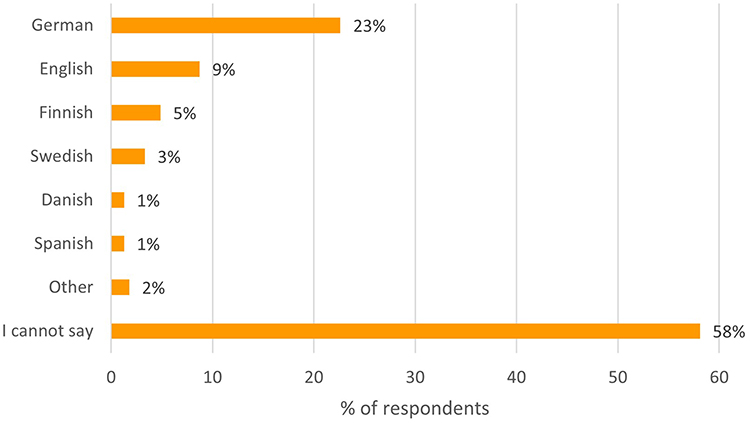 |
Figure 3 The variety of languages of the package leaflets of medicines with special permits or fixed-term special permits dispensed by pharmacists. |
When the pharmacists were asked what kind of supporting material for medication counselling they knew was available and where, 50% replied that they found information on the electronic Terveysportti portal (Duodecim Publishing Company Ltd, Finland). The original PL was used by 14% and a printed translation of the PL by 10% of the respondents. Only 2% had found information on a pharma company’s website, and 15% had not found any supporting material. (In this question, the respondents could select several options).
The most common supporting material that the pharmacists thought was missing (74% of the respondents) was summaries in the Tietotippa information database (Association of Finnish Pharmacies, Finland), integrated in pharmacies’ electronic systems. Half of the respondents (50%) wished a Finnish-language PL had been available. (In this question, the respondents could select several options). Of the respondents, 8% felt they did not need any supporting material in relation to dispensing medicines with special or fixed-term special permits.
Survey for Patients
The survey for patients was completed by 36 respondents purchasing unlicensed medicines in community pharmacies. Despite the opportunity to skip questions, the respondents completed the survey with a response rate of 99%. Of the respondents, 33% were 35–49 years old, 36% were 50–64 years old, and 22% were 65 years old or older. Almost all were purchasing the medicines for themselves and only less than five for their underaged children. Almost 70% of the patients used the medicine in question regularly, while the rest used it as a course or when needed. About 40% of the patients had used the medication over two years, 28% more than six months but less than two years, 17% less than six months, and for 17% this was the first purchase.
Almost all the 36 patients had received medication counselling, 61% of them from the prescribing doctor and 53% from a pharmacist (respondents could select several options). Of these patients, 75% thought that the medication counselling they had received was useful. The patients gave an average grade of 7.3/10 for medication counselling by pharmacists and 6.1/10 for medication counselling given by prescribing doctors. The most prominent value given by patients for both pharmacists and doctors was 10 (in 25% and in 19% of the cases, respectively), but the second most common grade that patients gave their doctors was 1 (in 17% of the cases).
Patients actively searched for information on the use of their medication (44%), its storage (17%) and other instructions (36%) (respondents could select several options). A total of 31% of patients replied that they did not search for information. However, when asked about the sources for additional information, only 19% responded that they did not search for information. The most common sources of additional information were pharma companies’ web pages (22%) and online discussion forums (25%). Information was also searched from the websites of authorities and patient associations (in this question, the respondents could select several options).
Discussion
In the survey aimed for pharmacists, two-thirds of respondents were not sure if patients had received sufficient medication counselling while purchasing medicines with special or fixed-term special permits. Almost half of the respondents did not know if the prescribing doctor had provided any counselling, and more than half had not given the patient any counselling themselves. This means that some patients did not receive instructions from their doctor or from the pharmacy, and this was not due to the patient’s refusal.
Prescribing and dispensing unlicensed medicines creates additional professional responsibilities for both the prescriber and the dispensing pharmacist.12 In these cases, there is no marketing authorization holder to take the responsibility for, eg, adverse reactions and the prescriber is the responsible party. When patients purchasing unlicensed medicines in community pharmacies were asked how comprehensive medication counselling they had received, 42% gave doctors and 64% pharmacists a grade “good” (8–10 on a ten-point scale). Evaluation results concerning counselling by doctors were strongly divided: many patients gave their doctor the score 10 and many the score 1. On the other hand, patients gave pharmacists better grades than the pharmacists gave themselves.
Based on the results, it can be concluded that there is a remarkable language barrier in medication counselling in Finland. More than half of the respondents were unaware of the language in which the PL of the product they had dispensed had been written. In general, the language of the available PLs varied greatly. In more than 20% of the cases, the original PL had been available in German only. It can be assumed that, generally, neither Finnish pharmacists nor patients can comprehensively handle information in German. Finland is one of the five Nordic countries, but unlike the other languages in the Nordic countries, Finnish does not belong to the same language family. Only 3% of the respondents considered a Swedish-language PL to be a desirable source of information.
Community pharmacies (more than 600 pharmacist-owned and two university-owned pharmacies) in Finland are privately owned. Pharmacy chains are not allowed in Finland. Finland is a reasonably small market with about 5.5 million people, and there might be only one patient using a particular medicine with special permit in this country. Medicines with fixed-term special permits are often higher volume items. This may explain the results showing that the level of given consultation varies considerably. Fimea does not record the countries of origin or the languages of the product information of the unlicensed medicines used in Finland. The use of unlicensed medicines touches upon many different areas of legislation. In Finland, marketing of unlicensed medicines is strictly forbidden,7 which limits the availability of information about these products.
In Finland, all pharmacies can handle applications for special permits. This is an advantage from the patients’ point of view as unlicensed medication can be obtained from any pharmacy in Finland. In some cases, however, concentrating expertise might be beneficial and could result in more efficient processes and a higher quality of counselling on unlicensed medicines. Despite the potential advantages of service centralization, it is also important to consider potential drawbacks such as the risk of knowledge silos and a decreased service accessibility in some areas of Finland.
According to the present study, pharmacists who had been working in the field the longest were most likely to reply to the survey, but they also dispensed unlicensed medicines the most. It would be important to ensure that the youngest pharmacists also have an adequate level of knowledge on unlicensed medicines. Young pharmacists might be more experienced in searching for information in different sources and more familiar with reading information in different languages.
Both pharmacists and patients had questions concerning instructions for use. Patients most often wished to have information about adverse effects, efficacy, duration of usage, and concomitant use of food and medication. These were the themes prominent in open-ended responses (data not shown). According to the legislation, both the prescriber and the pharmacist dispensing the unlicensed product must ensure the patient receives sufficient information on the safe use of the medicine.7,8 However, patients often rely on social media and discussion forums for additional information about their medication.
The study aimed to reach 200 pharmacists and 200 patients. The results consist of responses from 389 pharmacists and 36 patients. Thus, we exceeded the targeted number of pharmacists but the number of patients participating the survey remained low. Patients were invited to participate the study in the pharmacies. Not all pharmacists felt that they had given sufficient guidance when dispensing the medicine, which may have affected their willingness to recruit potential patients. As the patients receiving better guidance were therefore more likely to be invited to the survey, this may have resulted in a selection bias in the patients’ group. In addition, the corona pandemic may have affected the willingness of patients to stay in pharmacies longer than needed or that of pharmacy staff to ask them to do so. At the same time, pharmacy staff participated the survey more actively than expected. Consequently, the results data presented here highlight responses given by the pharmacists. It can be assumed that this group of participants replied to the questions honestly. The coverage of responses to survey questions was high, over 99%.
Previous scientific literature on counselling regarding unlicensed medicines is very scarce. Wale et al have run semi-structured interviews for pharmacists and pharmacy technicians in community pharmacies in Wales.2 They asked about accessing and supplying unlicensed medicines with special permit to patients and had questions concerning the impact of challenges faced by patients. The themes they interpreted as central were a need for patients to assume additional responsibilities, impact on the confidence felt by pharmacy staff when accessing and supplying unlicensed medicines and continuity of supply. The prescribing and dispensing of unlicensed medications must result in a safe and appropriate chain of action from the patient’s perspective but also from the point of view of prescribers, pharmacists, and other healthcare professionals.8 It is not known whether healthcare professionals are aware of the risks of using unlicensed medicines,12 although the use of such medicines may result in increased risks to patients.1 According to Fimea, prescribers should actively update their knowledge about unlicensed medicines.8 As to dispensing, pharmacists are often unaware of why an unlicensed preparation has been prescribed,12 which further complicates the counselling work at the pharmacy. However, sometimes there is no licensed product available for a patient’s specific clinical needs. These cases occur especially with rare diseases or in times of drug shortages.2 Due to a trend of increasing drug shortages, the use of medicines with special or fixed-term special permits will increase in the future.
Safe and effective use of unlicensed medicines requires robust clinical management processes and sufficient information available.1 Compared to the existing situation, more information is needed to achieve the necessary support for medication counselling. It is also important to understand what kind of information the patients can currently obtain on unlicensed products.12 When necessary, the doctor and pharmacist must work together to ensure that the patient receives the information, and they must have requisite sources of information available as well as readiness to use them.13
The findings of this study highlight the importance of effective medication counselling and suggest areas for improvement: ensuring that all patients receive counselling, improving quality of counselling given by both prescribing doctors and pharmacists, and providing supporting materials for doctors, pharmacists, and patients. These improvements will require actions from original marketing authorization holders, importers, authorities, and other stakeholders such as companies providing reliable online materials.
Conclusions
Our survey for patients and pharmacy staff showed that many patients did not receive any medication counselling for medicines with special or fixed-term special permits even if this is required by the Finnish Medicines Decree. Use of medicines with special or fixed-term special permits is common in a small market such as Finland with a language barrier, and the use will increase in the future due to a trend of increasing drug shortages of licensed medicines. Both prescribing doctors and pharmacists need to improve the quality of their counselling to ensure safe and effective use of these unlicensed drugs. We suggest that pharmaceutical companies and authorities would provide reliable supporting material on the use of unlicensed medicines for doctors, pharmacists, and patients.
Abbreviations
EU, European Union; Fimea, Finnish Medicines Agency; GDPR, General Data Protection Regulation; PL, package leaflet.
Data Sharing Statement
The survey data were collected for this research project only. The data are not shared.
Ethics Approval and Informed Consent
The study was carried out in accordance with national and EU requirements on ensuring the well-being and rights of the participants. In addition, the survey was conducted following the guidelines of the Finnish National Board on Research Integrity TENK.11 Data collection was based on each respondent’s individual consent; the legal bases for data collection and use were both informed consent and scientific research. Before data collection, Oriola provided an EU GDPR-based data protection impact assessment with a risk assessment concerning the study database. According to local legislation, an external ethical review was not needed in case of a voluntary anonymous survey.
Consent for Publication
The authors state that the details of any images can be published as they are prepared by the authors themselves.
Acknowledgments
We are deeply grateful to Oriola Research Pharmacies and to all respondents for participating the survey. BSc Pharm Iiro Mytty, BSc Pharm Mia Nevalainen, and Study Nurse Merja Pihlaja from Oriola are acknowledged for their professional assistance in study coordination. Further acknowledgements are addressed to MSc Pharm Jarno Ruotsalainen from Oriola and MSc Pharm Ville Perälä from the University of Helsinki for their helpful and supportive advice. (Mia Nevalainen’s and Ville Perälä’s current positions are at Wellfarma Oy and at Quantify Research Finland Oy, respectively.)
Author Contributions
All authors made a significant contribution to the work reported, whether that is in the conception, study design, execution, acquisition of data, analysis and interpretation, or in all these areas; took part in drafting, revising or critically reviewing the article; gave their final approval for the version to be published; have agreed on the journal to which the article has been submitted; and agree to be accountable for all aspects of the work.
Funding
This study project was investigator-driven and constitutes a part of BSc Pharm Tiina Liipo’s specialization studies in Industrial Pharmacy at the University of Helsinki. The study conduction was funded by Oriola. Open access publication fee was paid by Helsinki University Library.
Disclosure
The authors declare no conflicts of interests.
References
1. Sutherland A, Waldek S. It is time to review how unlicensed medicines are used. Eur J Clin Pharmacol. 2015;71(9):1029–1035. doi:10.1007/s00228-015-1886-z
2. Wale A, Ireland M, Yemm R, et al. Unlicensed “special” medicines: understanding the community pharmacist perspective. Integr Pharm Res Pract. 2020;9:93–104. doi:10.2147/IPRP.S263970
3. Fimea. Special permits; 2023. Available from: https://fimea.fi/en/pharmacies/special_permits.
4. Fimea. Fixed-term special permits; 2023. Available from: https://fimea.fi/en/pharmacies/special_permits/fixed-term-special-permits.
5. All Wales medicines strategy group. Understanding unlicensed medicines; 2023. Available from: https://awttc.nhs.wales/files/guidelines-and-pils/understanding-unlicensed-medicines-pdf/.
6. Finlex. Medicines Act 395/1987 [Lääkelaki in Finnish]; 1987. Available from: https://www.finlex.fi/fi/laki/ajantasa/1987/19870395.
7. Finlex. Medicines Decree 693/1987 [Lääkeasetus in Finnish]; 1987. Available from: https://www.finlex.fi/fi/laki/ajantasa/1987/19870693.
8. Fimea. Applying for a special permit – information for prescribers; 2023. Available from: https://fimea.fi/en/pharmacies/special_permits/applying-for-A-special-permit-information-for-prescribers.
9. Tolonen HM, Airaksinen MSA, Ruokoniemi P, et al. Medication safety risks to be managed in national implementation of automatic substitution of biological medicines: a qualitative study. BMJ Open. 2019;9(10):e032892. doi:10.1136/bmjopen-2019-032892
10. Bourns IM. Unlicensed medicines in UK – legal frameworks, risks, and their management. Med Access Point of Care. 2017;1. doi:10.5301/maapoc.0000006
11. Finnish National Board on Research Integrity TENK. The ethical principles of research with human participants and ethical review in the human sciences in Finland - Finnish National Board on Research Integrity TENK guidelines 2019. Helsinki: Finnish National Board on Research Integrity TENK; 2019:3. Available from: https://tenk.fi/sites/default/files/2021-01/Ethical_review_in_human_sciences_2020.pdf.
12. Donovan G, Parkin L, Wilkes S. Special unlicensed medicines: what we do and do not know about them. Br J Gen Pract. 2015;65(641):e861–e863. doi:10.3399/bjgp15X688033
13. Fimea. Dispensing of medical products [Lääkkeiden toimittaminen in Finnish]; 2016. Available from: https://www.finlex.fi/fi/viranomaiset/normi/558001/42909.
 © 2024 The Author(s). This work is published and licensed by Dove Medical Press Limited. The
full terms of this license are available at https://www.dovepress.com/terms
and incorporate the Creative Commons Attribution
- Non Commercial (unported, 3.0) License.
By accessing the work you hereby accept the Terms. Non-commercial uses of the work are permitted
without any further permission from Dove Medical Press Limited, provided the work is properly
attributed. For permission for commercial use of this work, please see paragraphs 4.2 and 5 of our Terms.
© 2024 The Author(s). This work is published and licensed by Dove Medical Press Limited. The
full terms of this license are available at https://www.dovepress.com/terms
and incorporate the Creative Commons Attribution
- Non Commercial (unported, 3.0) License.
By accessing the work you hereby accept the Terms. Non-commercial uses of the work are permitted
without any further permission from Dove Medical Press Limited, provided the work is properly
attributed. For permission for commercial use of this work, please see paragraphs 4.2 and 5 of our Terms.