
Back to Journals » Nature and Science of Sleep » Volume 17

Mandibular Advancement Devices for Obstructive Sleep Apnea: Bibliometric Analysis (1984–2024)

Received 24 August 2025
Accepted for publication 10 October 2025
Published 23 October 2025 Volume 2025:17 Pages 2771—2782
DOI https://doi.org/10.2147/NSS.S562199
Checked for plagiarism Yes
Review by Single anonymous peer review
Peer reviewer comments 2
Editor who approved publication: Prof. Dr. Ahmed BaHammam
Suliman Alsaeed,1– 3 Ikram Ul Haq4
1Preventive Dental Sciences Department, College of Dentistry, King Saud bin Abdulaziz University for Health Sciences, Riyadh, 14611, Saudi Arabia; 2King Abdullah International Medical Research Center, Riyadh, 11481, Saudi Arabia; 3Ministry of the National Guard - Health Affairs, Riyadh, 11426, Saudi Arabia; 4College of Dentistry, King Saud bin Abdulaziz University for Health Sciences, Riyadh, 14611, Saudi Arabia
Correspondence: Suliman Alsaeed, Preventive Dental Sciences Department, College of Dentistry, King Saud bin Abdulaziz University for Health Sciences, Riyadh, 14611, Saudi Arabia, Email [email protected]
Objective: To conduct a bibliometric analysis of scientific publications on mandibular advancement devices (MADs) for obstructive sleep apnea (OSA), evaluating publication trends, citation impact, productive countries, institutions, authorship patterns, and keyword co-occurrence to identify key contributors and research directions.
Materials and Methods: A comprehensive search was performed in the Web of Science Core Collection on May 12, 2025, using topic-specific keywords related to MADs and oral appliances. The search covered literature published from 1984 to December 31, 2024. After excluding non-research items such as early access articles, letters, and corrections, 2,610 documents were included. VOSviewer and Microsoft Excel were used to extract and analyze data on publication metrics, collaboration networks, and keyword trends.
Results: Publication volume increased significantly over the past two decades, with 62.3% of the documents published between 2015 and 2024. The United States led in both number of publications and citations, while the Netherlands and Sweden demonstrated the highest citation impact. The University of Sydney, University of Antwerp, and University of British Columbia were among the top contributing institutions. Peter A. Cistulli was the most cited author. Collaboration among authors has increased, and multi-author studies tend to receive higher citations. Keyword analysis highlighted central research themes including OSA, MADs, CPAP, and diagnostic tools such as polysomnography.
Conclusion: Global research on MADs for OSA has expanded notably, especially in the last decade. High-impact work is linked to international collaboration and focused efforts from leading institutions.
Keywords: mandibular advancement device, obstructive sleep apnea, oral appliance, bibliometric analysis, sleep medicine
Introduction
Obstructive Sleep Apnea (OSA) is the most common sleep breathing disorder, characterized by disruption to the normal ventilation during sleep due to complete or partial upper airway obstruction.1 This obstruction leads to interrupted breathing, decrease in oxygen levels, and poor sleep quality, which often results in morning headaches and increased daytime sleepiness associated with feeling of tiredness and fatigue during the day.2–4 Estimates suggest that OSA affects between 9% to 38% of adults, with a higher risk in men, older individuals, and those with a higher body mass index.5,6 If left untreated, OSA can lead to serious health consequences such as cardiovascular diseases, metabolic disorders, and impaired cognitive function.7,8 Notably, OSA is a well-established risk factor for elevated blood pressure and the development of coronary artery disease, with mechanisms involving sympathetic activation, oxidative stress, and endothelial dysfunction, which contribute to increased cardiovascular morbidity and mortality.9–12
The gold standard treatment for OSA is Continuous Positive Airway Pressure (CPAP).13,14 It is highly effective because it keeps the airway open by pushing a steady flow of air through a mask.13 This helps patients breathe normally during sleep and improves their sleep quality.14 The main limitation with CPAP is patients’ acceptance and compliance.2,15 Studies differ in the reported compliance with CPAP, but it can range from 40 to 60% who are using CPAP more than 4 hours per night after 6 months.16–18 Reported barriers to patients’ compliance include discomfort, noise, or difficulty wearing the mask.19,20
For patients who are CPAP intolerant, Mandibular Advancement Devices (MADs) have become a recommended option, especially in cases of mild to moderate OSA.21 MADs works by holding the lower jaw slightly forward during sleep, which helps prevent the airway from collapsing.22,23 Studies have shown that MADs can reduce the Apnea Hypopnea Inde (AHI), improve oxygen levels, and improve sleep quality.24,25 Custom-made MADs are superior in treatment outcomes compared to ready-made appliances, due to improved fitting and comfort.26,27 However, prolonged use may cause minor dental changes, requiring regular follow-up.28,29
In recent years, the use of MADs has grown alongside increased educational efforts and support for their implementation, particularly through initiatives by the American Academy of Dental Sleep Medicine.30 Programs such as the Mastery Courses and the Qualified Dentist designation have contributed to the wider adoption of MADs and stimulated further research in this field.31,32 Despite the growing number of studies and systematic reviews focusing on clinical efficacy, there remains a lack of comprehensive bibliometric analysis. Such an analysis is essential to evaluate publication trends, citation impact, collaboration networks, and emerging topics, while also identifying key contributors and research gaps. Hence, the aim of this study was to conduct a bibliometric analysis of the scientific literature on mandibular advancement devices for obstructive sleep apnea, highlighting key trends, influential publications, collaboration patterns, research gaps, and potential future directions.
Materials and Methods
This study employed bibliometric analysis to provide an overview of the scientific landscape, highlighting the contributions of countries, organizations, and researchers to scholarly publication production. Choosing the right indexing database is crucial for bibliometric research. The literature indicates that the Web of Science (WoS) database, being the oldest and largest, covers publications from numerous high-impact journals.33,34 Therefore, the WoS database from Clarivate Analytics was selected to gather the data necessary to achieve the objectives of this study. The decision to rely exclusively on Web of Science was based on its rigorous journal selection process, structured metadata, and advanced citation analysis capabilities, which make it the benchmark database for bibliometric research. This ensured consistency and reliability in data retrieval and citation tracking. The following query was entered using the Advanced Search option, with the Topic selection applied.
“Mandibular Advancement Device” OR “Mandibular Advancement Devices” OR “Mandibular Advancement Appliance” OR “Mandibular Advancement Appliances” OR “Mandibular Advancement Splint” OR “Mandibular Advancement Splints” OR “Mandibular Repositioning Appliance” OR “Mandibular Repositioning Appliances” OR “Mandibular Repositioning Device” OR “Mandibular Repositioning Devices” OR “Mandibular Repositioning Splint” OR “Mandibular Repositioning Splints” OR “Oral Appliance” OR “Oral Appliances”.
We retrieved data from the Web of Science (WoS) database using the “Topic” field, with data collected on May 12, 2025. The time span for the data ranged from the earliest publication on the selected topic in 1984 to December 31st, 2024. A total of 2,687 published documents were initially retrieved. After applying exclusion criteria, 2,610 documents were included in the analysis (Figure 1). Documents excluded were records from 2025, letters, early reviews, corrections, notes, news items, reprints, and retracted publications. The results were extracted and analyzed using VOSviewer and MS Excel software. VOSviewer software was used to identify the most frequent keywords in the dataset. In bibliometric analysis, occurrence refers to how often a specific keyword appears across the analyzed documents, reflecting its frequency and prominence within the dataset. Additionally, Total Link Strength is an important metric that measures the level of connection or co-occurrence between keywords, offering insights into the relationships and interactions between terms in the dataset.
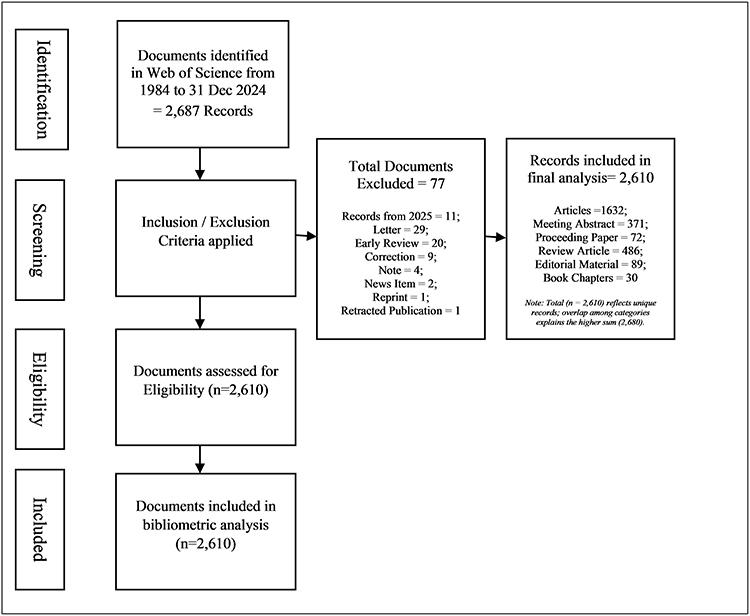 |
Figure 1 The flowchart illustrates the process of selecting documents for bibliometric analysis. |
Results
A total of 2,610 documents were selected for bibliometric analysis. The vast majority were published in English (n = 2,508; 96%), while 4% (n = 102) were published in eight other languages, including French, German, Italian, Japanese, Turkish, Korean, Portuguese, and Spanish.
Periodic Growth in Publication
Of the 2,610 documents included in this analysis, 91% were published in the last 20 years. Notably, about two-third of the documents (62%) were published in the last decade. These documents have collectively received 59,930 citations, with an average of 22.96 citations per document. The highest citation peak occurred for documents published in 2009 as illustrated in Figure 2.
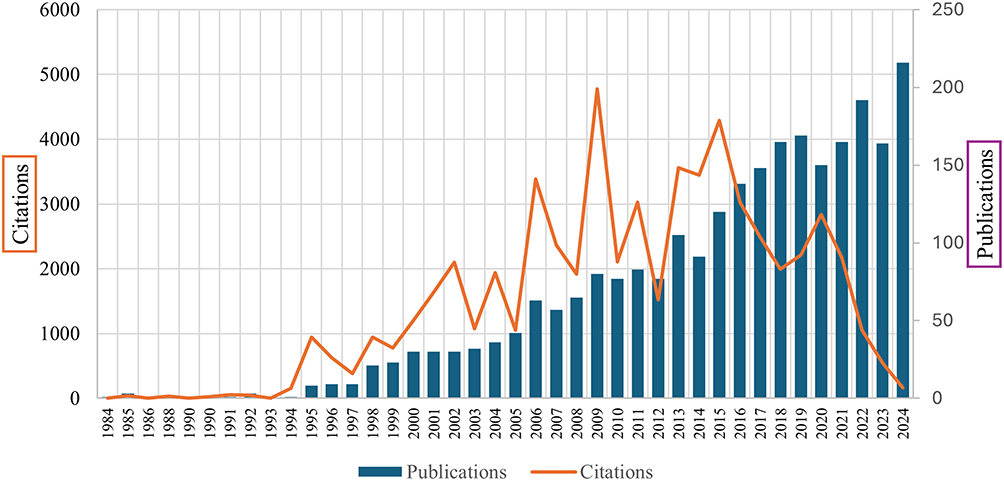 |
Figure 2 Annual publication output and citation trends (1984–2024). The blue bars represent the number of publications per year, while the Orange line indicates the corresponding annual citations. Data were retrieved from the Web of Science database and analyzed by the authors. |
Frequently Used Sources of Publications
The selected 2,610 documents were published in 598 sources of publications and more than half of sources (n=339; 56.68%) had published a single document each, whereas 43% (n=1,113) of the documents were published in top 15 most frequently used sources of publications mentioned in Table 1. “Sleep and Breathing” journal has the highest number of papers (n=161), followed by “Sleep”, “Sleep Medicine” and “Journal of Clinical Sleep Medicine” with 156, 120 and 105 papers, respectively. “Chest” journal also stands out with a high citation impact of 57.74, despite having fewer documents (n=58) compared to some of the other sources. “Sleep Medicine Reviews” journal has a high citation impact (56.54) and a moderate number of documents (n=37). Overall, “Journal of Clinical Sleep Medicine” has the higher citation impact (50.54), meaning its articles are cited on average 50.54 times.
 |
Table 1 Top 15 Journals Publishing on Mandibular Advancement Devices for OSA |
Top 15 Countries
A total of 81 countries contributed to the 2,610 documents, with the details of the top 15 countries based on the number of documents shown in Table 2. The United States leads both in the total number of documents published (n=641) and citations (n=21,584), with a relatively high citation impact of 33.67. Canada (31.92 citation impact) and Belgium (33.46 citation impact) also exhibit strong citation impacts, indicating that their research is influential despite publishing a moderate number of documents (265 and 135, respectively). The Netherlands produces research with the highest citation impact, followed by Australia and the United States. India, on the other hand, has the lowest citation impact among the top 15 countries, while it contributes a significant amount of research (n=87).
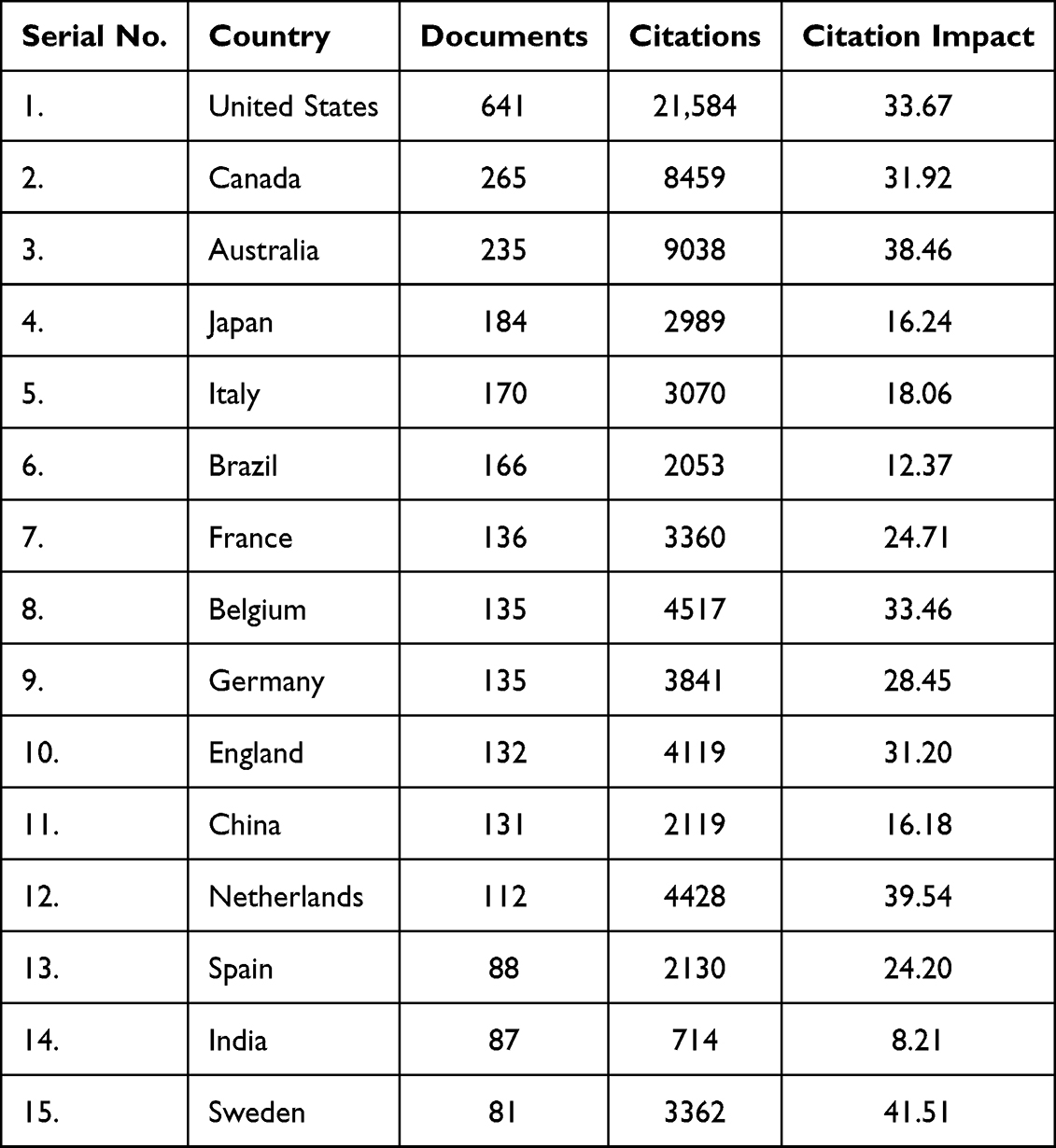 |
Table 2 Leading Countries by Publication Volume and Citation Impact in MAD-OSA Literature |
Top 15 Research Producing Organizations
A total of 2,853 organizations were identified using VOSviewer software, with more than two-thirds (n=1,950; 68.34%) contributing a single document. The citation details and impact of the top 15 most productive organizations are outlined in Table 3. The University of Sydney leads in document count (n=138) but has a lower citation impact of 28.11. In contrast, Harvard University, despite ranking 10th in document count (n=56), stands out with the highest citation impact at 102.32. The University of British Columbia demonstrated both a high publication output (n=111) and a strong citation impact (37.56), highlighting its influential role in the field.
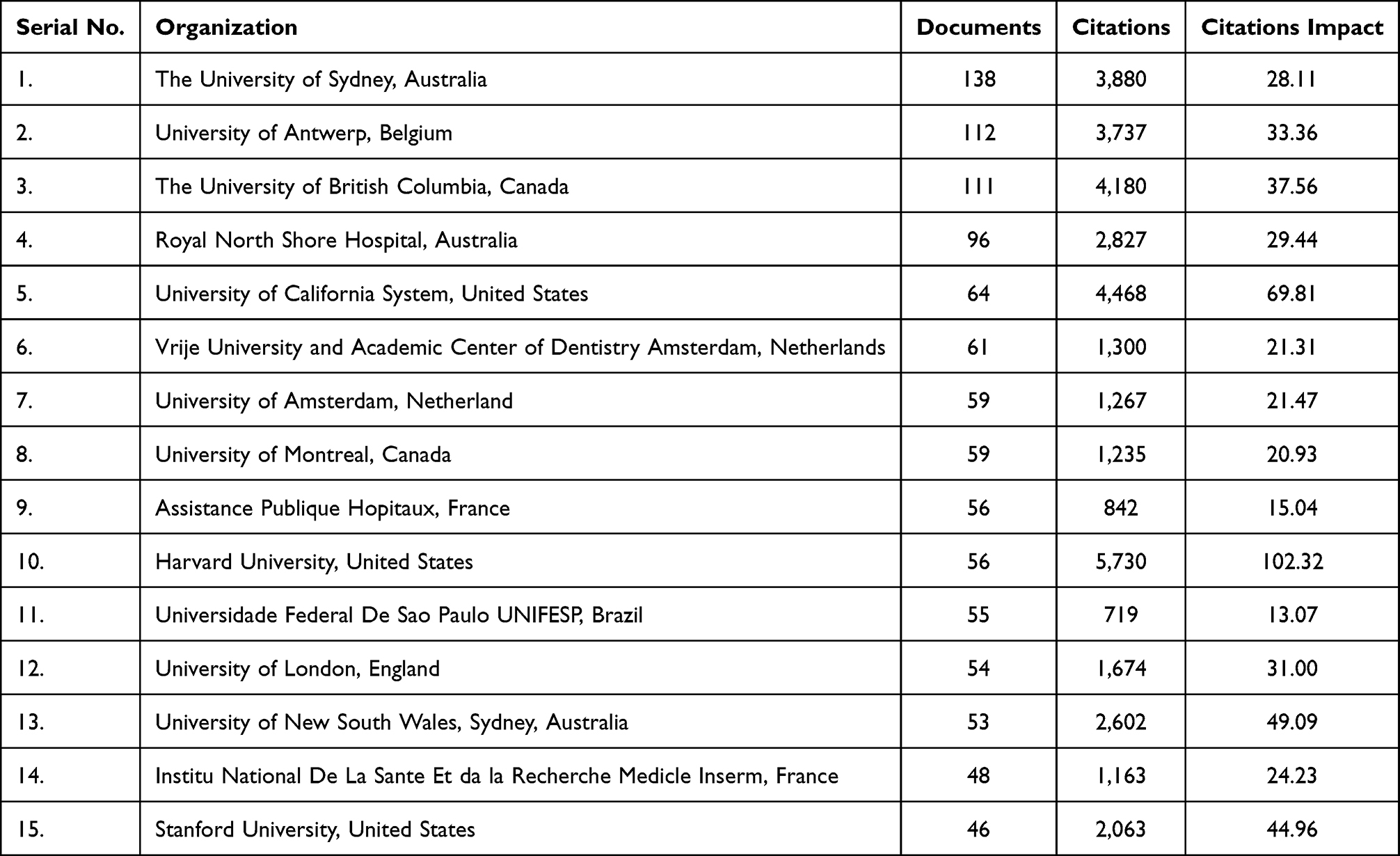 |
Table 3 Leading Organizations by Research Output and Citation Impact in MAD-OSA Literature |
Top 15 Productive Authors, Authorship Pattern, and Most Frequent Keywords
A total of 8,922 distinct authors were identified by VOSviewer software, with the majority (n=7,040; 78.90%) contributing to only a single document. Table 4 lists the top 15 most prolific authors. Cistulli, Peter A. stands out as the leading author in terms of citation impact, achieving a score of 73.56 across 106 publications, indicating a consistently high influence in the field. Marklund, Marie follows closely with a citation impact of 72.24 from 29 documents, highlighting strong impact despite a smaller output. Lowe, Alan A. has contributed to 47 documents and gained a citation impact of 53.44, which is notably high for his publication count. Figure 3 illustrate various authorship patterns, along with corresponding analyses of publication counts, citations, and citation impact. The analysis of authorship trends over three distinct time periods reveals a steady increase in the average number of authors per article, reflecting a broader shift toward collaborative research. From 1984 to 2000, the average number of authors per article was 3.73, which increased to 4.34 between 2001 and 2012, and then to 5.77 between 2013–2024. The top 30 keywords with occurrence rate of minimum of 33 times has been selected for analysis (Table 5 and Figure 4).
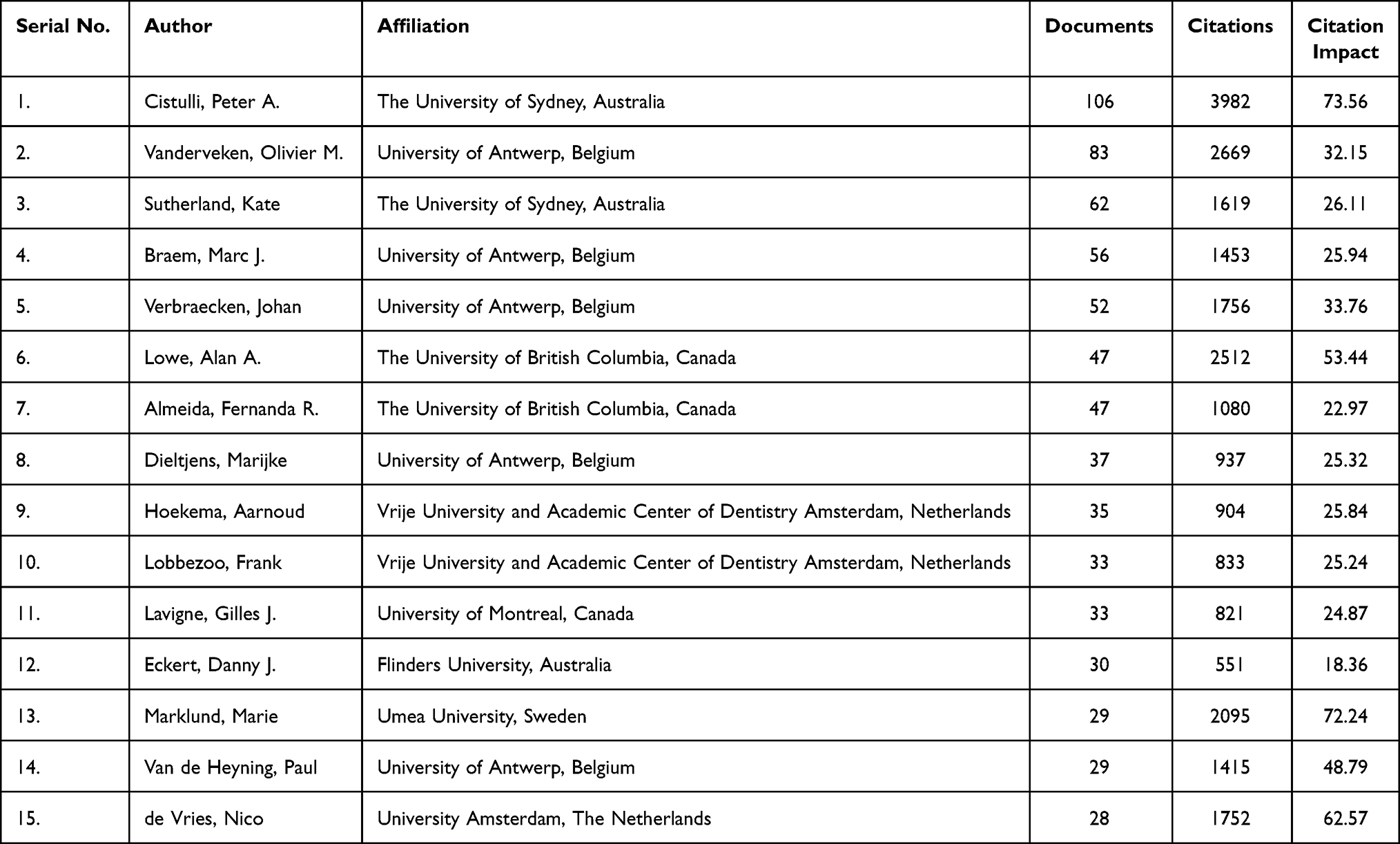 |
Table 4 Key Author Contributions to Scientific Literature on MADs for Obstructive Sleep Apnea |
 |
Table 5 Most Commonly Used Keywords in Mandibular Advancement Device Research for OSA |
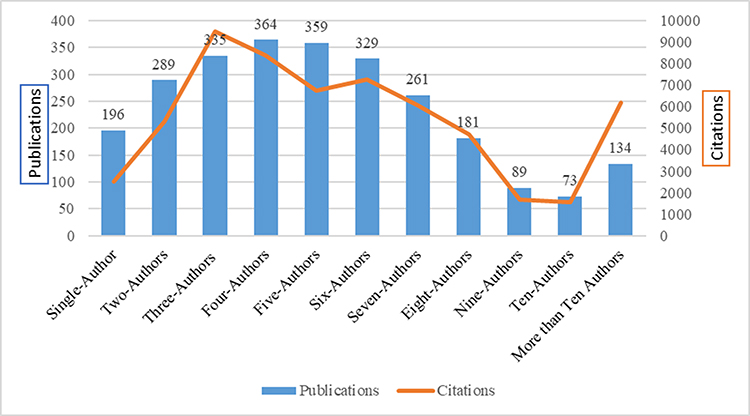 |
Figure 3 Authorship patterns and citation trends. The blue bars represent the number of publications by different authorship groups (from single-author to more than ten authors), while the Orange line indicates the corresponding total citations. Data were retrieved from the Web of Science database and analyzed by the authors. |
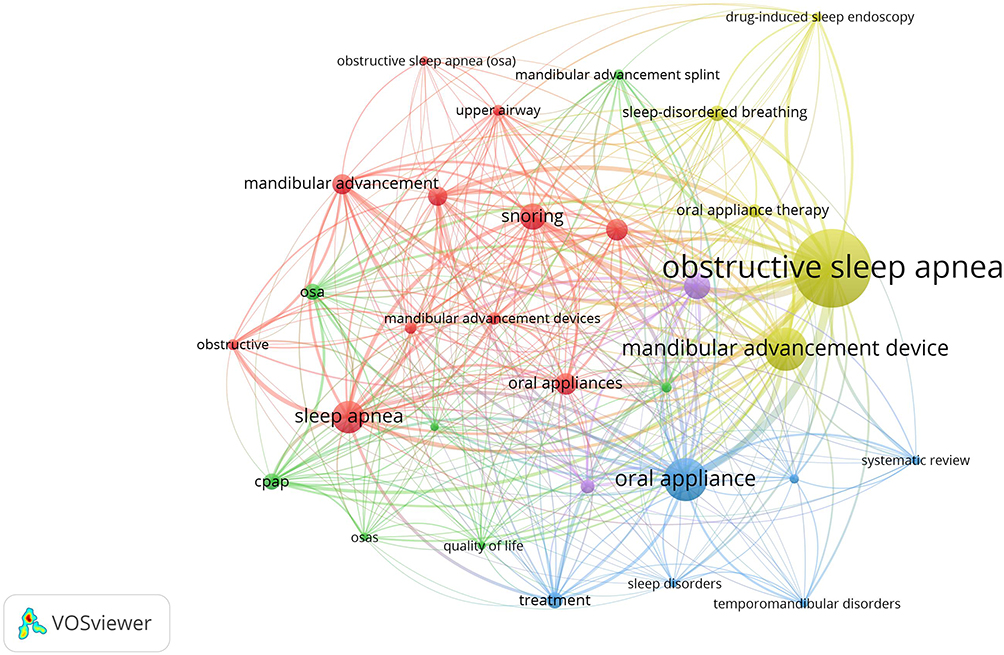 |
Figure 4 Keyword co-occurrence network of publications on obstructive sleep apnea. The map was generated using VOSviewer software from the authors’ dataset retrieved from the Web of Science database. Node size represents the frequency of keyword occurrence, node color indicates cluster grouping, and the thickness of connecting lines reflects the strength of co-occurrence links. |
Discussion
In recent years, Dental Sleep Medicine has drawn increased attention, especially over the last 20 years. Data from Google Trends® shows that interest in mandibular advancement devices has grown dramatically as searches for “oral appliances for sleep apnea” have gone up by over 200% from 2016 to 2024.35 This growing awareness highlights how valuable these devices have become in managing obstructive sleep apnea. Beyond public interest, researchers have published extensively on mandibular advancement devices. This study explores that scientific output through a bibliometric analysis, aiming to identify key trends, influential studies, collaboration networks, gaps in the research, and areas worth exploring in the future.
The findings of this bibliometric analysis have important implications for clinical practice and research in sleep medicine. The rapid growth of publications on mandibular advancement devices (MADs) in the last decade potentially reflects their increasing acceptance as an evidence-based treatment for mild to moderate OSA, particularly for patients who are intolerant to CPAP therapy. However, there were different terms used for these devices. The keyword analysis showed presence of semantically similar terms (eg, “Mandibular Advancement Device” “Oral Appliance” “Mandibular Advancement Splint”), which reveals a need for standardized terminology to enhance research visibility and consistency. In terms of research gaps, the bibliometric analysis on the co-occuring keywords support the need for further studies on the quality of life, temporomandibular disorders in relation to use of MADs, device optimization, and management of comorbid dental sleep disorders.36–38 There is also a need for integrating dental sleep medicine into dental education and supporting interdisciplinary collaboration to improve patient outcomes.39–41
The bibliometric analysis of 2,610 documents published from 1984 to 2024 reveals important trends in both research output and citation patterns. While just 9% of the documents were published in the first 21 years, the volume of publications has increased in the last two decades, with 91% of the documents appearing in the most recent 20 years. Notably, about two-thirds of these publications (62%) were published in the past decade (2015–2024), highlighting a period of rapid growth and increased research activity.
These 2,610 documents collectively garnered 59,930 citations, with an average of 22.96 citations per document, reflecting significant scholarly interest. The highest citation peak occurred in 2009, with documents from that year receiving an average of 59.66 citations, suggesting a pivotal moment or breakthrough in the field. This is mainly due to the publication of the AASM’s comprehensive clinical guideline, which accounted for 47% of the citations in documents published in 2009 and provided evidence-based recommendations on the evaluation, management, and use of oral appliances for obstructive sleep apnea.14 In summary, the analysis reveals substantial growth in the field, particularly in recent years, with the 2009 publications standing out as especially impactful.
The analysis of top 15 frequently used journals highlighted that more of documents published in journals related to sleep, respiratory, and orthodontic research fields and their citation impacts varying considerably. Journals like “Journal of Clinical Sleep Medicine” and “Chest” stand out with high citation impacts, while others like “Journal of Sleep Research” have a lower citation impact despite publishing a moderate number of documents. The overall distribution indicates which journals are more influential within their respective fields based on how frequently their articles are cited.
The main limitation of this study is that the analysis relied solely on the Web of Science database, which, although considered the benchmark for bibliometric research, may introduce database bias. Future researchers can include other databases such as Scopus or PubMed, as this will provide broader coverage for the literature on MADs. Additionally, future studies could utilize advanced bibliometric techniques, such as field-normalized citation metrics or regression analysis. These techniques can help to explore the relationships between collaboration networks and citation impact.
Conclusion
- This bibliometric analysis covers research on mandibular advancement devices (MADs) for obstructive sleep apnea (OSA) from 1984 to 2024.
- There has been a sharp increase in publications over the past two decades, reflecting growing interest in MADs as an alternative treatment for OSA.
- The United States produced the highest number of publications, followed by Canada and Australia.
- The Netherlands and Sweden had a higher citation impact, suggesting more influential research despite fewer publications.
- The top contributing institutions were:
- The University of Sydney, Australia
- University of Antwerp, Belgium
- The University of British Columbia, Canada
- Peter A. Cistulli was the leading author in terms of citation impact, with:
- 106 publications
- A citation score of 73.56
Data Sharing Statement
The bibliometric data used in this study were retrieved from the Web of Science Core Collection (Clarivate Analytics). Restrictions apply to the availability of these data, which were used under license for the current study and are not publicly available. However, the processed datasets and analysis outputs generated during this study are available from the corresponding author upon reasonable request.
Author Contributions
Suliman Alsaeed and Ikram UI Haq contributed to the conceptualization of the study. Ikram UI Haq was responsible for methodology, data curation, and original draft preparation. Formal analysis was performed by both Ikram UI Haq and Suliman Alsaeed. Suliman Alsaeed reviewed and edited the paper and provided overall supervision of the project. All authors gave final approval of the version to be published, have agreed on the journal to which the article has been submitted, and agree to be accountable for all aspects of the work.
Funding
This research received no specific grant from any funding agency in the public, commercial, or not-for-profit sectors.
Disclosure
The authors declare that they have no competing interests.
References
1. Malhotra A, White DP. Obstructive sleep apnoea. Lancet. 2002;360(9328):237–245. doi:10.1016/S0140-6736(02)09464-3
2. Jordan AS, McSharry DG, Malhotra A. Adult obstructive sleep apnoea. Lancet. 2014;383(9918):736–747. doi:10.1016/S0140-6736(13)60734-5
3. Teran-Santos J, Jimenez-Gomez A, Cordero-Guevara J, Burgos–Santander CG. The association between sleep apnea and the risk of traffic accidents. N Engl J Med. 1999;340(11):847–851. doi:10.1056/NEJM199903183401104
4. Kushida CA, Morgenthaler TI, Littner MR, et al. Practice parameters for the treatment of snoring and obstructive sleep apnea with oral appliances: an update for 2005. Sleep. 2006;29(2):240–243. doi:10.1093/sleep/29.2.240
5. Peppard P, Hagen E. The last 25 years of obstructive sleep apnea epidemiology-and the next 25? Am J Respir Crit Care Med. 2017;310–312.
6. Senaratna C, Perret J, Lodge C, et al. Prevalence of obstructive sleep apnea in the general population: a systematic review. Sleep Med Rev. 2017;34:70–81. doi:10.1016/j.smrv.2016.07.002
7. Molnar M, Mucsi I, Novak M, et al. Association of incident obstructive sleep apnoea with outcomes in a large cohort of US veterans. Thorax. 2015;70:888–895. doi:10.1136/thoraxjnl-2015-206970
8. Morsy N, Farrag N, Zaki N, et al. Obstructive sleep apnea: personal, societal, public health, and legal implications. Rev Environ Health. 2019;34:153–169. doi:10.1515/reveh-2018-0068
9. Redline S, Azarbarzin A, Peker Y. Obstructive sleep apnoea heterogeneity and cardiovascular disease. Nat Rev Cardiol. 2023;20:560–573. doi:10.1038/s41569-023-00846-6
10. Bradley T, Floras J. Obstructive sleep apnoea and its cardiovascular consequences. Lancet. 2009;373:82–93. doi:10.1016/S0140-6736(08)61622-0
11. DiCaro M, Lei K, Yee B, Tak T. The effects of obstructive sleep apnea on the cardiovascular system: a comprehensive review. J Clin Med. 2024;14:13. doi:10.3390/jcm14010013
12. Konečný T, Kara T, Somers V. Obstructive sleep apnea and hypertension: an update. Hypertension. 2014;63:203. doi:10.1161/HYPERTENSIONAHA.113.00613
13. Patil S, Ayappa I, Caples S, Kimoff R, Patel S, Harrod C. Treatment of adult obstructive sleep apnea with positive airway pressure: an American Academy of Sleep Medicine clinical practice guideline. J Clin Sleep Med. 2019;15(2):335–343. doi:10.5664/jcsm.7640
14. Epstein L, Kristo D, Strollo P, et al. Clinical guideline for the evaluation, management and long-term care of obstructive sleep apnea in adults. J Clin Sleep Med. 2009;5(3):263–276.
15. McEvoy RD, Antic NA, Heeley E, et al. CPAP for prevention of cardiovascular events in obstructive sleep apnea. N Engl J Med. 2016;375(10):919–931. doi:10.1056/NEJMoa1606599
16. Sutherland K, Vanderveken OM, Tsuda H, et al. Oral appliance treatment for obstructive sleep apnea: an update. J Clin Sleep Med. 2014;10(2):215–227. doi:10.5664/jcsm.3460
17. Bartlett D, Wong K, Richards D, et al. Increasing adherence to obstructive sleep apnea treatment with a group social cognitive therapy treatment intervention: a randomized trial. Sleep. 2013;36(11):1647–1654. doi:10.5665/sleep.3118
18. Sutherland K, Phillips C, Cistulli P. Efficacy versus effectiveness in the treatment of obstructive sleep apnea: CPAP and oral appliances. J Dent Sleep Med. 2015;2(4):175–181. doi:10.15331/jdsm.5120
19. Zozula R, Rosen R. Compliance with continuous positive airway pressure therapy: assessing and improving treatment outcomes. Curr Opin Pulm Med. 2001;7:391–398. doi:10.1097/00063198-200111000-00005
20. Jones D, Braid G, Wedzicha J. Nasal masks for domiciliary positive pressure ventilation: patient usage and complications. Thorax. 1994;49:811–812. doi:10.1136/thx.49.8.811
21. Ramar K, Dort LC, Katz SG, et al. Clinical practice guideline for the treatment of obstructive sleep apnea and snoring with oral appliance therapy: an update for 2015: an American Academy of Sleep Medicine and American Academy of Dental Sleep Medicine clinical practice guideline. J Clin Sleep Med. 2015;11(7):773–827. doi:10.5664/jcsm.4858
22. Chan AS, Sutherland K, Schwab RJ, et al. The effect of mandibular advancement on upper airway structure in obstructive sleep apnoea. Thorax. 2010;65(8):726–732. doi:10.1136/thx.2009.131094
23. Ng AT, Gotsopoulos H, Qian J, Cistulli PA. Effect of oral appliance therapy on upper airway collapsibility in obstructive sleep apnea. Am J Respir Crit Care Med. 2003;168(2):238–241. doi:10.1164/rccm.200211-1275OC
24. Lim J, Lasserson TJ, Fleetham J, Wright JJ. Oral appliances for obstructive sleep apnoea. Cochrane Database Syst Rev. 2006;(1). doi:10.1002/14651858.CD004435.pub3
25. Iftikhar IH, Hays ER, Iverson M-A, Magalang UJ, Maas AK. Effect of oral appliances on blood pressure in obstructive sleep apnea: a systematic review and meta-analysis. J Clin Sleep Med. 2013;9(2):165–174. doi:10.5664/jcsm.2420
26. Venema J, Rosenmöller B, De Vries N, et al. Mandibular advancement device design: a systematic review on outcomes in obstructive sleep apnea treatment. Sleep Med Rev. 2021;60:101557. doi:10.1016/j.smrv.2021.101557
27. Bortolotti F, Corazza G, Bartolucci M, Parenti I, Paganelli C, Bonetti A. Dropout and adherence of obstructive sleep apnea patients to mandibular advancement device therapy: a systematic review of randomized controlled trials with meta-analysis and meta-regression. J Oral Rehabil. 2021.
28. de Almeida FR, Lowe AA, Sung JO, Tsuiki S, Otsuka R. Long-term sequellae of oral appliance therapy in obstructive sleep apnea patients: part 1. Cephalometric analysis. Am J Orthodontics Dentofacial Orthopedics. 2006;129(2):195–204. doi:10.1016/j.ajodo.2005.10.001
29. de Almeida FR, Lowe AA, Otsuka R, Fastlicht S, Farbood M, Tsuiki S. Long-term sequellae of oral appliance therapy in obstructive sleep apnea patients: Part 2. Study-model analysis. Am J Orthodontics Dentofacial Orthopedics. 2006;129(2):205–213. doi:10.1016/j.ajodo.2005.04.034
30. Postol K. AADSM standards for practice: an update for 2025. J Dent Sleep Med. 2025;12(2). doi:10.15331/jdsm.7390
31. Schwartz D, Adame M, Addy N, et al. Emerging models: 30 years of breaking through dental sleep medicine barriers to help patients. J Dent Sleep Med. 2022;9(3). doi:10.15331/jdsm.7252
32. Scherr SC, Dort LC, Almeida FR, et al. Definition of an effective oral appliance for the treatment of obstructive sleep apnea and snoring: a report of the American Academy of Dental Sleep Medicine. J Dent Sleep Med. 2014;1(1):39–50.
33. Pranckutė R. Web of Science (WoS) and Scopus: the titans of bibliographic information in today’s academic world. Publications. 2021;9(1):12. doi:10.3390/publications9010012
34. Kukhanova MK, Zakirova NF, Ivanov AV, Alexandrova LA, Jasco MV, Khomutov AR. Hypophosphoric acid is a unique substrate of pyrophosphorolysis catalyzed by HIV-1 reverse transcriptase. Biochem Biophys Res Commun. 2005;338(3):1335–1341. doi:10.1016/j.bbrc.2005.10.092
35. Google. Oral appliance for sleep apnea [Google Trends data from June 5, 2004 to July 5, 2025].
36. Okuno K, Wang L, Almeida F. Focus of dental sleep medicine on obstructive sleep apnea in older adults: a narrative review. J Prosthodontic Res. 2023;68:227–236. doi:10.2186/jpr.JPR_D_23_00047
37. Lobbezoo F, De Vries N, De Lange J, Aarab G. A further introduction to dental sleep medicine. Nat Sci Sleep. 2020;12:1173–1179. doi:10.2147/NSS.S276425
38. McCloy K, Babiloni H, Sessle B. Sleep disorders and orofacial pain: insights for dental practice. Australian Dental J. 2024;69. doi:10.1111/adj.13037
39. Lobbezoo F, Aarab G. Dental sleep medicine in the dental curriculum: what should be the dot on the horizon? Sleep Breathing. 2020;25:1171–1172. doi:10.1007/s11325-020-02133-x
40. Babiloni H, Beetz G, Fabbro D, et al. Dental Sleep Medicine: time to incorporate sleep apnea education in the dental curriculum. Eur J Dental Educ. 2020.
41. Huang Z, Zhou N, Lobbezoo F, et al. Dental sleep-related conditions and the role of oral healthcare providers: a scoping review. Sleep Med Rev. 2022;67:101721. doi:10.1016/j.smrv.2022.101721
 © 2025 The Author(s). This work is published and licensed by Dove Medical Press Limited. The
full terms of this license are available at https://www.dovepress.com/terms
and incorporate the Creative Commons Attribution
- Non Commercial (unported, 4.0) License.
By accessing the work you hereby accept the Terms. Non-commercial uses of the work are permitted
without any further permission from Dove Medical Press Limited, provided the work is properly
attributed. For permission for commercial use of this work, please see paragraphs 4.2 and 5 of our Terms.
© 2025 The Author(s). This work is published and licensed by Dove Medical Press Limited. The
full terms of this license are available at https://www.dovepress.com/terms
and incorporate the Creative Commons Attribution
- Non Commercial (unported, 4.0) License.
By accessing the work you hereby accept the Terms. Non-commercial uses of the work are permitted
without any further permission from Dove Medical Press Limited, provided the work is properly
attributed. For permission for commercial use of this work, please see paragraphs 4.2 and 5 of our Terms.