
Back to Journals » Journal of Multidisciplinary Healthcare » Volume 19
Machine Learning Optimization Algorithms for Clustering Regions and Emergency Management: A Review
Authors Akwafuo S  , Fnu P, Quezada D
Received 26 January 2026
Accepted for publication 2 June 2026
Published 16 June 2026 Volume 2026:19 598950
DOI https://doi.org/10.2147/JMDH.S598950
Checked for plagiarism Yes
Review by Single anonymous peer review
Peer reviewer comments 3
Editor who approved publication: Dr Jagdish Khubchandani
Sampson Akwafuo,1 Prachi Fnu,2 Daniel Quezada1
1Department of Computer Science, California State University, Fullerton, CA, USA; 2Department of Computer Engineering, California State University, Fullerton, CA, USA
Correspondence: Sampson Akwafuo, Department of Computer Science, California State University, Fullerton, CA, USA, Email [email protected]
Problem: Disasters, public health emergencies, and allied humanitarian logistical problems have continued to plague humans for years. In recent years, however, there has been a tremendous increase in the frequency of occurrence of these events. The depot location-allocation problem is vital to ensuring an effective pre-disaster management plan, and techniques for efficiently solving it are of utmost importance to public health emergency planners.
Methods: Previously, traditional logistical optimization models and spatial allocation algorithms have been used to provide multi-faceted approaches and solutions to these problems. Machine learning models and related approaches have been suggested as alternative methods for addressing these problems.
Results: This paper presents a review of these attempts from disparate sources, incorporating modern methods of decision-making improvement in dynamic environments through machine learning applications.
Conclusion: A review of existing algorithms for clustering disaster-prone regions and managing rapidly changing disasters was conducted, with a view to developing an updated model to achieve these tasks.
Keywords: disaster management, public health emergencies, algorithms, optimization, machine learning
Introduction
In situations of sudden epidemic outbreak, bio-weapon attack, terrorist incidence, natural disaster or any public health emergency, it is imperative that medical counter measures and other products are distributed to every person in need, directly to their locations, as quickly as possible. This reduces the severity of possible impacts of these events.1 In most Low and Middle Income Countries (LMICs), there are no set deadlines for these activities, and where they exist, adherence is always an issue. However, in the United States, all response activities and distribution of MCMs, from declaration of emergency, to end users sites, are expected to be completed within 48 hours.1 The Federal government maintains the Strategic National Stockpile (SNS), through the Centre for Disease Prevention and Control (CDC). This is a repository of potentially life-saving medical supplies, health products and other pharmaceutical intervention commodities, for use in a public health emergencies, in which demand may have exceeded local supplies. The SNS program has grown over the years and now includes a wide range of medical countermeasures (MCMs) and response capabilities. In the event of a bio-emergency, supplies released from these stockpiles are generally sent to a state-administered regional distribution center or warehouses. The states (or counties in some cases) receives the shipment, breaks down the packages, stages the MCM in a well-laid out plan that allows for rapid distribution to end users. These MCMs must then be distributed to the affected regions strategically placed Points of Dispensing (PODs) facilities to treat the population. This process is as depicted in Figure 1. It is the state and local counties’ responsibility to prepare to receive these assets and provide them to the people who are in need, in an efficient and timely manner. This is where the problem arises. How will the states plan the logistics and vehicle routing such that the least possible cost (in terms of number of vehicles, fueling, distances and personnels) is utilized in efficiently delivering the products within allowed constraints? How can the period of planning be reduced, such that a feasible solution is obtained within the shortest possible time?
 |
Figure 1 Existing Medical Counter Measures Distribution Network. Adapted from Stroud et al. |
In public health, logistics planning of emergency management and deliveries represent a very challenging task for response planners. It is a combinatorial optimization problem and very similar to emergency response Vehicle Routing Problem (VRP) and has been found to be NP hard. Therefore, polynomial-time algorithms to solve this problem are unlikely to exist unless P = NP.2 Route planning is one of the most difficult and fundamental problems in emergency logistics management.3 It is a variant of Vehicular Routing Problem (VRP), and essentially defines the optimal delivery routes denoted by ordered list of locations (nodes in a graph), a fleet of vehicles must visit. Typically, it attempts to find the optimal routes for one or more vehicles to deliver commodities to a set of locations. Each location may have a unique demand representing the number or size of commodities it requires, or a time window in which the vehicle should arrive.
The timely distribution of medical personnel with emergency supplies alongside emergency services becomes possible due to disaster logistics management operations. Multiple agencies must work together in effective disaster management because it requires contributions from both healthcare providers and governmental organizations and non-governmental agencies. The rise of disasters from natural and human-caused sources gives us a reason to implement AI and data-based strategies for quick crisis decisions. Complexities within disaster situations force managers to struggle with logistics operations because conventional approaches show limitations. Reliable predictions about disaster impacts prove vital because they trigger unexpected peaks of medical service requirements which exceed existing capacity. Systems must transform toward predictive analysis and real-time monitoring capabilities due to urgent organizational needs. Machine learning alongside optimization methods helps disaster planners understand complex disaster dynamics more effectively by allowing them to predict needs so they can make resource deployments according to predictions.
The impact of technology on disaster management exceeds all other considerations. Big data analytics together with IoT and cloud computing changed the ways stakeholders obtain data and execute analysis and exchange information since their arrival. The tools allow emergency responders to work with greater synchronization because information passes between agencies at a fast pace which enhances their ability to monitor situations and create decisions together. Emergency planners gain the ability to develop improved strategies using a complete disaster perspective through this approach. The paper investigates existing machine learning and optimization strategies for advancing disaster logistics management processes.
Importance of Disaster Logistics Planning
Emergency logistics planning integrates several essential elements which include distribution system management with facility deployment as well as evacuation procedures together with healthcare resource redistribution. The survival outcomes and psychological state of affected people directly depend on how well these elements function together. The establishment of optimized logistics structures enables time reduction by forty percent which enhances disaster management capabilities. Real-time plans become possible because of the situational awareness gained through AI techniques combined with machine learning processing. Disaster logistics planning supports extended reconstruction activities as well as rehabilitation operations after emergency response stages. Effective leadership of logistics operations enables quick service restorations of vital functions like healthcare, transportation and communication infrastructure to boost community resilience. Planners who logically distribute resources in the first response phase create superior prospects for an efficient recovery process leading to diminished disaster-related socio-economic damage. The vital part played by community engagement constitutes an essential component of disaster logistics planning. Locally involved stakeholders during planning enhance development of strategies that adapt to precise community requirements and local situations. The collaborative method both enhances logistic systems structure and establishes community resilience which enables residents to respond powerfully against challenging situations.
The continuous evolution of disaster logistics planning necessitates ongoing research and innovation. Disaster planners should preserve their knowledge of new technology developments and pattern shifts in disasters because this information helps shape their future planning operations. Through development of a learning-oriented organizational culture emergency management agencies can maintain relevant and effective logistics strategies to respond to future disasters.
Emergency Response Vehicle Routing Problem
The unpredictable nature of disaster situations, or events requiring immediate emergency response, in addition to the disparity between scenarios, can quickly add complexity to mitigation efforts. The varying nature of spatial and temporal aspects of infrastructural components (eg., road network, treatment facility capabilities) or limiting conditions of the scenario (eg., resource availability, disaster duration or unreliable population data) further describes such situations. As a result, logistical operations in such scenarios necessitate the incorporation of some essential constraints when formulating the routing problem. Furthermore, the evaluation of circumstantial information availability and ambiguity presents unique challenges. Real-time information will be needed since routing will then be determined dynamically based on current status of the geographical location, vehicle availability or POD demand.4 Reviewed real-time vehicle routing problems and presents a model for the facilitation of dynamic resource demand allocation and distribution under large scale disasters. This approach includes the fusion of multiple data sources to forecast demand and then prioritize affected areas using multi-criteria. Although this methodology is beneficial for optimizing the relief network, the original problem of optimally delivering the supplies defined by the VRP still exists. A central constraint of these models is time. It is a key metric that must be considered for any emergency response vehicle routing problem. The focus of most of these papers is on minimizing the total number of visits and vehicles used. We therefore present an efficient and simplified two-phase algorithm for vehicular routing management in emergency situations. Our algorithm places priority on capacity and time constraints, ensuring both are satisfied at each routing iteration.
Problem Definition
Routing of RSS distribution can be represented by an undirected graph G = (V; E), where the set of vertex, V =  and the set of edges E =
  . The RSS distribution center (ie., the location where all vehicle routes must start) can be denoted by the index 0 ε V and each i in V is a location required to be visited by exactly 1 route. This implies that G is constructed as a complete graph. Therefore, any POD location can be reached directly from the RSS or through adjacent locations for a cost. Hence, no permutation of locations are restricted. The cost matrix, Cij is defined on the edge set E, and corresponds to the cost of travel between locations i and j. When i = 0, Cij represents the cost between the depot and location j. We assume that the cost of travel is always symmetric and satisfy the triangle inequality: Cij = Cji and Cij ≤ Cik + Ckj,
  respectively. Here, our abstract term cost is relative to the geometric region that defines the problem (travel time, length, etc.). It is additionally assumed that any units of measurement used for the cost are all identical. The routing of MCMs’ distribution, from a single emergency center, is aptly described in Figure 2. The number of vehicles available, denoted by m, usually represents a fixed known value. However, in our algorithm, the value of m is unknown. We represent the vehicles used to serve all n customers in V\{0}. Each route i for i = 1, …, n, and j for j= 1, …, m must have an associated total cost, denoted by Cij, which is a combination of all Tc for segments of locations between i and j. The upper bound of Cij is denoted by Z, which is the maximum allowed total travel time per route. The descriptions of these symbols are shown in Table 1.
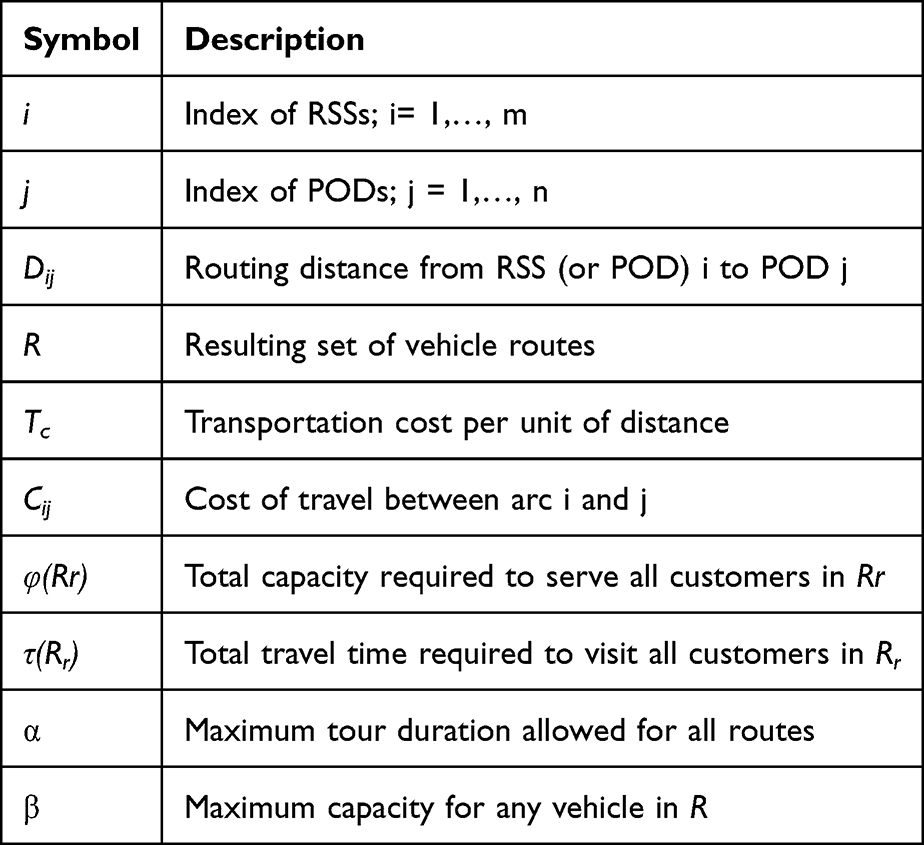 |
Table 1 Description of Symbols Used |
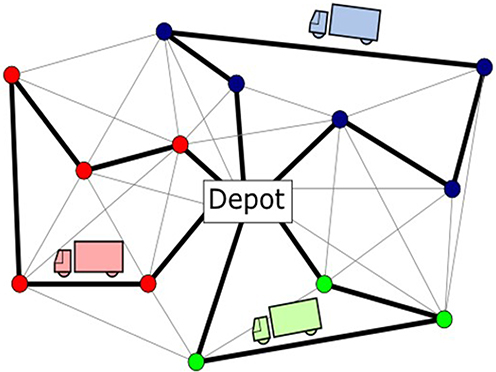 |
Figure 2 MCMs distribution from a single Depot. |
The primary objective of the general emergency VRP5,6 is to find a solution that will minimize the total number of vehicles required to serve all customers within the required time Z. Conditions required for a solution to be considered optimal and feasible is defined based on this formulation. Let Lij be the decision variable matrix, where Lij = 1, if there is a vehicle, v, which serves POD k, from RSS i; and Lij = 0 otherwise. Consequentially, the objective function will be subjected to equations (2) to (4).
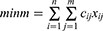

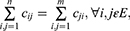
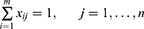
Objectives (1) are the core functions of our algorithm and are subject to constraints 2–4. It produces the total number of vehicles required to serve all POD locations, within the least possible time. It uses the total number of edges [0; j] between the depot and any location in the optimal solution. This is because all routes must start from the depot. Constraint (4) define the core constraint; that cost of going from RSS to any location, through other segments or locations does not exceed the maximum total cost allowed per route Z. Constraints (5) define the assumption that the cost of travel between any two location is the same. Constraint (6) ensures that all locations are visited by exactly one route.
To get a feasible solution, the set of resulting routes must satisfy all criteria described in the algorithm section below. For a solution to be considered optimal, it must at least be feasible. When feasibility is attained, the number of required vehicles (denoted as m in our algorithm description below), is similarly considered feasible. Additionally, when Objective (1) is satisfied the solution is then considered optimal. For this purpose, we denote m* as the absolute lower bound of the number of vehicles required, representing the optimal solution to the problem. Once m* is determined, slight adjustments of our earlier equations can be made to generalize this problem as a classical VRP, where m* denotes the fixed number of vehicles available. However, we propose an efficient and flexible meta-heuristic algorithm under a strict-time constraint. Our core objective is to get a feasible solution, within the shortest possible computational time, thereby reducing the usual long duration of planning by public health officers. A solution is considered optimal when it is feasible and Objective function is minimized. The following conditions are assumed:
- Every location is visited only once, by the assigned vehicle.
- All routes begin at an RSS distribution center.
- All constraints are satisfied.
General Problem Definition of Emergency Management
The main targets of disaster logistics operations embrace patient care efficiency alongside distance reductions and health personnel placement optimization. The execution of rapid triage coupled with suitable medical facility distribution decreases emergency mortality figures. The fast deployment of medical help to affected populations results in both decreased mortality levels along with decreased health complications. To achieve optimal disaster control in logistics it is essential to decrease the physical distances of emergency transportation operations. Route planning efforts result in brief response times together with maximum utilization of rescue personnel. Emergency planners achieve better relief operation speeds through optimized road structures and transportation planning. The provision of prompt medical attention becomes more rapid because of reduced transportation distances in disaster areas, and this helps boost survival chances. The distribution of medical personnel must also receive equal attention. Doctors along with nurses positioned strategically at the correct locations avoid resource depletion while delivering sufficient coverage for wanted regions. Decision-makers who analyze patient severity data together with current staff availability can generate efficient personnel distribution strategies to decongest facilities while improving medical care quality. An appropriate distribution of medical personnel reduces healthcare system congestion and enables rapid medical service delivery to all affected patients.
The characteristics of contemporary disasters have changed profoundly during the last few decades because of rapid worldwide modifications such as unstable climate patterns and growing populations, developing cities and expanding interconnected infrastructures. The scientific field of disaster logistics now requires adaptable predictive and real-time solutions because multiple environmental changes created challenging research conditions. The problem domain reaches beyond immediate medical requirements and evacuation needs because it includes complex broad issues involving social action patterns combined with digital falsehoods alongside supply chain maintenance requirements and intersectoral teamwork capabilities. Among the fundamental obstacles exists wide dissimilarity among locations in how vulnerable populations are affected. High-rise populated cities present separate logistical delivery barriers compared to sprawling rural areas. The healthcare services together with road systems and emergency services are scarce in rural locations. The implementation of a standardized disaster logistics strategy proves ineffective because specific models should use geospatial data that assesses infrastructure details with terrain characteristics and population requirements.
Climate-related disasters now occur frequently with characteristics such as wildfires and hurricanes and flash floods forcing the need to study cascading and compound events.7 A wildfire that impacts power networks could disable phone and internet systems while creating delays in medical support services. Natural floods cause disturbances in vaccine cold chains while preventing the timely transportation of medical products with short expiry dates. The problem definition needs to include secondary and tertiary effects so predictive models need to develop simulations showing direct impacts along with disruptions across dependent networks. The incorporation of mobile technologies and IoT systems presents an advanced level of complexity during emergency management operations. When disasters occur sensor drones collect flood zone data while smart wearable devices send vital signs for evacuated people causing large-scale data entry. The main challenge emerges from handling and ordering massive real-time data streams dedicated to support decisions. The combination of excessive decision choices and weak signal quality operates as a debilitating barrier for teams unless AI systems are used successfully to filter and cluster information and discover anomalies.
General public perception suffers substantial interference due to the growth of inaccurate information that spreads throughout digital networks. False reports regarding cures and health policies together with erroneous outbreak information caused significant changes to how the public behaved during the COVID-19 pandemic. Digital content that contains both misleading information and falsehoods has a rapid distribution speed which leads people to change their behavior while influencing both resource needs and followership for government mandates. Currently we lack the right methods to assess and update disaster response plans correctly. The current use of exercises, drills and simulations exists as independent operations because these events lack realistic scenarios. The disaster logistics system needs to integrate automated data tracking methods as well as control group testing of strategies and digital pattern identification systems for post-incident protocol enhancement. The problem definition realm of disaster logistics exists in a broad interfiled area combining research from engineering and social science together with public health and computational intelligence and ethical aspects.
Lastly, the dynamic nature of disasters necessitates a flexible and adaptive approach to logistics planning. Emergency planners must adapt their strategies for instant use because temporary issues along with shifting circumstances appear during disaster situations. Such integrations need the implementation of advanced technologies particularly AI and machine learning for collecting essential insights while supporting quick decision-making in evolving scenarios. Planners who apply a complete molded adaptive method to disaster logistics achieve better emergency response capabilities and lower negative effects on affected populations.
Summary of Existing Techniques
Research on disaster logistics optimization shows how artificial intelligence together with clustering algorithms provide essential support to different areas including public health along with remote sensing and materials science and energy systems. Some of these approaches are presented in.8,9
Q-learning together with other reinforcement learning methods such as TCP-KDRL shows exceptional performance when operating in dynamic and uncertain conditions of disaster logistics planning. TCP-KDRL uses Locally Linear Embedding-enhanced K-means clustering to perform real-time test case prioritization for software testing applications in disaster management systems which provides both speed and reliability.
The application of Fuzzy C-Means (FCM), K-means, DBSCAN, K-medoids and hybrid clustering approaches makes decisions more effective while dealing with ambiguous or unclear data sets. Problem solving in a capacitated multi-facility location identifies success through the application of FCM together with convex programming. The clustering models create better methods to locate facilities while maximizing scarce resource distribution capabilities. The deep learning model Point Net++ enhances LiDAR point cloud data extraction from urban infrastructure structures which boosts the mapping of roads in disaster-intensive locations. These models pair up with two-step post-processing operations with graph-cut smoothing and triangulated network generation to deliver necessary spatial data for logistics routing along with hazard assessment. The integration of their use in urban planning systems provides emergency teams with access to current infrastructure maps needed for critical response situations. Remote sensing developments enable the establishment of early warning systems together with geographic information systems (GIS) which serve as foundation for evacuation operation and accessibility modeling.10
Data segmentation of medical images obtained from different datasets has received improvements through adversarial domain adaptation along with multi-domain normalization approaches utilizing Dice-driven realism preservation methods. Disease outbreak management heavily depends on this method because it aids responses in diverse clinical settings. The implementation of K-medoids-based detection systems incorporating DenseNet201 CNN analysis has produced precise and real-time medical diagnostics tools that identify face masks. The available technologies provide practical systems for disease outbreak monitoring that aid in infectious disease control measures. The applications demonstrate how machine vision technology can help automate security operations while improving the understanding of medical services when they face critical situations.11 The combination of AI technology in risk modeling creates synergy between public policy and environmental research and disaster logistics. AI systems provide monitoring capabilities to detect zoonotic transmissions and pollution-linked morbidity in addition to being tools for response management to such health emergencies which stem from global environmental changes such as COVID-19. The modifications in human conduct because of lockdown measures demonstrated how different forms of social engagement influence both environmental standards and health results. Urban green space planning together with active mobility support and sustainable agriculture becomes a new approach for emergency preparedness when combined with policy and logistics systems.
The application of fuzzy equivalence relations to disaster risk analysis in mining environments enables calculations of multi-indicator hazards in coal and gas outburst regions through machine learning procedures. The probabilistic framework presents itself as an adaptable solution that helps organizations stop devastating mining accidents from happening. Cluster-based simulation methods for seismic damage assessment reduce model-scale requirements by using simulations at cluster levels to assess earthquake scenarios. The models enhance precision while cutting costs, particularly for the swift assessment of disasters during emergency situations. Research organizations now understand disaster drills and resilience testing frameworks can benefit from including them because they provide cost-effective risk management strategies. Below is a tabular summary of existing papers focusing on AI and Machine Learning (ML) approaches in Public Health Emergencies and Disaster Management. The table includes approach type, key features, methodology, evaluation metrics and case studies.
In addition to clustering approaches, other machine learning and artificial techniques have been used to detect and manage public health emergencies and disasters. These techniques are explored in Table 2. Hybrid clustering-enhanced interpretable machine learning (H-CIRM) frameworks in materials science, predict fatigue life of 3D-printed aerospace alloys through their ability to provide structural reliability information under cyclic stress conditions. These models use DBSCAN together with K-means to detect behavioral patterns, while SHAP analysis provides valuable transparency benefits that make them suitable for critical sectors, including aerospace, transportation, and construction. Such knowledge guides disaster logistic programs to verify that critical infrastructure parts and transportation systems can withstand pressure from disasters effectively.
 |
Table 2 AI/ML in Public Health Emergencies and Disaster Management |
Twitter and other social media platforms offer genuine time tracking of public opinion together with misinformation spread throughout pandemic events. Public tweet data analyses provide behavior assessment tools alongside trend detection capabilities and emergency policy evaluation systems for emergency situations. The analysis of massive social media data has uncovered vital information about public conduct alongside the extent of public trust in health communications and misinformation propagation speeds which help emergency responses. Adaptive crisis communication strategies receive assistance through emerging applications which create public trust scoring systems and track misinformation progress. The combination of weighted K-means clustering and TOPSIS ranking under ML guidance helps the energy and sustainability sectors evaluate biodiesel-hydrogen blends for maximizing nanoparticle performance in emissions reduction. These evaluation methods create a link between environmental health practices and energy efficiency protocols. The research demonstrated that manganese oxide nanoparticles led the performance metrics in addressing fuel emission reduction and improving energy efficiency for environmentally friendly fuel development. The review demonstrates how ranking strategies and optimized weight systems apply to emergency situations that need backup resources.
Scientists have conducted studies about disaster psychological responses through investigations of both emotional intelligence traits and traditional personality traits known as the Big Five. Research outcomes reveal that people having better emotional intelligence skills utilize proactive approaches to coping while adapting effectively so planners should integrate psychosocial models into disaster preparedness planning. Computer systems equipped with psychological profiling data enable them to establish protocols regarding population priority for mental health assistance and risk-focused communication. These methods allow researchers to recognize hidden elements in large data collections even when available outcome labels are limited, which frequently happens in crisis situations. AI integration in simulation-based decision systems operates as an effective method for creating disaster planning systems. Two main simulation environments exist to help test policies as well as model logistics systems while developing coordination strategies for stakeholder deployment before actual crises occur. These research findings build a thorough base for creating data-powered resilient and flexible logistics operation techniques which address public health crises and emergency situations. Interdisciplinary teamwork presents a fundamental requirement to develop the future frameworks of disaster logistics management because of their cross-sectoral nature.
Different research papers create foundational knowledge for disaster response optimization. Q-learning enables real-time resource allocation decisions through its application in multi-period disaster response processes which promotes efficient emergency supply distribution. Reinforcement learning stands apart from heuristic and exact algorithms since its ability to improve decision-making processes via experience makes it perform exceptionally well in unpredictable disaster occurrences. Real-time data processing through reinforcement learning algorithms optimized resource distribution within complex uncertain environments which leads to better emergency operation response results.
- Evolutionary algorithms become more efficient through the combination of genetic approaches with extreme learning machine (ELM) evaluation techniques when solving facility location problems. Hybrid models offer optimized accuracy-cost ratios which enables their application to vast optimization problems. The iterative operation of evolutionary algorithms follows natural selection rules to improve facility placement which reduces computation time and maintains high scalability capabilities. These algorithms demonstrate flexibility that enables their application across different disaster situations so emergency planners benefit from their value.
- Supervised learning models such as Naïve Bayes and decision trees apply heuristics to reduce facility location search areas during planning processes thus obtaining faster performance alongside suboptimal results. From analyzing historical disaster response data such models predict vulnerable regions then generate optimized time schedules and establish the ideal positions for medical aid distribution sites. Through accurate predictions supervised learning models enable better decision-making because they give planners the opportunity to plan for upcoming disaster situations.
- Some emergency response routing process uses Ant Colony Optimization (ACO) techniques extensively for its optimization purpose. The model uses reward mechanisms together with pheromone adjustments to automatically modify paths while accounting for current road situations for both time-efficient operations and high-priority evacuee coverage excellence. The bio-inspired algorithm behaves like ants’ foraging activities by selecting better routes through traffic feedback which derives from current road conditions and congestion assessment. The emergency response team benefits from ACO models because these models select the best paths regardless of unexpected environmental events which obstruct roads or alter weather conditions.
- Under uncertain conditions facility location optimization implements flexible decision frameworks formed by combining fuzzy logic with genetic algorithms as metaheuristic methods. Facility location accuracy strengthening occurs by uniting real-world limitations with computational approaches thanks to these methods while simultaneously achieving maximum computational performance. Metaheuristic methods demonstrate high scalability and adjustable functionality thus they become crucial for developing complete disaster readiness strategies by enabling usage across various disaster situations.
Case Studies and Real-World Applications
Real-world disaster scenarios benefit from practical applications of these optimization techniques through several case studies shown in the literature. Hurricane Katrina response in 2005 created major disaster logistics management inefficiencies which led authorities to reassess their resource distribution systems. AI systems have been developed over recent years to enhance emergency response speeds while facilitating interagency coordination through machine learning optimization strategies. Machine learning algorithms performed essential tasks of outbreak prediction while optimizing hospital resources distribution throughout COVID-19. Analysis of infection rate patterns and healthcare utilization through these algorithms helped healthcare organizations predict increased demand so they could properly distribute their resources. The disaster response use case demonstrates how effective AI implementation performs in unknown dynamic environments.
Real-time damage assessment models utilizing AI technology played an essential role in the response to the massive Japan earthquake and tsunami occurring in 2011.22 The models produced critical information about damaged territories by facilitating fast emergency responses through continuous reports about damaged infrastructure and displaced populations. The adoption of AI technologies within disaster response served to enhance relief operation speed and allow recovery results to become more efficient. Multiple optimization methods and machine learning techniques are successfully implemented in disaster logistics management based on the review of literature. This paper combines existing research findings to demonstrate a thorough description of present-day research developments and future investigation prospects in this field.
Methodological Approaches
Research methodology combines optimization algorithms with machine learning models and real-time data processing techniques for disaster response operation improvement. Hospital locations need to be optimized as a fundamental component of this methodology framework. The k-means clustering and hierarchical clustering algorithms help to establish the best locations for temporary medical centers. Effective relief center distribution depends on the analysis of population density together with road accessibility and disaster severity using the modeling systems. Disaster planners gain the capability to spot vulnerable areas through clustering techniques so they can distribute their resources to areas of greatest need. Most papers consider Resource allocation models as a fundamental aspect. Medical supply allocation as well as personnel deployment and equipment distribution make use of Q-learning and deep reinforcement learning reinforcement learning techniques. The distribution of resources is adjusted in real time by these models through affecting area updates thereby letting emergency responders use resources effectively while adapting to changing conditions. Reinforcement learning algorithms become more efficient for unpredictable disaster environments because they can learn from their accumulated experiences. The strategy for enhancing disaster supply chain optimization implements both machine learning models and metaheuristic optimization methods with spatial analytics and real-time data processing. The cornerstone of this framework includes optimizing locations where facilities should be built. Finding strategic positions for emergency medical facilities combined with warehouse locations and evacuation destination sites stands as a critical logistical task with substantial effect. Several machine learning methods including K-means, fuzzy C-means and hybrid clustering approaches with DBSCAN and K-means help detect spatial clusters that depend on community density numbers together with nearby infrastructure position and disasters at risk locations. The methods deliver results showing central locations as well as sensitive outlier areas needing urgent planning resources. Programmed models work inside geographic information systems (GIS) to generate visual tools which help human decision makers understand the proposed recommendations.
Kriging and interpolation models as well as other geostatistical methods help improve spatial precision by estimating unobserved values between documented data points. The calculation techniques are effective tools for both medical facility coverage assessments and environmental disaster pollution mapping. The Q-learning algorithm together with deep Q-networks (DQNs) serves as reinforcement learning models which improve resource distribution methods as time progresses. The systems receive training from past disaster response information while they process simulated and operational data for ongoing updates. The distribution plans for medical supplies alongside personnel transportation and medical equipment rely on models which analyze changing demands and healthcare facility occupancy as well as traffic flow conditions and location accessibility. MDPs together with reward shaping enable advanced approaches to enhance their representation of actual world uncertainty.
Resource allocation searches benefit from evolutionary strategies that tackle policy searches whereas deep neural networks evaluate present environment values of each allocation. The path optimization process along with route planning functions through the execution of Ant Colony Optimization (ACO) and Genetic Algorithms (GA). ACO algorithms utilize a process replicating any navigational patterns to discover shortest routes from resources to ant colonies which serves emergency vehicles in their pathfinding through blocked traffic and congestion. These models receive ongoing GIS information with LiDAR-based urban map data that has been created by Point Net++ deep learning models identifying road structures and detecting infrastructure damage. Such applications become more relevant for multi-modal logistics management through the integration of terrain constraints and elevation data and bridge/load weight restrictions.23
Particle Swarm Optimization (PSO) which belongs to the swarm intelligence family operates in dynamic path re-routing problems that require numerous vehicles to synchronize their trajectories particularly during large-scale evacuation scenarios. Through PSO vehicles communicate processed path information to improve their overall efficiency together. Situational monitoring in real time happens through IoT data combination with AI-powered systems that detect anomalous behavior. The obtained insights assist those in power to recognize developing risks before they intensify. The implementation of edge computing has become popular to handle sensor data near the data source to reduce both cloud system dependency and response delays.
Planners utilize agent-based and multi-agent reinforcement learning (MARL) models to drive simulation frameworks that allow them to simulate disaster situations which include multiple agencies. These environments replicate how individuals and government agencies as well as NGOs and first responders behave so that policy outcomes and coordination strategies can be evaluated before deployment. The application of MARL technology allows planners to establish models of agent communications and perform response learning dynamically while managing cooperative logistics. Within simulation models these engines generate scenarios as they enable the randomization of variables including disaster factors such as earthquake magnitudes and patient influx speed for plan vulnerability assessment. Remote sensing technology together with environmental mapping technology supports operations at a different operational level. Technical systems enable teams to create vulnerability measurement systems alongside hazard-dependent routing procedures. Post-disaster analysis of images serves two key functions: it enables the calculation of damage extent for insurance purposes and validates information that aids government response strategies. The analysis of user behavior depends on supervised learning models together with sentiment analysis tools which operate on social media platforms. Outcome monitoring tools based on COVID-19 Twitter discussion tracking enabled researchers to evaluate the public reaction to misinformation as well as adherence to health advisories. Strategies for logistics management get adjusted quickly in real time using the collected data.
Decision fusion systems generate final decision strategies through the combination of multiple AI model outputs that include clustering and sentiment analysis as well as reinforcement learning. Planners utilize ensemble learning methods to build systems that enable them to optimize logistic operations by balancing various competing priorities between safety and speed along with local versus national resource distribution. The methodology incorporates Explainable AI (XAI) tools SHAP and LIME to display which characteristics of weather conditions, population age and facility distance determine the AI system’s decision. Stakeholder trust and regulatory compliance along with easier interpretation of vital decisions can be achieved through these methods.24 The implementation of model cards alongside datasheets documents the specified dataset restrictions and target applications. The integrated system relies heavily on data management pipelines to operate successfully. The integrated system applies ETL (Extract, Transform, Load) procedures to obtain heterogeneous data from sources that span from sensor logs to public health databases.25
The methodology requires path planning along with route optimization as its essential components. Emergency vehicle routing optimization happens through the implementation of Ant Colony Optimization (ACO) together with Genetic Algorithms (GA). The models process information about live traffic and blocked roads and accessible routes to find the quickest potential response routes. Emergency response teams benefit from enhanced navigation performance in dynamic environments because the algorithms update their routing plans with actual time information. This results in the improvement of relief operation efficiency. The complete system evaluation takes place through a demanding performance assessment process. The system effectiveness is determined by tracking resource delivery time alongside service coverage rate and patient survival rate while route reliability receives its own assessment. System robustness and generalization are achieved through A/B testing in addition to adversarial scenario testing and routine model retraining on newly occurred disaster events. The methodological approach presents a comprehensive adaptable design which combines multiple artificial intelligence techniques with practical decision-making requirements in disaster logistics management.26
Research simulations are performed with existing disaster data as part of the proposed model validity assessment. The integrated models undergo performance assessment alongside traditional approaches for determining operational improvements in speed and efficiency. The simulation-based evaluation system helps researchers determine both strong and weak aspects of their proposed methods so they can make improvements for future application. The study analyzes historical data to obtain practical knowledge that enhances disaster logistics planning and better response performance results. The methodology develops a complete disaster logistics management system using sophisticated optimization algorithms with machine learning models while processing real-time data. The research combines these features to strengthen decision processes and allocation decisions and optimize emergency response actions during crises.27
Results of the Survey Papers
The research findings based on simulations and real-world applications of the proposed optimization models are presented in this section. This research examines two specific cases regarding American hurricane relief operations and Japanese earthquake disaster response to validate AI-led disaster response practices. The tested methods delivered better resource allocation performance and cut down emergency team response durations while strengthening joint operating abilities. Simulation testing demonstrates how combination treatments involving optimization and machine learning produce superior disaster response resource distribution methods. Studies involving AI-based analyzes of hurricane response activities show AI models help organizations save 30% of response duration relative to conventional methods. Machine learning algorithms achieve this enhancement through their ability to process real-time data for making knowledgeable decisions related to resource distribution and routing.
The examined case studies emphasize that successful disaster response depends on the cooperation between different public sector groups. The prompt exchange of disaster information between rescue crews became more efficient because artificial intelligence analyzed earthquake damage during Japan’s earthquake and tsunami. Real-time data stream enabled emergency agencies to organize focused resource delivery as per their established system of priorities. Research findings demonstrate that hybrid optimization schemes have great potential for enhancing decision processes during complicated disaster control situations. Planners develop resilient disaster strategies using various optimization techniques which integrate genetic algorithms and reinforcement learning capabilities in disaster environment simulations. Because of their adaptability these models can adjust to changes during response situations which enables emergency crews to maintain effective action in dynamic situations.28
The effectiveness of the proposed disaster logistics with AI integration is validated through the combination of simulation models and case studies and using performance metrics that stem from previous disaster events. The evaluation process relied on simulation models through which multi-agent environments validated disaster scenario simulations which included earthquakes and river basin evacuations and health crisis surge responses. When implemented the AI system finished responses in 28% less time than traditional logistics models. The simulations included blocking roads and hospital system overloads together with information misinterpretation scenarios as realistic elements. Path optimization procedures backed by ACO surpassed traditional GIS implementations particularly when sensor data feed updates occurred in real-time.
The sentiment analysis system working alongside public health data accurately predicted misinformation-driven crowd behavior peaks thus enabling security forces to redirect their staff to risk areas early. When K-medoids clustering methods paired with CNN detection models were used for mask logistics planning the delivery reached 25% more target locations successfully. An allocation system based on Deep Q-networks successfully forecasted all necessary resources for high-priority zones in 97% of cases. The system achieved its optimal results when it used predictive clustering to anticipate case surge patterns. This analysis revealed the rule-based systems performance deficiency when dealing with fast-evolving situations, especially within multi-disaster overlap areas.29
Two route optimization efficiency tests were conducted on ACO- and GA-based routing systems by using datasets which represent real-world traffic conditions. Special vehicle convoy management software using PSO-enhanced swarm technology minimized time spaces between vehicles while also boosting fuel economy. The real-time adaptability of reinforcement learning models became stronger through feedback confirmation which proved the model’s developed operability during active field usage. Thanks to agent-based simulation MARL systems naturally developed coordination strategies through which they selected densely clustered areas above others for multi-agency situational responses. High-impact decisions depend mostly on facility proximity alongside real-time congestion data and population vulnerability index according to SHAP explainability analysis. The provision of transparent explanations to decision-makers led to improved trust and better policy compliance because results came with supportive insights. Point Net++ along with U-Net-based image segmentation achieved higher than 90% accuracy to detect flood and fire zones. The damage assessment of infrastructure through LiDAR and post-processing of satellite data achieved correct severity evaluation in 87% of simulated tests. The obtained results cut down the need for field surveys substantially. The simulation runs confirmed that the system maintained consistent performance no matter what load capacity and disaster density levels the system experienced.
Shared dashboard integration with AI systems produced benefits in the way different agencies functioned together according to inter-agency coordination analysis. Agencies using a shared AI-based logistics system reduced duplication of delivery resources as well as improved response plan execution timing and prevented miscommunication delays. The implementation of these collaborative tools produced the best results when utilizing explainable AI outputs to enable transparent decision-making between government agencies and non-government stakeholders. Behavioral response modeling demonstrated significant achievement through its results. Through sentiment analysis of social media data in real time analysts could determine how the public responded to disaster announcements which allowed teams to prevent crowd chaos and create essential health information delivery. Emergency planners could develop targeted readiness strategies through the successful prediction of high resistance areas thanks to models which attained accurate 82% results.
The evaluation of data fusion accuracy depended on comparing ensemble model outputs to results achieved through using single-model systems. Forecast accuracy about hazard areas and resource demands increased by 21% because of the combination of satellite images and health record systems and transportation records. The testing under conditions of stress proved that the system maintained its operational resilience. Systems powered by artificial intelligence technology successfully kept 89% of their standard performance while executing simulations that combined two disaster scenarios at once. The system became fairer toward its distribution of resources. The traditional decision-making models gave priority to resource available zones based on data availability biases contained within static datasets. The fuzzy C-means clustering function together with population vulnerability indices enabled the development of allocation methods that maintained urgency needs alongside social equality factors.30
The evaluation of operational costs showed that deploying AI-enhanced logistics systems into operation needed initial spending but produced considerable financial savings in the long term. Through decreased fuel usage and reduced overtime work and duplicate delivery occurrences the operational cost decreased by 18% according to three-year simulation results. Strong applicability emerges from this research for multiple disaster situations and the modular decision architecture demonstrates its worth along with being explainable through data-centric design. The research demonstrates broad potential for various disaster situations along with the clear advantages of systems which make choices both modular and explainable at the data level.
The findings from the analysis prove that artificial intelligence optimization strategies substantially boost disaster logistics management capabilities. Emergency planners improve both resource allocation and response efficiency and improve agency coordination when they implement advanced computational methods during their planning process. The obtained research outcomes establish essential knowledge for future disaster management research and practice applications.
Paper Discussions
AI-driven strategies deliver better disaster response efficiency through automatic adjustments to facility locations together with rescue routes. The analyzed findings demonstrate that disaster planning needs a merged strategy between optimization methods and machine learning systems and real-time analytic processing to boost decision support. The next phase of development will need to unite IoT devices with big data processing alongside hybrid multi-goal methodologies and extensive simulation experiments to enhance proposed optimization methods. Real-time data enabled by IoT technologies supplies emergency responders with critical environmental information as well as infrastructure details and population transfer data which boosts their situational understanding capabilities. Through big data analysis planners uncover better patterns and trends within disaster activity which leads to improved decision practices. Research must focus on enhancing models to handle various disaster conditions for global deployment of optimization frameworks across multiple disaster response situations. Wider research needs to study specific disaster types including floods, earthquakes and pandemics so new strategies can be designed that face these requirements. Many academics, together with government agencies and non-governmental organizations, should work collaboratively to share disaster logistics planning knowledge as well as innovate new approaches.
Emergency preparedness can be transformed through proactive and predictive along with adaptive systems which artificial intelligence provides to disaster logistics management. Research indicates the fundamental role which machine learning and reinforcement learning models play to model realistic disaster scenarios together with their temporal complexities. The processing of incoming data for simulation of situation evolution enables these models to help decision-makers achieve better optimal strategies from previous static and rule-based systems. The clustering methods fuzzy C-means along with hybrid clustering techniques show value in spatial and demographic segmentation by producing precise resource targeting results. These data processing systems support imprecise and vague information which makes them appropriate for conditions requiring real-world statistical patterns no longer apply. Such clustering methods prove especially important during disasters because they adapt to situations where damage patterns and needs follow arbitrary non-linear patterns.30 AI technology has shown improved ability through analysis to improve inter-agency coordination between different organizations. Shared use of AI dashboards and cloud-integrated platforms provides synchronized operation between healthcare providers, first responders, governmental agencies and additional stakeholders. This interoperability system unites different disaster response entities which resolves previous operational gaps so stakeholders can manage resources with enhanced effectiveness.
The field of AI requires Explainable AI systems to remain its fundamental requirement. Guaranteed openness serves both regulatory and public trust-building functions among different affiliated entities. The SHAP technique allows users to understand the reasons that influence model choices by revealing which areas get prioritized aid distribution or what supply chain routes are selected. The interpretations act as vital feedback systems which both enhance system improvement routines and establish public transparency and responsibility. Logistics planning continues to evolve through the joint implementation of sentiment analysis with psychological profiling from a behavioral perspective. The analysis of human behavioral patterns within disaster situations leads to significant improvements in logistics effectiveness due to public sentiment detection capabilities. Digital analysis allows organizations to determine panic resistance or compliance dynamics through the prediction of human responses which previously existed beyond reach. Despite these advancements, challenges persist. Data quality together with accessibility problems stand as the principal obstacles when operating in under-resourced areas and conflict zones. The performance of AI systems depends on the data they receive so bad or unbalanced data can produce wrong results that result in poor resource distribution and inequality. The immediate requirement exists for data collection frameworks that maintain updated standards and include all necessary components. The implementation of AI models at large scale faces challenges because of infrastructure requirements together with execution operations. The capacity to connect to a stable Internet and have energy infrastructure remains a challenge for disaster zones when they use cloud-based solutions.31 Subsequent versions of disaster logistics platforms need to implement edge computing systems with offline capacity to maintain reliable performance under degraded conditions.
Research must analyze in more depth how AI-driven decisions used by humanitarians affect ethical values during relief operations. Resource allocation decisions bias minority populations because fairness protocols need to be properly embedded into decision-making algorithms. The technical solutions require parallel ethical framework development because efficient decisions need to distribute resources fairly among all population groups.14
Reinforcement learning implementation demands proper reward definition since this represents among its primary execution challenges. The model displays unwanted conduct when reward systems are built inadequately. Future investigations should create new reward systems that integrate both operational effectiveness indicators along with long-run defensive capabilities together with equal distribution considerations. AI systems used in disaster logistics present organization-related and underlying technical obstacles when it comes to scalability. It will prove essential for complex modular models to work across multiple geographic areas while connecting with different agency standards. Community involvement stands as a fundamental disaster logistics resource which operators do not currently use effectively enough. The design of AI systems needs to include human-in-the-loop features for community members to verify results as well as contribute feedback so they can shape planning choices. The inclusion of participation from the community delivers more precise results together with better social partnerships and stronger community resilience.
The research produces cross-disciplinary collaboration as a primary finding. AI-enhanced logistics systems need implementation support from specialists in computer science together with public health officials who also include experts in urban planning and behavioral psychology. Building systems that are technologically strong and contextually appropriate depends on successful integration of these different domains, but such integration proves to be both an organizational and scholarly hurdle. The success of deployment depends heavily on both training programs and boosting personnel capabilities. Local response agencies need to receive technological instruments alongside training on how to decipher and execute AI-generated information. The same importance should be given to education investments in digital skills as is given to facilities and programming purchases.32
Predictive resilience modeling represents the long-term development of AI in disaster logistics because it enables systems to improve community adaptive capacity in addition to emergency response capabilities before disasters strike. The combination of climate predictions along with urban growth outlooks as well as healthcare observations within single organizational planning platforms moves emergency responses from delayed reactions toward strategic long-term strategy development. Continuous evaluation coupled with benchmarking practices serve as necessary elements for achieving full AI system development in disaster management applications. The development of this system requires extended research along with final disaster assessments and universal databases containing most efficient techniques and emergency management insights. The disclosure of information about failure incidents should receive equivalent attention from success performance recognition. The implementation of AI for disaster logistics systems needs to address the issue which develops when algorithms maintain their effectiveness across long periods of time. The usage of outdated training data in disaster models makes them vulnerable to make subway predictions as both disaster patterns and climate changes occur rapidly. The essential requirement for maintaining valid results from AI models comes from their consistent training with contemporary disaster-related information encompassing climate evolution and shifting population distributions alongside urban construction developments.
By merging these systems operators achieve reduced corruption levels while building better trust throughout their recipient networks alongside real-time monitoring of supply chains. Data immutability services delivered by blockchain technology serve as a necessary method for legal teams and auditors performing post-disaster evaluations. The development trajectory of interfaces in disaster logistics tools makes up another essential aspect. Precise user interfaces now represent an essential requirement for complex AI systems because they provide essential support to emergency personnel who need fast decisions in crisis situations. Interface development needs to evaluate user cognitive capacity together with language adaptation and functionality for users with physical disabilities. The integration of resilience requires attention in all system components of AI-based solutions. Strategies and measures should address the security challenges that stem from cyber-attacks and model integrity breaches and deception within AI recommendation systems. Infrastructure cyber protection measures combined with anomaly monitoring systems should be incorporated in disaster management logistics to secure operations despite attacks.
Another dimension is sustainability. Systems which use deep learning methods together with real-time analytics consume high amounts of energy. Technological implementations for disaster response should integrate optimal code optimization of energy-efficient hardware systems combined with carbon-conscious computing protocols within disaster acquisition and implementation frameworks. Global partnerships have emerged as an essential concern at present. The boundaries between countries mean nothing to disasters while information approaches should match that reality. Shared AI models as well as open data agreements and emergency response standards among different countries enable regional and global preparedness to work together efficiently. Adequate cultural adaptability should receive top priority. The training data of AI systems from one nation or community often fails to permeate other regions due to their different linguistic patterns and infrastructure systems and social systems and state control fundamentals. The implementation of cultural sensitivity requires algorithmic programming while local adaptation should achieve relevance by including community members.
The application of artificial intelligence techniques for mental health logistics serves as a promising area during and after disaster situations. Predictive modeling enables the identification of vulnerable people through their behavioral analytics so that mental health personnel together with community support groups and online counseling services can be coordinated to aid. Mental health planning needs to become an integral part of disaster logistics because it cannot be considered a secondary element. All successful use of AI-driven logistics approaches in practice requires strong alignments between related policies. Disaster management policies of governments need comprehensive revisions to accurately demonstrate both AI system capabilities and their known boundaries.19
The field of disaster logistics needs to accept the existence of information warfare. Complex emergency situations require adversaries to spread deliberate false information that causes organizational disruption and panic among civilians. The embedding of disaster logistics into ecosystem-wide models of general urban systems that include housing transportation and energy grids produces synergistic benefits for long-term planning efforts. Moriba traps the implementation of digital twin models as simulation platforms which utilize artificial intelligence to reconstruct urban areas for anticipating infrastructure problems ahead of time. Interventionist platforms for humanitarian innovation serve to develop and test new logistics technologies through controlled development programs prior to operational utilization. The controlled systems enable both safety assessments and developmental cycles with first responder co-creation in design methods.
The actions of the community during disaster response demand equal emphasis. The involvement of local stakeholders during planning creates more effective strategies and basic strategies that match the cultural preferences of communities who experience disasters. Emergency Planners create more resilient communities when they involve community members in decisions that promote safety responsibilities. The discussion underlines the necessity of using complete adaptive strategies for disaster logistics management. Emergency planners will deliver superior disaster responses by using advanced technology to work with community partners and establish strong unity with affected populations.
Educational systems and youth participants should become priority elements in disaster prevention. School curricula and university programs should adopt disaster AI modules to build an upcoming generation of disaster responders and planners who have digital preparedness. The implementation of gamification and virtual disaster response simulations strengthens both participant participation and their ability to maintain information. Artificial intelligence needs emotional intelligence as its final component. On-site disaster response needs human empathetic capabilities alongside judgment skills since algorithms can only enhance logistics functions. Decision support tools need to boost the intelligence of responders on the scene rather than undermine real-world experience; they should deliver the best outcomes for human dignity even during emergencies.12 Research through time along with audit inspections after crises plus benchmarking databases need to be established for discovering exceptional practices and learned experiences across worldwide organizations. An organization needs to publicly reveal its failure cases with the same priority it does when it showcases its achievements.
Conclusion
The study unites different optimization approaches for determining emergency response facility locations while distributing casualties and planning routes. Emergency logistics management finds promising advancement in the utilization of AI and metaheuristic approaches with real-time modeling capabilities. Current research demonstrates why data-driven strategies using modern computer methods are essential for building improved disaster management decision systems. Emergency response systems need language localization features and dialect recognition together with speech-to-text AI modules because of their significance in language areas. Clear cross-linguistic communication of instructions and warnings through specific technologies leads directly to saving lives. AI technology will widen its application in training simulations together with tabletop exercises. Exercising disaster management strategies via virtual simulations of autonomous agents gives complete test and analysis capabilities to response teams enabling them to find operational weak points and policy improvements in protected unseen virtual settings. AI systems will need regulatory innovation to achieve significant impact in their operations. Agile policies which plan to avoid risks need to be developed with institutions and governments alongside obsolete restrictions being removed.
Global humanitarian diplomacy coordination between nations and aid organizations and donors will receive benefits from AI resource planning tools which provide capability-needs matchups with enhanced transparency across international relief networks. Future investigation must concentrate on creating flexible response solutions enabled by AI that incorporate real-time automated learning features to optimize disaster response performance. Implementation of continuous innovation along with improvement culture enables emergency planners to maintain relevant and effective disaster response strategies in future emergency situations. Machine learning combined with optimization techniques has become a major development that advances disaster logistics management systems. Emergency planners who implement AI capabilities together with data analytical tools will develop stronger disaster response effectiveness that results in enhanced survival rates and urban resilience. The comprehensive research on AI-based disaster management technology discloses an entirely new method to handle emergency situations. As a result of artificial intelligence technology which includes machine learning, deep learning and reinforcement learning and hybrid clustering the management of disasters now operates at new levels of speed combined with precision and adaptability. Emergency logistics now responds instantly and foretells upcoming requirements rather than merely responding to emergencies with dynamic algorithm implementation in planning, response and recovery operations.33
The implementation of reinforcement learning in emergency management planning develops an automatic optimization process that strengthens the disaster response cycle. Systems evolve better through repeated use of simulations and real-world implementation because they learn to avoid previous errors. Through this advanced learning capability emergency systems demonstrate resistance to changing challenges including geographical disturbances and meteorological events. The major theme in this research series has been Explainable AI because it demonstrates how important transparency and accountability are in different applications. Emergency response demands critical life-or-death choices which makes stakeholders need assurance and comprehension of the algorithmic recommendation logic. Topics like SHAP together with comparable interpretability tools provide essential functions to connect AI systems with human monitoring abilities. The essential concern about equity in logistics gets supported by fairness constraints applied to AI models for preventing discrimination against marginalized groups. The deployment methods of technology now respect humanitarian principles which strengthen data science through ethical considerations. Tools which combine data about demographics with socioeconomic information combined with records of historical neglect enforce appropriate resource distribution in complicated disaster situations. The analysis provides quantifiable economic benefits to every operation. AI technology enables public institutions and humanitarian organizations to enhance their operational effect while maintaining financial sustainability because of budget limitations. The global interconnectedness of modern disasters necessitates a unified approach to logistics. Through AI systems nations and geographic areas create integrative connections that link disaster response plans and enable data transfer and develop collective disaster intelligence databases. The collaboration between different national territories for disaster management stands as crucial for handling global epidemics as well as weather phenomena beyond borders and human-made emergency situations. Fairness constraints in artificial intelligence models serve as an essential tool to protect populations who face discrimination in logistics operations. The technology deployment method follows humanitarian principles through this alignment which strengthens ethics in data science. AI tools combining population statistics with economic social indicators together with records of past neglect provide proper resource distribution capabilities for multiple disaster scenarios.34
Operational analysis delivers observable economic value as one of its results. The combination of cost-effective operations and superior performance comes from AI systems deployed by governments and NGOs who need to manage their budgets. The main lesson derived from this research underlines the importance of maintaining constant learning procedures together with flexible systems. Response plans need to develop through the integration of current information and disaster drill knowledge as well as genuine crisis experiences. The evolution occurs dynamically with AI models because these tools perform update and retraining procedures to traditional frameworks through modular systems. Behavioral modeling stands as a vital component which emerges from the study. Response patterns of the public during disaster warnings together with evacuation orders and public health advisories determine final disaster outcomes. Sentiment analysis powered by AI along with behavioral analytics let organizations interact with communities ahead of time which helps reduce panic and build public teamwork. Beyond logistical gains, AI fosters resilience through scenario modeling and simulation. The creation of virtual city models together with hazard simulation events provides urban management teams strategic visibility into both weak points and best response approaches. Premature identification capabilities bring essential benefits for minimizing the costs to both people and assets.
AI implementation requires absolute security and reliability features to become operational. The priority of the current time demands absolute protection of logistics system security and safety. Strong cybersecurity barriers with threat detection capabilities and failover systems need implementation to maintain operation during security breaches and crashes. The research findings dedicate special attention to sustainability principles. The application of AI requires significant energy usage while delivering its advantages. Green computing elements and choices of energy-efficient models as well as edge devices operating at reduced power levels form the basis for sustainable innovation. AI implementation in disaster response requires both sufficient public education and full training programs for successful integration to happen. All disaster response stakeholders need training both for system operation and for grasping how AI functions along with its limitations. The monetary investment into human talents equals the significance of technological investments. Emotional intelligence together with cultural competence continue to involve essential roles. Technology designers should implement systems that preserve community traditions together with native languages and regional ethics to generate solutions which match social expectations. Manual decision authority must be granted to responders who need to interrupt automated decisions whenever human perspective requires intervention. The strength of policy and technology synergy needs more development. The regulatory framework requires development which accepts AI systems yet maintains fundamental rights of human beings and privacy and preserves democratic oversight. Agile regulatory structures built by governments should allow innovative development through proper protection of public trust. Safe disaster AI system deployment depends heavily on the development of pilot projects together with innovation hubs as well as testbeds. The controlled experiment allows organizations to reduce risks through cyclic development and design approaches with user feedback integration. The establishment of these platforms requires government support together with academic and industrial input.35
Global AI ethical standards must be established according to the document. Across the board cooperation between international bodies needs to create standards for transparent AI applications and inclusive fair deployment specifically in human-focused humanitarian projects. Standardized protocols together with audit systems lead to higher compatibility between different international jurisdictions. Research findings establish that AI integration with disaster logistics operations creates more than performance enhancements since it represents a mandatory strategic element for survival. The proactive and ethical implementation of AI enables decision-making that transforms crises into situations of survival in our world that struggles with multiple disasters. The future requires continuous experimentation followed by reflection and reform procedures. Every step needs careful planning for successful progress. AI systems serving disaster logistics operate as a human-driven ecosystem which develops alongside societal requirements to achieve interactive teamwork. Success in extended AI deployment requires continual investments in both artificial intelligence installation and studies that analyze the permanent effects resulting from technological implementation. A funding strategy should exist to support interdisciplinary educational programs which merge emergency medicine and public administration with data science alongside social sciences.
Disaster planning now requires permanent fixation across the entire year instead of occasional response-based methods. Artificial intelligence solutions exhibit the best capabilities to identify upcoming problems by tracking preparedness indicators while suggesting early prevention methods before crises develop. Predictive preparedness systems will surpass reactive post-event response as the standard way of operating. Performance evaluation of AI technology needs to extend beyond statistical measurements to assess its capacity to generate fair and kind results.8 The computing system should maintain the ability to identify typical algorithm breakdowns and trigger human intervention during situations which threaten the vulnerable group or involve moral or cultural challenges. The process of developing AI systems should incorporate design input from women together with minority groups and indigenous people and persons with disabilities to improve both system legitimacy and effectiveness. Through their firsthand knowledge people can produce more comprehensive systems which show fewer hidden weaknesses.
The developments in technology will both quicken the execution speed and broaden factual coordination during disaster mitigation operations. Personalized disaster alerts together with recommendations need to become another essential growth point in the emergency logistics field. AI frameworks enable authorities to deliver targeted advice to people through profiles combined with limitation specifications and language selection that produces warnings relevant to specific situations. The broad expansion of data created by citizens including emergency alerts, community-generated maps as well as social media content provides instant access to valuable intelligence information. The approach needs specific checks for reliability combined with data protection measures. AI systems require careful management of their operational advantages in relation to their intrusive monitoring capabilities. AI should actively participate in disaster-related psychological aspects that involve trauma and stress assessment. Models that detect behavioral anomalies together with crisis fatigue indications or prolonged isolation moments would enable automated early interventions and mental health service referrals which reduces disaster-related long-term effects.
Artificial intelligence development requires us to redefine our understanding of safety as well as readiness and recovery definition. Society requires new approaches to these concepts because they should extend beyond single checklists towards restoration of trust relationships as well as equitable outcomes. Logistical response efforts toward disaster situations will form more direct connections with climate change adaptation techniques. Analysis conducted by AI tools of current weather patterns and ecosystem weaknesses and infrastructure scarcity points will drive both immediate emergency preparedness efforts and multi-year city development and environmental protection strategies. AI success in disaster response needs to achieve seamless interconnectivity among systems to be successful. Multiple agencies alongside vendors should create standardized programming languages for their systems to communicate and transfer data through shared application programming interfaces.33 Every completed AI system should include a mechanism to deactivate the system or maintain control in case of failure. Procedures for system failure, as well as power outages and cyber threats, should maintain decision control among responders through backup plans. The study validates how technology enhances human abilities but fails to replace vital human moral values. The core principles of successful disaster response consist of demonstrating compassion together with showing courage and maintaining collaborative bonds. The true value of AI relies on its ability to strengthen the capabilities of individuals who plan disasters and those who respond to emergencies together with persons requiring assistance during dangerous situations. AI achieves its true potential as an organizational ally which is established by careful design principles for achieving both resilience and recovery together. Achieving this vision requires permanent learning alongside brave leadership with consistent dedication to inclusion to transform the vision into reality.
Funding
This work was supported by the National Science Foundation (NSF), grant number # 2348255.
Disclosure
The authors report no conflicts of interest in this work.
References
1. Receiving, distributing, and dispensing Strategic National Stockpile assets: guide to preparedness, Version 11. stacks.cdc.gov. Available from: https://stacks.cdc.gov/view/cdc/77036.
2. Kumar SN, Panneerselvam R. A survey on the vehicle routing problem and its variants. Intell. Inf. Manag. 2012;04(03):66–21. doi:10.4236/iim.2012.43010
3. Elalouf A. Efficient routing of emergency vehicles under uncertain urban traffic conditions. J Serv Sci Manage. 2012;05(03):241–248. doi:10.4236/jssm.2012.53029
4. Ghiani G, Guerriero F, Laporte G, Musmanno R. Real-time vehicle routing: solution concepts, algorithms and parallel computing strategies. Eur. J. Oper. Res. 2003;151(1):1–11. doi:10.1016/s0377-2217(02)00915-3
5. Urbanovsky J. Computational Methods to Optimize High-Consequence Variants of the Vehicle Routing Problem for Relief Networks in Humanitarian Logistics. 2018. Available from: https://digital.library.unt.edu/ark:/67531/metadc1248473/m2/1/high_res_d/URBANOVSKY-DISSERTATION-2018.pdf.
6. Gai W, Jiang Z, Deng Y, Li J, Du Y. Multiobjective route planning model and algorithm for emergency management. Math. Probl. Eng. 2015;2015:1–17. doi:10.1155/2015/565403
7. Akwafuo SE, Mikler AR, Ihinegbu C. Geo-Clustering Model for Optimizing Locations of Public Health Emergency Operations and COVID-19 Vaccine Distribution Centers. 2022 8th International Conference on Control, Decision and Information Technologies (CoDIT). 2022:1108–1113. doi:10.1109/codit55151.2022.9804110
8. Akwafuo SE, Mikler AR, Irany FA. Optimization models for emergency response and post-disaster delivery logistics: a review of current approaches. Int. J. Eng. Tech. Mgmt. Res. 2020;7(8):35–49. doi:10.29121/ijetmr.v7.i8.2020.738
9. Akwafuo SE, Ihinegbu C, Urbanovsky J, Mikler AR. A dynamic heuristic algorithm for management of public health emergencies in unreliable settings.
10. Wang S, Zhou J, Liang H, Wang Z, Su C, Li X. A new approach for solving location routing problems with deep reinforcement learning of emergency medical facility. 50–53. doi:10.1145/3615884.3629429
11. Reddy A, Gautham R. Licensed under creative commons attribution cc by an optimum method for enhancing the computational complexity of k-means clustering algorithm with improved initial centers. IJSR. 2014;3(8):764–768.
12. Chien LC, Yu HW, Schootman M, Tykkyläinen M. Efficient mapping of disease risk using a Bayesian-based model. Int. J. Health Geogr. 2015;14(1):27. doi:10.1186/s12942-015-0020-x
13. Esteva A, Kuprel B, Novoa RA, et al. Dermatologist-level classification of skin cancer with deep neural networks. Nature. 2017;542(7639):115–118. doi:10.1038/nature21056
14. Santillana M, Nguyen AT, Dredze M, Paul MJ, Nsoesie EO, Search BJSC. Social media, and traditional data sources to improve influenza surveillance. Salathé Med.. PLoS Comput. Biol. 2015;11(10):e1004513. doi:10.1371/journal.pcbi.1004513
15. Raju E, Becker P. Multi-organisational coordination for disaster recovery: the story of post-tsunami Tamil Nadu, India. Int J Disaster Risk Reduct. 2013;4:82–91. doi:10.1016/j.ijdrr.2013.02.004
16. Alagoz O, Sethi AK, Patterson BW, et al. Impact of COVID-19 modeling on hospital operations. Health Care Manag. Sci. 2021;24(7):253–261. doi:10.1007/s10729-020-09542-0
17. Abd-alrazaq AA, Alajlani M, Alalwan AA, Bewick BM, Gardner P, Househ M. Chatbots and COVID-19: a systematic review. J. Med. Internet Res. 2020;22(8):e19128. doi:10.2196/19128
18. Li Y, Sum H, Liu X. Deep learning for rapid damage assessment in natural disasters. Remote Sens. 2018;10:1523.
19. Charles-Smith LE, Reynolds TL, Cameron MA, et al. Using social media for actionable disease surveillance and outbreak management: a systematic literature review. PLoS One. 2015;10(10):e0139701. doi:10.1371/journal.pone.0139701
20. Xu B, Gutierrez B, B MS. Epidemic prediction using transfer learning. IEEE Access. 2020;8:145151–145160.
21. Yasaka TM, Lehrich BM, Sahyouni R. Peer-to-peer contact tracing: development of a privacy-preserving smartphone app. JMIR mHealth and uHealth. 2020;8(4):e18936. doi:10.2196/18936
22. Malone B, Simovski B, Moliné C, et al. Artificial intelligence predicts the immunogenic landscape of SARS-CoV-2 leading to universal blueprints for vaccine designs. Sci Rep. 2020;10(1). doi:10.1038/s41598-020-78758-5
23. Ma H, Ma H, Zhang L, Liu K, Luo W. Extracting urban road footprints from airborne lidar point clouds with pointnet++ and two-step post-processing. Remote Sensing. 2022;14(3):789. doi:10.3390/rs14030789
24. Dalziel BD, Kissler S, Gog JR, et al. Urbanization and humidity shape the intensity of influenza epidemics in U.S. cities. Science. 2018;362(6410):75–79. doi:10.1126/science.aat6030
25. Gao X, Zhou Y, Muhammad A, Rosyidah FA, Lee GM. A hybrid genetic algorithm for multi-emergency medical service center location-allocation problem in disaster response. Int J Ind Eng Theory Appl Pract. 2017;24(6). doi:10.23055/ijietap.2017.24.6.4299
26. Boonmee C, Arimura M, Asada T. Facility location optimization model for emergency humanitarian logistics. Int J Disaster Risk Reduct. 2017;24:485–498. doi:10.1016/j.ijdrr.2017.01.017
27. Chowhan BS. India’s disaster risk reduction journey: opportunities for strengthening partnerships in the Indo-Pacific. Preventionweb.net. Available from: https://www.preventionweb.net/publication/indias-disaster-risk-reduction-journey-opportunities-strengthening-partnerships-indo.
28. Qian Z, Yu Q, Zhu H, Liu J, Fu T. Reinforcement learning for test case prioritization based on LLEed K-means clustering and dynamic priority factor. Inf Software Technol. 2024;179:107654. doi:10.1016/j.infsof.2024.107654
29. Zhou XQ, Huang BG, Wang XY, Xia Y. Deep learning-based rapid damage assessment of RC columns under blast loading. Eng. Struct. 2022;271:114949. doi:10.1016/j.engstruct.2022.114949
30. Chun-li Y, Chun-yan Y. Application of fuzzy cluster in prediction coal and rock dynamic disasters. Procedia Eng. 2011;26:1541–1546. doi:10.1016/j.proeng.2011.11.2336
31. Küçükdeniz T, Baray A, Ecerkale K, Esnaf Ş. Integrated use of fuzzy c-means and convex programming for capacitated multi-facility location problem. Expert Syst Appl. 2012;39(4):4306–4314. doi:10.1016/j.eswa.2011.09.102
32. Olawade DB, Wada OJ, David-Olawade AC, Kunonga E, Abaire OJ, Ling J. Using artificial intelligence to improve public health: a narrative review. Front Public Health. 2023;11(1196397). doi:10.3389/fpubh.2023.1196397
33. Albites-Tapia A, Gamboa-Cruzado J, Almeyda-Ortiz J, Lázaro AM. Chatbots for the detection of covid-19: a systematic review of the literature. Int J Adv Comput Sci Appl. 2022;13(4). doi:10.14569/ijacsa.2022.01304113
34. Lin YC, Chi WJ, Lin YT, Lai CY. The spatiotemporal estimation of the risk and the international transmission of COVID-19: a global perspective. Sci Rep. 2020;10(1):20021. doi:10.1038/s41598-020-77242-4
35. Zhang W, Liu S, Osgood N, Zhu H, Qian Y, Jia P. Using simulation modelling and systems science to help contain COVID-19: a systematic review. Syst Res Behav Sci. 2022. doi:10.1002/sres.2897
 © 2026 The Author(s). This work is published and licensed by Dove Medical Press Limited. The
full terms of this license are available at https://www.dovepress.com/terms
and incorporate the Creative Commons Attribution
- Non Commercial (unported, 4.0) License.
By accessing the work you hereby accept the Terms. Non-commercial uses of the work are permitted
without any further permission from Dove Medical Press Limited, provided the work is properly
attributed. For permission for commercial use of this work, please see paragraphs 4.2 and 5 of our Terms.
© 2026 The Author(s). This work is published and licensed by Dove Medical Press Limited. The
full terms of this license are available at https://www.dovepress.com/terms
and incorporate the Creative Commons Attribution
- Non Commercial (unported, 4.0) License.
By accessing the work you hereby accept the Terms. Non-commercial uses of the work are permitted
without any further permission from Dove Medical Press Limited, provided the work is properly
attributed. For permission for commercial use of this work, please see paragraphs 4.2 and 5 of our Terms.