
Back to Journals » Risk Management and Healthcare Policy » Volume 19
Low-Carbon Consumption Intention as Risk Management: Evidence from China on Theory of Planned Behavior, Social Influence, and the Moderating Role of Environmental Concern
Authors Liu K
Received 25 February 2026
Accepted for publication 22 May 2026
Published 8 June 2026 Volume 2026:19 603901
DOI https://doi.org/10.2147/RMHP.S603901
Checked for plagiarism Yes
Review by Single anonymous peer review
Peer reviewer comments 2
Editor who approved publication: Professor Mecit Can Emre Simsekler
Ke Liu
College of Economics and Management, China Agricultural University, Beijing, People’s Republic of China
Correspondence: Ke Liu, College of Economics and Management, China Agricultural University, Beijing, 100083, People’s Republic of China, Email [email protected]
Purpose: Climate change and environmental degradation have become important sources of public and environmental risk. From a risk-management perspective, low-carbon consumption intention may serve as an upstream behavioral pathway for mitigating carbon-related risks. This study integrates the theory of planned behavior and social influence theory to examine the determinants of low-carbon consumption intention in China and the moderating role of environmental concern.
Methodology: The study conducted a survey that consisted of 333 participants recruited via an online questionnaire platform in China and examined the relationships among attitude, subjective norms, perceived behavioral control, peer imitation, endorsement influence, and low-carbon consumption intention. Confirmatory factor analysis was performed using AMOS 29 to assess the measurement model, and hierarchical ordinary least squares regression was conducted using SPSS 27 to test the proposed hypotheses and interaction effects.
Results: Regression results indicated that attitude and peer imitation were significantly and positively associated with low-carbon consumption intention, whereas subjective norms, perceived behavioral control, and endorsement influence were not significant predictors. Environmental concern was positively associated with low-carbon consumption intention and significantly weakened the effects of all five antecedents on it.
Conclusion: The findings suggest that low-carbon consumption intention is shaped by favorable individual evaluations and visible peer practices. Interventions promoting low-carbon lifestyles should emphasize attitude formation and peer-based social cues, while tailoring communication strategies according to individuals’ levels of environmental concern.
Keywords: risk management, low-carbon consumption intention, theory of planned behavior, social influence, environmental concern
Introduction
Environmental change has become an increasingly important source of systemic risk. Rising temperatures, deteriorating air quality, resource depletion, and more frequent extreme weather events may generate downstream risks, including disruptions to daily life and exposure to pollution. These risks are shaped not only by combustion and industrial activities, but also by the carbon footprint embedded in everyday consumption, including household energy use, transportation choices, product purchases, and daily resource use. From a risk management perspective, prevention therefore requires upstream behavioral strategies that reduce environmental pressure before risks become more severe.
Low-carbon consumption refers to daily consumption choices that reduce the carbon footprint of individual and household activities, such as purchasing energy-saving appliances, reducing unnecessary electricity use, choosing lower-carbon transportation, and adopting resource-efficient routines. By reducing carbon-intensive demand, low-carbon consumption may contribute to environmental risk management and indirectly reduce secondary risks associated with environmental degradation. Therefore, understanding what motivates individuals to form low-carbon consumption intention is important for designing effective risk communication and behavioral intervention strategies.
Low-carbon consumption intentions (LCI) are human intentions to engage in activities that reduce carbon emissions when purchasing, using, and disposing of various products and services.1 Existing research on low-carbon consumption intention has developed well along the stream that examines psychological and social determinants of low-carbon consumption, including attitudes, perceived control, and social influence.2,3
Although prior studies have examined low-carbon consumption intention, two gaps remain. First, many studies rely on a single theoretical perspective, such as the Theory of Planned Behavior, and give less attention to how social influence may jointly shape intention.3,4 This creates a need for an integrated framework that considers both internal psychological factors and external social cues. Second, previous research has paid limited attention to the boundary conditions under which these predictors become stronger or weaker. Environmental concern may not only directly relate to low-carbon consumption intention but also affect the extent to which attitude, perceived norms, perceived behavioral control, peer imitation, and endorsement influence it.5 This study, therefore, examines environmental concern as a moderator.
Accordingly, this study addresses two research questions: (1) How do psychological factors and social influence factors affect individual’s low-carbon consumption intention? (2) Does environmental concern moderate the relationships between these antecedents and low-carbon consumption intention? (as shown in Figure 1)
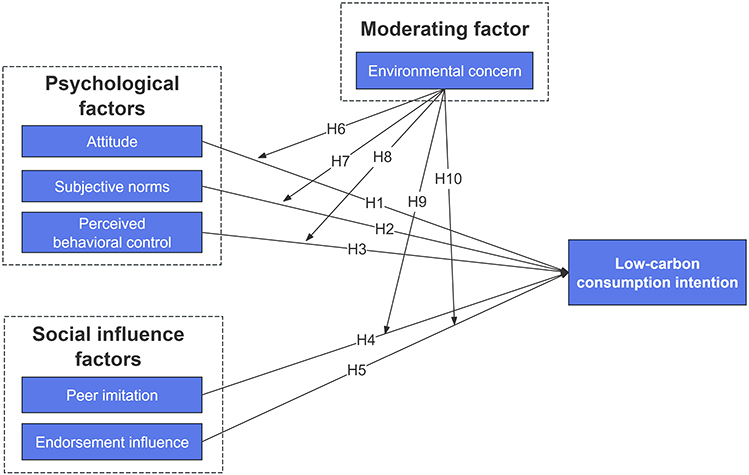 |
Figure 1 Theoretical Model. |
This study offers two contributions. First, by integrating TPB with social influence theory, it provides a more comprehensive account of how preventive, risk management consumption intentions form under both internal and social drivers. Second, by identifying environmental concern as a boundary condition, it offers actionable insights for population segmentation and for designing more targeted environmental risk communication in low-carbon consumption promotion.
Environmental Change, Risk Management, and Low-Carbon Consumption
Environmental and climate-related hazards are increasingly described as upstream determinants of population health risks, operating through pathways such as heat exposure, extreme events, and air-quality deterioration. Many decarbonization behaviors can generate broader co-benefits, including reduced exposure to pollution-related hazards and lower pressure on environmental systems. These behaviors include not only reducing household energy use and choosing energy-efficient products, but also adopting lower-carbon daily consumption practices, such as increasing plant-based foods, vegetables, legumes, and other resource-efficient food choices.
While much policy discussion centers on energy systems and industrial transitions, household and individual consumption decisions also represent practical entry points for risk mitigation—especially in rapidly urbanizing and consumption-growing settings. Understanding what drives residents’ adoption intentions is therefore relevant to designing effective public communication and community-level programs aligned with prevention goals.
Theory of Planned Behavior
A core challenge for prevention is translating awareness of risk into sustained action. The Theory of Planned Behavior (TPB) provides a widely used framework for explaining intention formation through three proximal determinants: attitude toward the behavior, subjective norms, and perceived behavioral control.6,7 Across risk management domains, TPB has been used to characterize how perceived benefits/costs, social expectations, and perceived feasibility jointly shape intentions, making it suitable for analyzing preventive or risk-management behaviors.
In low-carbon consumption contexts, prior work commonly operationalizes TPB components to predict willingness to purchase energy-efficient products, conserve energy, or adopt low-carbon routines. Evidence generally suggests that positive attitudes toward low-carbon options, stronger perceived social expectations, and higher perceived control are associated with stronger low-carbon intentions.2
Attitude refers to the extent to which an individual holds a favorable or unfavorable evaluation of performing a given behavior.8 In the context of prevention and risk management, attitudes matter because they shape whether a behavior is perceived as valuable, worthwhile, and personally meaningful—all of which are central to intention formation. Prior studies consistently show that attitude is positively associated with behavioral intention. Masud et al (2016) reported that attitudes positively influence behavioral intentions related to climate change.9 Ding et al (2017) similarly found that an energy-conservation attitude was significantly associated with intention to conserve energy.10 Results from the above literature showed a positive correlation between attitude and behavioral intention.
Subjective norms refer to perceived social pressure from significant others regarding whether one should perform a behavior.8 Subjective norms represent a social-regulatory mechanism: perceptions of what important others expect can shape preventive intentions. Individuals often align their behavior with expectations from family members, close friends, and their community.11 Empirical evidence supports a positive relationship between subjective norms and low-carbon consumption intention. Ham et al (2015) found that subjective norms significantly influenced low-carbon consumption intention among household primary shoppers in Southeast Europe.12 Chen (2016) also reported that subjective norms play a significant role in Taiwanese residents’ low-carbon consumption intention.13
Perceived behavioral control reflects an individual’s perceived ability to perform a behavior, capturing both self-efficacy and perceived access to necessary resources and opportunities.6 It increases when individuals believe they have sufficient time, money, skills, information, and confidence to carry out the action.8 Therefore, higher perceived behavioral control should be associated with stronger low-carbon consumption intention. Prior research supports this positive correlation between perceived behavioral control and low-carbon consumption intention. Maichum et al (2016), in a study of 483 participants in Thailand, found that perceived behavioral control directly influenced LCI.14 Mancha and Yoder (2015) similarly showed that perceived behavioral control—directly or indirectly—affects residents’ low-carbon consumption intention.15 The results of the above literature draw a conclusion that perceived behavioral control positively affects low-carbon consumption intention.
Thus, this study proposes:
H1: Attitude is positively associated with low-carbon consumption intention. H2: Subjective norms are positively associated with low-carbon consumption intention. H3: Perceived behavioral control is positively associated with low-carbon consumption intention.
Social Influence and Low-Carbon Consumption
A growing body of literature suggests that socially embedded behaviors are formed, reinforced, and modified through observation, social learning, and perceived norms within one’s social environment. Social influence is particularly salient under uncertainty: when individuals are unsure about the outcomes, costs, or appropriateness of a consumption choice, they may rely on others’ behaviors and recommendations to reduce perceived risk and avoid “decision failure”.4,16 In the low-carbon domain, such influence can be operationalized through the adoption of viewpoints and practices conveyed by specific sources, notably peer imitation and endorsement influence.17
Peer imitation refers to the extent to which individuals imitate the low-carbon practices of their peers.17 Peer imitation is expected to promote LCI for two complementary reasons relevant to prevention and social risk. First, peer imitation can function as a normative “risk-reduction” strategy: aligning with peers’ behavior may reduce anticipated social discomfort (eg, anxiety, guilt) and the perceived likelihood of disapproval, exclusion, or other social sanctions when pro-environmental norms are salient.18 When individuals observe their peers engaging in low-carbon consumption, they may infer that such behaviors are socially expected and therefore adjust their intentions accordingly. Second, peer imitation can facilitate social support and affirmation, which may strengthen confidence and maintain motivation to engage in behaviors that require sustained effort or small sacrifices. Perceived peer support can increase psychological readiness and reinforce the intention to engage in low-carbon consumption behavior, thereby strengthening the intention.
Empirical findings generally support this relationship between peer imitation and low-carbon consumption intention. Using large-scale online survey data in China, Wei et al (2023) reported a positive association between peer imitation and LCI.19 Tsarenko et al (2013) also found that external influences—consistent with peer-based social pressures and learning—significantly shape intentions toward environmentally conscious consumption.20 Results from previous studies posit that peer imitation is positively associated with low-carbon consumption intention.
Endorsement influence refers to the extent to which influential members of a reference group model and promote followers’ intentions.17 Two mechanisms may explain why endorsement influence affects low-carbon consumption intention. First, endorsement can operate through trust and credibility: individuals may be inclined to follow endorsers (eg, respected figures, reputable early adopters, or opinion leaders), and trust in the endorser can be transferred to the endorsed behavior, increasing willingness to engage in low-carbon consumption.21,22 Second, endorsement can act as an information and capability pathway, supporting the acquisition of knowledge, experience, and practical skills related to low-carbon consumption.23 In risk-management terms, better information and clearer behavioral guidance can reduce uncertainty and increase perceived self-efficacy, which in turn strengthens intention.
Prior research provides evidence consistent with these mechanisms that endorsement influence positively affects consumption intention. For example, Kamins et al (1989) demonstrated that endorsements can influence consumer choices via identification and source effects.24 Results from the previous study suggest a positive association between endorsement influence and low-carbon consumption intention.
Therefore, the following hypotheses are proposed:
H4: Peer imitation is positively associated with low-carbon consumption intention. H5: Endorsement influence is positively associated with low-carbon consumption intention.
The Moderating Role of Environmental Concern
Environmental concern refers to an individual’s relatively stable level of awareness of, worry about, and perceived responsibility for environmental problems.9 When it comes to risk management, environmental concern can be understood as a background orientation that shapes how people interpret environmental risks and whether they see low-carbon consumption as a personally relevant preventive action. Consistent with this view, prior studies indicate that environmental concern is an important correlate of intentions to engage in low-carbon consumption.25 However, its role may be more complex than a uniform “strengthening” effect.
A straightforward expectation is that higher environmental concern amplifies the positive effects of other antecedents on low-carbon consumption intention, because the issue is more salient and motivationally relevant. A more nuanced perspective, highly relevant for population segmentation, suggests that environmental concern may also attenuate some predictor–intention relationships. Specifically, when environmental concern is high and strongly internalized, intentions may become more value-driven and stable, reducing reliance on situational cues such as momentary attitudes or external social signals. In risk-communication, individuals with high concern may be less “cue-dependent”, because their intention is anchored in a consistent internal standard rather than shaped primarily by incremental persuasive inputs.
Empirical work provides support for such a nuanced perspective. Pienwisetkaew et al (2025) reported that individuals with different levels of environmental awareness can exhibit distinct motivational patterns.26 For those with already high environmental concern, intentions may reflect deeply held personal values rather than transient social influence (eg, peer imitation) or isolated psychological appraisals. As a result, the marginal effects of the antecedents may be weaker among highly concerned individuals than among those with moderate or low concern, for whom targeted social and psychological cues may play a larger role in activating intention.
Based on the theoretical rationale above, the following research hypotheses are proposed:
H6: Environmental concern attenuates the positive relationship between attitude and LCI, such that the association is weaker at higher levels of environmental concern. H7: Environmental concern attenuates the positive relationship between subjective norms and LCI, such that the association is weaker at higher levels of environmental concern. H8: Environmental concern attenuates the positive relationship between perceived behavioral control and LCI, such that the association is weaker at higher levels of environmental concern. H9: Environmental concern attenuates the positive relationship between peer imitation and LCI, such that the association is weaker at higher levels of environmental concern. H10: Environmental concern attenuates the positive relationship between endorsement influence and LCI, such that the association is weaker at higher levels of environmental concern.
Materials and Methods
Data Collection
This study used a cross-sectional online survey administered via Sojump, a widely used platform in China. The questionnaire was initially designed in English and then translated into Chinese. To ensure quality, the translated Chinese questionnaire was back-translated and compared with the English version.27 Subsequently, Sojump distributed the questionnaire to its nationwide online panel of over 300 million respondents across different regions of China via random sampling. The survey was conducted from January to February 2025. Eligible participants were general adult residents of China at least 18 years old. Before participation, respondents reviewed an informed consent statement and indicated their voluntary consent. At the beginning of the questionnaire, respondents were provided with a brief explanation of low-carbon consumption, defined as daily choices that reduce the carbon footprint of individual and household activities, such as saving electricity, choosing energy-efficient products, and reducing unnecessary resource use. Respondents who completed a questionnaire received 4 RMB (Chinese currency) as compensation for participation.
Several screening procedures were applied to ensure data quality. First, questionnaires showing careless response patterns of selecting the same option across all scale items were excluded. Second, responses completed in less than 60 seconds were removed because of insufficient engagement with the questionnaire. After these screening procedures, 333 valid responses were retained, yielding a response rate of 67.3%. Among the valid respondents, 37.2% were male and 62.8% were female. More than half of the sample were aged 35 years or younger (54.6%). Most participants held bachelor’s degrees (76.3%), and 56.7% reported a monthly income above 5000 RMB. Detailed demographic information is presented in Table 1.
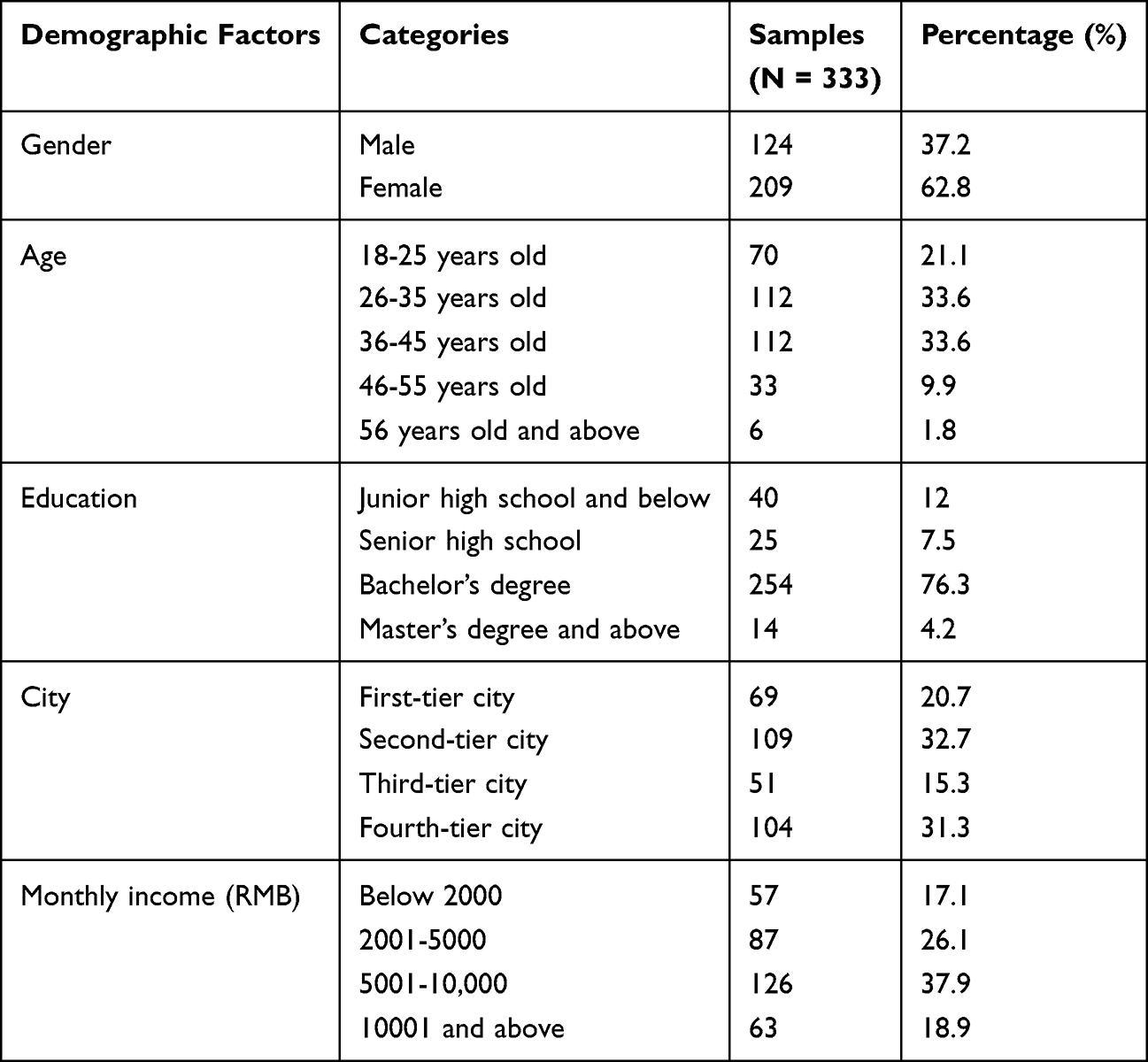 |
Table 1 Demographics of Respondents |
Measurements
All constructs were measured using a seven-point Likert scale ranging from 1 (“strongly disagree”) to 7 (“strongly agree”). The seven-point format was retained because the measurement items were adapted from validated scales that used the same response format, thereby maintaining scale consistency and comparability with prior studies. In addition, the seven-point scale allowed respondents to express more nuanced differences in attitudes and intentions. The questionnaire measured seven constructs: low-carbon consumption intention, attitude, subjective norms, perceived behavioral control, peer imitation, endorsement influence, and environmental concern. All items were adapted from validated scales used in prior studies and modified to fit the context of low-carbon consumption. The full list of measurement items is provided in Table A1.3,17,23,28–30
To enhance content validity and contextual appropriateness, the questionnaire was pretested with four academic experts and two lay reviewers. They were asked to evaluate item clarity, wording accuracy, contextual fit, and readability. For example, items adapted from Western contexts, such as household insulation renovation or energy-efficiency upgrades, were considered less applicable in China and were revised into more familiar daily consumption examples, such as choosing energy-saving household appliances and reducing unnecessary electricity use. Based on their feedback, minor wording revisions were made to reduce ambiguity and improve comprehensibility in the low-carbon consumption context.
For each construct, item scores were averaged to create a composite score for subsequent analyses. Higher scores indicated stronger endorsement of the corresponding construct.
Analytical Approach
A post hoc sensitivity power analysis was conducted using G*Power 3.1. The analysis was specified for linear multiple regression with α = 0.05, statistical power = 0.80, a total sample size of 333, and 16 predictors. The results indicated that the study could detect a minimum effect size f2 = 0.060, suggesting that the sample size was adequate for detecting small-to-medium effects.
Confirmatory factor analysis (CFA) was conducted using AMOS 29 to assess the measurement model. Model fit was evaluated using these indices: (1) model chi-square (χ2); (2) relative chi-square ratio (χ2/df) should fall within 2 to 5; (3) comparative fit index (CFI), Tucker-Lewis Index (TLI), and Incremental Fit Index (IFI) should exceed 0.90; and (4) root mean square error of approximation (RMSEA) should not exceed 0.08.31–34 Construct reliability and convergent validity were assessed using standardized factor loadings, Cronbach’s alpha, composite reliability (CR), and average variance extracted (AVE). Discriminant validity was evaluated using the heterotrait–monotrait ratio of correlations (HTMT).
Ordinary least squares (OLS) hierarchical regression was conducted using SPSS Statistics 27 to test the proposed hypotheses. The independent variables, moderators, and dependent variables were averaged to generate composite scores. Before constructing interaction terms, the independent variables were mean-centered to reduce multicollinearity. The interaction terms were created by multiplying each mean-centered independent variable by the mean-centered environmental concern. Predictors were entered in theoretically specified blocks reflecting their presumed causal ordering. Block 1 included demographic control variables (gender, age, education, city, and income). Block 2 added the five antecedents: attitude, subjective norms, perceived behavioral control, peer imitation, and endorsement influence. Block 3 added the moderator, environmental concern, to test whether the interaction terms explained additional variance beyond the moderator itself. Block 4 included five interaction terms. LCI was included as the dependent variable. Variance inflation factors were examined to assess multicollinearity.
Results
Measurement Model
To address the research hypotheses, confirmatory factor analysis was conducted first using AMOS 29. The measurement model showed acceptable model fit (χ2/df = 2.35, RMSEA = 0.064, IFI = 0.932, TLI = 0.914, CFI = 0.931, and SRMR = 0.0468).
The results presented in Table 2 show that standardized factor loadings ranged from 0.615 to 0.907 and were all statistically significant. Cronbach’s alpha values and CR value all exceeded the recommended threshold of 0.70. Most AVE values were above 0.50. Although the AVE for environmental concern was slightly below 0.50, its composite reliability exceeded 0.70, and all factor loadings were significant, which was considered acceptable.35 Hence, adequate reliability and convergent validity are demonstrated by the overall measurement model of the study.
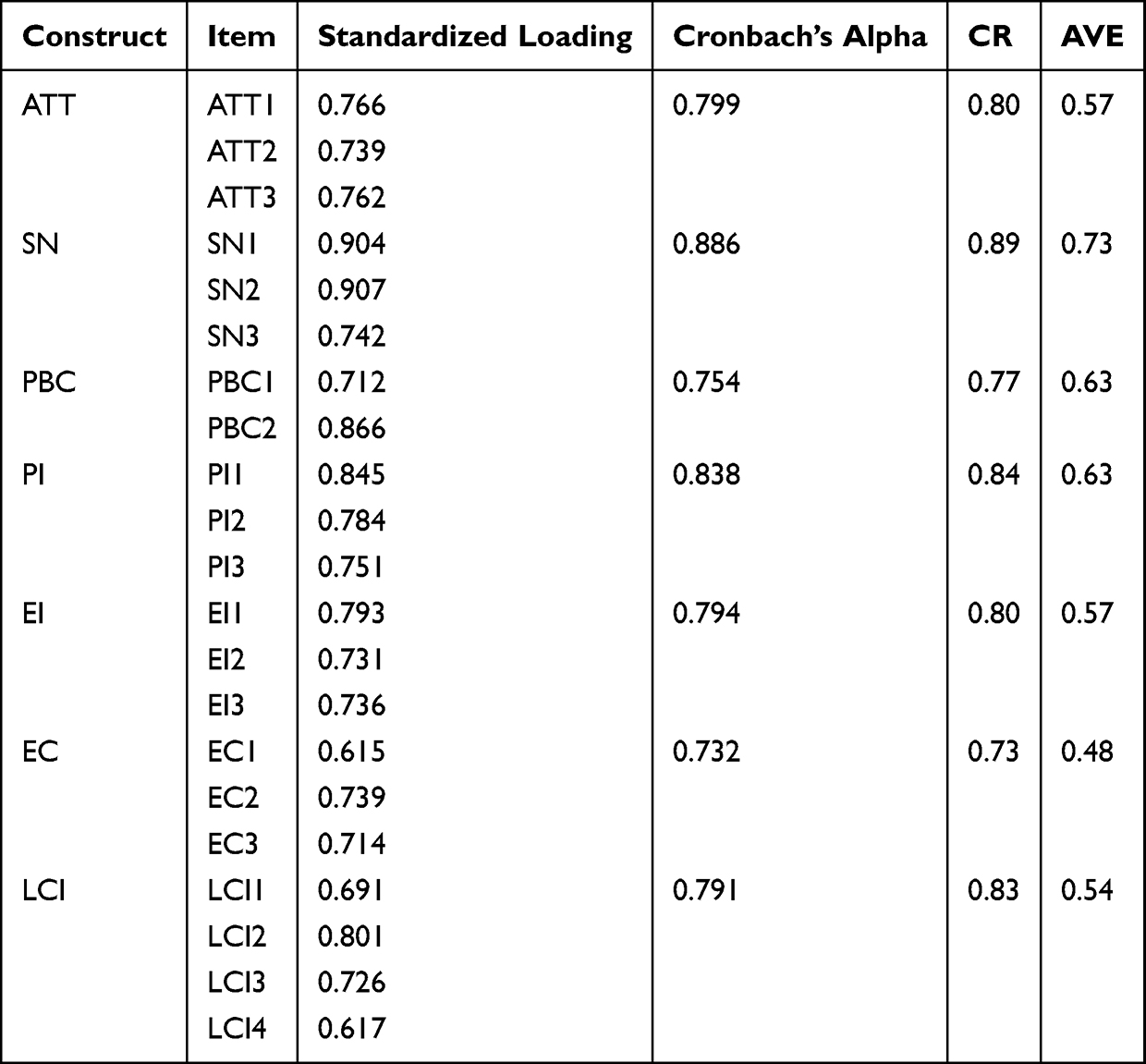 |
Table 2 Result of Reliability Test |
As shown in Table 3, the HTMT values ranged from 0.243 to 0.740, all below the conservative threshold of 0.85,36 indicating satisfactory discriminant validity. This result suggests adequate discriminant validity, further confirming the distinctiveness of the latent constructs.
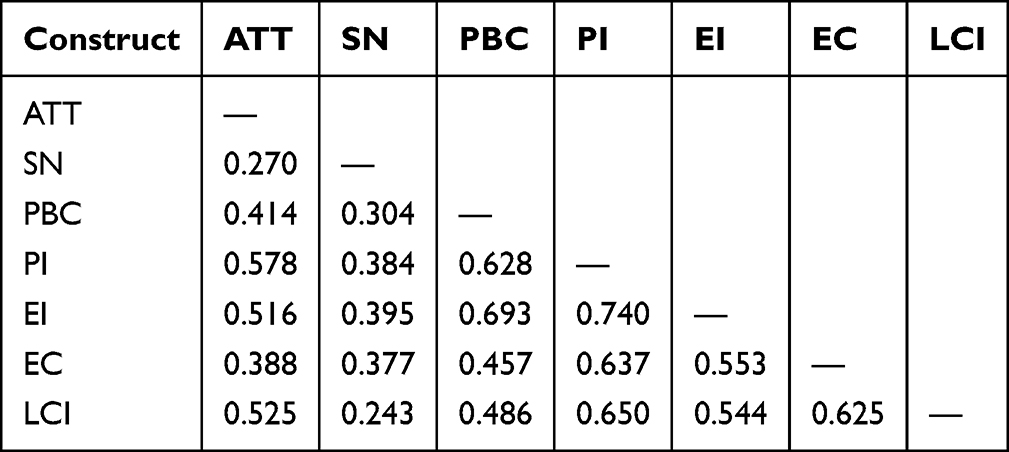 |
Table 3 Discriminant Validity Assessment Using HTMT |
Hypothesis Testing
The full regression model predicting low-carbon consumption intention explained 40.7% of the variance (see Table 4). All VIF values were below 2.5, indicating that multicollinearity was not a serious concern. The demographic controls in Block 1 accounted for 0.5% of the variance in low-carbon consumption intention. None of the demographic variables were significant predictors.
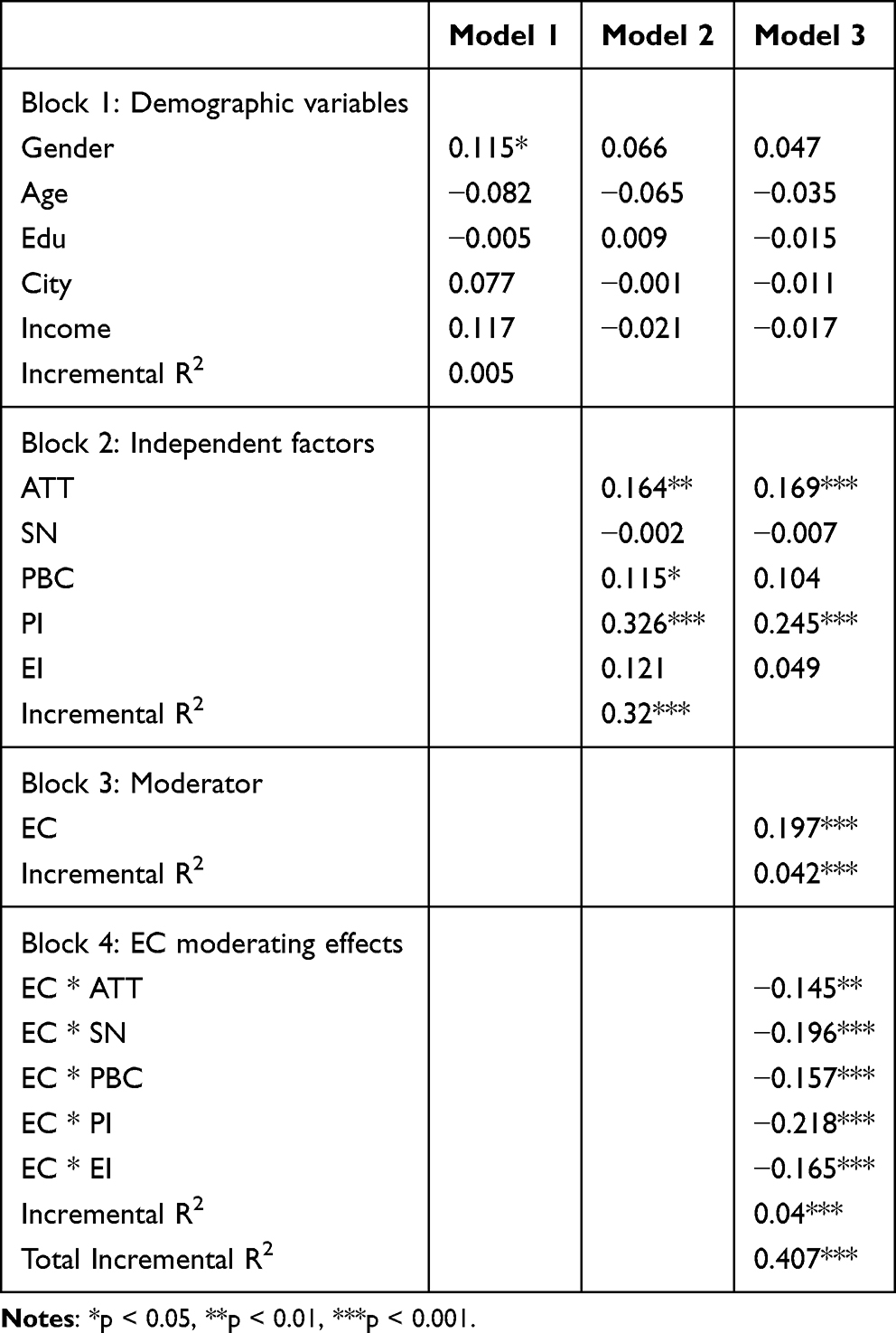 |
Table 4 OLS Hierarchical Regression Analysis Predicting LCI |
Regarding the main antecedents, Block 2 explained an additional 32.0% of the variance. The results showed that attitude (β = 0.169, p < 0.01) was positively associated with low-carbon consumption intention. This supports H1 and indicates that individuals with more favorable attitudes reported stronger low-carbon consumption. Subjective norms (β = −0.007, p = 0.879) and perceived behavioral control (β = 0.104, p = 0.059) were not significantly associated with low-carbon consumption intention; therefore, H2 and H3 were not supported. Peer imitation (β = 0.226, p < 0.01) was positively correlated with low-carbon consumption intention, supporting H4. This suggests that individuals who were more influenced by peers’ low-carbon practices tended to have stronger low-carbon consumption intention. However, Endorsement (β = 0.169, p = 0.428) influence was not significant and did not support H5.
Next, the moderator in Block 3 explained an additional 4.2% of the variance. The result showed that the environmental concern (β = 0.197, p < 0.001) was positively associated with low-carbon consumption intention, indicating that individuals with greater environmental concern tended to report stronger low-carbon consumption intention.
Finally, Block 4 tested the moderating effects of environmental concern. All five interaction terms were negative and significant. Specifically, attitude * EC (β = −0.145, p < 0.001), subjective norms * EC (β = −0.196, p < 0.001), perceived behavioral control * EC (β = −0.157, p < 0.001), peer imitation * EC (β = −0.218, p < 0.001), and endorsement influence * EC (β = −0.165, p < 0.001) were all negatively associated with low-carbon consumption intention, thus supporting H6-10. The interaction block explained an additional 4.0% of the variance in low-carbon consumption intention (p < 0.001).
To further interpret these moderation effects, as shown in Figures 2–6, the positive associations between the antecedents and low-carbon consumption intention were generally stronger at low environmental concern and weaker at high environmental concern. For subjective norms, perceived behavioral control, and endorsement influence, the high environmental concern were nearly flat or slightly negative, suggesting that these predictors had limited marginal influence among individuals with higher environmental concern.
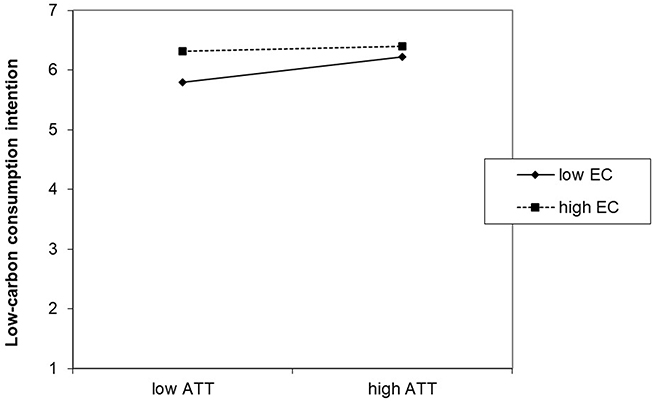 |
Figure 2 Attitude, environmental concern, and low-carbon consumption intention. |
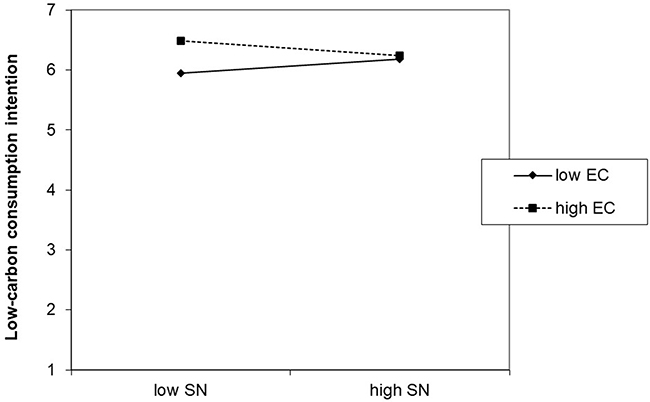 |
Figure 3 Subjective norms, environmental concern, and low-carbon consumption intention. |
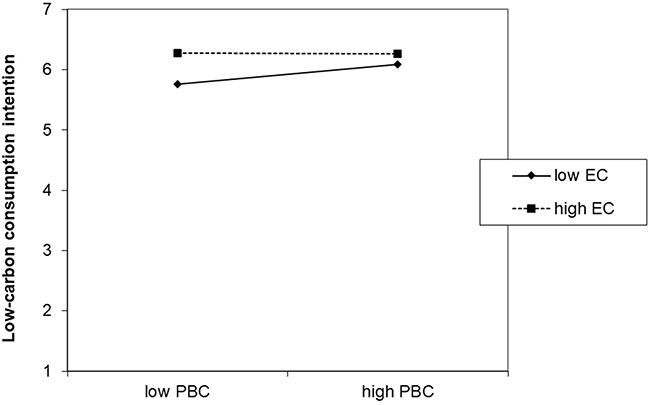 |
Figure 4 Perceived behavioral control, environmental concern, and low-carbon consumption intention. |
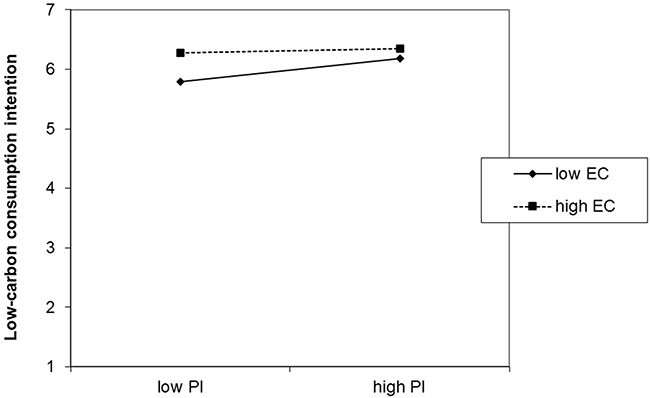 |
Figure 5 Peer imitation, environmental concern, and low-carbon consumption intention. |
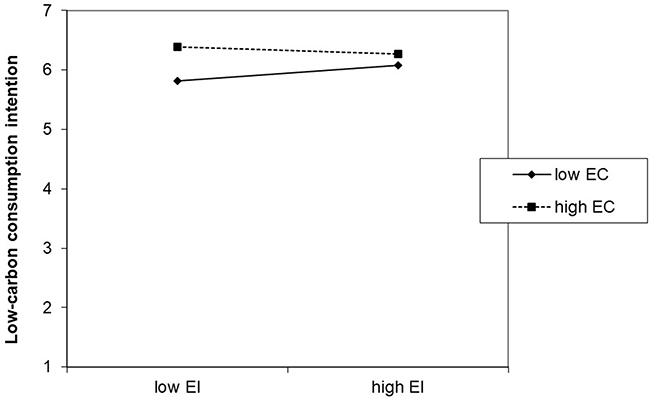 |
Figure 6 Endorsement influence, environmental concern, and low-carbon consumption intention. |
Discussion
This study examined the antecedents of low-carbon consumption intention (LCI) by integrating the Theory of Planned Behavior (TPB) with social influence, and further tested whether environmental concern moderates these relationships. Overall, the findings indicate that attitude and peer imitation are significant predictors of low-carbon consumption intention. In addition, environmental concern shows a consistent negative moderating effect across all proposed antecedent–LCI links, suggesting that these antecedents exert stronger effects among individuals with lower environmental concern.
Theory of Planned Behavior
First, attitude was positively associated with LCI, indicating that individuals who evaluate low-carbon consumption more favorably tend to report stronger intention. Some previous studies have also shown similar findings, where attitude significantly predicts green consumption, energy-saving, and energy-efficient product purchase intentions.37,38 This consistency suggests that low-carbon consumption intention is partly shaped by individuals’ evaluative beliefs about whether such consumption is worthwhile, beneficial, and desirable.
In contrast, subjective norms were not significantly associated with LCI. This differs from some previous studies that found subjective norms to be significant predictors of pro-environmental or energy-saving behaviors.39 One possible explanation is that low-carbon consumption may not yet be perceived as a strong or salient expectation from important others. According to the Focus Theory of Normative Conduct, norms are more likely to guide behavior when they are salient in a given context.40 If low-carbon consumption is viewed as personally desirable but not clearly expected by close social referents, the effect of subjective norms may be weakened.
Similarly, perceived behavioral control (PBC) did not significantly predict LCI. This differs from prior studies in which PBC significantly predicted green hotel visit intention or purchase intention for energy-efficient appliances.37,38 One possible explanation is that low-carbon consumption may involve practical constraints that individuals perceive as relatively stable, such as cost, product availability, convenience, and infrastructure.41 These constraints may reduce the extent to which individual differences in perceived control translate into intention. In addition, after environmental concern was considered, intention formation may have been driven more by value-based concern than by perceived feasibility.42
Social Influence
Among the social influence variables, peer imitation significantly and positively predicted LCI, indicating that individuals’ intentions are meaningfully shaped by peers’ behavior. It is consistent with social norm research showing that visible behaviors of others can shape pro-environmental decisions, especially when individuals use others’ actions as behavioral cues.43,44 Thus, the finding reinforces the view that low-carbon consumption is not only an individual preference but also a socially embedded practice.
By contrast, endorsement influence was not significantly associated with LCI. This differs from some prior studies showing that celebrity or endorser-based communication can promote green purchase intention or enhance the effectiveness of environmental advertising.45,46 One possible explanation is that endorsement effects depend strongly on perceived source credibility. Source credibility theory suggests that endorsers are persuasive when they are perceived as trustworthy, expert, and attractive.47 If consumers perceive endorsements as commercially motivated or not closely connected to low-carbon lifestyles, the persuasive effect may be weakened.
Moderating Role of Environmental Concern
A central contribution of this study is the consistent negative moderation by environmental concern across all antecedents. The interaction results indicate that the positive relationships between attitude, subjective norms, PBC, peer imitation, endorsement influence, and low-carbon consumption intention are weaker among individuals with higher environmental concern. One interpretation is grounded in internalized values and diminishing marginal effects. When environmental concern is high, pro-environmental intention may already be strongly anchored in stable, internal motivations. In such cases, additional antecedents—whether psychological evaluations (attitude), perceived social expectations (subjective norms), feasibility perceptions (PBC), or social cues (peer imitation and endorsement influence)—provide relatively limited incremental explanatory power. As a result, the same antecedents play a more influential role for individuals with lower environmental concern.
The findings suggest that promoting low-carbon consumption intention may be relevant to environmental risk management. By encouraging individuals to reduce carbon-intensive consumption, such efforts may help manage climate-related environmental risks and may indirectly reduce secondary risks, including pollution-related exposure risks and climate-sensitive public health burdens. Therefore, communication strategies should focus on strengthening favorable attitudes and making peer low-carbon practices more visible, especially among individuals with lower environmental concern.
Theoretical Contributions
This study makes two primary theoretical contributions. First, by combining TPB with social influence constructs, the study offers a more comprehensive framework for explaining low-carbon consumption intention. While TPB captures key cognitive antecedents (attitude, subjective norms, and PBC), incorporating peer-based and endorsement-based influences extends explanatory reach and better reflects the socially situated nature of consumption-related intentions. Second, the study highlights environmental concern as a theoretically meaningful boundary condition. Rather than operating only as an additive predictor, environmental concern systematically changes the strength of multiple antecedent–intention relationships. This shifts the focus from isolated main effects to a moderated perspective on intention formation, which helps clarify when and for whom common predictors of low-carbon consumption intention are most influential.
Practical Implications
The findings suggest two actionable implications for practitioners promoting low-carbon consumption. First, communication strategies should be segmented by environmental concern. For individuals with high environmental concern, interventions may be more effective when they reinforce identity and values and recognize ongoing efforts, rather than relying on stronger persuasion, normative pressure, or endorsements. For individuals with low to moderate environmental concern, campaigns should emphasize the most influential levers identified here—particularly attitude-shaping messages and socially salient cues.
Second, the strong effect of peer imitation indicates that making low-carbon consumption visible and socially normal can be especially effective. Community-based programs, social media testimonials, and platform features that display collective environmental impact can strengthen social proof and encourage adoption by signaling that low-carbon consumption is common and increasing among peers.
Limitations and Future Research
This study has three limitations that offer directions for future research. First, the data were collected only in mainland China, which may limit generalizability across cultural and economic contexts. In particular, consumers in developing contexts may prioritize economic considerations when interpreting low-carbon consumption, whereas consumers in developed economies may be more influenced by cultural norms or pro-environmental values. Replications across countries and regions would strengthen external validity.
Second, although the questionnaire provided a brief explanation of low-carbon consumption before respondents answered the survey, this study did not directly measure respondents’ knowledge of low-carbon. Such knowledge may be important because individuals’ attitudes, knowledge, and consumption intentions may depend in part on how well they understand what low-carbon consumption entails and how their daily consumption choices contribute to carbon emissions. Future research should include low-carbon or carbon-footprint knowledge as an independent construct, control variable, or moderator.
Third, the study did not directly test mechanisms behind EC moderation and did not include factors such as personal norms, policy incentives, product attributes, or situational constraints. Future studies could more explicitly measure and examine candidate mechanisms (eg, moral obligation, moral licensing, eco-anxiety, or perceived inevitability of constraints) to adjudicate among competing explanations. Additional factors—such as personal norms, policy incentives, product attributes, or situational constraints—may further shape low-carbon consumption intention and could interact with both TPB and social influence variables. Extending the model to include these variables would provide a more complete understanding of low-carbon consumption intention.
Fourth, this study examined low-carbon consumption intention rather than actual behavioral change or downstream risk outcomes. Therefore, although low-carbon consumption intention may represent an upstream behavioral entry point for environmental risk management, the study did not directly test whether such intention leads to further reduction of secondary environmental or health-related risks. Future research could use longitudinal or experimental designs to examine these downstream pathways more directly.
Conclusion
This study examined low-carbon consumption intention by integrating the Theory of Planned Behavior, social influence, and environmental concern. The findings show that attitude and peer imitation were significantly associated with low-carbon consumption intention. Environmental concern also significantly weakened the effects of the psychological and social factors. These findings confirm that low-carbon consumption is a socially embedded and environmentally relevant behavioral intention. It can serve as an upstream behavioral entry point for environmental risk management. Future studies should replicate this study in wider contexts and further examine whether low-carbon consumption intention translates into actual low-carbon behavior.
Ethics Approval and Consent to Participate
Ethical approval for this study was obtained from the Institutional Review Board of China Agricultural University (Approval No.2023312100112). The study was performed in accordance with the Declaration of Helsinki. All participants received study information and provided informed consent prior to participation. Participation was voluntary and anonymous, and participants could withdraw at any time without penalty.
Disclosure
The author reports no conflicts of interest in this work.
References
1. Cheng X, Wu F, Li W, Yang J, Long R. What maintains low-carbon consumption behaviors: evidence from China. Renewable Sustain Energy Rev. 2024;189:114050.
2. Ding Z, Jiang X, Liu Z, Long R, Xu Z, Cao Q. Factors affecting low-carbon consumption behavior of urban residents: a comprehensive review. Res Conserv Recycl. 2018;132:3–15. doi:10.1016/j.resconrec.2018.01.013
3. Mi L, Zhu H, Yang J, et al. A new perspective to promote low-carbon consumption: the influence of reference groups. Ecolog Econom. 2019;161:100–108. doi:10.1016/j.ecolecon.2019.03.019
4. Kelman HC. Interests, relationships, identities: three central issues for individuals and groups in negotiating their social environment. Annu Rev Psychol. 2006;57:1–26. doi:10.1146/annurev.psych.57.102904.190156
5. Vainio A, Paloniemi R. The complex role of attitudes toward science in pro-environmental consumption in the Nordic countries. Ecol Econom. 2014;108:18–27. doi:10.1016/j.ecolecon.2014.09.026
6. Ajzen I. THE THEORY OF PLANNED BEHAVIOR. Org Behav Human Dec Process. 1991;50(2):179–211. doi:10.1016/0749-5978(91)90020-T
7. Ajzen I. The theory of planned behaviour: reactions and reflections. Psychol Health. 2011;26(9):1113–1127. doi:10.1080/08870446.2011.613995
8. Ajzen I, Driver BL. Prediction of leisure participation from behavioral, normative, and control beliefs: an application of the theory of planned behavior. Leisure Sci. 1991;13(3):185–204. doi:10.1080/01490409109513137
9. Masud MM, Al-Amin AQ, Junsheng H, et al. Climate change issue and theory of planned behaviour: relationship by empirical evidence. J Cleaner Product. 2016;113:613–623. doi:10.1016/j.jclepro.2015.11.080
10. Ding Z, Wang G, Liu Z, Long R. Research on differences in the factors influencing the energy-saving behavior of urban and rural residents in China–A case study of Jiangsu Province. Energy Policy. 2017;100:252–259. doi:10.1016/j.enpol.2016.10.013
11. Tao Y, Duan M, Deng Z. Using an extended theory of planned behaviour to explain willingness towards voluntary carbon offsetting among Chinese consumers. Ecolog Econom. 2021;185:107068. doi:10.1016/j.ecolecon.2021.107068
12. Ham M, Jeger M, Frajman Ivković A. The role of subjective norms in forming the intention to purchase green food. Econom Res. 2015;28(1):738–748. doi:10.1080/1331677X.2015.1083875
13. Chen M-F. Extending the theory of planned behavior model to explain people’s energy savings and carbon reduction behavioral intentions to mitigate climate change in Taiwan–moral obligation matters. J Cleaner Product. 2016;112:1746–1753. doi:10.1016/j.jclepro.2015.07.043
14. Maichum K, Parichatnon S, Peng K-C. Application of the extended theory of planned behavior model to investigate purchase intention of green products among Thai consumers. Sustainability. 2016;8(10):1077. doi:10.3390/su8101077
15. Mancha RM, Yoder CY. Cultural antecedents of green behavioral intent: an environmental theory of planned behavior. J Environ Psychol. 2015;43:145–154. doi:10.1016/j.jenvp.2015.06.005
16. Lau L-S, Choong Y-O, Wei C-Y, et al. Investigating nonusers’ behavioural intention towards solar photovoltaic technology in Malaysia: the role of knowledge transmission and price value. Energy Policy. 2020;144:111651. doi:10.1016/j.enpol.2020.111651
17. Xu X, Li Q, Peng L, Hsia T-L, Huang C-J, Wu J-H. The impact of informational incentives and social influence on consumer behavior during Alibaba’s online shopping carnival. Computers Human Behav. 2017;76:245–254. doi:10.1016/j.chb.2017.07.018
18. Yin J, Shi S. Social interaction and the formation of residents′ low-carbon consumption behaviors: an embeddedness perspective. Res Conserv Recycl. 2021;164:105116.
19. Wei J, Zhang L, Yang R, Song M. A new perspective to promote sustainable low-carbon consumption: the influence of informational incentive and social influence. J Environ Manage. 2023;327:116848. doi:10.1016/j.jenvman.2022.116848
20. Tsarenko Y, Ferraro C, Sands S, McLeod C. Environmentally conscious consumption: the role of retailers and peers as external influences. J Retailing Cons Serv. 2013;20(3):302–310. doi:10.1016/j.jretconser.2013.01.006
21. Johnstone L, Lindh C. Sustainably sustaining (online) fashion consumption: using influencers to promote sustainable (un)planned behaviour in Europe’s millennials. J Retailing Consumer Serv. 2022;64:102775.
22. Pittman M, Abell A. More trust in fewer followers: diverging effects of popularity metrics and green orientation social media influencers. J Interactive Market. 2022;56(1):70–82. doi:10.1016/j.intmar.2021.05.002
23. Cheng X, Long R, Wu F, Geng J, Yang J. How social interaction shapes habitual and occasional low-carbon consumption behaviors: evidence from ten cities in China. Renewable Sustain Energy Rev. 2023;182:113387.
24. Kamins MA, Brand MJ, Hoeke SA, Moe JC. Two-sided versus one-sided celebrity endorsements: the impact on advertising effectiveness and credibility. J Advert. 1989;18(2):4–10. doi:10.1080/00913367.1989.10673146
25. Balaskas S, Panagiotarou A, Rigou M. Impact of environmental concern, emotional appeals, and attitude toward the advertisement on the intention to buy green products: the case of younger consumer audiences. Sustainability. 2023;15(17):13204. doi:10.3390/su151713204
26. Pienwisetkaew T, Wongsaichia S, Boontham W, et al. Carbon labels and rewards: driving sustainable consumer purchase decisions through incentive-based strategies. Sustain Fut. 2025;10:101385. doi:10.1016/j.sftr.2025.101385
27. Chen L, Zheng W, Fu L. Examining factors influencing public knowledge, risk perception, and policy support for waste classification: a multigroup comparison of the cognitive mediation model based on gender differences. Environ Commun. 2023;17(7):759–774. doi:10.1080/17524032.2023.2253499
28. Gansser OA, Reich CS. Influence of the New Ecological Paradigm (NEP) and environmental concerns on pro-environmental behavioral intention based on the Theory of Planned Behavior (TPB). J Cleaner Product. 2023;382:134629. doi:10.1016/j.jclepro.2022.134629
29. Liao C, Huang Y, Zheng Z, Xu Y. Investigating the factors influencing urban residents’ low-carbon travel intention: a comprehensive analysis based on the TPB model. Transport Res Interdiscipl Perspect. 2023;22:100948. doi:10.1016/j.trip.2023.100948
30. Liu P, Segovia M, Tse EC-Y, Nayga RM. Become an environmentally responsible customer by choosing low-carbon footprint products at restaurants: integrating the elaboration likelihood model (ELM) and the theory of planned behavior (TPB). J Hospital Tour Manag. 2022;52:346–355. doi:10.1016/j.jhtm.2022.07.021
31. Bagozzi RP, Yi Y. On the evaluation of structural equation models. J Acad Market Sci. 1988;16(1):74–94. doi:10.1007/BF02723327
32. Lt H, Bentler PM. Cutoff criteria for fit indexes in covariance structure analysis: conventional criteria versus new alternatives. Struct Equation Model. 1999;6(1):1–55.
33. Wheaton B, Muthén B, Alwin DF, Summers GF. Assessing reliability and stability in panel models. Sociolog Methodol. 1977;8:84–136. doi:10.2307/270754
34. MacCallum RC, Browne MW, Sugawara HM. Power analysis and determination of sample size for covariance structure modeling. Psycholog Meth. 1996;1(2):130–149. doi:10.1037/1082-989X.1.2.130
35. Fornell C, Larcker DF. Evaluating structural equation models with unobservable variables and measurement error. J Marketing Res. 1981;18(1):39–50. doi:10.1177/002224378101800104
36. Henseler J, Ringle CM, Sarstedt M. A new criterion for assessing discriminant validity in variance-based structural equation modeling. J Acad Marketing Sci. 2015;43(1):115–135. doi:10.1007/s11747-014-0403-8
37. Tan C-S, Ooi H-Y, Goh Y-N. A moral extension of the theory of planned behavior to predict consumers’ purchase intention for energy-efficient household appliances in Malaysia. Energy Policy. 2017;107:459–471. doi:10.1016/j.enpol.2017.05.027
38. Chen M-F, Tung P-J. Developing an extended Theory of Planned Behavior model to predict consumers’ intention to visit green hotels. Int J Hospit Manag. 2014;36:221–230. doi:10.1016/j.ijhm.2013.09.006
39. Wang B, Wang X, Guo D, Zhang B, Wang Z. Analysis of factors influencing residents’ habitual energy-saving behaviour based on NAM and TPB models: egoism or altruism? Energy Policy. 2018;116:68–77. doi:10.1016/j.enpol.2018.01.055
40. Cialdini RB, Reno RR, Kallgren CA. A focus theory of normative conduct - recycling the concept of norms to reduce littering in public places. J Personality Soc Psychol. 1990;58(6):1015–1026. doi:10.1037/0022-3514.58.6.1015
41. Steg L, Vlek C. Encouraging pro-environmental behaviour: an integrative review and research agenda. J Environ Psychol. 2009;29(3):309–317. doi:10.1016/j.jenvp.2008.10.004
42. Stern PC. New environmental theories: toward a coherent theory of environmentally significant behavior. J Soc Issues. 2000;56(3):407–424. doi:10.1111/0022-4537.00175
43. Farrow K, Grolleau G, Ibanez L. Social norms and pro-environmental behavior: a review of the evidence. Ecolog Econom. 2017;140:1–13. doi:10.1016/j.ecolecon.2017.04.017
44. Goldstein NJ, Cialdini RB, Griskevicius V. A room with a viewpoint: using social norms to motivate environmental conservation in hotels. J Consumer Res. 2008;35(3):472–482. doi:10.1086/586910
45. Li M, Li J, Yasin MAI, Hashim NB, Ang LH, Bidin R. Impact of celebrity-endorsed environmental advertisements on green economy development. Technolog Forecasting Soc Change. 2022;184:121979. doi:10.1016/j.techfore.2022.121979
46. Al Mamun A, Naznen F, Yang Q, Ali MH, Hashim NM. Modelling the significance of celebrity endorsement and consumer interest on attitude, purchase intention, and willingness to pay a premium price for green skincare products. Heliyon. 2023;9(6). doi:10.1016/j.heliyon.2023.e16765
47. Ohanian R. Construction and validation of a scale to measure celebrity endorsers’ perceived expertise, trustworthiness, and attractiveness. J Advert. 1990;19(3):39–52. doi:10.1080/00913367.1990.10673191
 © 2026 The Author(s). This work is published and licensed by Dove Medical Press Limited. The
full terms of this license are available at https://www.dovepress.com/terms
and incorporate the Creative Commons Attribution
- Non Commercial (unported, 4.0) License.
By accessing the work you hereby accept the Terms. Non-commercial uses of the work are permitted
without any further permission from Dove Medical Press Limited, provided the work is properly
attributed. For permission for commercial use of this work, please see paragraphs 4.2 and 5 of our Terms.
© 2026 The Author(s). This work is published and licensed by Dove Medical Press Limited. The
full terms of this license are available at https://www.dovepress.com/terms
and incorporate the Creative Commons Attribution
- Non Commercial (unported, 4.0) License.
By accessing the work you hereby accept the Terms. Non-commercial uses of the work are permitted
without any further permission from Dove Medical Press Limited, provided the work is properly
attributed. For permission for commercial use of this work, please see paragraphs 4.2 and 5 of our Terms.