
Back to Journals » Drug, Healthcare and Patient Safety » Volume 18
Long-Term Safety and Effectiveness of Calcium Channel Blockers in Hypertension: A Systematic Review
Authors Aisyah N  , Aurellia JS , Insani WN
Received 23 October 2025
Accepted for publication 11 February 2026
Published 18 March 2026 Volume 2026:18 576249
DOI https://doi.org/10.2147/DHPS.S576249
Checked for plagiarism Yes
Review by Single anonymous peer review
Peer reviewer comments 2
Editor who approved publication: Professor Siew Siang Chua
Nur Aisyah, Jihan Sadira Aurellia, Widya Norma Insani
Department of Pharmacology and Clinical Pharmacy, Padjadjaran University, Sumedang, West Java, Indonesia
Correspondence: Widya Norma Insani, Department of Pharmacology and Clinical Pharmacy, Padjadjaran University, Sumedang, West Java, Indonesia, Email [email protected]
Purpose: Calcium channel blockers (CCBs) are widely used as first-line therapy for hypertension, but concerns remain regarding their long-term safety and effectiveness. This review aims to systematically summarize the existing evidence on the long-term safety and effectiveness of CCBs in patients with hypertension.
Methods: A systematic review was conducted using the PubMed database to identify randomized controlled trials (RCTs), cohort studies, and case-control studies assessing the long-term use (≥ 1 year) of CCBs in adult hypertensive populations. Eligible studies compared CCBs with other antihypertensive agents or placebo and reported outcomes related to systemic safety and effectiveness. The quality of each study was assessed using the Jadad and Newcastle-Ottawa Scales. Evidence was synthesized descriptively and stratified by organ system and clinical outcome.
Results: In total, 29 studies met the inclusion criteria, encompassing both RCTs and observational studies. Long-term CCB use was generally safe, with manageable risks. Renal protective effects were less consistent, while several studies reported a marginal increase in the incidence of new-onset diabetes. Associations with breast cancer remained inconclusive, and the risk of bone fractures appeared modestly reduced. Other systemic effects, including metabolic and reproductive changes, were generally mild. In terms of effectiveness, CCBs consistently reduced stroke incidence, although evidence regarding other cardiovascular outcomes, such as infarction, heart failure, and transient ischemic events, was inconsistent across studies.
Conclusion: Overall, CCBs are safe for long-term use and show sustained effectiveness in stroke and angina, although evidence for heart failure, myocardial infarction, and transient ischemic attack remains inconsistent.
Keywords: calcium channel blockers, hypertensive populations, long-term safety, long-term effectiveness
Introduction
Hypertension is a major contributor to cardiovascular morbidity and mortality worldwide.1,2 It is defined by systolic blood pressure ≥140 mmHg and/or diastolic blood pressure ≥90 mmHg, consistent with guidelines from NICE (2019), the Australian guideline (2016), and the ESC/ESH (2018).3–5 In contrast, the ACC/AHA guidelines (2025) adopt a lower threshold of ≥130/80 mmHg.6 Despite these differences, hypertension remains highly prevalent and a leading cause of global morbidity and mortality. According to WHO data (2024), in 2020, approximately 1.28 billion adults aged 30 to 79 years experienced hypertension globally, yet only 21% had their blood pressure well controlled.7 Given the chronic nature of hypertension, which typically requires lifelong pharmacological therapy,8 long-term outcomes (≥1 year) are particularly important not only to assess the sustainability of blood pressure control but also to capture potential metabolic, renal, oncologic, and skeletal effects that may emerge only after prolonged drug exposure rather than during short-term treatment.9
Several pharmacological agents can be used to manage hypertension, including calcium channel blockers (CCBs), angiotensin-converting enzyme inhibitors (ACEIs), angiotensin receptor blockers (ARBs), beta-blockers, and diuretics.10,11 CCBs are among the most extensively studied and are frequently recommended as a first-line therapy, both as monotherapy and in combination with other medications.12
CCBs act as antihypertensive agents by inhibiting L-type calcium channels located in the vascular and cardiac smooth muscles. This inhibition decreases intracellular calcium levels, leading to relaxation of vascular tone and a subsequent reduction in systemic blood pressure. CCBs are classified into dihydropyridines (DHP), which mainly act on blood vessels (eg, amlodipine, nifedipine, nicardipine), and non-dihydropyridines (non-DHP), which also affect cardiac conduction (eg, verapamil, diltiazem).11
Despite being widely prescribed as initial therapy for hypertension, CCBs continue to raise concerns regarding their long-term safety and effectiveness. Several observational studies have reported potential long-term adverse effects associated with CCBs use, including increased risks of new-onset diabetes (NOD),13 impaired renal safety profiles,14 and bone fractures.15 Furthermore, evidence from the CASE-J study and its extended follow-up suggested links between CCB therapy and major cardiovascular outcomes such as stroke, transient ischemic attack (TIA), angina pectoris, and myocardial infarction.16–18
Previous systematic reviews and meta-analyses have evaluated the safety and efficacy of CCBs; however, most were limited to specific clinical outcomes. For instance, some focused on the potential association between CCB use and breast cancer,19 while others examined cognitive or neurological effects such as dementia.20 To date, a comprehensive synthesis addressing the overall long-term safety profile of CCBs (≥1 year of use) in patients with hypertension has not been established.
Therefore, this systematic review aims to comprehensively synthesize existing evidence from both randomized controlled trials (RCTs) and observational studies regarding the long-term safety (eg, cancer, diabetes, renal impairment) and effectiveness (eg, stroke, myocardial infarction, heart failure) of CCBs in patients with hypertension. This evaluation is critical to guide long-term antihypertensive therapy decisions and inform clinical practice.
Methods
Eligibility Criteria
The eligibility criteria for including studies in this review were developed using the PICO (Population, Intervention, Comparator, Outcomes) framework. A detailed outline of the eligibility criteria is presented in Table 1.
 |
Table 1 Study Eligibility Criteria Based on the PICO Framework |
Search Methods
This study adhered to the PRISMA 2020 framework to maintain transparent and structured reporting. Literature retrieval was performed through the PubMed database on May 2, 2025, using a combination of Medical Subject Headings (MeSH) and free text keywords encompassing CCBs, hypertension, long-term use, safety-related outcomes, and study design terms. The complete search string was: (“Calcium Channel Blockers” [MeSH Terms] OR “calcium channel blocker” [tiab] OR “calcium antagonists” [tiab] OR amlodipine [tiab] OR nifedipine [tiab] OR diltiazem [tiab] OR verapamil [tiab]) AND (“long-term safety” [tiab] OR “long-term use” [tiab] OR “long-term effects” [tiab] OR “adverse event” [tiab] OR “adverse effect” [tiab] OR “adverse drug reaction” [tiab] OR “drug safety” [tiab] OR “drug toxicity” [tiab] OR “systemic complications” [tiab]) AND (“Hypertension” [MeSH Terms] OR hypertension [tiab] OR “high blood pressure” [tiab]) AND (“Randomized Controlled Trial” [pt] OR “Randomized Controlled Trial” [tiab] OR “RCT” [tiab] OR “Cohort Studies” [MeSH Terms] OR cohort [tiab] OR “Case-Control Studies” [MeSH Terms] OR “case control” [tiab] OR “case-control” [tiab]). Only articles published in English were included. No restriction was applied regarding the publication date. Additional studies were identified through hand-searching the reference sections of eligible papers and relevant prior reviews. The finalized PRISMA 2020 checklist is presented as Supplementary Tables 1 and 2.
Selection of Studies
All articles identified through the PubMed search (n = 119) and additional manual reference screening (n = 10) were compiled into Microsoft Excel for organization and screening, yielding a total of 129 records for review. Screening of titles and abstracts was conducted independently by two reviewers (NA and JSA) according to pre-specified eligibility standards. Full texts of studies considered relevant were then obtained and evaluated separately by these investigators. Any differences in judgment were settled through consensus, with input from a third reviewer (WNI) when needed. During full-text assessment, studies were excluded if follow-up duration was less than one year, the population was non-hypertensive, or CCB-specific data were not available; all exclusion reasons were carefully documented.
Data Extraction and Management
Information was collected independently by two investigators (NA and JSA) using a predesigned Microsoft Excel sheet. The extracted dataset covered key study descriptors, such as publication details (first author, publication year, study location, and design type), as well as participant demographics, underlying conditions, treatment and comparator regimens, follow-up periods, and safety endpoints. Any inconsistencies in data capture were reviewed collaboratively, and unresolved differences were adjudicated by a third member of the review team (WNI). The finalized data were summarized in structured tables and used to support the narrative synthesis presented in the results section.
Data Synthesis
Evidence was synthesized narratively and results were organized according to pre-specified outcome categories: renal outcomes (eg, renal dysfunction, dialysis, proteinuria), metabolic outcomes (eg, NOD), bone related parameters (eg, decreased bone mineral density (BMD)), cancer risk, and cardiovascular events (eg, stroke, myocardial infarction, TIA, angina, and heart failure). For each study, data were extracted and reported at the longest available follow-up beyond one year.
Quality Assessment
Two reviewers (NA and JSA) separately appraised the rigor of each eligible study. In the case of randomized trials, quality judgments were based on the Jadad scoring system (0–5 scale), which considers key factors such as randomization process, masking, and participant withdrawals. Trials with scores of 3 or higher were categorized as high quality.21 For observational studies (case control and cohort), evaluation was conducted using the Newcastle-Ottawa Scale (NOS) tailored to the respective study type. Scores ≥7 indicate strong study quality.22 Any scoring inconsistencies between reviewers were discussed, and unresolved differences were reviewed by a third author (WNI) to reach consensus.
Results
General Screening
The PubMed search yielded 119 records, with an additional 10 studies identified through manual reference screening, resulting in 129 articles for initial evaluation. After title and abstract screening, 83 articles were excluded as they failed to meet the eligibility requirements. The remaining 46 full-text articles were reviewed in detail, of which 17 were excluded due to the absence of disease-specific outcomes (n = 11), lack of separate results for CCB users (n = 4), publication as a study protocol (n = 1), or inclusion of non-hypertensive participants (n = 1). Following the screening process, 29 studies met the predefined inclusion standards and were integrated into the final review. The overall procedure for identifying and selecting the studies is depicted in Figure 1, according to the PRISMA framework.23
 |
Figure 1 PRISMA Flow diagram of systematic review. Notes: PRISMA Flow diagram adapted from Page MJ, McKenzie JE, Bossuyt PM, et al. The PRISMA 2020 Statement: an update guideline for reporting systematic reviews. BMJ. 2021;372:n71.23 |
Characteristics of Included Studies
The final selection comprised 29 studies, including 15 randomized controlled trials (RCTs), 9 cohort studies, and 5 case-control studies, published between 1991 and 2022. Most investigations were conducted in Asia, Europe, and North America, enrolling adult hypertensive populations with mean ages spanning from early to older adulthood. The CCB subclasses evaluated encompassed both DHP (eg, amlodipine, nifedipine) and non-DHP (eg, diltiazem, verapamil), with follow-up durations from 1 to 10 years. Comparator treatments most frequently involved ACEIs/ARBs, followed by beta blockers, diuretics, or placebo. Key study characteristics are summarized in Table 2. Detailed findings on long-term safety outcomes are shown in Table 3, while effectiveness outcomes are summarized in Table 4.
 |
Table 2 Characteristics of Included Studies |
 |
Table 3 Summary of Findings: Long-Term Safety of CCB |
 |
Table 4 Summary of Findings: Long-Term Effectiveness of CCBs |
Quality Assessment
The methodological quality was generally moderate to high. Among RCTs, Jadad evaluation results ranged from 1 to 5, with most (11 of 15) scoring three or above, indicating adequate randomization and reporting, though older trials often lacked detailed blinding procedures. Cohort studies scored 6–9 on the NOS, with most (7 of 9) achieving ≥7, suggesting good representativeness and outcome assessment, although follow-up completeness was occasionally underreported. Case control studies scored 8–9, with consistently clear case definitions and appropriate control selection, though some failed to report response rates. Overall, the methodological rigor across studies was moderate to high, supporting the credibility of the synthesized findings. A detailed summary of the quality appraisal results is presented in Table 5 for RCTs, Table 6 for cohort studies, and Table 7 for case-control designs.
 |
Table 5 Quality Assessment RCTs Using Jadad Scale |
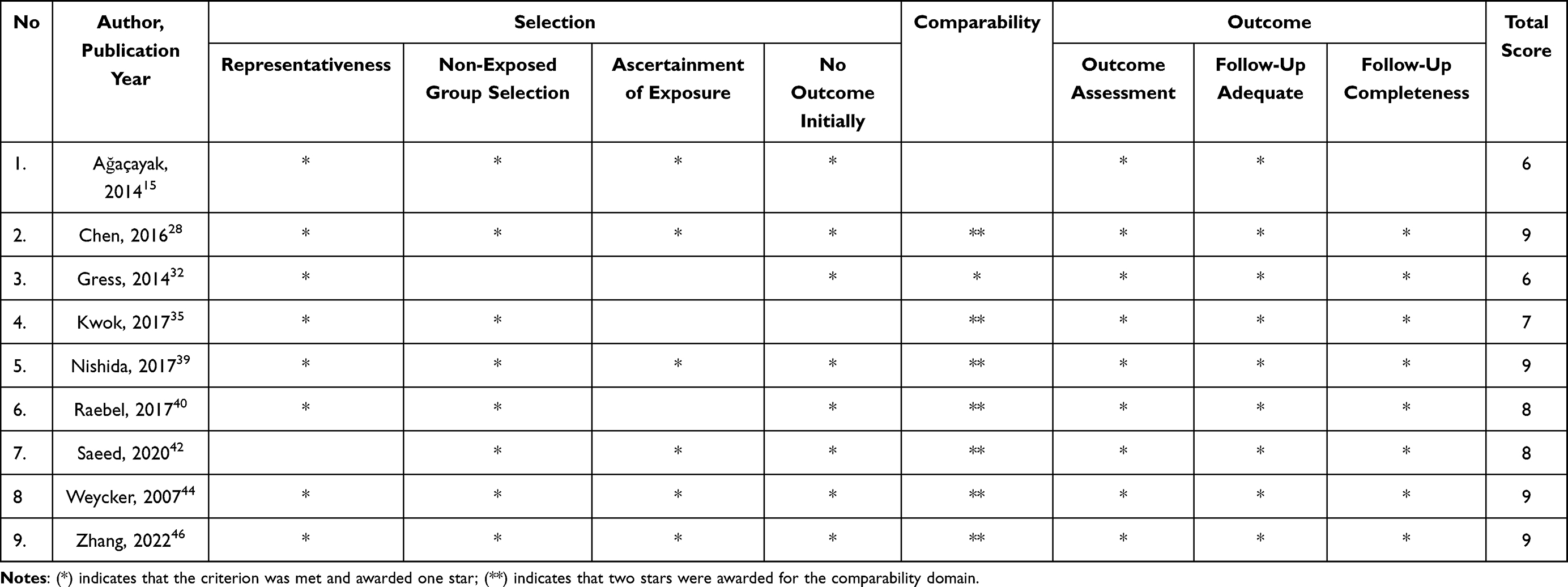 |
Table 6 Quality Assessment Cohort Study Using Newcastle-Ottawa Scale |
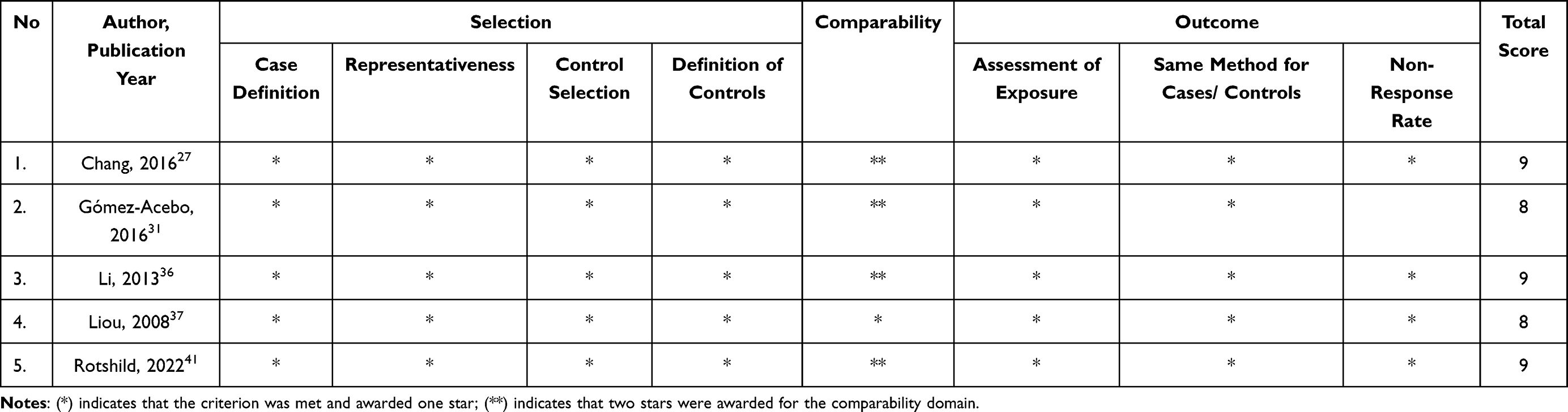 |
Table 7 Quality Assessment Case Control Using Newcastle-Ottawa Scale |
Long-Term Safety of CCBs
Renal Safety
Studies consistently showed that ACEIs (eg, enalapril, ramipril) provided superior renal protection compared to CCBs (eg, amlodipine, nicardipine).14,39 Enalapril and ramipril reduced urinary albumin excretion by >50%, while CCBs showed minimal effect on proteinuria.26,32 In a 4.2‑year study, amlodipine was associated with higher creatinine abnormalities (1.1% vs 0.8%) and end-stage renal disease (ESRD) (0.4% vs 0.2%) compared to candesartan.17
A 5-year RCT showed that while atenolol, lisinopril, and non-DHP CCBs had comparable effects on proteinuria, atenolol was linked to faster renal function decline. In the same study, enalapril reduced albuminuria by 254%, compared to 111% with nifedipine.24,26 In a 6-year cohort, creatinine abnormalities were reported in 1.4% of patients receiving amlodipine versus 1.2% in the candesartan group, while ESRD occurred in 0.6% vs 0.3%, respectively.18
New-Onset Diabetes (NOD)
Four studies investigated the development of NOD during prolonged exposure to CCBs. In one 3-year RCT, diabetes occurred more frequently in patients treated with co-amilozide (4.3%) than in those receiving nifedipine (3.0%).13 A combined analysis of a RCTs and cohort study with an average follow-up duration of about 4.2 years, amlodipine use was associated with a higher rate of NOD (13.3 cases per 1000 person-years), whereas treatment with candesartan and valsartan was associated with risk reductions of approximately 29% (HR 0.71, p = 0.0495) and 21% (RR = 0.79), respectively.17,44
In a 6-year case-control and RCTs analysis, amlodipine again showed higher NOD incidence (13.3 vs 9.5 per 1000 person-years), but the overall CCB group showed no meaningful statistical association (OR = 1.05; 95% CI: 0.96–1.13).18,37 In a 10-year observational follow-up, candesartan was shown to decrease the risk of NOD by roughly 30% relative to amlodipine (HR = 0.75; 95% CI 0.57–1.00), highlighting differences among antihypertensive drug classes.38
Breast Cancer
Several observational studies, including both cohort and case-control designs, have evaluated whether long-term exposure to CCBs contributes to the development of breast cancer. In one investigation with a 5-year observation period, a higher probability of breast cancer was reported among women using CCBs (OR = 1.77; 95% CI: 0.993.17). The risk appeared more pronounced among women with elevated BMI (OR = 2.54) and in those diagnosed with more aggressive histologic subtypes, such as non-ductal (OR = 3.97), invasive (OR = 1.96), and ERBB2-positive cancers (OR = 2.97).27 Another study reported a 21% increased risk with ≥6 years of DHP CCBs use (OR = 1.21), though not statistically significant (CI: 0.88–1.67).37 In a 10-year study, current use of CCBs was linked to elevated risks of ductal (OR = 2.4) and lobular breast cancer (OR = 2.6).33 Conversely, two large studies (12 and 16-year follow-up) found no significant increase in risk (HR = 0.98 and OR 0.91, respectively), suggesting inconsistency in long-term associations.40,42
Bone Health
Two cohort studies indicated that prolonged CCB therapy was linked to lower fracture risks. One study found approximately a 34% reduction in non-vertebral fractures, with the effect estimate around 0.66 (CI: 0.43–1.02).31 Another reported a 30% lower likelihood of femoral neck fractures, with the risk estimate near 0.70 (CI: 0.49–0.99),28 though these effects were less pronounced than with ACEIs (HR = 0.62) or ARBs (HR = 0.19).35 Imaging studies also indicated CCBs conferred less benefit to BMD compared to beta-blockers.15 This suggests CCBs may have a neutral to modestly protective effect, though less consistent than ACEIs/ARBs or beta-blockers.
Other Systemic Effects
A cohort study with a 28-year observation period reported no meaningful correlation between prolonged CCB exposure (≥11 years) and the likelihood of developing colorectal cancer (CRC), with the risk estimate hovering around 0.92 (CI: 9.57–1.46). Likewise, mortality related to CRC showed a comparable pattern, with an estimated value near 0.49 and limits of 0.20 to 1.19.46 In an RCT conducted over nearly four years, nitrendipine therapy was linked to a 55% reduction in dementia risk compared to placebo. The incidence was 3.3 per 1000 person-years in the treatment group versus 7.4 in the control group (HR = 0.38; 95% CI: 0.23–0.64; p < 0.001).30 A 4-year trial showed that amlodipine improved lipid profiles modestly, decreasing total cholesterol by 0.17 mmol/L and triglycerides by 0.21 mmol/L, but was less effective than doxazosin or enalapril.33
In the INSIGHT trial, gout occurred in 2.1% of patients receiving co-amilozide compared to 1.3% of those treated with nifedipine, indicating a slightly lower gout incidence with long-term CCBs use.13 Regarding sexual function, 22.5% of men and 26.4% of women reported decreased sexual frequency after 48 months of amlodipine use.34 The cohort suggested about a 17% rise in diabetes risk among CCB recipients; the estimated HR was close to 1.17, and the CI (0.85–1.62) indicated no statistically meaningful difference.32
Long-Term Effectiveness
Multiple studies in hypertensive populations have demonstrated that prolonged CCB therapy correlates with a reduced occurrence of stroke events. Treatment with nitrendipine reduced the total stroke rate by 42% from 13.7 to 7.9 cases per 1000 patient-years.43 Manidipine showed a lower incidence of cerebral hemorrhage than ACEIs (1.6 vs 6.3 per 1000 patient-years).16 In the CASE-J trial and its extension study evaluating the same cohort with longer follow-up, amlodipine showed a slightly lower stroke incidence than candesartan (2.5% vs 3.0%) and demonstrated reduced stroke occurrence particularly, in patients without prior cerebrovascular events.17,18,45
For other cardiovascular outcomes, findings varied across studies. Within the CASE-J cohort and its extension, TIA occurred more frequently among amlodipine users than in the candesartan group (eg, 0.6% vs 0.4%).17,18 Angina pectoris was also more common in CCB users in two studies, with incidence rates of 0.6% and 0.9% versus 0.3% and 0.5% in the candesartan group, respectively.17,18 However, one study reported a lower angina rate with manidipine compared to ACEIs (6.3 vs 8.0 per 1000 patient-years).16 Patients in the amlodipine group exhibited a slightly higher rate of acute myocardial infarction (AMI) than those receiving candesartan (1.1% vs 0.9%18 and 0.8% vs 0.7%17). However, other trials did not observe a meaningful difference in AMI rates between treatment groups.16 Heart failure rates were generally low,16–18 but appeared marginally increased with CCBs in some studies.42,45 Overall evidence supports the sustained stroke preventive benefit of CCBs, though their influence on other cardiovascular outcomes, including TIA, angina, heart failure, and myocardial infarction, shows considerable heterogeneity.
Discussion
Overview
Long-term CCB therapy shows acceptable safety and sustained benefit in lowering stroke incidence. Potential safety concerns have been reported in several domains, including renal function,14,17,18,24–26,29,39 NOD,17,18,37,38,44 breast cancer risk,27,31,36,40,41 and bone health.15,28,35 Cardiovascular outcomes beyond stroke showed mixed results, with some studies reporting benefits in heart failure, while others noted a higher incidence of TIA, angina, and myocardial infarction.16–18,42,43,45 Additional systemic outcomes, including CRC,46 dementia,30 gout,13 sexual dysfunction,34 and dyslipidemia,33 were also reported across the included studies. Importantly, the majority of evidence included in this review is derived from studies evaluating DHP CCBs, particularly amlodipine and nifedipine. In contrast, evidence regarding non-DHP CCBs remains limited. Consequently, the observed safety and effectiveness outcomes primarily reflect the effects of DHP CCBs rather than the entire CCB class. These effects may further vary according to treatment duration and patient characteristics, underscoring the importance of individualized therapy and careful monitoring in long-term clinical use.
Renal Safety
DHP CCBs (eg, amlodipine, nicardipine) are generally safe for kidney function,14,39 but show limited antiproteinuric effects, with some studies reporting a higher incidence of ESRD over long-term follow-up.18,24–26,29 In contrast, evidence from one trial suggested that non-DHP CCBs (verapamil, diltiazem) had proteinuria outcomes comparable to lisinopril and atenolol, indicating no clear disadvantage in renal safety.24 CCBs, particularly DHP, act primarily as vasodilators on afferent arterioles of the glomerulus. This vasodilation increases glomerular capillary pressure, potentially contributing to glomerular hyperfiltration and proteinuria, especially if not balanced by efferent vasodilation.47
However, it is important to recognize that not all DHP CCBs exert identical renal hemodynamic effects. While conventional DHP CCBs predominantly dilate the afferent glomerular arteriole, potentially increasing intraglomerular pressure and proteinuria, newer agents such as lercanidipine appear to demonstrate a more balanced renal vascular profile. Owing to its high lipophilicity and sustained interaction with vascular smooth muscle cell membranes, lercanidipine has been reported to induce vasodilation of both afferent and efferent glomerular arterioles. This dual action may contribute to a reduction in intraglomerular pressure and improved control of proteinuria beyond blood pressure lowering alone. Nevertheless, although several randomized and observational studies have evaluated the renal effects of lercanidipine over intermediate follow-up periods, robust long-term randomized trials specifically designed to assess hard renal outcomes are still lacking.48 Overall, while CCBs are acceptable for long-term use, their renoprotective effects remain limited, warranting close monitoring of renal health in individuals presenting with reduced kidney function or urinary albumin loss.
New-Onset Diabetes (NOD)
Long-term administration of CCBs, particularly amlodipine, has been linked to a modestly elevated risk of NOD.17,18,37,38,44 Mechanistically, this effect is believed to stem from reduced calcium entry through L-type channels in pancreatic β-cells, leading to impaired insulin release and a decline in glucose tolerance over time.49 Current evidence mainly involves DHP CCBs, while data for non-DHP CCBs remain limited. Among patients at elevated risk of developing diabetes, including those with impaired glucose tolerance, metabolic syndrome, or a family history of the disease, CCBs should be prescribed with caution and accompanied by regular glucose monitoring.
Breast Cancer
Evidence regarding the association between prolonged CCB exposure and breast cancer risk remains inconsistent and inconclusive. Some studies mention an increased risk,31 especially with usage of ≥5 years and in aggressive cancer subtypes, whereas others have reported no statistically meaningful difference in incidence.27 Some hypotheses suggest that CCBs may disrupt cell apoptosis through intracellular calcium regulation, potentially increasing tumor cell proliferation. However, direct biological evidence is still limited.36,40,41 Given these uncertainties and the observational nature of most studies, the findings should be interpreted with caution. For women at elevated baseline risk, careful monitoring and individualized risk-benefit assessment are warranted when prescribing CCBs.
Bone Health
Several observational studies have reported inconsistent findings regarding the association between CCB use and fracture risk. Two studies reported that CCB users have a lower risk of non-vertebral fractures and femoral neck fractures.28,35 However, one study showed a negative effect on bone metabolism compared to beta-blockers.15 CCBs may influence calcium homeostasis in osteoblast and osteoclast cells, which is crucial in bone remodeling. Blocking L-type calcium channels in bones may inhibit osteoblast activity, reducing the formation of new bone.50 Certain CCBs have been reported to reduce BMD in craniofacial sites such as the maxilla, potentially increasing susceptibility to fractures in older adults.15
The protective effect against fractures is seen in studies lasting over 5 years. However, other studies with shorter durations or specific populations (eg, older men) show less consistent results, indicating that the effects may depend on duration and patient characteristics.15 Given the potential implications for bone health, clinicians are advised to exercise caution when prescribing CCBs to individuals with elevated fracture or osteoporosis risk. Regular monitoring of BMD may be considered in such patients.51 For elderly patients or postmenopausal women, combining with calcium/vitamin D supplements or lifestyle modifications may be a mitigating step.52
Other Systemic Effects
Other systemic effects associated with CCBs use include neurological, metabolic, and reproductive domains. For instance, nitrendipine has been linked to a reduced risk of dementia, possibly because it can penetrate the central nervous system and mitigate neuronal calcium overload, which plays a critical role in neurodegeneration.30 Amlodipine has also demonstrated minor improvements in lipid parameters, although these effects are not clinically significant compared to lipid-lowering agents.33 Regarding sexual function, prolonged amlodipine therapy has been associated with a decline in sexual activity among both male and female patients. Although the underlying mechanism has not been fully elucidated, changes in vascular tone and reduced genital blood flow may contribute to this effect.34
Moreover, CCBs appear to have a more favorable uric acid profile than diuretics, with a lower incidence gout reported in comparative trials such as INSIGHT.13 These results suggest that CCBs may be a suitable antihypertensive option for individuals with hyperuricemia or those at risk for gout.13 In clinical practice, while these adverse effects are generally mild, they warrant consideration in vulnerable populations. When prescribing CCBs, clinicians should weigh these risks, provide appropriate monitoring, and consider patient-specific comorbidities when deciding on long-term antihypertensive therapy.
Long-Term Effectiveness
CCBs have demonstrated sustained effectiveness in preventing stroke among hypertensive individuals, mainly through inhibition of L-type calcium channels that mediate vascular smooth muscle contraction.16–18,43,45 This mechanism lowers peripheral resistance and improves cerebral perfusion, contributing to reduced stroke risk. In addition, DHP CCBs, such as amlodipine, enhance endothelial nitric oxide activity, improving vascular function beyond blood pressure control.53
However, outcomes beyond stroke are more heterogeneous. Some studies have reported increased risks of heart failure, angina, myocardial infarction, and TIA, especially with DHP CCBs,16–18,42,43,45 potentially related to reflex tachycardia and increased myocardial oxygen demand.54 By contrast, clinical statements suggest that non-DHP CCBs (verapamil, diltiazem) may confer benefit for ischemic heart disease, owing to their heart rate-lowering and anti-angina properties.55,56 Taken together, these findings highlight the clinical relevance of subclass differentiation: DHP CCBs appear more favorable for stroke prevention, while non-DHP CCBs show potential value among patients with ischemic heart disease. Overall, while CCBs demonstrate robust effectiveness for stroke prevention, their impact on other cardiovascular outcomes appears variable, underscoring the importance of subclass differentiation, individualized therapy, and careful long-term monitoring.
Strengths and Limitations
This review is among the first to comprehensively evaluate the long-term use of CCBs across multiple organ systems in hypertensive populations. By integrating evidence from both RCTs and observational studies, it provides a broad perspective that captures findings from controlled trial settings as well as real-world practice. A narrative synthesis was chosen given the methodological and clinical heterogeneity across studies, which, while limiting the possibility of direct quantitative comparison, allowed a balanced integration of diverse outcomes and designs.
Nevertheless, several limitations should be acknowledged. The findings may be affected by publication bias and residual confounding inherent to observational studies and should therefore be interpreted with appropriate caution. Importantly, the majority of available evidence pertains to DHP CCBs, whereas data on non-DHP agents remain limited, restricting subclass-specific comparisons and limiting the generalizability of the findings to the entire CCB class. Furthermore, several key trials included in this review were conducted in earlier treatment eras, during which clinical practice patterns, background therapies, and patient risk profiles differed from contemporary hypertension management, potentially limiting the applicability of some findings to current clinical settings.33
Suggestions for Further Research
Future studies should employ prospective longitudinal designs to clarify the long-term safety and cardiovascular effectiveness of CCBs, with a focus on outcomes such as renal dysfunction, NOD, bone health, and cancer. Mechanistic investigations are also needed to better explain these associations and to inform more personalized hypertension management.
Conclusion
This systematic review indicates that CCBs remain acceptable for long-term therapy in hypertensive patients, demonstrating an overall reassuring safety profile when appropriately monitored, particularly among high-risk populations. Most supporting evidence is derived from studies of DHP CCBs, whereas evidence for non-DHP CCBs remains limited and warrants cautious interpretation. RCTs support the sustained effectiveness of CCBs in stroke prevention and suggest generally neutral to modest effects on metabolic parameters and selected renal outcomes. In contrast, associations with long-term metabolic, oncologic, and skeletal risks are largely derived from observational studies and remain inconsistent. Evidence regarding heart failure, myocardial infarction, and TIA is heterogeneous across study designs, precluding definitive conclusions. Clinically, these findings support the continued use of CCBs within current hypertension management strategies while emphasizing individualized treatment decisions, appropriate subclass selection, and long-term monitoring. Further high-quality prospective studies are warranted to clarify unresolved safety signals and to inform future clinical guidelines.
Acknowledgments
The authors acknowledge the institutional support provided by Universitas Padjadjaran throughout the conduct of this review.
Disclosure
The authors report no conflicts of interest in this work.
References
1. Stanaway JD, Afshin A, Gakidou E, et al. Global, regional, and national comparative risk assessment of 84 behavioural, environmental and occupational, and metabolic risks or clusters of risks for 195 countries and territories, 1990–2017: a systematic analysis for the Global Burden of Disease Study 2017. Lancet. 2018;392(10159):1923–24. doi:10.1016/S0140-6736(18)32225-6
2. Aune D, Huang W, Nie J, Wang Y. Hypertension and the risk of all‐cause and cause‐specific mortality: an outcome‐wide association study of 67 causes of death in the national health interview survey. BioMed Res Int. 2021;2021(1):9376134. doi:10.1155/2021/9376134
3. National Institute for Health and Care Excellence. Hypertension in adults: diagnosis and management. Pract Nurse. 2019;49(9).
4. Gabb GM, Mangoni AA, Anderson CS, et al. Guideline for the diagnosis and management of hypertension in adults — 2016. Med J Aust. 2016;205(2):85–89. doi:10.5694/mja16.00526
5. Williams B, Mancia G, Spiering W, et al. 2018 ESC/ESH Guidelines for the management of arterial hypertension. Eur Heart J. 2018;39(33):3021–3104. doi:10.1093/eurheartj/ehy339
6. American Heart Association/American Stroke Association. 2025 AHA/ACC/AANP/AAPA/ABC/ACCP/ACPM/AGS/AMA/ASPC/NMA/PCNA/SGIM guideline for the prevention, detection, evaluation and management of high blood pressure in adults: a report of the American College of Cardiology/American Heart Association Joint Committee on Clinical Practice Guidelines. Hypertension. 2025;82(10). doi:10.1161/HYP.0000000000000249
7. World Health Organization. Hypertension. 2023.
8. Al-Makki A, DiPette D, Whelton PK, et al. Hypertension pharmacological treatment in adults: a World Health Organization guideline executive summary. Hypertension. 2022;79(1):293–301. doi:10.1161/HYPERTENSIONAHA.121.18192
9. Mancia G, Kreutz R, Brunström M, et al. 2023 ESH Guidelines for the management of arterial hypertension The Task Force for the management of arterial hypertension of the European Society of Hypertension: endorsed by the International Society of Hypertension (ISH) and the European Renal Association (ERA). J Hypertens. 2023;41(12):1874–2071. doi:10.1097/HJH.0000000000003480
10. Laurent S. Antihypertensive drugs. Pharmacol Res. 2017;124:116–125. doi:10.1016/j.phrs.2017.07.026
11. Ojha U, Ruddaraju S, Sabapathy N, et al. Current and emerging classes of pharmacological agents for the management of hypertension. Am J Cardiovasc Drugs. 2022;22(3):271–285. doi:10.1007/s40256-021-00510-9
12. Jones KE, Hayden SL, Meyer HR, et al. The evolving role of calcium channel blockers in hypertension management: pharmacological and clinical considerations. Curr Issues Mol Biol. 2024;46(7):6315–6327. doi:10.3390/cimb46070377
13. Brown MJ, Palmer CR, Castaigne A, et al. Morbidity and mortality in patients randomised to double-blind treatment with a long-acting calcium-channel blocker or diuretic in the International Nifedipine GITS study: intervention as a Goal in Hypertension Treatment (INSIGHT). Lancet. 2000;356(9227):366–372. doi:10.1016/S0140-6736(00)02527-7
14. Bianchi S, Bigazzi R, Baldari G, Campese VM. Long-term effects of enalapril and nicardipine on urinary albumin excretion in patients with chronic renal insufficiency: a 1-year follow-up. Am J Nephrol. 1991;11(2):131–137. doi:10.1159/000168289
15. Agacayak KS, Guven S, Atalay Y, Gunes N, Atilgan S, Koparal M. Long-term effects of antihypertensive medications on bone mineral density in men older than 55 years. Clin Interv Aging. 2014;9:509. doi:10.2147/CIA.S60669
16. Ogihara T. Practitioner’s trial on the efficacy of antihypertensive treatment in the elderly hypertension (the PATE-Hypertension Study) in Japan. Am J Hypertens. 2000;13(5):461–467. doi:10.1016/S0895-7061(99)00215-0
17. Ogihara T, Nakao K, Fukui T, et al. Effects of Candesartan compared with amlodipine in hypertensive patients with high cardiovascular risks: Candesartan antihypertensive survival evaluation in Japan trial. Hypertension. 2008;51(2):393–398. doi:10.1161/HYPERTENSIONAHA.107.098475
18. Ogihara T, Ueshima K, Nakao K, et al. Long-term effects of candesartan and amlodipine on cardiovascular morbidity and mortality in Japanese high-risk hypertensive patients: the Candesartan Antihypertensive Survival Evaluation in Japan Extension Study (CASE-J Ex). Hypertens Res. 2011;34(12):1295–1301. doi:10.1038/hr.2011.120
19. Li W, Shi Q, Wang W, Liu J, Li Q, Hou F. Calcium channel blockers and risk of breast cancer: a meta-analysis of 17 observational studies. PLoS One. 2014;9(9):1–9.
20. Peters R, Booth A, Peters J. A systematic review of calcium channel blocker use and cognitive decline/dementia in the elderly. J Hypertens. 2014;32(10):1945–1958. doi:10.1097/hjh.0000000000000273
21. Jadad AR, Moore RA, Carroll D, et al. Assessing the quality of reports of randomized clinical trials: is blinding necessary? Control Clin Trials. 1996;17(1):1–12. doi:10.1016/0197-2456(95)00134-4
22. The Ottawa Hospital. The Newcastle-Ottawa Scale (NOS) for assessing the quality of nonrandomised studies in meta-analyses. 2021. Available from: https://www.ohri.ca/programs/clinical_epidemiology/oxford.asp?.
23. Page MJ, McKenzie JE, Bossuyt PM, et al. The PRISMA 2020 statement: an updated guideline for reporting systematic reviews. BMJ. 2021;372:n71. doi:10.1136/bmj.n71
24. Bakris GL, Copley JB, Vicknair N, Sadler R, Leurgans S. Calcium channel blockers versus other antihypertensive therapies on progression of NIDDM associated nephropathy. Kidney Int. 1996;50(5):1641–1650. doi:10.1038/ki.1996.480
25. Bigazzi R, Bianchi S, Baldari D, Sgherri G, Baldari G, Campese VM. Lone-term effects of a converting enzyme inhibitor and a calcium channel blocker on urinary albumin excretion in patients with essential hypertension. Am J Hypertens. 1993;6(2):108–113. doi:10.1093/ajh/6.2.108
26. Chan JCN, Ko GTC, Leung DHY, et al. Long-term effects of angiotensin-converting enzyme inhibition and metabolic control in hypertensive type 2 diabetic patients. Kidney Int. 2000;57(2):590–600. doi:10.1046/j.1523-1755.2000.00879.x
27. Chang CH, Chiang CH, Yen CJ, Wu LC, Lin JW, Lai MS. Antihypertensive agents and the risk of breast cancer in women aged 55 years and older: a nested case-control study. J Hypertens. 2016;34(3):558–566. doi:10.1097/HJH.0000000000000813
28. Chen HY, Ma KY, Hsieh PL, Liou YS, Jong GP. Long-term effects of antihypertensive drug use and new-onset osteoporotic fracture in elderly patients: a population-based longitudinal cohort study. Chin Med J. 2016;129(24):2907–2912. doi:10.4103/0366-6999.195472
29. Fogari R, Zoppi A, Corradi L, et al. Long-term effects of ramipril and nitrendipine on albuminuria in hypertensive patients with type II diabetes and impaired renal function. J Hum Hypertens. 1999;13(1):47–53. doi:10.1038/sj.jhh.1000732
30. Forette F. The prevention of dementia with antihypertensive treatmentnew evidence from the systolic hypertension in Europe (Syst-Eur) Study. Arch Intern Med. 2002;162(18):2046. doi:10.1001/archinte.162.18.2046
31. Gómez-Acebo I, Dierssen-Sotos T, Palazuelos C, et al. The use of antihypertensive medication and the risk of breast cancer in a case-control study in a Spanish Population: the MCC-Spain Study. PLoS One. 2016;11(8):e0159672. doi:10.1371/journal.pone.0159672
32. Gress TW, Nieto FJ, Shahar E, Wofford MR, Brancati FL. Hypertension and antihypertensive therapy as risk factors for type 2 diabetes mellitus. N Engl J Med. 2000;342(13):905–912. doi:10.1056/NEJM200003303421301
33. Grimm RH. Long-term effects on plasma lipids of diet and drugs to treat hypertension. JAMA J Am Med Assoc. 1996;275(20):1549. doi:10.1001/jama.1996.03530440029033
34. Grimm RH, Grandits GA, Prineas RJ, et al. Long-term effects on sexual function of five antihypertensive drugs and nutritional hygienic treatment in hypertensive men and women: Treatment of Mild Hypertension Study (TOMHS). Hypertension. 1997;29(1):8–14. doi:10.1161/01.HYP.29.1.8
35. Kwok T, Leung J, Barrett-Connor E. ARB users exhibit a lower fracture incidence than ACE inhibitor users among older hypertensive men. Age Ageing. 2016;46(1):57–64. doi:10.1093/ageing/afw150
36. Li CI, Daling JR, Tang MTC, Haugen KL, Porter PL, Malone KE. Use of antihypertensive medications and breast cancer risk among women aged 55 to 74 years. JAMA Intern Med. 2013;173(17):1629. doi:10.1001/jamainternmed.2013.9071
37. Liou YS, Ma T, Tien L, Chien C, Chou P, Jong GP. Long-term effects of antihypertensive drugs on the risk of new-onset diabetes in elderly Taiwanese hypertensives. Int Heart J. 2008;49(2):205–211. doi:10.1536/ihj.49.205
38. Liu J, Yasuno S, Oba K, et al. Long-term effects of antihypertensive therapy on cardiovascular events and new-onset diabetes mellitus in high-risk hypertensive patients in Japan. J Hypertens. 2018;36(9):1921–1928. doi:10.1097/HJH.0000000000001780
39. Nishida Y, Takahashi Y, Tezuka K, Takeuchi S, Nakayama T, Asai S. A comparative effectiveness study of renal parameters between imidapril and amlodipine in patients with hypertension: a retrospective cohort study. Cardiol Ther. 2017;6(1):69–80. doi:10.1007/s40119-016-0080-4
40. Raebel MA, Zeng C, Cheetham TC, et al. Risk of breast cancer with long-term use of calcium channel blockers or angiotensin-converting enzyme inhibitors among older women. Am J Epidemiol. 2017;185(4):264–273. doi:10.1093/aje/kww217
41. Rotshild V, Hirsh Raccah B, Gazawe M, Matok I. Calcium channel blocker use and the risk for breast cancer: a population-based nested case-control study. Cancers. 2022;14(9):2344. doi:10.3390/cancers14092344
42. Saeed S, Mancia G, Rajani R, Parkin D, Chambers JB. Antihypertensive treatment with calcium channel blockers in patients with moderate or severe aortic stenosis: relationship with all-cause mortality. Int J Cardiol. 2020;298:122–125. doi:10.1016/j.ijcard.2019.09.007
43. Staessen JA, Fagard R, Thijs L, et al. Randomised double-blind comparison of placebo and active treatment for older patients with isolated systolic hypertension. Lancet. 1997;350(9080):757–764. doi:10.1016/S0140-6736(97)05381-6
44. Weycker D, Edelsberg J, Vincze G, et al. Risk of diabetes in a real-world setting among patients initiating antihypertensive therapy with valsartan or amlodipine. J Hum Hypertens. 2007;21(5):374–380. doi:10.1038/sj.jhh.1002159
45. Zanchetti A, Julius S, Kjeldsen S, et al. Outcomes in subgroups of hypertensive patients treated with regimens based on valsartan and amlodipine: an analysis of findings from the VALUE trial. J Hypertens. 2006;24(11):2163–2168. doi:10.1097/01.hjh.0000249692.96488.46
46. Zhang Y, Song M, Chan AT, Meyerhardt JA, Willett WC, Giovannucci EL. Long-term use of antihypertensive medications, hypertension and colorectal cancer risk and mortality: a prospective cohort study. Br J Cancer. 2022;127(11):1974–1982. doi:10.1038/s41416-022-01975-4
47. Locatelli F, Del Vecchio L, Andrulli S, Colzani S. Role of combination therapy with ACE inhibitors and calcium channel blockers in renal protection. Kidney Int. 2002;62:S53–S60. doi:10.1046/j.1523-1755.62.s82.11.x
48. Grassi G, Robles NR, Seravalle G, Fici F. Lercanidipine in the management of hypertension: an update. J Pharmacol Pharmacother. 2017;8(4):155–165. doi:10.4103/jpp.JPP_34_17
49. Noto H, Goto A, Tsujimoto T, Noda M. Effect of calcium channel blockers on incidence of diabetes: a meta-analysis. Diabetes Metab Syndr Obes Targets Ther. 2013;6:257. doi:10.2147/DMSO.S49767
50. Nishiya Y, Sugimoto S. Effects of various antihypertensive drugs on the function of osteoblast. Biol Pharm Bull. 2001;24(6):628–633. doi:10.1248/bpb.24.628
51. Yin H, Yang M, Sun W, Zhang R, Zhen D, Tang X. Association of RAAS inhibitors on osteoporosis and fracture risk in the hypertensive population–A prospective population-based cohort study in Lanzhou, China. BMC Musculoskelet Disord. 2024;25(1):797. doi:10.1186/s12891-024-07909-w
52. Weaver CM, Alexander DD, Boushey CJ, et al. Calcium plus vitamin D supplementation and risk of fractures: an updated meta-analysis from the National Osteoporosis Foundation. Osteoporos Int. 2016;27(1):367–376. doi:10.1007/s00198-015-3386-5
53. Bulsara KG, Patel P, Cassagnol M. Amlodipine. In: StatPearls. StatPearls Publishing; 2025.
54. Wu L, Deng S, She Q. Calcium channel blocker compared with angiotensin receptor blocker for patients with hypertension: a meta‐analysis of randomized controlled trials. J Clin Hypertens. 2014;16(11):838–845. doi:10.1111/jch.12388
55. Verdecchia P, Reboldi G, Angeli F, et al. Angiotensin-converting enzyme inhibitors and calcium channel blockers for coronary heart disease and stroke prevention. Hypertension. 2005;46(2):386–392. doi:10.1161/01.HYP.0000174591.42889.a2
56. Rosendorff C, Black HR, Cannon CP, et al. Treatment of hypertension in the prevention and management of ischemic heart disease: a scientific statement from the American Heart Association Council for high blood pressure research and the councils on clinical cardiology and epidemiology and prevention. Circulation. 2007;115(21):2761–2788. doi:10.1161/CIRCULATIONAHA.107.183885
 © 2026 The Author(s). This work is published and licensed by Dove Medical Press Limited. The
full terms of this license are available at https://www.dovepress.com/terms
and incorporate the Creative Commons Attribution
- Non Commercial (unported, 4.0) License.
By accessing the work you hereby accept the Terms. Non-commercial uses of the work are permitted
without any further permission from Dove Medical Press Limited, provided the work is properly
attributed. For permission for commercial use of this work, please see paragraphs 4.2 and 5 of our Terms.
© 2026 The Author(s). This work is published and licensed by Dove Medical Press Limited. The
full terms of this license are available at https://www.dovepress.com/terms
and incorporate the Creative Commons Attribution
- Non Commercial (unported, 4.0) License.
By accessing the work you hereby accept the Terms. Non-commercial uses of the work are permitted
without any further permission from Dove Medical Press Limited, provided the work is properly
attributed. For permission for commercial use of this work, please see paragraphs 4.2 and 5 of our Terms.