
Back to Journals » Patient Preference and Adherence » Volume 20
Latent Profile Analysis of Disease Self-Management and Its Associated Factors Among People Living with HIV with Dyslipidemia
Authors Yin S  , Yuan Y , Wang H, Hu A, Zhang K
Received 3 December 2025
Accepted for publication 11 March 2026
Published 23 March 2026 Volume 2026:20 584419
DOI https://doi.org/10.2147/PPA.S584419
Checked for plagiarism Yes
Review by Single anonymous peer review
Peer reviewer comments 2
Editor who approved publication: Dr Johnny Chen
Shuting Yin,1 Yuxiang Yuan,1 Huiqun Wang,2 Aoling Hu,1 Ke Zhang1
1School of Nursing, Nanjing University of Chinese Medicine, Nanjing, Jiangsu, People’s Republic of China; 2Department of Infectious Disease, The Second Hospital of Nanjing, Affiliated to Nanjing University of Chinese Medicine, Nanjing, Jiangsu, People’s Republic of China
Correspondence: Huiqun Wang, Department of Infectious Disease, The Second Hospital of Nanjing, Affiliated to Nanjing University of Chinese Medicine, Nanjing, Jiangsu, People’s Republic of China, Tel +8613912966739, Email [email protected]
Purpose: To identify latent self-management profiles in people living with HIV (PLWH) with dyslipidemia and factors associated with profile membership, thereby facilitating targeted clinical intervention.
Methods: A cross-sectional survey was conducted from December 2024 to June 2025 among 333 PLWH with dyslipidemia at Nanjing Second Hospital. Data were collected via sociodemographic/disease-related questionnaire, the HIV Self-Management Scale (HIVSMS), and the Health Literacy Management Scale (HLMS). Latent profile analysis (LPA) was performed in Mplus 8.3, and multinomial logistic regression was used to examine factors associated with profile membership.
Results: Fit indices (entropy = 0.993) supported a three-profile solution: low self-management–low social support-seeking (C1, 42.3%), moderate self-management–stable (C2, 37.8%), and high self-management–emotion regulation dominant (C3, 19.8%). Seeking social support was relatively low across profiles. Compared with C1, C2 membership was significantly associated with higher education and income, lipid-lowering medication use (OR 3.735, 95% CI 1.597– 8.736), and CD4 350– 500 cells/μL, and was less likely among participants with VL > 1000 copies/mL or chronic comorbidities (all P < 0.05). Compared with C1, C3 membership was significantly associated with HIV infection duration ≥ 5 years, higher education and income, CD4 > 500 cells/μL, and higher HDL-C, and was less likely among those with VL > 1000 copies/mL (OR 0.037, 95% CI 0.004– 0.380) or chronic comorbidities (all P < 0.05). Compared with C2, C3 membership was independently associated with higher health literacy (HL) (OR 1.038 per point, 95% CI 1.012– 1.064) and was less likely among those with LDL-C ≥ 3 mmol/L (P < 0.05).
Conclusion: We identified three distinct self-management profiles among PLWH with dyslipidemia. Profile membership was significantly associated with HL and socioeconomic, HIV-related, lipid-related, and comorbidity factors, supporting the need for profile-tailored strategies to improve self-management.
Keywords: HIV/AIDS, lipid abnormalities, health-behavior regulation, finite mixture modeling, predictors
Introduction
With the advancement of antiretroviral therapy (ART), human immunodeficiency virus (HIV) infection has shifted from a fatal condition to a chronic disease that can be managed over the long term.1 At the same time, against the backdrop of an increased risk of non-AIDS-defining disease (NAD), metabolic comorbidities have become particularly prominent.2 Among these, dyslipidemia is the most common and is closely associated with atherosclerotic cardiovascular disease (ASCVD).3,4 Epidemiological studies indicate that dyslipidemia is highly prevalent among people living with HIV (PLWH).5 In China, recent meta-analyses estimate dyslipidemia prevalence of 49.8% and 55.1% among ART-naïve and experienced PLWH in China, with elevated triglycerides and reduced high-density lipoprotein cholesterol being the most common abnormalities.6 In addition to traditional cardiovascular risk factors, HIV viral replication and adverse reactions related to antiviral therapy can further increase the risk of ASCVD by 1.5–2-fold and raise the risk of sudden cardiac death by 4.5-fold.7,8
The management of dyslipidemia in people living with HIV (PLWH) is based on cardiovascular risk assessment and lipid control targets. In most cases, lifestyle modification is combined with pharmacological treatment when indicated.9–11 In clinical practice, lipid profiles are commonly assessed at the initiation of antiretroviral therapy (ART) or after regimen changes. Regular follow-up is then performed, together with guidance on diet, physical activity, weight management, and smoking cessation.10,11 Compared with the general population, dyslipidemia management in PLWH is more complex. Statins remain the first-line therapy for lowering low-density lipoprotein cholesterol (LDL-C). However, their selection and dose adjustment must take into account potential drug–drug interactions with ART. Some statins are contraindicated with a specific ART regimen.12 In addition, ART may need to be adjusted to more lipid-friendly options while maintaining virological suppression. This often requires closer lipid monitoring and safety evaluation.10,11 Even when viral load is well controlled, persistent immune activation and chronic inflammation may contribute to residual cardiovascular risk beyond traditional factors.13 Moreover, multimorbidity and polypharmacy increase treatment burden and make long-term lifestyle modification more difficult.14 Given these challenges, effective and sustained disease self-management is essential for improving long-term outcomes.
Disease self-management refers to a continuous process in which individuals address disease-related needs, including regular medication use and daily health-promoting activities, actively mobilizing social support (from family, peers, and healthcare professionals) and adapting to living with a chronic condition.15 Previous studies have demonstrated that enhancing self-management ability can improve treatment adherence and self-efficacy, enhance quality of life, and optimize health outcomes.16,17 For individuals with HIV infection, in addition to routine antiviral therapy, it is also necessary to actively manage ART-induced metabolic disturbances, particularly dyslipidemia. Compared with patients with other chronic diseases, people living with HIV face more complex self-management challenges, as they must simultaneously achieve control of viral load and manage the treatment of dyslipidemia as well as the prevention and control of related cardiovascular risks.
However, in China, evidence regarding self-management behaviors among PLWH with dyslipidemia remains limited. Behavioral variability in this population has not been well described, and few studies have examined potential subtypes of self-management behaviors or their associations with health literacy and key clinical indicators.18 Several biological and clinical factors may contribute to this gap. Drug–drug interactions between antiretroviral therapy and lipid-lowering agents complicate treatment standardization and intervention design.19 Persistent immune activation and chronic inflammation may influence lipid metabolism and cardiovascular risk assessment.8 In addition, differences in ART regimens, multimorbidity, and medication burden across patients make it difficult to establish uniform self-management frameworks.20 These considerations suggest that person-centered analytical approaches may be useful for identifying meaningful behavioral subgroups in this population.
Most previous studies on self-management behaviors in chronic disease and HIV populations have used traditional variable-centered approaches that focus on associations between predictors and outcomes.21 However, person-centered profiling methods such as latent profile or latent class analyses are still limited in this field, with only a few examples reported to date.22 Latent profile analysis (LPA) explains the relationships among continuous manifest indicators using a small number of mutually exclusive latent categorical variables, such that the manifest indicators satisfy “local independence” conditional on class membership. As a person-centered mixture modeling approach, LPA determines the optimal number of profiles based on fit indices such as information criteria and likelihood ratio tests, and classifies individuals according to posterior probabilities, thereby making the classification process more model-based, objective, and reproducible.23 This approach enables the identification of heterogeneous subgroups with substantive differences across multidimensional behavioral indicators, providing a basis for individualized health management. Therefore, this study intends to use LPA to identify latent self-management categories among patients with HIV infection and dyslipidemia, compare health literacy levels across categories, and examine the associations between category membership and CD4 cell count, viral load, and lipid parameters, to provide a reference for healthcare professionals to implement targeted interventions and improve patient outcomes.
Methods
Participants
Inclusion criteria: (1) age ≥18 years; (2) currently receiving antiretroviral therapy (ART); (3) a confirmed diagnosis of HIV/AIDS according to the Chinese Guidelines for Diagnosis and Treatment of HIV/AIDS (2024 edition);1 (4) meeting the criteria for dyslipidemia as defined in the Chinese Guidelines for Lipid Management (2023 edition),14 or having a previous diagnosis of dyslipidemia; and (5) voluntary participation with written informed consent.
Exclusion criteria: (1) lack of language or reading ability; (2) dyslipidemia accompanied by severe organ diseases; and (3) inability to cooperate with the study procedures. Sample size estimation: Based on the empirical rule for logistic regression (10–15 times the number of independent variables),15 a minimum of 270 participants was required. Allowing for 10% invalid questionnaires, the planned sample size was 297. Ultimately, 333 valid questionnaires were obtained.
Study Design
Patients with HIV infection and dyslipidemia who attended the outpatient Department of Infectious Diseases of Nanjing Second Hospital in Jiangsu Province between December 2024 and June 2025 were recruited using convenience sampling.
Survey Instruments
General Information Questionnaire
A self-developed questionnaire was designed according to the study objectives and relevant literature. The initial items were reviewed by three experts in infectious diseases and nursing for clarity and content relevance, and minor revisions were made accordingly. The questionnaire was used to collect demographic characteristics, lifestyle factors, and selected clinical information. It comprised: (1) general information, including sex, age, body mass index (BMI), marital status, educational level, employment status, monthly income, place of residence, and family status (ie, with whom the participant lives); (2) disease-related information, including duration of HIV infection, duration of ART, use of lipid-lowering medication, the most recent CD4 lymphocyte count, the most recent viral load (VL), smoking status, alcohol use, dyslipidemia status, chronic comorbidities (other than dyslipidemia), and arteriosclerotic cardiovascular disease (ASCVD) risk;9,24 and (3) biochemical indicators, including triglycerides (TG), total cholesterol (TC), high-density lipoprotein cholesterol (HDL-C), and low-density lipoprotein cholesterol (LDL-C). Demographic and lifestyle variables (eg, age, marital status, education, employment, income, residence, living arrangement, smoking, and alcohol use) were self-reported by participants. Clinical indicators (eg, CD4 count, viral load, lipid profiles, duration of ART, use of lipid-lowering medication, and documented comorbidities) were extracted from the electronic medical records. For each participant, the most recent results documented in the medical record within 3 months of the study period were extracted.
HIV Self-Management Scale (HIVSMS)
The HIVSMS, developed by Wu Chunyan et al,25 is a disease-specific self-management scale for people living with HIV/AIDS. It consists of 7 dimensions and 49 items. Items are rated on a 5-point Likert scale, with response options scored as follows: “never” (1), “rarely” (2), “sometimes” (3), “often” (4), and “always” (5). Higher scores indicate better self-management. The scale has demonstrated good psychometric properties, with a Cronbach’s α of 0.853 and a test–retest reliability of 0.879.
Health Literacy Management Scale (HLMS)
The Chinese version of the Health Literacy Management Scale (HLMS) for patients with chronic diseases was adapted from the original scale developed by Jordan et al26 and translated and introduced by Sun Haolin.27 The HLMS includes 24 items across four dimensions: (1) information acquisition (9 items), (2) communication and interaction (9 items), (3) intention to promote health (4 items), and (4) willingness to provide economic support (2 items). Items are rated on a 5-point Likert scale ranging from “extremely difficult” to “not difficult at all”, scored from 1 to 5, yielding a total score between 24 and 120. The scale has good internal consistency, with a Cronbach’s α of 0.894.
Data Collection Methods
On-site data collection was conducted by two researchers who had received standardized training. Using a unified questionnaire introduction, they explained the purpose and significance of the study to patients and, after obtaining informed consent, guided them to complete the questionnaires truthfully. All questionnaires were collected and checked on site; any ambiguous or incorrect responses were corrected immediately. Participants were strictly screened according to the inclusion and exclusion criteria to minimize selection bias. The researchers answered any questions raised during completion of the questionnaires, and any questionnaires that remained incomplete were excluded to ensure data quality.
Statistical Analysis
Data were analyzed using Mplus 8.3 and SPSS 26.0. Model fit for the latent class models was evaluated using the Akaike information criterion (AIC), Bayesian information criterion (BIC), and sample size-adjusted BIC (aBIC); lower values indicate better model fit. Entropy ranges from 0 to 1, with values closer to 1 indicating higher classification accuracy.28 The Lo–Mendell–Rubin likelihood ratio test (LMR) and the bootstrapped likelihood ratio test (BLRT) were further used to compare adjacent class models; when the P values of both tests reached statistical significance (P < 0.05), the k-class model was considered superior to the (k − 1)-class model.29 The optimal number of latent classes was determined based on model-fit indices and the interpretability of the classes. For continuous variables with a normal distribution, data are presented as mean ± standard deviation ( ± s), and between-group comparisons were performed using the t-test or analysis of variance. Non-normally distributed continuous variables are presented as median (P25, P75) and were compared using rank-sum tests. Categorical variables are presented as n (%) and were compared using the χ2-test or the H-test. Factors associated with latent class membership were examined using multivariable logistic regression. All tests were two-sided with α = 0.05, and P < 0.05 was considered statistically significant.
Ethical Approval
This study involving human participants was reviewed and approved by the Science and Technology (Review) Ethics Committee of the Affiliated Nanjing Hospital of Nanjing University of Chinese Medicine (Approval No. 2024-LS-ky-096). All participants provided written informed consent prior to data collection. The study was conducted in accordance with relevant ethical standards and regulations.
Results
General Characteristics of Participants with HIV Infection and Dyslipidemia
A total of 346 questionnaires were distributed. Thirteen questionnaires were deemed invalid due to missing items or logical inconsistencies. Consequently, 333 valid questionnaires were included in the final analysis, yielding a valid response rate of 96.24%. The participants’ general characteristics are summarized in Table 1.
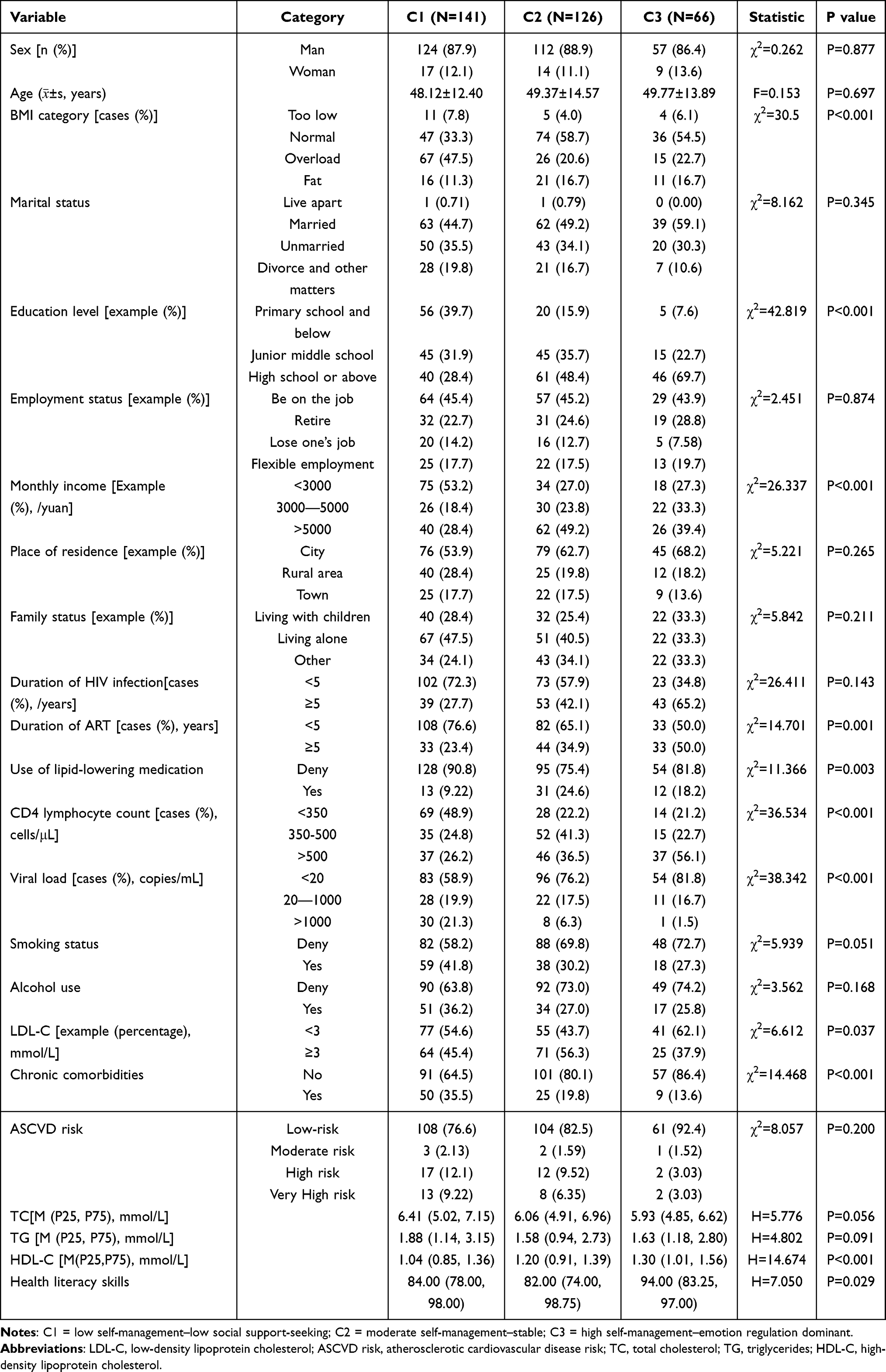 |
Table 1 Univariate Analysis of Potential Categories for Disease Self-Management in HIV-Infected Patients with Dyslipidemia (n=333) |
Scores on the HIV Self-Management Scale Among Participants with HIV Infection and Dyslipidemia
The median total self-management score was 154 (140, 170). Scores for each dimension are presented in Table 2.
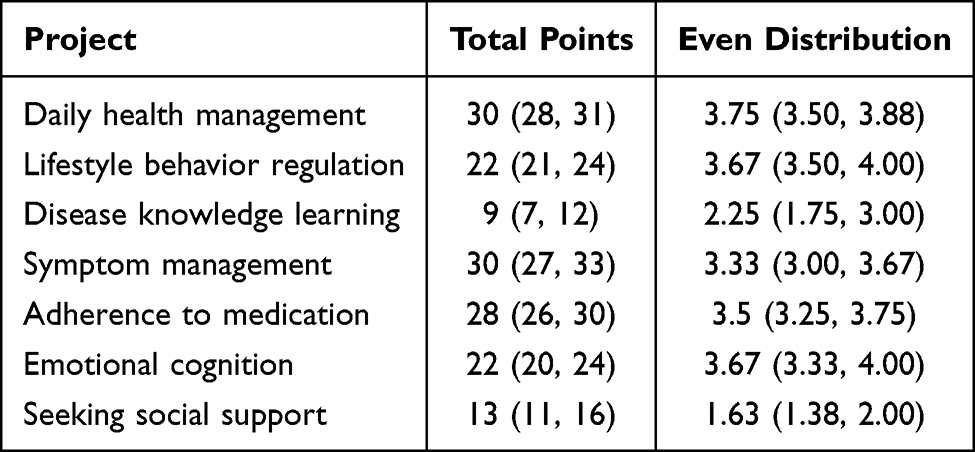 |
Table 2 Disease Self-Management Scale Scores in HIV-Infected Patients with Dyslipidemia |
Latent Profile Analysis of Self-Management Among Participants with HIV Infection and Dyslipidemia
LPA was conducted using the mean scores of the seven dimensions of the HIV Self-Management Scale. Models with one to five classes were estimated and compared (Table 3). As the number of classes increased, AIC, BIC, and aBIC values decreased. Compared with the 2-class solution, the 3-class model showed lower AIC, BIC, and aBIC values, and both the Lo–Mendell–Rubin test (LMR) and bootstrapped likelihood ratio test (BLRT) were statistically significant (P < 0.001), indicating improved model fit. For the 4-class model, although BLRT remained significant, the LMR test was not significant (P = 0.067), suggesting that the improvement over the 3-class model was not statistically robust. Similarly, the 5-class model did not yield a significant LMR result (P = 0.336), and one class contained a very small proportion of participants (3.6%), reducing interpretability and stability. Entropy values were high across all models (≥0.95), indicating excellent classification accuracy. Considering statistical fit indices, class proportions, parsimony, and interpretability, the 3-class solution was selected as the optimal model for subsequent analyses.
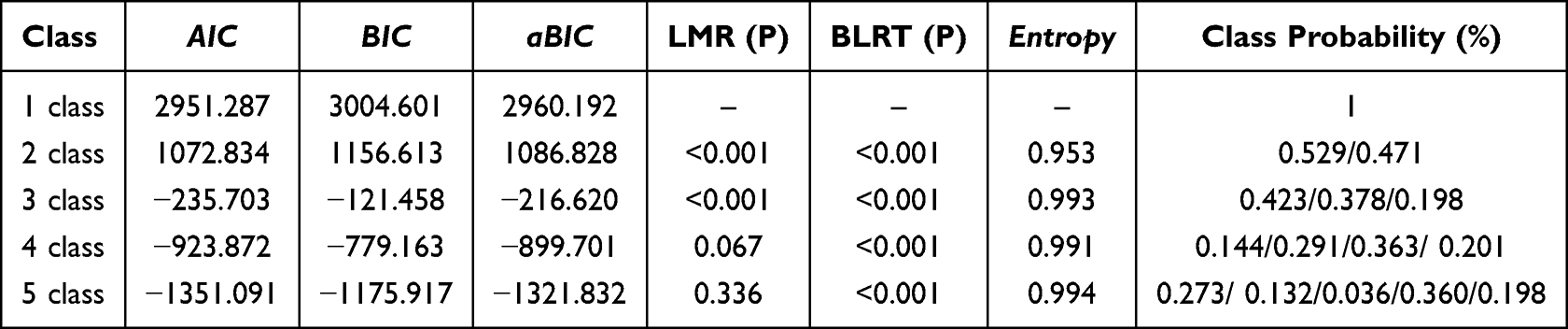 |
Table 3 Results of the Latent Profile Analysis of Self-Management in HIV-Infected Patients with Dyslipidemia |
Characteristics and Naming of Latent Self-Management Profiles
Scores of the three latent self-management profiles across the seven dimensions—daily health management, lifestyle behavior regulation, disease knowledge learning, symptom management, adherence to medication, emotional cognition, and seeking social support—are presented in Figure 1. The three classes demonstrated distinct overall score patterns rather than differences in a single dimension. The profile labels were assigned based on the overall pattern of scores across all seven dimensions rather than any single domain.
 |
Figure 1 Distribution of the Characteristics of the Three Latent Profiles of Self-Management in HIV-Infected Patients with Dyslipidemia. |
Class 1 (C1; n = 141, 42.3%) was characterized by consistently low scores across all dimensions, with the lowest relative scores observed in seeking social support. This pattern reflects generally weak self-management capacity, particularly in help-seeking behavior, and was therefore labeled the “low self-management–low social support-seeking” profile. Class 2 (C2; n = 126, 37.8%) showed moderate and relatively balanced scores across dimensions, without marked strengths or weaknesses, and was labeled the “moderate self-management–stable” profile. Class 3 (C3; n = 66, 19.8%) demonstrated the highest overall scores across dimensions, with particularly strong performance in emotional cognition, while seeking social support remained comparatively lower. This profile was labeled the “high self-management–emotion regulation dominant” profile.
Univariate Analysis of Factors Associated with Latent Classes of Disease Self-Management
See Table 1.
Multivariable Analysis of Latent Classes of Disease Self-Management
Multivariable Logistic Regression Analysis
Collinearity diagnostics indicated that the variance inflation factors for the included variables were all < 5 and the tolerance values were all > 0.1, suggesting no multicollinearity; thus, these variables were entered into the regression model. The latent classes of disease self-management among participants with HIV infection and dyslipidemia were used as the dependent variable, and variables that were statistically significant in the univariate analysis (P < 0.05) were included as independent variables in the multivariable logistic regression model. Independent variables were coded as follows: educational level: 1 = primary school or below, 2 = junior high school, 3 = senior high school or above; use of lipid-lowering medication: 0 = no, 1 = yes; presence of chronic comorbidities: 0 = no, 1 = yes; monthly income (RMB): 1 = < 3000, 2 = 3000–5000, 3 = > 5000; duration of HIV infection: 1 = < 5 years, 2 = ≥ 5 years; CD4 count (cells/μL): 1 = < 350, 2 = 350–500, 3 = > 500; viral load (copies/mL): 1 = < 20, 2 = 20–1000, 3 = > 1000; low-density lipoprotein cholesterol (LDL-C, mmol/L): 1 = < 3, 2 = ≥ 3. Health literacy and high-density lipoprotein cholesterol (HDL-C) were entered as continuous variables. For all categorical independent variables, the lowest coded category served as the reference group. The results are presented in Table 4.
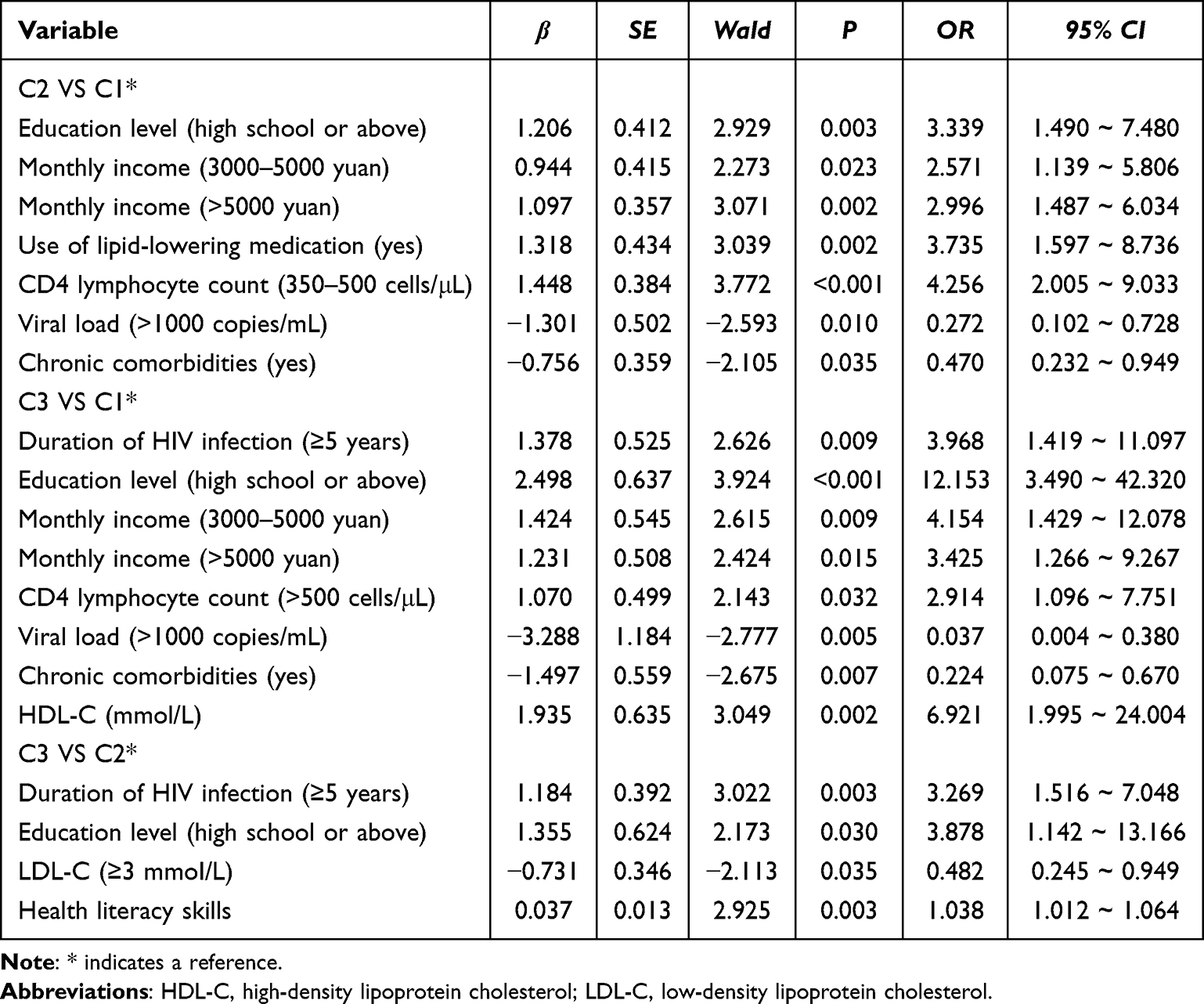 |
Table 4 Multivariable Logistic Regression Analysis of Self-Management Latent Categories in HIV-Infected Patients with Dyslipidemia |
Discussion
Characteristics of Latent Self-Management Profiles Among People Living with HIV and Dyslipidemia
The latent profile analysis (LPA) in this study indicates substantial heterogeneity in self-management behaviors among people living with HIV and dyslipidemia, yielding three distinct behavioral subtypes. Approximately 42.3% of participants were classified as the “low self-management–low social support-seeking” profile, which represented the largest subgroup. This group demonstrated consistently low scores across domains, with particularly limited engagement in seeking social support. Reduced support-seeking may be linked to HIV-related stigma and concerns about disclosure, which can discourage engagement with others. As a result, individuals may have limited access to informational, emotional, and practical support, which are essential for effective self-management.30,31 In addition, insufficient integration of metabolic management and psychological support in clinical practice may further constrain improvements in self-management behaviors.32 Accordingly, interventions for this subgroup should prioritize enhancing support-seeking behaviors and strengthening access to support resources. Strategies such as peer support programs, family involvement, and stigma-reduction interventions may improve engagement, while integrated care approaches combining metabolic management and psychological support may further facilitate sustained self-management.
Participants in the “moderate self-management–stable” profile (37.8%) demonstrated intermediate overall performance. Medication adherence in this group appeared relatively stable, whereas improvements in lifestyle behaviors (diet and physical activity) were limited. This stable pattern may reflect that such patients, supported by external cues such as telephone calls and text-message reminders from outpatient nurses, have routinized medication taking and follow-up visits.33 However, sustained lifestyle modification across multiple contexts and over long periods may still be hindered by inadequate intrinsic motivation and a lack of practical, actionable strategies.34 Nursing interventions should therefore focus on setting specific lifestyle-change goals and supporting patients in overcoming difficulties in maintaining long-term healthy behaviors. More individualized dietary and exercise guidance, together with feasible action plans, may help strengthen self-management capacity in this subgroup. The “high self-management–emotion regulation dominant” profile accounted for 19.8% of participants. This subgroup performed well across most domains, with particularly strong emotional cognition and management; however, social support seeking remained comparatively weak. This may be related to a tendency toward independent coping and privacy concerns associated with higher self-efficacy,35 as higher self-efficacy may directly enhance the sensitivity and timeliness of emotion regulation.36 Accordingly, nursing care should emphasize strengthening patients’ social support networks, particularly by supplementing emotional support, to help prevent feelings of isolation that may arise from an overreliance on self-management.
Overall, these findings underscore the marked heterogeneity of self-management behaviors among people living with HIV and dyslipidemia. This heterogeneity suggests that uniform education and follow-up strategies may be insufficient. Instead, profile-based stratified management may offer a more efficient and precise approach in clinical practice. Nurses could tailor intervention intensity and content according to patients’ profile membership and individual characteristics, providing intensified education and structured case management for those in the low self-management profile, reinforcement strategies for those in the moderate profile, and maintenance-oriented support for those in the high profile. At the institutional level, incorporating profile-based assessment into routine care pathways or electronic medical records may help optimize resource allocation and improve continuity of care. From a public health perspective, developing tiered health literacy programs and differentiated lifestyle intervention packages could enhance the sustainability and scalability of self-management support for this population. Multidisciplinary collaboration, case management, and sustained psychological support remain essential components of comprehensive care.
Factors Associated with Latent Classes of Disease Self-Management Among People Living with HIV and Dyslipidemia
Compared with the “low self-management–low social support-seeking” profile (C1), individuals in the “moderate self-management–stable” profile (C2) were more likely to have a higher educational level, higher income, current use of lipid-lowering medication, and a CD4 count of 350–500 cells/μL. In contrast, poorer virological control (viral load [VL] > 1000 copies/mL) and the presence of chronic comorbidities were more strongly associated with membership in C1. The finding that use of lipid-lowering agents was more common in C2 suggests that initiation of statins or other lipid-lowering drugs is often accompanied by a structured schedule of follow-up and monitoring (eg, reassessment of lipids and transaminases/creatine kinase approximately 6 weeks after initiation, followed by visits every 3–6 months),11 as well as patient education on drug–drug interactions, adverse reaction recognition, and lifestyle prescriptions. The fact that these patients were not predominantly classified into C3 may be related to higher baseline arteriosclerotic cardiovascular disease (ASCVD) risk, greater management complexity, and a greater perceived burden at the time of treatment initiation. From a nursing perspective, it is recommended to provide standardized education on ART–lipid-lowering drug interactions and key monitoring points, to formulate treatment and follow-up plans according to cardiovascular risk stratification, and to address patients’ concerns at an early stage to reduce hesitation or treatment interruption. In addition, nurses may proactively facilitate low-threshold support-seeking (eg, confidential consultation pathways and linkage to peer/family support), particularly for individuals showing limited engagement in seeking social support. This study further showed that a VL > 1000copies/mL was more likely to be associated with the “low self-management–low social support-seeking” profile (C1). A VL > 1000copies/mL indicates unsuppressed viral replication and often reflects suboptimal medication adherence or barriers to regimen implementation. Repeated missed doses and fluctuating treatment experiences may weaken self-efficacy and intensify concerns about adverse effects and drug interactions, which in turn can further discourage help-seeking and reduce engagement with clinical or peer support,37 forming a vicious cycle of “low self-management–high viral load”. For individuals with unsuppressed VL, healthcare providers are advised to strengthen screening and follow-up for HIV infection with dyslipidemia, optimize complex multidrug regimens (including medication review, coordinated prescribing, and prioritization of agents), and integrate cognitive–behavioral approaches with comprehensive chronic disease management models to improve adherence and promote virological suppression. Patients with chronic comorbidities were also more likely to be classified into the “low self-management–low social support-seeking” profile. This finding is consistent with the theory of chronic disease multimorbidity burden,38,39 whereby comorbid conditions reduce self-efficacy, increase the complexity of healthcare utilization and medication regimens, and weaken the sustainability of health behaviors. Nursing recommendations include strengthening case management and visualization of cardiovascular risk, routinely tracking body weight and lipid levels, and implementing stratified interventions to reduce the burden of self-monitoring. Case managers may provide regular feedback on interim outcomes (eg, 3-month changes in body mass index) to reinforce patients’ beliefs that comorbid conditions are manageable. In addition, coordinated multidisciplinary care involving infectious disease, endocrinology, and cardiology teams is needed to ensure consistent information and feasible, coherent treatment plans.
Compared with the “low self-management–low social support-seeking” profile (C1), individuals in the “high self-management–emotion regulation dominant” profile (C3) were more likely to have a higher educational level, higher income, an HIV infection duration of ≥ 5 years, a CD4 count > 500 cells/μL, and higher high-density lipoprotein cholesterol (HDL-C) levels. In contrast, a viral load (VL) > 1000 copies/mL and the presence of chronic comorbidities continued to be associated with C1. Higher educational attainment and income were positively associated with better self-management, consistent with previous research.40 Higher education facilitates the acquisition, comprehension, and application of disease-related information and promotes more effective communication with healthcare professionals, thereby enhancing self-management skills and behavioral implementation and supporting timely support-seeking when needed. This finding is also in line with the results reported by Wenhong An et al41 Individuals with higher income have more resources for healthcare and information access and experience relatively less pressure from basic living costs, which allows them to maintain investment in key behaviors such as diet and exercise and to obtain more timely professional guidance and support. Therefore, when designing interventions, it is important, on the one hand, to support patients with lower educational levels in acquiring the knowledge and skills required for disease self-management and, on the other hand, to take patients’ economic circumstances into full account by providing cost-effective health education and support services, thereby ensuring that those with lower income have access to essential medical information and management resources. An HIV infection duration of ≥ 5 years was more frequently associated with the “high self-management–emotion regulation dominant” profile, which is consistent with the findings of Tao Yan et al.42 A longer disease course may facilitate the establishment of stable patterns of medication taking and follow-up. It also provides more opportunities to receive professional knowledge and care support from healthcare providers. In addition, patients may accumulate management experience over time, thereby contributing to improved self-management. Accordingly, clinical health education should be stratified according to disease duration. For those with a shorter course of HIV infection, limited management experience and uncertainty in disease control may hinder effective engagement. Increasing opportunities for peer interaction may help promote support-seeking and engagement with supportive resources. For those with a longer course, emphasis should be placed on preventing and managing treatment fatigue. It is also important to consolidate medication-taking and follow-up behaviors through peer support and digital tools, and to strengthen confidence and perceived capability in disease control. This study also showed that patients with a CD4 lymphocyte count of 350–500 cells/μL and those with a higher CD4 count (> 500 cells/μL) were more likely to be classified into the “moderate self-management–stable” (C2) and “high self-management–emotion regulation dominant” (C3) profiles, respectively. A CD4 count > 350 cells/μL suggests fewer opportunistic infections and better physical and cognitive status, which can alleviate anxiety and depression43 and in turn, enhance the capacity and willingness to carry out complex self-management tasks. Previous research has indicated that HDL-C levels in people living with HIV are easily reduced by inflammation and by certain antiretroviral regimens.6 Patients who can maintain relatively favorable HDL-C levels through regular physical activity, weight management, and dietary modification are often those who continuously engage in daily health-promoting practices, thereby reflecting a higher level of self-management.
When comparing the “high self-management–emotion regulation dominant” profile (C3) with the “moderate self-management–stable” profile (C2), this study found that individuals with higher health literacy were more likely to be classified into C3. In addition, an HIV infection duration of ≥5 years and higher educational attainment were positively associated with membership in C3, whereas elevated low-density lipoprotein cholesterol (LDL-C ≥ 3 mmol/L) was unfavorable for classification into this profile. The observation that higher health literacy increased the likelihood of belonging to C3 is consistent with findings from domestic and international studies. Health literacy refers to the ability to obtain, understand, appraise, and apply health information to make informed decisions. Patients with higher health literacy are better able to integrate information from multiple sources regarding HIV and dyslipidemia management, particularly knowledge related to both conditions, and to translate this information into effective self-management strategies. At the same time, they tend to have stronger self-efficacy, which promotes more proactive engagement in medication adherence, lifestyle modification, and follow-up.44 Therefore, when nurses provide health education, they should not only deliver knowledge and skills related to comprehensive lipid management, but also focus on cultivating higher-order competencies such as critical thinking, numeracy, and communication/interaction skills, thereby fostering an active health orientation and enhancing self-management levels. The finding that elevated LDL-C remained a barrier to achieving the C3 profile is consistent with prior evidence indicating that certain antiretroviral therapy (ART) regimens can increase blood lipid levels. Although lifestyle interventions are cost-effective in lipid management, long-term adherence remains challenging.45 Structured medical nutrition therapy has been shown to improve lipid parameters in PLWH with dyslipidemia, highlighting the value of individualized nutrition counseling within stratified intervention strategies.46 Nevertheless, sustained lipid control often requires a comprehensive approach. Resources should be directed toward enhancing the feasibility and sustainability of lifestyle interventions. In addition, coordinated efforts among physicians, nurses, and pharmacists are needed to optimize combinations of lipid-lowering agents and ART regimens to minimize lipid-related adverse effects without compromising virological control. The use of intelligent health assistants may further support monitoring and behavioral reinforcement. Such a system could integrate data from wearable devices to monitor physical activity, sleep, and dietary patterns in real time, support individualized breakdown of lifestyle tasks, and facilitate collaboration between patients and healthcare providers. Embedding this system deeply into routine clinical workflows would help to position lifestyle intervention as a standardized component of care—equally important as pharmacotherapy and laboratory monitoring—rather than as an optional, patient-dependent “add-on” recommendation.
This study has several limitations. First, convenience sampling from a single hospital may limit the generalizability of the findings to other regions or healthcare settings. Second, the cross-sectional design precludes causal inference and does not allow assessment of changes in self-management behaviors over time. Third, some data were obtained through self-reported questionnaires, which may be subject to recall bias and social desirability bias. Future multicenter longitudinal studies are warranted.
Conclusion
The findings indicate marked heterogeneity in self-management among PLWH with dyslipidemia, with three distinct profiles identified: low self-management–low social support-seeking, moderate self-management–stable, and high self-management–emotion regulation dominant. Across all profiles, seeking social support was generally weak and required particular attention. Factors associated with profile membership included HL, chronic comorbidities, use of lipid-lowering medication, HDL-C, LDL-C, CD4 count, VL, duration of HIV infection, educational level, and monthly income. Clinical nurses should consider both individual characteristics and latent profile membership and implement stratified, targeted nursing interventions to improve self-management behaviors in this population. Specifically, latent profile assessment may be incorporated into routine clinical evaluation to support differentiated care planning. Patients in the low self-management profile may benefit from intensified disease education and structured case management; those in the moderate profile may require reinforcement of lifestyle modification strategies and goal-setting support; and individuals in the high profile may benefit from maintenance-oriented follow-up and enhanced social support integration. Such stratified approaches may improve the efficiency, precision, and sustainability of chronic disease management in this population.
Ethics Approval and Consent to Participate
This study was conducted in accordance with the Declaration of Helsinki. This study involving human participants was reviewed and approved by the Science and Technology (Review) Ethics Committee of the Affiliated Nanjing Hospital of Nanjing University of Chinese Medicine (Approval No. 2024-LS-ky-096). The patients/participants provided their written informed consent to participate in this study.
Acknowledgments
The study acknowledges all the authors cited in the manuscript.
Author Contributions
All authors made a significant contribution to the work reported, whether in the conception, study design, execution, acquisition of data, analysis, and interpretation, or in all these areas, took part in drafting, revising, or critically reviewing the article; gave final approval of the version to be published; have agreed on the journal to which the article has been submitted; and agree to be accountable for all aspects of the work.
Funding
This study was supported by the Jiangsu Provincial Department of Health Research Fund (grant number: M2024014).
Disclosure
The authors report no conflicts of interest in this work.
References
1. Shen YZ. Chinese guidelines for diagnosis and treatment of HIV/AIDS (2024 edition). Chinese J Viral Dis. 2025;15(1):4–13. in Chinese. doi:10.16505/j.2095-0136.2025.0001
2. Kalra DK, Vorla M, Michos ED, et al. Dyslipidemia in human immunodeficiency virus disease: JACC review topic of the week. J Am Coll Cardiol. 2023;82(2):171–181. doi:10.1016/j.jacc.2023.04.050
3. Silverberg MJ, Levine TM, Lea AN, et al. Cardiovascular disease risk factor control in people with and without HIV. Clin Infect Dis off Publ Infect Dis Soc Am. 2024;78(5):1264–1271. doi:10.1093/cid/ciad728
4. Shah ASV, Stelzle D, Lee KK, et al. Global burden of atherosclerotic cardiovascular disease in people living with HIV: systematic review and meta-analysis. Circulation. 2018;138(11):1100–1112. doi:10.1161/CIRCULATIONAHA.117.033369
5. Sarkar S, Brown TT. Lipid disorders in people with HIV In: Feingold KR, Adler RA, Ahmed SF, et al. editors. Endotext. MDText.com, Inc.; 2000. Available from: http://www.ncbi.nlm.nih.gov/books/NBK567198/.
6. Wenjing Z, Fei O, Shenao Z, Yu H, Gengfeng F, Haitao Y. The prevalence of dyslipidemia and its correlation with anti-retroviral therapy among people living with HIV in China: a systematic review and meta-analysis. Front Cardiovasc Med. 2025;12:1498165. doi:10.3389/fcvm.2025.1498165
7. McCutcheon K, Nqebelele U, Murray L, Thomas TS, Mpanya D, Tsabedze N. Cardiac and renal comorbidities in aging people living with HIV. Circ Res. 2024;134(11):1636–1660. doi:10.1161/CIRCRESAHA.124.323948
8. Obare LM, Temu T, Mallal SA, Wanjalla CN. Inflammation in HIV and its impact on atherosclerotic cardiovascular disease. Circ Res. 2024;134(11):1515–1545. doi:10.1161/CIRCRESAHA.124.323891
9. Ryom L, De Miguel R, Cotter AG, et al. Major revision version 11.0 of the European AIDS clinical society guidelines 2021. HIV Med. 2022;23(8):849–858. doi:10.1111/hiv.13268
10. Papantoniou E, Arvanitakis K, Markakis K, et al. Pathophysiology and clinical management of dyslipidemia in people living with HIV: sailing through rough seas. Life. 2024;14(4):449. doi:10.3390/life14040449
11. AIDS Study Group of the Society of Tropical Diseases and Parasitology, Chinese Medical Association. Chinese expert consensus on comprehensive lipid management in patients with human immunodeficiency virus/acquired immunodeficiency syndrome, Chin J Intern Med. 2023;62(06):661–672. in Chinese. doi:10.3760/cma.j.cn112138-20230321-00165
12. Malvestutto CD, Aberg JA. Management of dyslipidemia in HIV-infected patients. Clin Lipidol. 2011;6(4):447–462. doi:10.2217/clp.11.25
13. Gazzaniga G, Ridolfi M, Lazzaro A, et al. Dyslipidemia and statin use in people with HIV-1 infection: beyond the lipid-lowering effect. Nutr Metab Cardiovasc Dis NMCD. 2025;35(10):104110. doi:10.1016/j.numecd.2025.104110
14. Spanakis M, Alexakis K, Ioannou P. Antiretroviral therapy and associated drug interactions with cardiovascular drugs: a critical review. Front Pharmacol. 2025;16:1685710. doi:10.3389/fphar.2025.1685710
15. Liu S, Li J, Wan DY, et al. Effectiveness of eHealth self-management interventions in patients with heart failure: systematic review and meta-analysis. J Med Internet Res. 2022;24(9):e38697. doi:10.2196/38697
16. Huang Z, Liu T, Chair SY. Effectiveness of nurse-led self-care interventions on self-care behaviors, self-efficacy, depression and illness perceptions in people with heart failure: a systematic review and meta-analysis. Int J Nurs Stud. 2022;132:104255. doi:10.1016/j.ijnurstu.2022.104255
17. Huang Z, Liu T, Gao R, Chair SY. Effects of nurse-led self-care interventions on health outcomes among people with heart failure: a systematic review and meta-analysis. J Clin Nurs. 2024;33(4):1282–1294. doi:10.1111/jocn.16947
18. Huang H, Zhang X, Tu L, Zhang L, Chen H. Effectiveness of nurse-led self-care interventions on quality of life, social support, depression and anxiety among people living with HIV: a systematic review and meta-analysis of randomized controlled trials. Int J Nurs Stud. 2025;161:104916. doi:10.1016/j.ijnurstu.2024.104916
19. Beavers C, Pau AK, Glidden D, et al. Statin therapy as primary prevention for persons with hiv: a synopsis of recommendations from the U.S. department of health and human services antiretroviral treatment guidelines panel. Ann Intern Med. 2025;178(6):847–857. doi:10.7326/ANNALS-24-03564
20. Demirbas ND, Diktas H, Gul O, et al. Aging with HIV: multimorbidity and polypharmacy burden. AIDS Care. 2025;37(11):1894–1904. doi:10.1080/09540121.2025.2570402
21. Wu DX, Hu JX, Ma JH, et al. A study on AIDS self-management status and its influencing factors. J Multidiscip Healthc. 2024;17:4373–4382. doi:10.2147/JMDH.S466797
22. Zhang H, Yin Y, Wang H, et al. Identification of self-management behavior clusters among people living with HIV in China: a latent class profile analysis. Patient Prefer Adherence. 2021;15:1427–1437. doi:10.2147/PPA.S315432
23. Nylund KL, Asparouhov T, Muthén BO. Deciding on the number of classes in latent class analysis and growth mixture modeling: a Monte Carlo simulation study. Struct Equ Model. 2007;14(4):535–569. doi:10.1080/10705510701575396
24. Yang X, Li J, Hu D, et al. Predicting the 10-year risks of atherosclerotic cardiovascular disease in Chinese population: the China-PAR project (Prediction for ASCVD risk in China). Circulation. 2016;134(19):1430–1440. doi:10.1161/CIRCULATIONAHA.116.022367
25. Wu CY, Liu YH, Zeng ZL, Liang BL, Mo XY. Development of the self-management scale for people living with HIV/AIDS. J Nurs Sci. 2016;31(1):35–38. in Chinese.
26. Jordan JE, Buchbinder R, Osborne RH. Conceptualising health literacy from the patient perspective. Patient Educ Couns. 2010;79(1):36–42. doi:10.1016/j.pec.2009.10.001
27. Sun HL. Research on the health literacy scale for patients with chronic diseases and its preliminary application. Master’s thesis. Fudan University; 2013. in Chinese.
28. Wang MC, Deng QW, Bi XY, Ye HS, Yang WD. Performance of the classification accuracy index entropy in latent profile analysis: a Monte Carlo simulation study. Acta Psychol Sin. 2017;49(11):1473–1482. in Chinese. doi:10.3724/SP.J.1041.2017.01473
29. Wang MC, Deng QW, Bi XY. Bayesian methods for latent variable modeling. Adv Psychol Sci. 2017;25(10):1682–1695. in Chinese. doi:10.3724/SP.J.1042.2017.01682
30. Dessie ZG, Zewotir T. HIV-related stigma and associated factors: a systematic review and meta-analysis. Front Public Health. 2024;12:1356430. doi:10.3389/fpubh.2024.1356430
31. Luthuli MQ, John-Langba J. The moderating role of HIV stigma on the relationship between perceived social support and antiretroviral therapy adherence self-efficacy among adult PLHIV in South Africa. J Int Assoc Provid AIDS Care. 2024;23:23259582241228743. doi:10.1177/23259582241228743
32. Horberg M, Thompson M, Agwu A, et al. Primary care guidance for providers of care for persons with human immunodeficiency virus: 2024 update by the HIV medicine association of the infectious diseases society of America. Clin Infect Dis off Publ Infect Dis Soc Am. 2024:ciae479. doi:10.1093/cid/ciae479
33. Kalichman SC, Kalichman MO, Eaton LA. Phone-delivered intervention to improve HIV care for young people living with HIV: trial to inform implementation and utility. J Acquir Immune Defic Syndr. 2023;94(3):227–234. doi:10.1097/QAI.0000000000003279
34. Aminde JAA, Burton NW, Thng C, Clanchy K. A systematic review and meta-analysis evaluating the effectiveness of minimally supervised home and community exercise interventions in improving physical activity, body adiposity and quality of life in adults living with HIV. Prev Med. 2024;189:108144. doi:10.1016/j.ypmed.2024.108144
35. Nice J, Thurman TR, Luckett B, Zani B. Disclosure and experiences of HIV-related stigma among adolescents and young adults living with HIV in South Africa. AIDS Behav. 2024;28(12):4158–4166. doi:10.1007/s10461-024-04487-9
36. Xie M, Wang A, Zhang Z, Wang K, Yu Y. Validation and refinement of the self-regulatory HIV/AIDS symptom management model among people with HIV in China using path analysis: a secondary data analysis. J Assoc Nurses AIDS Care JANAC. 2024;35(6):495–506. doi:10.1097/JNC.0000000000000493
37. Mgbako O, Conard R, Mellins CA, Dacus JD, Remien RH. A systematic review of factors critical for HIV health literacy, ART adherence and retention in care in the U.S. for racial and ethnic minorities. AIDS Behav. 2022;26(11):3480–3493. doi:10.1007/s10461-022-03680-y
38. Ogunbajo A, Todd I, Zajdman D, et al. Statin use for cardiovascular disease prevention: perceptions among people living with HIV in the United States. BMC Prim Care. 2024;25(1):116. doi:10.1186/s12875-024-02370-z
39. Lee JE, Lee J, Shin R, Oh O, Lee KS. Treatment burden in multimorbidity: an integrative review. BMC Prim Care. 2024;25(1):352. doi:10.1186/s12875-024-02586-z
40. Areri H, Marshall A, Harvey G. Exploring self-management of adults living with HIV on antiretroviral therapy in North-West Ethiopia: qualitative study. HIV/AIDS. 2020;12:809–820. doi:10.2147/HIV.S287562
41. An W, Tang X, Xiao X, Aku W, Wang H. Status and factors associated with patient activation and its relationship with HIV clinic outcomes among Yi minority people living with HIV in Liangshan, China: a cross-sectional study. Front Public Health. 2023;11:1114561. doi:10.3389/fpubh.2023.1114561
42. Tao Y, Xiao XL, Xie JP, Wang HH. Research progress on the current status and influencing factors of disease self-management among patients with HIV/AIDS. J Nurses Train. 2022;37(11):978–983. in Chinese. doi:10.16821/j.cnki.hsjx.2022.11.005
43. Mou T, Gao KC, Chen X, et al. Clinical events associated with poor CD4+ T-cell recovery in people living with HIV following ART: a systematic review and meta-analysis. J Infect. 2025;90(2):106414. doi:10.1016/j.jinf.2025.106414
44. Longenecker CT, Jones KA, Hileman CO, et al. Nurse-led strategy to improve blood pressure and cholesterol level among people with HIV: a randomized clinical trial. JAMA Network Open. 2024;7(3):e2356445. doi:10.1001/jamanetworkopen.2023.56445
45. Zhou S, Toska E, Langwenya N, Edun O, Cluver L, Knight L. Exploring self-reported adherence measures to screen for elevated HIV viral load in adolescents: a South African cohort study. AIDS Behav. 2023;27(11):3537–3547. doi:10.1007/s10461-023-04068-2
46. Singhato A, Booranasuksakul U, Khongkhon S, Rueangsri N. Effectiveness of the therapeutic lifestyle change diet intervention to improve biochemical markers of cardiovascular diseases in HIV-infected patients with dyslipidemia. Ann Nutr Metab. 2024;80(4):202–210. doi:10.1159/000538578
 © 2026 The Author(s). This work is published and licensed by Dove Medical Press Limited. The
full terms of this license are available at https://www.dovepress.com/terms
and incorporate the Creative Commons Attribution
- Non Commercial (unported, 4.0) License.
By accessing the work you hereby accept the Terms. Non-commercial uses of the work are permitted
without any further permission from Dove Medical Press Limited, provided the work is properly
attributed. For permission for commercial use of this work, please see paragraphs 4.2 and 5 of our Terms.
© 2026 The Author(s). This work is published and licensed by Dove Medical Press Limited. The
full terms of this license are available at https://www.dovepress.com/terms
and incorporate the Creative Commons Attribution
- Non Commercial (unported, 4.0) License.
By accessing the work you hereby accept the Terms. Non-commercial uses of the work are permitted
without any further permission from Dove Medical Press Limited, provided the work is properly
attributed. For permission for commercial use of this work, please see paragraphs 4.2 and 5 of our Terms.
Recommended articles

Incidence and Predictors of Virological Failure Among Adult HIV/AIDS Patients on Second-Line Anti-Retroviral Therapy, in Selected Public Hospital of Addis Ababa, Ethiopia: Retrospective Follow-Up Study
Zakaria HF, Raru TB, Hassen FA, Ayana GM, Merga BT, Debele GR, Kiflemariam G, Kebede SA, Ayele TA
HIV/AIDS - Research and Palliative Care 2022, 14:319-329
Published Date: 8 July 2022

Incidence of Mortality and Its Predictors Among Adult Human Immune Virus Infected Patients on Antiretroviral Therapy in Wolaita Sodo University Comprehensive Specialized Hospital, Southern Ethiopia: A Retrospective Follow-Up Study
Barata TY, Abiso G, Israel E, Molla S, Wolka E
HIV/AIDS - Research and Palliative Care 2023, 15:361-375
Published Date: 19 June 2023