
Back to Journals » Advances in Medical Education and Practice » Volume 15
Intracurricular Factors Influencing Medical Students’ Specialty Choice: A Systematic Review

Received 14 August 2024
Accepted for publication 28 October 2024
Published 23 November 2024 Volume 2024:15 Pages 1127—1140
DOI https://doi.org/10.2147/AMEP.S491008
Checked for plagiarism Yes
Review by Single anonymous peer review
Peer reviewer comments 3
Editor who approved publication: Dr Md Anwarul Azim Majumder
Birte Schoon, Thomas Kötter
Institute of Family Medicine, University Medical Center Schleswig-Holstein, Campus Lübeck, Lübeck, SH, Germany
Correspondence: Thomas Kötter, Institute of Family Medicine, University Medical Center Schleswig-Holstein, Campus Lübeck, Ratzeburger Allee 160, Lübeck, SH, 23538, Germany, Tel +49 451 3101 8001, Fax +49 451 3101 8004, Email [email protected]
Background: Medical school graduates are faced with the difficult decision of choosing a specialty training program. Understanding the decision criteria as well as the intracurricular factors—which have been studied less frequently and thus lack clarity—may help to prevent an impending shortage of certain specialists and to ensure the recruitment of young doctors into supposedly less popular specialties. Evidence-based changes to the medical curriculum are needed to support the balanced development of health care systems with demand-driven staffing of all specialties, especially in the outpatient sector and in rural areas. The aim of this systematic review was to identify the intracurricular factors that influence medical students’ choice of specialty that have been described in the international literature.
Methods: A systematic review was conducted by searching Medline. After applying the inclusion and exclusion criteria to the 2537 primary results and 19 hits from an additional manual search, data were extracted from 334 studies. In addition, a quality assessment of all included studies was performed.
Results: A total of 14 influencing factors were identified from the reviewed literature, of which “clinical-practical experience”, “clinical role models”, and “voluntary offerings” were mentioned most frequently. We sorted the factors into four main categories: “Teaching”; “Teaching environment, influence and interaction”; “Curriculum”; and “Voluntary work”. The studies were highly heterogeneous regarding research methods and the quality of reporting.
Conclusion: Involving students in the planning and structuring of clinical phases, active feedback, voluntary offerings, seminars/simulations, and involvement in the clinical team can increase a specialty preference. Conversely, discrimination, prejudice and poor quality of teaching and clinical exposure may act as a deterrent. It is necessary to sensitize medical staff regarding their role and influence in the decision-making process. Further prospective and qualitative research is needed to address this issue adequately.
Keywords: education, career choice, influencing factors, curriculum, medical students
Introduction
An important issue regarding future personnel planning in the healthcare system is the choice of specialty after completing medical school. The initial student preference for specialty training usually does not match the needs of the health care workforce and the availability of training positions.1,2 The understaffing of certain specialties and the unequal distribution of physicians between the two sectors are global health care problems that need to be addressed. Strategies that fail to adjust the choice of specialty training can lead to the consolidation of existing, specialty-specific shortages or to competition for additional training places in more desirable specialties.
Germany is responding to the shortage of general practitioners with a major change in the medical curriculum, providing for earlier and longer exposure to general practice and introducing it as a compulsory subject in the third state examination. A second adjustment is the allocation of study places in medicine based on a specialty-specific and regional commitment, which, so far, has been introduced for general practice.3
The decision-making process is a very dynamic and individual process4 and “is based on complex factors, including intrinsic (personal attributes) and extrinsic factors (local medical environmental effects)”.5 Most published studies have mainly examined the influence of extracurricular/extrinsic factors on specialty preference. These factors include, among others, demographic and socioeconomic factors, working conditions, career prospects, remuneration, work–life balance, personal skills and abilities including professional interests, patient clientele, attendance, the extent of patient contact, research opportunities in the respective specialty, family compatibility, prestige-oriented factors, and the reputation/status associated with the specialty.6 However, these factors cannot be influenced by the university or the curriculum itself. Studies have shown that the type of medical school and the curriculum, and thus intracurricular factors, also influence decision-making.7,8 This is shown by the increasing proportion of students who choose a specialty while progressing through medical school.9,10 Many studies have already shown that the experiences during a clinical phase of medical school, as well as the performance of practical activities8,9 and the quality and enjoyment/satisfaction of the clinical placement, have a strong influence on the choice of specialty.11,12 To date, there has been no comprehensive summary of the primary studies regarding the influence of intracurricular factors.
Understanding the decision-making criteria as well as the intracurricular influencing factors that have been identified throughout the world may help to avert an impending shortage of specialists and to ensure the recruitment of young doctors into perceived less popular specialties.9 Without guidance and training during their studies, students may not be able to make the best use of their experiences to confirm, refine, or change their career or professional intentions. This could result in personal and societal opportunity costs.13 Notwithstanding the fact that replicating students’ decisions as closely as possible could have an impact on many factors in the health care system, “the values and motivations that underlie these decisions still remain partially understood”.14 Given the growing shortage of young physicians in some specialties, it will be necessary to recruit students specifically into understaffed specialties. We conducted a systematic review (SR) with the research question “What intracurricular factors influence medical students’ choice of specialty?” Specifically, we aimed to partially understand the decision-making process and to identify the global intracurricular factors that influence medical students’ choice of specialty. The identified factors can be used for evidence-based curricular changes at the policy and university levels.
Materials and Methods
Eligibility Criteria
This SR aimed to summarize studies that identified intracurricular factors in medical school that influence the subsequent specialty preference. It included all types of primary studies published in English or German that reported or evaluated any intracurricular factor influencing specialty choice or preference. It excluded reviews; meta-analyses; and studies that focused only on one gender or minorities (such as only fellows, doctoral students, etc), on postgraduate factors, on factors for subspecialization, on factors for preference in research and education, or on interventions for residents and specialists. In addition, studies that included programs other than human medicine were excluded. Because the curricula studied had to be comparable with current curricula, the search was restricted to articles published since 1993.
Information Sources
The electronic database Medline was searched via PubMed in March 2022. In addition, a manual search was carried out using the reference lists of the included studies and reviews on the topic.
Search
The items for the search algorithm were collected and collated in a face-to-face discussion between the authors based on the PICO scheme (P = patient/population, I = intervention, C = comparison, O = outcome; see Additional file 1) and existing Medical Subject Headings (MeSH). The PICO scheme is a strategy to create a structured search term. Table 1 shows the complete search strategy. This SR was designed according to the Preferred Reporting Items for Systematic Reviews and Meta-Analyses (PRISMA) statement.15
 |
Table 1 Search Strategy for Intracurricular Factors That Influence the Choice of Specialty by Medical Students |
Study Selection
One author assessed all titles and abstracts for eligibility. The second author independently reviewed the study selection. Disagreements were solved by discussion or consensus.
Data Collection Process
One author extracted data from the full-text articles using a self-developed extraction form. The second author reviewed the extracted information. Disagreements were resolved by consensus. In the Additional file 2 there is a list of all studies included in this SR.
Data Items
Data on the authors, year, and location of origin; study design; sample size (including the response rate); the duration of data collection; the study population; and the intracurricular factors mentioned or studied were extracted from the included papers (see Additional file 3).
Risk of Bias in Individual Studies
One author assessed the quality of the included papers/articles by using a self-developed quality-assessment tool based on the checklists by the Joanna Briggs Institute (JBI),16 the National Heart, Lung, and Blood Institute (NHLBI),17 and the Critical Appraisal Skills Program (CASP).18
The quality assessment questions used for each study design are listed in Additional file 5.
Results
Study Selection
Of the 2537 primary results of our search, we identified 315 studies as relevant after applying the previously defined inclusion and exclusion criteria. In addition, we found 19 relevant studies in a subsequent manual search of the reference lists of the literature we had already included. See Figure 1 for the PRISMA flow diagram,15 which illustrates the whole identification and screening process.
 |
Figure 1 PRISMA flow diagram of the research and study selection process of the systematic review. Adapted from Page MJ, McKenzie JE, Bossuyt PM, et al. The PRISMA 2020 statement: an updated guideline for reporting systematic reviews. BMJ. 2021;372:n71. Creative Commons.15 |
Study Characteristics
The characteristics of the 334 identified and included studies are shown in Table 2.
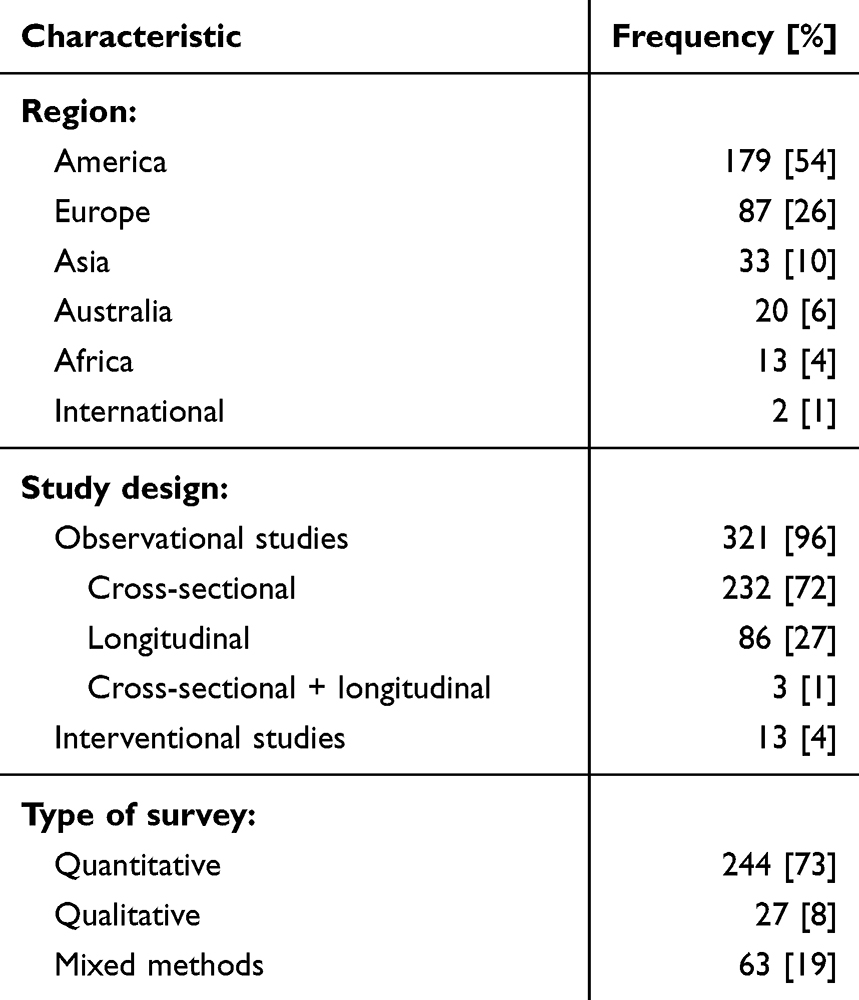 |
Table 2 Characteristics of Studies Included in the Systematic Review |
Identified Intracurricular Factors
Figure 2 lists all 14 identified influencing factors and their respective absolute frequency of mention, regardless of whether a positive or negative effect on specialty preference. They are grouped into four categories: “Teaching” with two subcategories, “Practical teaching and exposure” and “Theoretical courses”; “Teaching environment, influence and interaction”; “Curriculum”; and “Voluntary work”. The detailed results for each category are summarized below.
 |
Figure 2 A list of all intracurricular factors that were identified and the total number of times they were mentioned (in decreasing order of frequency). |
Teaching
Practical Teaching and Exposure
Clinical-Practical Experience (Learning Gains and Clinical Experiences)
All of the studies reviewed agree and rate the impact of clinical experiences as high, regardless of specialty and/or level of training.19,20 Not only clinical exposure, but also “students’ evaluations of their overall experience of providing or observing patient care during clinical rotations appear to weigh heavily”.21 Based on a comparison, placements at non-university locations would have a more positive impact than placements at university locations.22 A poor rating of a university’s clinical exposure shows a similar effect as if the exposure had not occurred.23 There appears to be a correlation between the quality and enjoyment of a clinical placement and an increase in specialty preference.11,24 The quality of a clinical placement and the individual’s evaluation of it outweigh the respective quantity and play a greater role in the decision-making process.12 The ambivalence of clinical experiences and the interplay between negative clinical-practice experiences in an initially preferred specialty and positive experiences in a currently preferred specialty are among the strongest influences for a change in specialty preference.11,25
Patient Contact/Doctor–Patient Relationship, and Experienced Working Climate/Conditions/Workload
Studies clearly show that clinical experiences with direct patient contact, greater responsibility for selected patients, and a higher degree of involvement in therapy and treatment decisions may have a greater impact and are preferred by the students.26,27 It is also important how the experienced doctor–patient relationship28 is assessed and whether there is only a brief interaction with the patient or whether a longer period of therapy with possible changes can be monitored.29 Experienced doctor–patient relationships are more likely to influence female participants.28
Negative Clinical-Practice Experiences (Explicitly Stated)
The experience of drastic, negative events includes, for example, the teaching environment, its atmosphere and staff,30 verbal intimidation by medical specialists and residents,30 ignorance during clinical exposure,31 negative personal interactions,32 and negative clinical experiences33 or comments.25 These are decisive or explanatory for changing or discouraging a specialty preference,34 but are not necessary.35 They have a particular impact on the specialty preference of female students.28
Theoretical Courses
Teaching Events: Lectures, Faculty, and Lecturing Faculty
There is an uncertain effect.26,36 Both the quality23,37 and the quantity38 of teaching have an influence on the choice of specialty. Authentic38 and enthusiastic39 teaching provided by a positive role model is beneficial. According to Lau et al,40 a “pre-clerkship”—courses or seminars that take place before the specialty-specific clinical placement—could, in addition to providing good preparation, increase the basic interest in a specialty. Digitalization of teaching (online modules, videos, and new modalities such as the flipped classroom) is necessary to reach the new generation.41 Subject-specific differences could be explained by a positive influence of course quantity or a stronger influence of quality over quantity.38,42 The comparison of teaching strategies showed good results for “case/problem-based learning” (PBL) for some specialties.43,44
Teaching Environment, Influence, and Interaction
Clinical Role Models and Mentors/Tutors (Mentoring Programs, etc)
The following characteristics, attitudes, and behaviors of a positive and influential role model were identified from the reviewed studies: personality including pedagogical and clinical skills, professional behavior, expertise and professional competence, human interaction with patients and students, enthusiasm, and lifestyle.45,46 In contrast, research accomplishment(s) or academic position have little to no influence.45 Individual studies provide a clear correlation between exposure to a professional role model and subsequent specialty choice.45,47,48 Role models may also be a disincentive to choosing a preferred specialty.48
Supervision and Interaction During the Clinical Phase and Testimonials by Physicians
Every interaction seems to have an impact, regardless of the context in which it occurs.49 Regular and positive48 feedback, as well as encouragement and reinforcement from teaching staff, are particularly valued,48,50 but they can have a double-edged effect.48 The influence of teaching staff on specialty preference is linked to the communication of satisfaction.28,34 In particular, the personal attitudes and satisfaction of junior doctors, who play the role of “teachers and ambassadors” due to the high level of contact with students,51 have an impact.51–53
Enthusiasm and Competence of Supervising/Teaching Physicians
The influence of the teaching staff on specialty choice is related to the transmission of enthusiasm and satisfaction.28,34
Stigmatization and Discrimination, Harassment, Bullying, and Sexism Within the Study/Clinical Exposures
Prejudices, stereotypes, and judgmental statements, with their potentially manipulative nature, play a crucial role54,55 in the formation of specialty-specific thoughts and attitudes. Discouragement does not necessarily have to come from within the specialty itself; it can also come from other specialties.56 With regard to gender discrimination; sexism; and sexual harassment, derogatory, condescending, or sexist comments, personal experience as well as observing and/or hearing them are sufficient to exert an influence and have a strong impact.8,57 Women in particular can be affected and influenced,49,57 but male students rate the impact on their choice of specialty as greater.57
Curriculum
Curricular Guidelines
The introduction of a special curriculum, initiated to produce specialty-specific physicians, shows predominantly positive effects, with higher application rates for the specialty addressed by the respective curriculum and an effect on recruitment to rural areas.58,59
Career Planning Meetings and Career Support During the Course of Study
Better information about career opportunities and individualized career counseling are the main requests of graduates.14,60 Workshops to identify one’s own interests and personality type, and to learn about one’s own unknown interests and skills, can help to consolidate preestablished specialty preferences or even lead to a change in specialty preference.61
Voluntary Work
Voluntary Offerings (Information Sessions, Electives, Seminars, Workshops, Interest Groups, etc)
Voluntary offerings such as workshops can consolidate existing interests, discourage existing preferences due to discrepancies between perception and reality, or contribute to shift the balance between equally preferred specialties.62,63 Other influential offerings are subject-specific interest groups64 and the introduction of electives/elective courses.65 The timing of the offers (preclinical or clinical) is not critical—both can support student recruitment,66 but the contact should be direct.67 Congresses, continuing education workshops, conferences, and symposia68–70 can be used to provide a comprehensive basis for decision-making. A positive evaluation or an increase in interest, skills, and/or abilities does not necessarily correlate with an increased interest or career wish in a particular specialty.65 There may be a difference between the effect of required university courses and voluntary electives.71
Doctoral Thesis/Dissertation
The qualitative results of Stahn and Harendza72 show a tendency toward a positive correlation between the specialty in which a dissertation is written and the future choice of specialty. The prospect and possibility of obtaining a doctorate in the preferred specialty is also seen as a further influence;54 this varies depending on the year of study.73
Risk of Bias Within Studies
The methodological quality of the included studies was heterogeneous (see Additional file 4). Only seven of the qualitative studies used a piloted interview guide. None of the qualitative studies used a prospective approach. In the quantitative or mixed-methods cross-sectional and longitudinal observational studies, representativeness was often limited by an attempt to take a generalized approach rather than representativeness for the factors (country, study period, etc) under consideration. Most studies did not report the sociodemographic characteristics of the population, making it impossible to assess representativeness. The lack of a clear research objective also made it difficult to assess representativeness. Four studies did not report the relationship between exposure and outcome clearly and adequately. Questionnaire development was mostly based on the literature (including original research and reviews), focus group discussions, as well as interviews or the use of existing questionnaires. Thirty-six of the quantitative or mixed-methods cross-sectional and longitudinal observational studies did not show a consistent implementation of the participant survey. The sample sizes of the intervention studies were mostly small, so the effect shown was mostly a trend. None of the intervention studies met the quality criterion of blinding. Randomization was also difficult to implement and was only reported in two studies. In some cases, randomized intervention populations were recruited from a pool of applicants. None of the analyzed studies mentioned a preregistration of their studies by a study protocol. In addition, the question about specialty preference and influencing factors is a snapshot in time and may change over time. The risk of selection bias in the recruitment of the study population and of recall bias should be considered in all included studies.74
Discussion
In this SR of intracurricular factors that influence medical students’ choice of specialty, it is clear that the clinical experience gained during the clinical-practical activities is important—for example, in the practical year, clinical clerkships or exposure, internships, or non-university clinical placements. Further, the associated professional learning gain and the experienced working climate and working conditions/workload have an influence. Clinical role models; mentors/tutors; voluntary university offerings; and the theoretical courses including their teachers and support and the interactions during clinical placements also exert an influence. The scope of 14 intracurricular influencing factors identified through this SR clearly show the complexity and individuality of the decision-making process for each individual.
The increasing certainty of the specialty choice over the course of study13 shows that university education contributes to the specialty preference and choice. A high level of clinical-practical exposure is an integral part of the curriculum: It increases practical skills and competence. However, there is no consensus regarding how long the exposure should last to have an influence on the specialty choice. In psychiatry, opinions range from 4 weeks75 to 8 weeks,29 or the longer the better.26,42 Other authors have reported no correlation between the length of rotations and specialty preference,40 or even a negative influence if the length exceeds 5 weeks.76 There have been reports of 10 weeks for pathology77 and 8 weeks for general surgery.53 For general practice, researchers have identified a minimum duration of 3–4 weeks.66,78 In another study, the authors reported that the length has no correlation with specialty preference, while a good structure of exposures does have a correlation.79 The decisive factor is to combine good emotions and individual, impressive experiences with a specialty and its clinicians, possibly regardless of the time spent. The studies emphasize the guiding principle of quality before quantity.12 Based on the included studies, PBL as a didactic format exerts a positive influence on the specialty choice for psychiatry43,80 and general practice,81 but it does not exert a benefit regarding the ability to recruit students for pathology.82 In another study, the authors postulated that it is “the content rather than the form of teaching which is important in changing attitudes and intentions” and showed an equal impact of PBL and non-PBL.83 Regarding voluntary offerings, workshops of at least 1 day have an effective, positive impact on interest and attitudes toward the respective specialty, and significantly increase knowledge, skills, and career interest.84,85 They should enable students to make informed choices about further specialization, regardless of whether this may lead to a decrease in preference.86 In addition, particularly interesting and practical electives can inspire students. However, a decrease in specialty preference or unchanged preference scores are also possible outcomes, as some studies have shown.87,88 The increase in interest following a subject-specific intervention decreases after exposure to other interventions or after a period of time.89 Therefore, repeated exposure may be necessary to maintain an acquired interest. The comparison of studies shows that guided simulations have a greater impact on specialty-specific interest that unguided simulations.90 Continuing education workshops, conferences, and symposia can help to provide students with early insight into the different specialties and to create a comprehensive basis for decision-making.
Negative experiences in the context of clinical exposure—including experienced, seen, or heard discrimination or sexual harassment—often lead to dissuasive or demotivating behavior toward a specialty area. Sexist and misogynistic behavior is especially prevalent in surgical specialties.57 Although many students are aware that certain stereotyping or negative comments are not true or they do not agree with them, there is a fear that the prejudices will be applied and transferred to their own person and that they will be viewed negatively if they choose the specialty.91 Negative experiences can also result from crisis situations. To date, crises such as the coronavirus disease 2019 (COVID-19) pandemic have been shown to have a negative impact on the interaction between students and residents. In one study, 76% of residents stated that the interaction with students is “the most difficult aspect in the pandemic, compared to ante-pandemic”.92 In addition, 15% expressed a personal preference for a new residency specialization.92 This suggests that crisis situations may also have an impact on students’ choice of specialty.
Regarding role models, clinicians who fulfill the previously mentioned characteristics and same-sex mentors have the greatest impact. However, there is a lack of female role models/mentors—a phenomenon described most commonly in surgery93 and radiology.94 This can reinforce existing gender roles.28 Enthusiastic, committed teachers have the potential to inspire students with their subject-specific enthusiasm and to positively persuade them to pursue a subject area.45 Role models who do not fit the stated characteristics can deter and discourage from a specialty preference.93,95 It is possible that the success of the PBL design is connected to the possibility of identifying more role models,96 engaging in more personal interactions, and obtaining experience reports that allow students to compare the reality with what they imagine. The studies suggest that junior doctors may have a greater and more positive influence on students due to the greater amount of time they spend in contact with students compared with senior physicians.51,53 How the satisfaction of junior doctors is assessed depends on the basic interest of the students.97 Basic interest could be increased by offering programs such as “pre-clerkships”.40 The satisfaction of junior doctors and their testimonials can have a great impact on students as they can best compare themselves with them and see themselves in their position soon. Comparing their lifestyles and future plans with those of residents is one of the most important aspects of clinical placements. The students connect with junior doctors at a very vulnerable time that is often dominated by excessive demands and overload. People tend to remember the negative things and pass them on to those around them.
The work atmosphere, working conditions, and workload experienced, as well as the training environment,30,48 allow students to draw conclusions about work–life balance and lifestyle and to compare the reality with their expectations of their future medical practice. Work–life balance is more relevant to today’s generation of future physicians;6,98 therefore, students find it important to assess their possible future lifestyle before committing to a specialty. Due to the immense influence of personal, clinical-practical experiences, it is possible to break and relativize negative experiences or prejudices/stereotypes through subsequent positive ones. There is the opportunity to regenerate previously discarded specialty preferences. Regarding the influence of role models and others, the boundary between intracurricular and extracurricular factors becomes blurred. The intracurricular factors enable an individual assessment of the increasingly important extracurricular factors. Personal interactions and interviews with clinical staff allow students to draw conclusions about the extracurricular factors. The ability to compare individual, preformed expectations with real medical practice and to test their future viability could be one of the most important factors within clinical exposures.
Strengths and Limitations
A major strength of this SR is the inclusion of all study designs to identify as many influencing factors as possible, thereby increasing sensitivity. The inclusion of subject-specific studies, and the resulting high number of primary results, also increases sensitivity and can be considered a strength. This review has enumerated the predictive factors and has provided a theoretically grounded overview of the recent literature on the dynamics of career choice. A major limitation is the use of a single database. Other limitations include the heterogeneity in the definitions of educational levels, electives, etc, as well as differences in the structure of study programs between the countries. In addition, we excluded studies that focused on minorities and some regions of the world are underrepresented due to a low number of included studies. Therefore, the representativeness of the intracultural factors we identified may be limited regarding minorities, specific cultural groups, and/or underrepresented regions.
Implications for Further Research
The recommendations or reference values regarding the length of clinical exposure appear to be subject specific and have to be evaluated individually in future studies. The analyzed studies have already shown that clinical experience makes an important contribution to decision-making, but the particular aspects of clinical exposure should be investigated in specific, high-quality qualitative studies to gain more insight into the possible correlations between curricular factors and a subsequent specialty preference. The influence of one-off versus recurring subject-specific exposure; obligatory versus optional curricular offerings; changing versus fixed reference people; and gender, and the effectiveness of individual curricular components should be compared. It is important to determine which subject areas really benefit from PBL in terms of skills acquisition and learning gain, and thus increased recruitment of students into the specialty area. The results suggest that it is also possible to influence the distribution between the outpatient and inpatient sectors, but this has to be investigated in more detail in additional studies. In some regions of the world (eg, Africa), there is a lack of research on our topic (see Table 2); thus, additional research is needed.
Implications for Practice
It is important to expose students to all medical specialties during their undergraduate years and to provide early, continuous clinical contact to create a realistic basis for the choice of specialty. Regardless of the specialty in which students are to be recruited, improving the quality of clinical placements can have a strong influence. Regarding the teaching strategies, the individual subject areas represented in the curriculum should focus on interactive practical or case-based seminars, which should be conducted in small groups26 and should accompany the practical phase.79 Electives could be particularly beneficial for subjects that are not, or only marginally, covered in the compulsory curriculum, or smaller, less visible specialties,65 and could attract student interest. Because elective courses must be taken in addition to the core curriculum, consideration should be given to providing time in the curriculum for additional courses. The most time-efficient option is a 1-day workshop, which has been shown to have a significant impact.84,85 Because of the high potential influence of junior doctors, they should be more involved in teaching and interacting with future doctors. Female surgeons should be employed in teaching to increase the number of same-sex role models and to reduce the gender imbalance, in view of the growing proportion of female medical students.99 In general, attention should be paid to the gender balance of the teaching staff. All teaching staff should be aware of their immense influence on students’ choice of specialty by their personality and actions, by what they say and how they behave, and be trained in responsibility and leadership. An essential aspect of future teacher training is to sensitize them to their influence, for example, through mandatory “Teach the Teacher” seminars as part of the training program.
Conclusion
In summary, increasing the quality of the clinical experience by increasing the involvement of enthusiastic lectures and clinicians; actively involving students in the diagnosis, care, and treatment of patients; providing active feedback; offering volunteer opportunities; accompanying seminars/simulations; and providing opportunities for independent work can significantly increase the attractiveness of a specialty. Conversely, experienced discrimination, prejudice, and poor quality of teaching and exposure can be a significant deterrent. Individual feelings and personal interactions matter. It is not only a matter of “teaching” the students, but also of “teaching” the teachers about their critical role and influence in the development of future physicians. However, identifying and understanding these factors is necessary to ensure a comprehensive and balanced distribution of specialists in the future and thus to address one of the biggest problems of the global health care system. They should be viewed as a set of factors with interfactorial influence and interdependence. The specific aspects of clinical exposure that influence decision-making should be explored in the future through qualitative studies.
Abbreviations
COVID-19, coronavirus disease 2019; MeSH, Medical Subject Headings; PBL, problem-based learning; PRISMA, Preferred Reporting Items for Systematic Reviews and Meta-Analyses; SR, systematic review.
Data Sharing Statement
All data and materials are available upon request to corresponding author.
Author Contributions
Both authors made a significant contribution to the conception, study design, execution, acquisition of data, analysis, and/or interpretation; participated in drafting, revising, or critically reviewing the article; gave final approval of the version to be published; have agreed on the journal to which the article has been submitted; and have agreed to be accountable for all aspects of the work.
Funding
The authors did not receive additional funding for this study.
Disclosure
The authors declare that they have no competing interests and no conflicts of interest in this work.
References
1. Goldacre MJ, Laxton L, Harrison EM, Richards JMJ, Lambert TW, Parks RW. Early career choices and successful career progression in surgery in the UK: prospective cohort studies. BMC Surg. 2010;10:32. doi:10.1186/1471-2482-10-32
2. Lefevre JH, Roupret M, Kerneis S, Karila L. Career choices of medical students: a national survey of 1780 students. Med Educ. 2010;44(6):603–612. doi:10.1111/j.1365-2923.2010.03707.x
3. Wissenschaftsrat (2018): Neustrukturierung des Medizinstudiums und Änderung der Approbationsordnung für Ärzte | Empfehlungen der Expertenkommission zum Masterplan Medizinstudium 2020; Köln. Available from: https://www.wissenschaftsrat.de/download/archiv/7271-18.html.
4. Al-Mendalawi MD. Specialty preferences of Iraqi medical students. Clin Teach. 2010;7(3):175–179. doi:10.1111/j.1743-498X.2010.00358.x
5. Rehman A, Rehman T, Shaikh MA, Yasmin H, Asif A, Kafil H. Pakistani medical students’ specialty preference and the influencing factors. J Pak Med Assoc. 2011;61(7):713–718.
6. Sarikhani Y, Ghahramani S, Bayati M, Lotfi F, Bastani P. A thematic network for factors affecting the choice of specialty education by medical students: a scoping study in low-and middle-income countries. BMC Med Educ. 2021;21(1):99. doi:10.1186/s12909-021-02539-5
7. Querido SJ, Vergouw D, Wigersma L, Batenburg RS, De Rond MEJ, Ten Cate OTJ. Dynamics of career choice among students in undergraduate medical courses. A BEME systematic review: BEME Guide No. 33. Med Teach. 2016;38(1):18–29. doi:10.3109/0142159X.2015.1074990
8. Boyle V, Shulruf B, Poole P. Influence of gender and other factors on medical student specialty interest. N Z Med J. 2014;127(1402):78–87.
9. Gebhard A, Müller-Hilke B. Criteria of medical students for the selection of their future clinical specialisation: a cross-sectional survey at the Medical Faculty of Rostock. GMS J Med Educ. 2019;36(6). doi:10.3205/zma001284
10. Onyemaechi N, Bisi-Onyemaechi AI, Omoke NI, Odetunde OI, Okwesili IC, Okwara BO. Specialty choices: patterns and determinants among medical undergraduates in Enugu Southeast Nigeria. Niger J Clin Pract. 2017;20(11):1474–1480. doi:10.4103/njcp.njcp_382_16
11. Joiner AB, Mahmood S, Dearman SP, Maddicott S. Foundation trainees and changes in career intentions. Australas Psychiatry. 2018;26(1):98–101. doi:10.1177/1039856217737882
12. Hagopian TM, Vitiello GA, Hart AM, Perez SD, Sweeney JF, Pettitt BJ. Does the amount of time medical students spend in the operating room during the general surgery core clerkship affect their career decision? Am J Surg. 2015;210(1):167–172. doi:10.1016/j.amjsurg.2014.10.031
13. Maudsley G, Williams L, Taylor D. Medical students’ and prospective medical students’ uncertainties about career intentions: cross-sectional and longitudinal studies. Med Teach. 2010;32(3):e143–e151. doi:10.3109/01421590903386773
14. Mehmood SI, Kumar A, Al-Binali A, Borleffs JCC. Specialty preferences: trends and perceptions among Saudi undergraduate medical students. Med Teach. 2012;34 Suppl 1:S51–S60. doi:10.3109/0142159X.2012.656753
15. Page MJ, McKenzie JE, Bossuyt PM, et al. The PRISMA 2020 statement: an updated guideline for reporting systematic reviews. BMJ. 2021;372:n71. doi:10.1136/bmj.n71
16. JBI. Critical Appraisal Tools. Available from: https://jbi.global/critical-appraisal-tools.
17. National Heart Lung and Blood Institute. Study Quality Assessment Tools. Available from: https://www.nhlbi.nih.gov/health-topics/study-quality-assessment-tools.
18. Brice R CASP CHECKLISTS. Available from: https://casp-uk.net/casp-tools-checklists/.
19. Kurowecki D, Lee SY, Monteiro S, Finlay K. Resident physicians’ perceptions of diagnostic radiology and the declining interest in the specialty. Acad Radiol. 2021;28(2):261–270. doi:10.1016/j.acra.2020.01.016
20. Pointer DT, Freeman MD, Korndorffer JR, Meade PC, Jaffe BM, Slakey DP. Choosing surgery: identifying factors leading to increased general surgery matriculation rate. Am Surg. 2017;83(3):290–295. doi:10.1177/000313481708300325
21. Saigal P, Takemura Y, Nishiue T, Fetters MD. Factors considered by medical students when formulating their specialty preferences in Japan: findings from a qualitative study. BMC Med Educ. 2007;7:31. doi:10.1186/1472-6920-7-31
22. Ellsbury KE, Carline JD, Irby DM, Stritter FT. Influence of third-year clerkships on medical student specialty preferences. Adv Health Sci Educ Theory Pract. 1998;3(3):177–186. doi:10.1023/A:1009748211832
23. Gutmann L, Cahill C, Jordan JT, et al. Characteristics of graduating US allopathic medical students pursuing a career in neurology. Neurology. 2019;92(17):e2051–e2063. doi:10.1212/WNL.0000000000007369
24. Hauer KE, Durning SJ, Kernan WN, et al. Factors associated with medical students’ career choices regarding internal medicine. JAMA. 2008;300(10):1154–1164. doi:10.1001/jama.300.10.1154
25. Singh A, Alberti H. Why UK medical students change career preferences: an interview study. Perspect Med Educ. 2021;10(1):41–49. doi:10.1007/s40037-020-00636-7
26. Andlauer O, Guicherd W, Haffen E, et al. Factors influencing French medical students towards a career in psychiatry. Psychiatry Danub. 2012;24 Suppl 1:S185–S190.
27. TCW Y, Wheeler BR, Hill AG. Effectiveness of standardized clerkship teaching across multiple sites. J Surg Res. 2011;168(1):e17–e23. doi:10.1016/j.jss.2009.09.035
28. Buddeberg-Fischer B, Illés C, Klaghofer R. Career wishes and career worries of medical students--results of focus group interviews. Gesundheitswesen. 2002;64(6):353–363. doi:10.1055/s-2002-32179
29. Appleton A, Singh S, Eady N, Buszewicz M. Why did you choose psychiatry? A qualitative study of psychiatry trainees investigating the impact of psychiatry teaching at medical school on career choice. BMC Psychiatry. 2017;17(1):276. doi:10.1186/s12888-017-1445-5
30. Balogun JA, Adebayo AM. Perception (of) and willingness to choose a neurosurgery career among final-year medical students in Ibadan, Nigeria. World Neurosurg. 2019;126:998–1004. doi:10.1016/j.wneu.2019.03.020
31. Cronin C, Lucas M, McCarthy A, et al. Are we reaping what we sow? Gender diversity in surgery: a survey of medical students. Postgrad Med J. 2019;95(1121):119–124. doi:10.1136/postgradmedj-2018-136136
32. Bédard MJ, Berthiaume S, Beaulieu MD, Leclerc C. Factors influencing the decision to practise obstetrics among Québec medical students: a survey. J Obstet Gynaecol Can. 2006;28(12):1075–1082. doi:10.1016/s1701-2163(16)32323-4
33. Kuteesa J, Musiime V, Munabi IG, et al. Specialty career preferences among final year medical students at Makerere University College of health sciences, Uganda: a mixed methods study. BMC Med Educ. 2021;21(1):215. doi:10.1186/s12909-021-02630-x
34. Burack JH, Irby DM, Carline JD, Ambrozy DM, Ellsbury KE, Stritter FT. A study of medical students’ specialty-choice pathways: trying on possible selves. Acad Med. 1997;72(6):534–541. doi:10.1097/00001888-199706000-00021
35. Ray JC, Hopson LR, Peterson W, et al. Choosing emergency medicine: influences on medical students’ choice of emergency medicine. PLoS One. 2018;13(5):e0196639. doi:10.1371/journal.pone.0196639
36. Farooq K, Lydall GJ, Malik A, Ndetei DM, Group ISOSCCIP, Bhugra D. Why medical students choose psychiatry - a 20 country cross-sectional survey. BMC Med Educ. 2014;14:12. doi:10.1186/1472-6920-14-12
37. Hauer KE, Fagan MJ, Kernan W, Mintz M, Durning SJ. Internal medicine clerkship directors’ perceptions about student interest in internal medicine careers. J Gen Intern Med. 2008;23(7):1101–1104. doi:10.1007/s11606-008-0640-y
38. Alberti H, Randles HL, Harding A, McKinley RK. Exposure of undergraduates to authentic GP teaching and subsequent entry to GP training: a quantitative study of UK medical schools. Br J Gen Pract. 2017;67(657):e248–e252. doi:10.3399/bjgp17X689881
39. Lampe L, Coulston C, Walter G, Malhi G. Familiarity breeds respect: attitudes of medical students towards psychiatry following a clinical attachment. Australas Psychiatry. 2010;18(4):348–353. doi:10.3109/10398561003739612
40. Lau T, Zamani D, Lee EK, et al. Factors affecting recruitment into psychiatry: a Canadian experience. Acad Psychiatry. 2015;39(3):246–252. doi:10.1007/s40596-014-0269-6
41. Kraft M, Sayfie A, Klein K, Gruppen L, Quint L. Introducing first-year medical students to radiology: implementation and impact. Acad Radiol. 2018;25(6):780–788. doi:10.1016/j.acra.2018.02.002
42. Rojnic Kuzman M, Smoljan M, Lovrec P, et al. Are there future psychiatrists among medical students in Croatia? The role of premedical and medical factors on career choice in psychiatry. Int Rev Psychiatry. 2013;25(4):472–480. doi:10.3109/09540261.2013.804401
43. Kuhnigk O, Hofmann M, Böthern AM, Haufs C, Bullinger M, Harendza S. Influence of educational programs on attitudes of medical students towards psychiatry: effects of psychiatric experience, gender, and personality dimensions. Med Teach. 2009;31(7):e303–e310. doi:10.1080/01421590802638048
44. Skokauskas N, Doody B, Gallagher L, et al. Problem-based learning in child and adolescent psychiatry at Trinity College, Dublin, Ireland. Acad Psychiatry. 2012;36(4):335–339. doi:10.1176/appi.ap.10120165
45. Wright S, Wong A, Newill C. The impact of role models on medical students. J Gen Intern Med. 1997;12(1):53–56. doi:10.1046/j.1525-1497.1997.12109.x
46. Piccinato CE, Rodrigues M de LV, Troncon LE de AA, Troncon LEDA, RochaA. Characteristics of role models who influenced medical residents to choose surgery as a specialty: exploratory study. Sao Paulo Med J Rev Paul Med. 2017;135(6):529–534. doi:10.1590/1516-3180.2017.0053030517
47. Bien A, Ravens-Taeuber G, Stefanescu MC, Gerlach FM, Güthlin C. What influence do courses at medical school and personal experience have on interest in practicing family medicine? – results of a student survey in Hessia. GMS J Med Educ. 2019;36(1). doi:10.3205/zma001217
48. Croghan SM, Baker T. The great gamble? A mixed-methods study of factors influencing medical students in specialty choice. J R Coll Physicians. 2020;50(4):422–430. doi:10.4997/JRCPE.2020.418
49. Huntington WP, Haines N, Patt JC. What factors influence applicants’ rankings of orthopaedic surgery residency programs in the national resident matching program? Clin Orthop. 2014;472(9):2859–2866. doi:10.1007/s11999-014-3692-9
50. Pianosi K, Bethune C, Hurley KF. Medical student career choice: a qualitative study of fourth-year medical students at Memorial University, Newfoundland. CMAJ Open. 2016;4(2):E147–E152. doi:10.9778/cmajo.20150103
51. McCaffrey JC. Medical student selection of otolaryngology-head and neck surgery as a specialty: influences and attitudes. Otolaryngol Head Neck Surg. 2005;133(6):825–830. doi:10.1016/j.otohns.2005.07.042
52. Ramaswamy RS, Fung D, Tiwari T, et al. Factors influencing selection of an interventional radiology training program. Clin Imaging. 2019;57:30–34. doi:10.1016/j.clinimag.2019.05.001
53. CWQ N, Syn NL, Hussein RBM, Ng M, Kow AWC. Push and pull factors, and the role of residents in nurturing medical students’ interest in surgery as a career option in a multicultural Asian context: results of a prospective national cohort study. Am J Surg. 2020;220(6):1549–1556. doi:10.1016/j.amjsurg.2020.04.036
54. Barber S, Brettell R, Perera-Salazar R, Greenhalgh T, Harrington R. UK medical students’ attitudes towards their future careers and general practice: a cross-sectional survey and qualitative analysis of an Oxford cohort. BMC Med Educ. 2018;18(1):160. doi:10.1186/s12909-018-1197-z
55. Kozar RA, Anderson KD, Escobar-Chaves SL, Thiel MA, Brundage SI. Preclinical students: who are surgeons? J Surg Res. 2004;119(2):113–116. doi:10.1016/j.jss.2004.03.024
56. Tolhurst H, Stewart M. Becoming a GP--a qualitative study of the career interests of medical students. Aust Fam Physician. 2005;34(3):204–206.
57. Stratton TD, McLaughlin MA, Witte FM, Fosson SE, Nora LM. Does students’ exposure to gender discrimination and sexual harassment in medical school affect specialty choice and residency program selection? Acad Med. 2005;80(4):400–408. doi:10.1097/00001888-200504000-00020
58. Williamson M, Gormley A, Bills J, Farry P. The new rural health curriculum at Dunedin School of Medicine: how has it influenced the attitudes of medical students to a career in rural general practice? N Z Med J. 2003;116(1179):U537.
59. MacDowell M, Glasser M, Hunsaker M. A decade of rural physician workforce outcomes for the Rockford Rural Medical Education (RMED) program, University of Illinois. Acad Med. 2013;88(12):1941–1947. doi:10.1097/ACM.0000000000000031
60. Clayton R, Lambert T, Burge SM. Career choices in dermatology. Clin Exp Dermatol. 2010;35(1):86–90. doi:10.1111/j.1365-2230.2009.03397.x
61. Leong FTL, Hardin EE, Gaylor M. Career specialty choice: a combined research-intervention project. J Vocat Behav. 2005;67(1):69–86. doi:10.1016/j.jvb.2004.07.004
62. Chang BA, Karin E, Davidson ZA, Ripp J, Soriano RP. Impact of a short-term domestic service-learning program on medical student education. Ann Glob Health. 2019;85(1):92. doi:10.5334/aogh.2465
63. Talbot J, Ward A. Alternative curricular options in rural networks (ACORNS): impact of early rural clinical exposure in the University of West Australia medical course. Aust J Rural Health. 2000;8(1):17–21. doi:10.1046/j.1440-1584.2000.81237.x
64. McKee ND, McKague MA, Ramsden VR, Poole RE. Cultivating interest in family medicine: family medicine interest group reaches undergraduate medical students. Can Fam Physician. 2007;53(4):661–665.
65. Dallas J, Mummareddy N, Yengo-Kahn AM, et al. Neurosurgery elective for preclinical medical students with and without a home neurosurgery program. World Neurosurg. 2019;131:e201–e210. doi:10.1016/j.wneu.2019.07.112
66. Deutsch T, Lippmann S, Frese T, Sandholzer H. Who wants to become a general practitioner? Student and curriculum factors associated with choosing a GP career--a multivariable analysis with particular consideration of practice-orientated GP courses. Scand J Prim Health Care. 2015;33(1):47–53. doi:10.3109/02813432.2015.1020661
67. Manassis K, Katz M, Lofchy J, Wiesenthal S. Choosing a career in psychiatry: influential factors within a medical school program. Acad Psychiatry. 2006;30(4):325–329. doi:10.1176/appi.ap.30.4.325
68. Alkatout I, Günther V, Brügge S, et al. Involvement of medical students in a surgery congress: impact on learning motivation, decision-making for a career in surgery, and educational curriculum. Wien Med Wochenschr. 2021;171(7–8):182–193. doi:10.1007/s10354-020-00802-w
69. Bonura EM, Lee ES, Ramsey K, Armstrong WS. Factors influencing internal medicine resident choice of infectious diseases or other specialties: a national cross-sectional study. Clin Infect Dis. 2016;63(2):155–163. doi:10.1093/cid/ciw263
70. Madani FM, Alasiri R, Howldar S, Zagzoog F, Alhibshi N. Perceptions and career expectation in ophthalmology among Saudi undergraduate medical students. Middle East Afr J Ophthalmol. 2018;25(3–4):142–149. doi:10.4103/meajo.MEAJO_261_17
71. Xu G, Hojat M, Brigham TP, Veloski JJ. Factors associated with changing levels of interest in primary care during medical school. Acad Med. 1999;74(9):1011–1015. doi:10.1097/00001888-199909000-00015
72. Stahn B, Harendza S. Role models play the greatest role – a qualitative study on reasons for choosing postgraduate training at a university hospital. GMS Z Med Ausbild. 2014;31(4):Doc45. doi:10.3205/zma000937
73. Werwick K, Spura A, Gottschalk M, et al. Creating enthusiasm for surgery - perceptions of the impact of undergraduate practical education (clerkship) for occupational choices. Zentralbl Chir. 2017;142(6):550–559. doi:10.1055/s-0043-114732
74. Braun C, Schmucker C, Nothacker M, et al. Manual Bewertung des biasrisikos in interventionsstudie. Albert-Ludwigs-Univ Freibg. 2021. doi:10.6094/UNIFR/194900
75. Holm-Petersen C, Vinge S, Hansen J, Gyrd-Hansen D. The impact of contact with psychiatry on senior medical students’ attitudes toward psychiatry. Acta Psychiatr Scand. 2007;116(4):308–311. doi:10.1111/j.1600-0447.2007.01036.x
76. Seow LSE, Chua BY, Mahendran R, et al. Psychiatry as a career choice among medical students: a cross-sectional study examining school-related and non-school factors. BMJ Open. 2018;8(8):e022201. doi:10.1136/bmjopen-2018-022201
77. Brooks EG, Paus AM, Corliss RF, Ranheim EA. Enhancing preclinical year pathology exposure: the Angevine approach. Hum Pathol. 2016;53:58–62. doi:10.1016/j.humpath.2016.02.006
78. Wimsatt LA, Cooke JM, Biggs WS, Heidelbaugh JJ. Institution-specific factors associated with family medicine residency match rates. Teach Learn Med. 2016;28(3):269–278. doi:10.1080/10401334.2016.1159565
79. Jagadeesan VS, Raleigh DR, Koshy M, Howard AR, Chmura SJ, Golden DW. A national radiation oncology medical student clerkship survey: didactic curricular components increase confidence in clinical competency. Int J Radiat Oncol Biol Phys. 2014;88(1):51–56. doi:10.1016/j.ijrobp.2013.11.206
80. de Cates AN, de Cates P, Singh SP, Marwaha S. Can curriculum design influence medical students’ attitudes to psychiatry? A comparison of two different approaches. Med Teach. 2019;41(8):939–948. doi:10.1080/0142159X.2019.1602253
81. Pearson SA, Rolfe I, Ringland C, Kay-Lambkin F. A comparison of practice outcomes of graduates from traditional and non-traditional medical schools in Australia. Med Educ. 2002;36(10):985–991. doi:10.1046/j.1365-2923.2002.01281.x
82. Ford JC. Influence of a problem-based learning curriculum on the selection of pathology as a career: evidence from the Canadian match of 1993-2004. Hum Pathol. 2005;36(6):600–604. doi:10.1016/j.humpath.2005.04.003
83. McParland M, Noble LM, Livingston G, McManus C. The effect of a psychiatric attachment on students’ attitudes to and intention to pursue psychiatry as a career. Med Educ. 2003;37(5):447–454. doi:10.1046/j.1365-2923.2003.01491.x
84. Frey J, Neeley B, Umer A, et al. Training in neurology: neuro Day: an innovative curriculum connecting medical students with patients. Neurology. 2021;96(10):e1482–e1486. doi:10.1212/WNL.0000000000010859
85. Davis CR, O’Donoghue JM, McPhail J, Green AR. How to improve plastic surgery knowledge, skills and career interest in undergraduates in one day. J Plast Reconstr Aesthetic Surg. 2010;63(10):1677–1681. doi:10.1016/j.bjps.2009.10.023
86. Hicks KE, Doubova M, Winter RM, Seabrook C, Brandys T. Surgical exploration and discovery program: early exposure to surgical subspecialties and its influence on student perceptions of a surgical career. J Surg Educ. 2019;76(5):1248–1257. doi:10.1016/j.jsurg.2019.03.001
87. Blatt CE, Klugman S, Blitzer MG. The training of future clinical geneticists: evaluation and reflection on the ACMG Foundation for Genetic and Genomic Medicine Summer Genetics Scholars Program. Genet Med. 2022;24(2):488–491. doi:10.1016/j.gim.2021.09.013
88. Chapman JJ, Weiss SJ, Haynes ML, Ernst AA. Impact of EMS education on emergency medicine ability and career choices of medical students. Prehospital Emerg Care. 1999;3(2):163–166. doi:10.1080/10903129908958926
89. Markovic J, Peyser C, Cavoores T, Fletcher E, Peterson D, Shortell C. Impact of endovascular simulator training on vascular surgery as a career choice in medical students. J Vasc Surg. 2012;55(5):1515–1521. doi:10.1016/j.jvs.2011.11.060
90. Lou X, Enter D, Sheen L, et al. Sustained supervised practice on a coronary anastomosis simulator increases medical student interest in surgery, unsupervised practice does not. Ann Thorac Surg. 2013;95(6):2057–2063. doi:10.1016/j.athoracsur.2013.02.045
91. Parekh R, Jones MM, Singh S, et al. Medical students’ experience of the hidden curriculum around primary care careers: a qualitative exploration of reflective diaries. BMJ Open. 2021;11(7):e049825. doi:10.1136/bmjopen-2021-049825
92. Moldovan F, Gligor A, Moldovan L, Bataga T. The impact of the COVID-19 pandemic on the orthopedic residents: a pan-Romanian survey. Int J Environ Res Public Health. 2022;19(15):9176. doi:10.3390/ijerph19159176
93. Ek EW, Ek ET, Mackay SD. Undergraduate experience of surgical teaching and its influence and its influence on career choice. ANZ J Surg. 2005;75(8):713–718. doi:10.1111/j.1445-2197.2005.03500.x
94. Grimm LJ, Lowell DA, Cater SW, Yoon SC. Differential motivations for pursuing diagnostic radiology by gender: implications for residency recruitment. Acad Radiol. 2017;24(10):1312–1317. doi:10.1016/j.acra.2017.03.023
95. Sutton PA, Mason J, Vimalachandran D, McNally S. Attitudes, motivators, and barriers to a career in surgery: a national study of U.K. undergraduate medical students. J Surg Educ. 2014;71(5):662–667. doi:10.1016/j.jsurg.2014.03.005
96. McLean M. Clinical role models are important in the early years of a problem-based learning curriculum. Med Teach. 2006;28(1):64–69. doi:10.1080/01421590500441711
97. Sanfey HA, Saalwachter-Schulman AR, Nyhof-Young JM, Eidelson B, Mann BD. Influences on medical student career choice: gender or generation? Arch Surg. 2006;141(11):1086–1094. doi:10.1001/archsurg.141.11.1086
98. Hays RB. Choosing a career in general practice: the influence of medical schools. Med Educ. 1993;27(3):254–258. doi:10.1111/j.1365-2923.1993.tb00265.x
99. Azizzadeh A, McCollum CH, Miller CC, Holliday KM, Shilstone HC, Lucci A. Factors influencing career choice among medical students interested in surgery. Curr Surg. 2003;60(2):210–213. doi:10.1016/S0149-7944(02)00679-7
 © 2024 The Author(s). This work is published and licensed by Dove Medical Press Limited. The
full terms of this license are available at https://www.dovepress.com/terms
and incorporate the Creative Commons Attribution
- Non Commercial (unported, 3.0) License.
By accessing the work you hereby accept the Terms. Non-commercial uses of the work are permitted
without any further permission from Dove Medical Press Limited, provided the work is properly
attributed. For permission for commercial use of this work, please see paragraphs 4.2 and 5 of our Terms.
© 2024 The Author(s). This work is published and licensed by Dove Medical Press Limited. The
full terms of this license are available at https://www.dovepress.com/terms
and incorporate the Creative Commons Attribution
- Non Commercial (unported, 3.0) License.
By accessing the work you hereby accept the Terms. Non-commercial uses of the work are permitted
without any further permission from Dove Medical Press Limited, provided the work is properly
attributed. For permission for commercial use of this work, please see paragraphs 4.2 and 5 of our Terms.