
Back to Journals » Risk Management and Healthcare Policy » Volume 19
Implementation of an Internet + Workshop Model for Standardized Puncture Training in Arteriovenous Fistula Management
Authors Guo LH, Lv HL, Jin LS, Jin YA
Received 11 September 2025
Accepted for publication 20 December 2025
Published 8 January 2026 Volume 2026:19 566945
DOI https://doi.org/10.2147/RMHP.S566945
Checked for plagiarism Yes
Review by Single anonymous peer review
Peer reviewer comments 2
Editor who approved publication: Dr Gulsum Kaya
Li-Hua Guo,1 Hui-Ling Lv,2 Lian-Shun Jin,2 Ying-Ai Jin3
1Department of Nephrology, China-Japan Union Hospital of Jilin University, Changchun, Jilin, 130033, People’s Republic of China; 2Department of Hemodialysis Room, Yanbian University Hospital, Yanji, Jilin, 133000, People’s Republic of China; 3Department of Nursing, Yanbian University Hospital, Yanji, Jilin, 133000, People’s Republic of China
Correspondence: Hui-Ling Lv, Department of Hemodialysis Room, Yanbian University Hospital, Yanji, Jilin, People’s Republic of China, Tel +86 15526770630, Email [email protected] Lian-Shun Jin, Department of Hemodialysis Room, Yanbian University Hospital, Yanji, Jilin, People’s Republic of China, Tel +86 15526776965, Email [email protected]
Objective: This study aims to evaluate the implementation and outcomes of an internet + workshop model for standardized training in arteriovenous fistula (AVF) puncture among nurses.
Methods: A self-controlled design was employed and 81 hemodialysis nurses were selected from the Jilin Province. The training program was developed based on the 2023 publication “Best Evidence Summary for the Management of Vascular Access Puncture in Maintenance Hemodialysis Patients” incorporating the internet + workshop model. Participants underwent both theoretical and practical assessments before and after the training intervention. The Chinese version of the Jeffries Simulation Design Scale was utilized to assess training outcomes.
Results: Post-training, the nurses were evaluated using the Chinese version of the Jeffries Simulation Design Scale. The agreement rates ranged from 93.7% to 100% across five assessed dimensions. Comparative analysis demonstrated statistically significant improvements in both theoretical and practical assessment scores following the training (theoretical: t = − 17.83, p < 0.01; practical: t = 116.08, p < 0.05).
Conclusion: The internet + workshop model constitutes an effective method for delivering standardized AVF puncture training to nursing staff, enhancing both theoretical knowledge and practical skills.
Keywords: arteriovenous fistula, homogenization, internet + workshop, teaching and training, workshop
Introduction
Autologous arteriovenous fistula (AVF) remains the preferred form of vascular access for most patients undergoing maintenance hemodialysis. As the population ages and the prevalence of chronic comorbidities increases, repeated puncture attempts or failed cannulations can lead to patient anxiety, fear, severe pain, and psychological distress. These complications also contribute to vascular wall damage, resulting in vascular fibrosis, potentially impairing AVF functionality.1,2 The technical precision and complexity required for AVF puncture place substantial demands on nurses, highlighting the need for systematic and evidence-based training. Implementing standardized protocols for the management of arteriovenous vascular access puncture is essential.3 China has a CKD prevalence of 10.8%, affecting over 130 million individuals.4 Approximately 3 million patients have end-stage renal disease, for whom hemodialysis is the predominant replacement therapy. By 2023, China had ~650,000 standardized hemodialysis patients, with 120,000–150,000 new cases annually; however, the hemodialysis penetration rate remains only ~28%, well below the 90% seen in Japan and 75% in Europe and the United States, reflecting considerable unmet clinical demand.5 Comorbidities further complicate vascular access management: 62.3% of dialysis patients have hypertension, 41.7% diabetes, and 28.9% obesity; 35.1% exhibit peripheral vascular sclerosis, 22.8% vascular stenosis, and 18.5% intimal damage. These conditions increase AVF puncture difficulty, contributing to a 23.6% complication rate and a 15.2% AVF dysfunction rate attributable to improper puncture, underscoring the urgency of standardized training.
Successful puncture is crucial for the effective delivery of hemodialysis and necessitates standardized and consistent procedures to extend the lifespan of the AVF. However, at the grassroots level, hemodialysis nursing faces persistent challenges. Traditional training is often disconnected from clinical practice and characterized by substantial regional disparities in technical expertise. As a result, many primary-level nurses have limited proficiency in complex vascular assessment and the emergency management of complications. In addition, clinical needs are becoming increasingly urgent. With an aging dialysis population and a growing burden of comorbidities, vascular conditions are deteriorating. Traditional training approaches are no longer adequate to support the precise and standardized puncture techniques needed to meet these challenges, and complications such as AVF dysfunction and thrombosis remain major risks. Existing training models also have clear limitations. Most academic and clinical programs rely on “theory plus simple demonstration”, lacking immersive interactive learning, long-term follow-up, and sufficient standardization. These gaps highlight the need for innovative, practice-oriented training strategies.
To address these issues, a standardized AVF puncture training program was implemented. This training incorporated an innovative Internet + Workshop model, which integrates structured guidance, experiential learning, critical thinking, and interactive instructional strategies. The approach encourages active knowledge acquisition in a low-stress learning environment, resulting in improved training outcomes.6,7 Moreover, the “internet + workshop” model facilitates real-time monitoring of puncture performance, enabling more accurate and personalized puncture plans.
Study Participants and Methods
Study Participants
A cohort of 81 nurses from the Jilin Province were enrolled as study participants in 2023. The inclusion criteria were: ① possession of a nursing practice certificate; ② attainment of a bachelor’s degree or higher, or with associate degrees combined with ≥5 years of relevant clinical experience; ③ a minimum of three years of specialized clinical experience; and ④ provision of informed consent. Exclusion criteria included: ① nurses currently engaged in further studies, visiting scholar programs, clinical rotations, or approaching retirement; and ② individuals unable to complete the full duration of training for any reason. All participants received detailed informed about the study and agreed to participate.
Methods
A training management and implementation team was established prior to the initiation of the training program to develop standardized strategies for AVF puncture, utilizing a self-controlled study design. The training incorporated a workshop component, and outcomes were evaluated following completion of the program. The overall training procedure is illustrated in Figure 1.
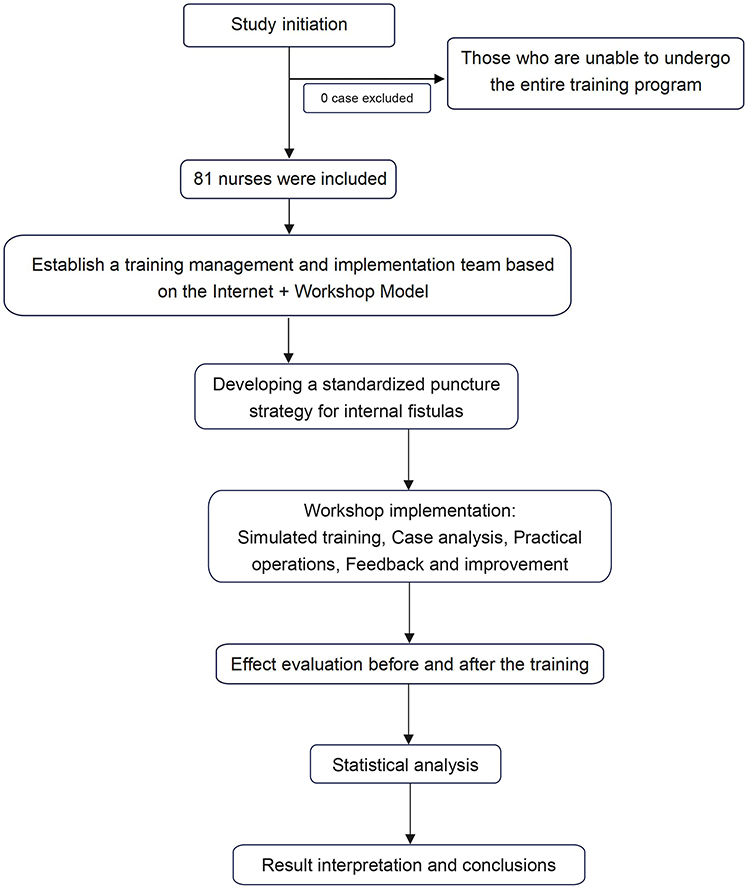 |
Figure 1 Flowchart of the Internet + Workshop-based standardized arteriovenous fistula puncture training program. |
Assessments were conducted before and after the training intervention, utilizing a 100-point evaluation scale. The assessment included five key domains: proficiency in puncture procedures, AVF evaluation, puncture technique, risk factor identification, and complication management. Each domain was allocated a maximum of 20 points.
The Chinese version of the Jeffries Simulation Design Scale demonstrated strong internal consistency, with a total Cronbach’s α coefficient of 0.948. The Cronbach’s α coefficients for each dimension ranged from 0.798 to 0.832. The test-retest reliability for the overall scale was 0.870, while reliability for each dimension ranged from 0.730 to 0.920. Content validity for each dimension exceeded 0.830.8 These metrics indicate that the Chinese version of the Simulation Design Scale exhibits high reliability and validity, making it suitable for guiding and evaluating simulation-based educational design, optimizing instructional planning, and enhancing teaching quality.
A blended model integrating online theory with offline workshops forms a closed loop of “pre-learning – hands-on training – review – feedback”, emphasizing standardization, interactivity, and practical skill development. Delivered through a cloud platform supporting theoretical instruction, resource access, expert interaction, and performance monitoring. Training includes 20 hours of pre-workshop learning and 10 hours of post-workshop revision to reinforce knowledge retention. A 3-day program (24 hours total) combining high-fidelity simulation (≥50 puncture attempts per trainee with one-on-one mentoring), case-based learning, standardized patient practice (across eight scenarios, pass score ≥85/100), and structured feedback for targeted improvement. A three-tier system ensures consistency and effectiveness: development of unified standards, real-time professional supervision, and dynamic adjustment of content based on cloud-platform monitoring.
Establishment of the Internet + Workshop Training Management and Implementation Team
- Personnel Composition: The training management and implementation team included doctors and nurses from the hemodialysis center, along with invited experts in hemodialysis care. This multidisciplinary structure ensured both clinical accuracy and instructional quality.
- Training Content: The curriculum encompassed key topics including AVF anatomical positioning, timing of the first puncture, pre-puncture assessment and preparation, puncture techniques, criteria for determining successful puncture, management of puncture-related complications, and post-puncture compression following needle removal. The training was designed to ensure that participants gained the essential theoretical knowledge and practical skills.
- Training Method: The “Internet + Workshop” model combined an online learning platform with hands-on practical workshops.
Internet-based component: Learners accessed structured online modules containing instructional videos, interactive case studies, knowledge quizzes, and recorded expert demonstrations. Sessions were scheduled weekly with a fixed duration to ensure continuity of learning and to allow experts to provide real-time remote guidance and Q&A.
Workshop component: In-person workshops utilized scenario-based simulation, role-playing, peer-assisted practice, group discussions, case-based reasoning, and behavioral skills training. The integration of real-time remote expert input strengthened the accuracy and consistency of instruction, while immersive practice ensured mastery of standardized AVF puncture procedures.
Formulation of Standardized AFV Puncture Strategies
- Development of the Puncture Protocol: A puncture procedure tailored to individual patient needs was developed, based on the anatomical characteristics of the AVF and the patient’s clinical condition.
- Selection of the Puncture Site: Puncture site selection was guided by factors such as the location of the AVF and blood flow dynamics, with the aim of identifying the most suitable puncture point.
- Puncture Technique: The choice of puncture technique, such as angled or straight puncture, was determined based on clinical judgment to ensure successful vascular access while minimizing the risk of complications.
- Complication Management: A standardized complication management protocol was established to ensure the timely and effective resolution of any complications arising during or following the procedure.
Workshop Implementation Content
- Simulation Training: Participants first completed structured simulation exercises using anatomical models to become familiar with the standardized AVF puncture workflow and strengthen psychomotor skills.
- Case Analysis: Participants engaged in detailed analysis of real clinical cases to identify problems and address challenges encountered during AVF puncture. The discussions enabled summarizing experiences to provide valuable insights for future clinical practice.
- Practical Application: Under the guidance of professional mentors, participants performed hands-on puncture procedures to enhance their technical proficiency and improve adaptability to various clinical scenarios.
- Feedback and Improvement: Participants’ feedback was promptly collected during the workshop. Identified issues were promptly addressed, and corresponding improvements were made to enhance the overall effectiveness of the workshop.
Outcome Evaluation
- Puncture Proficiency Assessment: A comparative analysis of participant’s puncture assessment scores was conducted pre- and post-training to evaluate the effectiveness of the standardized AVF puncture strategy.
- Complication Management Performance: Participants’ responses to simulated complication scenarios were evaluated, and scores were assigned based on ability in managing potential adverse events.
- Patient Satisfaction: A patient satisfaction survey was administered to assess patients’ perceptions of the AVF puncture procedure and its impact on their quality of life.
- Peer Evaluation: Subject matter experts with experience in arteriovenous fistula puncture training and instruction independently evaluated the workshop, providing objective assessments of its effectiveness and identifying areas for improvement.
Statistical Analysis Methods
Statistical analyses was performed using SPSS version 28.0. Quantitative data with a normal distribution were expressed as mean ± standard deviation (x ± s), and pre- and post-training theoretical scores were compared using paired t-tests. Qualitative data were presented as frequencies and percentages. Comparisons of puncture success rates, complication rates, and patient satisfaction before and after training were conducted using the χ2-test. Statistical significance was determined at p < 0.05.
Results
Demographic Statistics
A total of 81 nurses participated in this study, the majority of whom were female (n = 76, 93.83%). Most participants were 37 years of age or younger (77.78%), and held a bachelor’s degree or higher (92.59%). The majority of participants held the title of nurse or nurse practitioner (58.02%), and most had fewer than 15 years of clinical nursing experience (86.42%). Detailed demographic data are presented in Table 1.
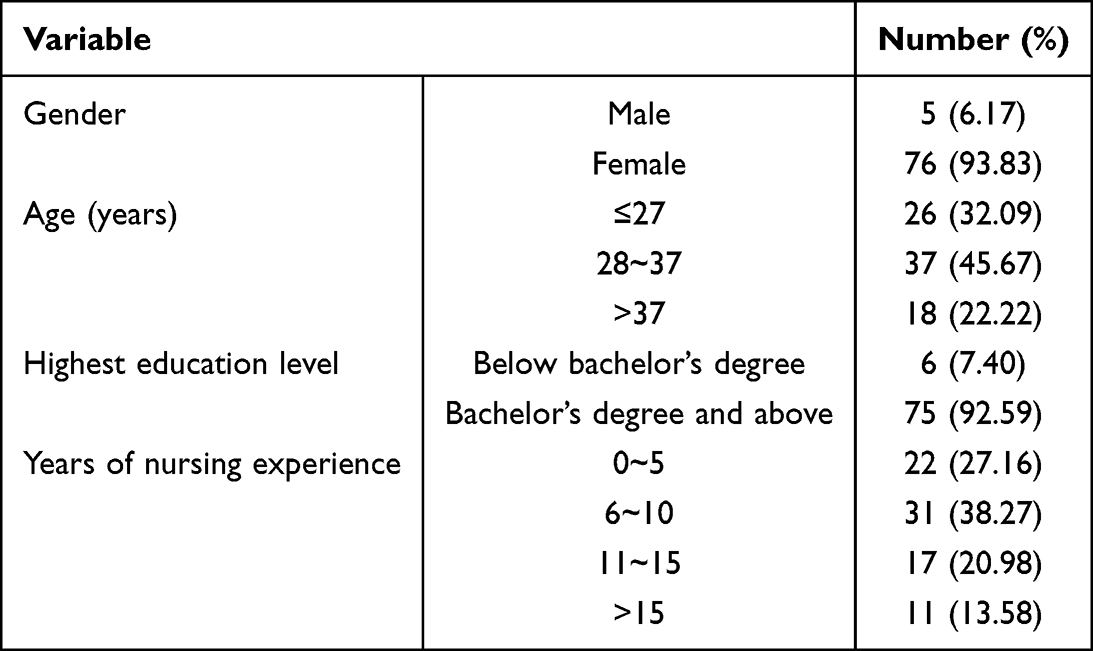 |
Table 1 Demographic Data (n = 81) |
Descriptive Statistical Analysis
Theoretical Assessment Scores Pre- and Post-Training
Prior to the training intervention, the highest scores were recorded in the domains of puncture procedures and AVF evaluation. Following the training, scores improved across all assessed dimensions, particularly in puncture procedures, AVF evaluation, and complication management, with enhanced accuracy in theoretical content. The teaching assessment scores increased from (75.14 ± 2.53) to (92.98 ± 2.17), with a statistically significant improvement (p < 0.05). Comparative data on scores before and after the training are summarized in Table 2.
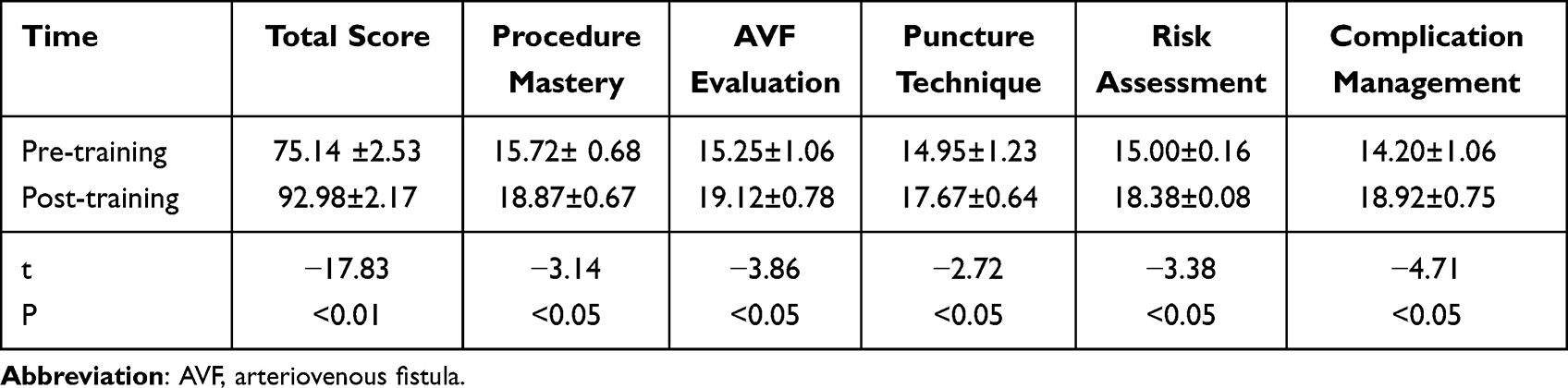 |
Table 2 Pre- and Post-Training Theoretical Assessment Scores ( |

Practical Skills Assessment Before and After Training
All participants met the required passing criteria in the practical examinations. Notably, significant improvements were observed in the domains of puncture technique and risk factor assessment, both of which are skill areas requiring sustained behavioral training. A comparison of practical skill scores before and after the training is presented in Table 3.
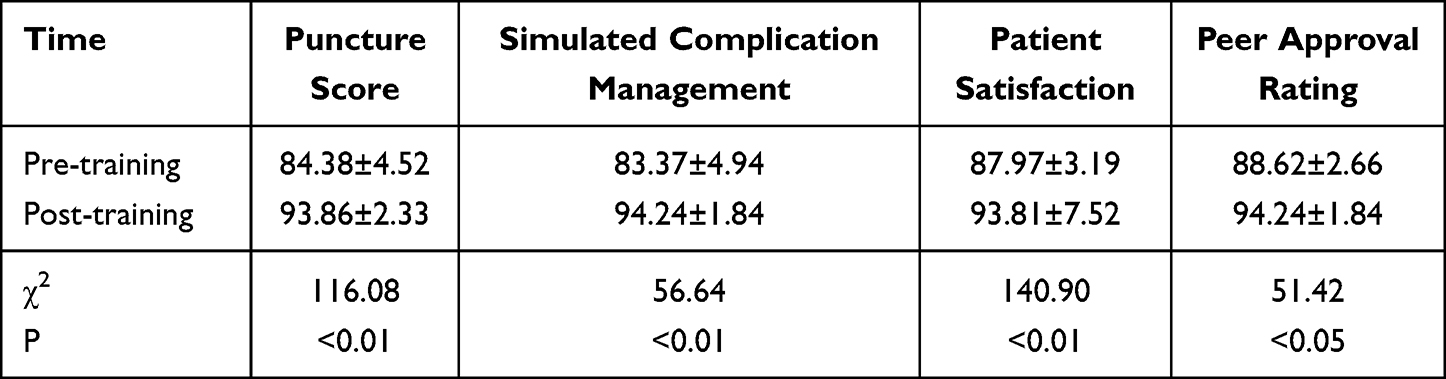 |
Table 3 Pre- and Post-Training Practical Assessment and Satisfaction Scores ( |

Evaluation of the Simulation Teaching Design Scale
Following the completion of training, all 81 participants were evaluated using the Chinese version of the Jeffries Simulation Teaching Design Scale. The results demonstrated a high level of agreement across the assessed items, with agreement rates ranging from 93.7% to 100%.
Discussion
Increasing Challenges in AVF Maintenance and Puncture, and the Role of Internet + Workshop Training in Advancing Standardized Care
The prevalence of comorbid conditions such as hypertension, diabetes, and obesity among individuals undergoing dialysis has been steadily increasing. Many of these patients also present with conditions like peripheral vascular sclerosis, stenosis, and intimal damage. Complications related to vascular access, such as thrombosis, occlusion, infection, and aneurysmal dilation are common. Thrombosis in autologous AVFs is a leading cause of fistula dysfunction and hospitalization among patients.9–12 Existing literature indicates that the assessment and puncture of autologous AVFs often rely heavily on the clinical experience and subjective judgment of healthcare providers. The “Internet + Workshop” training model represents a shift away from conventional didactic teaching methods, which often focus on passive knowledge transfer. In contrast, this model promotes active engagement in learning, critical thinking, and reasoning among nurses throughout AVF maintenance and puncture training. This approach supports the development of evaluative thinking skills, strengthens clinical abilities, and enhances overall quality of care delivery.
In this study, prior to the training intervention, participants achieved the highest scores in theoretical domains such as puncture procedures and AVF evaluation, indicating a stronger foundation in theoretical knowledge relative to practical skills. Skills requiring repetitive and hands-on practice, such as puncture technique and complication management, were comparatively less developed. Participant’s responses in practical sessions, including scenario-based simulations, “find the mistake” video exercises, role-playing, case analysis, and behavioral training, lagged significantly behind their theoretical understanding. Additionally, substantial variability was noted in the skills demonstrated during these practical sessions, underscoring the absence of standardized and consistent high-quality nursing practices. The workshop model employed in this study integrated experiential learning, active participation, and interaction, all structured around specific themes. This approach aimed to bridge the gap between theoretical knowledge and practical application.
By implementing standardized and scientifically-grounded AVF puncture protocols, the internet + workshop training program enhanced the consistency and success of AVF puncture procedures. Furthermore, the early implementation of vascular protection strategies contributed to minimizing vascular damage associated with puncture and catheterization, thereby reducing the need for new AVF creation.13
Overcoming Geographical and Temporal Barriers: Internet + Workshop Model Facilitates Continuous Training and Communication
The demanding nature of clinical practice, coupled with constraints related to geography and time, often limits opportunities for nurses to engage in learning and development. These limitations are particularly evident in access to collaboration and communication with experts, universities, and research institutions, both domestically and internationally. This limits their ability to remain current with the latest advancements in emerging concepts and technologies. The internet + workshop model eliminates these barriers by enabling flexible and continuous learning. The model supports both real-time instruction during in-class sessions and self-directed study thereafter. It allows nursing staff from various hospitals to engage in ongoing learning and knowledge exchange. The model facilitates the inclusion of domestic and international experts, who can deliver online lectures and participate in Q&A sessions. This approach enhances the professional competence of healthcare staff.
Enhancing Nurse Satisfaction with Training
The internet + workshop model facilitates the delivery of tailored training by accurately identifying and addressing nurses’ educational needs. It overcomes the limitations associated with traditional operational training, which often emphasized theoretical instruction, offered low participant engagement, and provided limited opportunities for hands-on practice.14 By integrating both online and offline training methods, the model fosters greater participant interaction and hands-on experience. Moreover, real-time communication via online platforms allows for the prompt resolution of clinical questions, enhancing their overall satisfaction. Additionally, the incorporation of data analytics enables real-time monitoring if nurses’ puncture performance, facilitating peer recognition and feedback.
Policy Implications
The “Internet + Workshop” model and homogeneous puncture strategies offer a feasible template for advancing the goals of the 14th Five-Year Plan for Nursing Development, particularly in strengthening specialist training and promoting the dissemination of high-quality resources to grassroots settings. The standardized puncture procedures and training system align with the Chinese Expert Consensus on Vascular Access for Hemodialysis (2021) and support national efforts toward standardizing vascular access maintenance. By reducing technique-related variability, medical risks, and associated costs, the model contributes to policy directions aimed at achieving “homogeneous nursing quality” in ongoing healthcare payment reforms.
Conclusion
The implementation of standardized AVF puncture strategies within the internet + workshop model effectively enhanced the success rate and safety of AVF punctures, while reducing the incidence of procedure-related complications. Additionally, the workshop platform provided an effective platform for communication and learning, contributing to an overall improvement in teaching quality. The practical application of this training model supports the identification and adoption of evidence-based nursing practices that yield optimal outcomes for patients.
However, challenges remain in the widespread adoption of the internet + workshop approach, particularly in areas such as network security, data privacy protection, technological updates, and talent development. To address these challenges, it is essential to strengthen information technology infrastructure and establish a sustainable and continuous training mechanism. These efforts are critical to maximizing the impact of the internet + workshop model in advancing standardized AVF puncture strategies and improving patient care outcomes.
Abbreviations
AVF, arteriovenous fistula.
Data Sharing Statement
All data generated or analysed during this study are included in this article. Further enquiries can be directed to the corresponding author.
Ethics Approval and Consent to Participate
The study was conducted in accordance with the Declaration of Helsinki (as was revised in 2013). The study was approved by Ethics Committee of the Yanbian University Hospital (No.2024566). Written informed consent was obtained from all participants.
Acknowledgments
We are particularly grateful to all the people who have given us help on our article.
Funding
No external funding received to conduct this study.
Disclosure
The authors declare that they have no competing interests.
References
1. Allon M, Imrey PB, Cheung AK, et al. Relationships between clinical processes and arteriovenous fistula cannulation and maturation: a multicenter prospective cohort study. Am J Kidney Dis. 2018;71(5):677–8. doi:10.1053/j.ajkd.2017.10.027
2. Şahin S, Tokgöz B, Demir G. Effect of lavender aromatherapy on arteriovenous fistula puncture pain and the level of state and trait anxiety in hemodialysis patients: a randomized controlled trial. Pain Manag Nurs. 2021;22(4):509–515. doi:10.1016/j.pmn.2021.01.009
3. Gorski LA, Hadaway L, Hagle ME, et al. Infusion Therapy Standards of Practice, 8th Edition. J Infus Nurs. 2021;44(1S Suppl 1):S1–S224. doi:10.1097/NAN.0000000000000396
4. Chinese Experts Group of the Guideline for the Management of ‘CKD-PeriDialysis’; Chinese Non-government Medical Institutions Association. Chinese clinical practice guideline for the management of “CKD-PeriDialysis”-the periods prior to and in the early-stage of initial dialysis. Kidney Int Rep. 2022;7(12 Suppl):S531–S558. doi:10.1016/j.ekir.2022.10.001
5. Zhao X, Ma C, Gan L, et al. Current clinical profiles for Chinese hemodialysis patients. Sci Rep. 2025;15(1):28428. doi:10.1038/s41598-025-11951-6
6. Liu Q, Peng W, Zhang F, Hu R, Li Y, Yan W. The effectiveness of blended learning in health professions: systematic review and meta-analysis. J Med Internet Res. 2016;18(1):e2. doi:10.2196/jmir.4807
7. Padilha JM, Machado PP, Ribeiro A, Ramos J, Costa P. Correction: clinical virtual simulation in nursing education: randomized controlled trial. J Med Internet Res. 2019;21(6):e14155. doi:10.2196/14155
8. Zhu FF, Wu LR, Zhang D. Reliability and validity evaluation of the Chinese version of the Jeffries simulation design scale. Chin Nurs Manage. 2017;17(12):1620–1623.
9. Zhang YH, Peng Y, Pu CS, et al. Research progress on risk factors and prevention strategies of thrombosis in autogenous arteriovenous fistula. Nurs Res. 2021;35(15):2698–2701.
10. Nguyen M, Thankam FG, Agrawal DK. Sterile inflammation in the pathogenesis of maturation failure of arteriovenous fistula. J Mol Med. 2021;99(6):729–741. doi:10.1007/s00109-021-02056-4
11. Şen H, Lafcı Bakar D. The effect of virtual reality glasses on pain and patient satisfaction in arteriovenous fistula cannulation procedure. Appl Nurs Res. 2024;79:151841. doi:10.1016/j.apnr.2024.151841
12. Jin LS, Lv HL, Li LN, Jin YA. Randomized control trial on internet-based self-management of arteriovenous fistula in hemodialysis patients. J Community Health Nurs. 2025;42(1):35–42. doi:10.1080/07370016.2024.2389970
13. Du AY, Wang YW, Zhao CM, et al. Summary of the best evidence on prolonging the life of autogenous arteriovenous fistula. Chin J Nurs. 2022;57(21):2604–2610.
14. Hinck SM. Implementing the infusion therapy standards of practice. Home Healthc Now. 2021;39(5):295. doi:10.1097/NHH.0000000000001002
 © 2026 The Author(s). This work is published and licensed by Dove Medical Press Limited. The
full terms of this license are available at https://www.dovepress.com/terms
and incorporate the Creative Commons Attribution
- Non Commercial (unported, 4.0) License.
By accessing the work you hereby accept the Terms. Non-commercial uses of the work are permitted
without any further permission from Dove Medical Press Limited, provided the work is properly
attributed. For permission for commercial use of this work, please see paragraphs 4.2 and 5 of our Terms.
© 2026 The Author(s). This work is published and licensed by Dove Medical Press Limited. The
full terms of this license are available at https://www.dovepress.com/terms
and incorporate the Creative Commons Attribution
- Non Commercial (unported, 4.0) License.
By accessing the work you hereby accept the Terms. Non-commercial uses of the work are permitted
without any further permission from Dove Medical Press Limited, provided the work is properly
attributed. For permission for commercial use of this work, please see paragraphs 4.2 and 5 of our Terms.